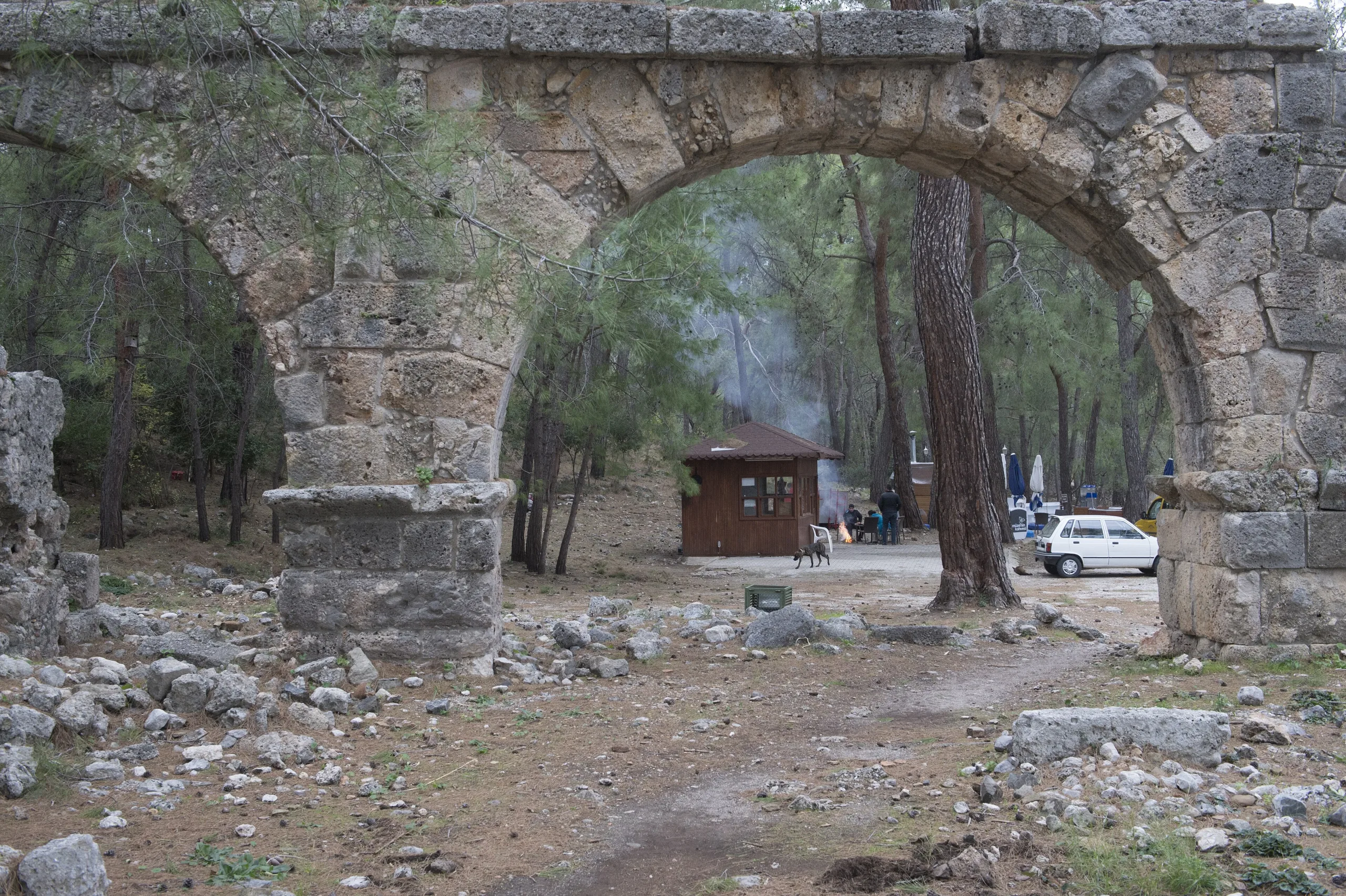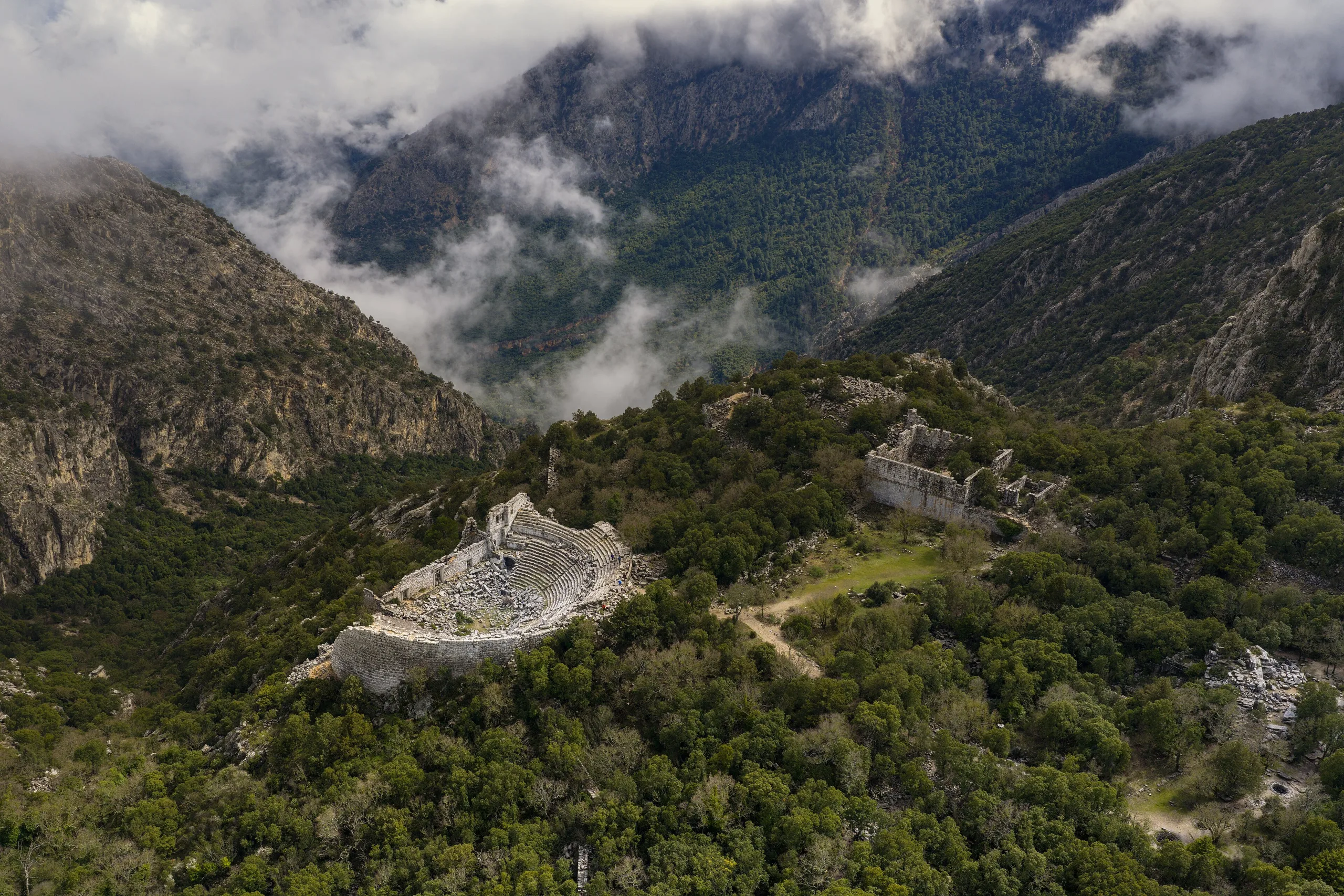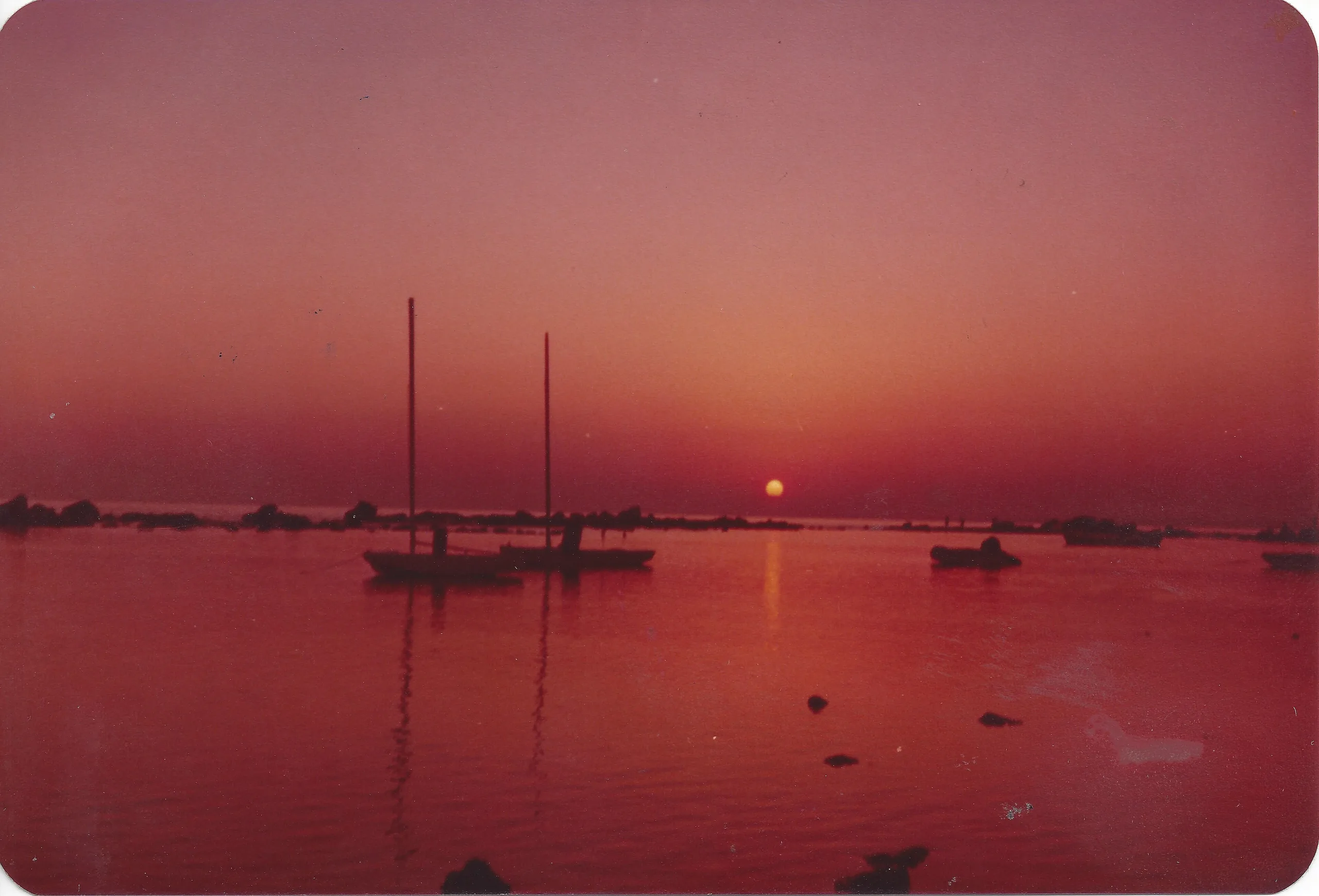
Side, a Pamphylian harbour town on a narrow peninsula near Manavgat, is known for a theatre on an artificial slope of arches and vaults, its Apollo and Athena temples and a museum in a Roman bath.
Side is an ancient city located in Turkey, Antalya. Main periods: Hellenistic Period, Roman Period, Byzantine Period, Bronze Age.
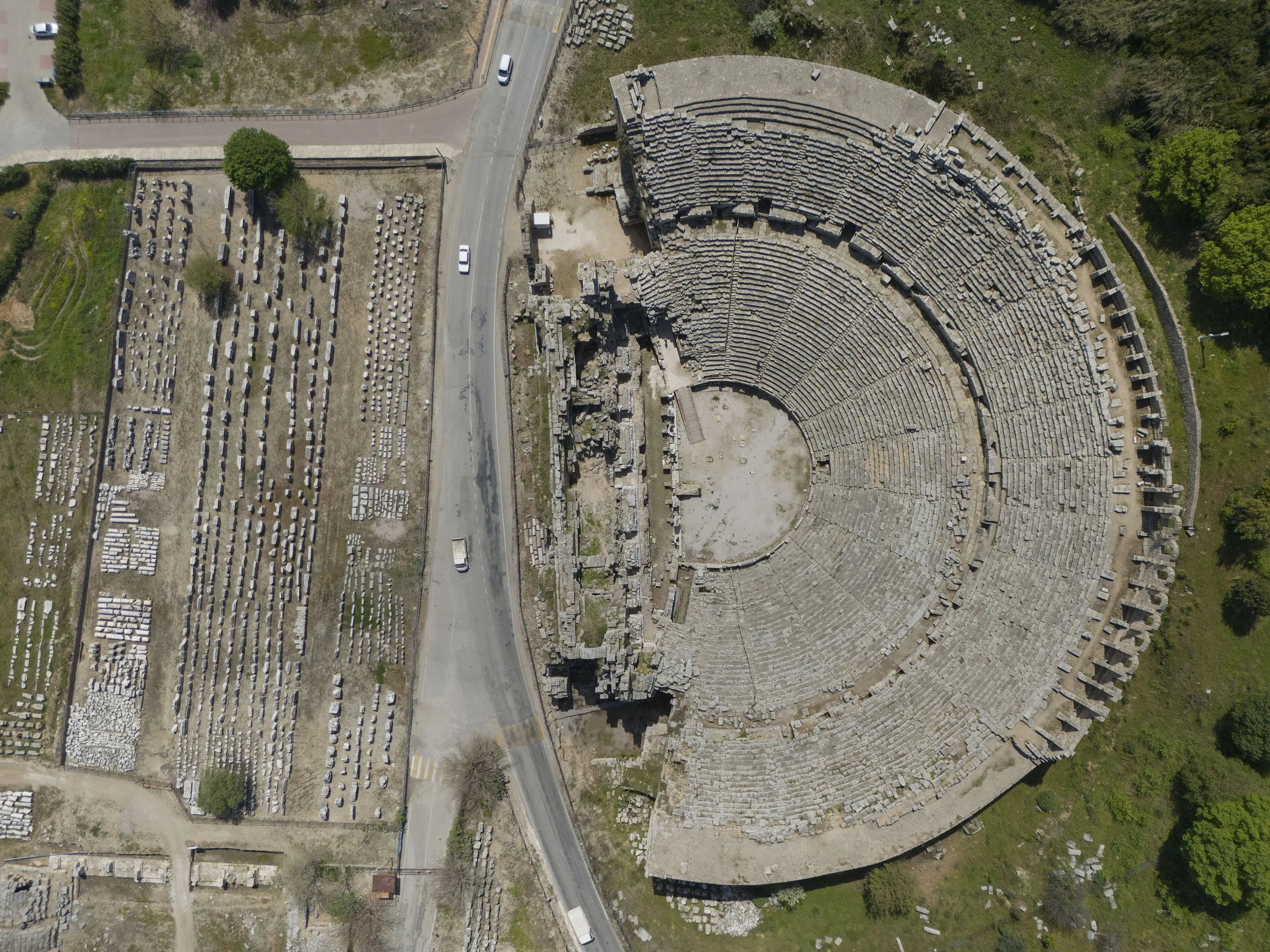
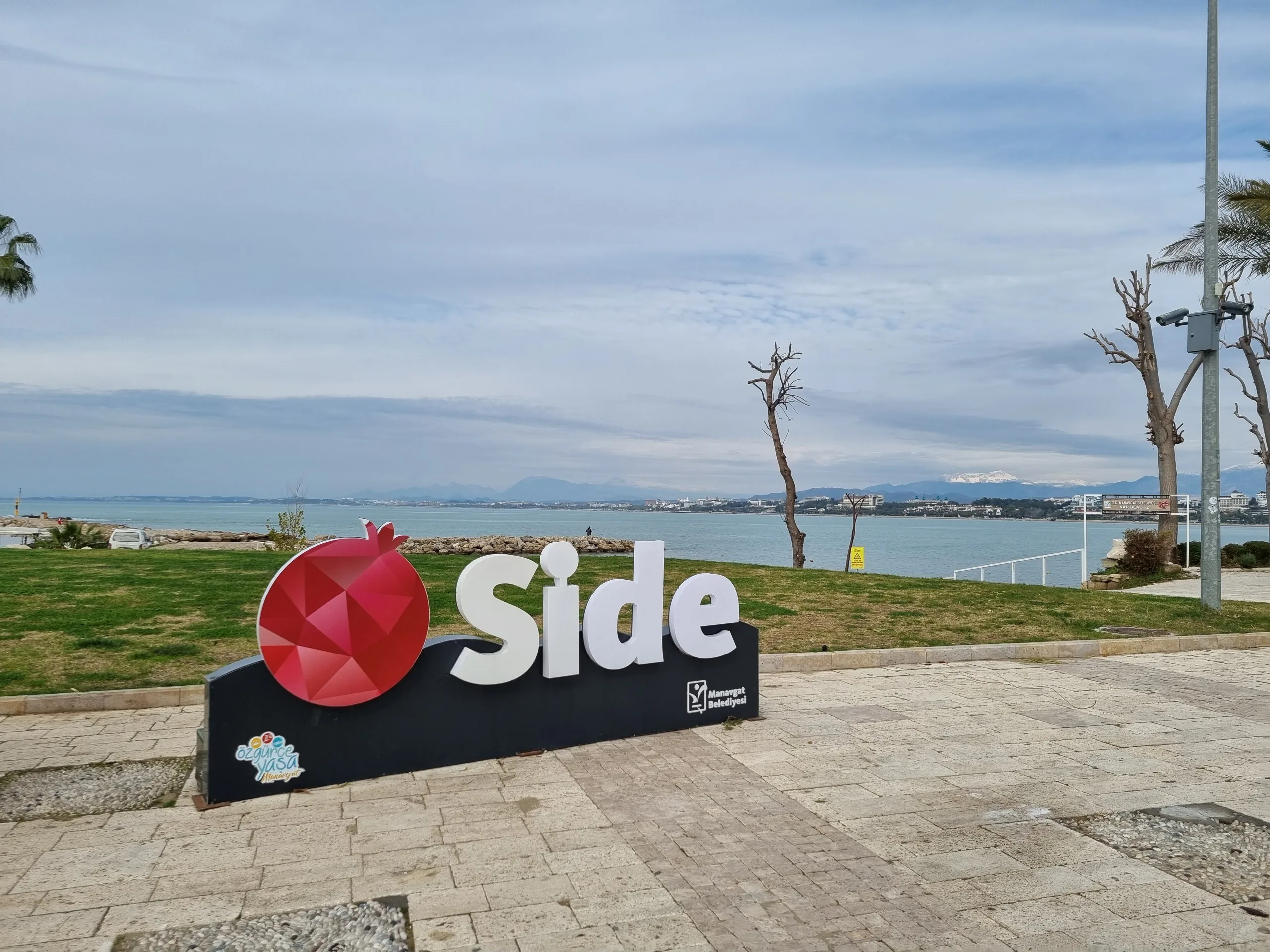
Most Anatolian theatres were carved into a hillside. Side's was not, because Side has no hill to spare: the city sits on a flat peninsula only 350-400 m across, some 7 km south-west of Manavgat. So the upper rows of its theatre rest on an artificial slope made of arches and vaults, a solution found nowhere else in Anatolia. The ancient harbour town of Pamphylia took its name from a word meaning pomegranate in the Luwian language, and the fruit appears on its coins.
Setting
The road east from Antalya towards Manavgat and Alanya runs for about 70 km and ends here. Next to the ancient site lies the village of Selimiye, founded in the early 1900s by immigrants from Crete on top of the old ruins. The city has been written Sidē in Greek and Sibdē in Lycian, while Selimiye is its modern name. The site address is Side Mahallesi, Liman Caddesi, Manavgat.
History
Nobody can say exactly when Side began. It is described as a settlement centre by the 7th century BCE, yet finds push occupation back to the 8th century BCE, and a few pieces reach the Late Bronze Age. The widely held view, which Strabo supports, credits Kymeans from the Izmir region with founding it in the 7th century BCE; Eusebius prefers 1405 BCE. The name itself hints at an older story. It belongs neither to the Kymean tongue nor to the language spoken across Pamphylia, so it may descend from the people who lived here before the Kymeans arrived.
In the 6th century BCE Side passed with the rest of Pamphylia to the Lydian kingdom, and when Lydia fell around 547-546 BCE the Persians took over. Even then the city struck coins in its own name. Alexander the Great entered Anatolia in 334 BCE and found the gates of Side open; the city later became one of the great mints he established. After his death it changed hands again and again, first to the Ptolemies and then, around 218-189 BCE, to the Seleucids. When the Seleucids lost to Rome, the Peace of Apameia in 188 BCE handed Pamphylia, Side included, to the kingdom of Pergamon. Side soon regained its independence and entered one of its best periods. That a Seleucid prince, Antiochus VII, was sent there to study in 138 BCE says plenty about its reputation as a centre of learning in the eastern Mediterranean.
Piracy ended the good years. Starting in Pisidia and Rough Cilicia in the 1st century BCE, it spread to Side, and the townspeople, unable to resist, had to open their harbour and markets to the raiders. The Roman consul Publius Servilius cleared the coast in 78 BCE, and Side joined the Roman Empire along with the other Pamphylian cities. After 25 BCE Augustus made Pamphylia a province answering directly to him. The 2nd and 3rd centuries CE brought another golden age. By the 4th century Side was a poorer Christian town, but in the 5th and 6th centuries it enjoyed a third and final revival as capital of the Metropolitanate of Eastern Pamphylia, the church province that gathered the region's bishoprics.
Decline came with insecurity. Raids from the north in the 3rd century forced repairs to the walls, and in the 4th century an inner wall was built across the peninsula to divide it in two. It did not save the town: from the 7th century pirate attacks, Arab raids and earthquakes emptied Side. By the 9th and 10th centuries, badly weakened, it was dismissed by the Byzantine emperor Constantine Porphyrogenitus (913-959) as a den of pirates, and the Arab geographer Idrisi called it Burnt Antalya, adding that its people had been resettled in New Antalya.
The theatre
At the narrowest part of the peninsula, south of the agora, the theatre follows a Hellenistic plan, with a cavea (the seating bowl) running beyond a half circle, but it was built with Roman technique. The lower rows, up to the diazoma (the walkway halfway up the seats), lean on a natural slope. Above it, the steps sit on a sloping platform formed by arches and vaults. The stage building, dated to the 2nd century CE, rises three storeys, and its decoration shows the baroque taste of the Antonine age. On the podium of the first storey runs the Dionysos Frieze, which follows the life of the wine god from west to east and ends at the eastern edge with the Gigantomachy, the battle between giants and gods. Around 17,000 spectators could sit inside.
The building changed purpose over the centuries. A high wall around the orchestra proves that gladiator and animal fights took place here in Late Roman times; in the 3rd century CE the orchestra was enclosed for this and turned into an arena. A water channel around the same area suggests water displays. In the 5th century chapels were built inside, and the theatre became a sacred space that also hosted open-air services in the 5th and 6th centuries. Next door stands the Temple of Dionysos, from the 1st century BCE, whose columns are said to have been shipped from Egypt.
Temples of Apollo and Athena
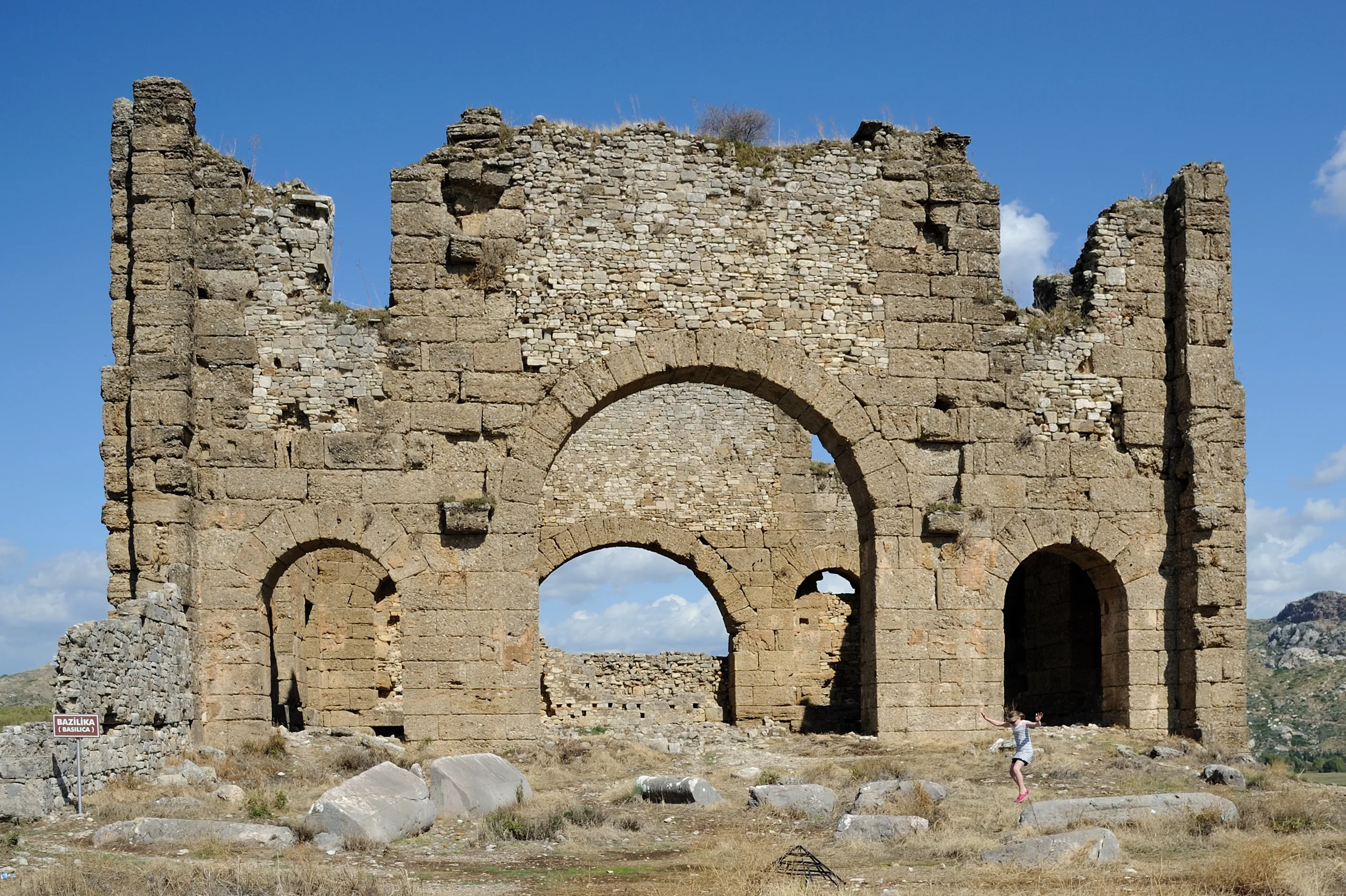
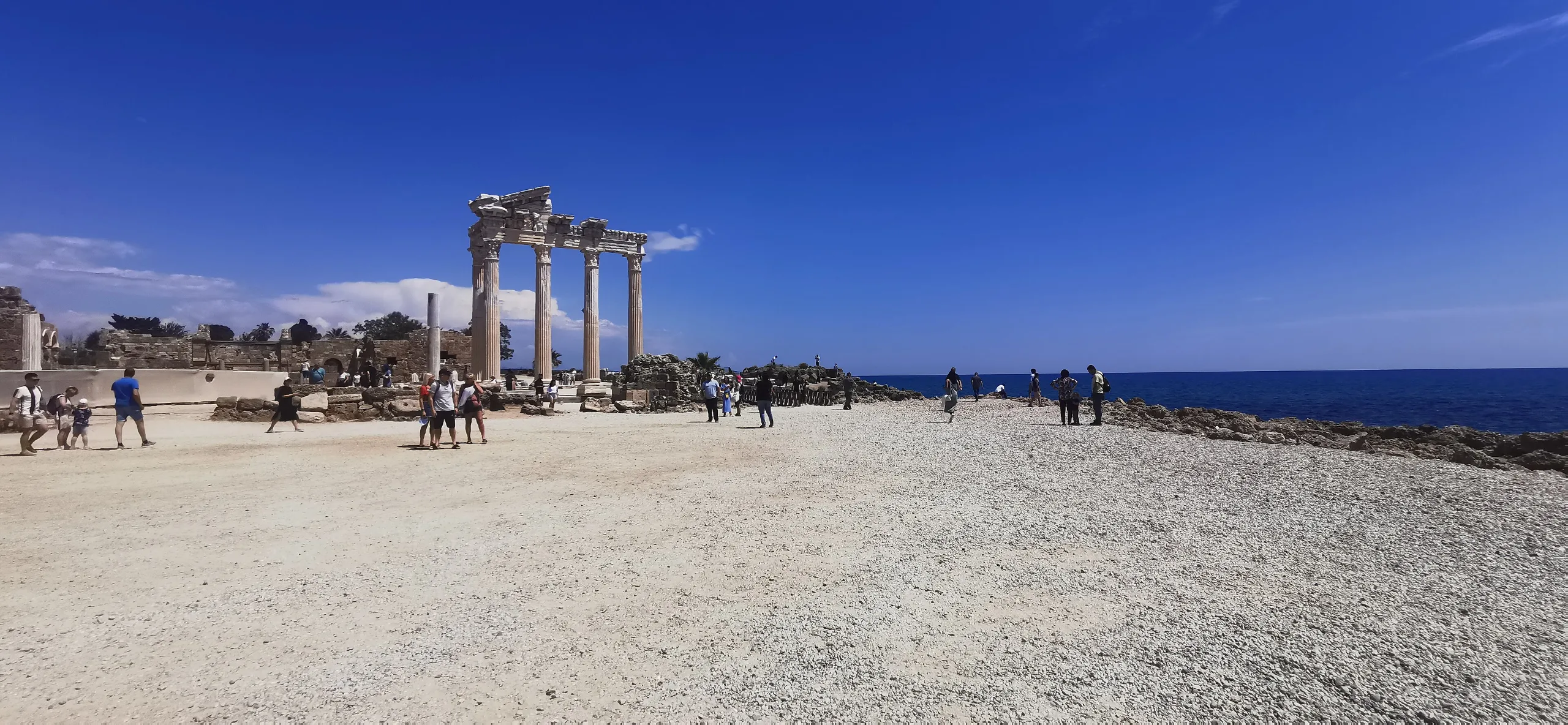
At the end of the colonnaded street, right at the entrance of the ancient harbour, the Temple of Apollo stands beside the Temple of Athena. Both were raised in the age of the Roman peace for Side's chief god and goddess. A third temple, thought to belong to the moon god Men, completes the group, since the people of Side had worshipped Cybele and Men before Athena and Apollo. In Christian times a basilica went up on the same sacred ground in the 5th century, followed by a small church in the 8th or 9th. Side's coins pair the two deities with a pomegranate, the emblem of the fertility that Cybele and Athena represent. Two tips for visitors: look for the Medusa reliefs on the temple, and if possible come at sunset.
Main Gate, fountain and agoras
Visitors enter between two towers at the Main Gate. Opposite stands a monumental fountain with three broad arches and a pool. Both date to the 2nd century CE, and the fountain counts as the largest ancient one in Anatolia. Past the gate two streets lined with Corinthian columns split off. One runs through the city centre, past the agora, bath, theatre and fountains, to the harbour and temples at the tip of the peninsula. Along the way is the Vespasian Fountain, reportedly built as a gesture to the emperor.
In the 1st century BCE the commercial agora was joined to the theatre by a passage, and together they served as a slave market. A round temple of Fortuna with 12 Corinthian columns is said to have stood in the middle of the agora. By the sea lies the State Agora (Building M), a large courtyard ringed by Ionic galleries, whose central hall was set aside for the worship of the emperor.
Excavations and the museum
Digging at Side has gone on since 1947. Most of what survives was uncovered this way, though part of the city is still underground, and the whole peninsula is a protected archaeological site. Work in the 1950s revealed the Agora Bath. It was partly restored in 1959-1961 and opened as a museum in 1962 at a ceremony attended by Arif Müfid Mansel and Jale İnan, pioneers of the Side excavations.
The collection runs from the Late Bronze Age to Roman and Byzantine times. Look for terracotta figurines from the earliest settlement, scales and weights that speak of the city's trade, friezes on the Sea Thiasos theme, architectural pieces carved with the birth of Aphrodite and sarcophagi decorated with Erotes. A Nike statue stands in the garden. In the renovated galleries the inscriptions in Sidetic, the city's own script and language, can be seen together for the first time. The 2nd-century statue group of the Three Graces is counted among the rarest pieces.
Visiting
An audio guide is available at the site, and the Müzekart is valid for Turkish citizens. Hours and fees change, so check the official page before you go.
Gallery
Frequently asked questions
Where is Side and how do I get there?
What does the name Side mean?
When was Side founded?
What makes the Side theatre unusual?
Where are the temples of Apollo and Athena?
What is inside the Side Museum?
Sources (15)
- Side Örenyeri (TR) / Side Theatre (EN) — T.C. Kültür ve Turizm Bakanlığı, Müzeler ve Ören Yerleri
- Side Antik Kenti (Türkiye Kültür Portalı) — T.C. Kültür ve Turizm Bakanlığı, Antalya İl Kültür ve Turizm Müdürlüğü
- Side Müzesi (Türkiye Kültür Portalı) — T.C. Kültür ve Turizm Bakanlığı
- Side (Antalya İl Kültür ve Turizm Müdürlüğü) — T.C. Antalya Valiliği, İl Kültür ve Turizm Müdürlüğü
- Side Tanıtım Kitapçığı (2016) — T.C. Antalya Valiliği, İl Kültür ve Turizm Müdürlüğü
- Side (Pleiades place 639105) — Pleiades
Photo credits
- Photo: Bsunar2020, CC BY-SA 4.0 — Wikimedia Commons (resized)
- Photo: Maksym Kozlenko, CC BY-SA 4.0 — Wikimedia Commons (resized)
- Photo: Maksym Kozlenko, CC BY-SA 4.0 — Wikimedia Commons (resized)
- Photo: edykbo, CC BY 3.0 — Wikimedia Commons (resized)
- Photo: NaimKeki, CC BY-SA 4.0 — Wikimedia Commons (resized)
- Photo: Dosseman, CC BY-SA 4.0 — Wikimedia Commons (resized)
- Photo: Dosseman, CC BY-SA 4.0 — Wikimedia Commons (resized)
- Photo: Dosseman, CC BY-SA 4.0 — Wikimedia Commons (resized)
- Photo: Dosseman, CC BY-SA 4.0 — Wikimedia Commons (resized)