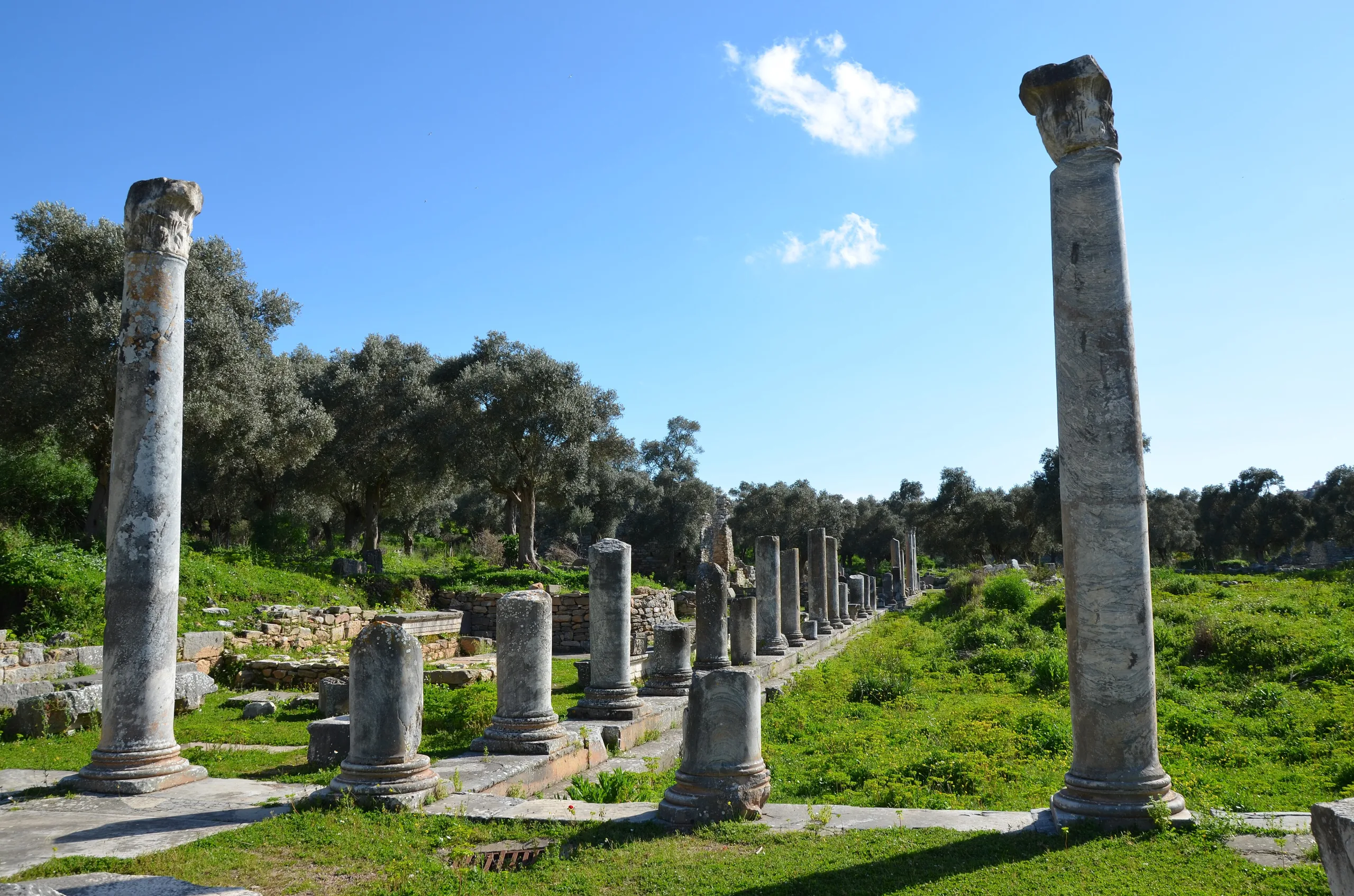
Lagina, in Yatağan district of Muğla, was a major Carian cult centre linked to Stratonikeia by a sacred road; it is known for its Temple of Hecate, monumental gate and stoas.
Lagina is a place (Sanctuary) in Turkey, Mugla. Main periods: Hellenistic Period, Roman Period, Bronze Age.
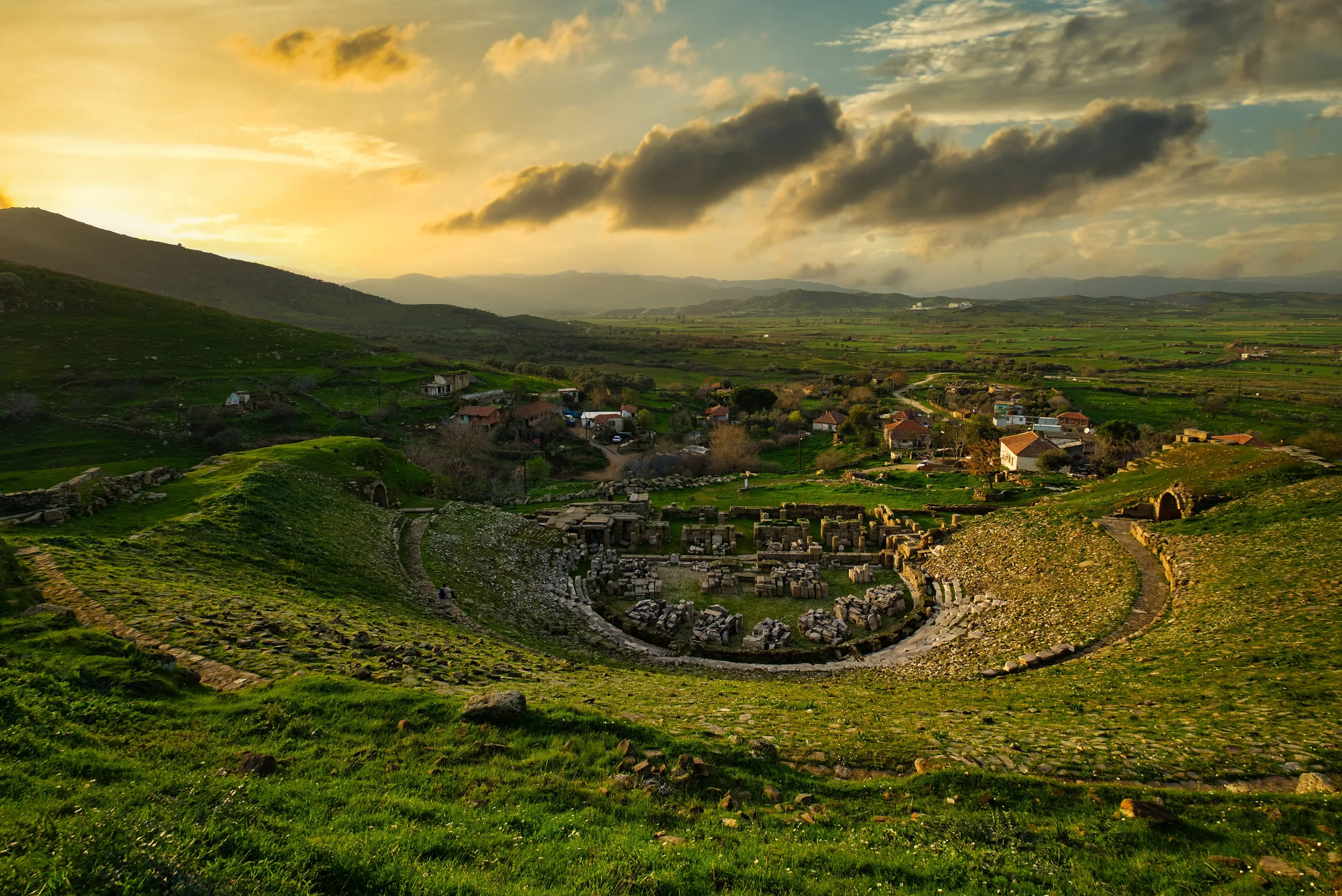
Lagina is a sanctuary of Hecate inside the bounds of the Turgut settlement in Yatağan district, Muğla. From the thermal power station on the Yatağan-Milas highway, an asphalt road of 9 kilometres leads to it. The ministry and the Muğla provincial culture directorate present it as an important cult centre of the Carians, and the district is still called Leyne.
History
The ministry and provincial directorate pages say recent research shows continuous settlement in the area from the Early Bronze Age, about 3000 BCE, to the present. The Culture Portal mentions Early Bronze Age graves at the locality of Yarbaşı and says the earliest finds in the region are Submycenaean. It adds that from the 8th century BCE small settlements around Lagina grew and sanctuaries were embellished with monumental buildings.
The Seleucid kings made Lagina the religious centre and Stratonikeia the political centre of the region through extensive building. Inscriptions on the walls of the bouleuterion in both cities show that a sacred road joined them. The distance to Stratonikeia is about 11 kilometres in the ministry page, the provincial directorate text and the MASROP article, but 12 kilometres on the Culture Portal.
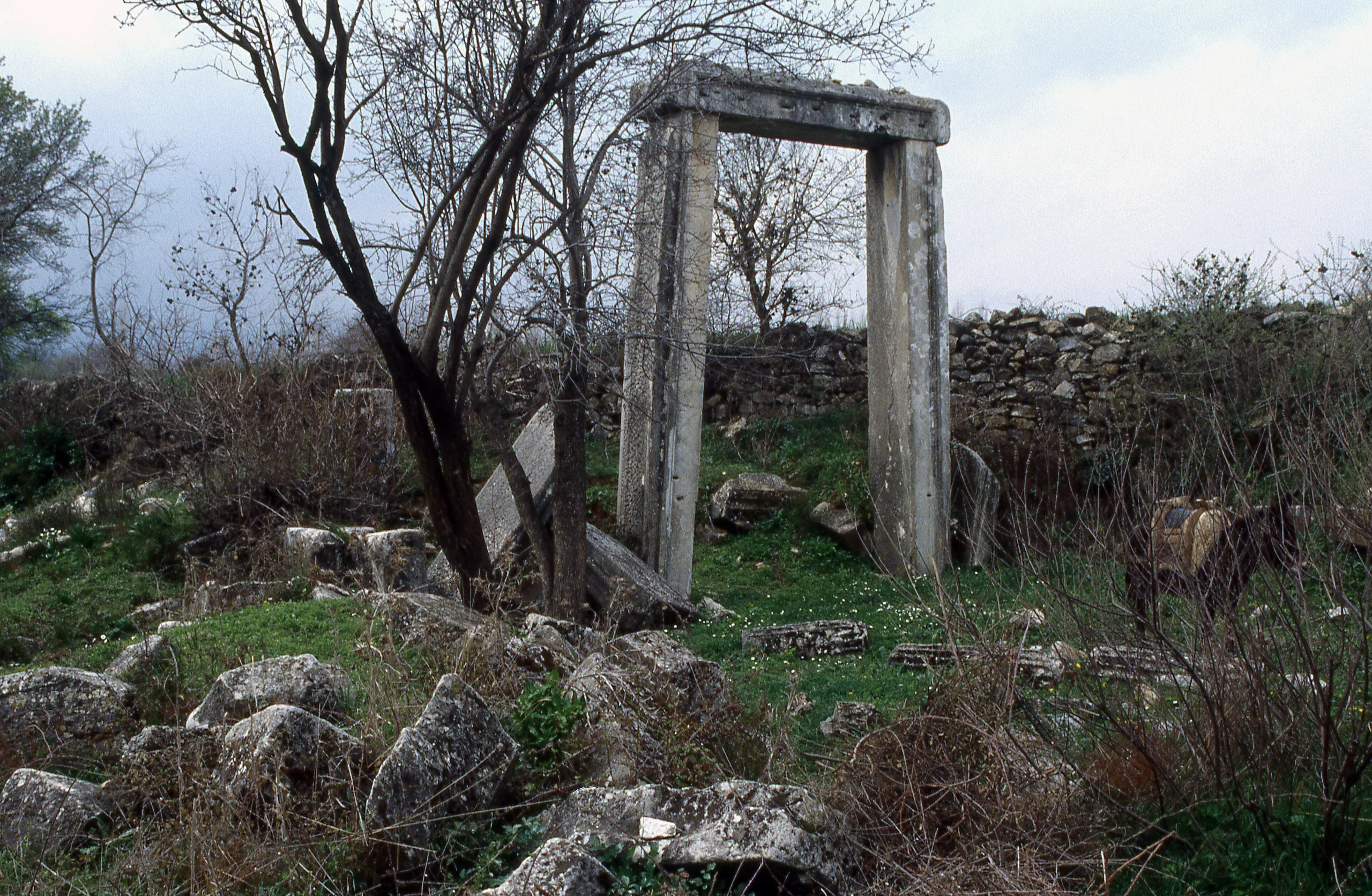
The Culture Portal relates that in 40 BCE the Roman general Labienus, who had joined the Parthians, attacked Stratonikeia, failed to capture it, and plundered the sanctuary of Lagina instead. To repair the damage Augustus made a large donation in 27 BCE, and the inscription recording it is still on the lintel of the entrance gate. The sanctuary kept its standing through the Roman Imperial and Late Antique periods, and in the first half of the 4th century CE a basilica-plan church was built between the altar and the temple.
Main features
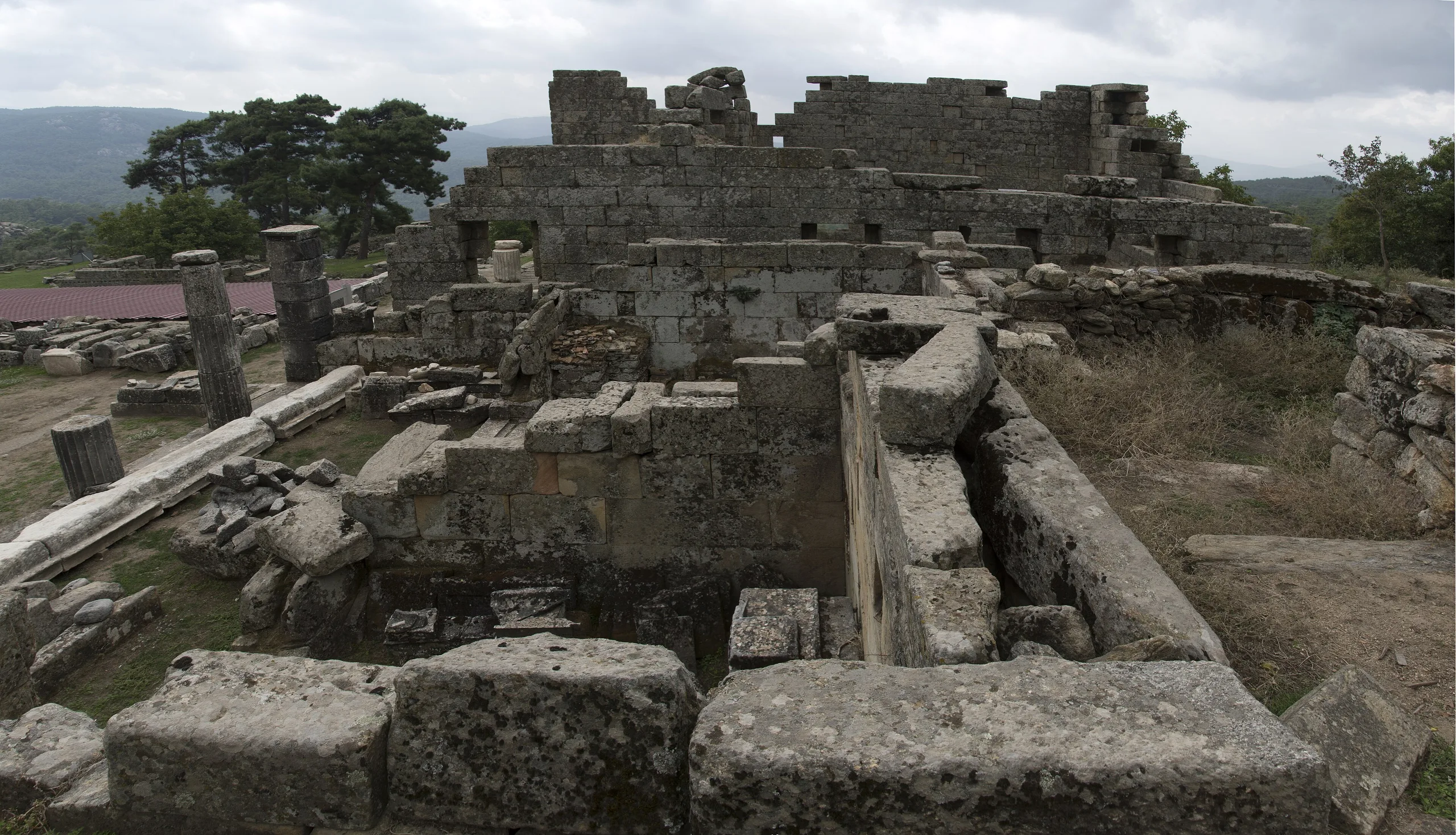
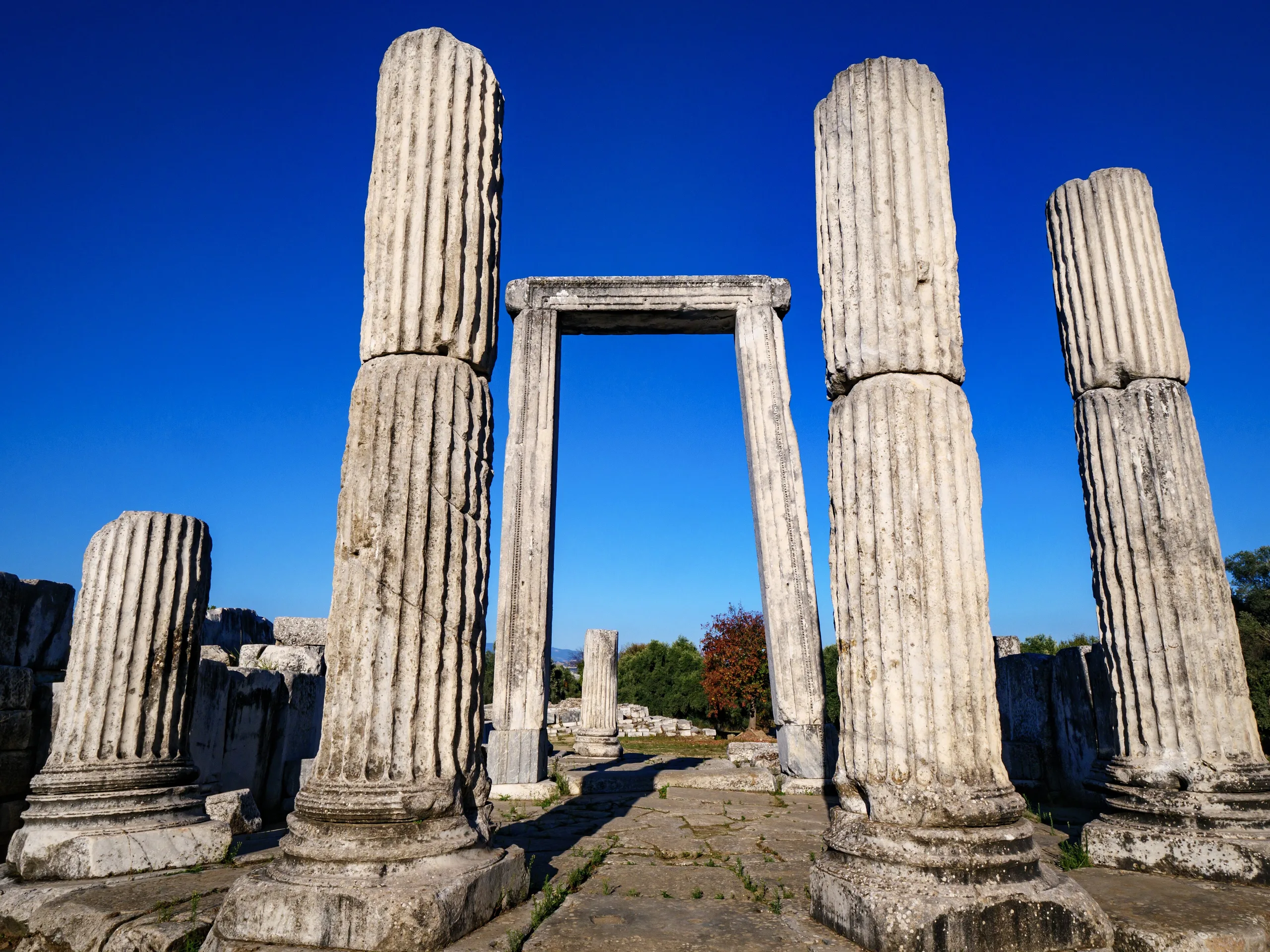
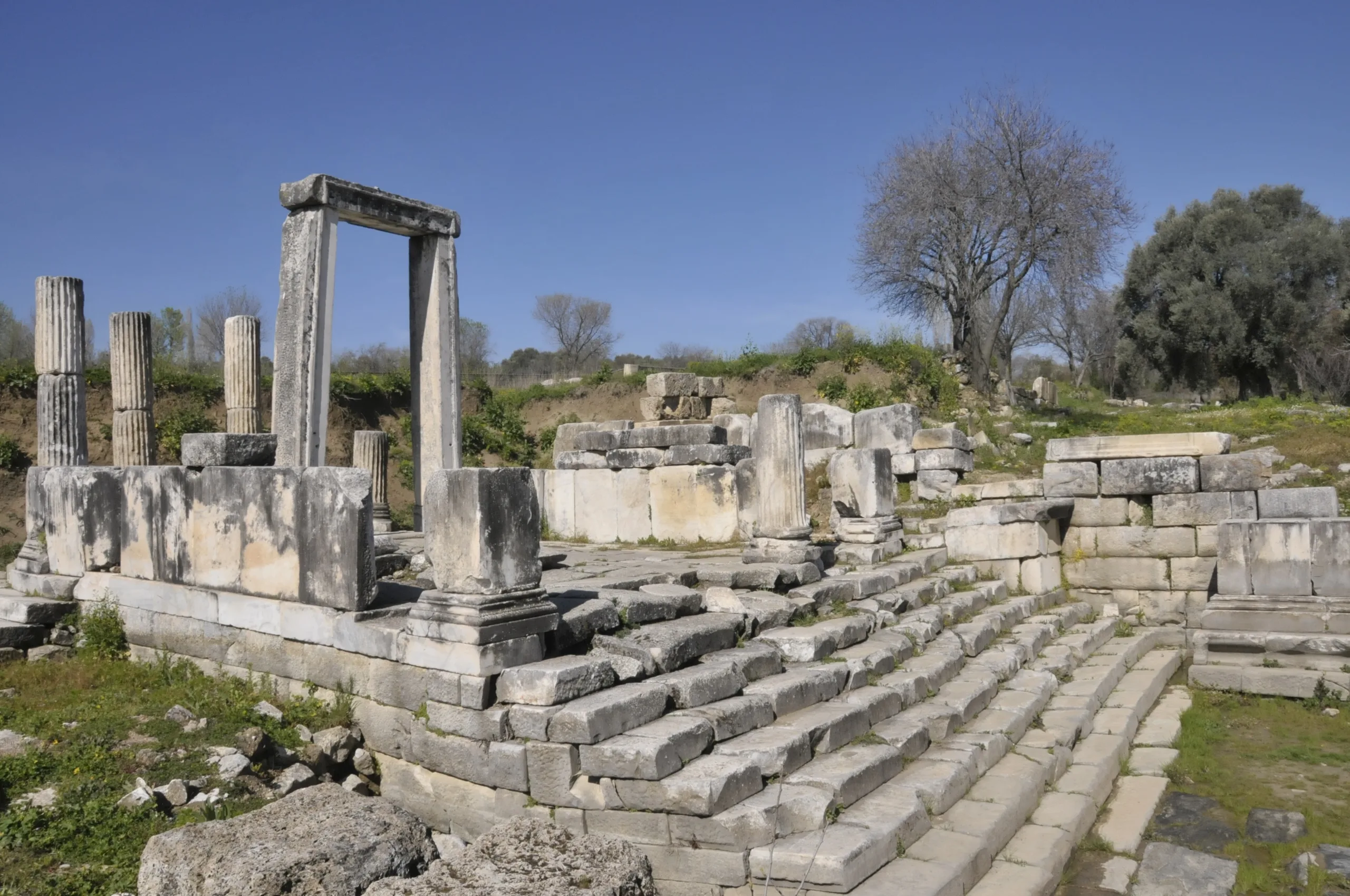
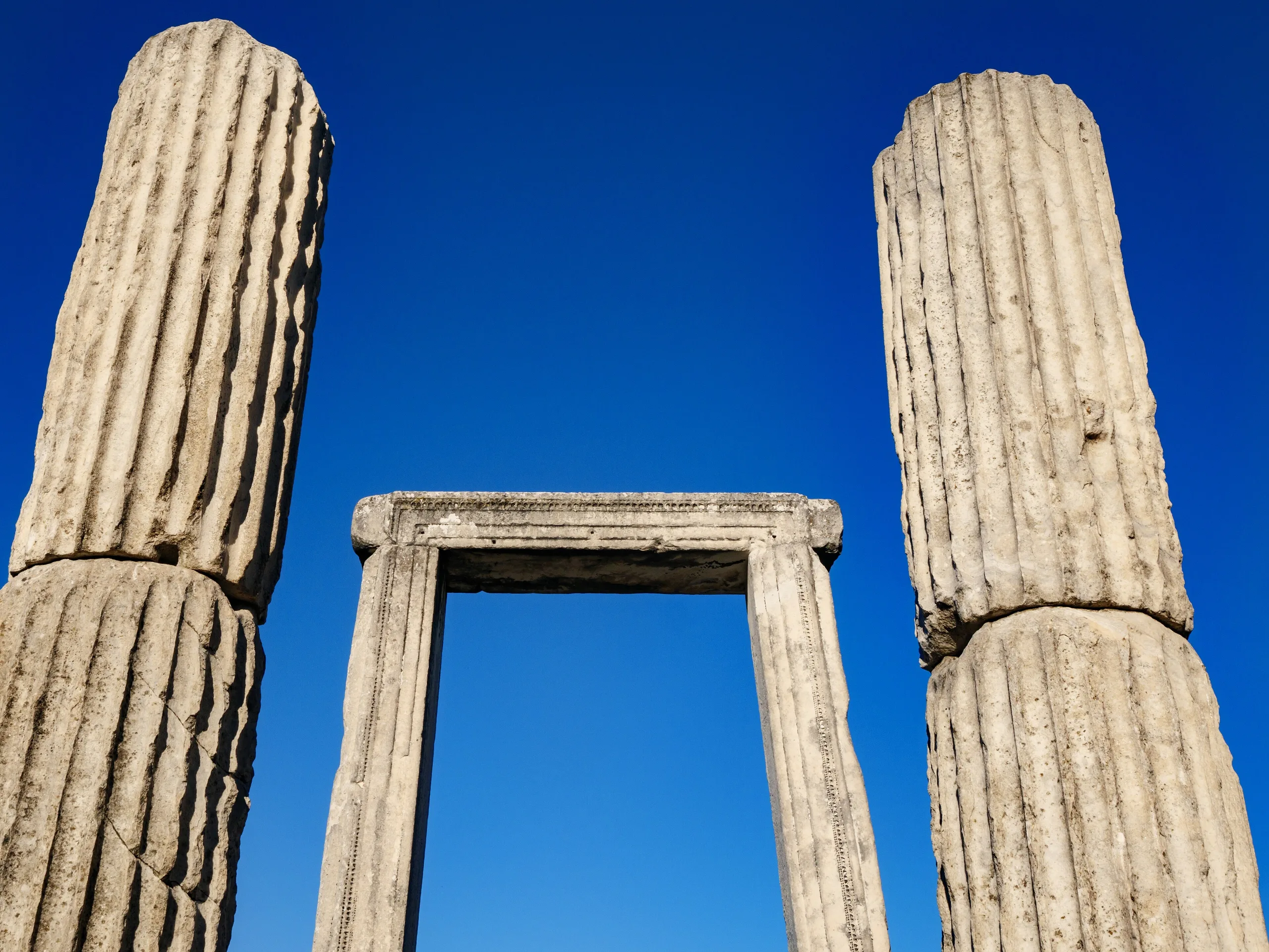
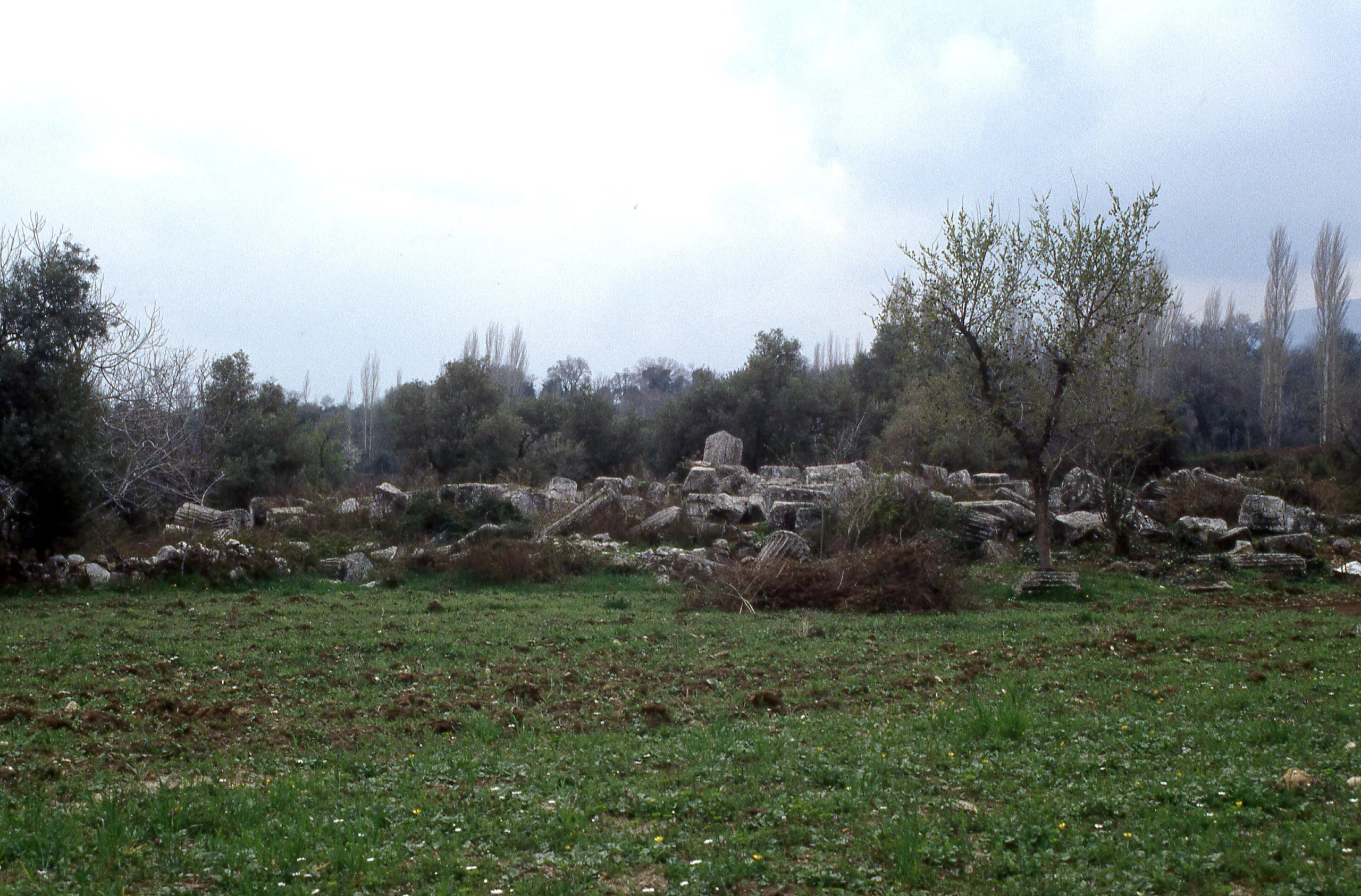
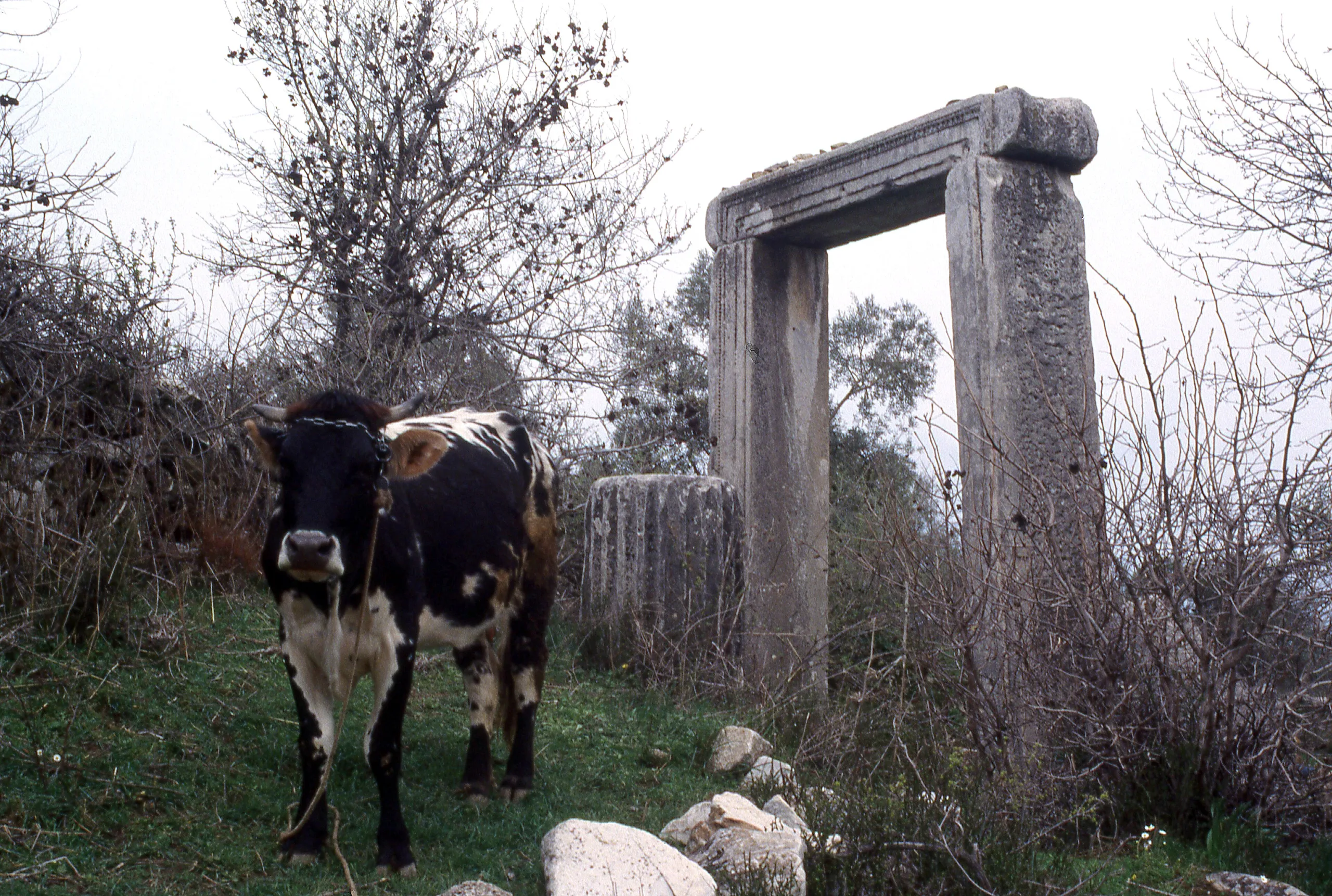
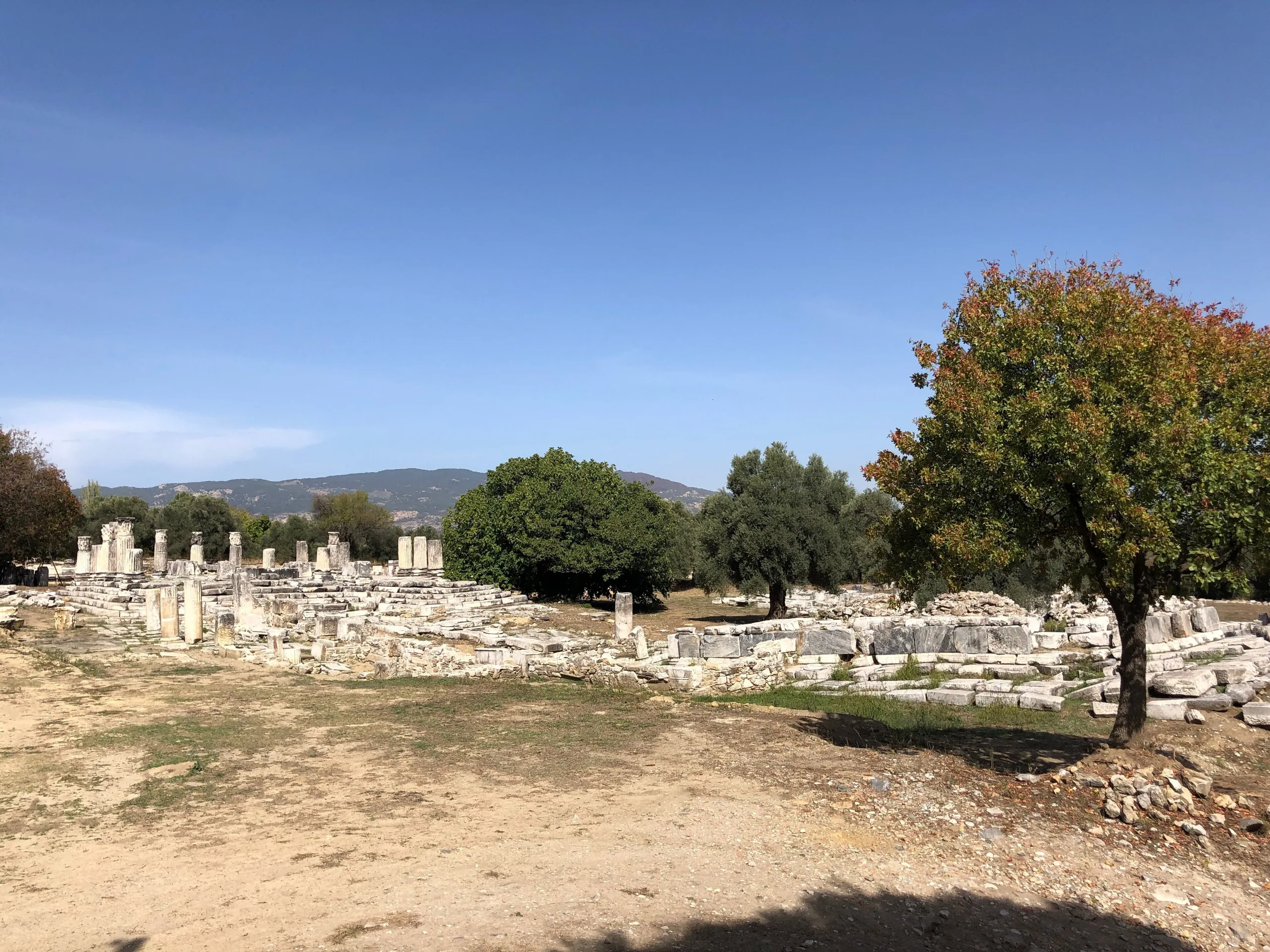
The sanctuary has a propylon (monumental gateway), a sacred way, an altar, a peribolos wall, Doric stoas and the Temple of Hecate. Walls standing up to two metres high enclose it, and they double as the back wall of the stoas. The gateway building has three entrances and, at its western end, an apse carried on four Ionic columns; a door links it to the stoa. A set of ten step-rows rises from the gate to the paved way that runs to the altar.
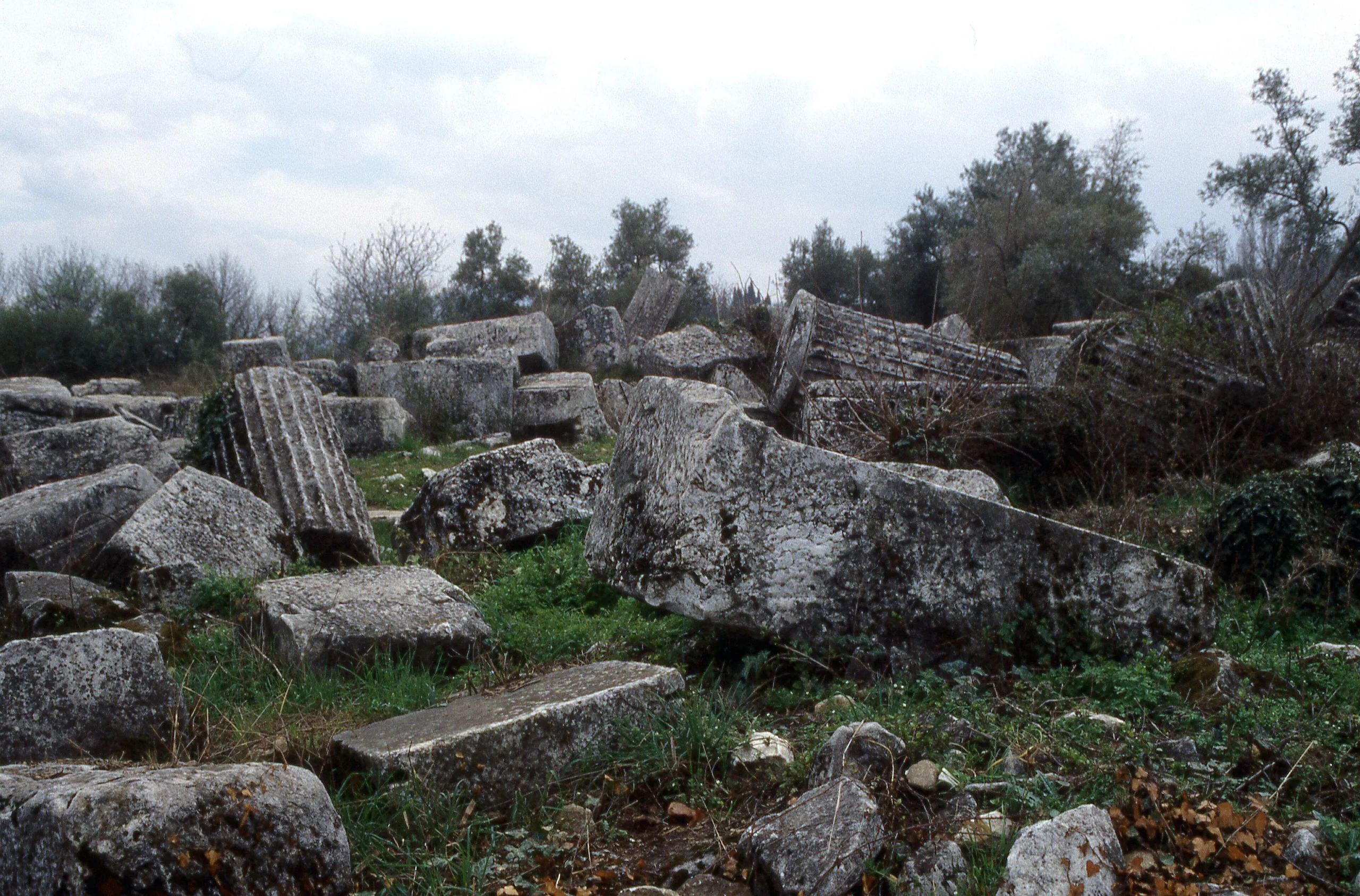
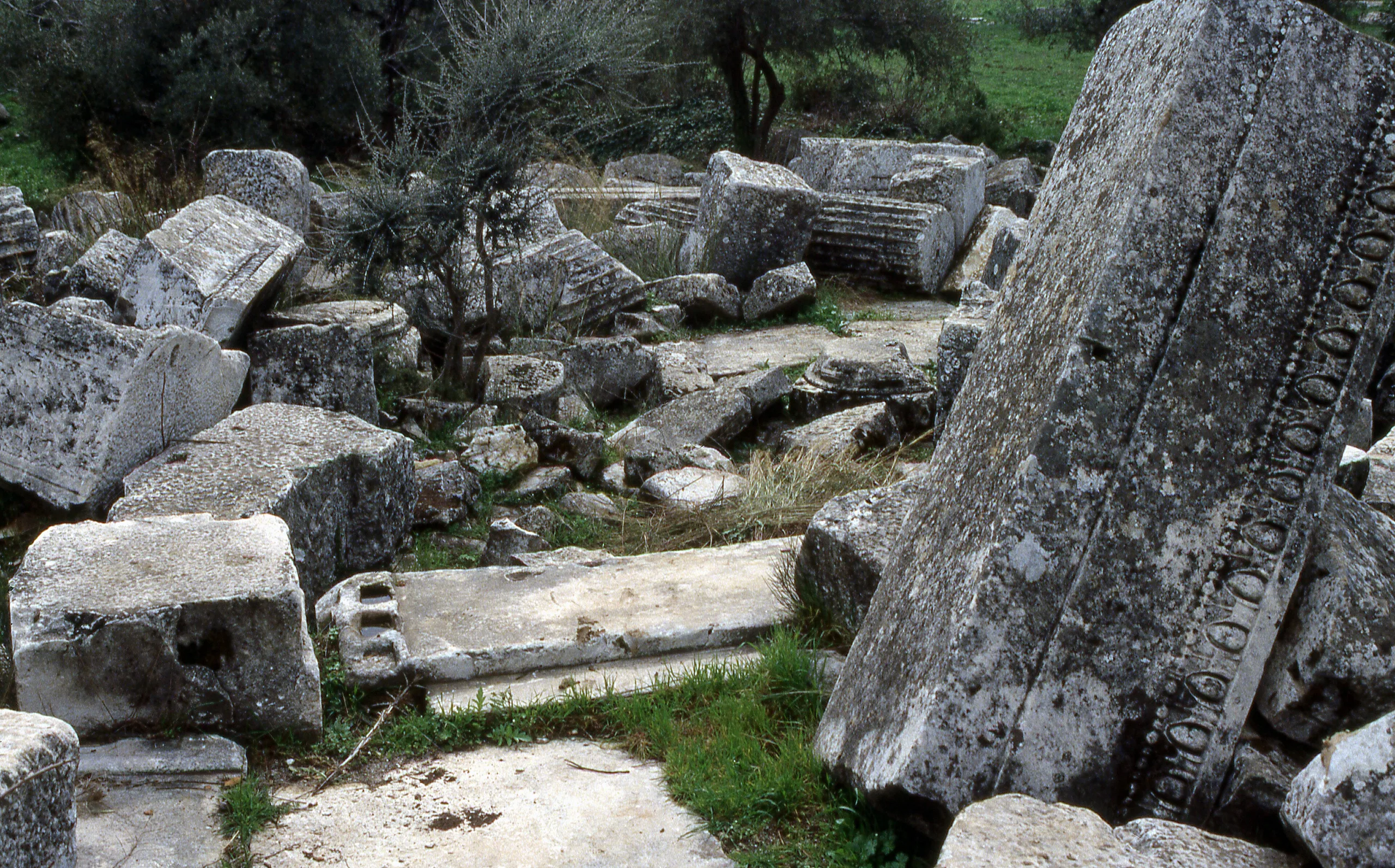
The temple stands at the exact centre of the precinct on a platform surrounded by five steps. It has a pseudo-dipteral plan with 8 by 11 columns in the Corinthian order, and two Ionic columns in the pronaos. According to the Culture Portal, a senate decree cut into the temple wall proves it existed by 81 BCE. Its building date is unknown but might fall between the late 2nd and early 1st century BCE; decoration continued into the Early Imperial period and some parts were left unfinished.
Frieze scenes
Four subjects were carved on the friezes that adorned the outside of the temple. In the east are scenes from the birth and life of Zeus. The west shows the battle of gods and giants, and the Culture Portal says Hecate takes part by wielding her torch like a weapon. For the south, the ministry mentions a gathering of Carian gods, while the Culture Portal says the scene has not been identified with certainty and the figures may stand for Carian gods and their cities. The sources part ways over the north side: the ministry describes a battle of Amazons, whereas the Culture Portal describes peace between Amazons and Greeks, with Hecate pouring a libation in honour of friendship. The ministry states that Osman Hamdi Bey took the frieze slabs to the Istanbul Archaeological Museum, where they are displayed.
Excavations
Excavation at Lagina is significant as the first dig run by Turkish scholars, directed by Osman Hamdi Bey together with Halit Ethem Bey; the ministry's English page dates it to 1891. According to the Muğla provincial directorate, work resumed in 1993 under the Muğla Museum with Ahmet Tırpan as scientific adviser. The Hellenistic-period Temple of Hecate project began as a museum rescue excavation and became a Council of Ministers excavation on 15 February 1999, continuing until 2012. The same page notes that in 2019 a Council of Ministers excavation was run by Bilal Söğüt of Pamukkale University. The MASROP article, for its part, says a team led by Söğüt has worked at Stratonikeia and Lagina on behalf of the Ministry of Culture and Tourism and Pamukkale University since 2008.
Visiting
The ministry page gives the address as Turgut neighbourhood. For current visiting information, see the ministry's official page.
Gallery
Frequently asked questions
Where is Lagina?
Why was Lagina important?
When was the Temple of Hecate built?
Where are the temple friezes?
Who has excavated Lagina?
How far is Lagina from Stratonikeia?
Sources (14)
- Lagina Örenyeri / Lagina Hecate Sanctuary (TR ve EN sayfalar) — T.C. Kültür ve Turizm Bakanlığı, Müzeler ve Ören Yerleri
- Lagina Antik Kenti - Muğla — T.C. Kültür ve Turizm Bakanlığı, Türkiye Kültür Portalı
- Lagina (Lagina Kutsal Alanı) — Muğla İl Kültür ve Turizm Müdürlüğü
- Erken Tunç Çağı'ndan Bizans Dönemine Stratonikeia ve Lagina İnsanları, MASROP E-Dergi (2022) — MASROP E-Dergi (DergiPark)
- Lagina (Pleiades place 599747) — Pleiades
Photo credits
- Photo: Buğra Kaan Ersoy, CC BY-SA 4.0 — Wikimedia Commons (resized)
- Photo: CTHOE, CC BY-SA 4.0 — Wikimedia Commons (resized)
- Photo: Buğra Kaan Ersoy, CC BY-SA 4.0 — Wikimedia Commons (resized)
- Photo: Mark Landon, CC BY 4.0 — Wikimedia Commons (resized)
- Photo: Mark Landon, CC BY 4.0 — Wikimedia Commons (resized)
- Photo: Mark Landon, CC BY 4.0 — Wikimedia Commons (resized)
- Photo: Mark Landon, CC BY 4.0 — Wikimedia Commons (resized)
- Photo: Mark Landon, CC BY 4.0 — Wikimedia Commons (resized)
- Photo: Raicem, CC BY-SA 4.0 — Wikimedia Commons (resized)