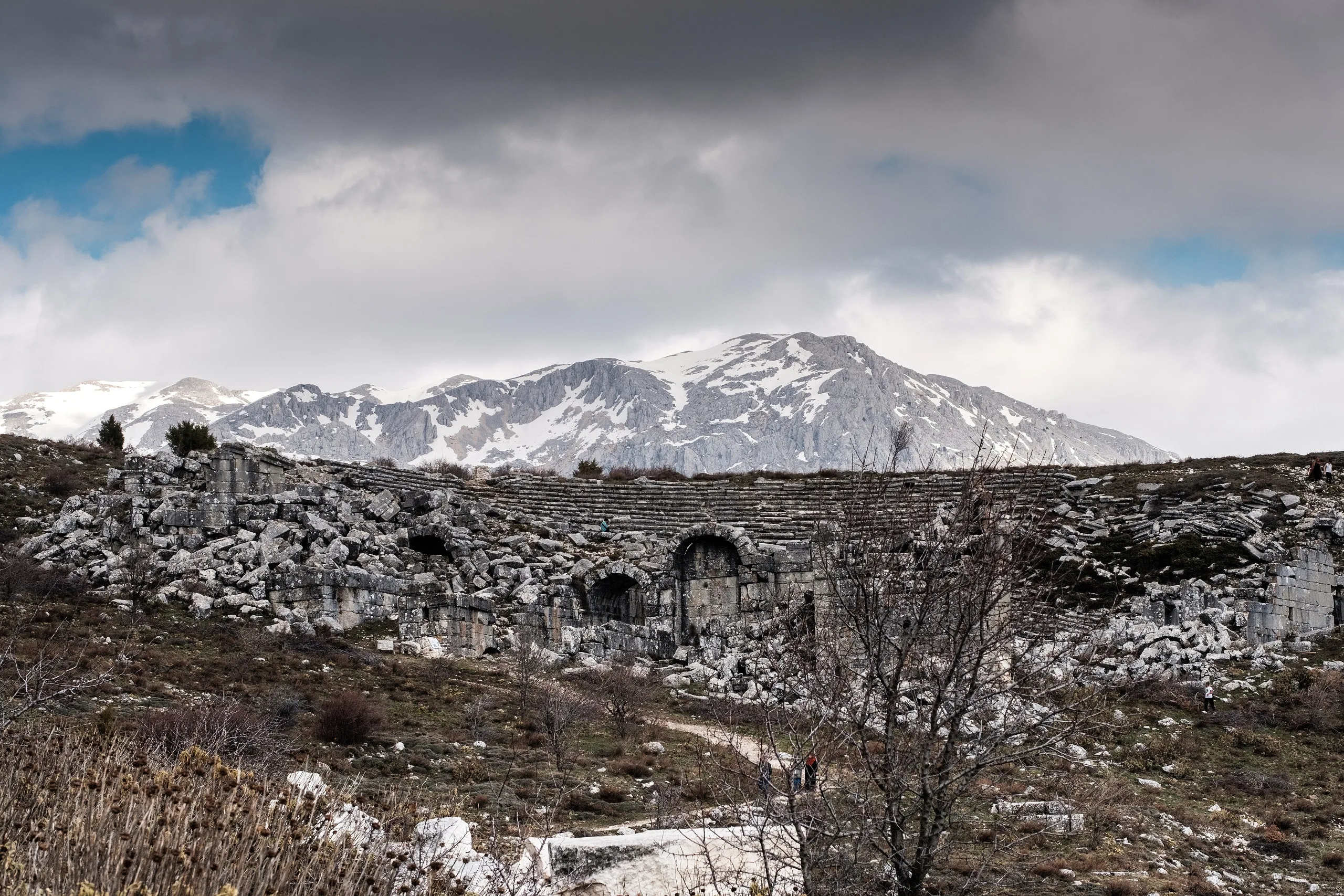
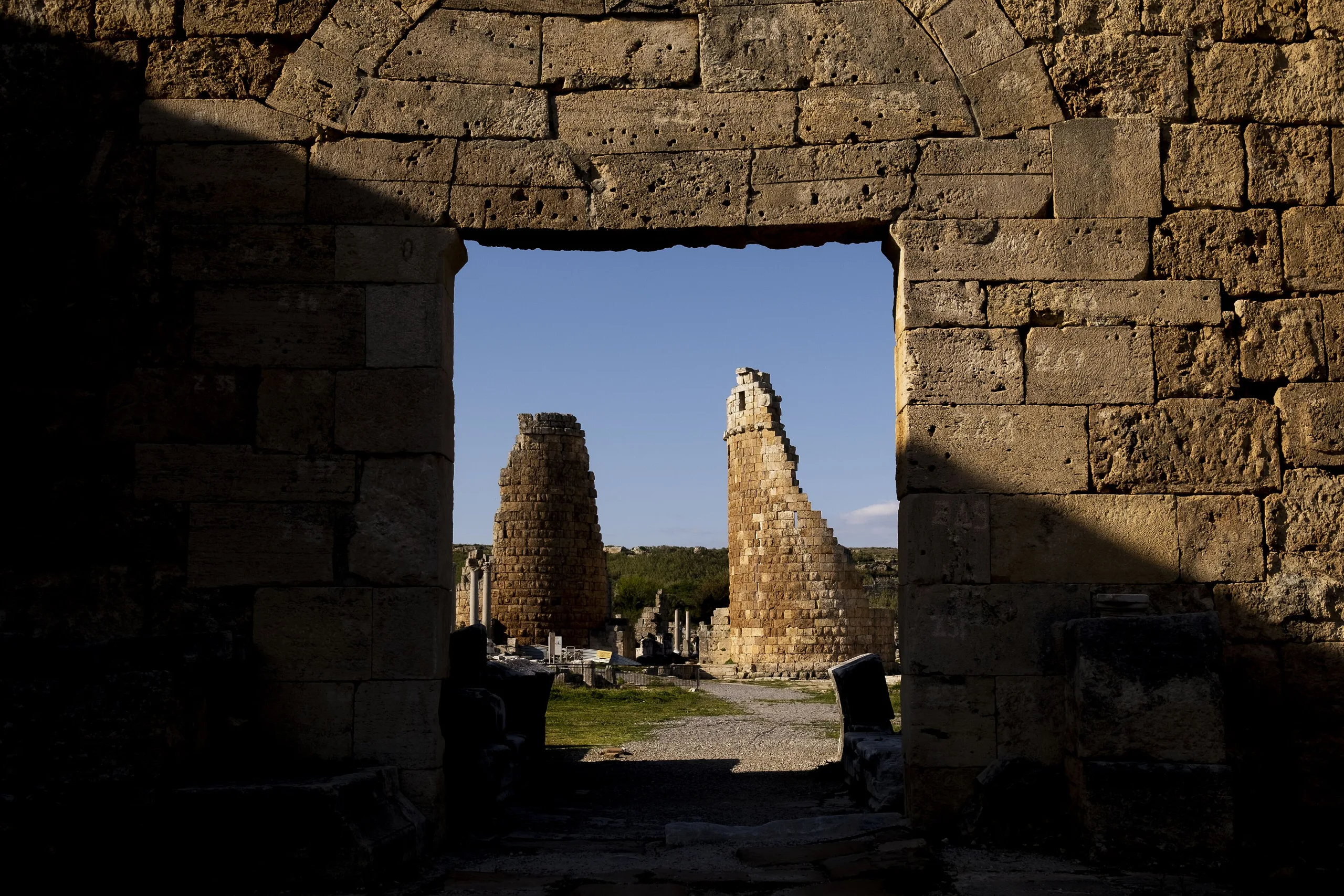
Two Hellenistic towers from the 3rd century BCE greet visitors to Perge. This Pamphylian city near Aksu is known for its colonnaded street, theatre and stadium.
Perge is an ancient city located in Turkey, Antalya. Main periods: Hellenistic Period, Roman Period, Byzantine Period, Chalcolithic Period, Bronze Age.
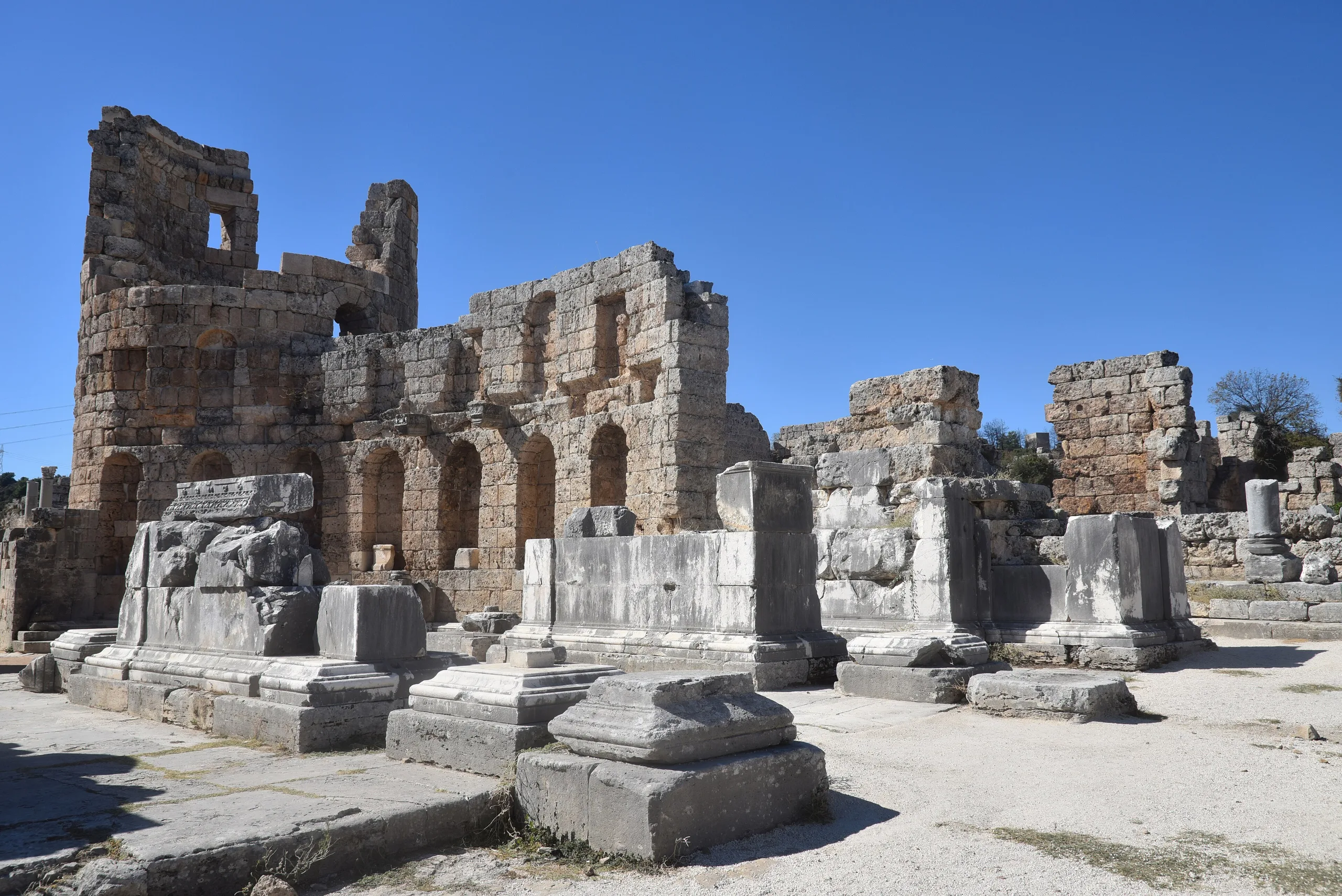
Two towers meet you at the entrance to Perge. Built in the 3rd century BCE, these Hellenistic towers are the emblem of the city. The main gate once stood between them, and behind them a street of about 500 m ran to a monumental fountain. Perge lies roughly 17-18 km east of Antalya city centre, in Aksu district, and was the capital of Pamphylia. In the Roman age it counted as one of the best-planned cities of Anatolia, famed for its architecture and its marble sculpture.
The city had three great eras: the planned Hellenistic town of the 3rd century BCE, the golden age of the Roman peace, and the Byzantine metropolitan city. Statues found here have made the Antalya Museum an important museum of sculpture.
Setting and plan
The spot lies about 2 km north of Aksu village and takes its modern name from it. Two main streets form the backbone of the city plan, one running east-west and the other north-south.
History
Pottery from the acropolis takes Perge back to the Early Bronze Age, and Late Chalcolithic finds exist as well. The name Parha in Hittite texts is associated with the city. A bronze tablet from Boğazköy records an agreement of the 13th century BCE, but nothing from that age has yet been found at Perge itself. The planning applied on the acropolis in the Late Classical period was carried down to the lower city in the Hellenistic expansion, and Perge was laid out as a planned town in the 3rd century BCE. The south gate and its round tower from that time form part of the Hellenistic Towers that still stand.
The city came under Roman rule from 133 BCE as part of the Pergamene inheritance, and in the 1st century CE it belonged to the Lycia-Pamphylia federation. The 2nd-3rd centuries CE were the golden age: with the peace and wealth of the Pax Romana the theatre, stadium, city gate, agora and macellum (a covered market), palaestra (an exercise ground), baths, water channels and monumental fountains were built. Prosperity lasted until the middle of the 3rd century.
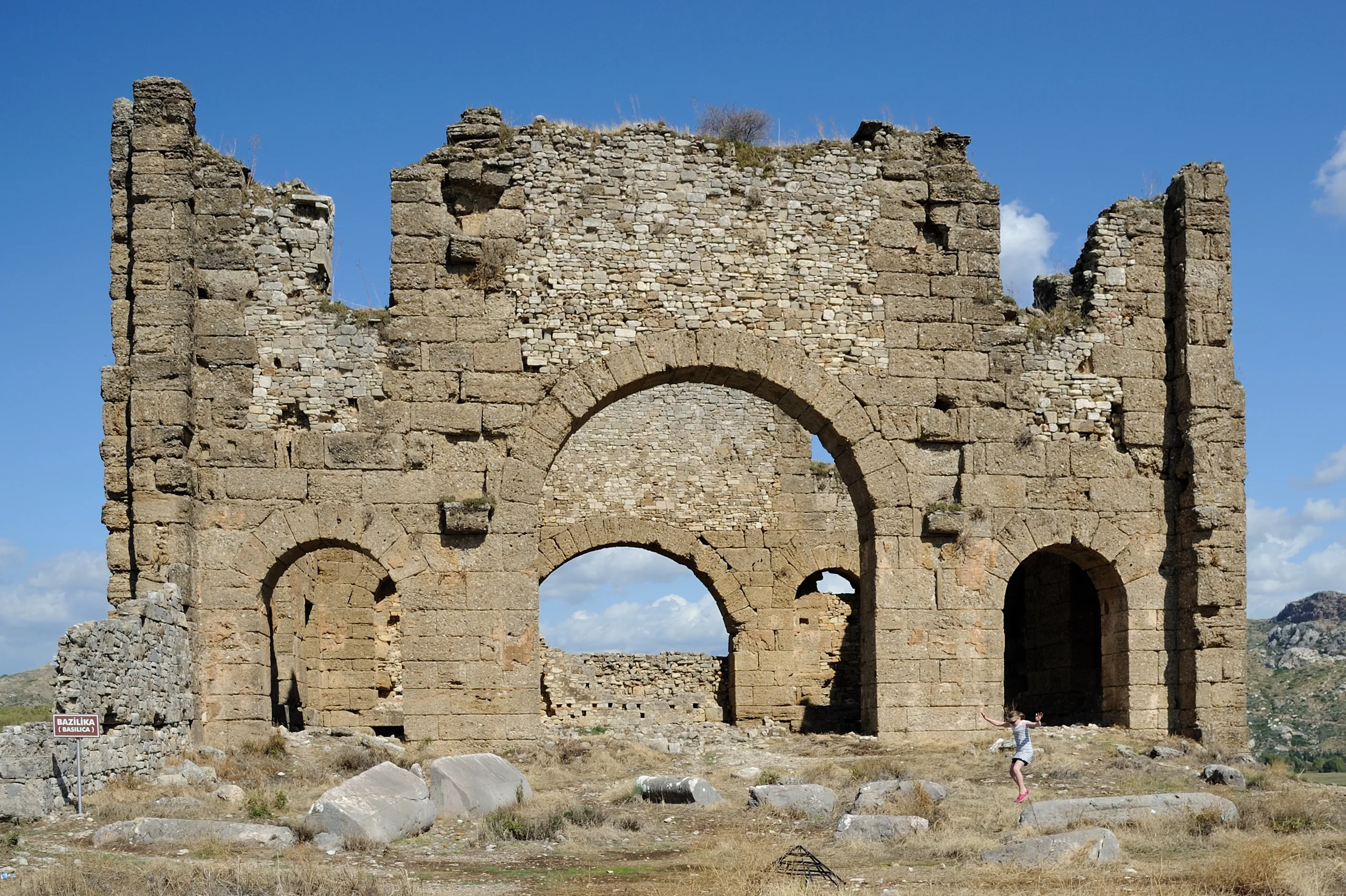
After the 5th century Perge was part of the Eastern Roman world. Christianity made it a stop for leading saints, grand basilicas rose in the 5th and 6th centuries, and it became a metropolitan city. In later centuries it passed in turn to the Seljuks, the Hamidids and the Ottomans.
People of Perge
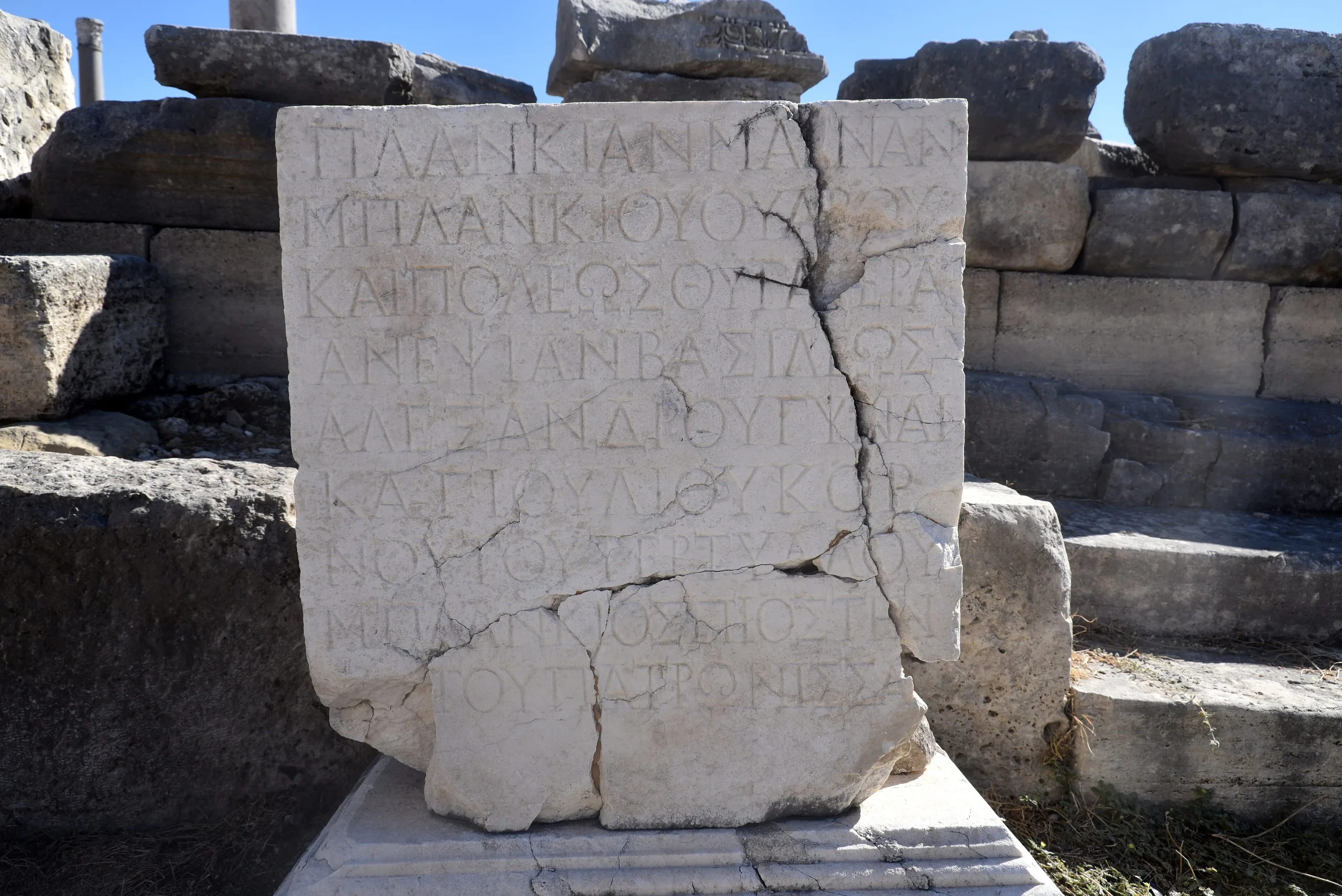
St Paul reached Perge on his missionary journey by way of the Aksu River. Because the Bible mentions them, both the city and the river are held sacred in Christianity, and the St Paul Trail, leading to Antioch in Pisidia, begins here. Women had an active role in the city's government, and statues of notable women such as Plancia Magna underline this.
Notable structures
The Hellenistic Towers and city gate
The towers and the main gate between them belong to the defensive system around the lower city. The walls, towers, bastions (projecting defensive towers) and gates of the lower city largely remain upright.
The colonnaded street and water system
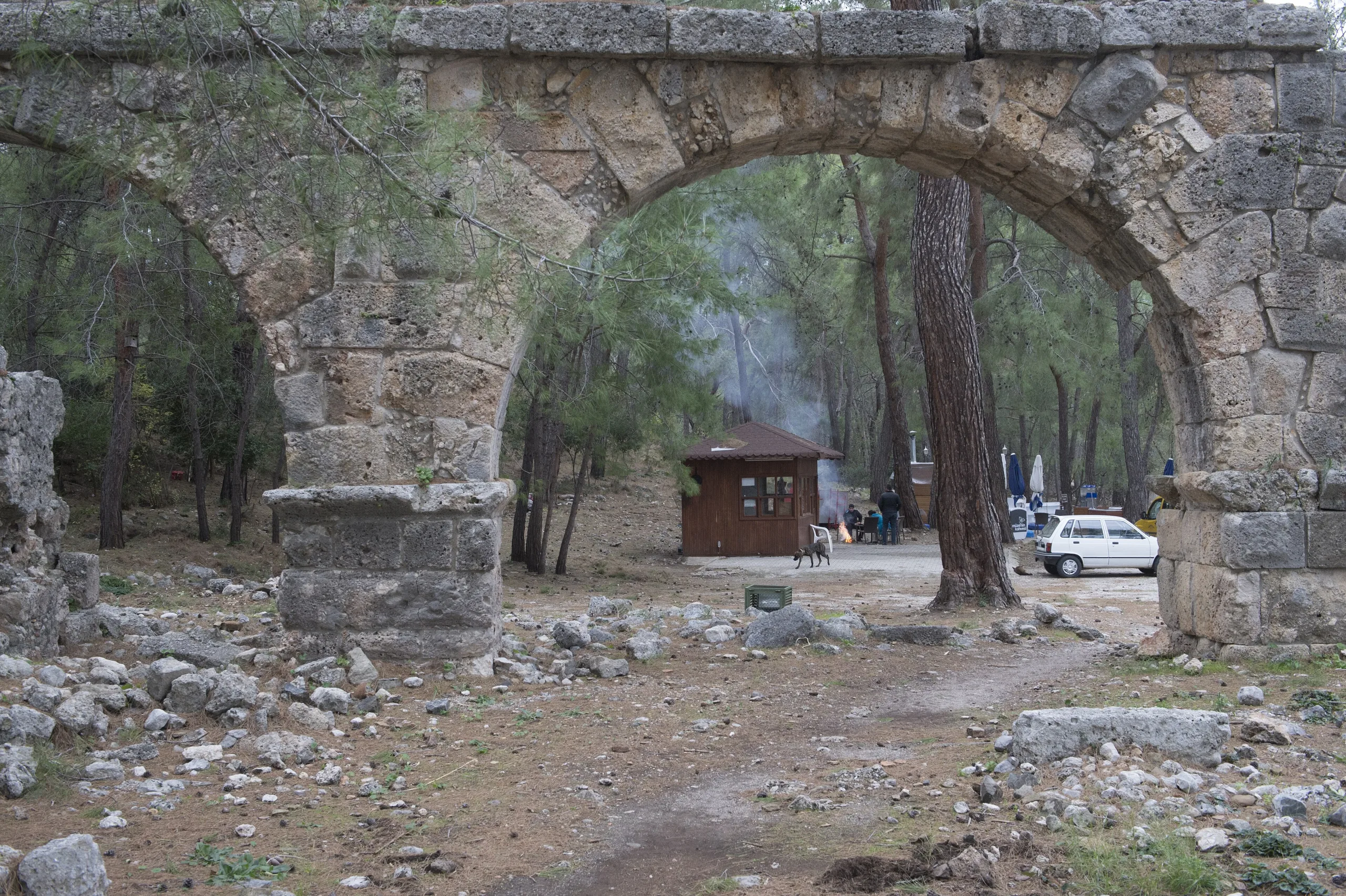
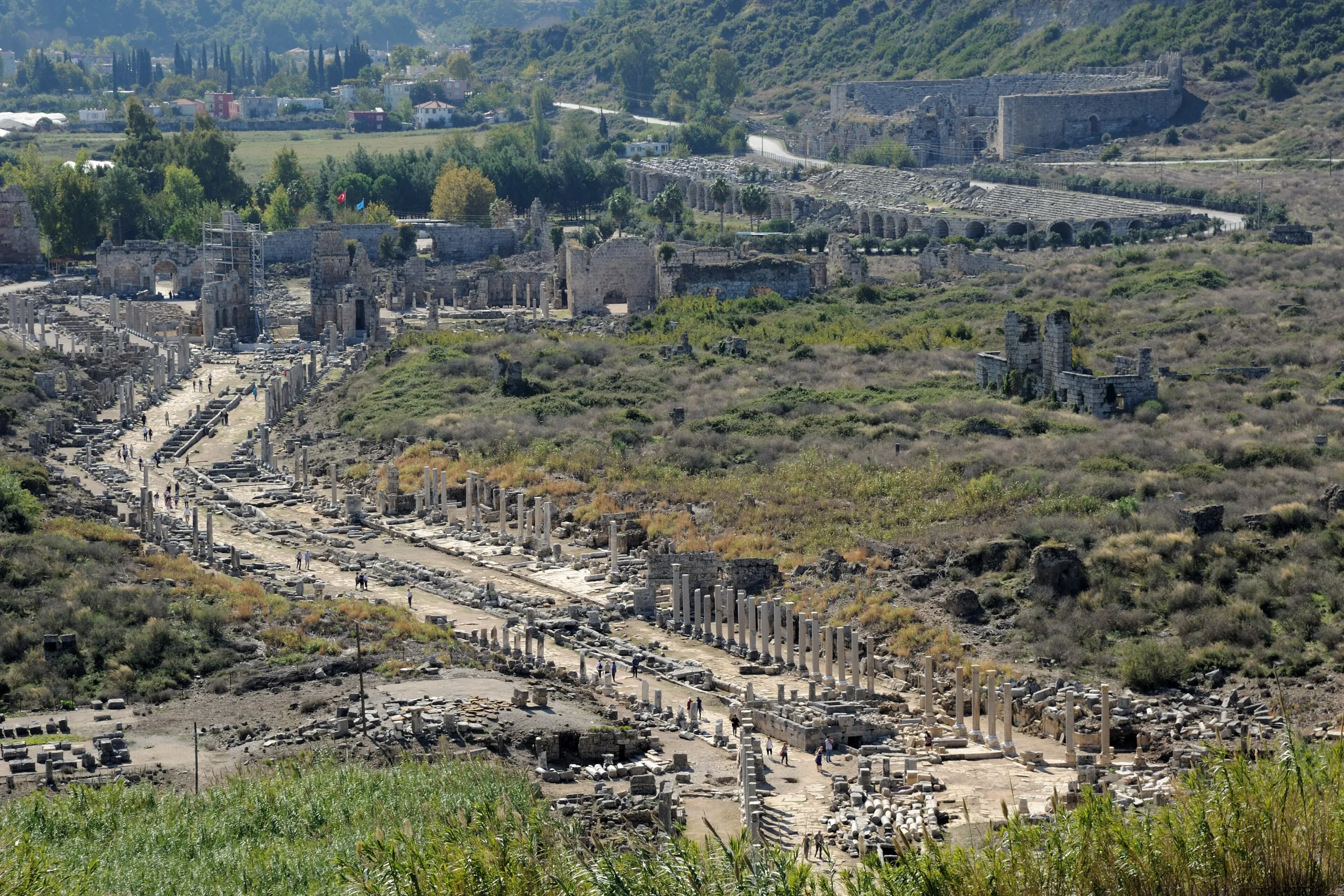
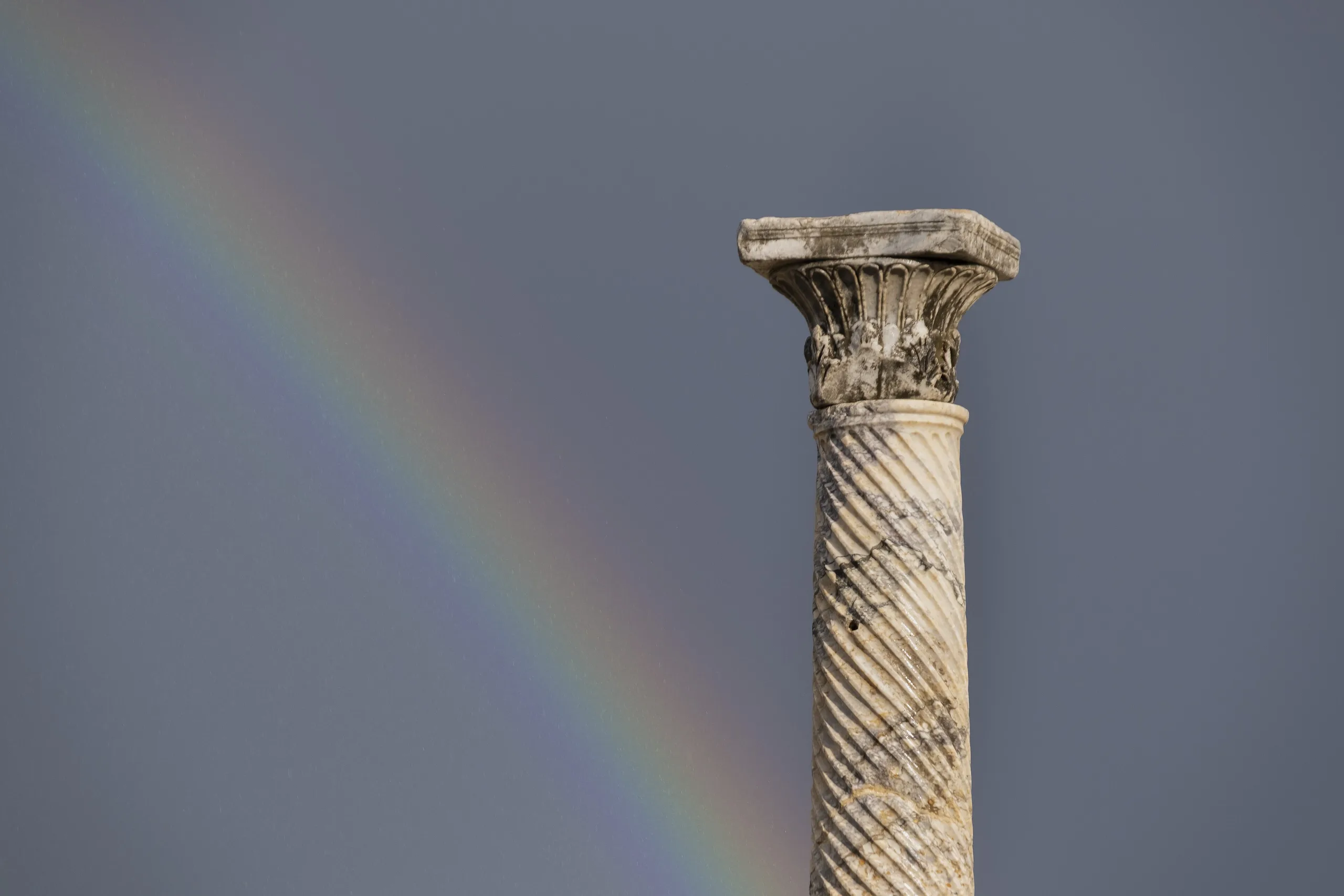
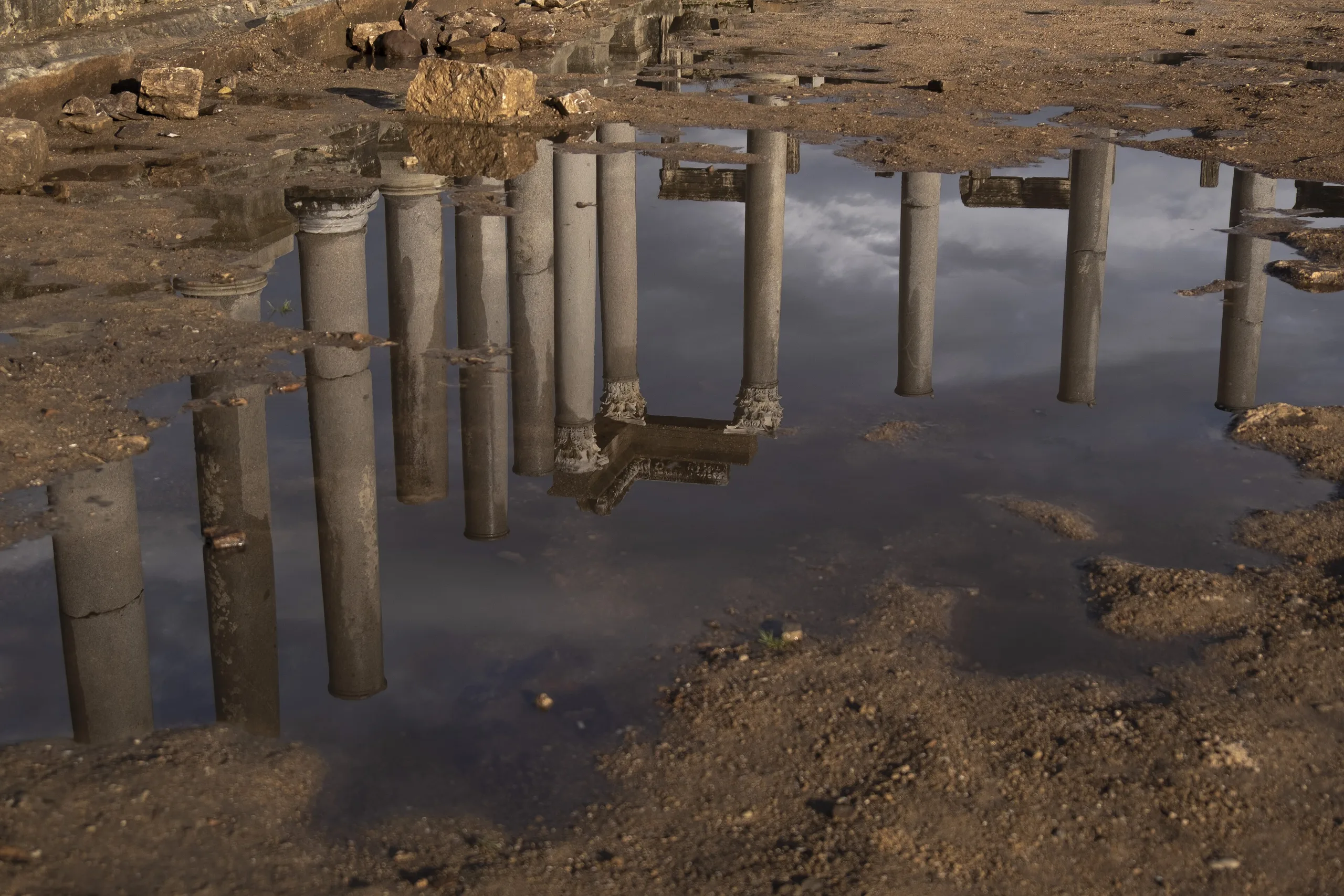
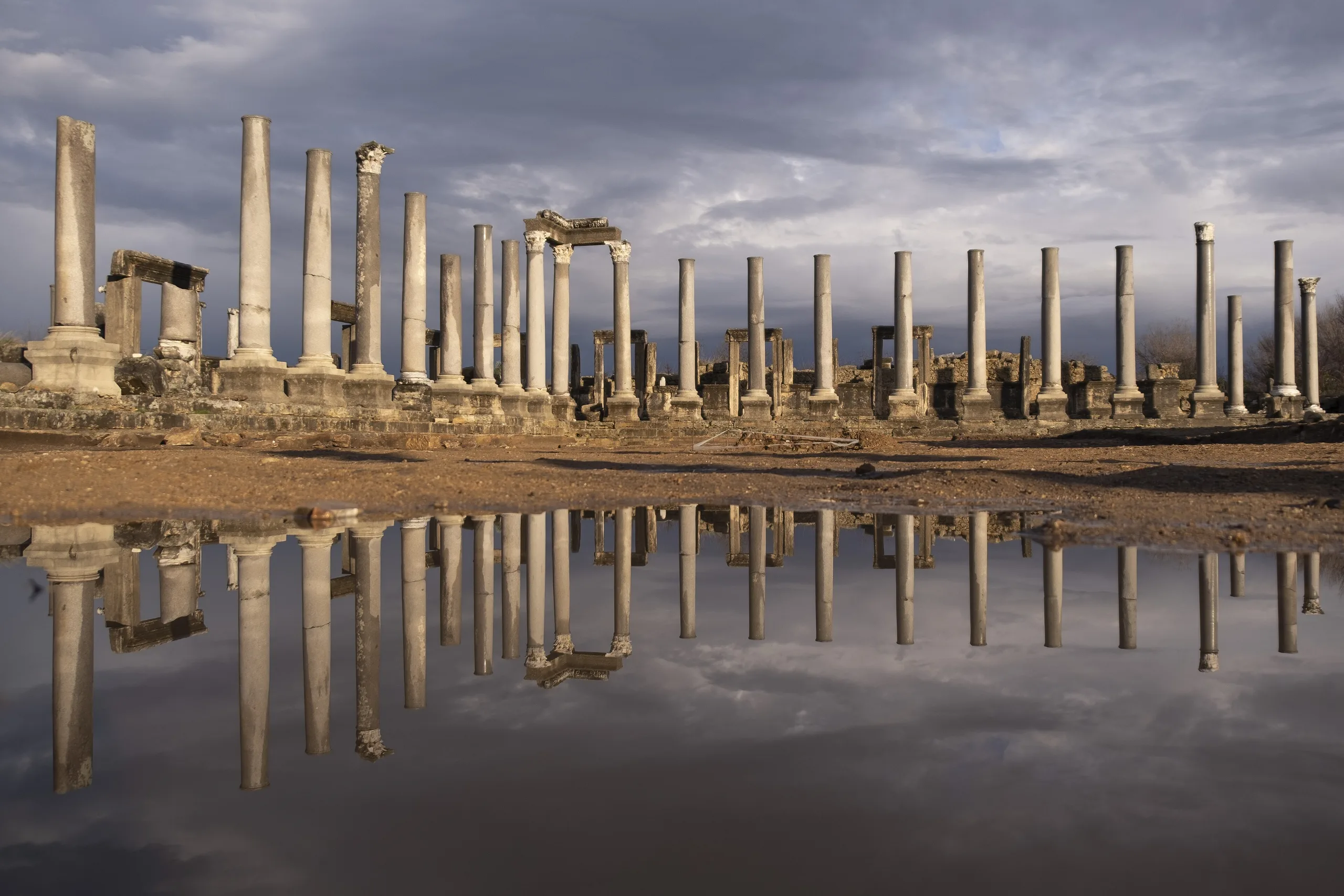
The colonnaded street, the north-south axis of the lower city, is a well-preserved example of this kind of layout. A water channel running down its centre feeds four monumental fountains and two large baths, which gives Perge the look of a city of water on the hot Pamphylian plain. Shops line both sides of the street.
In the digs led by the Antalya Museum, the Colonnaded West Street, the second main artery, and its parallel water channel were excavated, along with the Caracalla Fountain, with its palaestra facade and nymphaeum (ornamental fountain) basin. The route out to the West Necropolis was cleared in full.
Theatre and stadium
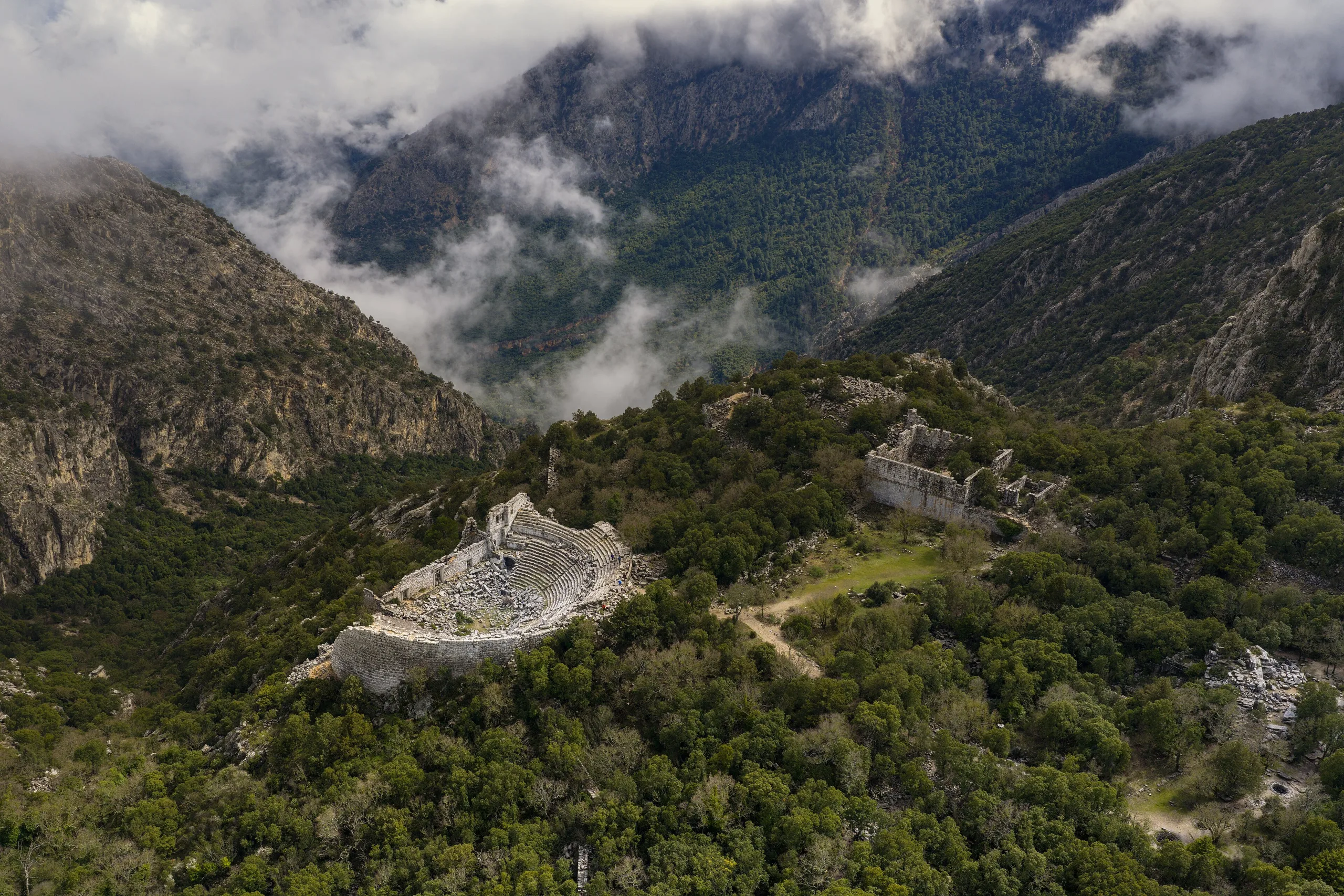
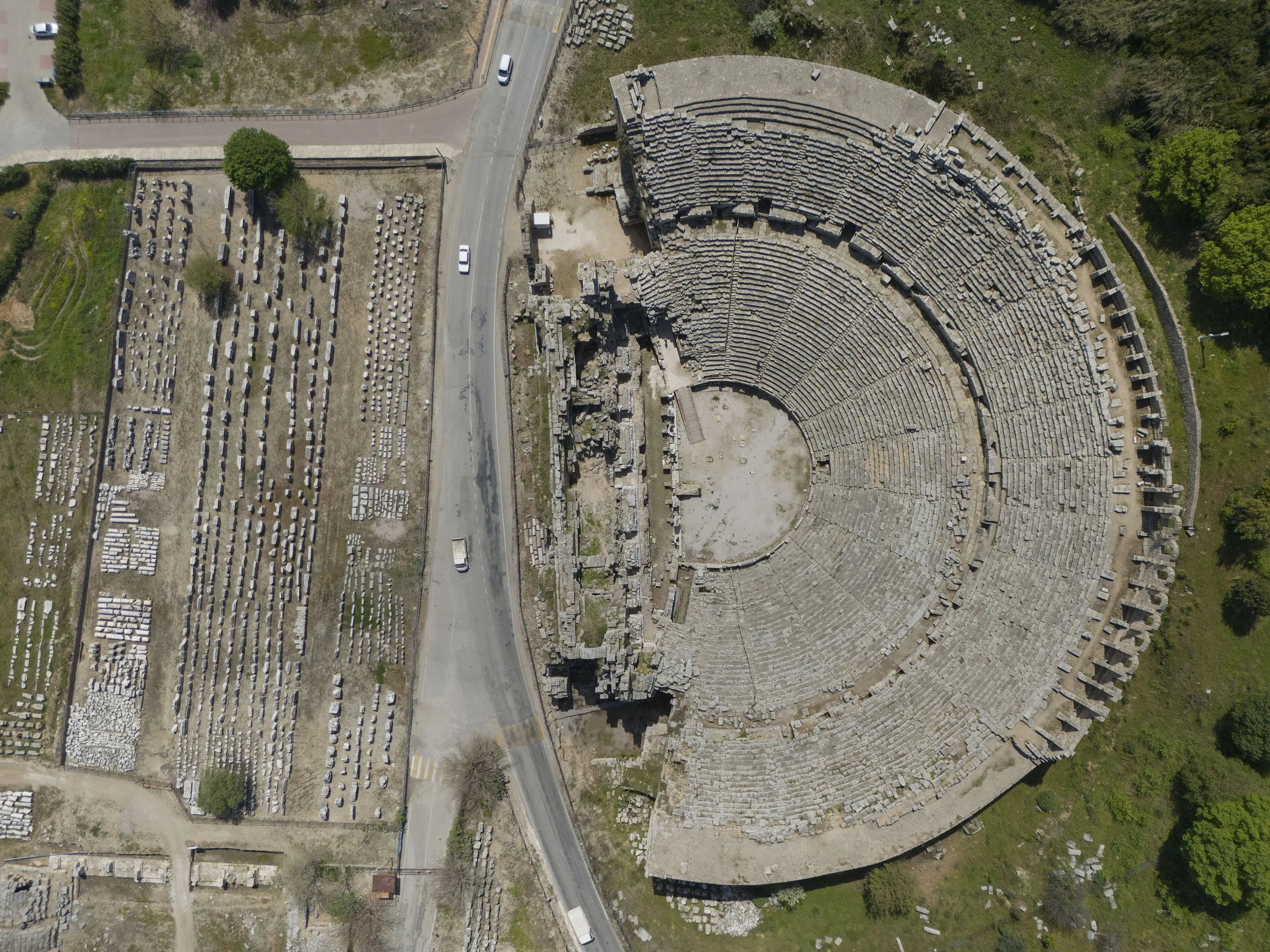
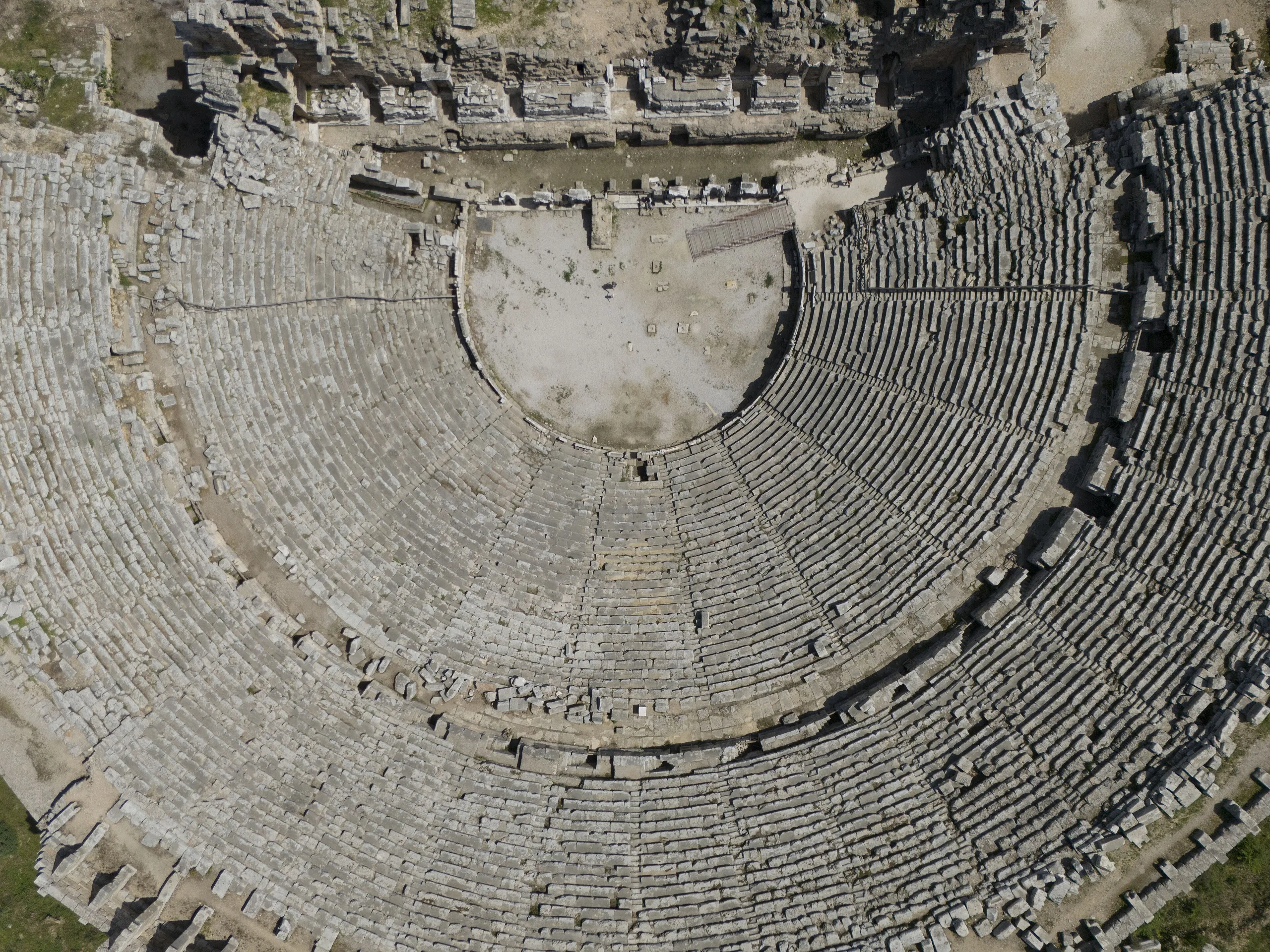
The well-kept theatre has a two-storey, richly decorated stage building put up in the 2nd century CE. It held roughly 13,000-15,000 people. Statues from the stage building are shown in the Perge Theatre Hall of the Antalya Museum. North of the theatre, the stadium seats about 12,000, is among the best-preserved ancient stadiums in the country, and ranks second in size in Anatolia.
Agora, macellum and baths
The rectangular agora and the macellum are among the public buildings of the Roman era. The South Bath and the Kestros Fountain are also among the structures excavated between 1946 and 2012. The broad area stretching from the Roman Gate to the City Square, including the Hellenistic Towers and the Agora, is now being treated as a single whole.
Excavation history
The story of excavation at Perge begins with the work of Prof. Arif Müfid Mansel in 1946, and Istanbul University carried out the systematic digging from then on. Prof. Jale İnan took over in the 1970s and Prof. Haluk Abbasoğlu in the 1990s. Since 2012 excavation, restoration and conservation have been run under the Antalya Museum. This work also included reorganising the east porticoes of the main street. Between 1946 and 2012 the theatre, South Bath, Agora and Macellum, Kestros Fountain and Colonnaded Main Street were dug.
Finds
Perge is known for its marble sculpture. Statues excavated here have made the Antalya Museum one of the important Roman sculpture museums of the world.
World Heritage and protection
Turkey proposed Perge for the UNESCO World Heritage Tentative List on 6 February 2009 under criterion (ii). The proposal stresses the importance of the city planning of the Late Classical, Hellenistic and Roman Imperial periods, and its defensive system. The site has been protected as a first-, second- and third-degree archaeological site since 1981.
Visiting
The site is on Perge Caddesi in the Barbaros neighbourhood. The Müzekart is valid for Turkish citizens only; for current hours and fees, see the official museum page.
Gallery
Frequently asked questions
Where is Perge?
When was Perge founded?
When was Perge's golden age?
Which buildings are Perge's emblem?
Why is Perge important to Christianity?
Is Perge a World Heritage Site?
Sources (15)
- Perge Örenyeri / Perge (TR ve EN sayfalar) — T.C. Kültür ve Turizm Bakanlığı, Müzeler ve Ören Yerleri
- Perge Antik Kenti (Antalya) — T.C. Kültür ve Turizm Bakanlığı, Kültür Varlıkları ve Müzeler Genel Müdürlüğü
- Perge (Türkiye Kültür Portalı) — T.C. Kültür ve Turizm Bakanlığı, Antalya İl Kültür ve Turizm Müdürlüğü
- Perge (Antalya İl Kültür ve Turizm Müdürlüğü) — T.C. Antalya Valiliği, İl Kültür ve Turizm Müdürlüğü
- Archaeological Site of Perge (Tentative List 5411) — UNESCO Dünya Miras Merkezi
- Perge (Pleiades place 639048) — Pleiades
Photo credits
- Photo: Mehmety11maz, CC BY-SA 4.0 — Wikimedia Commons (resized)
- Photo: Saffron Blaze, CC BY-SA 3.0 — Wikimedia Commons (resized)
- Photo: Carole Raddato from FRANKFURT, Germany, CC BY-SA 4.0 — Wikimedia Commons (resized)
- Photo: Carole Raddato from FRANKFURT, Germany, CC BY-SA 4.0 — Wikimedia Commons (resized)
- Photo: Mehmety11maz, CC BY-SA 4.0 — Wikimedia Commons (resized)
- Photo: Mehmety11maz, CC BY-SA 4.0 — Wikimedia Commons (resized)
- Photo: Mehmety11maz, CC BY-SA 4.0 — Wikimedia Commons (resized)
- Photo: Mehmety11maz, CC BY-SA 4.0 — Wikimedia Commons (resized)
- Photo: Mehmety11maz, CC BY-SA 4.0 — Wikimedia Commons (resized)