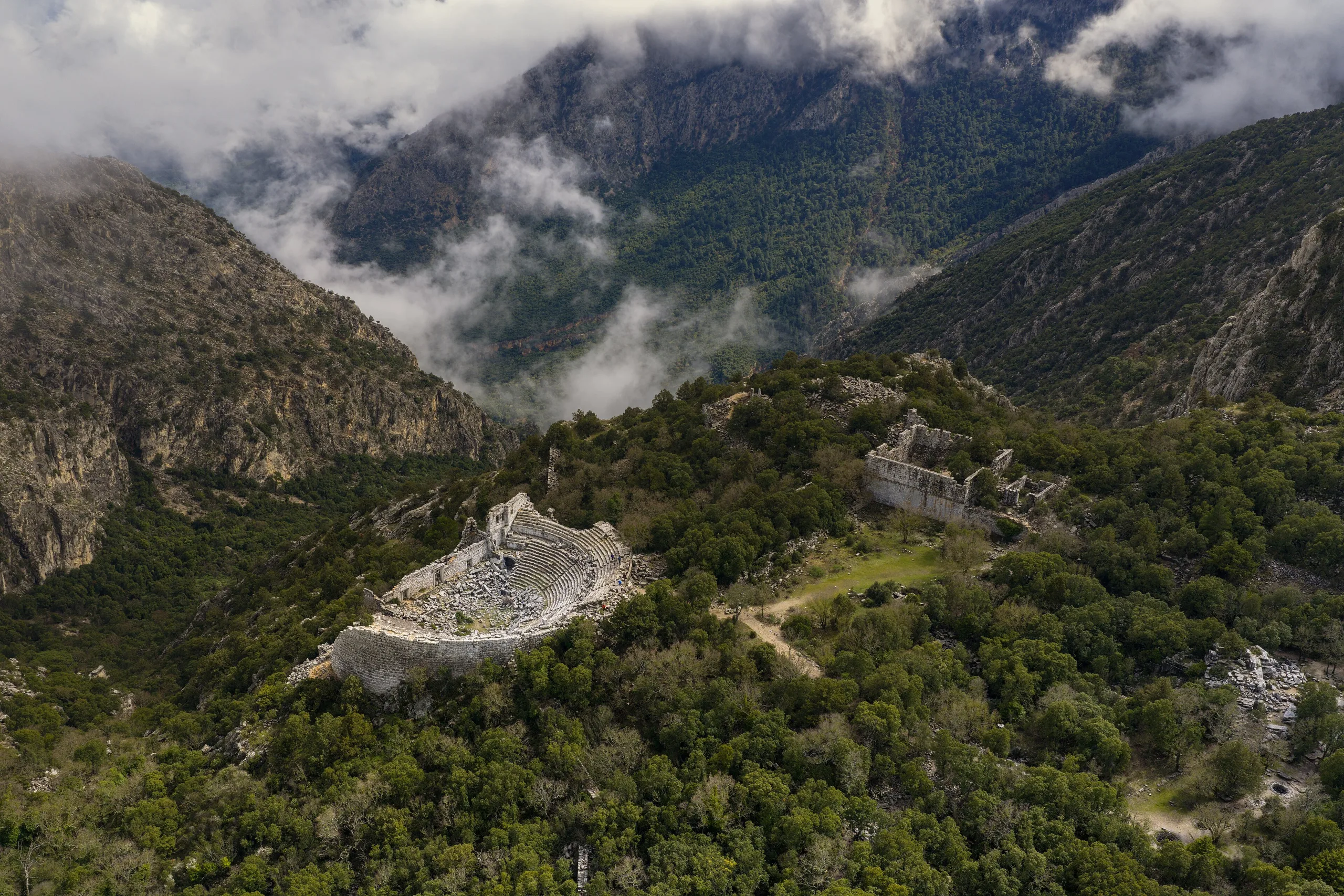
Sagalassos is a Pisidian city high in the Taurus at 1500-1700 m. Fountains, a library and a stadium turned into churches make it one of Asia Minor's best-preserved ancient cities.
Sagalassos is an ancient city located in Turkey, Burdur. Main periods: Hellenistic Period, Roman Period, Byzantine Period.
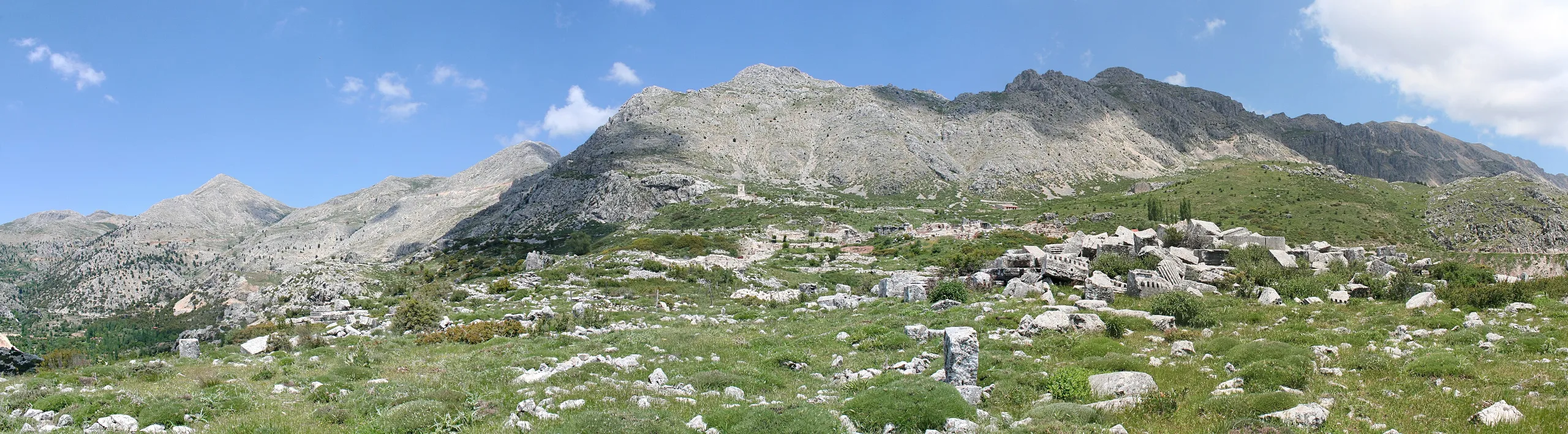
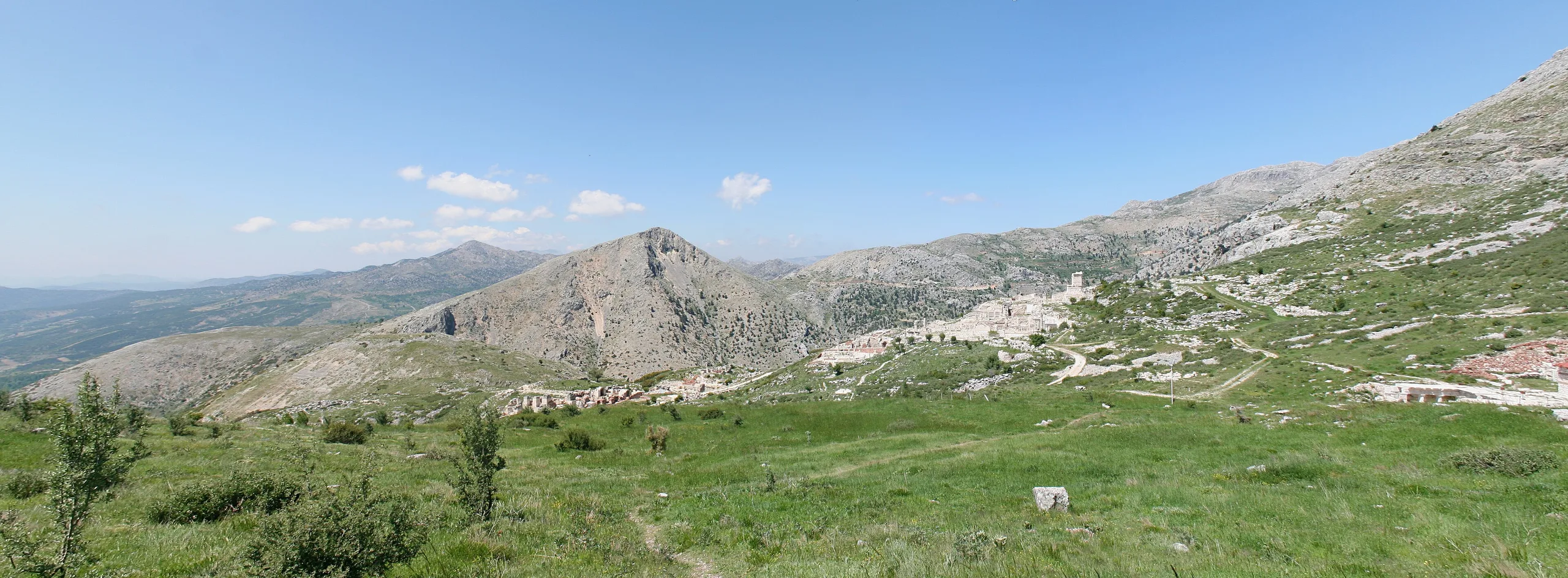
To reach Sagalassos you leave the Burdur-Antalya road at km 14 and climb about 20 km into the Taurus, up to a height of 1500-1700 m. On this slope in Ağlasun district of Burdur, one of the leading cities of Pisidia stood in Roman times. Because most of the original stones of its monumental buildings could be recovered, it ranks among the best-preserved ancient cities of Asia Minor.
Roman-period fountains, a library and agoras are part of its fame, as is its role as one of the longest-lived pottery centres of the ancient world. A Belgian team directed the work for a long time; today the project continues under Bilkent University.
Setting
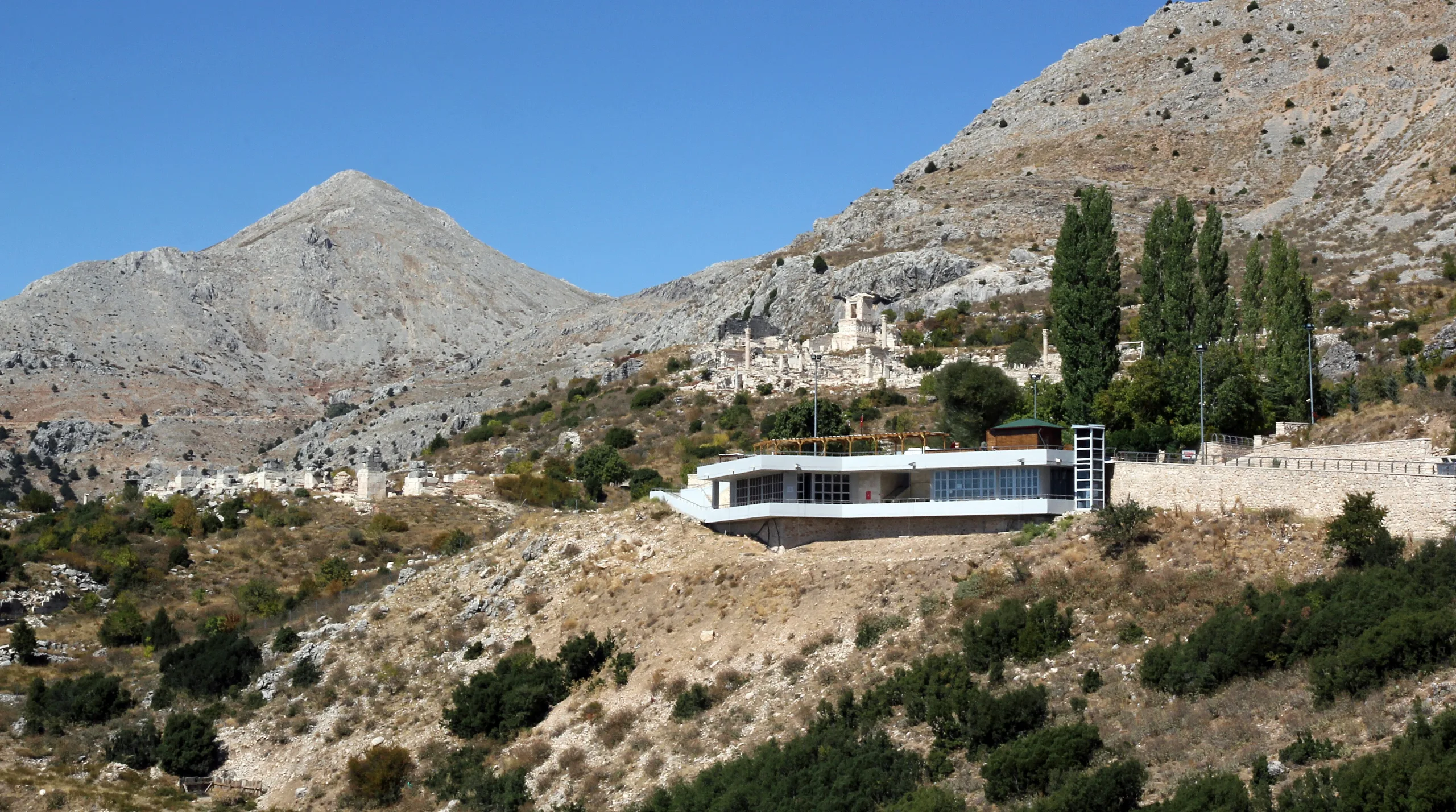
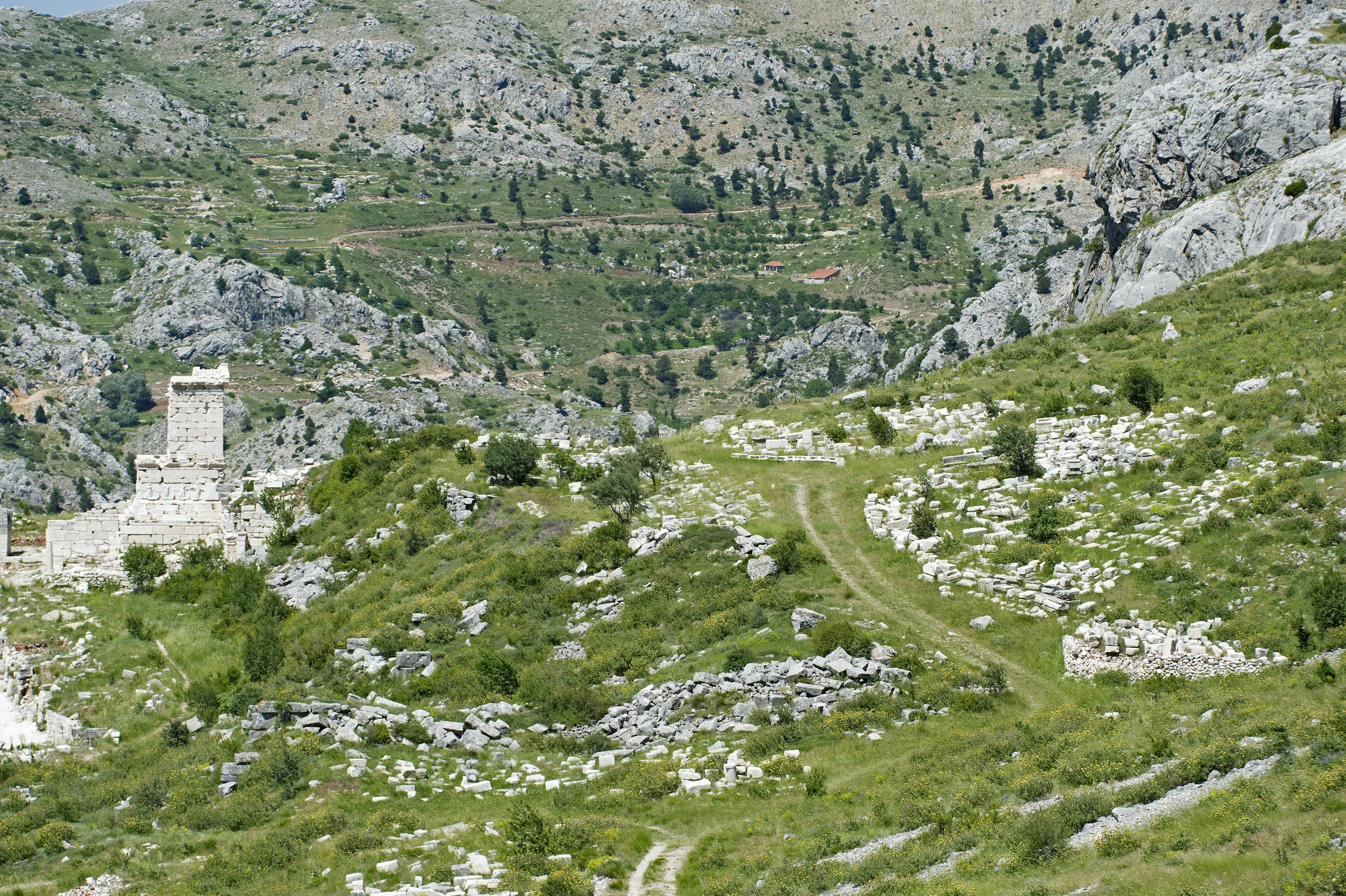
The city was laid out on terraced ground above Ağlasun, and its monumental centre was shaped to fit those terraces. People still live in the Ağlasun Valley below.
History
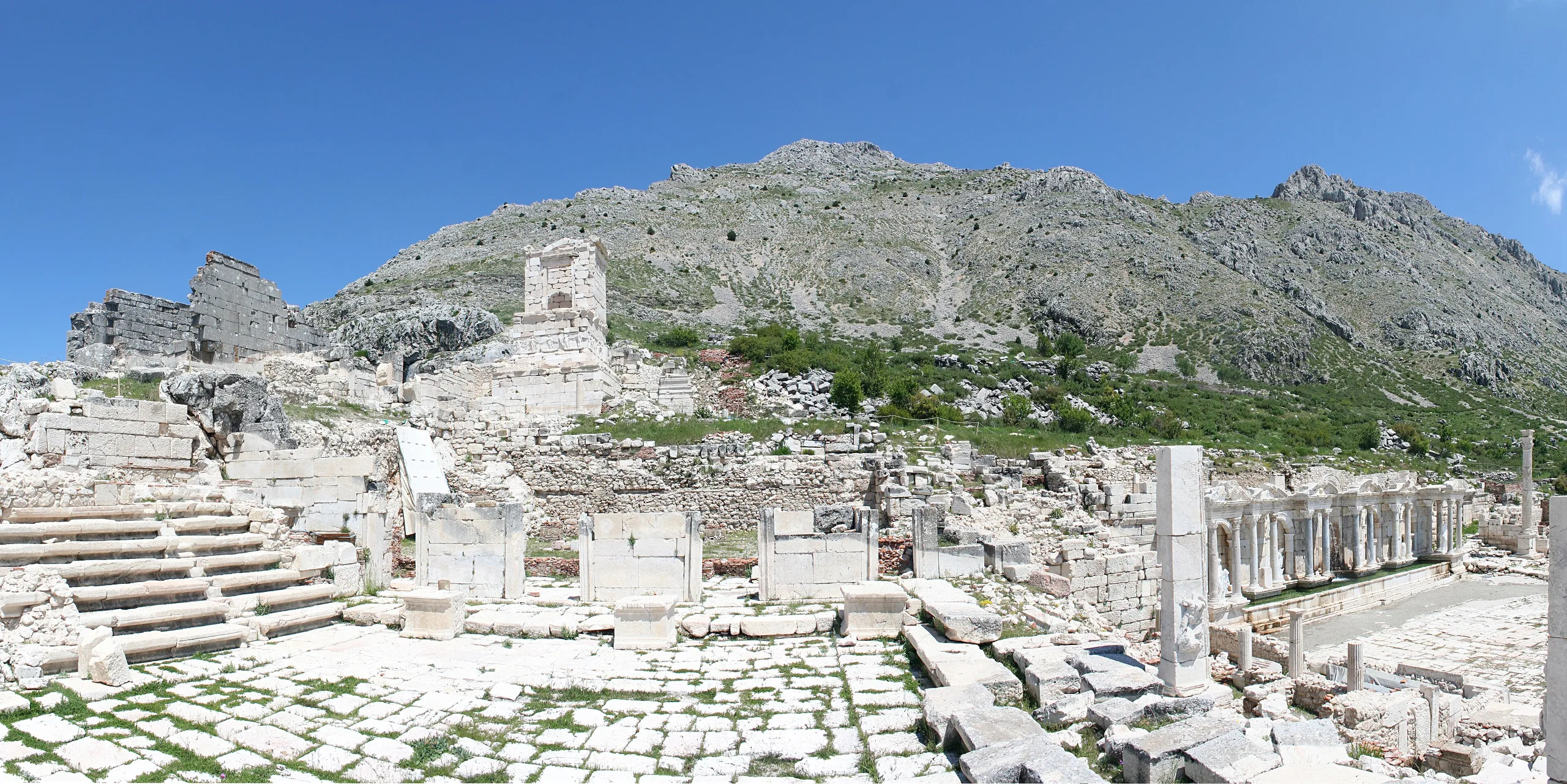
The earliest traces of settlement on the spot are about 12,000 years old. The name Sagalassos first appears in writing in accounts of Alexander the Great's campaigns. The city was under the Syria-based Seleucid kingdom until 189 BCE and then came under Pergamon. Even before Roman rule it had a Bouleuterion, or council house, a Doric temple and a monumental fountain. The Heroon, a monumental tomb for a heroised person, came at the start of the Roman period.
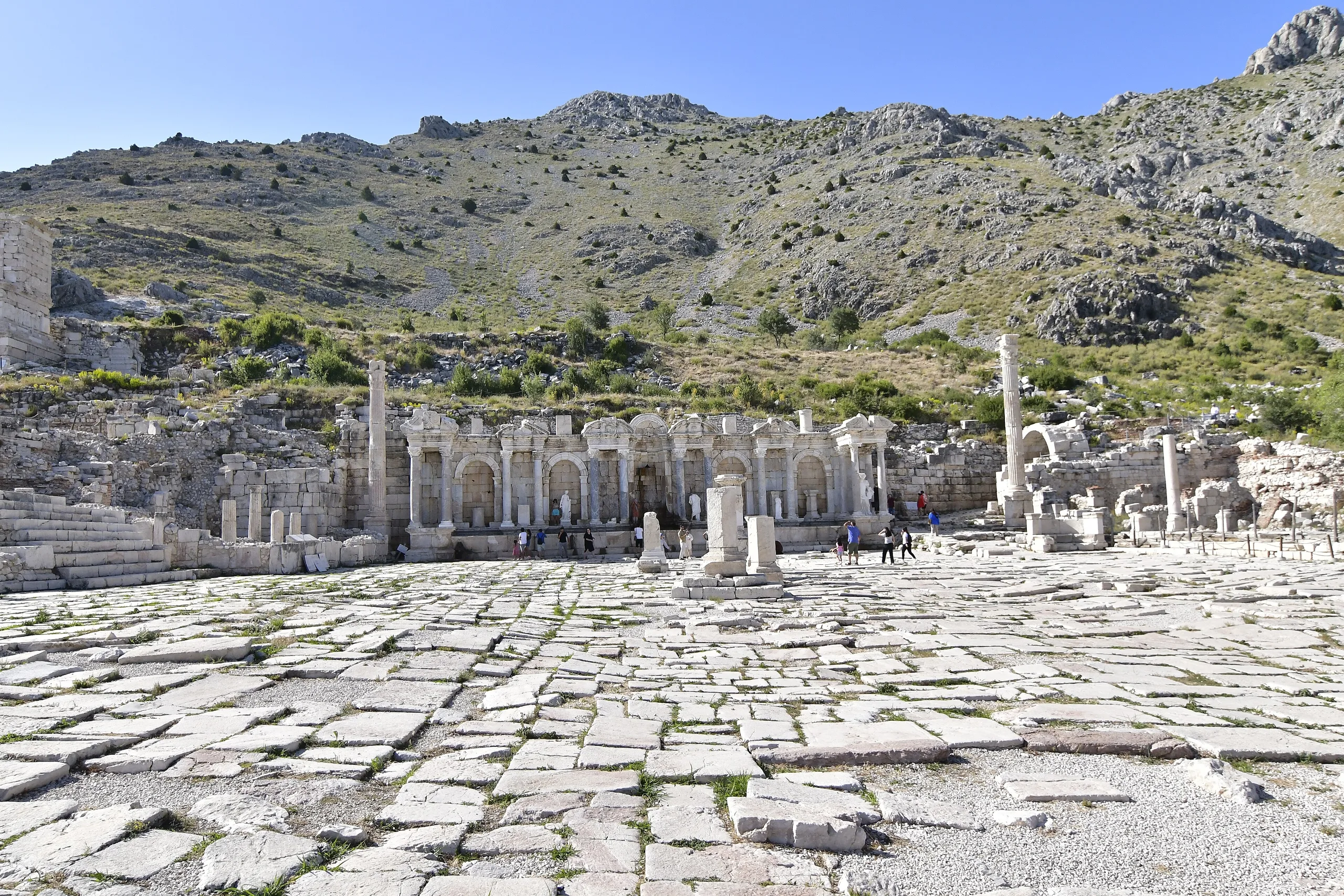
Under Hadrian (117-138 CE) the city was reorganised as the imperial-cult centre of Pisidia. The Antonine Fountain, a bathhouse, the theatre, the Neon Library, the Macellum (a covered market) and a temple of Antoninus Pius belong to that era. Much of the wealth came from Terra Sigillata pottery, a glossy red tableware sought across the Mediterranean and made from the clay beds of the Çanaklı Plain from the Hellenistic period into Late Antiquity. Sagalassos Red Slip Ware, produced locally and shipped around the eastern Mediterranean, counts among the project's most important discoveries.
In the sixth century natural disasters and disease set the city back; its record runs to about AD 640. Organised settlement came to an end in the 13th century, but the local population kept living in the Ağlasun Valley below and never really forgot the place. The French traveller Paul Lucas, journeying for Louis XIV, saw it in 1706, and that visit is taken as the discovery.
Notable structures
Neon Library, fountains and Heroon
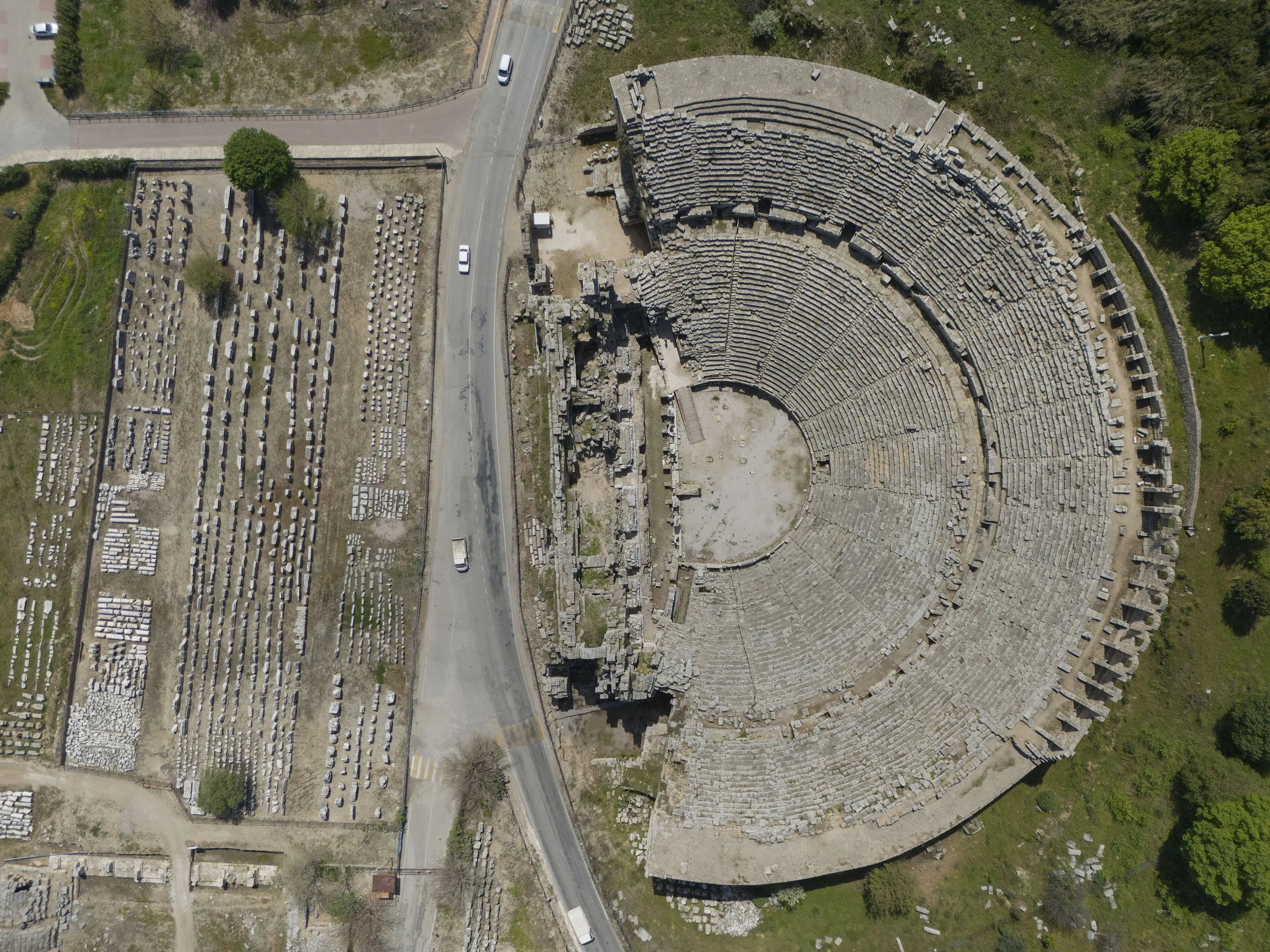
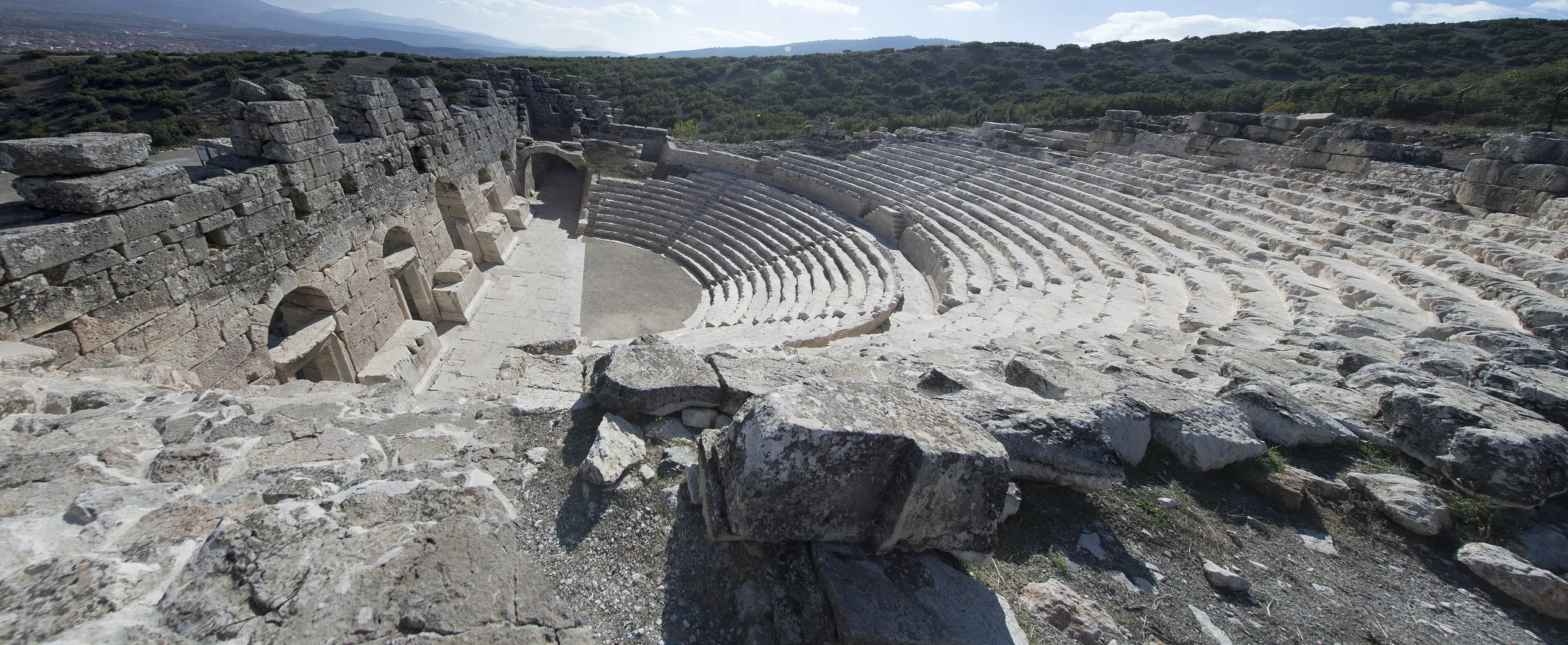
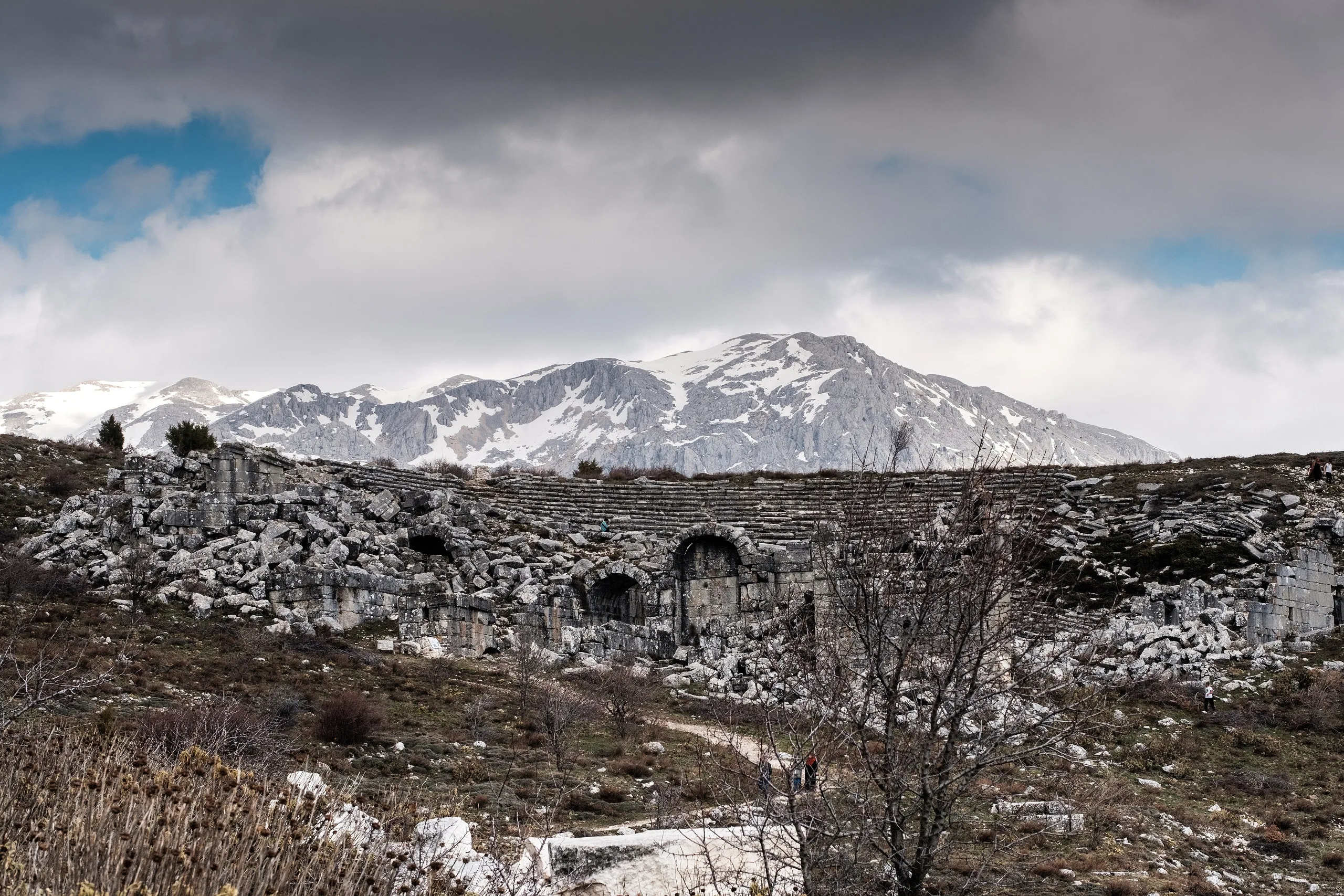
The Heroon, the Antonine Fountain, the Hellenistic Fountain and the Neon Library have all been restored. Still standing are the theatre, the City Villa, the Macellum, two agoras, the Roman Bath, the Colonnaded Street and temples for Apollo Klarios and Antoninus Pius.
The stadium
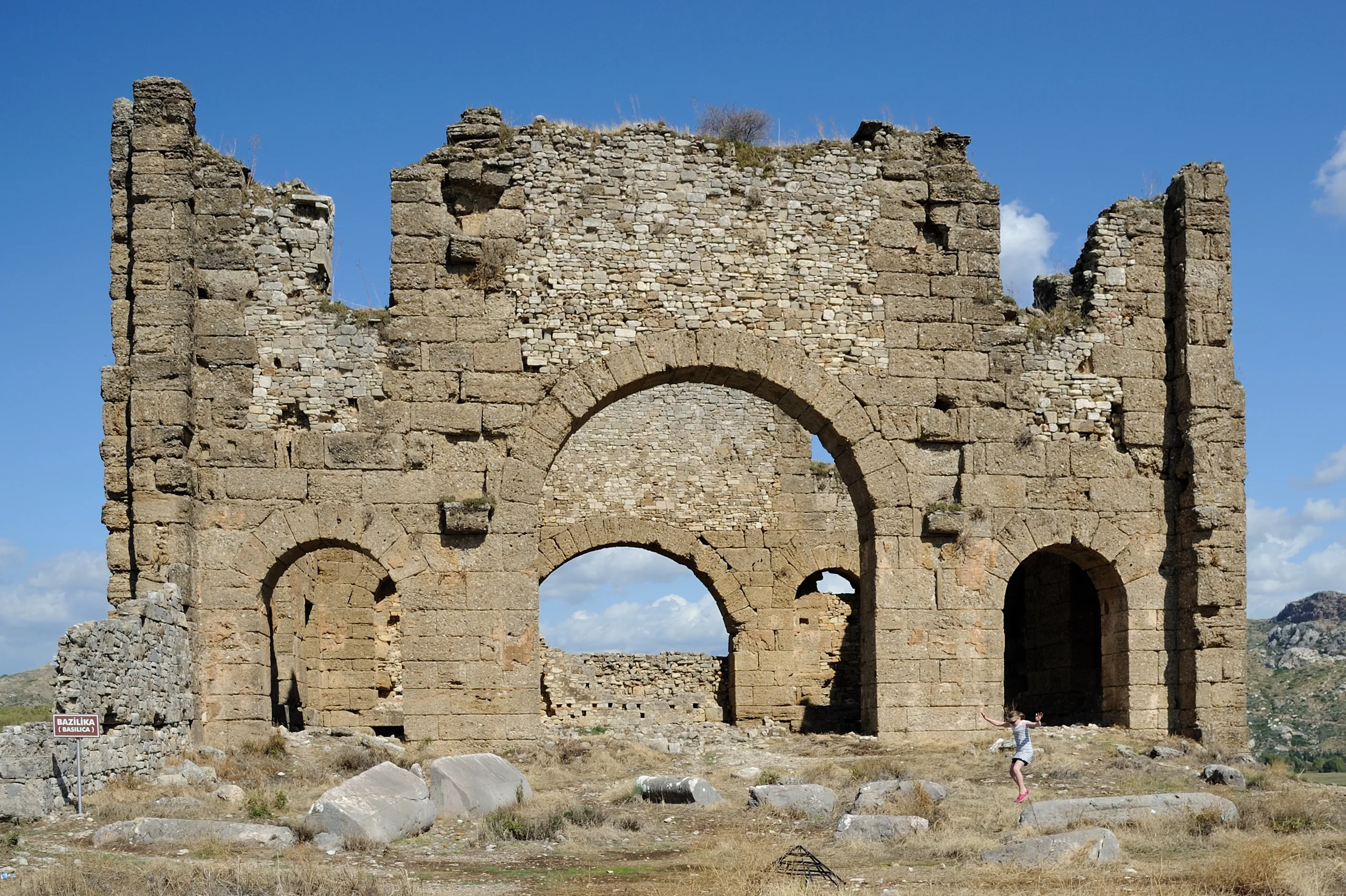
On the western edge of the city, the stadium once staged the athletic events of the Klareian festival, held for Apollo Klarios, along with gladiatorial games and animal hunts tied to the imperial cult. Between the late 4th and the 6th century it went through an unexpected change: two monumental churches were built inside it, one a transept basilica, meaning a church with projecting side arms. The builders reused blocks from the neokoros sanctuary of Antoninus Pius, a precinct dedicated to the imperial cult, and from the Temple of Dionysos. In those stones the move from the old religion to the new can be read directly.
Together with a monumental approach avenue, a Trajanic nymphaeum (an ornamental fountain building), surviving rows of seats and ancillary buildings, the churches formed a large religious complex. The team is testing the idea that a pilgrimage centre for a local saint or martyr grew up here.
Southeast Street and the crossroads
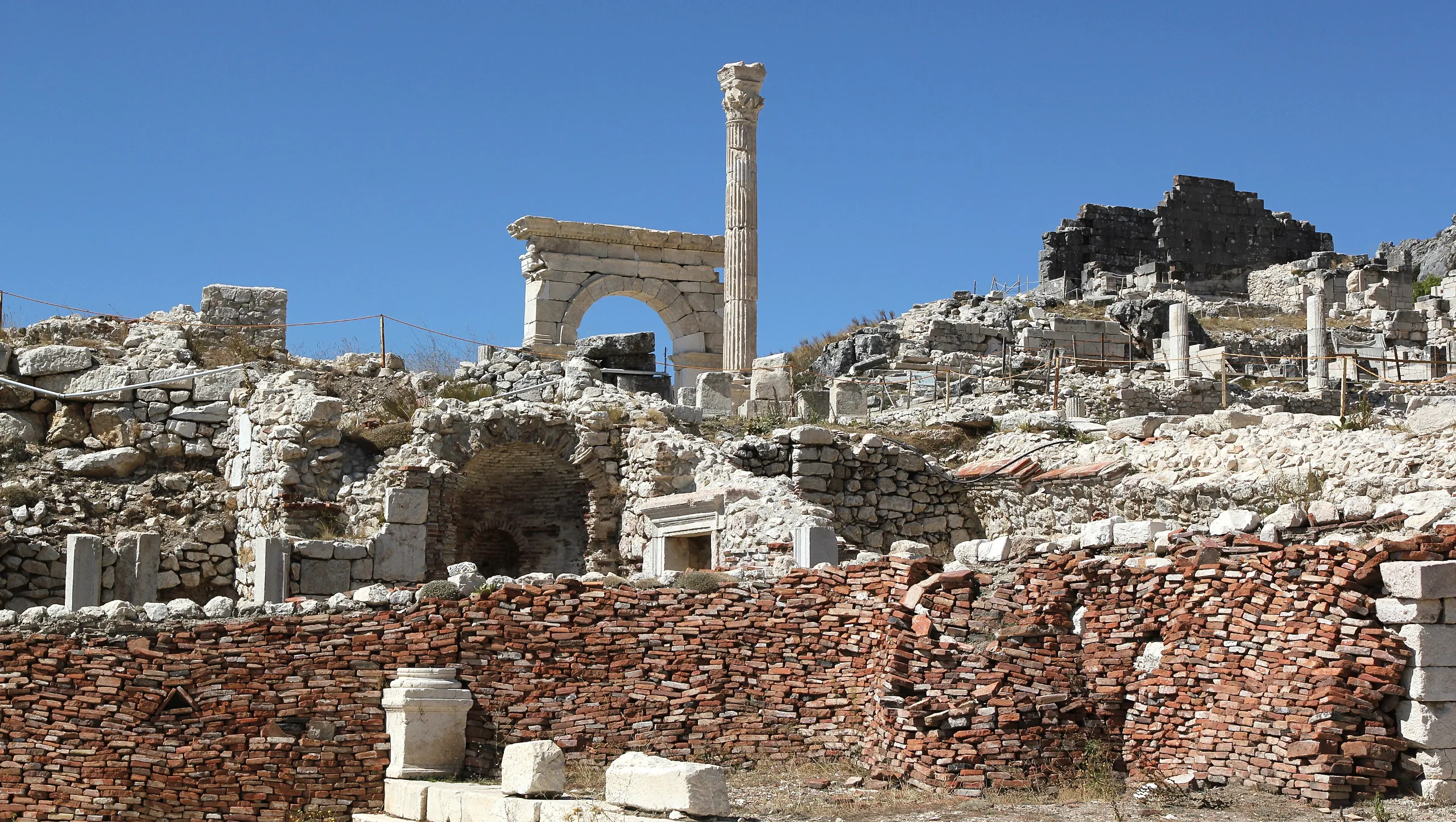
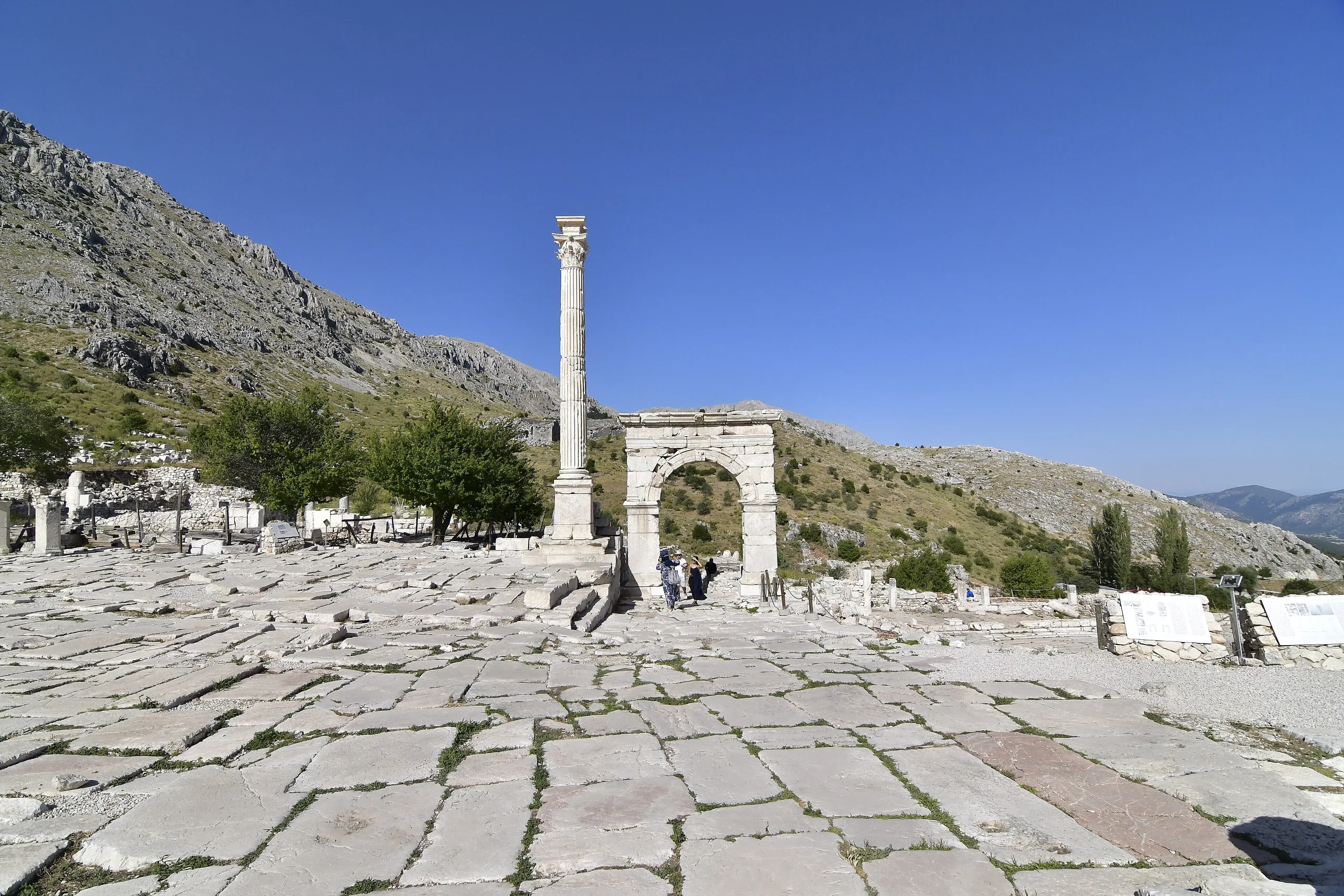
A Koç University team is studying the monumental crossroads where the Southeast Street, climbing from the Lower Town to the Upper Agora, meets the north-south street. The Upper Agora was entered through the Southeast Arch, dedicated to the emperor Claudius (43-46). In the 2nd or early 3rd century CE a gate building was added at the end of the north-south street. Its inscription calls Sagalassos the first city of Pisidia and an ally of the Romans, and busts of gods such as Zeus, Hermes, Apollo and Aphrodite decorated it. After major rebuilding in the 4th century the gate became a fountain holding a statue of Men.
Necropoleis
South, north and east necropoleis ring the city. The Southern Necropolis spreads over Alexander Hill, on its lower and middle flanks. Rectangular ostothekai, small containers for the bones of the dead, take it back to the 1st century BCE, which makes it the oldest, and it is the largest in area as well. The Eastern Necropolis, east of the theatre, includes sarcophagi, arcosolia (arched burial niches) and chamosoria. The Northern Necropolis runs east-west and is marked by arcosolia cut into the rock. More than 500 tomb containers and grave monuments of the Late Hellenistic and Roman periods have been recorded at Sagalassos.
Excavations
After Paul Lucas, other European travellers came from the 18th century on, though visits stayed rare. The systematic project began in 1990 under the Belgian archaeologist Marc Waelkens. Today the excavation director is Peter Talloen of Bilkent University, with Murat Fırat of Süleyman Demirel University and Sevingül Bilgin Kopçuk as assistant directors. The interdisciplinary programme looks at urban growth, monumental architecture, daily life, crafts, trade and the surrounding landscape, and it combines digging with scientific analysis, conservation and digital methods such as 3D documentation.
Current projects include the late antique church complex in the stadium, the Southeast Street crossroads, soundings and pottery analysis aimed at the Hellenistic town (2026-2029), a Copenhagen-based team working on Roman history, and a Funerary Garden assembled from selected tombs of Ağlasun.
Finds and protection
All finds go to the Burdur Archaeological Museum at the end of each season. The finest objects and statues are displayed there, and the rest is stored to international standards.
Because its potters worked for at least a thousand years, Sagalassos is regarded as the longest-lived ceramic centre of antiquity, and it has been proposed for the UNESCO World Heritage List.
Visiting
The site is at Ağlasun. The Müzekart is valid for Turkish citizens only, and an audio guide is available. For current hours and fees, see the official museum page.
Gallery
Frequently asked questions
Where is Sagalassos?
Why is Sagalassos significant?
What can be seen at Sagalassos?
What is Sagalassos Red Slip Ware?
What did the stadium excavations find?
Where do the finds go?
Sources (14)
- Sagalassos Örenyeri / Sagalassos (TR ve EN sayfalar) — T.C. Kültür ve Turizm Bakanlığı, Müzeler ve Ören Yerleri
- Sagalassos Antik Kenti (Burdur) — T.C. Kültür ve Turizm Bakanlığı, Kültür Varlıkları ve Müzeler Genel Müdürlüğü
- Sagalassos Archaeological Research Project: ana sayfa — Sagalassos Arkeolojik Araştırma Projesi (Bilkent Üniversitesi)
- Sagalassos Archaeological Research Project: Current Research — Sagalassos Arkeolojik Araştırma Projesi (Bilkent Üniversitesi)
- Sagalassos (Pleiades place 639087) — Pleiades
Photo credits
- Photo: LeoniKalkis, CC BY-SA 4.0 — Wikimedia Commons (resized)
- Photo: Ingo Mehling, CC BY-SA 3.0 — Wikimedia Commons (resized)
- Photo: Ingo Mehling, CC BY-SA 4.0 — Wikimedia Commons (resized)
- Photo: Ingo Mehling, CC BY-SA 4.0 — Wikimedia Commons (resized)
- Photo: Ingeborg Simon, CC BY-SA 3.0 — Wikimedia Commons (resized)
- Photo: Ingeborg Simon, CC BY-SA 3.0 — Wikimedia Commons (resized)
- Photo: Kesim00, CC0 — Wikimedia Commons (resized)
- Photo: Kesim00, CC0 — Wikimedia Commons (resized)
- Photo: Dosseman, CC BY-SA 4.0 — Wikimedia Commons (resized)