El Nazar is a 10th-century church cut into a rock cone east of Göreme, known for its cross plan, a fresco cycle in chronological order and portraits of Constantine and Helena.
El Nazar Church is a place (Church) in Turkey, Nevsehir.
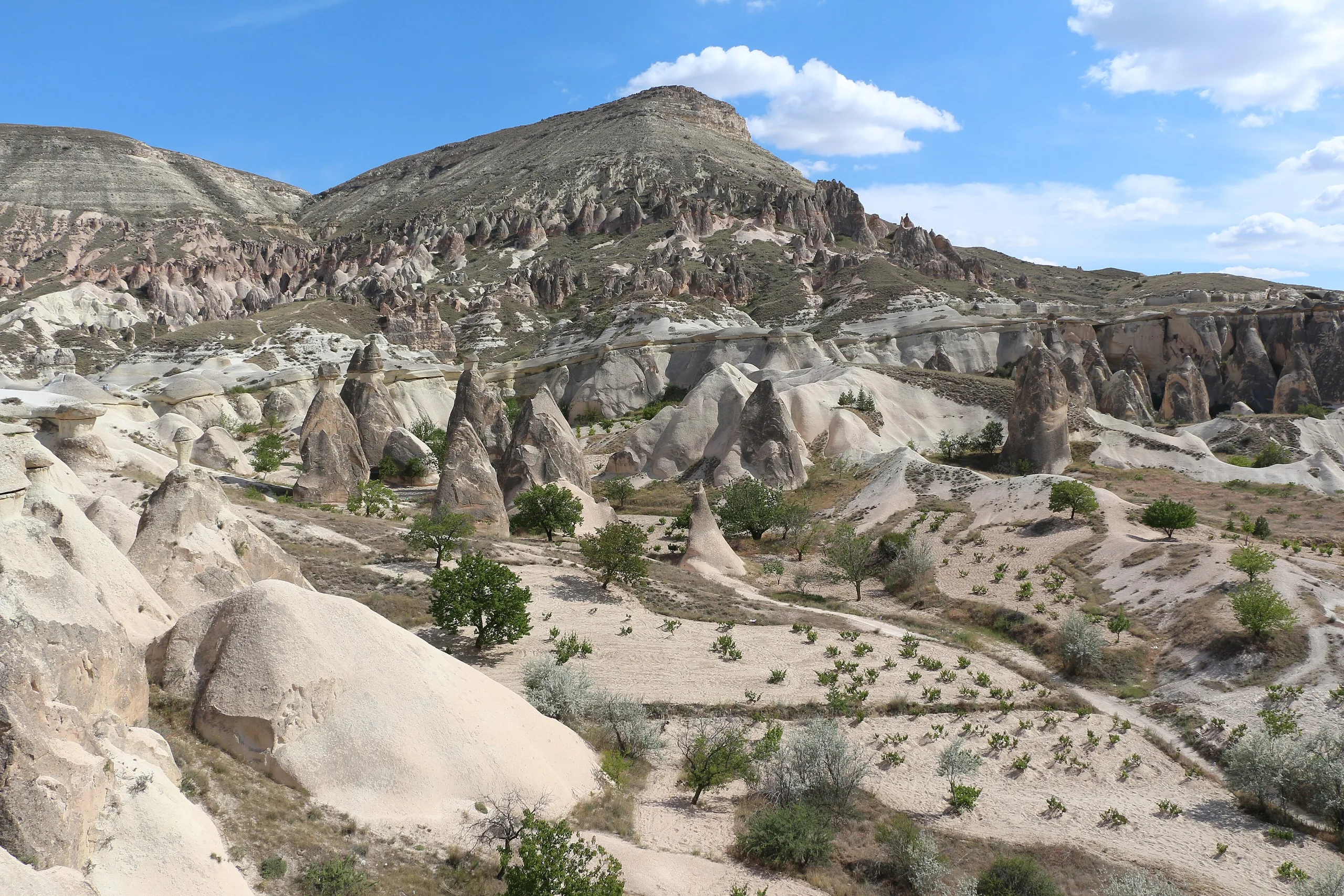
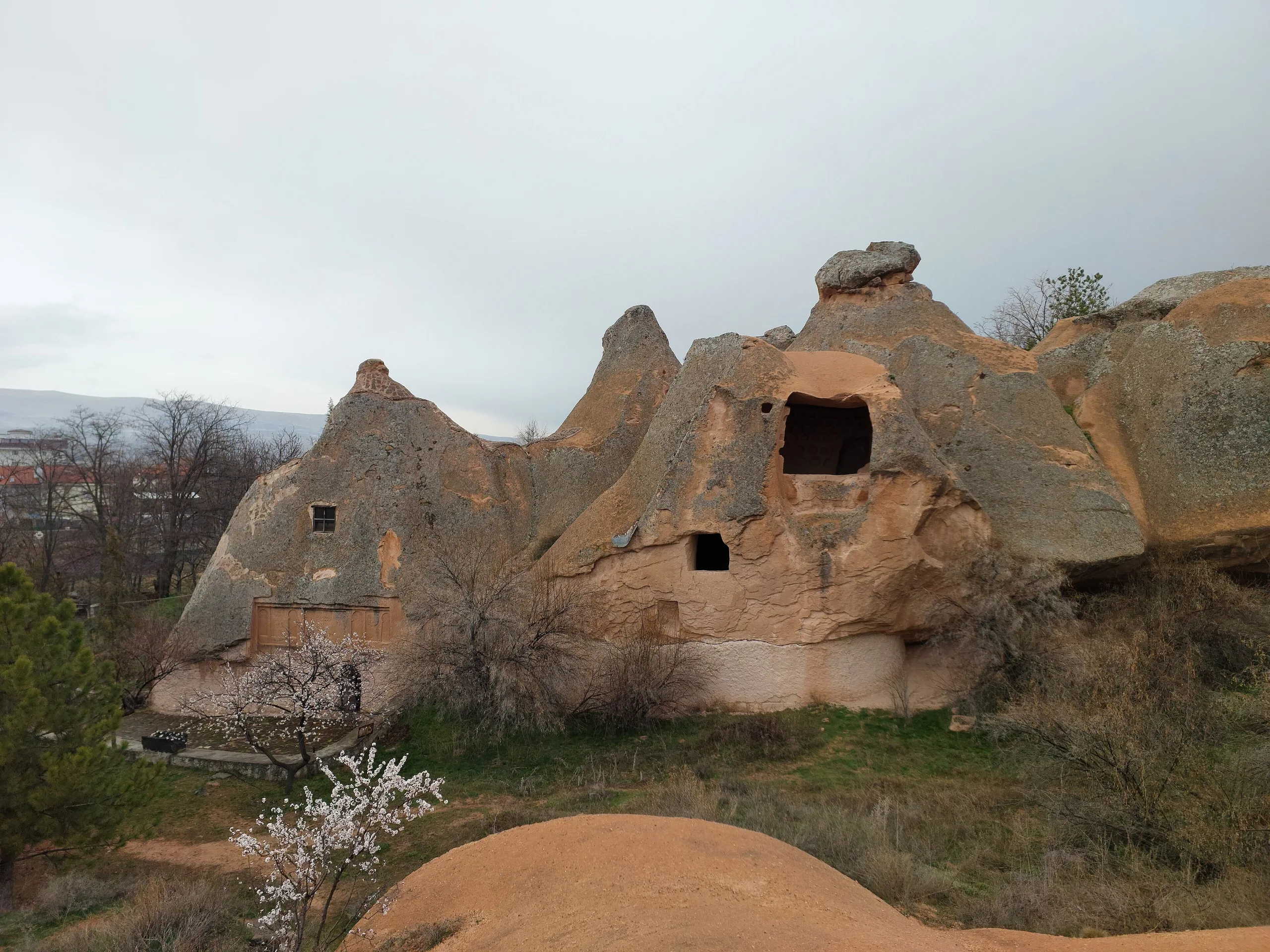
Could a fairy chimney, one of the cone-shaped rock masses left when soft volcanic tuff erodes, be hollowed into a church? El Nazar says yes. The small church stands in a valley east of Göreme, about 800 m off the road between Göreme and the Open Air Museum, and dates from the 10th century.
Architecture
The plan is a cross whose arms are barrel-vaulted, that is, roofed with a half-cylinder ceiling. A dome rises at the centre and there are three apses. The main apse opens onto the central space where the arms meet, and tombs are cut into the east arm. The whole floor and part of the apse have been destroyed.
Frescoes
Two artists painted the walls in an archaic style. The scenes follow each other in chronological order, taking in the childhood, youth and miracles of Christ. The south wall carries episodes from his life, and the north arm his childhood and Passion. The Nativity, Crucifixion and Resurrection appear in both the south and north arms.
Placement adds meaning to several scenes. The Presentation in the Temple sits above the southern apse, and the Transfiguration fills the west wall opposite the apse, with the Baptism in the west part as well. Saints appear in medallions, bishops in the pendentives, the triangular corner pieces below the domes, and prophets and martyrs in the remaining areas of the domes on the north side. Constantine and Helena complete the lower walls of the west arm.
Visiting
Hours and fees can change; check the church page on muze.gov.tr. The MüzeKart is valid for Turkish citizens. The Çavuşin Church and the Dark Church are nearby stops.