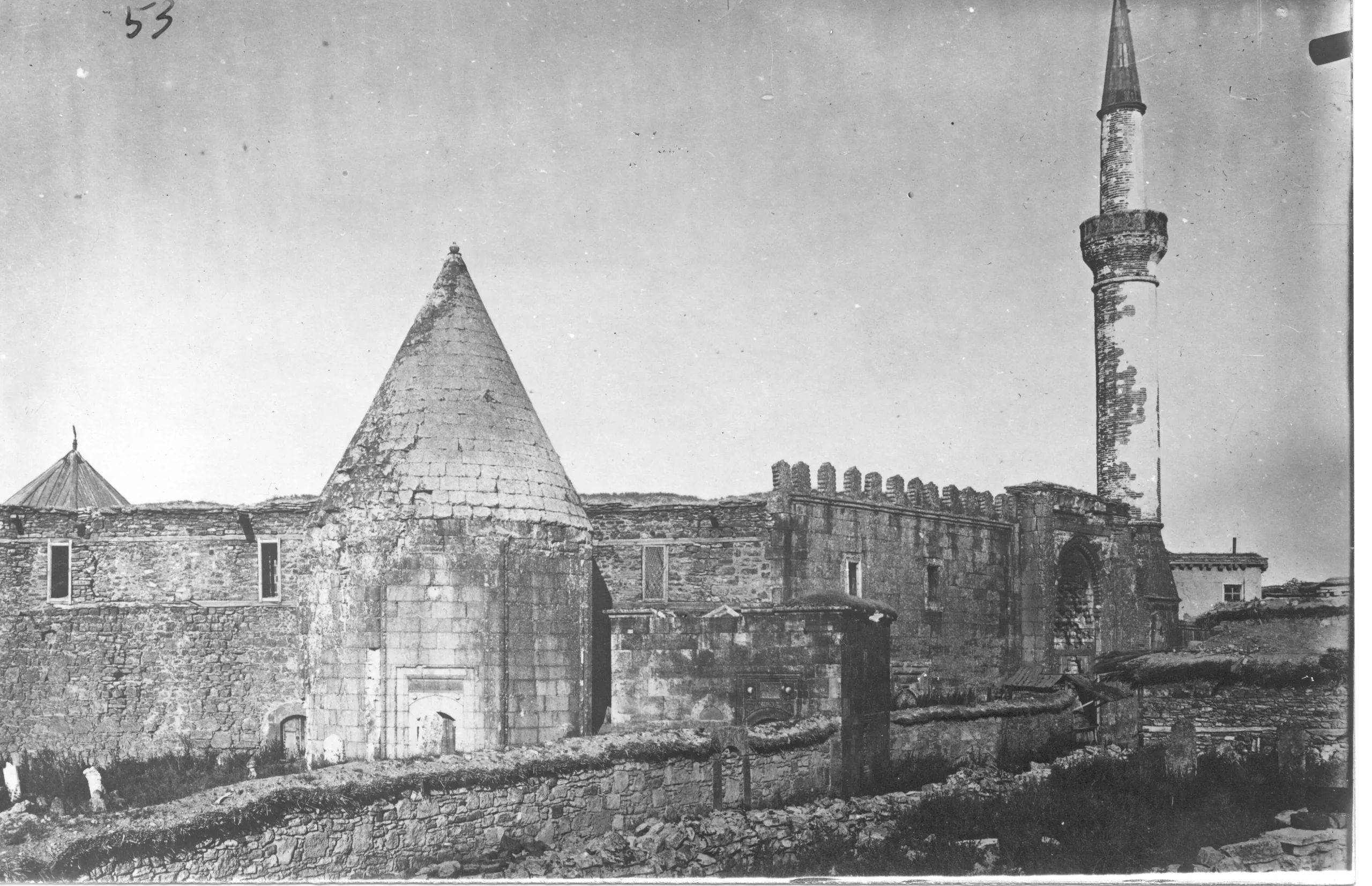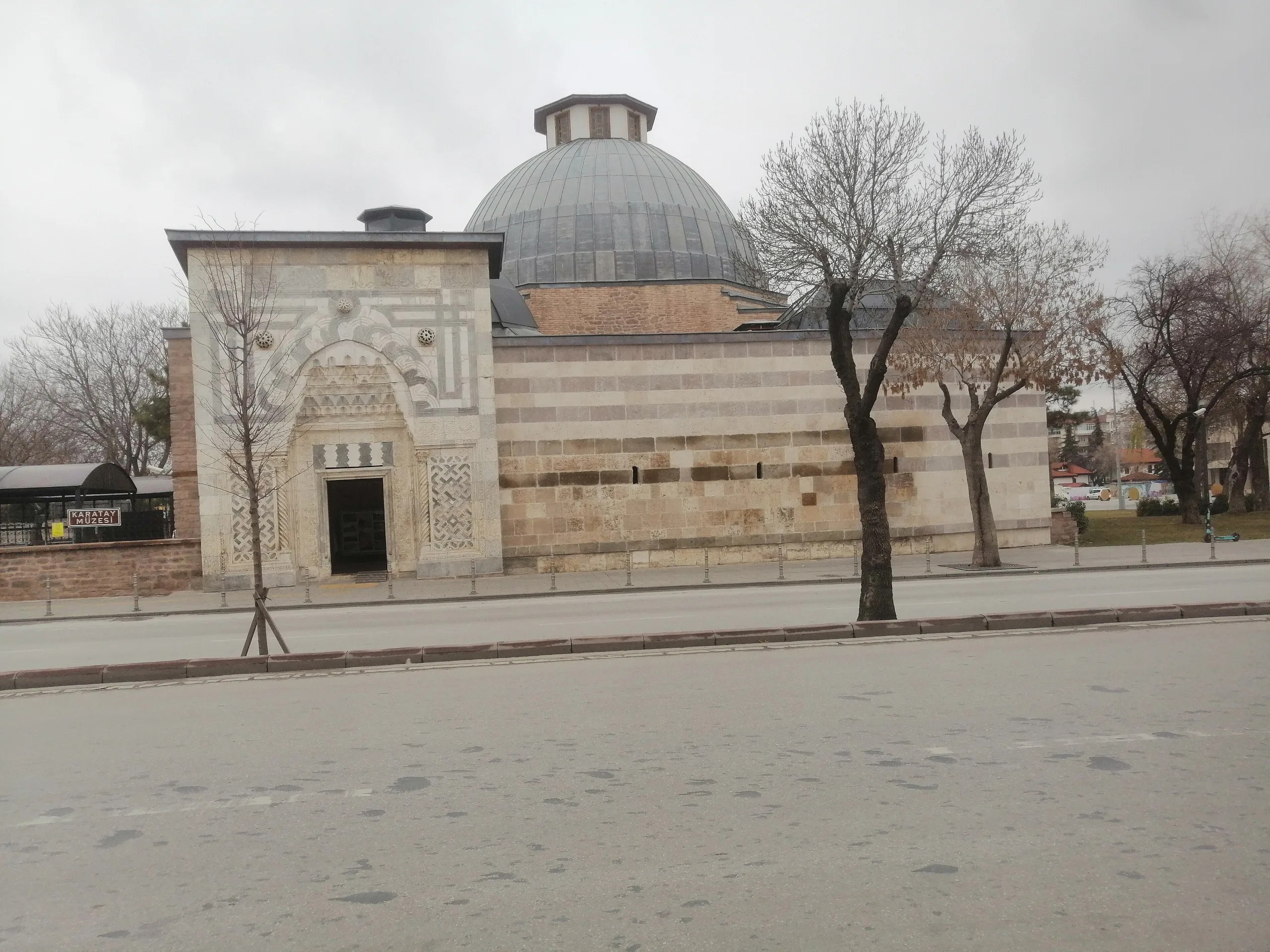
Built in 1251-52 for the vizier Celaleddin Karatay, this Seljuk madrasa in Konya has a tiled dome open at the top and now houses the Museum of Tile Works.
Karatay Madrasa (Museum of Tile Works) is a place (Madrasa and tomb) in Turkey, Konya. Main periods: Seljuk Period.
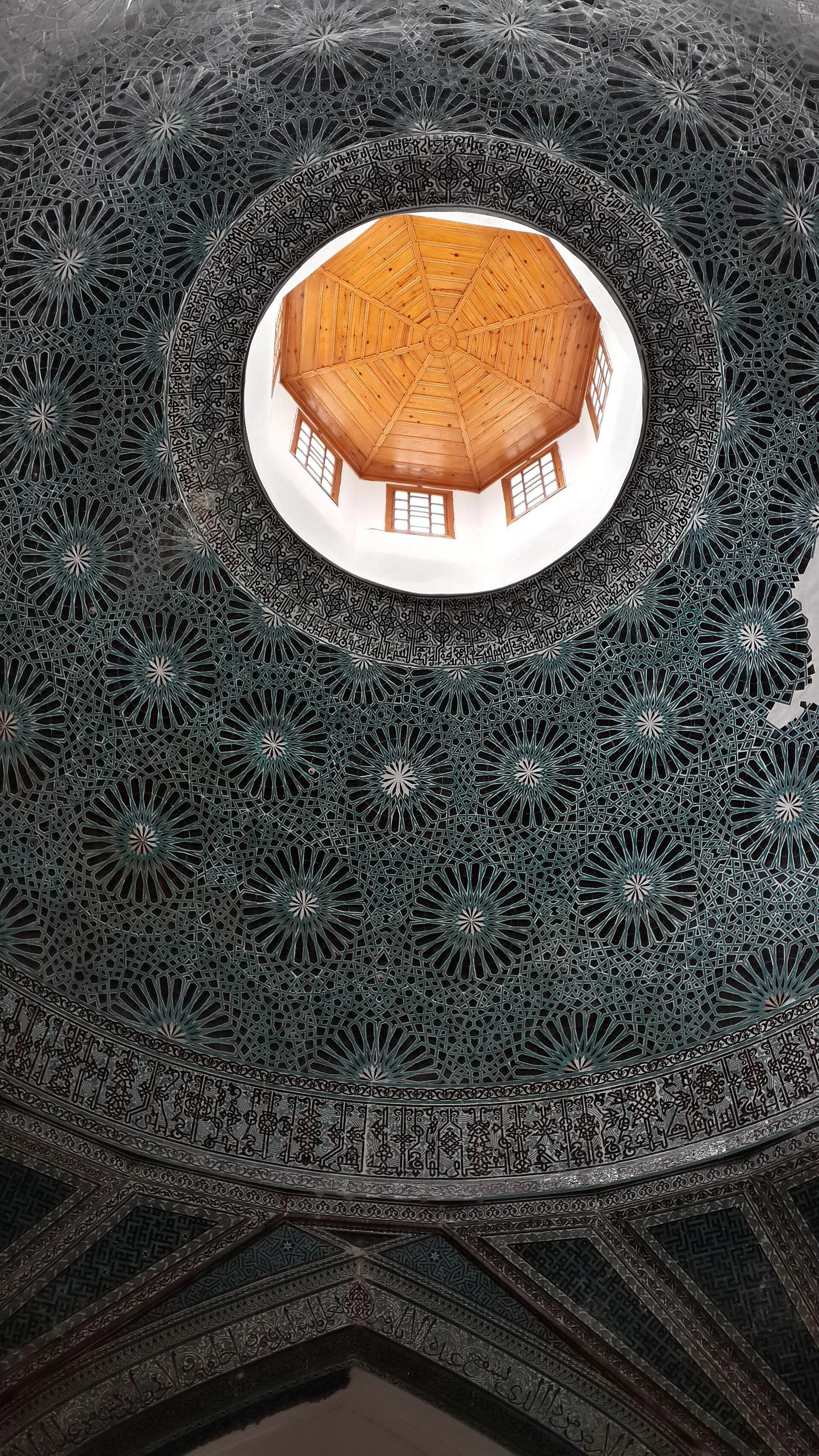
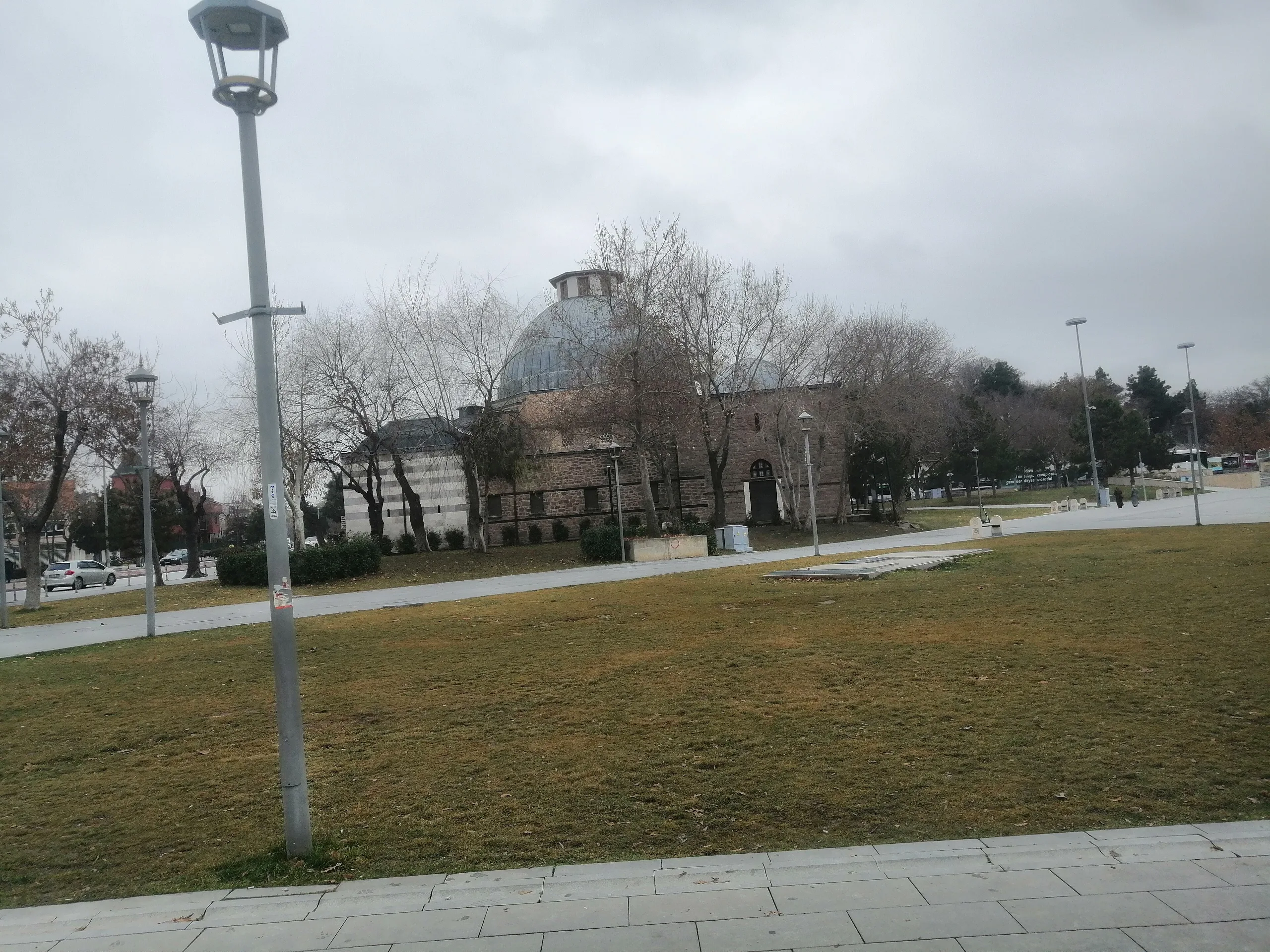
The courtyard of the Karatay Madrasa is roofed by a dome, but its crown is left open in a five-metre gap, and light and air drop through it onto a square pool below. Facing the Alaaddin Hill in Konya, the building holds some of the finest Anatolian Seljuk tilework and today serves as the Museum of Tile Works.
History
Emir Celaleddin Karatay, vizier to the Seljuk sultan Izzeddin Keykavus II, had the madrasa built in 1251-52. Its architect is not certain; Muhammed bin Havlan has been suggested. In the Seljuk period it taught hadith and Quranic commentary. It continued in use under the Ottomans and was abandoned late in the 19th century. It opened as the Museum of Tile Works in 1955.
Architecture
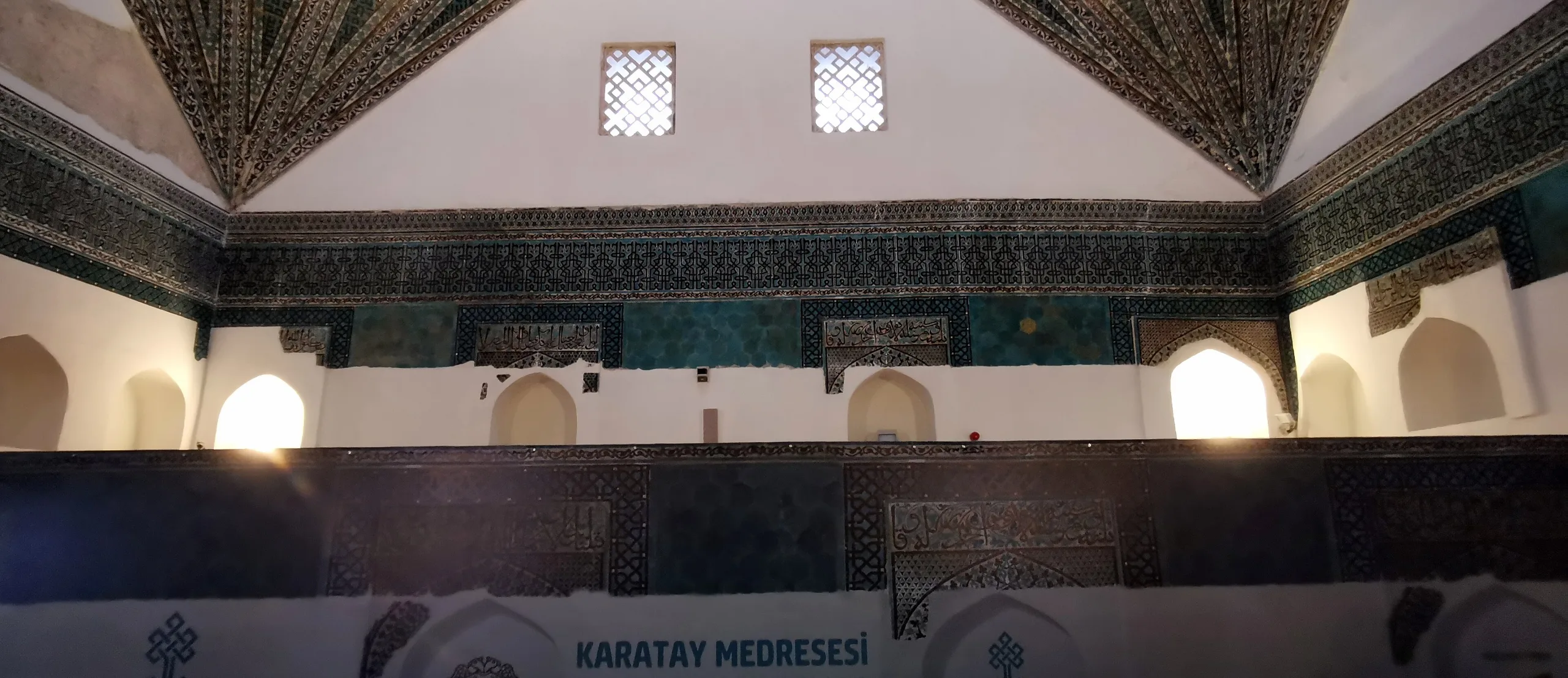
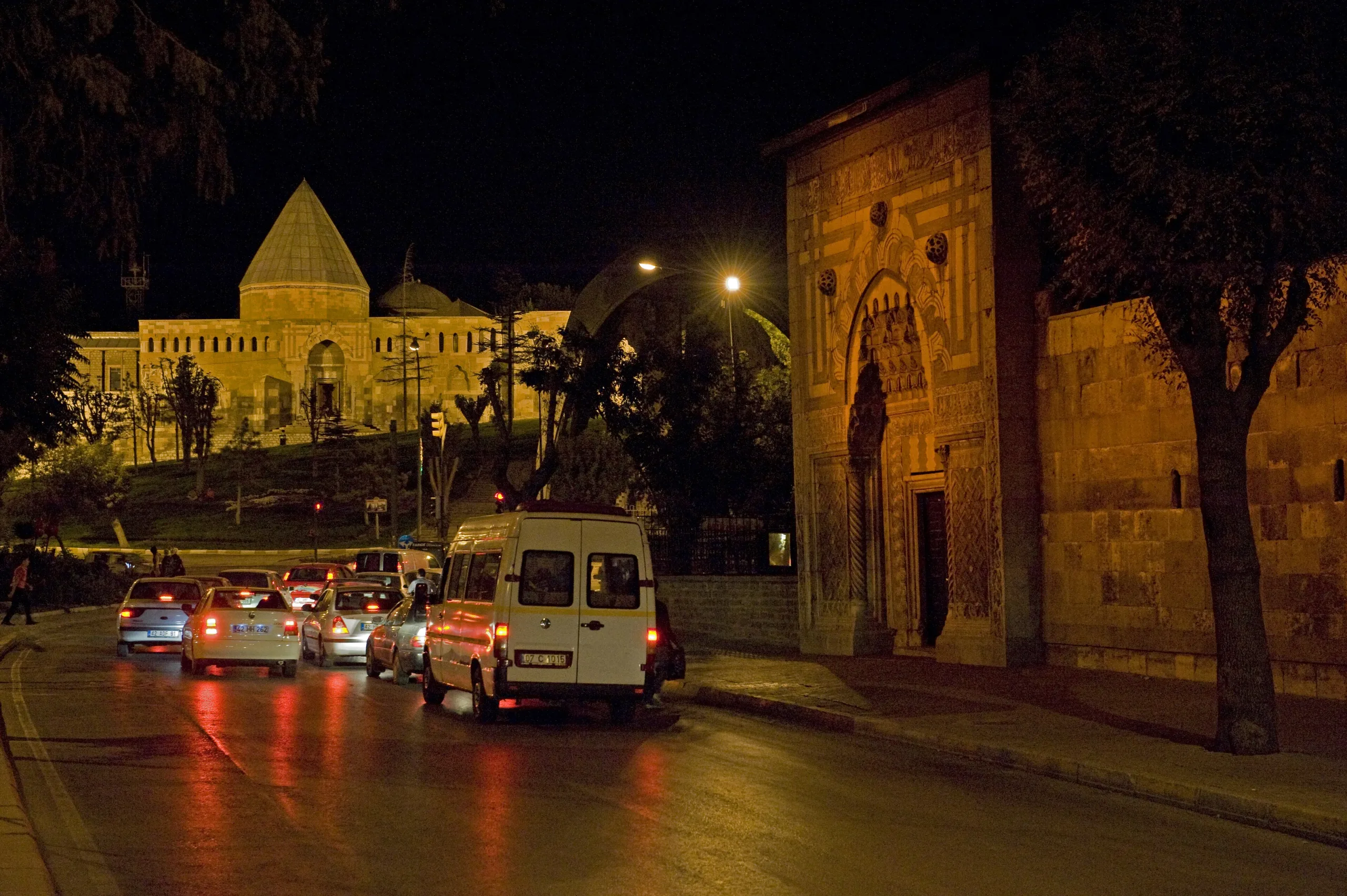
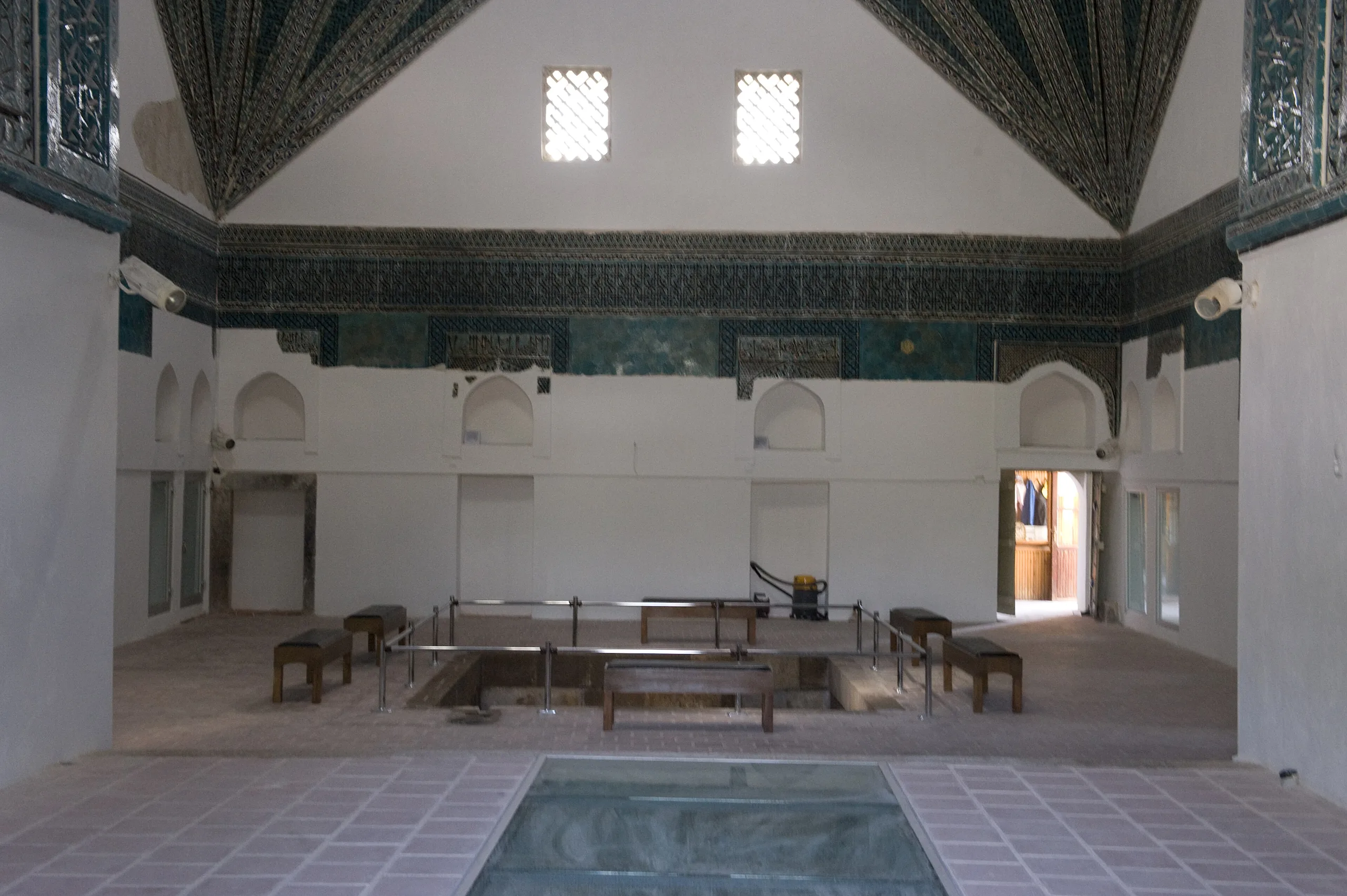
The one-storey building stands on a rectangular plot oriented east to west and follows the closed-courtyard plan, with rooms ringing a domed court. The east front, where the entrance is, is cut stone; the other walls are rubble, with brick in the upper walls, the zone of transition below the dome and the vaults. The crown portal in blue-grey and white marble breaks with custom by sitting off the centre of the wall. Inscriptions, geometric and floral patterns are carved in relief on it. Opposite the entrance across the court is the iwan, a vaulted hall open on one side to the courtyard, here with a barrel vault. One of the cells beside it, domed, is the tomb of Celaleddin Karatay.
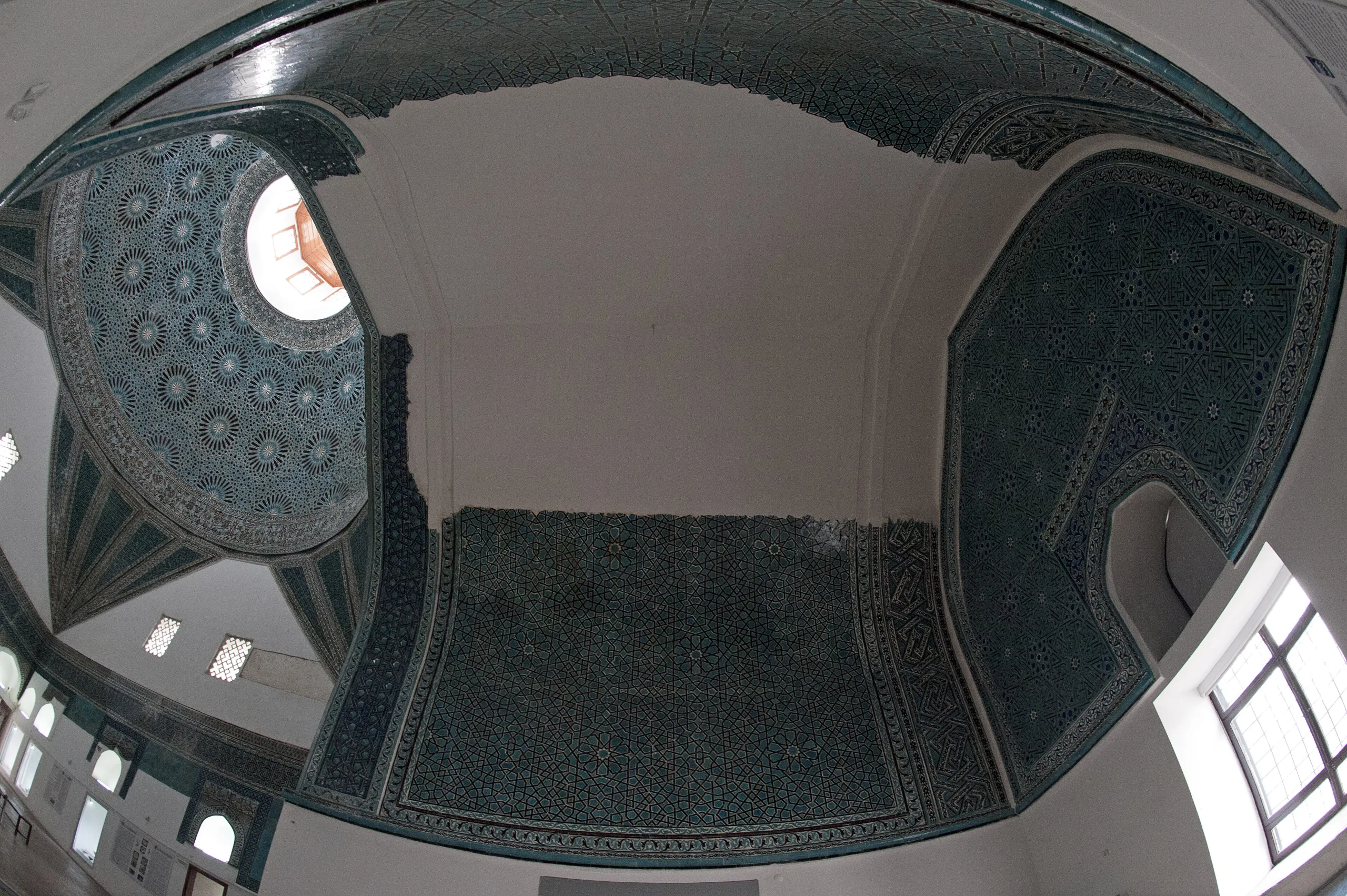
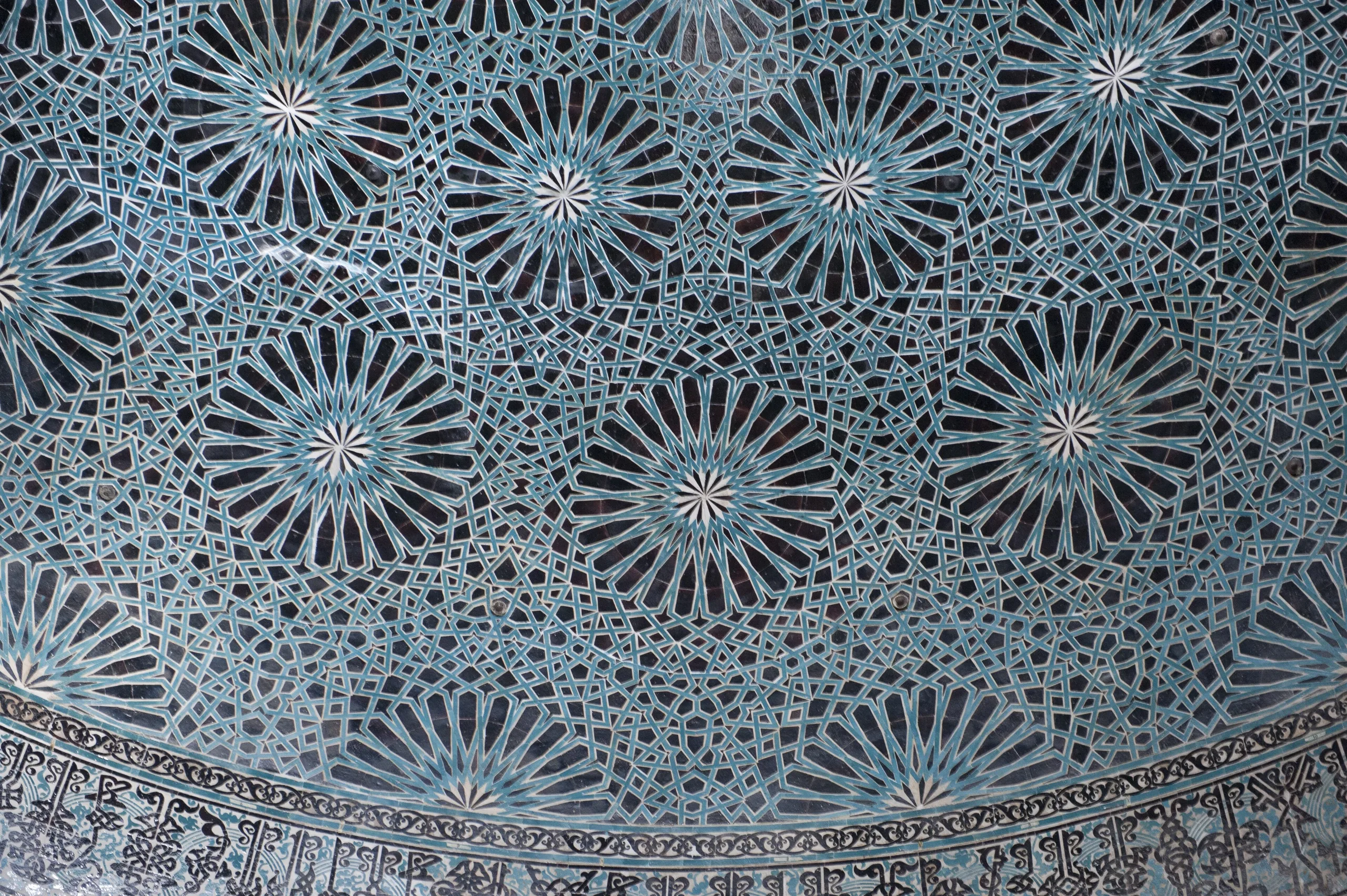
The real glory is in the tile. Hexagonal turquoise tiles once covered the iwan and the lower court walls. Tile mosaic in turquoise, navy and black still survives on the doorway tympana, the upper walls, the triangular pendentives under the dome and the dome itself, with inscriptions and floral and geometric motifs. Four prophets, listed as Moses, David, Jesus and Muhammad, and the four caliphs are named in the pendentives, and the arch of the iwan bears the basmala and the Throne Verse. Much of the wall mosaic has fallen away. In the 1970s the northern and southern rows of student cells, which had fallen into ruin, were reconstructed.
The museum collection
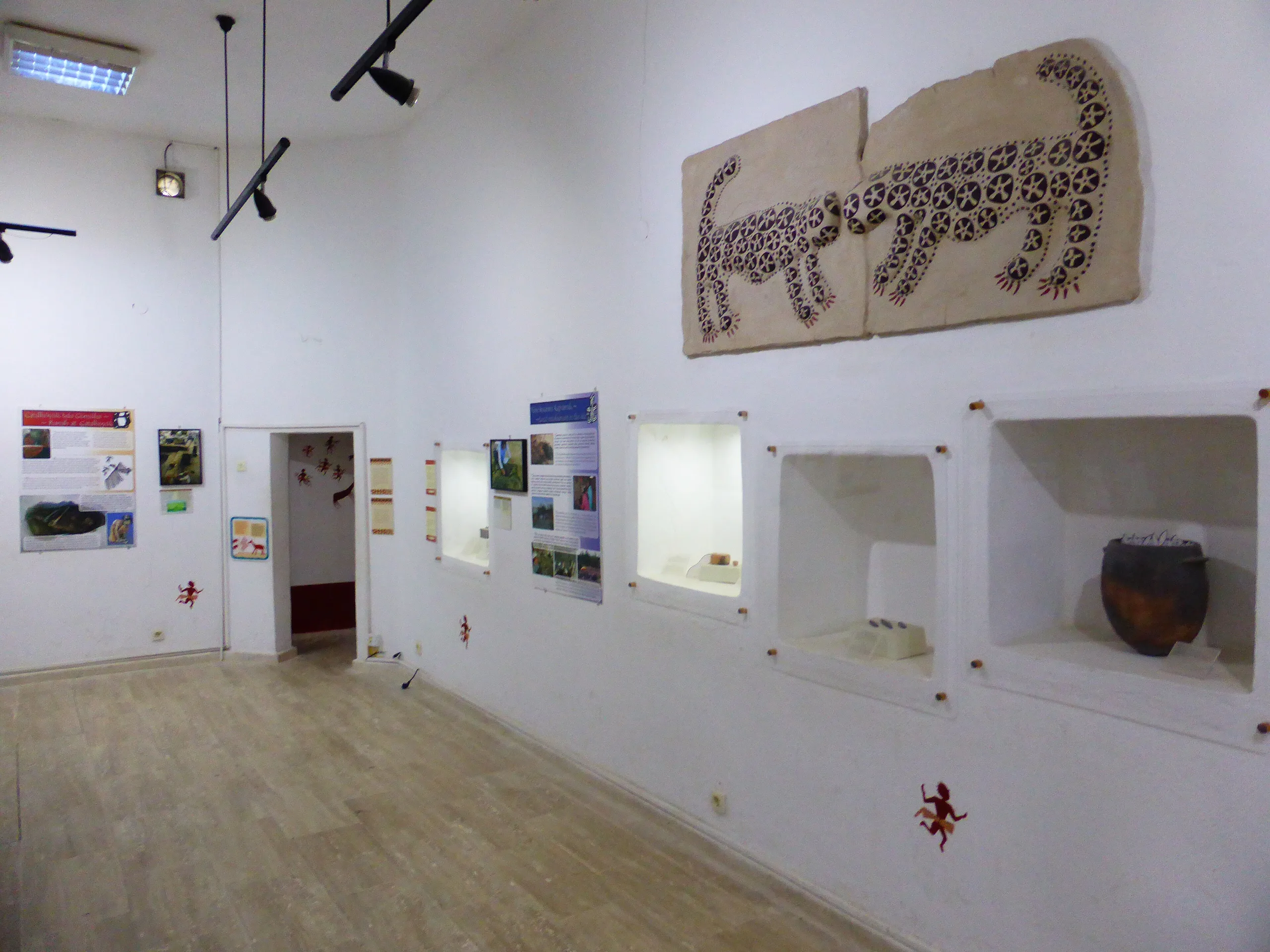
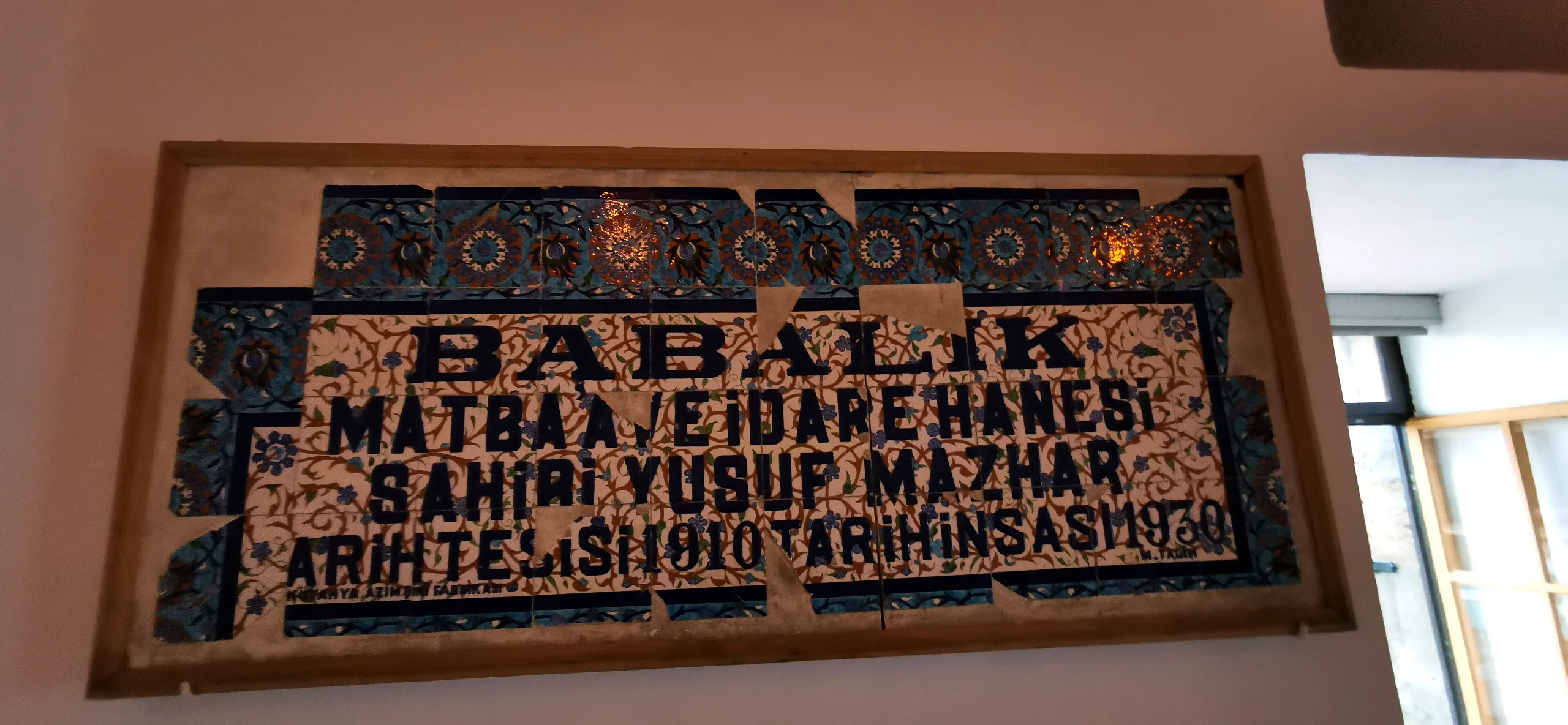
The museum shows tiles and ceramics of the Seljuk, Beylik and Ottoman periods. Its best-known group comes from Kubad-Abad Palace on the shore of Lake Beyşehir, cross-shaped, half-cross, eight-pointed star and square tiles made in lustre and underglaze techniques; lustre gives a metallic sheen. Plaster decoration, tile plates, lamps and unglazed pottery are also displayed. Konya museum director Zeki Oral found Kubad-Abad in 1949; test trenches followed in 1952, 1965-66 and 1967, and systematic excavation under Prof. Rüçhan Arık began in 1980.
UNESCO Tentative List
In 2014 Karatay was placed on the Tentative List with other major Seljuk madrasas of Konya, Kayseri, Erzurum, Sivas and Kırşehir under the heading Anatolian Seljuk Madrasas, citing criteria (ii) and (iv). It is not on the World Heritage List.
Visiting
Hours and fees can change; check the page on muze.gov.tr. The MüzeKart is valid for Turkish citizens.
Gallery
Frequently asked questions
Where is the Karatay Madrasa?
Who built it and when?
What is it used for today?
What is the opening in the dome for?
What are Kubad-Abad tiles?
Sources (13)
- Karatay Medresesi (Çini Eserler Müzesi) / Karatay Madrasa (TR ve EN sayfalar) — T.C. Kültür ve Turizm Bakanlığı, Müzeler ve Ören Yerleri
- Anatolian Seljuks Madrasahs - Tentative Lists, ref. 5907 — UNESCO World Heritage Centre
- Karatay Medresesi Çini Eserler Müzesi - Konya, Gezilecek Yerler — T.C. Kültür ve Turizm Bakanlığı, Kültür Portalı (kaynak: Konya İl Kültür ve Turizm Müdürlüğü)
- Karatay Medresesi (Wikidata Q12060961) — Wikidata
Photo credits
- Photo: Satirdan kahraman, CC BY-SA 4.0 — Wikimedia Commons (resized)
- Photo: Drgulcu, CC BY-SA 3.0 — Wikimedia Commons (resized)
- Photo: Murat Özsoy 1958, CC BY-SA 4.0 — Wikimedia Commons (resized)
- Photo: Murat Özsoy 1958, CC BY-SA 4.0 — Wikimedia Commons (resized)
- Photo: Dosseman, CC BY-SA 4.0 — Wikimedia Commons (resized)
- Photo: Dosseman, CC BY-SA 4.0 — Wikimedia Commons (resized)
- Photo: Dosseman, CC BY-SA 4.0 — Wikimedia Commons (resized)
- Photo: Dosseman, CC BY-SA 4.0 — Wikimedia Commons (resized)
- Photo: Satirdan kahraman, CC BY-SA 4.0 — Wikimedia Commons (resized)