The Mevlana Lodge in Konya, built on a former Seljuk rose garden, is the Mevlevi complex that grew around Rumi's tomb of 1274 and is now run as a museum.
Mevlana Dervish Lodge is a place (Historic building) in Turkey, Konya. Main periods: Seljuk Period, Ottoman Period.
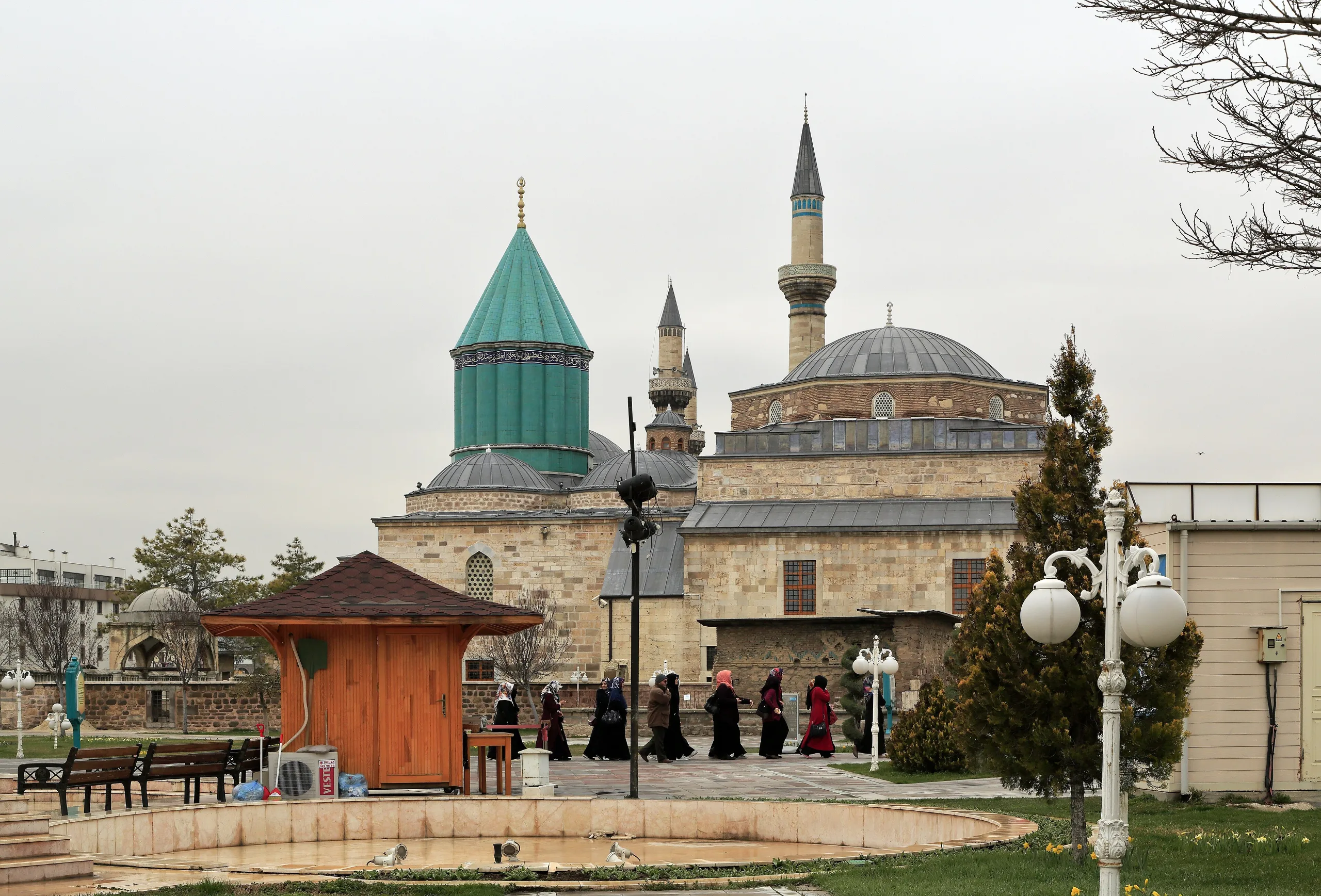
The ground where Rumi lies in Konya was once the rose garden of a Seljuk palace. Sultan Alaeddin Keykubad gave it to Rumi's father, Bahaeddin Veled, and the family tomb grew out of that gift. Today the lodge buildings spread across the same plot in the Karatay district around the Green Dome, which is easy to spot. The complex is run as a museum and ranks among the most visited sites in Konya.
History
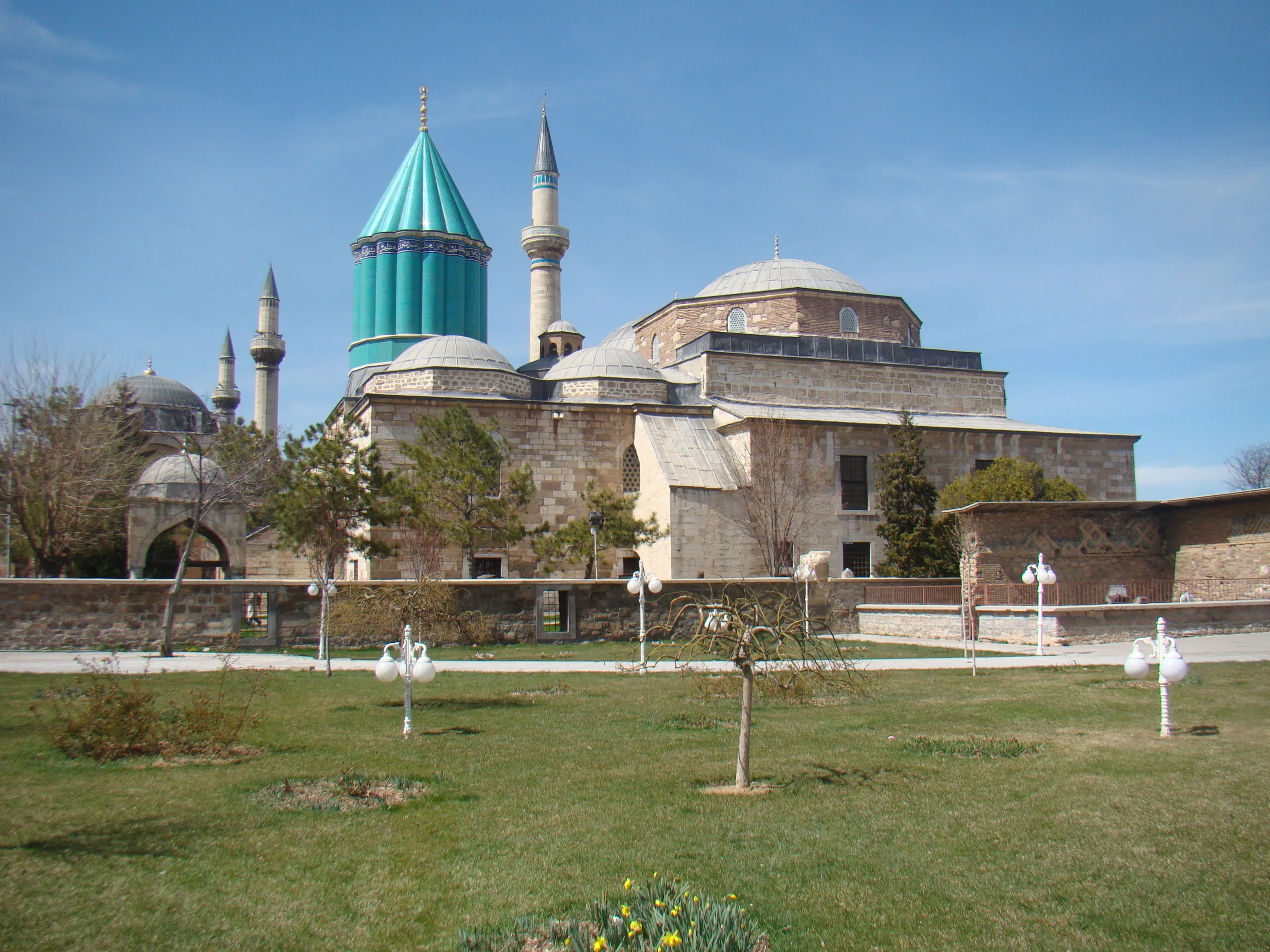
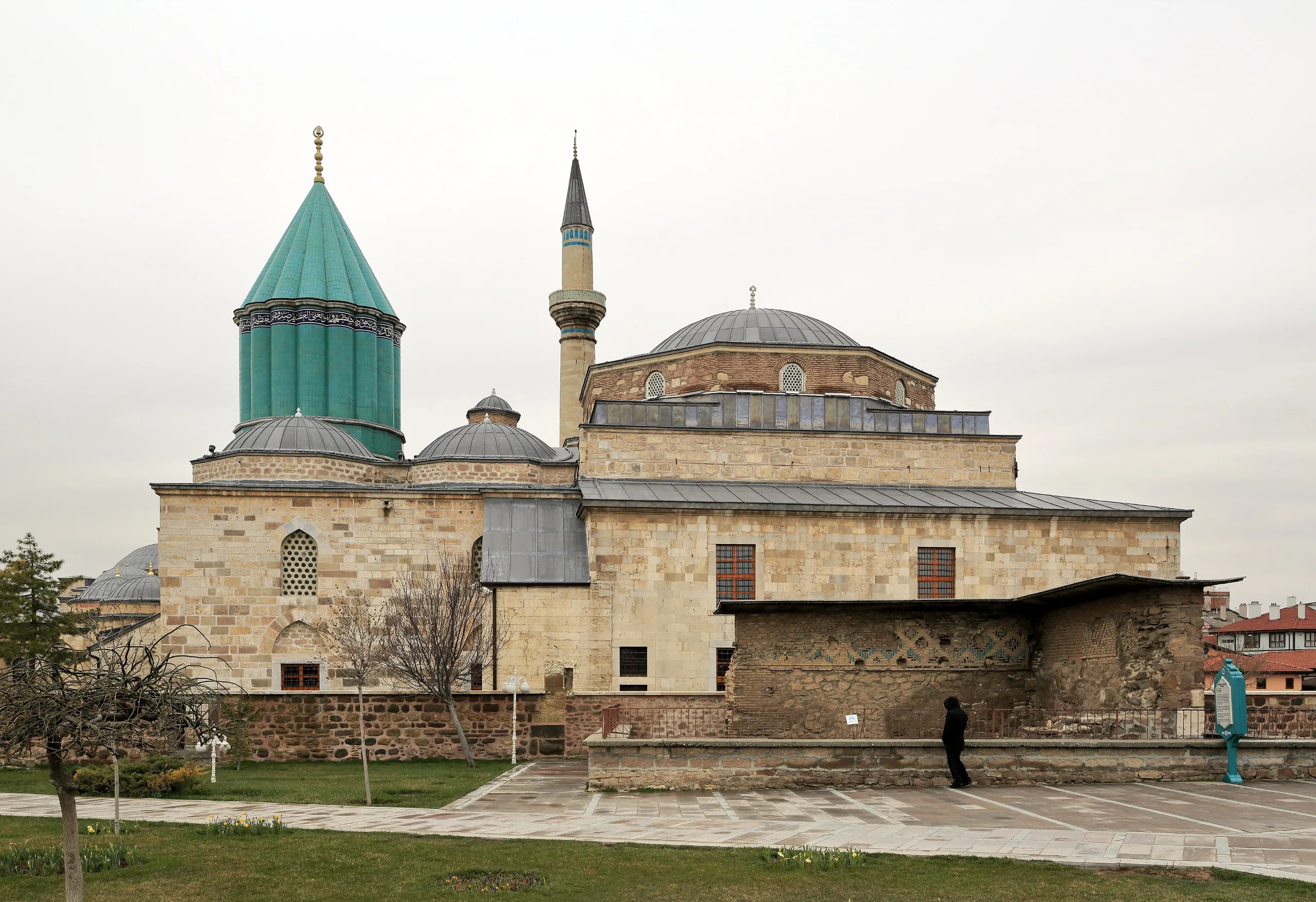
Bahaeddin Veled was buried here when he died in 1231. His followers wanted a tomb built over the grave, but Rumi refused, saying no tomb could be finer than the open sky. After Rumi's own death in 1273 his son Sultan Veled accepted the plan. The tomb, known as Kubbe-i Hadra, the Green Dome, rests on four massive piers called elephant feet and was built in 1274 by the architect Bedreddin of Tabriz.
After Rumi died his close friend Çelebi Hüsameddin took charge of the community, and then the eldest son, Sultan Veled, became its leader. In these years the Mevlevi order took shape and opened branches beyond Konya. The office of the Çelebi arose at the Konya lodge, with Rumi's descendants governing it as postnişin, head of the lodge. Erzincan, Tokat, Istanbul, Muğla, Kütahya and Afyon were among the towns it reached, and in time its lodges stretched from the Balkans to the Hejaz.
Buildings
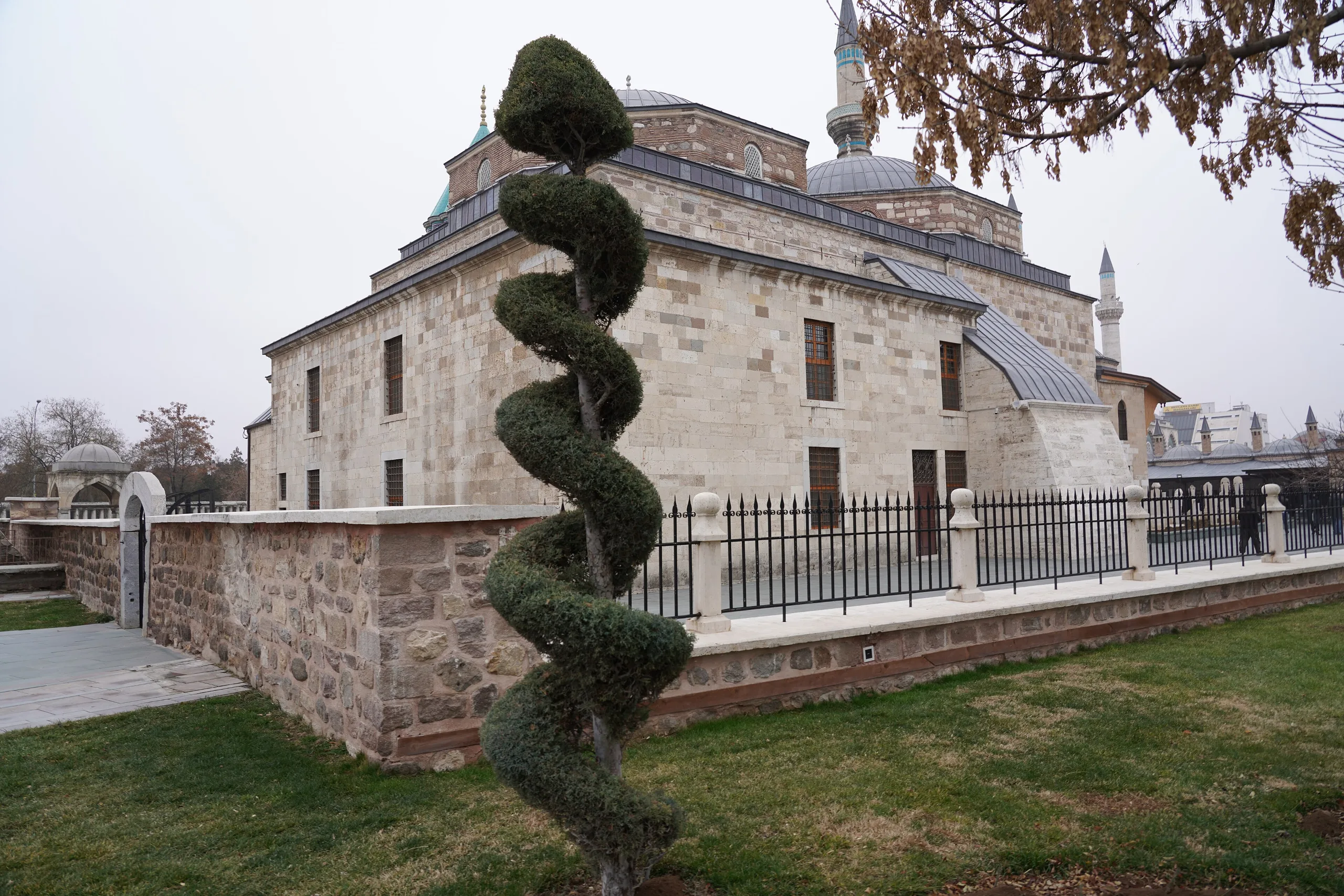
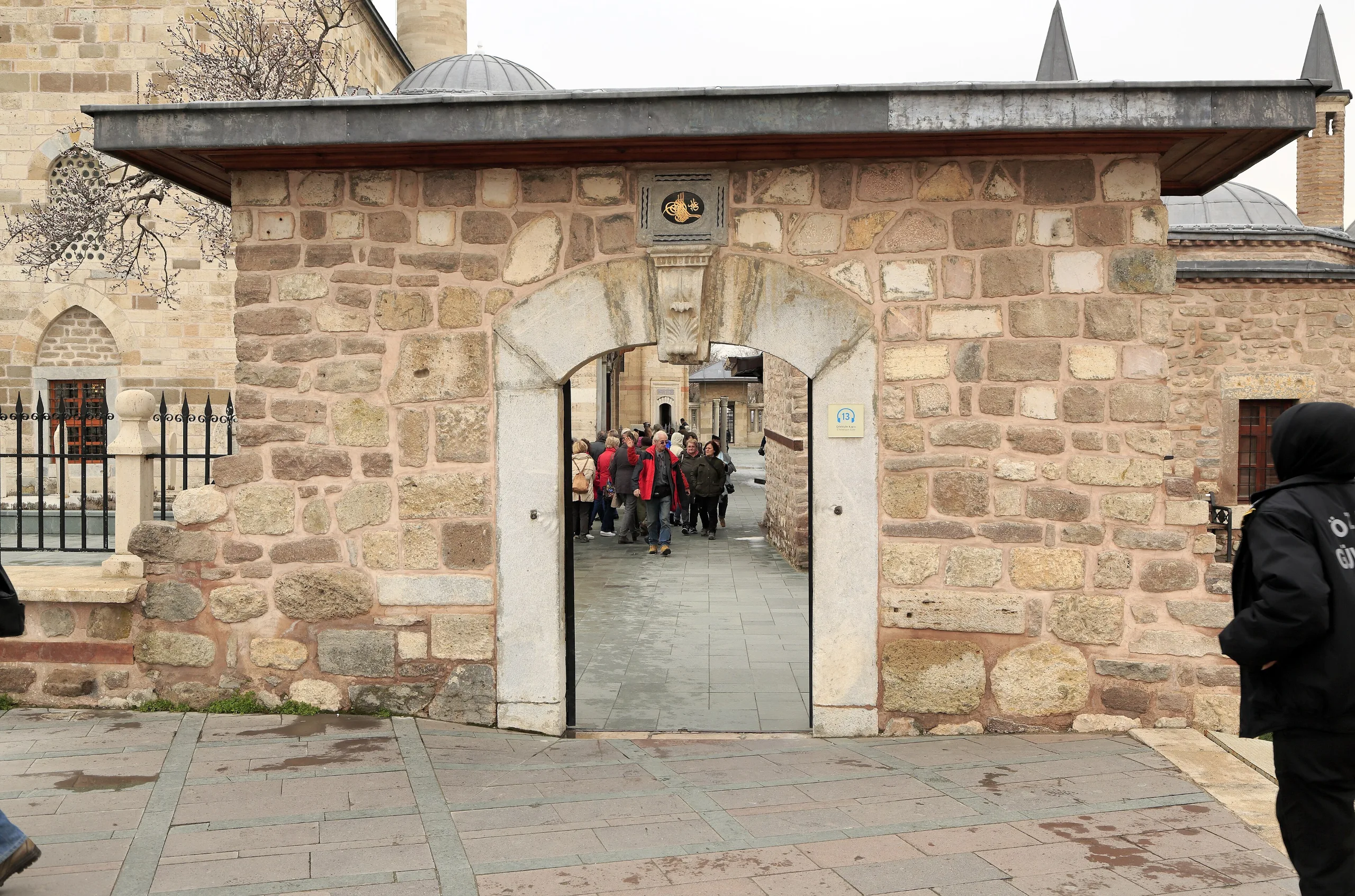
The core of the lodge is the tomb itself. The semahane, where the sema ritual is performed, a small mosque, the cells of the elders, a kitchen and a fountain basin were added in the 16th century. Visitors enter the court by the Dervishes' Gate; dervish cells line the north and west sides, while at the south end the Gate of the Silent opens on a cemetery. The east side has the semahane and mosque beside the main building that holds the graves of Rumi and his family. Sultan Selim I had the covered fountain built in 1512, and the Şeb-i Arus pool also stands in the court. Counting the garden sections, the museum area comes to 18,000 square metres.
Collection
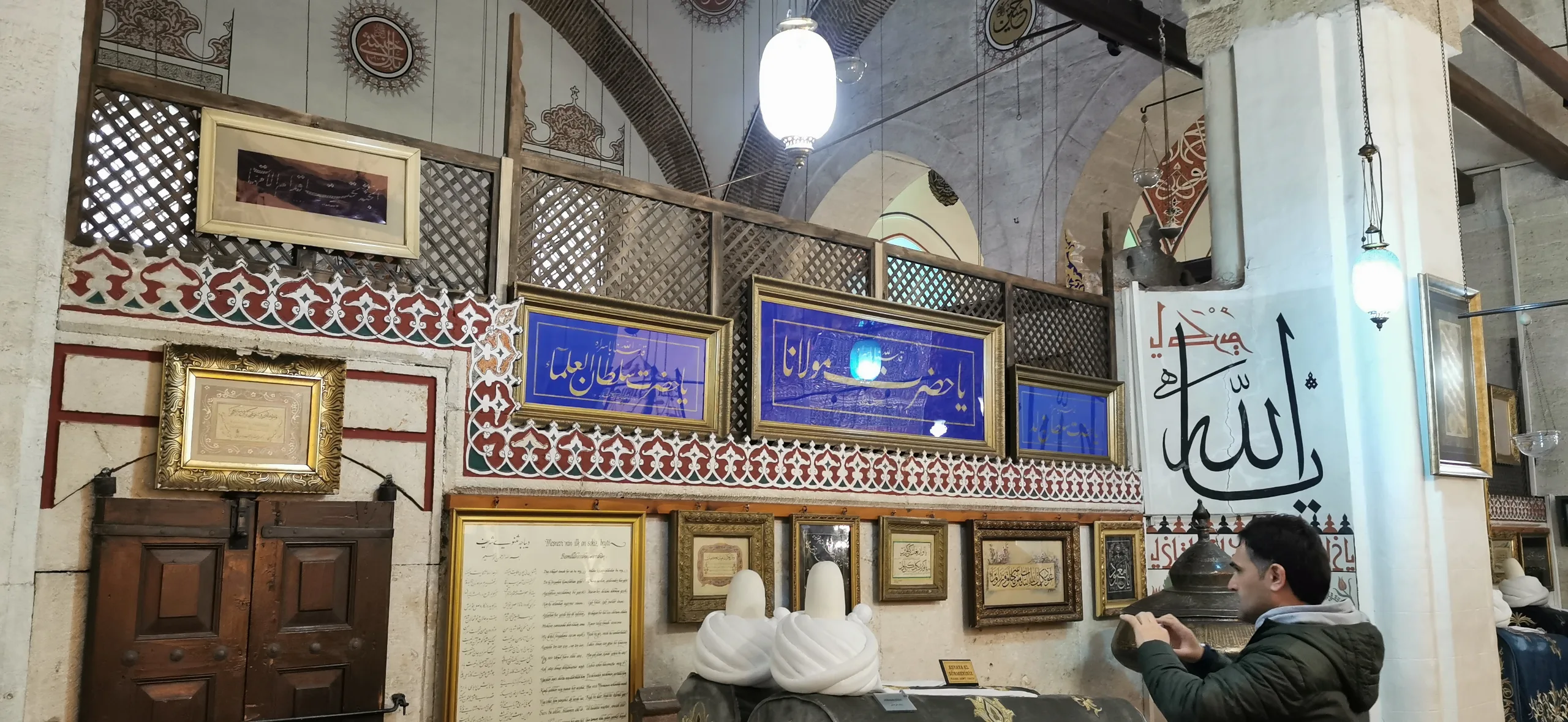
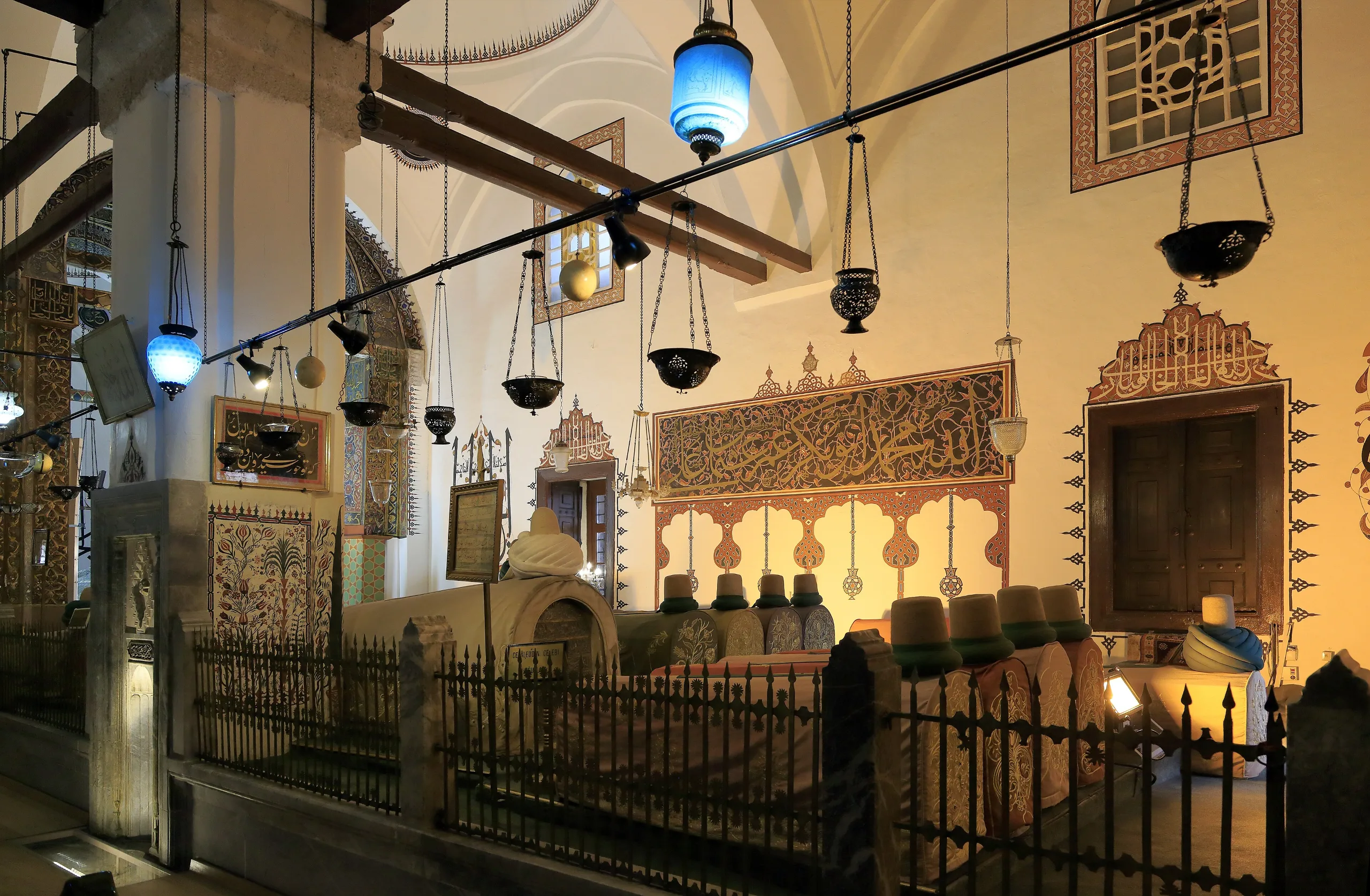
Rumi's sarcophagus dates from 1274 and is made of kiln-fired walnut wood, its surface covered in geometric and plant motifs and verses from the Masnavi and the Divan-i Kebir. The pall over the grave, called the pûşîde, was a gift of Sultan Abdülhamid II in 1895 and was replaced in 2021 after wearing out. A manuscript of the Masnavi dated 1278, treated as the old reference copy, gathers all six volumes in one. The Ilkhanid ruler Abu Said sent a bronze bowl inlaid with silver and gold in 1327, the Nisan Bowl. The specialist library was founded in 1854 and holds more than four thousand manuscripts. An eight-stringed ancestor of the violin is also on display.
Becoming a museum
Dervish lodges across the country were closed in 1925, and the Mevlana lodge was shut with them. Kept because of its standing in Turkish and Islamic culture, it opened to visitors in 1926 as the Konya Asar-ı Atika Museum and took its present name when it was reorganised in 1954. UNESCO declared 2007 the Year of Rumi, and Türkiye marked 2023 as a Mevlana Year for the 750th anniversary of his death.
Visiting
Hours and fees can change; check the official page for current details. Commemorations take place in Konya every December around the anniversary of his death.
Gallery
Frequently asked questions
Where is the Mevlana Lodge?
When was the Green Dome built?
What stood on the site before?
When did the lodge become a museum?
What is displayed in the museum?
What does Şeb-i Arus mean?
Sources (11)
- Mevlana Müzesi / Mevlana Museum (TR ve EN sayfalar) — T.C. Kültür ve Turizm Bakanlığı, Müzeler ve Ören Yerleri
- Mevlâna Müzesi - Konya, Gezilecek Yerler — T.C. Kültür ve Turizm Bakanlığı, Kültür Portalı
- Mevlana Museum (Wikidata Q902957) — Wikidata
Photo credits
- Photo: Murat Özsoy 1958, CC BY-SA 4.0 — Wikimedia Commons (resized)
- Photo: User:دانقولا, CC0 — Wikimedia Commons (resized)
- Photo: Ray Swi-hymn from Sijhih-Taipei, Taiwan, CC BY-SA 2.0 — Wikimedia Commons (resized)
- Photo: Ray Swi-hymn from Sijhih-Taipei, Taiwan, CC BY-SA 2.0 — Wikimedia Commons (resized)
- Photo: Falk2, CC BY-SA 4.0 — Wikimedia Commons (resized)
- Photo: Falk2, CC BY-SA 4.0 — Wikimedia Commons (resized)
- Photo: Falk2, CC BY-SA 4.0 — Wikimedia Commons (resized)
- Photo: Falk2, CC BY-SA 4.0 — Wikimedia Commons (resized)