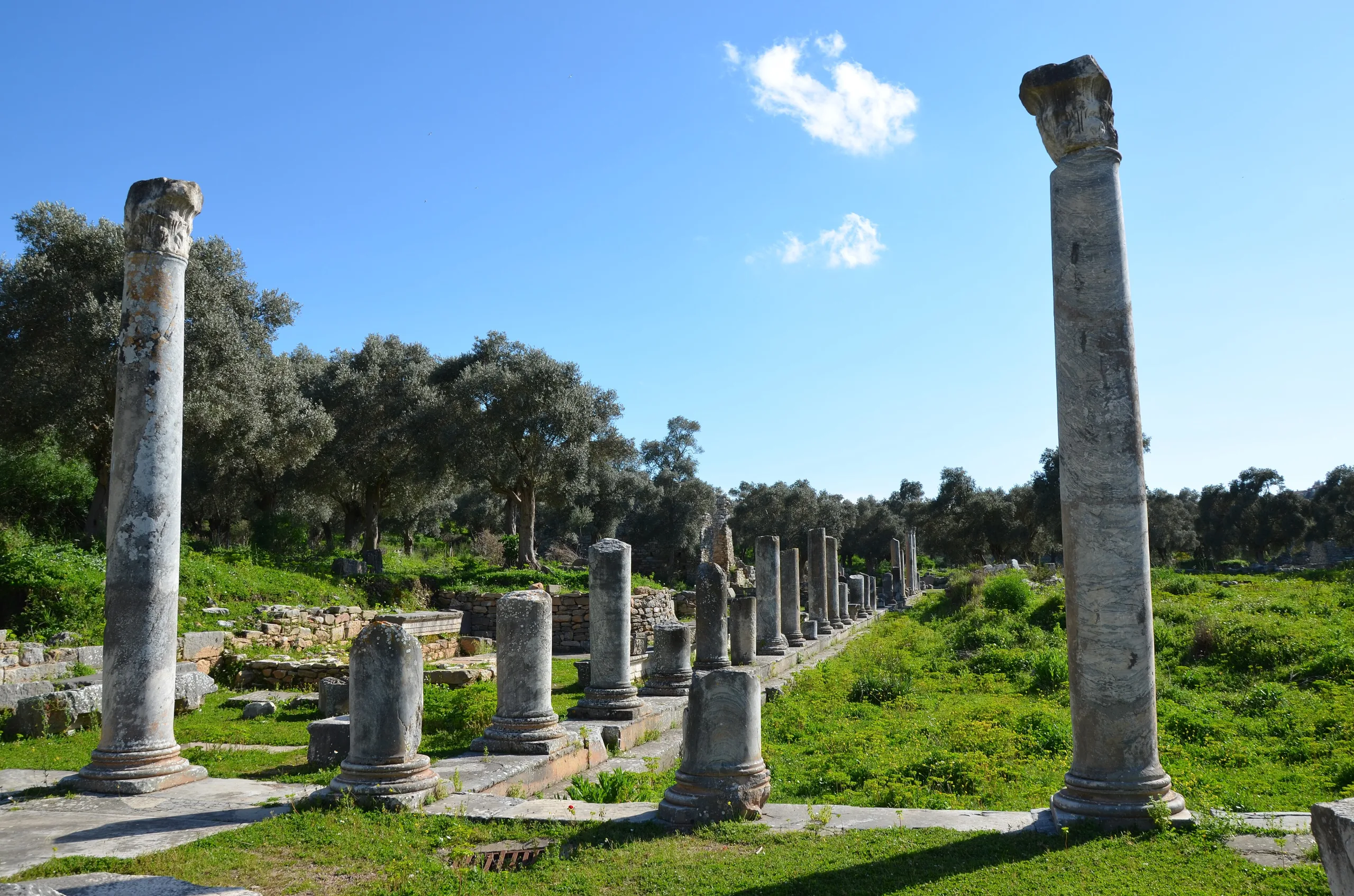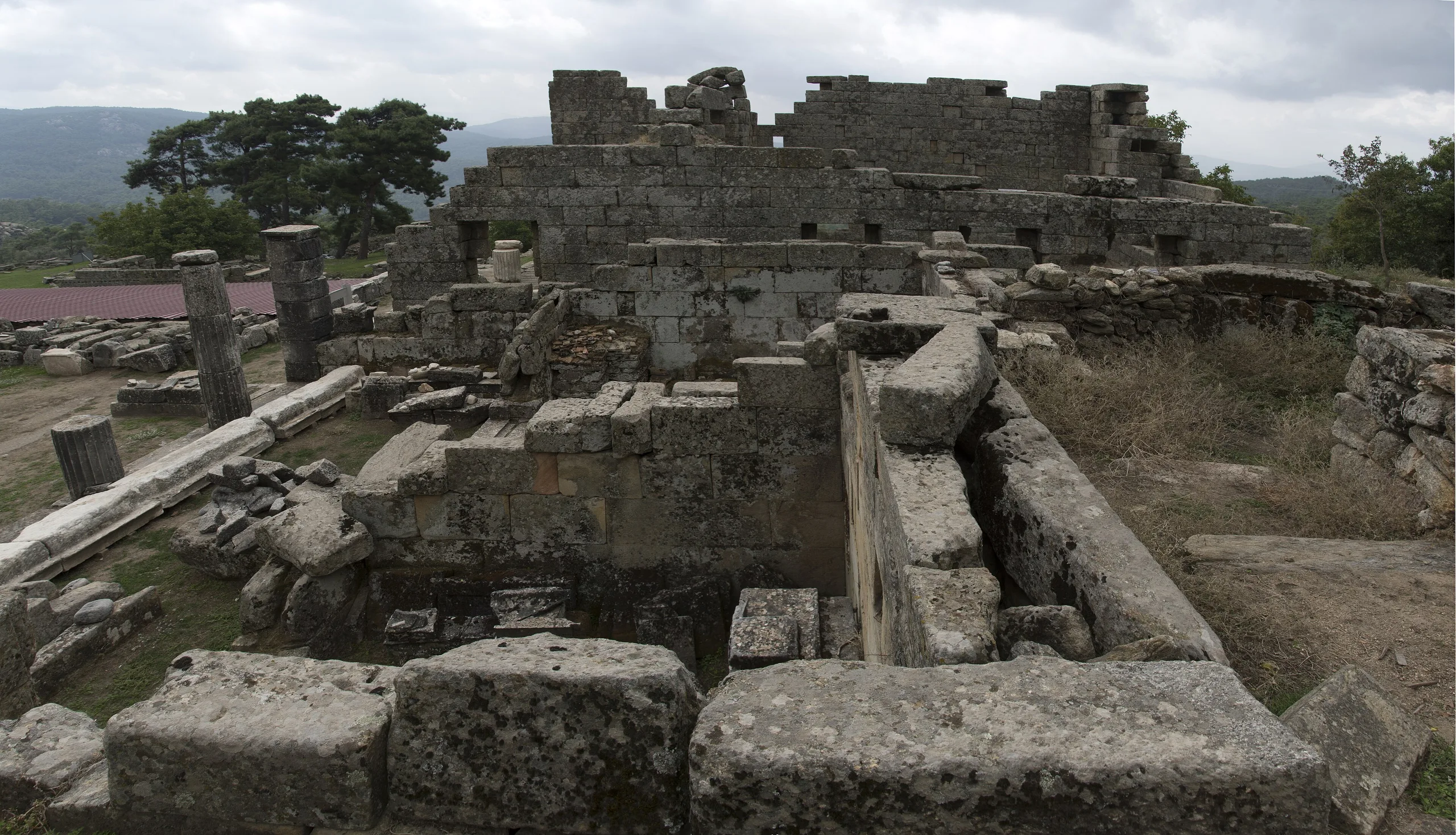
A Carian mountain sanctuary above Milas, reached by a paved Sacred Way: a rock split as if by lightning, the double-axe Zeus, and the marble banqueting halls of the Hekatomnid satraps.
Labraunda is a place (Sanctuary) in Turkey, Mugla. Main periods: Hellenistic Period, Roman Period, Byzantine Period, Bronze Age.
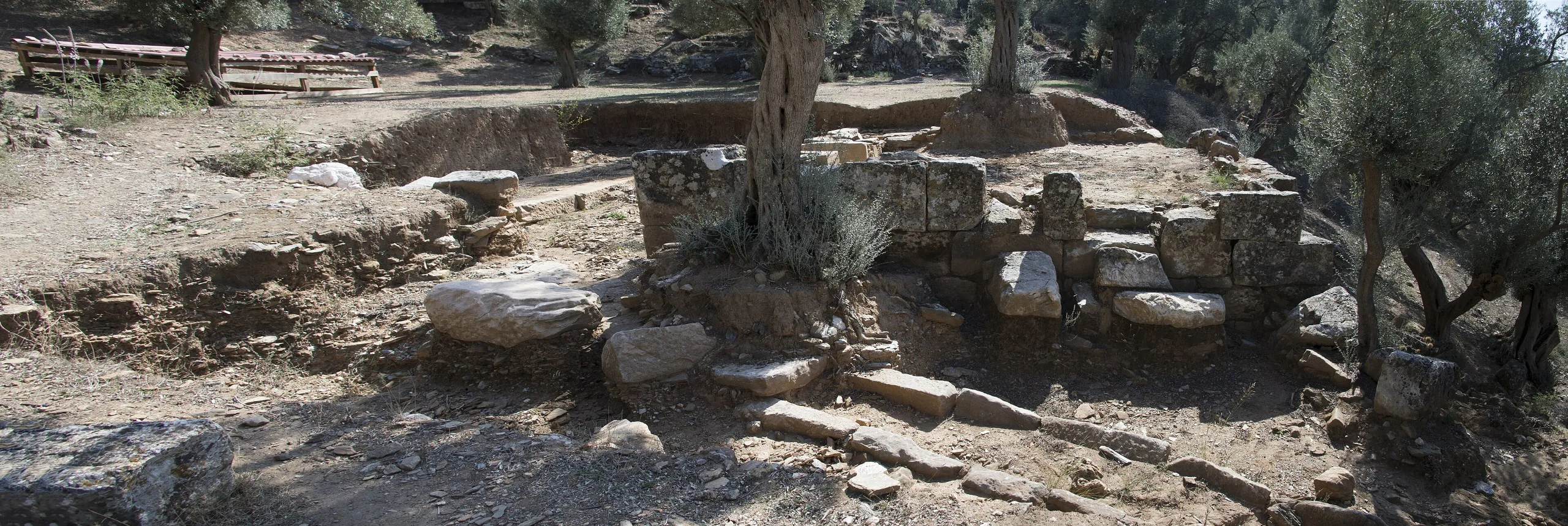
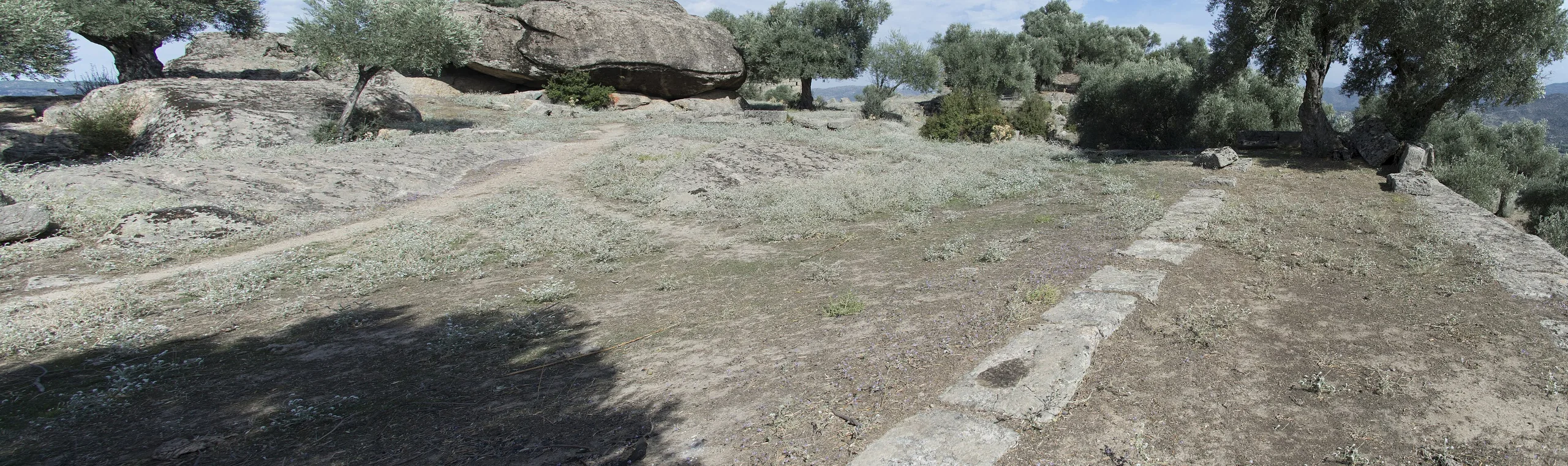
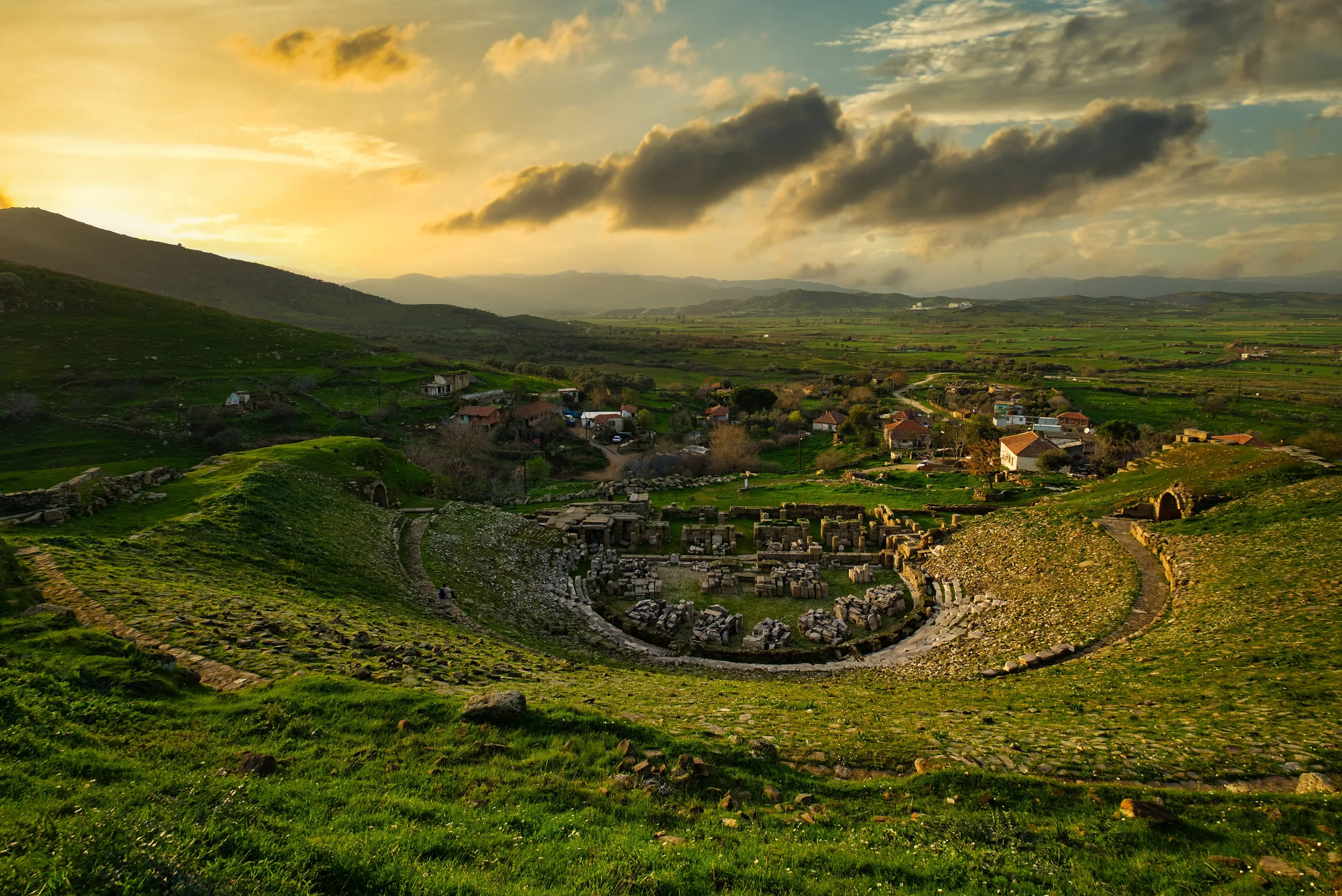
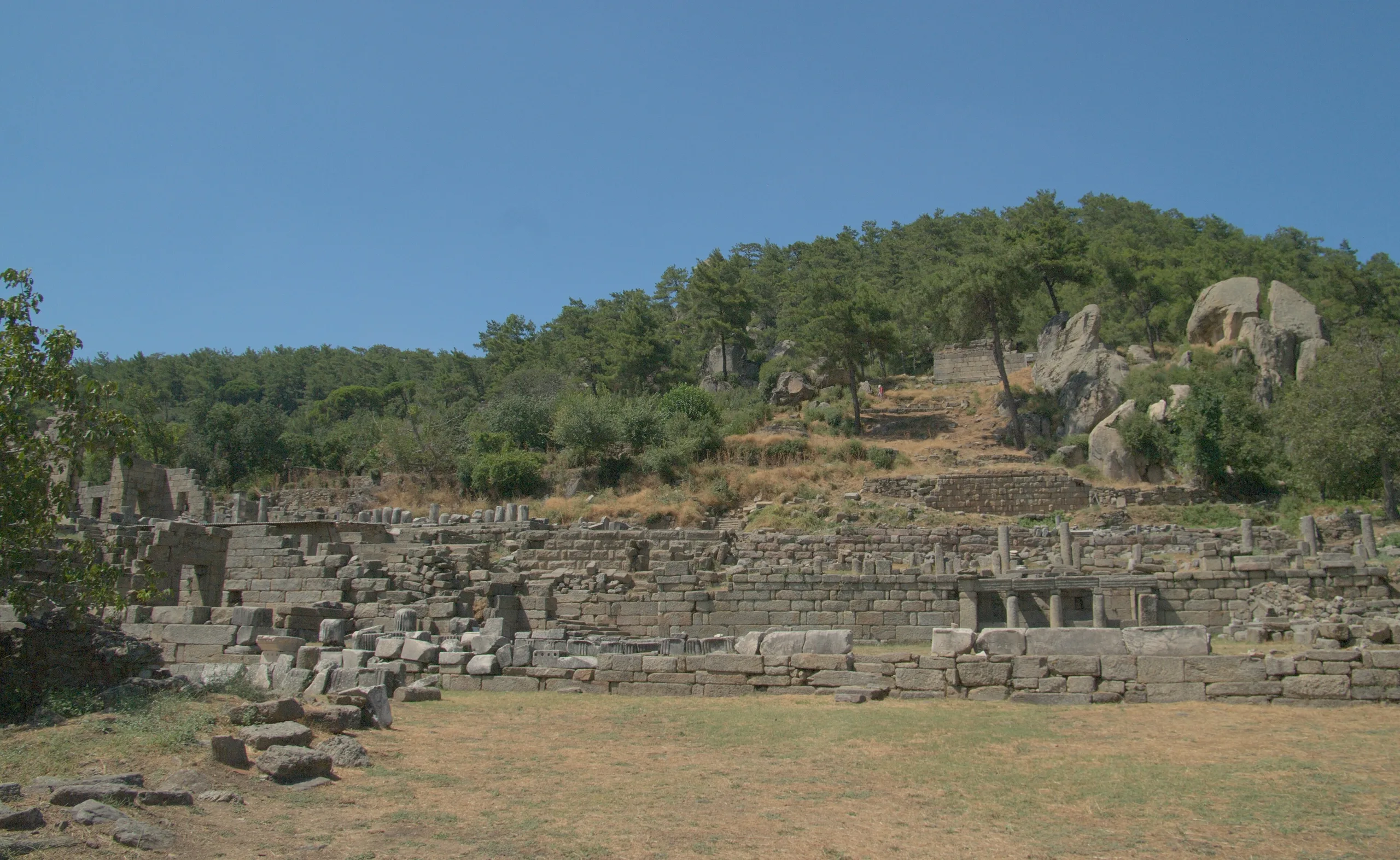
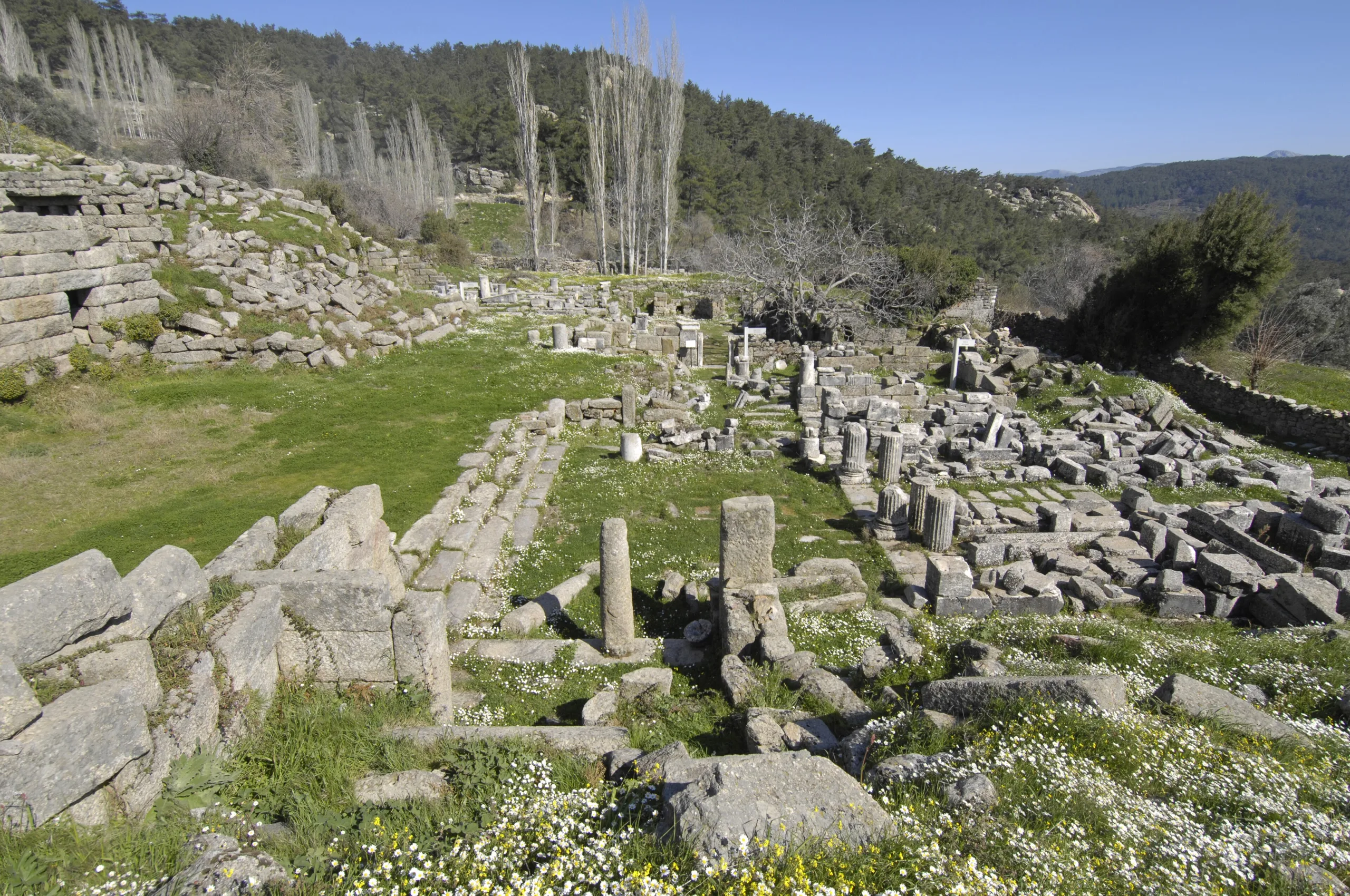
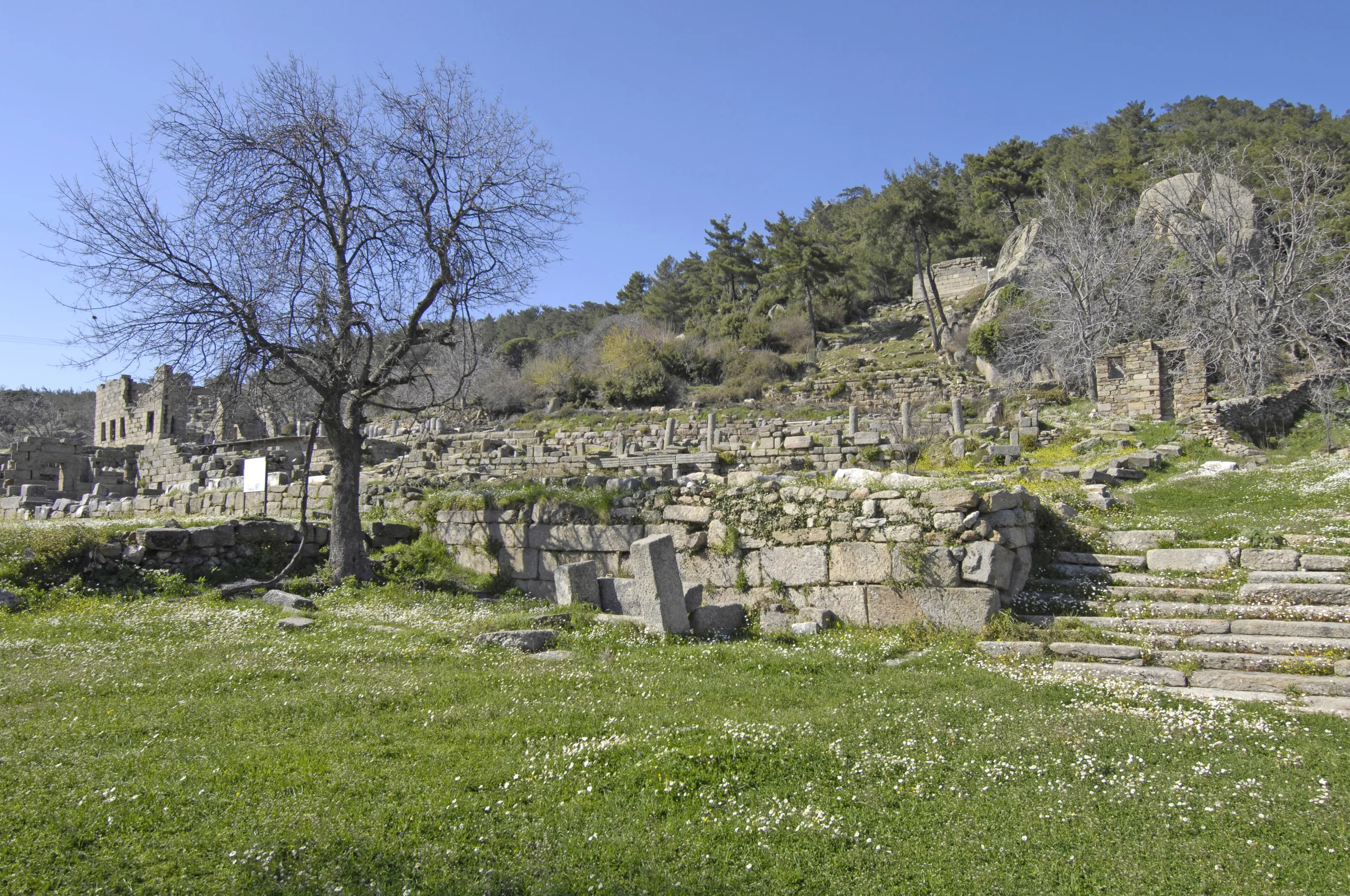
Above the sanctuary of Labraunda stands a rock cleft in two as if by lightning, with a spring welling beneath it. The cult of Zeus Labraundos probably grew up around that rock and water. The double axe was the sky god's emblem, and for the Carians this was a national cult centre. The site lies in mountain country near Kargıcak village in Milas district, Muğla, about 14 km north-east of Milas, and most of its monumental buildings date to the 4th century BCE, under the Hekatomnid dynasty.
Location and access
The sanctuary sits at roughly 700 m, some 600 m above the Milas plain. The nearest town was Mylasa, modern Milas, and pilgrims came from there on foot or horseback along the Sacred Way, a stone-paved road 14 km long and 8 m wide. Without a paved track, heavy marble blocks could never have reached this height. Check the official page for current visiting terms.
History
The first author to mention Labraunda is Herodotus. The oldest potsherds recovered in excavation date to the middle of the 7th century BCE, although the sanctuary itself may be older still. The first temple belongs to around 500 BCE; at that stage the sanctuary was a terrace with a small temple and a grove of plane trees. In 497 BCE Carians who had joined the Milesians in revolt against Persia fought a battle here and were badly beaten.
After 546 BCE Caria belonged to the Persian empire and was governed by satraps whom the Great King appointed. In the 4th century the office passed to a local dynasty from Mylasa, beginning with Hecatomnos (392-377 BCE); five of his children followed one after another, and the family is known as the Hekatomnids. The eldest, Maussollos (377-352), and his brother Idrieus (351-344) turned Labraunda into a family sanctuary. At this time it seems to have belonged to no city, an independent pilgrimage place run by its own priests. Building never stopped after the Macedonian conquest, and Labraunda remained a leading centre of Caria.
A second busy phase came under Rome, especially in the 2nd century CE, when several bath complexes, stoas (colonnaded halls) and a large basilica were built. Two Byzantine churches and a small community that moved back into the ancient structures represent early Christianity. Since little beyond one small fountain building was added in the three centuries after the Hekatomnids, Labraunda still reads as a genuine Hekatomnid site.
People and events
Maussollos is the satrap who had the Mausoleum at Halicarnassus (Bodrum), one of the Seven Wonders, built. His building projects weighed heavily on the Carians, and inscriptions record four plots against him. One came in 355/354 BCE, at the annual sacrificial festival at Labraunda: security held, Maussollos escaped at the last moment and the would-be assassin Manitas was killed on the spot. When Maussollos died in spring 352 BCE the works were unfinished, which is why most Hekatomnid buildings carry the name of Idrieus. In 334 BCE Alexander the Great put Ada, Idrieus's wife and sister, back in power.
Notable structures
Temple of Zeus and the androns
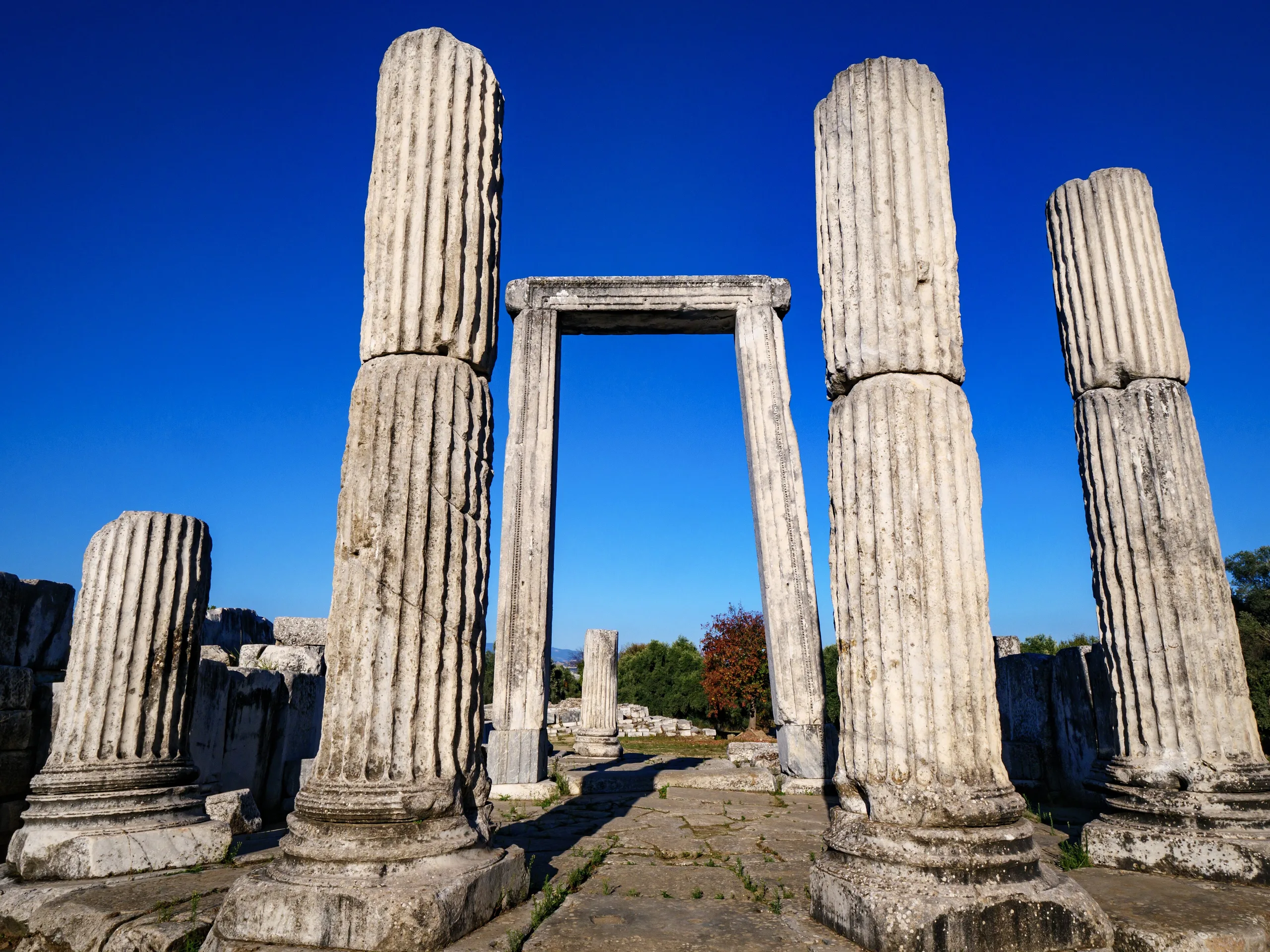
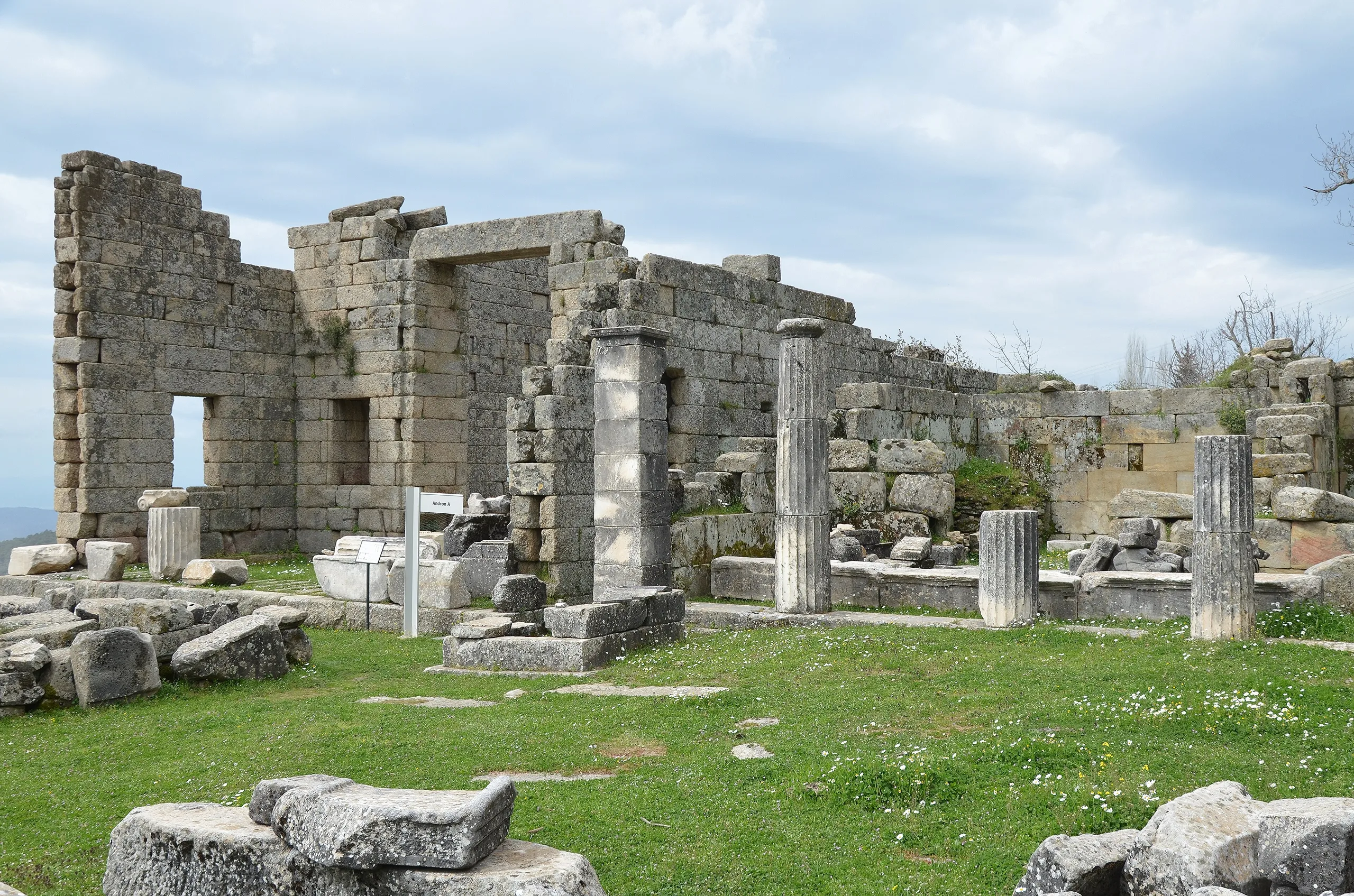
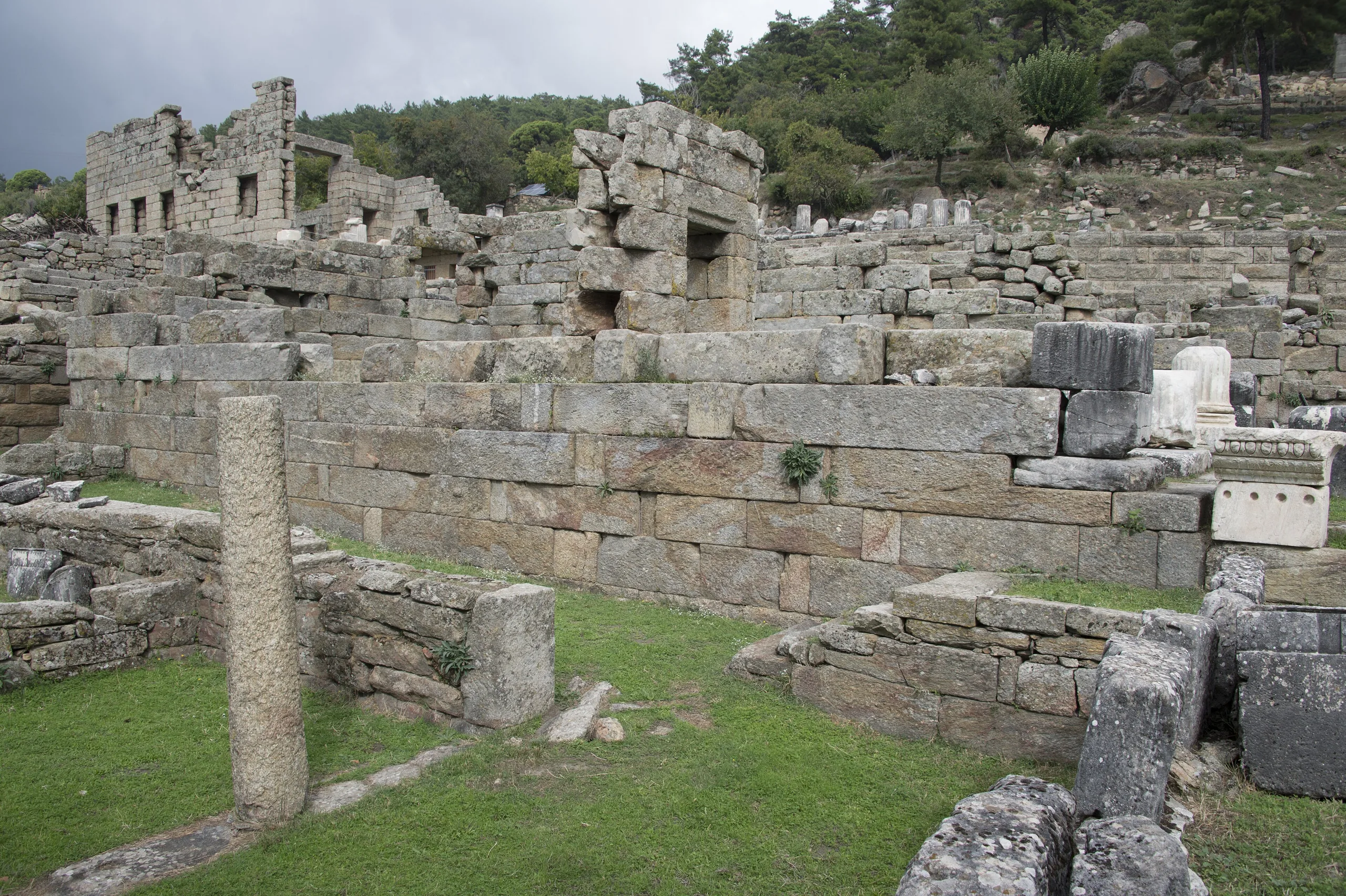
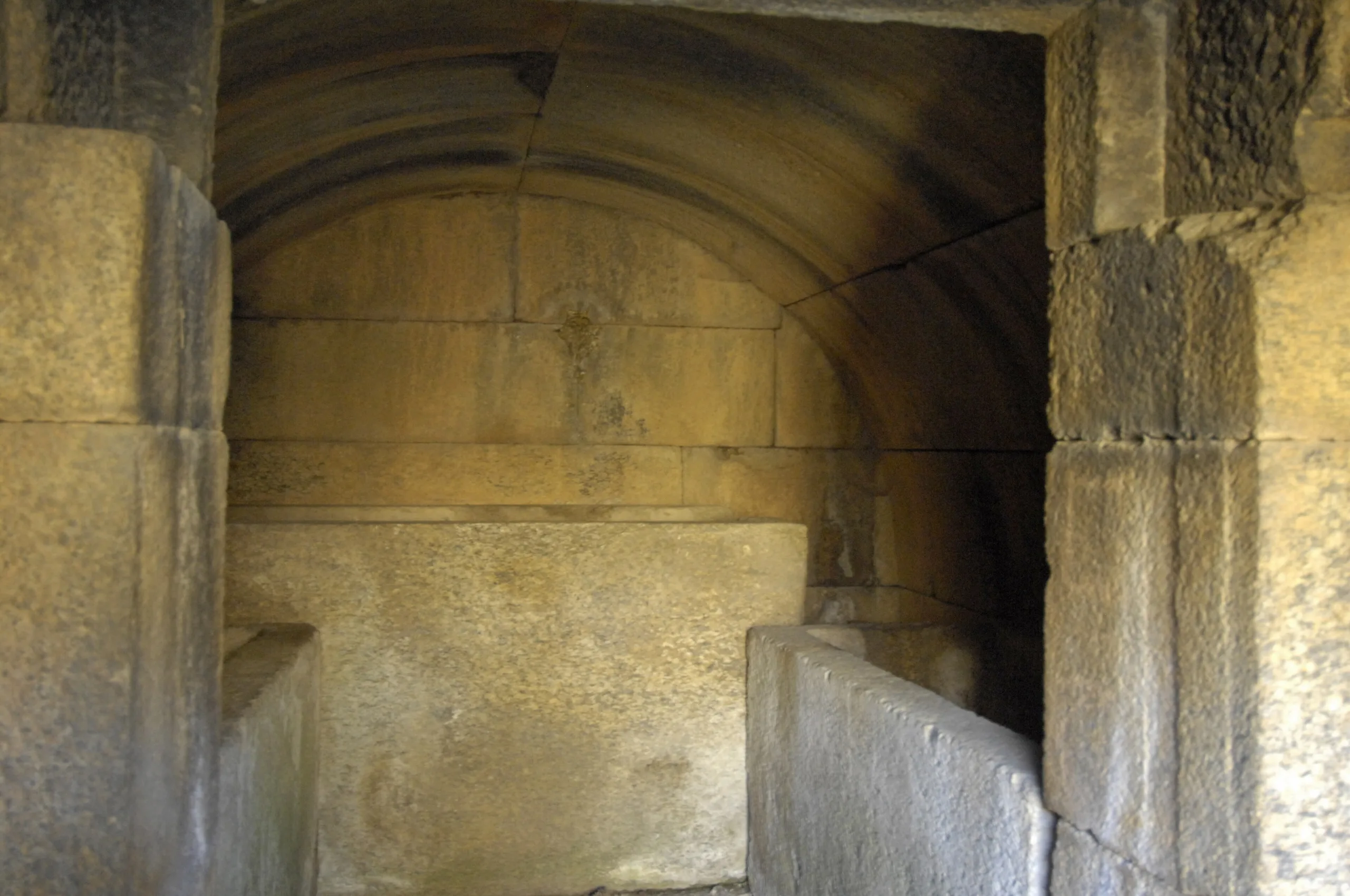
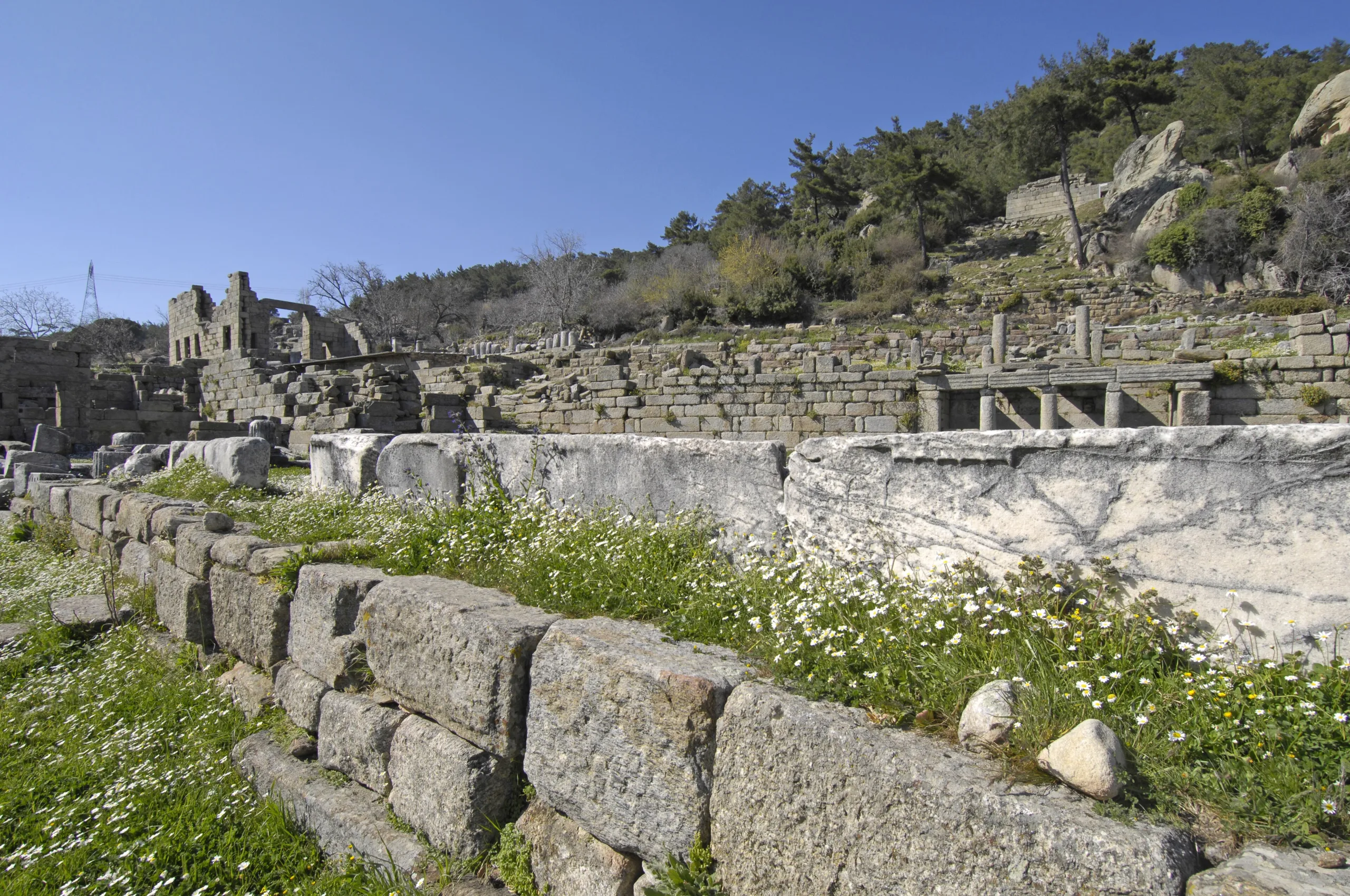
Maussollos and Idrieus built or finished the Temple of Zeus, two large androns (ritual dining halls), a stoa on the north side, the Oikoi, a two-room building behind the temple, a gateway called the South Propylon and a Doric-order building. Maussollos probably began the temple and Idrieus finished it. Andron B is the first large marble building on the site: its three architrave beams over the columns weigh about 2.5 tonnes each, and the lintel above the niche in the back wall of the cella is 4.80 m wide and around 5.5 tonnes. The marble is thought to have come from quarries on Sodra Mountain across the Milas plain, brought down on wooden sledges and hauled up to the sanctuary by ox-drawn carts.
Festivals, East Stoa and stadium
The annual sacrificial festival lasted five days, and thousands of people came in large groups, bringing oxen, sheep, goats, wine and camping gear. Sacrifices were made at the altar and races run in the stadium. Elected leaders and priests reclined on couches in the androns; other notables dined in the East Stoa, in rooms furnished with 11 couches each. Two people lay on each couch, so androns and stoa together could host more than 200, while most of the crowd slept in tents or makeshift shelters on the terraces. The stadium a few hundred metres west of the sanctuary shows that athletics belonged to the festival.
Excavations
Excavation began in 1948 under Axel W. Persson, professor of classical archaeology at Uppsala University. Pontus Hellström of the same university later led it, and the present director is Olivier Henry. A Swedish team digging by the spring in the 1940s got nowhere, as the trenches filled with water. The Swedish Research Institute in Istanbul has published the results since 1980 and has issued 12 final reports; annual reports appear in Opuscula and, since 2013, in Anatolia Antiqua.
Finds and museums
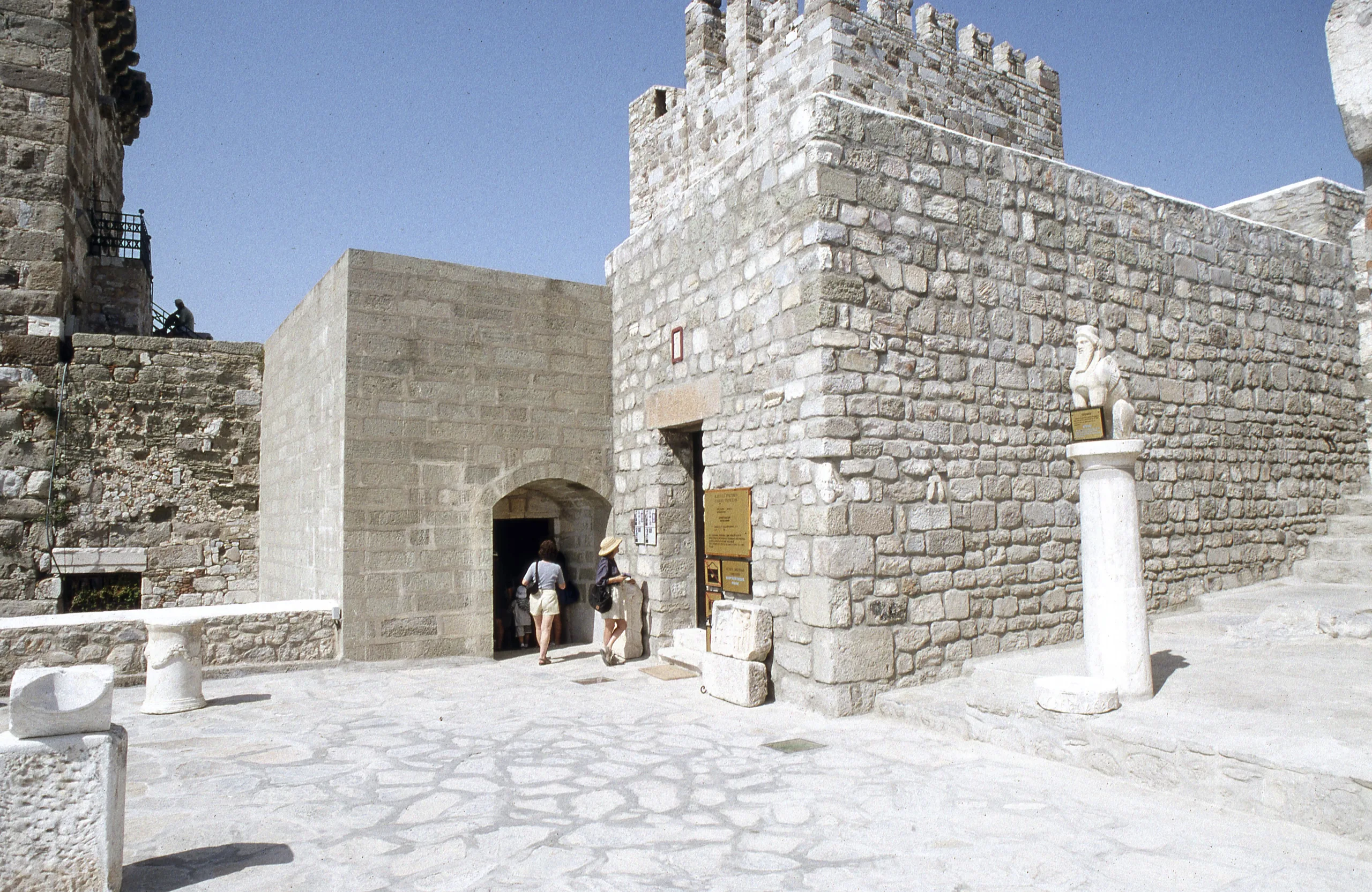
Excavation yielded 134 Greek inscriptions in all. Those that Maussollos and Idrieus had cut into their buildings allow the structures to be dated exactly; others record letters exchanged in the second half of the 3rd century BCE by Seleukos II, Philip V and the local dynast Olympichos with Labraunda's high priests and the city of Mylasa about the sanctuary's status. Terracotta tablets in the Carian language remain unread; they are probably religious or magical. A male sphinx about 1 m high, found south of Andron B, is the most important marble sculpture, and may have crowned a corner of the building's roof. A Panathenaic prize amphora of the mid-4th century BCE records a gift to Zeus from a man of nearby Herakleia who won the stadion race at the games in Athens. A Hellenistic bronze couch armrest with a dog's head is another highlight.
Inscriptions, sculpture and architectural pieces found up to 1960 were taken to the Bodrum Museum or left on site. Pottery and small finds, including Carian inscriptions, are in the İzmir Archaeological Museum, and some finds from recent seasons are shown in the Milas Museum.
Mythology, name and spelling
Worship of Zeus Labraundos, the double-axe god, reaches back to Tarhunt, the Hittite sky god. The place name is Labraunda in Herodotus, was briefly Lambraunda in 4th-century inscriptions and is Labraynda in the sources behind Pliny the Elder; Labranda became the usual spelling under Rome.
Gallery
Frequently asked questions
Where is Labraunda?
Whose sanctuary was it?
How did pilgrims get here from Mylasa?
What did the Hekatomnids build?
Why is the name spelled so many ways?
Where can the finds be seen?
Sources (13)
- Labraunda Örenyeri / Labranda Archaeological Site (TR ve EN sayfalar) — T.C. Kültür ve Turizm Bakanlığı, Müzeler ve Ören Yerleri
- Labraunda Antik Kenti (kaynak: Labraunda Kazı Başkanlığı) — T.C. Kültür ve Turizm Bakanlığı, Türkiye Kültür Portalı
- Labraunda Excavations — Swedish Research Institute in Istanbul (SRII)
- Labraunda (Pleiades place 599745) — Pleiades
Photo credits
- Photo: Dosseman, CC BY-SA 4.0 — Wikimedia Commons (resized)
- Photo: Vadimph, CC BY-SA 3.0 — Wikimedia Commons (resized)
- Photo: Carole Raddato from FRANKFURT, Germany, CC BY-SA 2.0 — Wikimedia Commons (resized)
- Photo: Dosseman, CC BY-SA 4.0 — Wikimedia Commons (resized)
- Photo: Dosseman, CC BY-SA 4.0 — Wikimedia Commons (resized)
- Photo: Dosseman, CC BY-SA 4.0 — Wikimedia Commons (resized)
- Photo: Dosseman, CC BY-SA 4.0 — Wikimedia Commons (resized)
- Photo: Dosseman, CC BY-SA 4.0 — Wikimedia Commons (resized)
- Photo: Dosseman, CC BY-SA 4.0 — Wikimedia Commons (resized)