Alinda is a Carian city on two hills in Karpuzlu, remembered as the capital of Queen Ada and known for its agora, theatre, walls and Carian-type tombs.
Alinda is an ancient city located in Turkey, Aydin. Main periods: Hellenistic Period, Roman Period, Byzantine Period.
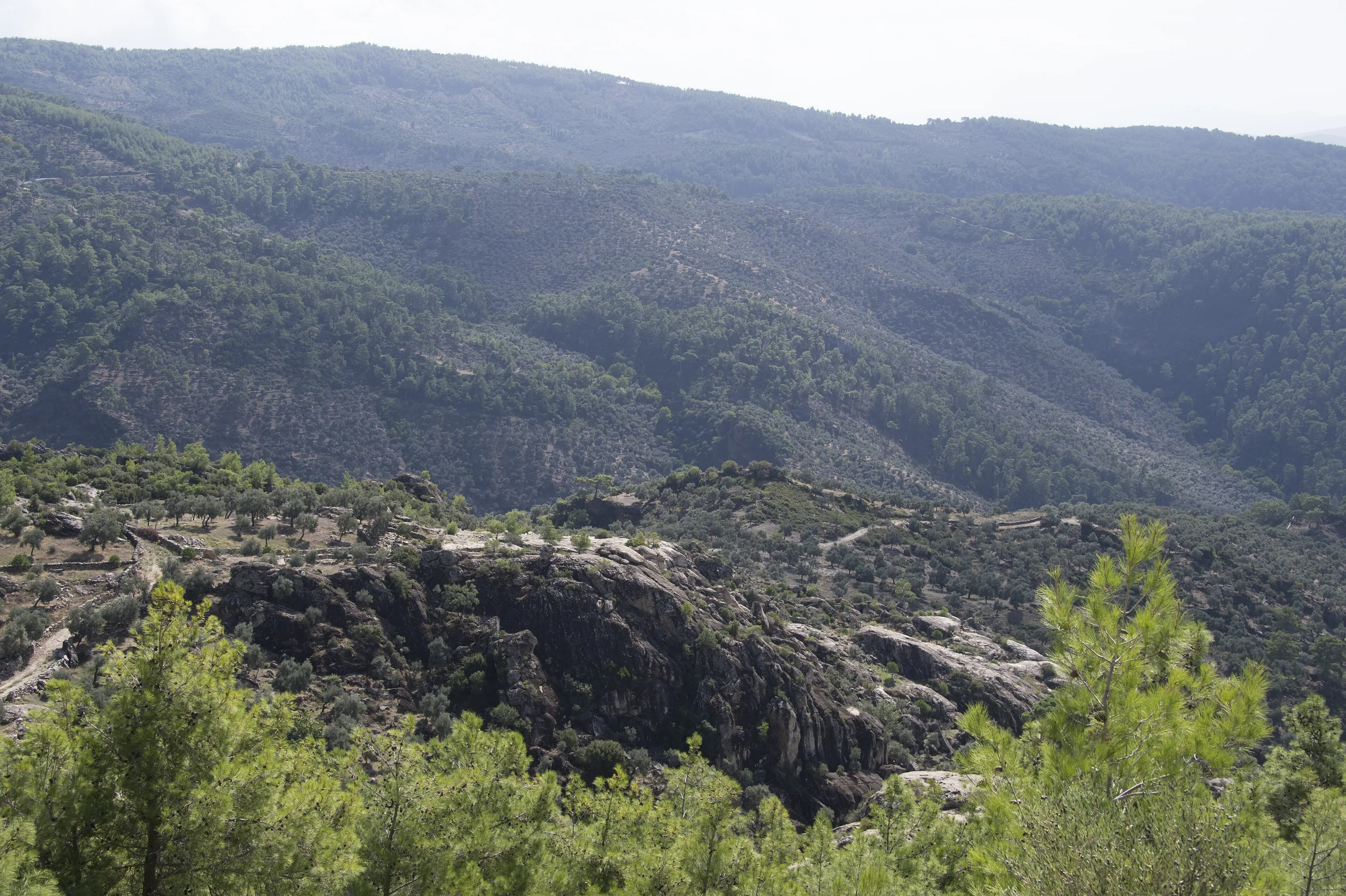
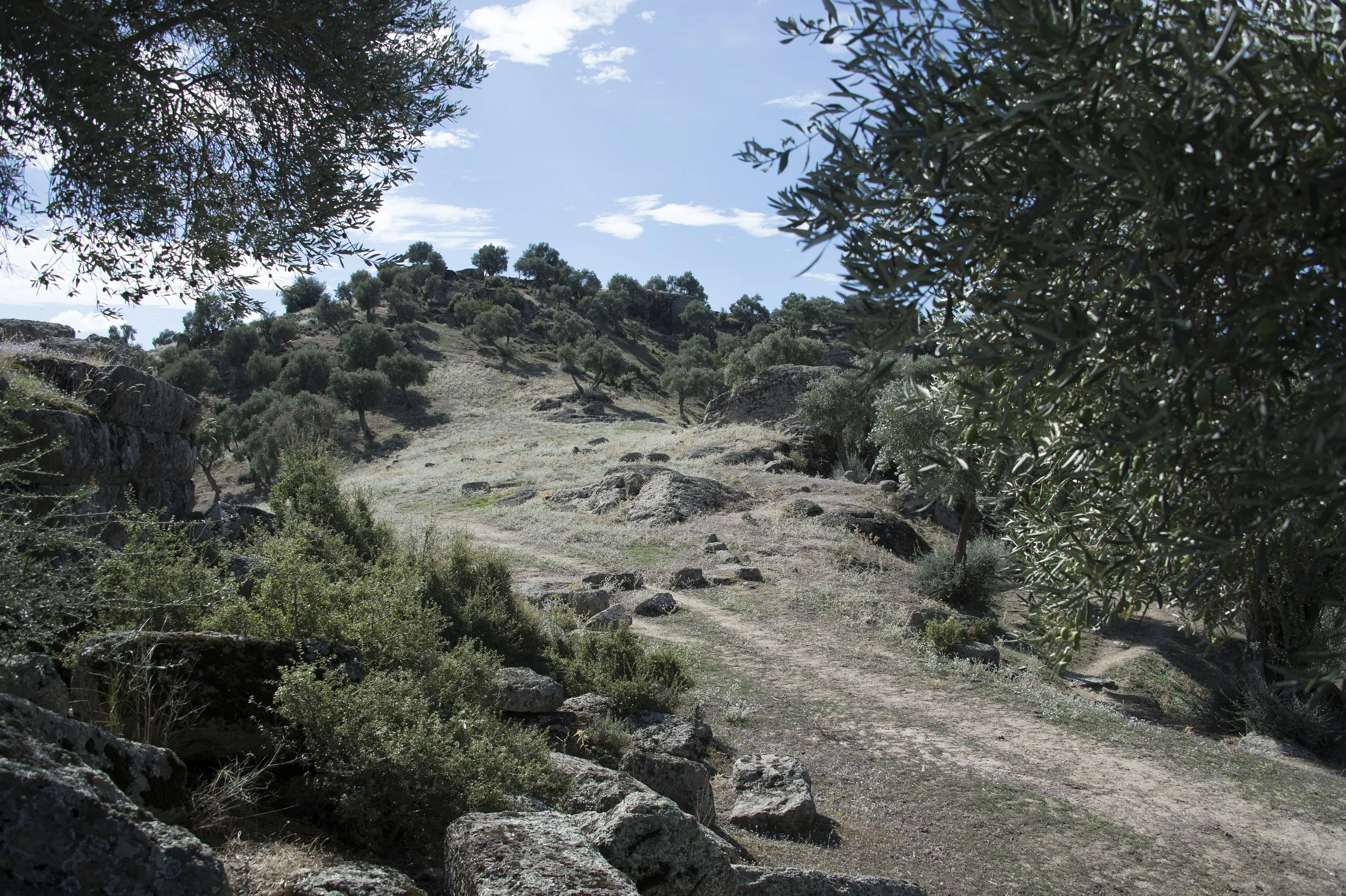
Alinda is a Carian city in Karpuzlu district, Aydın. The Culture Portal places it on two high, sloping hills, and an archaeogeophysics paper on DergiPark adds that a strong defensive system encircles it. The ministry's English page traces settlement back to about 2000 BCE but says little is known about that stage, and that most of the surviving ruins belong to the 4th century BCE.
Location and access
The Culture Portal says a 26-kilometre road leaves the Aydın–Muğla highway at its 30th kilometre and ends at the site; it also notes that municipal buses from Aydın Efeler and minibuses to Karpuzlu serve the area. Check the official page for current visiting terms.
History
The one clear moment of Alinda in the written record concerns Ada of the Carian ruling family. The ministry's Turkish page calls her a daughter of Hekatomnos, while the English page calls her a sister of Mausolos. All three sources agree that around 340 BCE the government in Halicarnassus fell into turmoil, her brother Pixodaros pushed her out, and she withdrew to Alinda; the Turkish ministry page and the Culture Portal add that she made it her capital. The Culture Portal credits Strabo for this. The English ministry page continues that when Alexander reached Caria, Ada met him and offered backing, and that after taking western Anatolia he put her in charge of the whole of Caria.
The Culture Portal records that the city was for a time called Alexandria and took up Greek cults. It remained significant under Rome and struck its own coins until the 3rd century CE. In Byzantine times it was a bishopric under the metropolitan see of Aphrodisias. The Pleiades entry also lists the name Alexandria ad Latmum for the place.
Notable structures
Walls and aqueduct
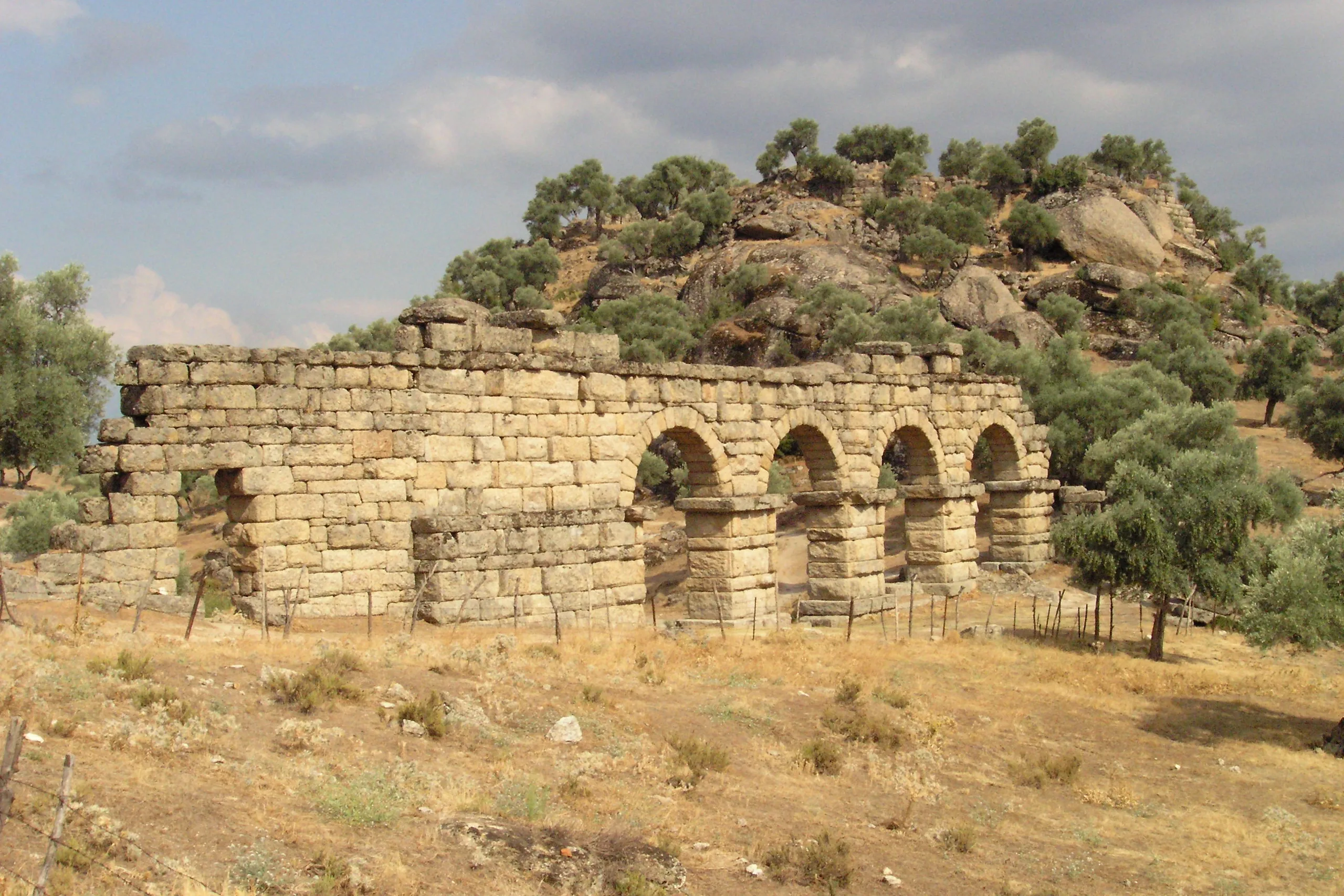
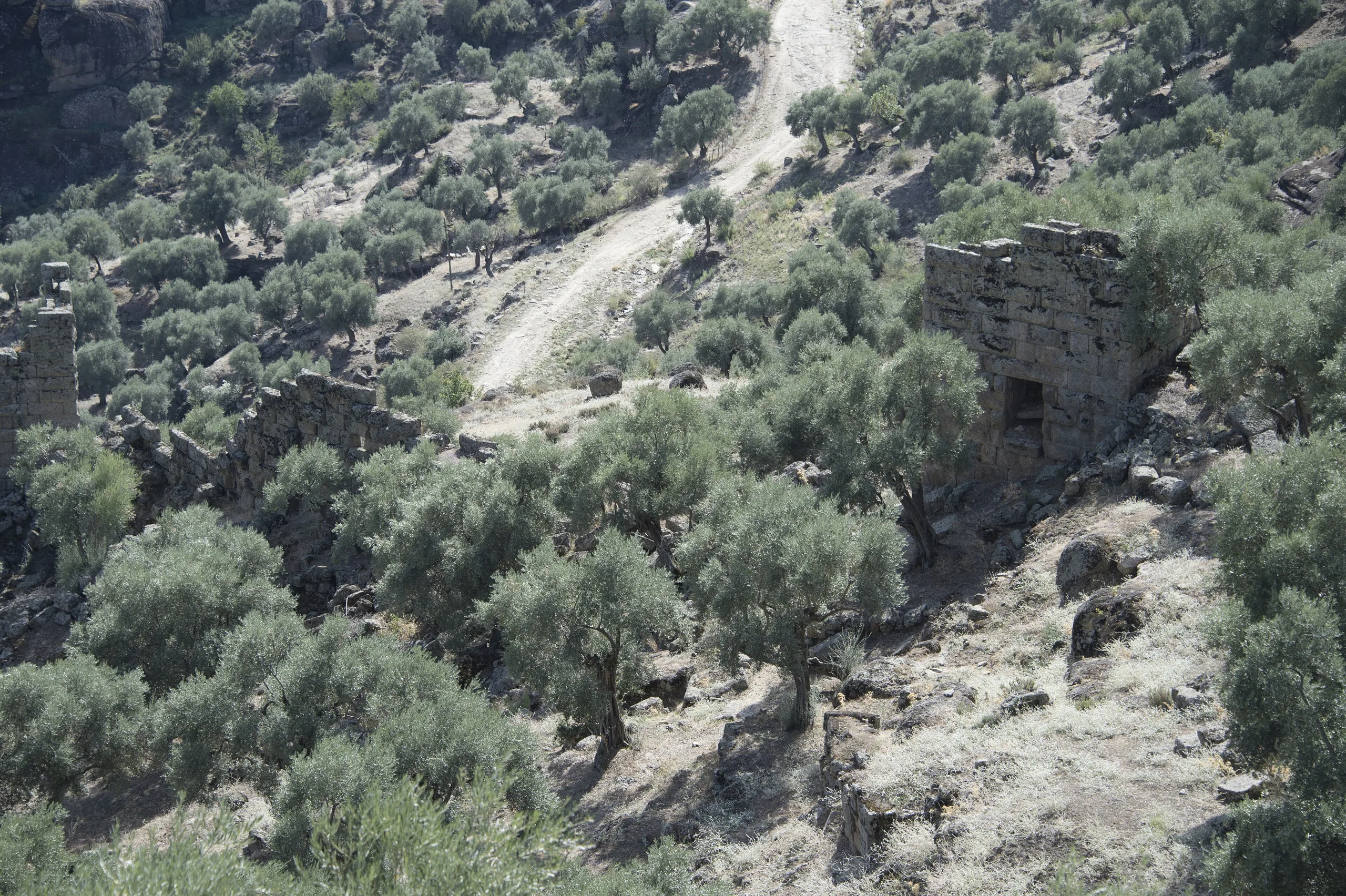
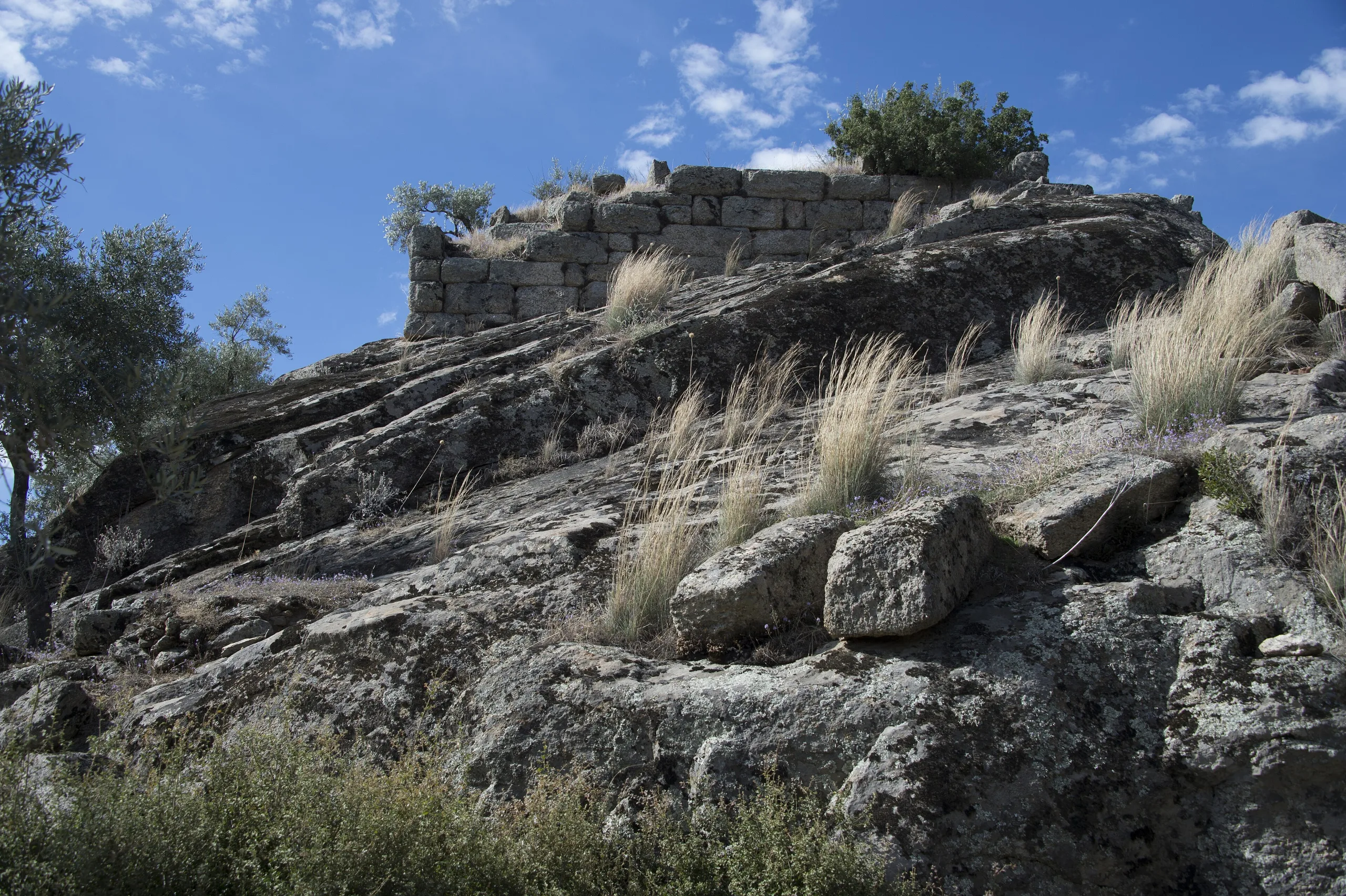
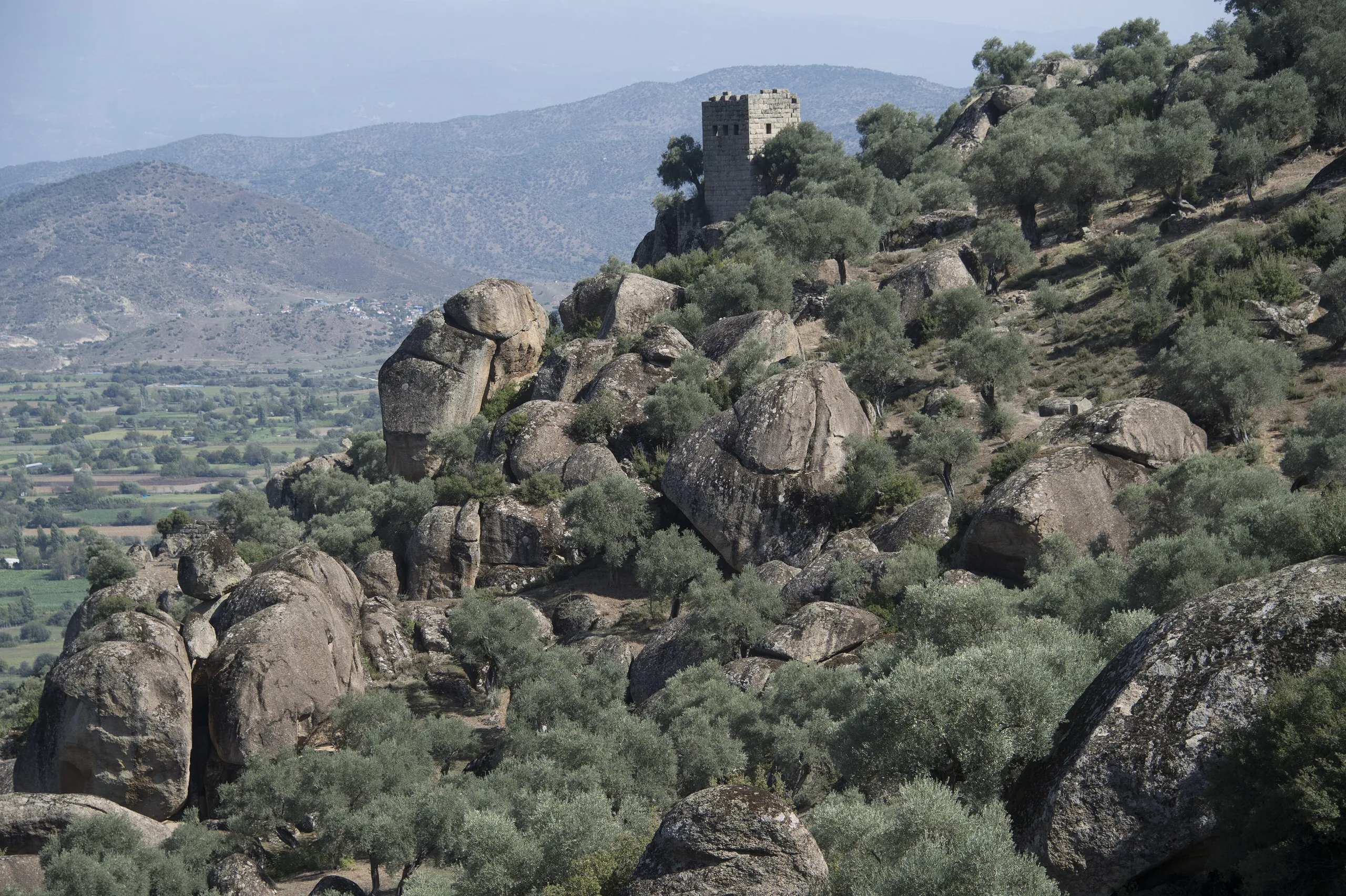
According to the Culture Portal the city wall is made of local granite, is well preserved and is reinforced with towers at intervals. West of the acropolis a round-arched aqueduct stands on four piers.
Agora
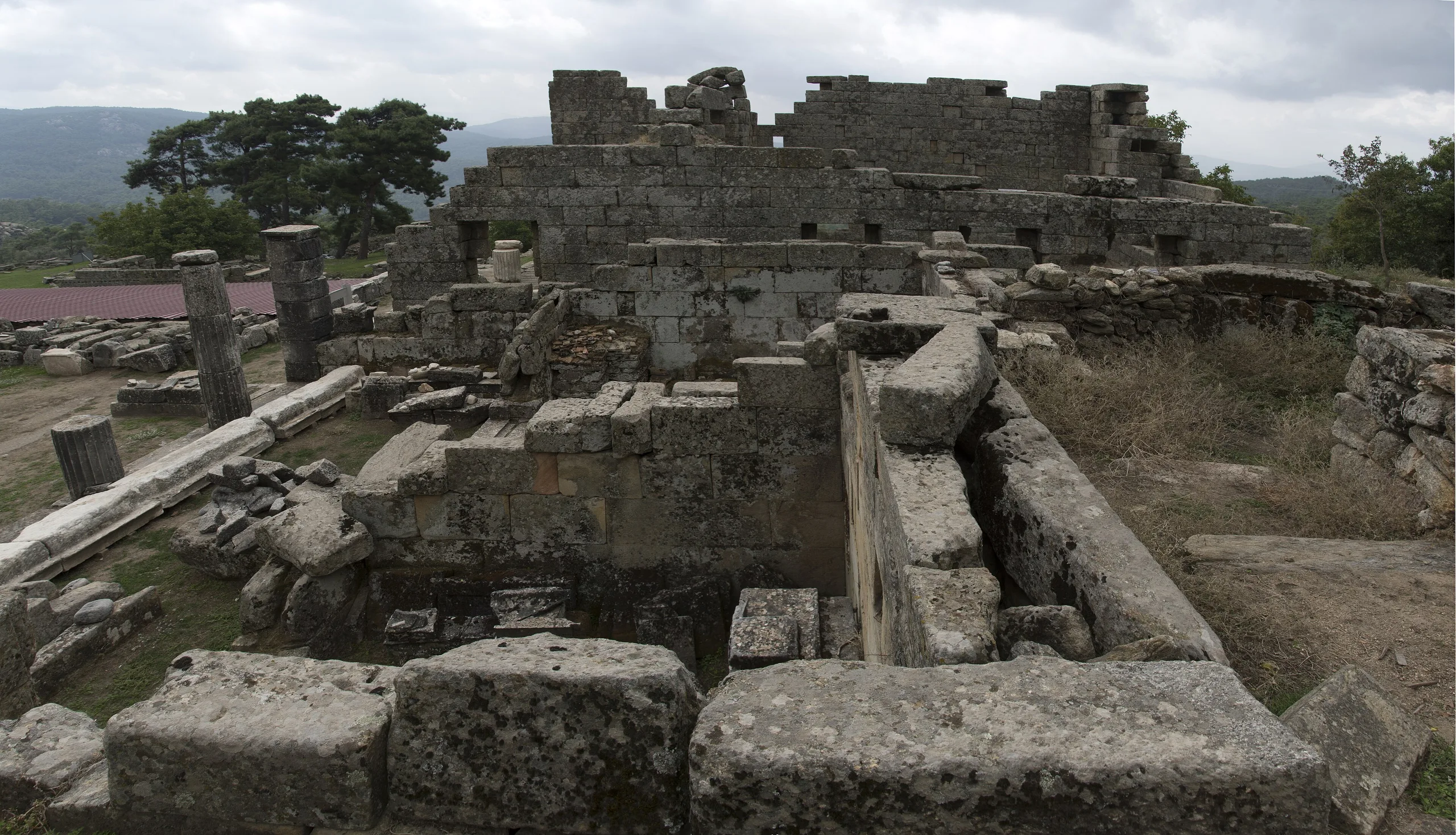
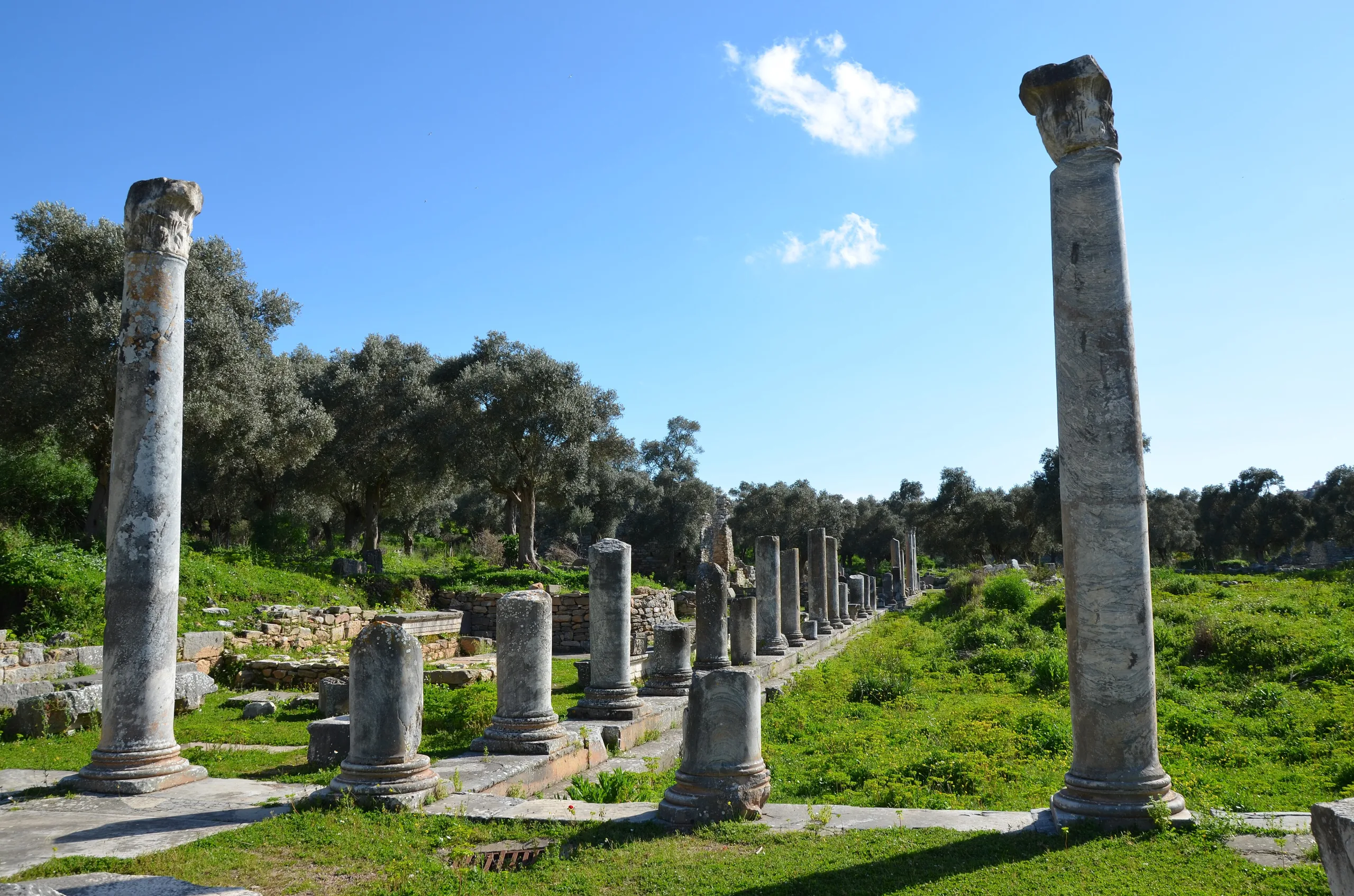
The agora is the most important building still standing in Alinda. The Culture Portal describes a rectangular, three-storey structure running east to west, with a market hall to the south whose upper floor is laid out as a stoa. In the English ministry text the top floor meets the agora proper on the north, while the ground floor opens toward a narrow terrace on the south and is split by one unbroken wall into two shops of two rooms each.
Theatre and temple foundations
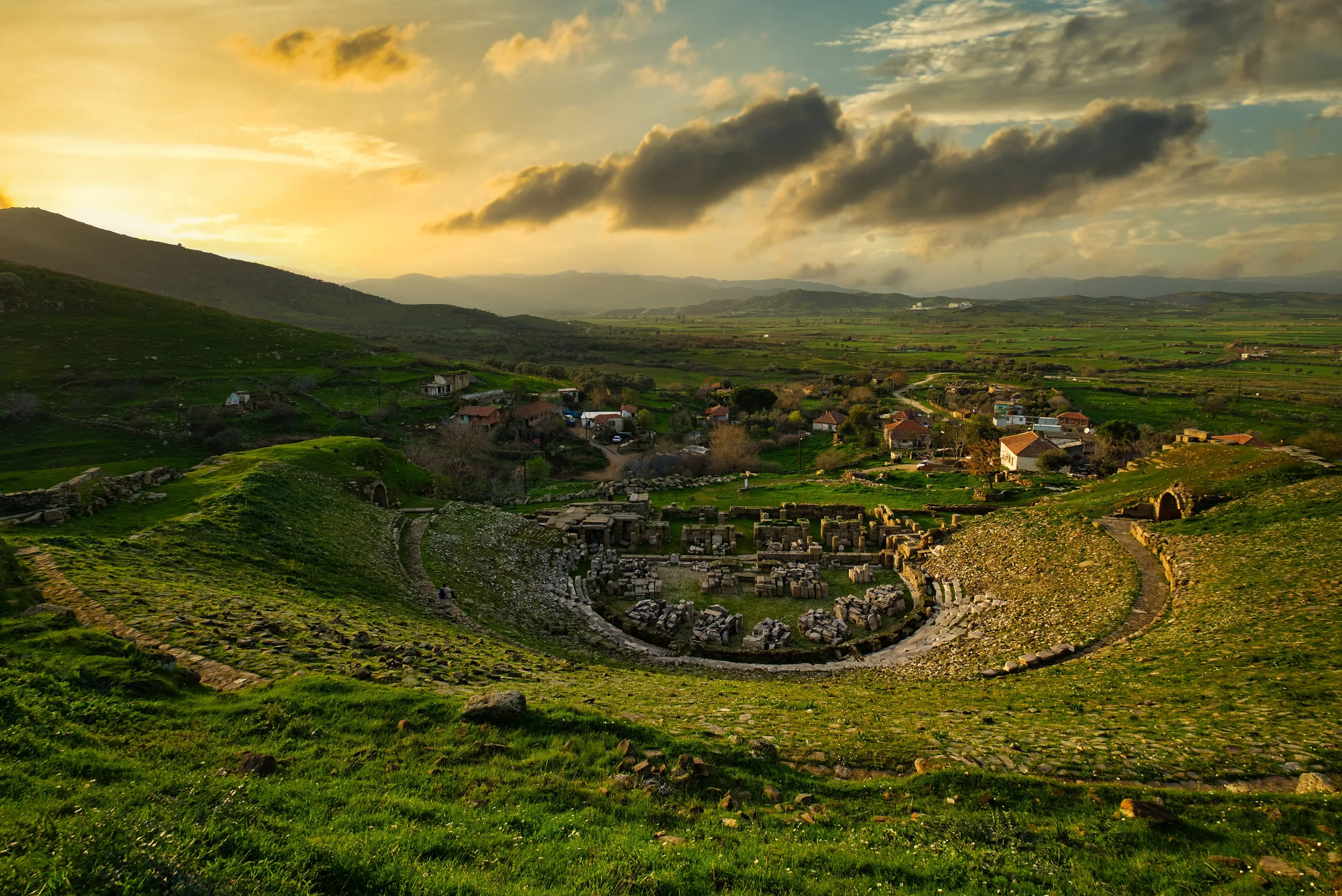
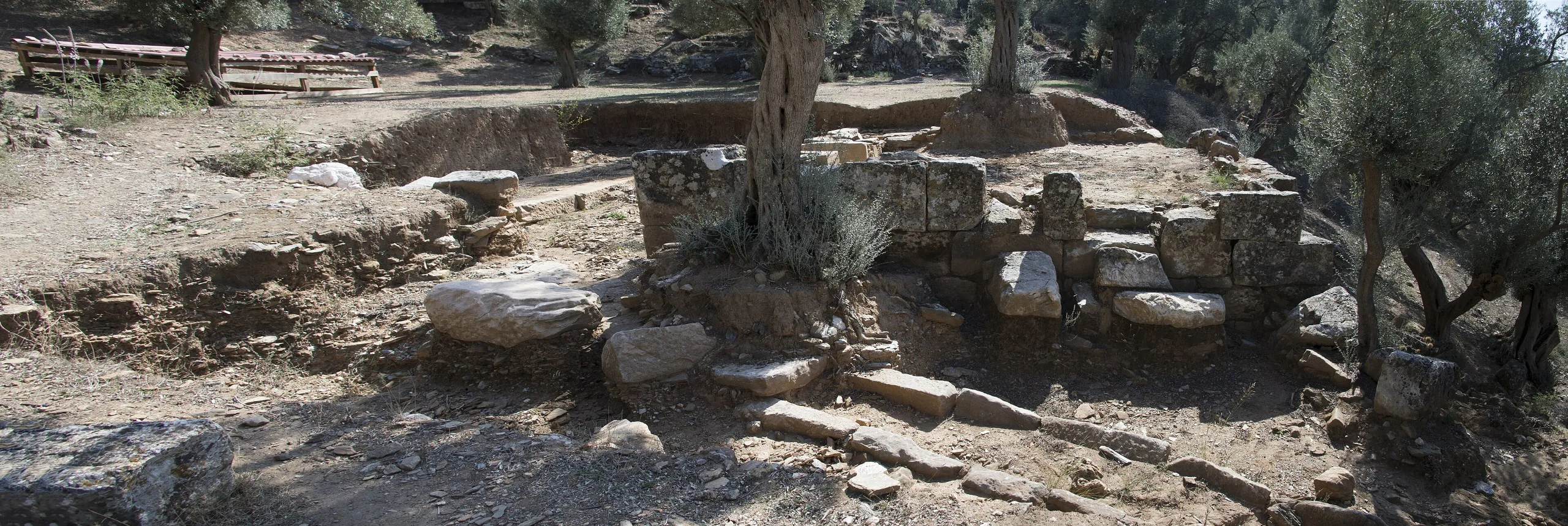
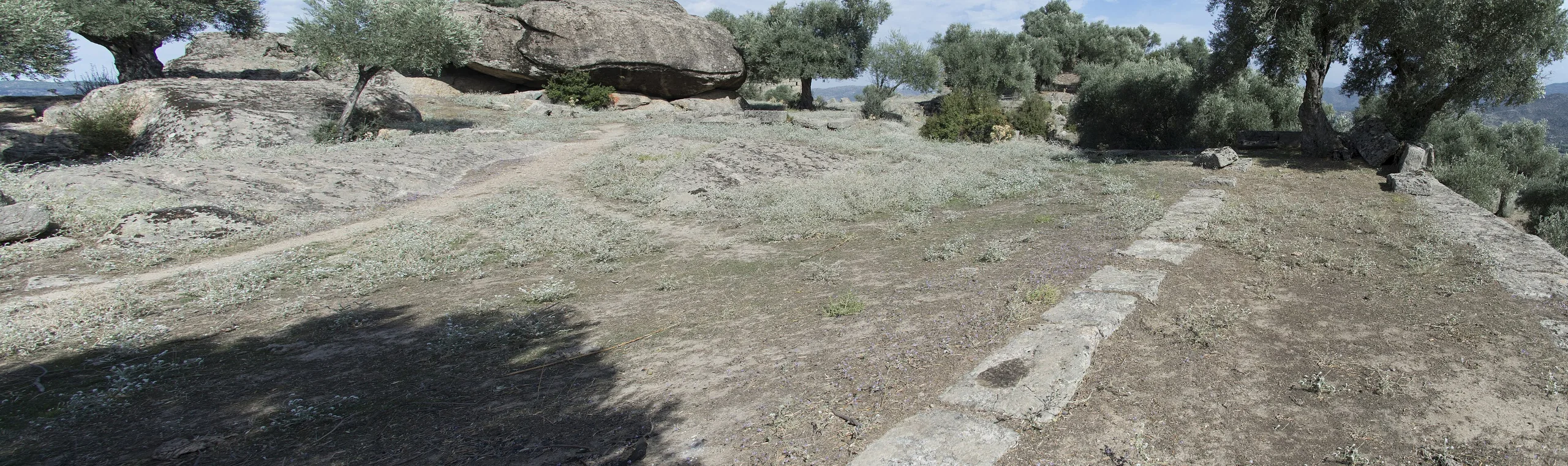
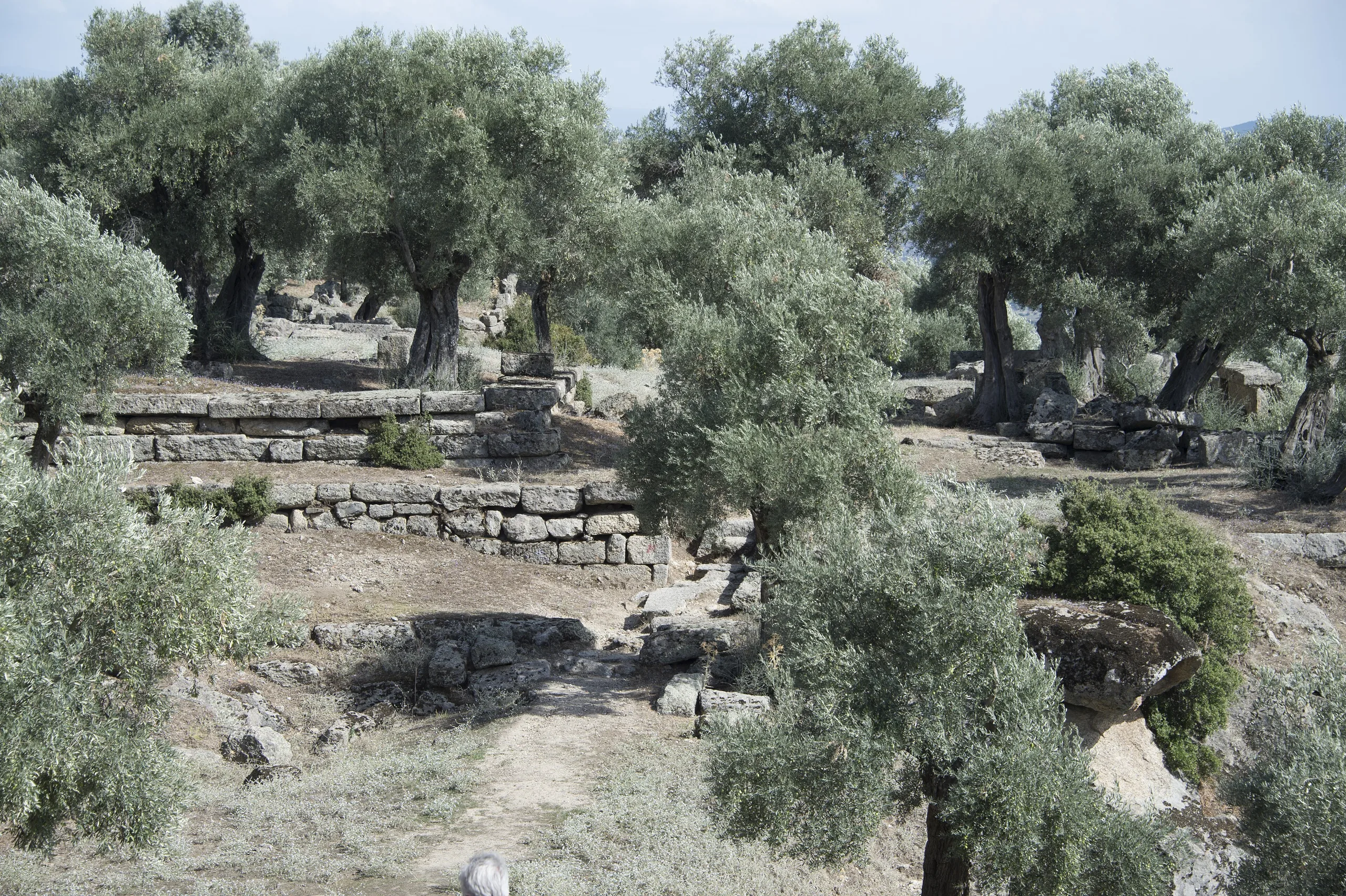
The theatre sits on the south-western foot of the acropolis, set into a natural slope. Its south-east-facing seating area is quite well preserved, but the stage building has collapsed entirely. It has Hellenistic features and was kept in use under Rome with additions. Only two temple foundations on the acropolis can still be read as plans.
Necropolis
The necropolis is concentrated on the southern slope, and Carian-type sarcophagi even turn up among the houses of Karpuzlu. The English ministry page says chamber tombs are scattered around the city as far as the far slope beyond the aqueduct. They are mostly of the Carian kind, hollows cut into large rock masses and closed with a separate cover stone; sarcophagi are generally plain, with carving only on the short ends of the lids.
Research
The DergiPark paper reports that archaeological surface surveys began at Alinda for the first time in 2020, together with archaeogeophysical work aimed at recording remains above and below ground while keeping them in place. Ground-penetrating radar was run in three areas on the acropolis and showed strong anomalies shaped like building foundations. The authors say excavations are planned to check them, and the work was supported by the ministry's directorate for cultural assets and museums. The paper also claims the city was a trade and military centre from the 2nd millennium BCE. The sources do not say whether a dig is under way or who directs it.
Gallery
Frequently asked questions
Where is Alinda?
Who made Alinda a capital?
What can be seen at Alinda?
Which is Alinda's best-preserved building?
What are the tombs like?
Has archaeological work been done at Alinda?
Sources (13)
- Alinda Örenyeri / Alinda Archaeological Site (TR ve EN sayfalar) — T.C. Kültür ve Turizm Bakanlığı, Müzeler ve Ören Yerleri
- Alinda - Aydın (kaynak: Aydın İl Kültür ve Turizm Müdürlüğü) — T.C. Kültür ve Turizm Bakanlığı, Türkiye Kültür Portalı
- Aydın, Karpuzlu, Alinda Antik Kentinde Tarihi Çevrenin Korunması Çalışmalarında Arkeojeofizik Çalışmaları — Avrupa Bilim ve Teknoloji Dergisi (DergiPark)
- Alinda/Alexandria ad Latmum (Pleiades place 599480) — Pleiades
Photo credits
- Photo: Dosseman, CC BY-SA 4.0 — Wikimedia Commons (resized)
- Photo: Ana al'ain, CC BY-SA 3.0 — Wikimedia Commons (resized)
- Photo: Dosseman, CC BY-SA 4.0 — Wikimedia Commons (resized)
- Photo: Dosseman, CC BY-SA 4.0 — Wikimedia Commons (resized)
- Photo: Dosseman, CC BY-SA 4.0 — Wikimedia Commons (resized)
- Photo: Dosseman, CC BY-SA 4.0 — Wikimedia Commons (resized)
- Photo: Dosseman, CC BY-SA 4.0 — Wikimedia Commons (resized)
- Photo: Dosseman, CC BY-SA 4.0 — Wikimedia Commons (resized)
- Photo: Dosseman, CC BY-SA 4.0 — Wikimedia Commons (resized)