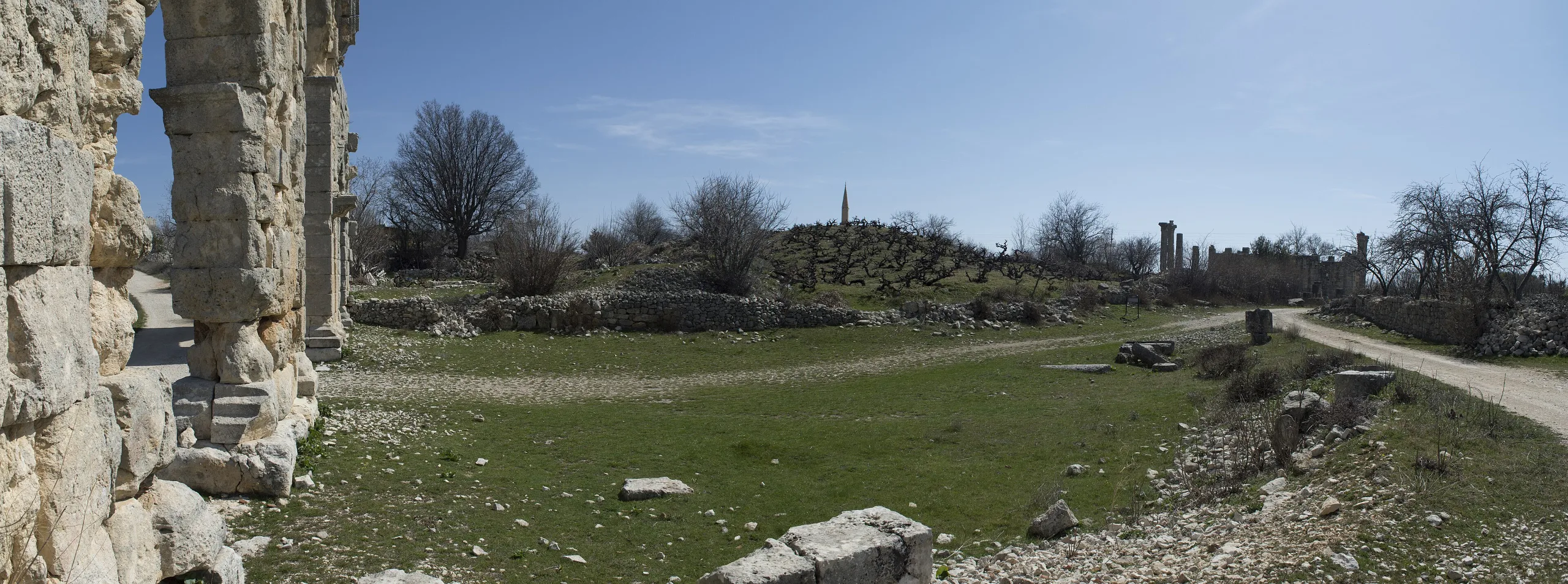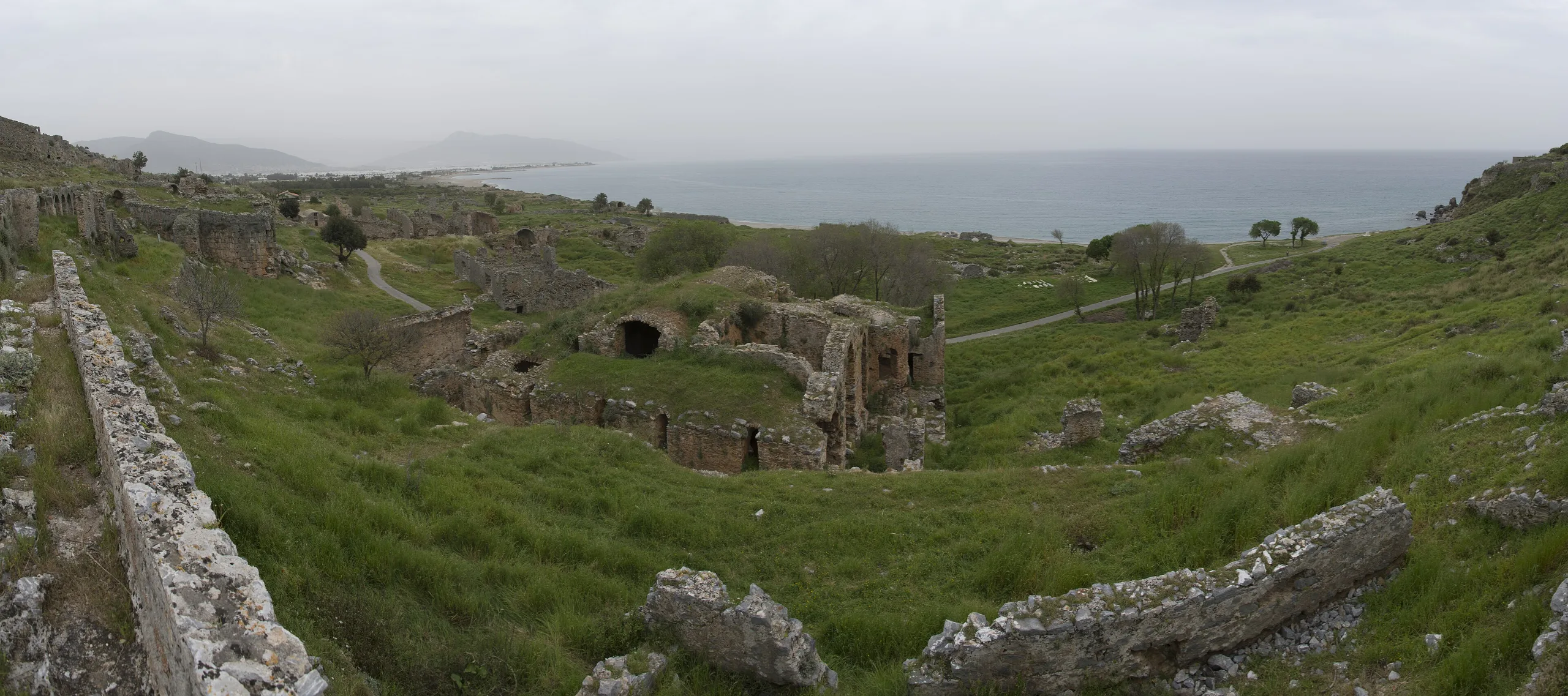
An abandoned Roman harbour city on the slopes of Cape Anamur, with tombs standing to the roof, mosaic-floored baths and an odeon; its name means windy place.
Anemurium is an ancient city located in Turkey, Mersin. Main periods: Hellenistic Period, Roman Period, Byzantine Period.
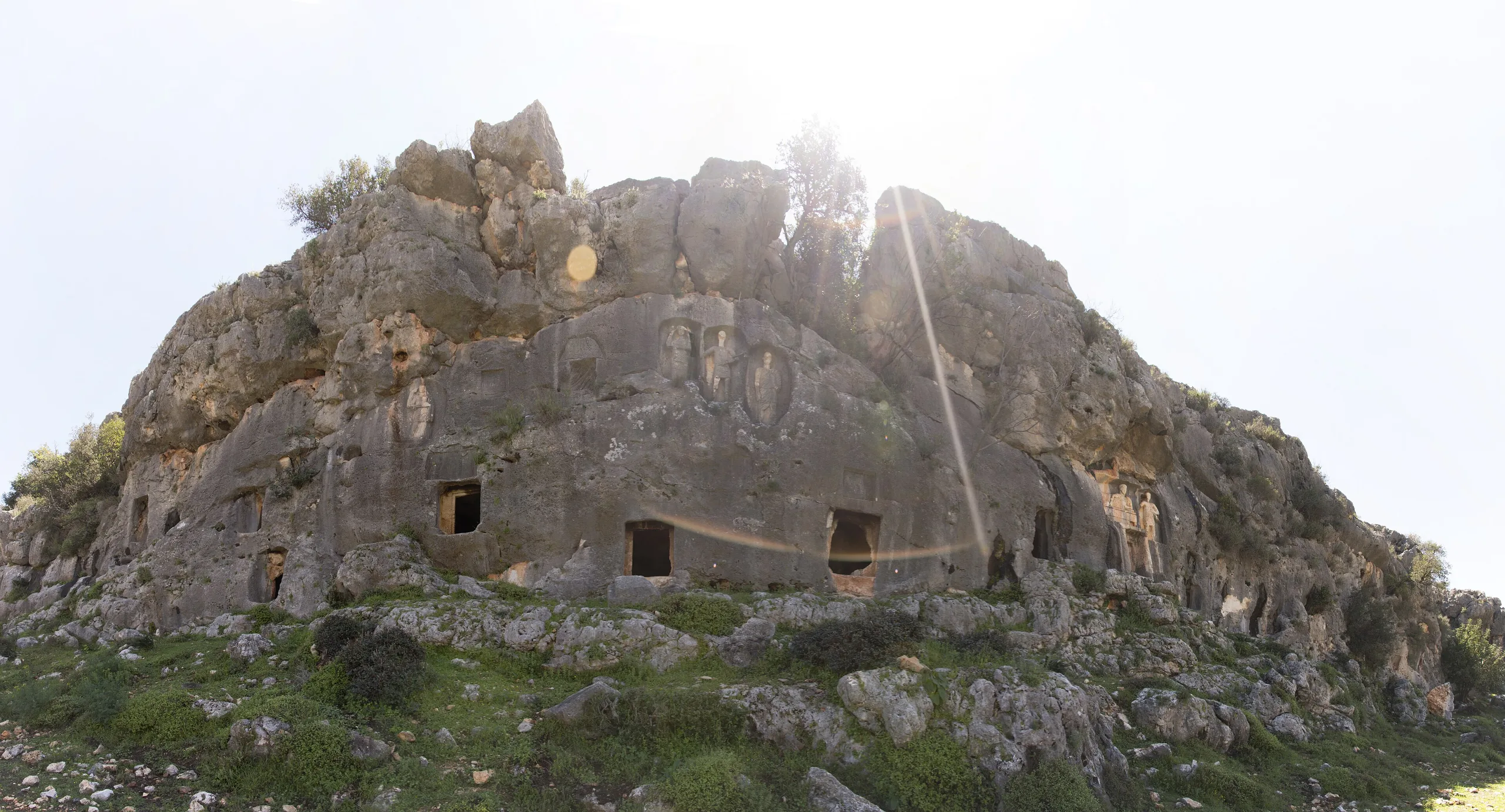
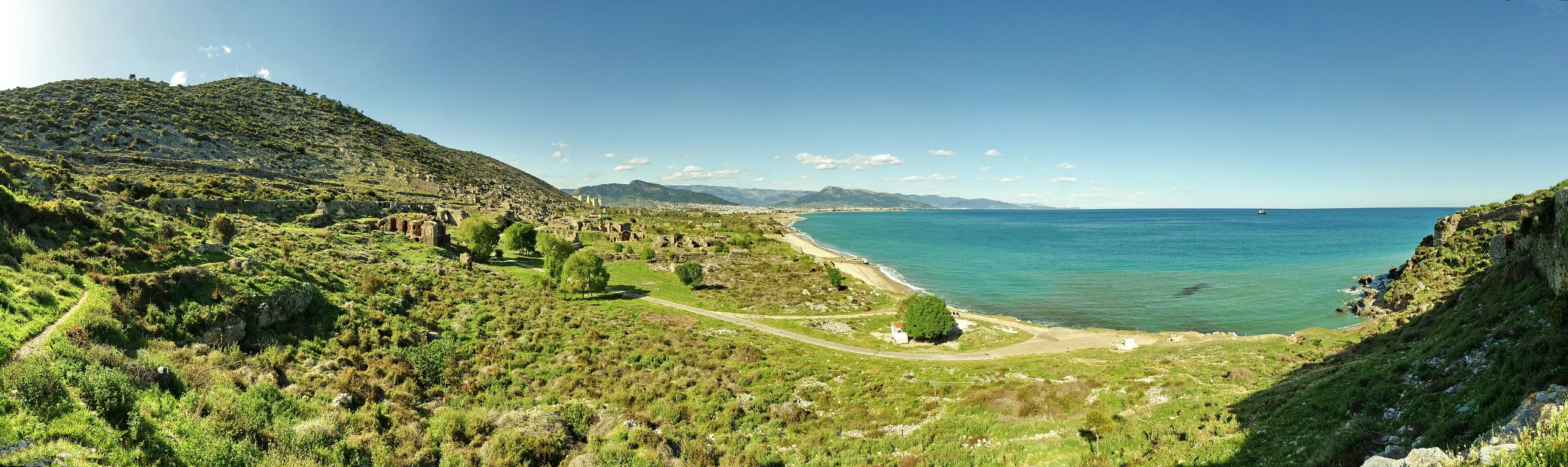
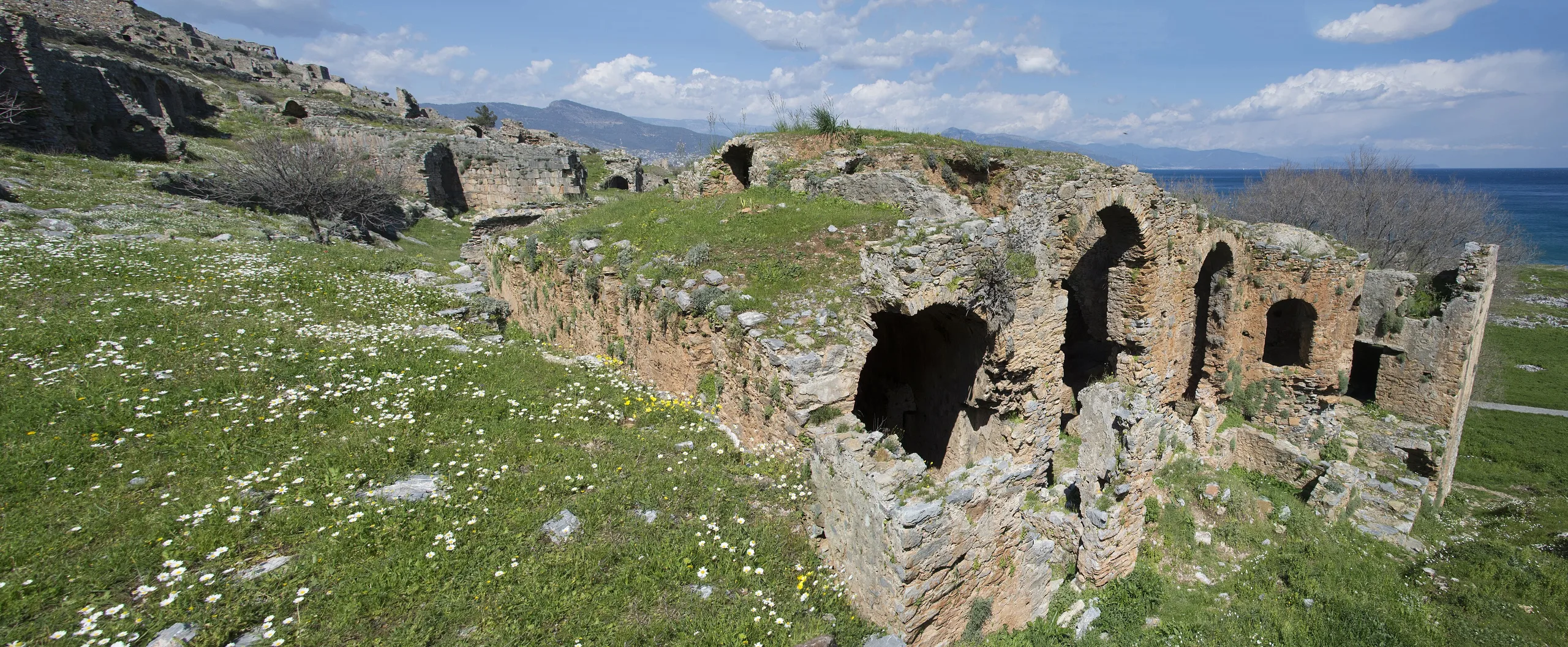
In the necropolis of Anemurium, about 350 tombs line the hillside and many still stand to their roofs, small stone houses that show how suddenly the city fell silent. Founded in the west of Rough Cilicia, in Anamur district of Mersin, the city sat on the eastern Mediterranean sea route and served as the gateway from inland Anatolia to the sea. Ancient writers give its name the sense of a windy place. Under Rome it counted among the leading economic and political hubs of Cilicia and of Anatolia at large; its closeness to Cyprus made it a staging post, and a road tied it to Germaniopolis.
Location and access
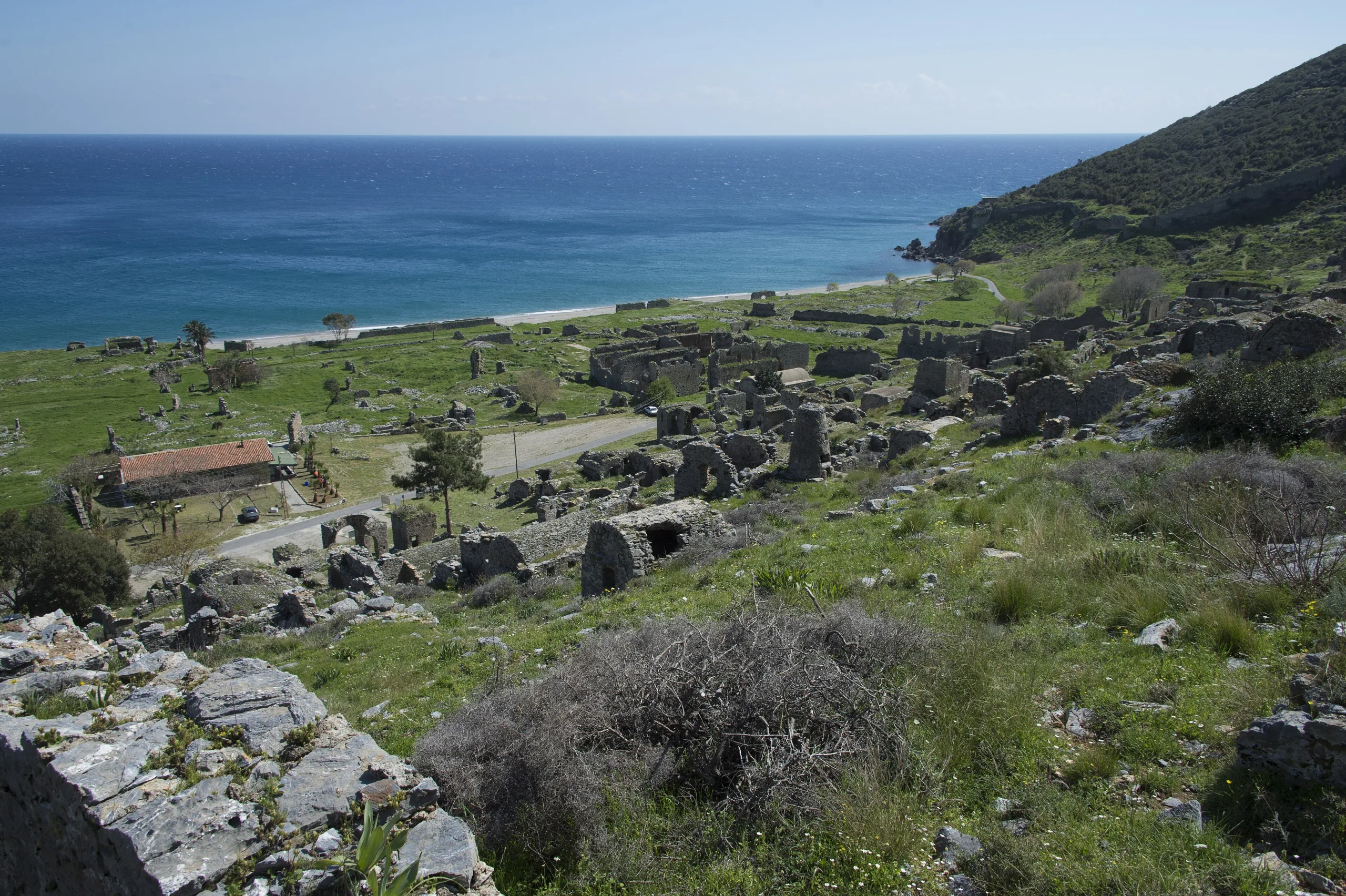
The ruins lie on the east-facing slopes of Cape Anamur, in Ören. A 2 km road leaves the Anamur-Gazipaşa highway at kilometre 4 and runs down towards the sea; taxis, hire cars and private vehicles can use it. The place is also known as Eski Anamur. For current visiting terms use the official page.
History
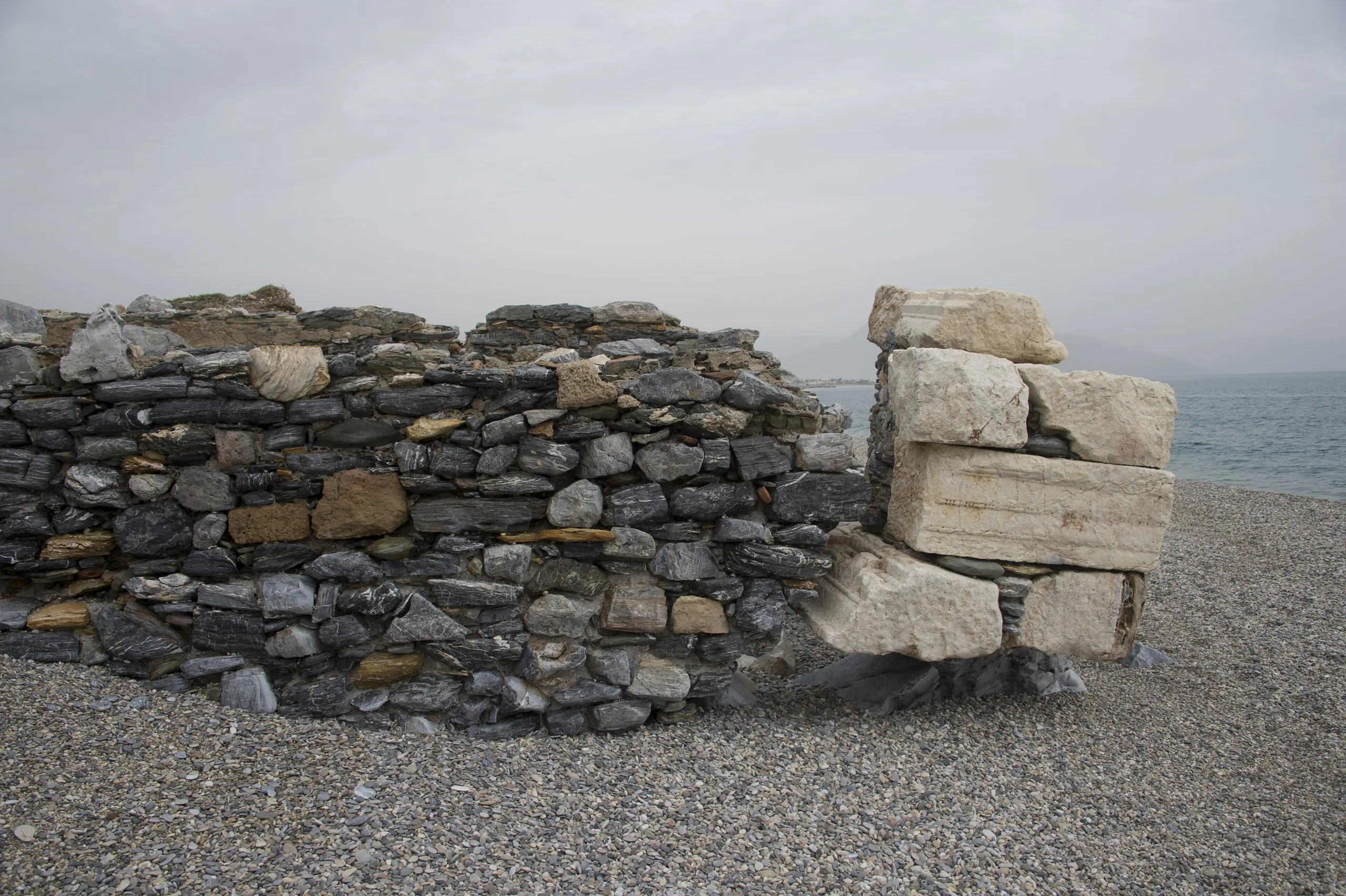
Anemurium appears in a harbour list of the 4th century BCE, which proves it existed then, though the date of first settlement is unknown. The name is also said to reach back to the Hittites. In the 1st century CE the city began to flourish as part of the Kingdom of Commagene, whose king Antiochus IV (38-72) struck coins here, and Roman rule lasted until 382. Walls of local blue limestone, 1.5 km in all, went up around the city in this age.
In the first half of the 3rd century CE, years of peace and stability made it grow quickly. Theatres, odeons, basilicas, bathhouses, aqueducts and hundreds of burial structures date from then, and most of what still stands belongs to this phase. The golden age ended in 260 CE when Sasanian (Persian) armies took the city. Unrest spurred new defensive walls, and from the 4th and 5th centuries pirates from the Taurus raided it again and again.
The Isaurians took the city in the 5th century, and it prospered once more under the Isaurian Zeno and in the 6th century, when floor mosaics were laid in some buildings and churches built. Settlement had by then lasted close to 700 years without a break. A great earthquake in 580 damaged most buildings badly, Arab raids struck around 650, and afterwards the city was abandoned. When the Anatolian Seljuks captured Mamure Castle in the 12th-13th centuries, the region came under Turkish rule.
People and events
Antiochus IV of Commagene is the ruler tied to the city before direct Roman control. Anemurium reached the Western world in the 19th century through the coastal survey voyage of the British officer Francis Beaufort. In the 1960s Elisabeth Alföldi-Rosenbaum of the University of Toronto began surface surveys.
Notable structures
Walls and the parts of the city
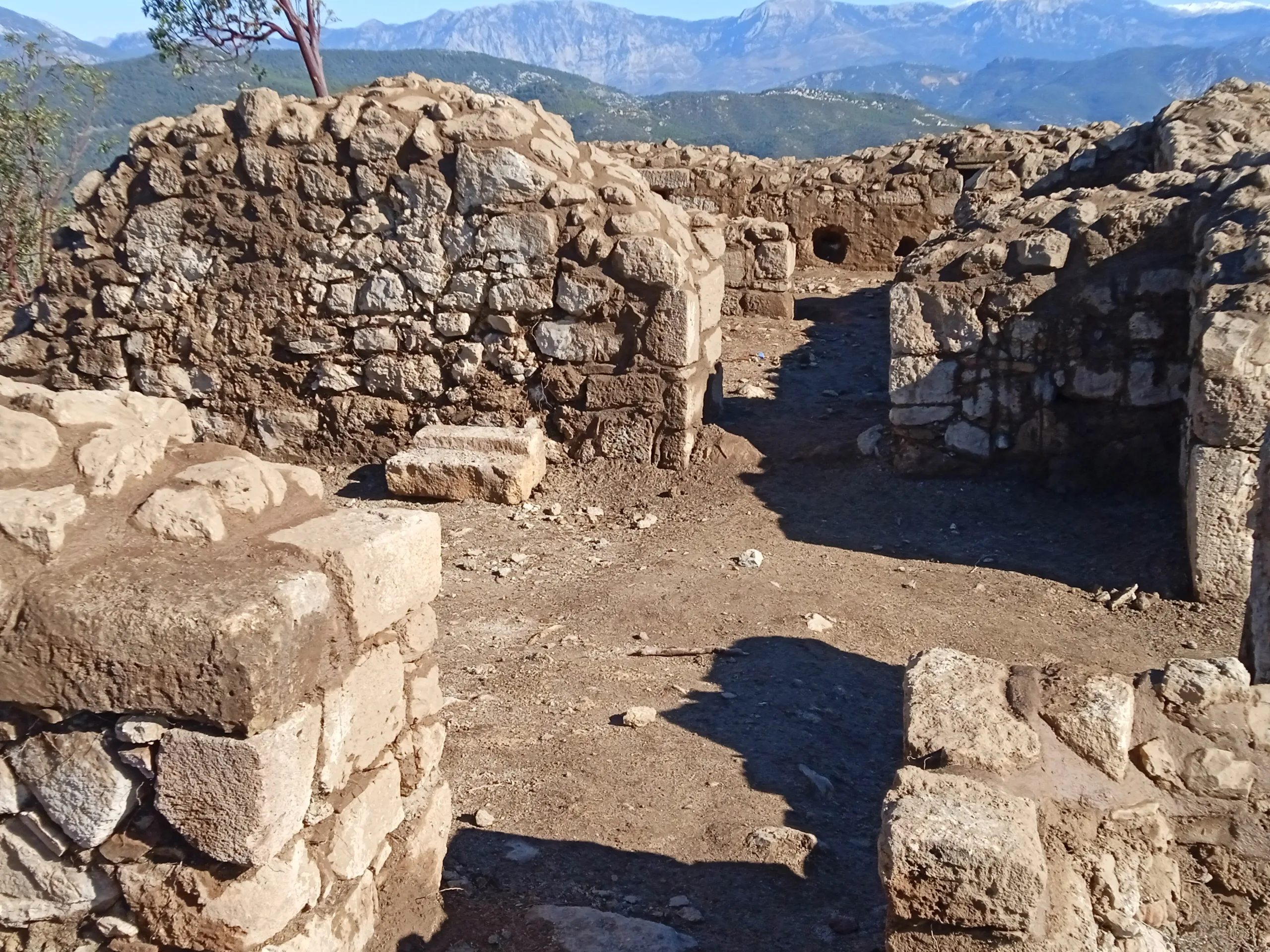
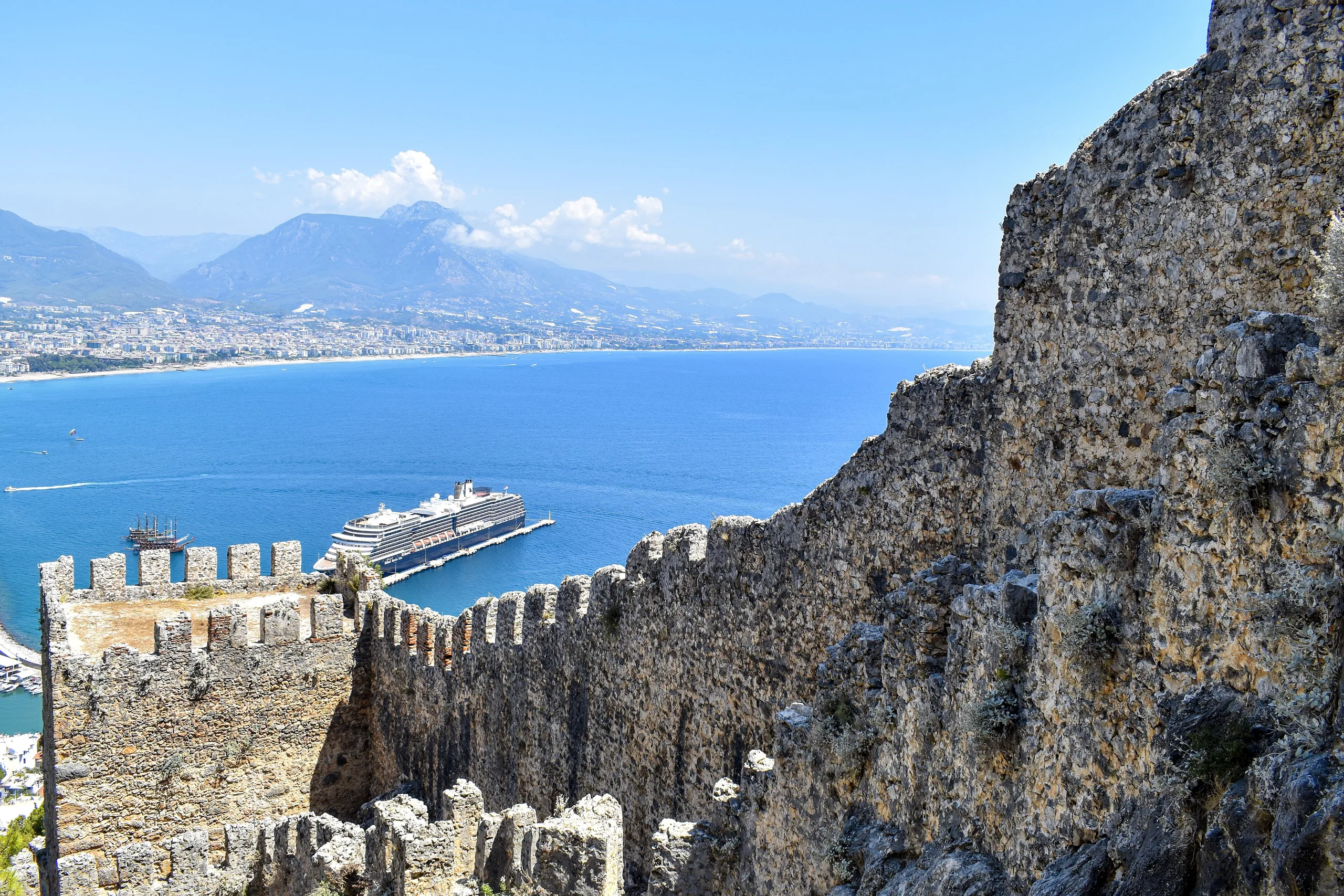
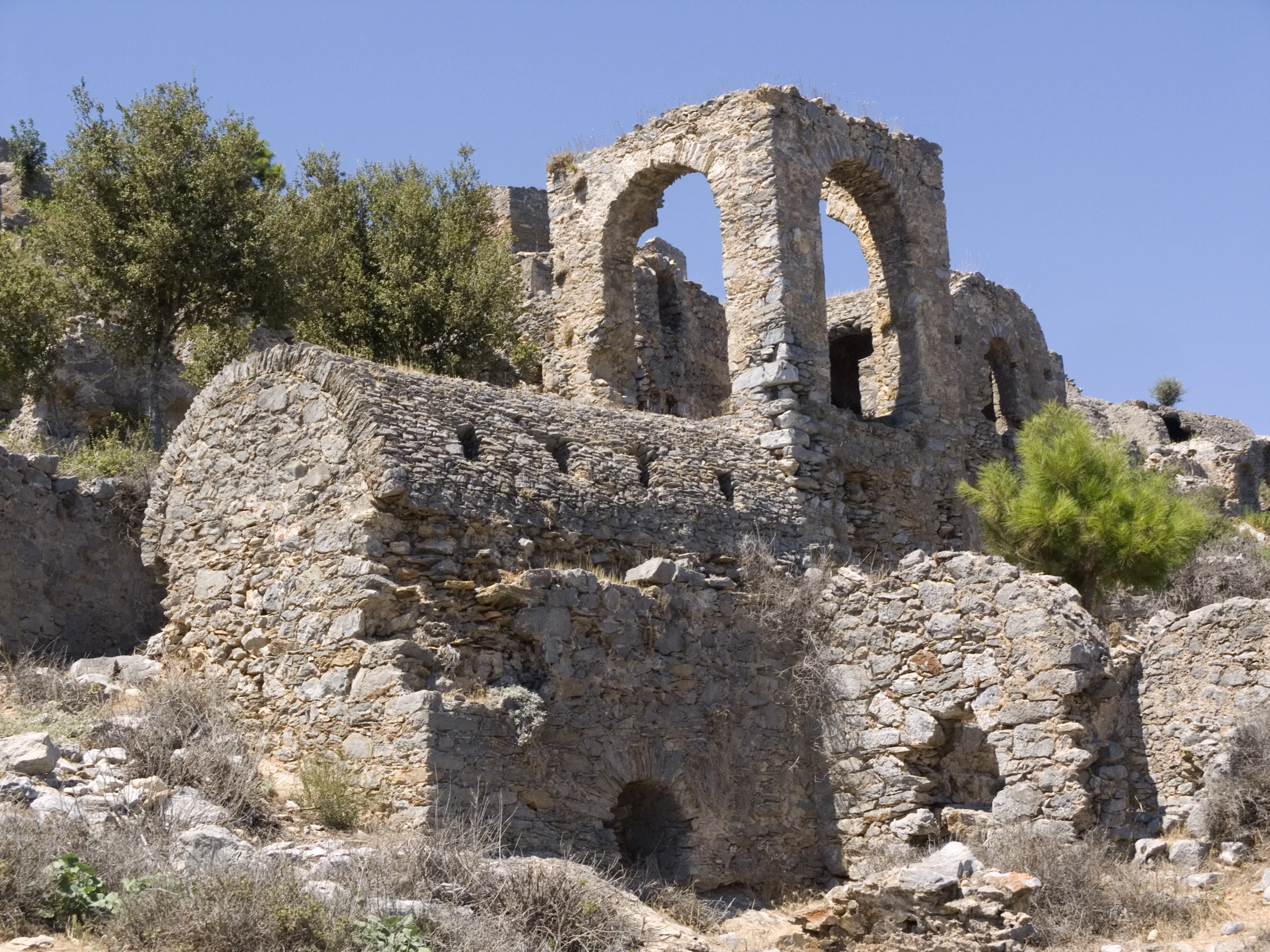
A zigzag circuit of walls surrounds the city, and a wall running from the hilltop to the sea splits the area inside in two. In the south, on the high cape jutting seaward, stands the acropolis, or upper city, with Hellenistic and medieval wall sections, a cistern, a bath and a building that may have been a church. The lower city, on the flat ground near the shore in the north, forms the public core with the odeon, theatre, basilica, palaestra, baths, four churches and aqueducts.
Odeon and the Tethys mosaic
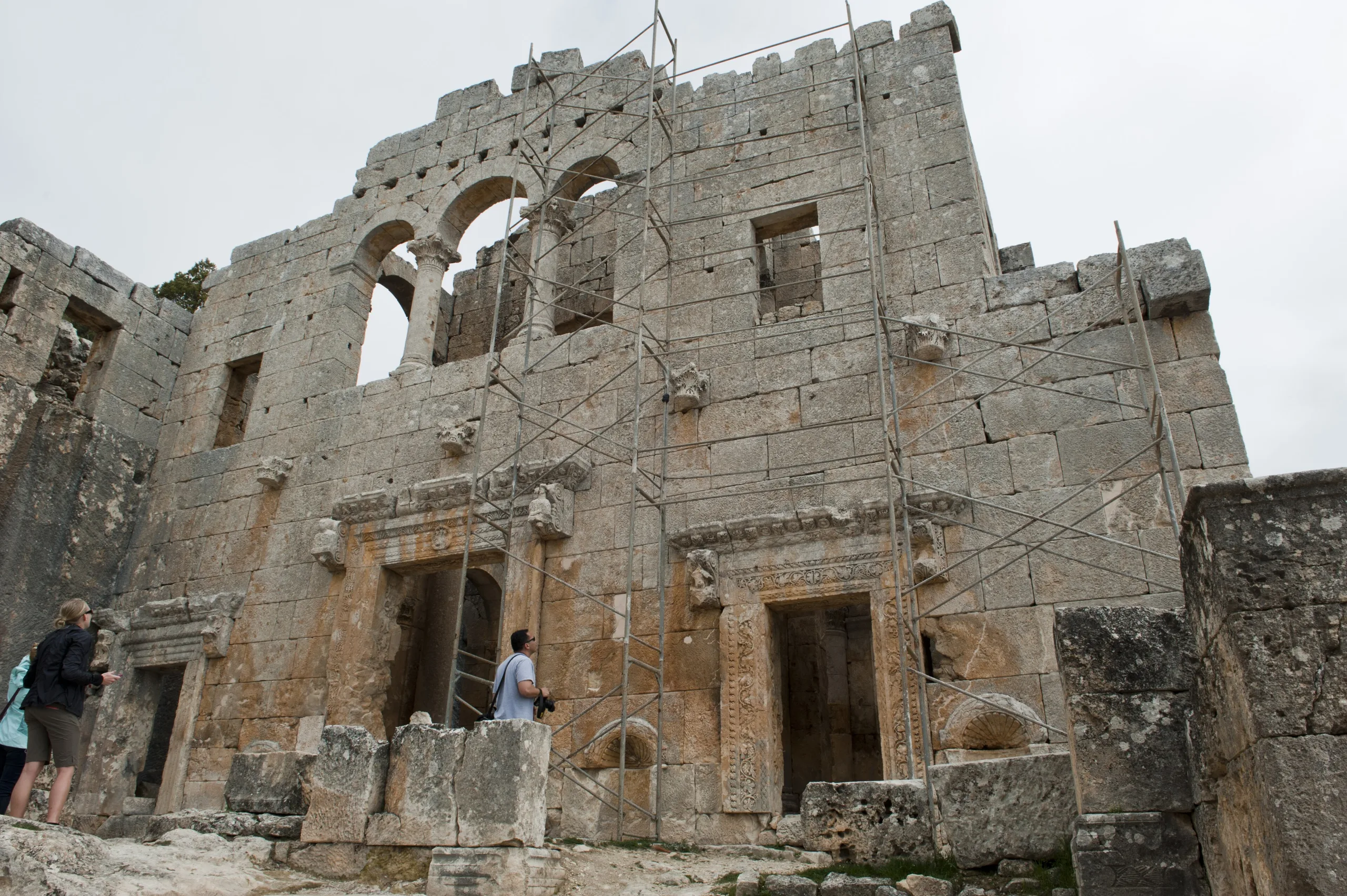
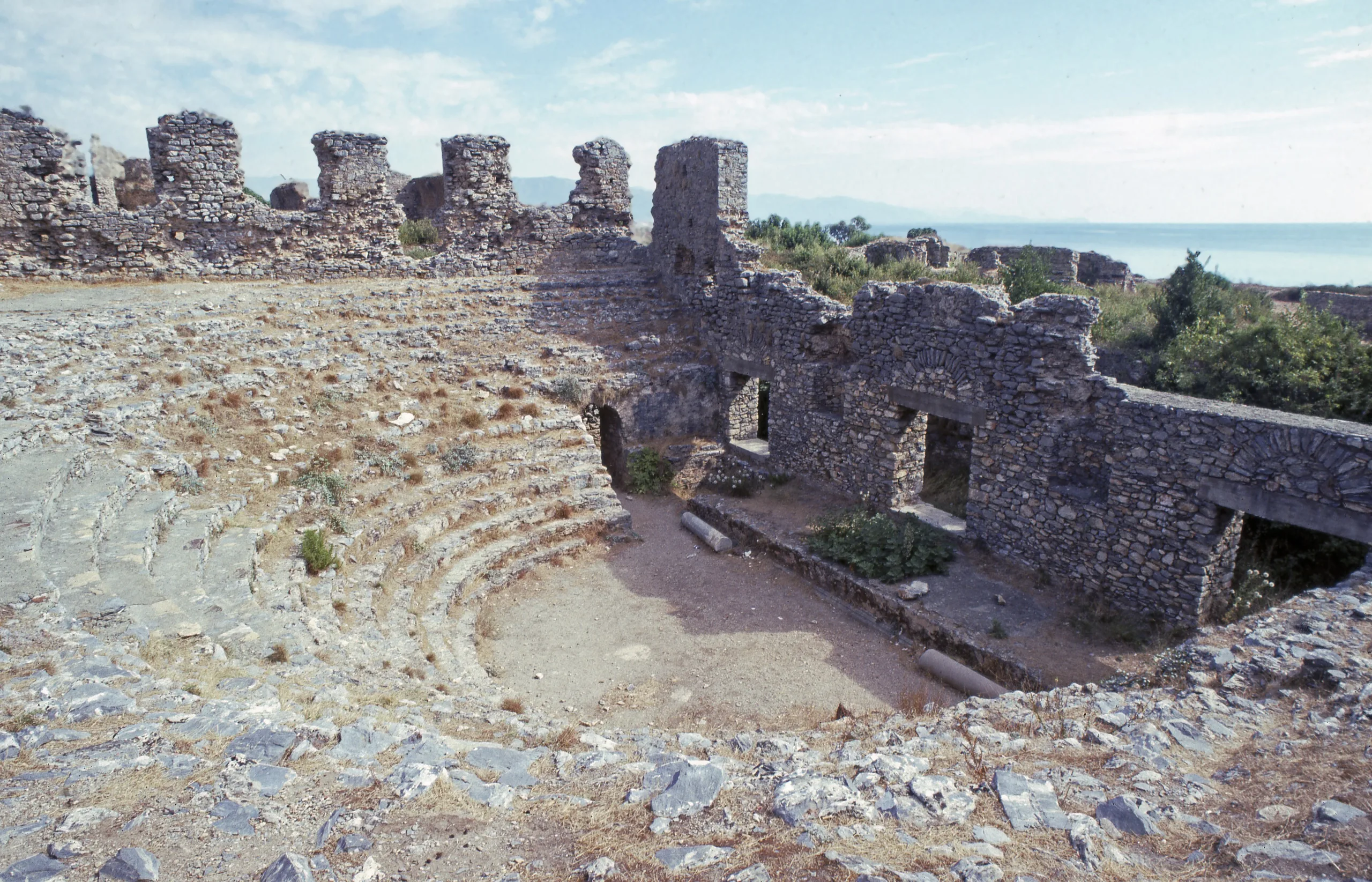
The odeon is among the best-preserved monumental buildings. Rectangular, with two entrances and two storeys, it held about 900 people on 15 rows of semicircular seating; doors beneath the seating blocks open into a vaulted, mosaic-floored corridor leading to the orchestra. It is dated to the 2nd century or the start of the 3rd century CE. The floor mosaic of a room north-west of the odeon shows a woman ringed by dolphins and fish, and the sea creatures led to the suggestion that she is Tethys. The mosaic belongs to the later 3rd or early 4th century.
Baths and gymnasium
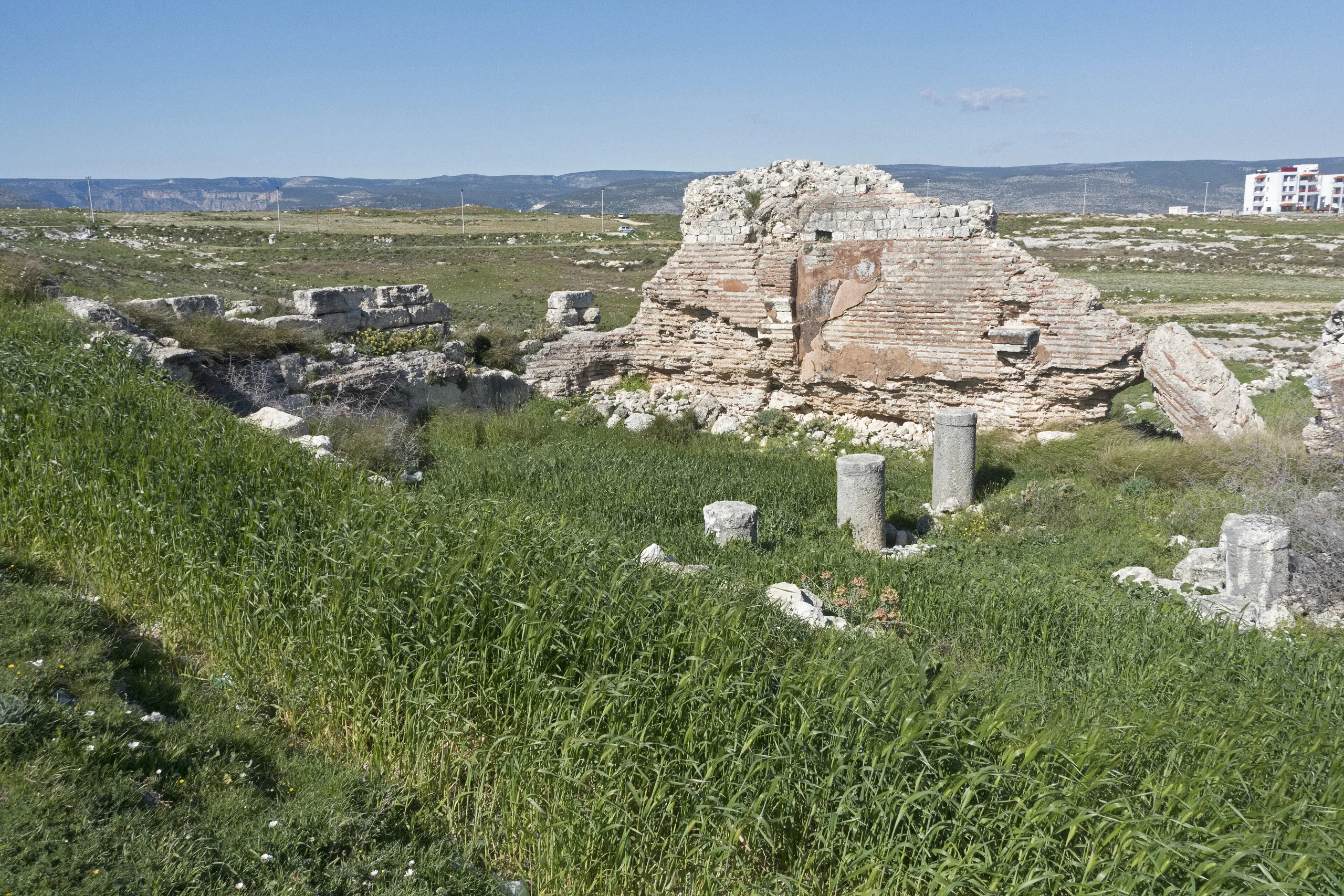
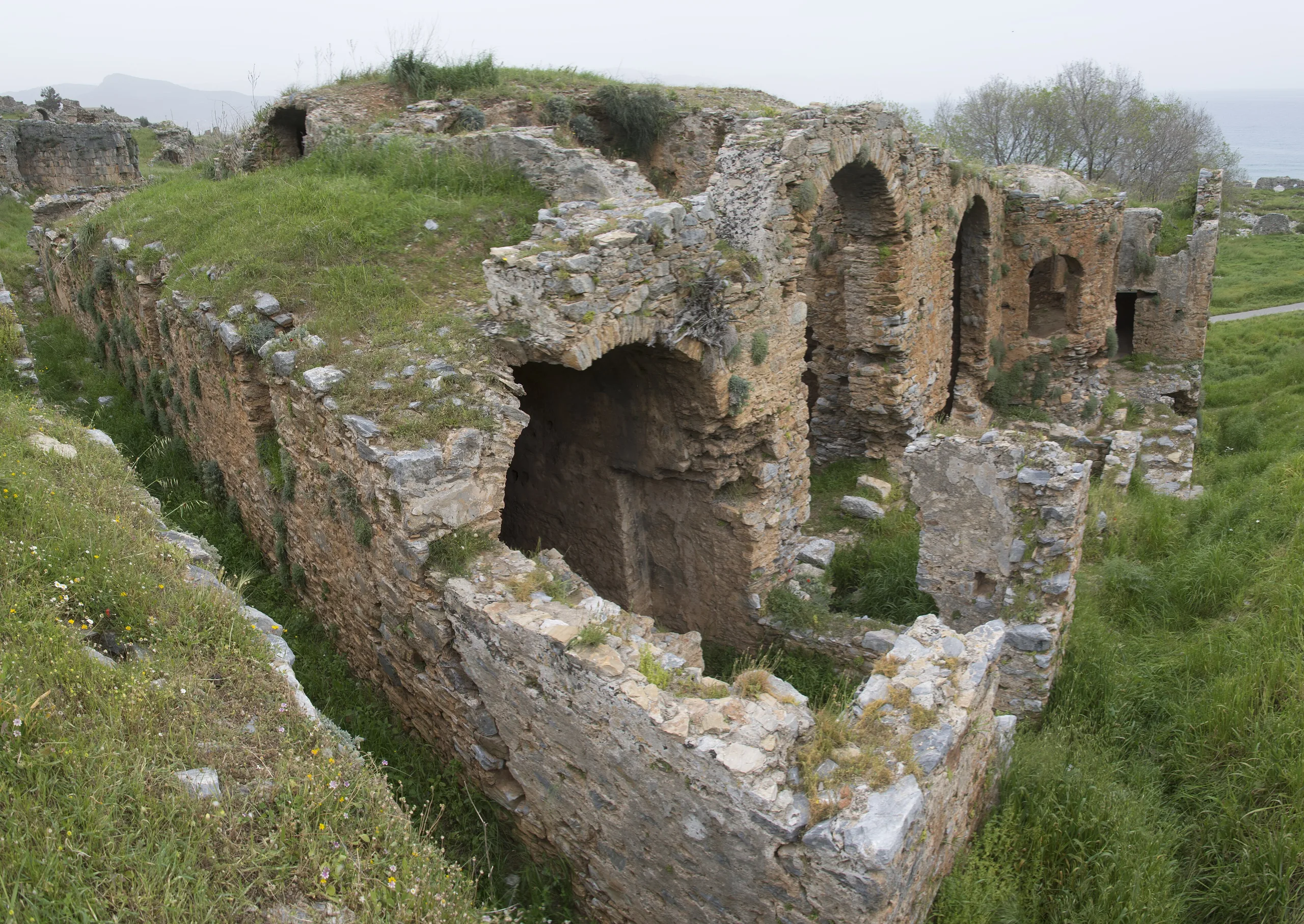
The People's Bath west of the theatre is the largest on the site: two storeys, three heated halls, two pools and horizontal clay-pipe water systems that can still be seen. The lower floor has five vaulted rooms, the upper floor twelve, reached by a stair of 30 steps. A second bath between the necropolis and the sea has three halls, with mosaics inside and on the floor of its forecourt. The gymnasium south-west of the odeon is 100 m long, enclosed by stoas on three sides, covers around 1,000 m² and is paved throughout with geometric mosaics.
Aqueducts and necropolis
Two rows of aqueduct arches run east-west north of the city, the upper row built more plainly. On the mountain slopes west of the city lies the region's largest necropolis, with about 350 tombs of varied types, many roofed and intact. With Elaiussa Sebaste it counts among the best-preserved burial grounds in the area.
Excavations
Work began in the 1960s with Elisabeth Alföldi-Rosenbaum's surveys, and the Canadian James Russell of the University of British Columbia carried excavation and conservation forward for years, ending between 1998 and 2000. In Russell's report for 1971, an eight-week season ran in July and August, with Rosenbaum-Alföldi in general charge and Russell as field director. The team worked on the palaestra, an apsidal structure and trial pits in the large theatre. The palaestra belonged to the big baths: a suite of halls, an open forecourt paved in limestone slabs and an open square of about 900 m², paved almost entirely in mosaic. In the entrance hall of the baths the team found a mosaic inscription greeting the bather on arrival, the counterpart of one found a year earlier that met him after washing.
Finds and museums
A wide range of everyday objects came out of the digs: fishing gear, builders', tailors' and potters' tools, coins, a lead seal, a steelyard weight, weaving equipment, keys and locks, games, razors, cosmetics and jewellery such as necklaces, earrings, bracelets and gold belt buckles.
Gallery
Frequently asked questions
Where is Anemurium?
What does the name mean?
Why was the city abandoned?
Which buildings are best preserved?
Where is the Tethys mosaic?
Who excavated Anemurium?
Sources (13)
- Anamur Anemurium Örenyeri / Anamur Anemurium Archaeological Site (TR ve EN sayfalar) — T.C. Kültür ve Turizm Bakanlığı, Müzeler ve Ören Yerleri
- Anemurium Antik Kenti - Mersin (kaynak: Mersin İl Kültür ve Turizm Müdürlüğü) — T.C. Kültür ve Turizm Bakanlığı, Türkiye Kültür Portalı
- Excavations at Anemurium (Eski Anamur, 1971) (Russell, J.) — T.C. Kültür ve Turizm Bakanlığı, Türk Arkeoloji Dergisi arşivi (TAED)
- Anemurium (Pleiades place 648557) — Pleiades
Photo credits
- Photo: Dosseman, CC BY-SA 4.0 — Wikimedia Commons (resized)
- Photo: Островский Александр, Киев, CC BY-SA 3.0 — Wikimedia Commons (resized)
- Photo: Korkut Tas, CC BY-SA 3.0 — Wikimedia Commons (resized)
- Photo: Korkut Tas, CC BY-SA 3.0 — Wikimedia Commons (resized)
- Photo: Dosseman, CC BY-SA 4.0 — Wikimedia Commons (resized)
- Photo: Dosseman, CC BY-SA 4.0 — Wikimedia Commons (resized)
- Photo: Dosseman, CC BY-SA 4.0 — Wikimedia Commons (resized)
- Photo: Dosseman, CC BY-SA 4.0 — Wikimedia Commons (resized)
- Photo: Dosseman, CC BY-SA 4.0 — Wikimedia Commons (resized)