Uzuncaburç is ancient Diocaesarea in Rough Cilicia, north of Silifke, a city grown around the Zeus Olbios sanctuary and noted for its temple, Hellenistic tower and colonnaded streets.
Uzuncaburç (Diocaesarea) is an ancient city located in Turkey, Mersin. Main periods: Hellenistic Period, Roman Period, Byzantine Period.
Uzuncaburç, the ancient city of Diocaesarea, sits in the village of Uzuncaburç some 30 km north of Silifke in Mersin province. The Ministry of Culture and Tourism describes it as among the most important and best-preserved historical remains in Mersin. A journal article places the city in Rough Cilicia, in the Olba region, and says it grew around the sanctuary of Zeus Olbios, with Hellenistic, Roman and Late Antique ruins. That article estimates the distance to Silifke at about 25 km, whereas the Ministry and the Culture Portal say 30 km.
History
In the Hellenistic age the settlement was a cult centre for the Olba kingdom, whose own seat lay about 4 km to the east. In 72 CE, under the Roman emperor Vespasian, it was split from Olba, took the name Diocaesarea and became an autonomous city with the right to strike coins in its own name. The Ministry and the Culture Portal explain the name as City of the God-Emperor. The Culture Portal adds that after the Byzantine period the Turks named the place Uzuncaburç, meaning tall tower, after the lofty tower that was the symbol of the city.
Hellenistic remains
Temple of Zeus Olbios
The Culture Portal says the temple is thought to have been commissioned by Seleukos I Nikator. It is a peripteral building ringed by a single row of 36 Corinthian columns, and it is counted among the oldest temples of its kind in Anatolia. The Romans used it too. Both the Ministry and the Culture Portal say changes made in the 5th century turned it into a church; the Culture Portal explains that the cella was taken down, the spaces between the columns were walled, doors were inserted, and the eastern columns were removed to make room for an apse.
Tower and monumental tomb
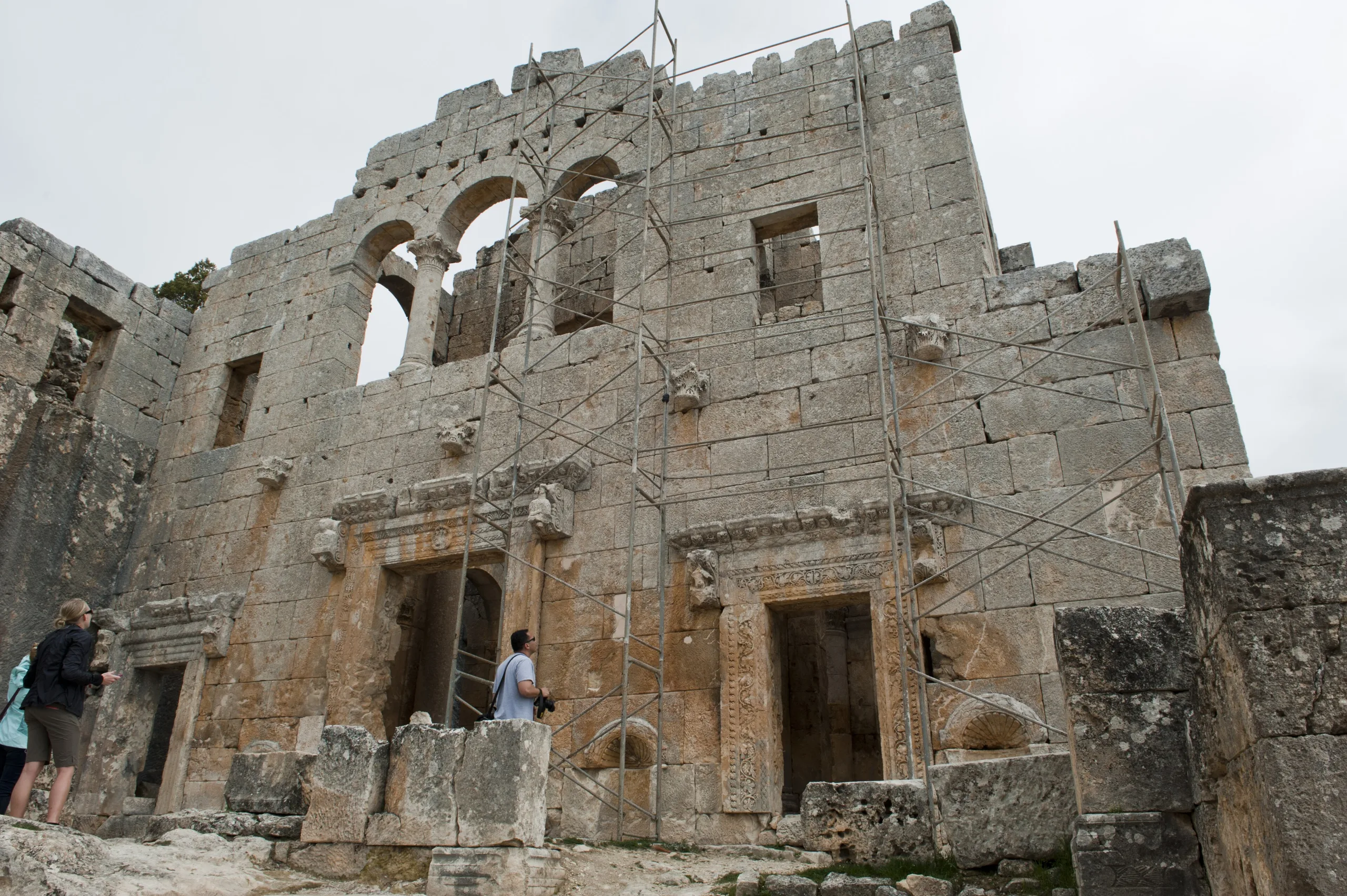
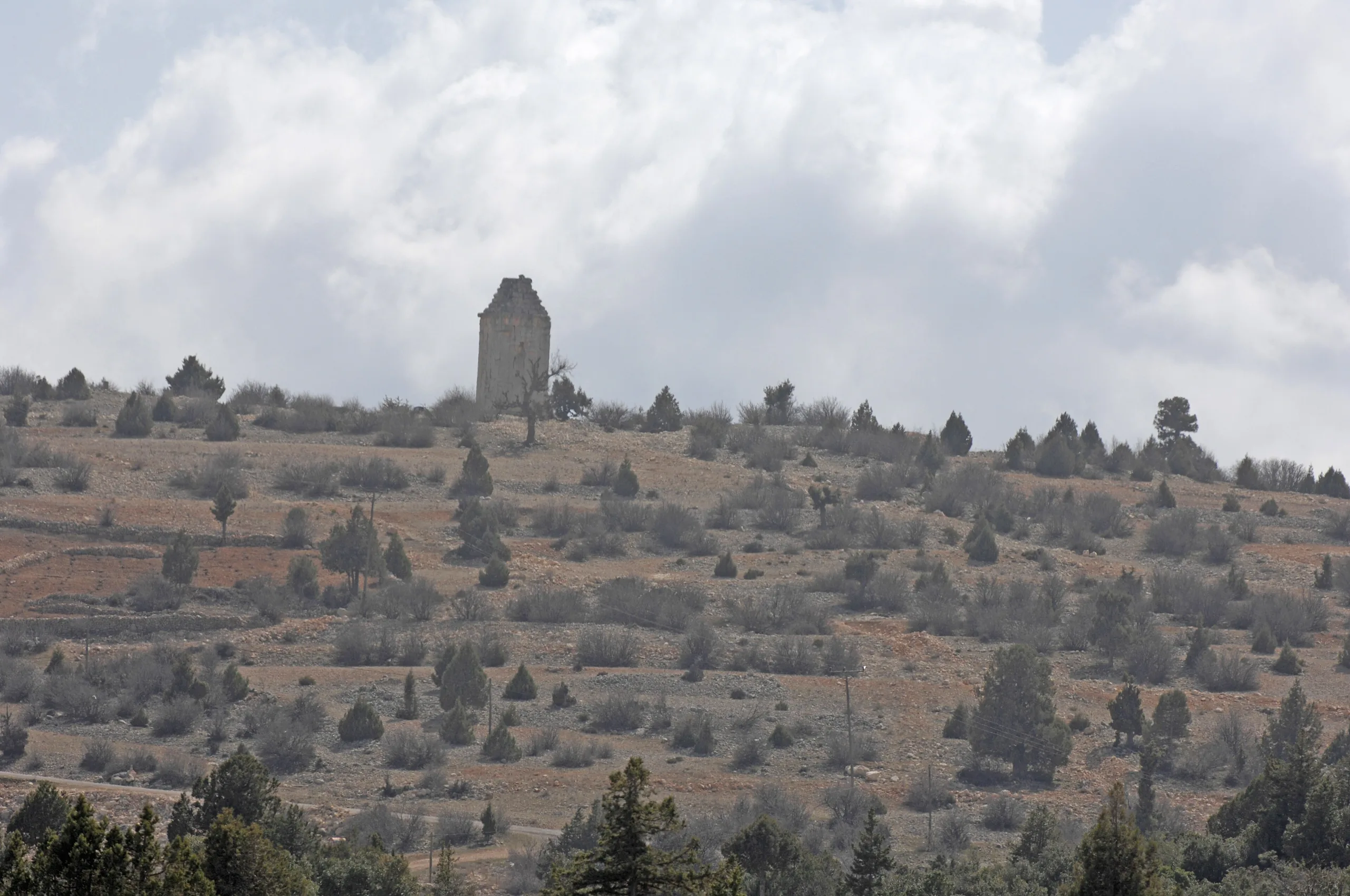
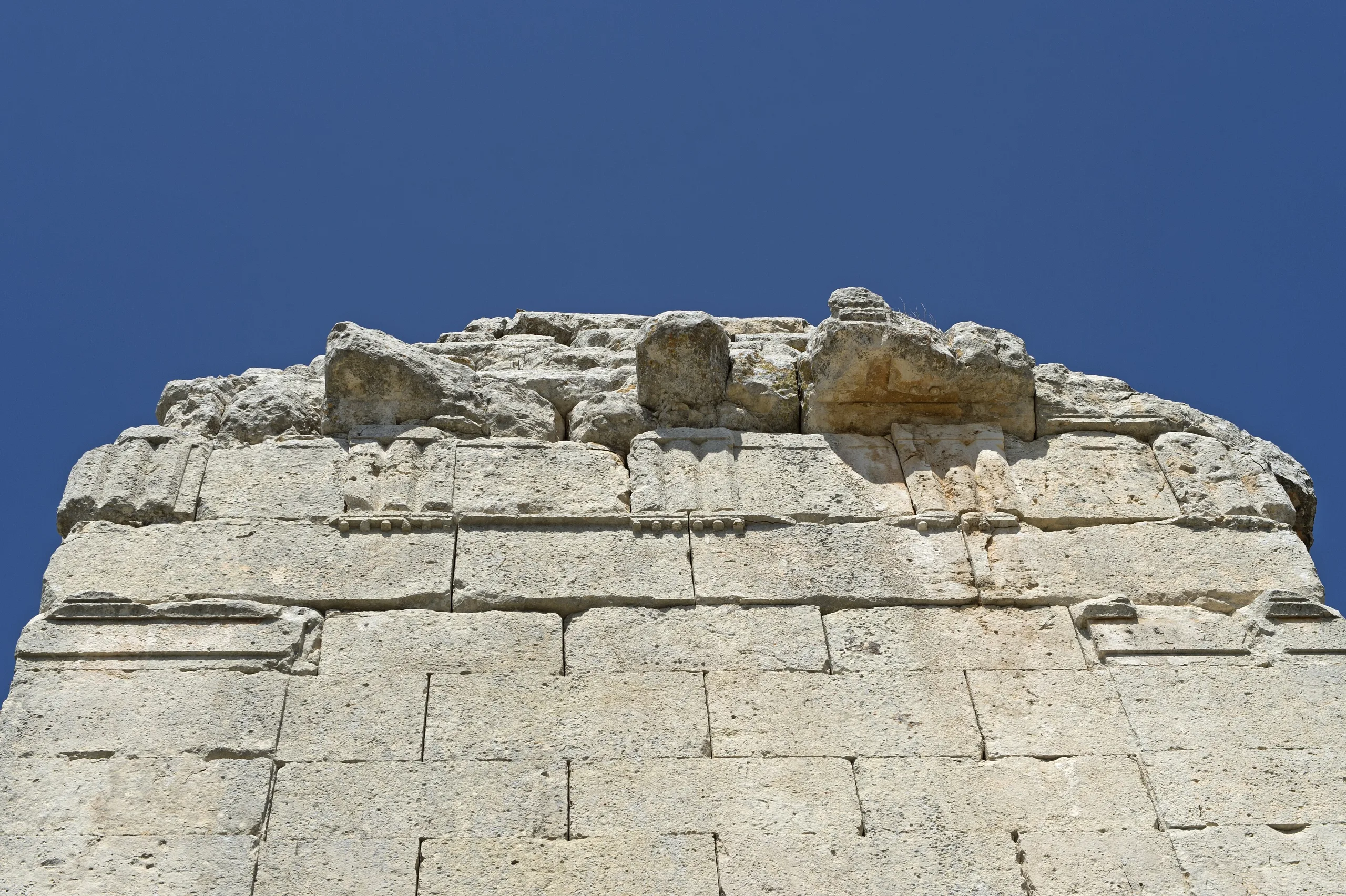
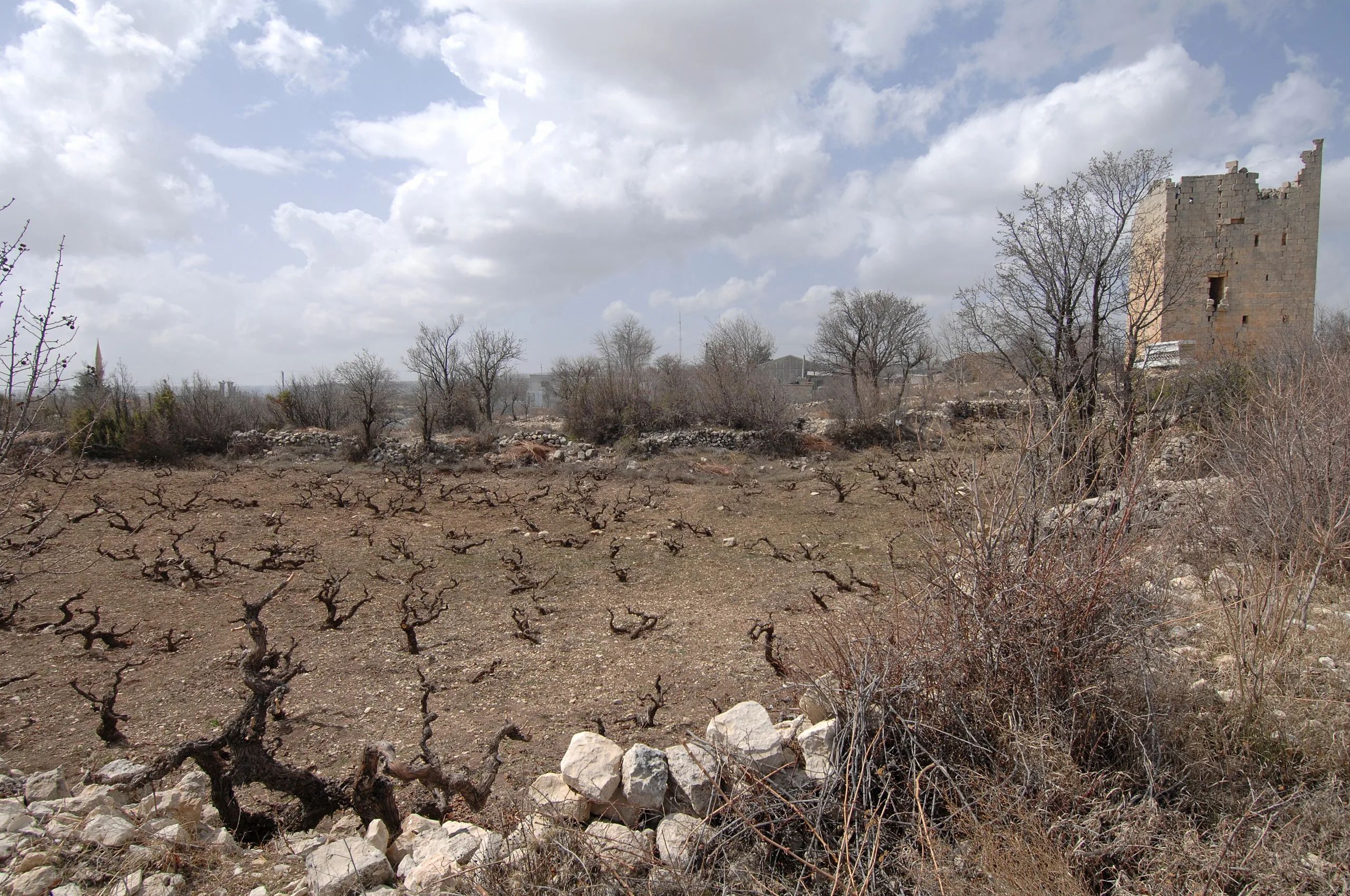
On the north-eastern edge of the city walls stands a five-storey tower measuring 16 by 13 by 23 metres. Each floor is divided into rooms, and it served both as a residence for rulers and as a refuge for local people and a safe place for the city treasury. An inscription over the door shows that Tarkyares built it in the second half of the 3rd century BCE, and that after a fire the governor Petronius Faustinus ordered repairs in the late 3rd century CE. Coins show the tower, and it gave the present-day village its name. On a hill south of the village a monumental tomb with Doric architecture, unique in the area, has a pyramidal roof, a height of 15 metres and a square plan of 5.5 by 5.5 metres. The Culture Portal suggests it belonged to a Seleucid or Olban ruler.
Roman remains
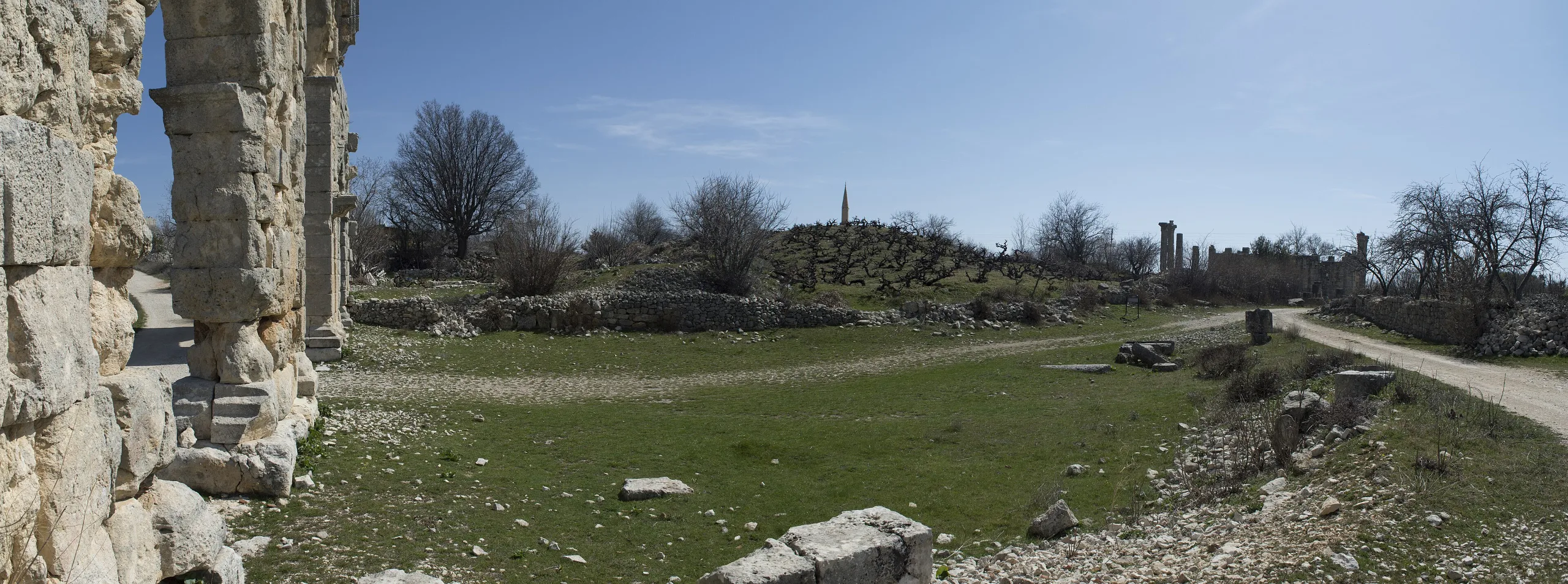
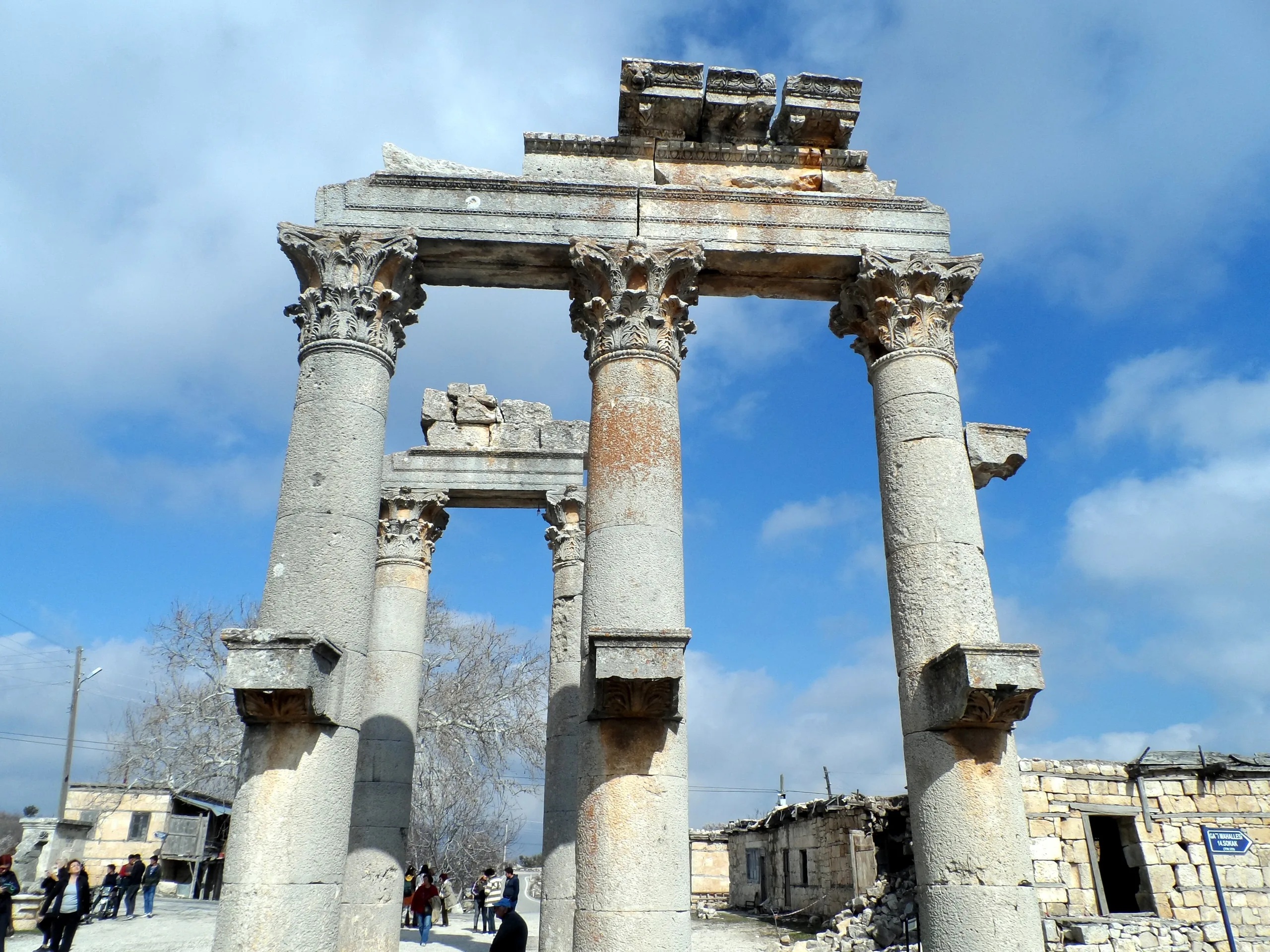
Two colonnaded streets cross each other at right angles, and the buildings are lined up along them. The Culture Portal says the columns of the 1st-century CE street have collapsed and most architectural pieces are lost, but at the start of the east-west street the monumental ceremonial gate still has five Corinthian columns standing, each about 7 metres high and 1 metre across. The Temple of Tyche dates to the second half of the 1st century CE; an inscription on its architrave records that Oppius, one of the city's notables, and his wife Kyria built it and presented it to the city. Five of its six monolithic columns, each 6 metres tall, remain upright.
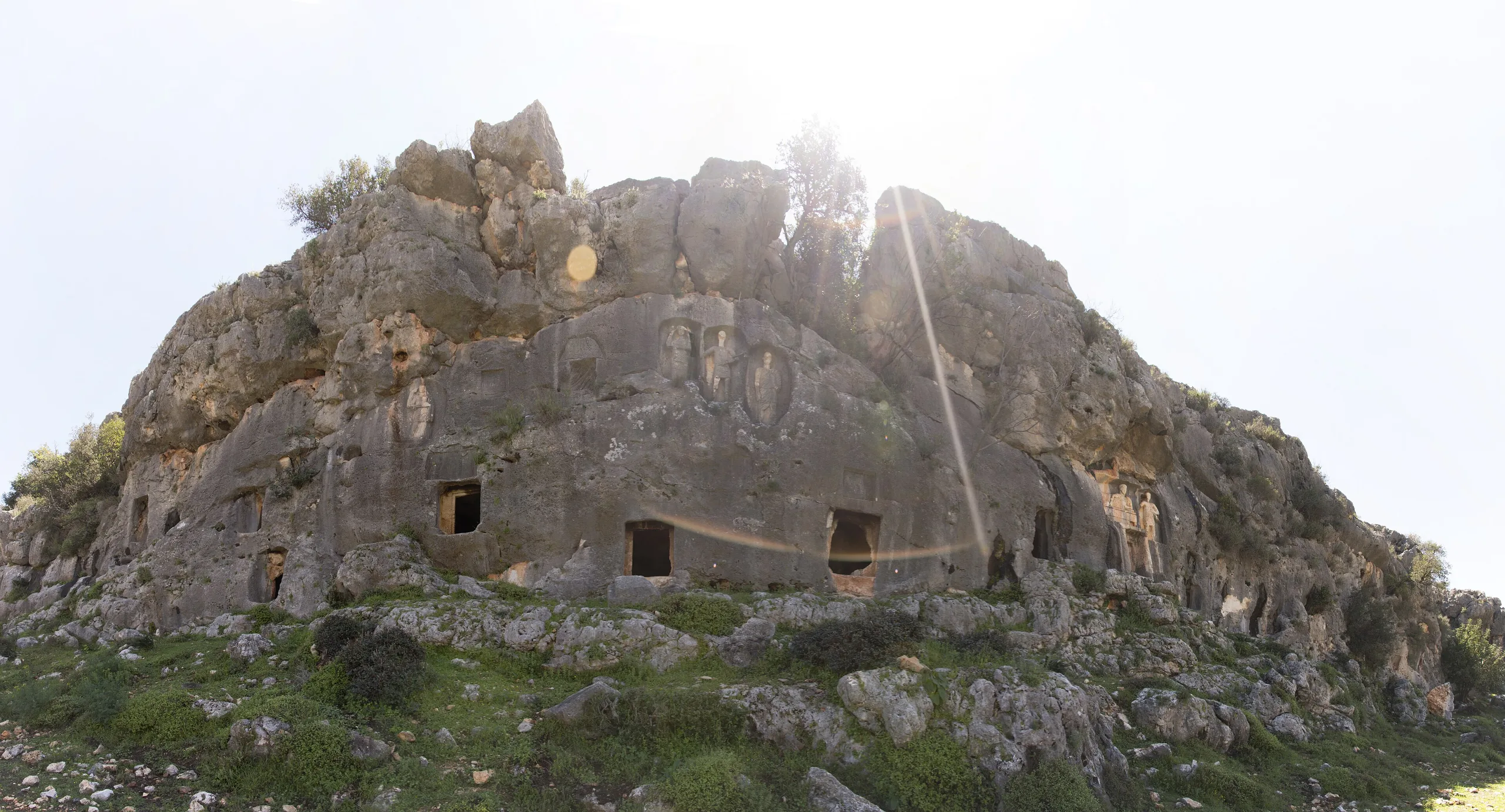
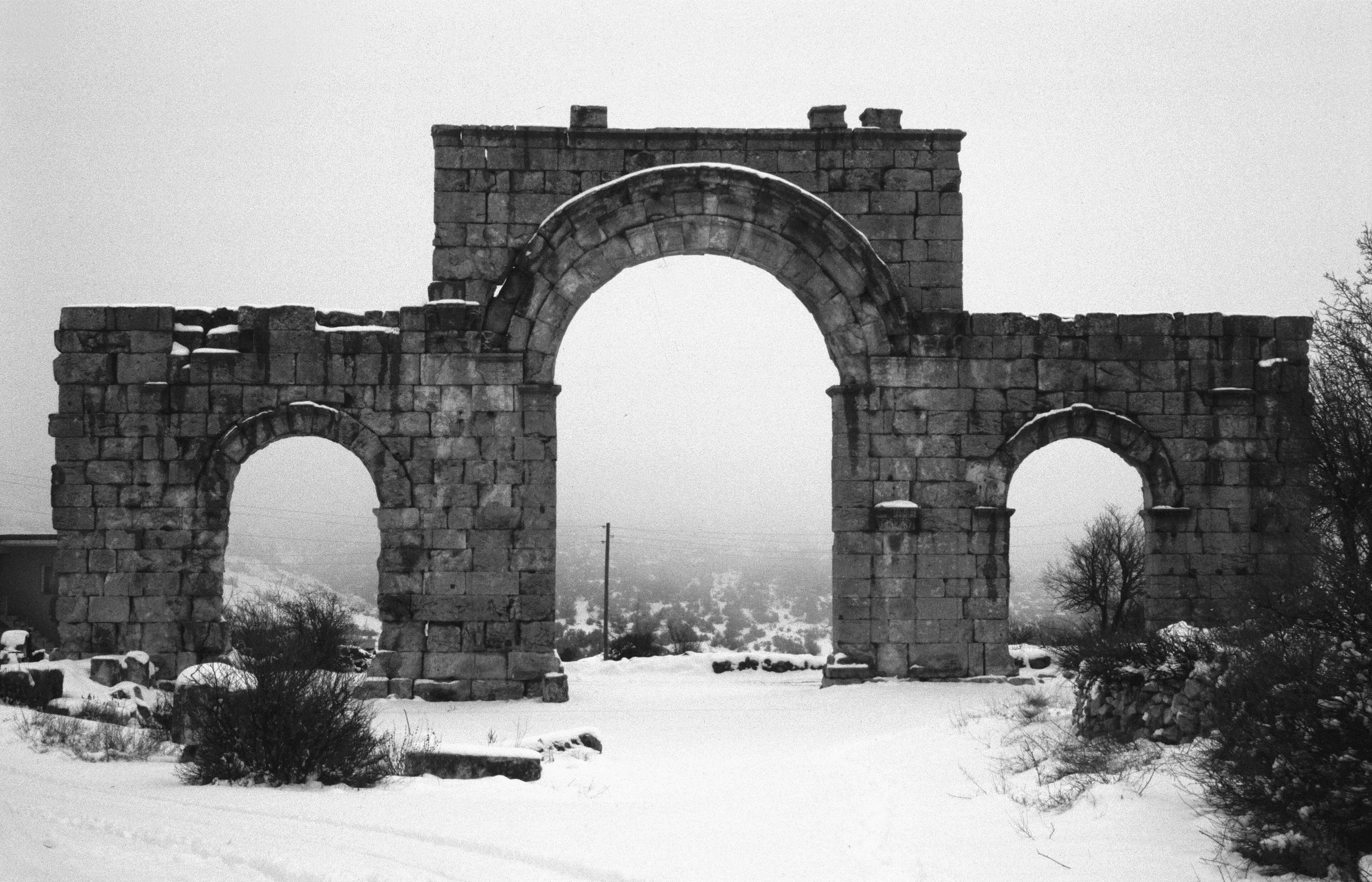
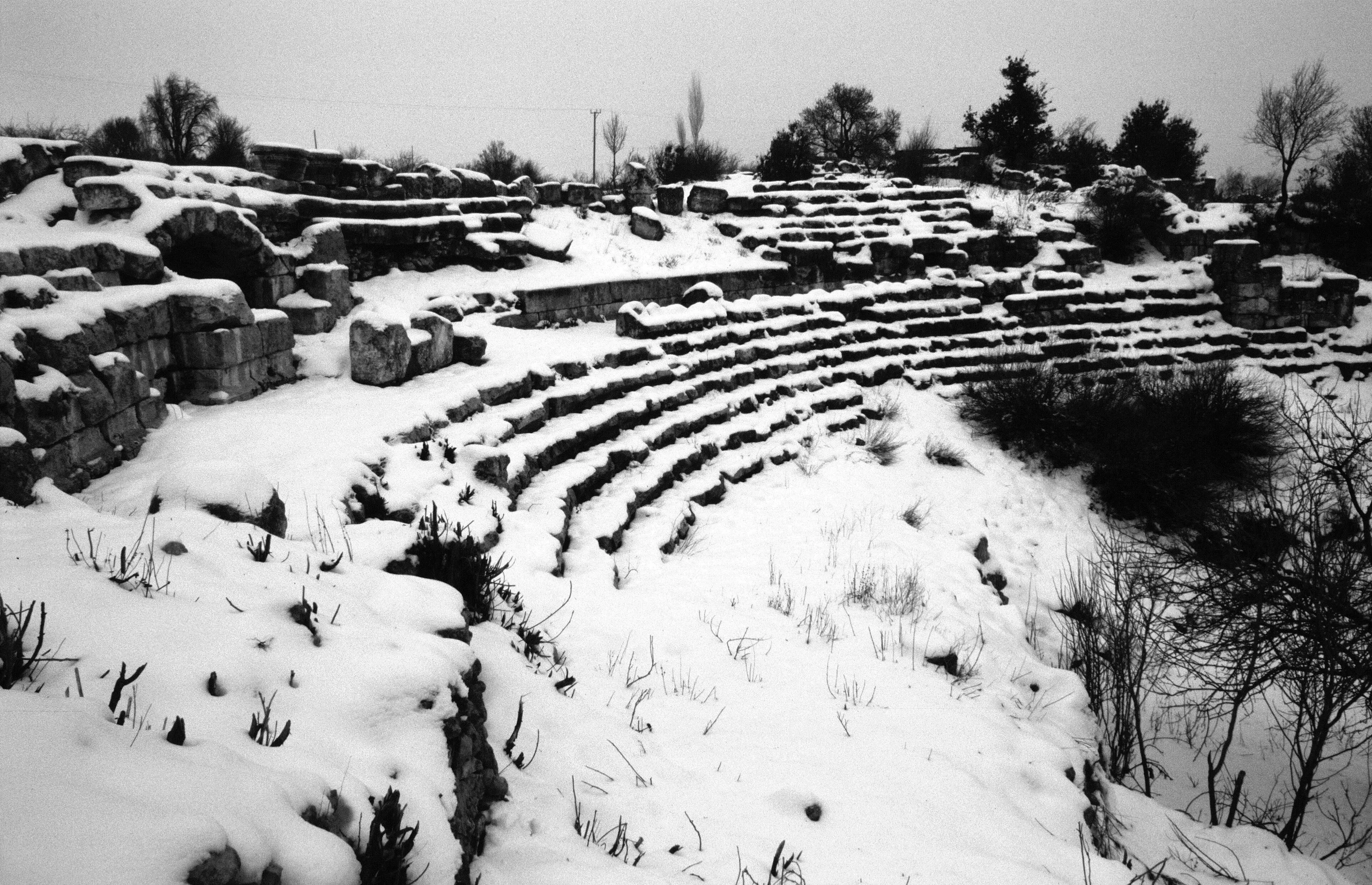
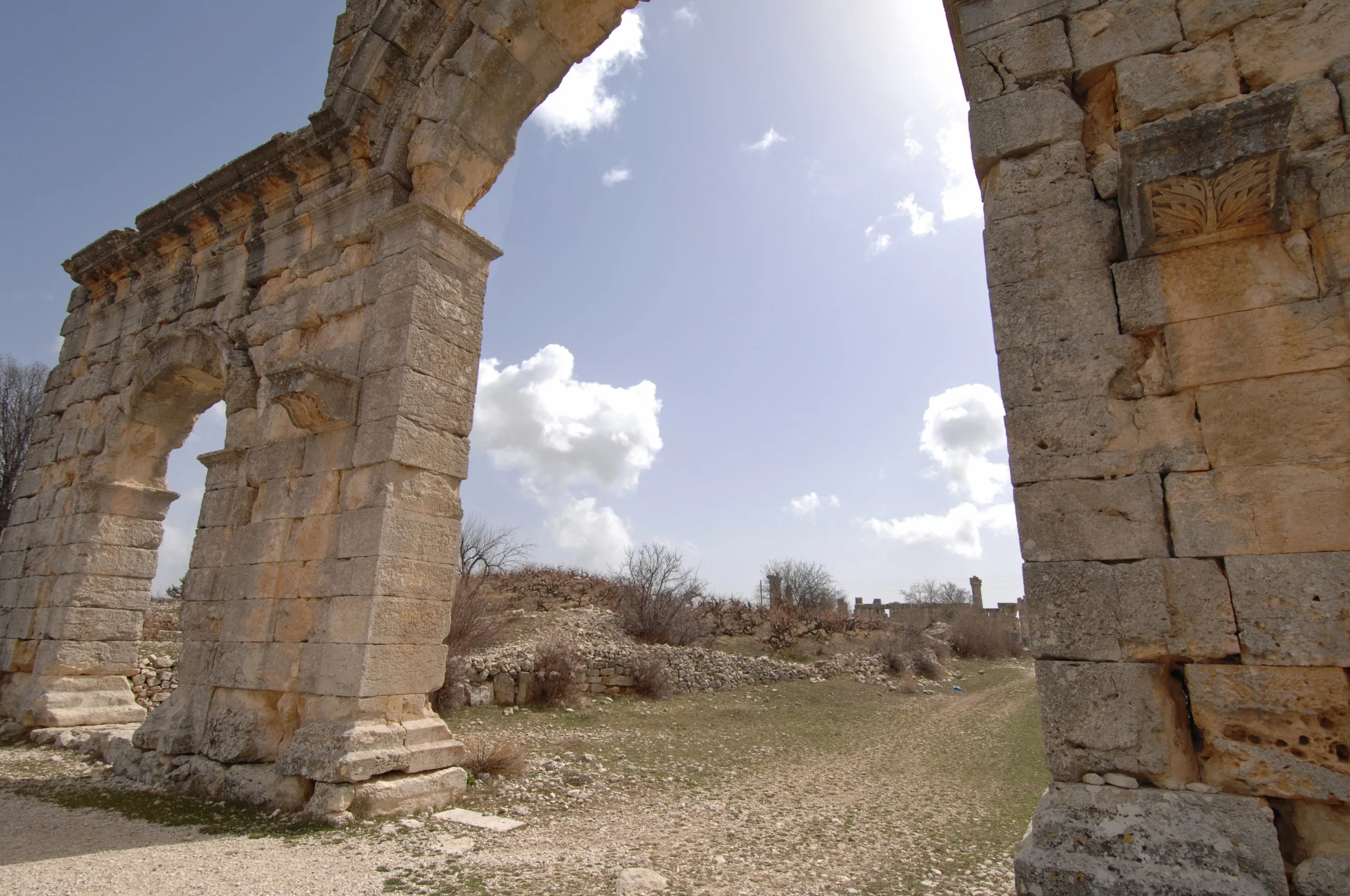
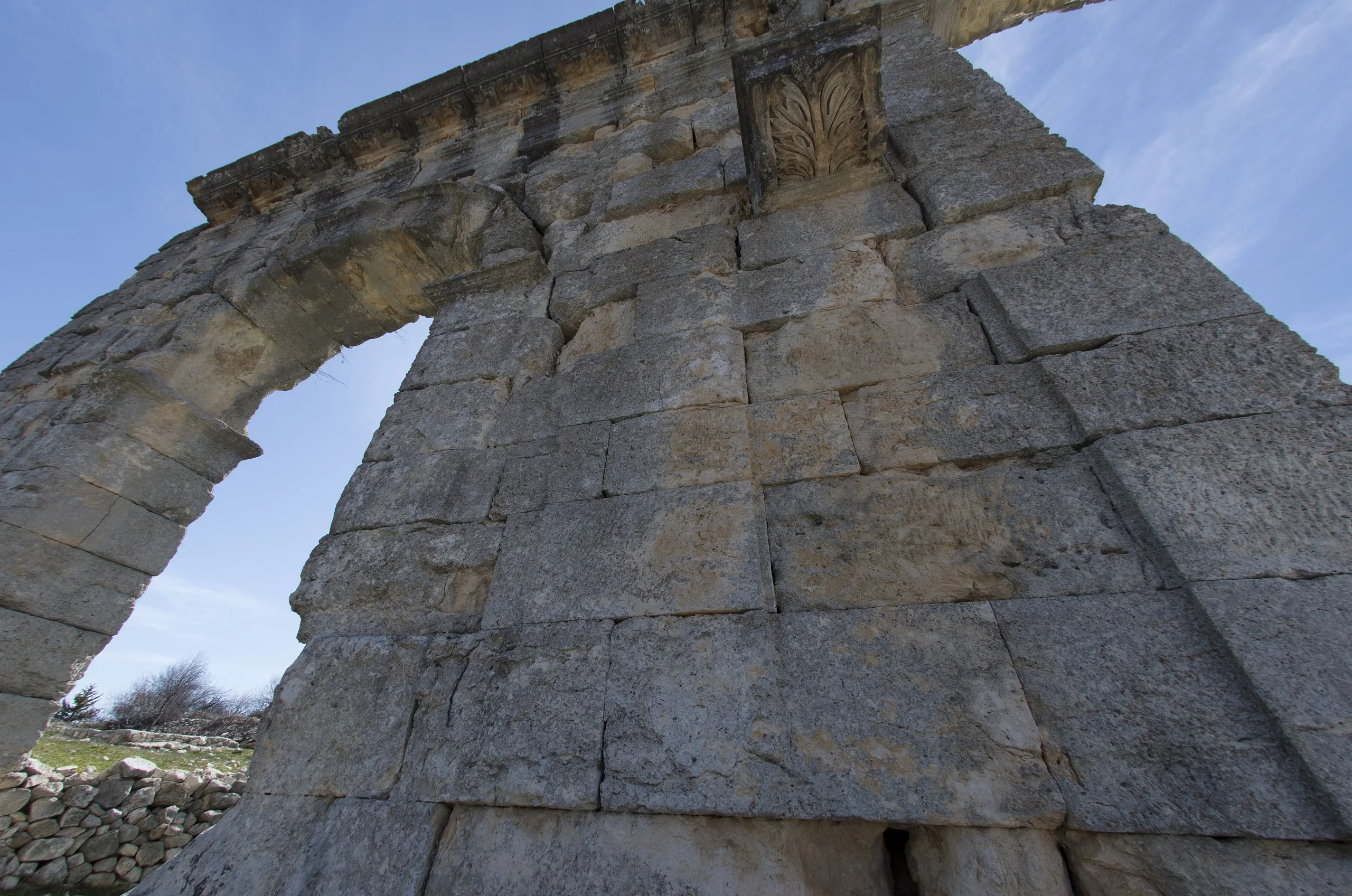
On the second colonnaded street, running south to north beyond the Temple of Zeus, the Victory Gate has a large central passage and a small arched one on each side. Its inscription records repairs after earthquake damage during the joint reign of Arcadius (395-408) and Honorius (395-423). The theatre was built in the second half of the 2nd century CE, in the joint rule of Marcus Aurelius and Lucius Verus; a journal article uses the title Armeniacus on an inscription to fix the stage building at 164 CE. The necropolis, spread over both slopes of a valley north of the city, was in use in Hellenistic, Roman and Byzantine times and includes rock-cut tombs.
Research history
According to Özdemir's article, the theatre was first excavated and cleaned in 1993 under the direction of the Silifke Museum; this uncovered the seating area and many blocks of the stage building lying where they had fallen. From 2001 to 2006 a German team led by D. Wannagat carried out survey work, during which M. Spanu and his team documented the theatre in detail, with results published in 2011. In 2017 a team directed by Aydınoğlu excavated in the theatre and found previously unknown stage-building blocks, including a frieze fragment whose Ionic cymation, with bead-and-reel on its tongues, the author calls unpublished elsewhere in Cilicia, Asia Minor and Syria.
Visiting
For opening hours and entry conditions consult the Ministry's official page, which states that the Müzekart is valid for Turkish citizens. The Culture Portal says the site can be reached from Silifke by private or rented car.
Gallery
Frequently asked questions
Where is Uzuncaburç?
What does Diocaesarea mean?
When did the city become autonomous?
What is known about the Temple of Zeus Olbios?
Where does the name Uzuncaburç come from?
When was the theatre built?
Sources (13)
- Uzuncaburç Örenyeri / Uzuncaburç Archaeological Site (TR ve EN sayfalar) — T.C. Kültür ve Turizm Bakanlığı, Müzeler ve Örenyerleri
- Uzuncaburç - Mersin (kaynak: Mersin İl Kültür ve Turizm Müdürlüğü) — T.C. Kültür ve Turizm Bakanlığı, Türkiye Kültür Portalı
- A Unique Ionic Cymation from Theater of Diocaesarea (Uzuncaburç) in Rough Cilicia (Cultural Heritage and Science 2(1), 2021, 19-24) — Okan Özdemir, Cultural Heritage and Science, DergiPark
- Uzuncaburç (Wikidata Q61829627, P625) — Wikidata
Photo credits
- Photo: Dosseman, CC BY-SA 4.0 — Wikimedia Commons (resized)
- Photo: Chrisi1964, CC BY-SA 4.0 — Wikimedia Commons (resized)
- Photo: Chrisi1964, CC BY-SA 4.0 — Wikimedia Commons (resized)
- Photo: Nedim Ardoğa, CC BY-SA 4.0 — Wikimedia Commons (resized)
- Photo: Dosseman, CC BY-SA 4.0 — Wikimedia Commons (resized)
- Photo: Dosseman, CC BY-SA 4.0 — Wikimedia Commons (resized)
- Photo: Dosseman, CC BY-SA 4.0 — Wikimedia Commons (resized)
- Photo: Dosseman, CC BY-SA 4.0 — Wikimedia Commons (resized)
- Photo: Dosseman, CC BY-SA 4.0 — Wikimedia Commons (resized)