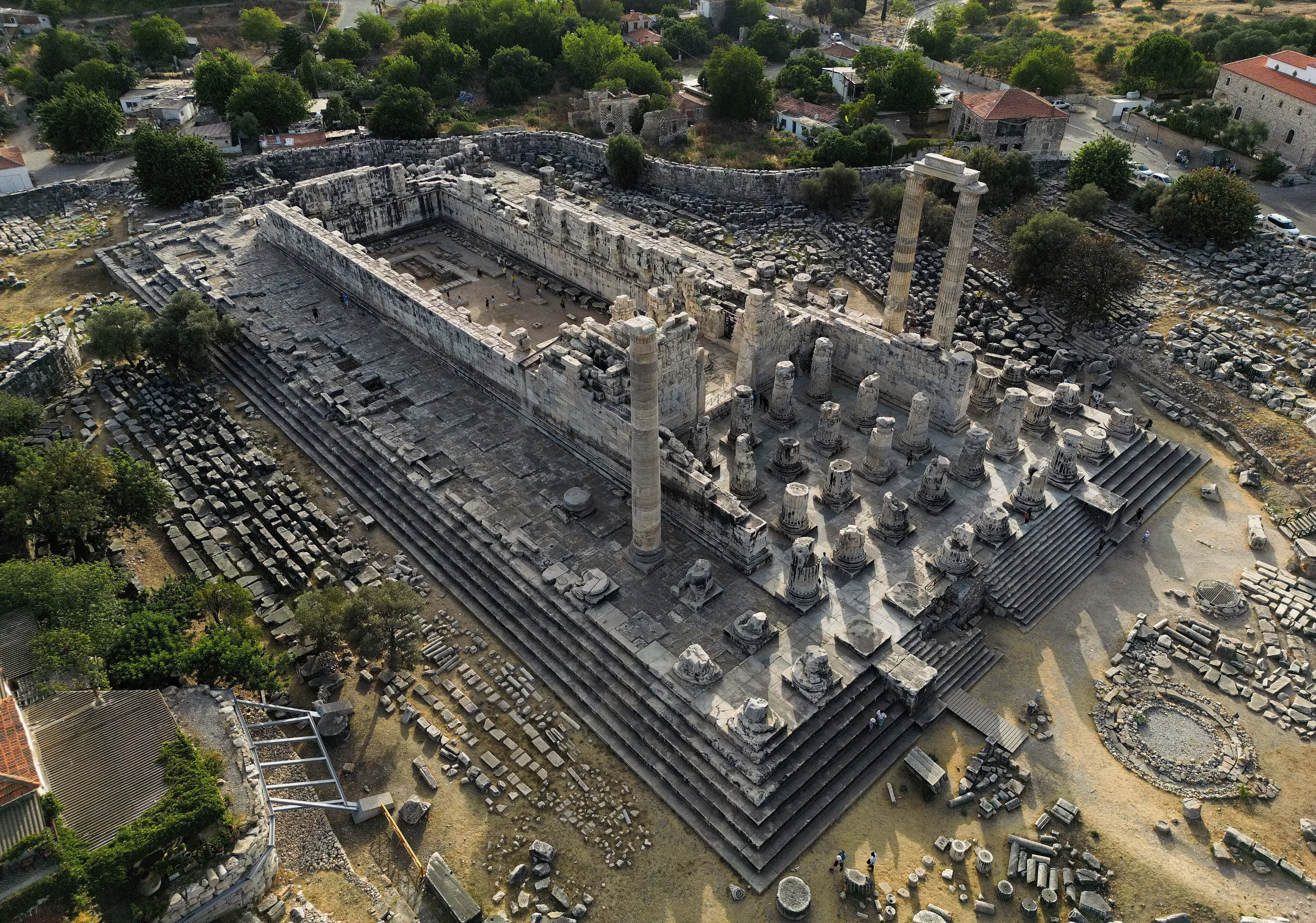
Magnesia on the Maeander is a Hellenistic city beside the Gümüşçay in Germencik, Aydın, famed for Hermogenes' Temple of Artemis Leukophryene, its agora and stadium.
Magnesia on the Maeander is an ancient city located in Turkey, Aydin. Main periods: Archaic Period, Hellenistic Period, Roman Period, Byzantine Period.
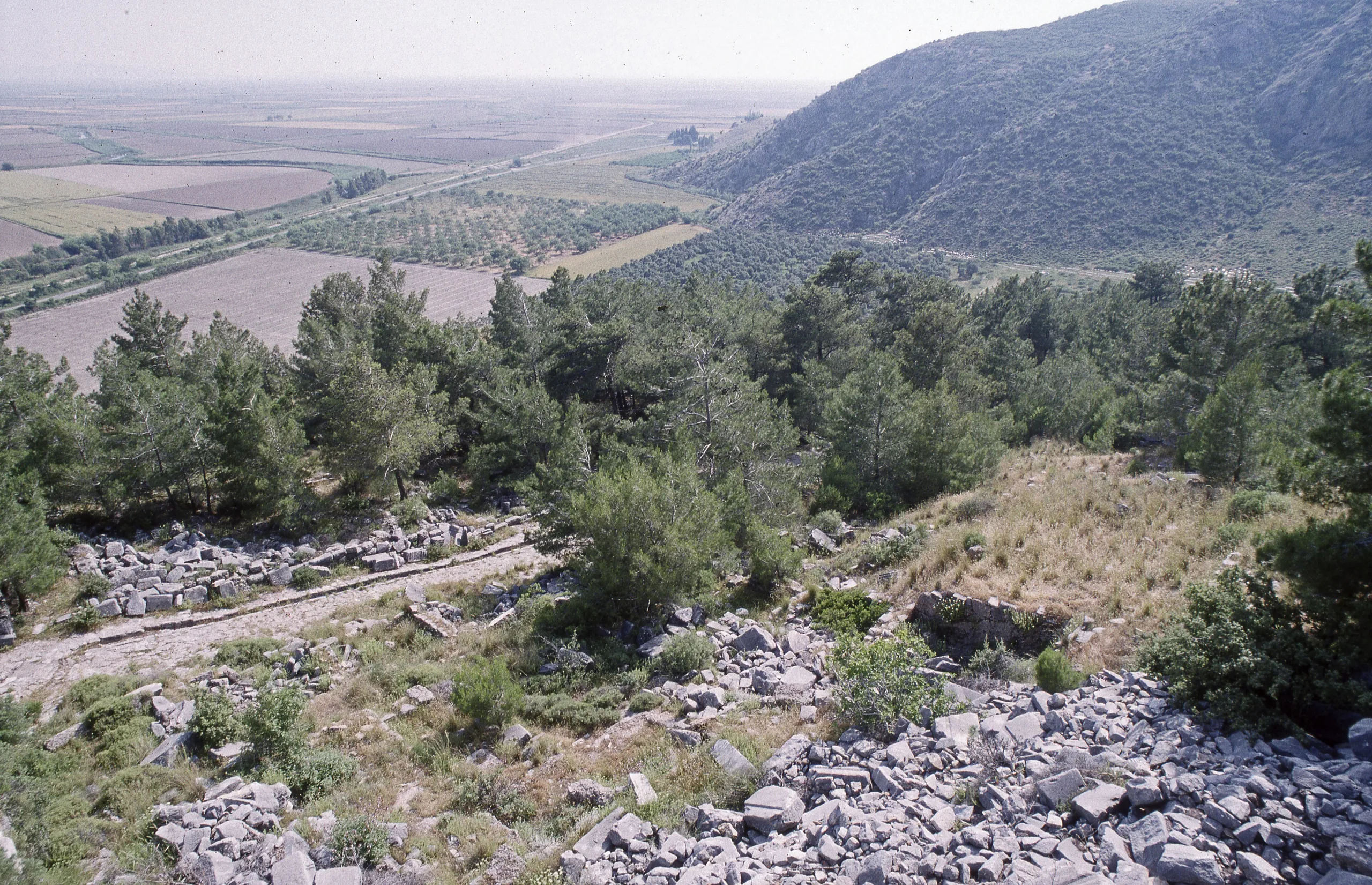
Magnesia ad Maeandrum, or Magnesia on the Maeander, lies in Tekin village within Germencik district, Aydın, beside the Ortaklar–Söke road. The Ministry's English page says the city was refounded in 400 BCE around the sanctuary of Artemis Leukophryene, at the point where the lower slopes of Mount Thorax reach the Lethaios River (today's Gümüşçay). Pleiades records names such as Leukophrys and Magnesia hē Asianē.
History
The Turkish Ministry page relates that the founders were the Magnetes, a people from Thessaly according to legend and ancient authors. Guided by an oracle of Apollo and led by Leukippos, they landed on what was then a bay, now Lake Bafa; where that first Magnesia stood is unknown, though ancient writers put it on the Maeander. Epidemics linked to the river shifting its bed and flooding, and the need for a safer base against the Persians, led the Magnetes to rebuild the city around 400 BCE next to the Gümüşçay. The Culture Portal credits the Athenian Thibron with this move and stresses that today's city is the second Magnesia.
Under the Hellenistic kings the city came first under the Seleucids and then under Pergamon, and the English page calls this its most glorious era. It stayed important in Roman times; the Ministry says coins of the 3rd century CE call it the seventh city of Anatolia. In the Byzantine period it was a bishopric, which the English page says lasted until the 12th century. The Ministry also mentions a chapel possibly connected with Saint Ignatius as a hint of an early Christian community. Its position on the routes between Ephesos, Priene and Tralleis gave it commercial and strategic weight, and it was known for grain and figs.
Plan and preservation
The Turkish page describes a walled city about 1.5 km across with a grid of streets. Little of it was destroyed, largely because river floods and silt washed down from Mount Gümüş buried it.
Main remains
Temple of Artemis Leukophryene and the sanctuary
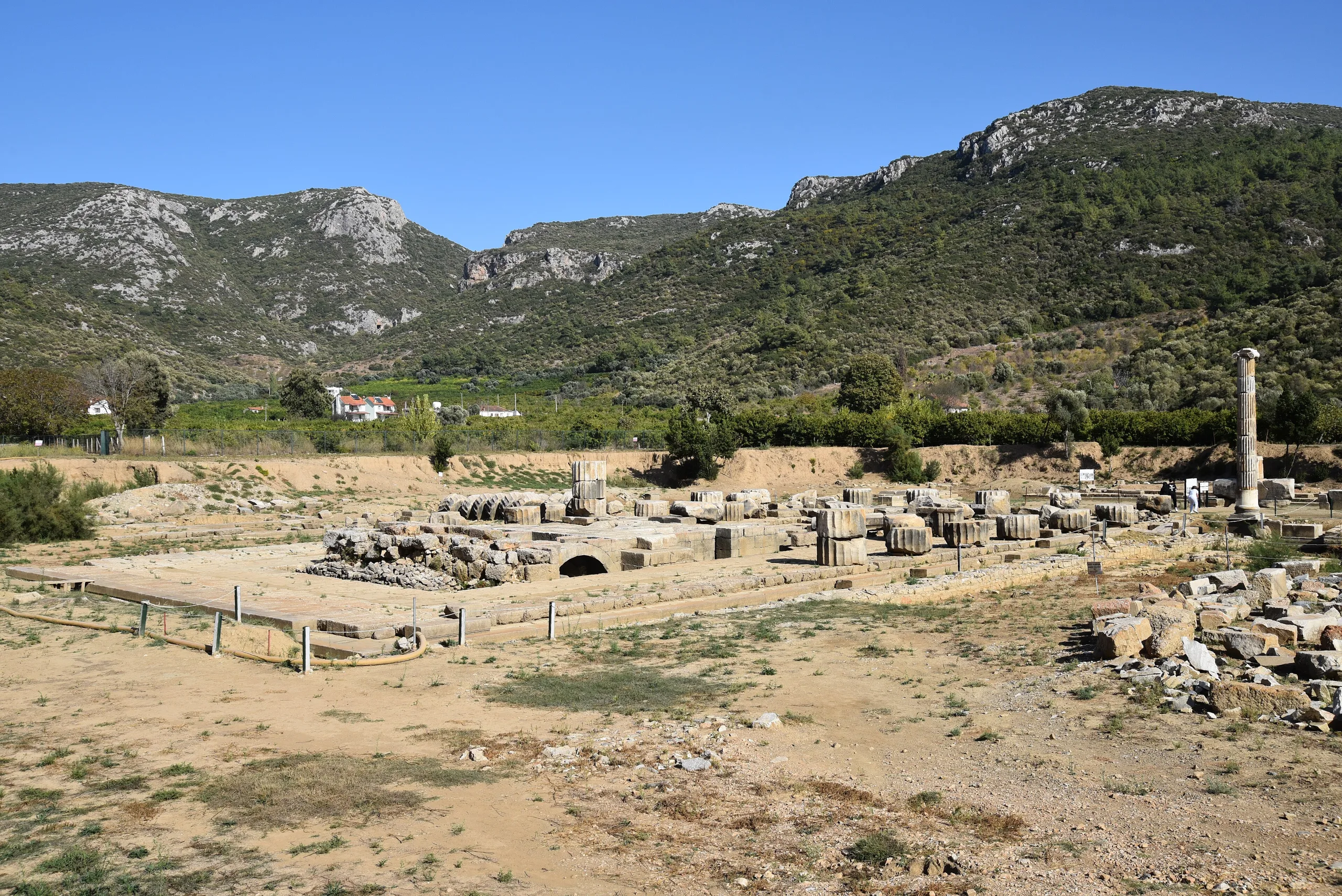
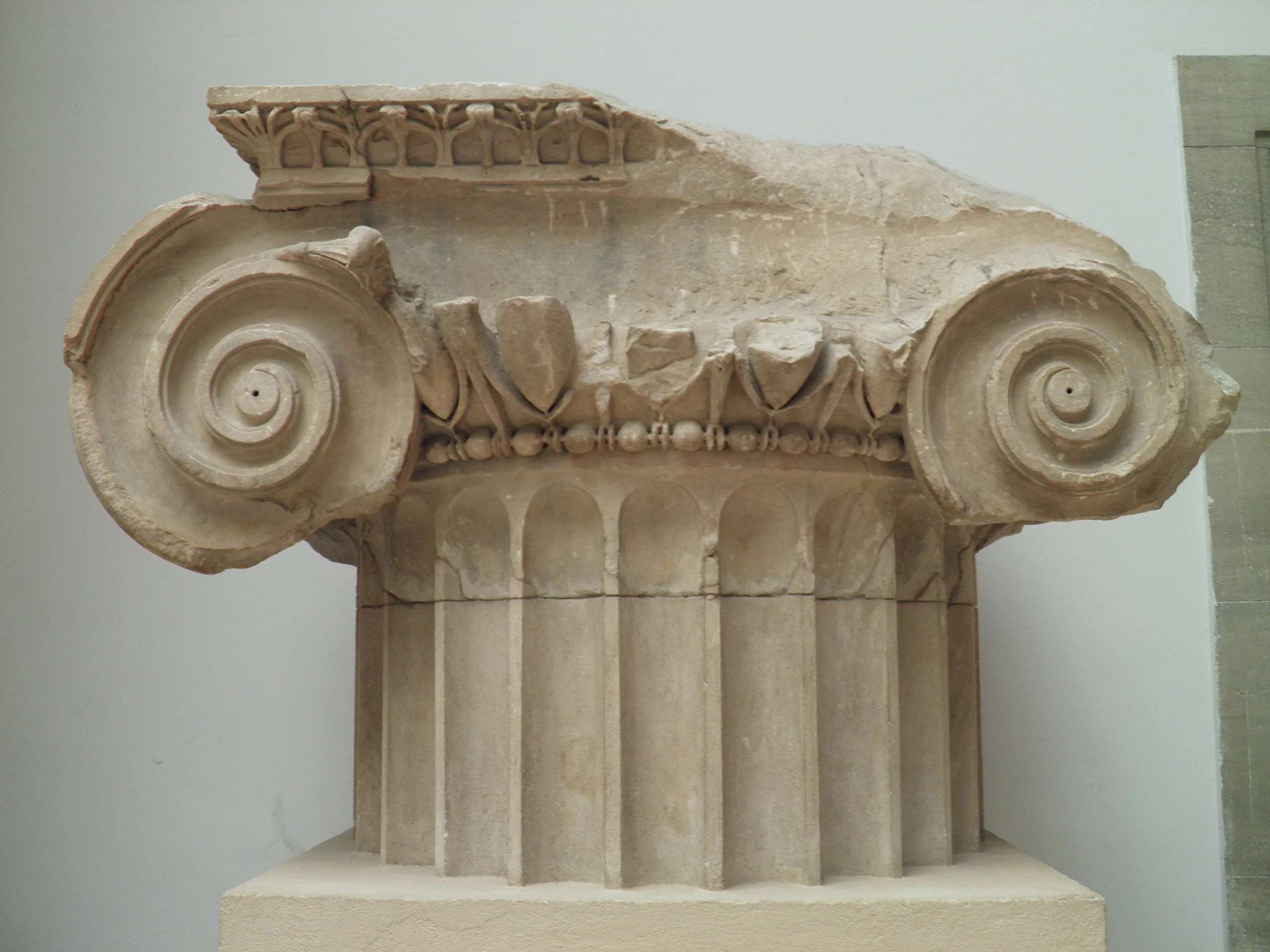
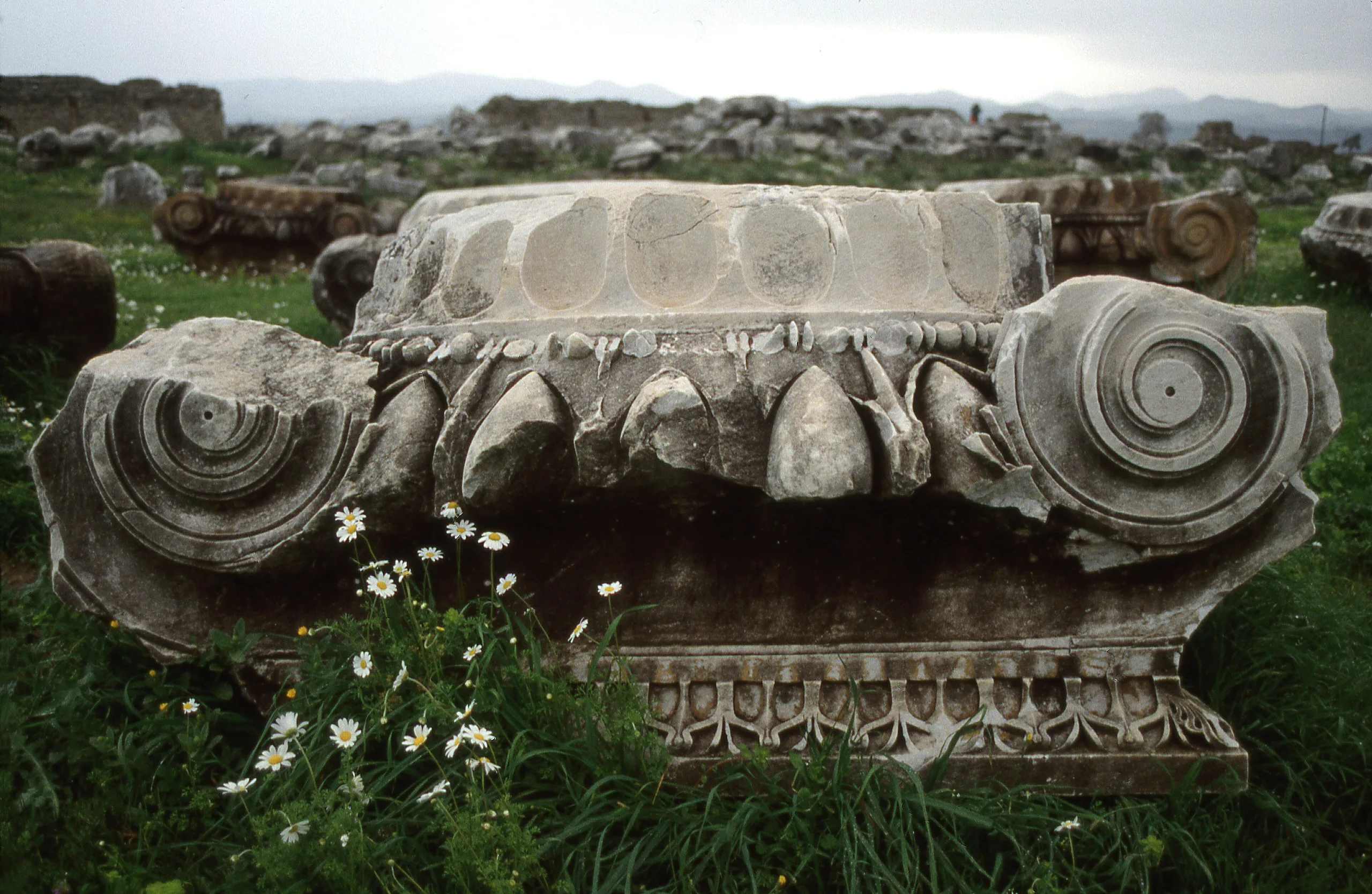
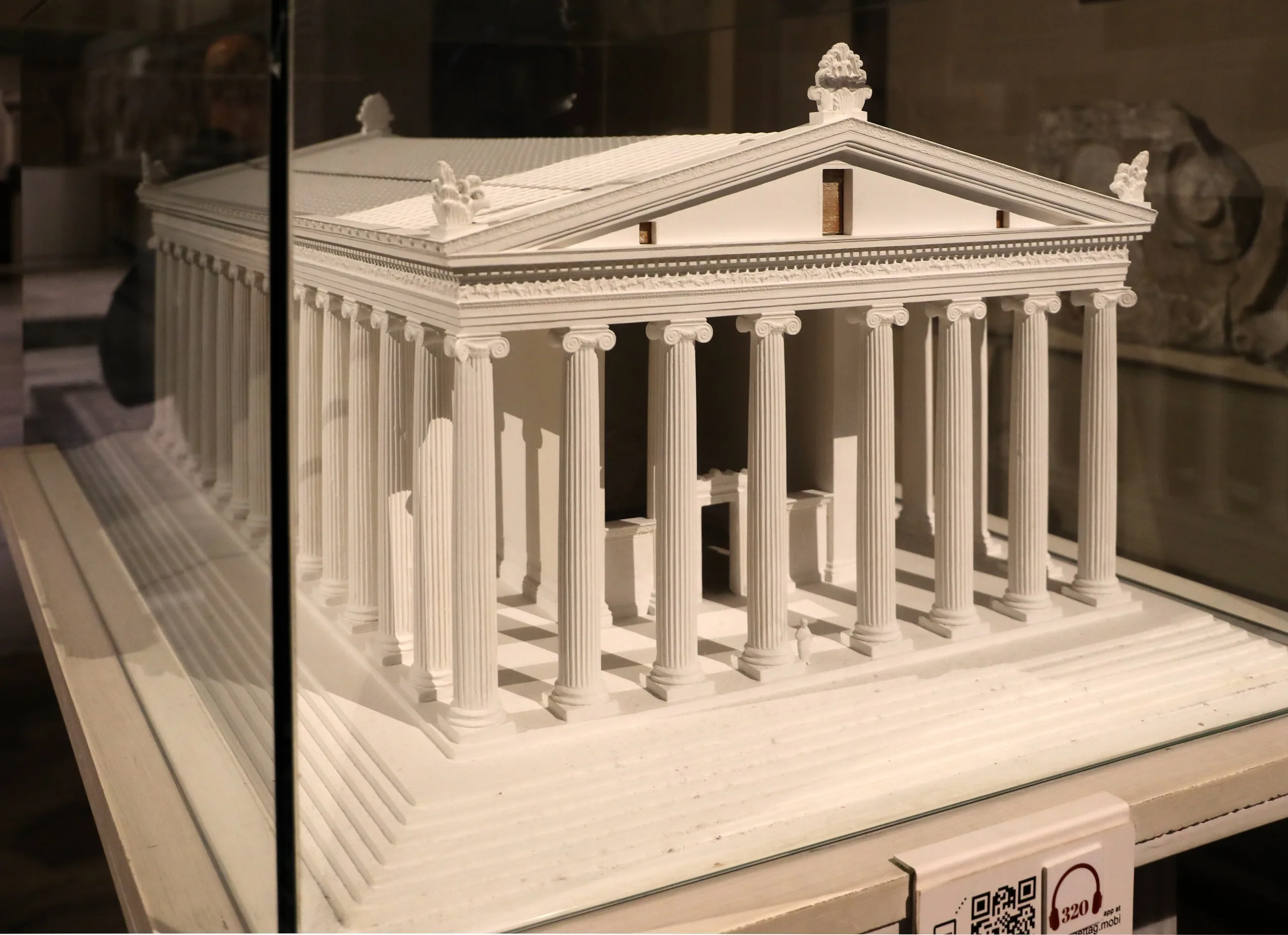
Both the Ministry and the Culture Portal tie the city's reputation to the architect Hermogenes. Citing Vitruvius, the Ministry says he was the first to apply the pseudodipteral temple plan and that his masterpiece was the Artemis Leukophryene temple, raised in the Hellenistic period (3rd-2nd centuries BCE) over the remains of an Archaic temple of the 6th century BCE. The Turkish Ministry page gives the Ionic building as 8 x 15 columns and 67.50 x 40 m, the fourth largest temple in Anatolia; the Culture Portal writes 8x5 columns but agrees on the ranking. A U-shaped altar in front of it anticipated the Pergamon Altar of Zeus.
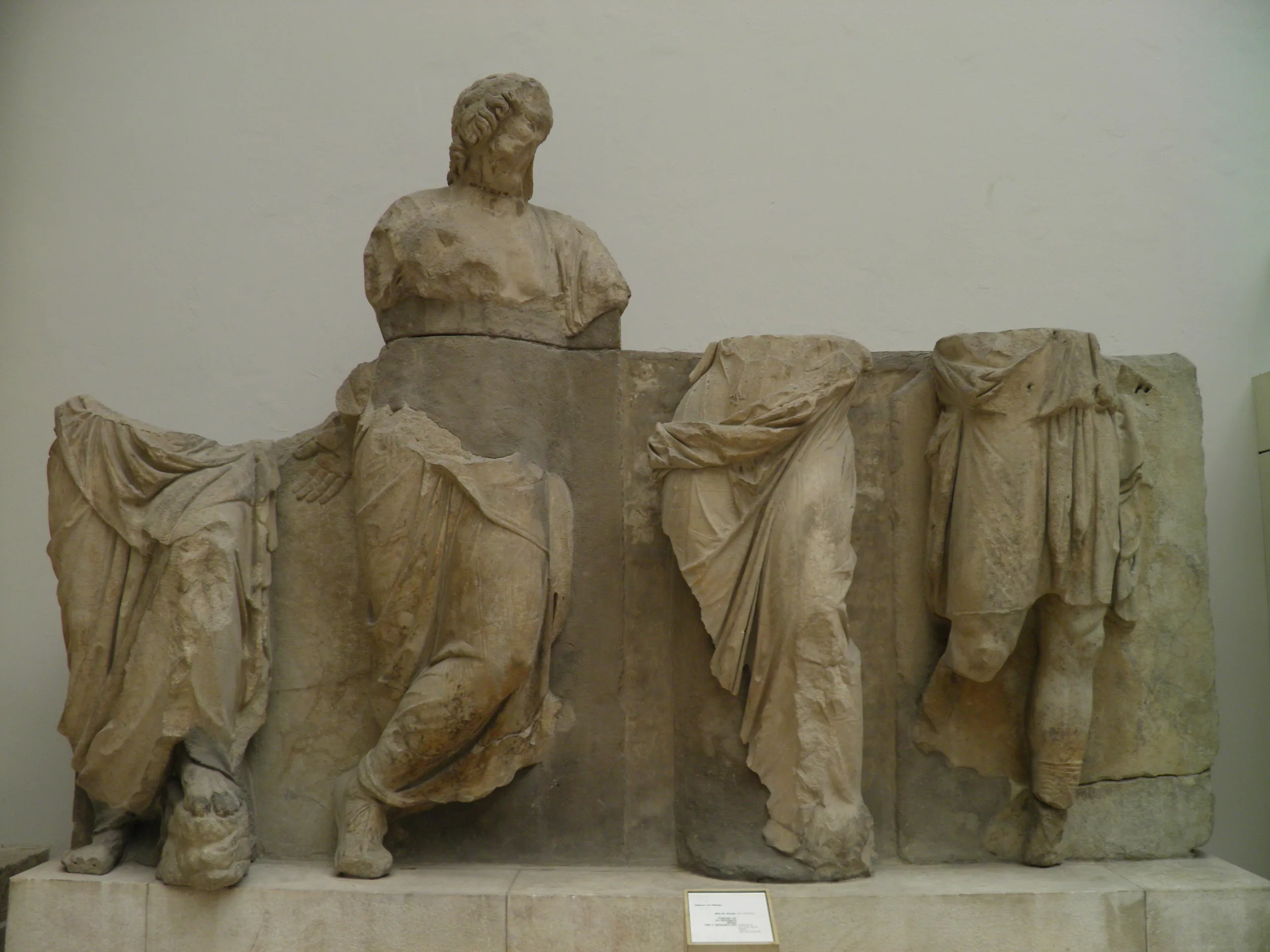
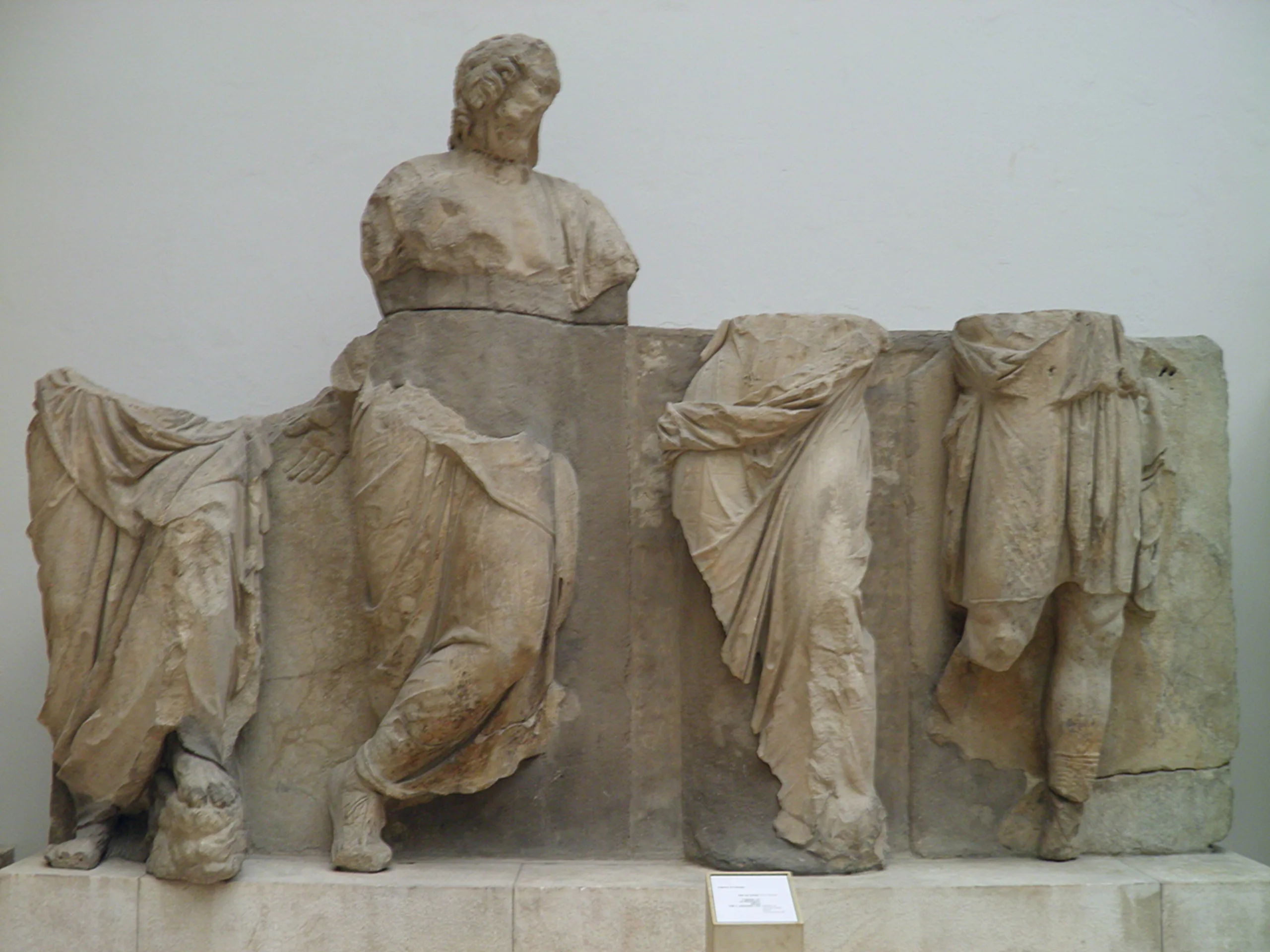
The Culture Portal reports that digs in the sanctuary between 1994 and 2001 exposed a marble-paved ceremonial area between the altar and the agora, bordered by relief figures of gods up to three metres in size, with place inscriptions marking where participants stood and parts of the surrounding stoa.
Agora, theatre and other buildings
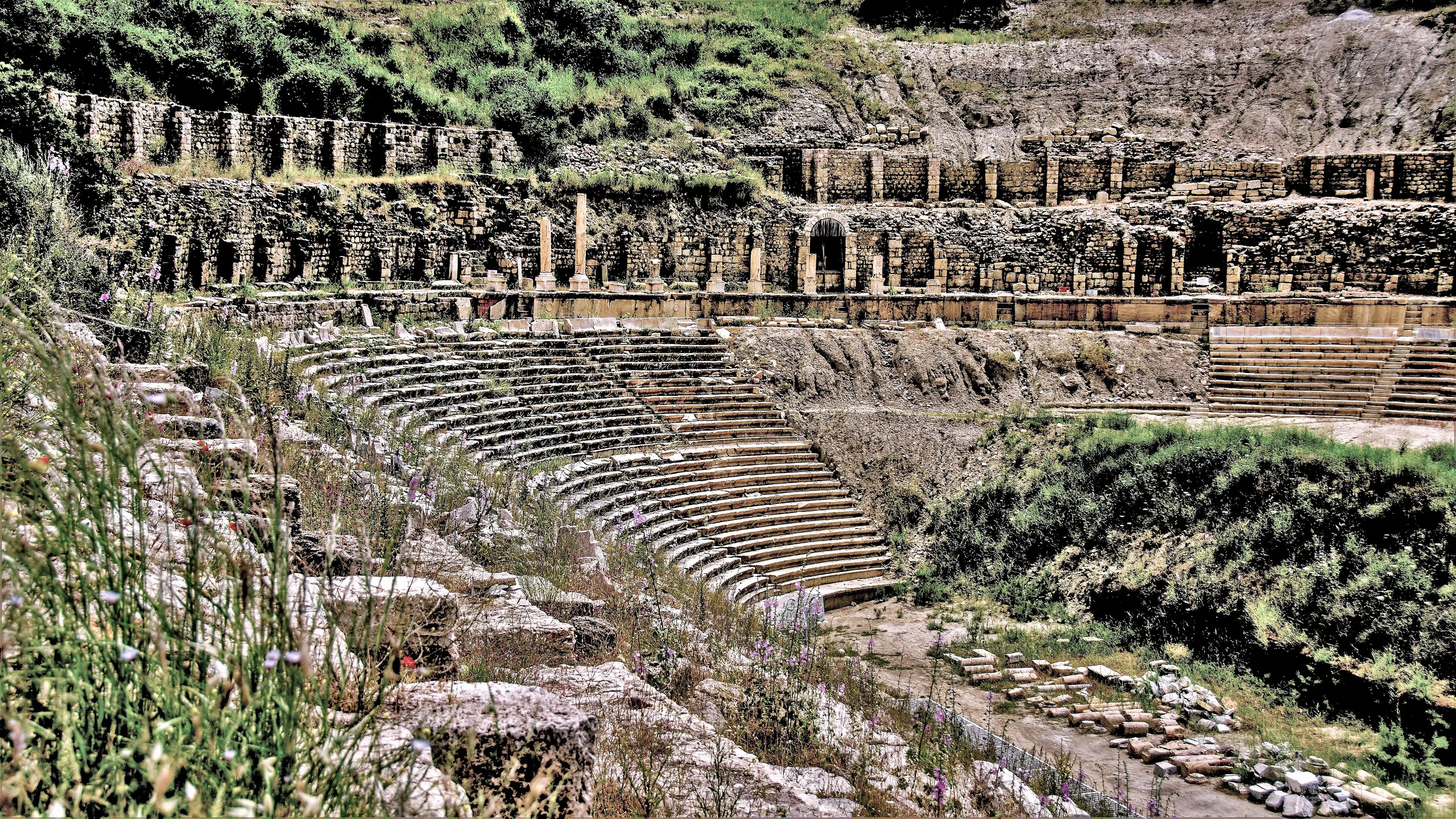
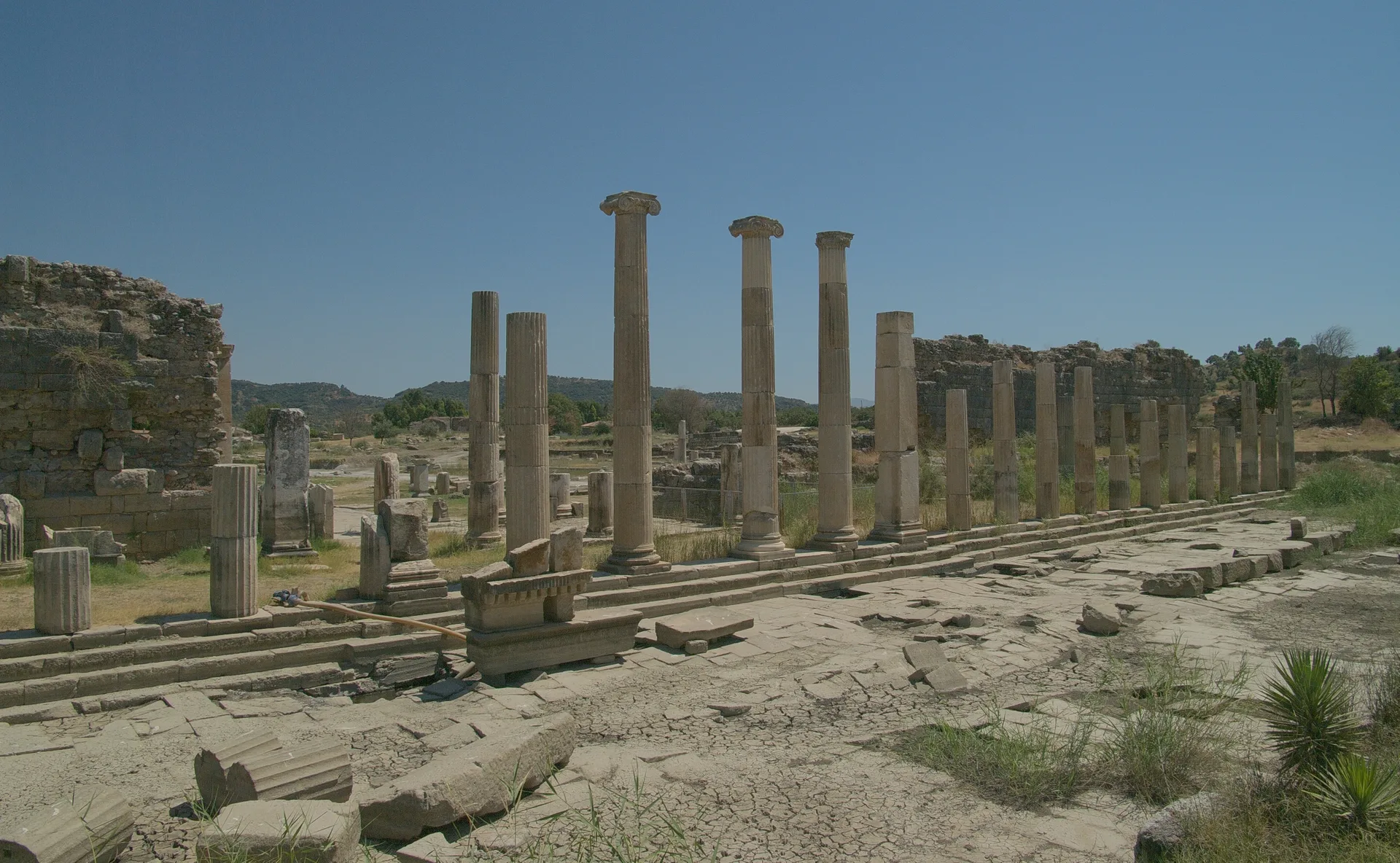
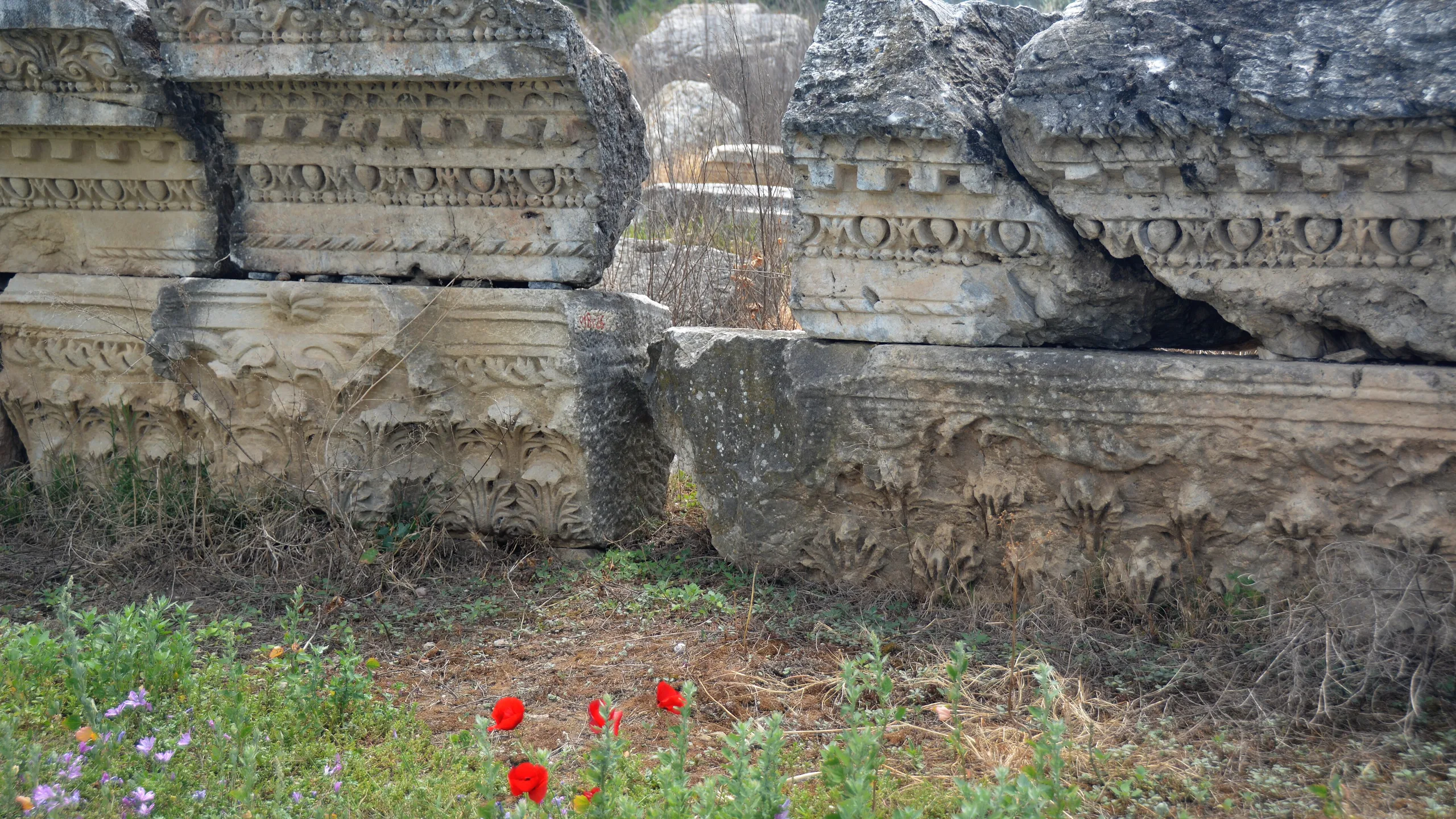
According to the Ministry the agora covers about 26,000 square metres, among the largest markets of its time; the Portal counts 414 columns and identifies a Roman Market Basilica there. The facade of the Temple of Zeus is now in the Pergamon Museum in Berlin. The theatre dates from the late 2nd century BCE, is buried again, and is among the rare examples that follow Vitruvius' ideal plan. The Turkish page also lists a gymnasium, a small copy of the Faustina Baths at Miletus, an odeion, a stadium of 25,000 seats, an unfinished theatre-shaped building, a market basilica and a Byzantine wall. The English page, by contrast, describes a marble stadium of 40,000 seats built for the Artemis Olympic games, with notable reliefs on its podium. The Portal adds a Theatron left unfinished after a landslide and a 32-seat latrine. The only Islamic building is the Çerkez Musa Mosque, which the Ministry dates to the 15th century and the Portal writes as 5th century.
Excavations
After short surveys, the first excavation was run in 1891 by Carl Humann for the Berlin Museum. In 21 months the team uncovered, wholly or partly, the theatre, the Artemis temple and altar, the agora, the Temple of Zeus and the prytaneion. Work ended in 1893 and finds went to Paris, Berlin and Istanbul. Roughly a century later, in 1984, digging resumed for the Ministry of Culture and Ankara University.
Visiting
The Ministry's Turkish page says the Museum Card is valid. For hours and entry terms, see the official page.
Gallery
Frequently asked questions
Where is Magnesia on the Maeander?
Who founded it?
Why is Hermogenes important?
How many columns did the Artemis temple have?
When was it first excavated?
Is the Museum Card valid at Magnesia?
Sources (12)
- Magnesia Örenyeri / Magnesia Archaeological Site (TR ve EN sayfalar) — T.C. Kültür ve Turizm Bakanlığı, Müzeler ve Örenyerleri
- Magnesia Antik Kenti - Aydın (kaynak: Aydın İl Kültür ve Turizm Müdürlüğü) — T.C. Kültür ve Turizm Bakanlığı, Türkiye Kültür Portalı
- Magnesia ad Maeandrum/Leukophrys (Pleiades 599778) — Pleiades
Photo credits
- Photo: Feridun F. Alkaya, CC BY-SA 2.0 — Wikimedia Commons (resized)
- Photo: Vadimph, CC BY-SA 3.0 — Wikimedia Commons (resized)
- Photo: Carole Raddato from FRANKFURT, Germany, CC BY-SA 2.0 — Wikimedia Commons (resized)
- Photo: Carole Raddato, CC BY-SA 2.0 — Wikimedia Commons (resized)
- Photo: Carole Raddato, CC BY-SA 2.0 — Wikimedia Commons (resized)
- Photo: Mark Landon, CC BY 4.0 — Wikimedia Commons (resized)
- Photo: Feridun F. Alkaya, CC BY-SA 2.0 — Wikimedia Commons (resized)
- Photo: Yair-haklai, CC BY-SA 4.0 — Wikimedia Commons (resized)
- Photo: Francesco Bini, CC BY-SA 4.0 — Wikimedia Commons (resized)