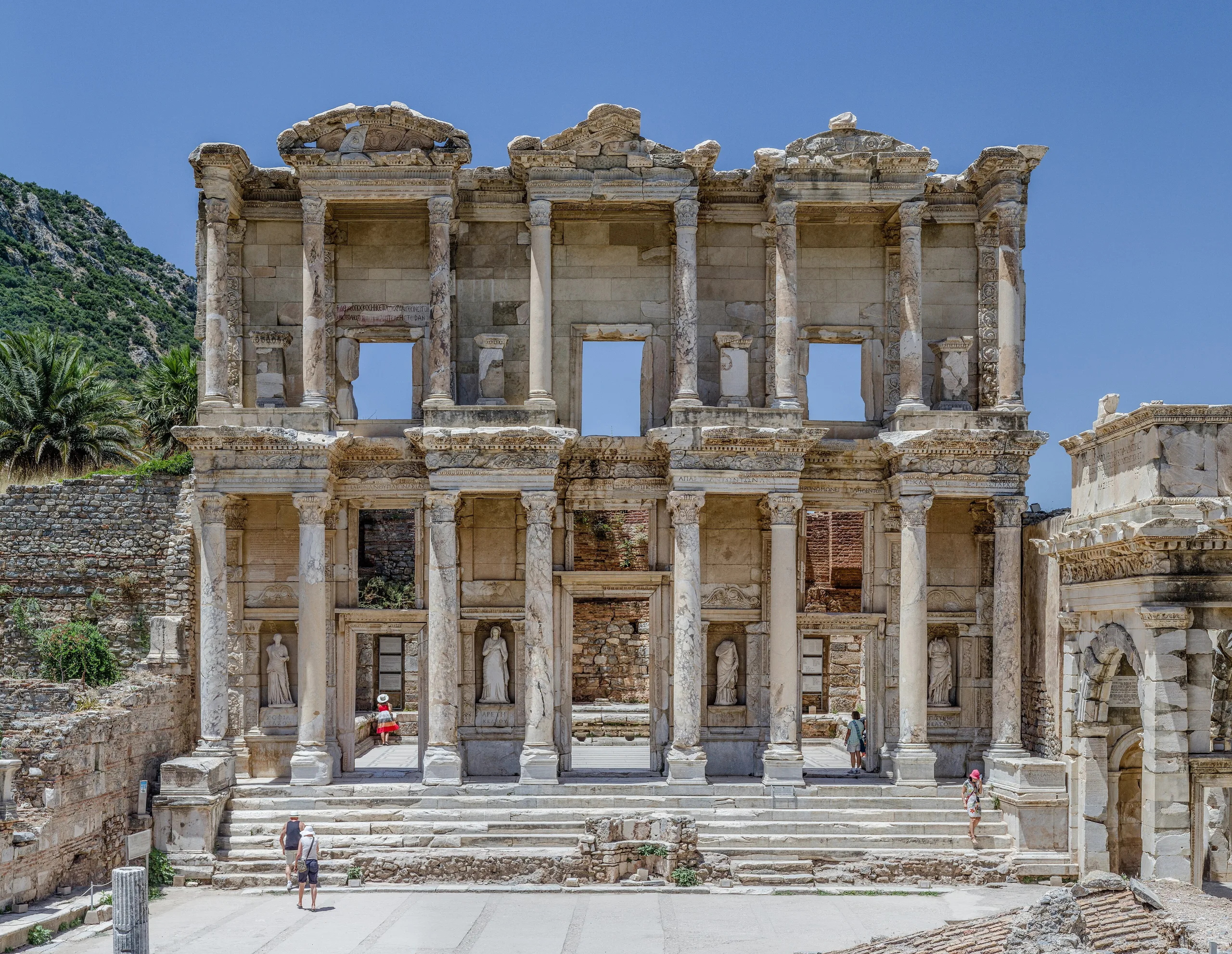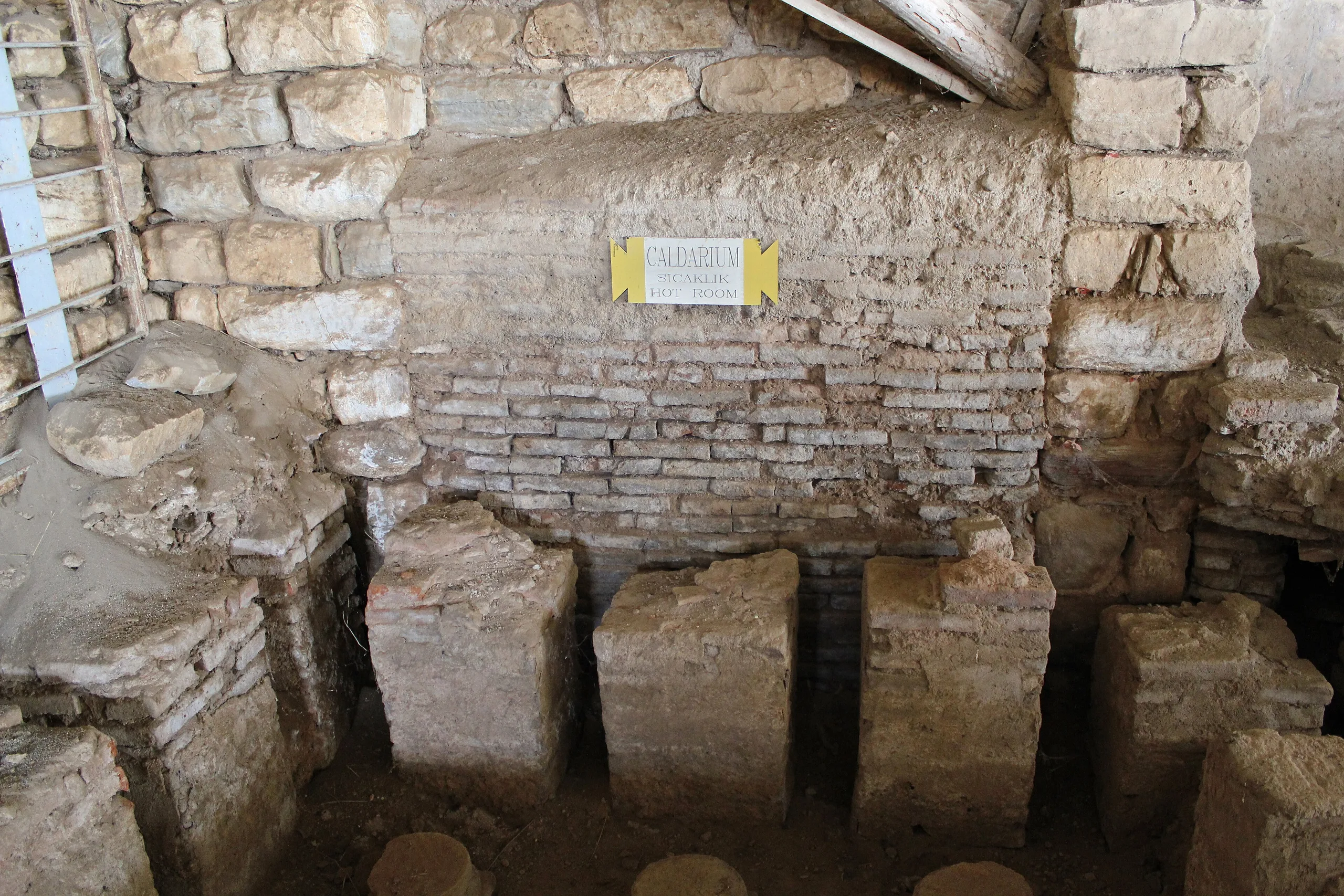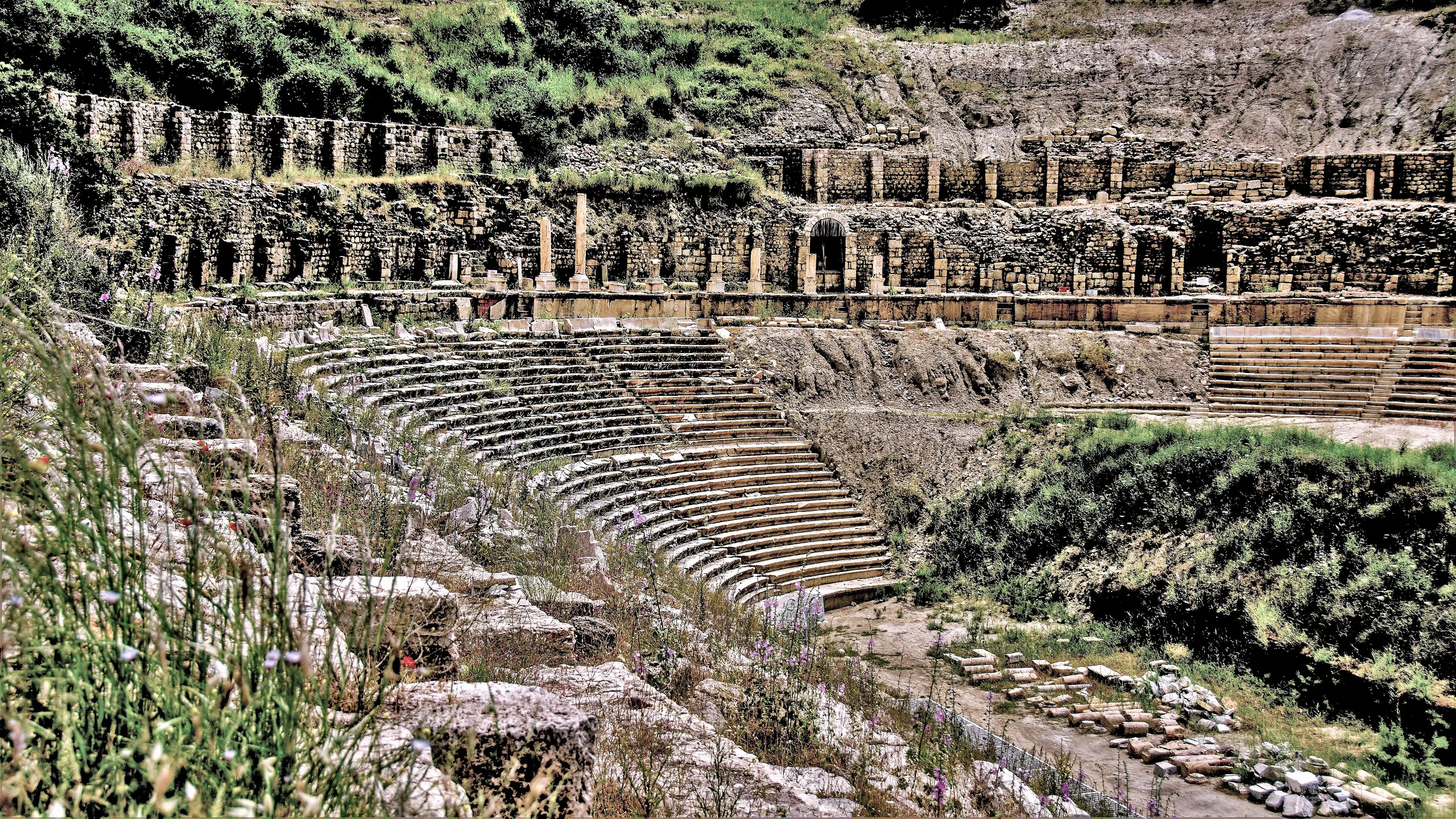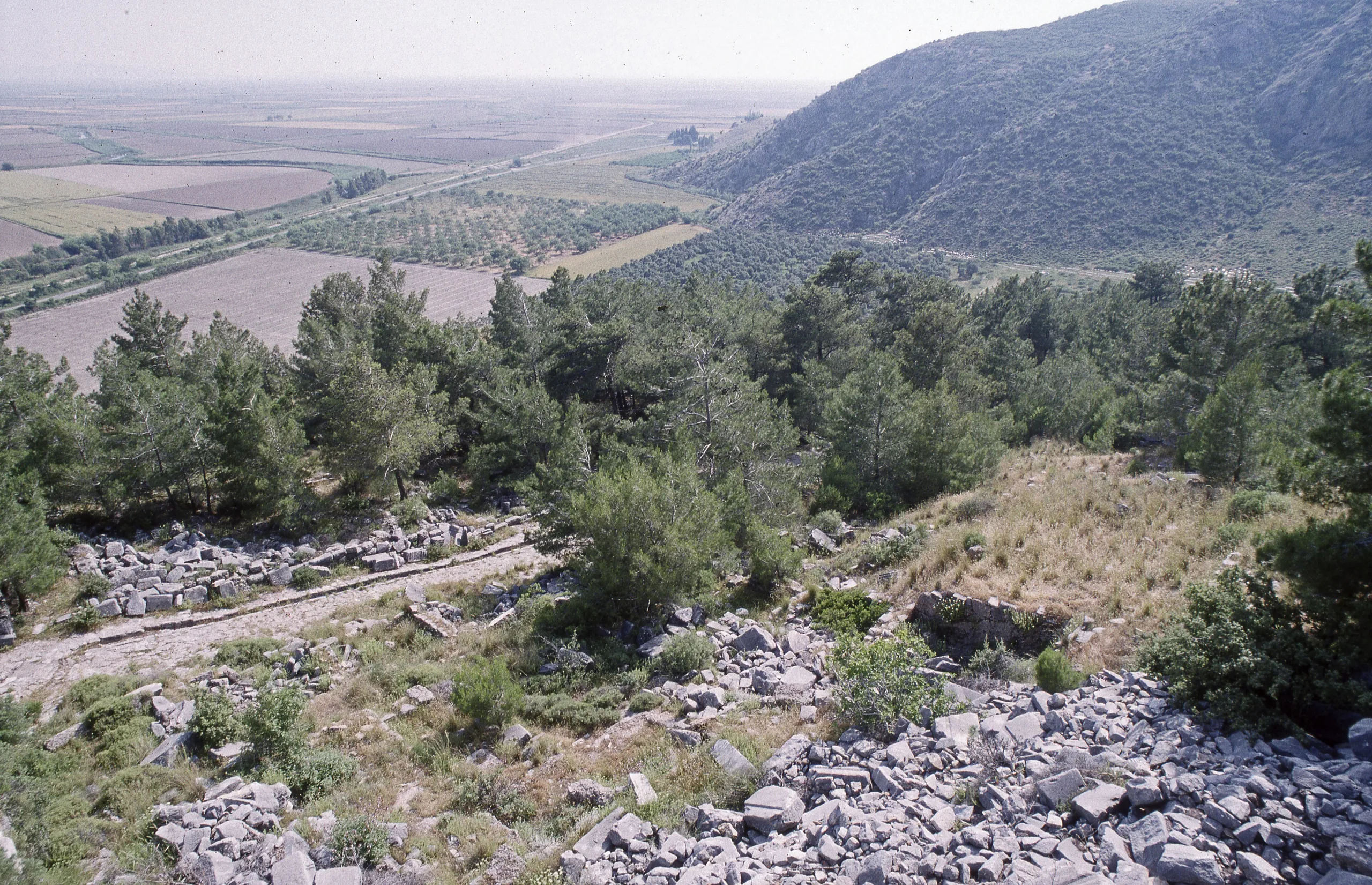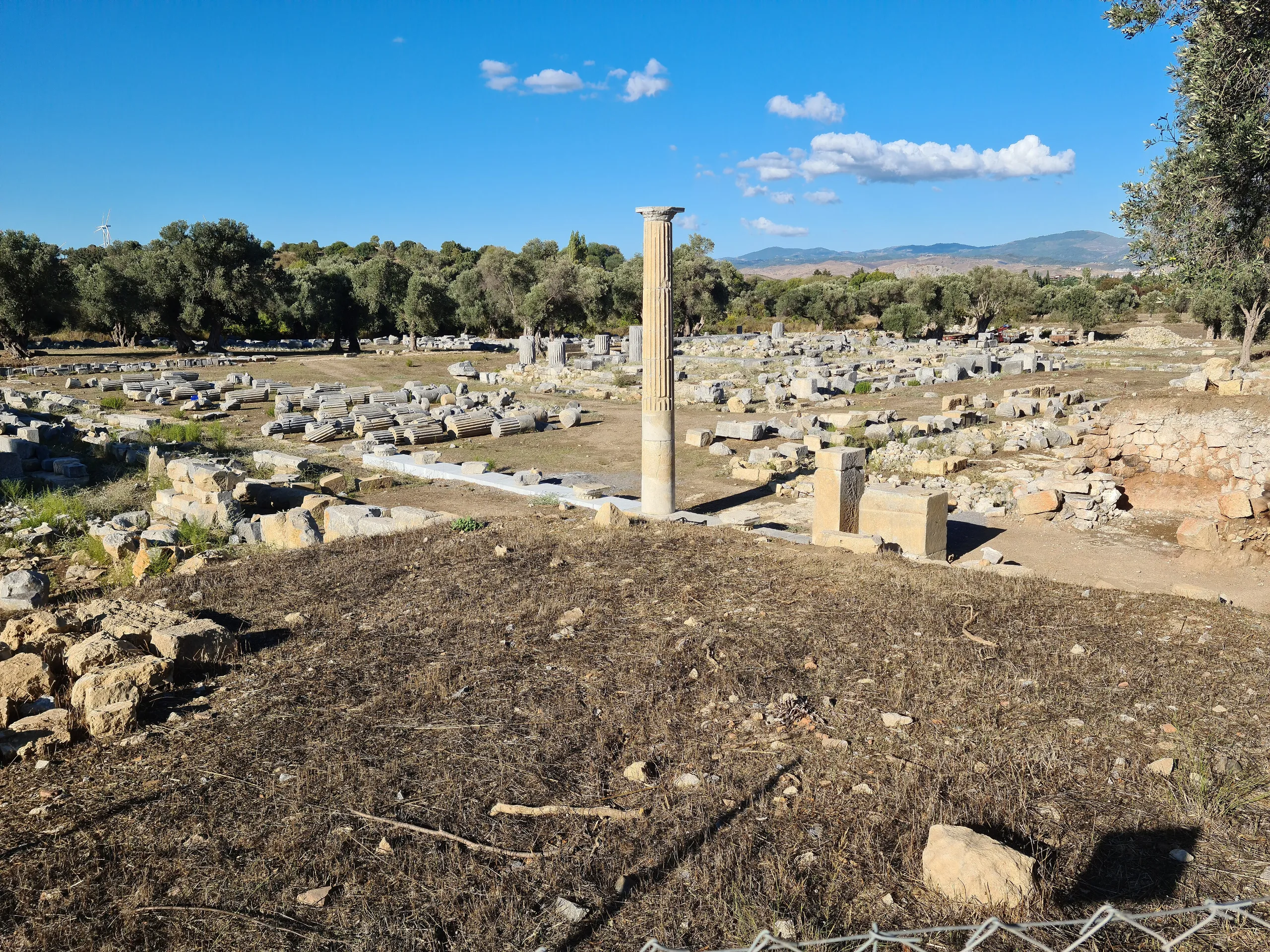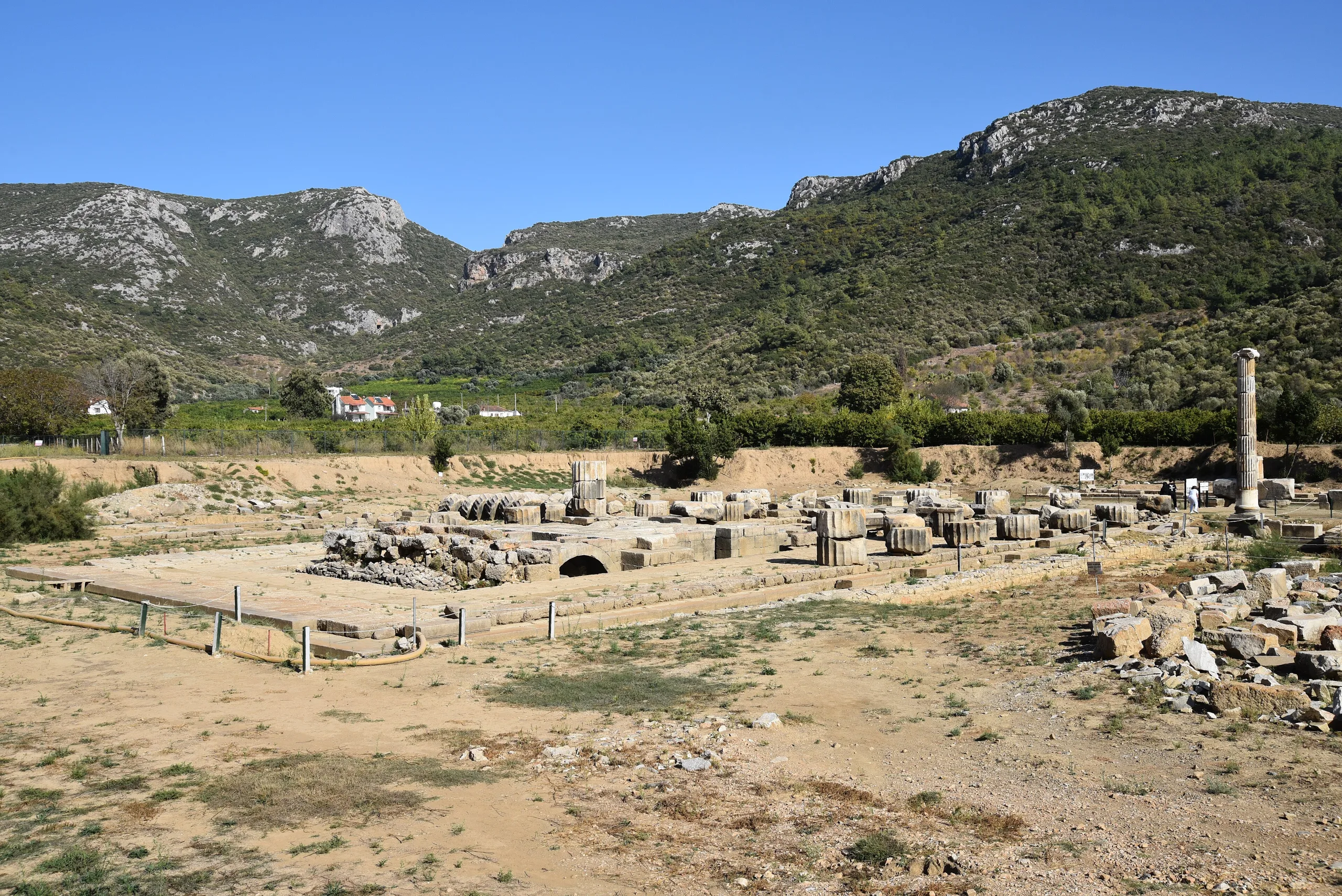
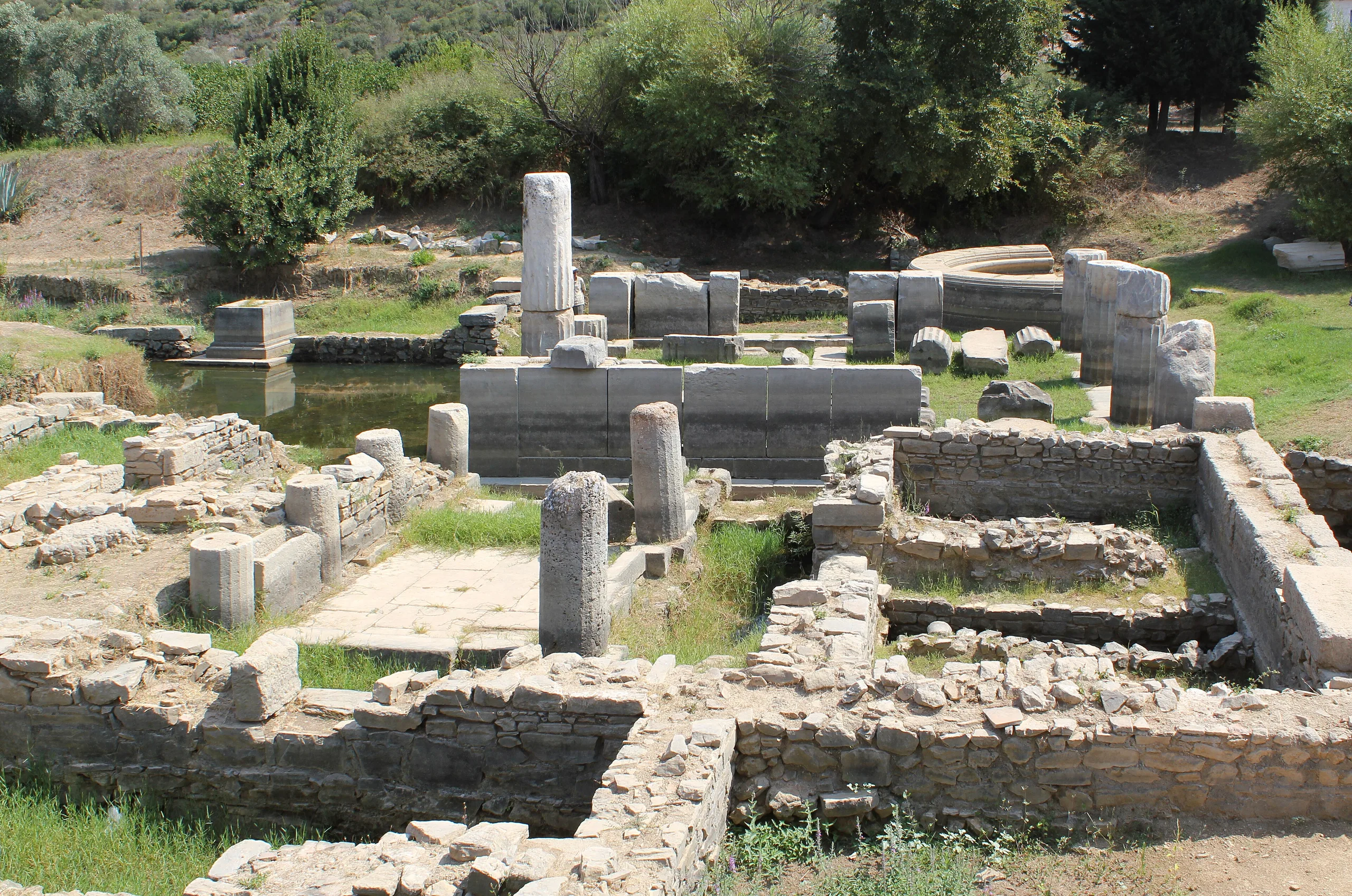
Claros near Izmir was an oracle sanctuary of Apollo, known for the only Doric temple in Ionia, its altar, a hundred-animal tethering block and giant cult statues found in place.
Claros is a place (Sanctuary) in Turkey, Izmir. Main periods: Hellenistic Period, Roman Period.
Claros lies within the Ahmetbeyli neighbourhood of Izmir province. The ministry's English page puts the sanctuary on the lower plain of the Ahmetbeyli (Ales) valley, and an academic article describes it as the sacred precinct of the city of Colophon, set between Notion and Colophon.
History of the oracle
The ministry places the sanctuary's foundation in the late 13th century BCE and its abandonment in the 4th century CE, calling it a prophecy centre throughout. Pleiades gives a shorter span, from the 7th century BCE to the 4th century CE, for the Apollo temple run by the Colophonians. Nurettin Koçhan, writing in the Turkish Journal of Archaeology, allows the oracle's origin to reach back to the 7th century BCE while admitting that this is not certain. Sources therefore disagree on the beginning but agree that the site was active into the 4th century CE.
According to Koçhan, Claros was a celebrated oracle in Hellenistic times and above all under Rome. He also reports that Pausanias ranked its temple of Apollo as the richest in Anatolia after the Artemis temple at Ephesus, a view Strabo confirms.
Main remains
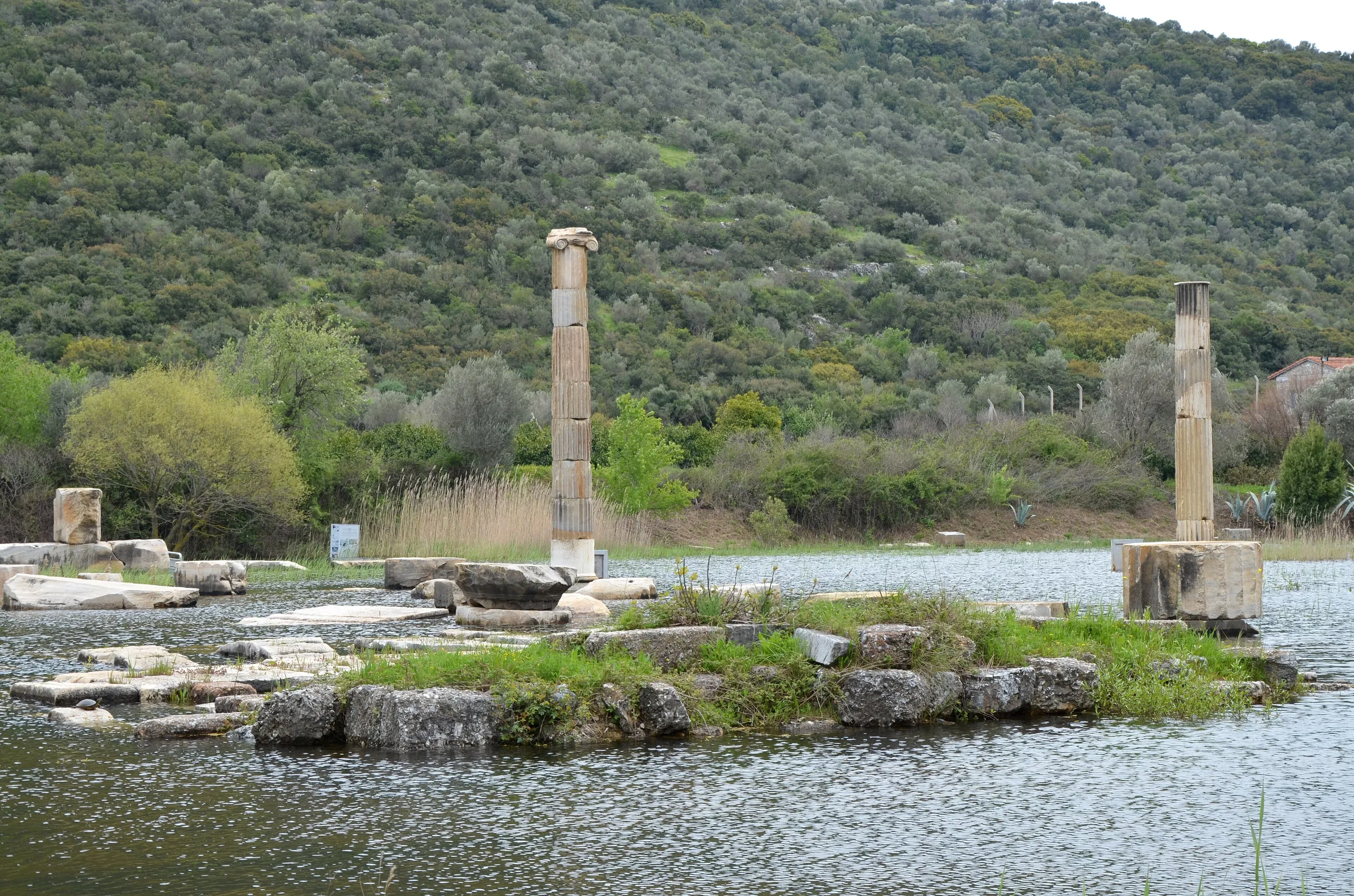
The Temple of Apollo
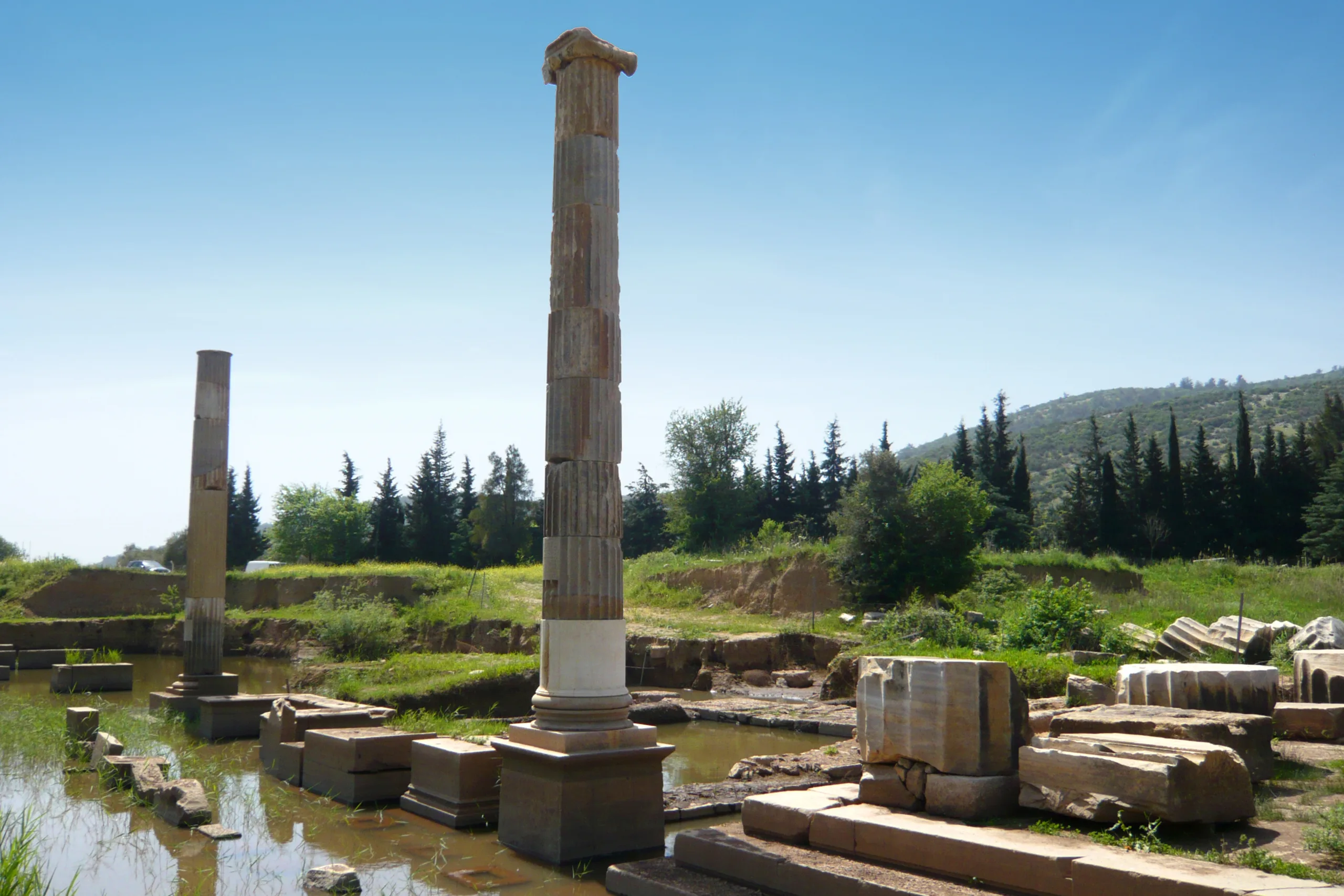
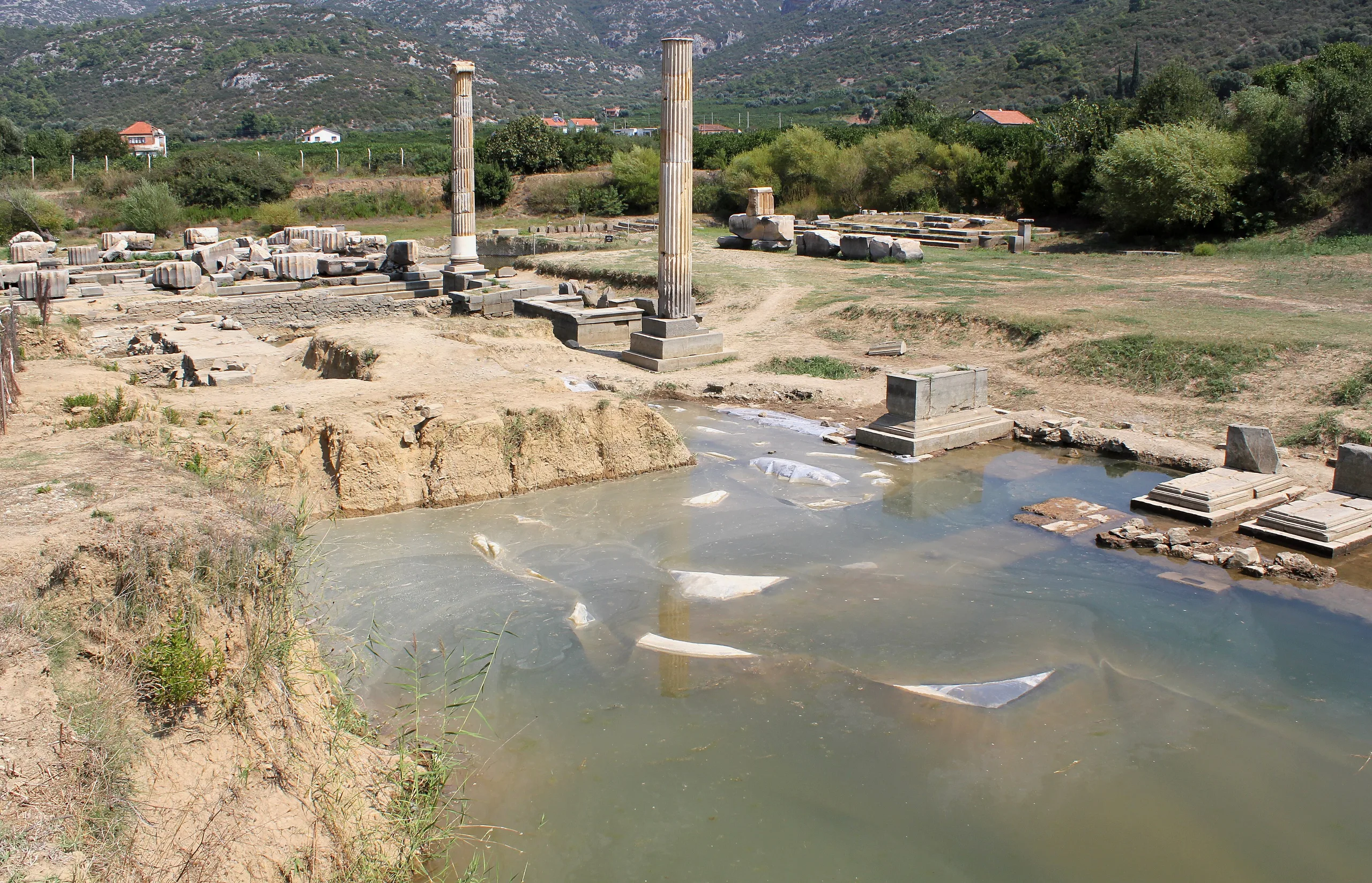
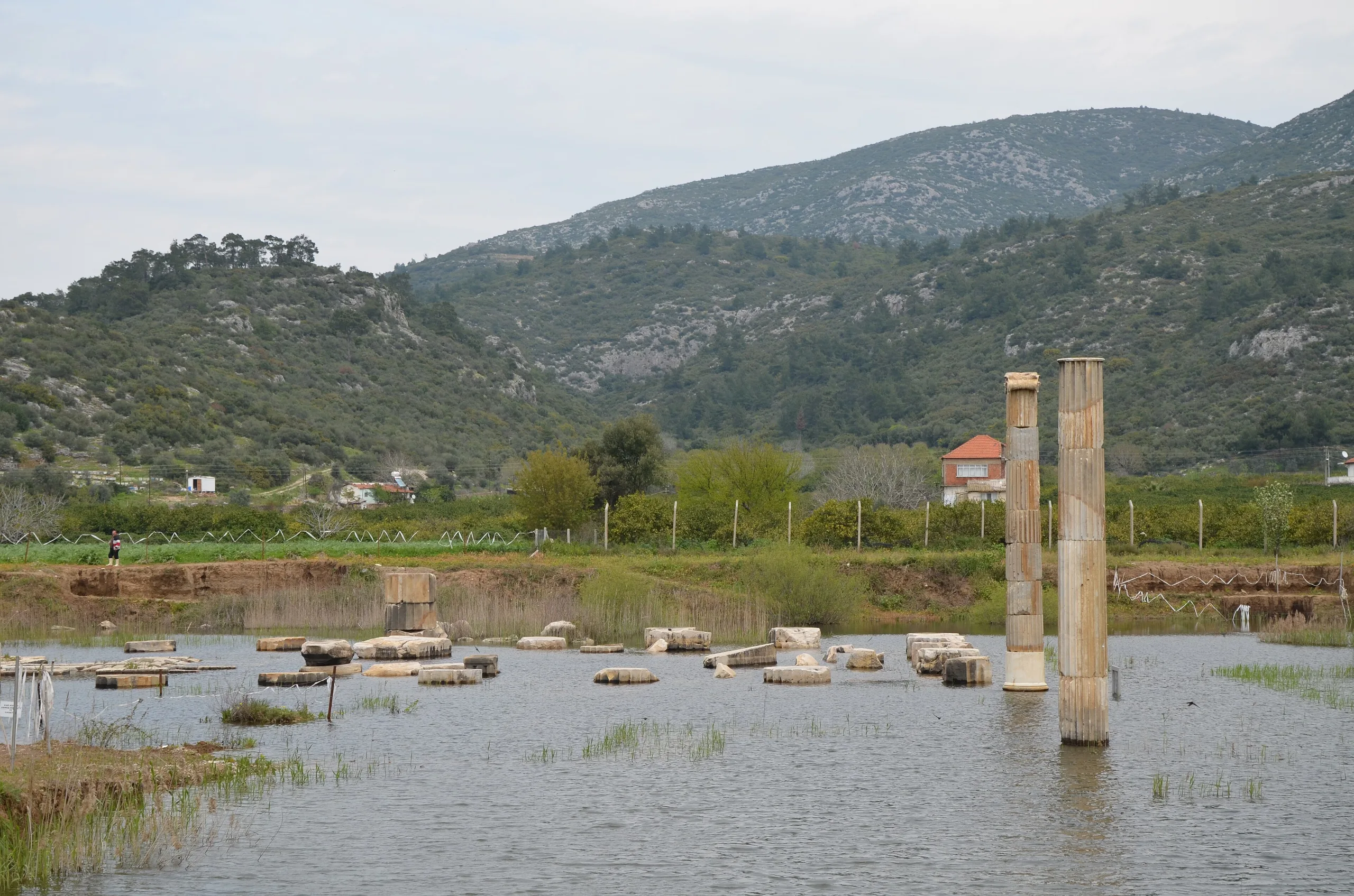
The ministry describes the temple as having six columns across the front and as the only Doric temple built in Ionia. Work began in the early 3rd century BCE; by the late 2nd century BCE the crepis, pronaos, naos and the monumental statues of Leto, Apollo and Artemis were finished. Koçhan suggests instead that the temple may have been built in the 4th or 3rd century BCE, with building activity around it continuing through the 2nd century BCE and even into the 2nd century CE.
The altar and the hekatomb
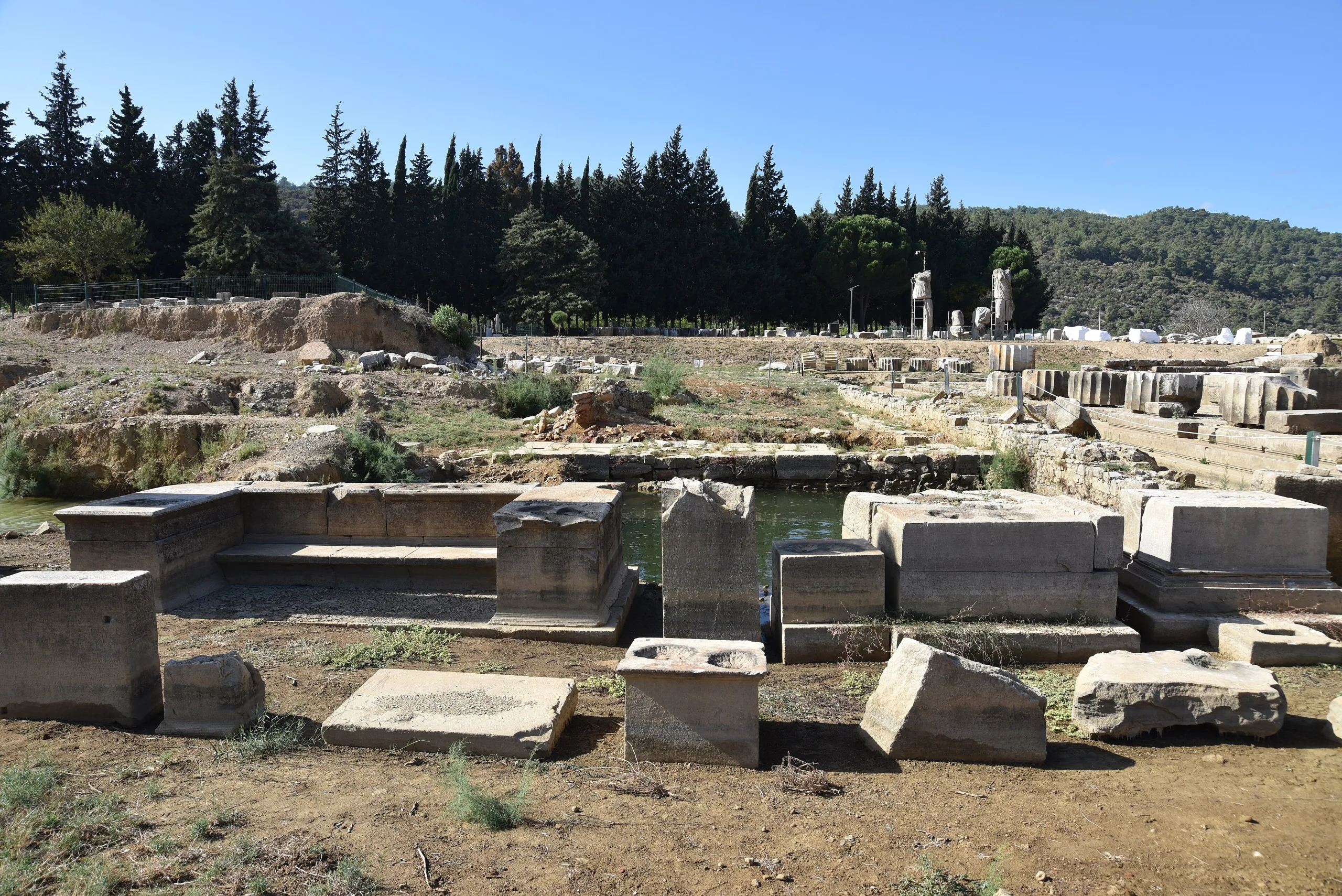
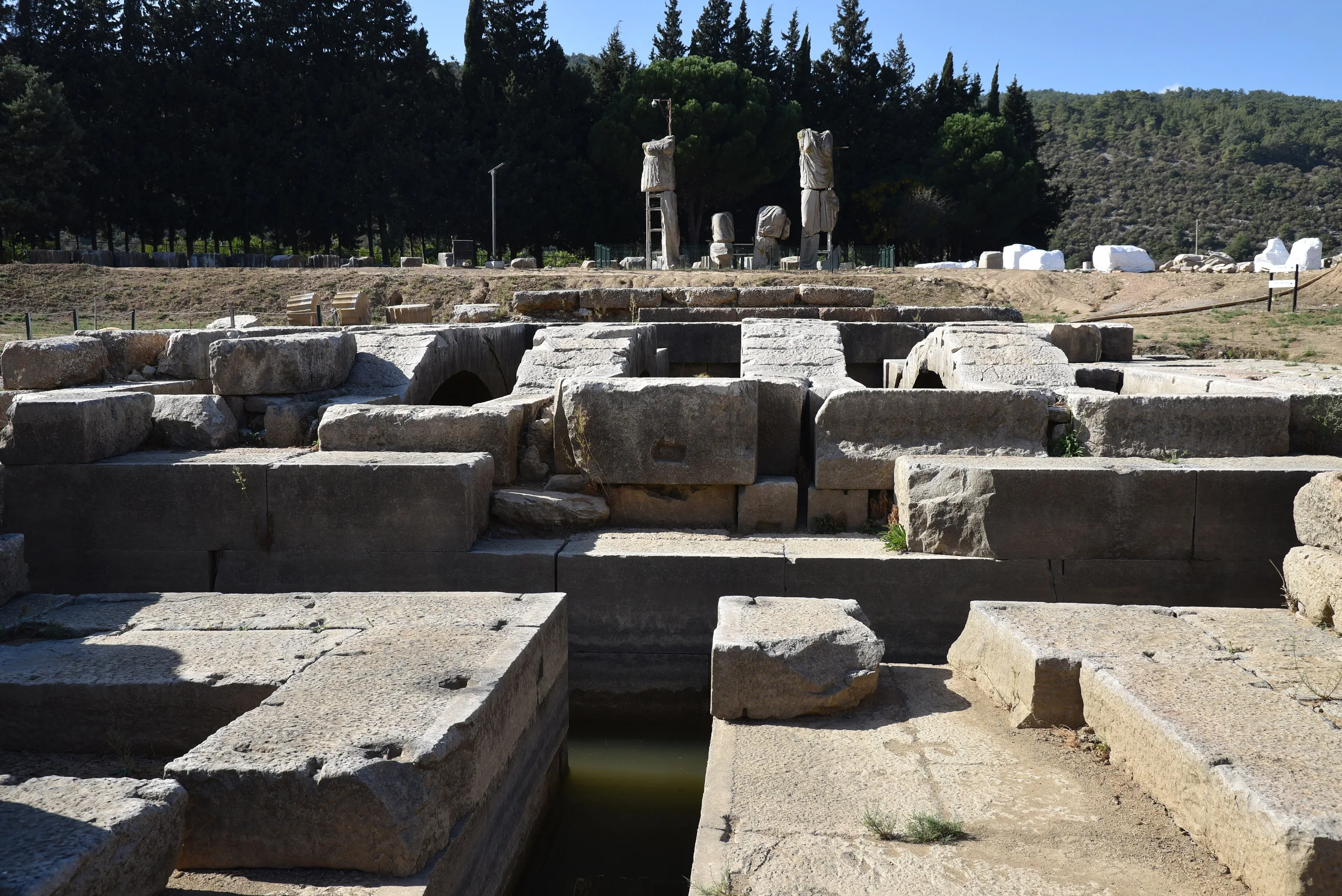
A Hellenistic altar stands 27 metres east of the temple and measures 9 by 18 metres; Koçhan gives 9.00 by 18.45 metres. Fragments recovered there show that its pair of sacrificial tables honoured Apollo on one and Dionysus on the other. The ministry's Turkish page calls the hundred-animal tethering block found here the first archaeological proof of that ritual, while the English page says it is the only block of its kind recovered from a sanctuary and that ancient writers often mention it.
Cult statues and inscriptions
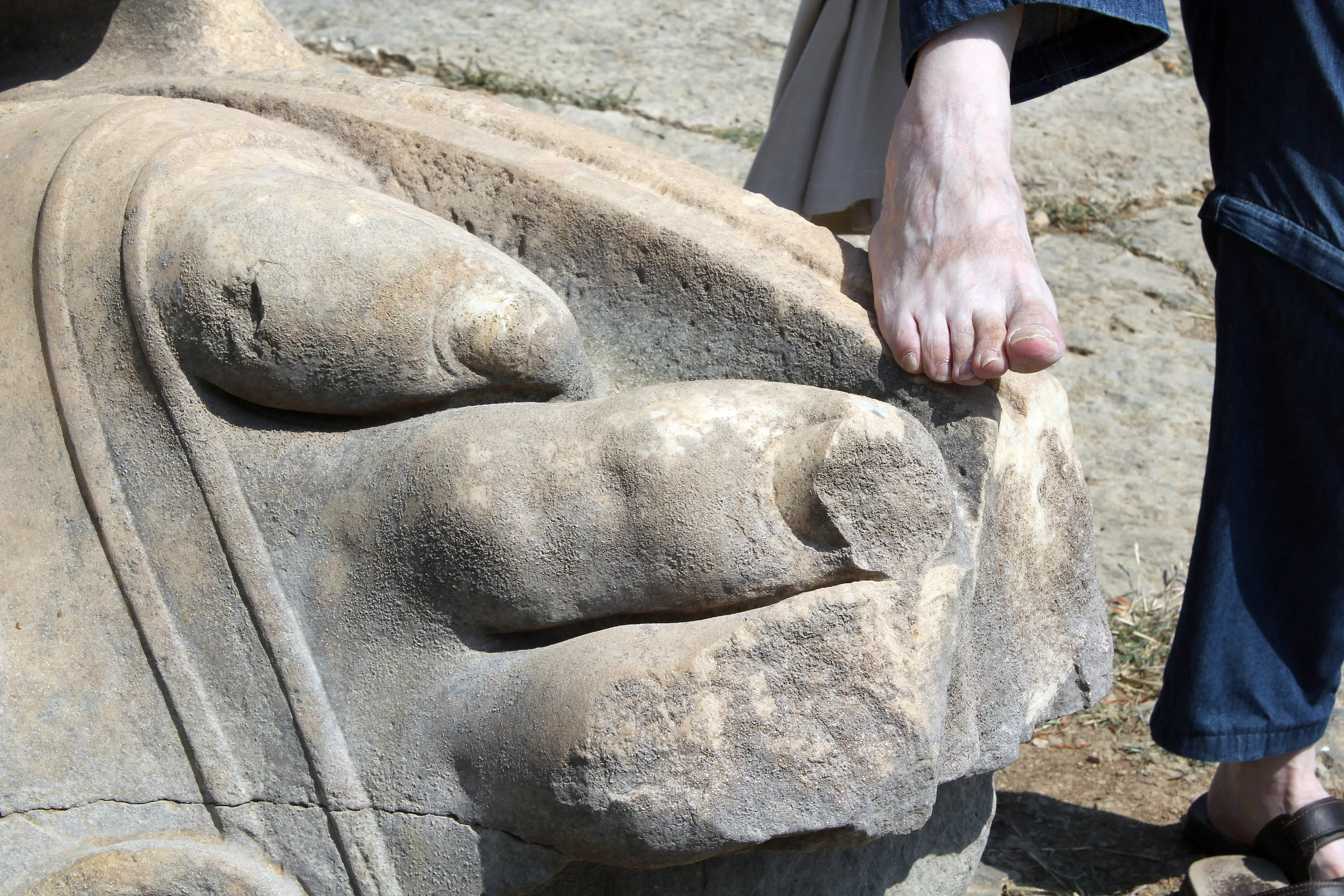
The cult statues of Apollo, Artemis and Leto stood about 8 metres tall and were found where they had fallen or stood, which the ministry stresses as unusual. Even the steps of the temple platform carry inscriptions, something the page says no other sanctuary can claim.
A figured anta capital
A figured anta capital attributed to the sanctuary is registered under number 3502 in the Izmir Archaeological Museum. Koçhan studies its figures and ornament to date a building phase of the temple or a structure connected with it.
The archaeopark
The ministry's English page adds that an archaeological park on site shows exact copies of the statues found at Claros together with a scaled model of the Hellenistic temple and its altar.
Visiting
Hours, fees and Museum Card validity can change, so check the ministry's official page for current details. The same page gives the contact details of the Ephesus Museum directorate, which looks after the site.
Gallery
Frequently asked questions
Where is Claros?
What was Claros used for?
Why is the Temple of Apollo notable?
What is the hekatomb?
How big were the cult statues?
What can visitors see?
Sources (12)
- Klaros Örenyeri / Claros Archeological Site (TR ve EN sayfalar) — T.C. Kültür ve Turizm Bakanlığı, Müzeler ve Ören Yerleri
- Klaros Apollon Kutsal Alanı’ndan Figürlü Ante Başlığı (N. Koçhan, Türk Arkeoloji Dergisi 51, 1997) — Türk Arkeoloji Dergisi / DergiPark
- Klaros (Pleiades place 599719) — Pleiades
Photo credits
- Photo: Carole Raddato, CC BY-SA 2.0 — Wikimedia Commons (resized)
- Photo: User:Nikater, CC BY-SA 4.0 — Wikimedia Commons (resized)
- Photo: Carole Raddato, CC BY-SA 2.0 — Wikimedia Commons (resized)
- Photo: Ingeborg Simon, CC BY-SA 3.0 — Wikimedia Commons (resized)
- Photo: Ingeborg Simon, CC BY-SA 3.0 — Wikimedia Commons (resized)
- Photo: Klaus-Peter Simon, CC BY-SA 3.0 — Wikimedia Commons (resized)
- Photo: Carole Raddato, CC BY-SA 2.0 — Wikimedia Commons (resized)
- Photo: Carole Raddato, CC BY-SA 2.0 — Wikimedia Commons (resized)
- Photo: Carole Raddato, CC BY-SA 2.0 — Wikimedia Commons (resized)