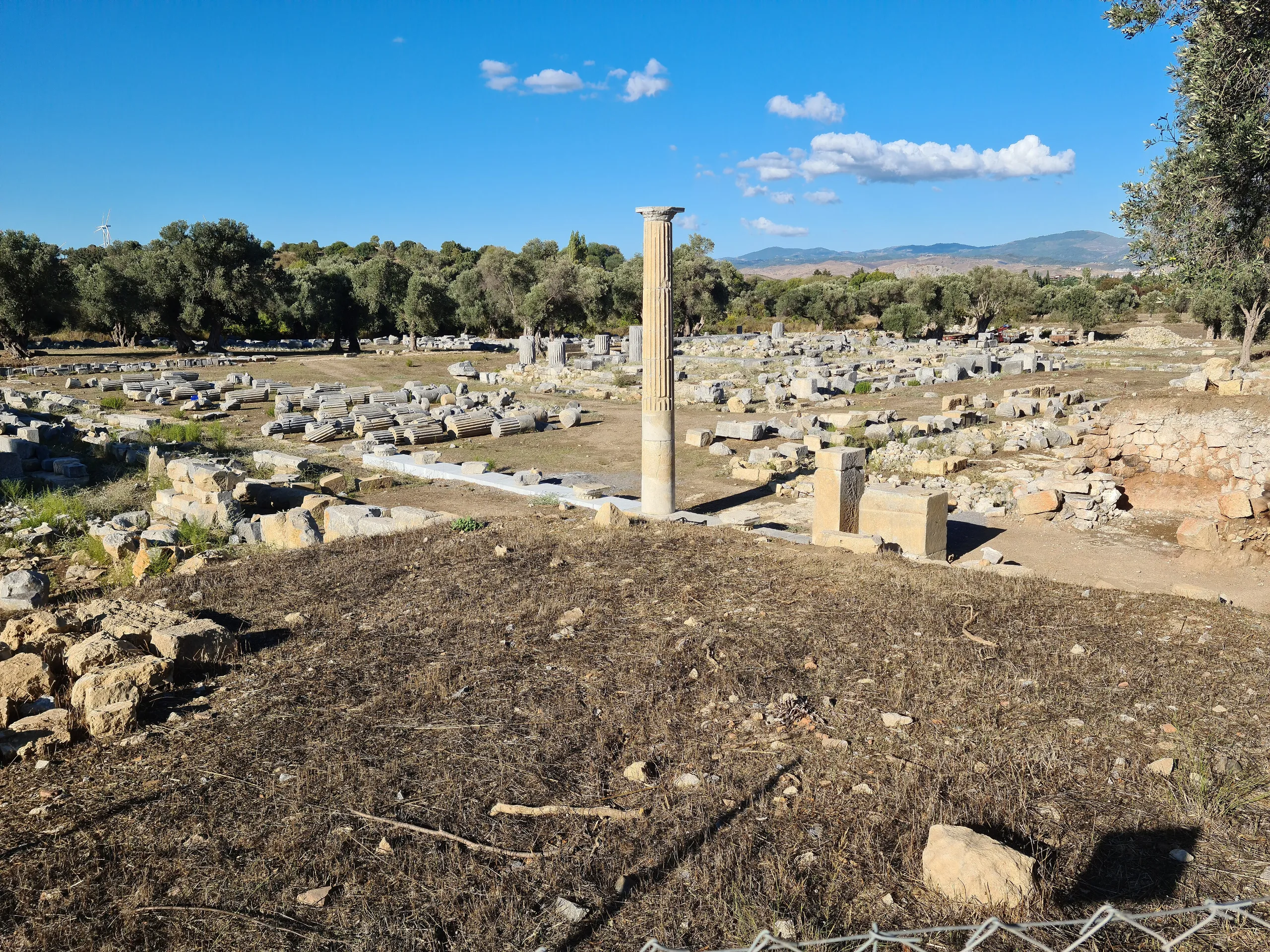
Teos is a two-harbour Ionian port city at Seferihisar, known for its Hellenistic wall, Temple of Dionysus, theatre and bouleuterion; Ankara University runs the excavation.
Teos is an ancient city located in Turkey, Izmir. Main periods: Archaic Period, Hellenistic Period, Roman Period.
Teos is an ancient port city in the Sığacık neighbourhood of Seferihisar, roughly 60 km south-west of Izmir. It grew up on a small peninsula called the Isthmos. The Culture Portal counts it among the twelve Ionian cities, says its living came mainly from maritime trade, and notes that it had two harbours, one large and one small.
Layout of the city
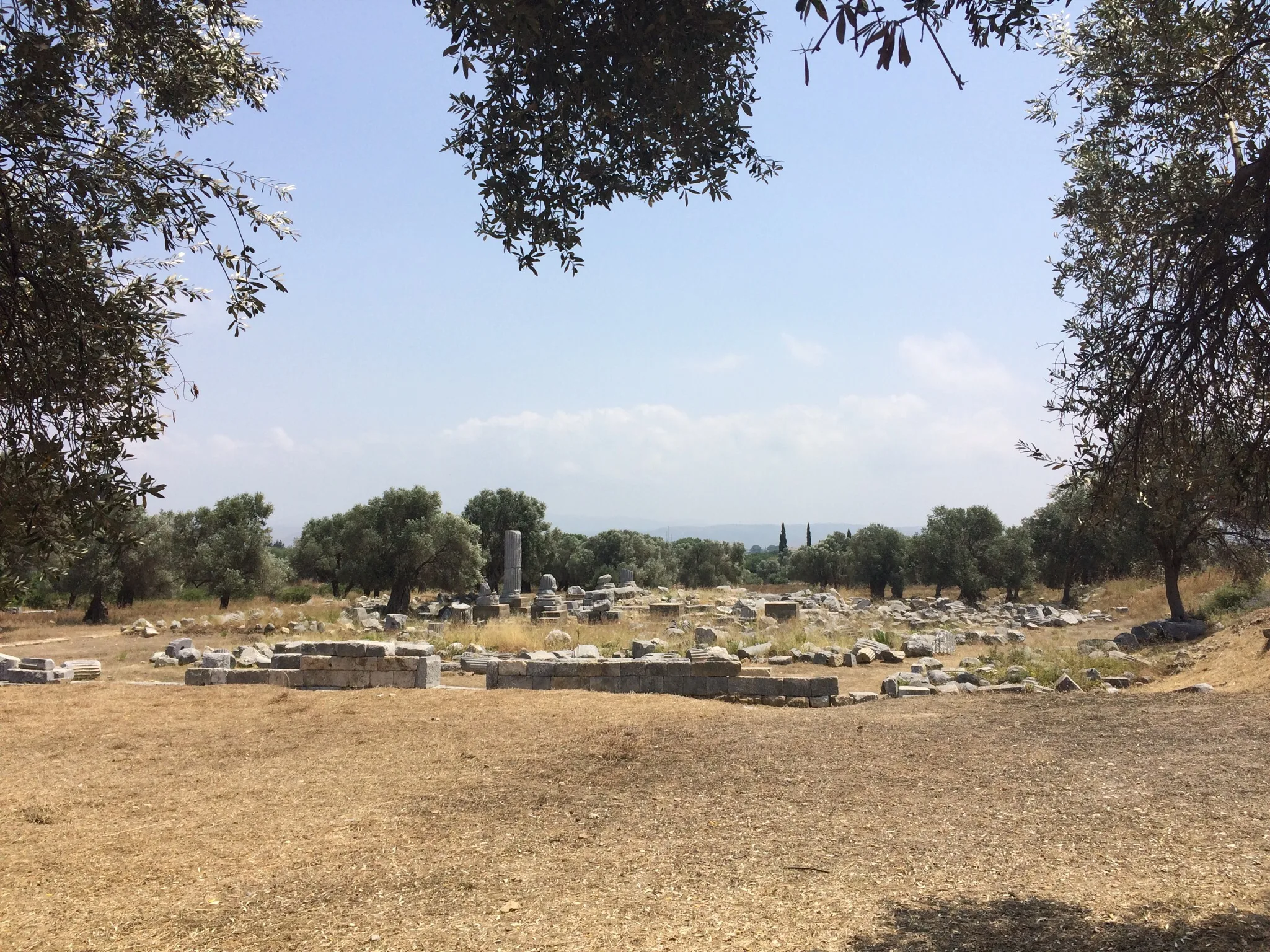
The acropolis rises on Kocakır Hill in the middle of the peninsula, with a harbour to its north and another to its south; the town spread out between the acropolis and the southern harbour. A very well preserved Hellenistic wall encloses this zone. The ministry's Turkish page gives the wall's length as about 6 km and its English page as about 3.7 km, and both describe a roughly 4 m thick structure of local limestone laid in regular courses. The ridges north-west of the acropolis were used in the Geometric and Archaic periods, while those to the south and south-west served as a Hellenistic and Roman cemetery.
History
Citing Strabo and Pausanias, the ministry's English page says Athamas founded the city and that the poet Anacreon called it Athamantis; excavation shows people living here from about 1000 BCE. The Culture Portal, for its part, follows some historians in dating the foundation to 1050-1000 BCE and names the founder as Athamas, son of Dionysus.
After the Persian commander Harpagos took the city, Herodotus reports, the whole population left in 543 BCE and founded Abdera in Thrace. Alexander the Great freed Teos in 334 BCE, and in 281 BCE it passed to the Seleucid kingdom, keeping its standing thanks to the privileges tied to the Dionysus temple. Under Attalos I (241-197 BCE) it came under Pergamon, and by the will of Attalos III it went to Rome as part of the province of Asia.
Main remains
The Temple of Dionysus and the artists' guild
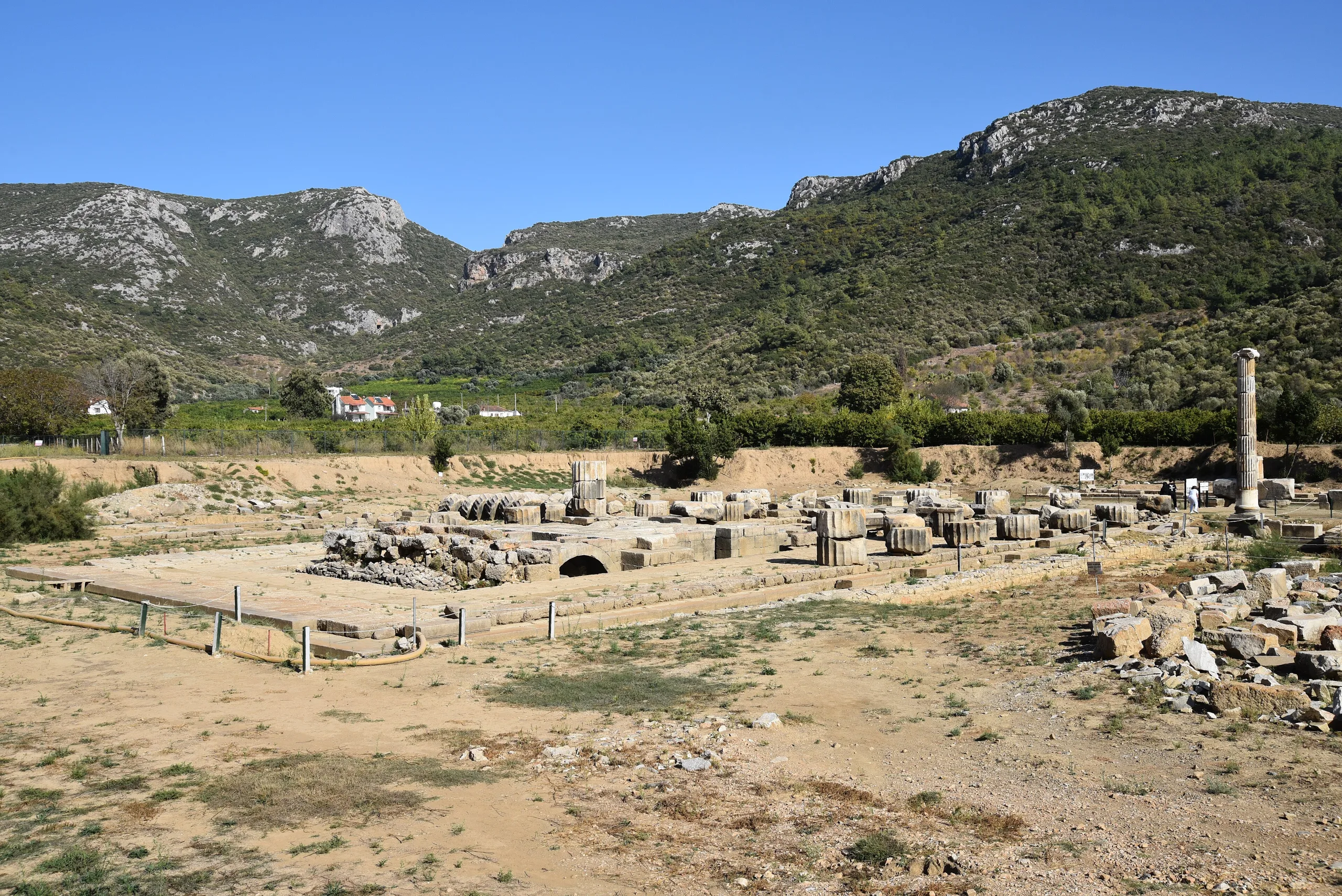
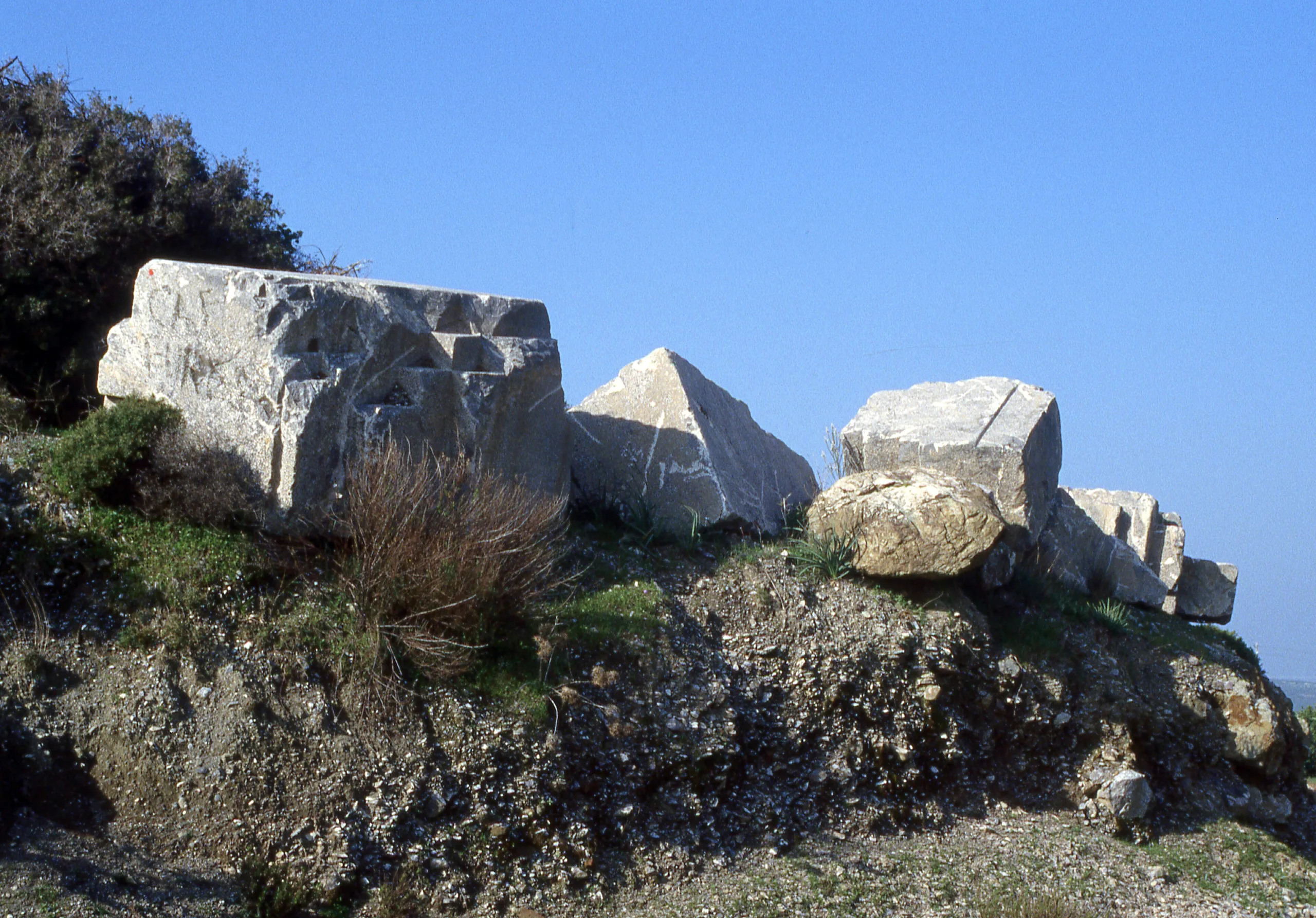
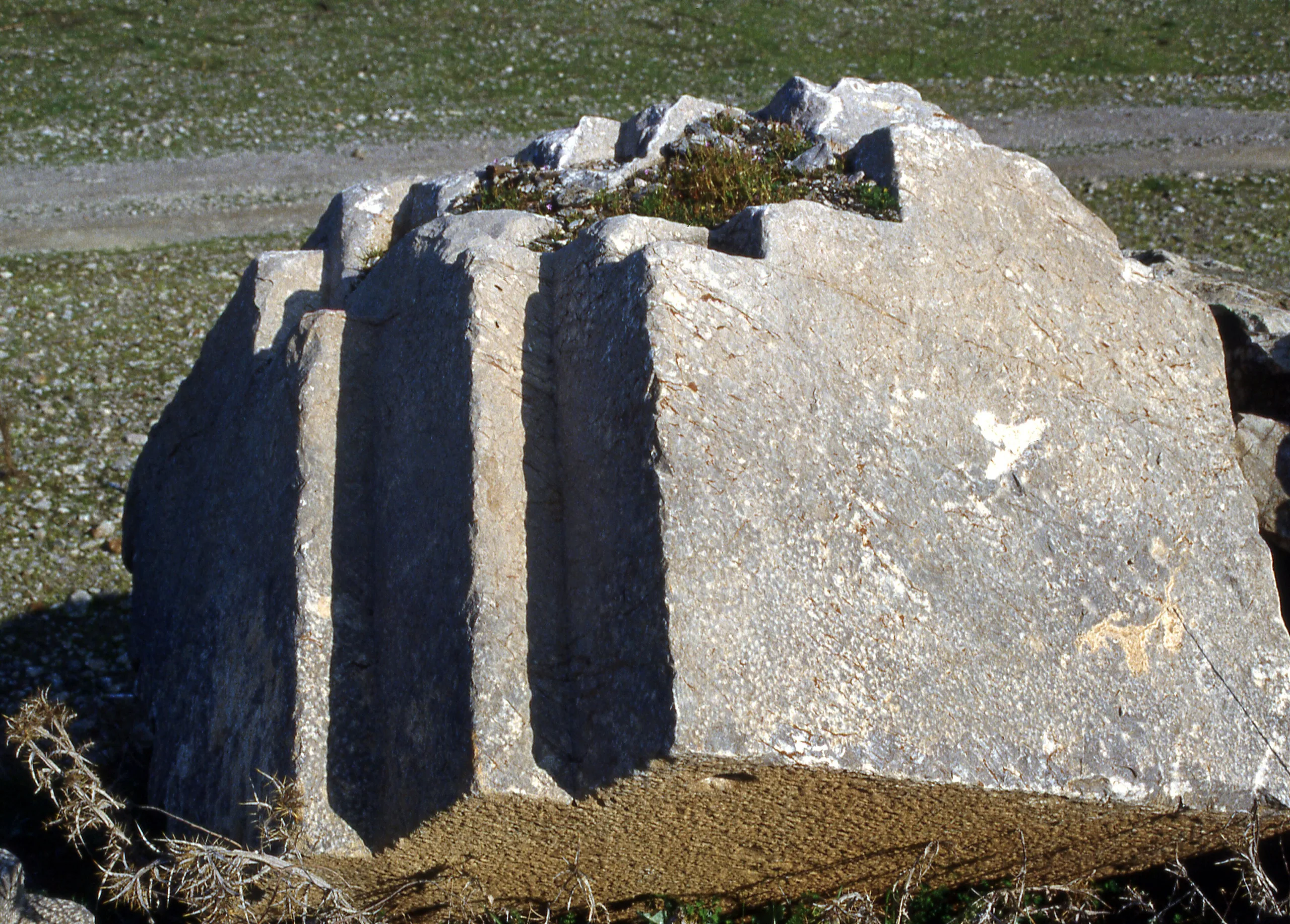
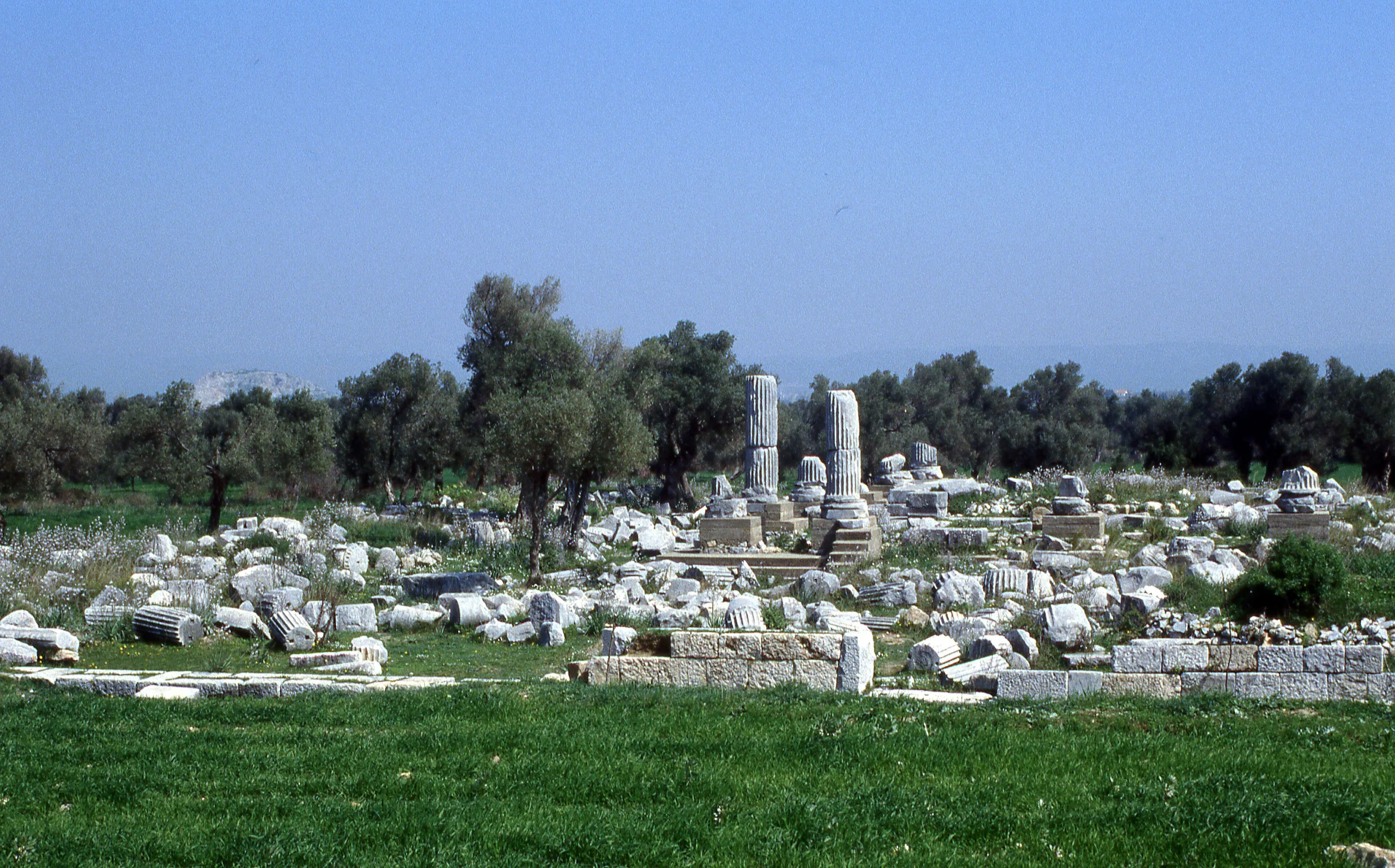
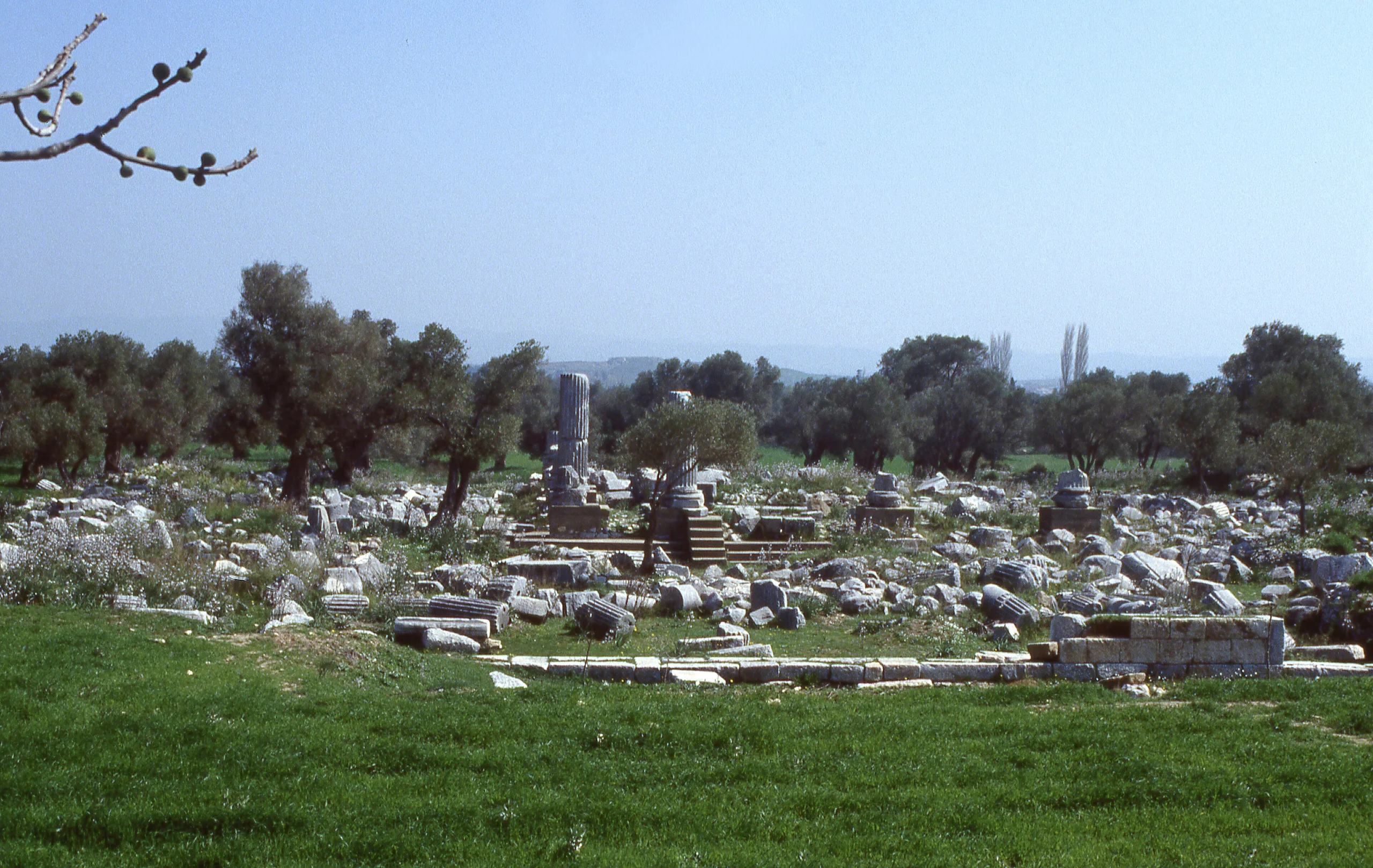
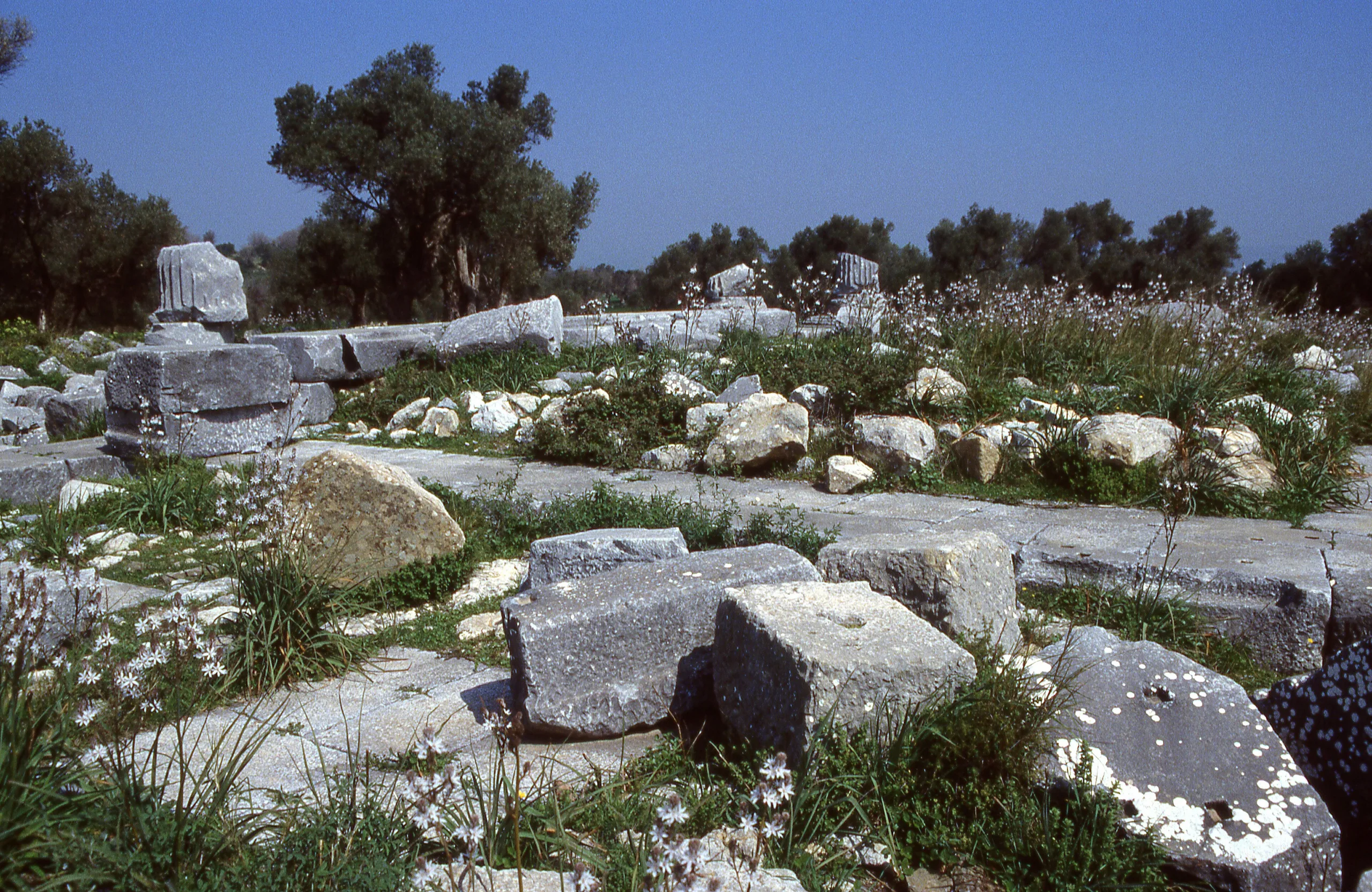
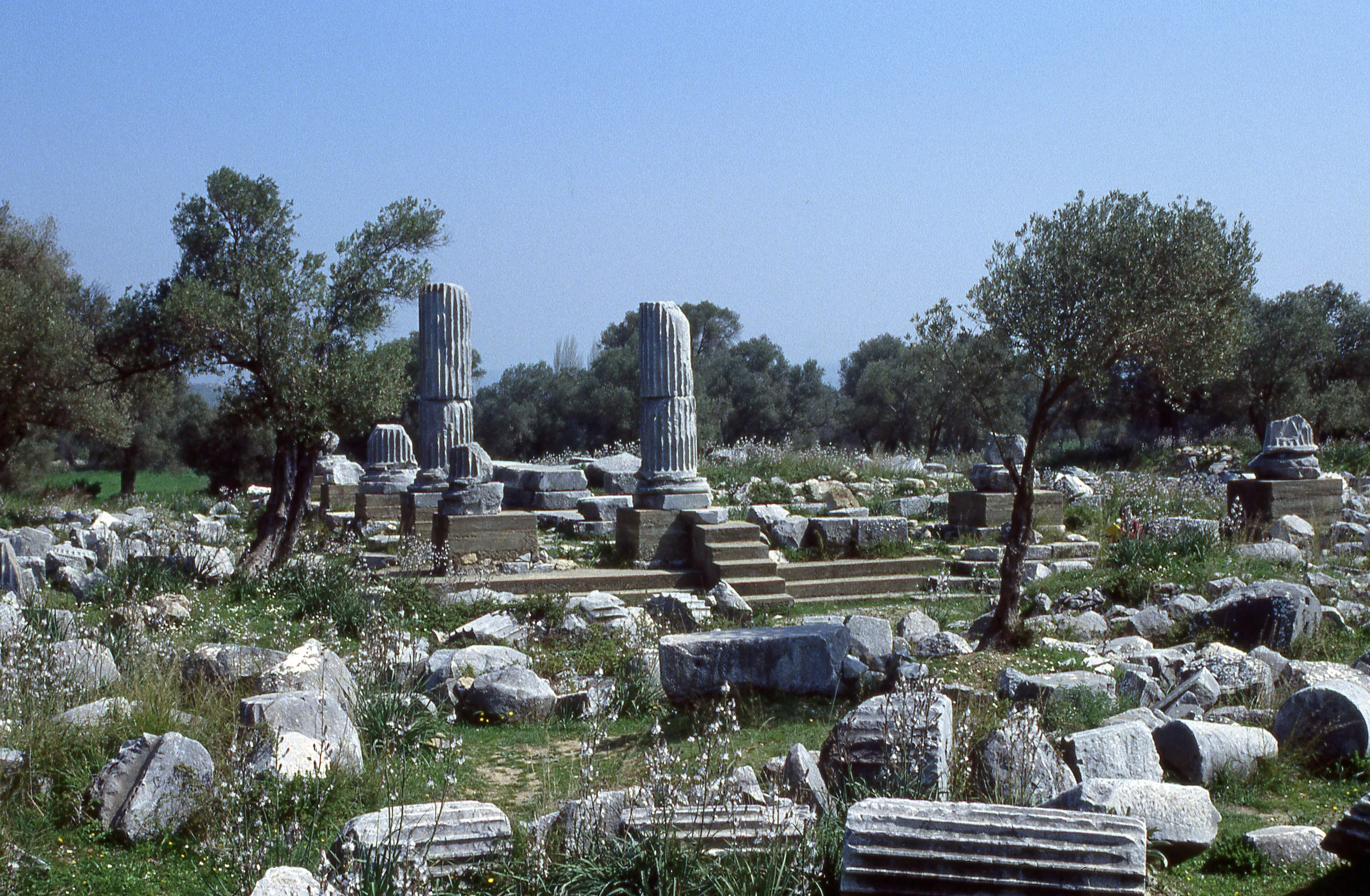
The ministry reports that Vitruvius names Hermogenes as the temple's architect; the Ionic building has 6 by 11 columns and was put up in three stages. The Culture Portal assigns it to the early 2nd century BCE, calls it the largest Dionysus temple in Anatolia, and adds that despite frequent Roman repairs it suffered badly from earthquakes. Because the cult mattered so much here, the guild of Ionian and Hellenespontine Dionysiac artists was set up at Teos: the ministry dates this to the later 3rd century BCE, the portal to near the century's end. The guild was later sent on to Ephesus, Myonnesos and Lebedos.
Theatre, bouleuterion and gymnasium
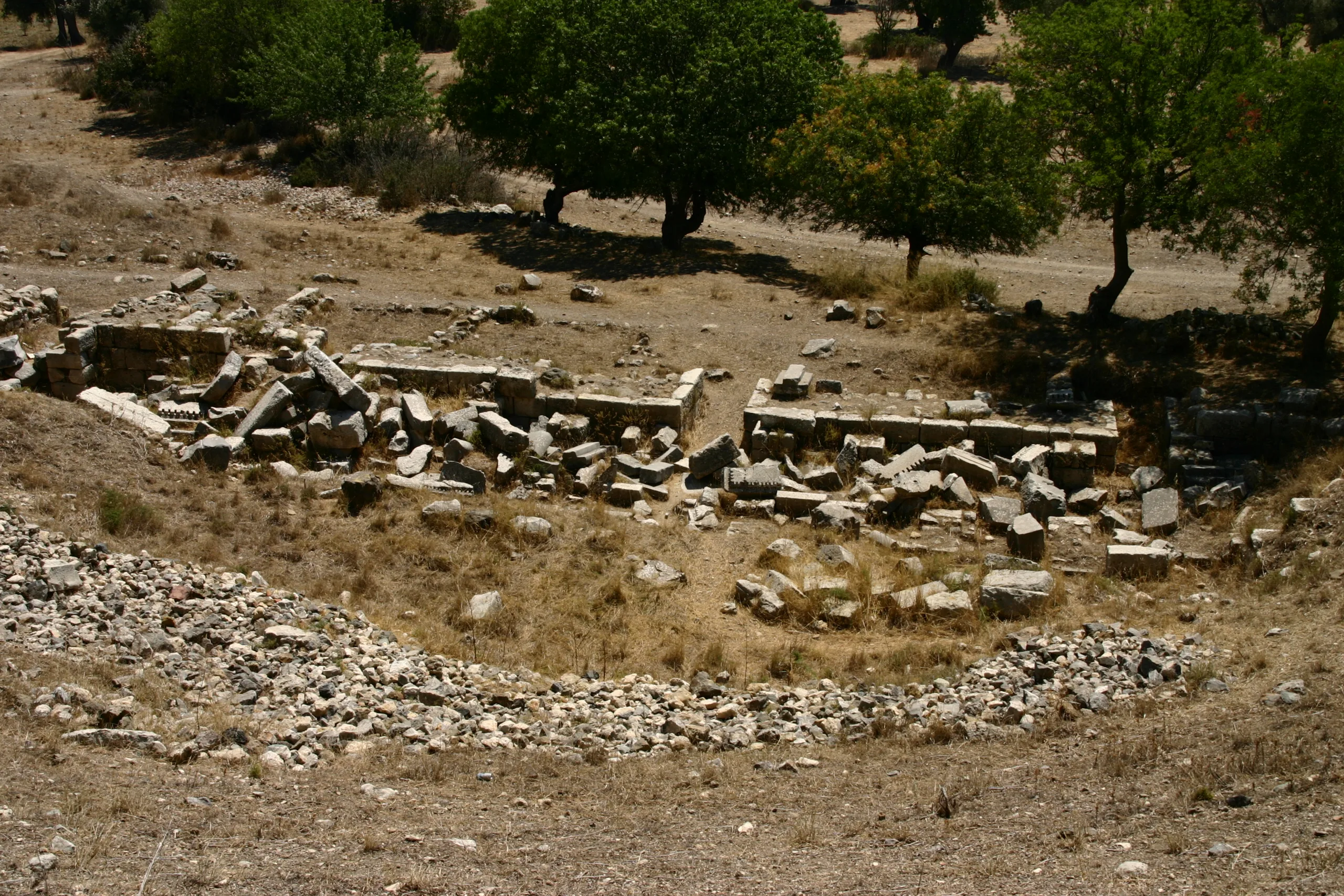
The theatre southeast of the acropolis follows the Greek tradition, though the lower and upper seating shows Roman-period traits. The semicircular bouleuterion has 16 rows, and its cavea is cut into four wedges. According to the portal, inscriptions reveal a three-class gymnasium with two sports instructors and one music teacher.
Harbours
The pier of the southern harbour survives in good condition. At the harbour's eastern end, beside the breakwater, stands a church with two apses.
Excavations
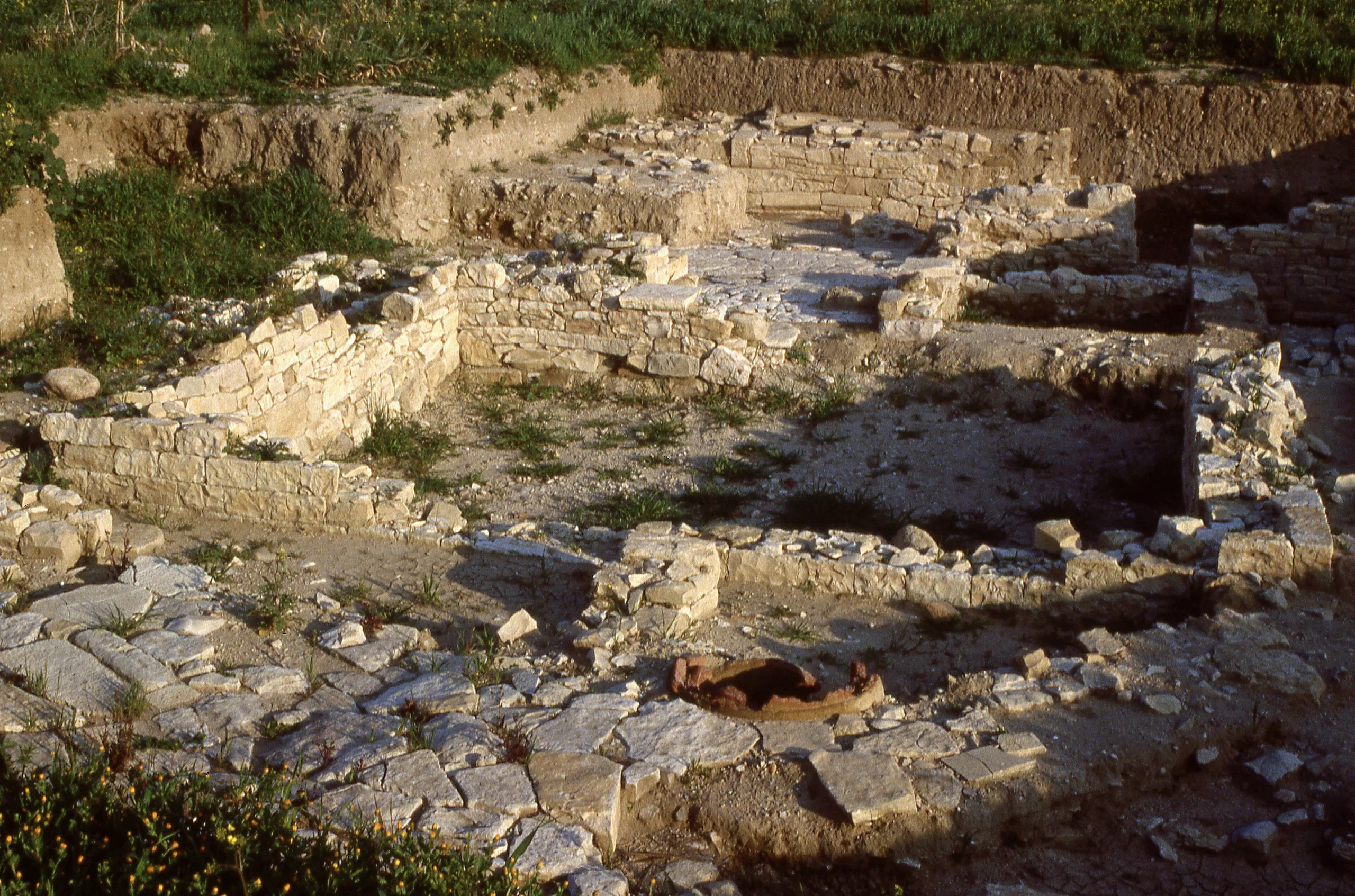
The Culture Portal says the first archaeological investigations took place in 1764-1765 and that Ankara University has carried out excavation, recording and restoration since 2010. In the report that director Musa Kadıoğlu and colleagues presented at the 42nd Excavation Results Meeting, the 2021 season ran from 23 March to 17 December, about nine months; the dig had been chosen in 2019 among the first twenty excavations of the ministry's heritage directorate to work year-round. That season concentrated on the Dionysus sanctuary, the agora, the temple of Roma and Augustus, the bouleuterion and the gates of the west wall.
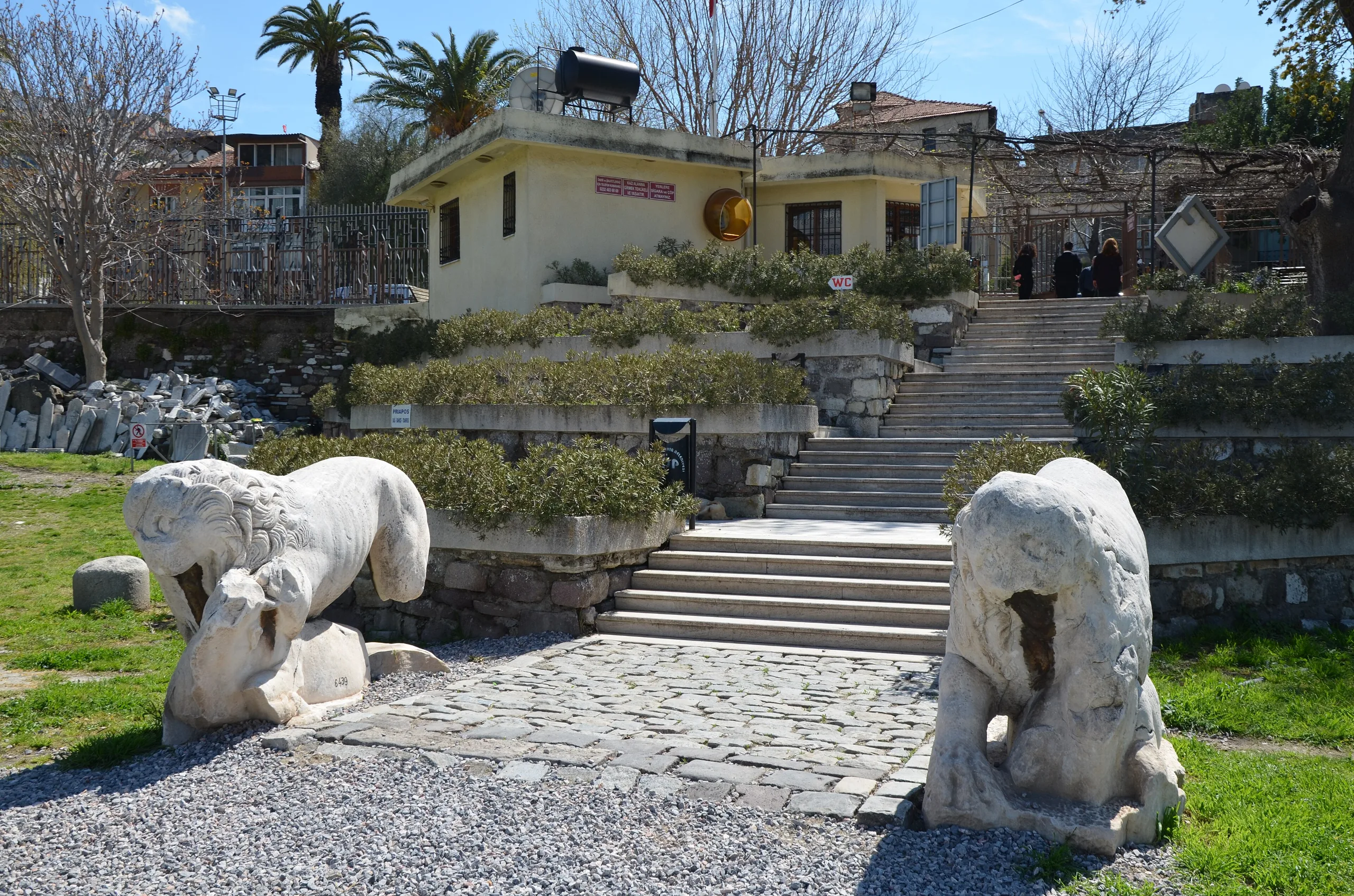
At the bouleuterion the team uncovered about 15 m of a street 4.05 m wide at its western end. A monograph on Teos edited by the director, summarising ten years of work, appeared in Turkish and English that December. Finds from the excavations are displayed in the Izmir Archaeological Museum.
Visiting
The ministry's Turkish page states that the Museum Card is valid for Turkish citizens. For hours and fees, consult the official page.
Gallery
Frequently asked questions
Where is Teos?
Why was Teos important?
Who designed the Temple of Dionysus?
How long is the Hellenistic wall?
Is Teos still being excavated?
Is the Museum Card valid at Teos?
Sources (13)
- Teos Örenyeri / Teos Archaeological Site (TR ve EN sayfalar) — T.C. Kültür ve Turizm Bakanlığı, Müzeler ve Ören Yerleri
- Teos Antik Kenti - İzmir (kaynak: İzmir İl Kültür ve Turizm Müdürlüğü) — T.C. Kültür ve Turizm Bakanlığı, Türkiye Kültür Portalı
- 2021 Yılı Teos Çalışmaları (12. Sezon), 42. Kazı Sonuçları Toplantısı Cilt 4 (M. Kadıoğlu ve ark.) — T.C. Kültür ve Turizm Bakanlığı, Kültür Varlıkları ve Müzeler Genel Müdürlüğü / Ankara Üniversitesi Teos Kazısı
- Teos (Pleiades place 550913) — Pleiades
Photo credits
- Photo: Vadimph, CC BY-SA 4.0 — Wikimedia Commons (resized)
- Photo: Philipp Pilhofer, CC BY-SA 3.0 — Wikimedia Commons (resized)
- Photo: Kadı, CC BY-SA 4.0 — Wikimedia Commons (resized)
- Photo: Mark Landon, CC BY 4.0 — Wikimedia Commons (resized)
- Photo: Mark Landon, CC BY 4.0 — Wikimedia Commons (resized)
- Photo: Mark Landon, CC BY 4.0 — Wikimedia Commons (resized)
- Photo: Mark Landon, CC BY 4.0 — Wikimedia Commons (resized)
- Photo: Mark Landon, CC BY 4.0 — Wikimedia Commons (resized)
- Photo: Mark Landon, CC BY 4.0 — Wikimedia Commons (resized)