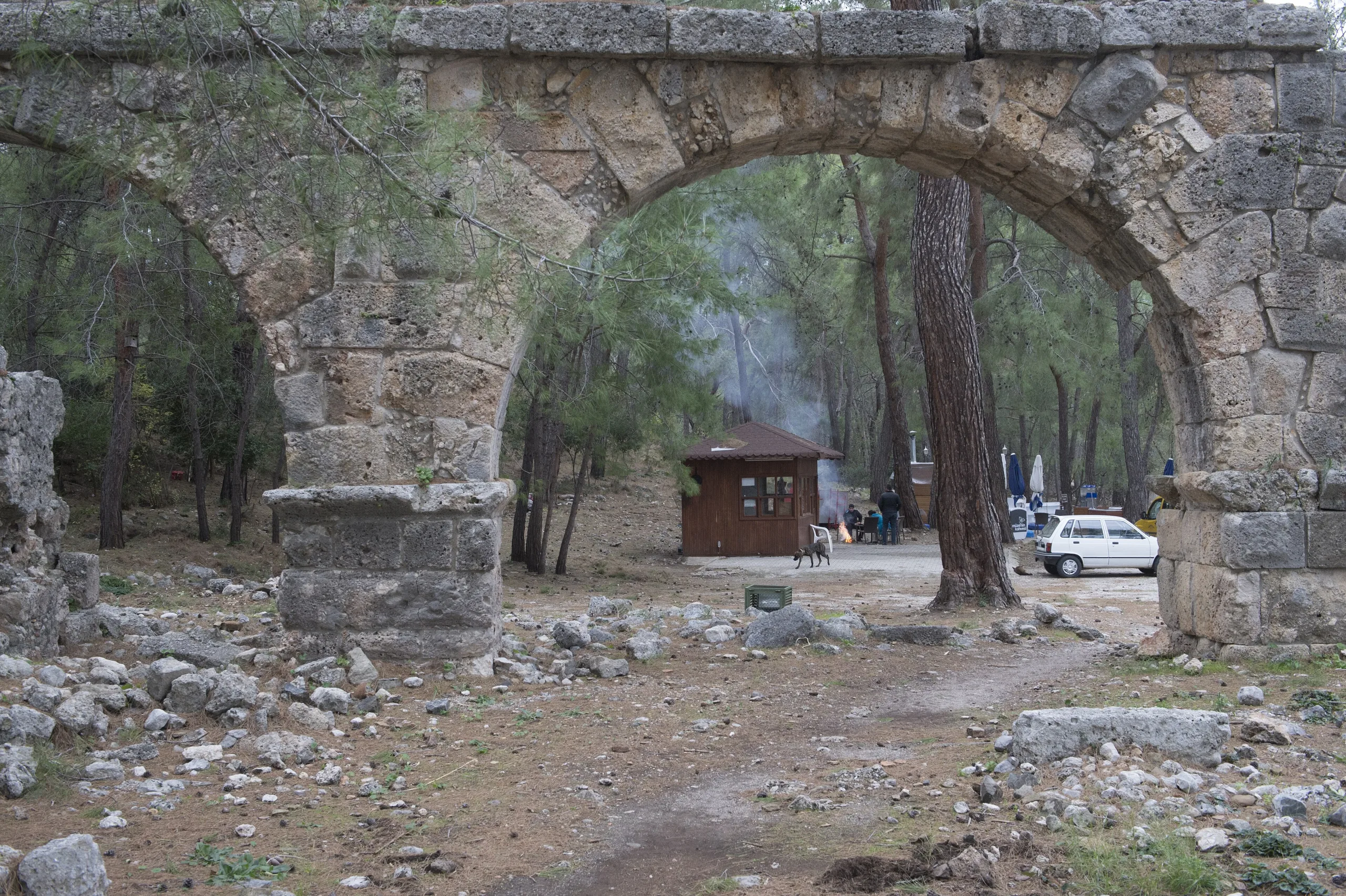
A 125 m paved street links two of Phaselis's three harbours; Roman aqueducts, a small theatre and Hadrian's gateway stand in the pine woods of this Lycian coast port.
Phaselis is an ancient city located in Turkey, Antalya. Main periods: Archaic Period, Hellenistic Period, Roman Period, Byzantine Period.
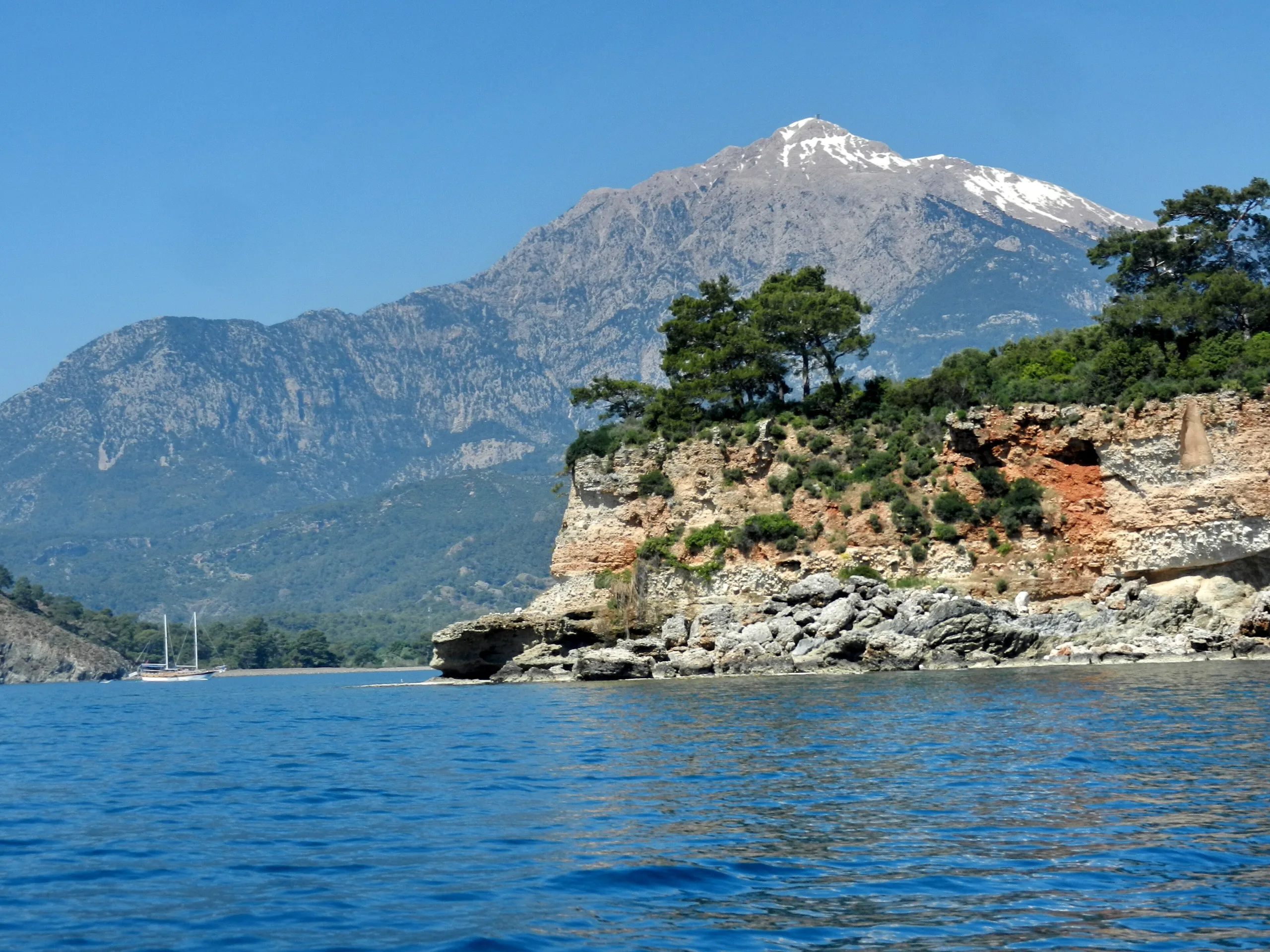
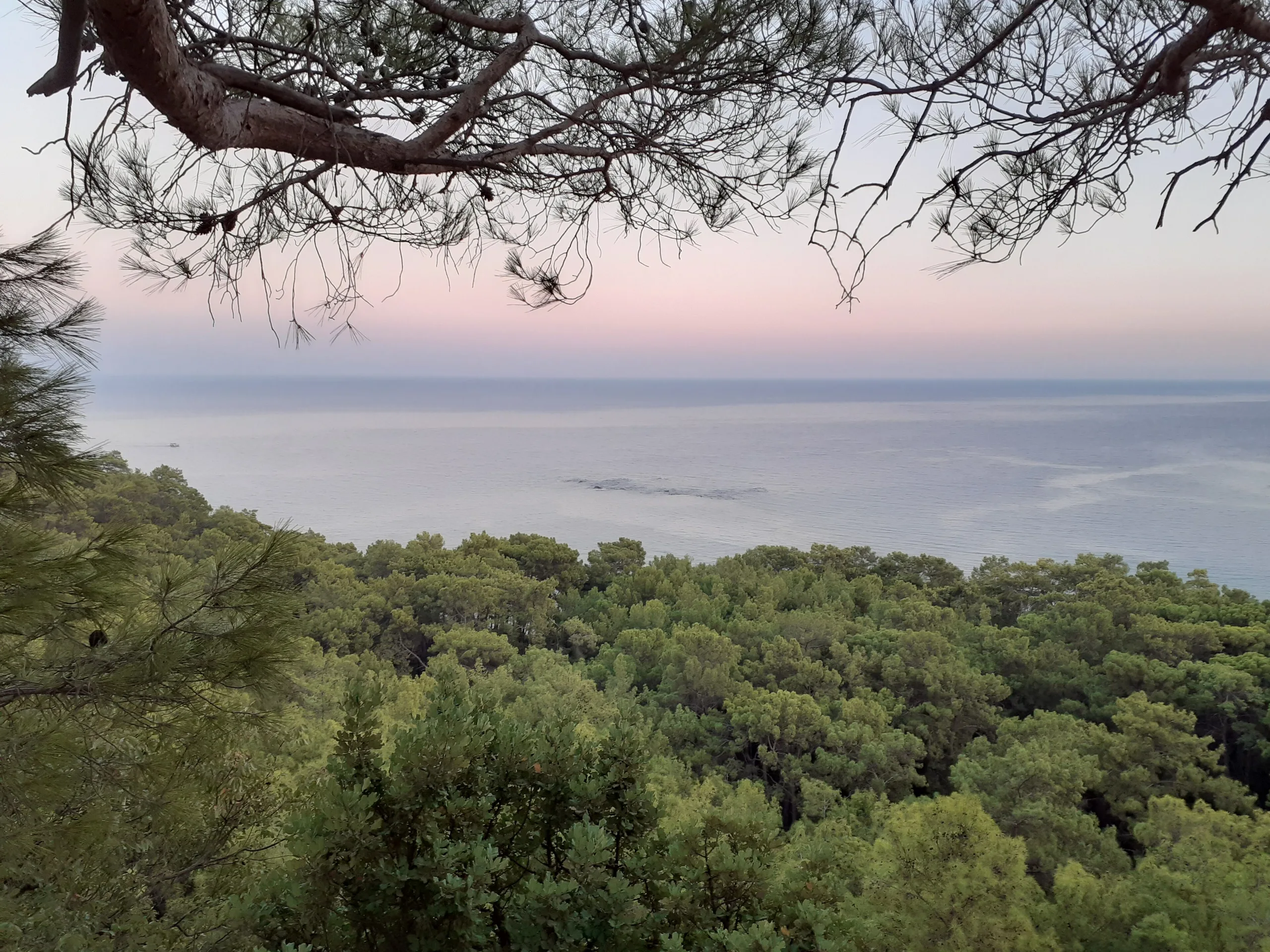
A paved street 125 m long and 20 m wide runs through the pines and joins two of Phaselis's harbours. Visitors climb onto its pavements by three steps, and under the paving a sewage and drainage system still lies buried. The city sits on a narrow peninsula in Tekirova, in Antalya's Kemer district, and for a long time it was one of the busiest ports on the eastern Lycian coast.
Setting
The site lies at Tekirova and can be reached by bus from Antalya towards Kemer and Tekirova. Pine trees shade much of the ground among the ruins, which helps in summer. A cable car from a nearby station climbs Tahtalı Mountain towards Olympos Beydağları Coastal National Park, and many visitors pair the two. Opening conditions and current notices are on the official page.
History
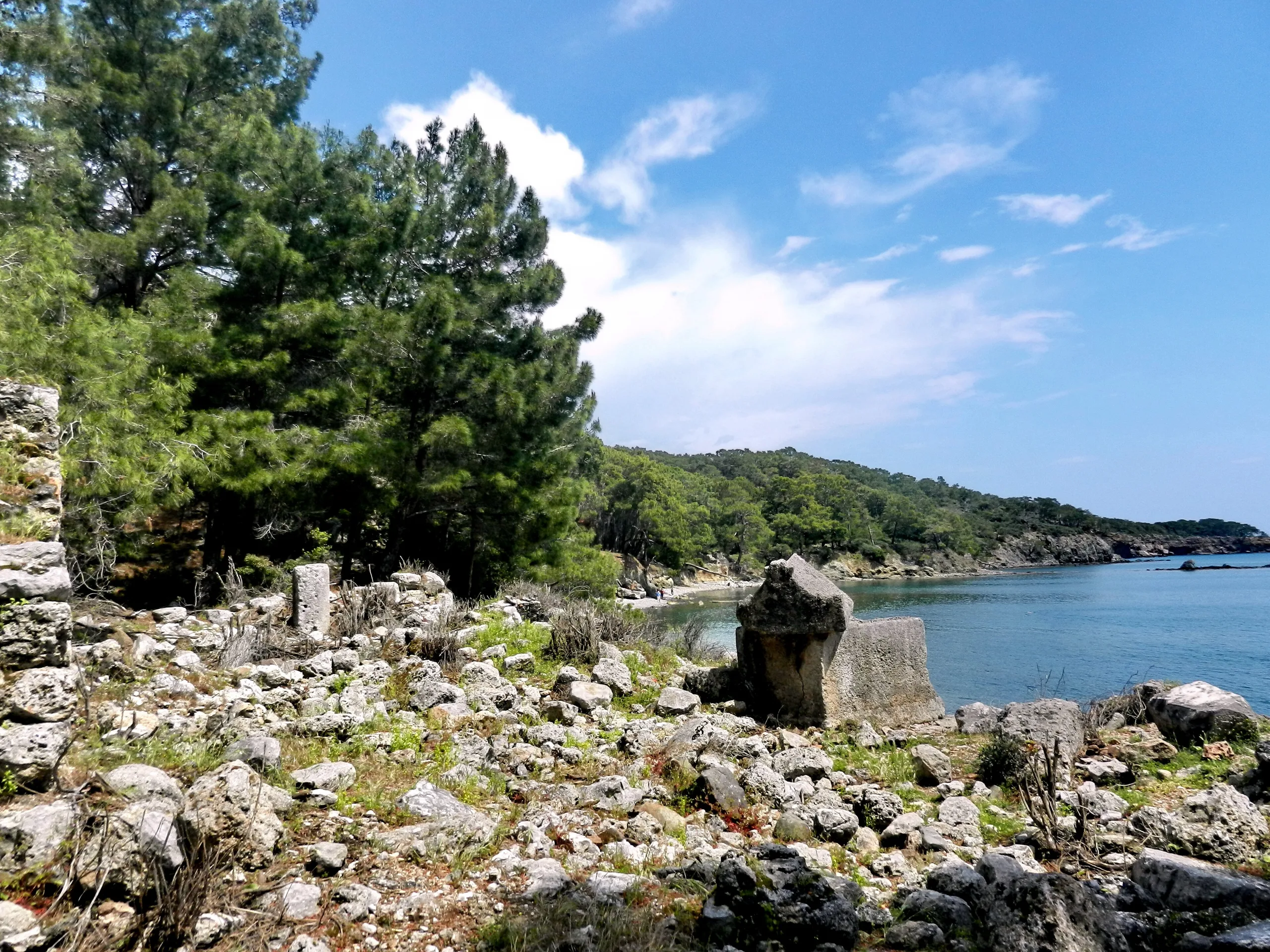
Rhodian colonists are said to have founded the city. Most accounts say the 7th century BCE, and some give 690 BCE exactly. The founding legend has the locals offering the newcomers grain or dried fish, and the settlers asking for fish. The three harbours lay on the north, north-east and south-west shores of the peninsula; they are also listed as north, central (the war harbour) and south. Harbours, agoras and ships on the coinage all point to a living made at sea. Phaselis is called Lycian by some writers and Pamphylian by others, since it sat on the border between the two.
Persians held it in the 5th century BCE, followed in the 4th by Mausolos, satrap of Caria, and then by Perikles, king of neighbouring Limyra. In 333 BCE the people threw open their gates and welcomed Alexander the Great with a golden crown; he is also said to have stayed a month. Control changed hands several times after that. In 167 BCE the city joined the Lycian League and struck its coins. Pirate raids, shared with Olympos, preceded the arrival of Roman rule in 43 BCE, which opened a rebuilding phase and at least three centuries of prosperity.
Emperor Hadrian came in 129 CE. The single-arched monumental gateway at the entrance to the main street from the south harbour was put up in memory of that visit. In Byzantine times Phaselis was a bishopric and appears among the cities at the Council of Chalcedon in 451. Arab raids shook it in the 7th century and a revival followed in the 8th. After a Seljuk siege in 1158, earthquakes and harbours that no longer worked, the town lost its weight and was fully empty by the early 13th century.
What stands today
Main street and square
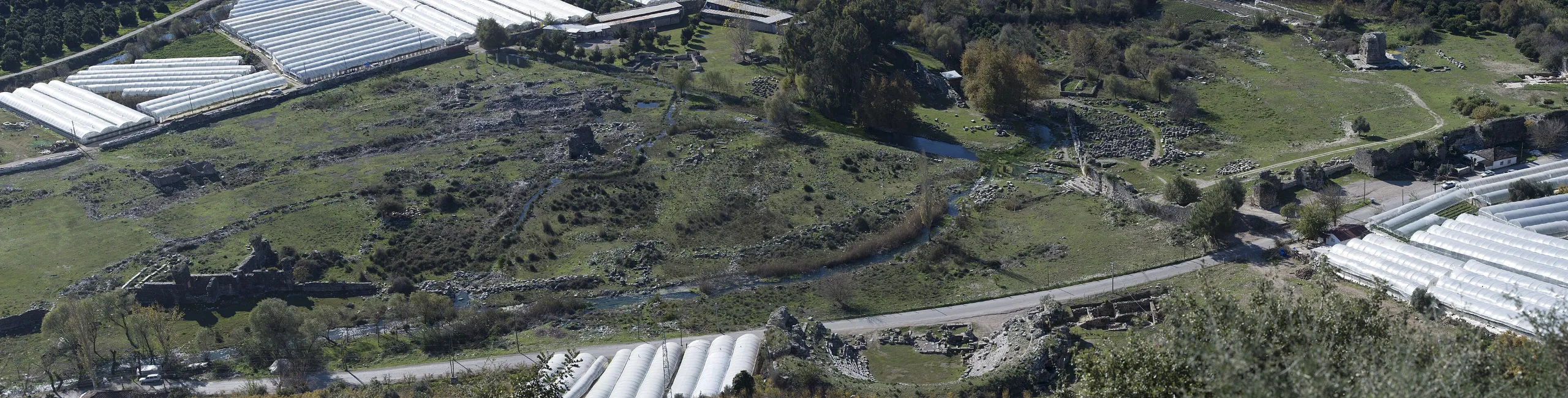
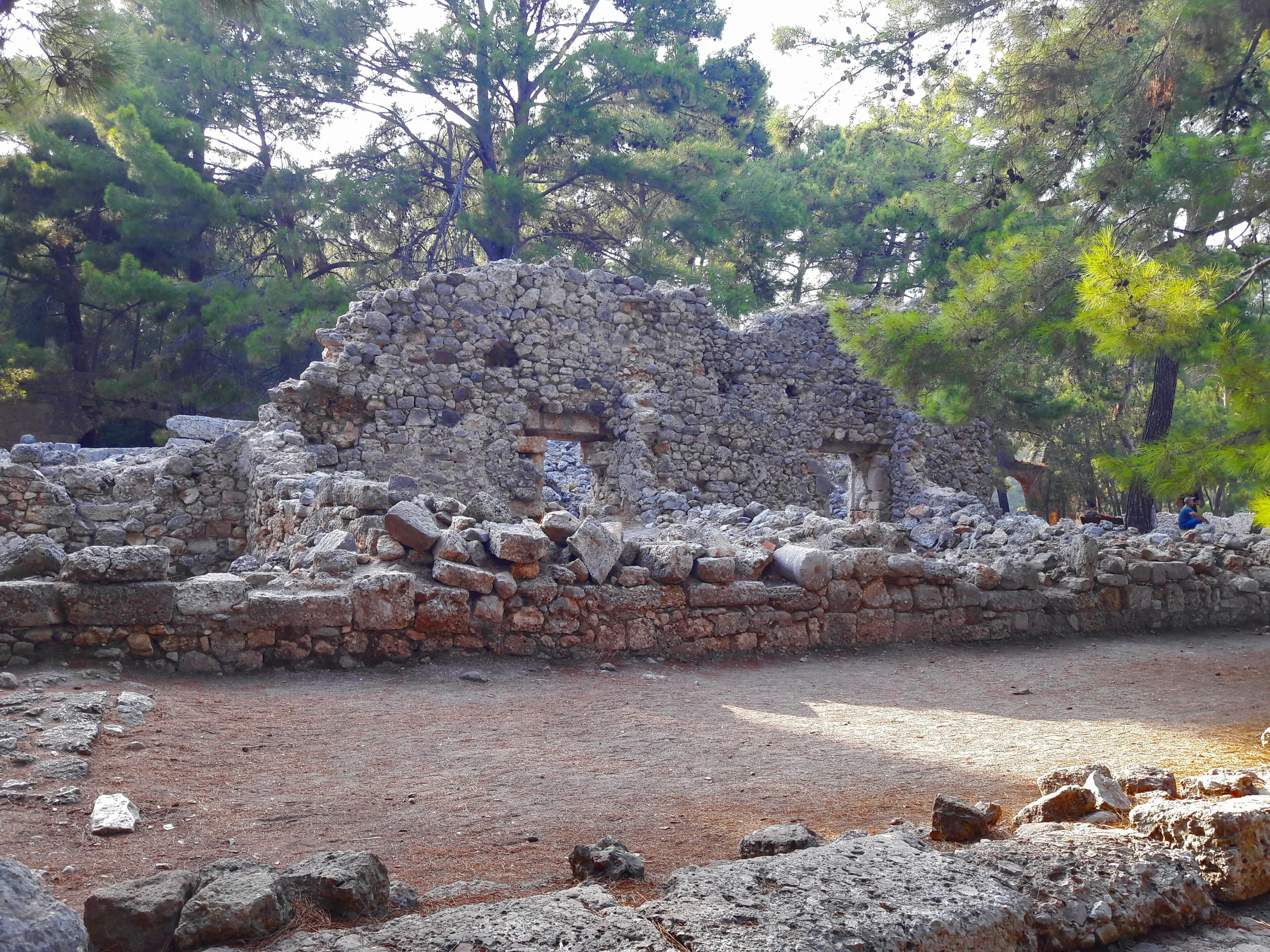
Most of the surviving remains are Roman or Byzantine and are strung along both sides of the street between the north and south harbours. Between the agora and the theatre it widens into a small square, and steps at the south-east corner lead up to the theatre and the acropolis, the high ground of the city. Figures for the street's width range from 20 to 25 m.
Theatre, agoras and baths
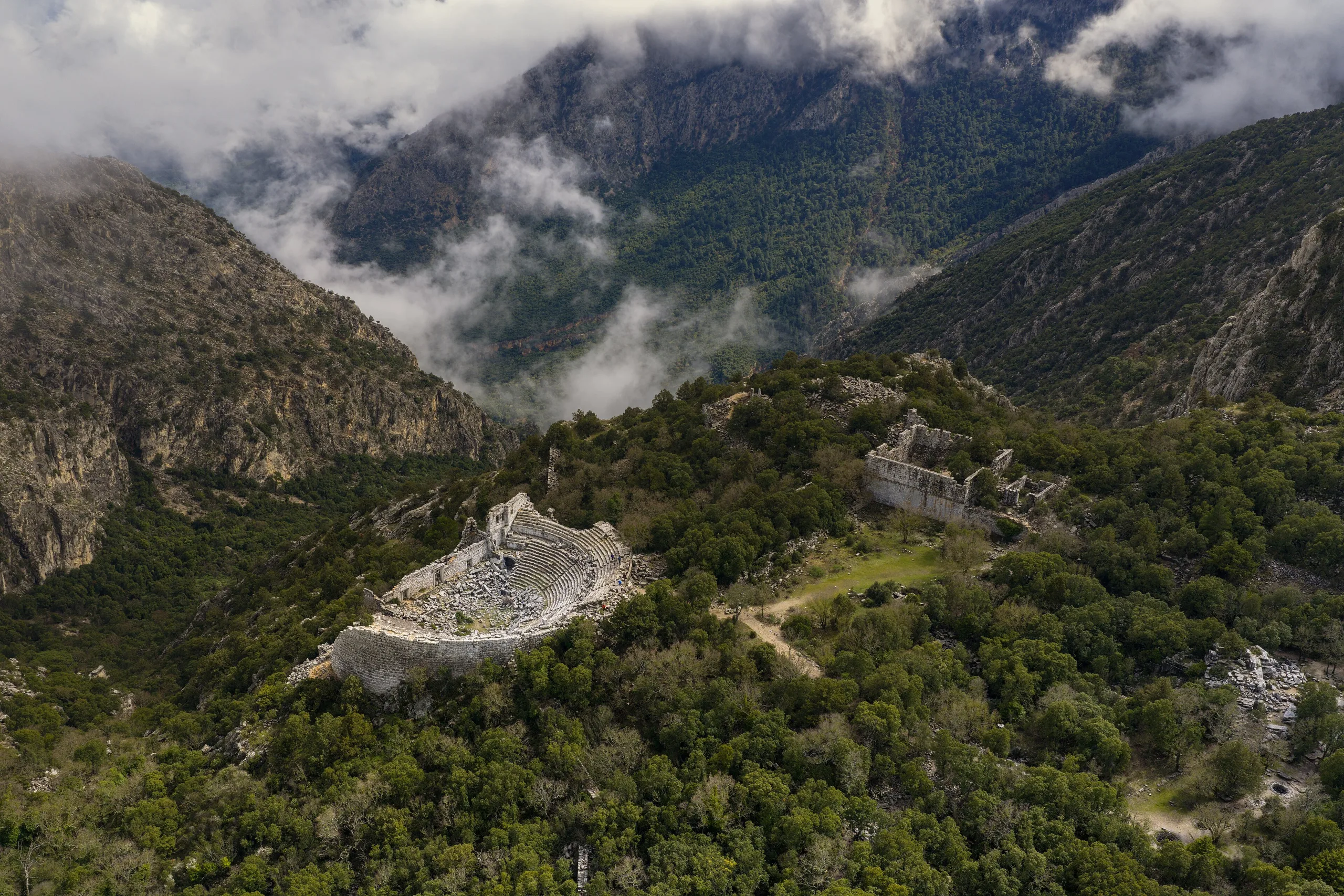
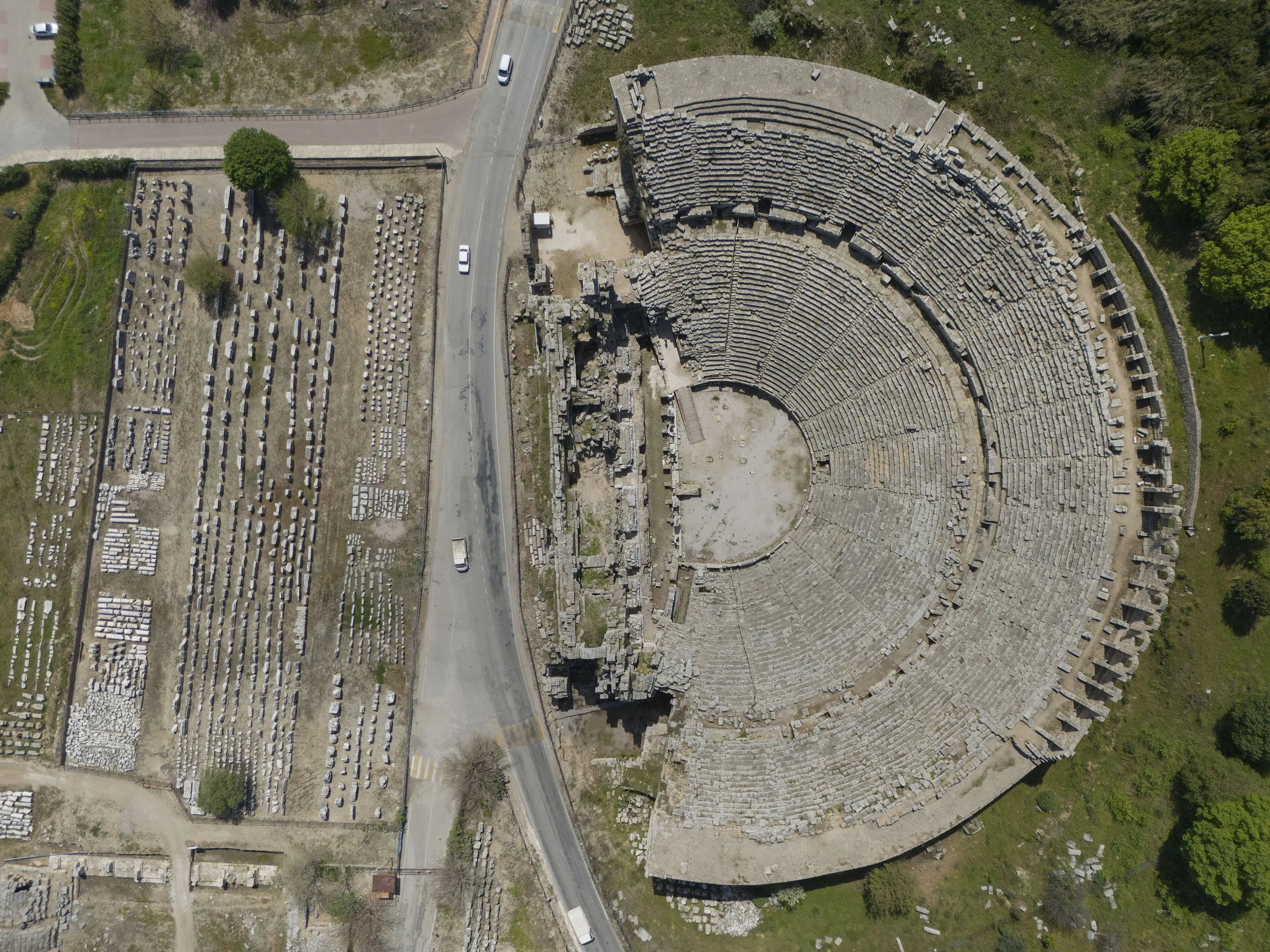
The theatre is a small, typical Hellenistic one. A stage building was added under Rome, and in late Byzantine times part of its wall was built into new defences. Three agoras, the open trading squares, lie within the city: one opposite the theatre and two on the right of the road to the south harbour. Inside the one facing the theatre are the remains of a small Byzantine basilica. Of the two baths on the square, the smaller shows how a Roman bath was heated.
Aqueducts and walls
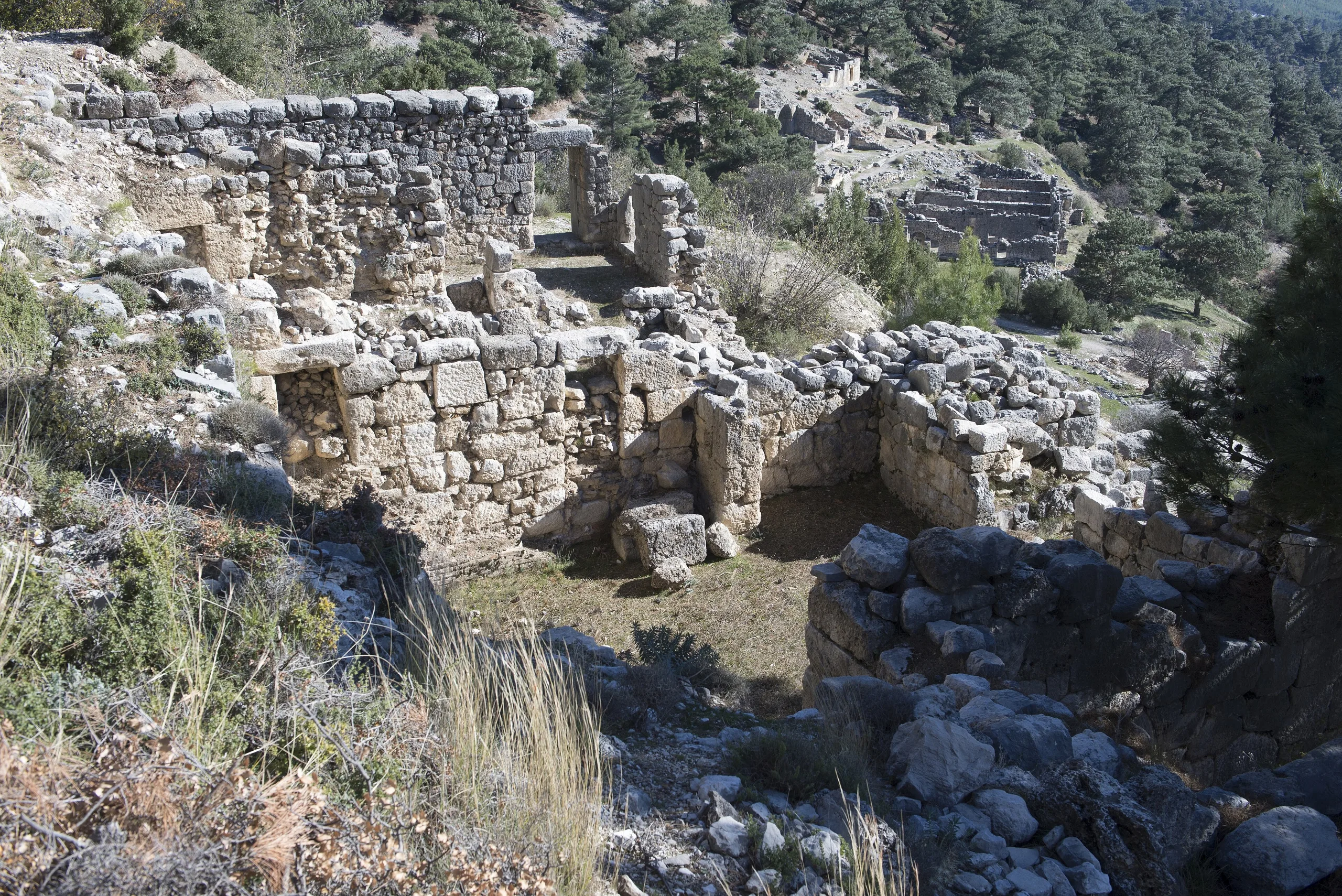
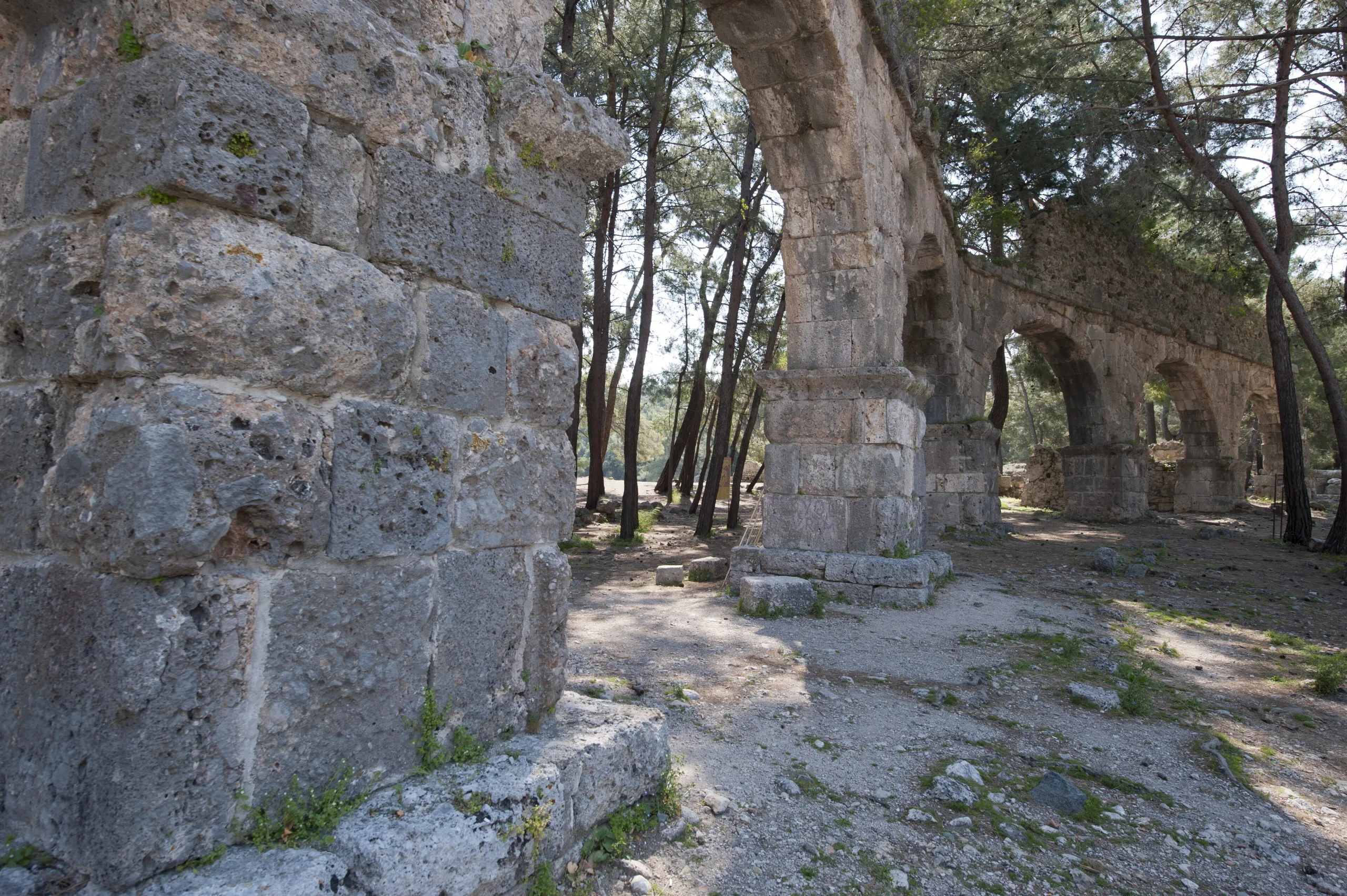
The aqueducts are the most monumental survivors. At first the city made do with wells and cisterns; the Romans then brought in water on arches from a spring on the northern hill and spread it through clay pipes and channels. To the right of the bend at the site entrance stand an old wall of the 3rd century BCE and foundations that may belong to a temple or monumental tomb. The walls along the shore are read as a defence against pirates, and the slope behind the north harbour was the cemetery.
Excavation and survey
Blackman worked at the site from 1969 to 1972, and later research came in fits and starts. In 2013 an Akdeniz University team led by Murat Arslan and Nihal Tüner Önen carried out the second season of a survey of the city and its surroundings, from 26 August to 25 September. They examined the street grid, water channels and sewers, harbour fittings, the acropolis and the necropolis, the burial ground. Murat Arslan directed the dig until 2024, and Erdoğan Aslan of Selçuk University has done so since 2025.
On a terraced slope south-west of the theatre the team recorded a podium building with three visible steps and a north-south axis. It has a columned porch to the north and space for five columns, and is probably a temple. On a bedrock rise about 4.2 m high between the north harbour and the city harbour lay piles of broken murex shells, the sea snails that yield purple dye, together with stone basins; these hint at a dye workshop. On the foothills of Tahtalı Mountain the survey followed terraced farmland linked to olive and oil production, and a water channel.
Five new inscriptions turned up the same year. A votive text to Athena Polias on the lower south-west slope of the acropolis is Archaic or Early Classical and is the oldest inscription known from Phaselis. The latest is carved on the main street and belongs between the last quarter of the 3rd century CE and the 4th. Placed side by side, they show that people lived here without a break for at least a thousand years.
Finds
The 2013 work produced a fragment of a white marble head from the acropolis road, torso pieces of a nude male statue and two parts of the club of Heracles. Waves had uncovered a statue of a child between the city harbour and the dye area. Pottery from the surface spans the Classical, Hellenistic and Roman periods.
Athena and the acropolis
The city's chief goddess was Athena, patron of war and wisdom. Her temple has not been found; it and other major buildings are thought to lie under the forest on the acropolis hill. The Athena Polias dedication is among the earliest written evidence for her cult here.
Protection
Phaselis is part of the Ancient Cities of Lycian Civilization group that Türkiye put on the UNESCO Tentative List in 2009, so it is not yet on the World Heritage List itself. The cities in the group are protected as first-degree archaeological sites under Law No. 2863.
Planning a walk
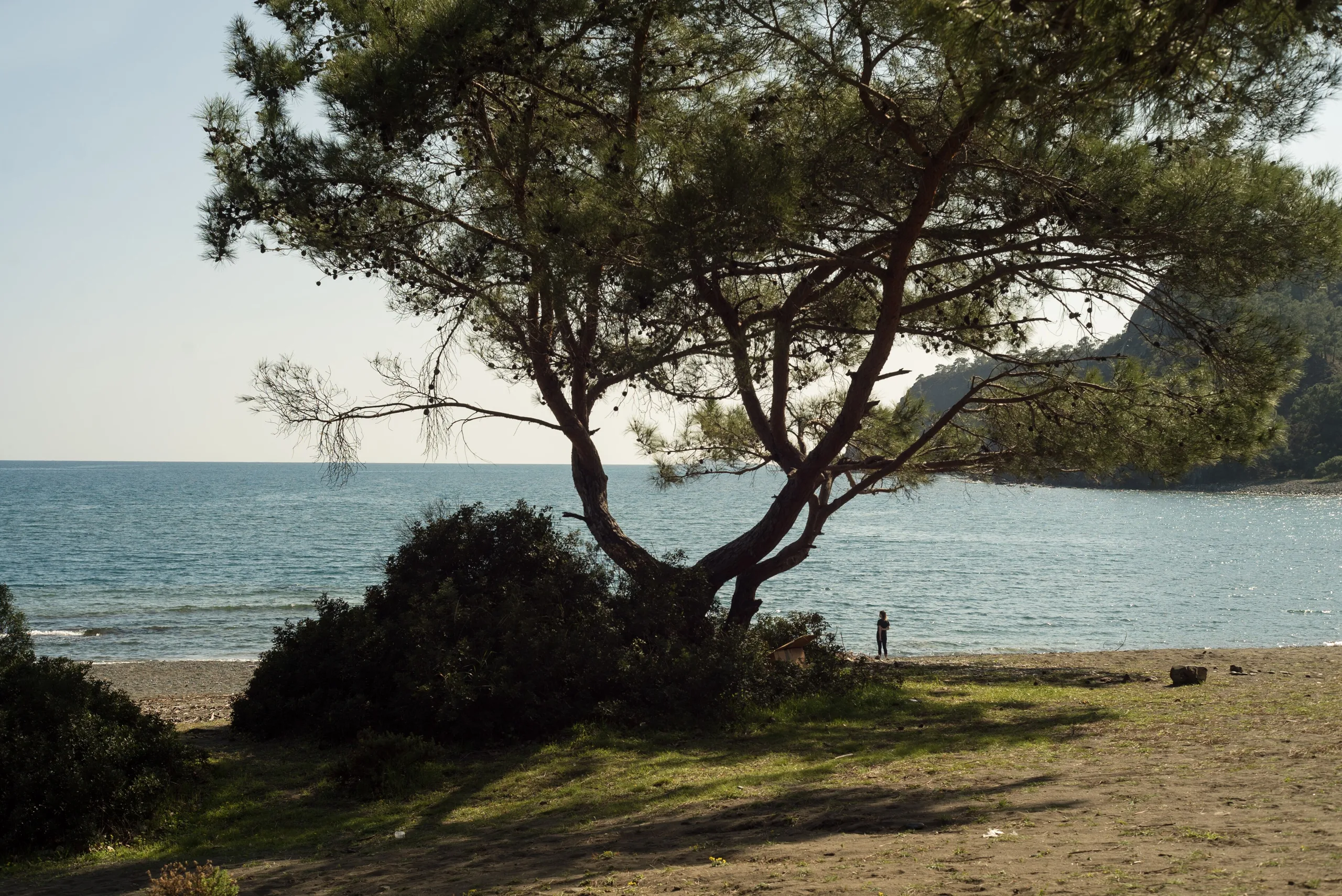
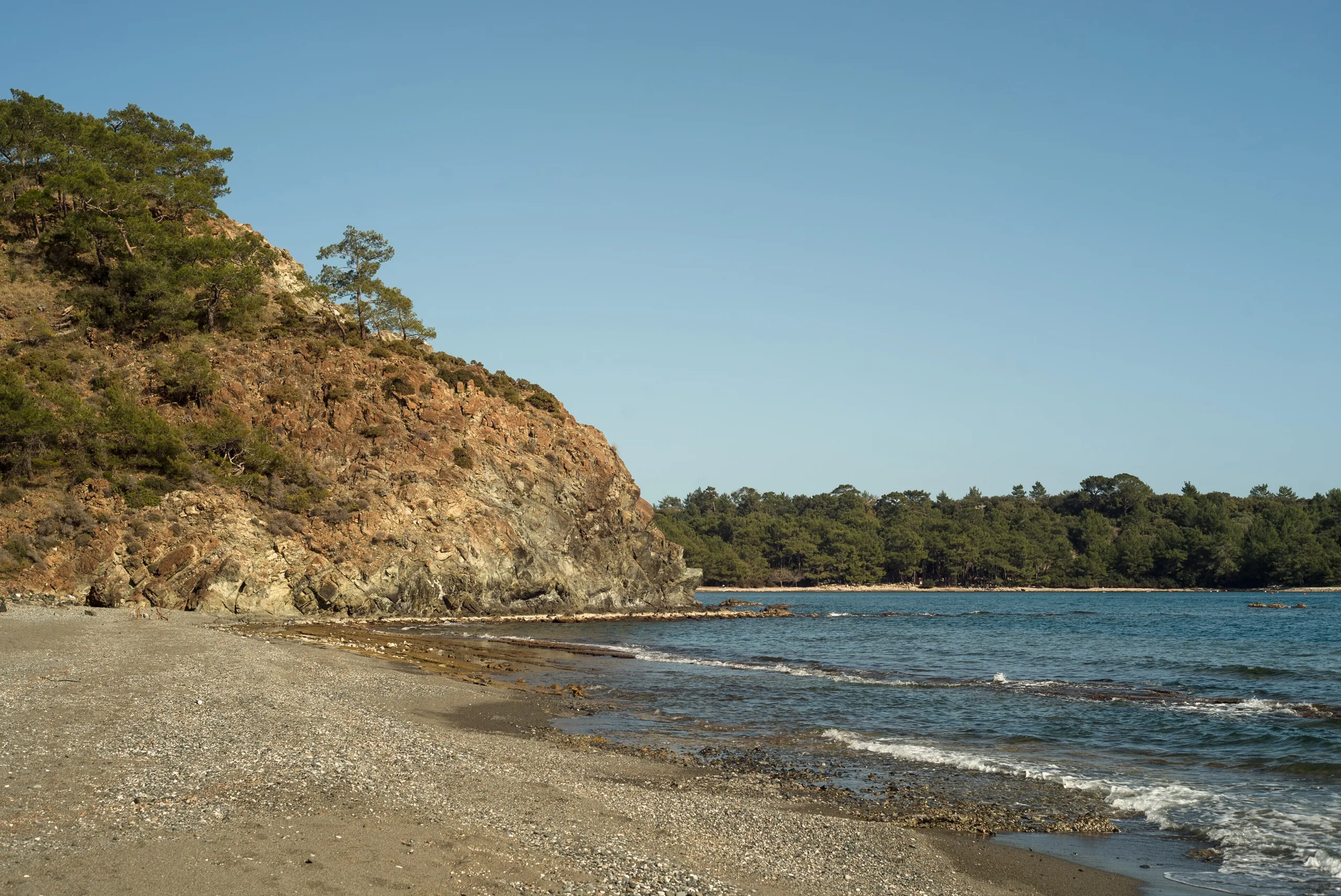
The natural route follows the main street to the harbour area and on to the theatre, mostly on shaded paths. A beach lies close by, so a visit to the ruins combines easily with a swim.
Gallery
Frequently asked questions
Where is Phaselis?
Why did Phaselis have three harbours?
What is Hadrian's Gate for?
When was Phaselis abandoned?
What did recent research find?
Is Phaselis a UNESCO World Heritage Site?
Sources (15)
- Phaselis Örenyeri / Phaselis Archaeological Site (TR ve EN sayfalar) — T.C. Kültür ve Turizm Bakanlığı, Müzeler ve Ören Yerleri
- Phaselis Antik Kenti - Antalya (kaynak: Dünden Bugüne Antalya II, Antalya İl Kültür ve Turizm Müdürlüğü, 2012) — T.C. Kültür ve Turizm Bakanlığı, Türkiye Kültür Portalı
- Phaselis ve Teritoryumu Yüzey Araştırması 2013 (Arslan, M.; Tüner Önen, N.), ANMED 2014 — Suna & İnan Kıraç Akdeniz Medeniyetleri Araştırma Enstitüsü (ANMED)
- Kazılardaki Çalışmalar (Phaselis Kazısı Epigrafi Çalışmaları) — Akdeniz Üniversitesi, Eskiçağ Dilleri ve Kültürleri Bölümü
- Ancient Cities of Lycian Civilization (Tentative List ref. 5408) — UNESCO World Heritage Centre
- Phaselis (Pleiades place 639051) — Pleiades
Photo credits
- Photo: Dosseman, CC BY-SA 4.0 — Wikimedia Commons (resized)
- Photo: Alexey Komarov, CC BY-SA 4.0 — Wikimedia Commons (resized)
- Photo: Alexey Komarov, CC BY-SA 4.0 — Wikimedia Commons (resized)
- Photo: Tanya Dedyukhina, CC BY 3.0 — Wikimedia Commons (resized)
- Photo: Tanya Dedyukhina, CC BY 3.0 — Wikimedia Commons (resized)
- Photo: Zamir94, CC BY-SA 4.0 — Wikimedia Commons (resized)
- Photo: Dosseman, CC BY-SA 4.0 — Wikimedia Commons (resized)
- Photo: Лобачев Владимир, CC BY-SA 4.0 — Wikimedia Commons (resized)
- Photo: Лобачев Владимир, CC BY-SA 4.0 — Wikimedia Commons (resized)