Myra, in Antalya's Demre district, was a great Lycian League city and later the see of St Nicholas; relief-carved rock tombs flank its Roman theatre.
Myra is an ancient city located in Turkey, Antalya. Main periods: Hellenistic Period, Roman Period, Byzantine Period.
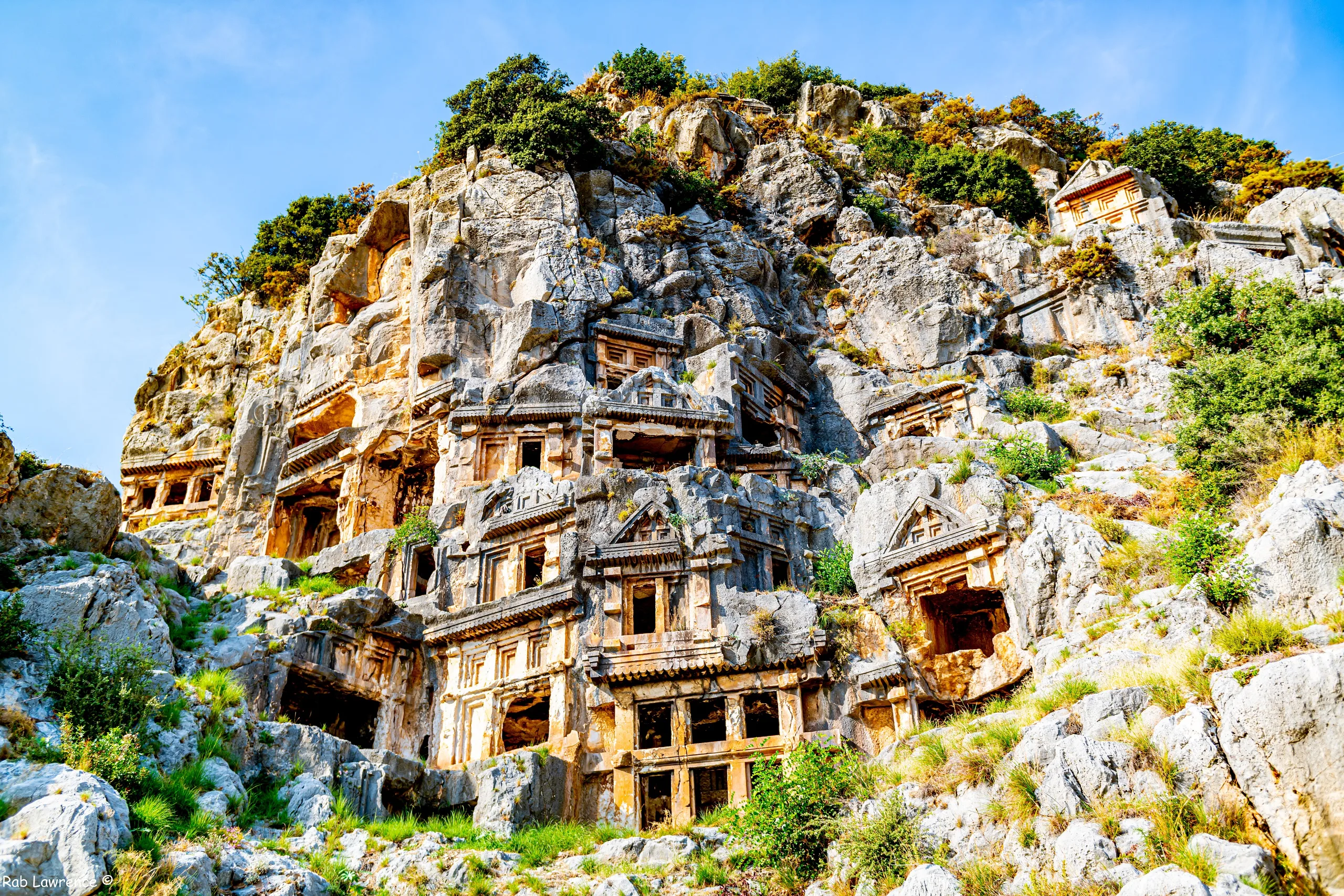
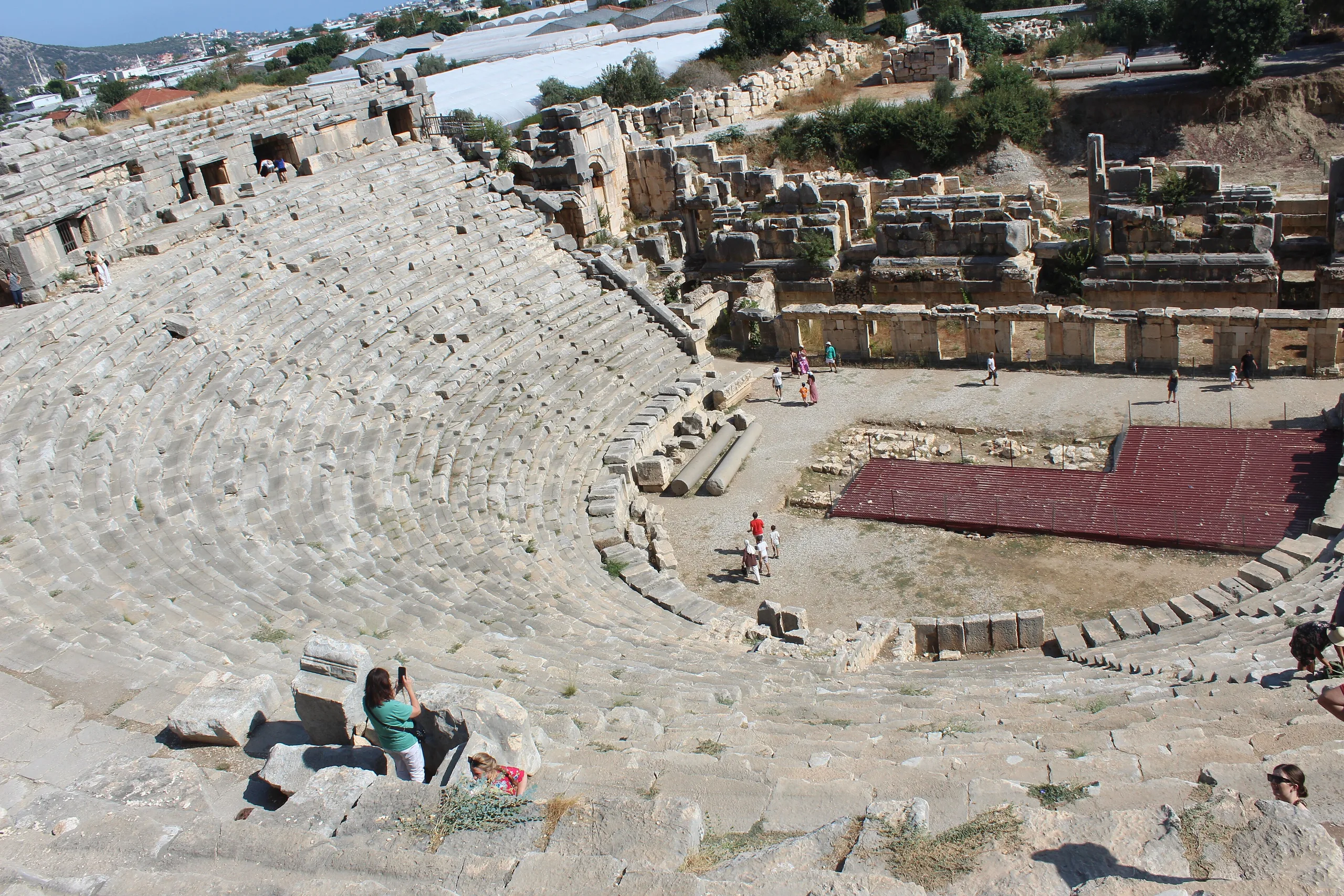
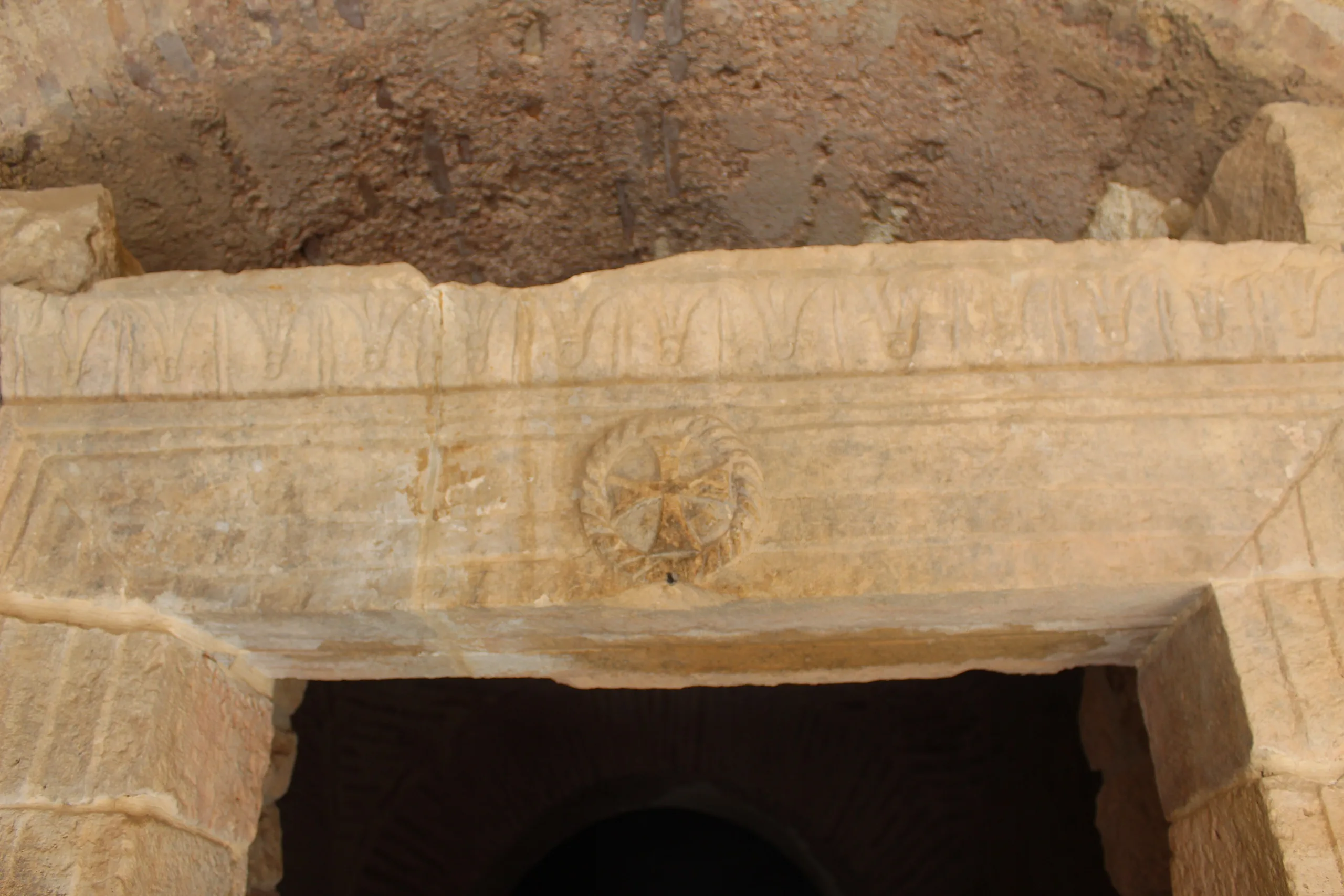
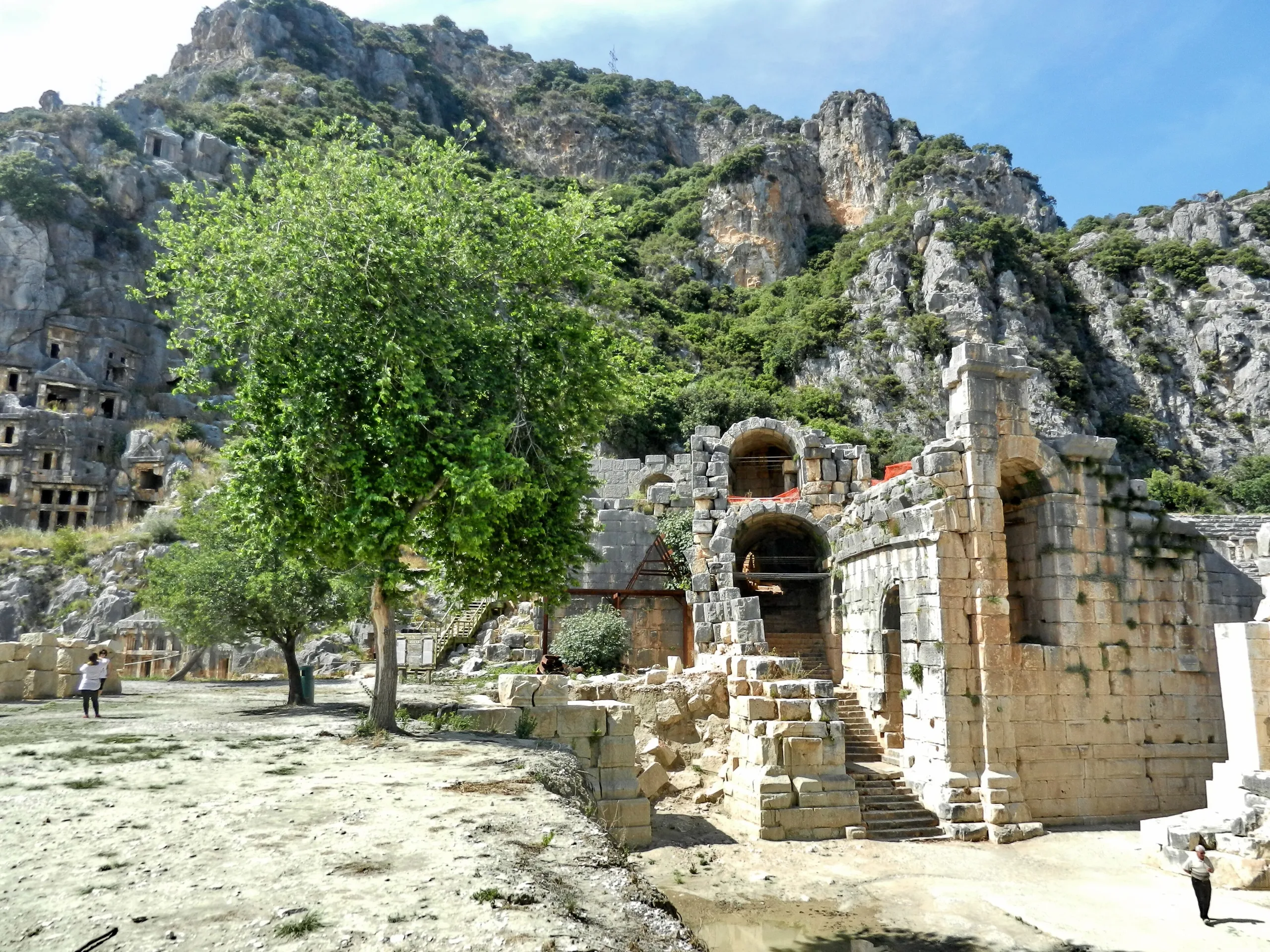
On the cliff either side of the theatre at Myra, tombs cut into the rock look like wooden houses turned to stone, and some carry reliefs of the dead with their relatives. The city stood on the plain of the same name in what is now Demre district, Antalya. For a time it was the capital of Lycian civilisation, and in Byzantine days it became the see of St Nicholas, the figure behind Santa Claus. Its harbour, Andriake, tied it to the sea.
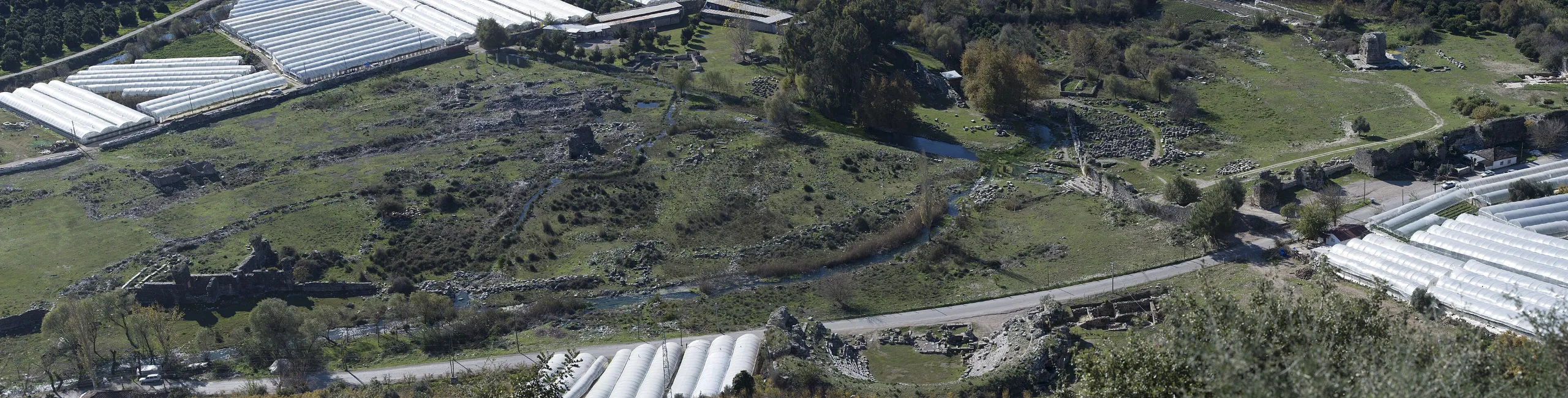
Most of Myra is out of sight. Silt carried by the Myros River has buried a settlement about 1.5 km across.
Location and setting
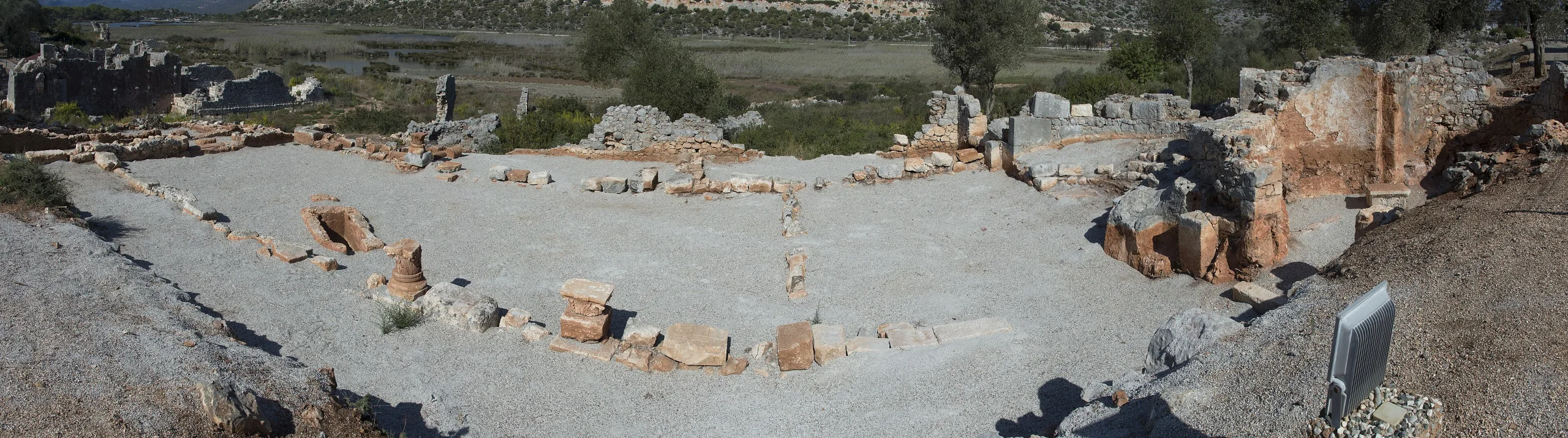
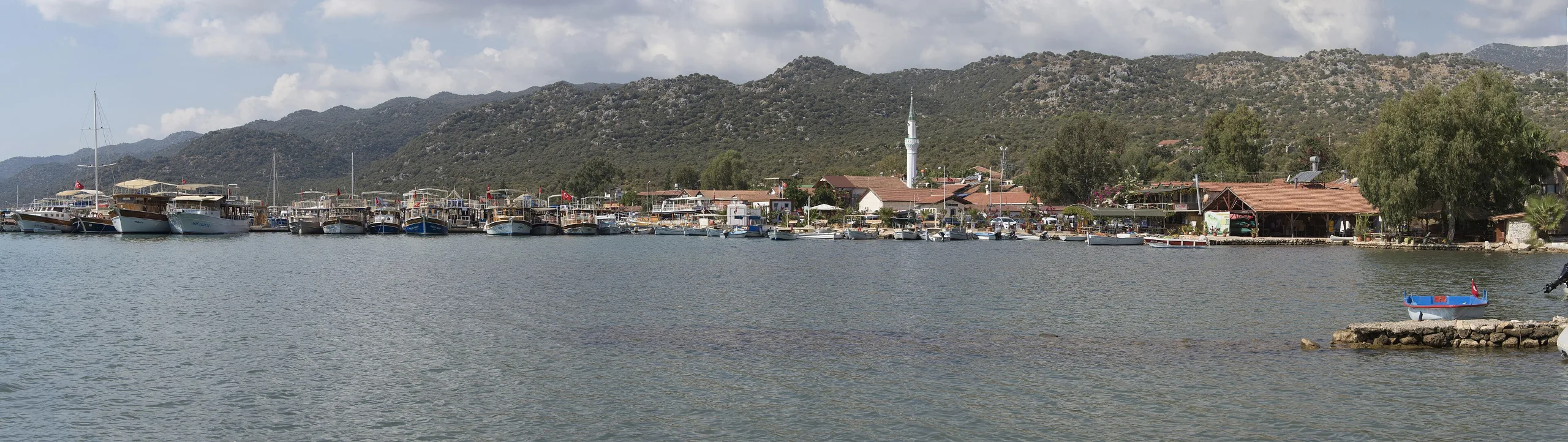
Myra lies between Kaş and Finike, in and around the centre of modern Demre. Sea traffic passed through a navigable channel west of the Myros River (now the Demre Stream), and the port of Andriake (Çayağzı) on the channel's far bank carried the region's trade. Water for the town came through channels cut into the rock along the Demre valley.
History
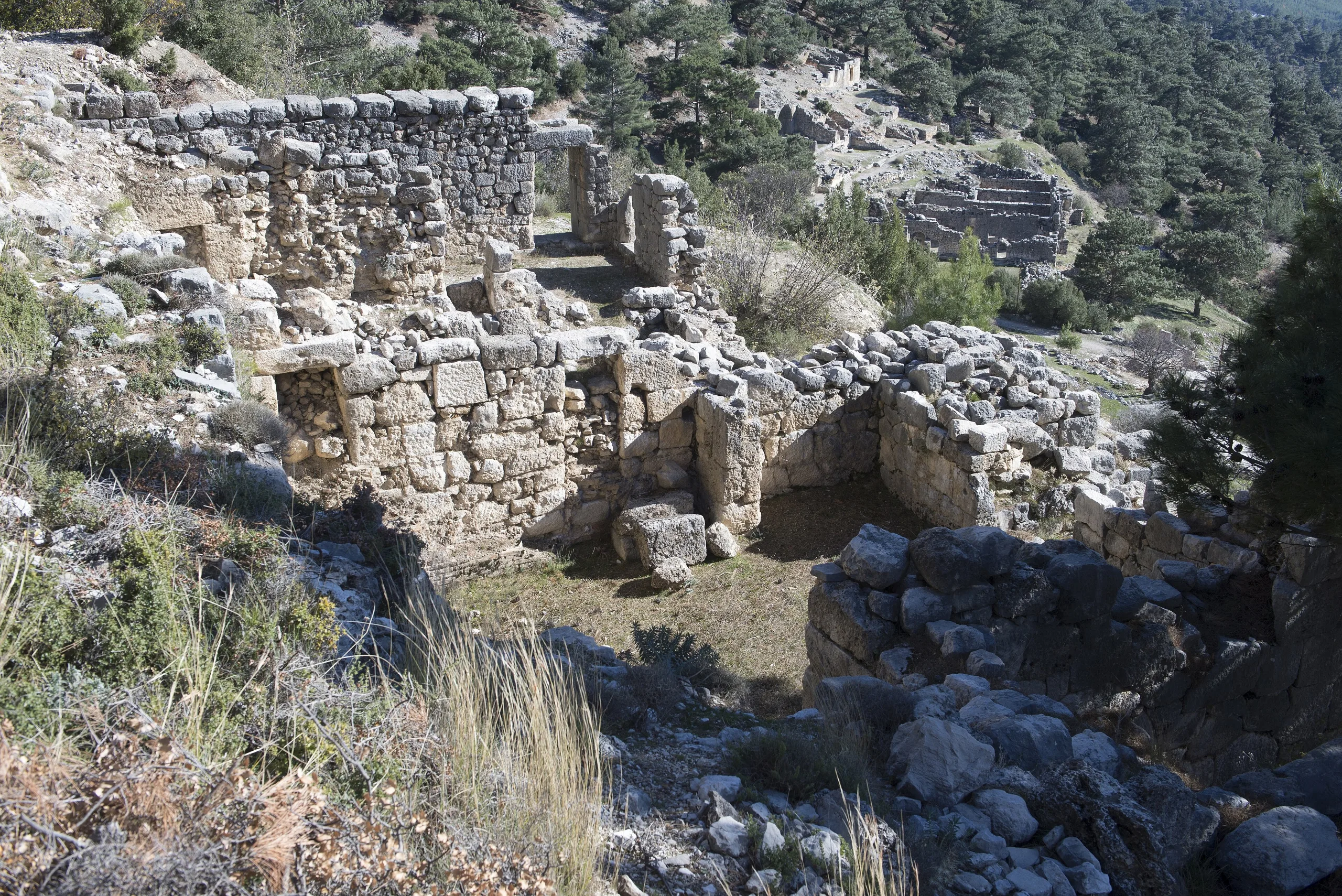
Rock tombs, Lycian inscriptions and coins show that Myra was occupied from at least the 5th century BCE, and walls from the Hellenistic period, some possibly as early as the 5th century BCE, survive around the acropolis. Strabo counts it among the six large cities of the Lycian League that held three votes each. The origin of the name is debated: it is linked either to the Myros River or to the myrtle tree. The place was known as Muri in the Classical age, then Myra, and finally Demre.
Artemis, Myra's chief goddess, appears on coins struck in the city's own name in the guise of Cybele, the oldest goddess of Anatolia, which is why the site is described as the place where Cybele became Artemis. In the 2nd century CE wealthy Lycians paid for many new buildings and repairs. The high point came between 408 and 450 CE under Theodosius II, when Myra became the metropolis, or capital, of Lycia and grew rich on trade through Andriake. In Byzantine times it ranked among the leading cities in both church and civil affairs.
From the 7th century earthquakes, floods, the silt of the Demre Stream and Arab raids ground the city down. Taken in 809 at the end of those raids, Myra lost its standing and by the 12th century was a small settlement. The fact that St Paul and his companions called here adds to its weight for Christians.
People and events
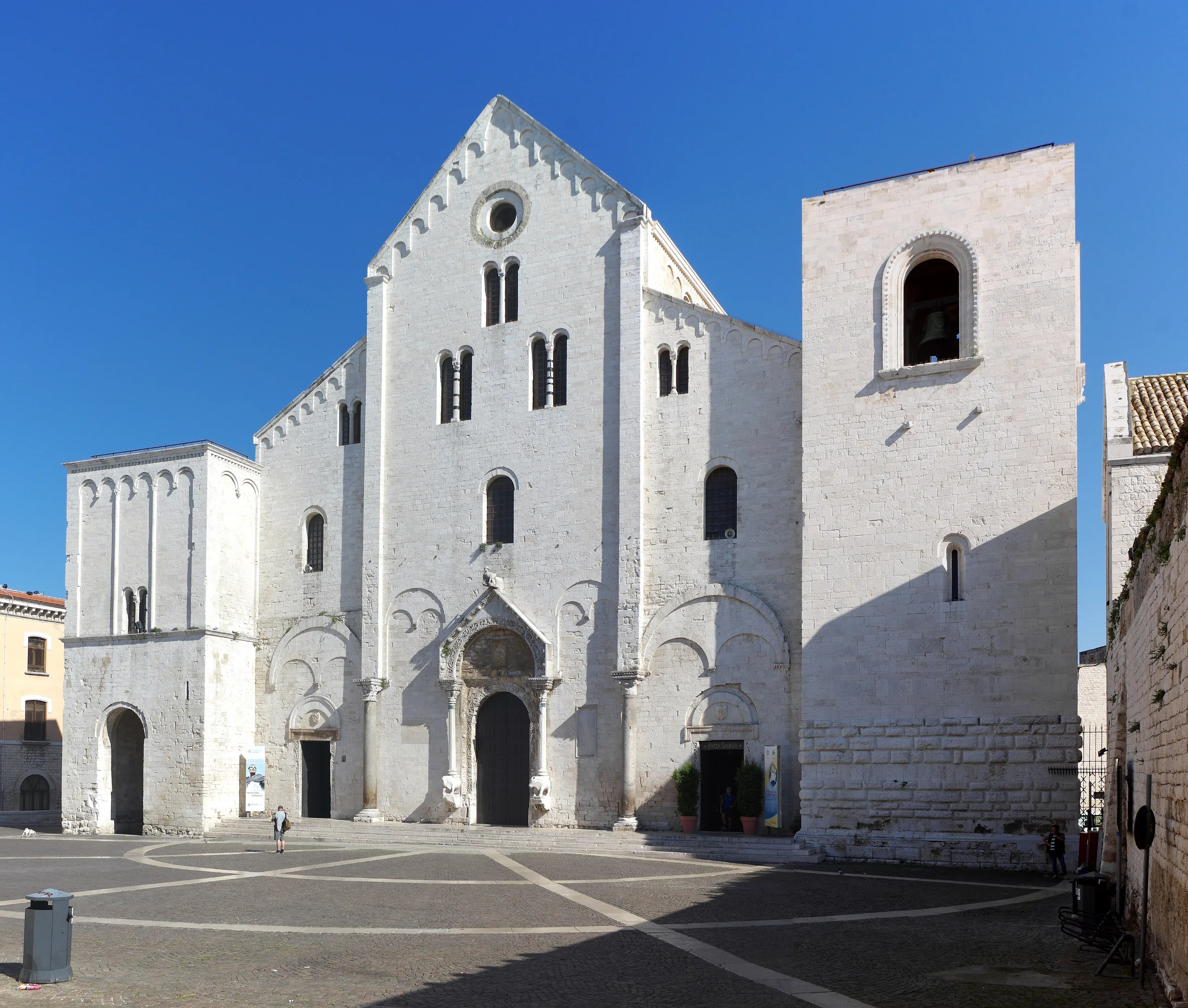
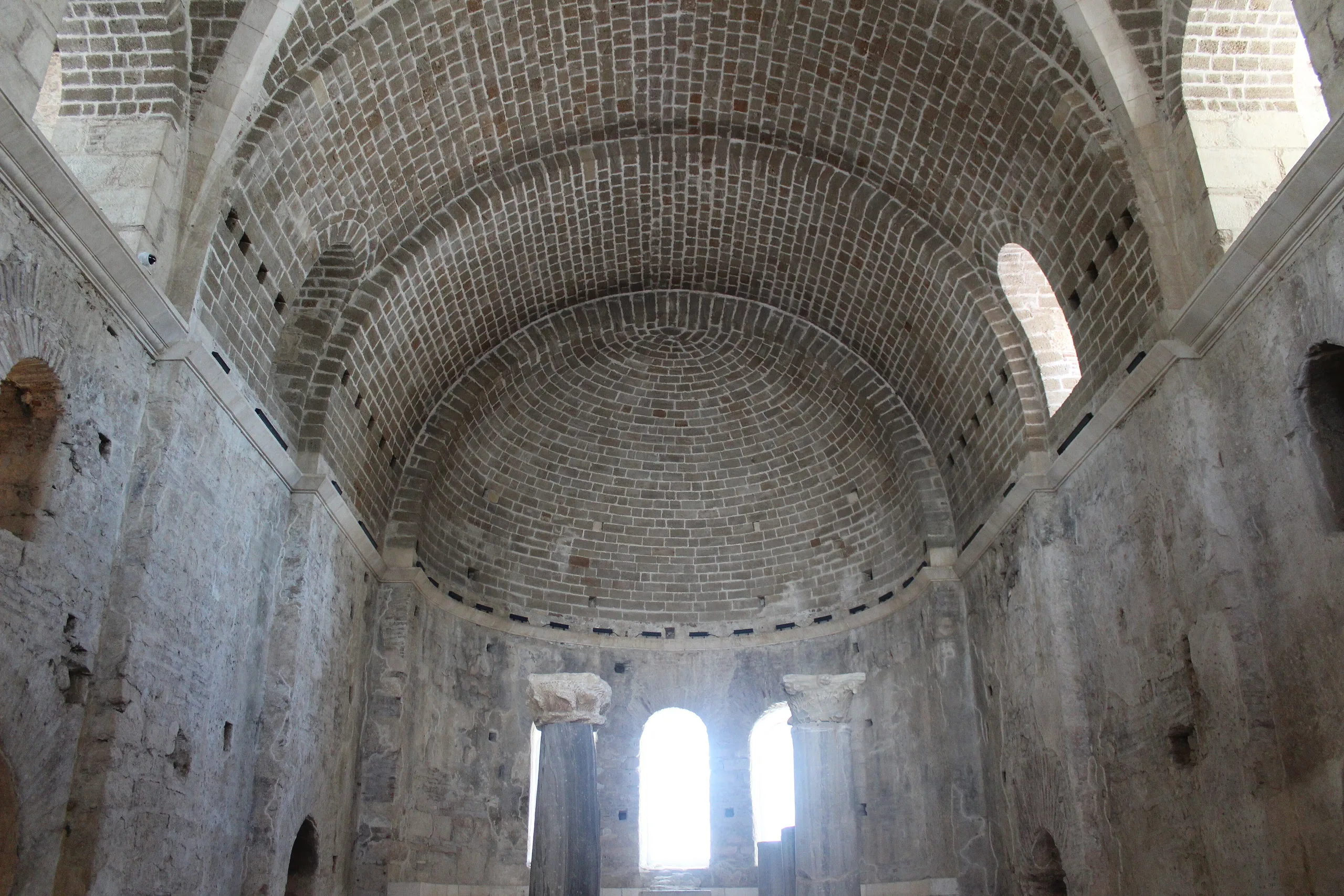
Myra's lasting fame rests on St Nicholas, who served as bishop in the 4th century CE, was venerated as a saint after his death and had a church built in his name. Around Andriake three episodes stand out. Germanicus and his wife Agrippina visited in 18 CE. The emperor Trajan remarked that southern Lycia needed a good harbour. St Paul, on his way to Rome in 60 CE, stopped here to change ships.
Principal monuments
The Roman theatre
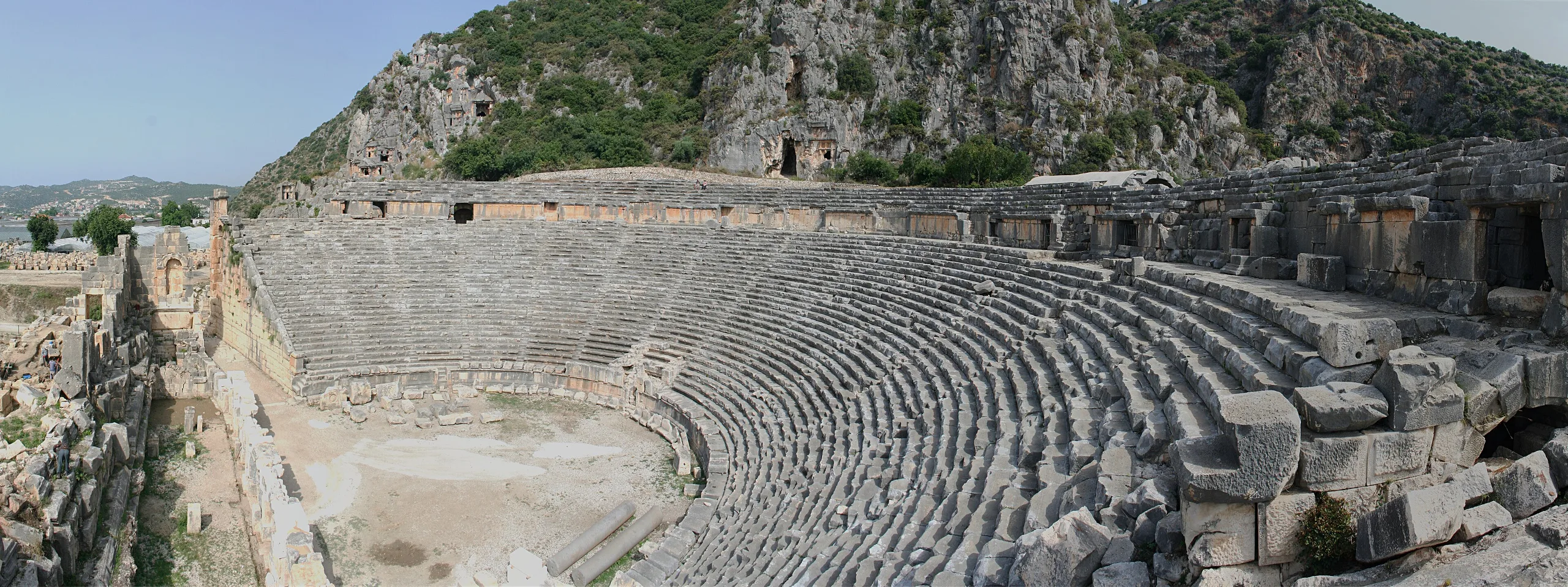
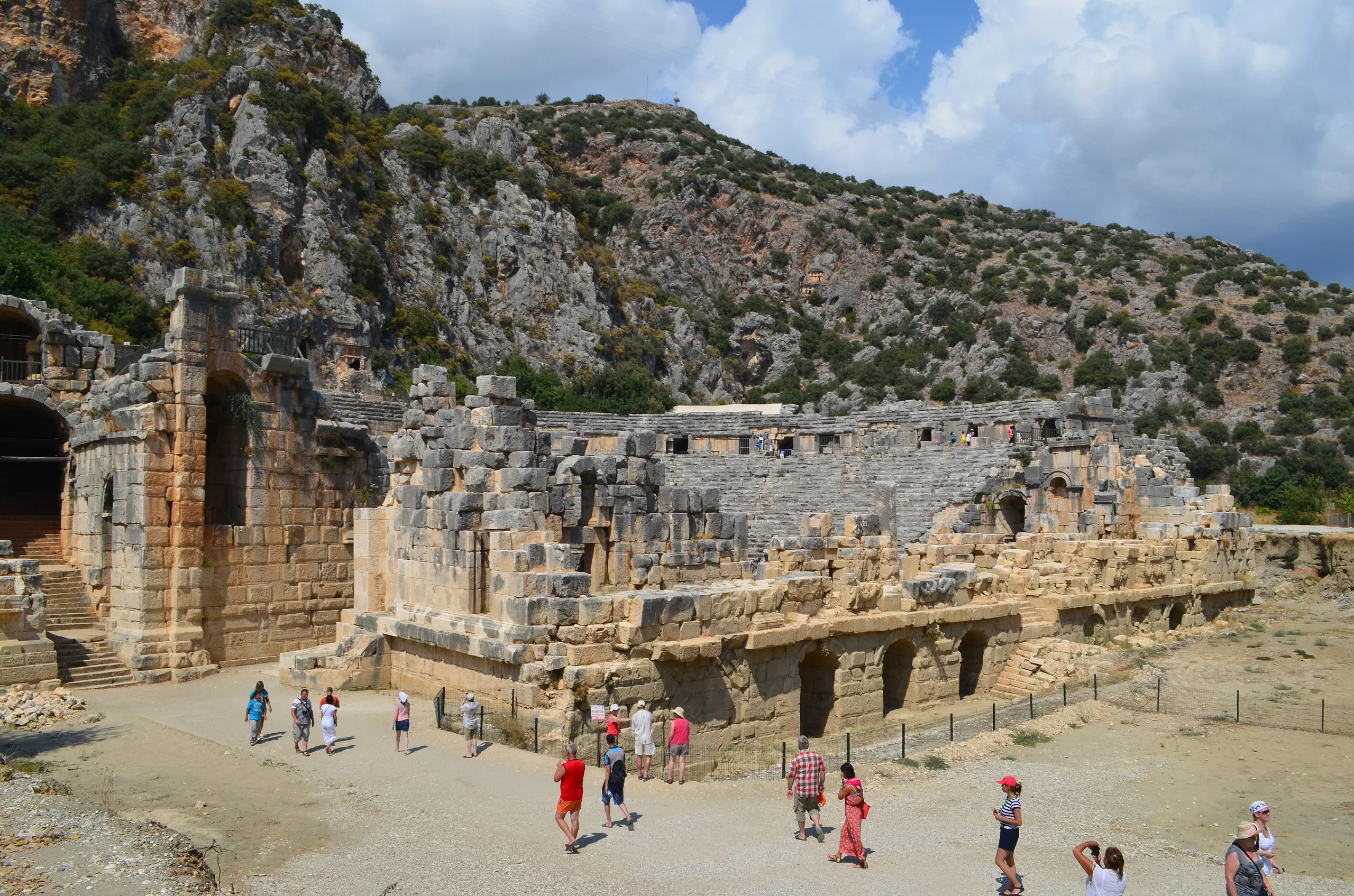
The theatre at the southern foot of the acropolis is a very well-preserved Roman building, and its stage block still rises to half the height of the second storey. It spreads downward beneath the rock tombs above and, as the largest theatre of the region, shows Roman power at its grandest.
Rock tombs and necropolis
Relief-carved or plain rock tombs flank the theatre. Myra holds some of the best examples of Lycian timber-house architecture translated into stone, and the tomb showing the dead person with relatives is among the most interesting. Many inscribed or carved tombs are stacked and lined up along the south-facing cliff. The tombs of the river necropolis, the burial area, are also noted for their reliefs. On the way to the theatre, the bath ruins to the left of the road are early and intriguing examples of Roman brick construction.
Andriake harbour and granary
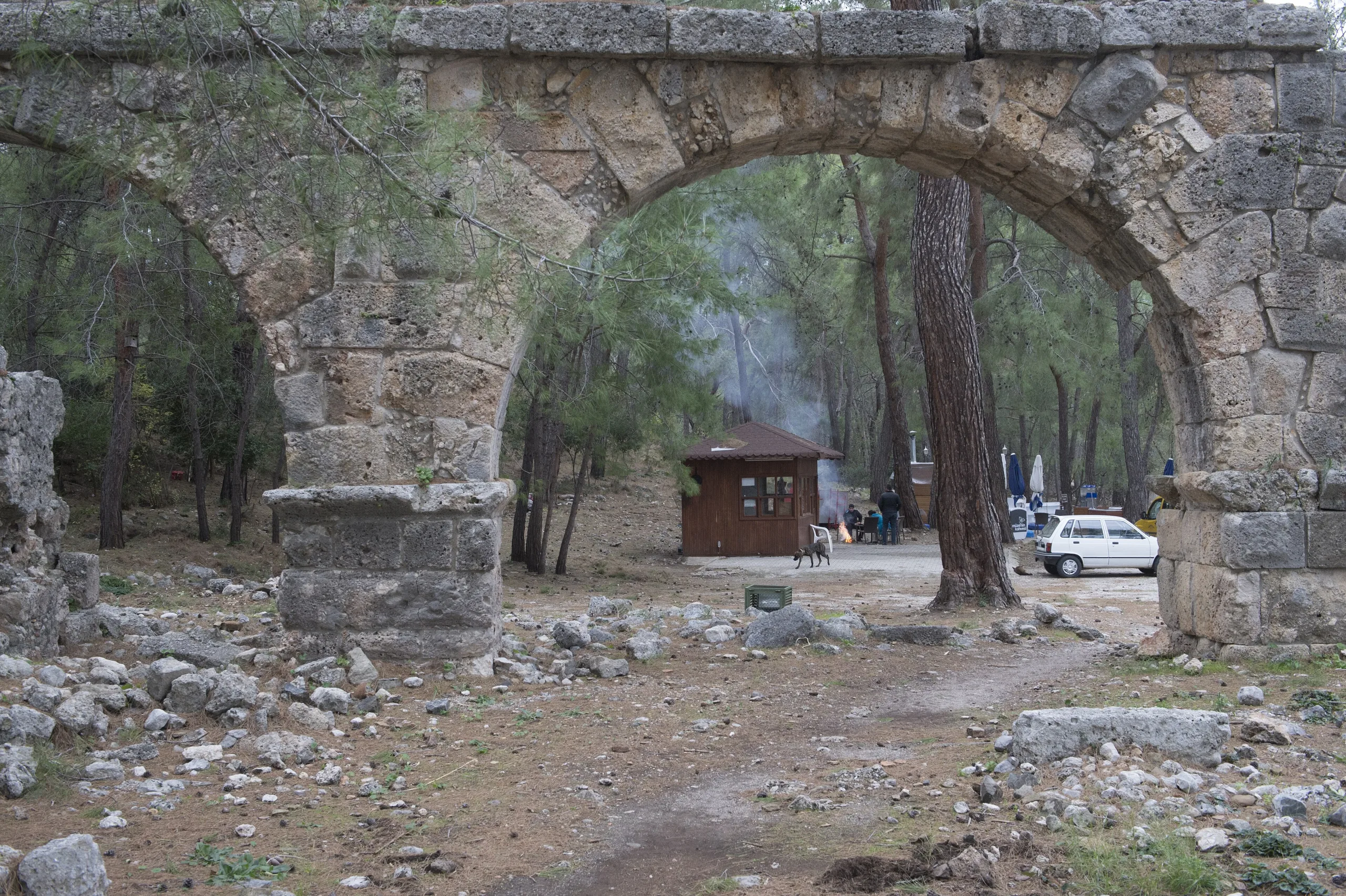
Andriake at Çayağzı was a sort of outer suburb of Myra, heavily used from the Classical period and the region's main port through Hellenistic, Roman and Byzantine times. Its remains spread along the foot of the hill south of the harbour: an aqueduct bringing fresh water, a nymphaion (monumental fountain) with niched walls, the harbour street, half-open ship sheds, and the biggest building in town, the market square called the Plakoma. The most important ruin is the granary, or granarium: 65 x 32 m, eight rooms, built under Hadrian (117-138 CE). Its facade carries a relief of Serapis and Pluto with a griffin between them, together with busts of Hadrian and his wife Sabina. The harbour worked until the 7th century CE and is now a marsh. The Andriake complex now houses the Museum of Lycian Civilisations.
Mythology and ancient writers
The name Myra is also said to mean the place of the Great Mother Goddess, and the city kept a cult in which Cybele and Artemis merged. Strabo records its standing within the Lycian League.
World Heritage and protection
Together with Andriake and other Lycian cities, Myra was placed on the UNESCO World Heritage Tentative List in 2009 as Ancient Cities of the Lycian Civilisation (Antalya and Muğla).
Visiting
The site's address is Alakent Mahallesi, Dağ Dibi Mevkii, Demre. The Müzekart is valid for Turkish citizens, and an audio guide is available. A bird sanctuary between Çayağzı Harbour and Andriake makes a handy nearby stop. For hours and fees, check the official page.
Gallery
Frequently asked questions
Where is Myra?
Where does the name Myra come from?
Why is Myra important?
When was Myra at its peak?
What is Andriake?
Why did Myra decline?
Sources (14)
- Myra Örenyeri / Myra Archaeological Site (TR ve EN sayfalar) — T.C. Kültür ve Turizm Bakanlığı, Müzeler ve Ören Yerleri
- Myra Antik Kenti (Türkiye Kültür Portalı) — T.C. Kültür ve Turizm Bakanlığı, Antalya İl Kültür ve Turizm Müdürlüğü
- Andriake (Türkiye Kültür Portalı) — T.C. Kültür ve Turizm Bakanlığı, Antalya İl Kültür ve Turizm Müdürlüğü
- Myra (Antalya İl Kültür ve Turizm Müdürlüğü) — T.C. Antalya Valiliği, İl Kültür ve Turizm Müdürlüğü
- Myra (Pleiades place 639005) — Pleiades
Photo credits
- Photo: Rab Lawrence, CC BY 2.0 — Wikimedia Commons (resized)
- Photo: Ingo Mehling, CC BY-SA 3.0 — Wikimedia Commons (resized)
- Photo: Александр Попрыгин, CC BY 3.0 — Wikimedia Commons (resized)
- Photo: Interfase, CC BY-SA 4.0 — Wikimedia Commons (resized)
- Photo: Berthold Werner, CC BY-SA 3.0 — Wikimedia Commons (resized)
- Photo: Interfase, CC BY-SA 4.0 — Wikimedia Commons (resized)
- Photo: Interfase, CC BY-SA 4.0 — Wikimedia Commons (resized)
- Photo: ingostrutz, CC BY-SA 3.0 — Wikimedia Commons (resized)
- Photo: Tanya Dedyukhina, CC BY 3.0 — Wikimedia Commons (resized)