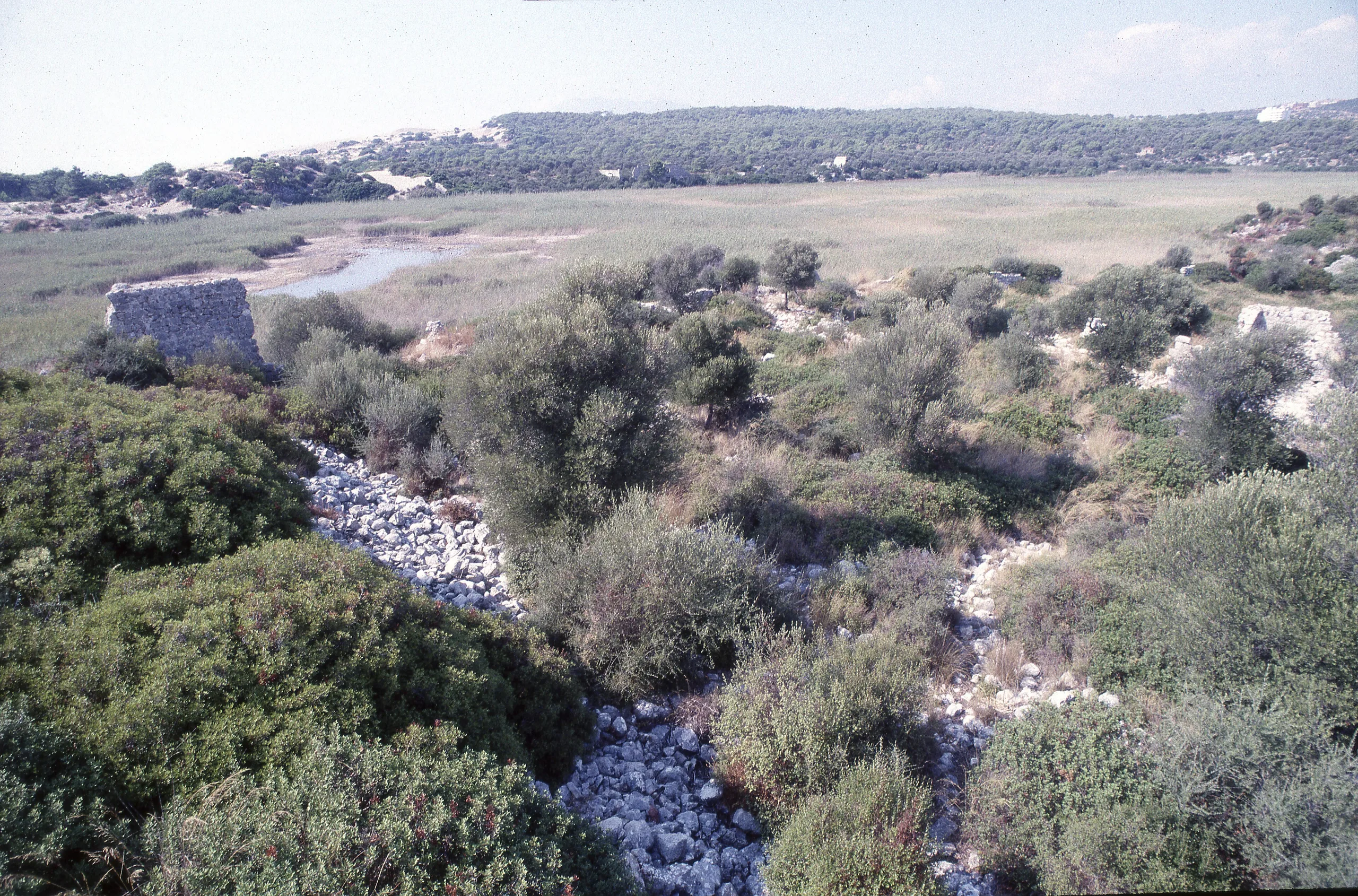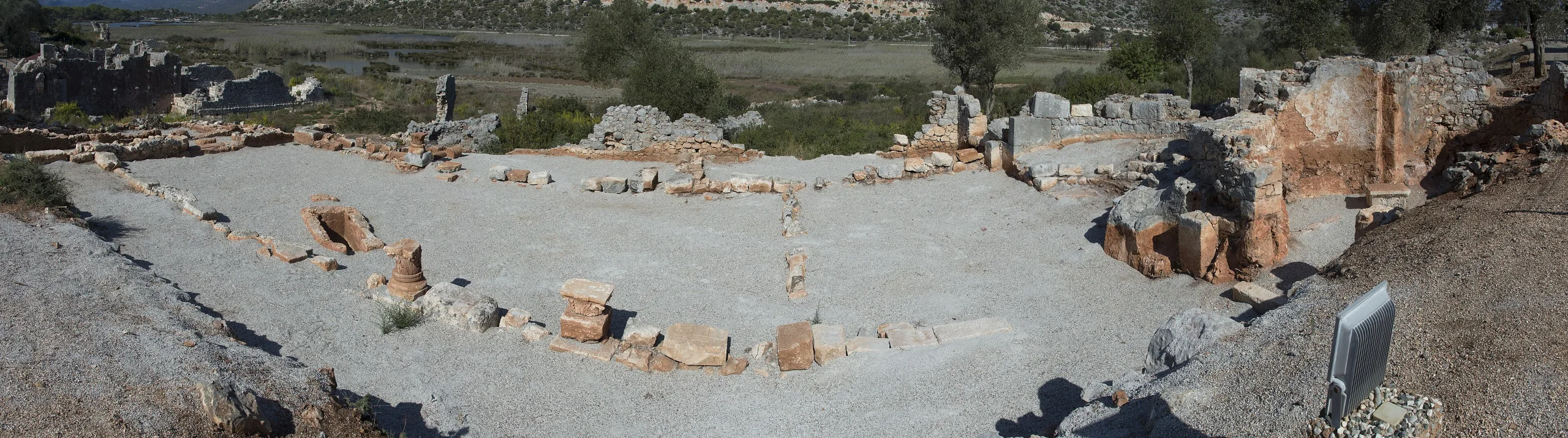
Andriake was the harbour of Myra at Çayağzı in Demre; its Hadrianic granary now houses the Museum of Lycian Civilisations, and it also has murex workshops and a synagogue.
Andriake is an ancient city located in Turkey, Antalya. Main periods: Classical Period, Hellenistic Period, Roman Period, Byzantine Period.
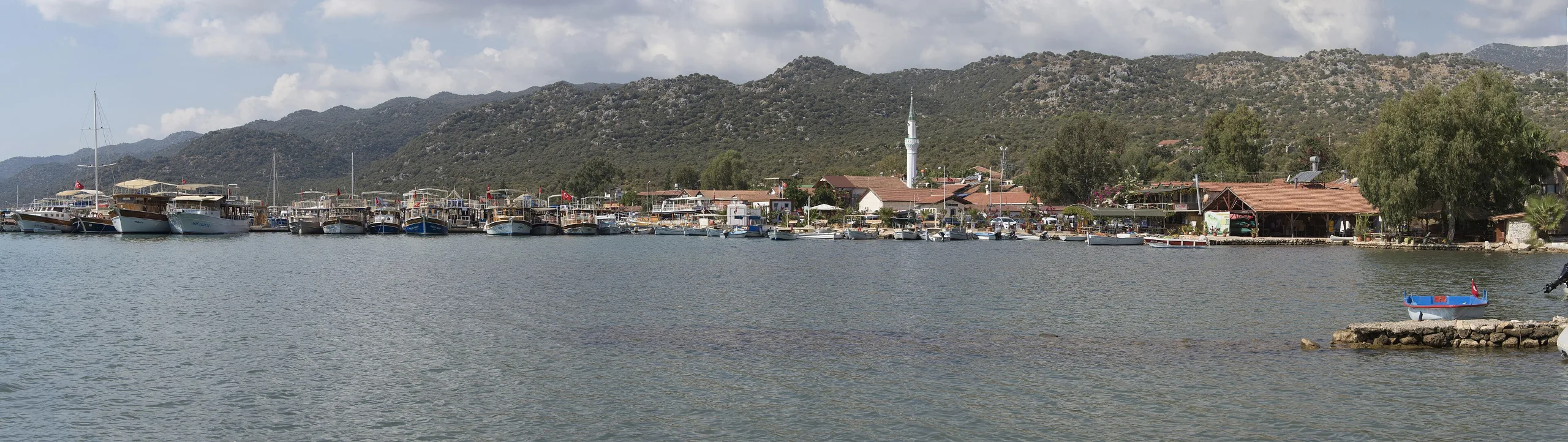
Andriake lies in Demre district (ancient Myra), Antalya, in the area called Çayağzı. The Culture Portal presents it as Myra's harbour and the settlement that grew around it. The Ministry notes a long debate over whether the ruins belonged to a separate city, and says recent research shows that they formed the harbour quarter of Myra instead of an independent town.
History
The Ministry explains that Lycia owed its wealth to ports and commerce, and that Andriake ranked third among its harbours after Phaselis and Patara. Foreign amphora sherds from the excavations show how busy international trade was. The Culture Portal says the harbour was used intensively from the Classical period and remained the region's central port in Hellenistic, Roman and Byzantine times. It also mentions a city called Andriake at the mouth of the Andriakos (Kokarçay) around 200 BCE, the arrival of Antiochos III with his fleet in 197 BCE, and Livy's naming of Andriake among the cities of southern Lycia.
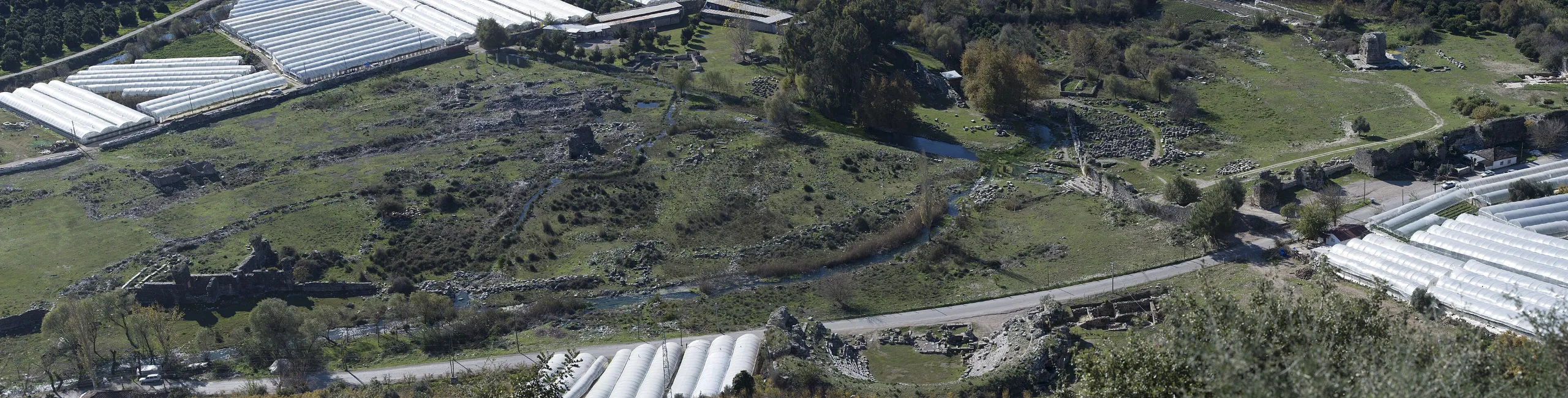
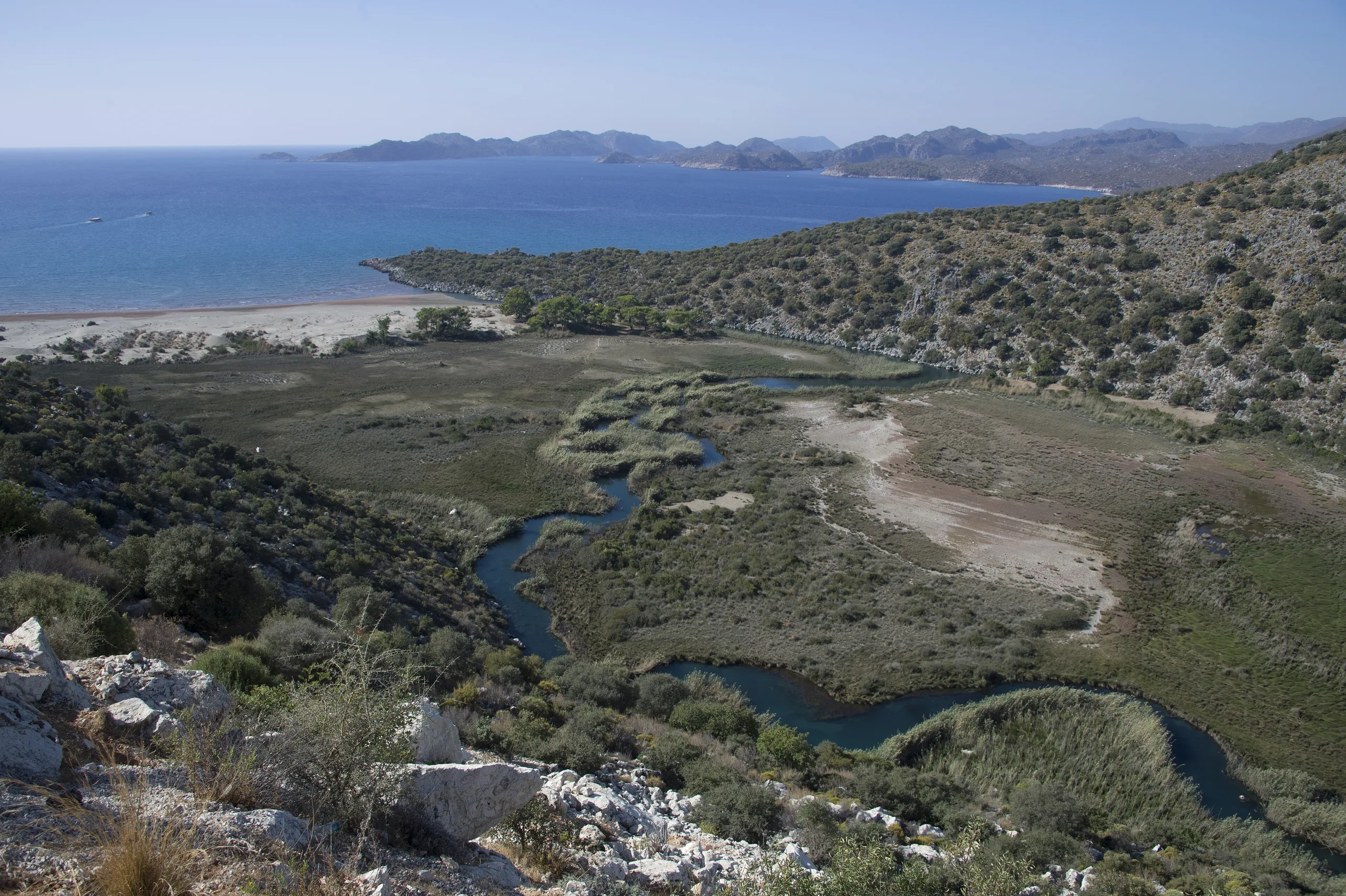
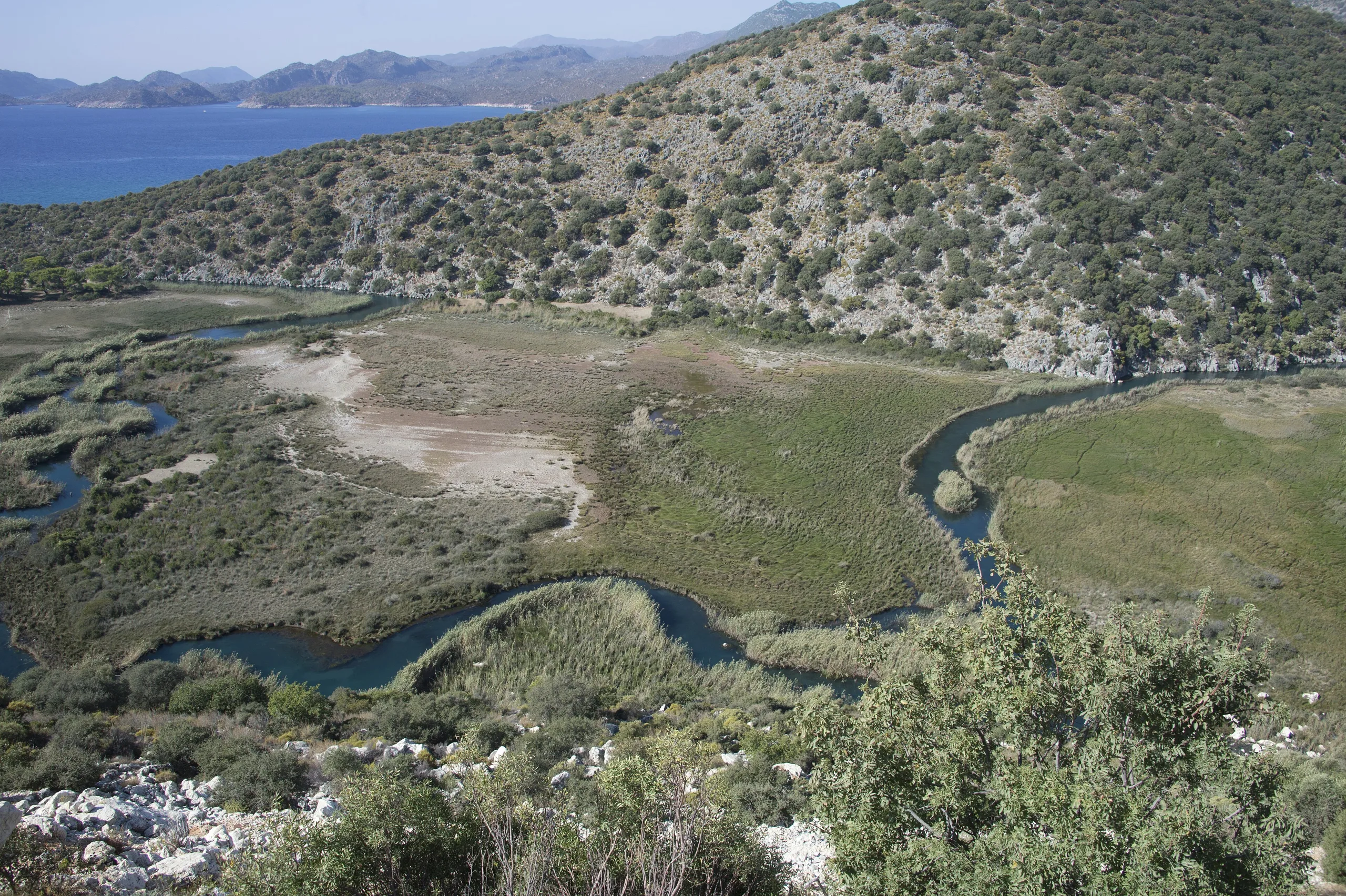
The Portal adds that Trajan, staying at Myra while preparing the Parthian war, saw the need for a fine harbour in southern Lycia, but the planning and building belong to Hadrian's time. A visit to Myra by Germanicus and his wife in 18 CE was commemorated with statues set up at Andriake, and Saint Paul is said to have changed ships here in 60 CE when travelling to Rome. The harbour worked until the 7th century CE and is now a marsh cut off from the sea.
Main remains
Granary and agora
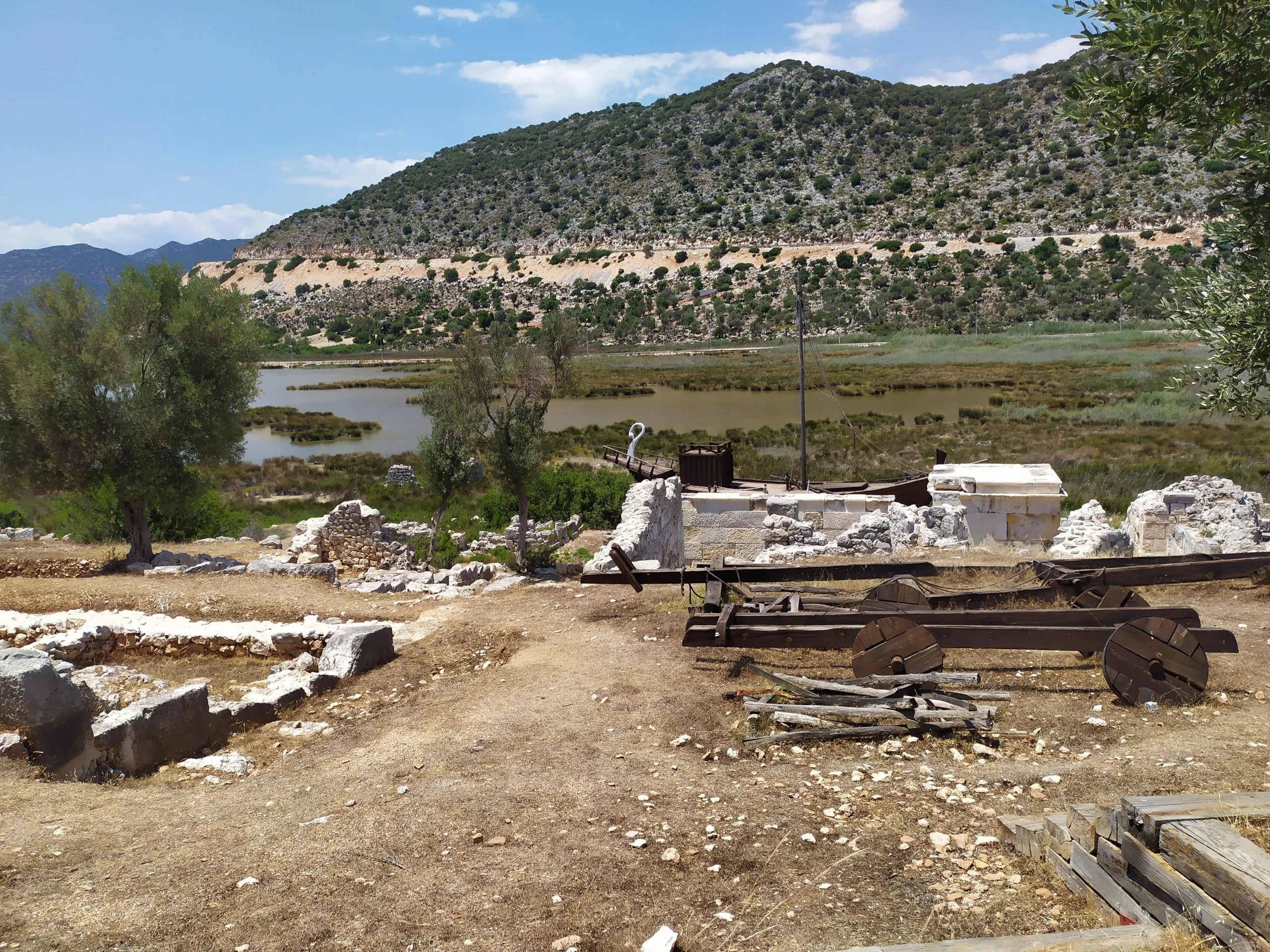
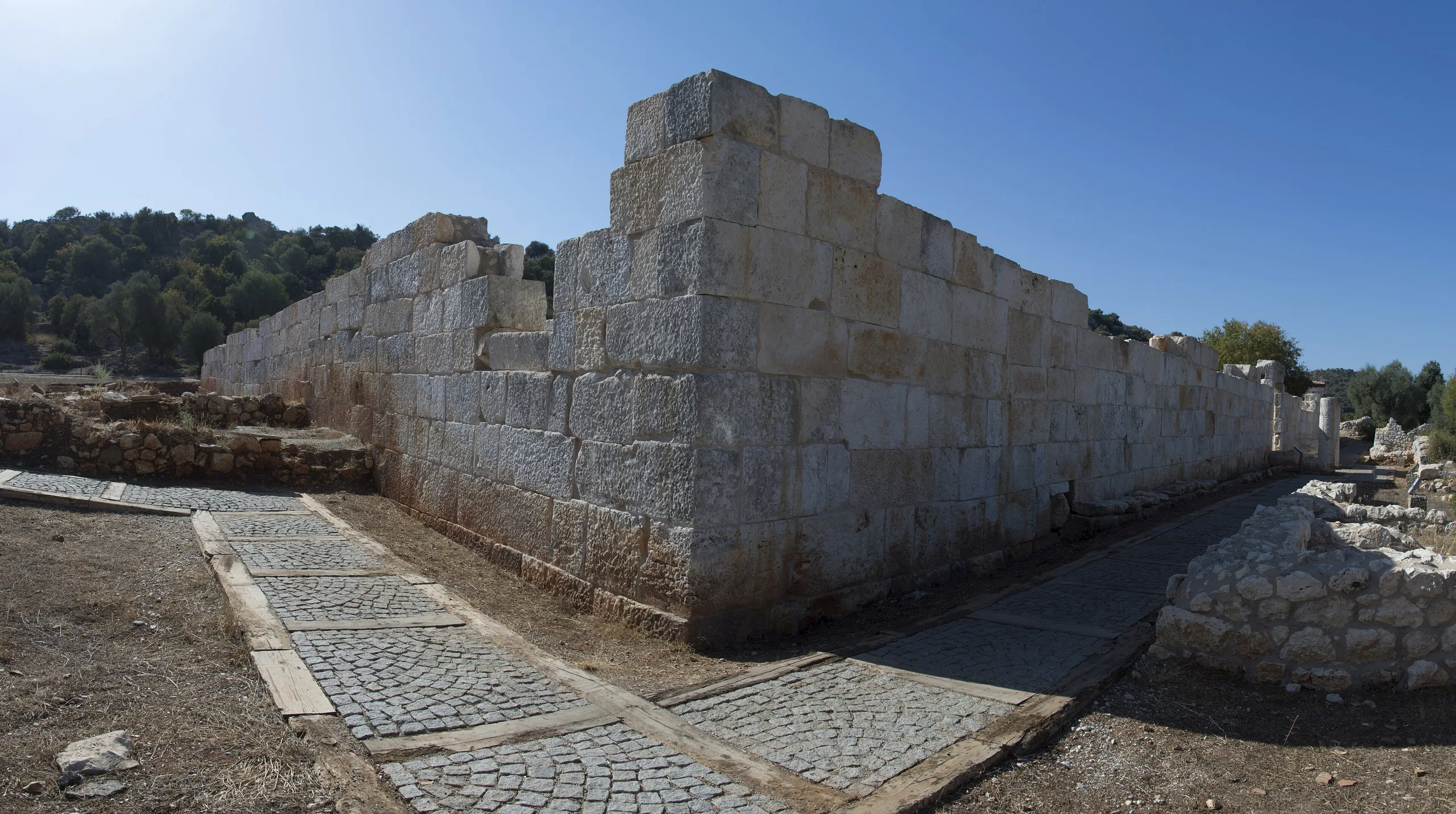
The Portal calls the Hadrianic granary (117-138 CE) the most important building. It measures 65 x 32 m, has a rectangular plan with eight rooms, and eight doors in the facade each lead to one room. Beside the central entrance stand busts of Hadrian and his wife Sabina; a relief of Serapis and Pluto was, according to its inscription, made after a dream of the granary official. Standing to its roof, the building today serves as the Museum of Lycian Civilisations. The largest structure of the town is the agora, called the plakoma, with shops on three sides and a cistern in the middle. A harbour street and half-open ship sheds lie between the granary and the water.
Water works, cemetery and more
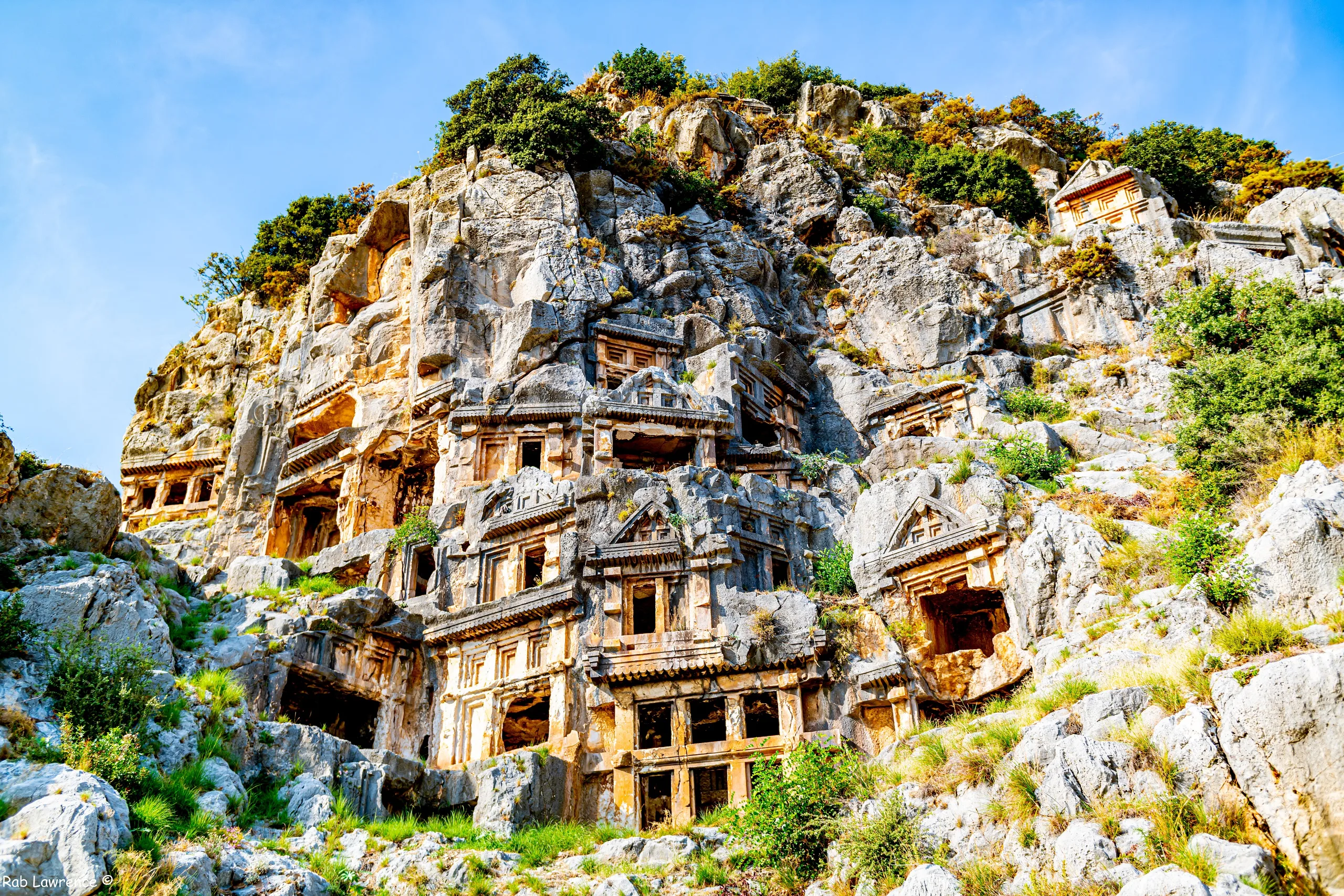
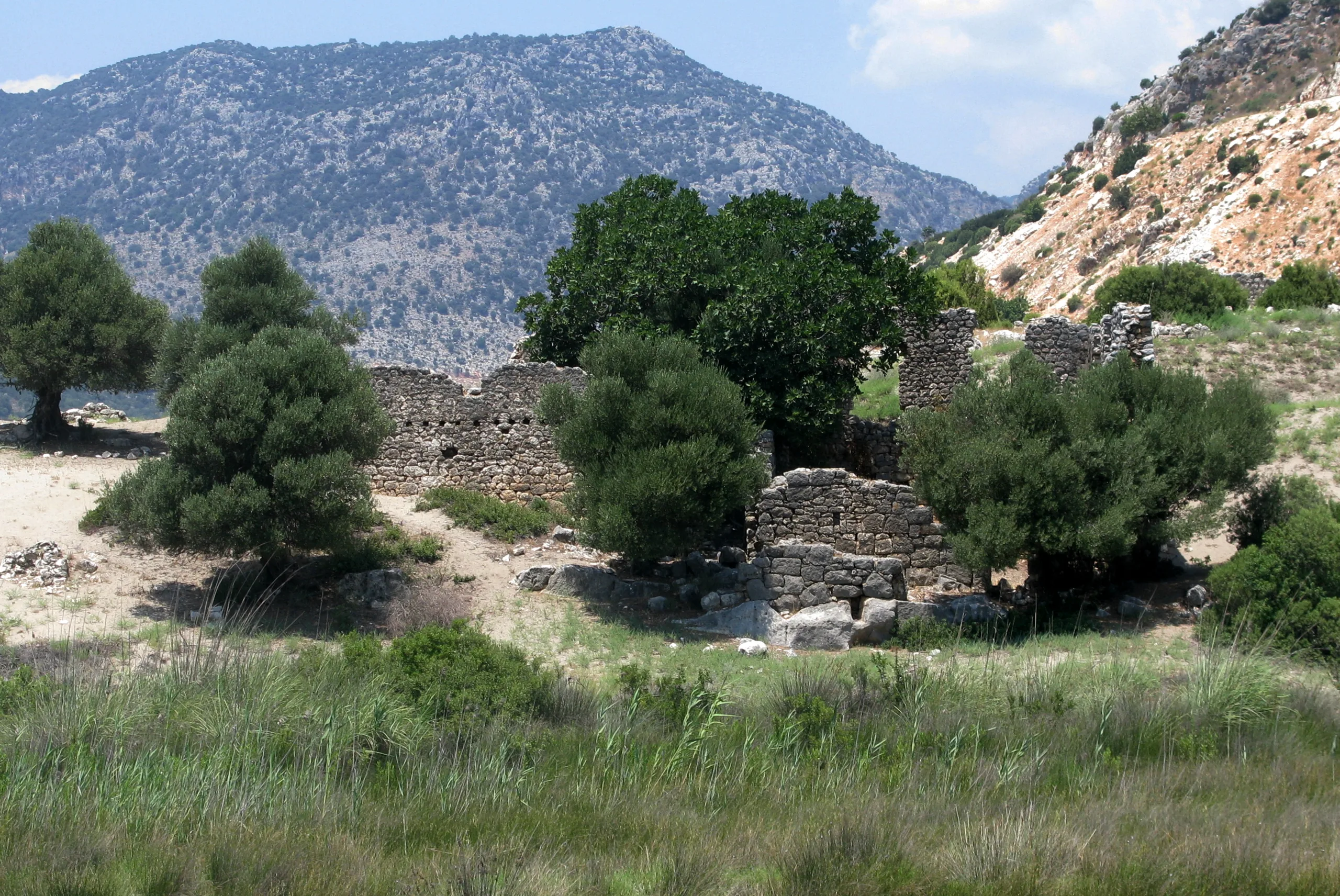
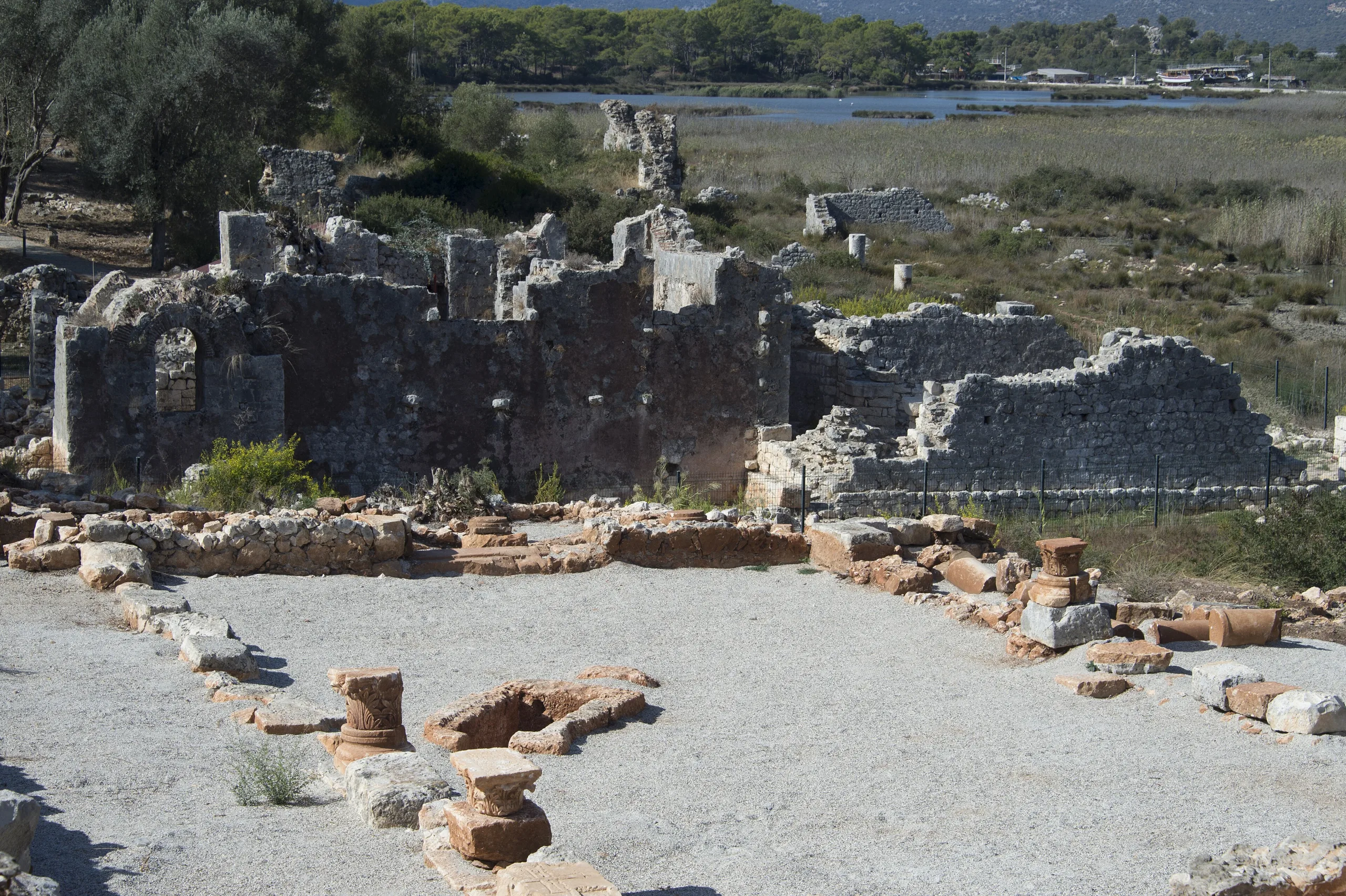
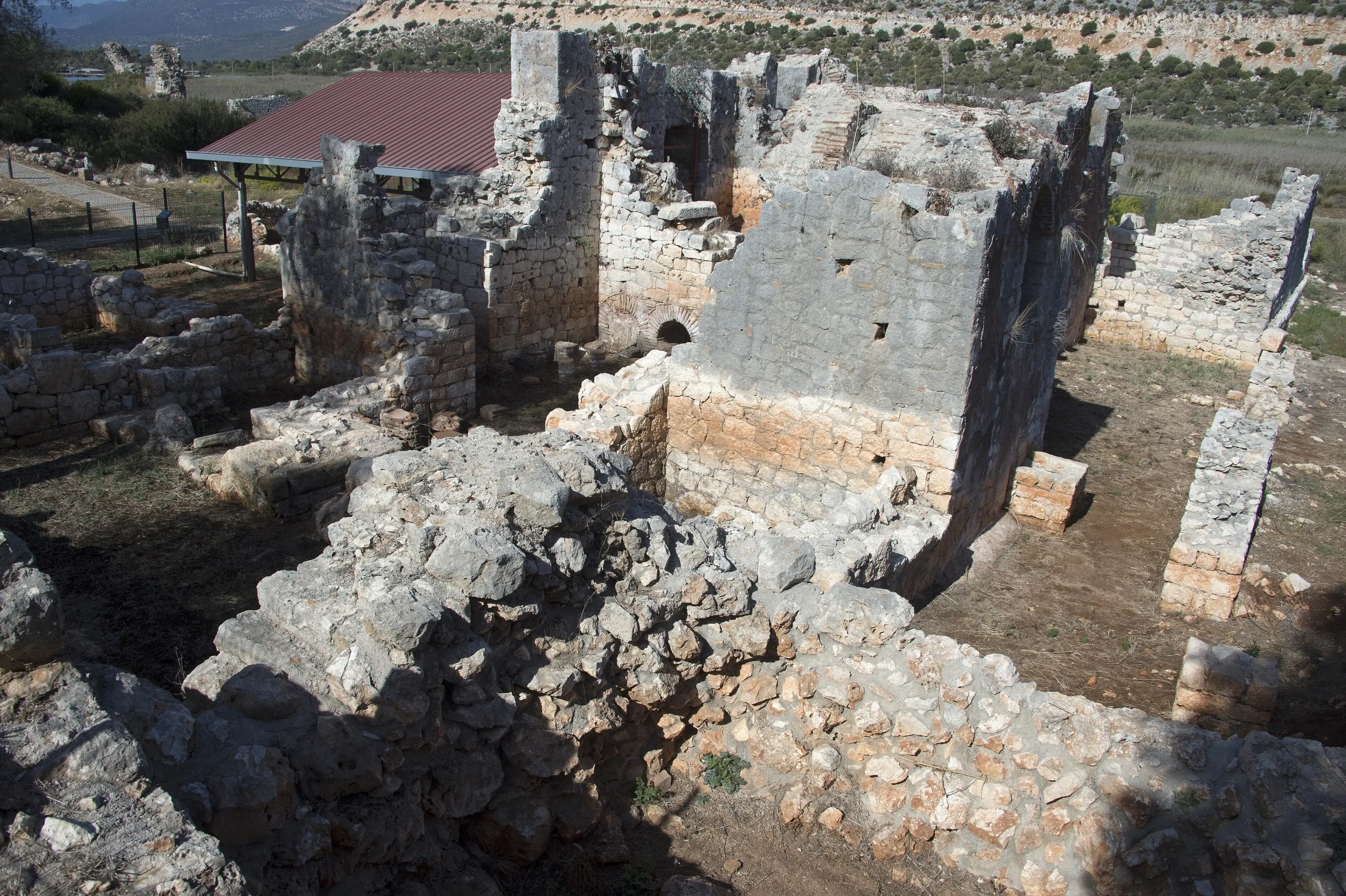
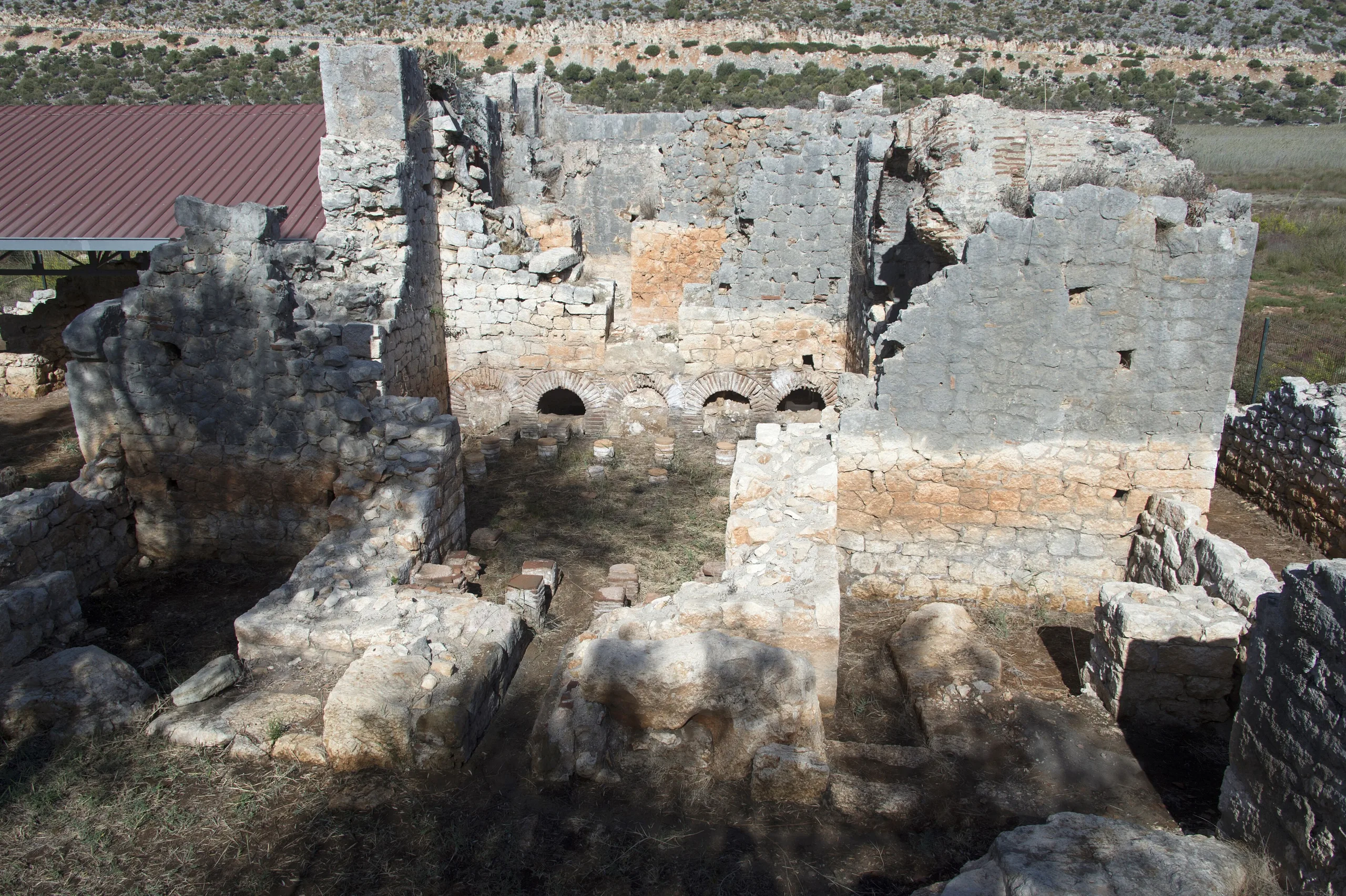
An aqueduct bringing fresh water is the first structure seen when approaching from Demre. A typical Roman nymphaeum lies on the east side. The Ministry lists in addition a cistern, walls, monumental fountains, Byzantine churches, baths and watchtowers, and Lycian-type tombs in the old cemetery. North of the harbour is a necropolis with Lycian sarcophagi and the remains of two Byzantine churches.
Murex workshops and synagogue
The Ministry singles out the murex workshops as a kind of dye factory. In antiquity the purple pigment, rare and reserved for emperors and the upper classes, was extracted from the murex shellfish. Leftover shells went into building mortar, and this murex mortar is important because it is found only in the region. The synagogue, thought to date to the 5th century CE, is described as the first concrete proof of a Jewish presence in Lycia; finds there include a menorah plate and inscriptions with religious phrases.
UNESCO status
According to the Culture Portal, Andriake is among the Lycian Civilisation Ancient Cities proposed for the UNESCO World Heritage List in 2009.
Visiting
The Culture Portal says Demre buses or a private vehicle will get you there. The Ministry's Turkish page states that the Museum Card is valid. For hours and entry terms, see the official page.
Gallery
Frequently asked questions
Where is Andriake?
Was Andriake a separate city?
What is its most important building?
Why are the murex workshops significant?
How old is the synagogue?
Is Andriake a World Heritage Site?
Sources (12)
- Likya Uygarlıkları Müzesi ve Andriake Örenyeri / Andriake Archaeological Site (TR ve EN sayfalar) — T.C. Kültür ve Turizm Bakanlığı, Müzeler ve Örenyerleri
- Andriake - Antalya (kaynak: Dünden Bugüne Antalya, II. Cilt, Antalya İl Kültür ve Turizm Müdürlüğü, 2012) — T.C. Kültür ve Turizm Bakanlığı, Türkiye Kültür Portalı
- Andriake (Pleiades 638745) — Pleiades
Photo credits
- Photo: Dosseman, CC BY-SA 4.0 — Wikimedia Commons (resized)
- Photo: Babbsack, CC BY-SA 3.0 — Wikimedia Commons (resized)
- Photo: Seraksin, CC BY-SA 4.0 — Wikimedia Commons (resized)
- Photo: Dosseman, CC BY-SA 4.0 — Wikimedia Commons (resized)
- Photo: Dosseman, CC BY-SA 4.0 — Wikimedia Commons (resized)
- Photo: Dosseman, CC BY-SA 4.0 — Wikimedia Commons (resized)
- Photo: Dosseman, CC BY-SA 4.0 — Wikimedia Commons (resized)
- Photo: Dosseman, CC BY-SA 4.0 — Wikimedia Commons (resized)
- Photo: Dosseman, CC BY-SA 4.0 — Wikimedia Commons (resized)