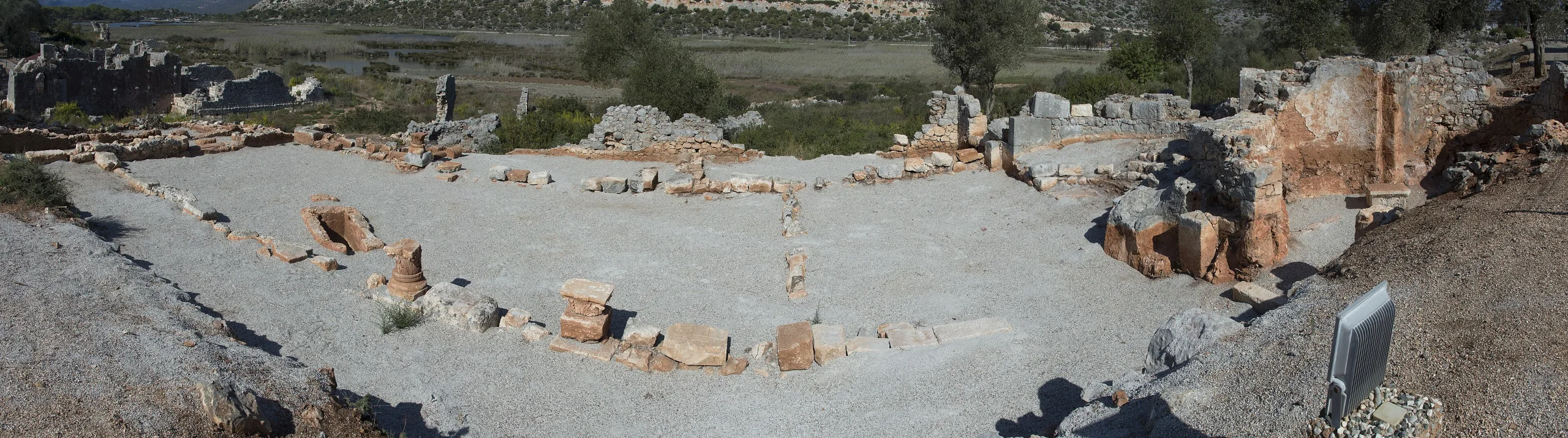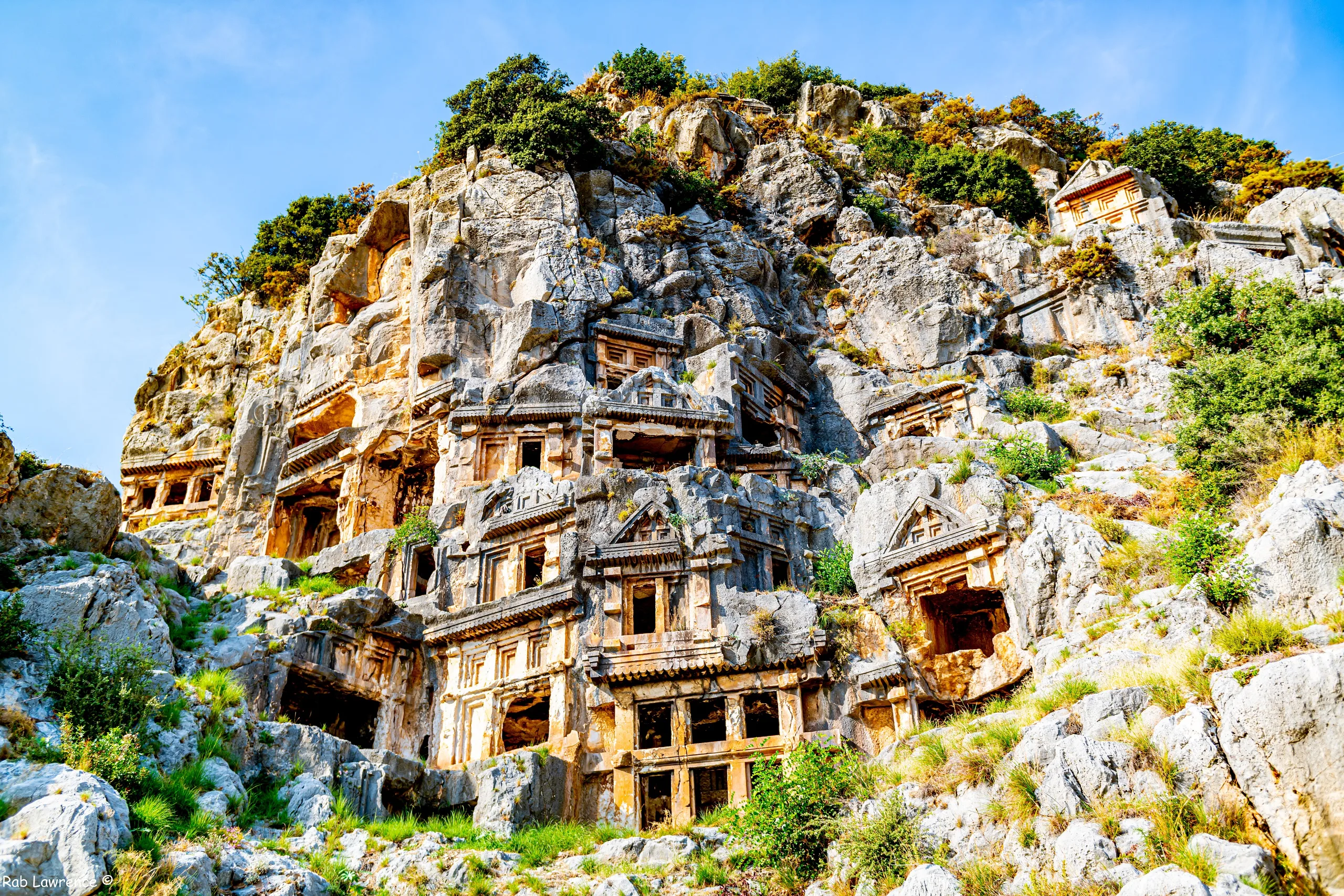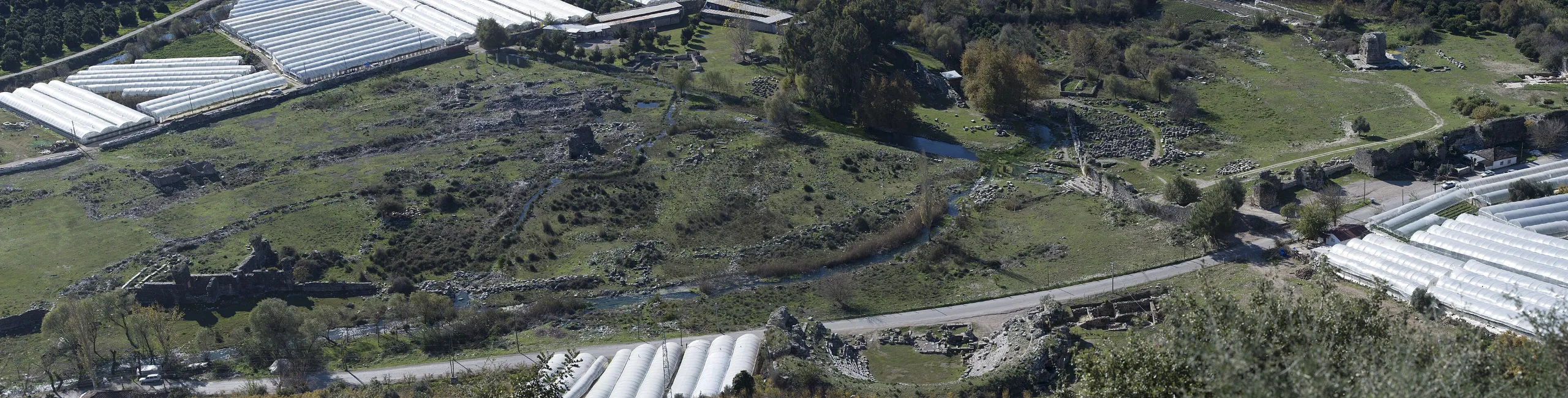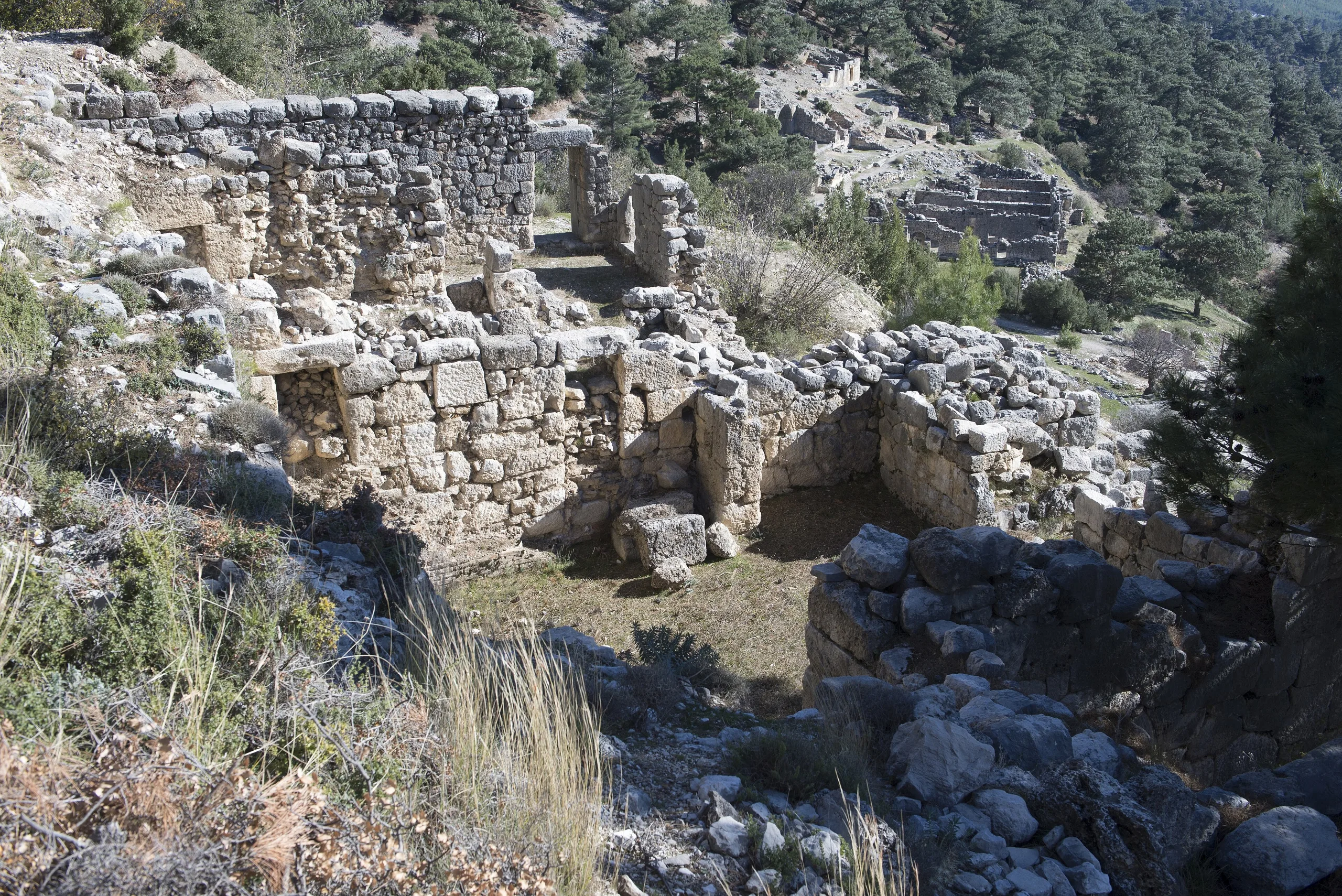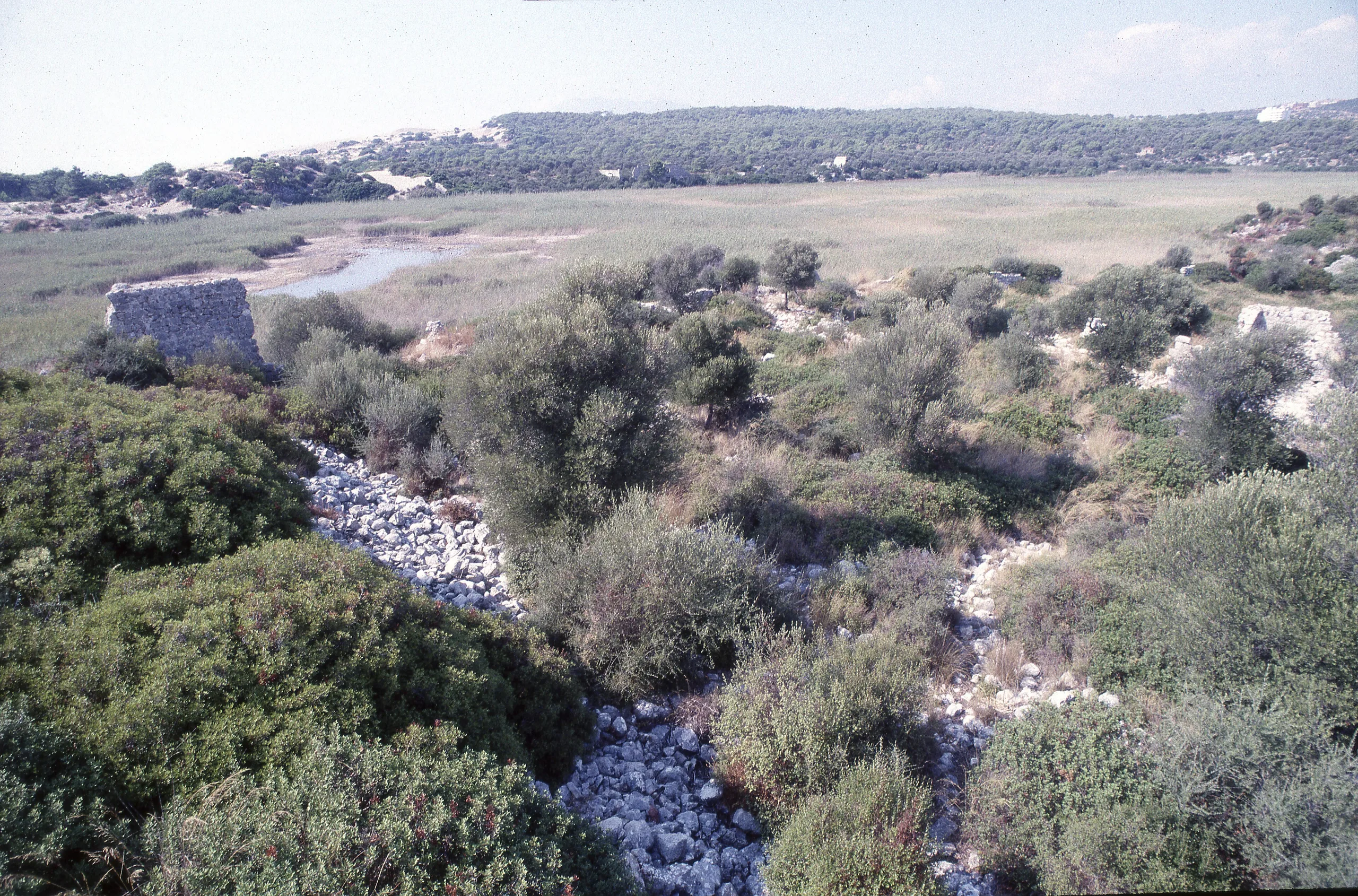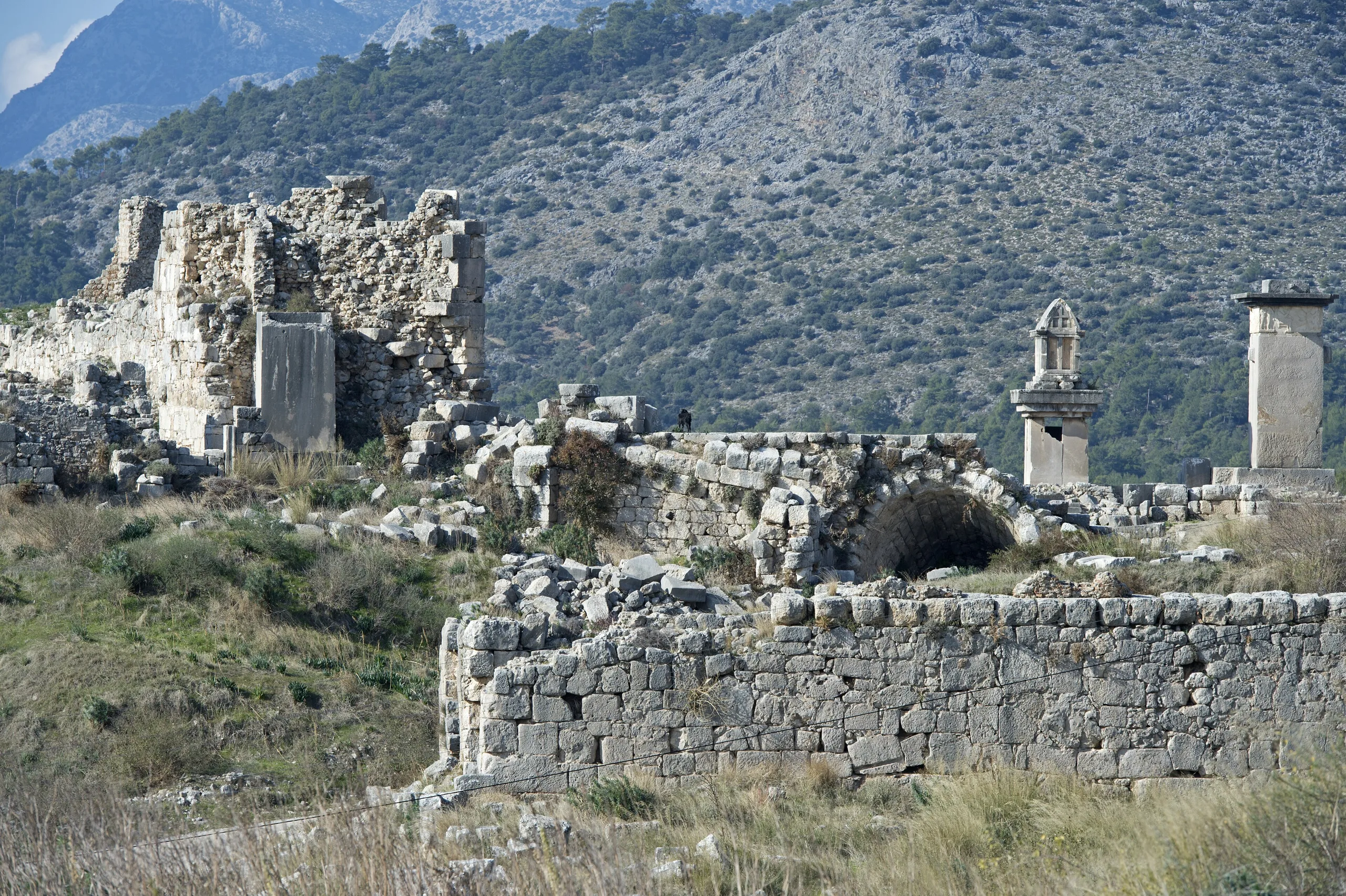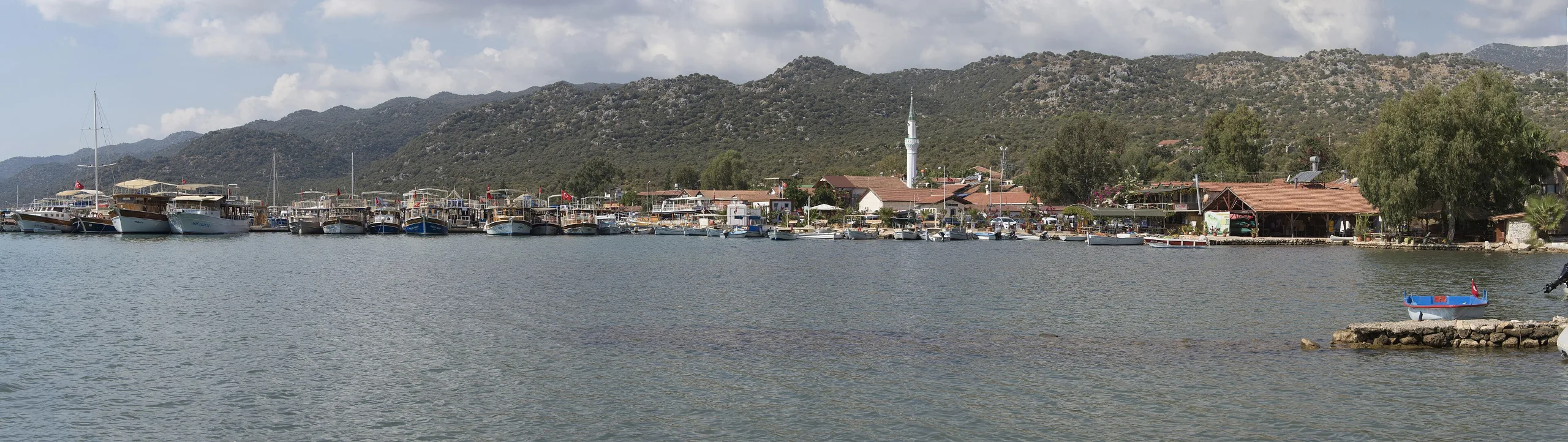
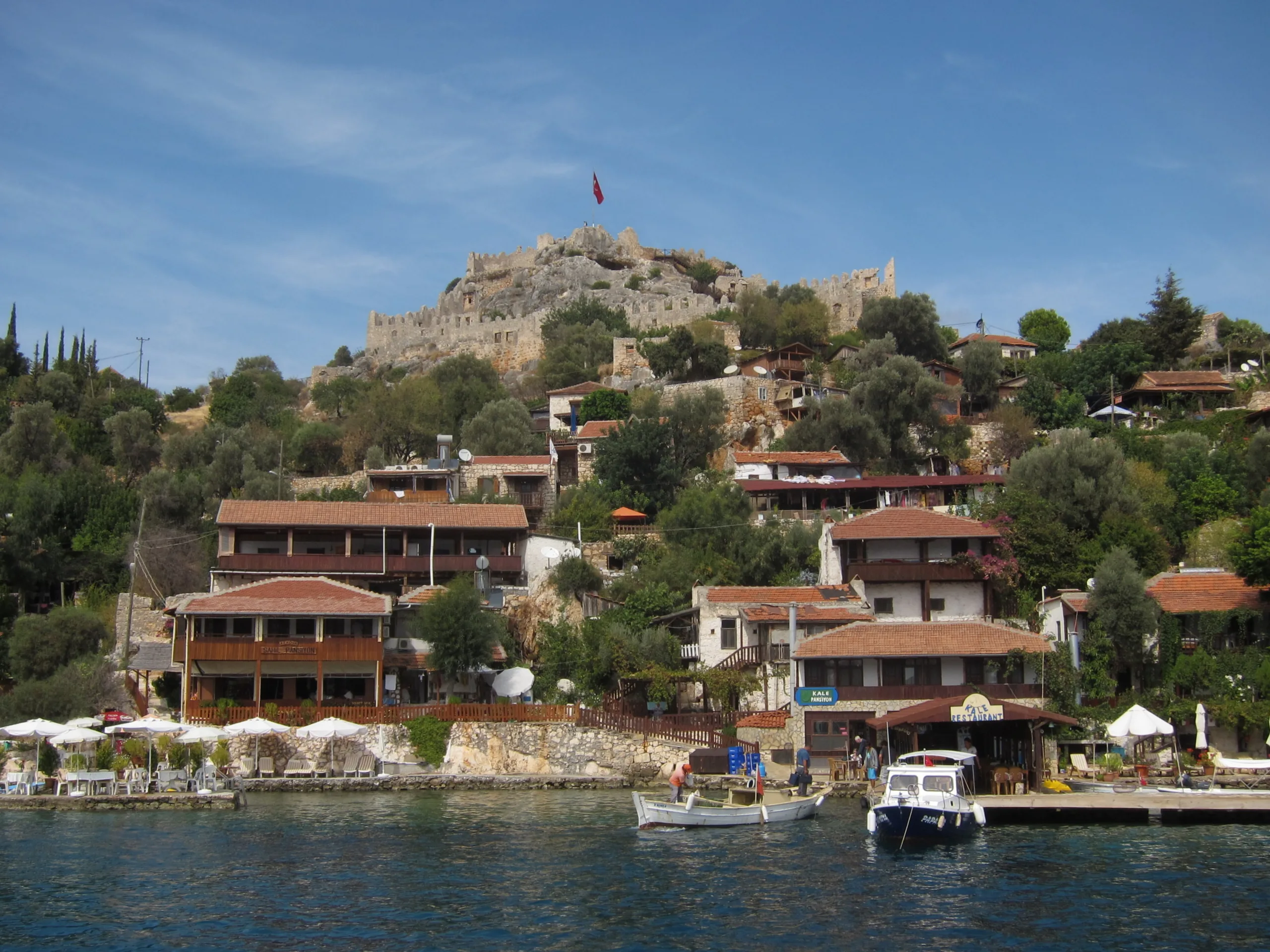
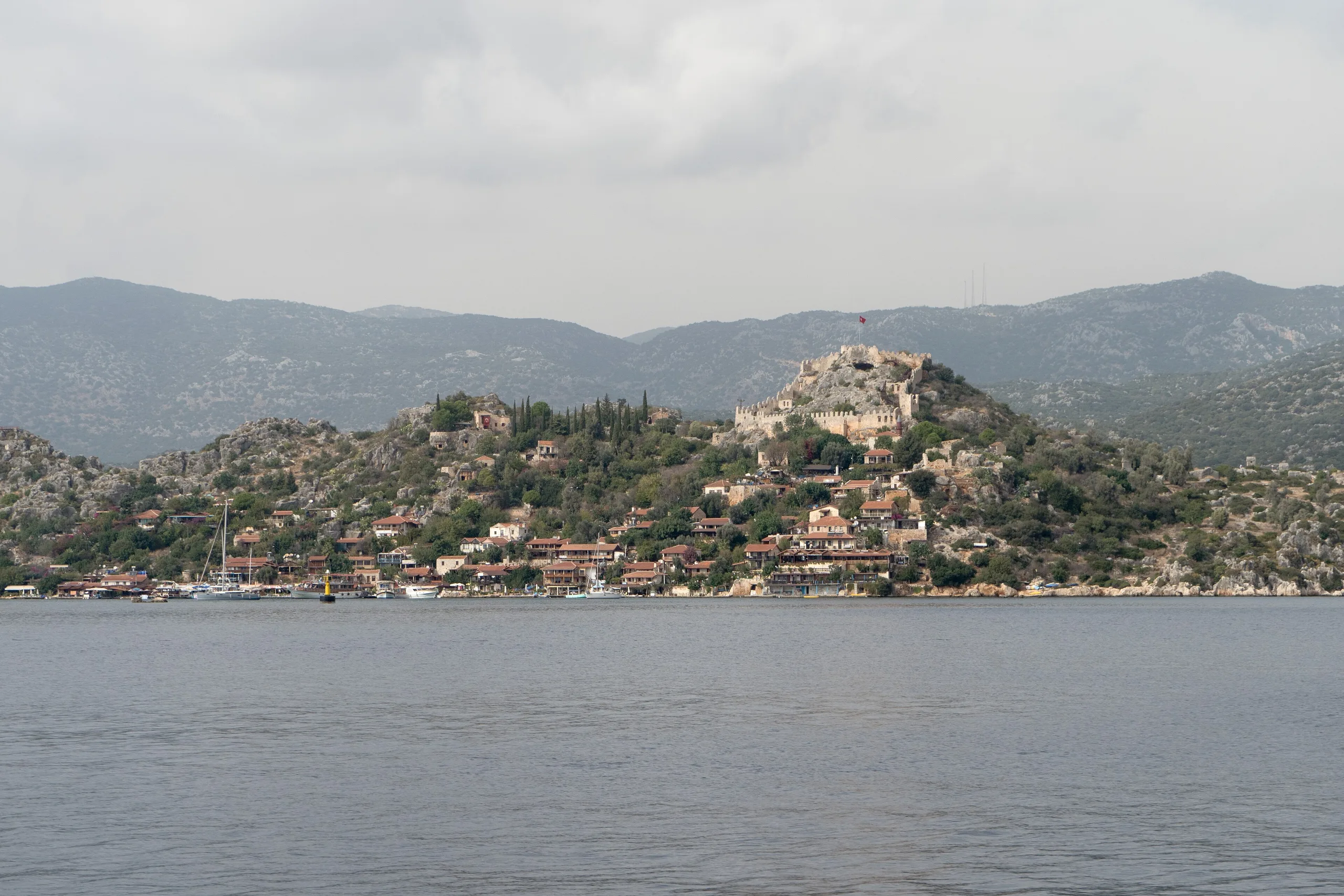
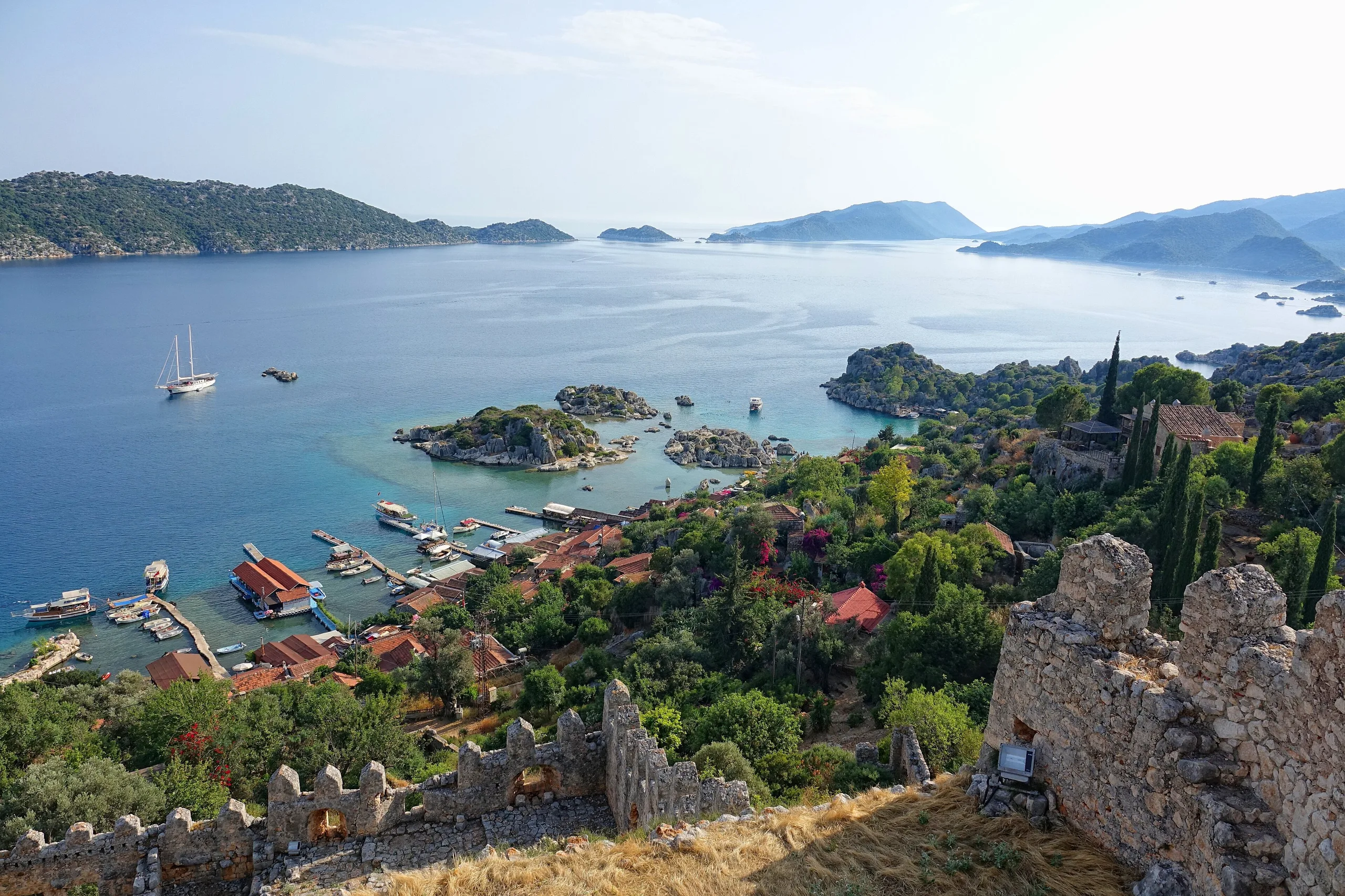
Simena, the Lycian town beneath today's Kaleköy on the peninsula facing Kekova Island, is known for its castle, a tiny rock-cut theatre, a necropolis and partly submerged remains.
Simena Archaeological Site (Kaleköy) is an ancient city located in Turkey, Antalya. Main periods: Roman Period.
Simena is the ancient Lycian town on which the settlement now called Kaleköy stands. It lies between the Kaş and Demre districts of Antalya, on the peninsula directly facing Kekova Island. The Culture Portal presents it as one of the few places in Turkey reachable by sea. The Ministry says the village of Kale was founded over the old town of Simena.
History
The name first appears in writing in the 1st century CE, in Pliny. Even so, the Culture Portal reasons from a Lycian-language inscription and a silver coin found at Aperlai that the town's history reaches back to the 4th century BCE, and the Ministry draws the same conclusion from inscriptions. In the Lycian League, Simena was represented by Aperlai. After the region joined the Roman Empire it is known to have carried on as an independent city.
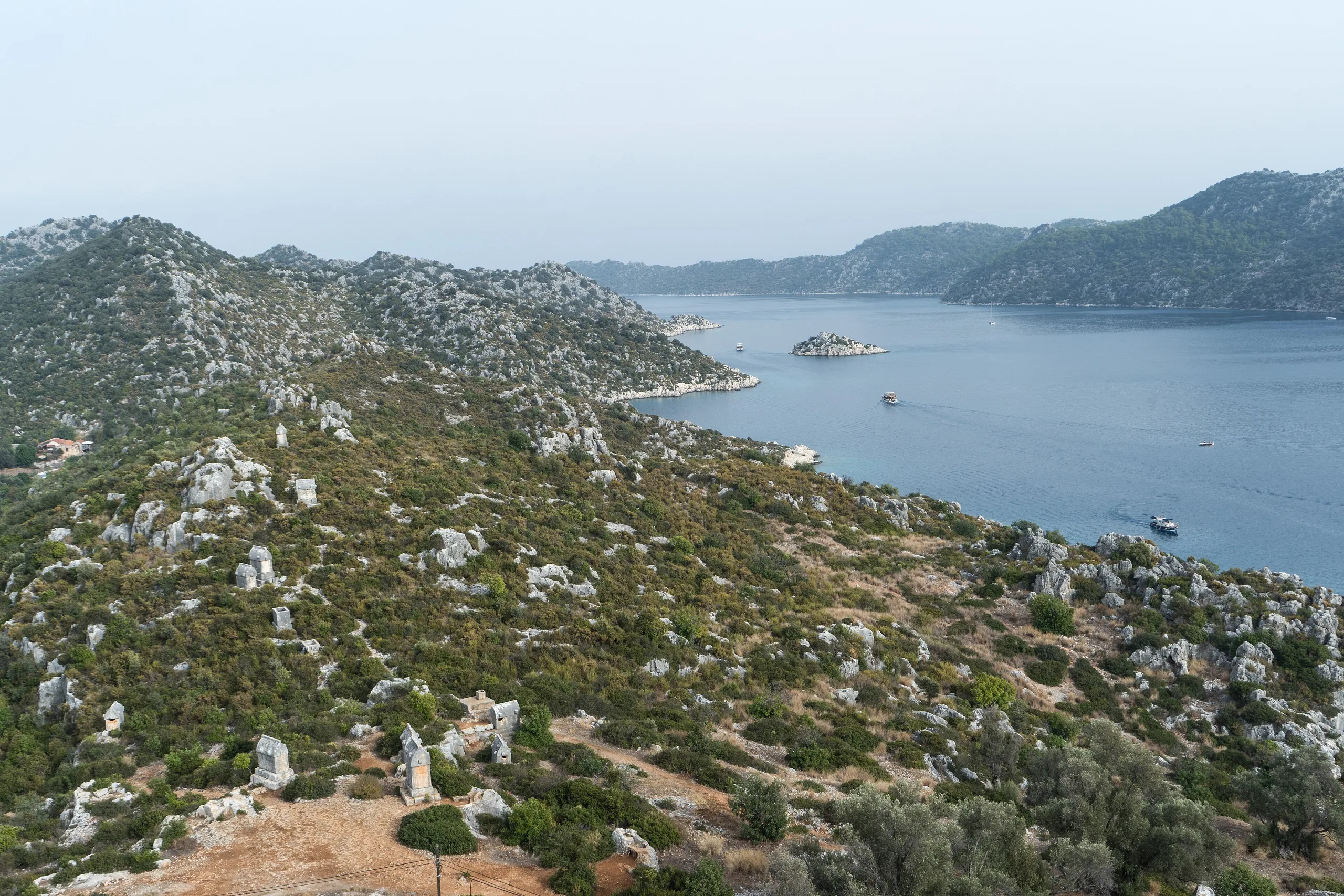
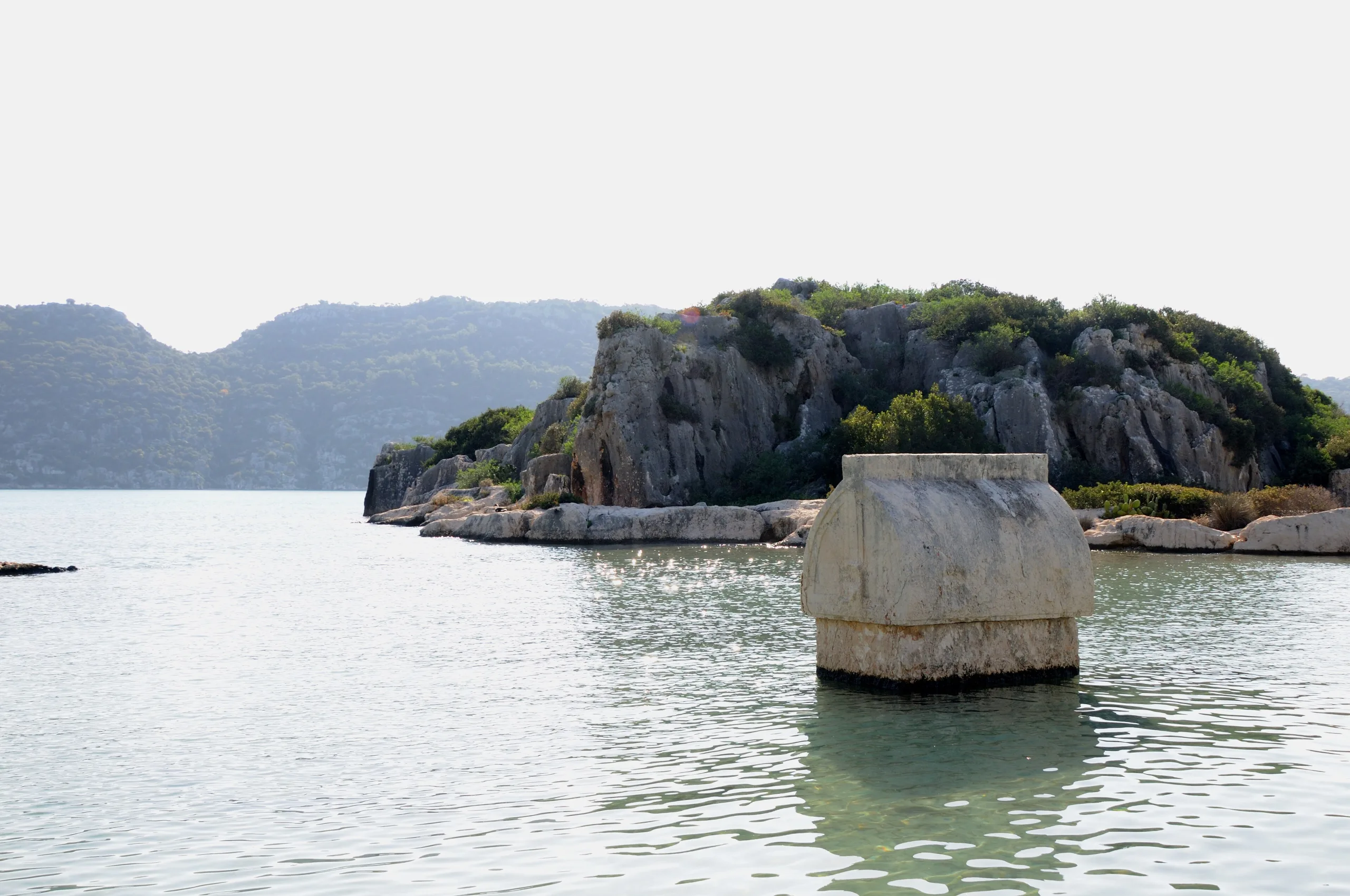
The Portal adds that ancient earthquakes damaged the town and left part of it under water. Steps, Lycian-type sarcophagi, a breakwater and building remains can be seen in the shallows along the shore. The castle was in use during the Middle Ages.
Main remains
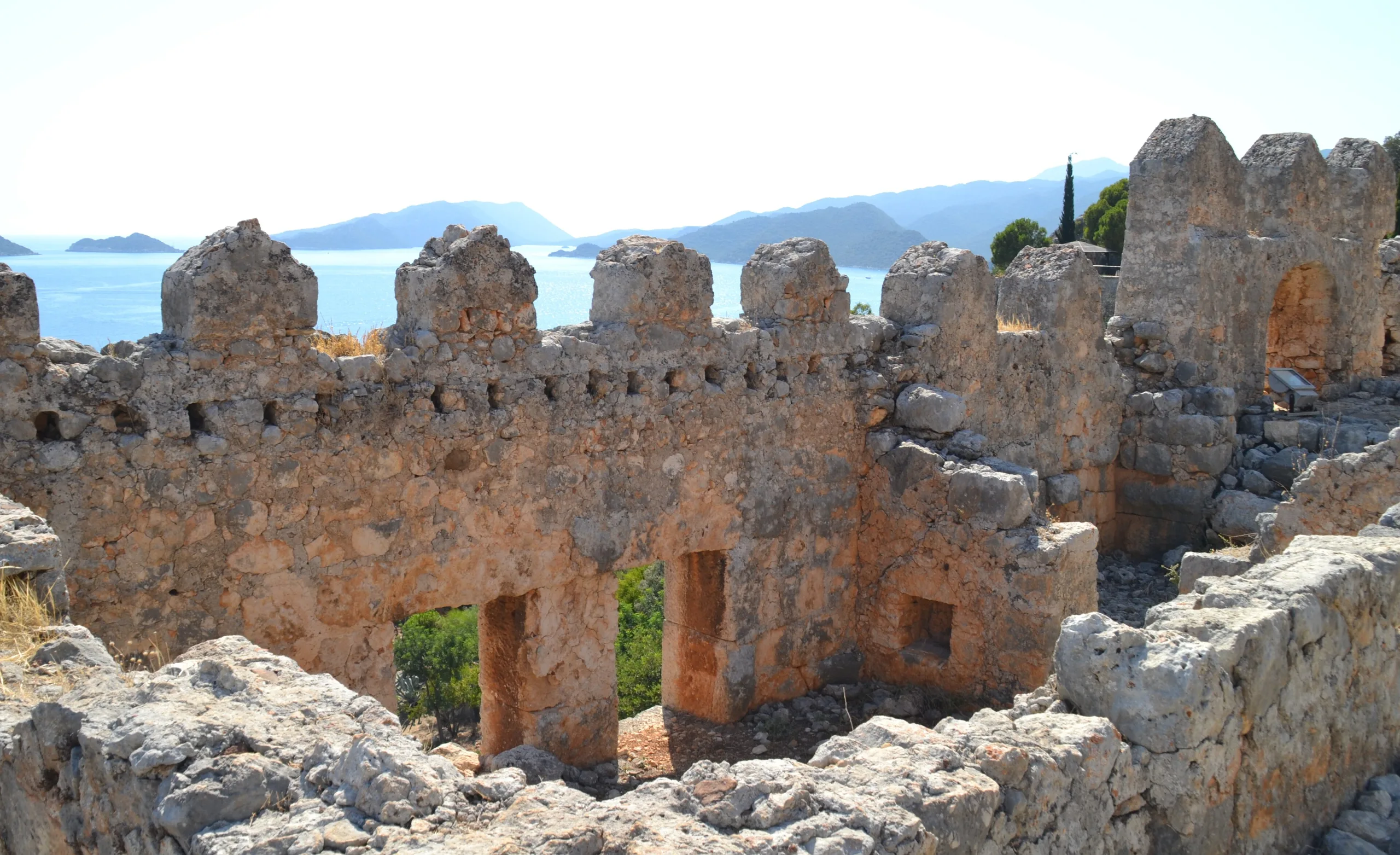
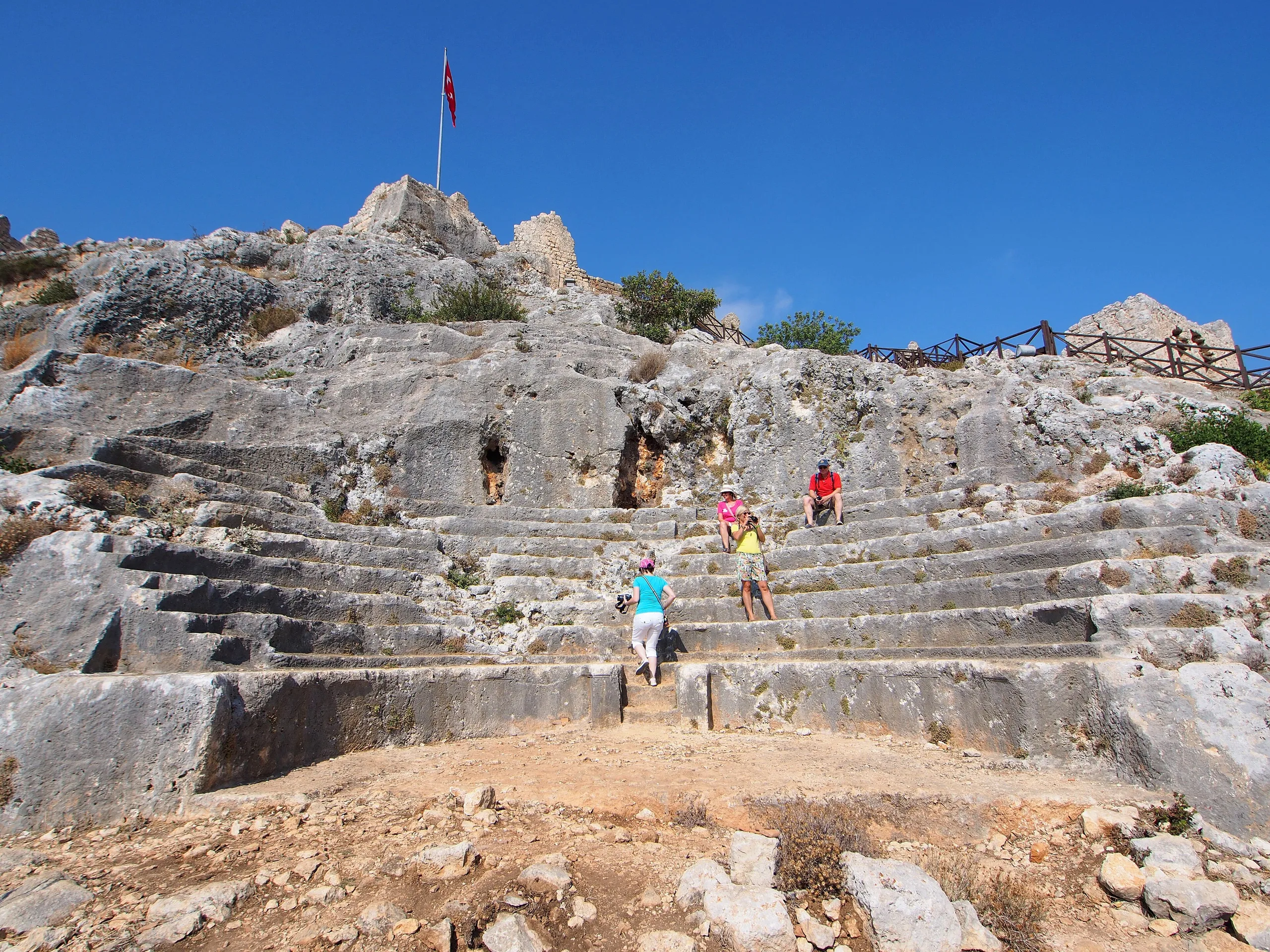
The castle is what catches the eye first. Inside the medieval walls of the inner fortress stood a temple, of which only a few blocks remain, with a linked stoa. The Portal says traces of a religious building that was a temple, then a church and finally a mosque lie among the other remains. In the castle is a theatre cut from living rock with seven rows of seats for about 300 people; the Ministry calls it the smallest theatre of any Lycian city.
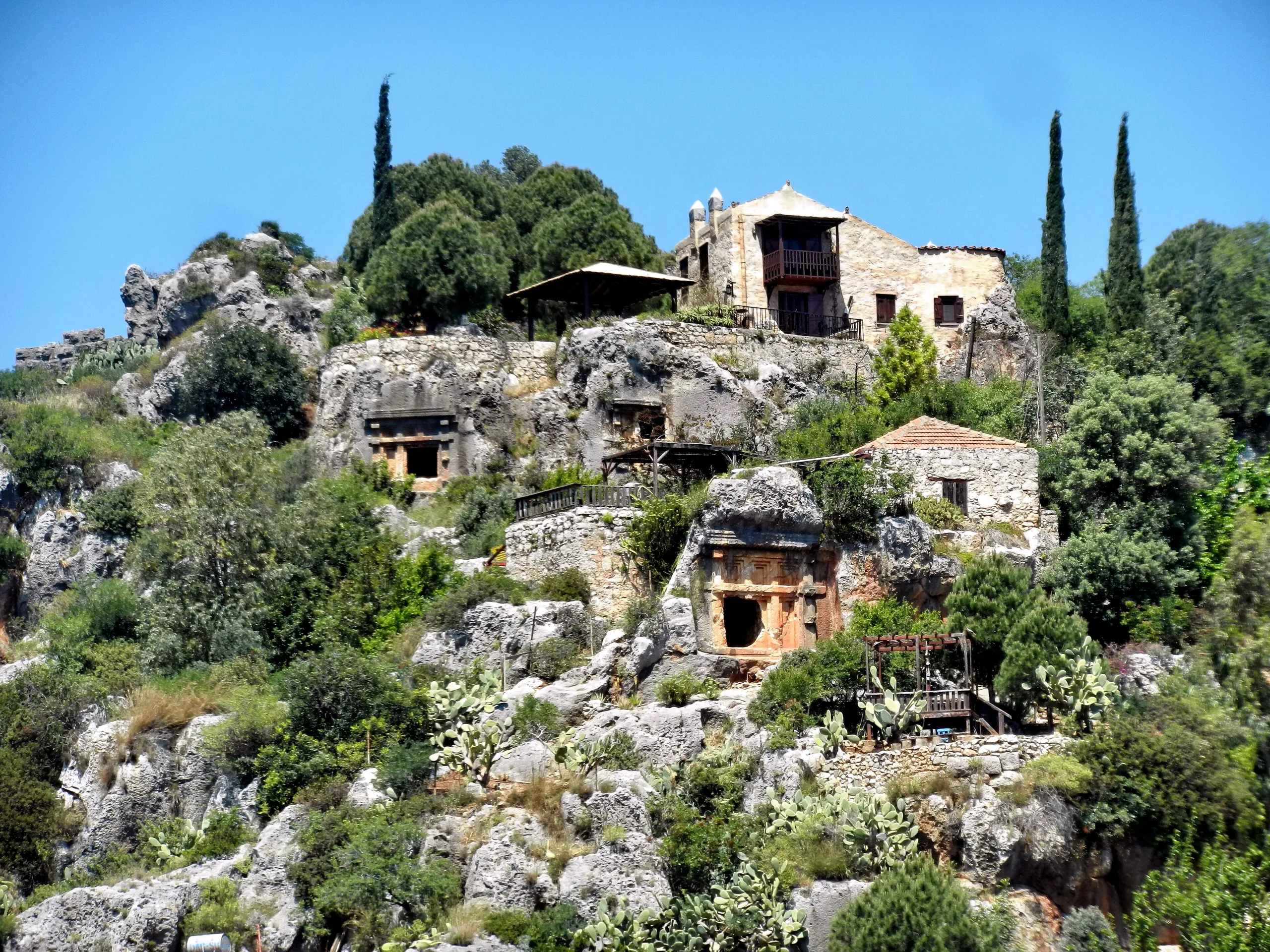
Above a rock-cut tomb there is a Roman wall of regular blocks, and above that a battlemented late wall, so three periods can be seen at once, the Ministry notes.
On the shore, an inscription on the ruined bath says it was presented to Emperor Titus by the people and council of Aperlai together with the other cities of the league. The Culture Portal dates the bath complex to about 79 BCE, but since Titus is named, the date should be checked; no firm year is stated here.
Necropolis
Many tombs are scattered around the site, two of them house-type. In the house-type tomb north of the tower an inscription in the Lycian language stands out. According to the Portal, a broad necropolis of sarcophagi and rock tombs extends north-east of the castle, and one sarcophagus inscription names Mentor son of Idargus. The rock-cut necropolis at Theimussa in Üçağız is thought to have been Simena's burial ground. From the castle one can see what a safe natural harbour Üçağız makes.
Visiting
A steep path with occasional steps climbs from the shore to the castle, passing many ruins mixed in with present-day houses. The Portal says boats run from Üçağız or Çayağzı. The Ministry's Turkish page states that the MüzeKart is valid for Turkish citizens; check the official page for hours and fees. Simena is among the Lycian cities proposed for the World Heritage List in 2009.
Gallery
Frequently asked questions
Where is Simena?
How do I get there?
How old is the town?
What is notable about the theatre?
What does the bath inscription say?
Is the MüzeKart valid?
Sources (12)
- Simena Örenyeri (TR sayfa; EN sayfa içerik uyuşmazlığı nedeniyle kullanılmadı) — T.C. Kültür ve Turizm Bakanlığı, Müzeler ve Örenyerleri
- Simena - Antalya (kaynak: Antalya İl Kültür ve Turizm Müdürlüğü) — T.C. Kültür ve Turizm Bakanlığı, Türkiye Kültür Portalı
- Simena (Wikidata Q2501985, P625) — Wikidata
Photo credits
- Photo: Dosseman, CC BY-SA 4.0 — Wikimedia Commons (resized)
- Photo: Kurt Basis, CC BY 3.0 — Wikimedia Commons (resized)
- Photo: Alexkom000, CC BY 4.0 — Wikimedia Commons (resized)
- Photo: Alexkom000, CC BY 4.0 — Wikimedia Commons (resized)
- Photo: Gisela s, CC BY-SA 4.0 — Wikimedia Commons (resized)
- Photo: rheins, CC BY 3.0 — Wikimedia Commons (resized)
- Photo: Josep M. Gracia, CC BY-SA 4.0 — Wikimedia Commons (resized)
- Photo: Bjørn Christian Tørrissen, CC BY-SA 4.0 — Wikimedia Commons (resized)
- Photo: Tanya Dedyukhina, CC BY 3.0 — Wikimedia Commons (resized)