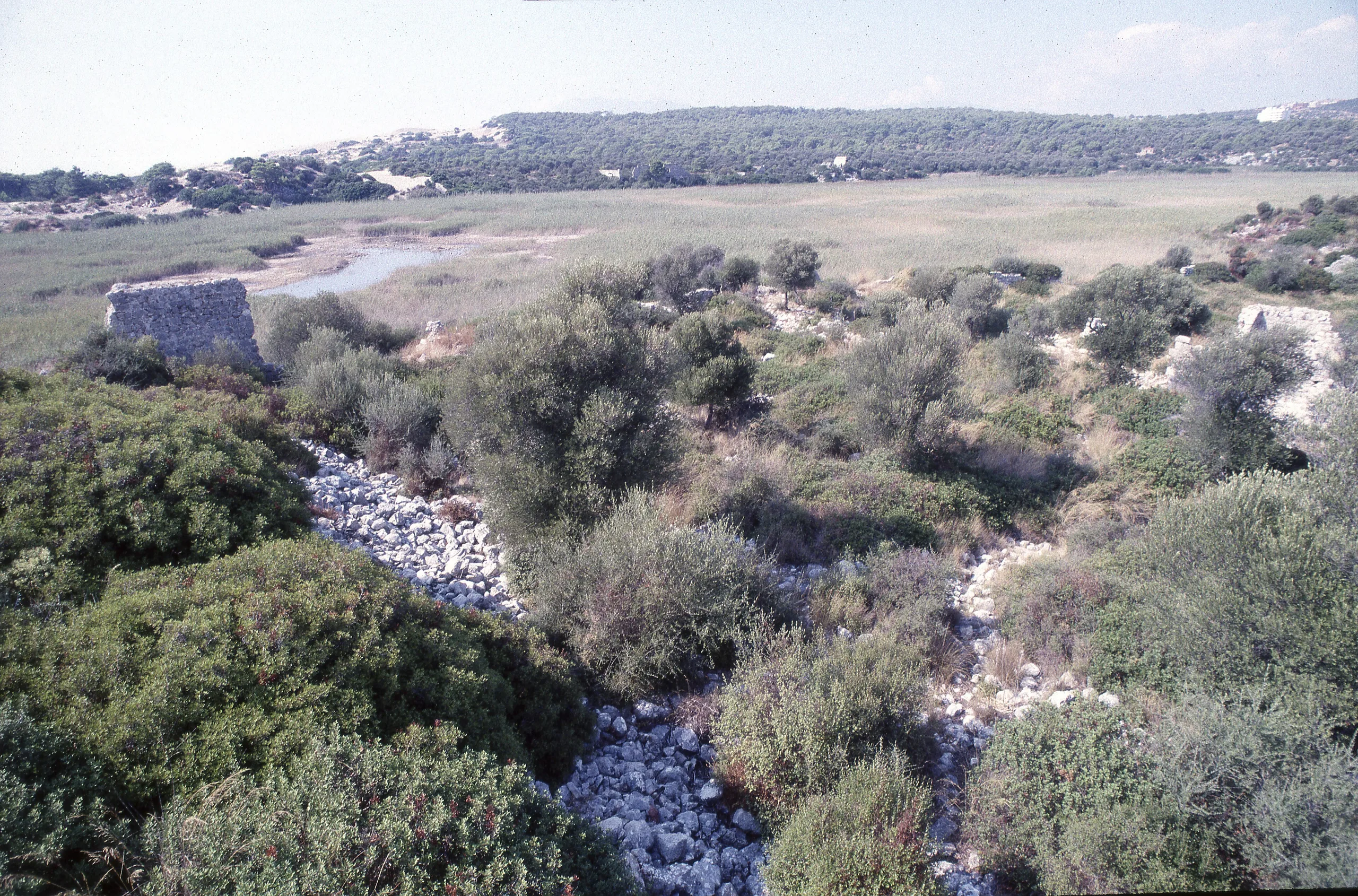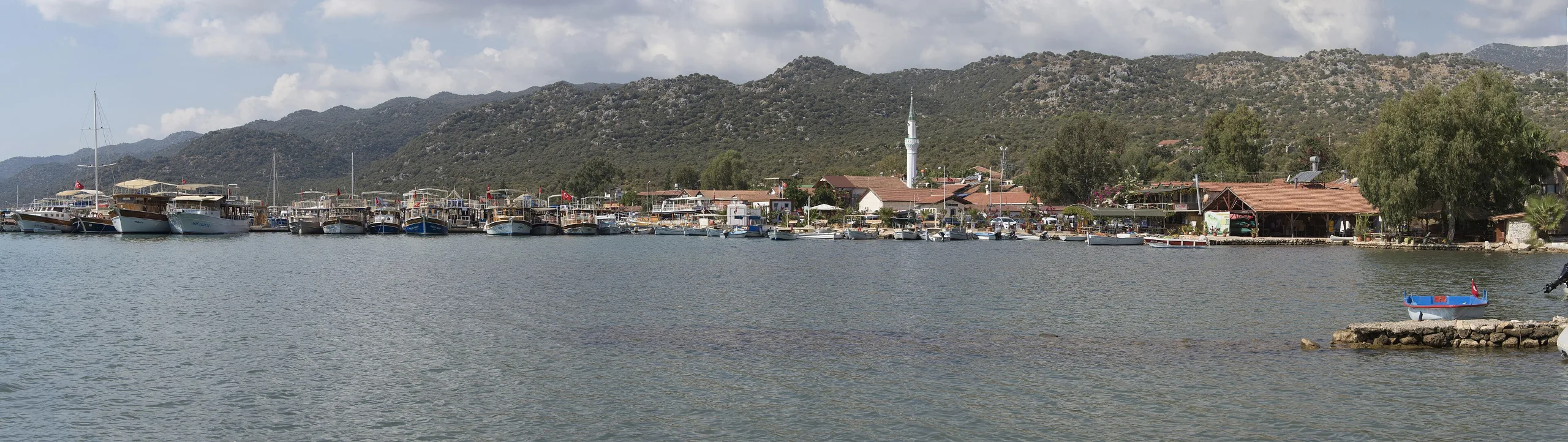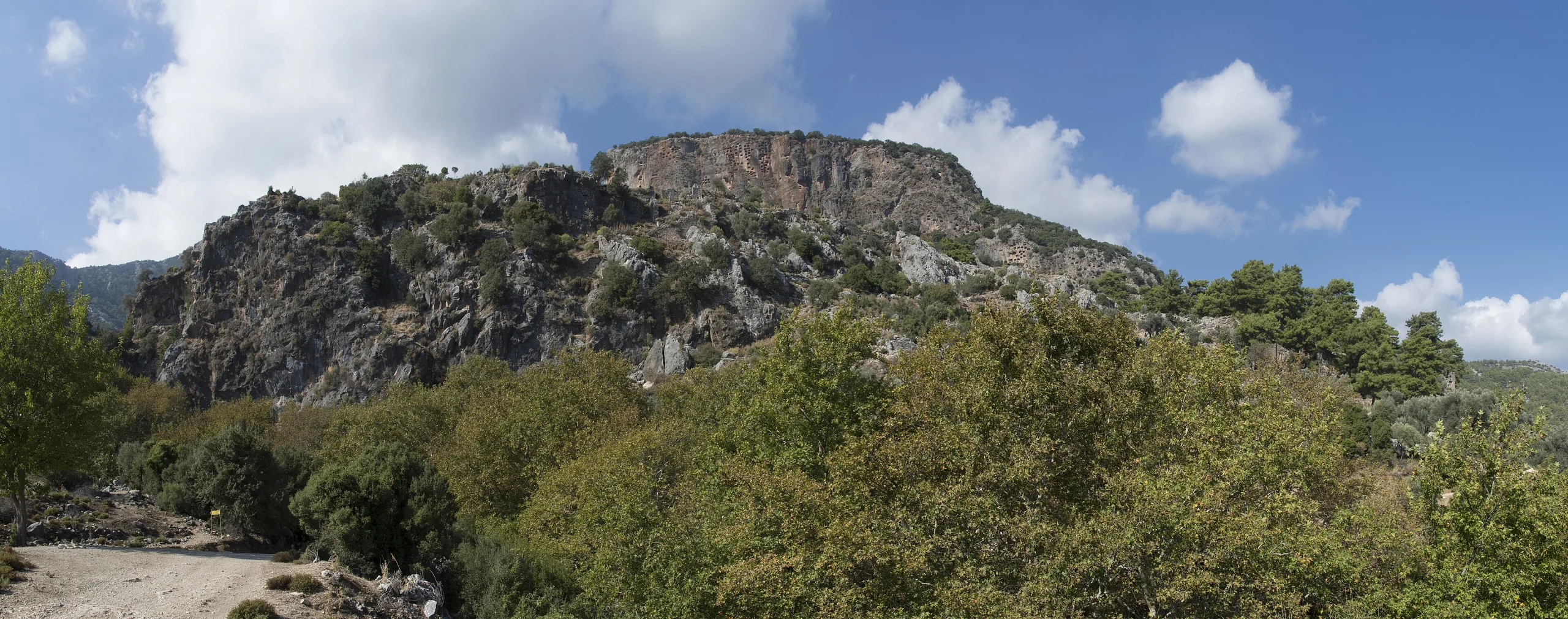
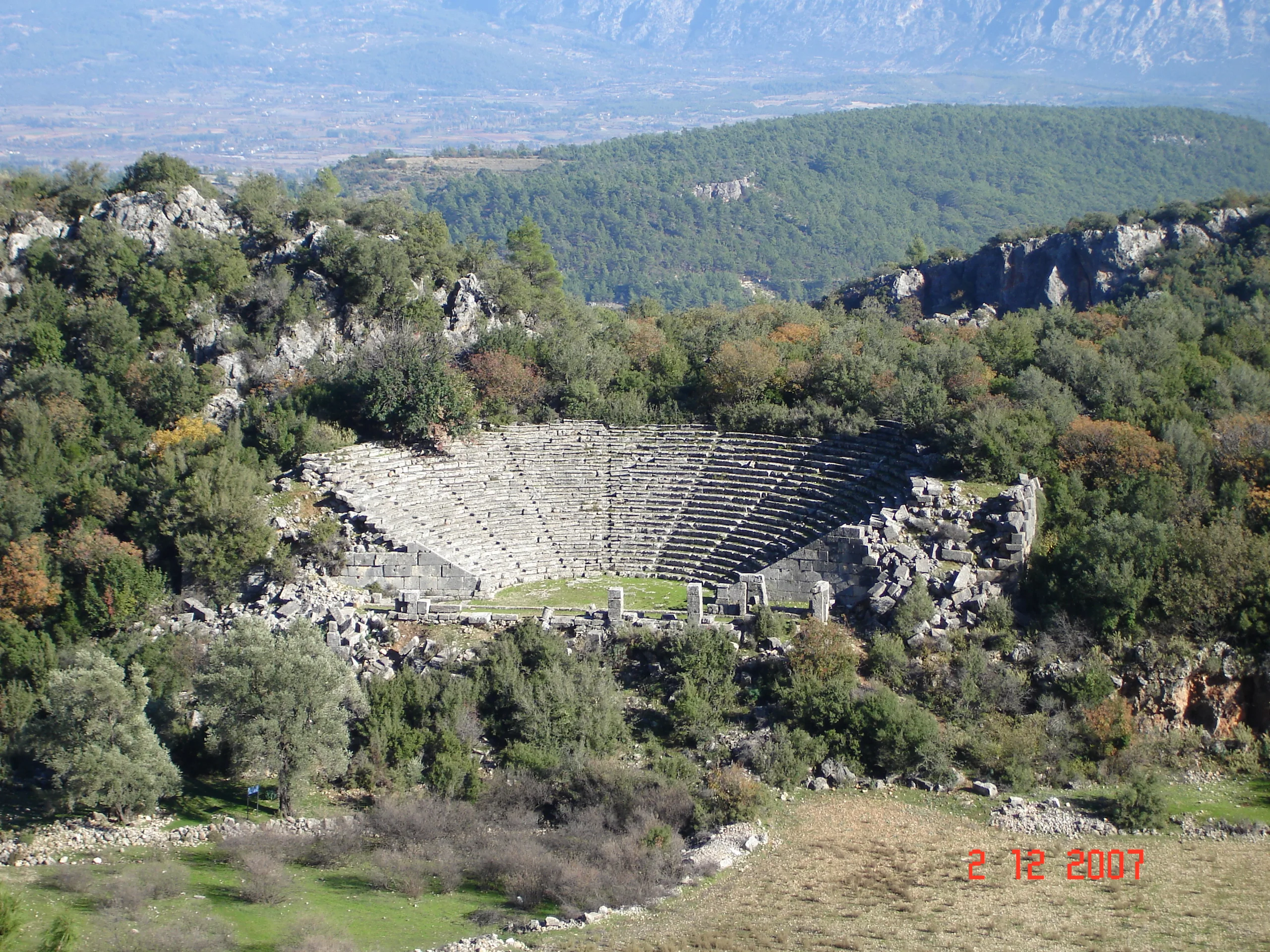
Pinara is a Lycian city near Minare village below Mount Babadağ in Fethiye, known for its round acropolis, hundreds of rock tombs, odeon, agora and theatre.
Pinara is an ancient city located in Turkey, Mugla. Main periods: Hellenistic Period, Roman Period, Byzantine Period.
Pinara is a Lycian city in Seydikemer district of Muğla, about 5 kilometres west of the Fethiye-Kaş highway and close to the village of Minare. The Muğla provincial culture directorate and the Culture Portal put it 40 kilometres from Fethiye, with the last 2 kilometres from Minare on a stabilised road. Pleiades describes it as a city of Lycia at the foot of Mount Cragus, today's Babadağ.
Name and foundation
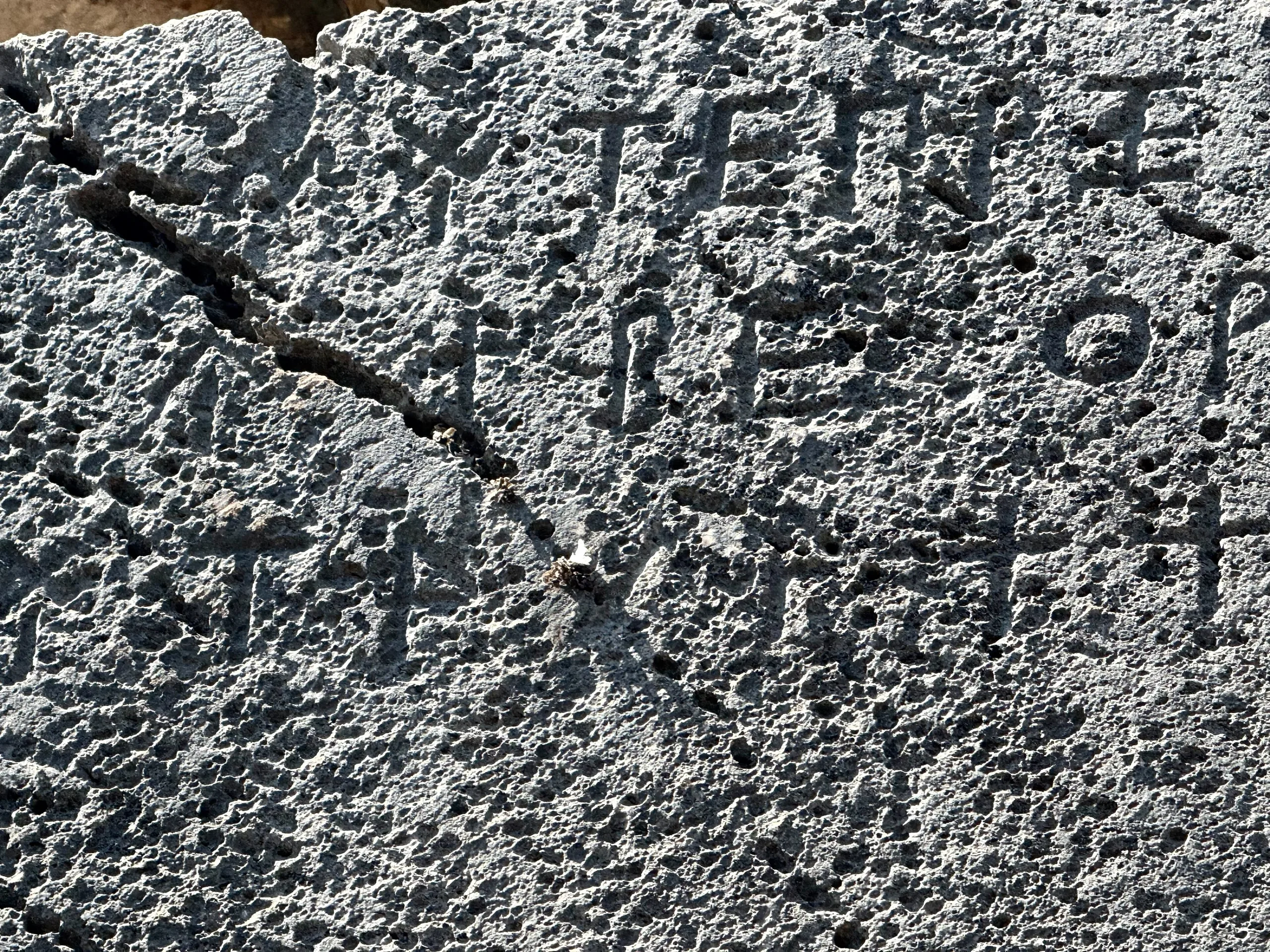
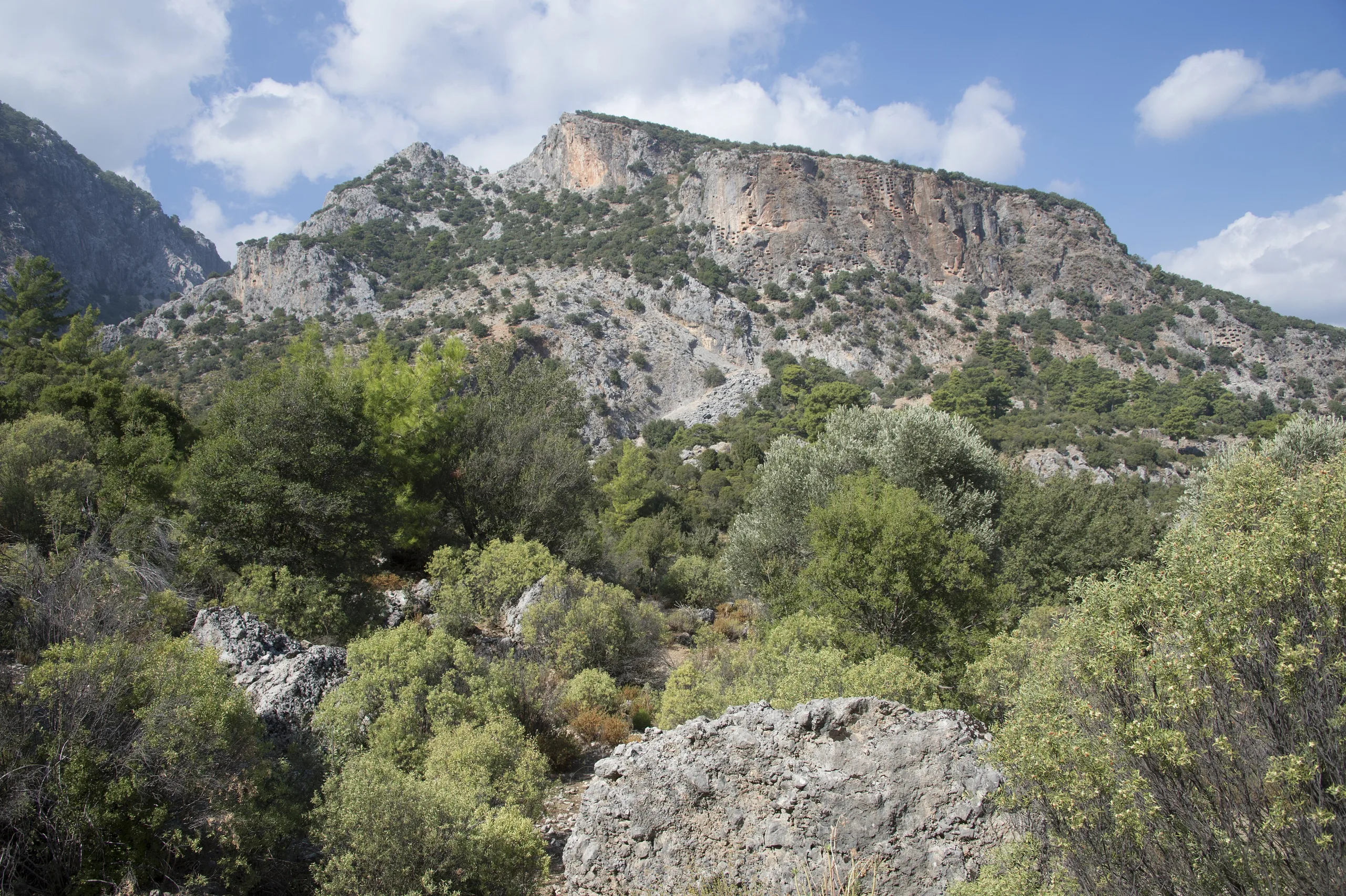
Lycian inscriptions read the city's name as Pinale. The ministry's Turkish page says Pınara means 'round' in Lycian and suggests the name came from a rock shaped like a minaret and pocked with bird's-nest-like tombs, which is also where Minare village is thought to get its name. The English page relies on Menecrates, as cited by Stephanus of Byzantium, for a foundation story: Xanthos became overcrowded, so some elders settled a new town on a lofty peak of Mount Cragus and named it Pinara, 'round'. The upper acropolis, with the early remains, is truly round, and the Culture Portal says this lends the story a measure of credibility.
History
The ministry page says early sources tell that the city was founded by colonists from Xanthos. According to the same text Pinara opened its gates and surrendered to Alexander, and its history reaches back well before him to Troy, since the archer Pandaros of Pinara is mentioned in the Trojan War. Strabo and Stephanus of Byzantium both treat it as an important Lycian city, and Strabo, citing Artemidorus, lists it among the six cities that held three votes each in the assembly of the Lycian League.
After Alexander died the city was attached to the kingdom of Pergamon and later became a Roman city. The ministry text says it revived and was rebuilt in that period but suffered heavily in the earthquakes of 141 and 240 CE and was abandoned in the 9th century CE. It adds that the quake of 1957 sent rock sliding down the mountain.
Main features
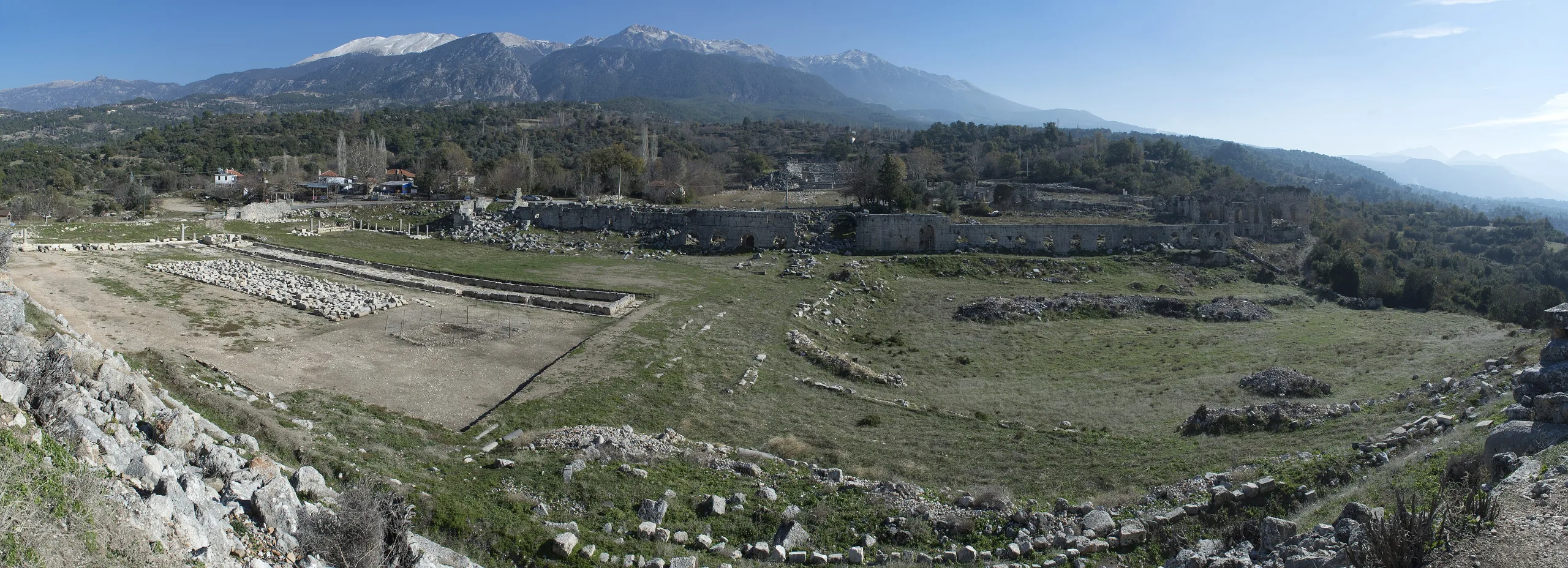
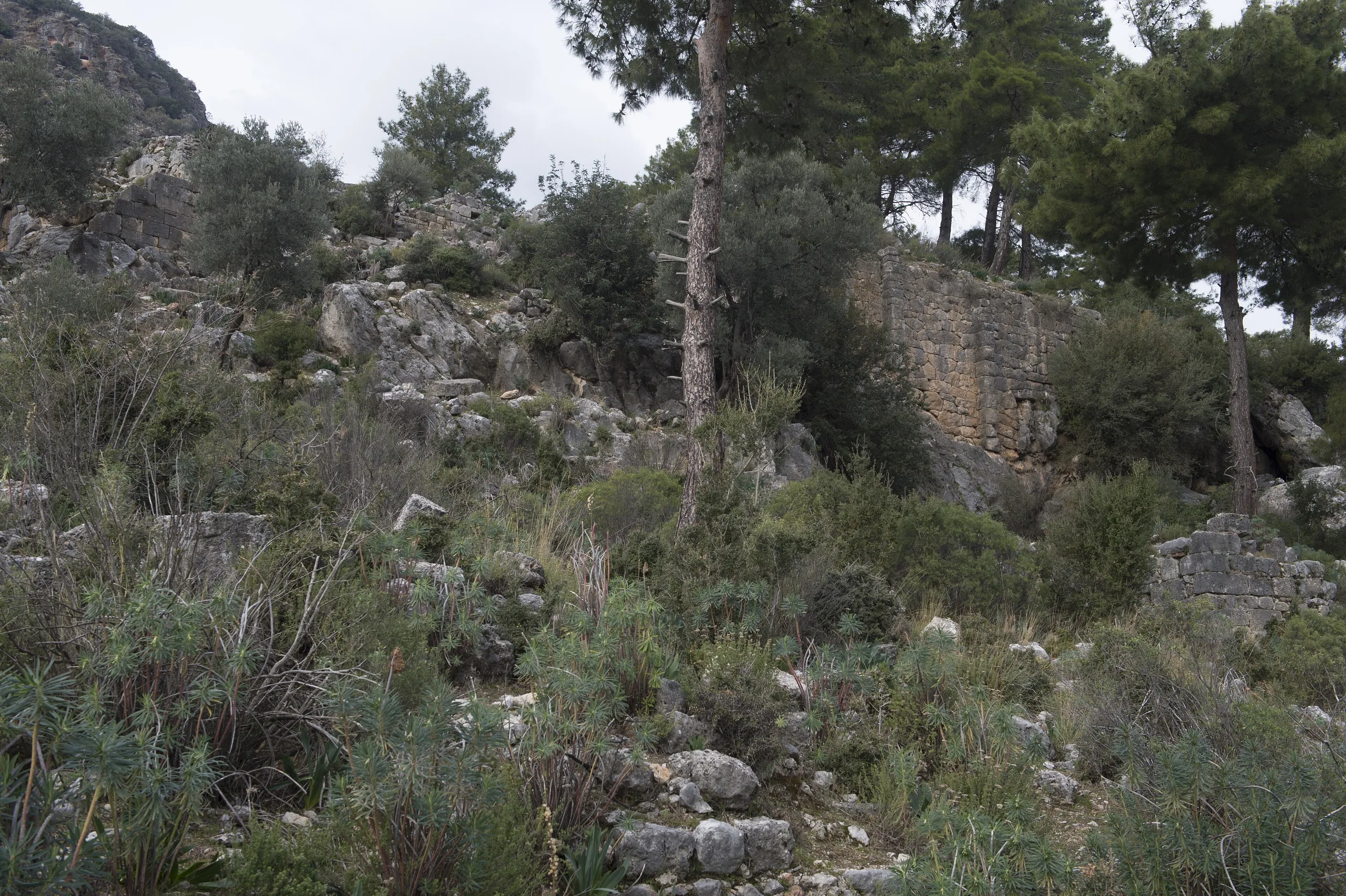
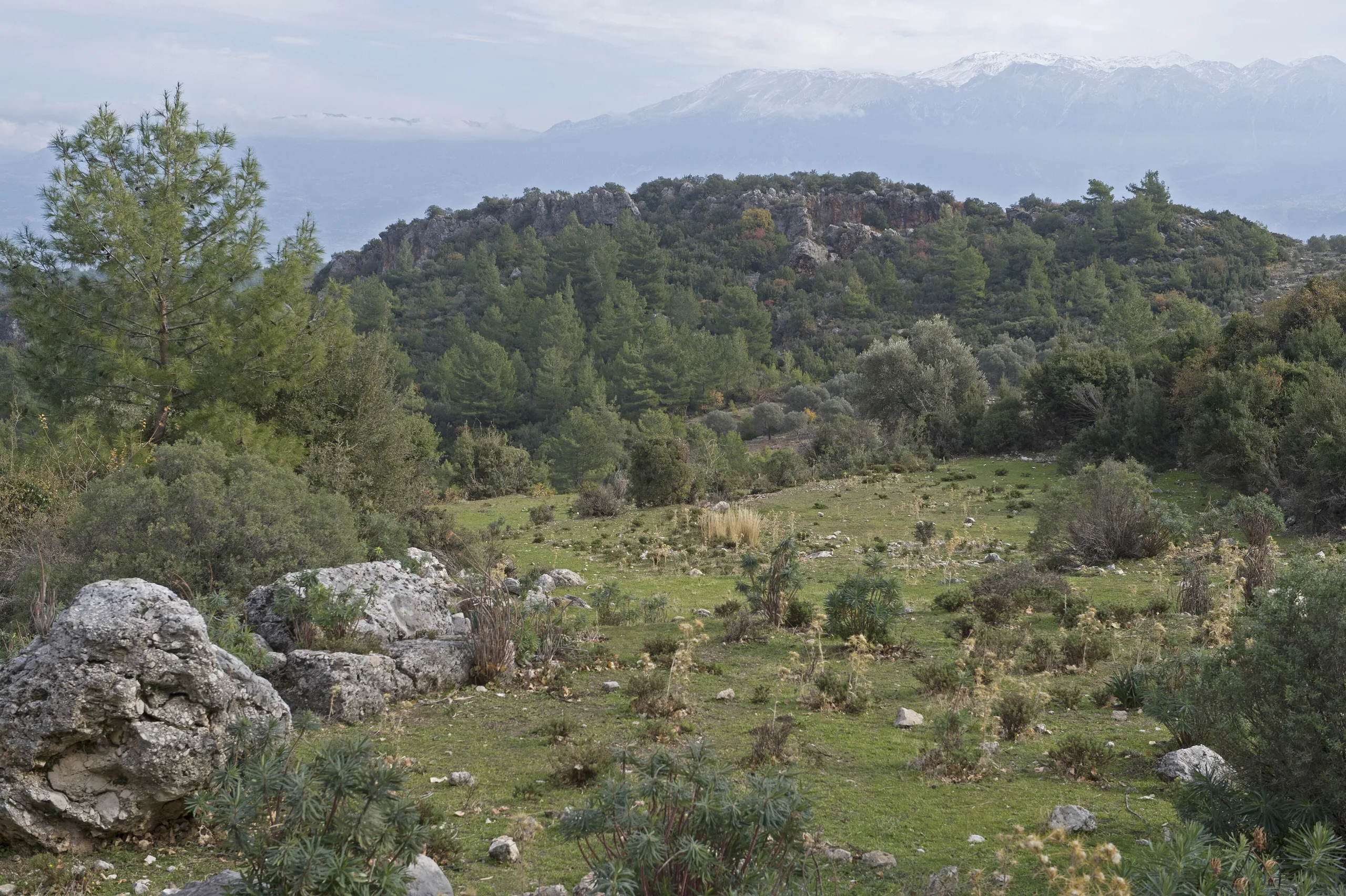
The Culture Portal lists a bath, theatre, agora, odeon, rock tombs and two acropoleis. The upper acropolis soon proved too small, so the lower one, easier to reach, was opened for settlement. Although the lower acropolis has steep sides, terracing and a defensive wall were built there. Through the gate on the south side of the wall, the odeon leans on the hillside and the agora spreads over level ground in front of it, together forming the city's centre.
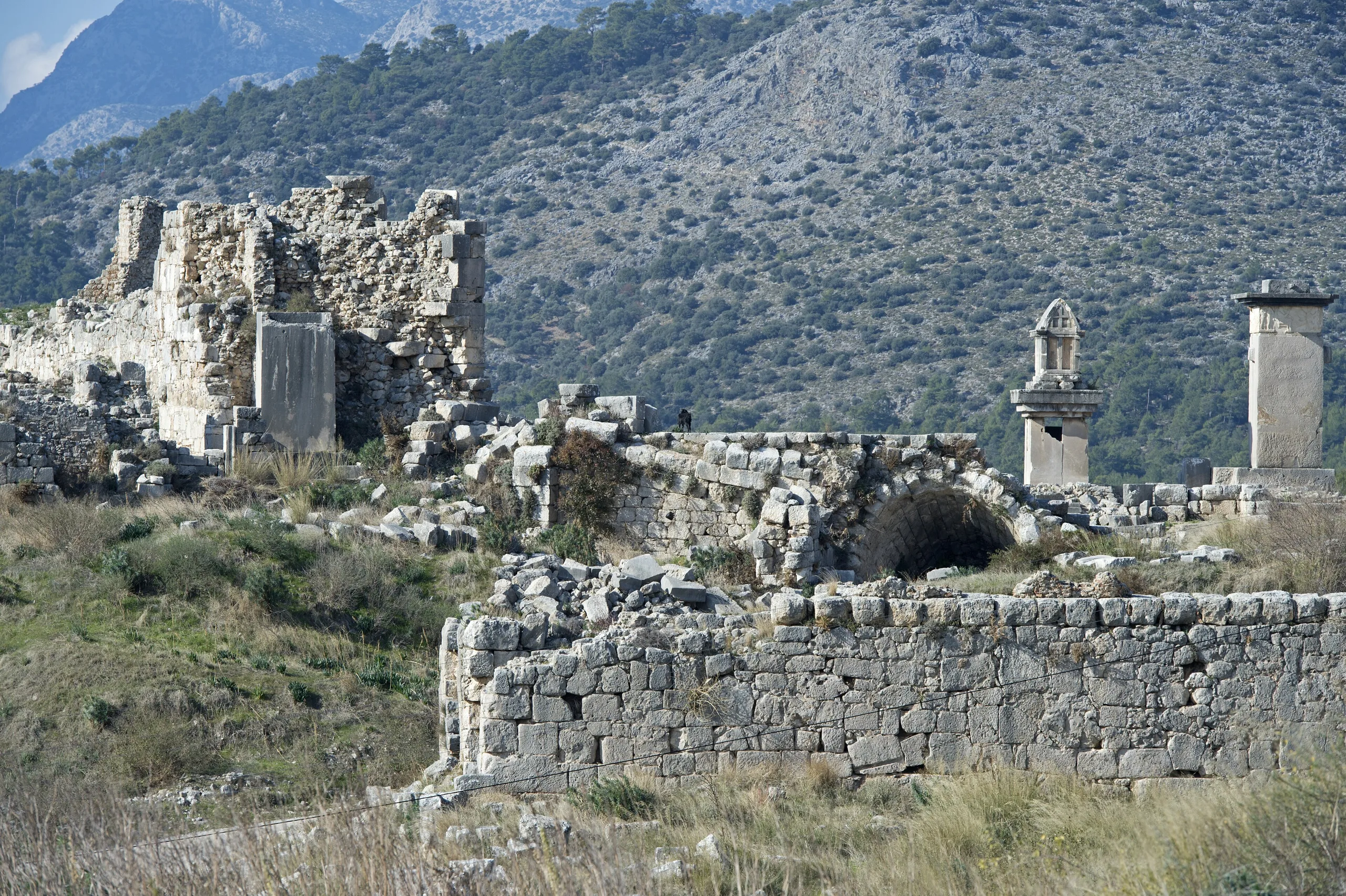
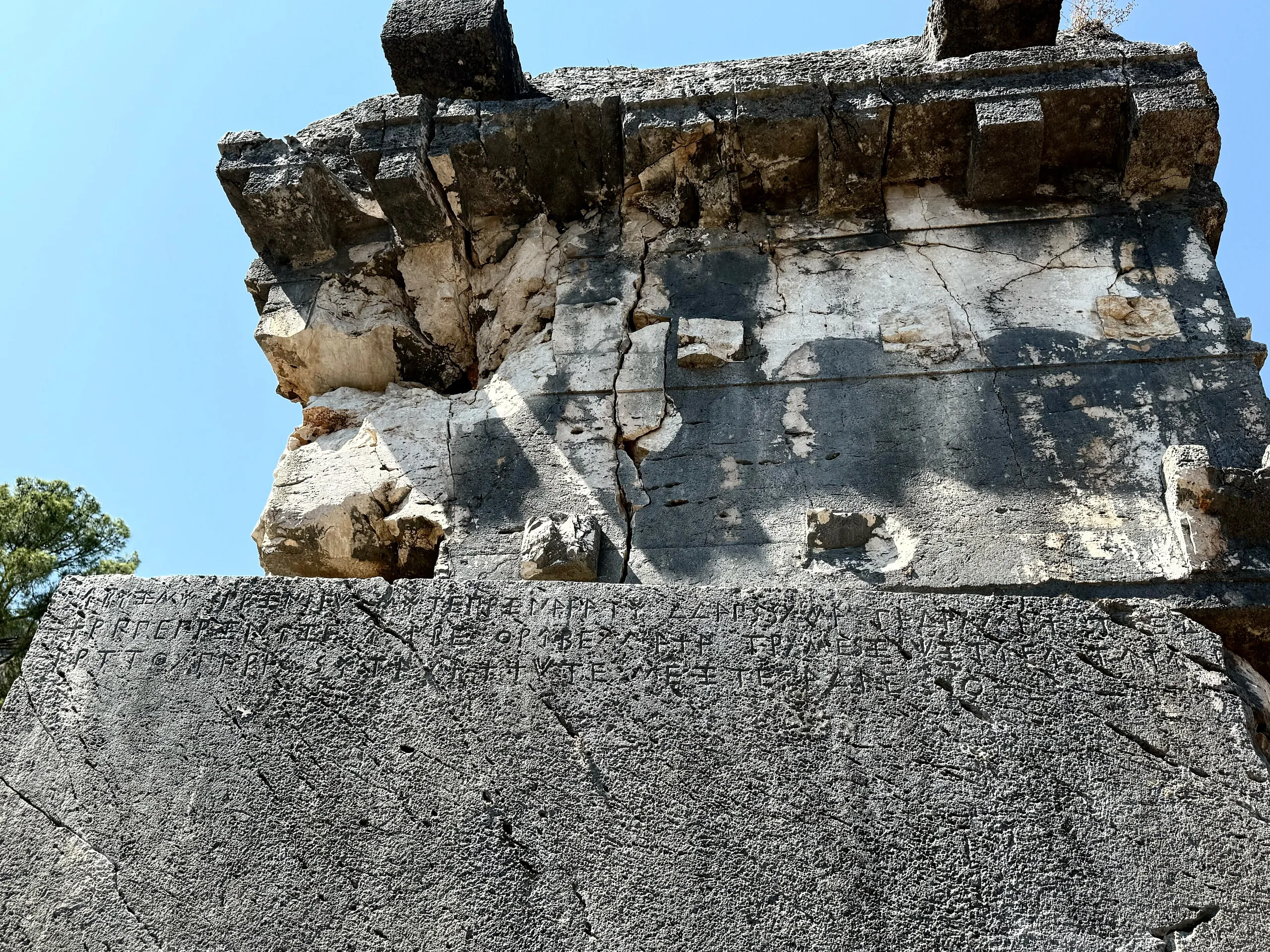
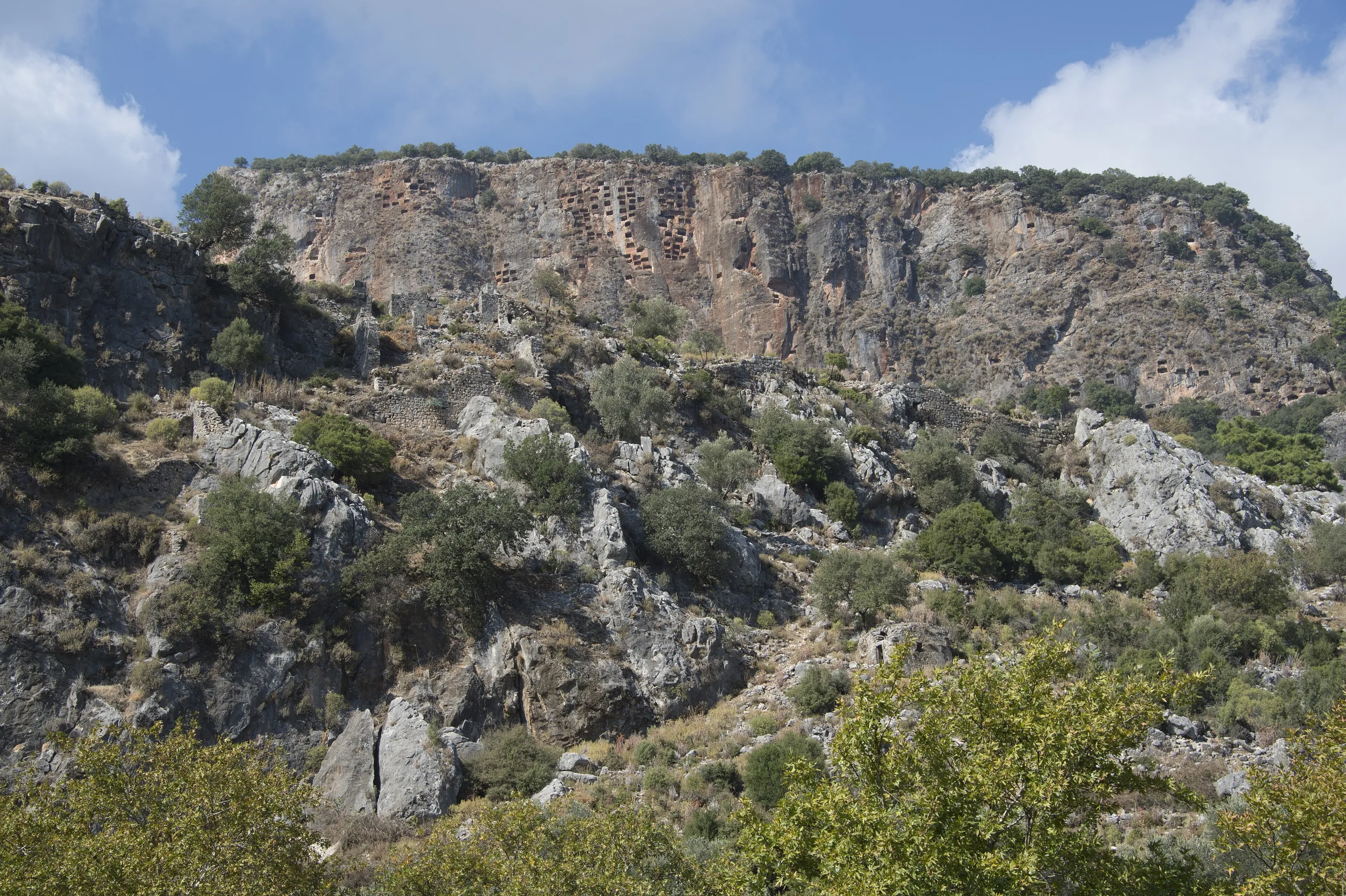
Hundreds of tombs cut into the rock can be seen on the sheer eastern slope of the upper acropolis. Near the spring at the foot of the lower acropolis lie pillar tombs and carved tombs, largely wrecked by earthquakes in antiquity; most are house-type tombs that hint at Lycian domestic architecture. One of them is notable for reliefs on its pediment and ante wall that show a walled town, which has led to the idea that the tomb belonged to the prince of Pinara.
Outside the walls stand a Roman bath, similar in plan and position to those in many Lycian towns, and a theatre set against the natural slope opposite the acropolis and the bath. The Culture Portal says the theatre's plan and siting show Hellenistic traits. The ministry's Turkish page adds that the acropolis is a round rock reached by steps cut into its south side, that a wall encircles it, and that Byzantine buildings on its east side show it was in use until the Byzantine age.
UNESCO and visiting
The Culture Portal says Pinara belongs to the serial group Ancient Cities of Lycian Civilization (Antalya and Muğla), entered on UNESCO's Tentative List in 2009. The ministry pages give the site's address as Yakabağ neighbourhood. No source on an excavation history was found for this entry. For current visiting information, see the ministry's official page.
Gallery
Frequently asked questions
Where is Pinara?
What does Pinara mean?
What was Pinara's place in the Lycian League?
When was Pinara abandoned?
What can be seen at Pinara?
Is Pinara a UNESCO World Heritage Site?
Sources (13)
- Pınara Örenyeri / Pinara Archaeological Site (TR ve EN sayfalar) — T.C. Kültür ve Turizm Bakanlığı, Müzeler ve Ören Yerleri
- Pınara Antik Kenti - Muğla — T.C. Kültür ve Turizm Bakanlığı, Türkiye Kültür Portalı
- Pinara — Muğla İl Kültür ve Turizm Müdürlüğü
- Pinara (Pleiades place 639058) — Pleiades
Photo credits
- Photo: Dosseman, CC BY-SA 4.0 — Wikimedia Commons (resized)
- Photo: Osmanyaylali, CC BY-SA 3.0 — Wikimedia Commons (resized)
- Photo: Roman_Zacharij, CC BY-SA 4.0 — Wikimedia Commons (resized)
- Photo: Roman_Zacharij, CC BY-SA 4.0 — Wikimedia Commons (resized)
- Photo: Dosseman, CC BY-SA 4.0 — Wikimedia Commons (resized)
- Photo: Dosseman, CC BY-SA 4.0 — Wikimedia Commons (resized)
- Photo: Dosseman, CC BY-SA 4.0 — Wikimedia Commons (resized)
- Photo: Dosseman, CC BY-SA 4.0 — Wikimedia Commons (resized)
- Photo: Dosseman, CC BY-SA 4.0 — Wikimedia Commons (resized)