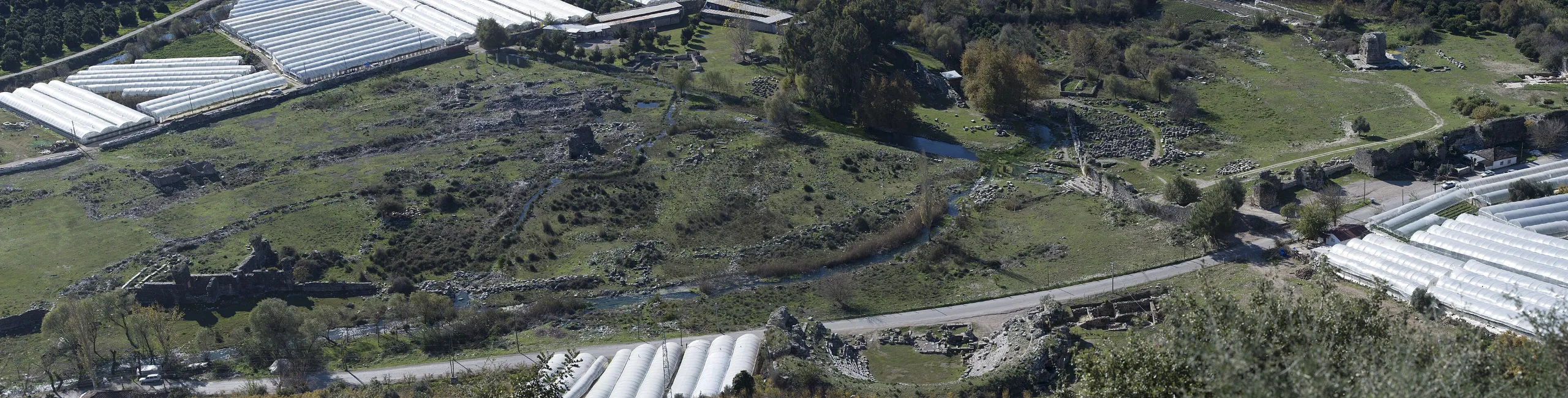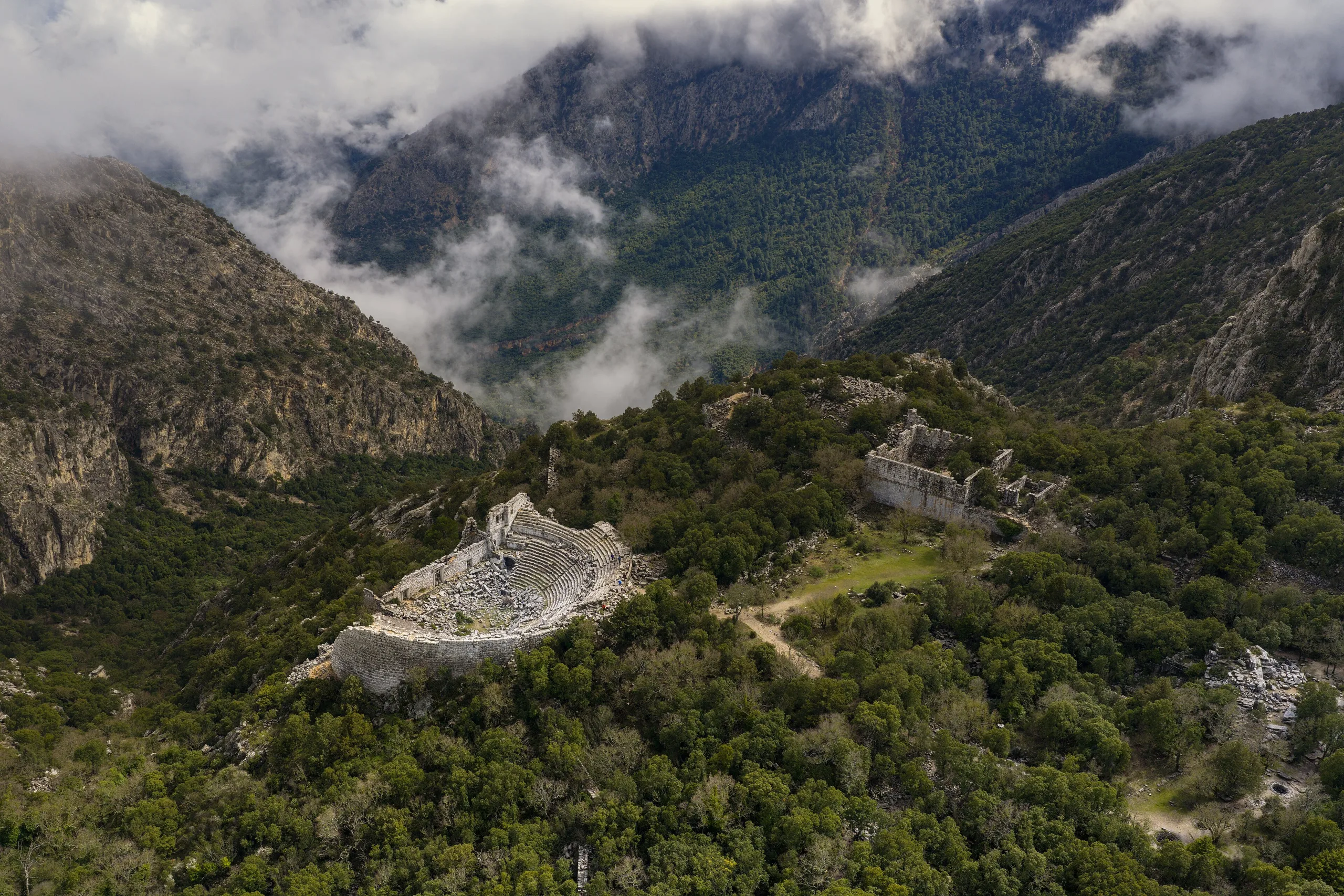
Termessos stands about 1,050 m up in Güllük Mountain National Park north of Antalya: a Pisidian city that Alexander the Great could not take, still full of walls, tombs and a theatre.
Termessos is an ancient city located in Turkey, Antalya. Main periods: Hellenistic Period, Roman Period.
When Alexander the Great reached Termessos in 333 BCE, he left without the city. Its Pisidian builders had climbed a mountainside and turned every natural advantage into defence, and today the ruins lie in the forest of Güllük Mountain National Park, about 1,050 m above sea level and north of Antalya. Much of the stonework still stands, because nobody settled the place again once it was abandoned.
The founders were the Solymi, said to descend from the Luwians, one of Anatolia's oldest peoples. Their city occupies a valley between the peaks of Mount Solymos, today called Güllük, in the south-western part of Pisidia known as Milyas.
Location and setting
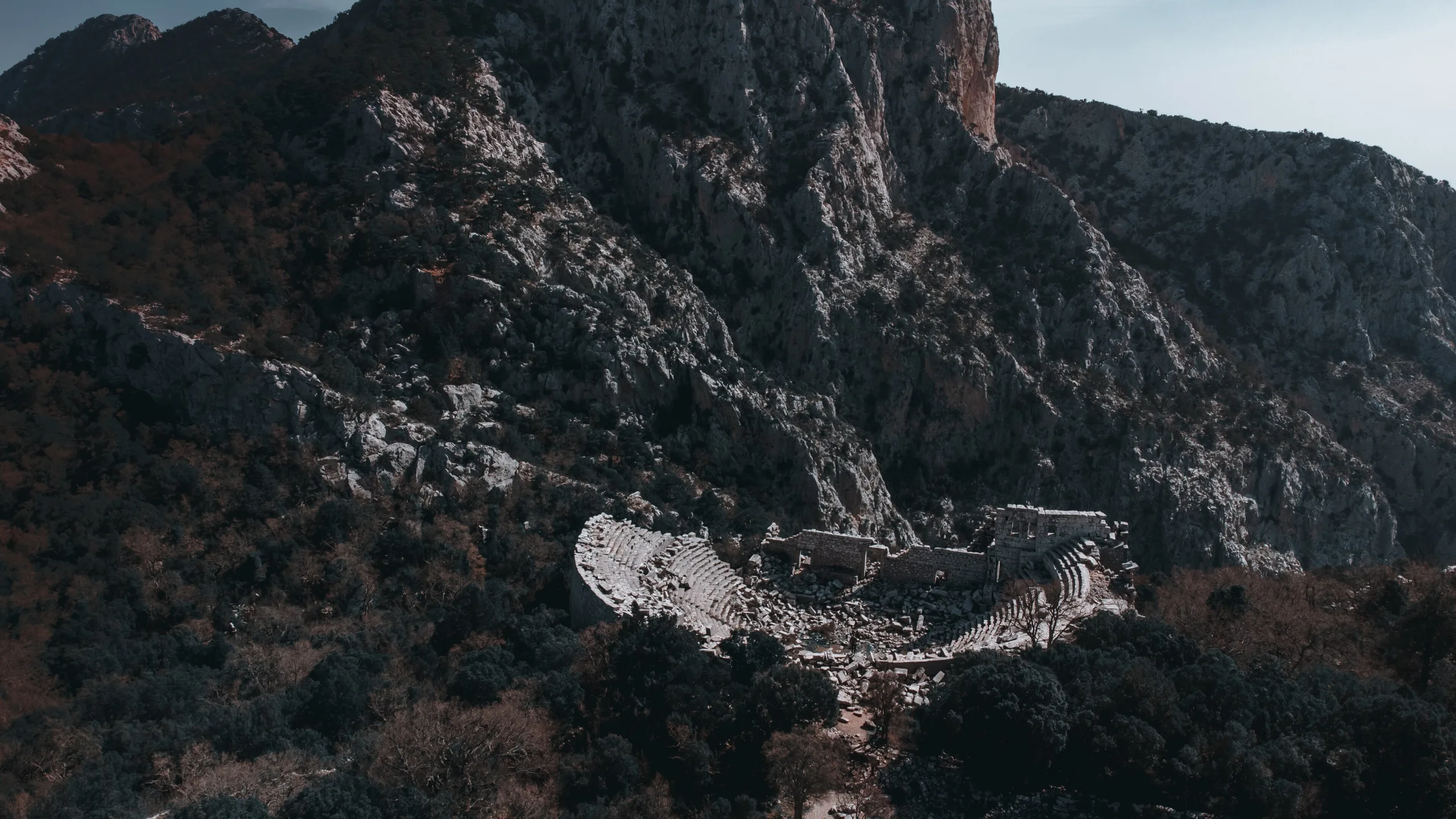
A special road leaves the Antalya-Korkuteli highway to the left at km 24 and climbs to the ruins. The surrounding national park, with its dense vegetation and endangered animals, has the feel of a botanical garden and a zoo combined. Steep slopes, including the Güver cliff, complete the natural frame.
History
Termessos steps onto the historical stage in 333 BCE, when Alexander besieged it and the Termessians put up a strong defence and refused to give in. After his death the Ptolemies took the city. In 189 BCE the Termessians captured their neighbour Isinda; the Isindans complained, and Manlius Vulso, the Roman commander in Anatolia, punished Termessos. A war with the Lycian League was probably going on at about the same time.
In 71 BCE the Roman Senate confirmed that Termessos, while remaining a friend and ally of Rome, was independent in its own affairs and free to make its own laws. Amyntas of Galatia ruled it together with the other cities of Pisidia between 36 and 25 BCE. Under the Empire the city kept its independence, as its own coinage shows. Nothing is known about its fate in Byzantine and later times. Since it was never resettled after being abandoned, only earthquakes and natural decay have touched it.
People and events
The siege by Alexander, the punishment imposed by Manlius Vulso, the rule of Amyntas and the Senate decision of 71 BCE are the city's known turning points. In the cemetery lies the tomb of Alketas, one of Alexander's commanders, dated 319 BCE.
Principal monuments
Walls, the Hadrianic temple and the gymnasium
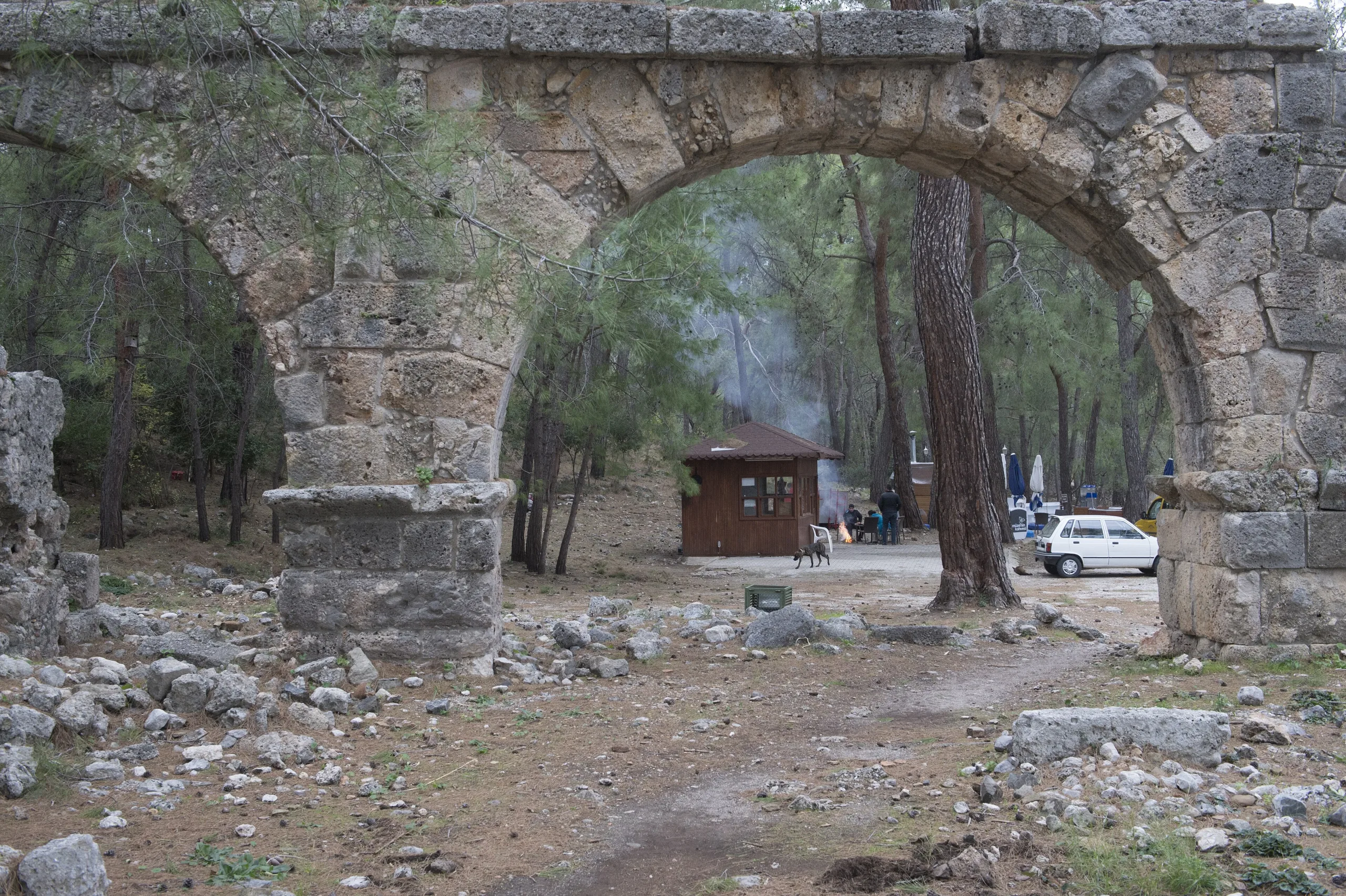
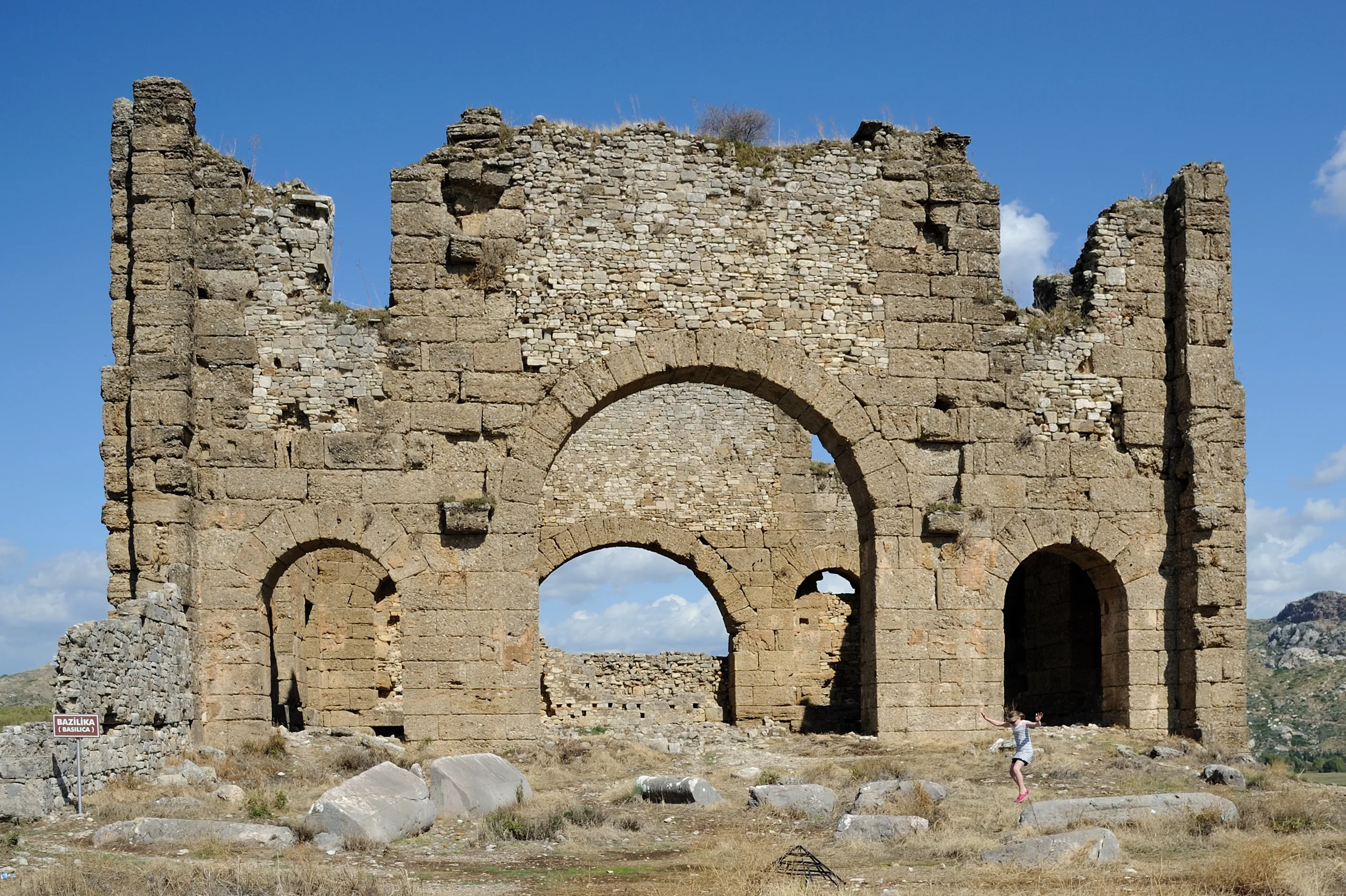
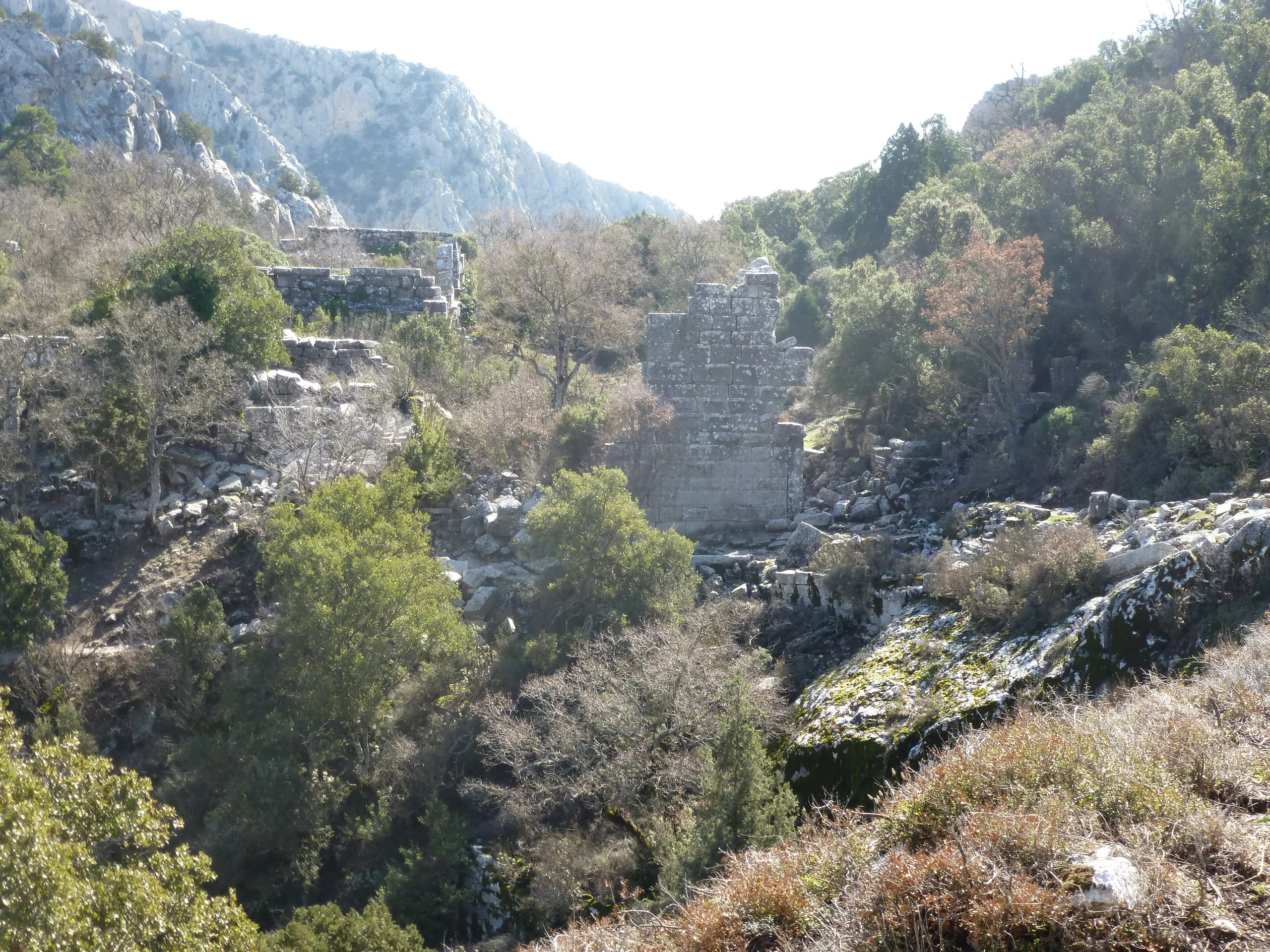
The remains begin with a Hellenistic wall near Yenicekahve, beside the Korkuteli road, and run all the way to the summit of Güllük Mountain. From the car park, the path passes on its right the steps and monumental entrance of an Ionic temple built in the time of Emperor Hadrian. Beyond the lower city walls and the spring, a climb to the south brings you to the gymnasium (the training and education building for young men), whose first storey partly survives. South-west of it runs a colonnaded street with shops behind the columns, and drainage channels are still visible beside it. The king's road, the Hadrian gate and the odeon (a small roofed concert hall) are also counted among the key remains.
Agora, theatre, council house and cisterns
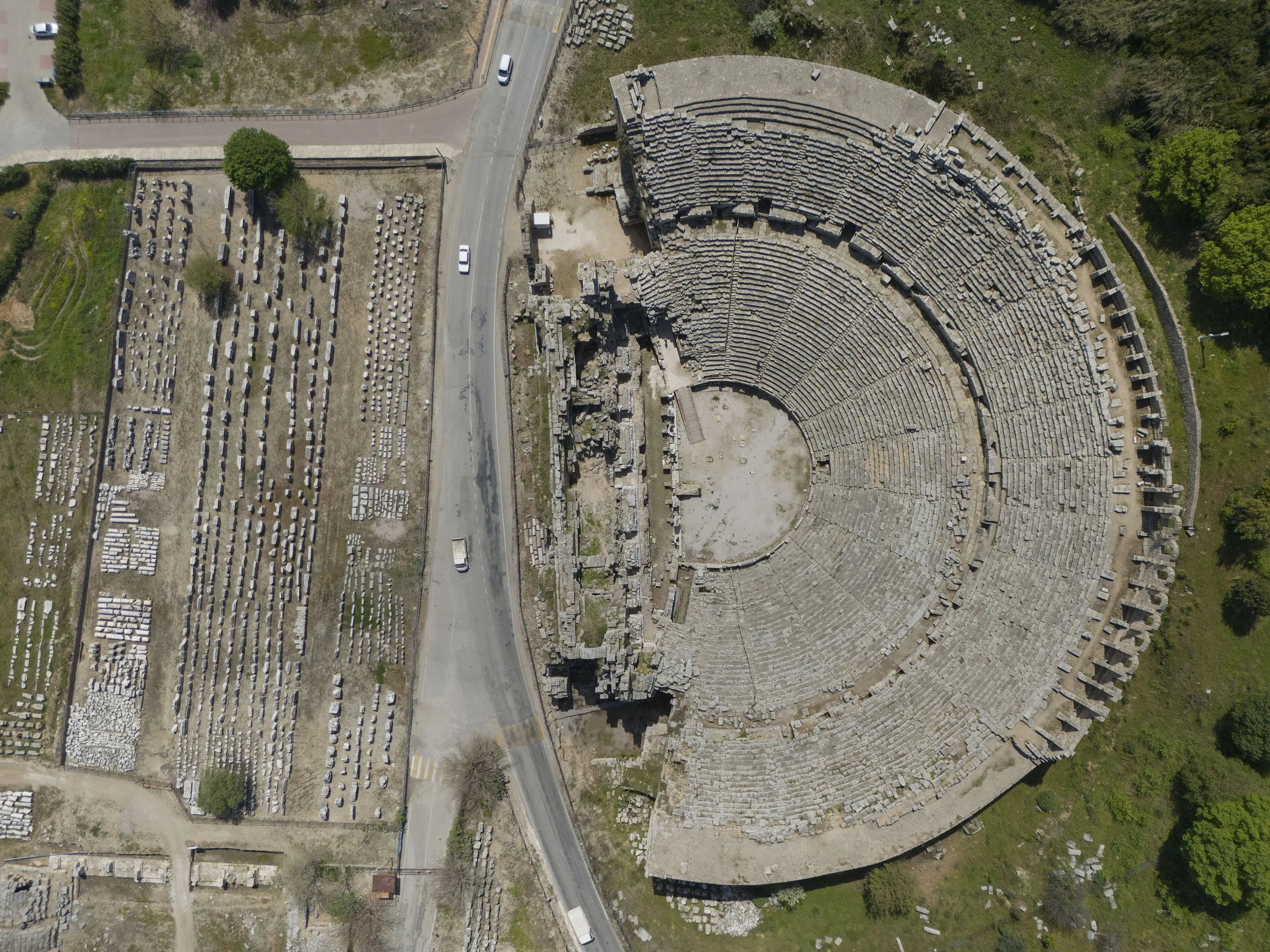
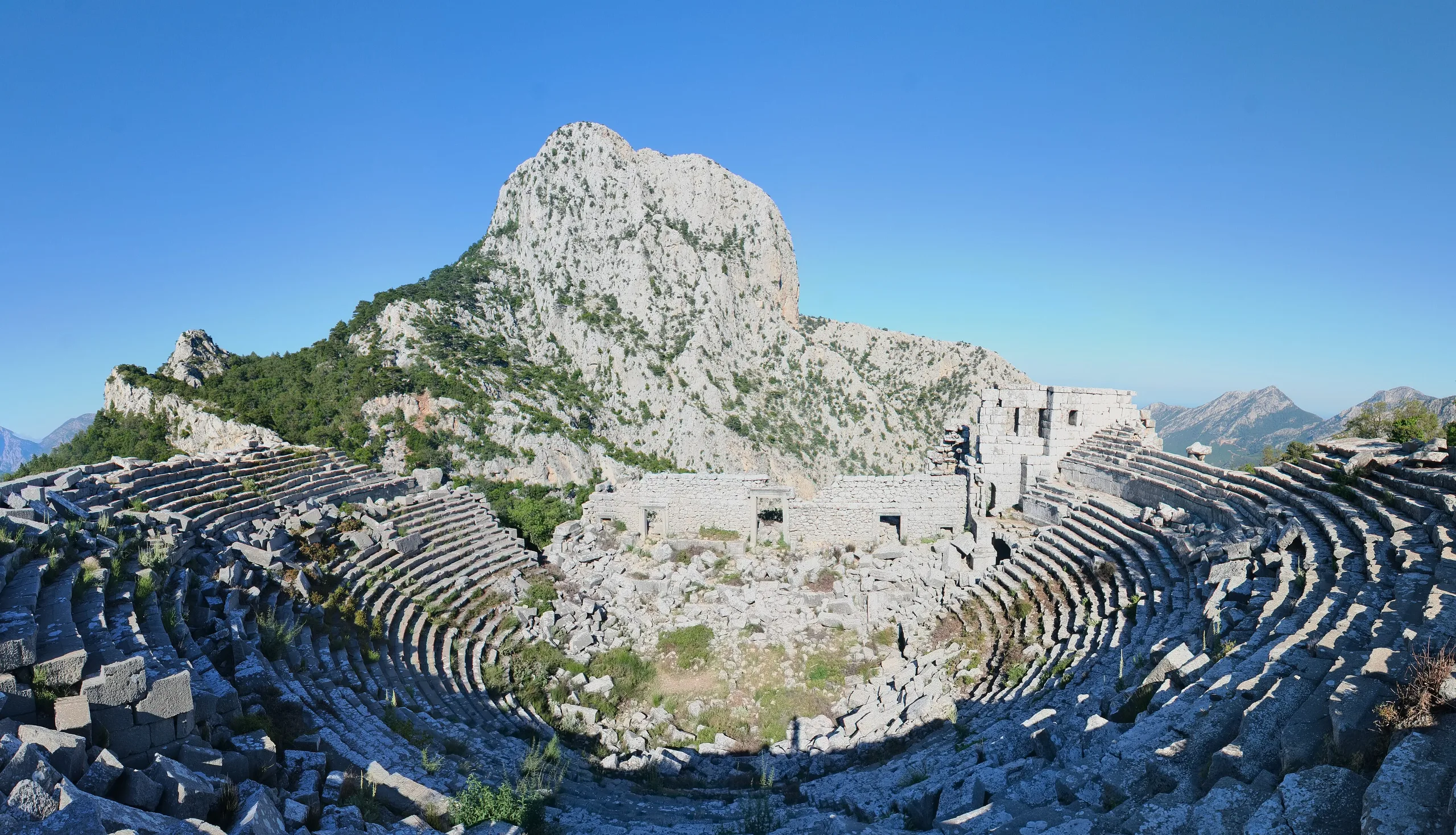
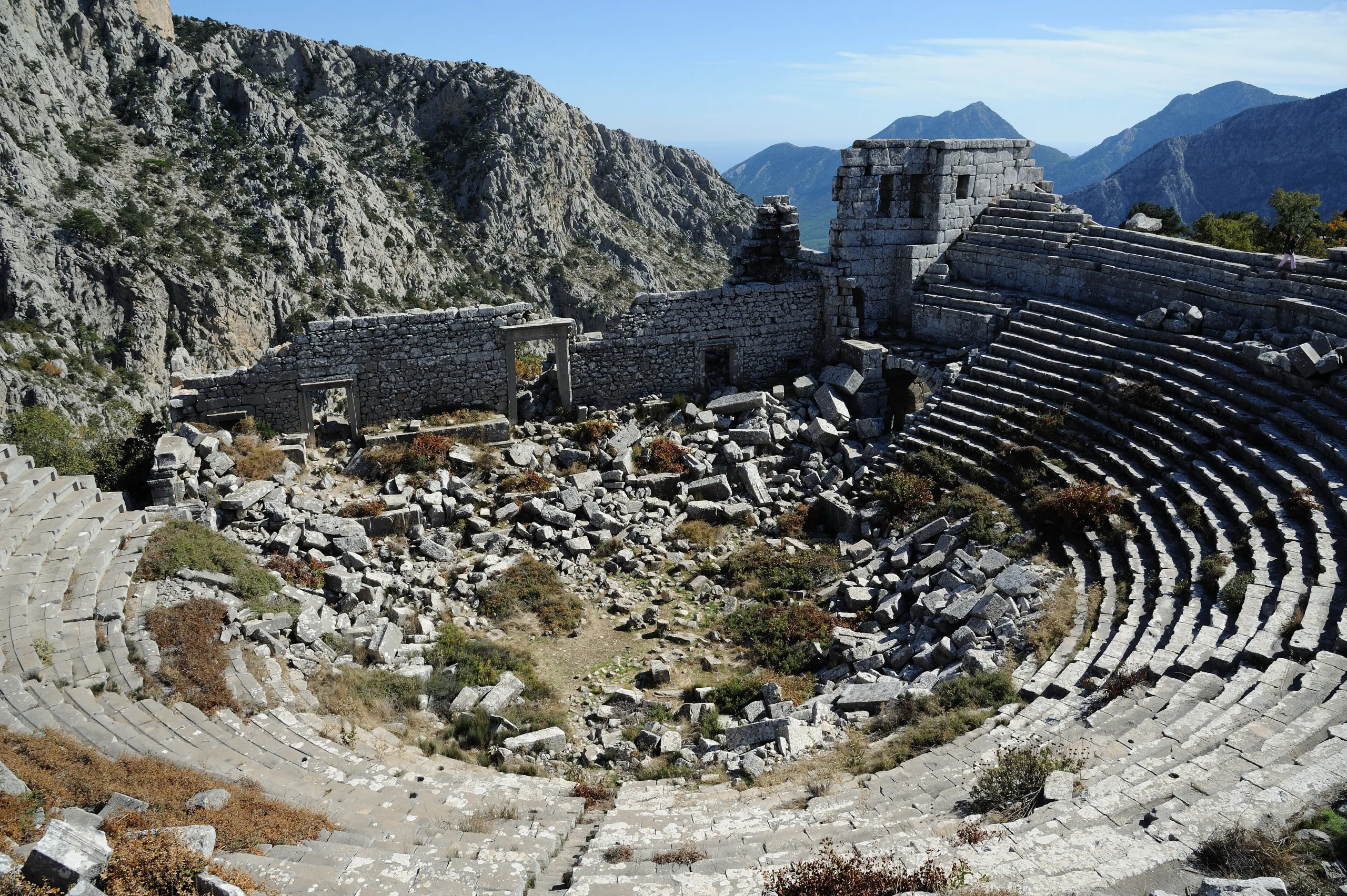
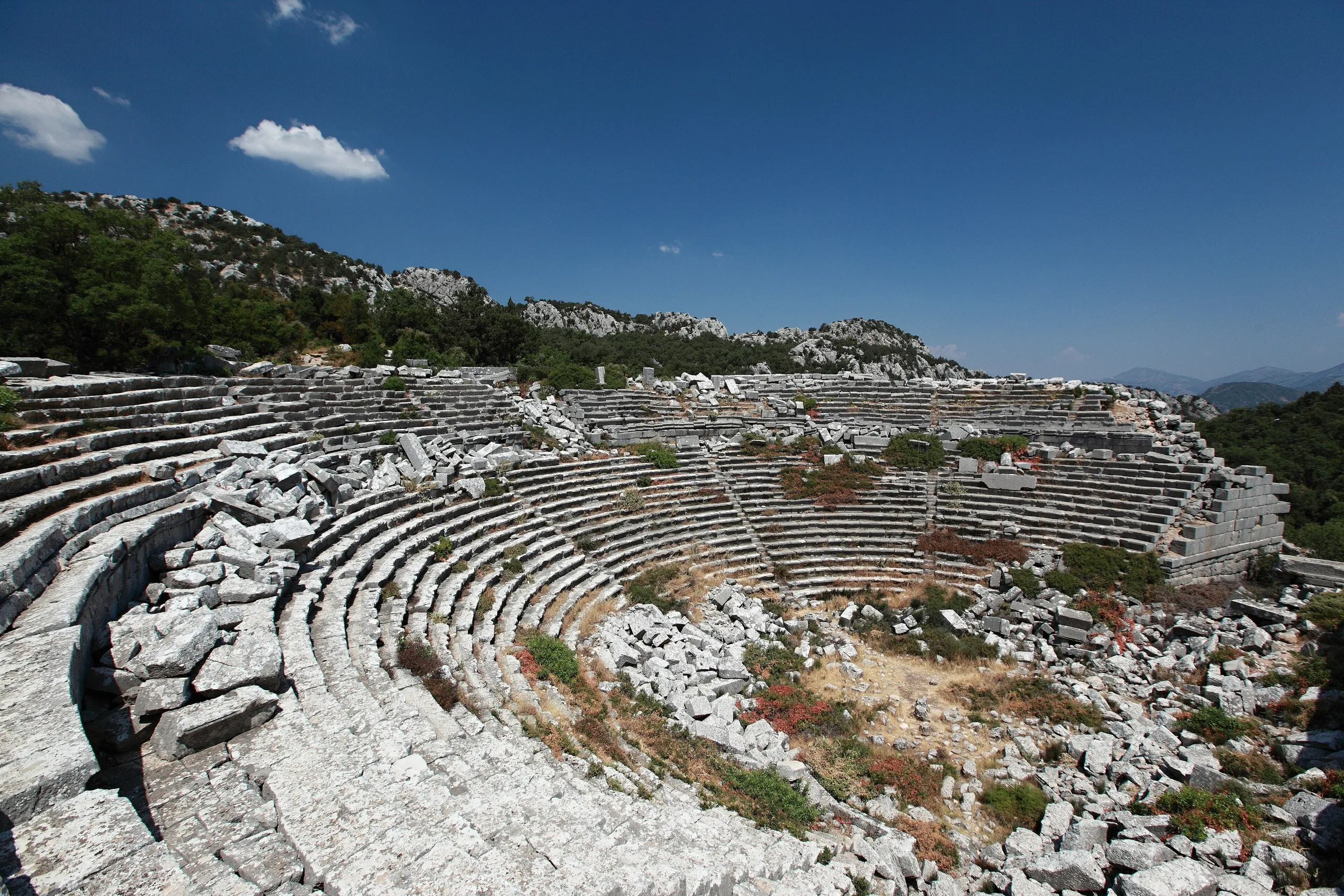
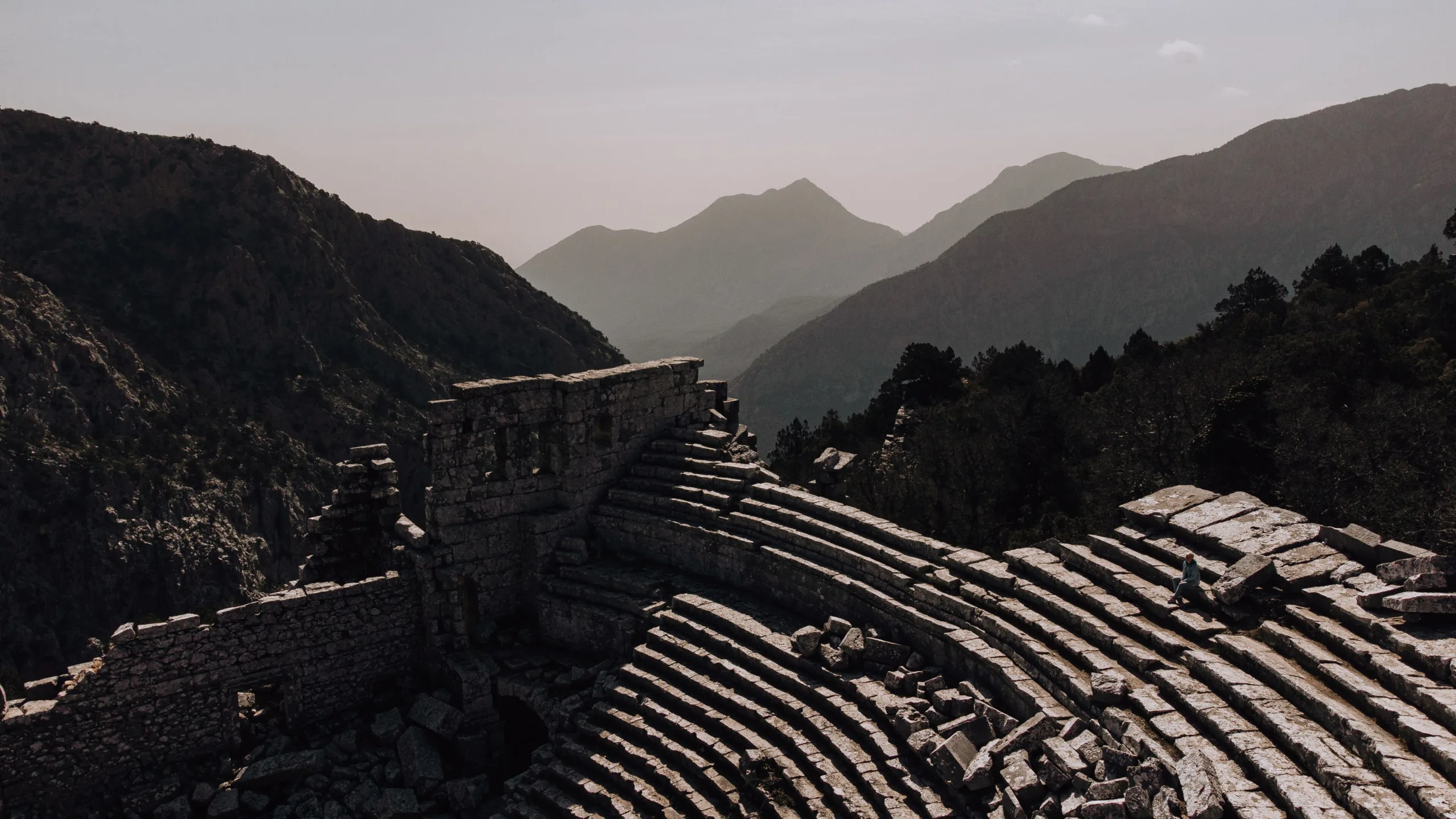
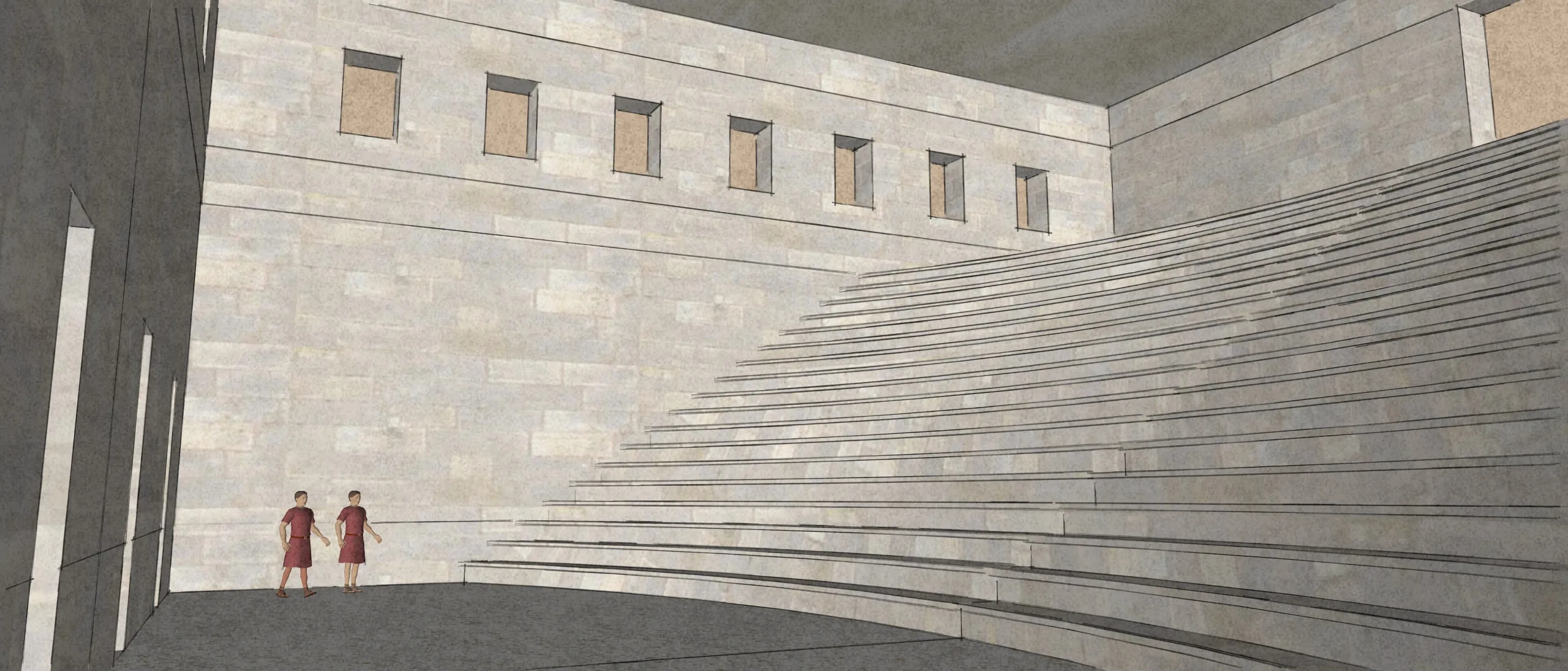
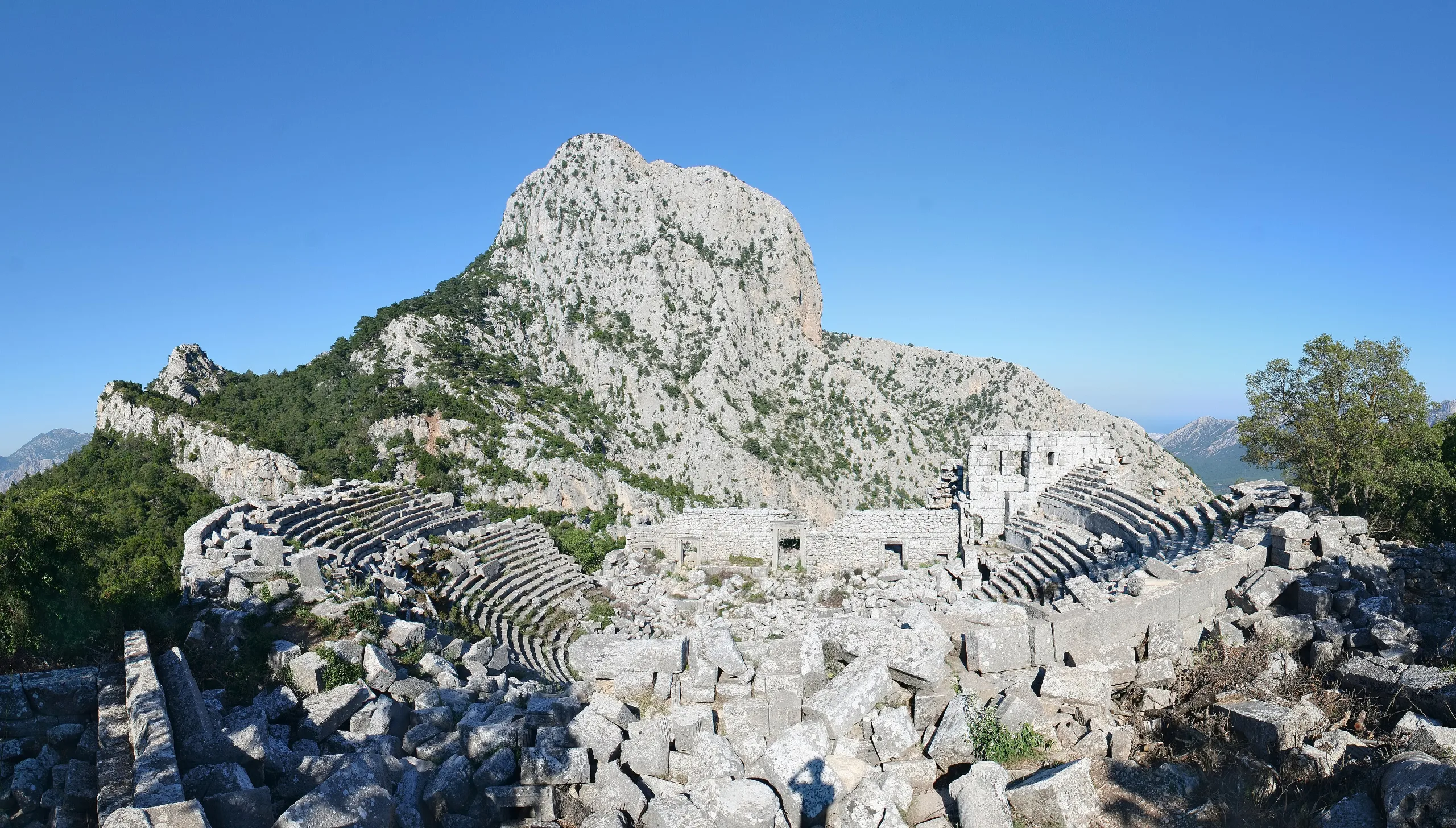
To the left of the path toward the forest lookout, a plain opens and holds the city's public buildings. The first ruin belongs to the agora; the stoa (columned gallery) along its west side was built in Doric style under Attalos II, between 159 and 138 BCE. East of the agora the theatre leans against the slope with a view of the Gulf of Antalya. About 100 m south-west of the theatre the council house (bouleuterion) rises to roof height. On the flat ground east of the agora, five linked cisterns are remarkable for their depth and breadth.
House of the Founder
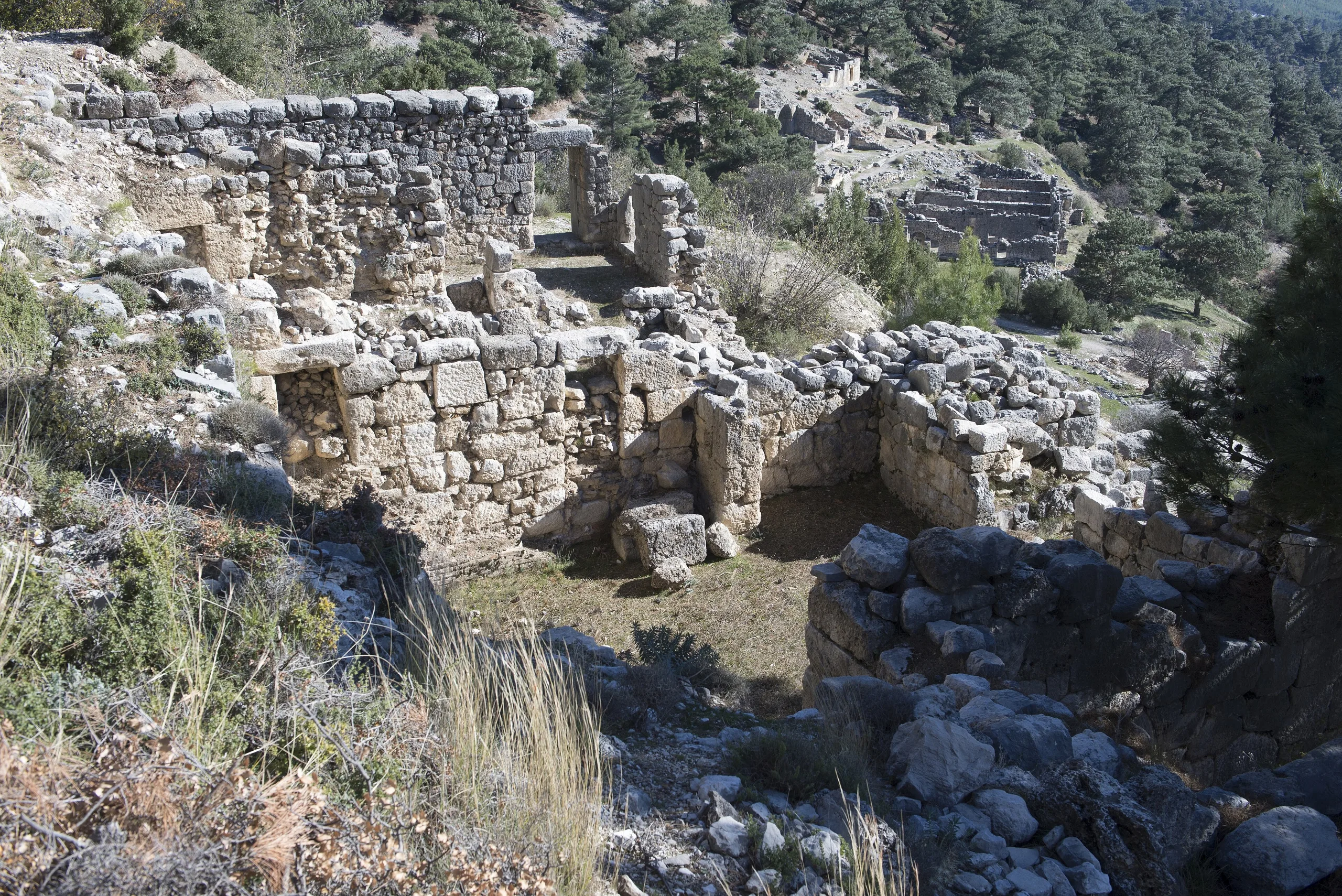
A Roman-style villa in the south-west of the city is called the House of the Founder after the inscription to the left of its door. Its Doric front wall reaches 6 m.
Cemeteries
Temples are numerous and the burial grounds, or necropoleis, are vast, with tombs of many types and decorations. Alketas's tomb is one of those that help reconstruct the city's story. Alongside the monumental tombs, a great many sarcophagi carved with shield motifs cover much of the cemetery, a reminder of the warrior character of the community.
Finds and museums
The Dog Sarcophagus, called the most interesting piece to come from Termessos, is displayed in the Sarcophagus Hall of the Antalya Museum. Its verse inscription was composed by the owner, Rhodope, for her dog Stefanos, and no comparable text is known.
World Heritage and protection
Güllük Mountain-Termessos National Park holds a city that exploited its natural setting for both layout and defence better than most. The area has been on the UNESCO Tentative List since 2000, proposed under cultural criteria (ii), (iii) and (v) and natural criteria (viii), (ix) and (x).
Visiting
The site's address is Bayatbademleri, Güllük Mountain, Termessos National Park. The Müzekart is valid for Turkish citizens. For hours and fees, check the official museum page.
Gallery
Frequently asked questions
Where is Termessos?
Who founded Termessos?
Why is Termessos so well known?
What is there to see at Termessos?
What is the Dog Sarcophagus?
Is Termessos a UNESCO World Heritage Site?
Sources (14)
- Termessos Örenyeri / Termessos (TR ve EN sayfalar) — T.C. Kültür ve Turizm Bakanlığı, Müzeler ve Ören Yerleri
- Güllük Dağı-Termessos Milli Parkı (Antalya) — T.C. Kültür ve Turizm Bakanlığı, Kültür Varlıkları ve Müzeler Genel Müdürlüğü
- Termessos Antik Kenti (Türkiye Kültür Portalı) — T.C. Kültür ve Turizm Bakanlığı, Antalya İl Kültür ve Turizm Müdürlüğü
- Termessos (Antalya İl Kültür ve Turizm Müdürlüğü) — T.C. Antalya Valiliği, İl Kültür ve Turizm Müdürlüğü
- Termessos (Pleiades place 639139) — Pleiades
Photo credits
- Photo: Yalçın Akkaya, CC BY-SA 4.0 — Wikimedia Commons (resized)
- Photo: Ingo Mehling, CC BY-SA 3.0 — Wikimedia Commons (resized)
- Photo: Saffron Blaze, CC BY-SA 3.0 — Wikimedia Commons (resized)
- Photo: Martin Cígler, CC BY-SA 3.0 — Wikimedia Commons (resized)
- Photo: Anna Stavenskaya, CC BY-SA 4.0 — Wikimedia Commons (resized)
- Photo: Anna Stavenskaya, CC BY-SA 4.0 — Wikimedia Commons (resized)
- Photo: Zythème, CC BY-SA 3.0 — Wikimedia Commons (resized)
- Photo: Franck devedjian, CC BY-SA 4.0 — Wikimedia Commons (resized)
- Photo: Ingo Mehling, CC BY-SA 4.0 — Wikimedia Commons (resized)