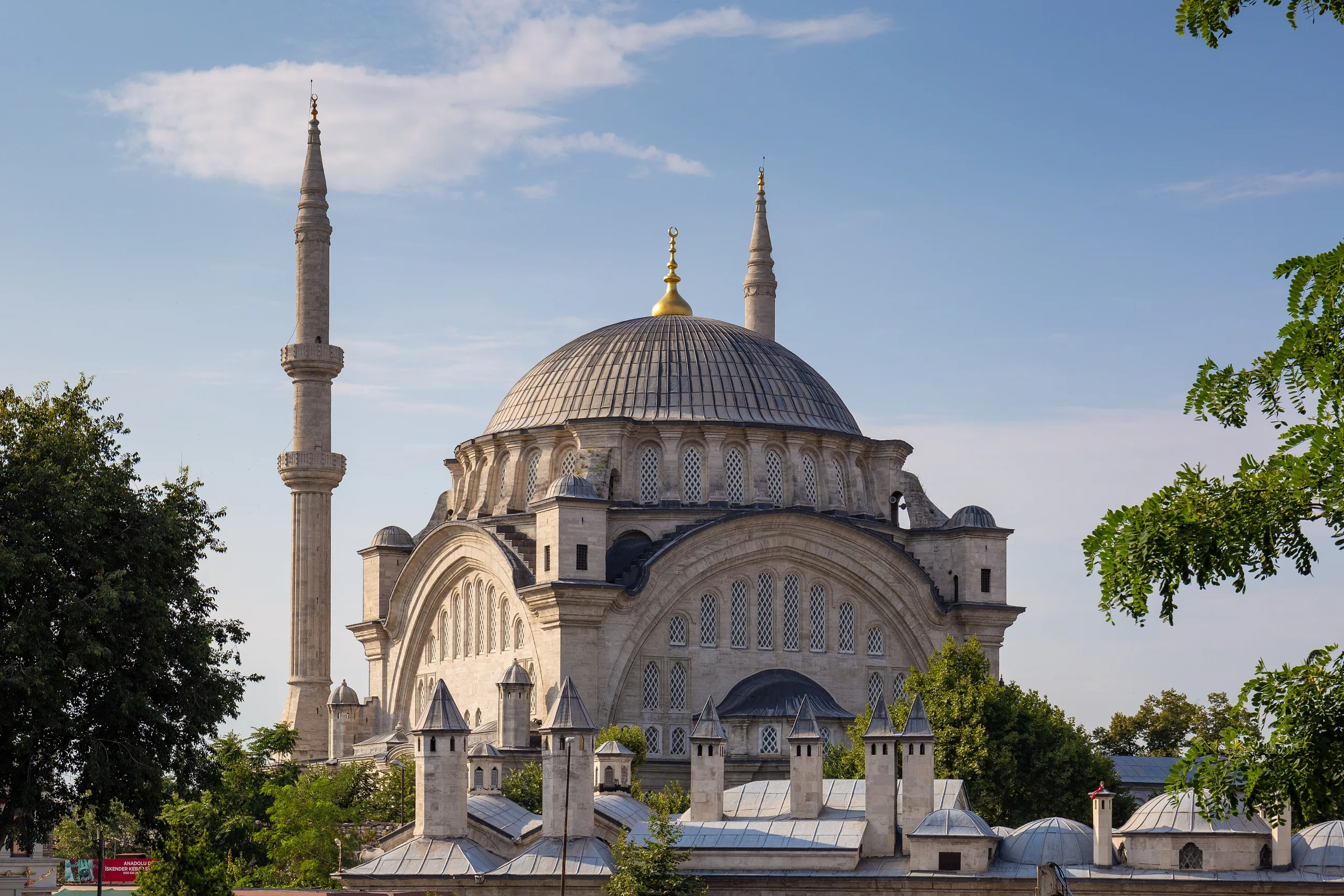
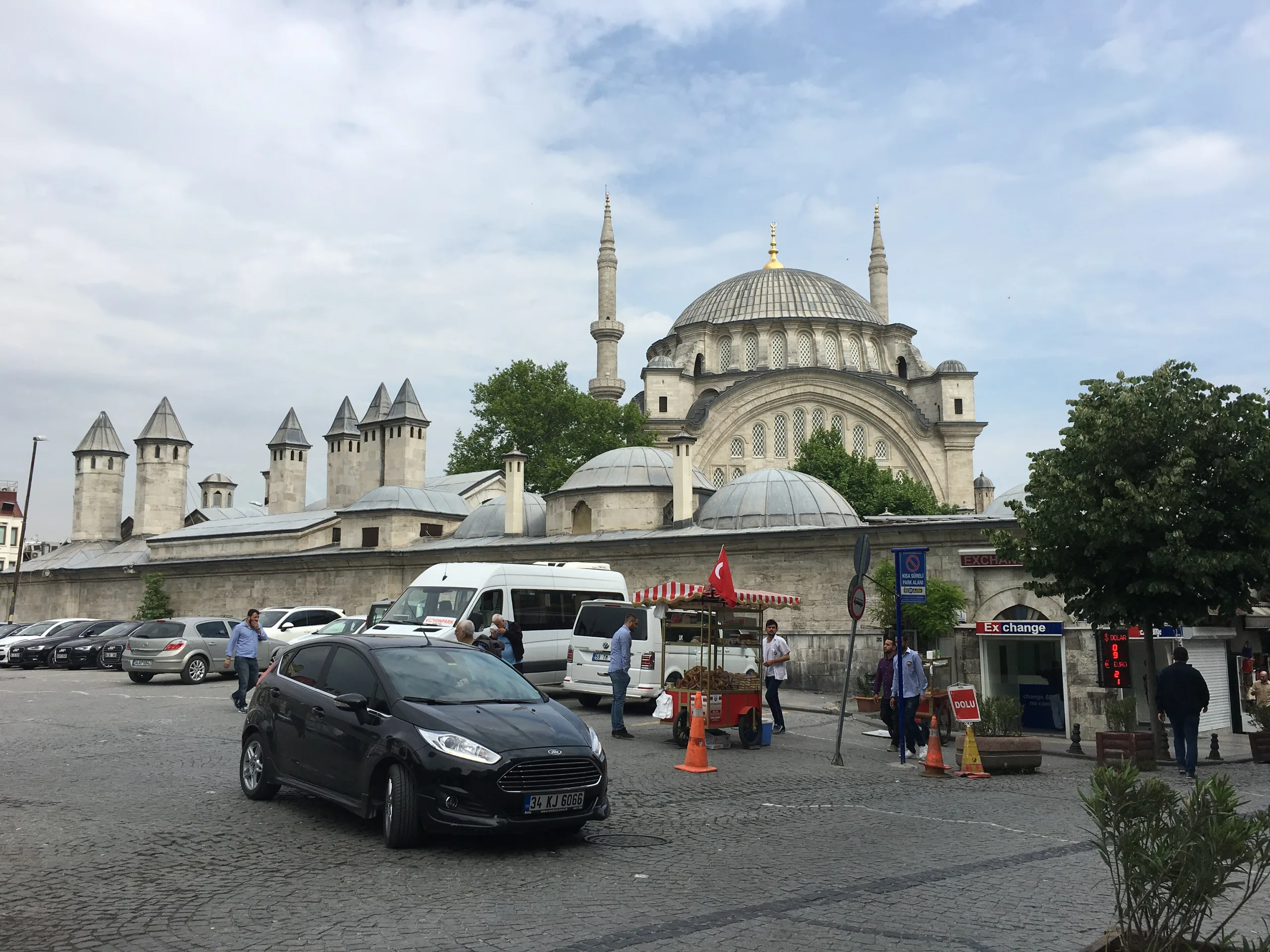
The Nuruosmaniye Complex by the Grand Bazaar (1749-1755) is a clear example of Ottoman baroque, with a semicircular courtyard; it has been on UNESCO's tentative list since 2016.
Nuruosmaniye Complex is a place (Historic building) in Turkey, Istanbul. Main periods: Ottoman Period.
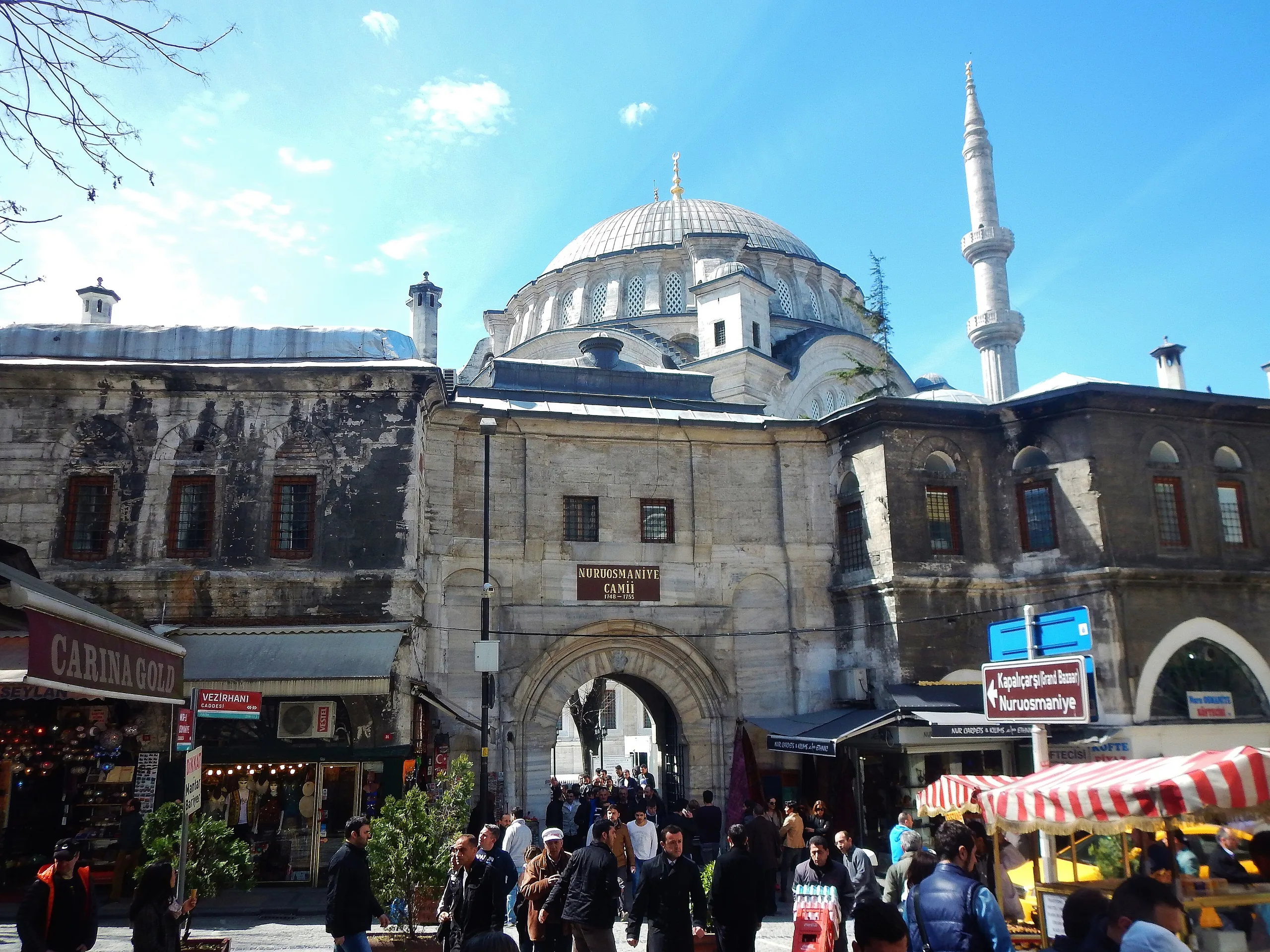
Just east of the Grand Bazaar, a courtyard gate leads off the shop lanes into a sight that Ottoman mosques rarely offer: an arcaded court laid out as a half circle. The Nuruosmaniye Complex is among the places where European baroque, which entered Istanbul in the mid-18th century, shows itself most openly in a sultan's mosque.
History
Mahmud I laid the foundation on 19 January 1749. When he died his brother Osman III completed the work, and the complex opened on 5 December 1755. Osman III named the mosque Nur-ı Osmani; the name seems to point to the dynasty but in practice commemorates himself, and the inscription names him as the founder. A small mosque known as the Fatma Hanım Mescidi had stood on the site before.
The building is generally credited to Simeon (Simon) Kalfa, working under the building steward Ahmed Efendi, although views on the architect's identity differ. Ahmed Efendi wrote a treatise on the construction, Tarih-i Cami-i Şerif-i Nur-ı Osmani, setting out in detail how the work was organised, and it is one of the few such records to survive.
Architecture
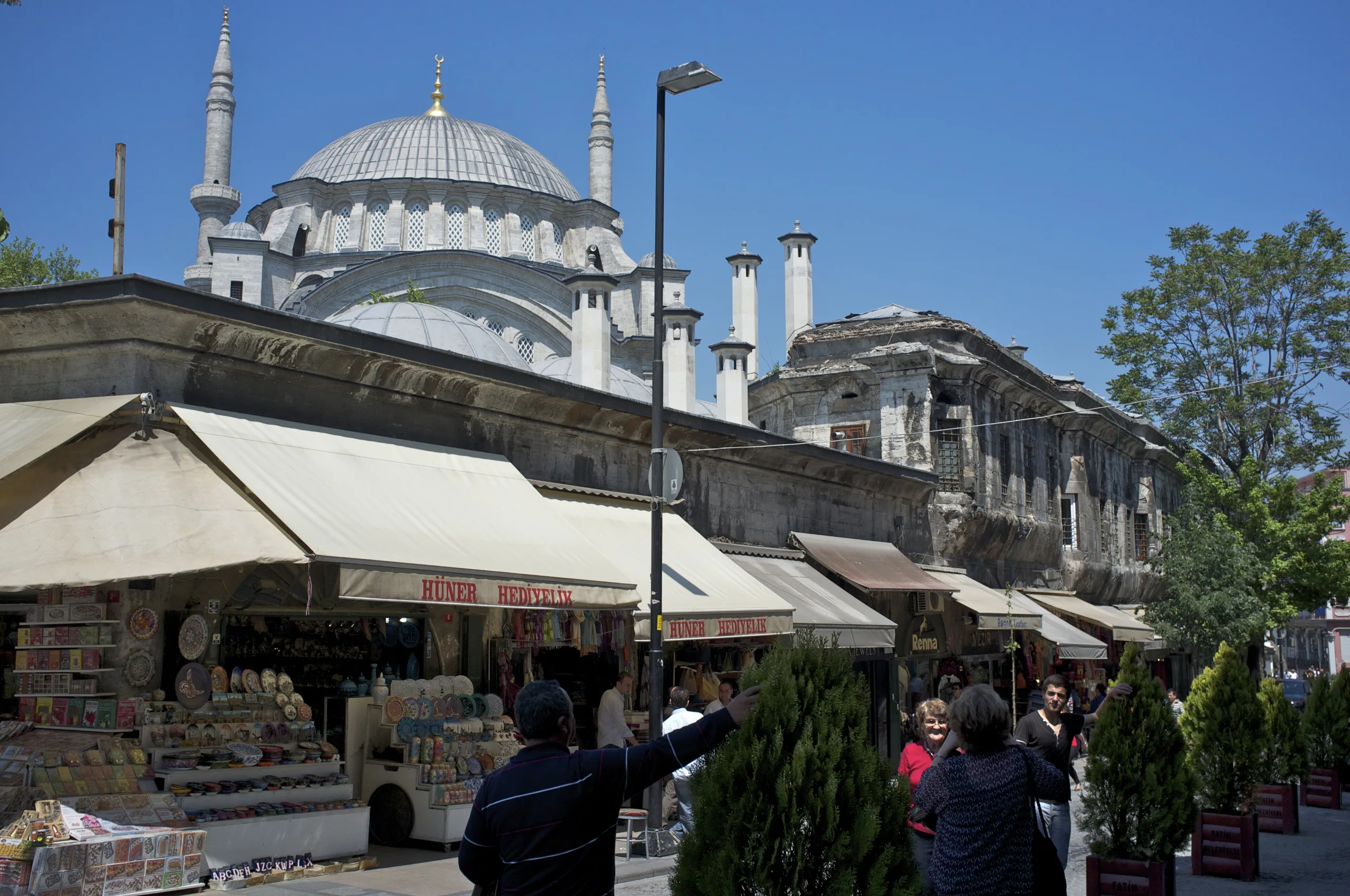
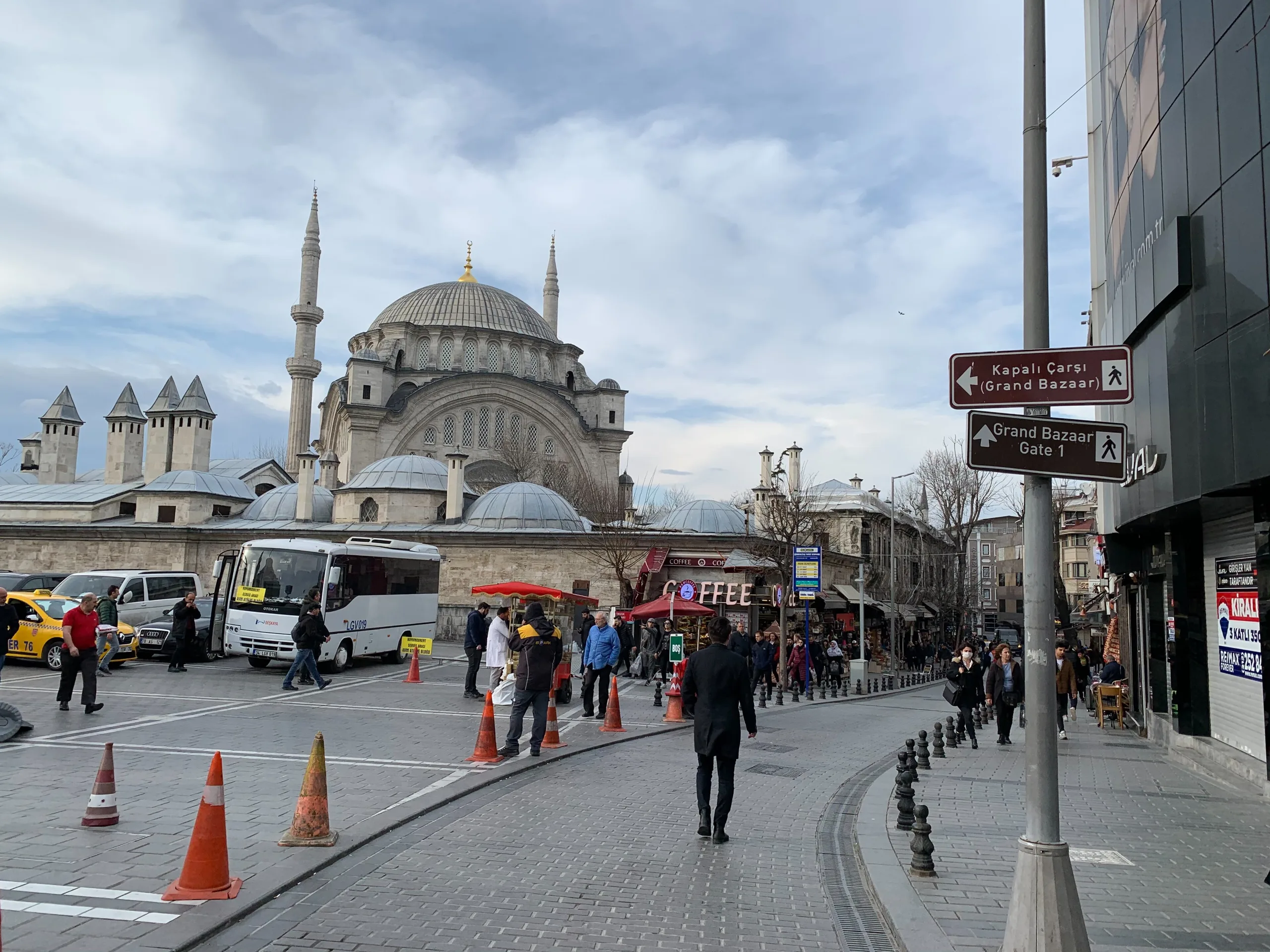
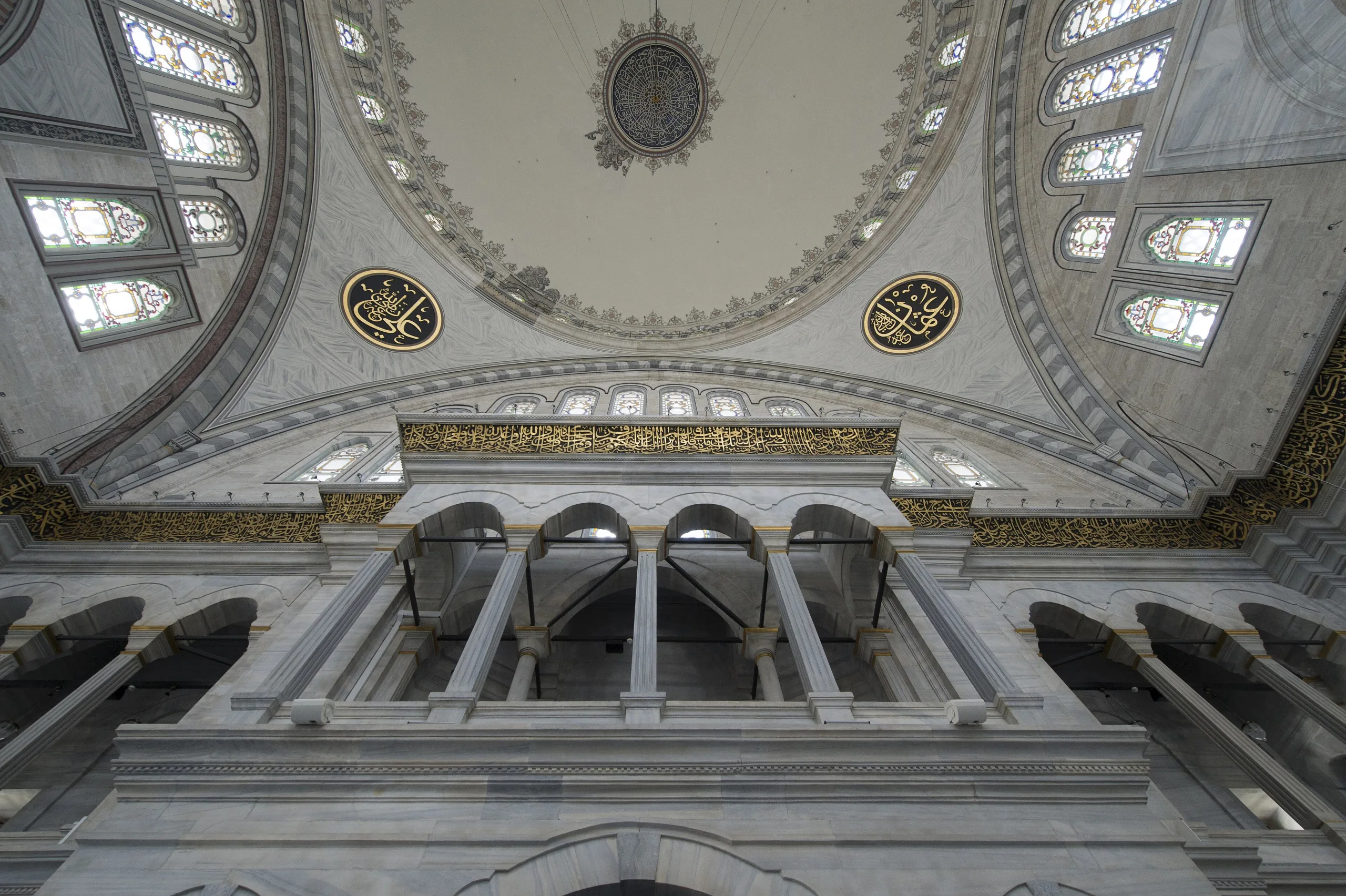
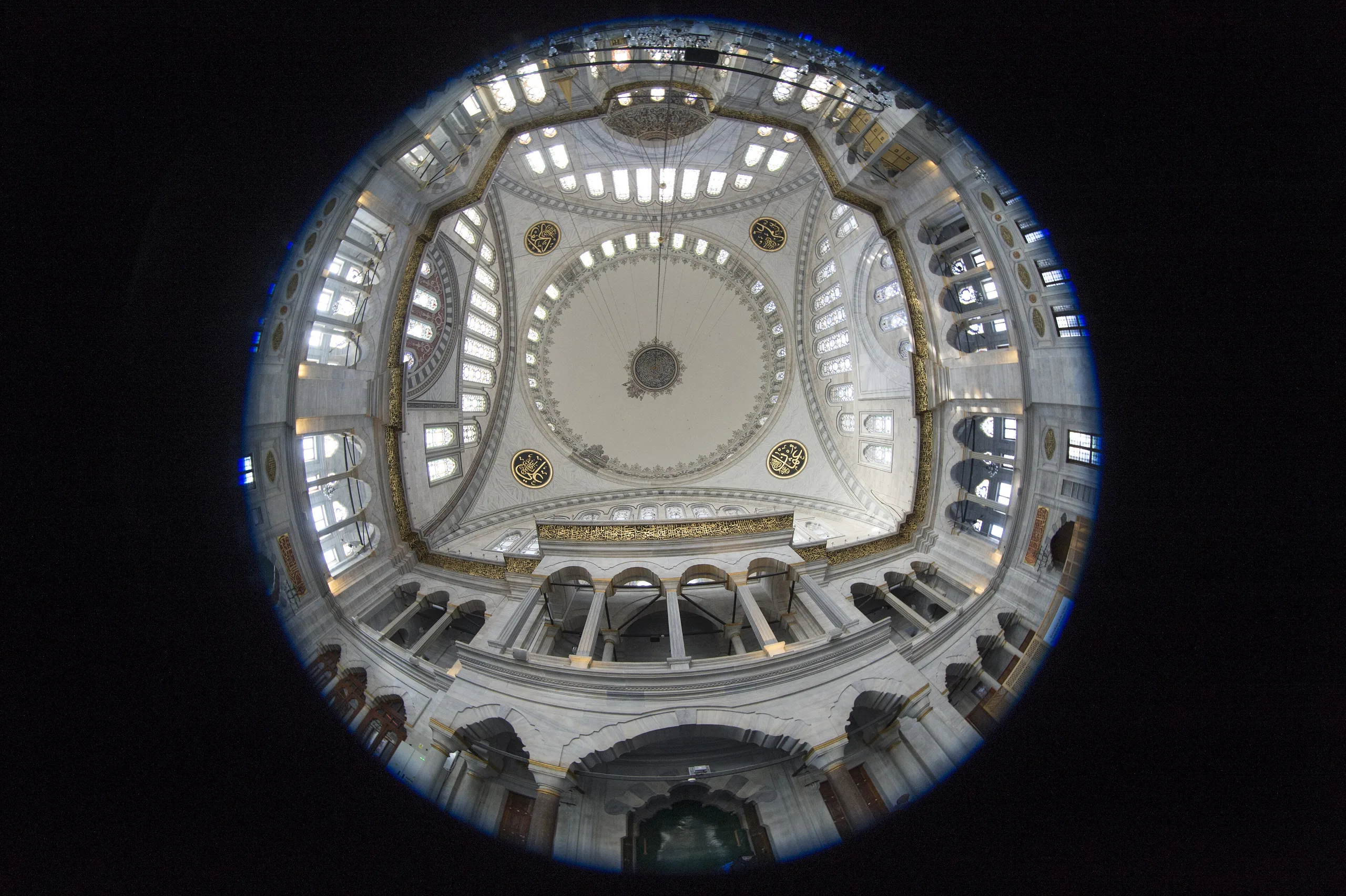
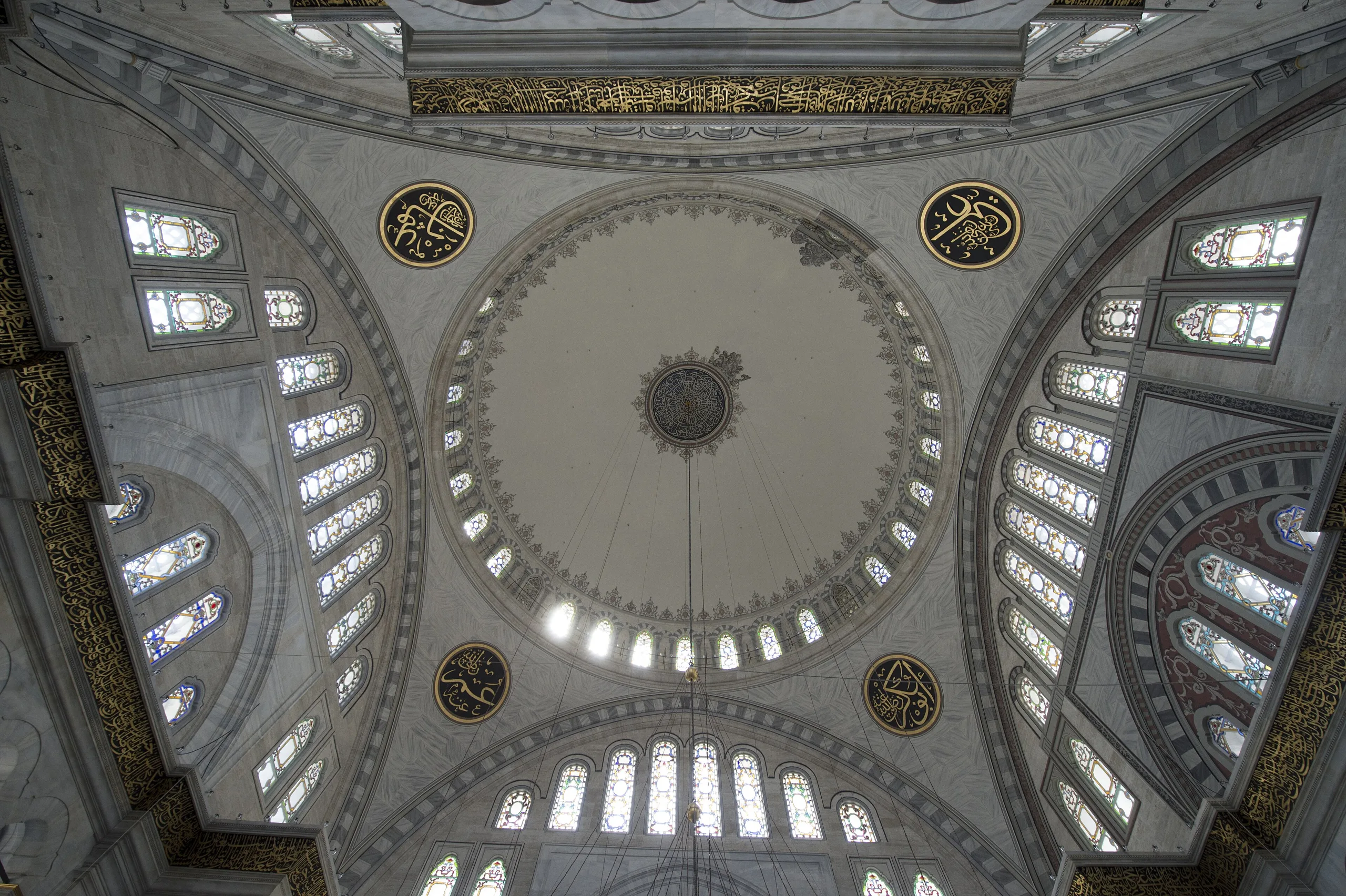
The mosque is a single square prayer hall under one dome. The dome measures about 25.5 metres across and rests on four great arches. The mihrab sits in a small projecting recess covered by a half dome. There are 174 windows in five rows, all in baroque style, and the sura of Victory runs as a band where the dome arches meet the walls. The stone minarets each have two balconies; their present stone caps replaced lead ones in the late 19th century.
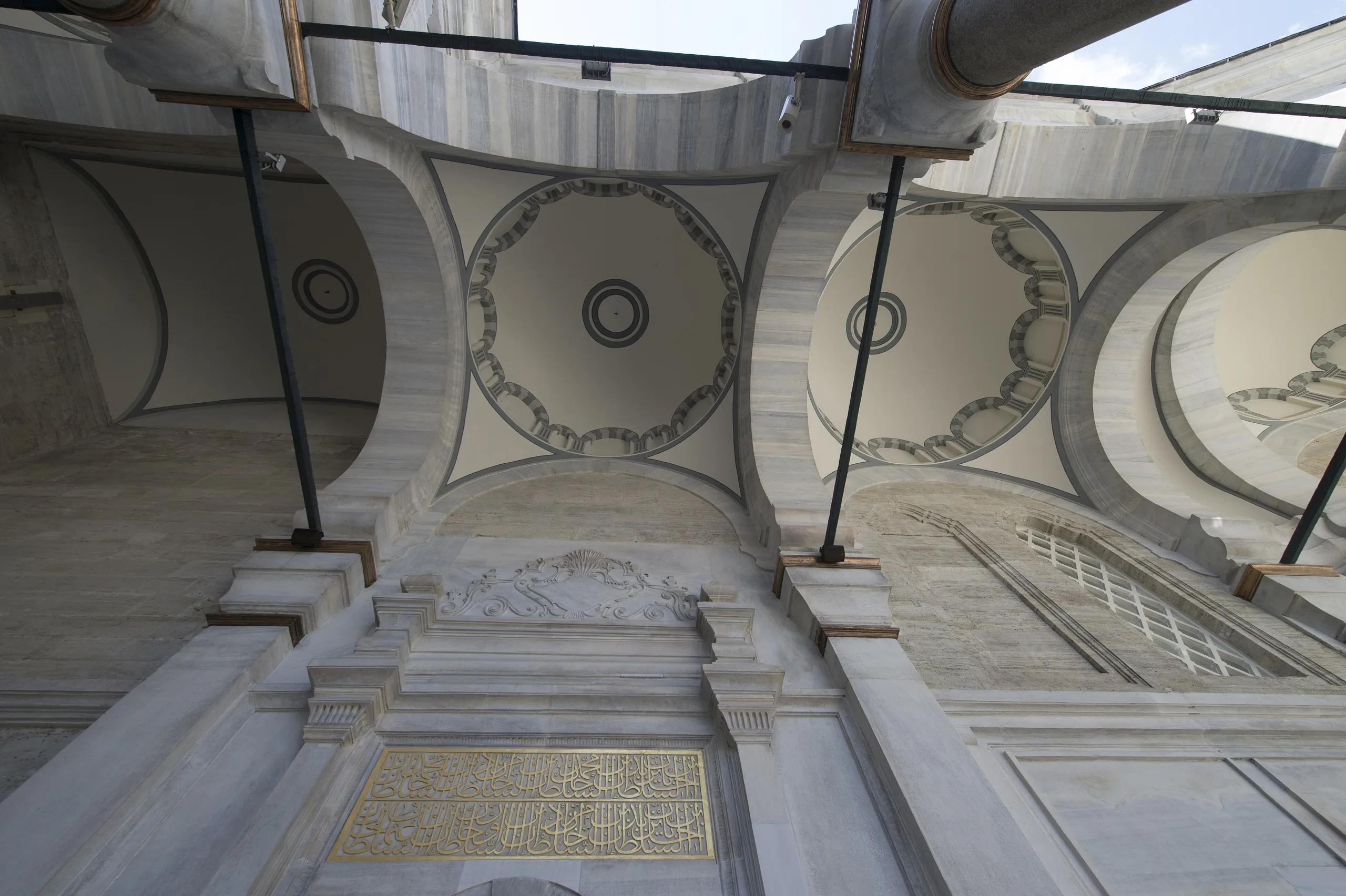
The boldest feature is the courtyard. This arcaded half circle was the first of its kind in Turkish architecture and marks a break with the traditional rectangular court. The profiles of window and door arches, the tops of the niches and the interior ornament are also handled in a baroque way. Tradition continues in the inscriptions and in the writing of the leading calligraphers of the day.
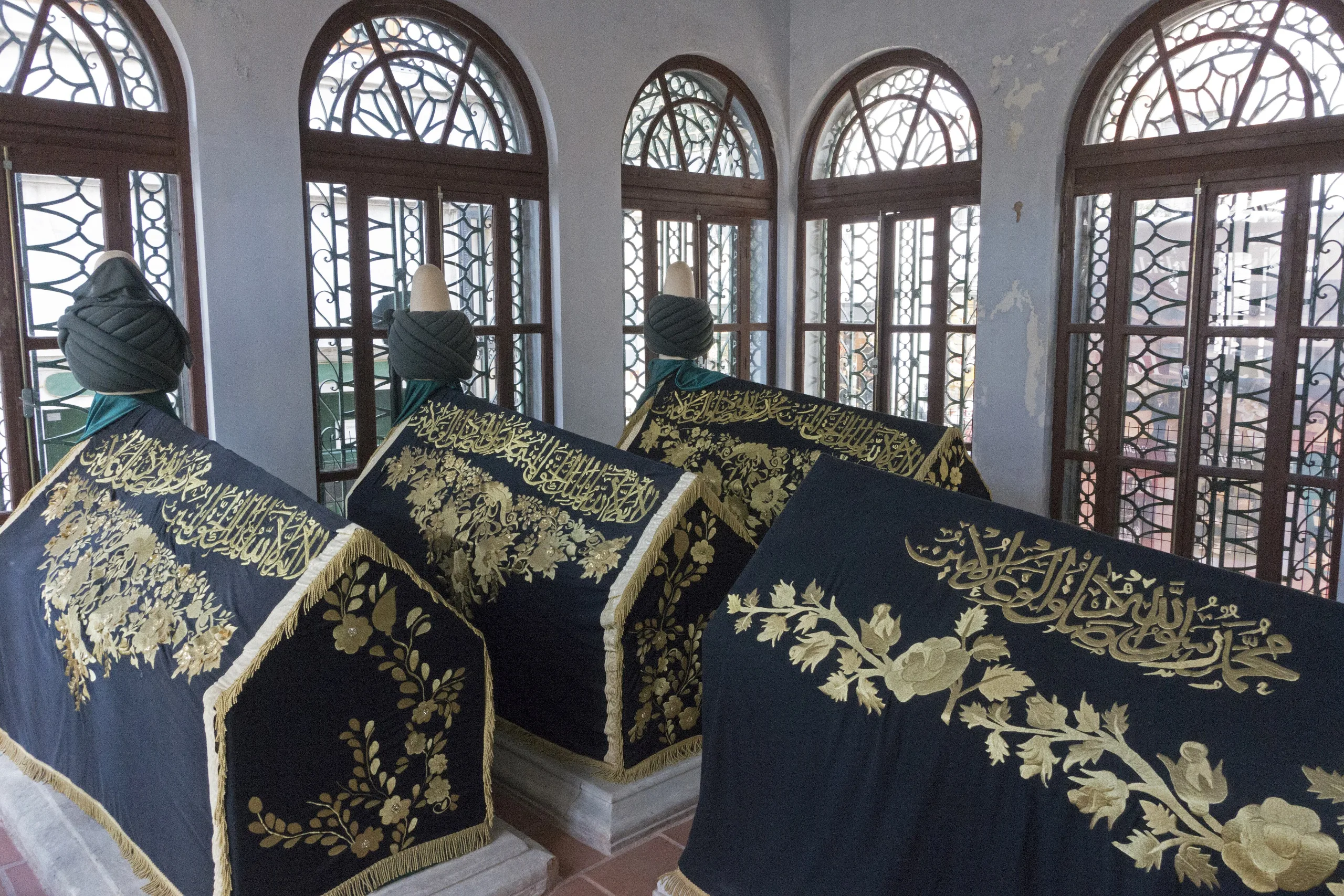
The complex is more than a mosque. It also has an imperial pavilion (the sultan's private way into the mosque), a madrasa, an imaret (a kitchen feeding the poor), a library, a tomb, a sebil (a small building for giving out water) and a fountain, with shops and a han around it. The madrasa has twelve student rooms and a classroom around a square arcaded yard, and its endowment deed required writing to be taught. The library's reading hall follows an original baroque plan. The tomb holds Şehsuvar Valide Sultan, mother of Osman III. The sebil and fountain stand outside the courtyard gate that opens onto the Grand Bazaar. Beneath the terrace that carries the mosque and its court lies a cellar that has never been used, a by-product of the sloping site.
On the tentative list
The complex was added to Türkiye's UNESCO World Heritage Tentative List in 2016 and is not on the World Heritage List. The nomination stresses the way classical Ottoman form and Western baroque and rococo detail meet in one building.
Visiting
The complex stands on Vezirhan Street in Fatih. Its large outer court has two entrances, one from the Grand Bazaar and one from the Cağaloğlu side. Check official announcements for visiting conditions.
Gallery
Frequently asked questions
Where is the Nuruosmaniye Complex?
When was it built?
What does the name mean?
Why is the courtyard famous?
What else is in the complex besides the mosque?
Is Nuruosmaniye a UNESCO World Heritage Site?
Sources (13)
- Nuruosmaniye Complex (Tentative Lists, Ref. 6122) — UNESCO World Heritage Centre
- Nuruosmaniye Külliyesi (Semavi Eyice) — TDV İslâm Ansiklopedisi
- Nuruosmaniye Camii - İstanbul, Gezilecek Yerler — T.C. Kültür ve Turizm Bakanlığı, Kültür Portalı
- Nuruosmaniye Camii (Wikidata Q1430090) — Wikidata
Photo credits
- Photo: Dmitry A. Mottl, CC BY-SA 4.0 — Wikimedia Commons (resized)
- Photo: Thomas Woodtli from Zürich, Switzerland, CC BY-SA 2.0 — Wikimedia Commons (resized)
- Photo: qwesy qwesy, CC BY 3.0 — Wikimedia Commons (resized)
- Photo: Aleksandr Zykov from Russia, CC BY-SA 2.0 — Wikimedia Commons (resized)
- Photo: Robot8A, CC BY-SA 4.0 — Wikimedia Commons (resized)
- Photo: Dosseman, CC BY-SA 4.0 — Wikimedia Commons (resized)
- Photo: Dosseman, CC BY-SA 4.0 — Wikimedia Commons (resized)
- Photo: Dosseman, CC BY-SA 4.0 — Wikimedia Commons (resized)
- Photo: Dosseman, CC BY-SA 4.0 — Wikimedia Commons (resized)