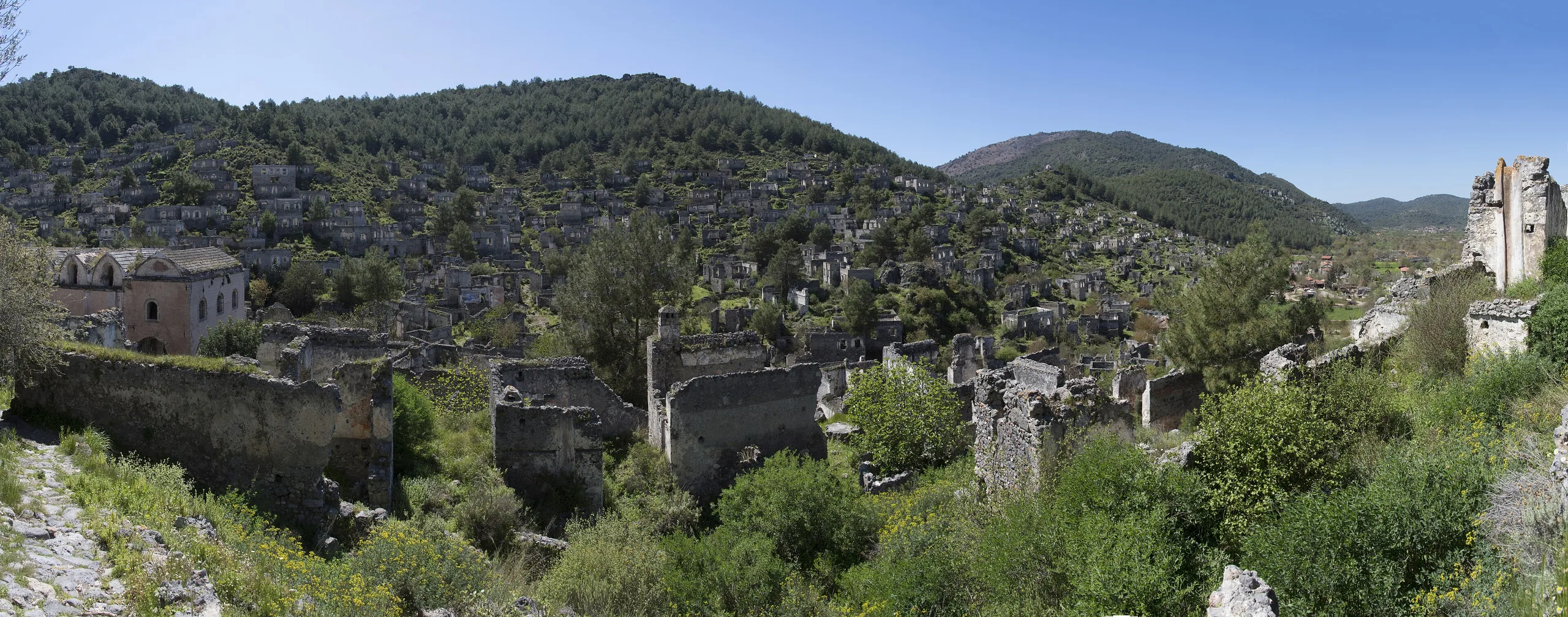
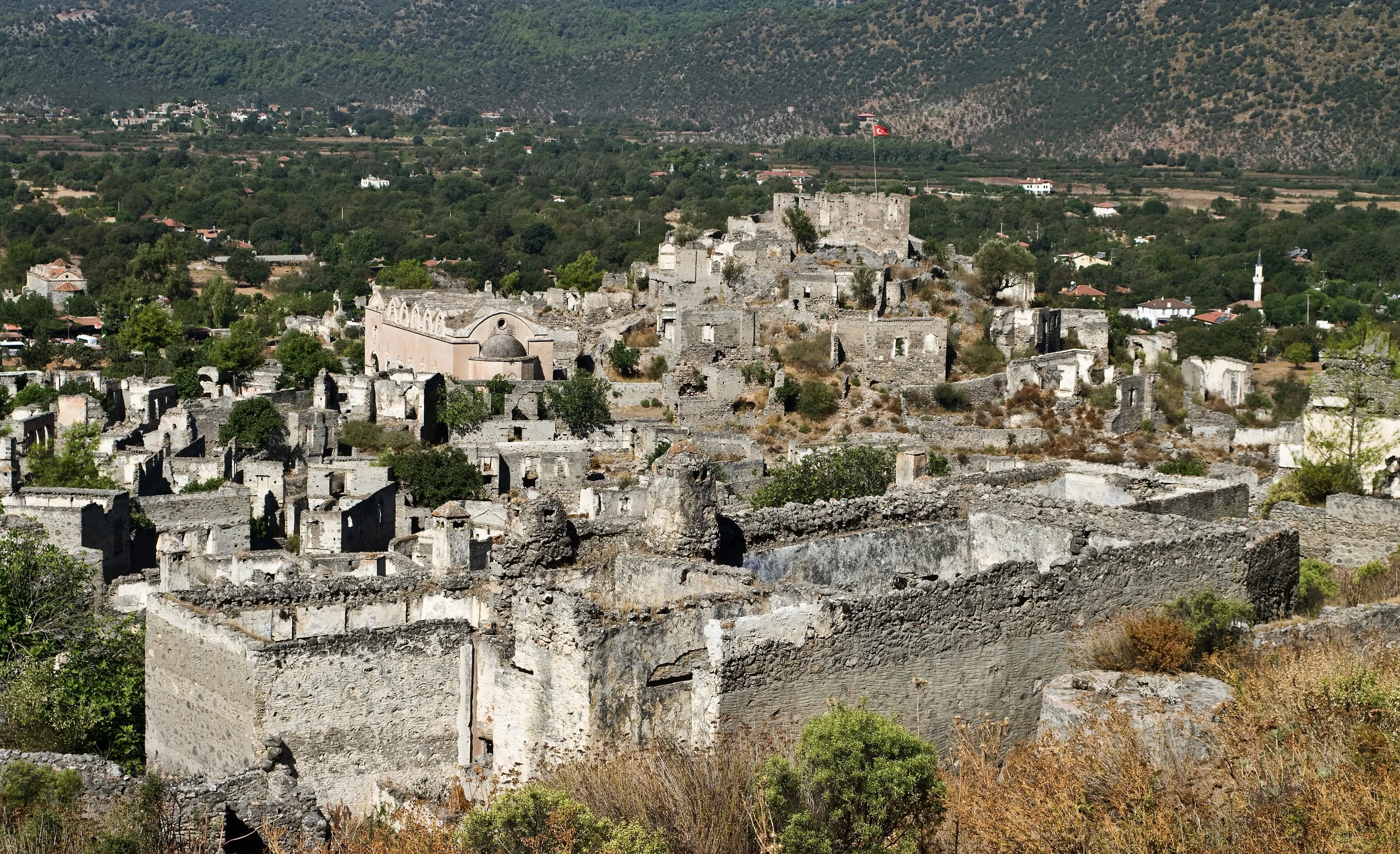
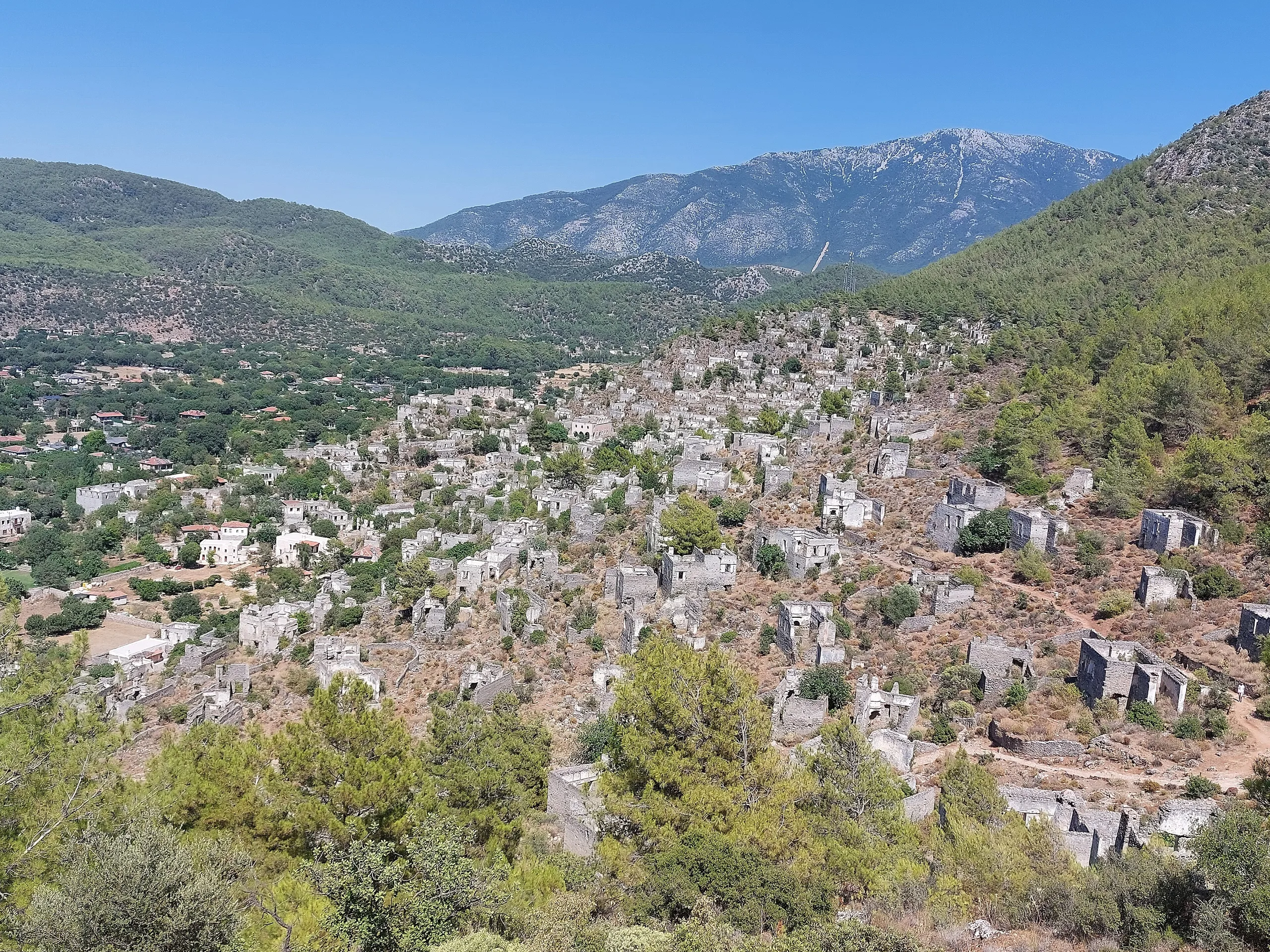
Kayaköy, eight kilometres south of Fethiye, is a hillside of roofless stone houses left empty by the Greek-Turkish population exchange; its ancient name was Karmylassos.
Kayaköy Ruins is a place (Historic town) in Turkey, Mugla. Main periods: Ottoman Period.
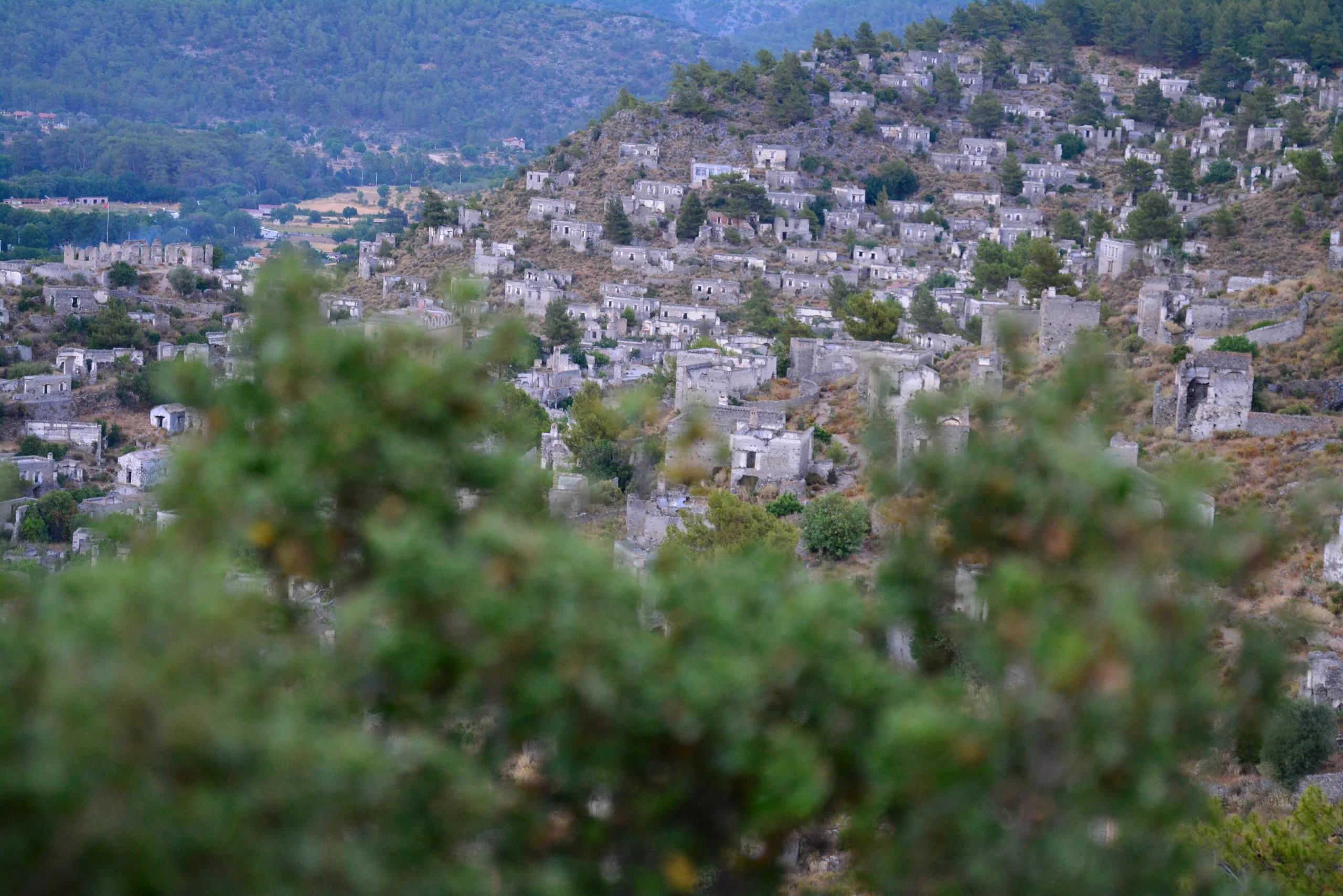
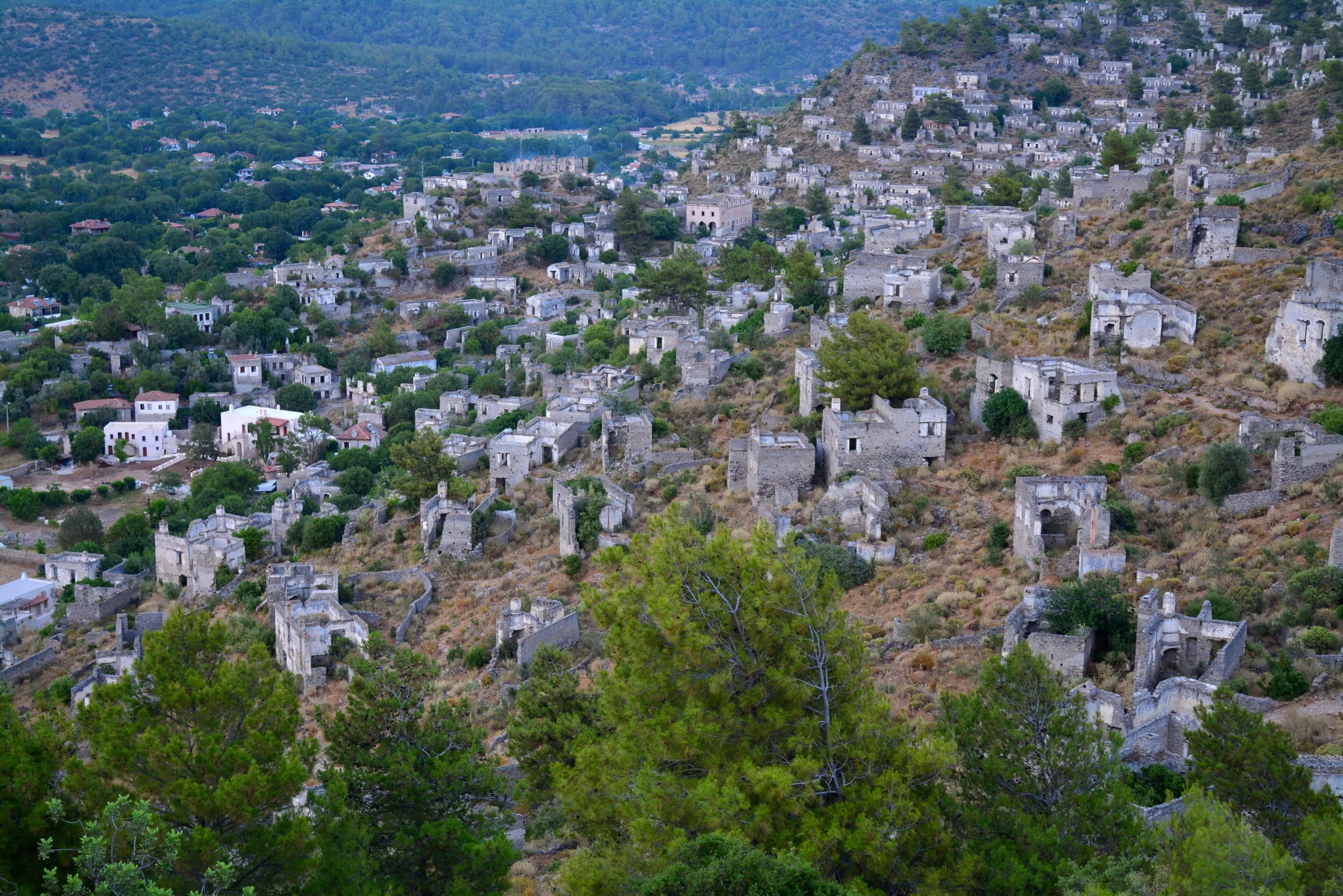
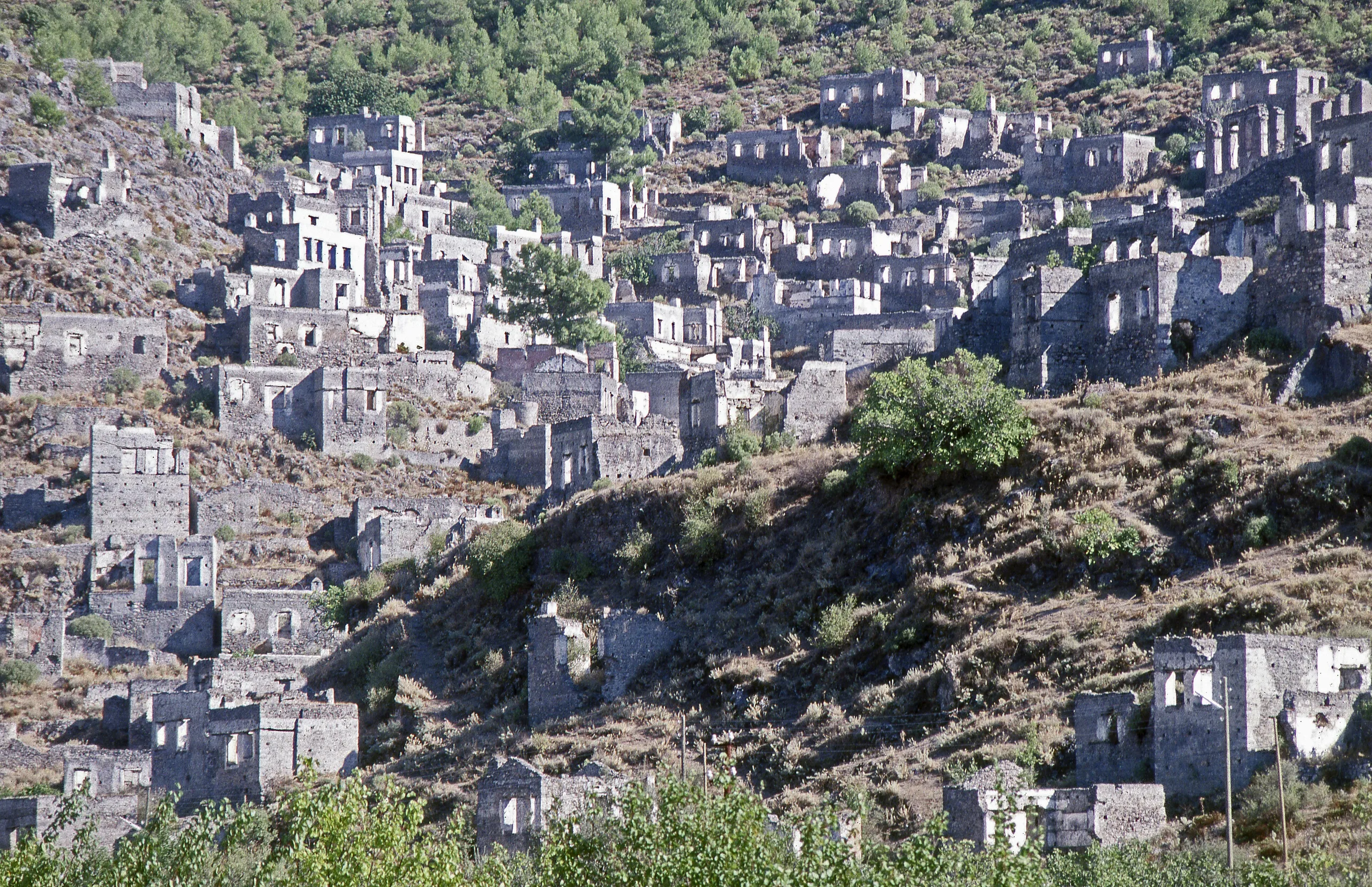
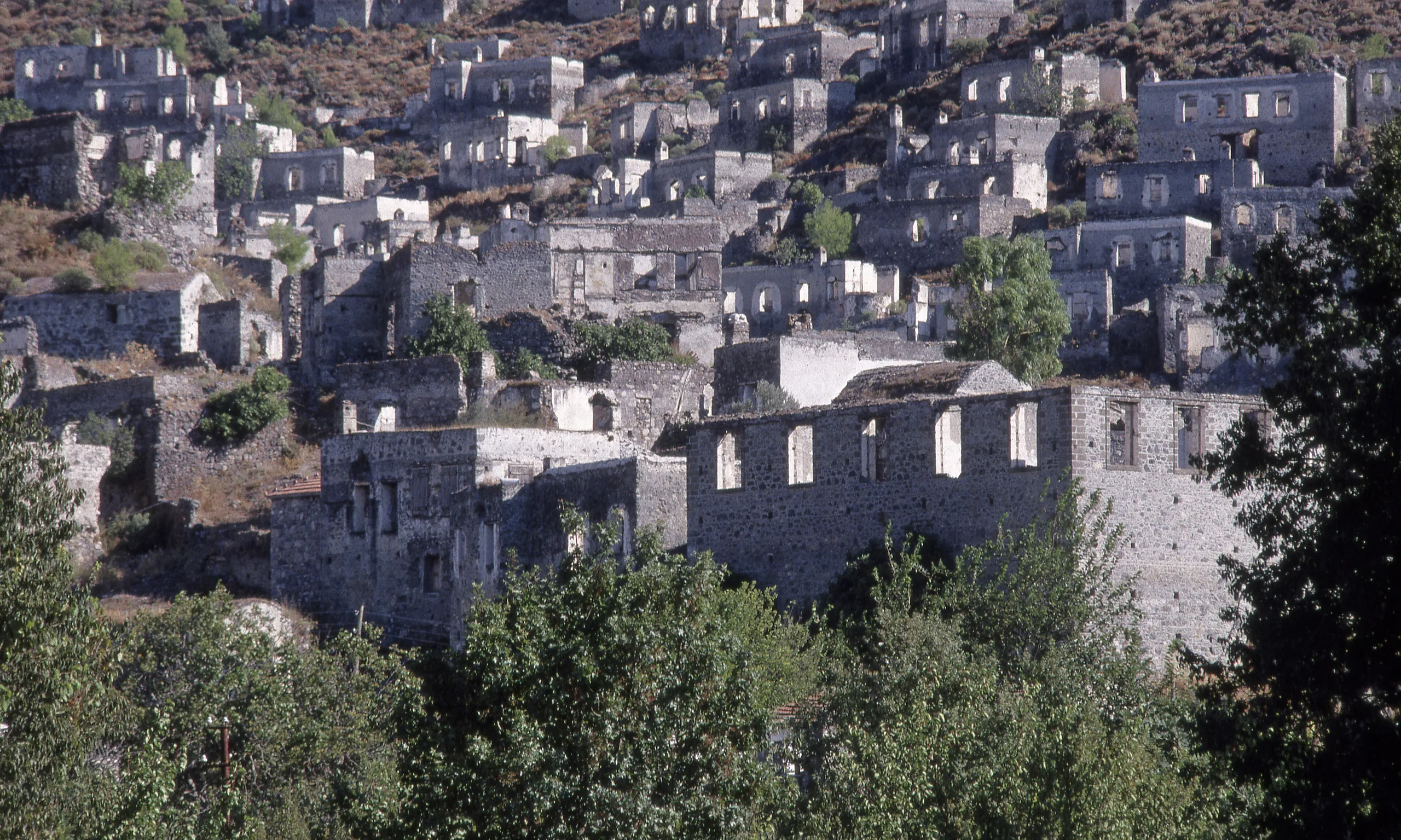
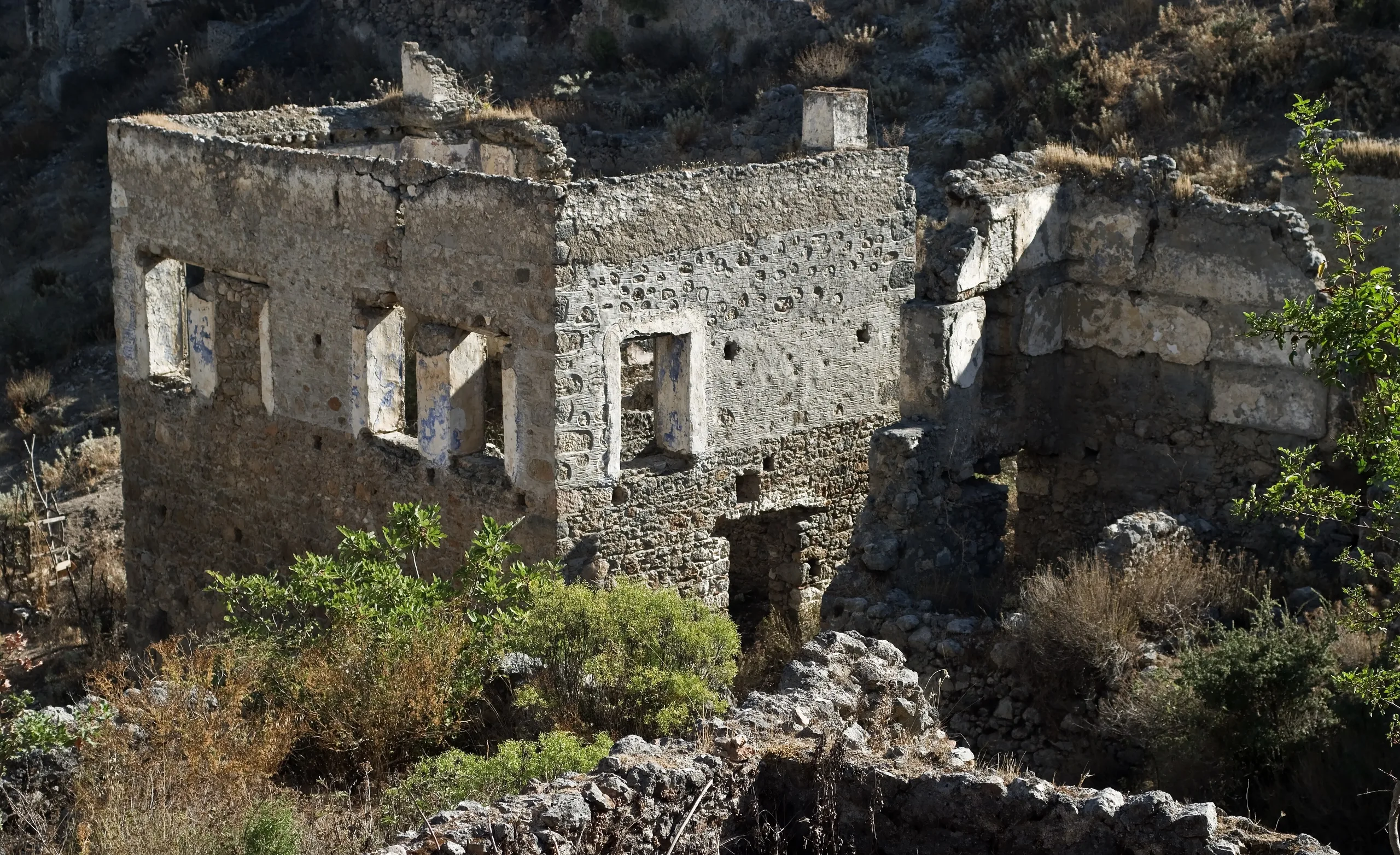
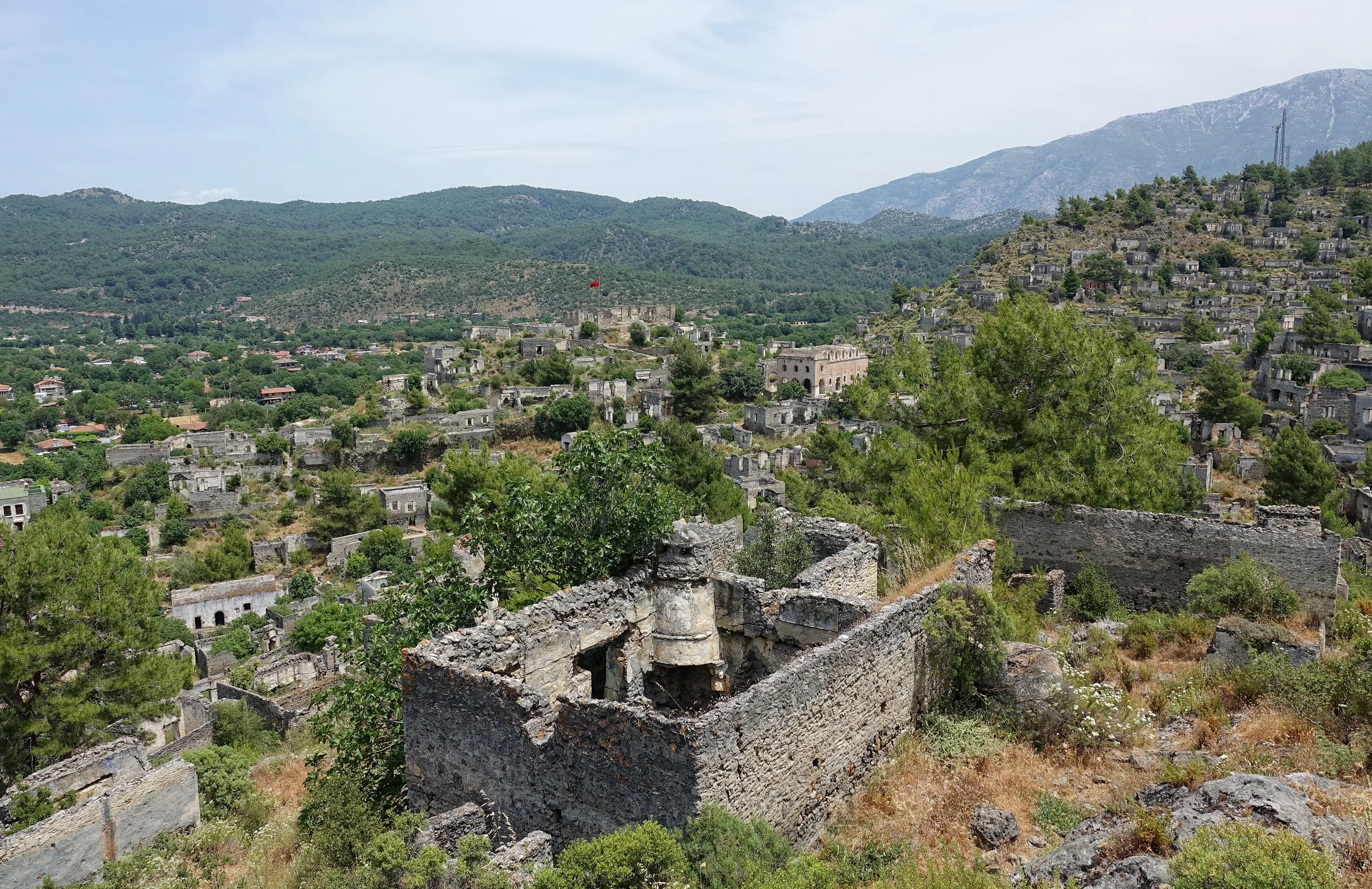
Most of the houses on the slope have lost their roofs, and the doors and windows are empty frames, yet the lanes, yards and steps still follow their old lines. Kayaköy lies eight kilometres south of Fethiye and was never properly resettled after the Greeks and Turks of the region were exchanged. The Ministry records the ancient name as Karmylassos, but what you walk through today belongs to a much nearer past.
History
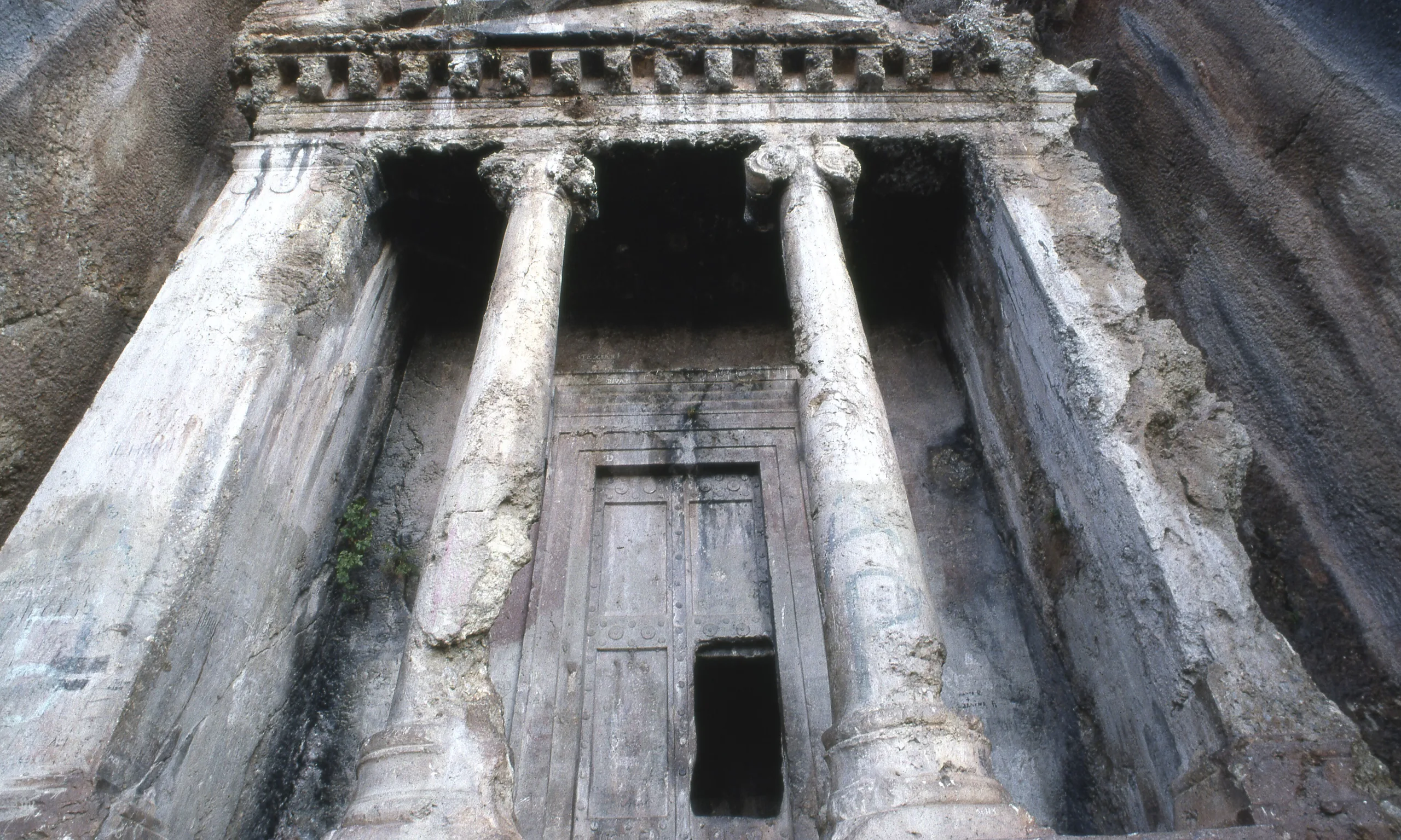
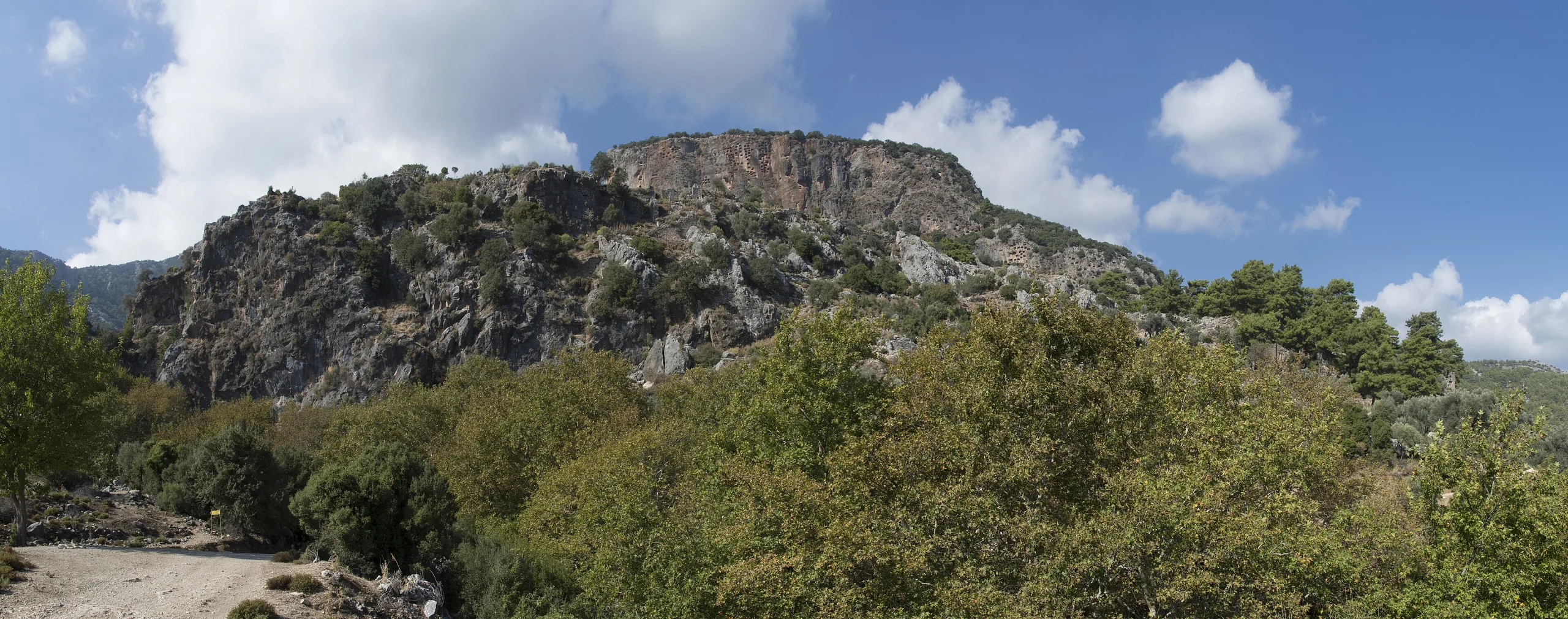
Written sources trace the place back to the third millennium BC. The ruins themselves have produced nothing earlier than the 4th century BC, and from antiquity only sarcophagi and rock-cut tombs of that century survive. Every group of buildings stepping up the hillside was raised by the Greeks who lived here in the late Ottoman period.
In the early years of the Republic the Greek population of Anatolia was swapped with Turks from western Thrace, an arrangement known as the population exchange. The village emptied. Over the following decades the timber doors, windows and roof structures rotted away, and the settlement took on the look of a ghost town.
What you see
The houses stand two storeys high and none covers more than about 50 square metres. They were set out so that neighbours did not block each other's light or view, and the ground floor usually served as a store. At each entrance an underground cistern caught the rain running off the roof. Estimates put the number of houses at 350 to 400.
Among the dwellings are many small chapels, a school and a customs house. Of the two large churches, the Upper Church, called Taxiarchis, crowns a prominent hill in the middle of the village. The Lower Church, Panagia Pirgiotissa, sits on the western edge and is better preserved, largely because it served as a mosque until the 1960s. Both have forecourts paved in pebble mosaic.
Visiting
The site is reached from Fethiye by private vehicle. Hours and fees can change, so check the Kayaköy page on muze.gov.tr. The MüzeKart is valid for Turkish citizens.
Gallery
Frequently asked questions
Where is Kayaköy?
Why was the village abandoned?
Who built the houses?
Which church is better preserved?
Is anything older than the Ottoman village?
Sources (12)
- Fethiye Kayaköy Örenyeri / Kayaköy Ruins (TR ve EN sayfalar) — T.C. Kültür ve Turizm Bakanlığı, Müzeler ve Ören Yerleri
- Kayaköy Örenyeri - Muğla, Gezilecek Yerler — T.C. Kültür ve Turizm Bakanlığı, Kültür Portalı (kaynak: Muğla İl Kültür ve Turizm Müdürlüğü)
- Kayaköy (Wikidata Q1168408) — Wikidata
Photo credits
- Photo: Dosseman, CC BY-SA 4.0 — Wikimedia Commons (resized)
- Photo: Nikodem Nijaki, CC BY-SA 3.0 — Wikimedia Commons (resized)
- Photo: BoraBora704, CC BY-SA 4.0 — Wikimedia Commons (resized)
- Photo: BoraBora704, CC BY-SA 4.0 — Wikimedia Commons (resized)
- Photo: Dosseman, CC BY-SA 4.0 — Wikimedia Commons (resized)
- Photo: Dosseman, CC BY-SA 4.0 — Wikimedia Commons (resized)
- Photo: Nikodem Nijaki, CC BY-SA 3.0 — Wikimedia Commons (resized)
- Photo: Bjørn Christian Tørrissen, CC BY-SA 4.0 — Wikimedia Commons (resized)
- Photo: Thecatcherintherye, CC BY-SA 4.0 — Wikimedia Commons (resized)