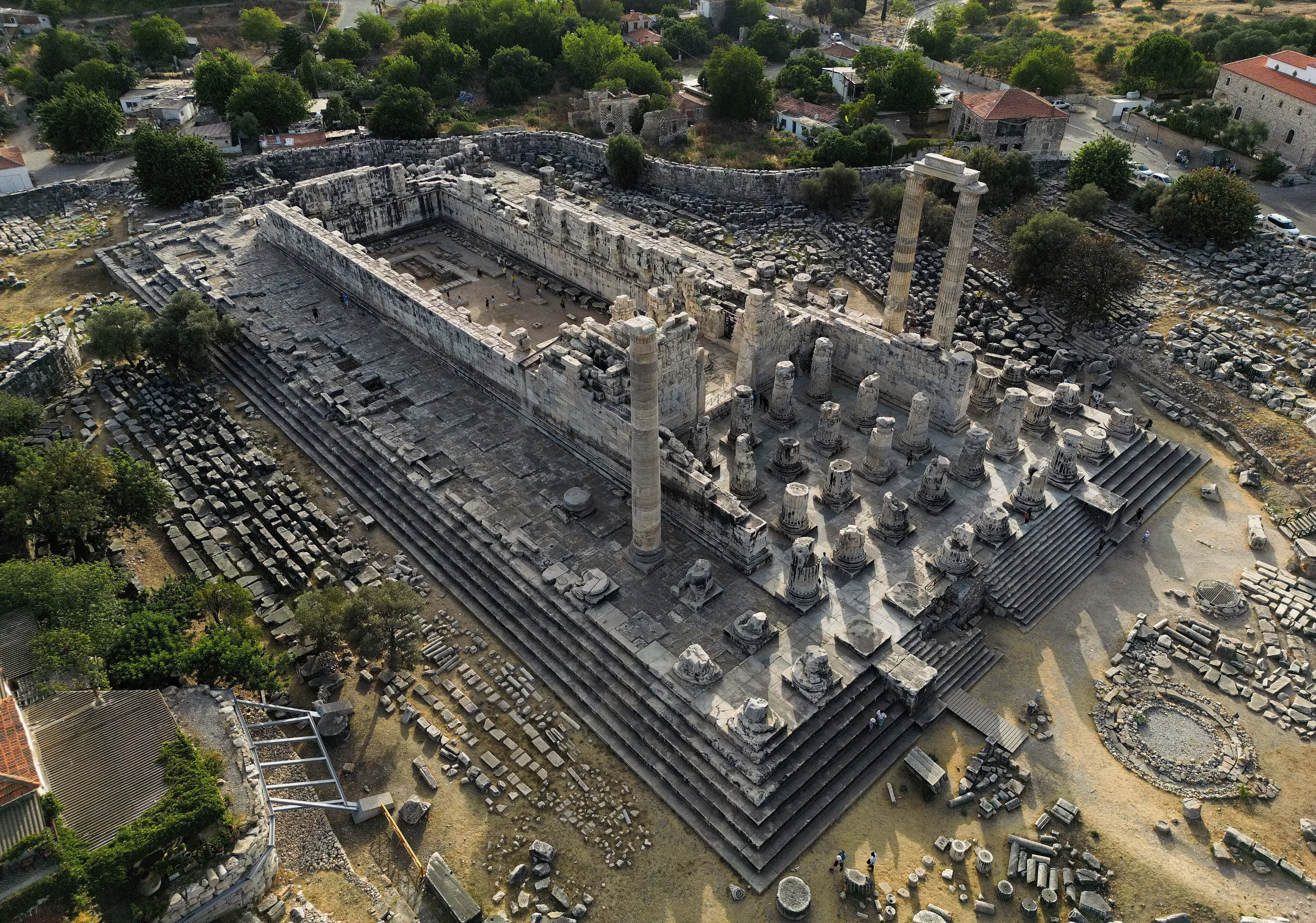
The Temple of Apollo at Didyma had no roof over its heart: an open court held a sacred spring and a tiny shrine. Built for an oracle, it was never finished; a Sacred Way led to it from Miletus.
Didyma (Temple of Apollo) is a place (Sanctuary) in Turkey, Aydin. Main periods: Archaic Period, Hellenistic Period, Roman Period, Byzantine Period.
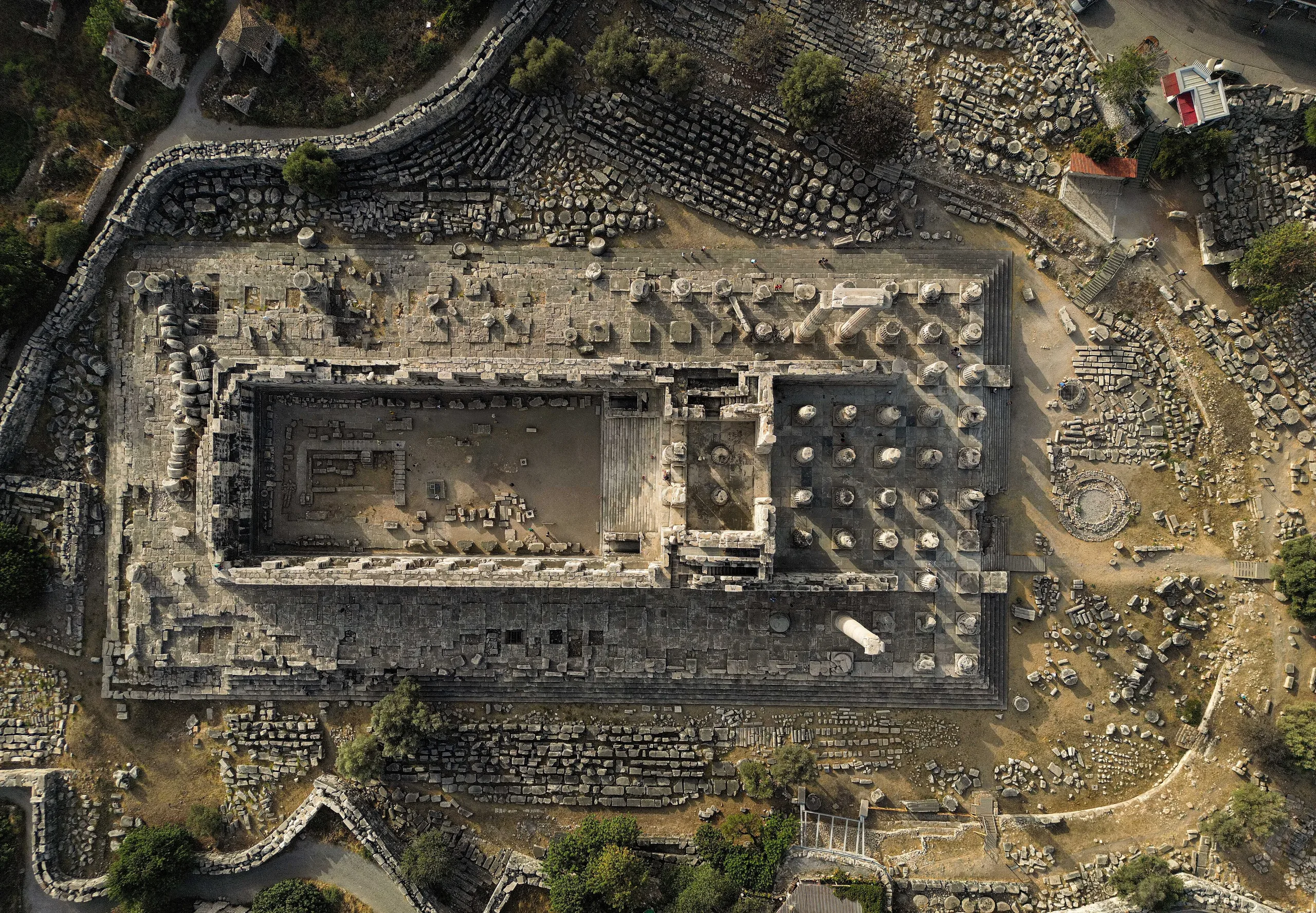
At the centre of the Temple of Apollo at Didyma there was no roof. The great inner court lay open to the sky, its floor never paved in stone, and in it stood a sacred spring and a naiskos, a small shrine built inside the larger temple. This odd arrangement came from what the building was for: it housed an oracle, not simply a god.
Didyma lies in Didim district, Aydın Province, close to ancient Miletus, and is also recorded under the names Branchidai and Ioustinianopolis. The temple is counted as the third largest Ionic temple in the world and is among the best-preserved of any from antiquity.
Location and surroundings
The site sits in the Hisar quarter of Didim, right beside the temple. The Müzekart is valid for Turkish citizens only, and since hours and fees change from time to time, check the official museum page before going. The area has more to offer: Lake Bafa is one of the country's notable bird-watching spots, while Dilek Peninsula National Park, the Menderes delta and the coves of Karina and Kazıklı are the region's natural attractions.
History
A different temple stood here before the ruin you see. Dated to the 6th century BC, this Archaic temple was famous in its day and is mentioned by Herodotus. The Persians destroyed it early in the 5th century BC, and its foundations can still be seen in the central court.
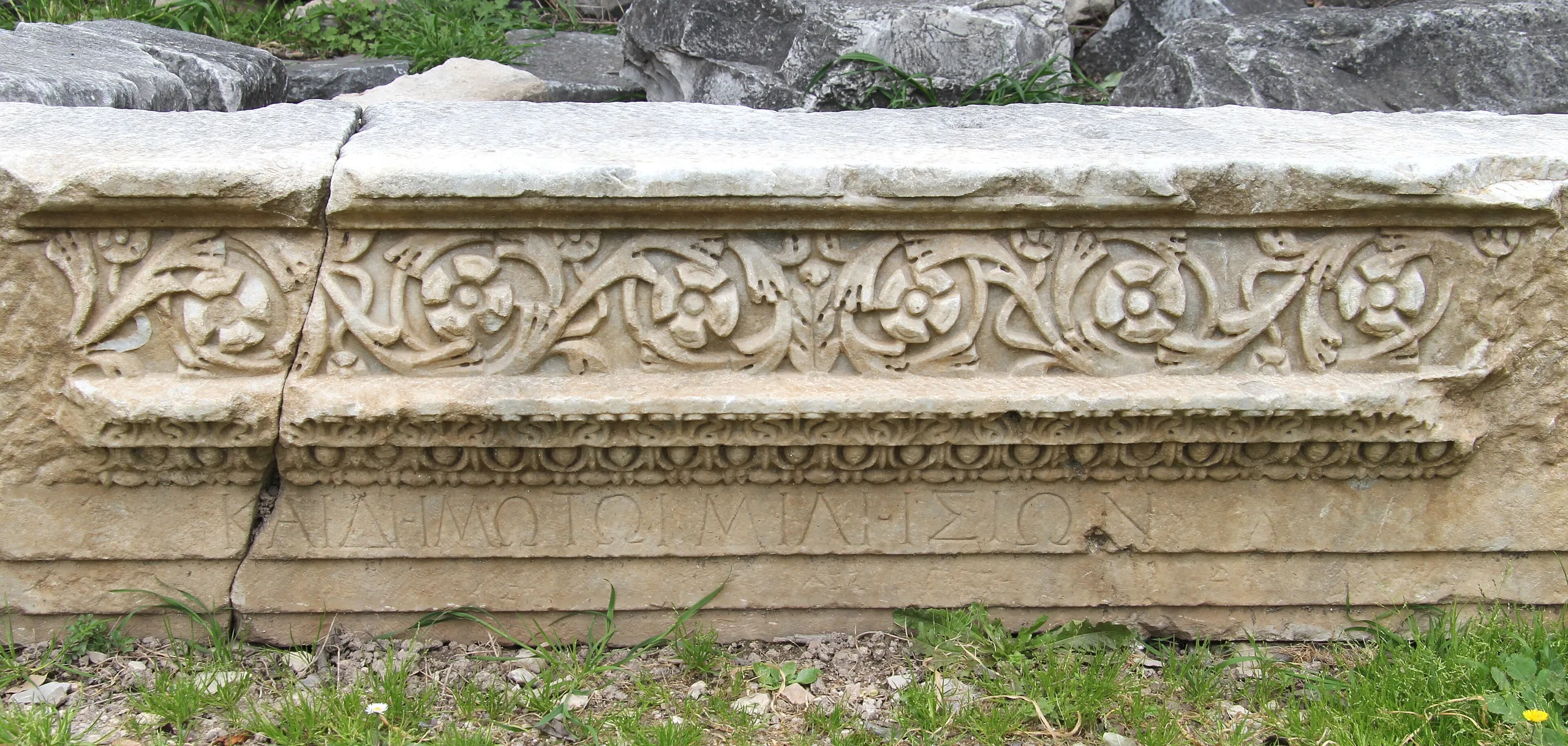
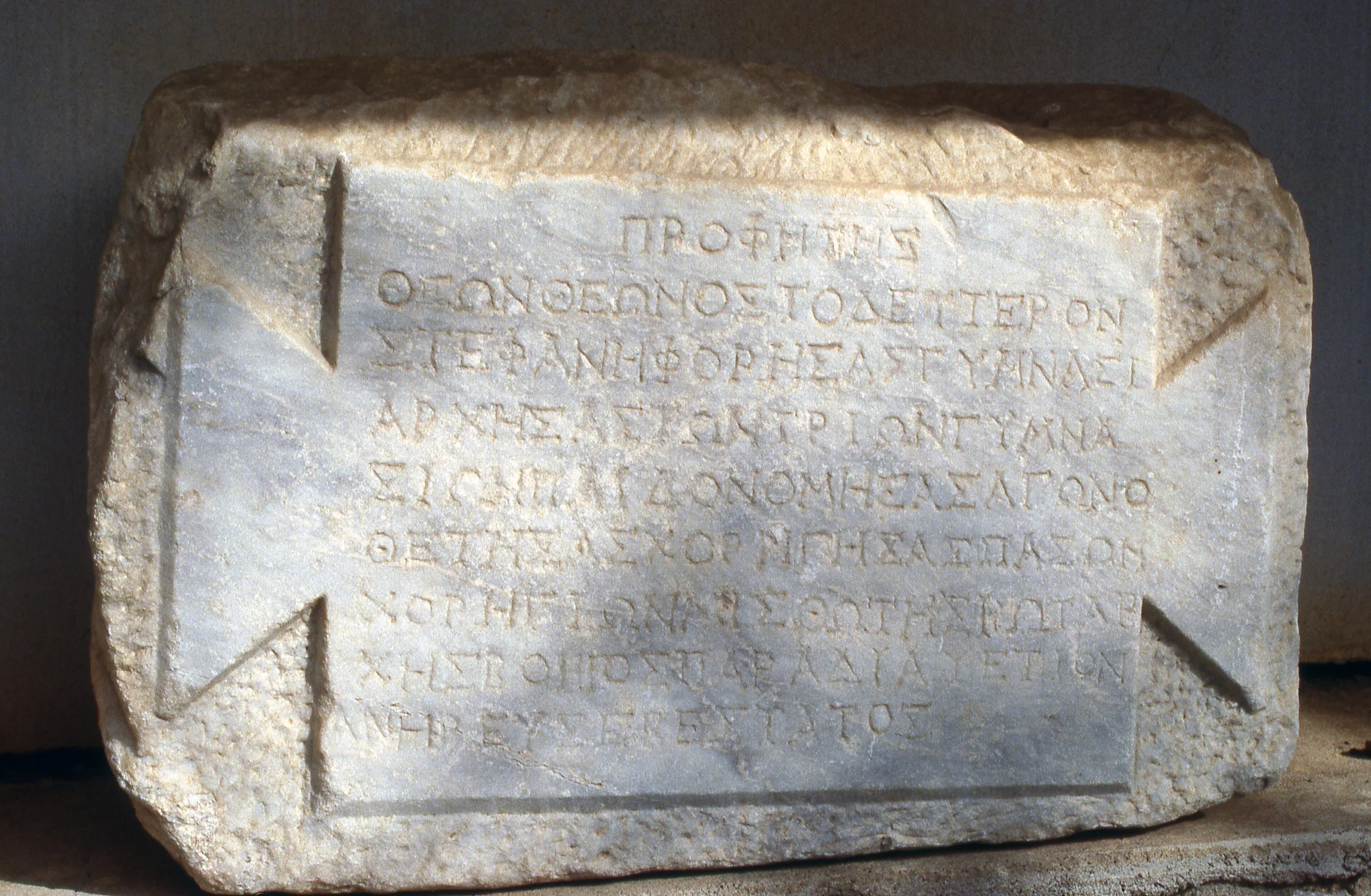
A far larger temple followed. Work on this Hellenistic building began in the 4th century BC, went on with interruptions for five centuries, and still ended unfinished. As a result the surviving walls contain blocks from different phases, left wherever work stopped. Inscribed building accounts, which follow the progress of the site year by year, have also survived, and they give a rare view into how an ancient construction project ran.
In Christian times the Hellenistic naiskos in the court was dismantled, in the 5th or 6th century AD, and a basilica was put up in its place. An earthquake later ruined the basilica, just as it largely ruined the temple.
Notable structures and features
The Temple of Apollo
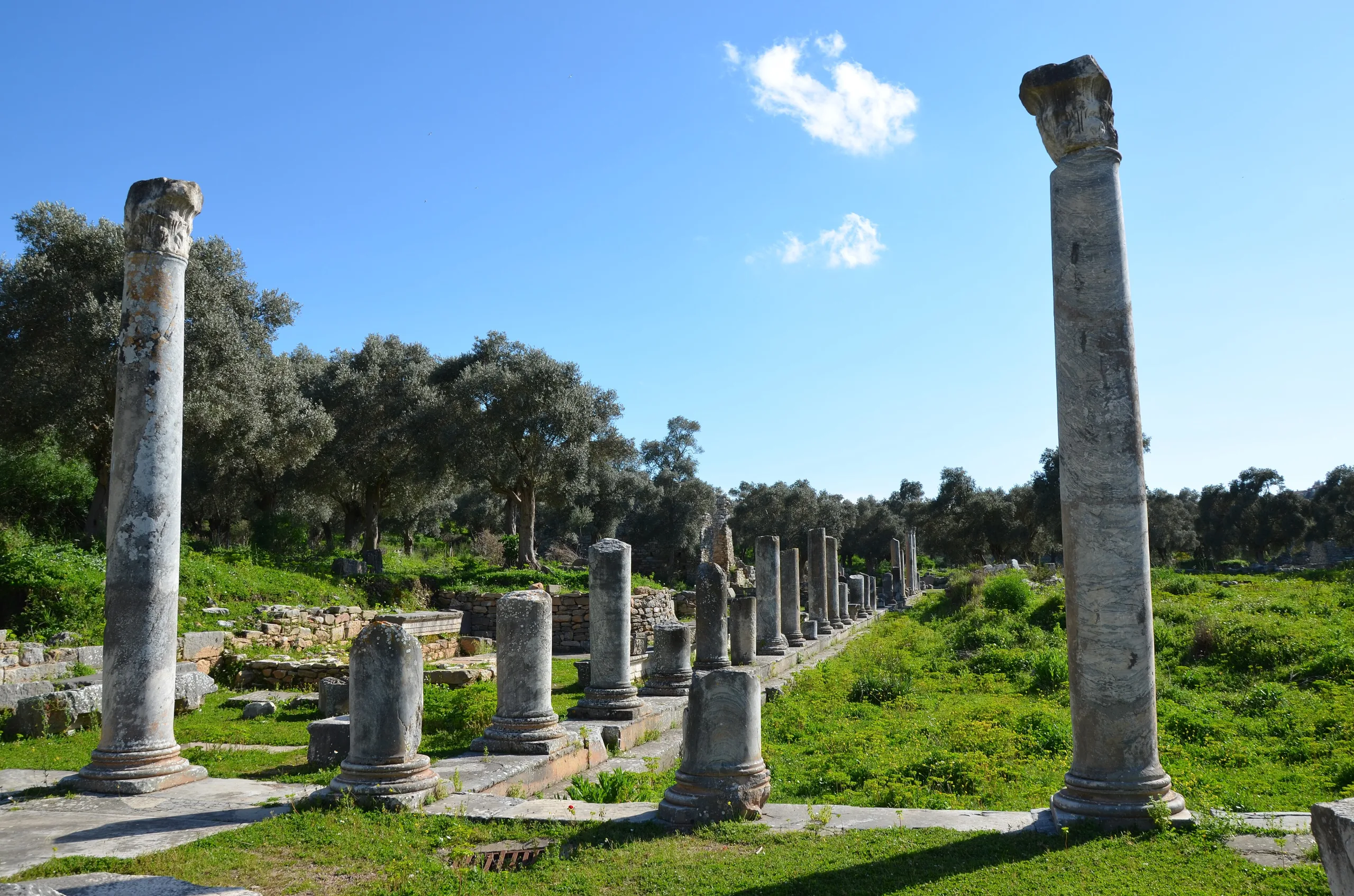
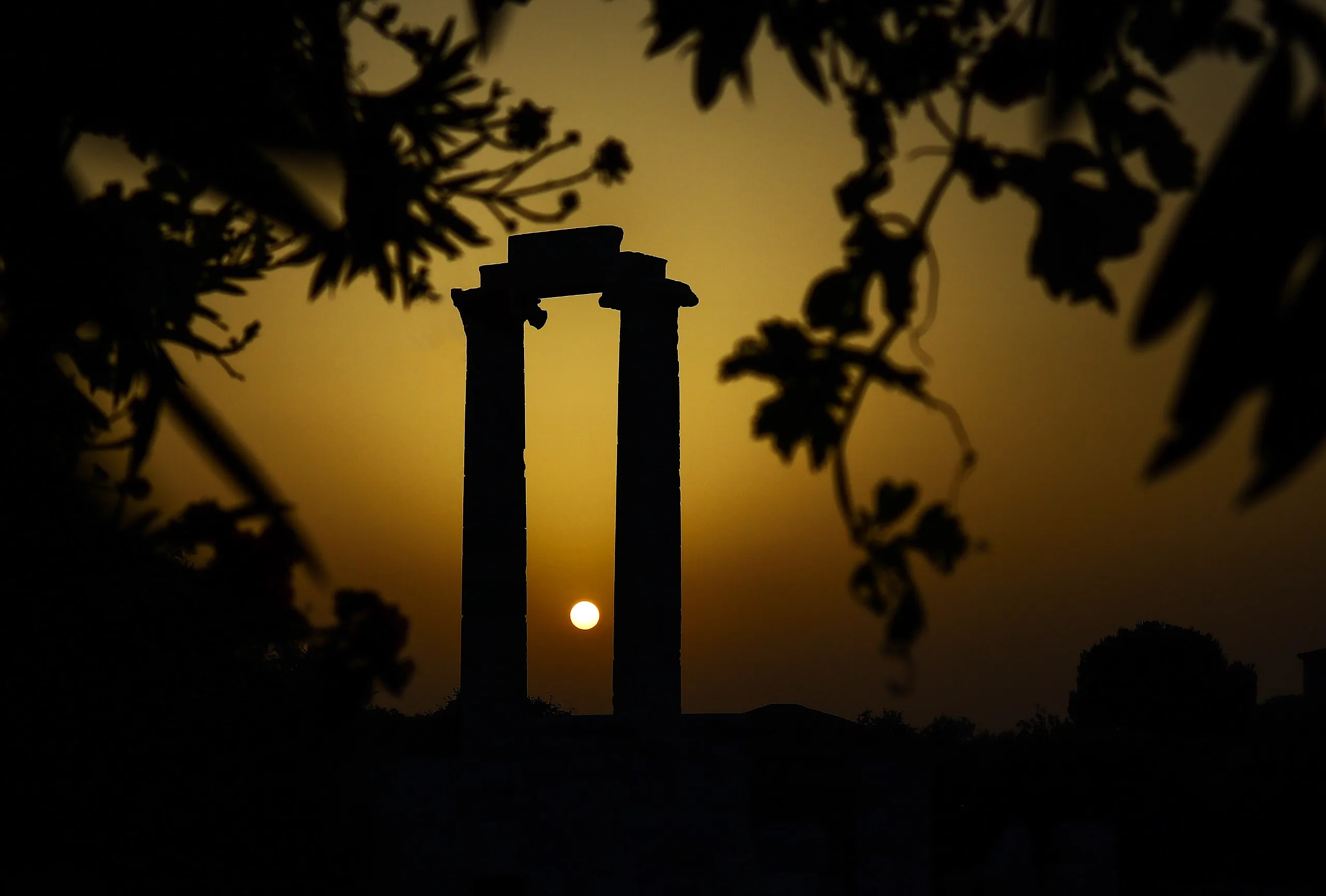
A double row of columns encircles the outside, which makes the plan type dipteral. Where exactly the sacred spring rose can no longer be fixed. The protective wall around the temple and the arrangement of some architectural pieces date to the first excavations, so those elements no longer have their original character.
Medusa
Medusa is named as the temple's guardian. She was one of three Gorgon sisters, Stheno, Euryale and Medusa, snake-haired creatures with terrifying faces whose gaze turned people to stone; only Medusa was mortal. The word Gorgon comes from the Greek gorgos, terrible. Her head was used across the Greek world as a protective emblem on shields, armour, buildings and temples.
The Sacred Way
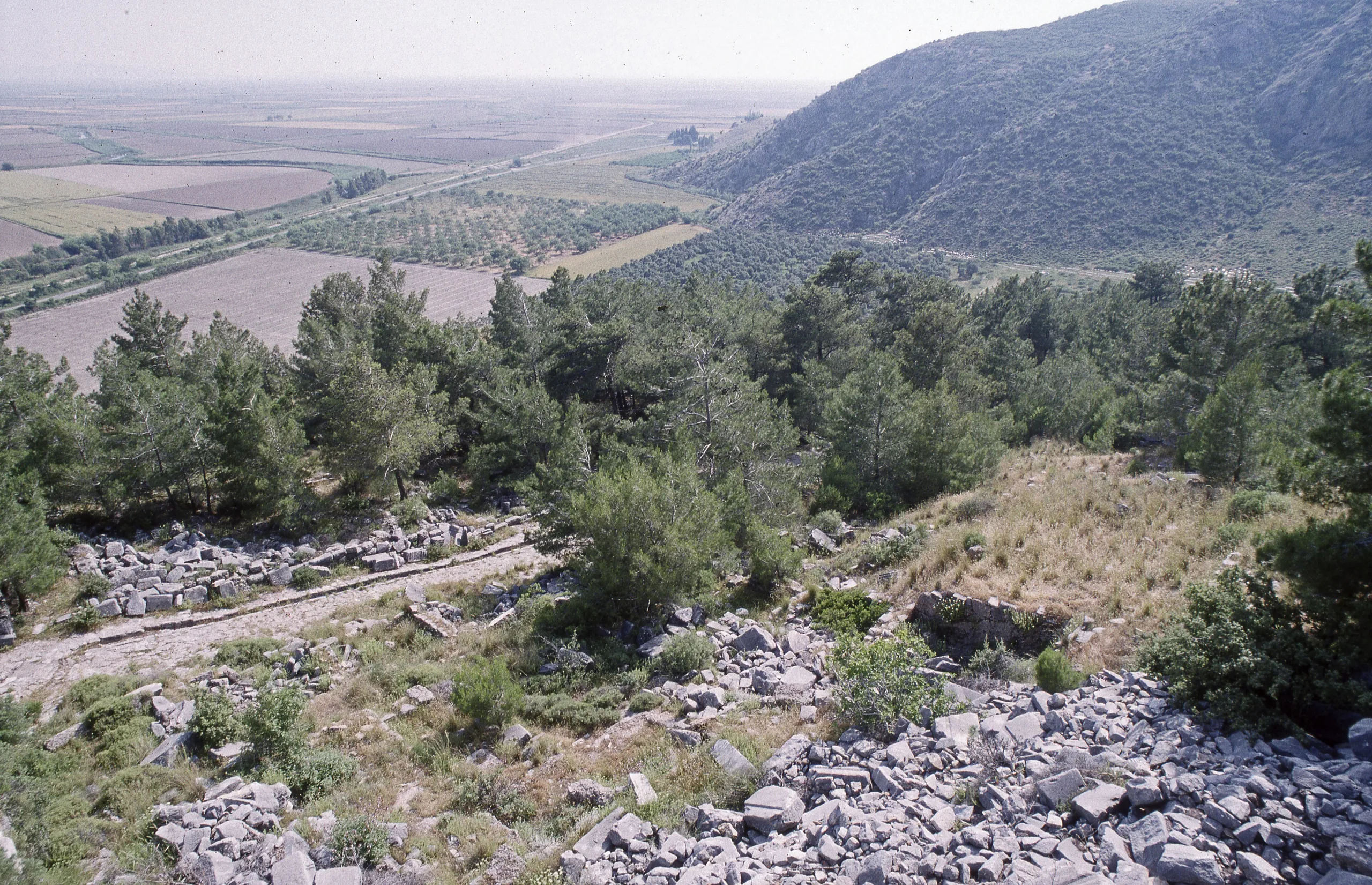
The road running from Miletus to Didyma has long been a focus of research on the Milesian peninsula, and its discovery goes back to William Gell's work in 1812. The stretch between the end of the paved street of Trajan's time and the area north of the temple remains uncertain. Excavations were carried out on the modern road in 2010 and again from 2013 to 2015 to trace it, and a new research project has run since 2013.
Excavations
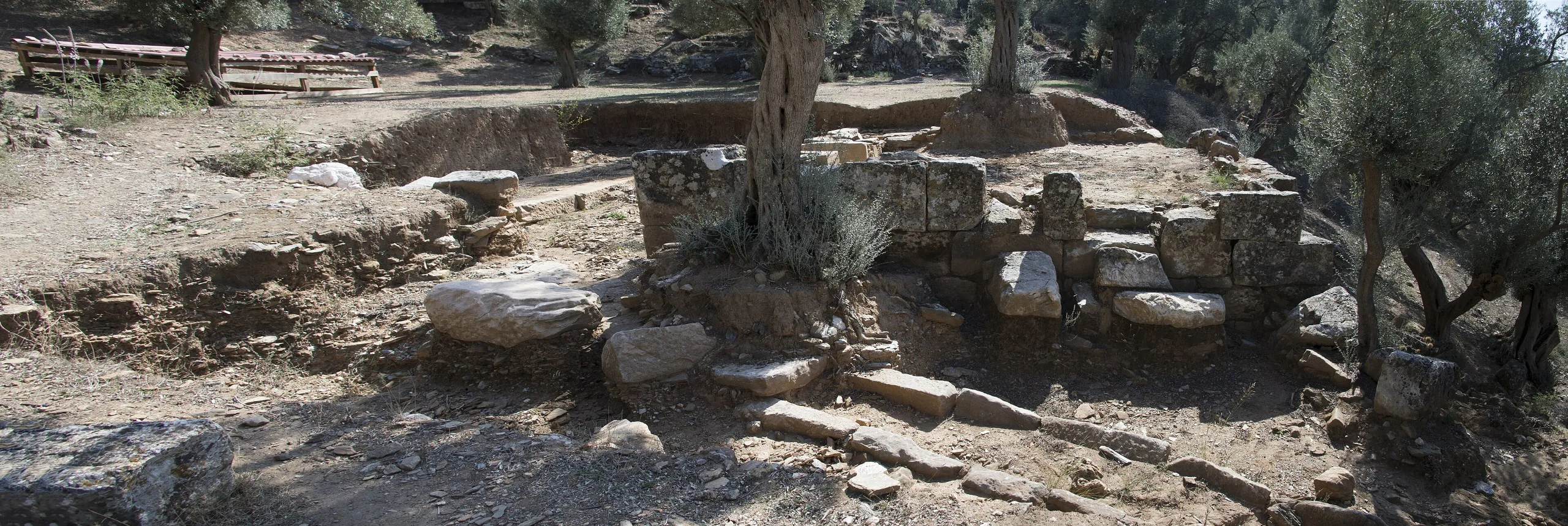
A team from the Royal Prussian Museums in Berlin, led by the German archaeologist Theodor Wiegand, dug the temple between 1906 and 1913. It lay buried under an enormous mound of rubble, and while it was being cleared a few architectural and sculptural fragments of the Archaic temple turned up. The building emerged fully and was partly re-erected. In 1915/1916 the long-hoped-for foundations of the Archaic adyton, the innermost sanctum, came to light in the court under the ruins of a Byzantine church.
The German Archaeological Institute (DAI) resumed digging in the 1960s. Its project from 2003 to 2019 catalogued, photographed and drew about 600 architectural and architectural-sculpture fragments belonging to the Archaic temple and its altar. A current study examines the building phases of the Hellenistic temple and is republishing the building accounts.
Visiting
Didyma is close enough to Miletus to be seen on the same trip. For current hours, fees and Müzekart conditions, consult the official museum page.
Gallery
Frequently asked questions
Where is Didyma?
Why was Didyma important?
Why was the temple never finished?
Why does the temple have no roof over its inner court?
What happened to the older temple?
What is the Sacred Way?
Sources (14)
- Didim Apollon Tapınağı / Temple of Apollo at Didyma (TR ve EN sayfaları) — T.C. Kültür ve Turizm Bakanlığı, Müzeler ve Ören Yerleri
- Der archaische Apollontempel von Didyma und die Genese der monumentalen ionischen Sakralarchitektur (Proje 1746, 2003-2019) — Deutsches Archäologisches Institut (DAI)
- Didyma, Türkei. Die Heilige Straße im Bereich des Apollontempels. Die Arbeiten der Jahre 2013 bis 2018 (H. Cevizoğlu) — eForschungsberichte des DAI
- Didyma, Türkei. Antike Bauabläufe am Apollontempel. Die Arbeiten der Jahre 2021 und 2022 (K. Wächter) — eForschungsberichte des DAI
- Didyma/Branchidai/Ioustinianopolis (Pleiades place 599593) — Pleiades
Photo credits
- Photo: Rotadefterim, CC BY-SA 4.0 — Wikimedia Commons (resized)
- Photo: Rotadefterim, CC BY-SA 4.0 — Wikimedia Commons (resized)
- Photo: Rotadefterim, CC BY-SA 4.0 — Wikimedia Commons (resized)
- Photo: Rotadefterim, CC BY-SA 4.0 — Wikimedia Commons (resized)
- Photo: Rotadefterim, CC BY-SA 4.0 — Wikimedia Commons (resized)
- Photo: Rabe!, CC BY-SA 4.0 — Wikimedia Commons (resized)
- Photo: Dosseman, CC BY-SA 4.0 — Wikimedia Commons (resized)
- Photo: Mark Landon, CC BY 4.0 — Wikimedia Commons (resized)
- Photo: Hekataios von Milet, CC BY-SA 4.0 — Wikimedia Commons (resized)