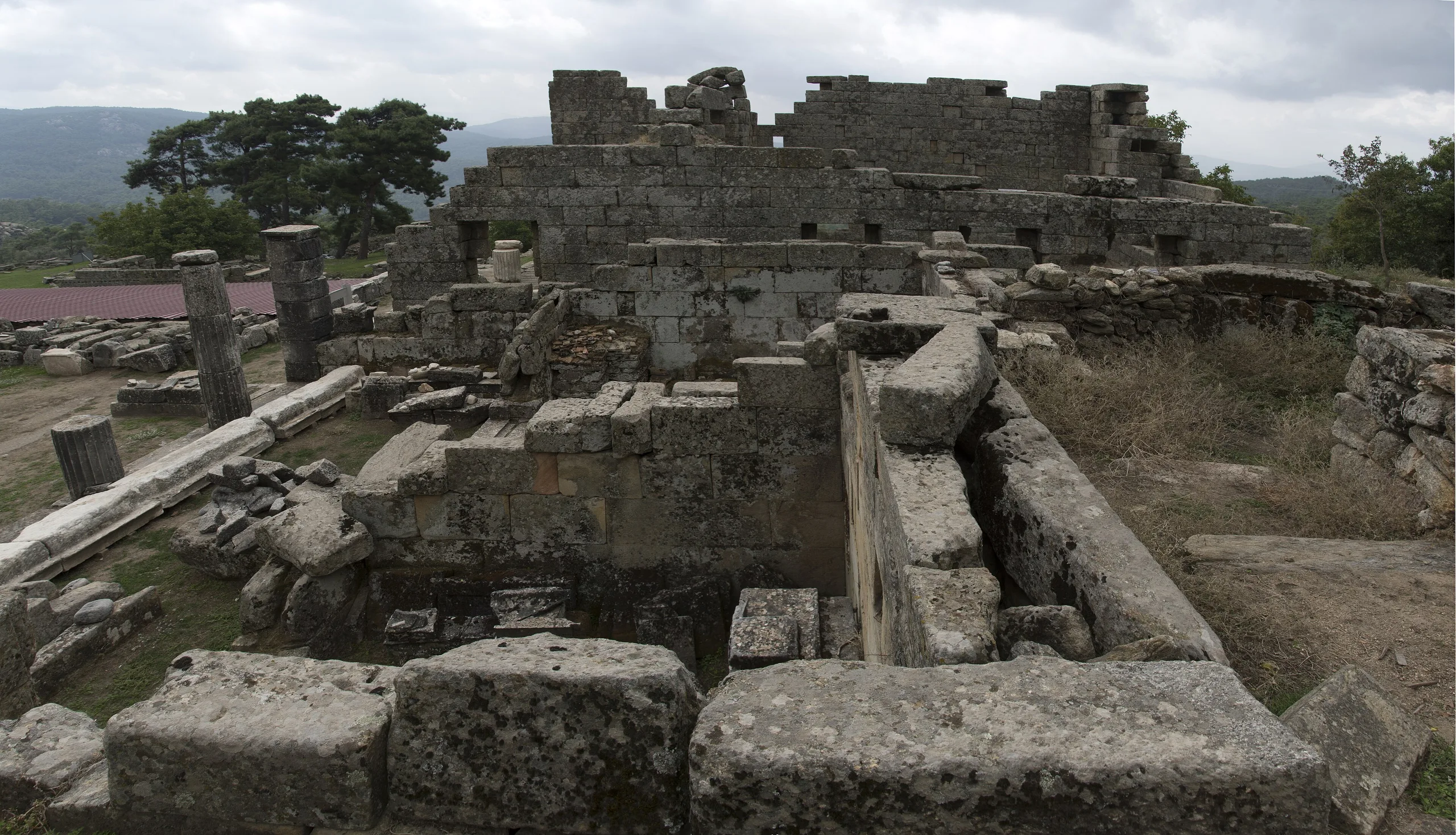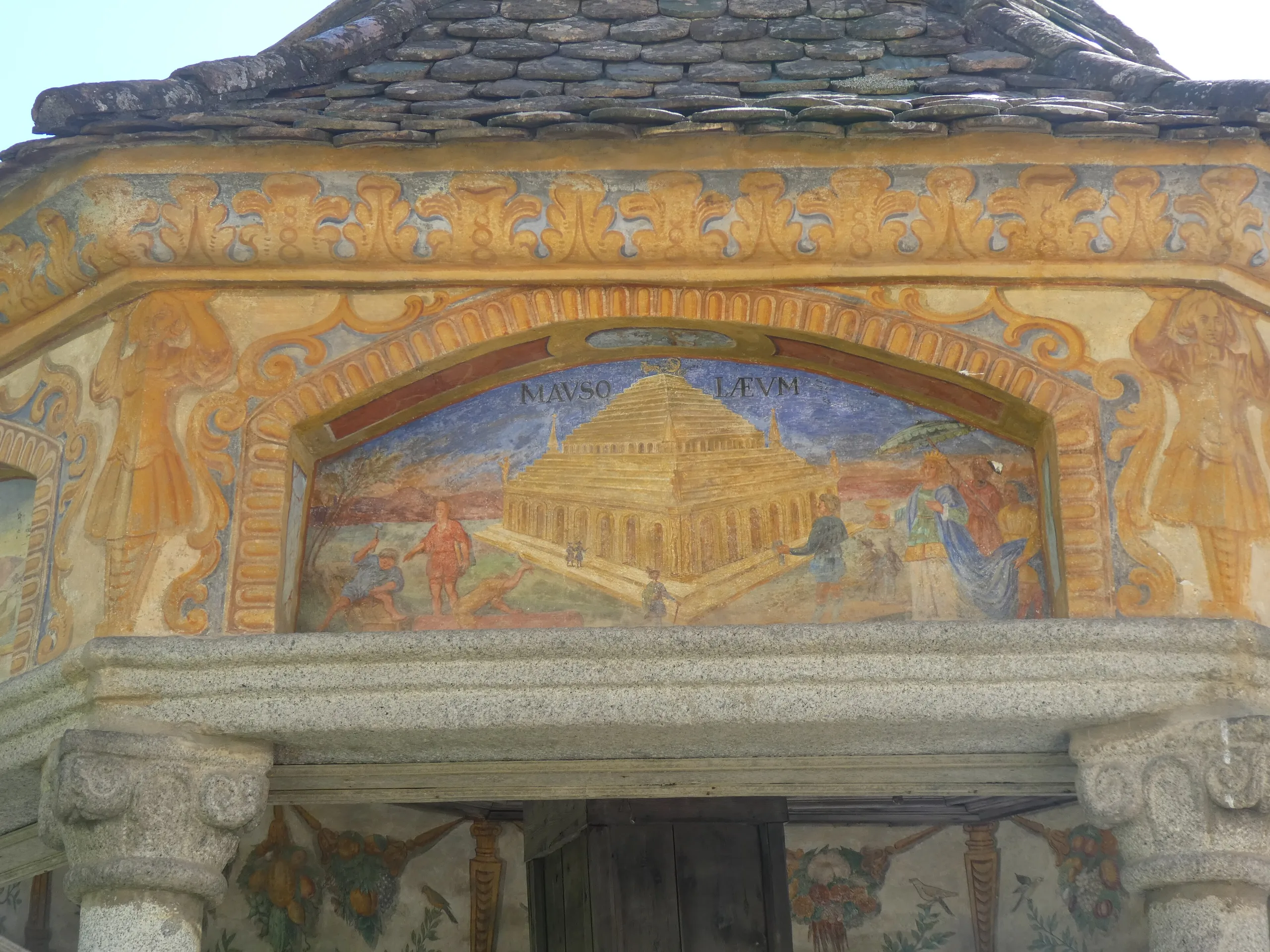
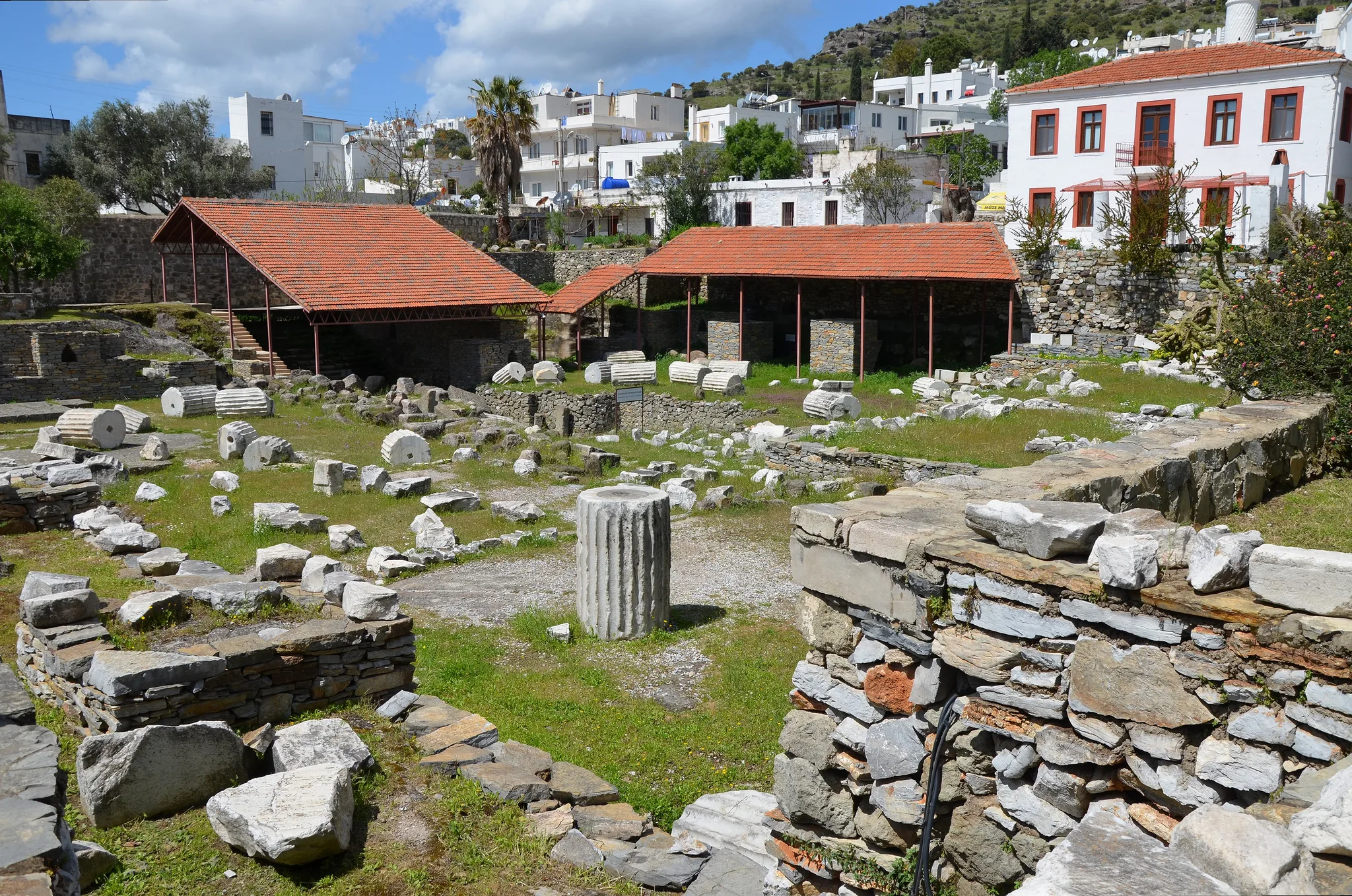
Bodrum's main street follows the ancient road that ran past the Mausoleum to the Myndos Gate; of this wonder of the world, the foundation cutting and the excavated site remain.
Mausoleum at Halicarnassus is a place (Monumental tomb and necropolis) in Turkey, Mugla. Main periods: Classical Period.
Turgut Reis Caddesi, the main street of Bodrum today, runs along the line of an ancient road about 15 m wide. That road led to the western gate of Halicarnassus, the Tripylon or Myndos Gate, and on its north side, at one corner of a huge monumental terrace, stood one of the Seven Wonders of the ancient world: the Mausoleum, tomb of the Carian satrap Maussollos. The building is gone. What exists in Bodrum is an archaeological site where its foundations and surroundings have been uncovered.
The site
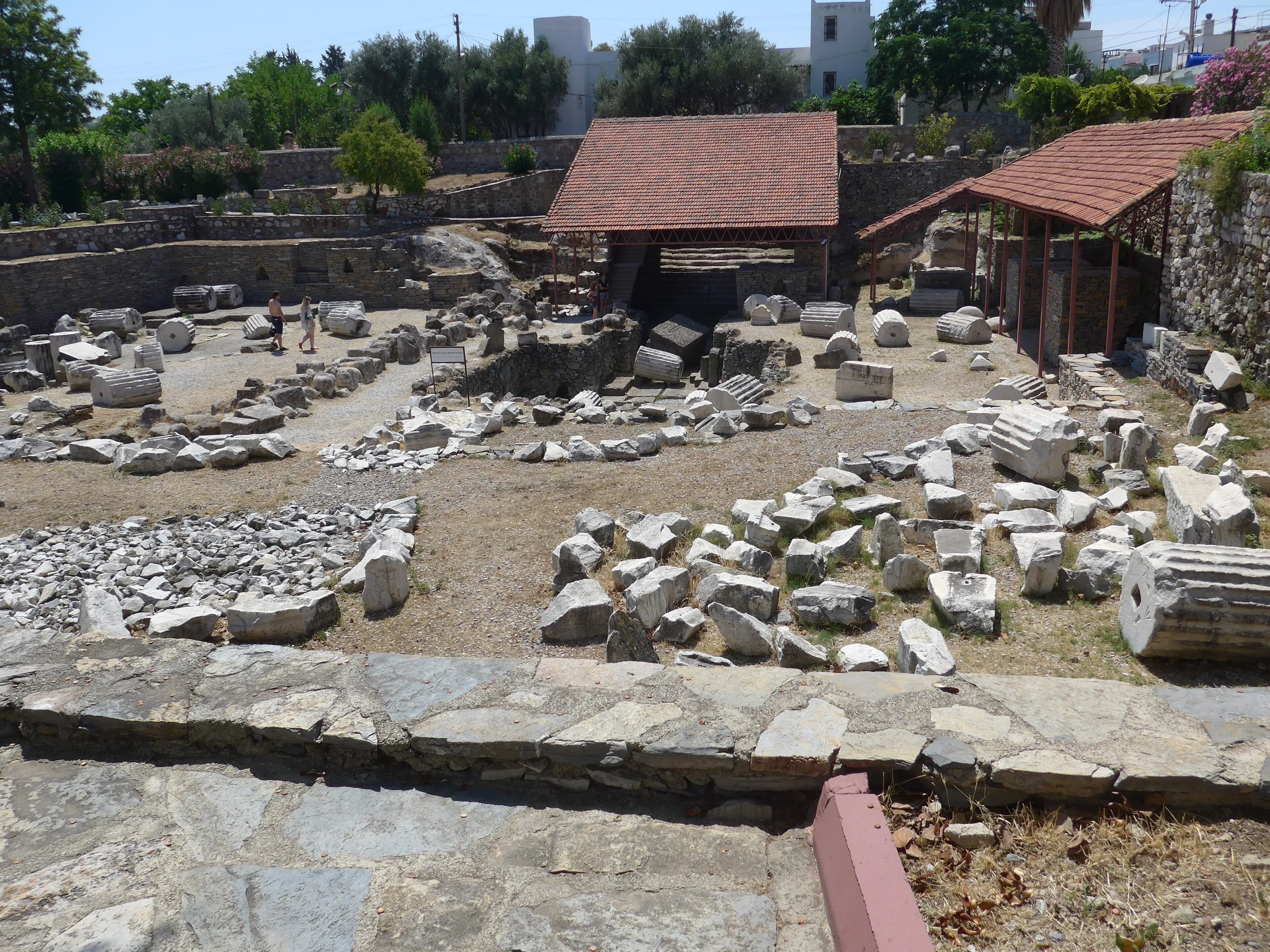
The site is in Bodrum on Turgutreis Caddesi. The tomb stood in the middle of the city at one corner of a terrace measuring roughly 242 x 105 m. You entered the terrace from the city's agora through a large gate building in its east wall. Check the official page for current opening details.
History
Maussollos, of the Hekatomnid dynasty that the Persians appointed as satraps of Caria, began his tomb while still alive. Work opened shortly before 353 BCE, the year he died, and a building period of around 360-350 BCE is usually given. After his death his wife, who was also his sister, Artemisia, carried it on.
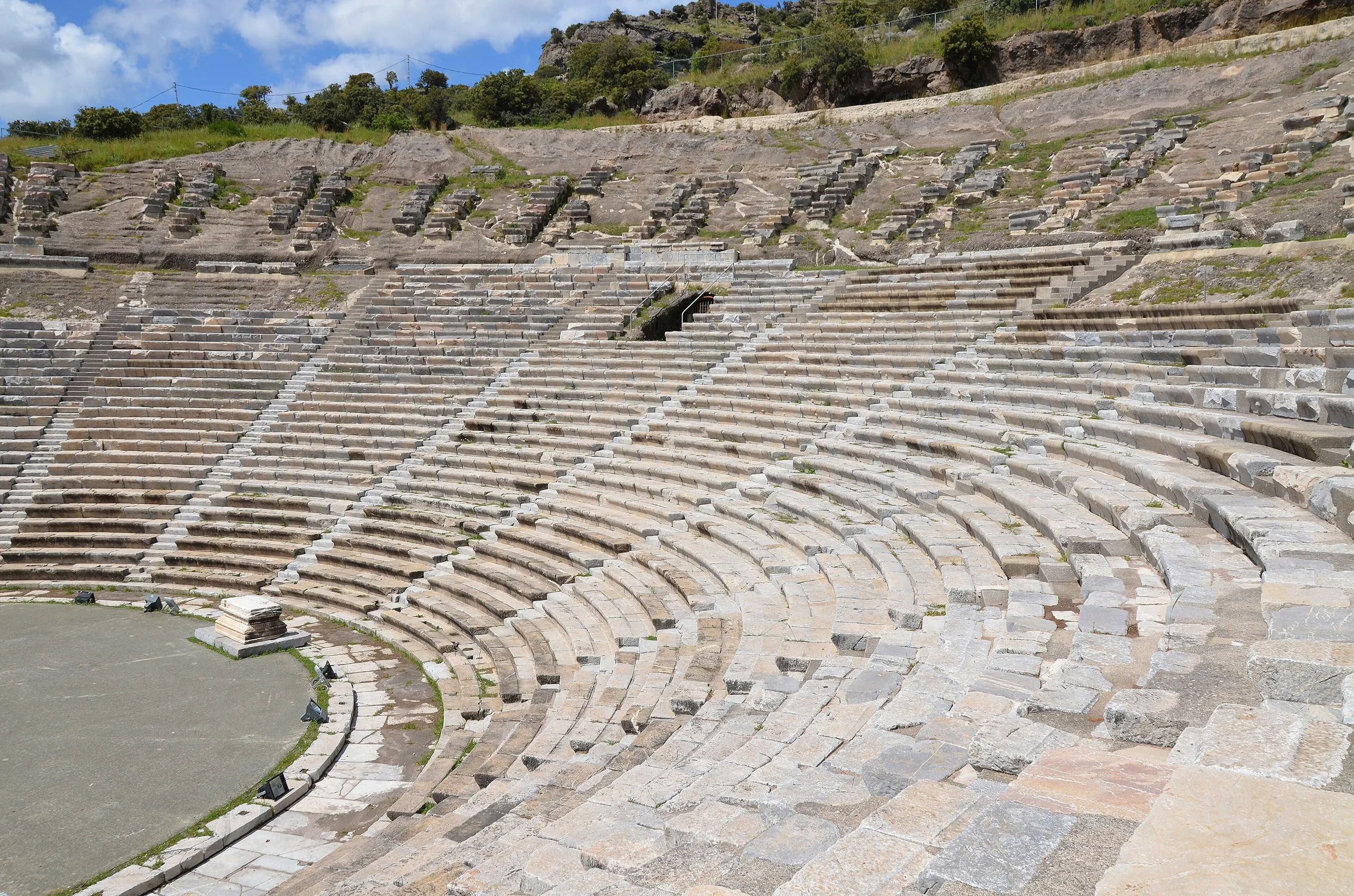
Around 367 BCE Maussollos had moved the capital of the satrapy from Mylasa to Halicarnassus, a site easy to defend and open to trade and shipping, and the city grew fast. He forced the people of six neighbouring Leleg towns to settle there and brought in famous sculptors and architects of his day to found the city anew. The Mausoleum, the Halicarnassus theatre, counted among the earliest in Anatolia, and the walls were begun in this period. Maussollos governed Caria for 24 years and died in 353 BCE; Artemisia II succeeded him and ruled two years.
Who made it
The name Mausoleum comes from Maussollos. Ancient writers say the architect was Pytheos, who also built the Temple of Athena at Priene. Vitruvius records that the leading sculptors of the 4th century BCE worked on the monument: Bryaxis, Timotheos, Leochares and Skopas, with Praxiteles possibly contributing. Bryaxis was a native Carian and made the statues of Maussollos and Artemisia on the four-horse chariot (quadriga) at the very top. The design broke with the architectural habits of its day.
Layout
Terrace and foundation cutting
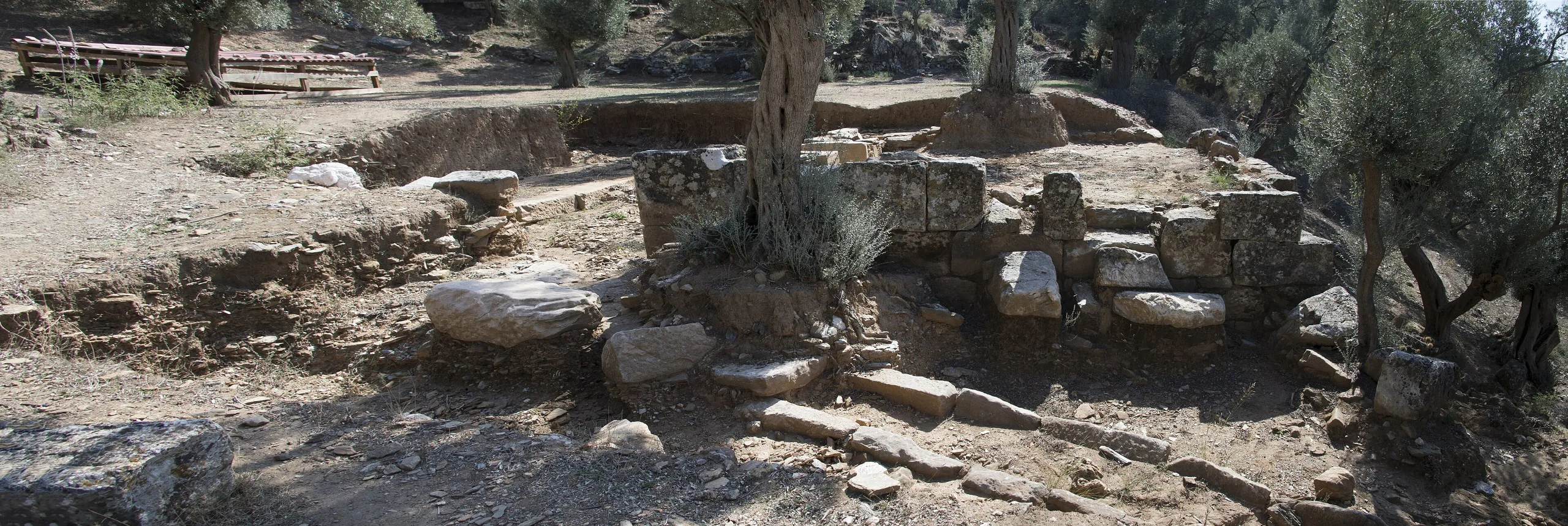
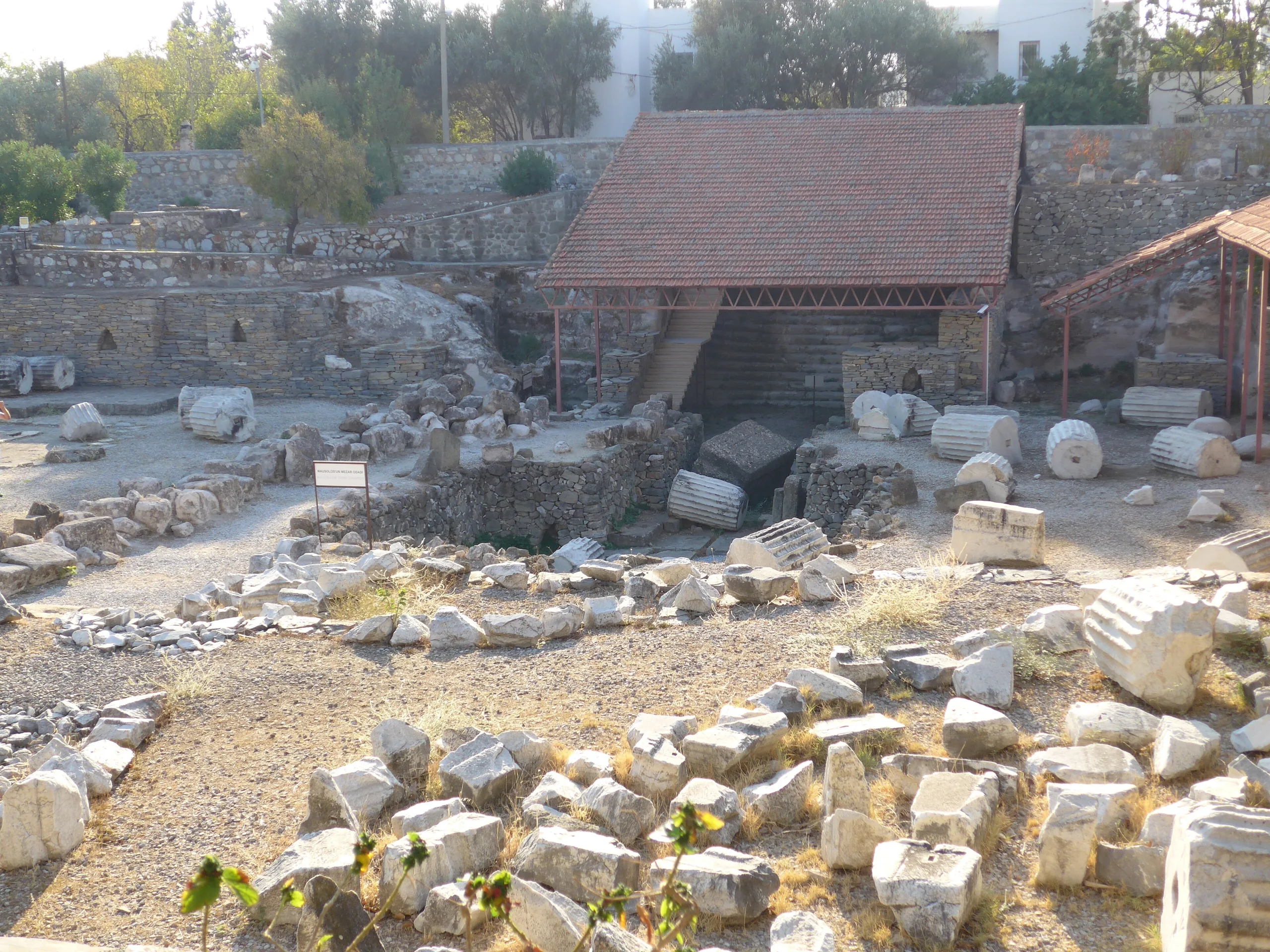
The monument was built inside a rectangular cutting in the bedrock about 32.5 x 38.5 m, the foundation area that scholars call the Quadrangle. The main street ran along the north edge of the terrace.
Superstructure
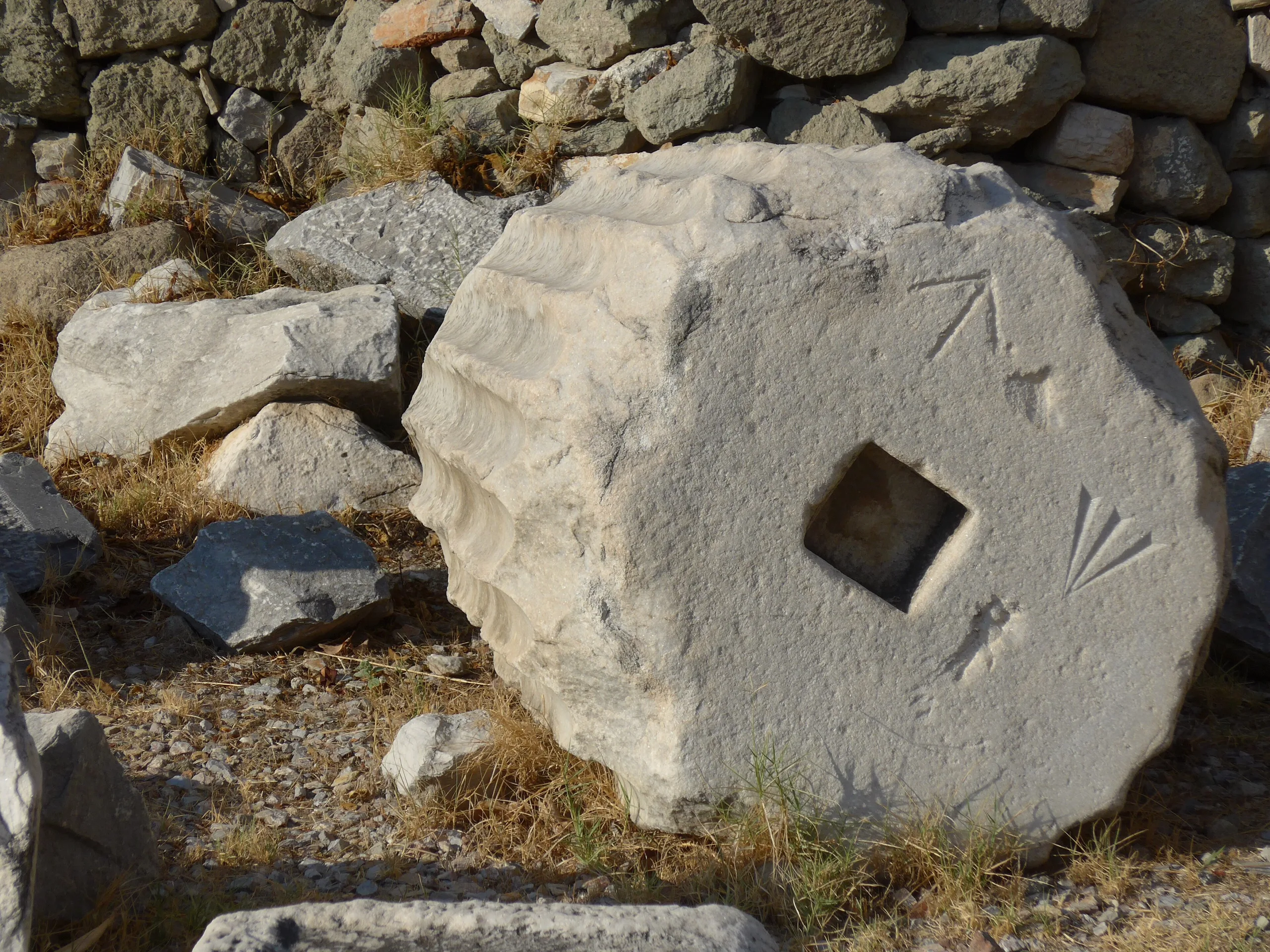
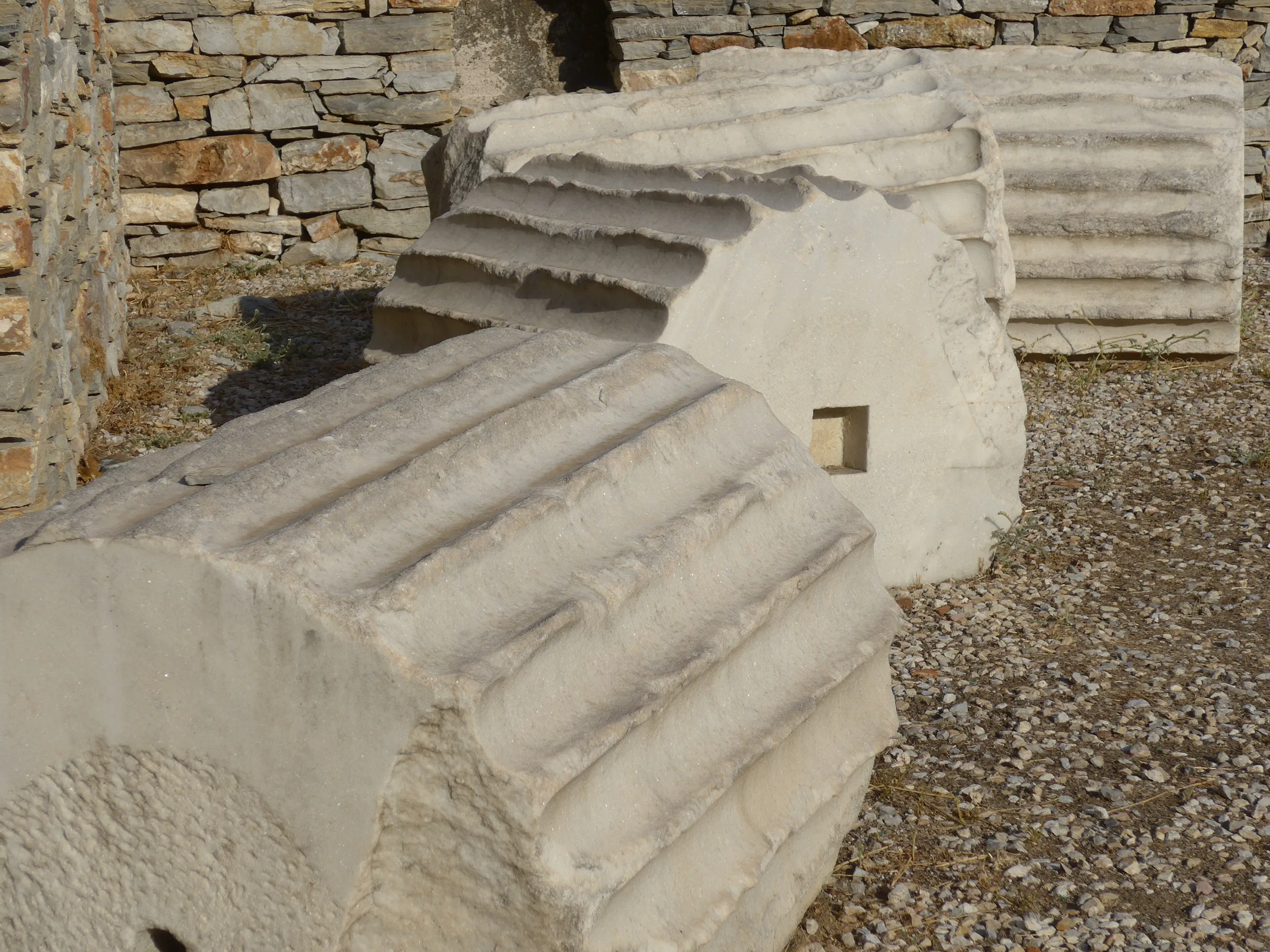
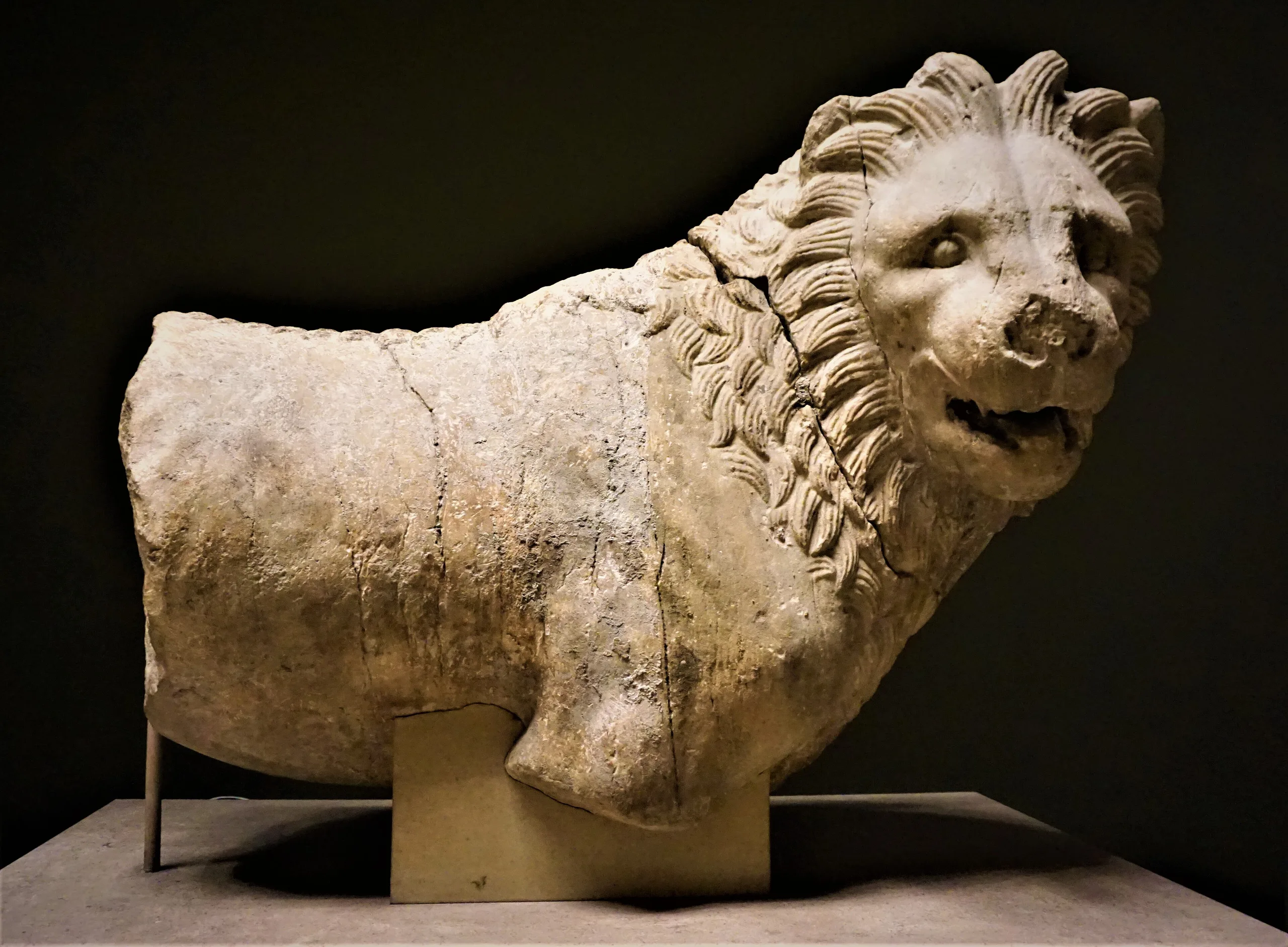
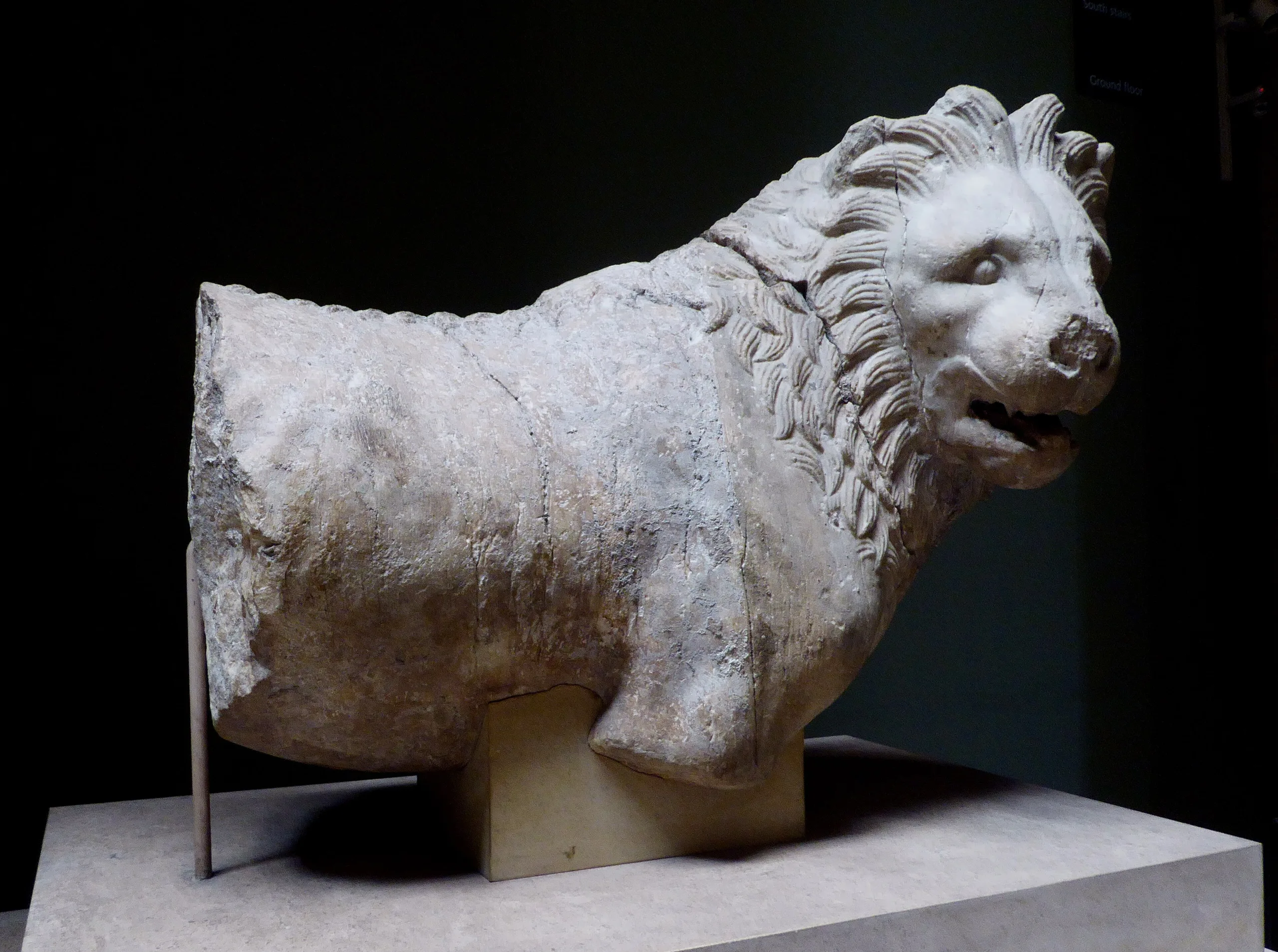
The building had three parts. At the bottom was a tall podium. On it stood a temple-like block with 11 x 9 Ionic columns, about 10 m high, and above that a roof of 24 big marble steps. Pliny gave the height, but that part of his text has worn away and cannot be read; lists of the Seven Wonders put it at 80 Ionic feet, around 50 m, as tall as a twenty-storey building. At the summit was an enormous quadriga, with lions along the roof and an Amazon frieze, a band of relief carving. Where the other sculpture groups sat is still debated, and the monument earned its place among the Wonders largely thanks to its sculpture.
Excavation
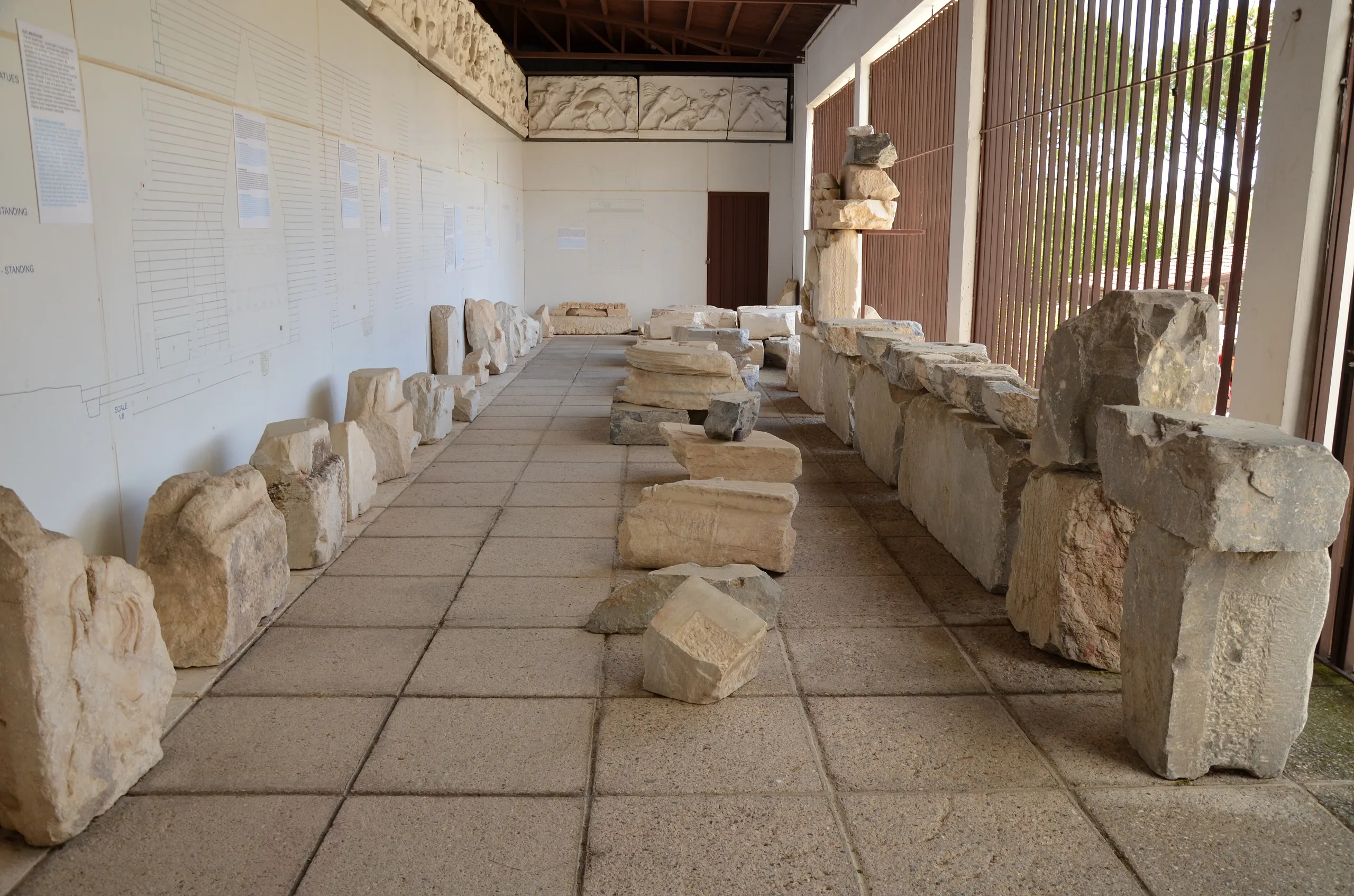
The basic modern study of the site was made in 1857-58 by a British expedition led by C. T. Newton, with further work under A. Biliotti in 1865. Kristian Jeppesen and a Danish team dug it again from 1966 to 1977. They produced the first detailed plan of the foundation cutting. Jeppesen then studied thousands of fragments, both from the site and in the British Museum, and set them beside the accounts of Vitruvius and Pliny to build the best-founded reconstruction so far. Questions remain, and new proposals keep appearing; W. Hoepfner offered one in 2013. The results of the Danish excavations appeared in Aarhus in a seven-volume series.
What you can see today
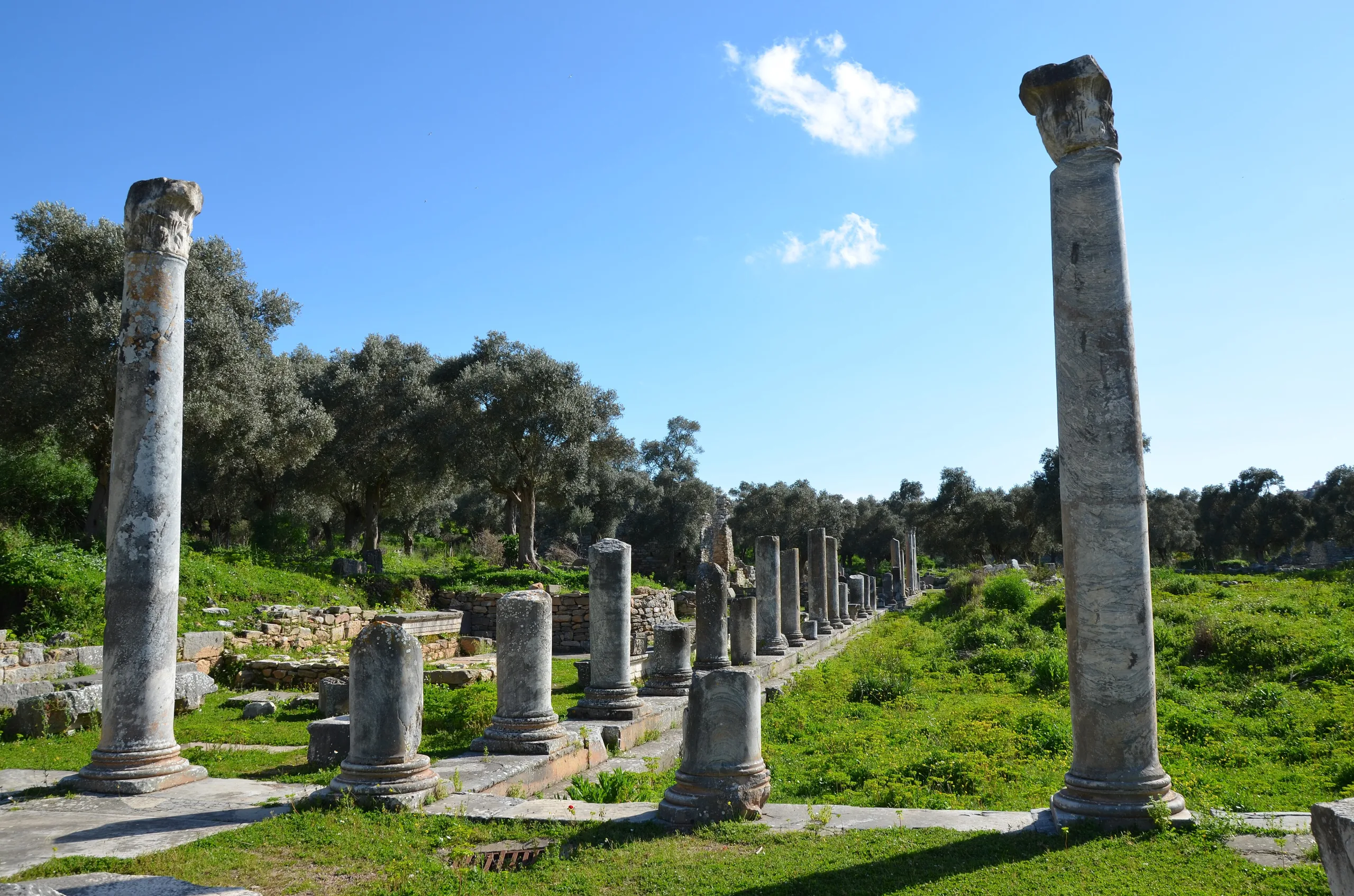
The Mausoleum is the only one of the Seven Wonders laid out as an archaeological site. Many of its pieces are in the British Museum. From Halicarnassus the survivors are the ancient theatre, parts of the walls, the Myndos Gate, a Roman villa, the Temple of Mars and Bodrum Castle, with digs in the cemeteries still going on.
Destruction
The Mausoleum stood about 1,500 years, perhaps into the 12th century. Its collapse is usually put down to an earthquake, and the quake of 8 August 1304 is also named. In the Renaissance, crusaders pulled down the remains and reused the stone to build St Peter's Castle in Bodrum, which finished off what was left. Around the same time humanists such as Boccaccio took an interest in the monument, and imaginative reconstruction drawings began to circulate.
Gallery
Frequently asked questions
Where is the Mausoleum?
Who was it built for?
Who finished the building?
How tall was it?
Who designed and carved it?
Why is the Mausoleum gone?
Sources (14)
- Muğla Bodrum Mausoleium Anıt Müzesi (TR sayfa; EN sayfada ayrıntı yok) — T.C. Kültür ve Turizm Bakanlığı, Müzeler ve Ören Yerleri
- Halikarnassos (kaynak: Bodrum Sualtı Arkeoloji Müzesi) — T.C. Kültür ve Turizm Bakanlığı, Türkiye Kültür Portalı
- Mausoleion (Kültür Envanteri anıt kaydı) — T.C. Kültür ve Turizm Bakanlığı, Türkiye Kültür Portalı
- The Maussolleion at Halikarnassos (Halikarnassos Project) — University of Southern Denmark (SDU), Halikarnassos Project
- Mausoleum at Halicarnassus (Pleiades place 461581651) — Pleiades
Photo credits
- Photo: Syrio, CC BY-SA 4.0 — Wikimedia Commons (resized)
- Photo: FollowingHadrian, CC BY-SA 4.0 — Wikimedia Commons (resized)
- Photo: Carole Raddato from FRANKFURT, Germany, CC BY-SA 2.0 — Wikimedia Commons (resized)
- Photo: Mickapr, CC BY-SA 4.0 — Wikimedia Commons (resized)
- Photo: Mickapr, CC BY-SA 4.0 — Wikimedia Commons (resized)
- Photo: Mickapr, CC BY-SA 4.0 — Wikimedia Commons (resized)
- Photo: Mickapr, CC BY-SA 4.0 — Wikimedia Commons (resized)
- Photo: Joyofmuseums, CC BY-SA 4.0 — Wikimedia Commons (resized)
- Photo: Ethan Doyle White, CC BY-SA 4.0 — Wikimedia Commons (resized)