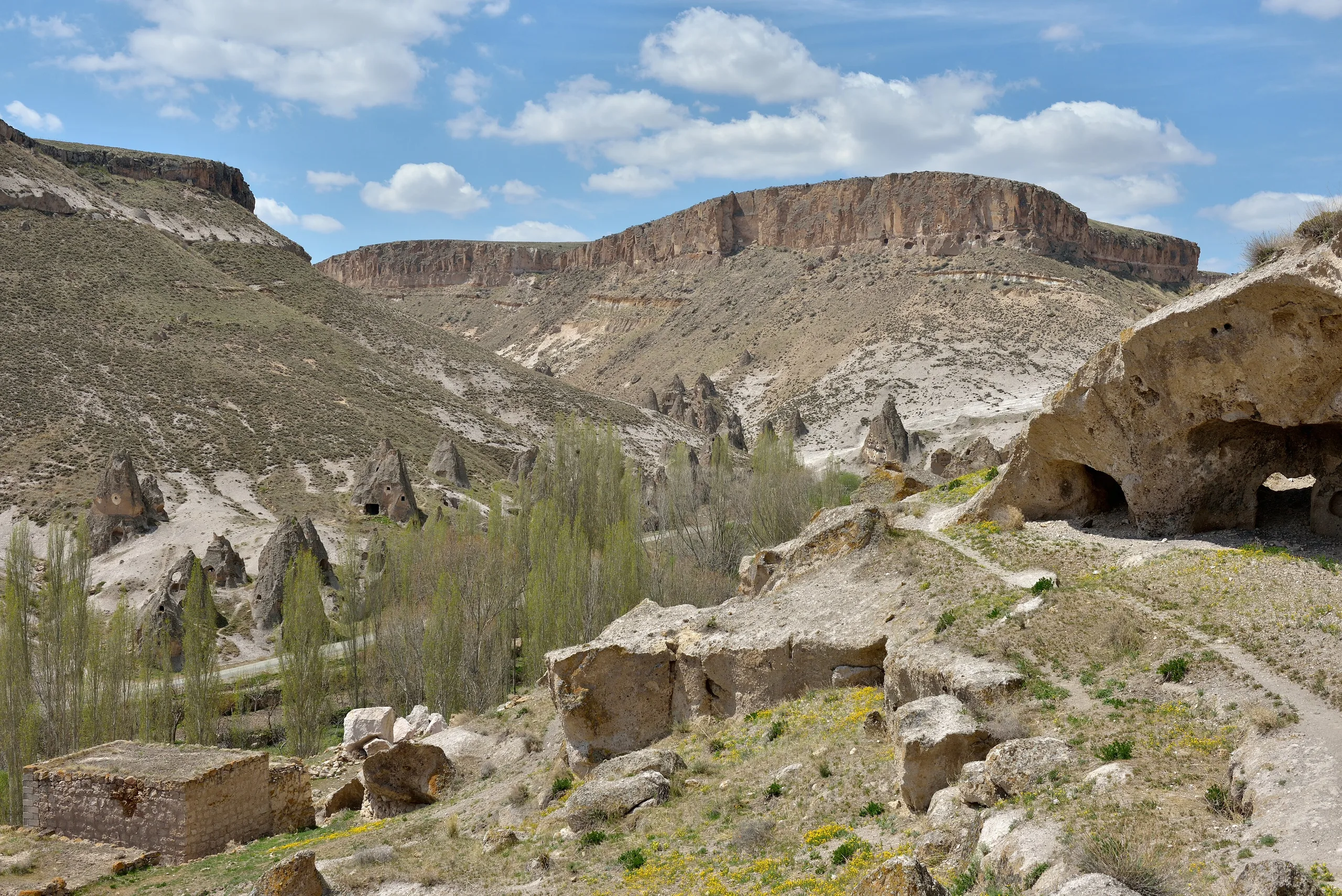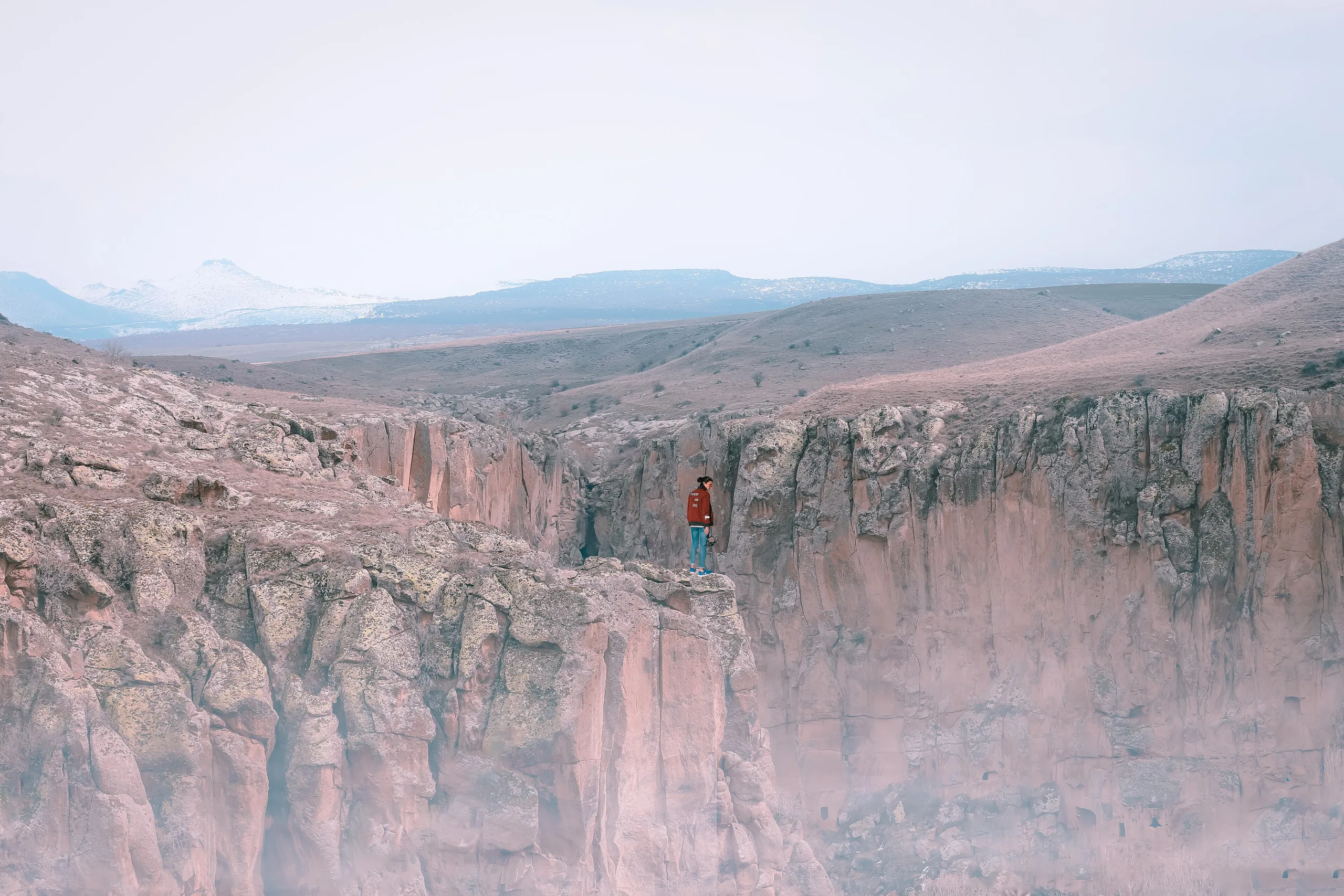
Ihlara is a roughly 14 km canyon in Aksaray's Güzelyurt district, cut by the Melendiz stream; its rock-hewn frescoed churches make it a major centre of early Christian history.
Ihlara Valley is a place (Sanctuary) in Turkey, Aksaray.
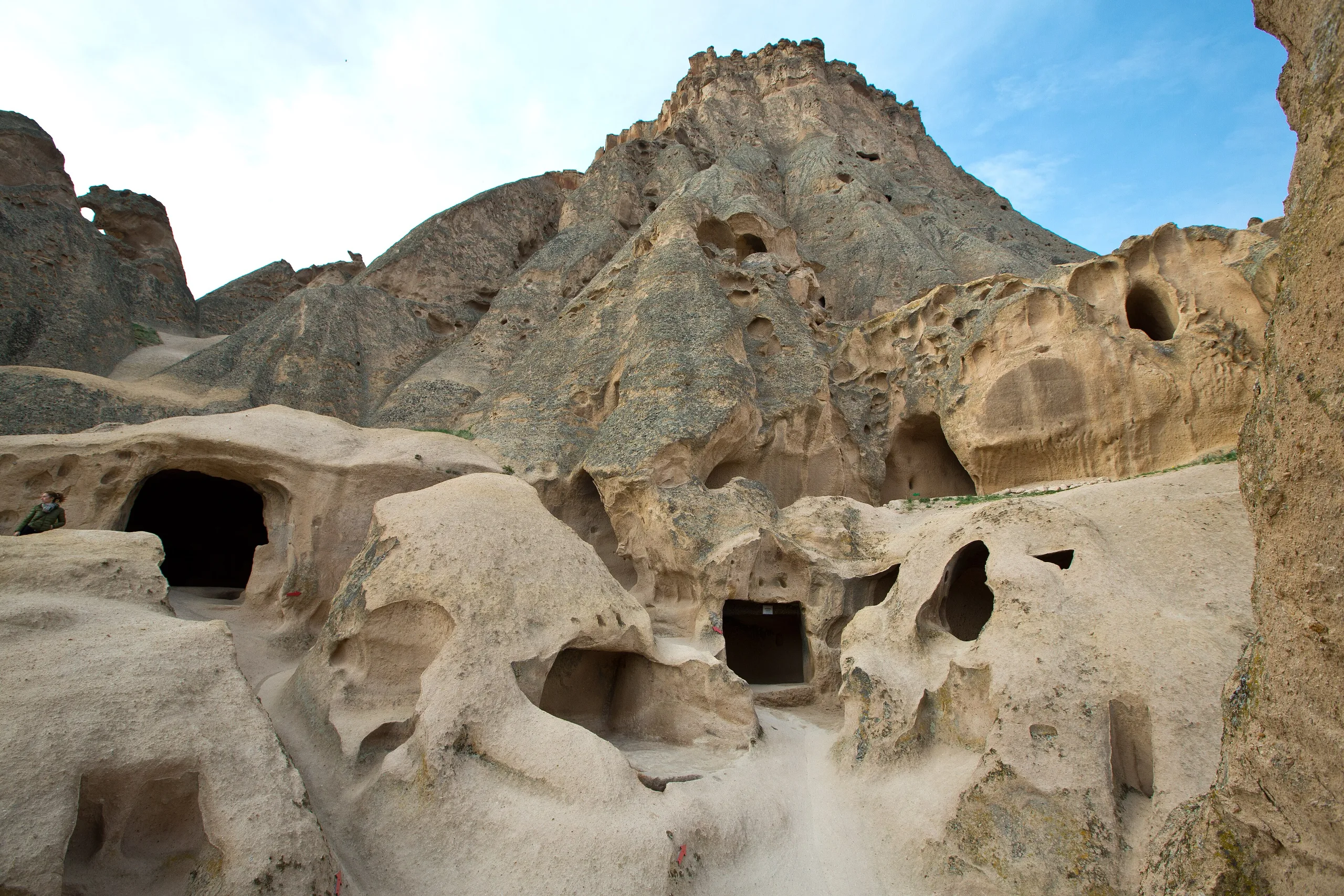
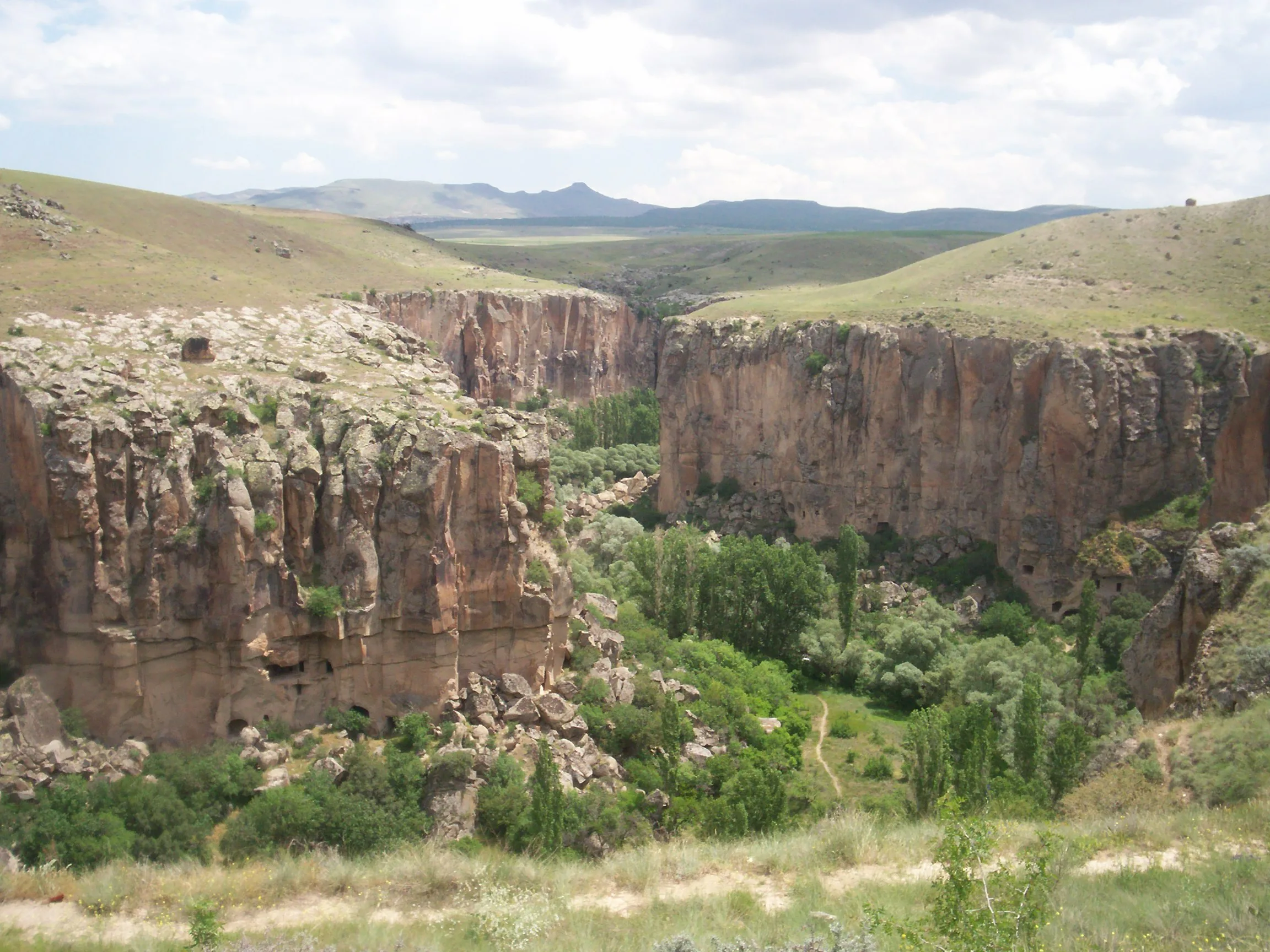
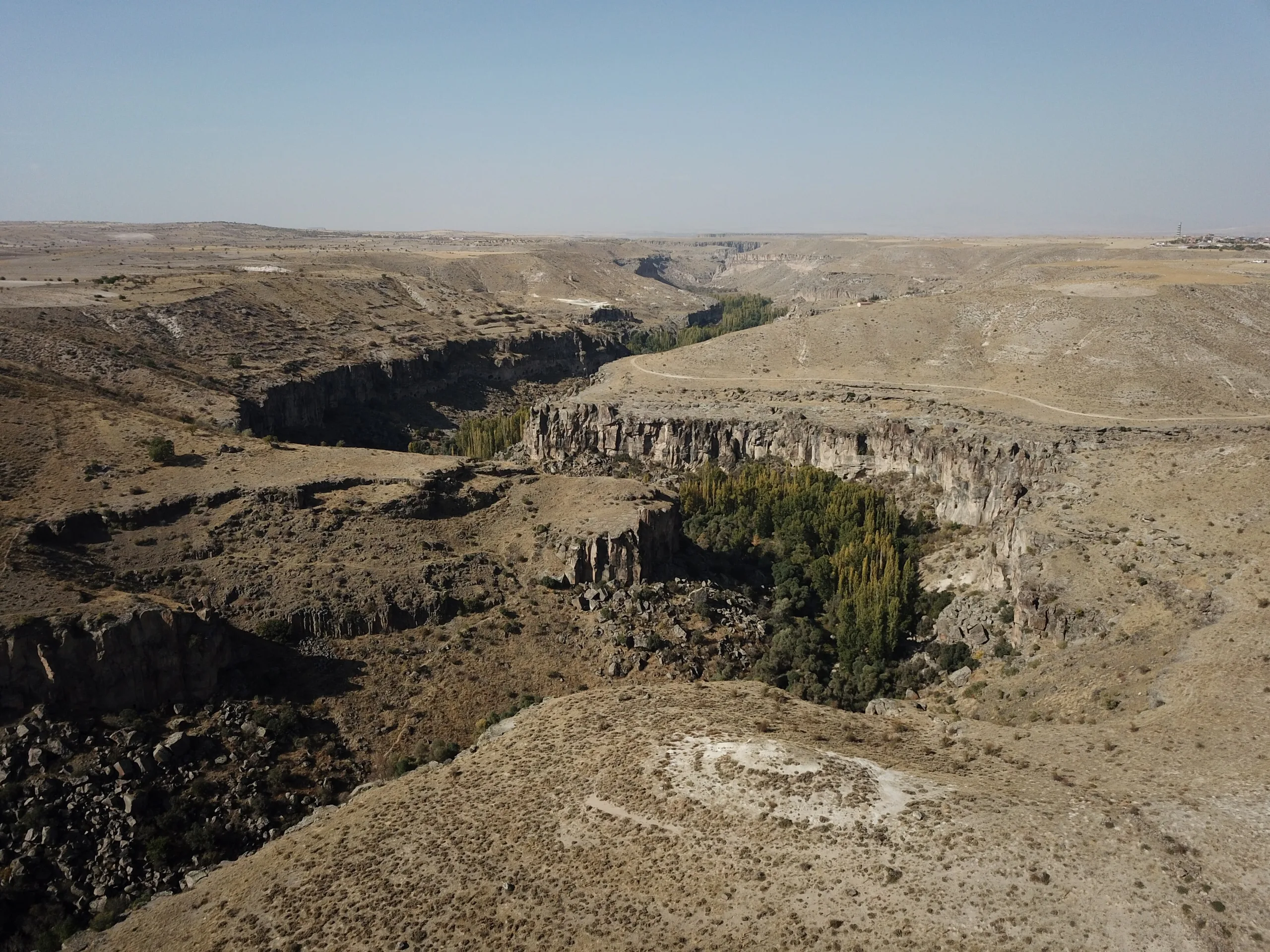
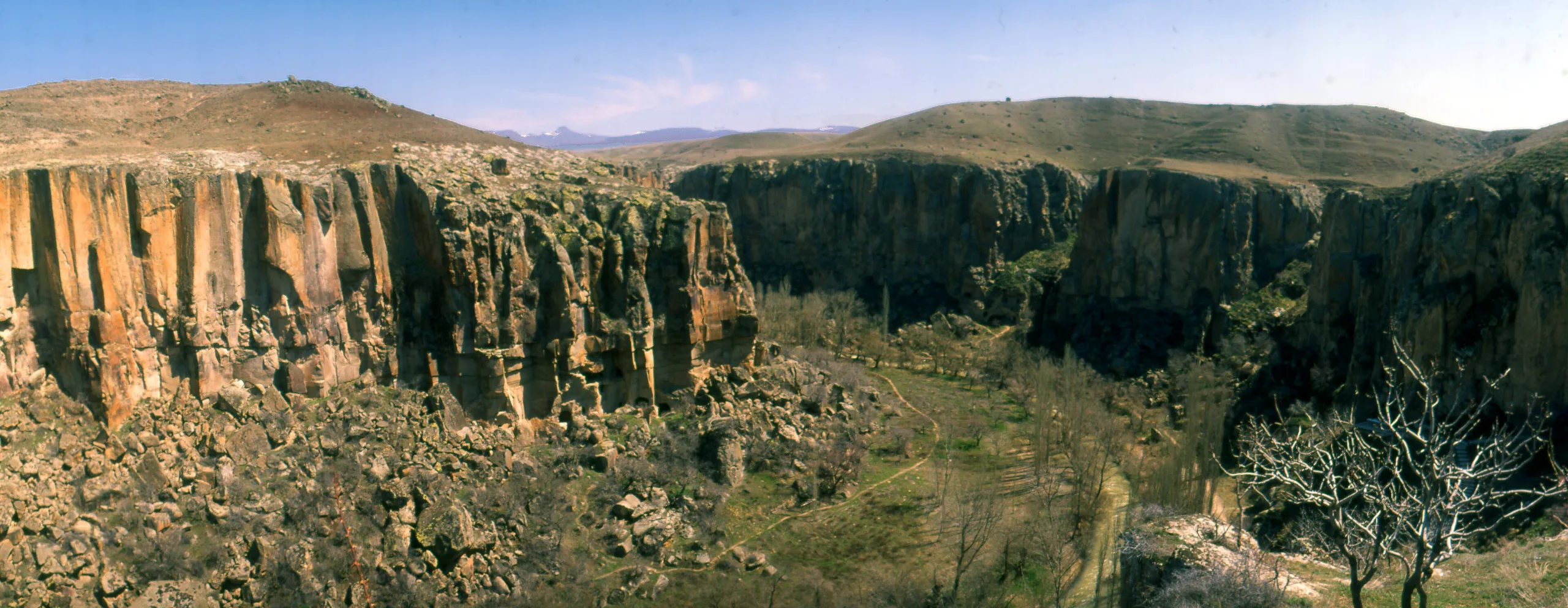
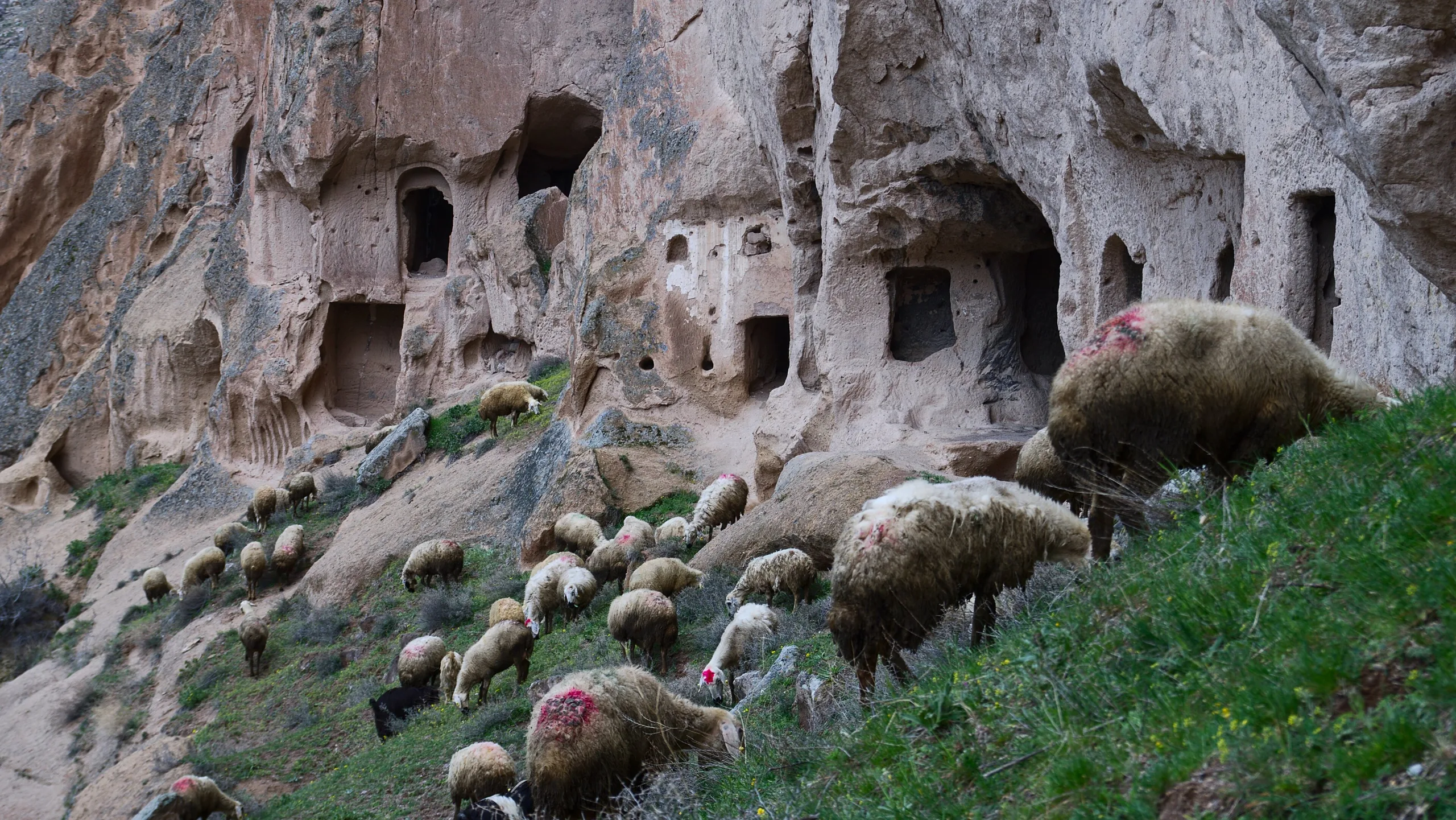
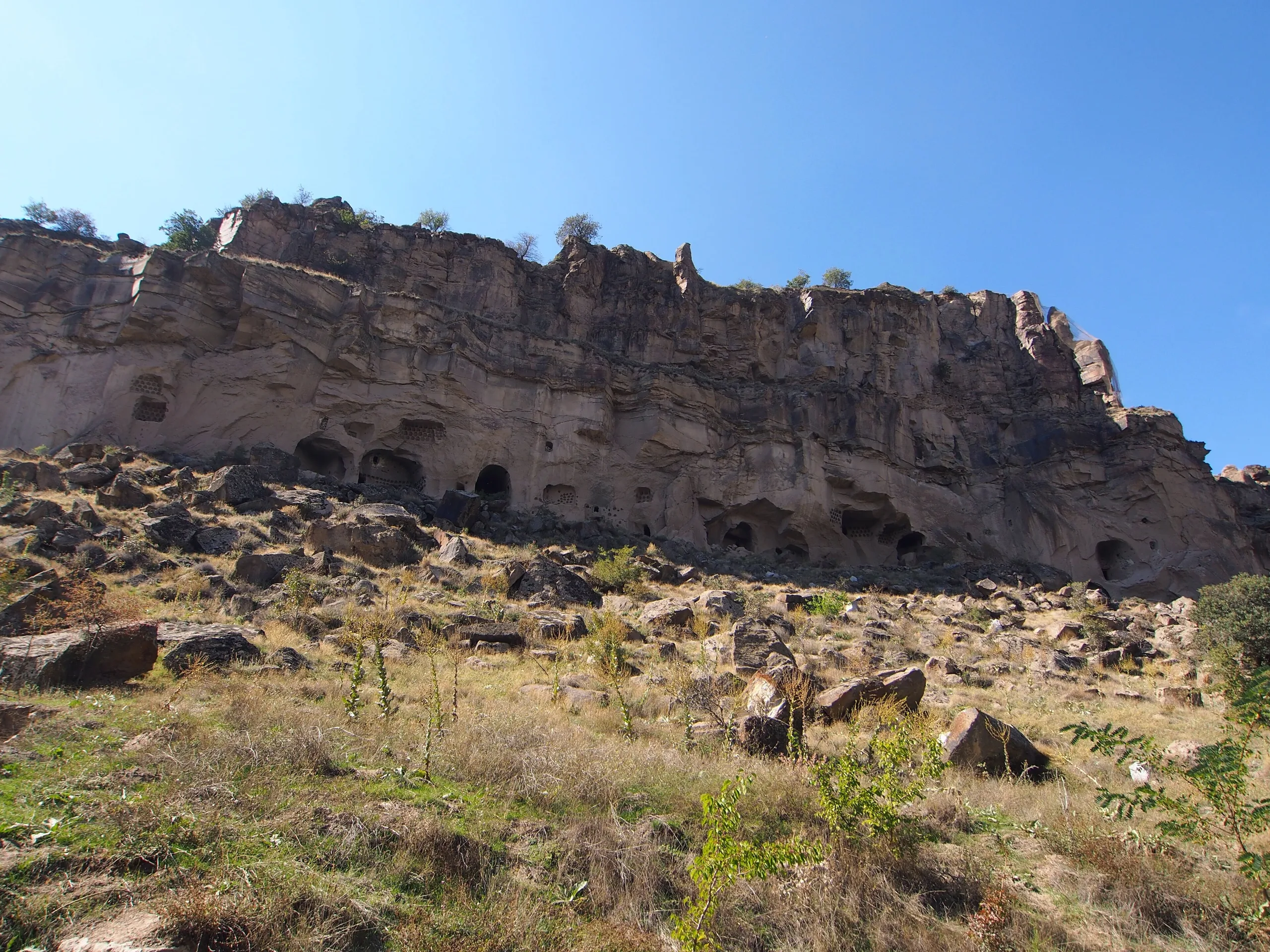
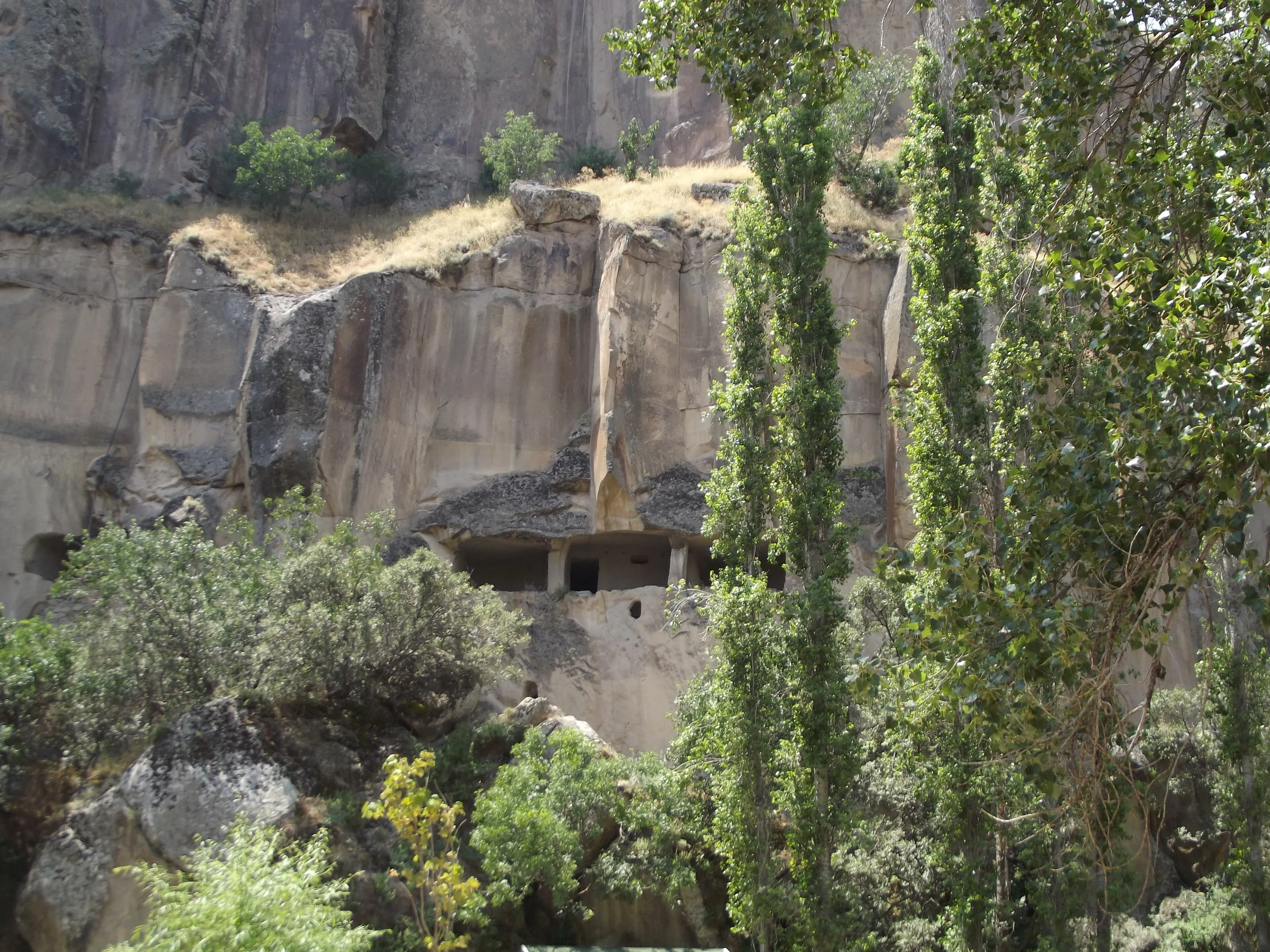
Ihlara Valley is a deep canyon in Aksaray province's Güzelyurt district, shaped by the Melendiz stream. The Ministry of Culture and Tourism ranks it among the world's large canyons and calls it an important religious centre from the earliest years of Christianity. Its length is about 14 km, and numerous churches and former living quarters line it.
Getting there
The Culture Portal puts the valley 35 km from the centre of Aksaray and says public transport runs hourly from the city to Ihlara town. The Ministry's Turkish page has the canyon begin at Ihlara town and run through Belisırma and Yaprakhisar to Selime, while the portal describes the route as running from Ihlara to Selime. Between Ilısu and Selime the straight-line gap is 10 km, but the winding stream makes it about 18 km. Both sources give walls up to 120 metres high.
How the canyon formed
The Ministry explains that a volcanic layer left by an eruption of Mount Hasan was worn down by natural processes and by the Melendiz. The Culture Portal adds tectonic uplift and says the stream makes nearly thirty meanders. Because of the stream's turning course, the valley's early inhabitants called it Peristremma, meaning roughly the people of the turning water; the portal gives this as the name in historical sources. The valley floor enjoys a near-Mediterranean microclimate unlike the continental steppe around it, and the portal notes that pistachio and other plants grow there.
History and religious importance
The Ministry's Turkish page says pioneering Christian clergy emerged in the region from the 4th century. It names two: Basil of Caesarea, who set monastic rules different from those of Egypt and Syria, and Gregory of Nazianzus, who offered a fresh explanation of the Trinity.
Main features
The churches
Of 105 churches recorded on the site, 14 are open to visitors. The Ministry names Batkın, Bahattin Samanlığı, Bezirhane, Ala, Karagedik, Saint Georgeus, Direkli, Eğritaş, Pürenliseki, Kokar, Yılanlı, Sümbüllü and Ağaçaltı (listed in reverse here), and the portal adds that a stairway of 382 steps leads down. The paintings fall into two groups. The Turkish Ministry page sees Eastern influence in churches near Ihlara and Byzantine-type wall paintings around Belisırma. The portal calls the Ihlara group the Cappadocian type, with Eğritaş, Ağaçaltı, Kokar, Pürenliseki and Yılanlı as examples, and the Belisırma group the Byzantine type.
The English Ministry page profiles two churches. Ağaçaltı has a free-cross plan, a high-drummed central dome and barrel-vaulted arms, with frescoes dated to the 9th-11th century showing scenes such as the Annunciation, the Magi, the Baptism, the Dormition, Daniel among the lions and the Ascension. Kırkdamaltı (St George), in Belisırma village, has an irregular hexagonal plan and a flat ceiling. It was decorated between 1283 and 1295, when Sultan Mesud II and Emperor Andronikos II reigned, by Lady Tamar, wife of Amirarzes Basileios; the patroness shown holding a church model was probably a Georgian-born princess.
Cat mummies
The English page says cats were embalmed in Cappadocia as in ancient Egypt. Seventeen mummies dated between the 10th and 13th centuries have turned up in Ihlara; twelve are displayed in the Aksaray Museum and five in the Niğde Museum. The custom honoured Bast, the cat-headed Egyptian goddess, and is said to have travelled to Anatolia and on to Cappadocia.
Visiting
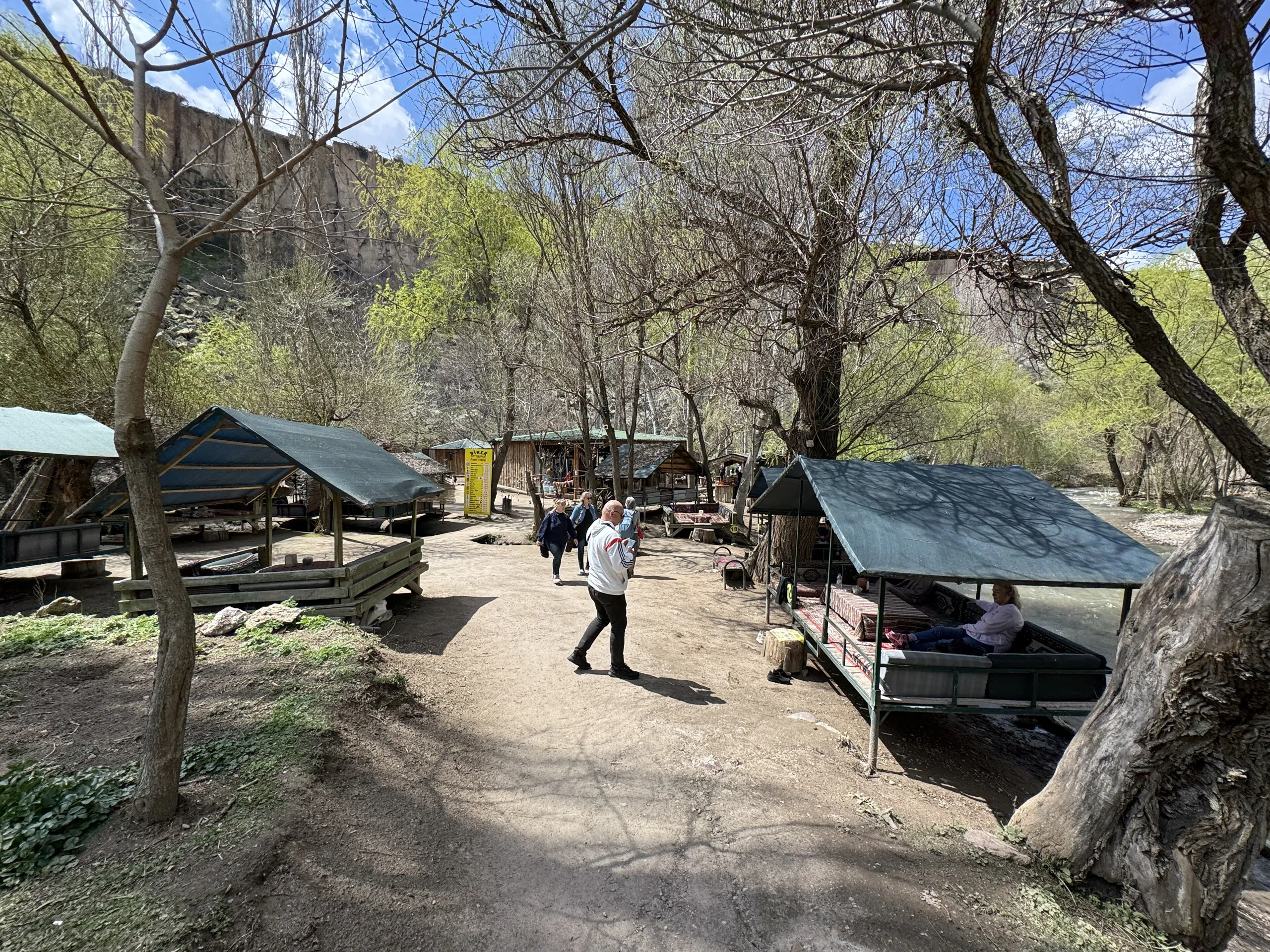
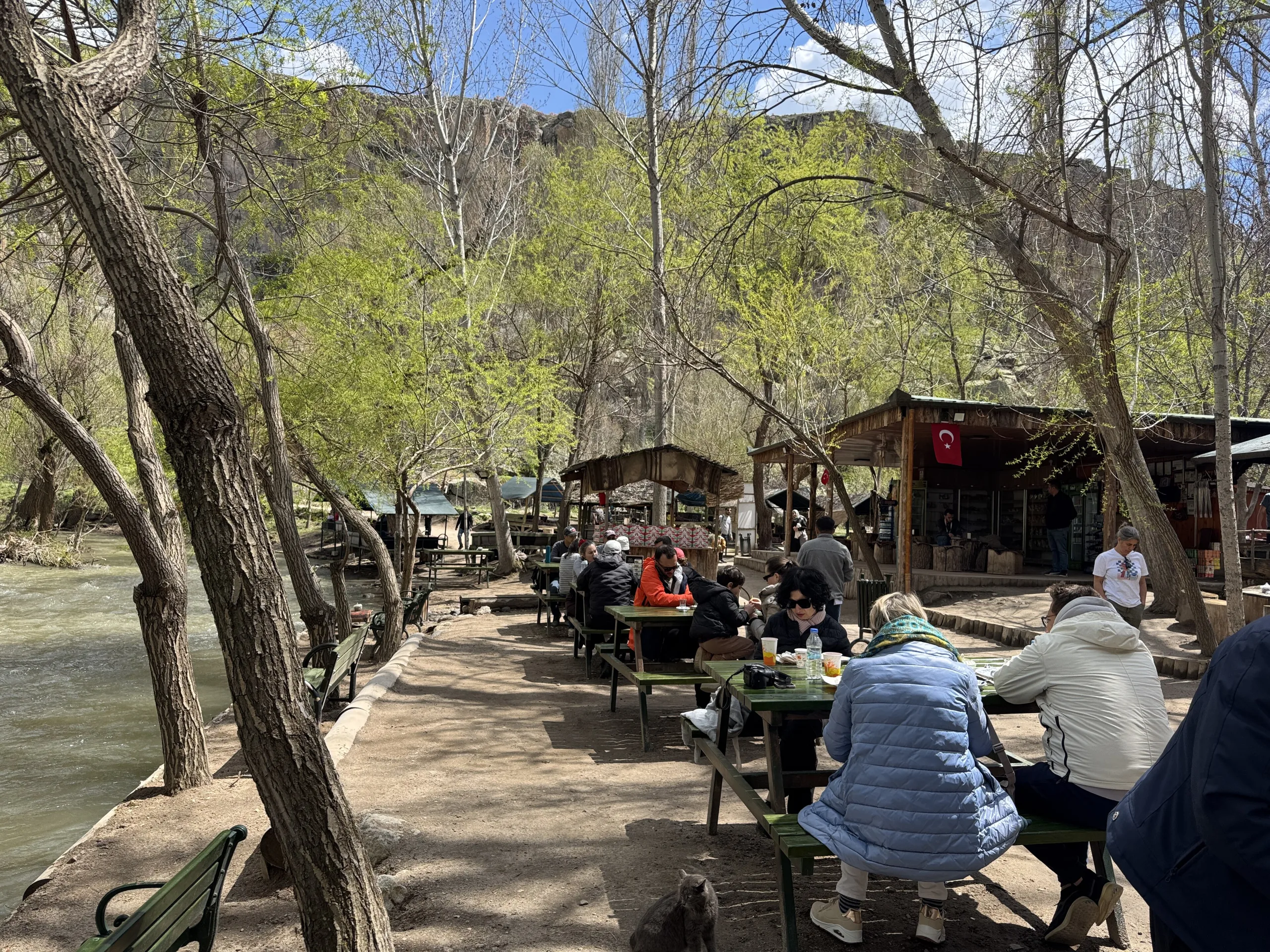
The Ministry's Turkish page states that MüzeKart is valid for Turkish citizens at Ihlara and notes that entry is through the main gate (gate 2). It suggests resting at the Ziga hot spring at the head of the valley or at the riverside pavilions in Belisırma village. Check the official page for hours and fees.
Gallery
Frequently asked questions
Where is Ihlara Valley?
How long and deep is the canyon?
How many churches are there and how many can be visited?
What does Peristremma mean?
When are Ağaçaltı's frescoes dated?
Were cat mummies found in the valley?
Sources (12)
- Ihlara Vadisi Örenyeri / The Ihlara Valley Archaeological Site (TR ve EN sayfalar) — T.C. Kültür ve Turizm Bakanlığı, Müzeler ve Ören Yerleri
- Ihlara Vadisi - Aksaray — T.C. Kültür ve Turizm Bakanlığı, Türkiye Kültür Portalı
- Ihlara Valley (Wikidata Q22343387, P625) — Wikidata
Photo credits
- Photo: Yousseffheshamm, CC BY-SA 4.0 — Wikimedia Commons (resized)
- Photo: The original uploader was Morphosis at Turkish Wikipedia ., Public domain — Wikimedia Commons (resized)
- Photo: Kaan Kosemen, CC BY-SA 4.0 — Wikimedia Commons (resized)
- Photo: LBM1948, CC BY-SA 4.0 — Wikimedia Commons (resized)
- Photo: Codas, CC BY-SA 4.0 — Wikimedia Commons (resized)
- Photo: Codas, CC BY-SA 4.0 — Wikimedia Commons (resized)
- Photo: Rob Oo from NL, CC BY 2.0 — Wikimedia Commons (resized)
- Photo: rheins, CC BY 3.0 — Wikimedia Commons (resized)
- Photo: Hüseyin Öcal, CC BY 3.0 — Wikimedia Commons (resized)