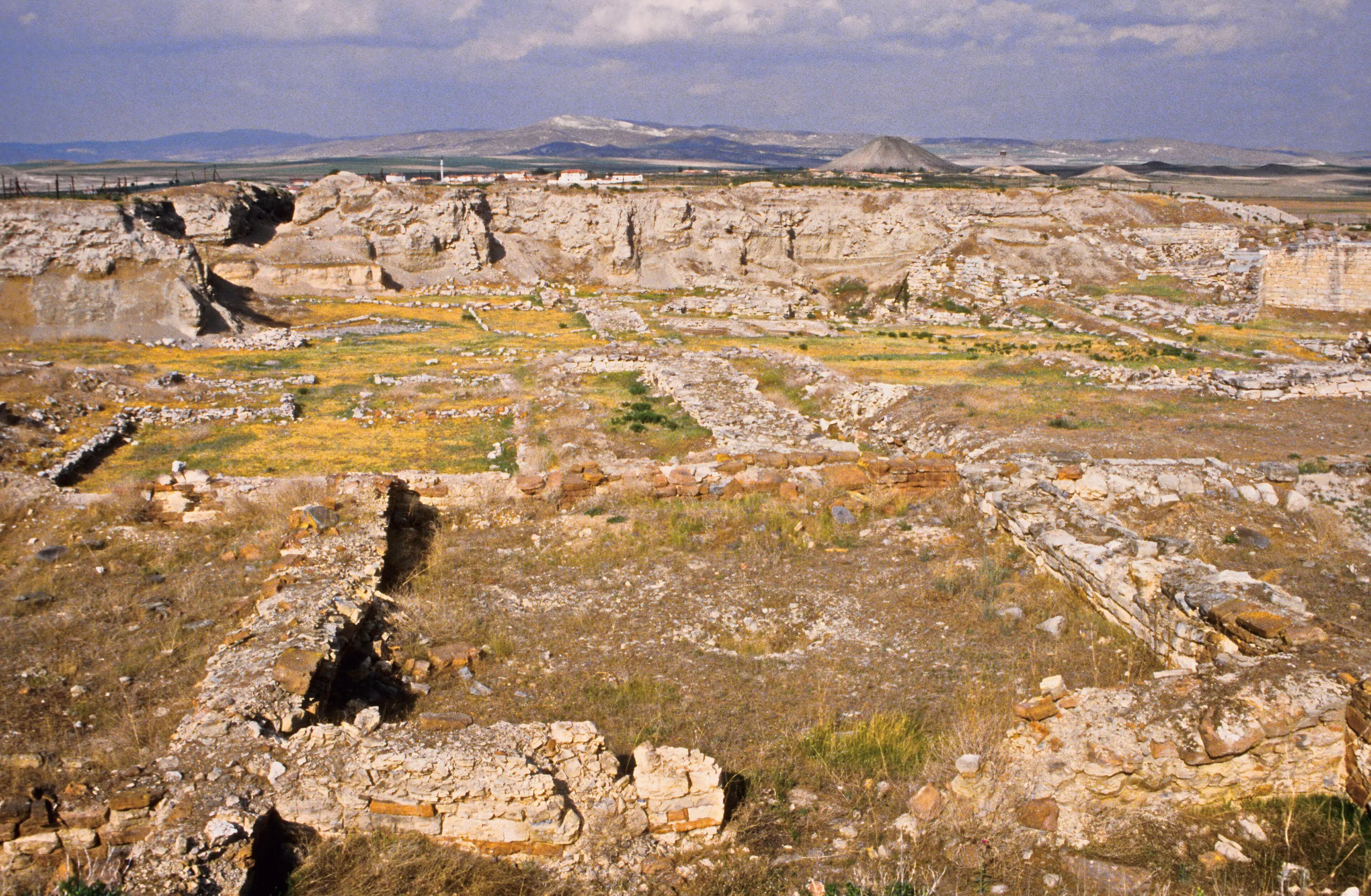
Midas Yazılıkaya, in Han district of Eskişehir, was the religious heart of Highland Phrygia, famed for rock-cut facades, altars and the Midas Monument.
Midas Yazılıkaya is a place (Sanctuary) in Turkey, Eskisehir. Main periods: Hellenistic Period, Roman Period, Byzantine Period.
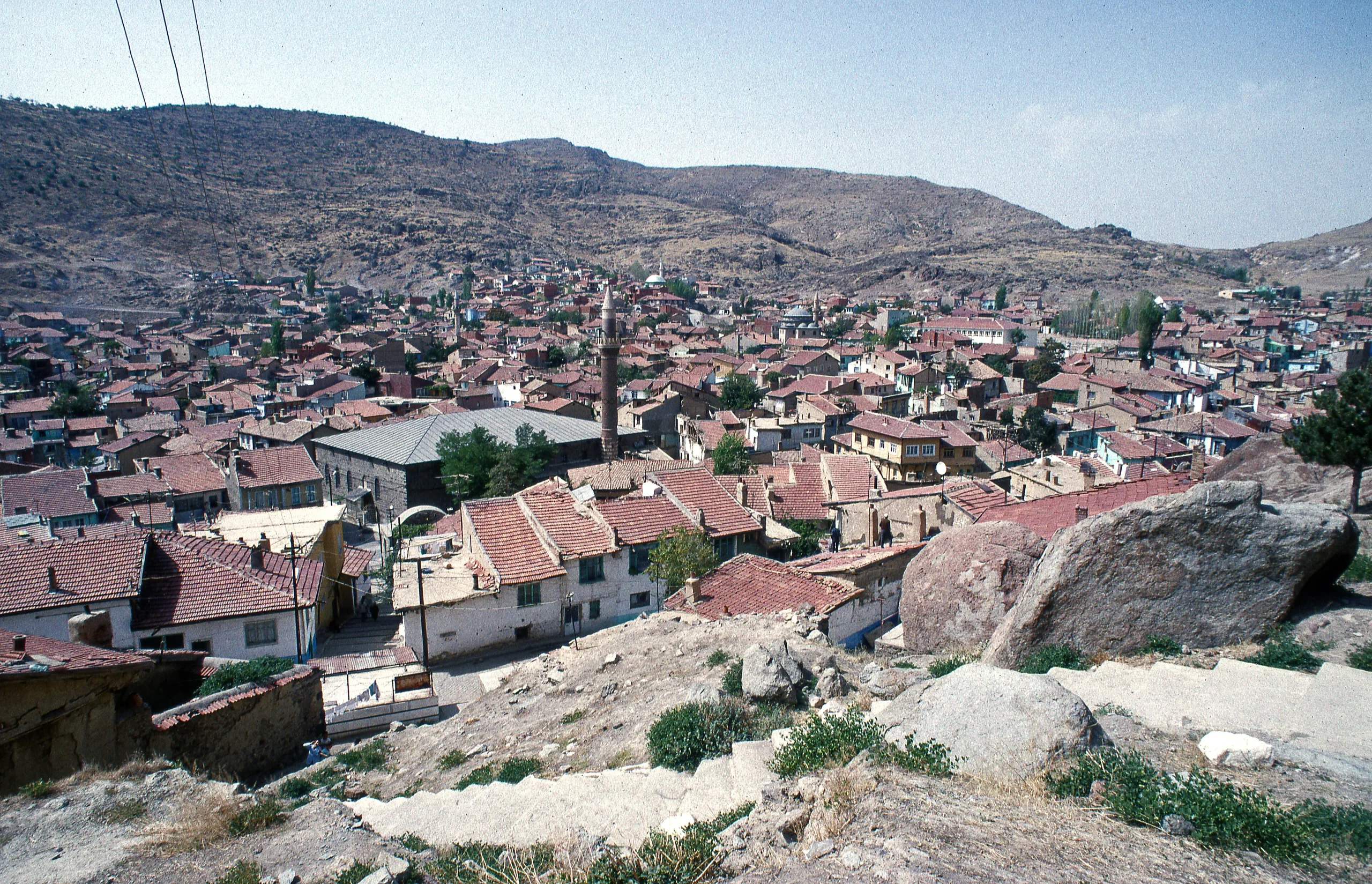
Midas Yazılıkaya is a Phrygian city just west of Yazılıkaya village in the Han district of Eskişehir. The Culture Portal describes the Yazılıkaya Valley as one of the valleys of Highland Phrygia that fall inside Eskişehir Province, and says the Phrygians chose the city of Midas in it as their centre of belief. According to the Ministry, the city occupies a tuff plateau at the southern end of the valley.
Setting
The plateau, called Yazılıkaya, measures 650 metres by 320 metres and rises about 60 to 70 metres above the valley floor. The Culture Portal adds that the holy city was protected by higher fortified places such as Akpara, Pişmiş, Gökgöz and Kocabaş castles, which watched the routes entering the valley from the west and north. For visiting information, use the official page.
History
The Ministry reports that excavations put the first settlement near the city in the third millennium BCE and the earliest Phrygian occupation in the last quarter of the eighth century BCE. The Culture Portal says the monuments and altars are thought to have been made between the eighth and sixth centuries BCE and dates the Midas Monument itself to the first half of the sixth century BCE. The two figures answer different questions: one concerns when people settled, the other when the monuments were carved.
In the Ministry's account, Gordion was the Phrygian state's strongest political centre, while Midas City was its main religious one from the start of the kingdom. The city was not abandoned when the kingdom fell. The Ministry says the rock structures kept being used, with some alterations, in Persian, Hellenistic, Roman and Byzantine times; the Culture Portal confirms reuse in the Hellenistic and Roman periods.
What to see
King's Road, defences and rock-cut works
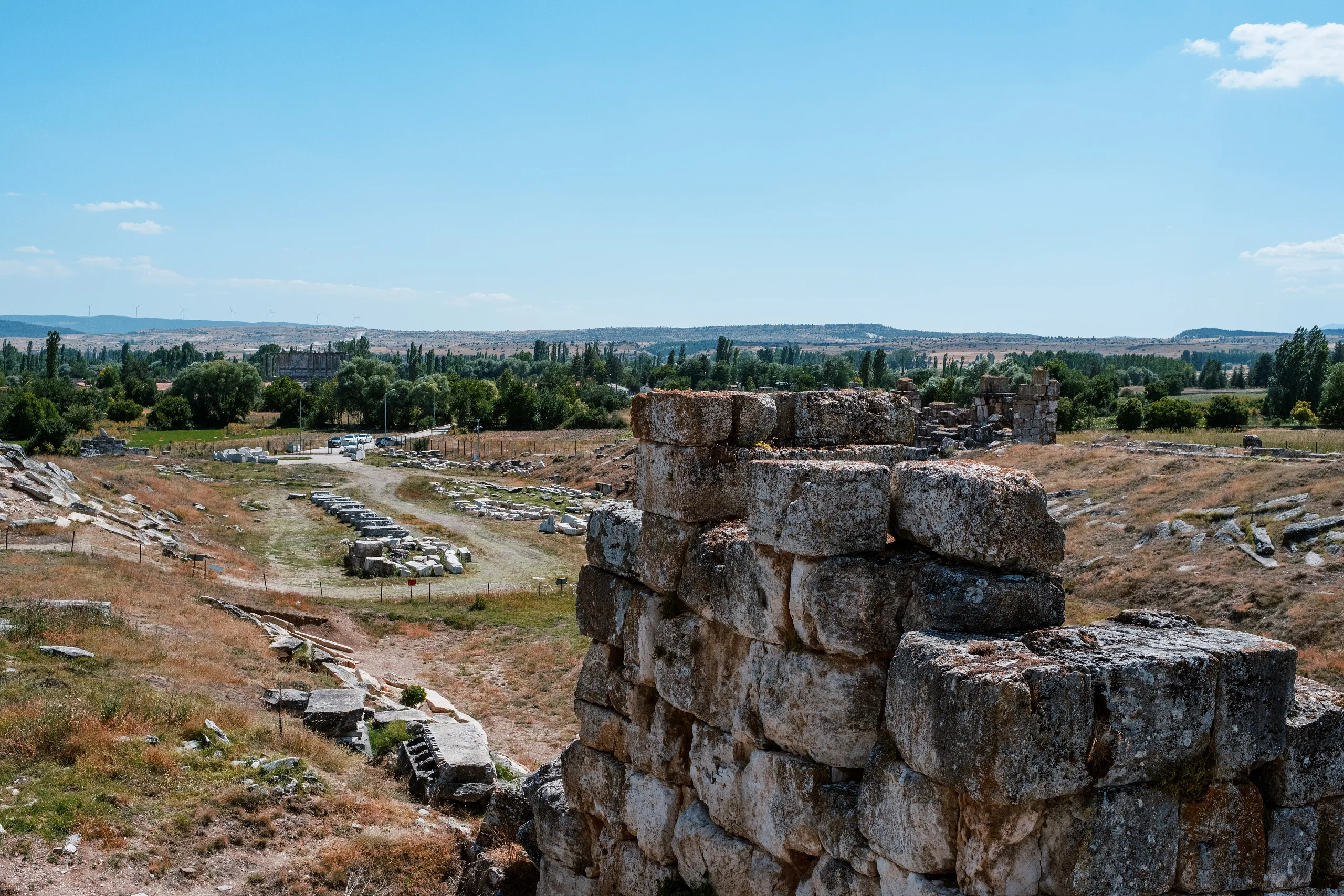
The city is thought to have had a wall in Phrygian times, but not one in-place stone of it survives. Stepped foundation sockets cut into the rock at certain points are taken as evidence of defences, perhaps more than one line. The main entrance faces east, where a ramp cut into bedrock, known as the King's Road, is lined with figured reliefs on the rock masses. On the plateau are monumental stepped altars carved from the bedrock, two vaulted rock tunnels reached by rock stairs, and large rock-cut cisterns on the lower south-western terrace.
The Midas Monument
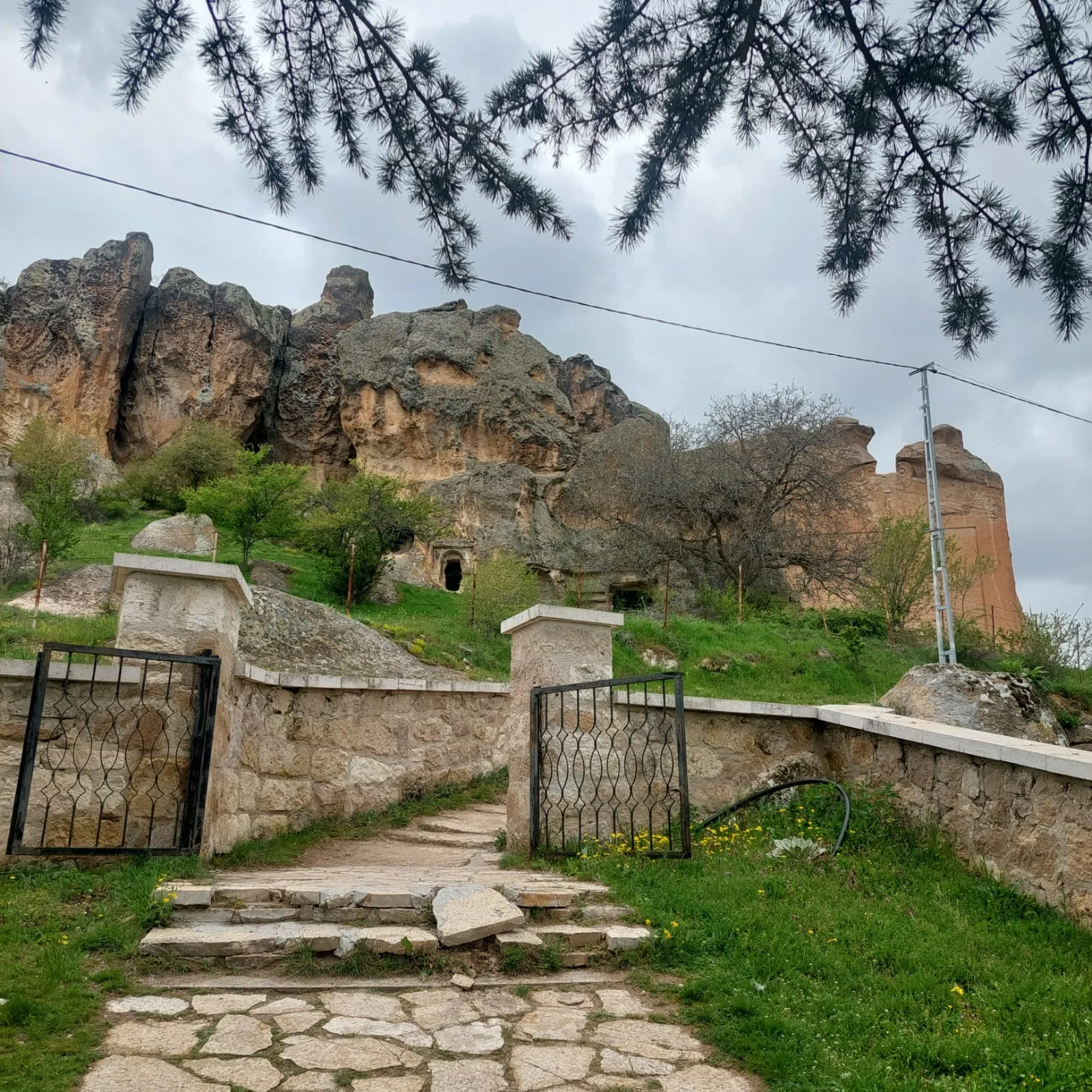
The Culture Portal calls the Midas Monument the grandest example of a Phrygian rock facade. It stands on a projecting rock mass on the north-eastern slope of the plateau and faces east. It is 17 metres high and 16.5 metres wide and rises 1.20 to 1.80 metres above the ground. Its sunlit face is worked like a temple front, with a triangular pediment decorated with geometric patterns and an acroterion of two disc segments. A large niche in the centre stands for a doorway and is described as the sacred space where a statue of the Mother Goddess Matar (Kubileya) was placed during ceremonies.
The name comes from the inscriptions. A Phrygian text at the upper left contains the word Midai, which gave the monument its scholarly name, while local people called it Yazılıkaya, 'inscribed rock', because of the writing. The Portal counts three Phrygian inscriptions: the first is 11 metres long and includes the name of King Midas, the second runs 4.75 metres along the right frame, and the third, 4.45 metres long, is inside the left niche. They can be read but their meaning is not fully resolved; the name of the goddess Matar appears among the shorter texts on the frame.
Altars, niches and other monuments
The Ministry explains that the carved monuments, large or small, express Phrygian devotion to Matar Kubileya, a goddess personifying nature, and that each served as an open-air temple. Facades with gabled fronts imitate the faces of Phrygian houses and carry ornament resembling Phrygian woodwork. Altars have steps leading up to round-headed, rectangular-bodied idols of the goddess, and niches have recesses at the back for small statues or idols. Other monuments in the valley include the Unfinished Monument, the Ancient Road, Gerdekkaya tomb, Hamamkaya, Kırkgöz castle and Küçük Yazılıkaya.
Research history
The Ministry dates the start of research on Highland Phrygia and Midas City to 1800, when William Martin Leake and his companions found the Yazılıkaya monument. In 1826 the Frenchmen A. de Laborde and L. de Laborde found the Unfinished Monument, and in 1834 Charles Texier found Küçük Yazılıkaya; the Culture Portal adds that Texier also made an engraving of the Midas Monument that year. William Ramsay worked in the region from 1881 and was the first to call the site Midas City.
The Ministry states that the first systematic excavations were carried out in 1937-1939 by Albert Gabriel, director of the French Institute of Archaeology in Istanbul, together with C. H. Emilie Haspels. The Culture Portal, by contrast, describes digging in front of the monument in 1936 and 1937. That work exposed a courtyard of 17 by 19 metres, sloping north, and the rock-cut floor and four column bases of a colonnaded gallery; scholars read this as a large open-air cult complex for Matar. A second season of the French Institute began in 1948, and Haspels' regional survey ran until 1958. The Eskişehir Archaeology Museum carried out clearing around the monument and the cisterns in 1990-1993.
UNESCO status
The Culture Portal states that Highland Phrygia, which includes Midas Yazılıkaya, has been on UNESCO's Tentative List since 2015, and the Ministry says the site has been judged suitable for nomination. It is not yet an inscribed World Heritage property.
Gallery
Frequently asked questions
Where is Midas Yazılıkaya?
When was the Midas Monument made?
How large is the Midas Monument?
Why was the city important?
Who carried out the first systematic excavations?
Is it a World Heritage Site?
Sources (5)
- Midas Yazılıkaya Örenyeri / Midas Yazılıkaya Archaeological Site (TR ve EN sayfalar) — T.C. Kültür ve Turizm Bakanlığı, Müzeler ve Ören Yerleri
- Midas Anıtı - Eskişehir — T.C. Kültür ve Turizm Bakanlığı, Türkiye Kültür Portalı
- Dağlık Frigya Yazılıkaya Vadisi - Eskişehir — T.C. Kültür ve Turizm Bakanlığı, Türkiye Kültür Portalı
- Midas Yazılıkaya (Wikidata Q137170054, P625 koordinat) — Wikidata
Photo credits
- Photo: Dutyman15, CC BY-SA 4.0 — Wikimedia Commons (resized)