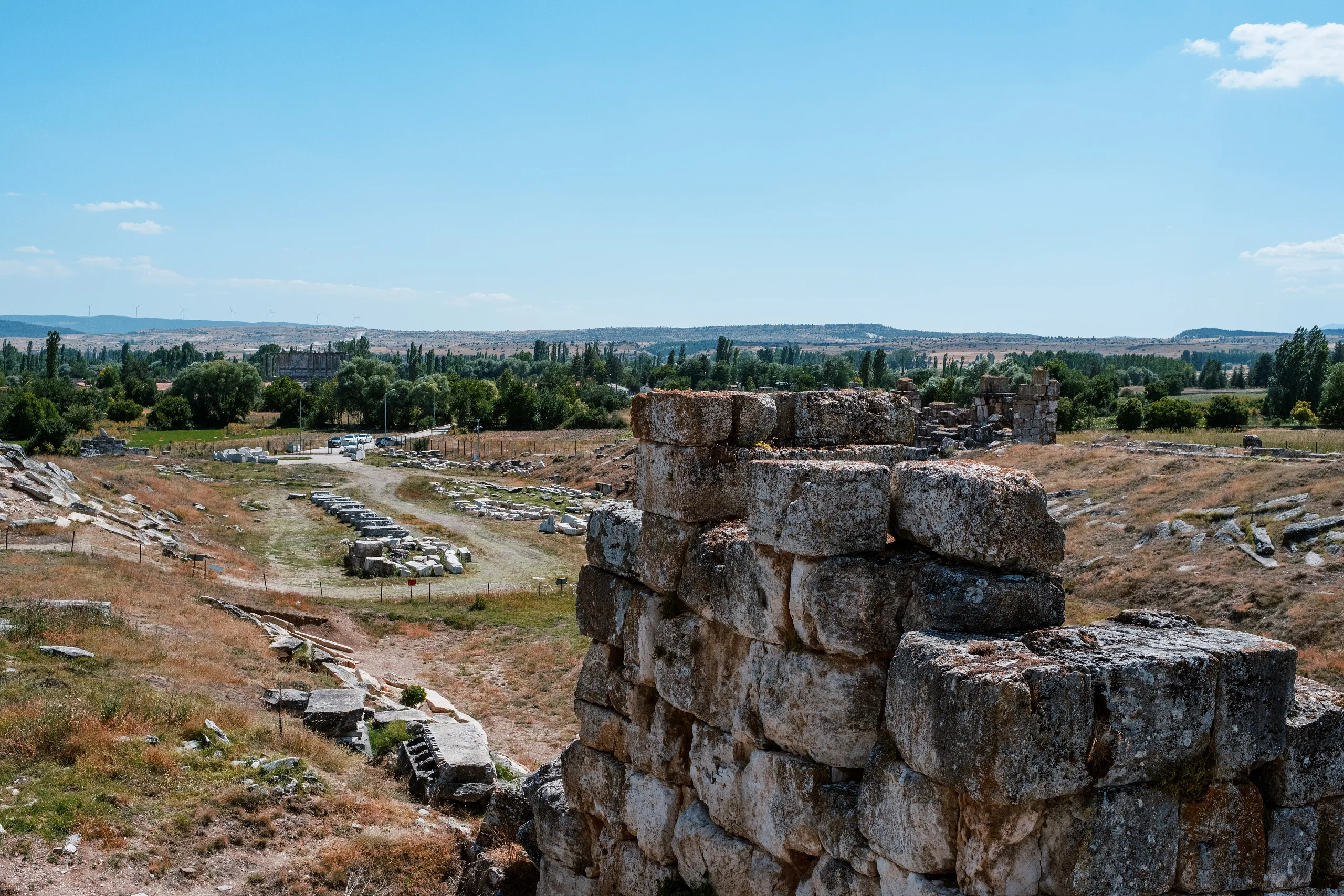
Aizanoi is a Roman-era city in Çavdarhisar, Kütahya, known for its Temple of Zeus, an attached theatre-stadium complex and its macellum market building.
Aizanoi is an ancient city located in Turkey, Kutahya. Main periods: Hellenistic Period, Roman Period, Byzantine Period.
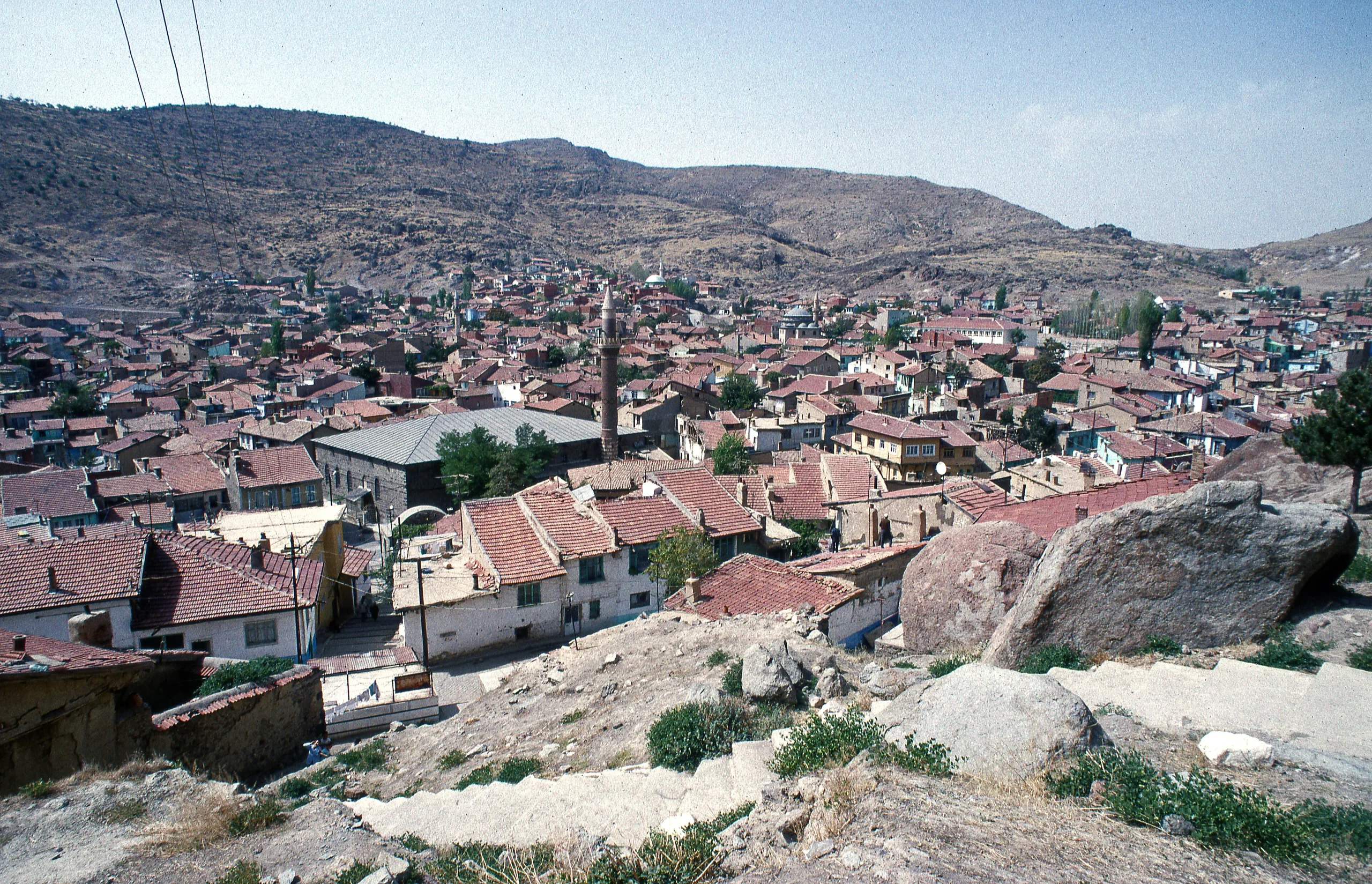
Aizanoi lies in the Çavdarhisar district of Kütahya province, about 50 km from the provincial centre. It grew up along the upper course of the Penkalas (Kocaçay) river, near the sacred cave of Meter Steunene, a Phrygian mother goddess. The Ministry of Culture and Tourism treats it as a contemporary of Ephesus, Pergamon and Side. Its best-known remains are the Temple of Zeus, a theatre and stadium built side by side, the macellum and a series of bridges across the stream.
Name and setting
Ministry and Culture Portal pages suggest the city's name may come from Azan, a figure of myth said to have been born of the water nymph Erato and the legendary king Arkas; ancient writers present him as a forerunner of the Phrygians. Aizanoi was the main settlement of the Aizanitai, who belonged to ancient Phrygia. For current visiting conditions, consult the Ministry's official page, which also states that the Müzekart is valid for Turkish citizens.
History
Excavations on the high plateau around the Temple of Zeus have exposed settlement layers from the 3rd millennium BCE. In the Hellenistic period the area passed back and forth between Pergamon and Bithynia, and in 133 BCE it came under Roman rule. Coins bearing the city's own name are known from the 2nd and 1st centuries BCE. Grain farming, wine and wool made Aizanoi prosperous, yet firm evidence of urbanisation appears only toward the end of the 1st century CE.
The two official pages frame the city's peak differently. The Culture Portal names the 2nd century CE as its brightest age, with large-scale building activity. The Ministry's English page places the height of the city's religious and economic standing between 50 and 250 CE and adds that Aizanoi received the title of Neokoros, which brought investment priority, tax exemption and a right of asylum. In the early Byzantine period Aizanoi was the seat of a bishop, but after the 7th century it lost importance. The temple terrace became a medieval fortress, and under the Seljuks the Chavdar Tatars used it as a base, which explains the modern name Çavdarhisar. The Ministry's Turkish page estimates the Roman-era population at about eighty thousand.
Main monuments
Temple of Zeus
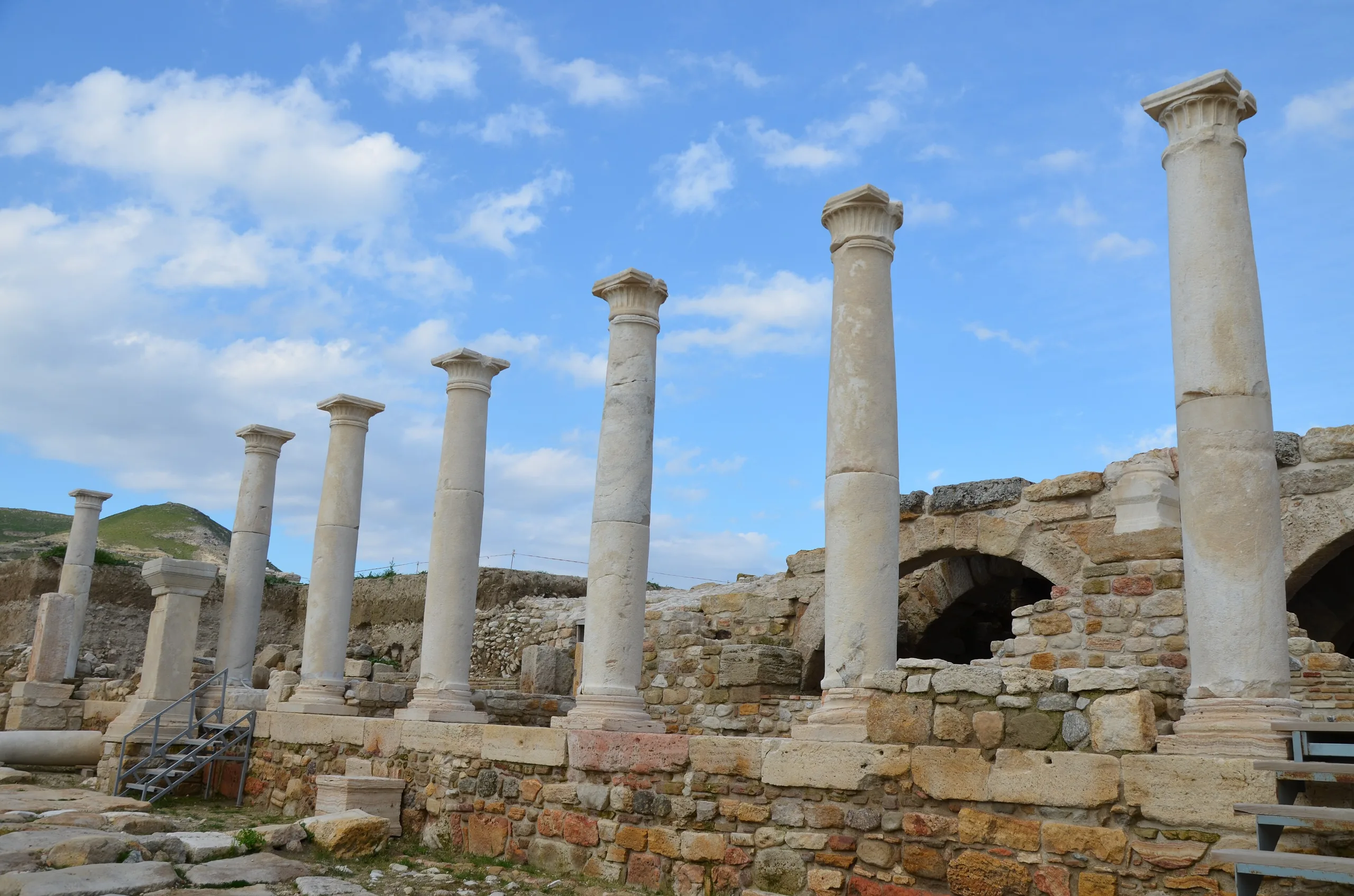
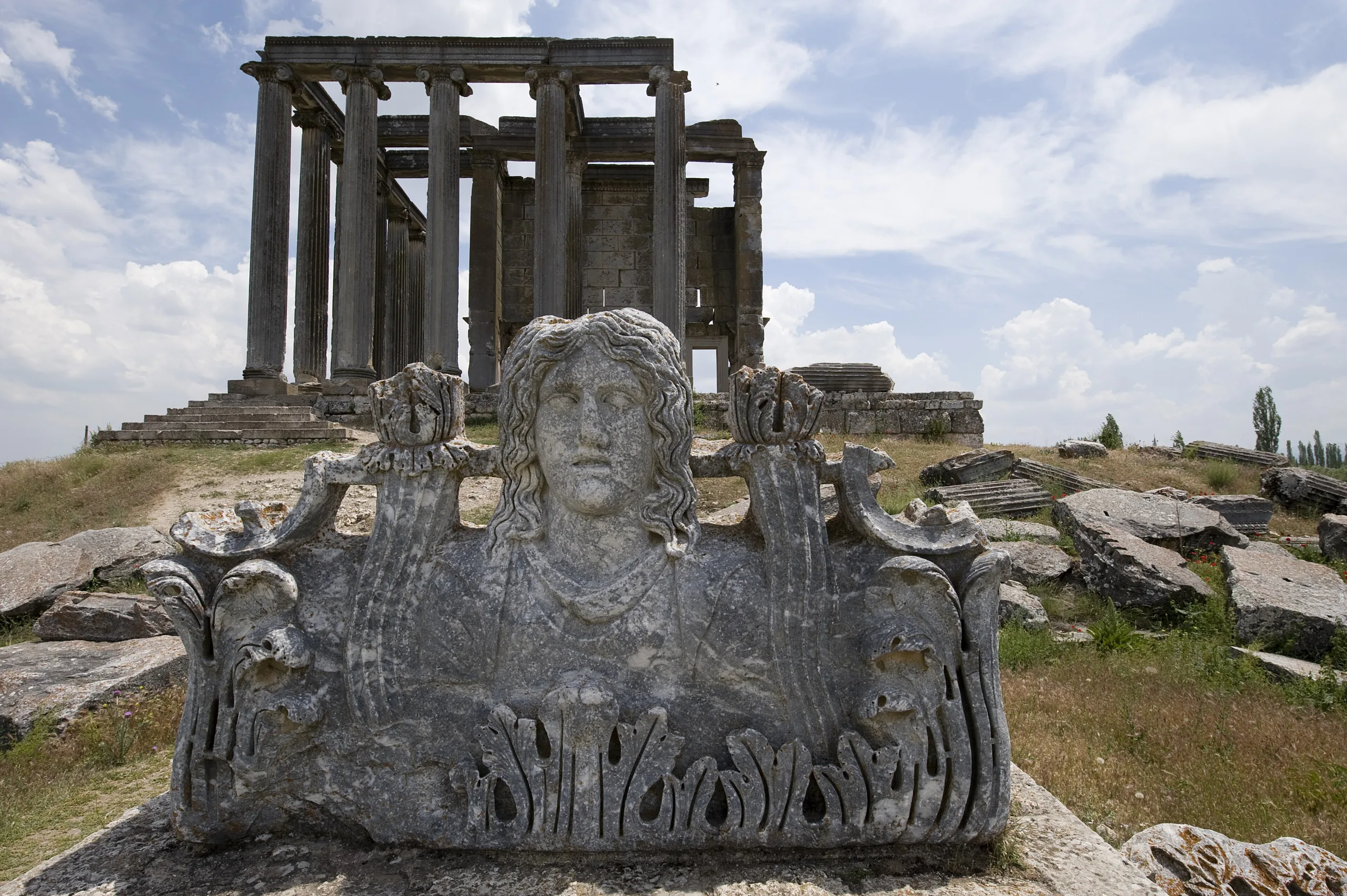
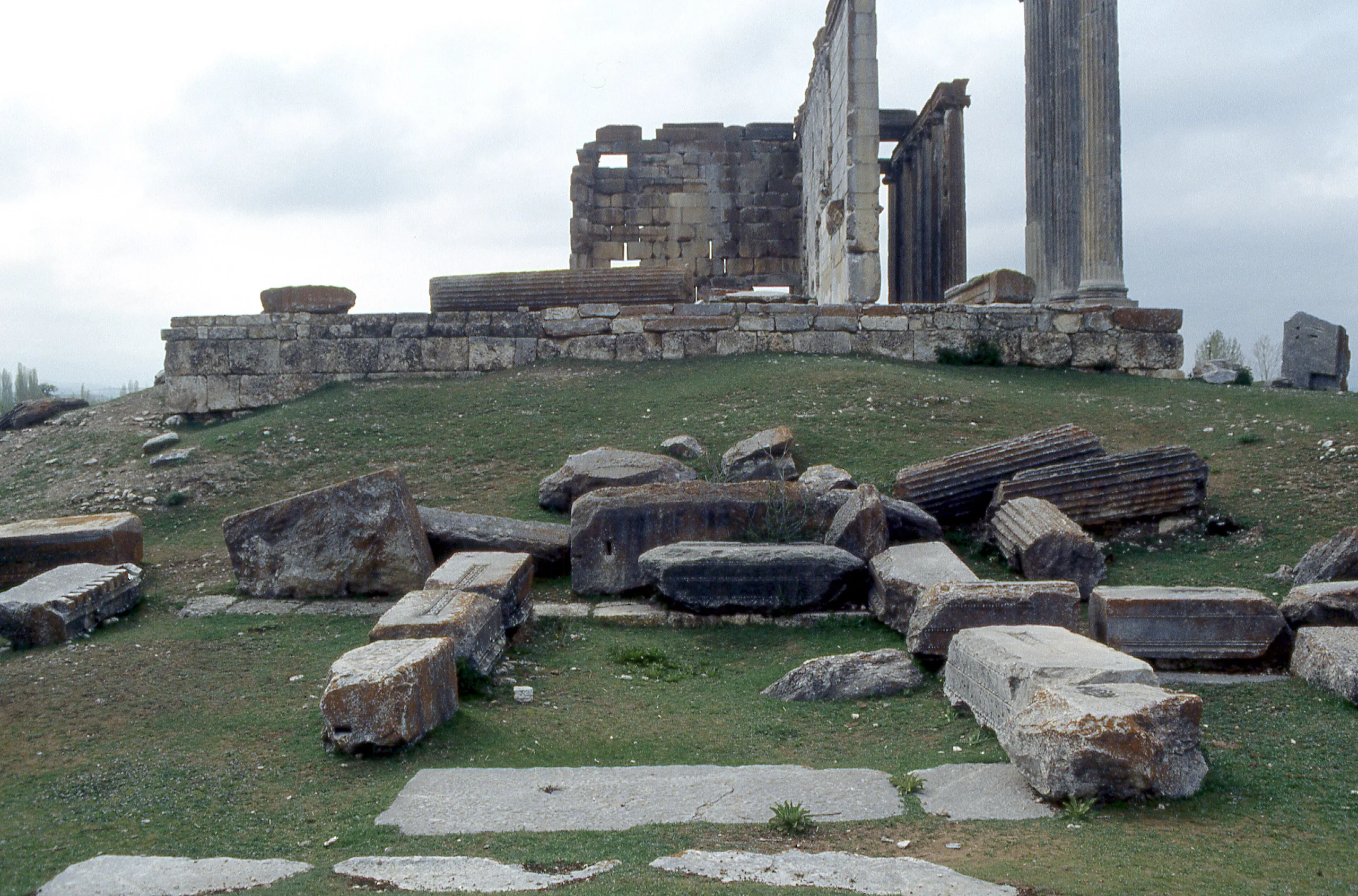
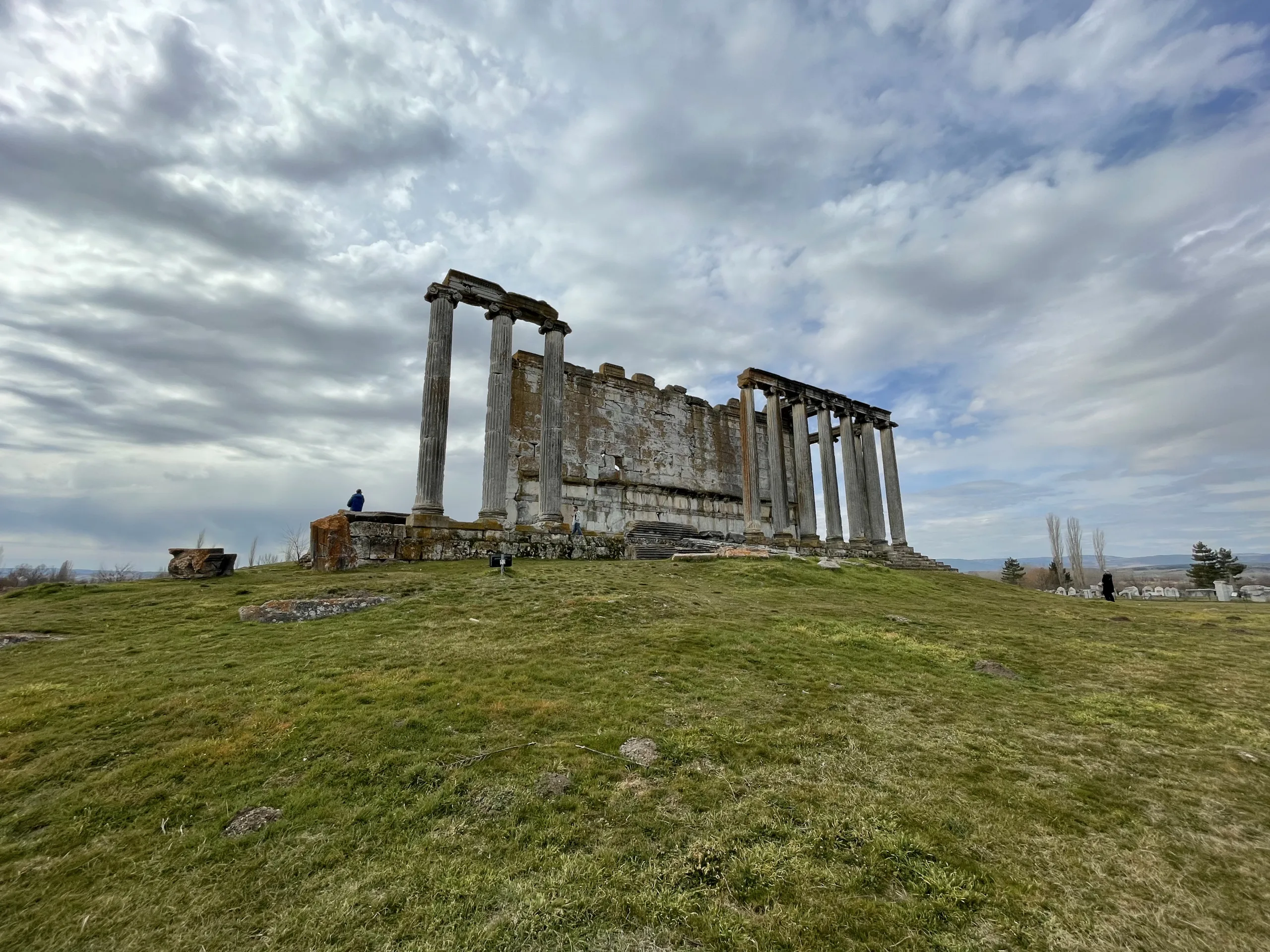
According to the Culture Portal, the temple stands roughly two hundred metres from the river's west bank, in the middle of a colonnaded precinct measuring 130.5 by 112 metres, on a podium of 35 by 35 metres. Building began in 92 CE and was finished in the reign of Hadrian (117-138 CE). The pseudodipteral temple has eight columns on its short sides and fifteen on its long sides, and a stair leads down to an underground cella dedicated to the Phrygian goddess Meter Steunene and up to the roof. The Ministry's English page says the original superstructure still rises 9.30 metres and sits at the heart of the city plan. The central acroterion of the west pediment carries a bust of Cybele, and the east acroterion a bust of Zeus. Inscriptions on the front gallery walls honour Hadrian and Apuleius, who did much for the city.
Theatre and stadium
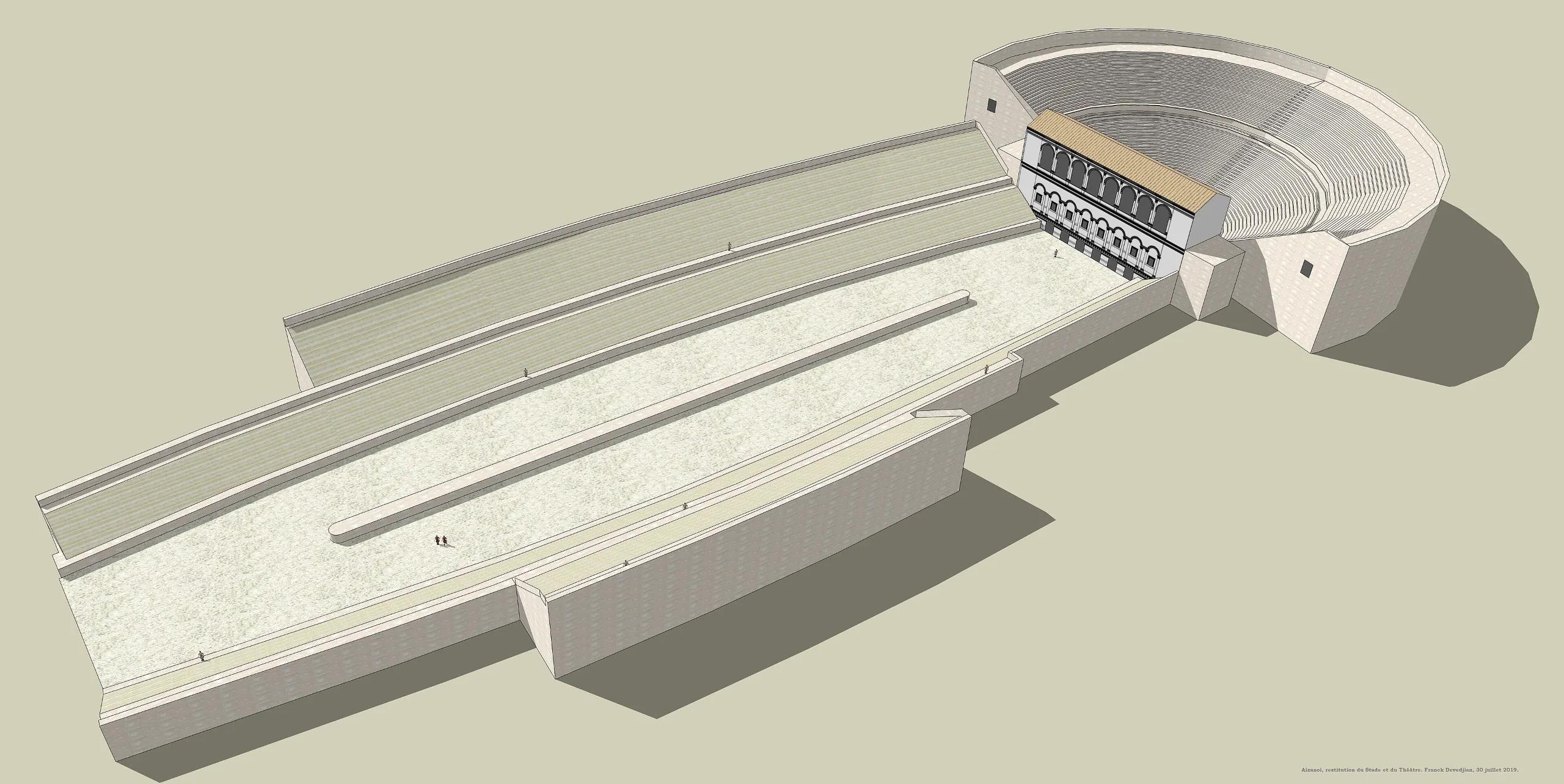
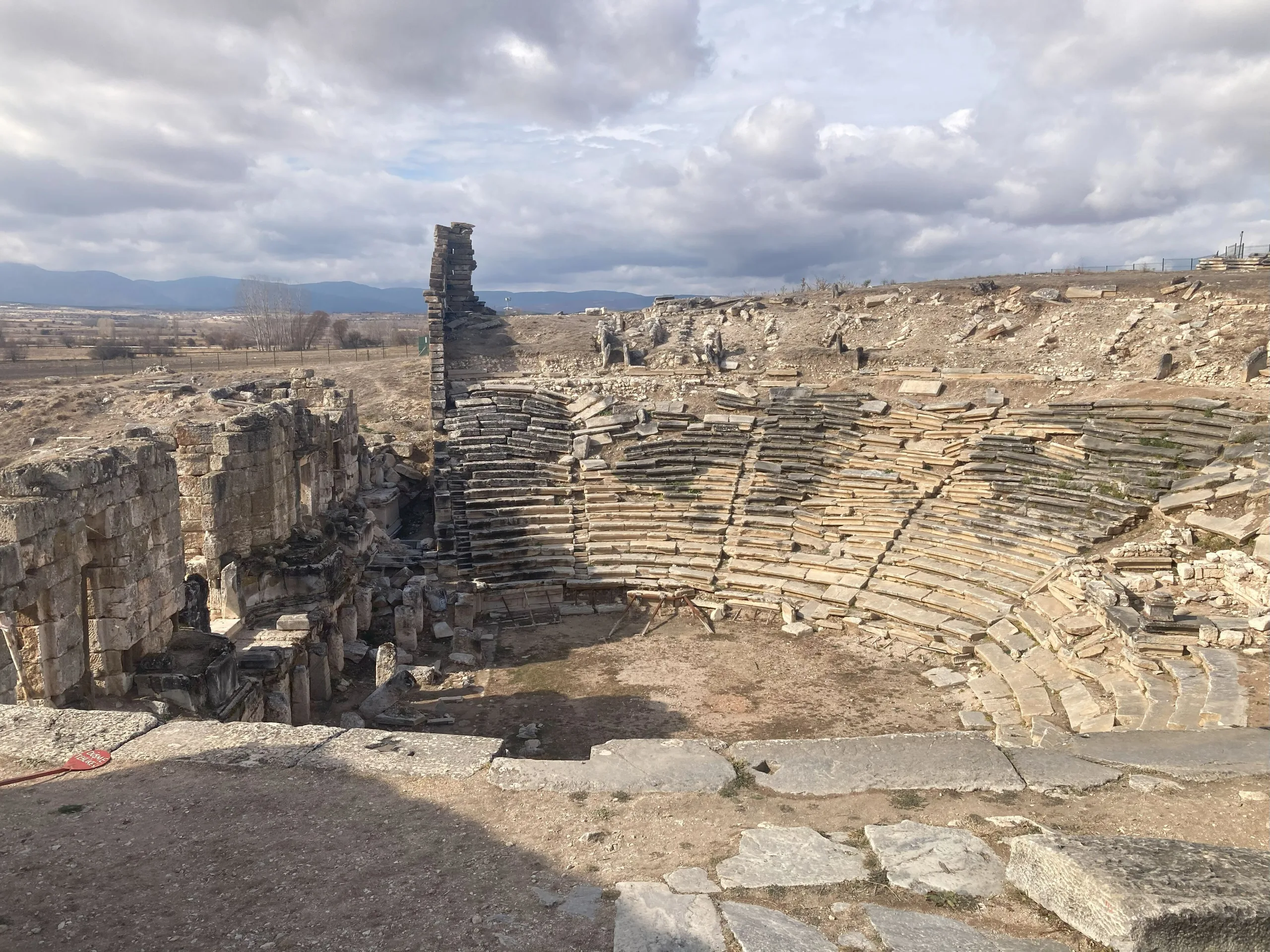
Building a theatre and stadium as one connected complex is something the Culture Portal says was seen nowhere else in antiquity. The Ministry's Turkish page gives 15,000 seats for the theatre and 13,500 for the stadium, while its English page speaks of about 15,000 people for each unit.
Macellum
The round building beside the river dates to the second half of the 2nd century CE and served as an organised market open every day. The Ministry lists meat, poultry, baked goods, cereals, olive oil, rare fruit and vegetables, and fresh and processed carp with garum sauce among the goods sold there. The Culture Portal calls it one of the world's first stock exchanges. Its walls carry well-preserved inscriptions of the prices that Emperor Diocletian fixed in 301 CE to curb inflation.
Sanctuary, bridges and other remains
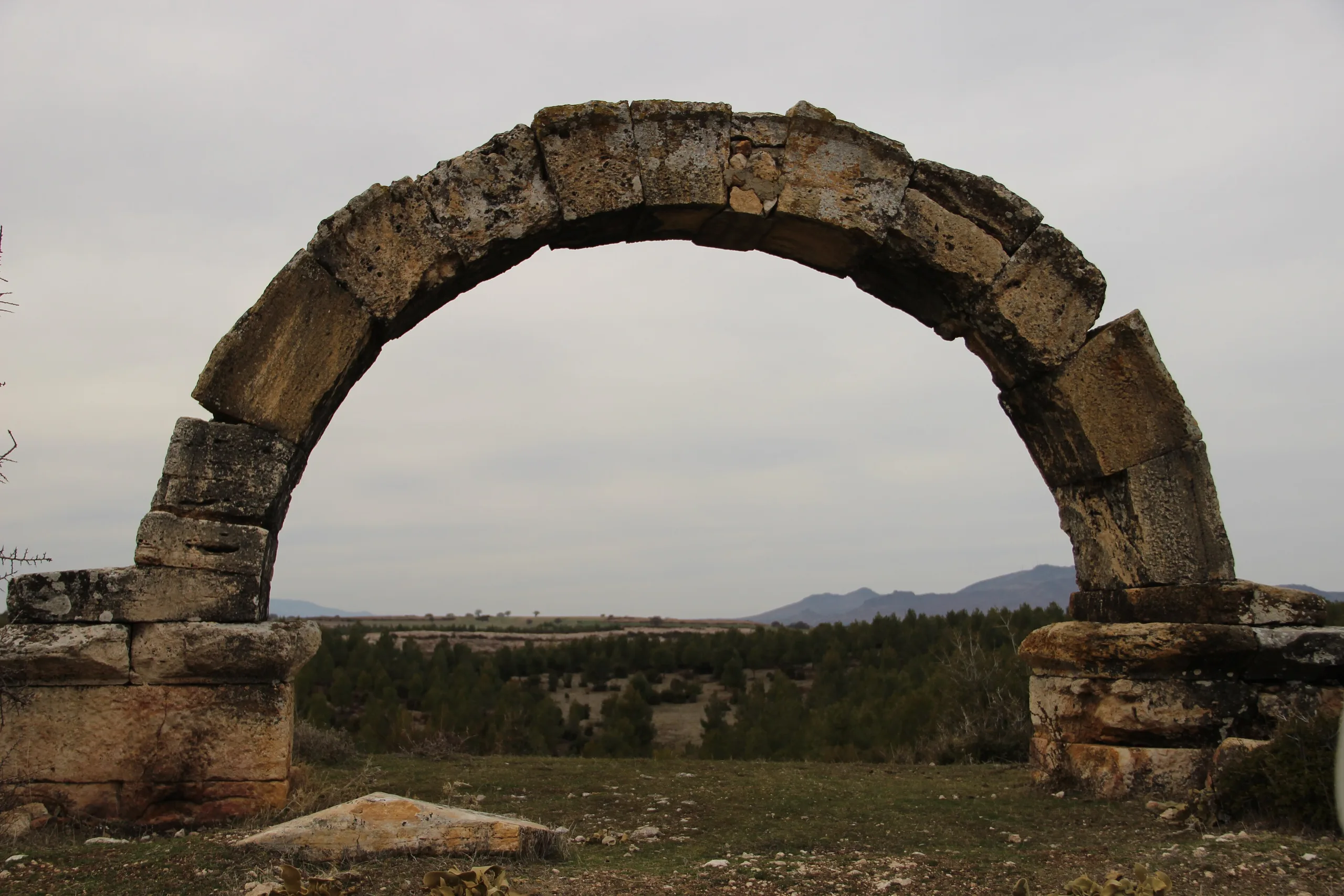
The sanctuary of Meter Steunene lies to the south-west of the city and reflects a belief tradition reaching back to Phrygian times; the Ministry describes a rock throne in a round rock cave, pits for sacrificed bulls and a deep rock lair collapsed by earthquakes. Five bridges cross the Kocaçay, two of them still standing. The Ministry's Turkish page also lists two baths, a colonnaded street, the city cemetery, a single-arched dam, water channels and monumental gates, and the Culture Portal adds two agoras and a gymnasium.
Research history
European travellers rediscovered Aizanoi in 1824, and it was studied and described in the 1830s and 1840s. The German Archaeological Institute made the first brief excavations in 1926 under M. Schede and D. Krencker. The Ministry's page says the Institute continued its work from 1970 to 2010, and that from 2011 the Archaeology Department of Pamukkale University took it over.
Protection
Aizanoi is proposed as a World Heritage property as one of the most important cities of the Roman era, and both Ministry pages state that it has been on UNESCO's Tentative List since 2012.
Gallery
Frequently asked questions
Where is Aizanoi?
What is Aizanoi's best-known building?
What is unusual about the theatre and stadium?
What was the macellum?
Where does the name Çavdarhisar come from?
Who has excavated at Aizanoi?
Sources (12)
- Aizanoi Örenyeri / Aizanoi Archaeological Site (TR ve EN sayfalar) — T.C. Kültür ve Turizm Bakanlığı, Müzeler ve Örenyerleri
- Aizanoi Antik Kenti - Kütahya — T.C. Kültür ve Turizm Bakanlığı, Türkiye Kültür Portalı
- Aizanoi (Pleiades 609292) — Pleiades
Photo credits
- Photo: Lovedbythepotato, CC BY 4.0 — Wikimedia Commons (resized)
- Photo: Dosseman, CC BY-SA 4.0 — Wikimedia Commons (resized)
- Photo: Franck devedjian, CC BY-SA 4.0 — Wikimedia Commons (resized)
- Photo: KaramürverÖzü, CC BY-SA 4.0 — Wikimedia Commons (resized)
- Photo: KaramürverÖzü, CC BY-SA 4.0 — Wikimedia Commons (resized)
- Photo: Mark Landon, CC BY 4.0 — Wikimedia Commons (resized)
- Photo: Furkankarahan, CC BY-SA 4.0 — Wikimedia Commons (resized)
- Photo: Dosseman, CC BY-SA 4.0 — Wikimedia Commons (resized)
- Photo: Dosseman, CC BY-SA 4.0 — Wikimedia Commons (resized)