Iasos is a harbour city on a peninsula in Güllük Bay at Kıyıkışlacık, Milas, with sea on three sides; it is known for its agora, bouleuterion, walls and Roman monumental tomb.
Iasos is an ancient city located in Turkey, Mugla. Main periods: Roman Period, Byzantine Period, Bronze Age.
A musician was midway through a recital in the theatre when a bell rang to announce that the fish market had opened, and nearly the whole audience got up and walked out. Strabo tells this story to show how much the people of Iasos loved fish. The city stands in the village of Kıyıkışlacık, Milas district of Muğla, on a peninsula that looks over Güllük Bay and is washed by sea on three sides; Milas lies some 26-28 km away. Today it is known above all for its agora, bouleuterion, walls and a Roman monumental tomb.
Location and access
The ruins sit inside the village, and the address given is simply Kıyıkışlacık. For current visiting terms, see the official page.
History
Myth holds that colonists from Argos founded the city and named it after their leader Iasos. Ancient writers say nothing about it before the 5th century BCE. The founding site was first an island; as the strait between it and the shore silted up, it turned into a peninsula. Excavation puts the oldest settlement at the end of the 3rd millennium BCE. The earliest archaeological find belongs to the 3rd millennium, and the earliest architecture to Bronze Age walls of the 2nd.
Beyond Strabo's fish tale, the city has memories tied to Alexander the Great. When he besieged Miletus in 334 BCE, Iasos gave a ship to the Persian fleet that was trying to help the besieged town. A local boy called Hermias has an odder story: after exercising in the gymnasium he would bathe in the sea, where a dolphin took him on its back, carried him out and brought him back. The tale goes that Alexander, hearing of it, summoned the boy to Babylon and appointed him priest to Poseidon, lord of the waves. The people of Iasos were so struck that in the 3rd century BCE they put a swimming child, arm slung over a dolphin, on their coins.
Notable structures
Agora and bouleuterion
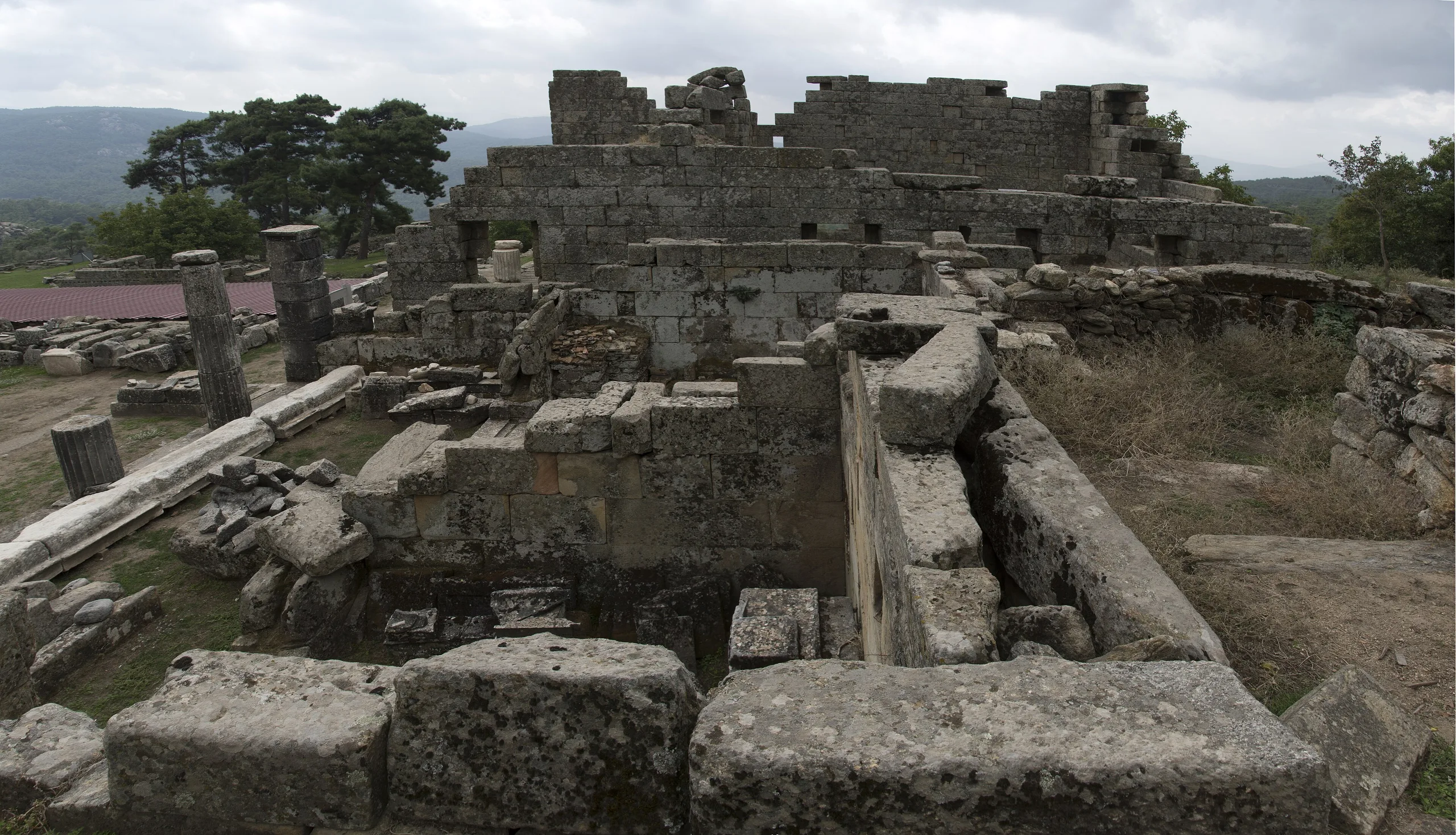
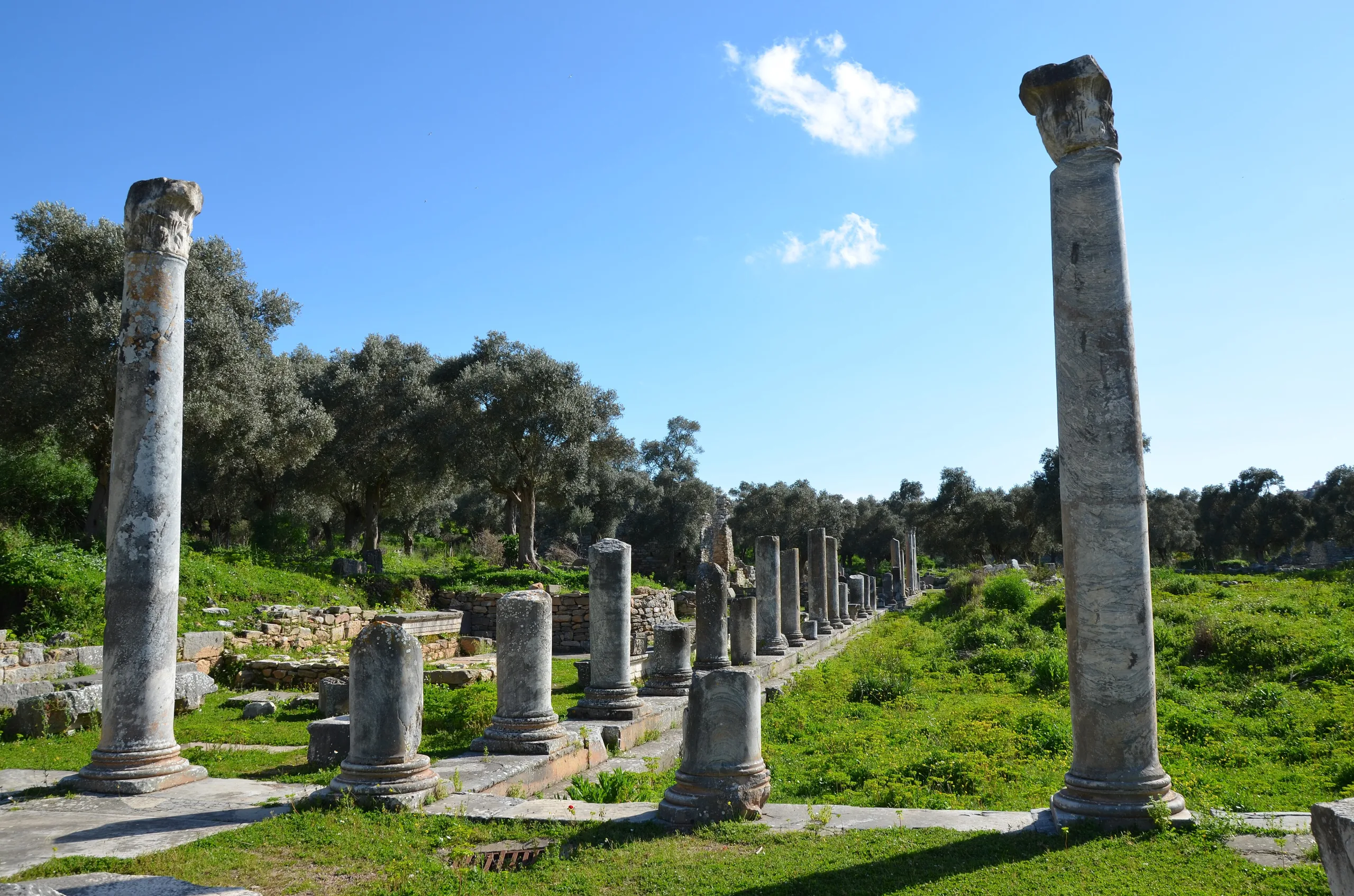
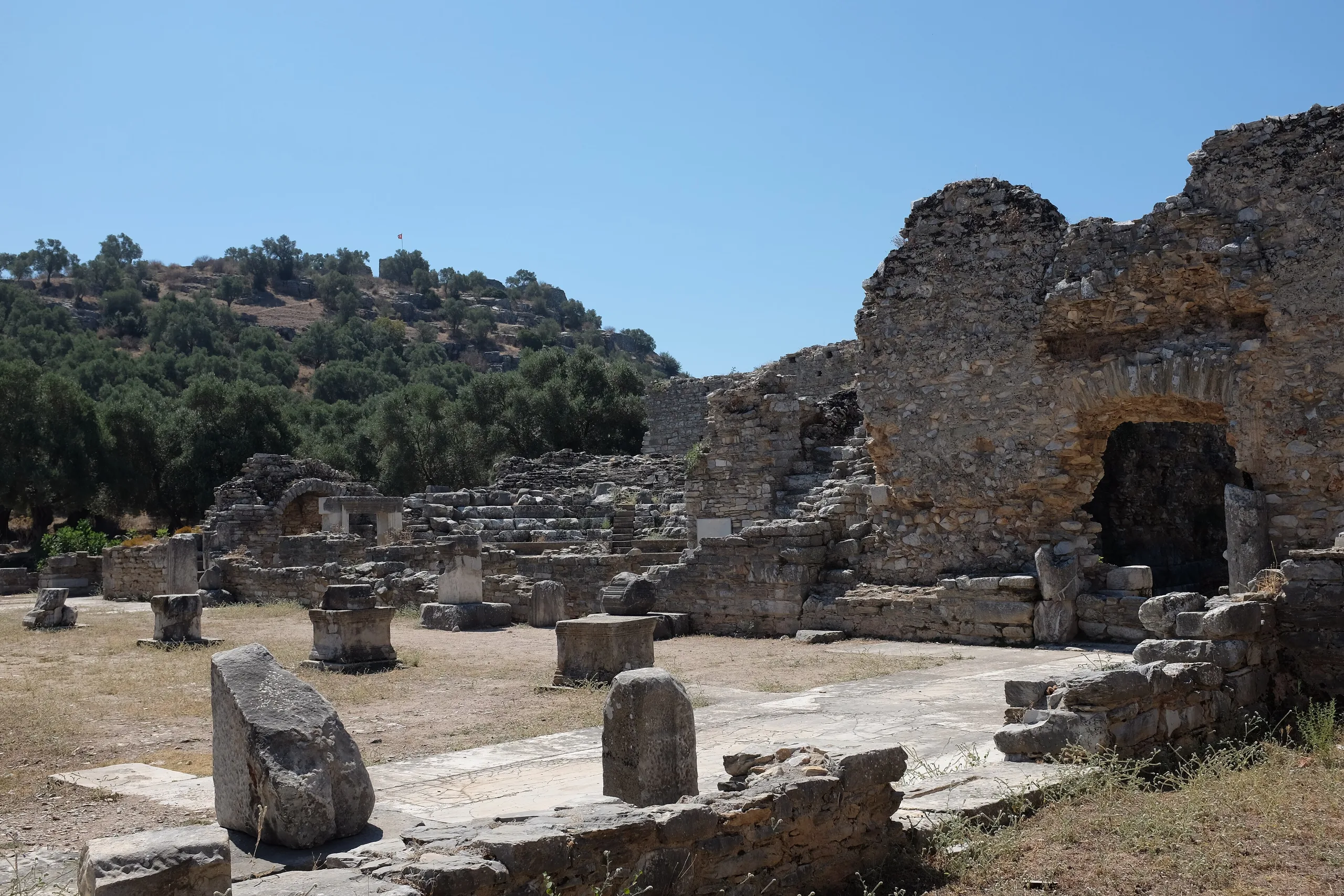
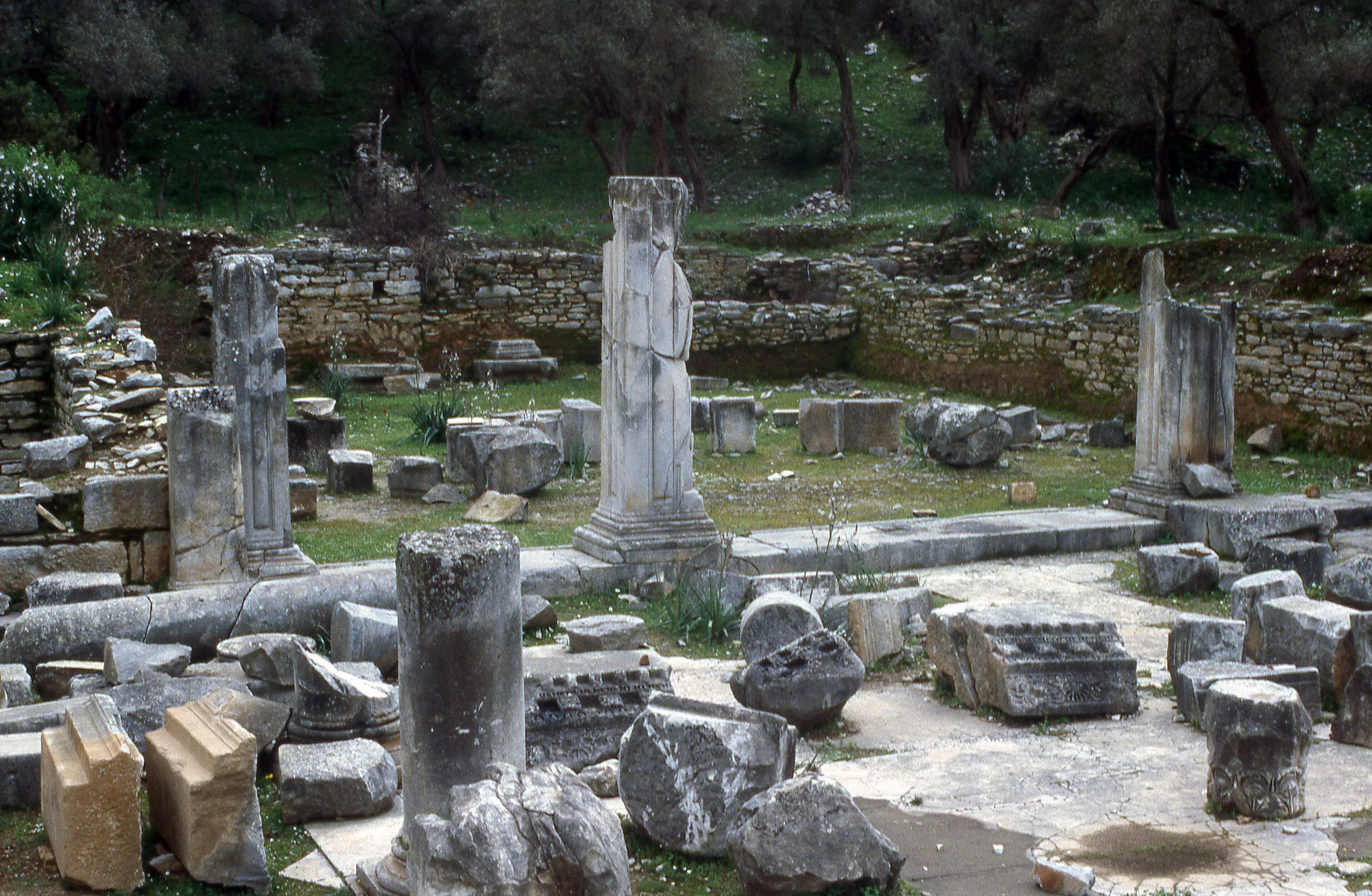
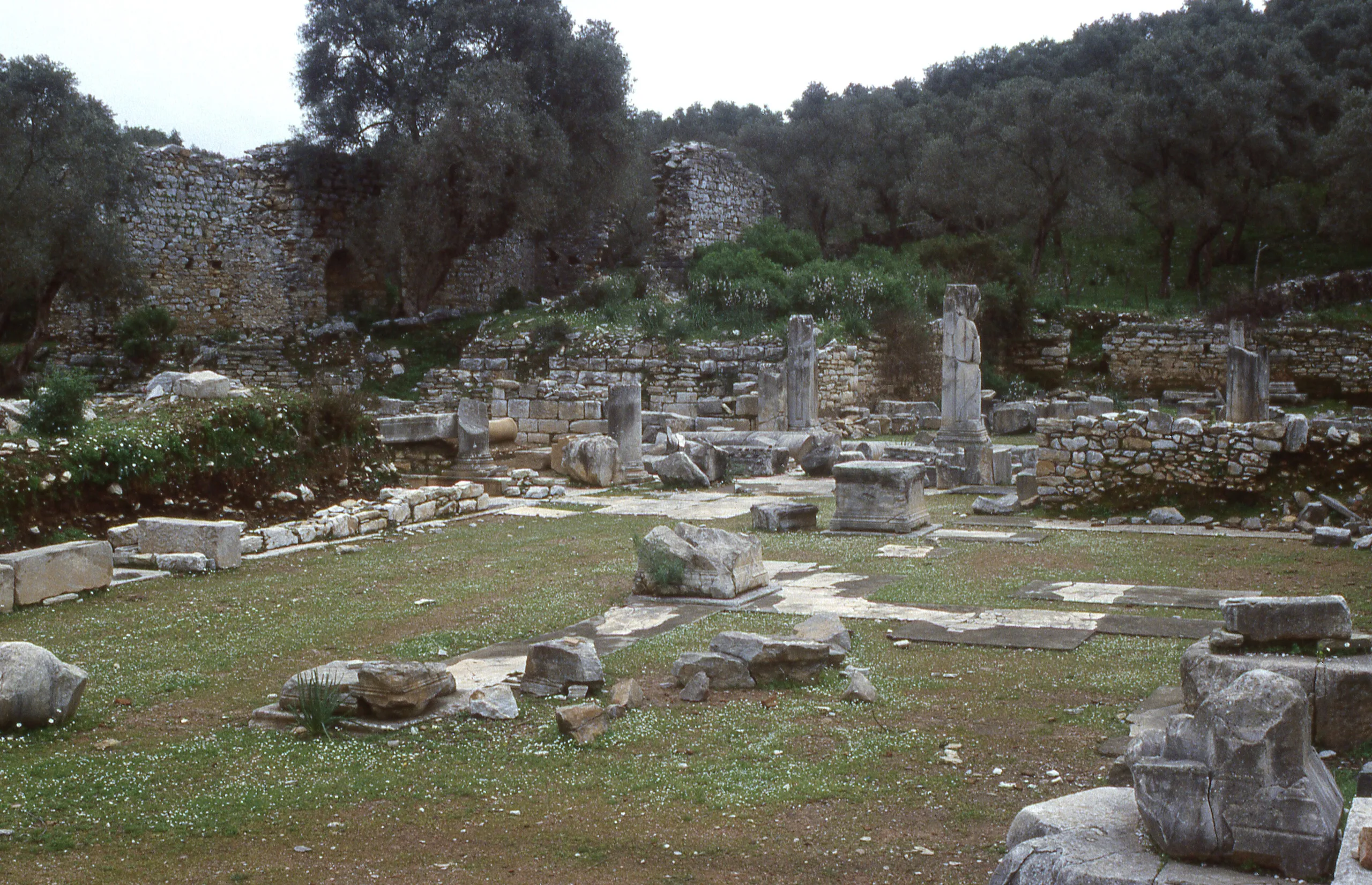
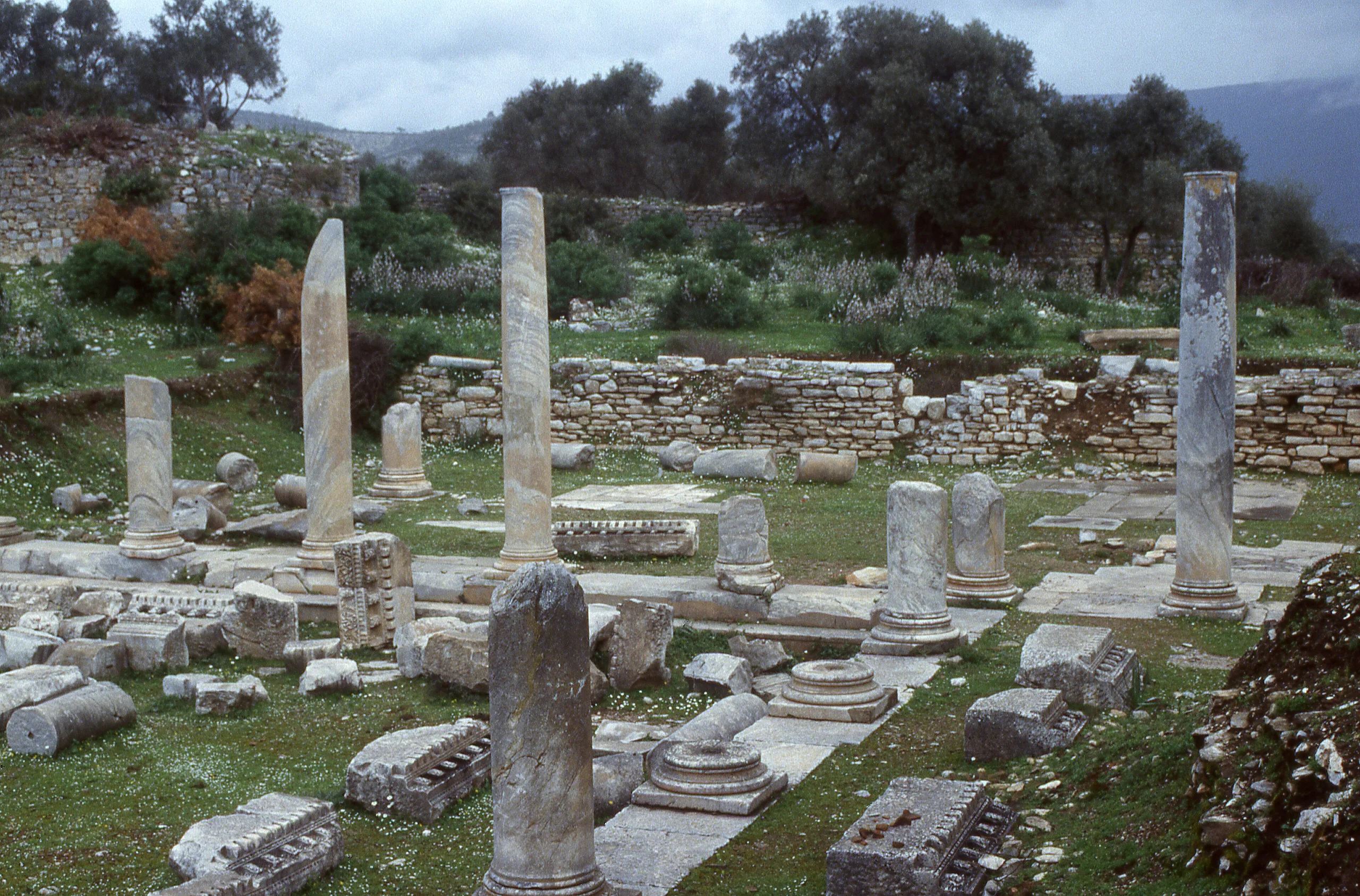
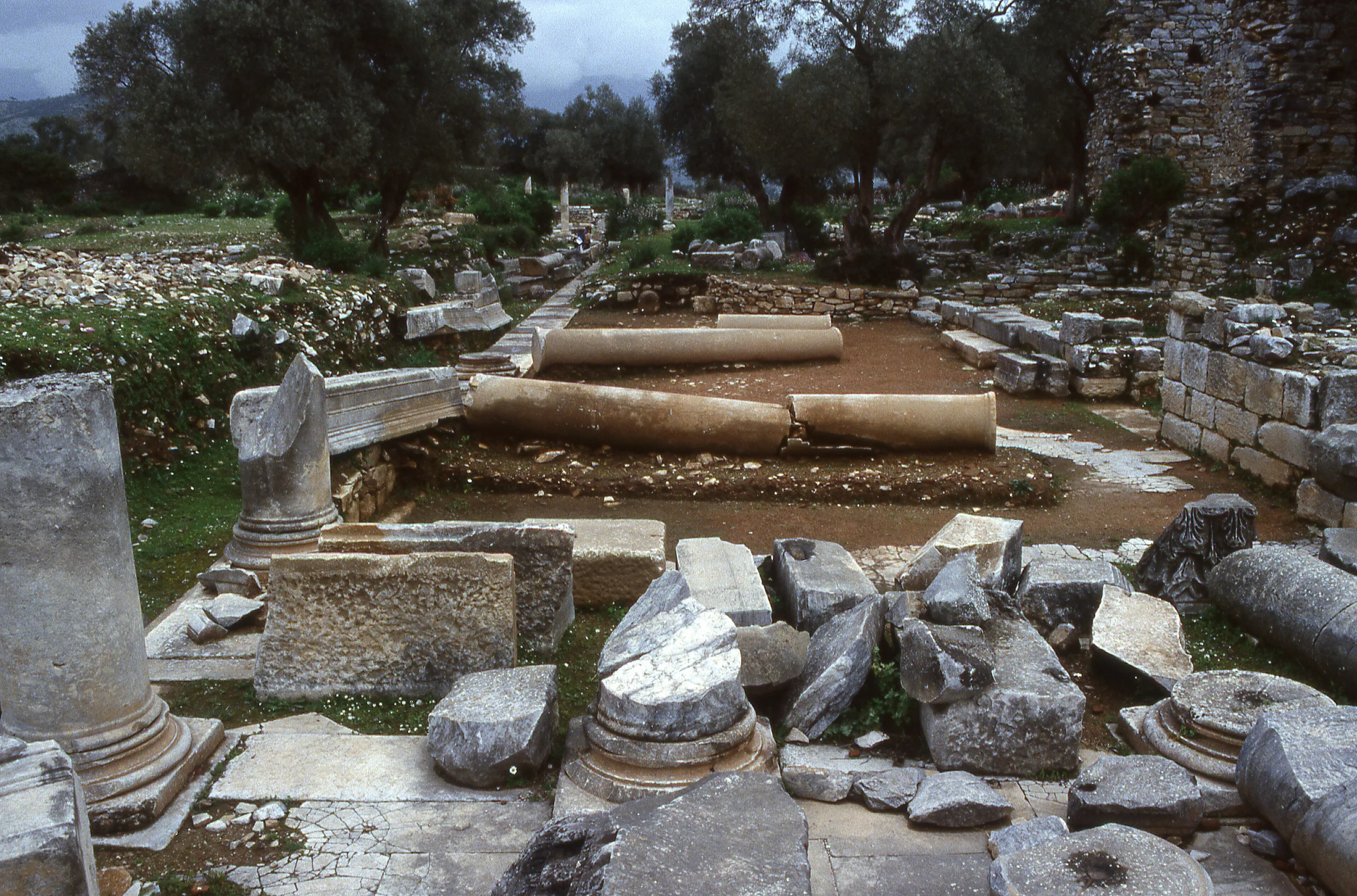
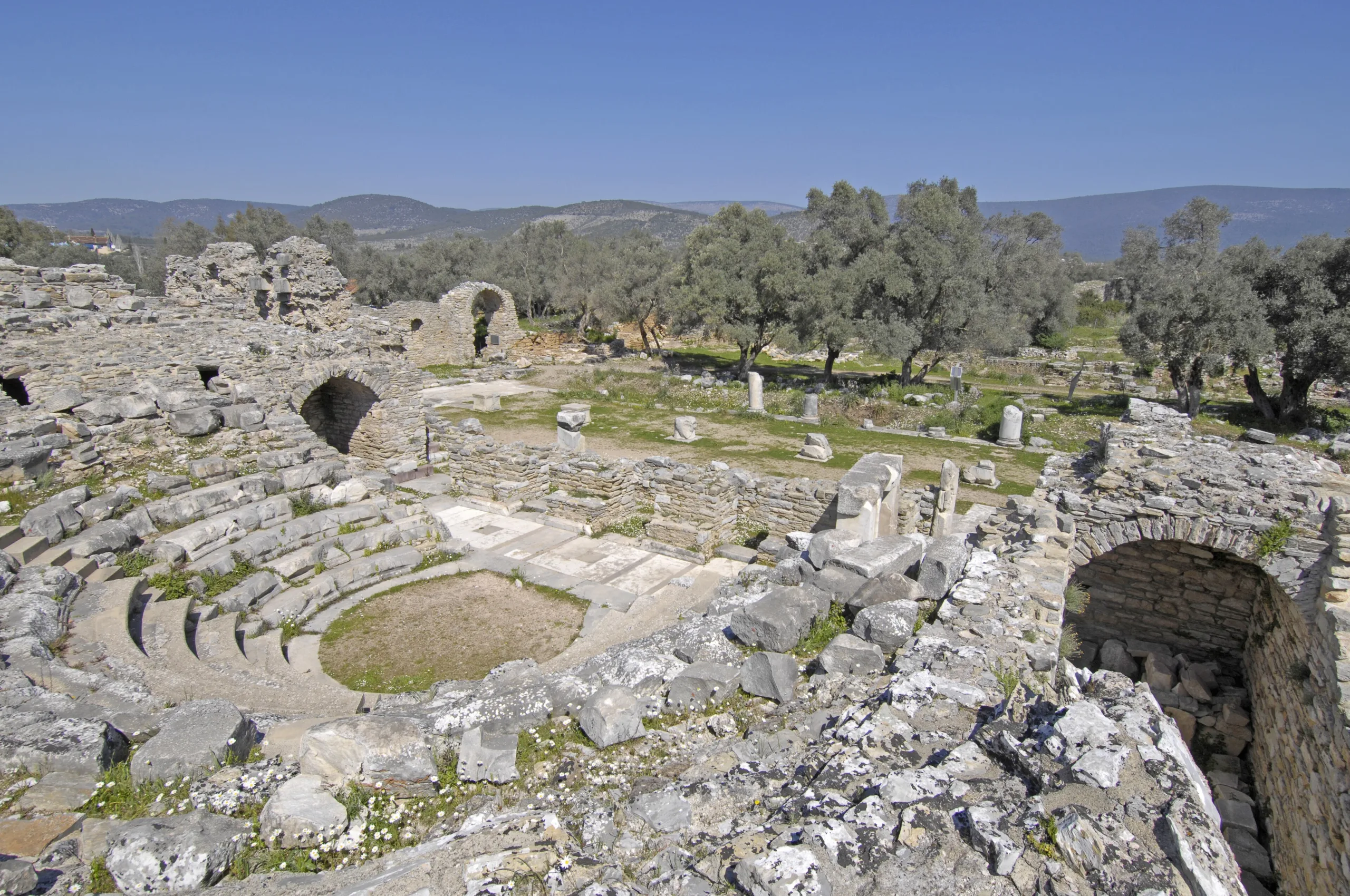
The agora, the town square, is entered through an arched gate. Built in the Roman period, it has porticoes on all four sides. In its south-western corner stands the bouleuterion, the council house, among the best-preserved buildings of Iasos. The first council house went up in the 4th century BCE, and the layout seen now is from the 1st century CE. The rectangular building has a floor of multicoloured marble, seating in three quarters of a circle, and steps whose sides are carved as lion paws.
Sanctuaries
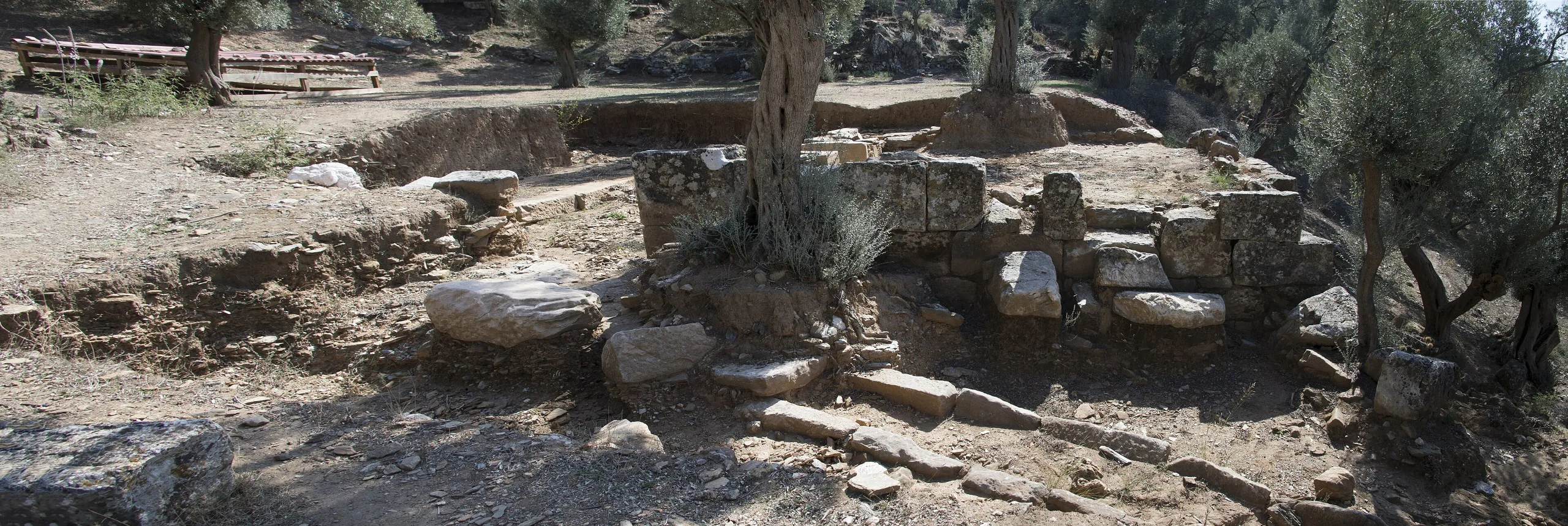
Zeus Megistos has his sanctuary beside the East Gate, and Demeter and Kore theirs at the southern tip of the peninsula. The most talked about is the precinct of Artemis Astias, whose statue, the legend says, always stayed dry in rain and snow. Important sacred buildings stand inside the walls and outside them.
Walls, acropolis and harbour
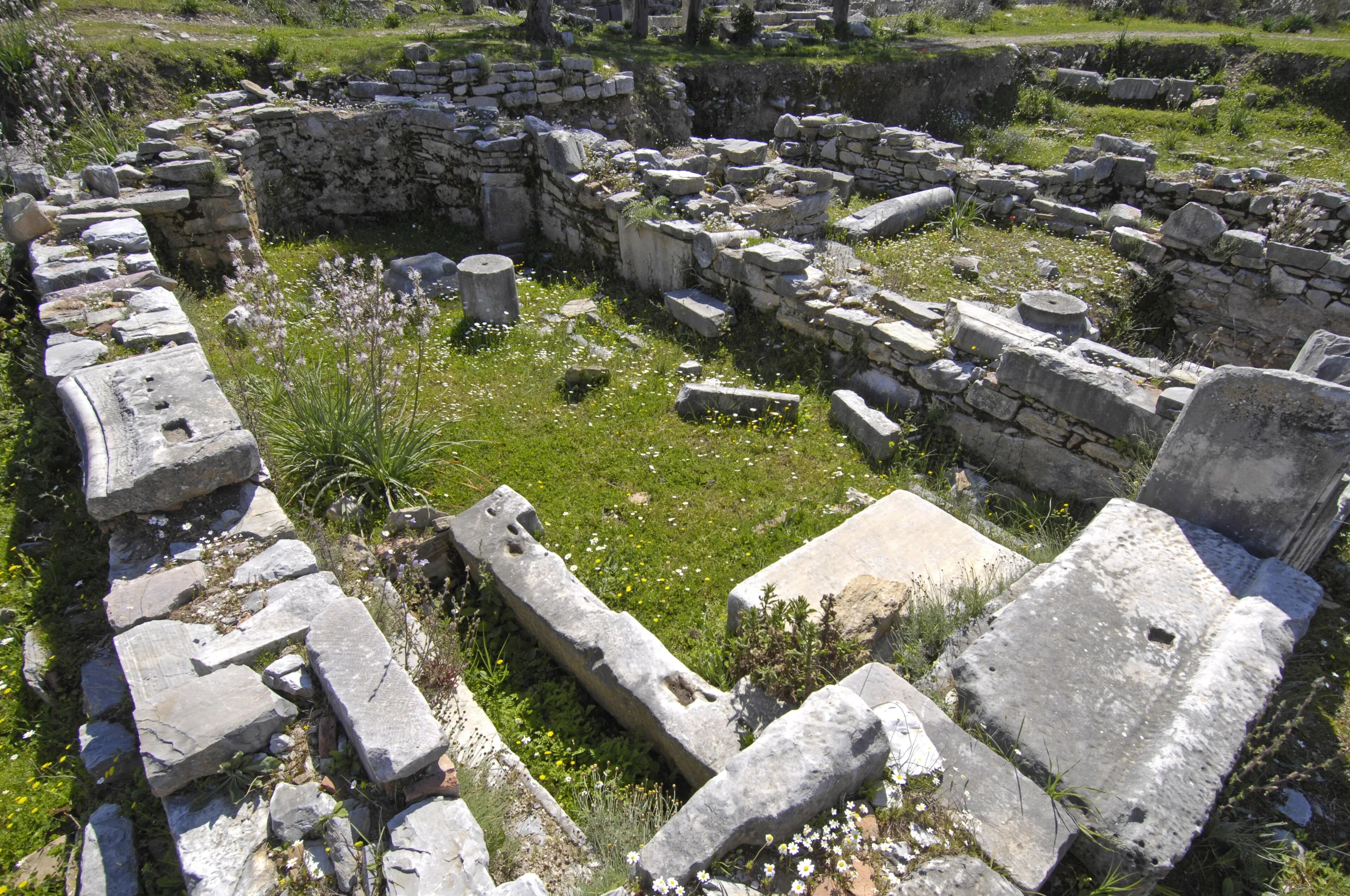
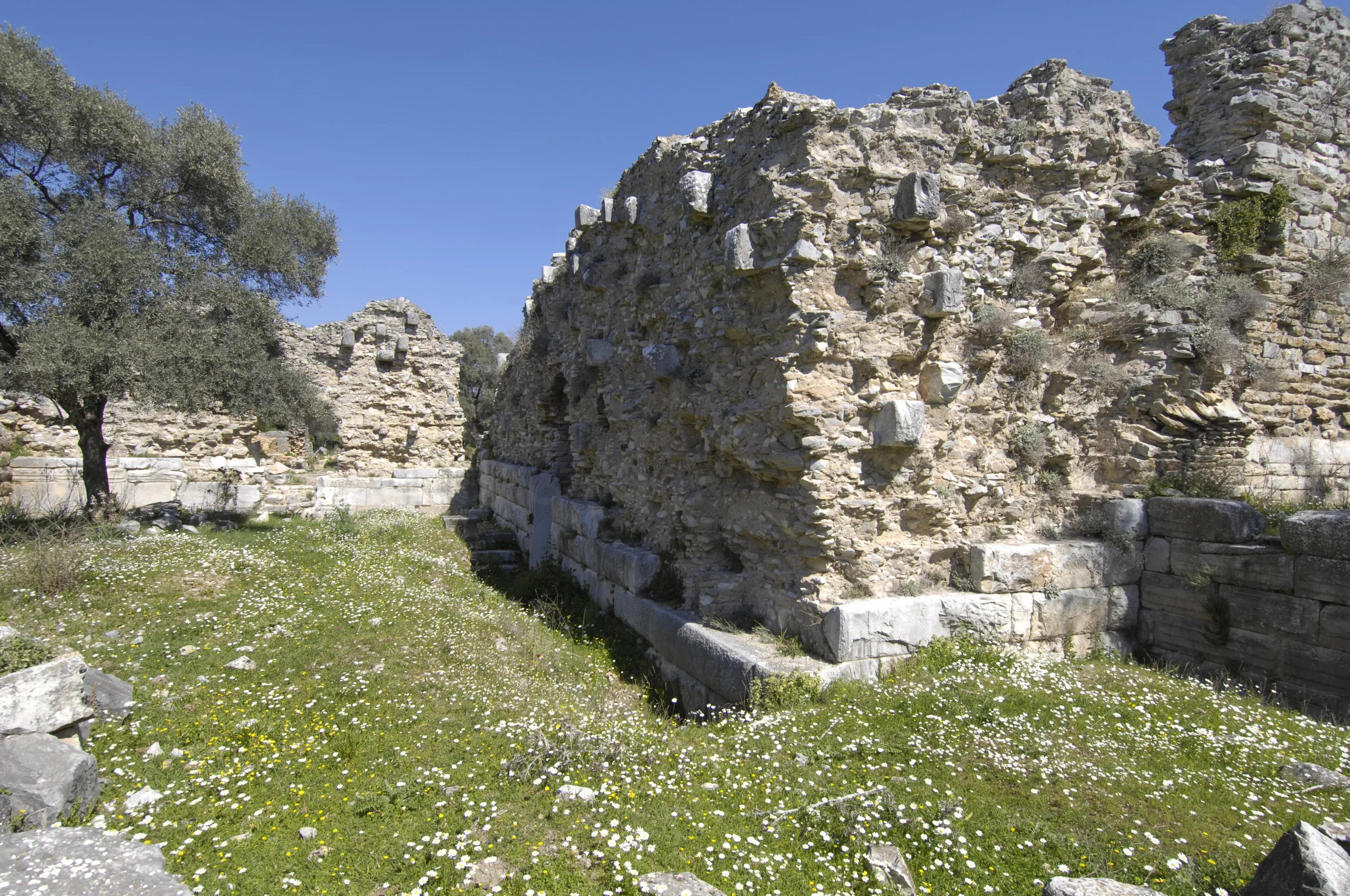
The great wall, aqueducts, tombs and the so-called fish market lie beyond the city wall. A medieval castle crowns the acropolis, and within it are a Byzantine cistern and a trapezoidal enclosure holding a small temple. The walls reuse a great deal of older material, have two entrances, and guard the northern main one with two square towers. In the harbour, two piers of the Early Imperial period now lie underwater; given the wind direction they cannot have been breakwaters and must have controlled traffic in and out. In the Middle Byzantine era a mole tower was added to the small eastern harbour.
Roman monumental tomb
In the cemetery about 1 km from the ancient city stands a 2nd-century CE Roman tomb monument nicknamed the Clock Tower, with two chambers stacked one on the other and a small dome overhead. The building once taken for a macellum, a market hall, was shown by excavation to be a Roman monumental tomb of the same century, laid out like a temple and ringed by arched porticoes. The area was restored and opened in 1995 as the Fish Market Open-Air Museum.
Excavations
An Italian team has been digging regularly at Iasos since 1960. Charles Texier made the first study in 1835; the excavations were later led by Doro Levi, Clelia Laviosa and Fede Berti, and from 2011 by Marcello Spanu. Deep trenches in the agora exposed an almost unbroken run of occupation levels, starting in the 3rd millennium BCE and ending with Byzantine times.
Gallery
Frequently asked questions
Where is Iasos?
Who founded Iasos?
What can be seen at Iasos?
Was the Fish Market really a market?
Since when has Iasos been excavated?
When was the bouleuterion built?
Sources (12)
- İasos Örenyeri / Iasos Archaeological Site (TR ve EN sayfalar) — T.C. Kültür ve Turizm Bakanlığı, Müzeler ve Ören Yerleri
- İasos Antik Kenti - Muğla (kaynak: Muğla İl Kültür ve Turizm Müdürlüğü) — T.C. Kültür ve Turizm Bakanlığı, Türkiye Kültür Portalı
- Iasos (Pleiades place 599664) — Pleiades
Photo credits
- Photo: Carole Raddato from FRANKFURT, Germany, CC BY-SA 2.0 — Wikimedia Commons (resized)
- Photo: AlexanderVanLoon, CC BY-SA 4.0 — Wikimedia Commons (resized)
- Photo: Mark Landon, CC BY 4.0 — Wikimedia Commons (resized)
- Photo: Mark Landon, CC BY 4.0 — Wikimedia Commons (resized)
- Photo: Mark Landon, CC BY 4.0 — Wikimedia Commons (resized)
- Photo: Mark Landon, CC BY 4.0 — Wikimedia Commons (resized)
- Photo: Dosseman, CC BY-SA 4.0 — Wikimedia Commons (resized)
- Photo: Dosseman, CC BY-SA 4.0 — Wikimedia Commons (resized)
- Photo: Dosseman, CC BY-SA 4.0 — Wikimedia Commons (resized)