Knidos, on Cape Tekir in Datça, is a terraced Dorian city that filled in the sea to gain two harbours; famed for its wine and Praxiteles's Aphrodite, its theatre stone ended up in Istanbul and Cairo.
Knidos is an ancient city located in Turkey, Mugla. Main periods: Hellenistic Period, Roman Period.
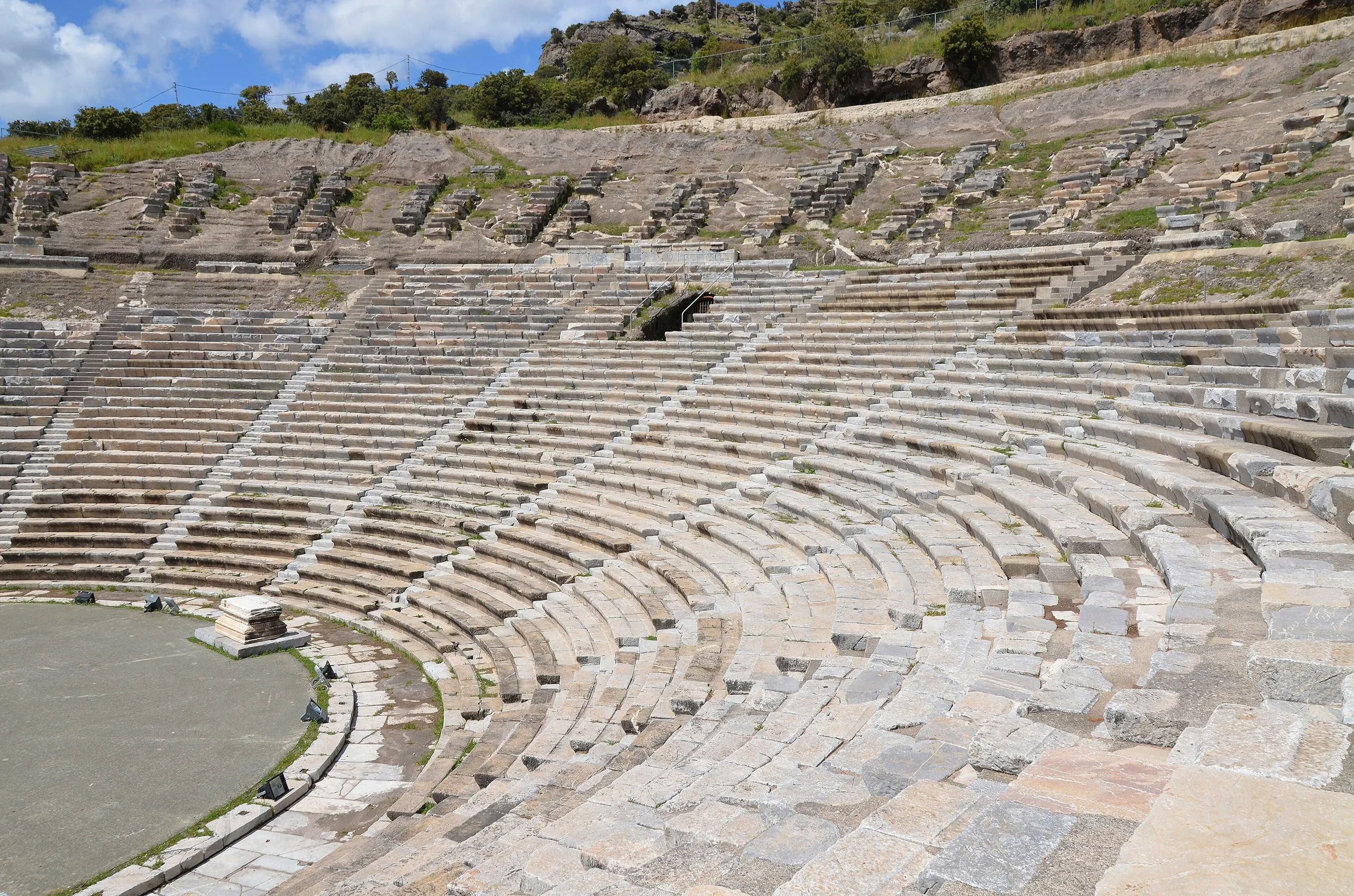
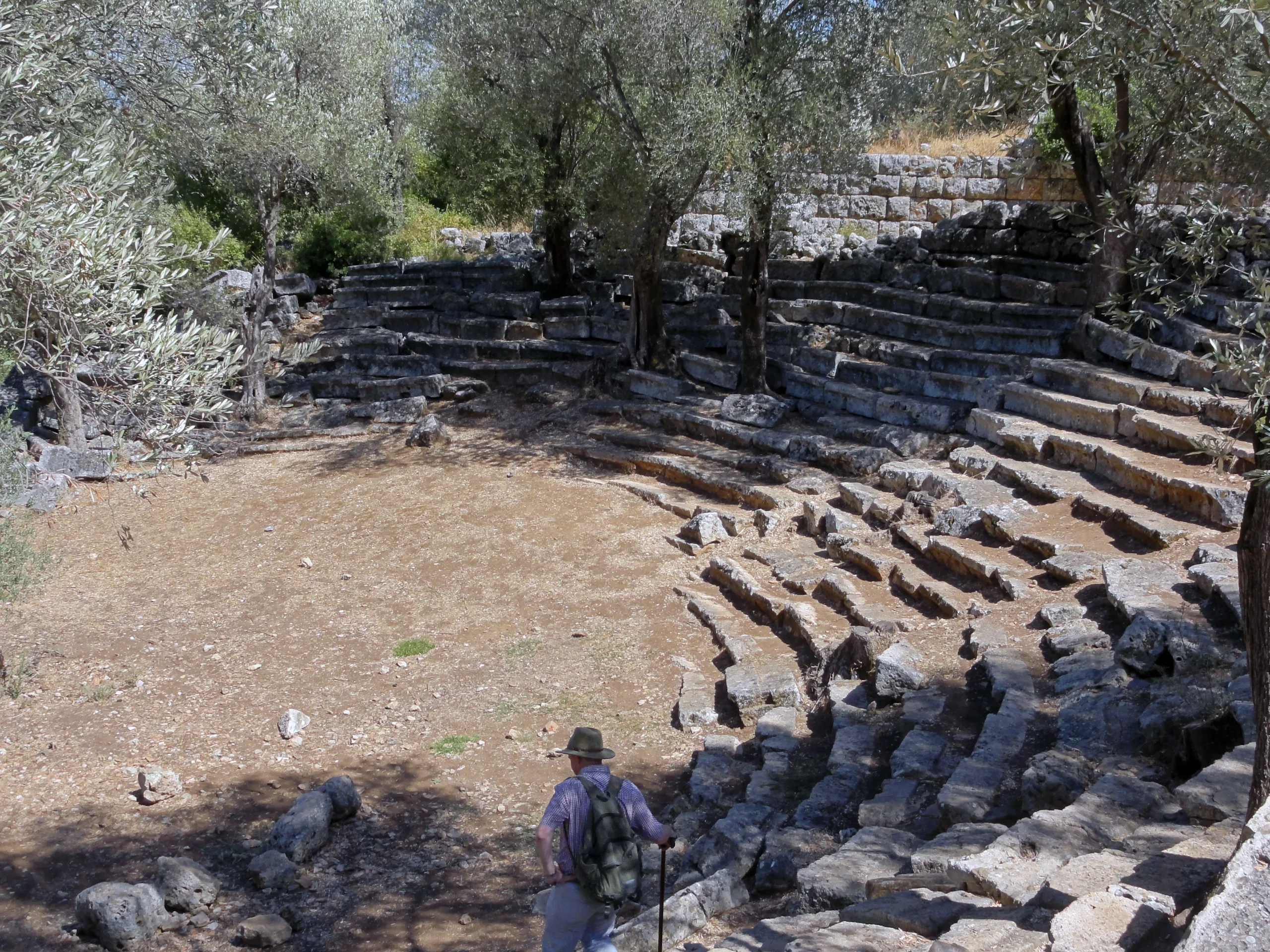
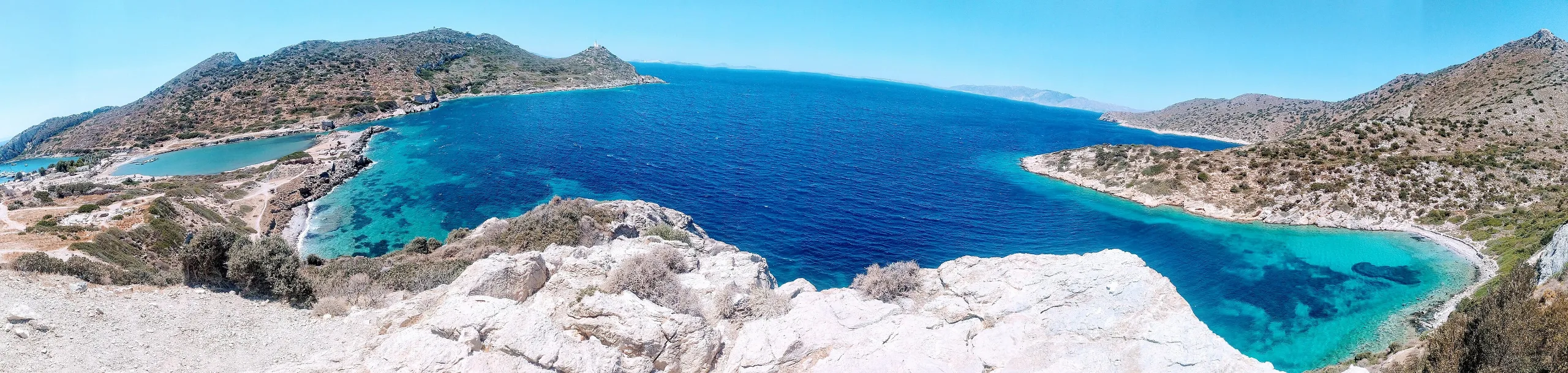
Of Knidos's great theatre only wall stubs remain: its stone was stripped out and carried off for Dolmabahçe Palace in Istanbul and for the palace and mosque of Mehmet Ali Pasha in Cairo. The city itself still stands as one of the most impressive ancient centres on the western Anatolian coast. It occupies Cape Tekir, at the very tip of the Reşadiye Peninsula in Datça district, Muğla, where the Aegean meets the Mediterranean. A terraced plan, two harbours, temple terraces and a very large cemetery define it, and in antiquity its fame travelled with the Aphrodite that Praxiteles made for the city.
Location and setting
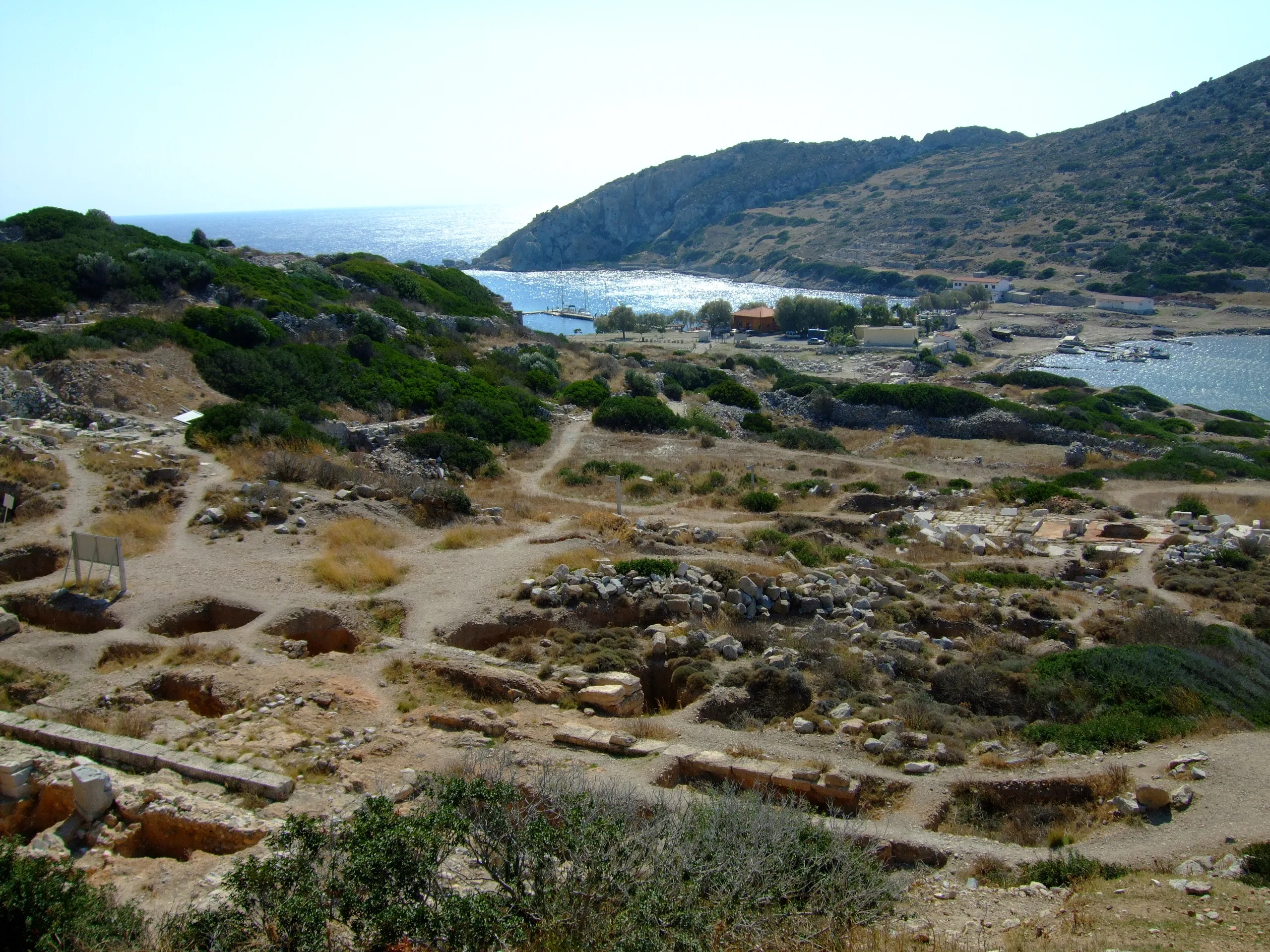
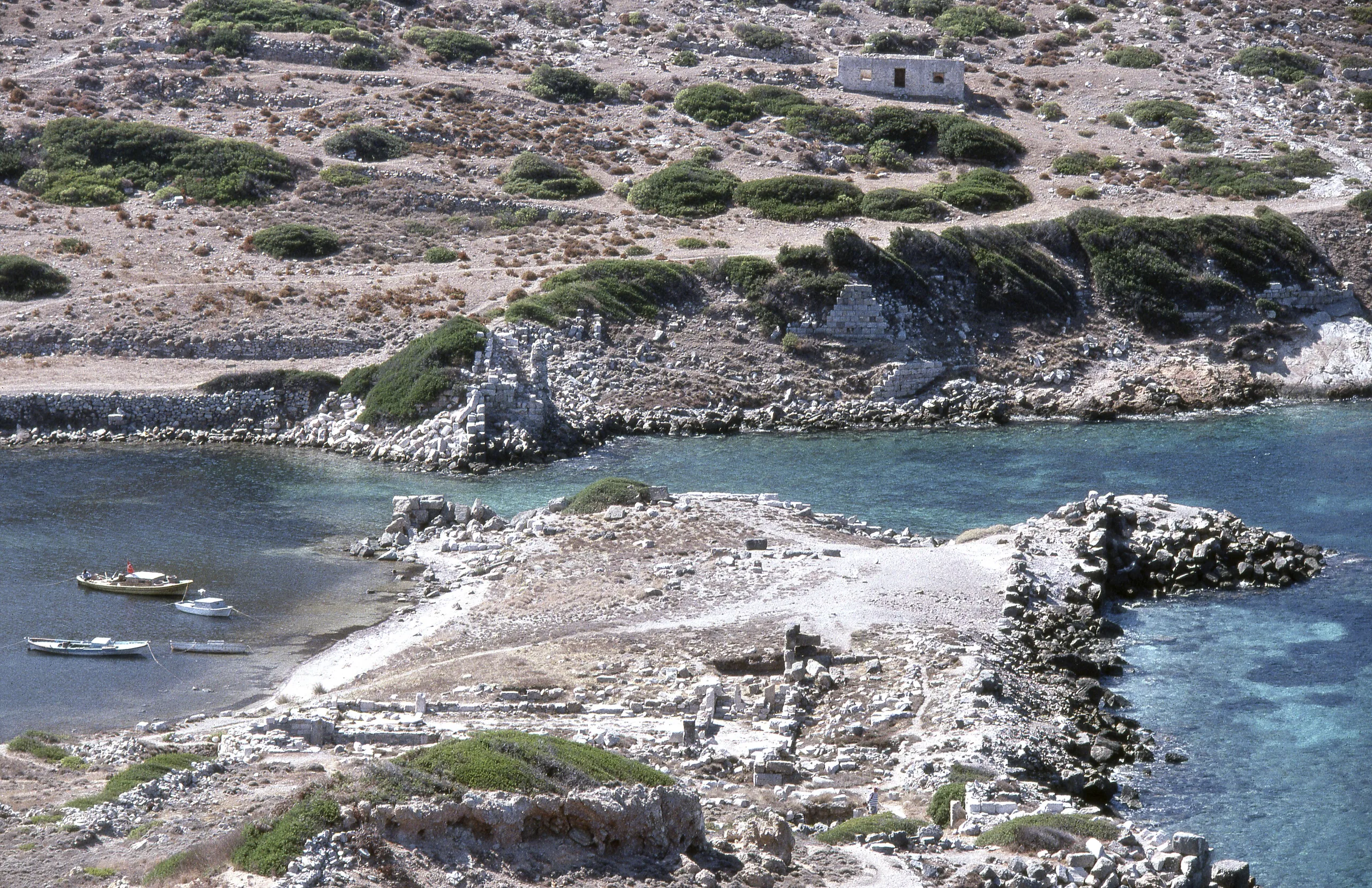
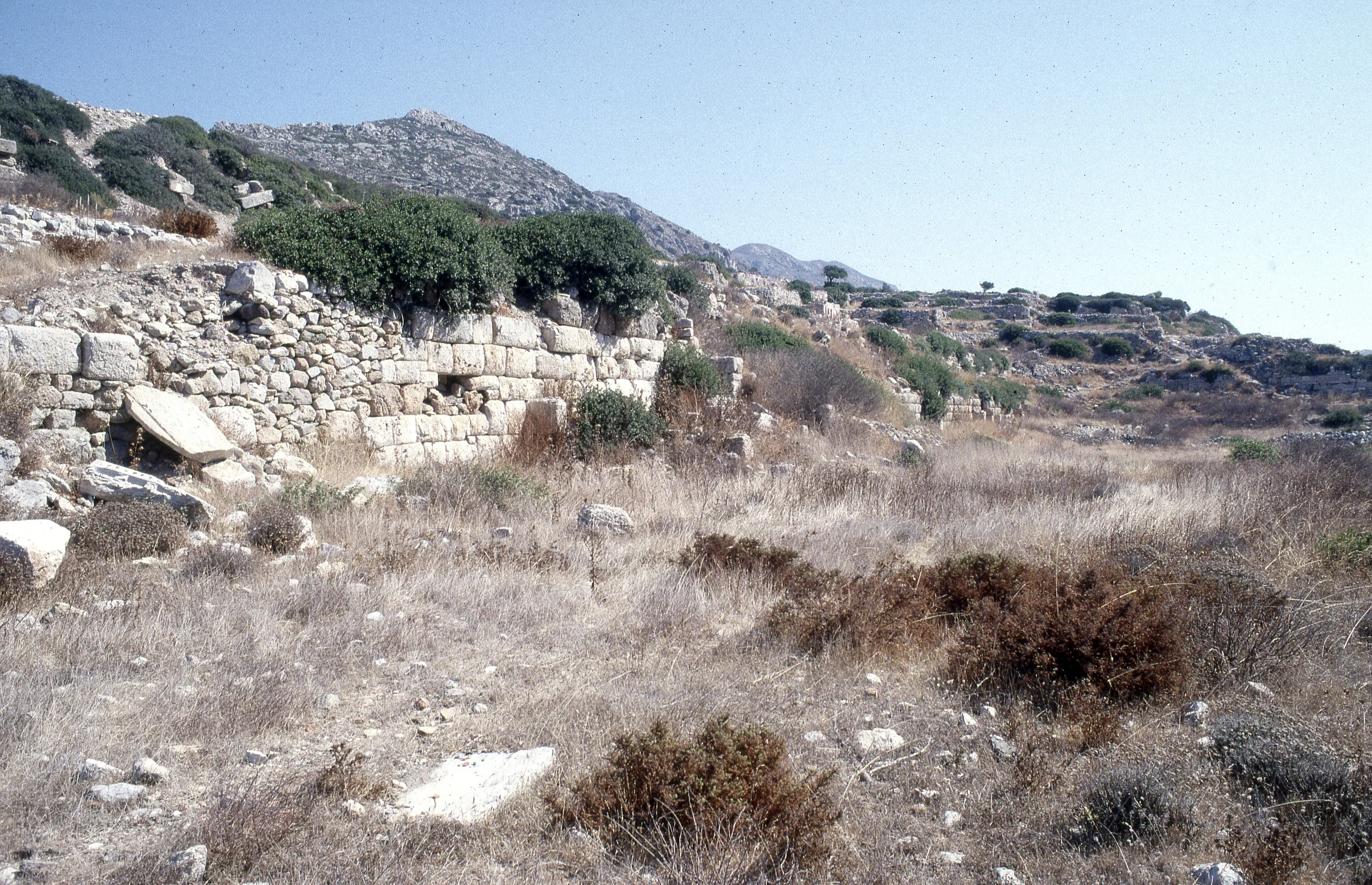
Visitors reach the site through Yazı quarter, Tekirburun locality, in Datça. The city had two parts, a mainland section and an island section called Kap Krio. Strabo described Knidos as a double city, and its mountainous ground forced it onto terraces that climb from the shore toward the acropolis like the seats of a theatre. The strait separating island from mainland was later packed with fill, producing two separate harbours, one used for warships and the other for merchant vessels.
History
Knidos was one of the principal cities of Caria and, after Halicarnassus, the second known Dorian city. Dorians from the Peloponnese founded it soon after the settlements on Rhodes and Kos, and it belonged to the Dorian Hexapolis, a league of six Dorian cities. In the late 4th century BCE the peninsula's political centre moved from modern Burgaz to Tekir; the older settlement at Burgaz is called Palaia Knidos, or Old Knidos.
From the 6th century BCE the city held an important place in the Greek world. Trade flourished and its wine was famous and widely exported. It was a city of culture too: the Aphrodite carved for Knidos by the 4th-century BCE sculptor Praxiteles counts as a celebrated work and added to the city's renown. Digging on Kap Krio has revealed rows of shops, workshops and houses laid out on terraces, and the area was inhabited until about the 5th century CE.
Principal monuments
City plan and harbours
Knidos was laid out on the grid system of Hippodamus: four broad, parallel east-west streets are crossed by a steep north-south street. Where the terrain demanded, streets meet by stairs rather than directly. The breakwater that closed the harbour mouth survives in fragments, and a tower still stands at the northern harbour.
Terraces and temples
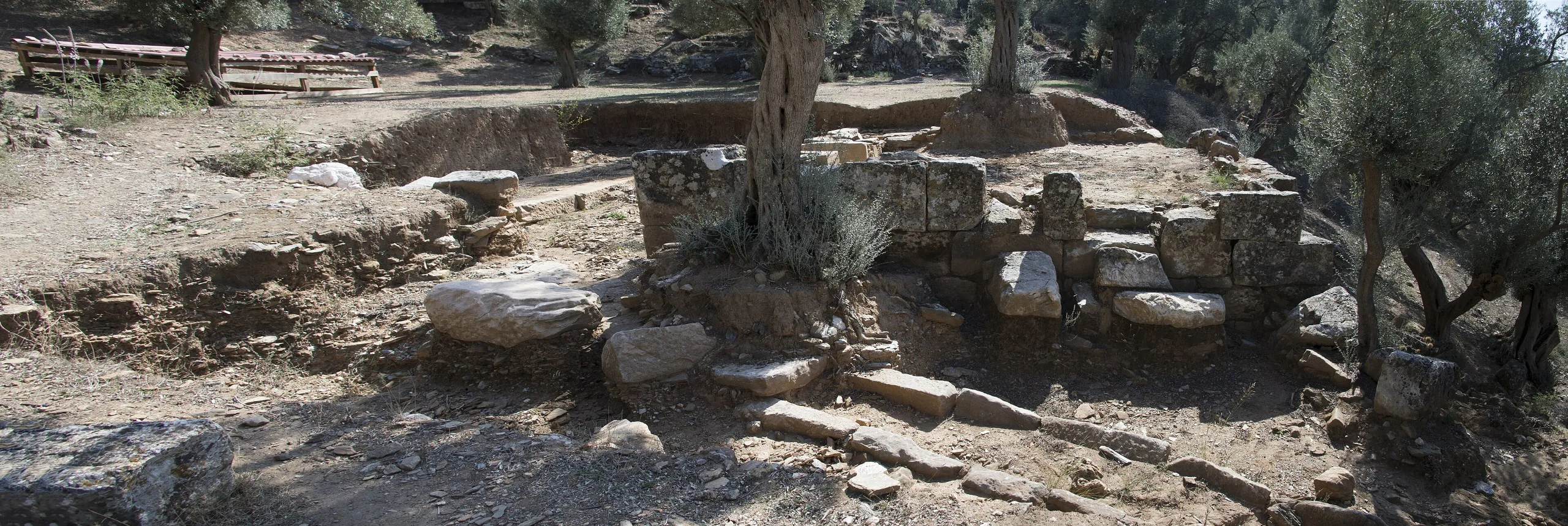
On the mainland are the acropolis and the walls that enclosed the city. To the east lie the Sanctuary of Demeter and the large theatre. A Corinthian temple stands in the north-east, and west of it is the Round Temple Terrace, named after the foundations of a circular building. As the highest terrace, it is seen from everywhere in the city and sees everywhere in turn, which led I. C. Love to identify it as the famous Temple of Aphrodite. Research in recent years has shown that the building has nothing to do with Aphrodite and was dedicated to another god.
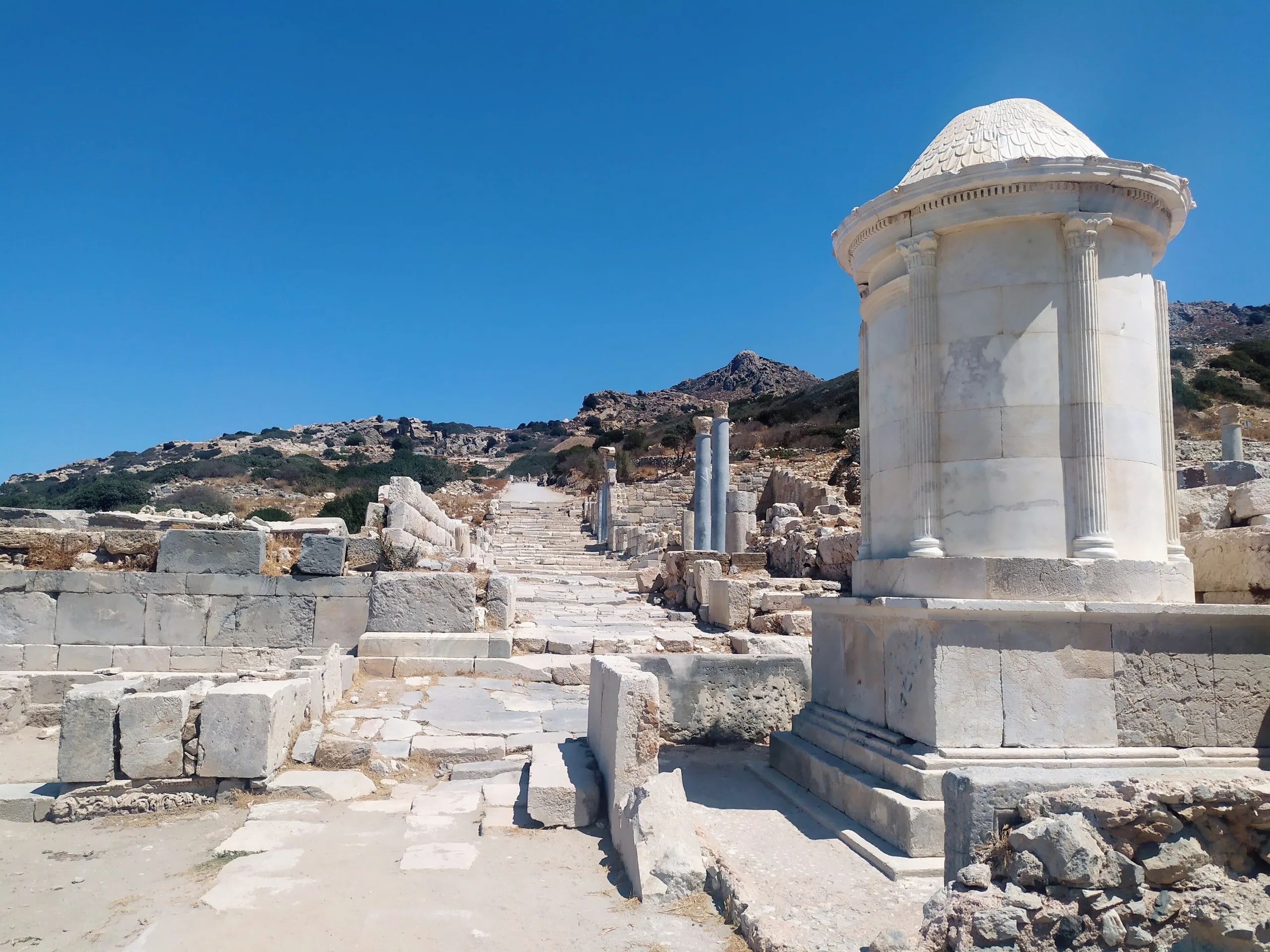
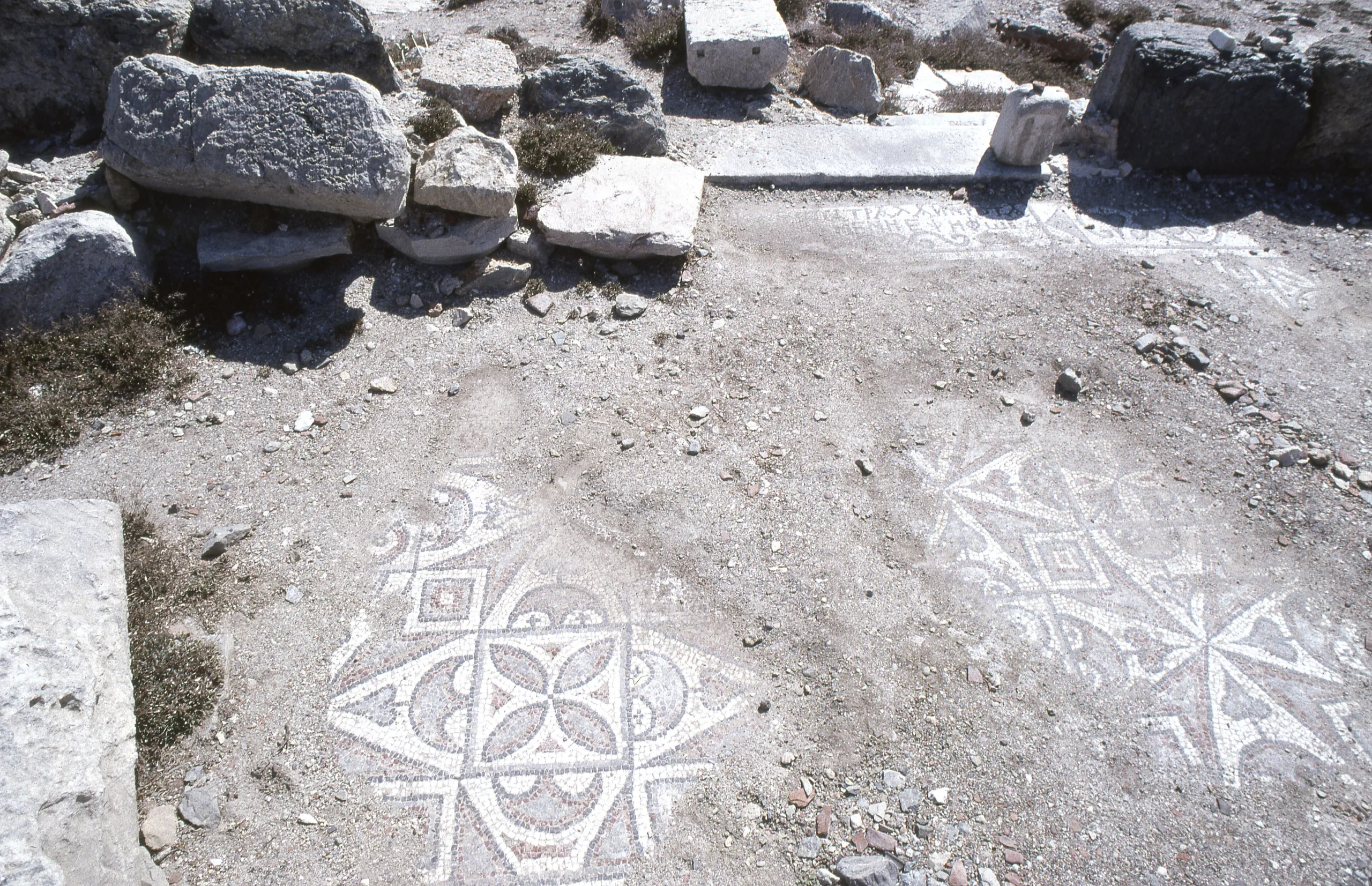
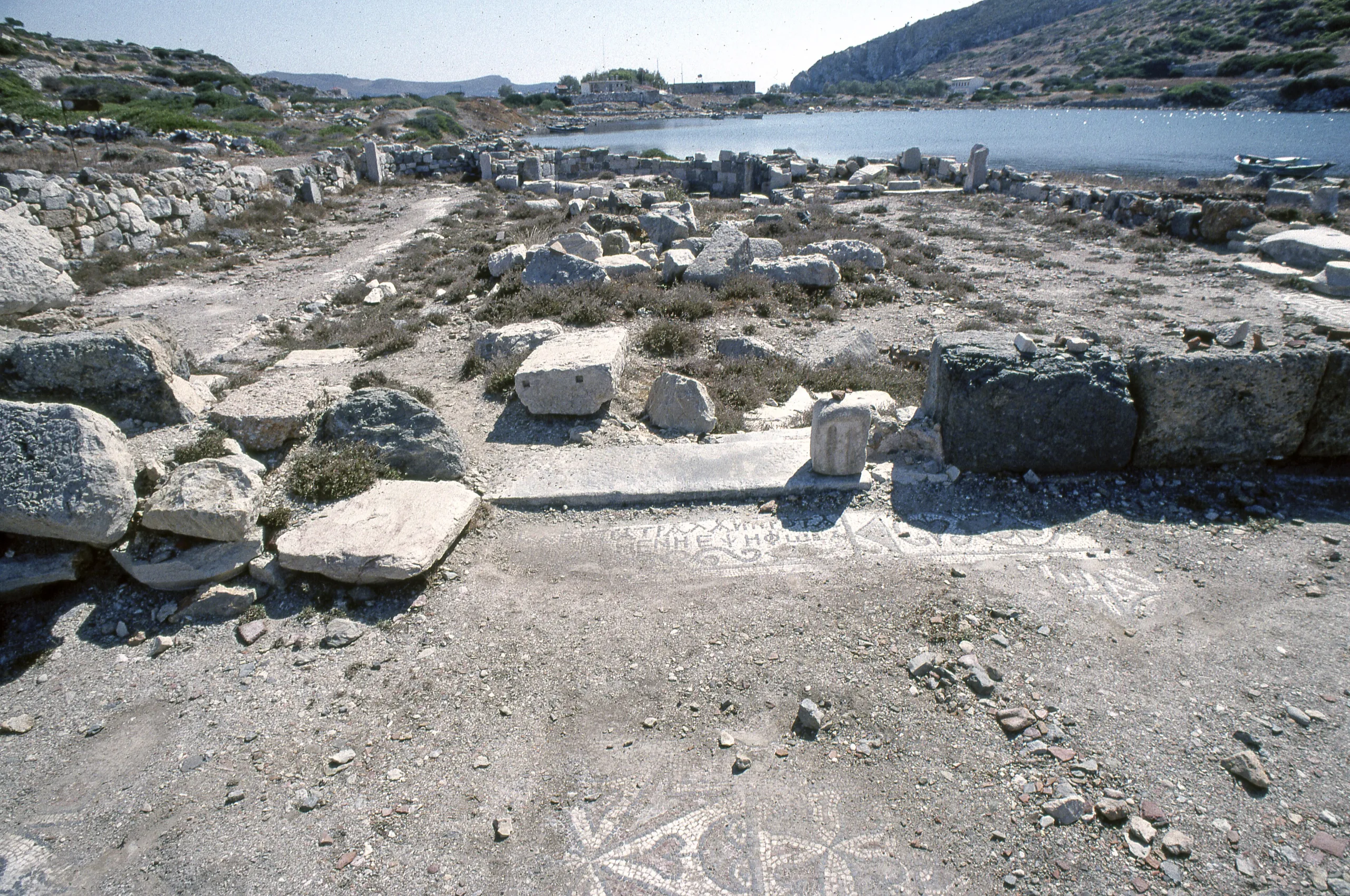
Directly below is the Apollo Terrace, where the Apollo Karneios festival took place, with the public watching from seats on its north side. A grand Ionic propylon, or monumental gateway, links the two terraces, and the city's main street runs east from it. Part of this street was cleared in 1995-1996, and a large drain was found beneath it. South of the Apollo Terrace only the foundations remain of the Pink Temple, named for the colour of its local stone and later used as a church. The Dionysos Terrace north of the large harbour takes its name from a temple of Dionysos that was also turned into a church. Seven churches are known in the city; one has Arabic writing scratched on a floor block, and several have mosaic floors. To the east lies a Hellenistic villa with well-preserved frescoes, to the south an odeion (a small roofed hall for music and meetings), and north of that a Sanctuary of the Muses.
Stoa, Harbour Street and fountain
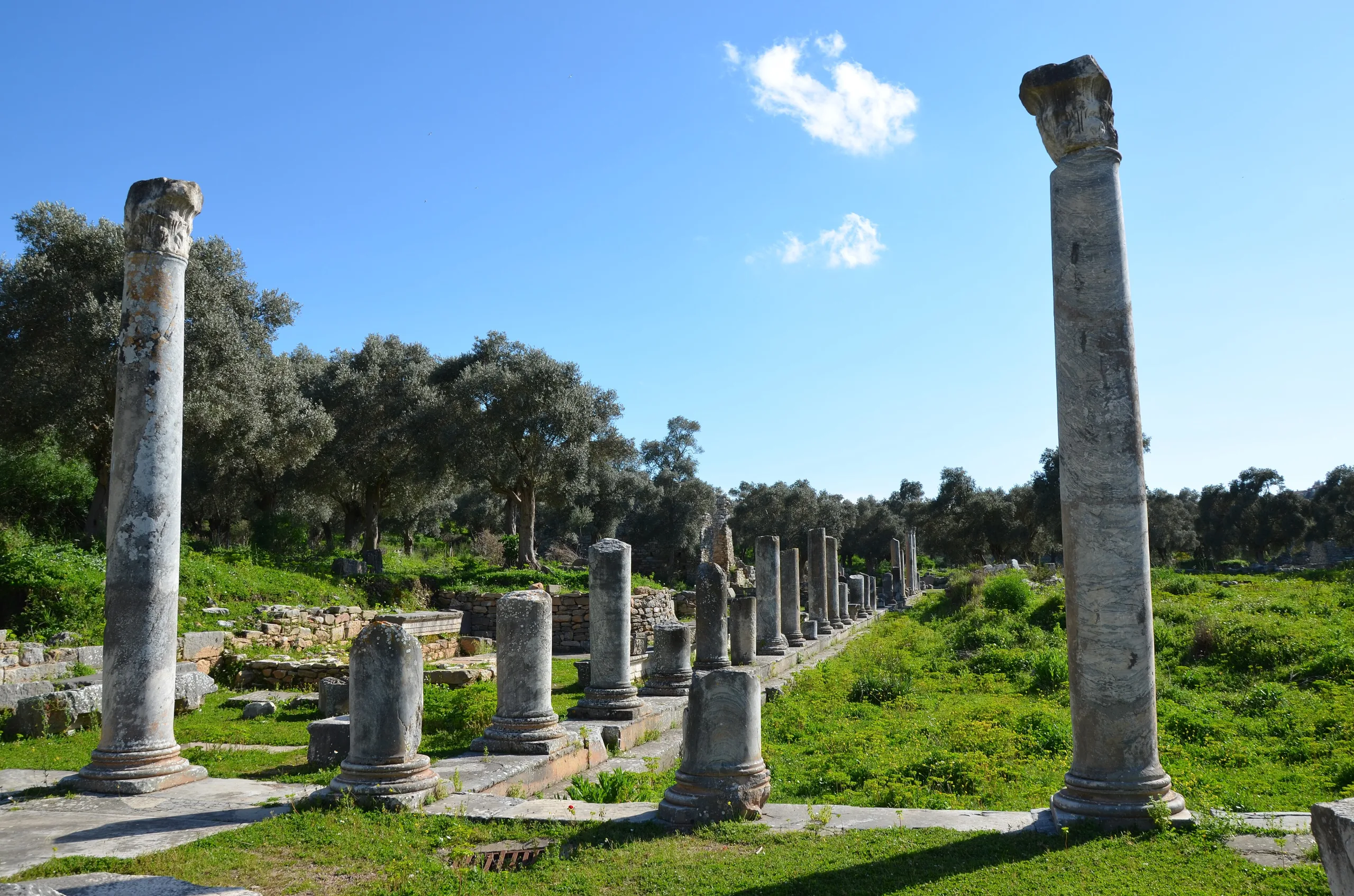
A stoa (columned gallery) runs from beside the small theatre to Harbour Street; its outer face was entirely clad in marble, as the many slabs show, and decorated with opus sectile panels cut from coloured stone. Marble plates inscribed Aristokleidas and Adriano were found, most likely referring to Antoninus Pius and dating a restoration of the stoa. Finds from it run from the early Hellenistic period to the 2nd century CE and include lamps, coins, kitchen vessels and statue fragments. Harbour Street climbs from the small harbour to the propylon, about 5 m wide and paved with square and rectangular blocks. A fountain was uncovered south of it, and its inscription says Boulakrates, the city's water superintendent, had it built and gave it to the public. The necropolis lies at the eastern entrance and spreads over about 7 km.
Excavation and research
Many travellers visited the peninsula in the late 19th and early 20th centuries: Benndorf and Niemann in 1881, Bent in 1888, Myres in 1893, Cousin in 1897 and Philippson in 1904. W. M. Leake had started the research for the Society of Dilettanti in the 19th century. The first major excavation was C. Newton's for the British Museum in 1857-59, and many finds went to London. Iris Cornelia Love worked for Long Island University from 1967 to 1977, Prof. Dr. Ramazan Özgan of Selçuk University from 1988 to 2006, and in 2014 work continued under Assoc. Prof. Dr. M. Ertekin Doksanaltı. The stoa has been under excavation since 1996.
Visiting
The Müzekart is valid for Turkish citizens. Hours and fees change, so check the official page. Bodrum Ancient Theatre and the Marmaris Museum are listed as nearby stops.
Gallery

Frequently asked questions
Where is Knidos?
Why does Knidos have two harbours?
How was Knidos planned?
Has the Temple of Aphrodite been found at Knidos?
Who has excavated Knidos?
What was Knidos famous for?
Sources (13)
- Muğla Knidos Örenyeri / Knidos (TR ve EN sayfaları) — T.C. Kültür ve Turizm Bakanlığı, Müzeler ve Ören Yerleri
- Knidos Antik Kenti - Muğla (Gezilecek Yerler; kaynak: Muğla İl Kültür ve Turizm Müdürlüğü) — T.C. Kültür ve Turizm Bakanlığı, Kültür Portalı
- Knidos (Wikidata Q690575), P625 koordinatı — Wikidata
- Cnidus (Burgaz) (Pleiades place 599576) — Pleiades
Photo credits
- Photo: Nevit Dilmen ( talk ), CC BY-SA 3.0 — Wikimedia Commons (resized)
- Photo: Tischbeinahe, CC BY-SA 3.0 — Wikimedia Commons (resized)
- Photo: Nevit Dilmen, CC BY-SA 3.0 — Wikimedia Commons (resized)
- Photo: Tevfik Teker, CC BY-SA 4.0 — Wikimedia Commons (resized)
- Photo: Tevfik Teker, CC BY-SA 4.0 — Wikimedia Commons (resized)
- Photo: Dosseman, CC BY-SA 4.0 — Wikimedia Commons (resized)
- Photo: Dosseman, CC BY-SA 4.0 — Wikimedia Commons (resized)
- Photo: Dosseman, CC BY-SA 4.0 — Wikimedia Commons (resized)
- Photo: Dosseman, CC BY-SA 4.0 — Wikimedia Commons (resized)