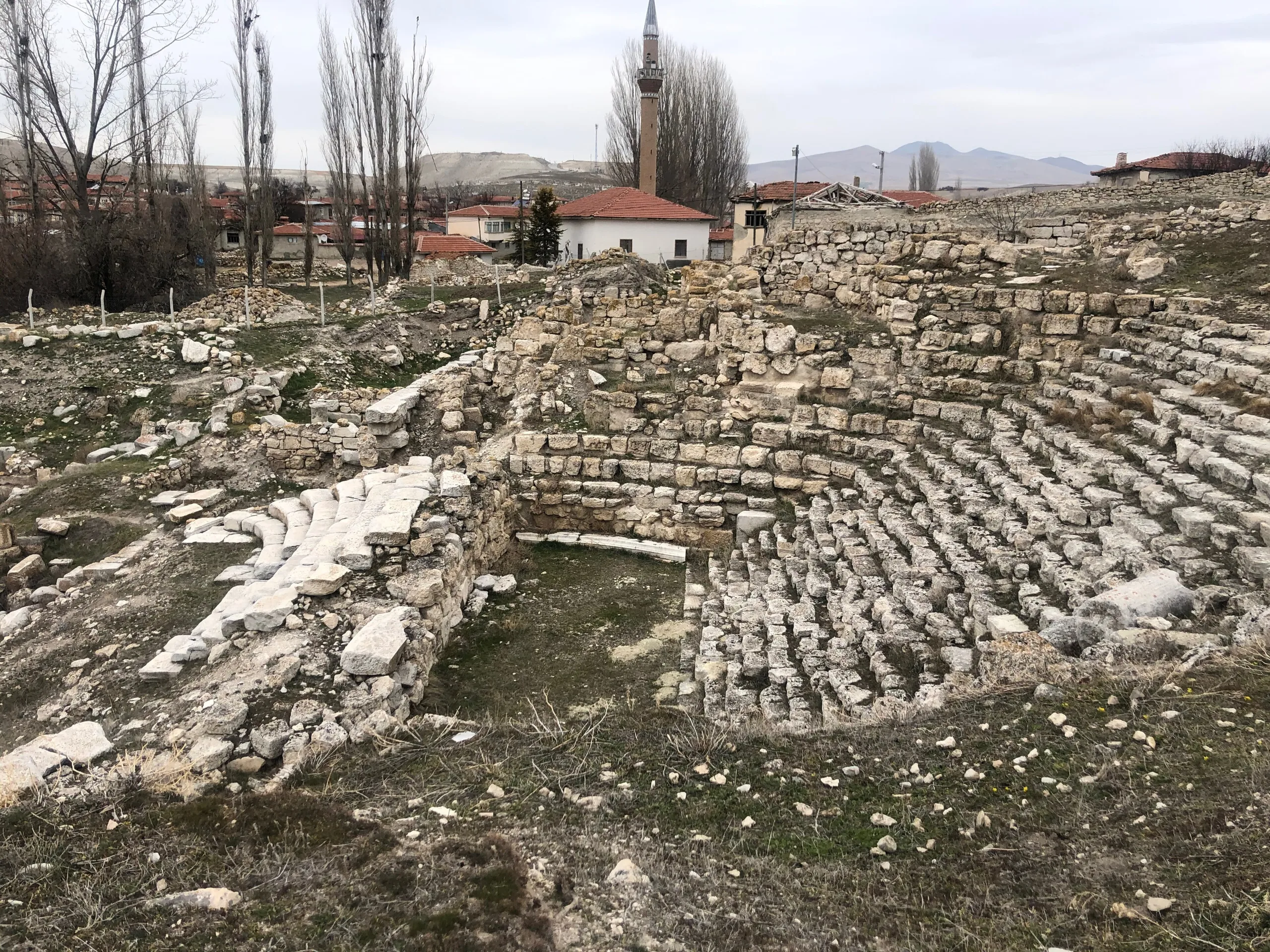
Pessinus is an ancient city of Phrygian origin in Ballıhisar, Eskişehir, known for the Mother Goddess cult, a Roman imperial temple and the Theatre with Steps.
Pessinus is an ancient city located in Turkey, Eskisehir. Main periods: Roman Period.
Pessinus stands in the village of Ballıhisar, in Sivrihisar district of Eskişehir province. It began as a Phrygian settlement and is best known as the holy city of the Anatolian Mother Goddess, called Kybele or Agdistis. Under the Roman Empire it ranked among the notable towns of Galatia, and the ministry places its most splendid period in the reign of Augustus.
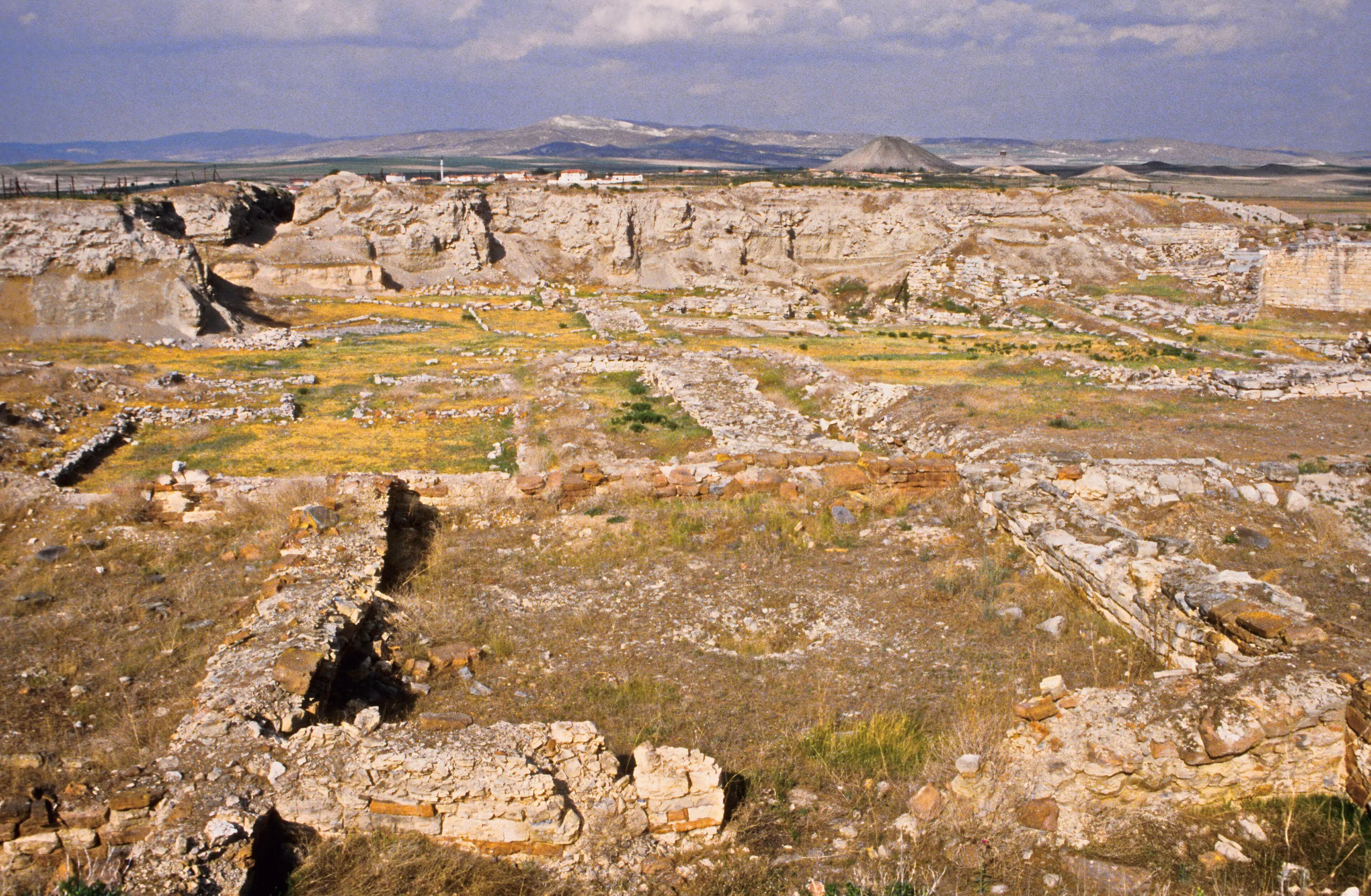
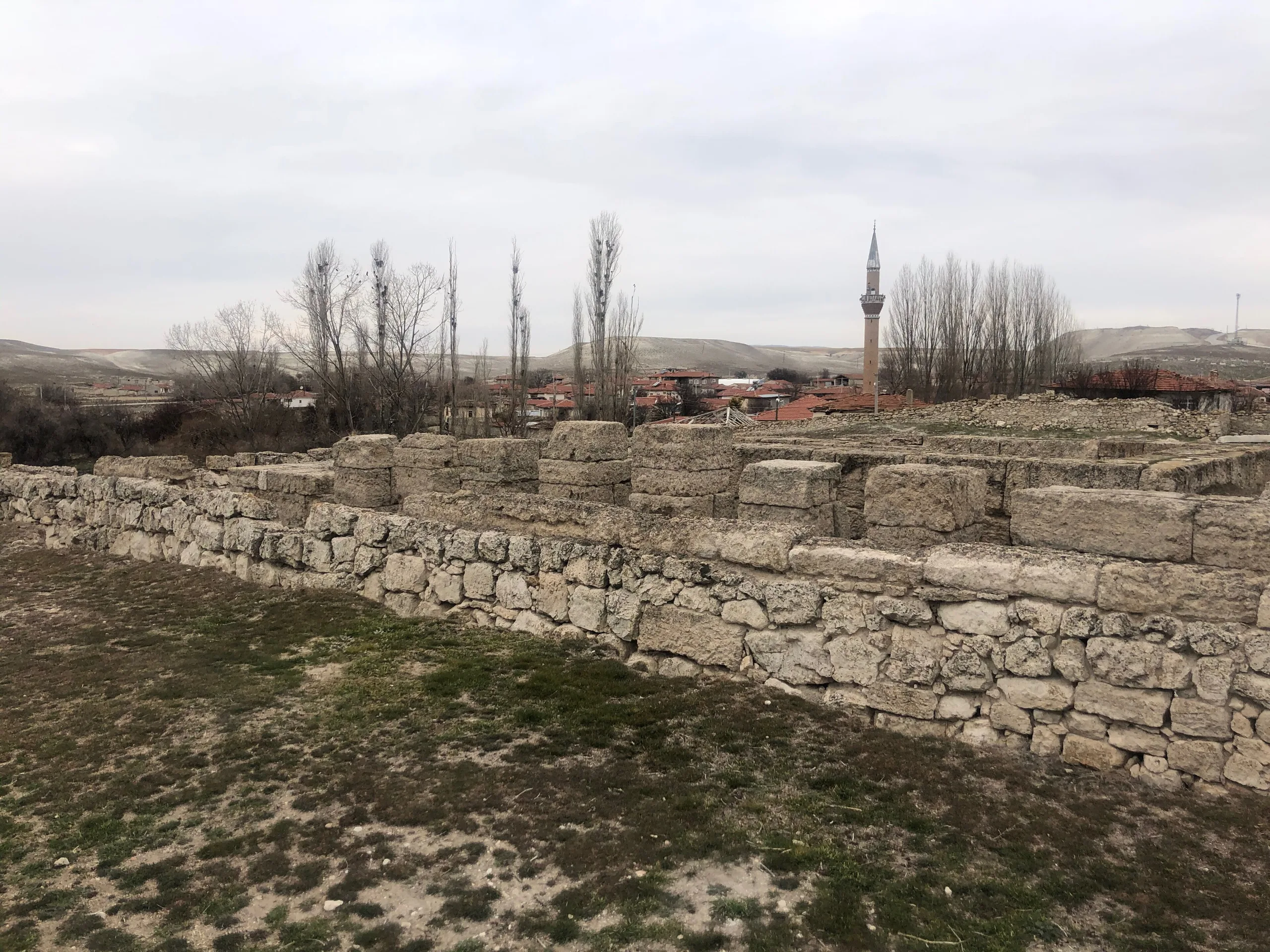
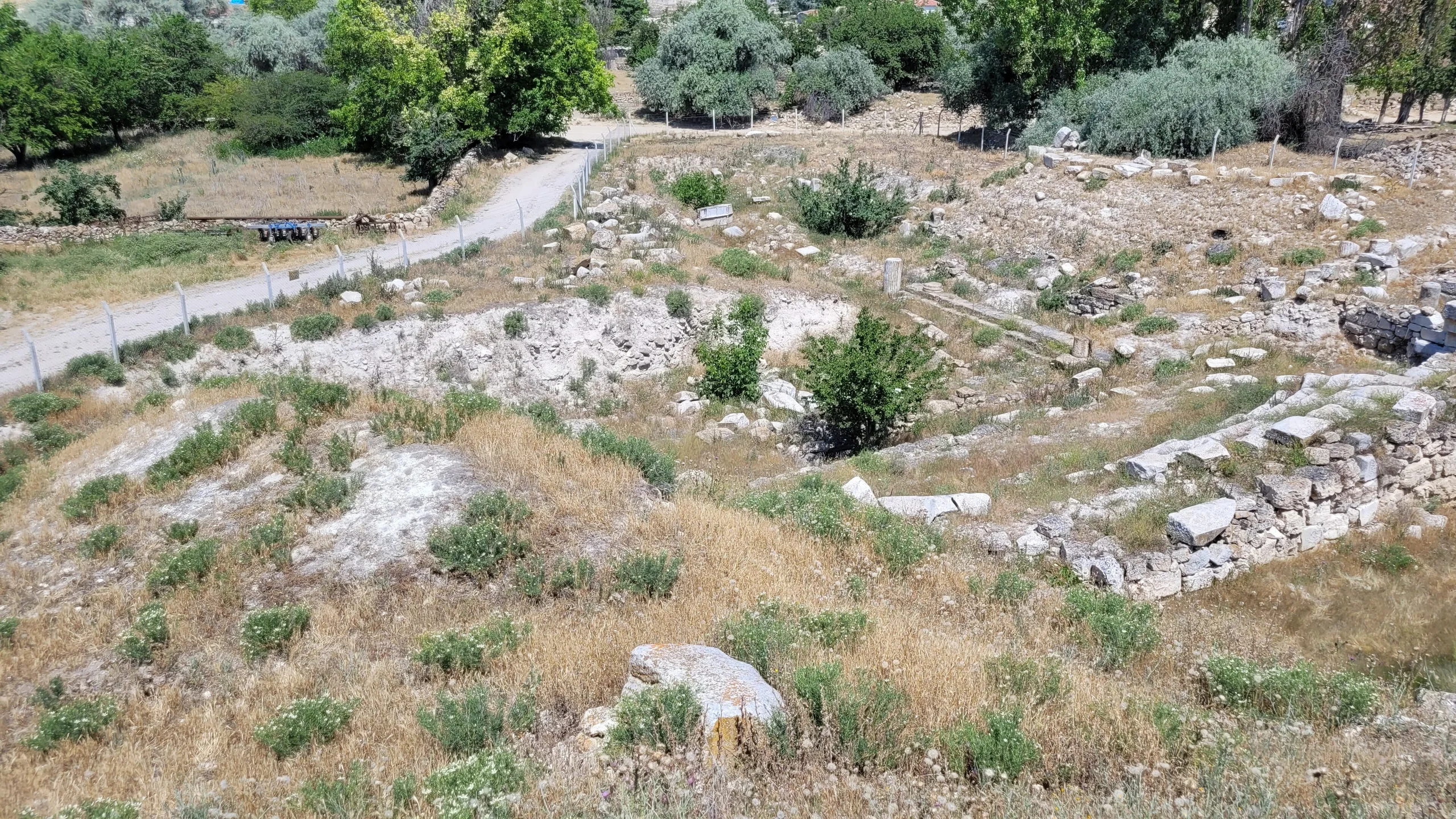
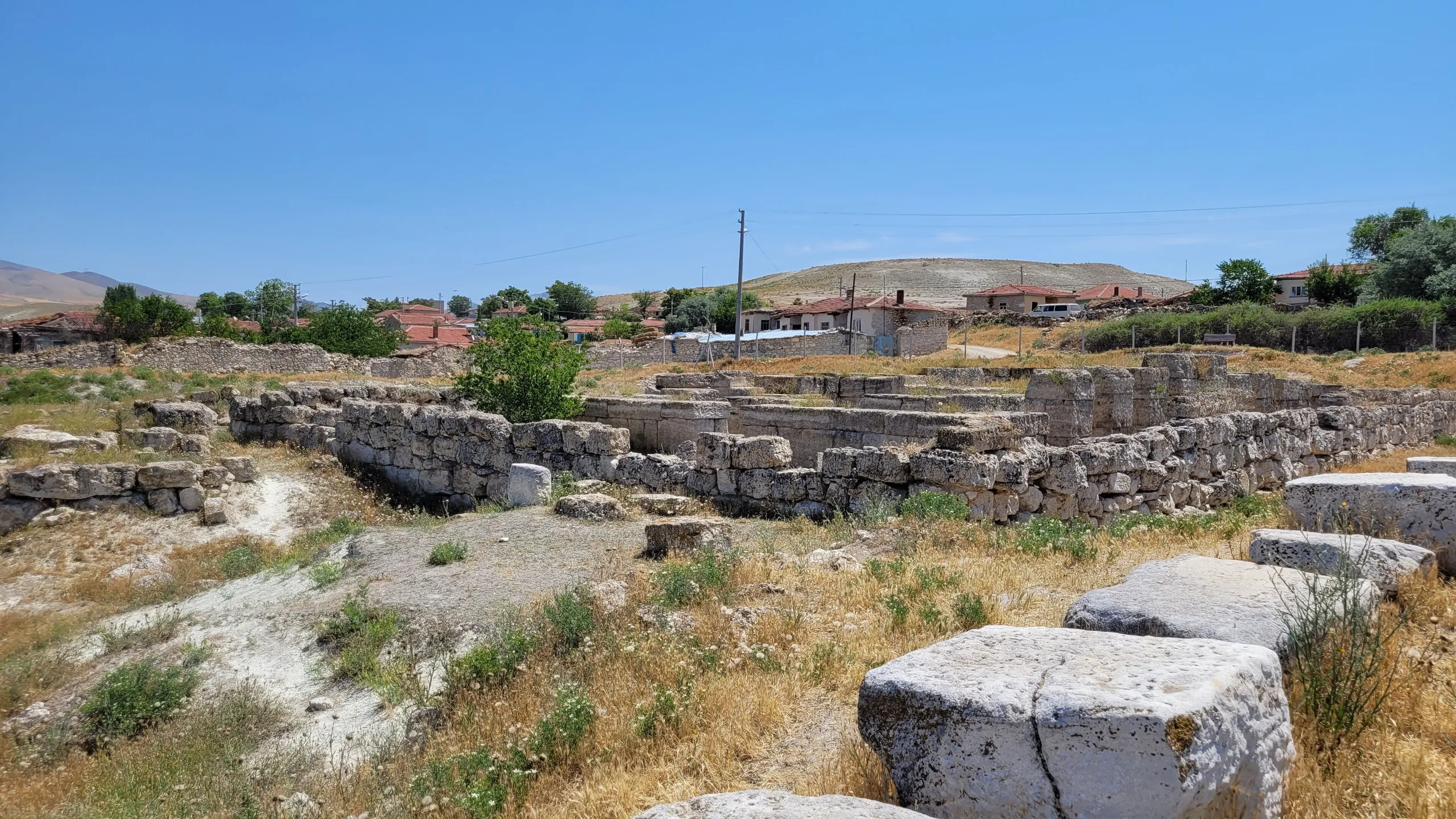
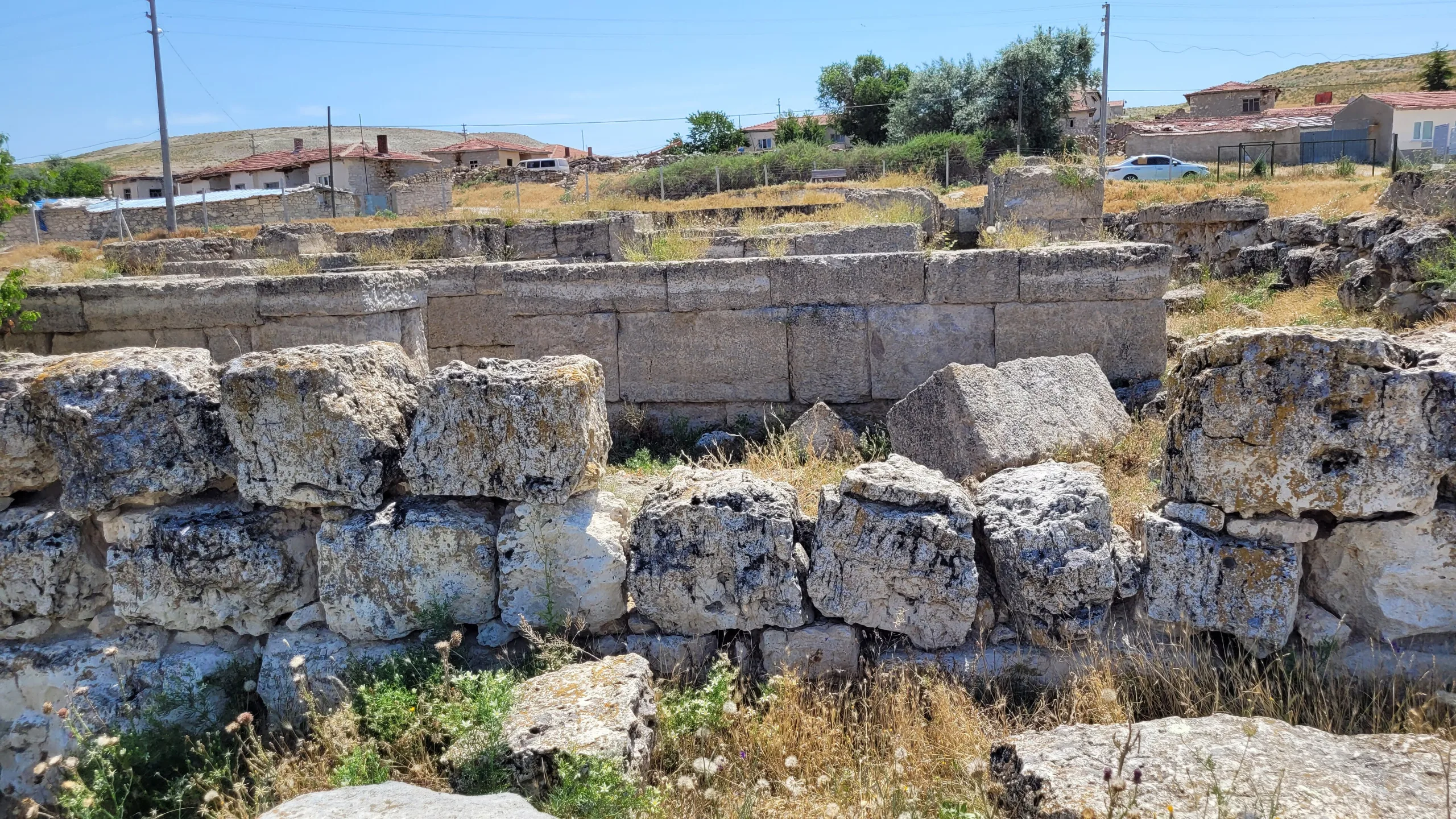
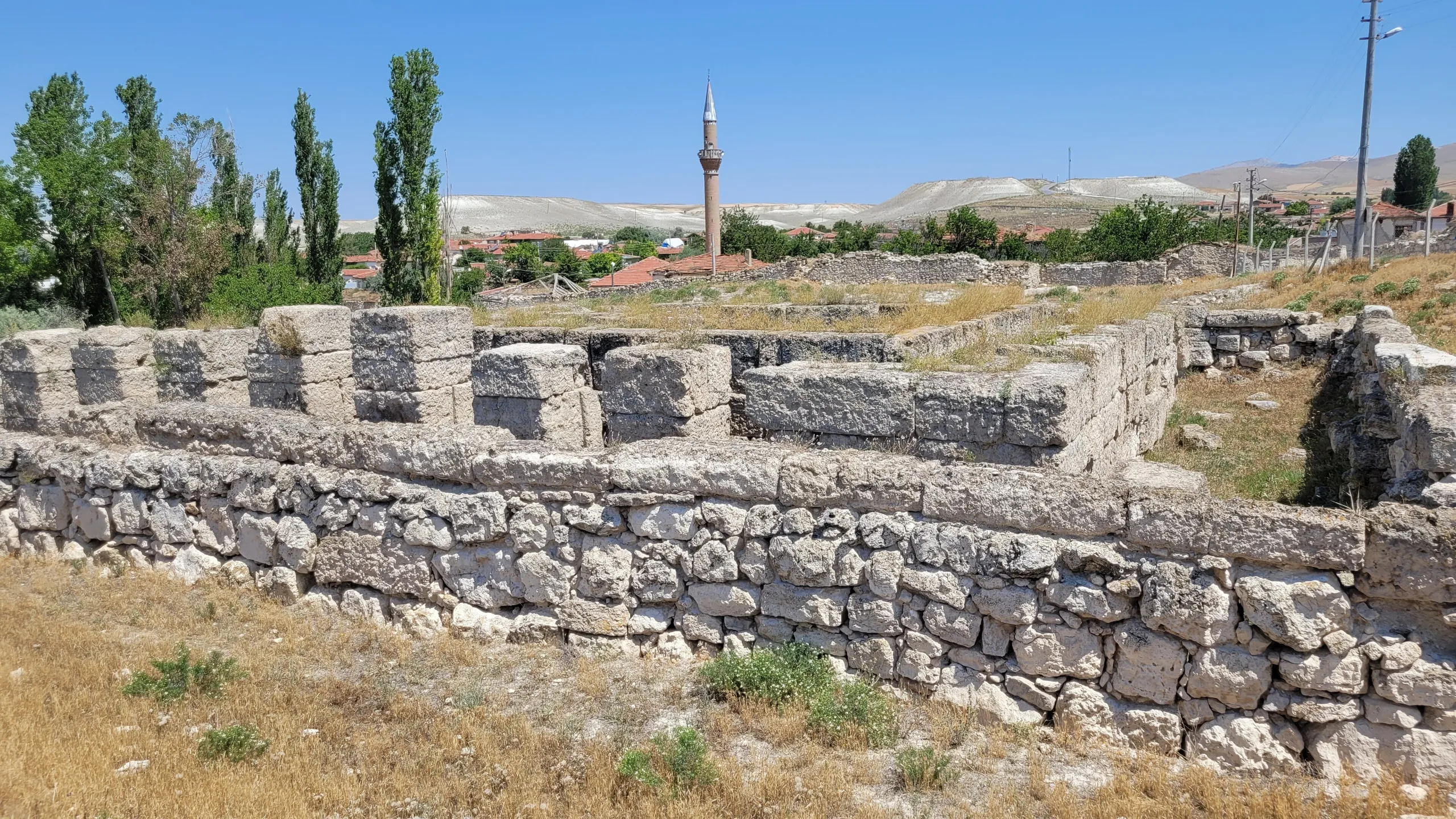
The visible remains are mainly Roman: an imperial-cult temple finished after Augustus died, the Theatre with Steps, an agora and a canal beside the Gallos river. Most of the ancient town still lies under the modern village.
Location and setting
The ministry puts the site about 13 km south-west of Sivrihisar, whereas Yurtsever says roughly 16 km south. Pleiades lists the names Pessinous, Iustinianoupolis, Ballıhisar and Latin Pesinunte, and attaches the place to Galatia. According to Kortanoğlu an official decision to move the village was taken but never carried out, which is one of the main obstacles to large-scale excavation.
History
A Hittite potsherd of 1600-1500 BCE from the temple area is the earliest trace recorded so far (Kortanoğlu), and Yurtsever mentions a hearth of about 1500 BCE. The land was Phrygian first; the Galatians crossed into Anatolia in 278/277 BCE, settled around Ankyra and gave their name to the region. Kortanoğlu, citing Strabo, writes that Pessinus was the greatest trading place of its part of the world, that its priests had once been rulers, and that the Attalid kings added a temple and white marble porticoes to the sanctuary.
Yurtsever notes secret letters exchanged in 163-156 BCE between the Pergamene king and the goddess's high priests, which may have encouraged building in town, and dates Doric capitals of a peristyle building to Attalos II (159-138 BCE). Pessinus lost money when Rome annexed Pergamon in 133 BCE.
Kortanoğlu relates that during the Second Punic War Roman envoys obtained the goddess's idol, a meteoric stone, with King Attalos I's help; it reached Rome in 204 BCE, and the Palatine temple was completed in 191 BCE. Augustus created the province of Galatia in 25 BCE, and Pessinus lay within it.
The ministry calls the age of Augustus the high point. The temple was begun after his death and completed under Tiberius (14-37 CE); the agora belongs to Claudius (41-54), the bouleuterion to the Severan period (193-235) and the theatre east of the town to Hadrian (117-138). Kortanoğlu adds that the temple appears on the city's imperial coins and that Pessinus never held the neokoros title, which some read as respect for the goddess. The ministry says the city began to lose importance in the ninth century CE and was abandoned a few centuries later. Lambrechts thought the hollow cut into the hill for the stair-theatre was filled with temple rubble in the second half of the fourth century, with a road laid over the fill in late Roman times.
People and episodes
Pierre Lambrechts, J. Devreker and Gocha R. Tsetskhladze dominate the excavation story, with Adem Yurtsever as scientific coordinator from 2025. Among the ancients, Strabo is the key voice; Consul Marius is said to have visited the temple around 101 BCE, crediting the goddess for his victory over the Germanic tribes, and legend ties the city to King Midas.
Principal monuments
The imperial-cult temple
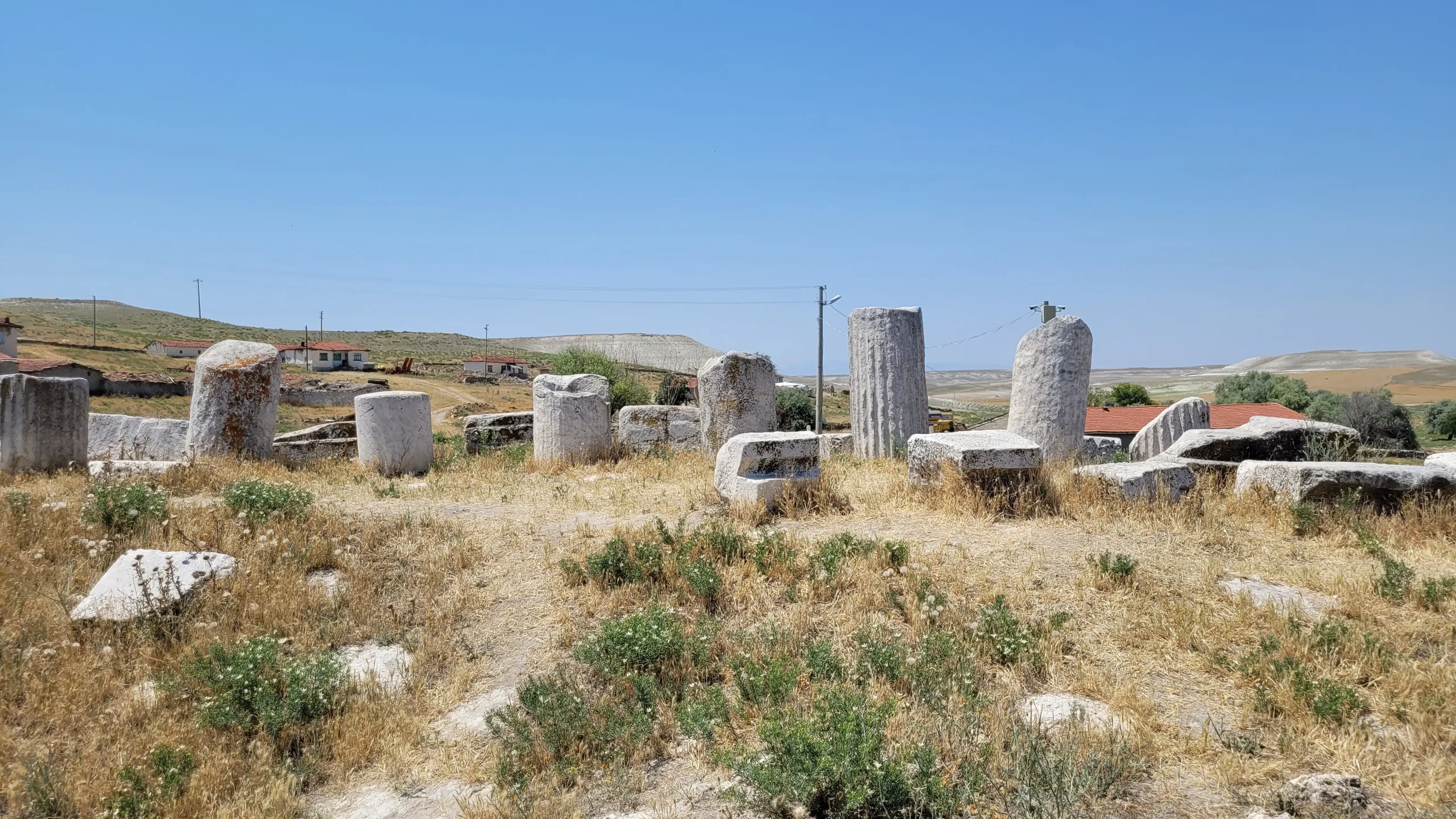
The Corinthian temple had a peripteral plan; it is thought to have had six columns across the front, eleven along the sides and two between the antae. Its outer foundations measure about 24.10 by 13.70 m, and the cella and porch share a foundation of 17.15 by 9.15 m on a podium of five or six steps. Column drums, capitals, architrave, frieze and cornice pieces lie around the temple and in the village. Lambrechts found that the temple's central axis matches that of the monumental stair, so the two formed a single architectural ensemble.
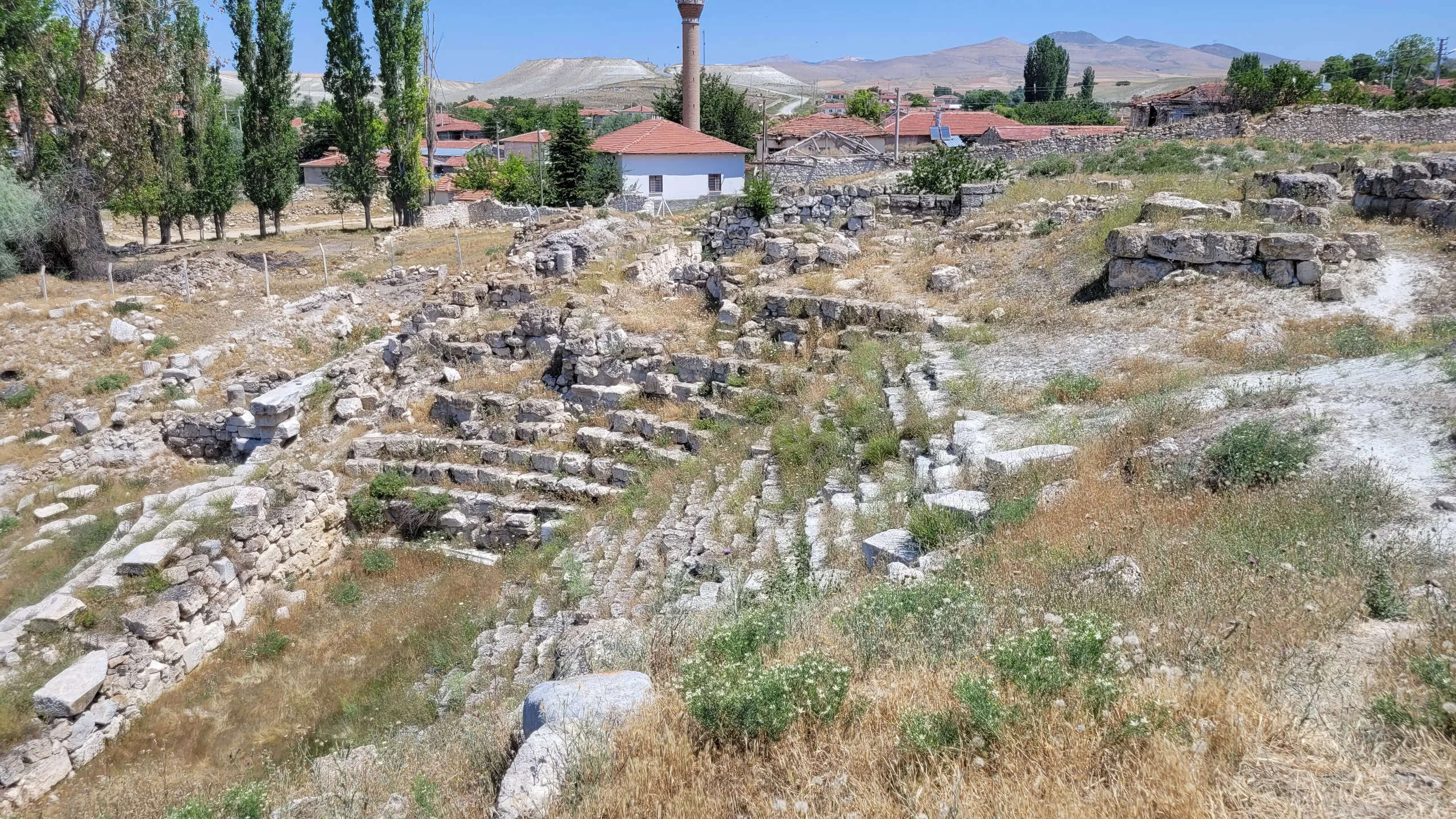
The Theatre with Steps
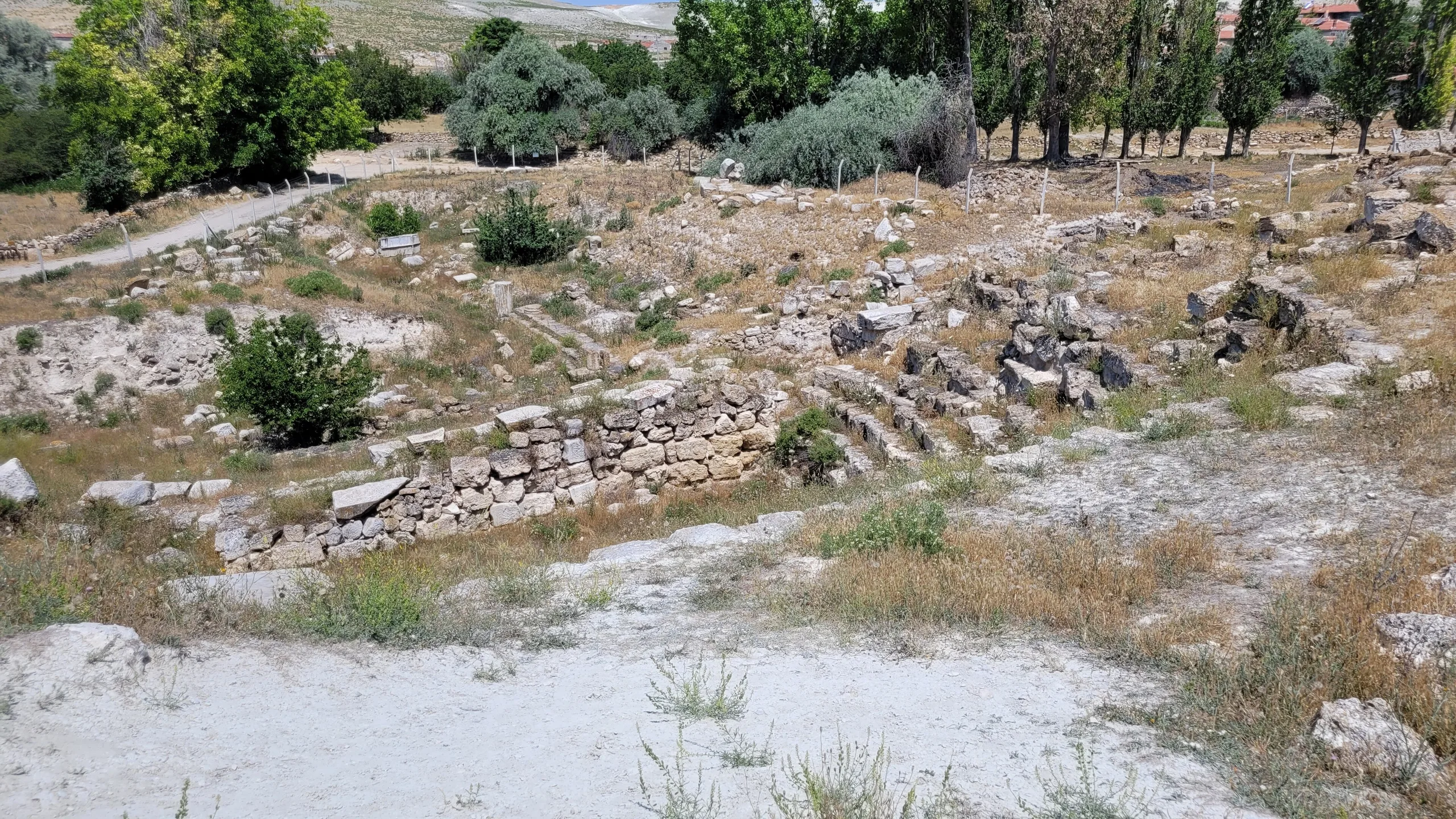
Named for its mix of monumental stair and theatre, this structure has an orchestra at the foot for religious or other performances and links the temple with the agora below. Twenty-six of the original thirty steps survive, and it is 11.51 m wide at the bottom and 11.75 m at the top. Lambrechts cleared 24 steps in 1971; each was 26 cm high, and 52 cm marble blocks gave one seat per two steps.
The bouleuterion
Dated to the Severan period and also called the Severus Theatre, it was built on top of the orchestra of the Theatre with Steps. It is elliptical, with marble seating in six tiers and a stair through the centre, and probably served the town council.
The agora and colonnaded street
Built under Claudius, the agora is a square with porticoes on three sides below the temple and stair; the excavated part is 32 by 26.38 m, and it joins the colonnaded street on the Gallos bank. In 1971 Lambrechts uncovered two wings of a colonnade, entered by three steps and aligned with the temple. A great fire destroyed it, and a marble statue head with burn marks lay in the 20-30 cm ash layer.
The Gallos canal
The ministry brochure describes a seven-step canal of the Augustan age, 11-13 m wide and 500 m long, which carried water from the Gallos river east to west through the town and was enlarged from the first to the third century CE (the ministry's English page gives BCE). Kortanoğlu says it all but split the city in two, and Lambrechts found the point about 50 m south of the village mosque where the ancient canal turns abruptly west.
The Doric peristyle building (Sector H)
Yurtsever studies Doric capitals of sandstone from this peristyle building in front of the temple precinct; since it does not fit a classic gymnasium or palaestra, he suggests a gathering place for the city's elite and priests.
The Hadrianic theatre
On the slope of the hill east of the town, the theatre is credited by the ministry with 8,000 seats, though what shows today is just the hollow of the seating bowl and some surviving rows; Kortanoğlu adds that most of it has been dismantled.
Excavation history
Texier and Humann visited Pessinus in the nineteenth century and Bittel in the twentieth. Systematic excavation began in 1967 under Pierre Lambrechts of Ghent University, who aimed to find the Mother Goddess temple; he ran seven campaigns up to 1973 and stopped on his death. J. Devreker resumed in 1987 and continued until his retirement in 2009 (the ministry says 2008). The Ghent team's 2003 volume of 417 pages, Excavations in Pessinus: The So-Called Acropolis, covers the area from Hellenistic and Roman cemetery to Byzantine castle. In 2009 Gocha Tsetskhladze of the University of Melbourne took over. Kortanoğlu says there was no dig in 2012 and that 2013 was Melbourne's last season, whereas Yurtsever has work continuing to 2015. After about twelve years without excavation, work restarted in 2025 under the Eskişehir Museum, coordinated scientifically by Adem Yurtsever.
Lambrechts's fifth campaign, from 5 July to 10 September 1971, employed about 40 workers and covered the temple (B), the canal (D) and the new area H, where five phases of habitation appeared; a storm on 11 August ruined much of the canal work.
Finds and museums
Finds from the dig and from the area around the village can be seen in an open-air display in Ballıhisar and in the Eti Archaeology Museum in Eskişehir. Lambrechts also records a Cupid carved from horn and a Roman funerary monument near the Sakarya road, which suggests a Roman cemetery.
Myth and ancient writers
Kortanoğlu summarises the story as told by Diodorus, Strabo, Virgil, Ovid and Pausanias. Agdistis, a hermaphrodite, is born from the seed of Zeus; Dionysos castrates this being, and a tree grows from the blood. A daughter of the river god Sangarios lays the fruit on her breast and bears Attis. Midas, king of Pessinus, plans to marry Attis to his daughter, but Agdistis drives Attis mad and he mutilates himself, violets springing from his blood. A priesthood of eunuchs is founded for the goddess, and Strabo says the name Kybele comes from Mount Kybelon. Kortanoğlu stresses that the goddess's own precinct has still not been found.
World Heritage and protection
None of the sources states a protection status or a World Heritage listing for Pessinus. Kortanoğlu's article presents the inscription of nearby Gordion as the result of cooperation among local, national and international partners and says Pessinus could gain similar recognition; it also names the village built over the ancient city as the chief barrier to wider excavation.
Visiting
The ministry page gives the opening times and the address (Ballıhisar Village); consult the official page for current details. It lists the Midas Yazılıkaya site and the Eti Archaeology Museum as nearby places.
Gallery
Frequently asked questions
Where is Pessinus?
Why is Pessinus important?
When was the temple of Pessinus built?
What is the Theatre with Steps?
Who has excavated Pessinus, and is work going on?
Where are the finds from Pessinus displayed?
What remains of the Hadrianic theatre?
How did the Kybele idol reach Rome?
What should I check before visiting Pessinus?
Sources (16)
- Pessinus Antik Kenti / Pessinus Archaeological Site (TR ve EN sayfaları) — T.C. Kültür ve Turizm Bakanlığı, Müzeler ve Ören Yerleri
- Eskişehir Pessinus Archaeological Site (Bakanlık broşürü, İngilizce) — T.C. Kültür ve Turizm Bakanlığı, Genel Müdürlük
- Pessinonte Beşinci Kazı Kampanyası Raporu (Lambrechts, P., 1971) — Pierre Lambrechts, Ghent Üniversitesi kazısı
- Pessinous/Iustinianoupolis (Pleiades place 609500) — Pleiades
- Ana Tanrıça ve Kutsal Kent Pessinus (Kortanoğlu, R. E.), KATMAN Journal of Archaeological Sciences — KATMAN, 2025
- Doric Capitals in Pessinus: A Brief Overview of Pessinus Architectural Activities (Yurtsever, A.), Anatolian Research — Anatolian Research, 2023
- Excavations in Pessinus: The So-Called Acropolis (Devreker, Thoen, Vermeulen et al., Archaeological Reports Ghent University 1, 2003), kitap incelemesi — Journal of Roman Archaeology
Photo credits
- Photo: Raicem, CC BY-SA 4.0 — Wikimedia Commons (resized)
- Photo: Raicem, CC BY-SA 4.0 — Wikimedia Commons (resized)
- Photo: Nabbegat, CC BY 4.0 — Wikimedia Commons (resized)
- Photo: Nabbegat, CC BY 4.0 — Wikimedia Commons (resized)
- Photo: Nabbegat, CC BY 4.0 — Wikimedia Commons (resized)
- Photo: Nabbegat, CC BY 4.0 — Wikimedia Commons (resized)
- Photo: Nabbegat, CC BY 4.0 — Wikimedia Commons (resized)
- Photo: Nabbegat, CC BY 4.0 — Wikimedia Commons (resized)
- Photo: Nabbegat, CC BY 4.0 — Wikimedia Commons (resized)