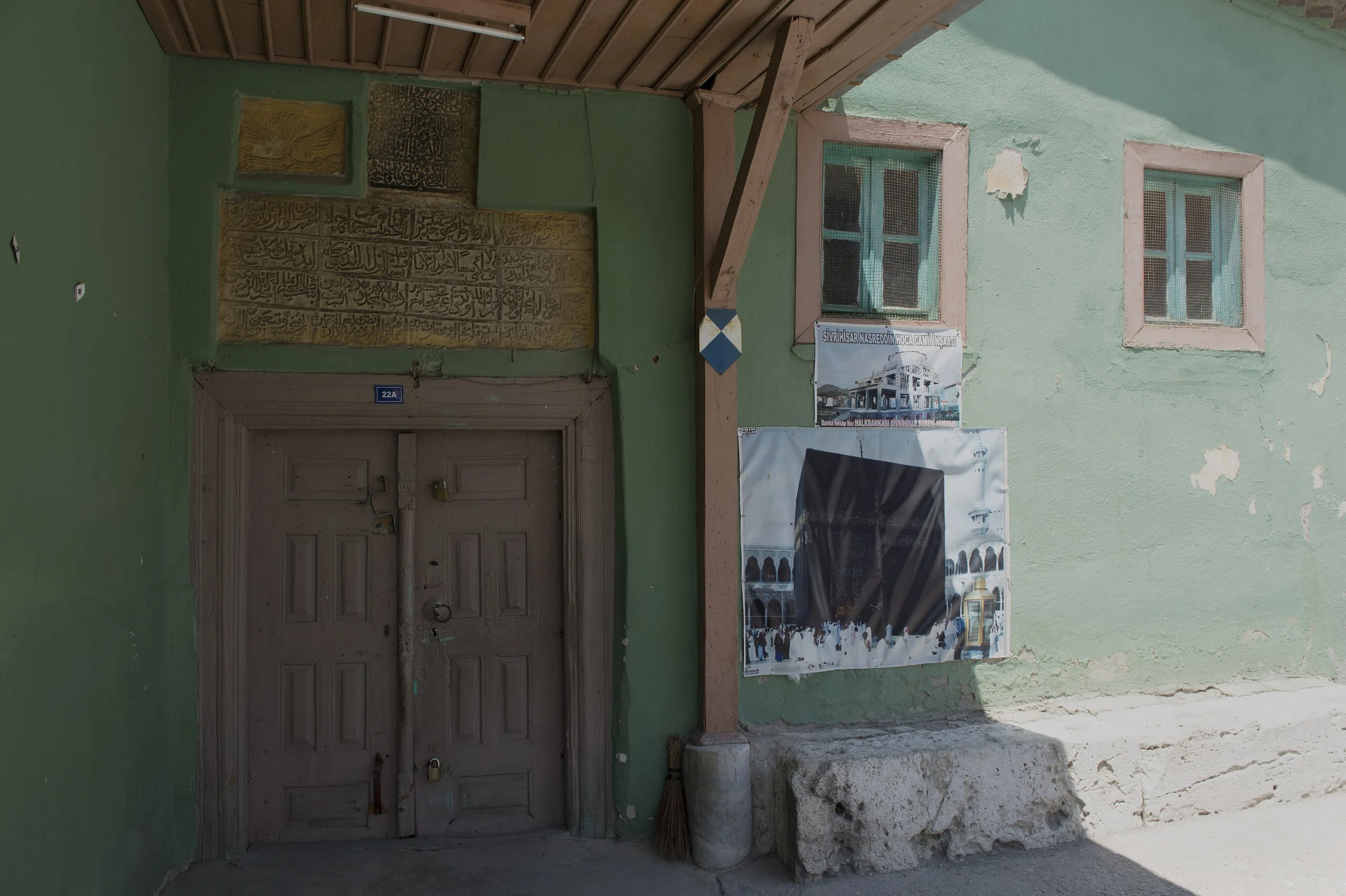
Pisidian Antioch (Pisidia Antiokheia) is a Seleucid-founded city near Yalvaç, Isparta, noted for its Temple of Augustus, theatre and the Basilica of St Paul.
Pisidian Antioch is an ancient city located in Turkey, Isparta. Main periods: Hellenistic Period, Roman Period, Byzantine Period.
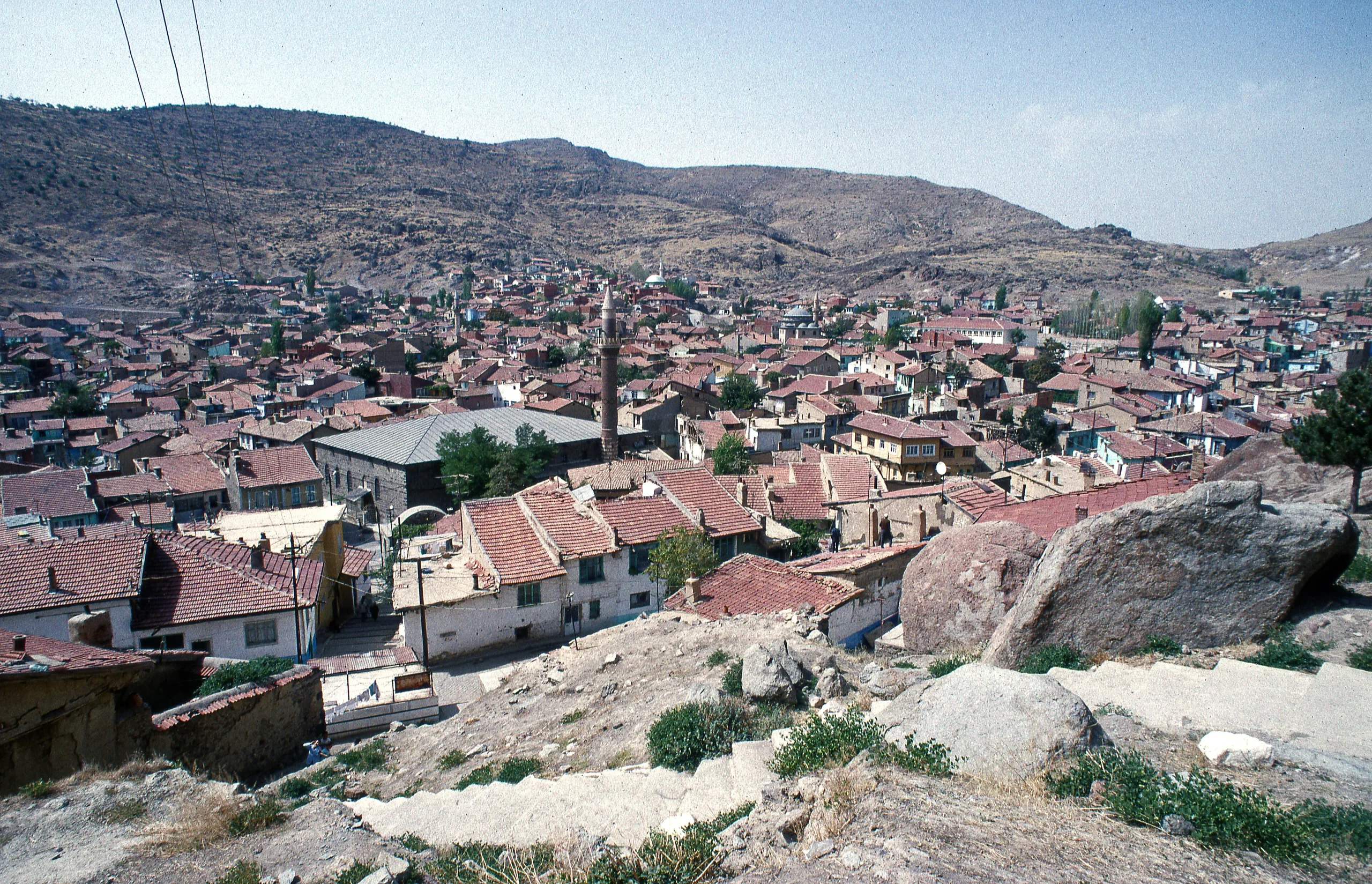
Pisidian Antioch lies in Isparta province, in the Yalvaç district, on fertile land that runs along the southern slopes of the Sultan Mountains. The Ministry of Culture and Tourism puts it about one kilometre north of Yalvaç, while the Culture Portal says north-east of the town. Founded by the Seleucids, the city continued under Rome and Byzantium, and most of the remains visible today come from those two later periods.
History
According to the Ministry's Turkish page, the city was founded after the death of Alexander the Great by the general Seleukos I and his son Antiochos. The same page mentions a theatre built in the Hellenistic period. A scholarly article adds that the city was refounded as a garrison colony under both the Hellenistic kings and the Roman emperors, and that its place on the east-west commercial road, where the Aegean world gives way to central Anatolia, drew in people of many origins. The Culture Portal records Roman and Byzantine building remains on the site.
For the Byzantine centuries, Mehmet Özhanlı's article in the journal Cedrus supplies a frame: the 8th and 9th centuries brought political decline and above all economic hardship, recovery set in during the 10th century, and it lasted into the 12th. Because Saint Paul is said to have visited the city and spread Christianity there, the Culture Portal regards it as a pilgrimage centre and names the Church of St Paul as one of its pilgrim stops.
Layout of the city
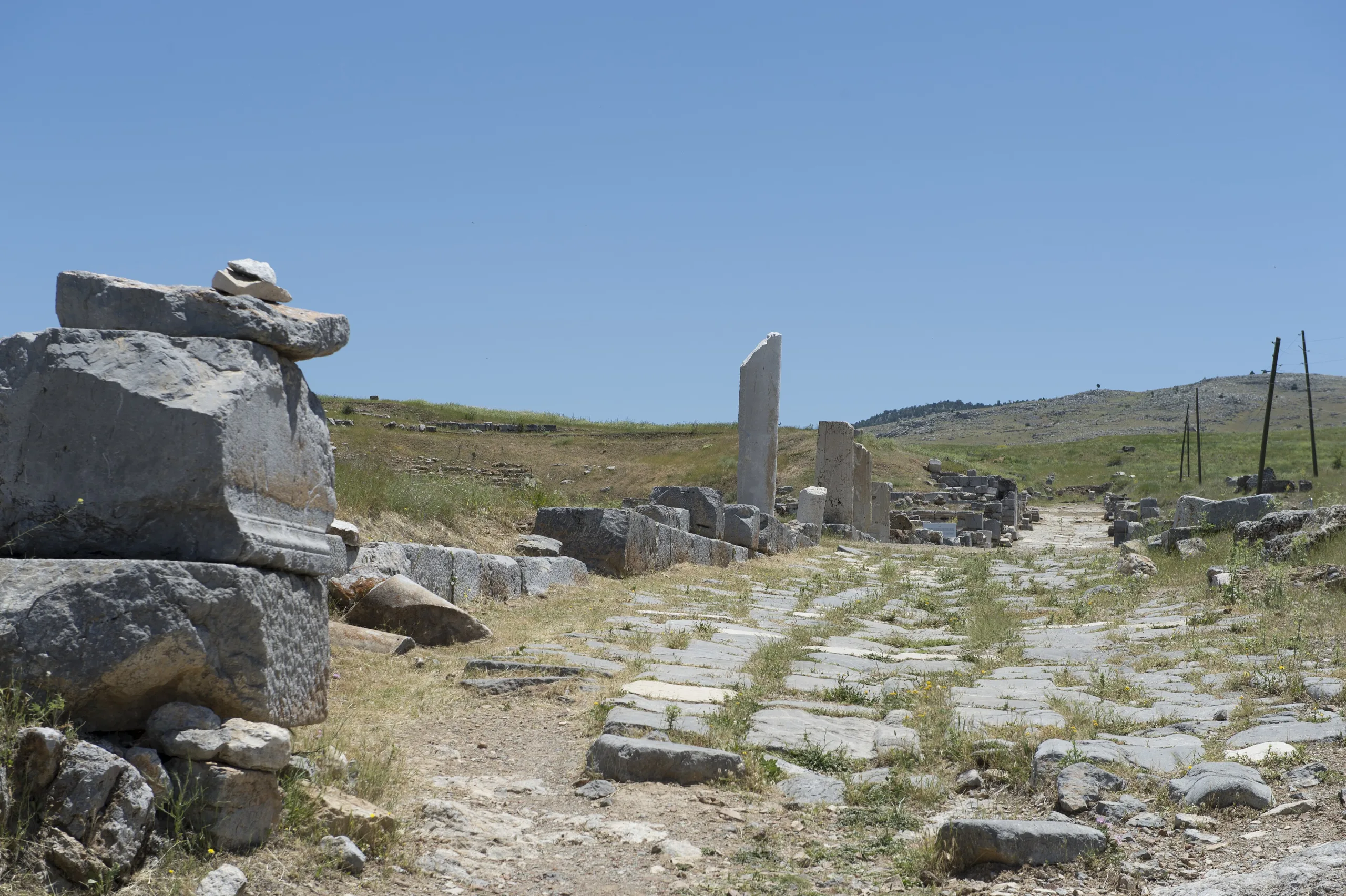
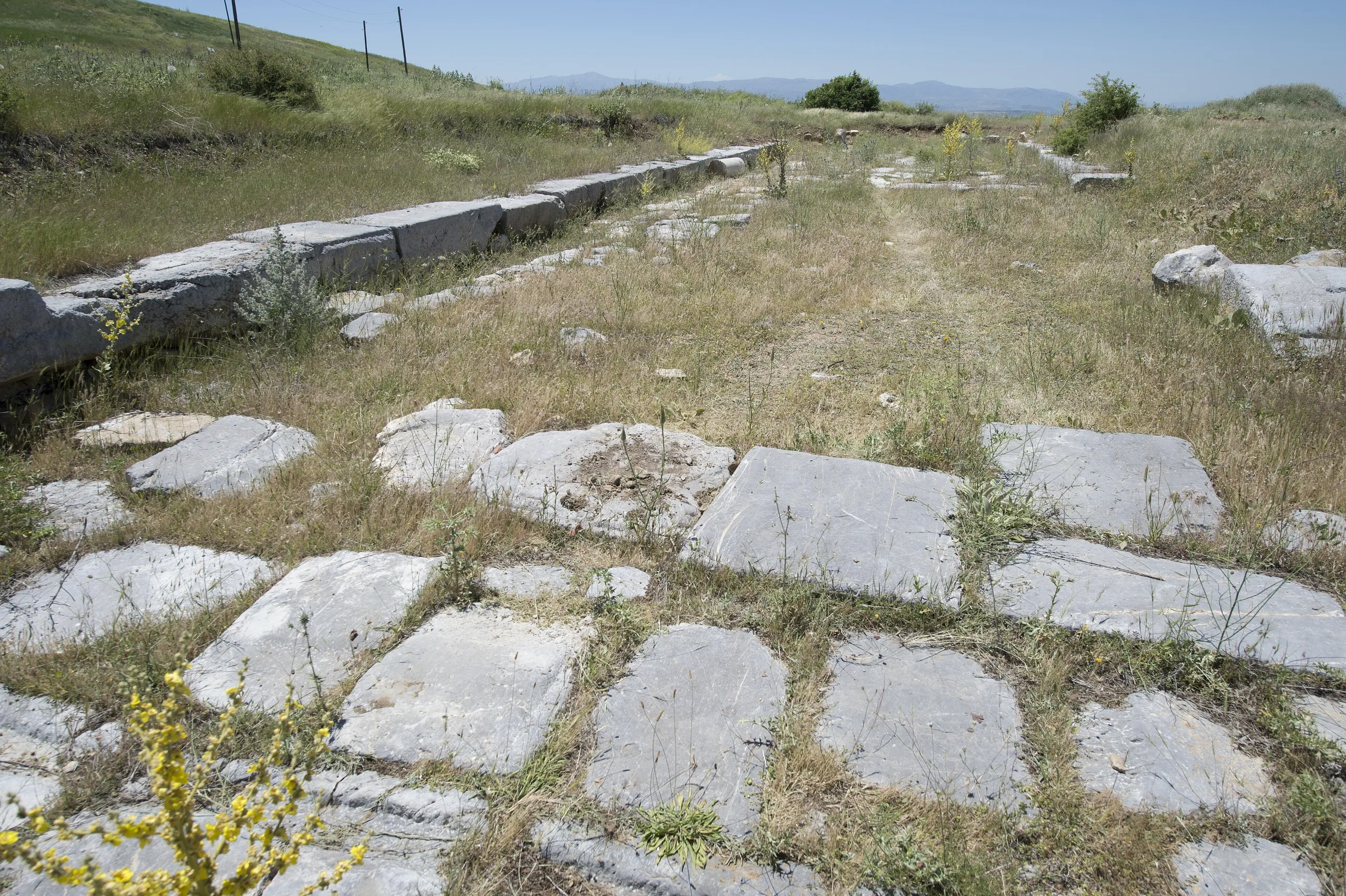
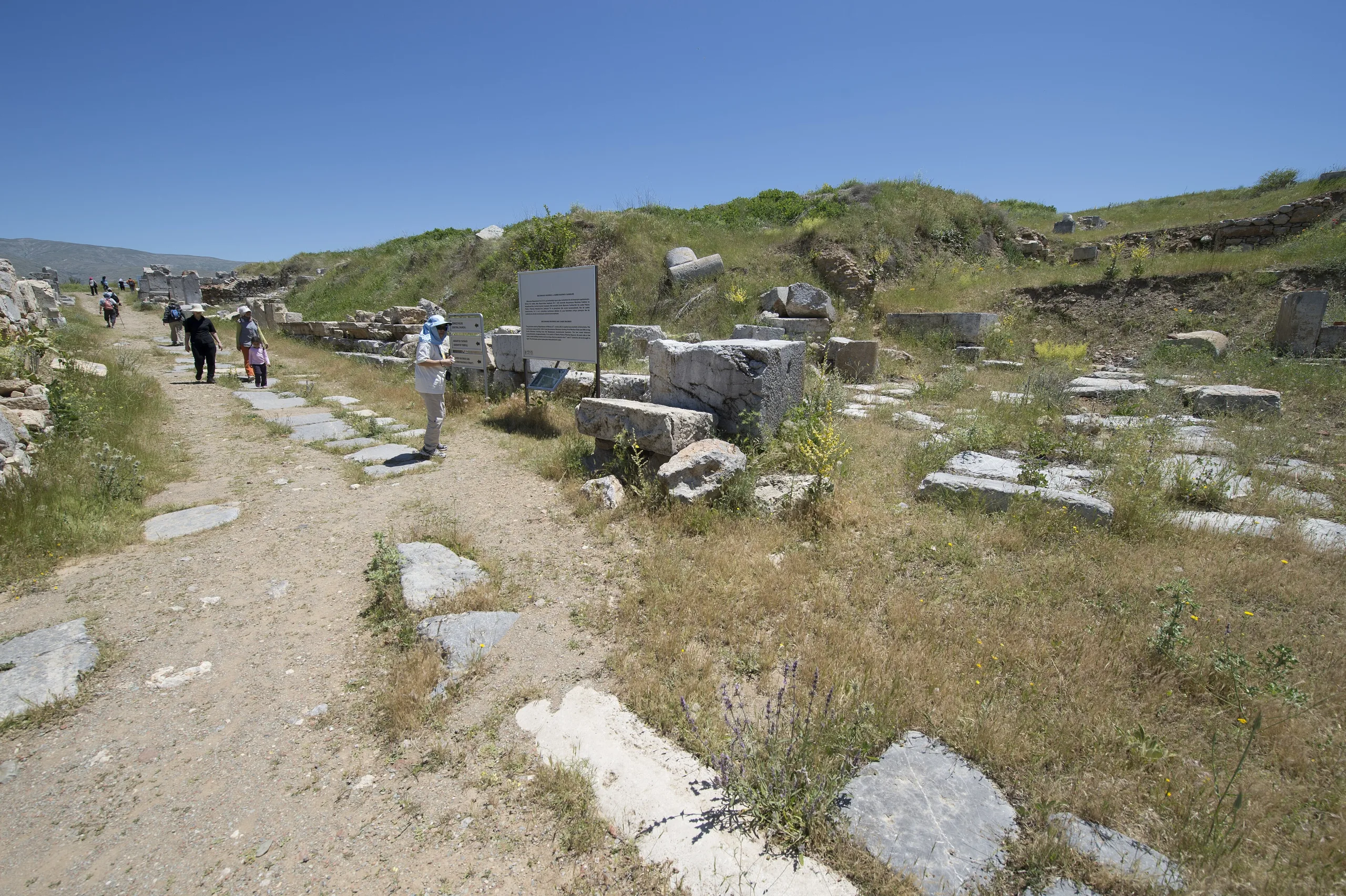
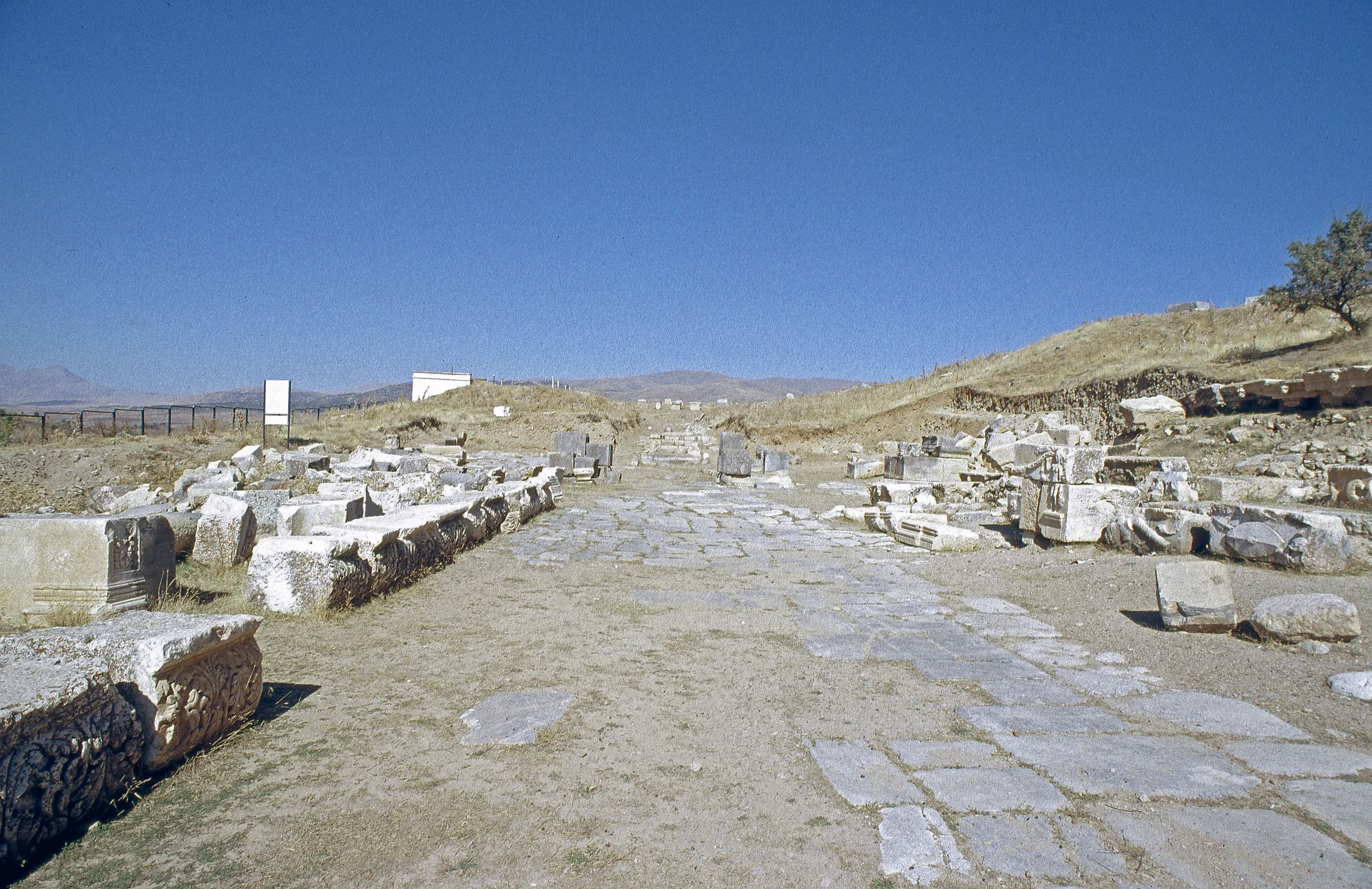
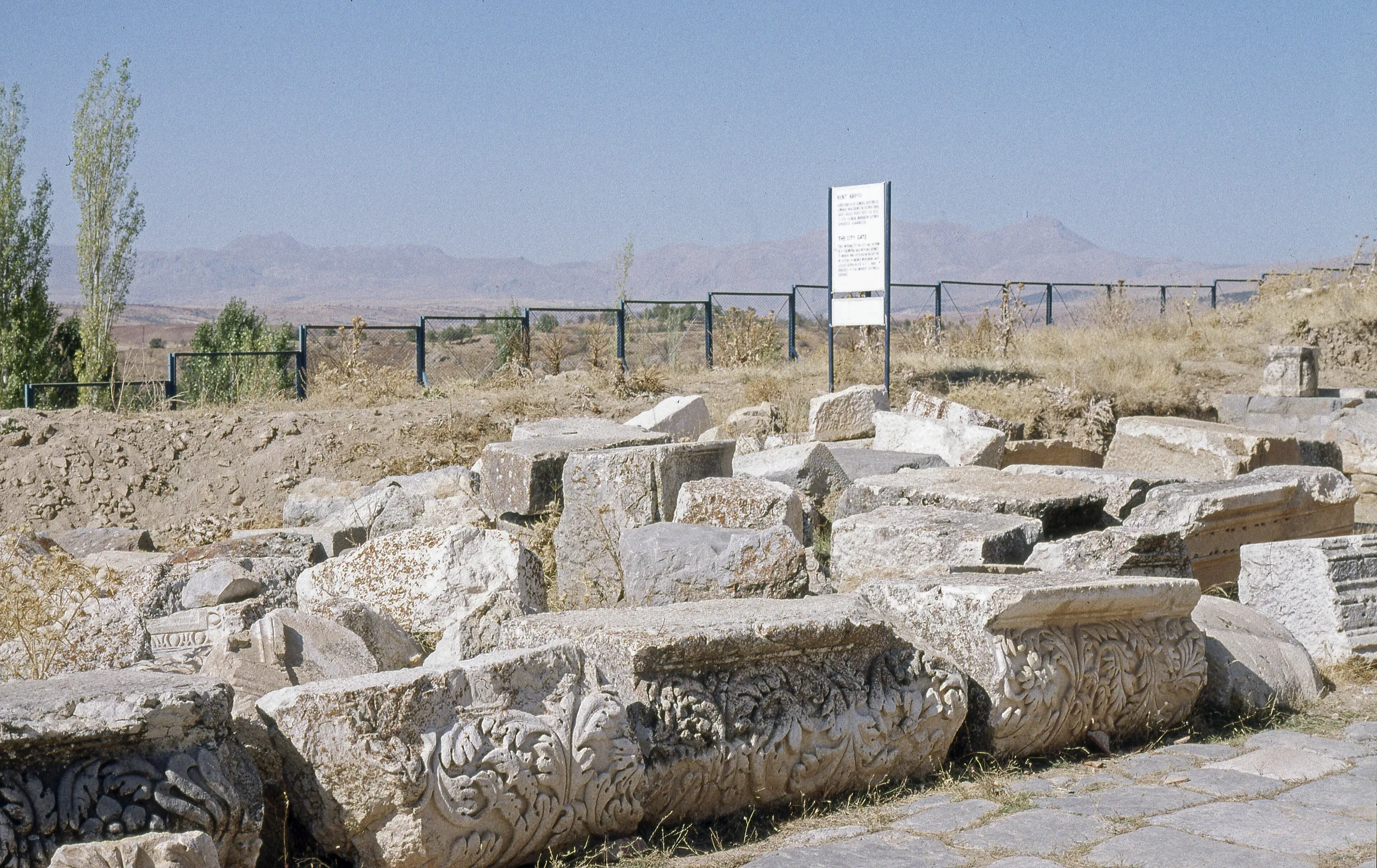
The Culture Portal states that the line of the fortification was fully established by research in 1982-1983 and that the main gate is on the west. The Ministry's English page describes the acropolis as sitting within a walled area of about 46 hectares. The west gate is a three-passage arch whose architecture and sculpted decoration resemble those of the Propylon leading up to the Temple of Augustus. The city followed a regular grid plan named after Hippodamos of Miletus: the Decumanus Maximus, given as 90+320 metres, starts at the west gate and crosses the 400-metre Cardo Maximus, which begins at the nymphaeum, at right angles. Shops line the main street.
Main monuments
Temple of Augustus and the Propylon
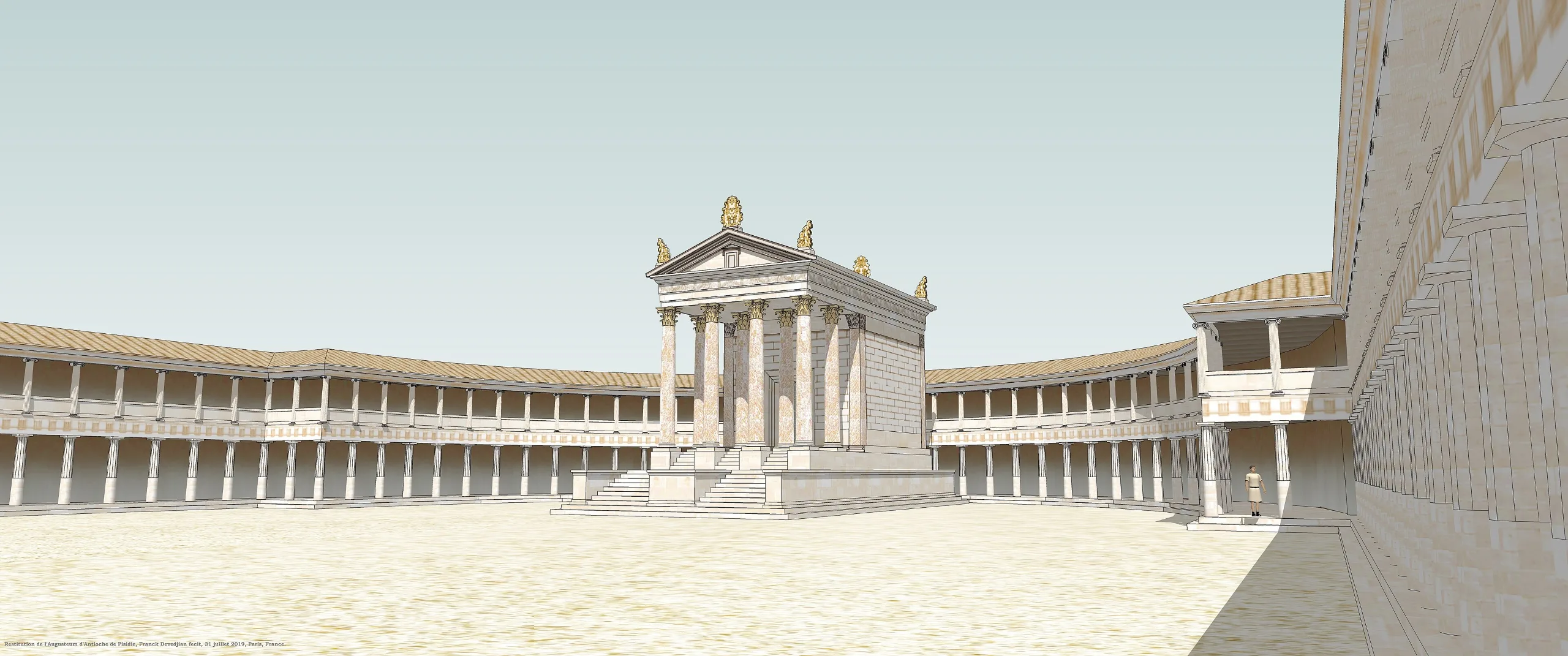
Per the Ministry, the Temple of Augustus is a monumental building, approached by the Propylon's flight of steps, on a platform levelled out of the bedrock at the highest point of the city. The platform may originally have been meant for the sanctuary of Cybele, the Mother Goddess, and of Men, the Moon God, two deities with deep roots in the region, and under Roman rule it may have been given over to the cult of the emperor. Work probably started during Augustus's reign, with the dedication to him made once he had died. The Culture Portal lists the theatre, the Tiberius Square, the Propylon and the Temple of Augustus area at the centre of the city, whereas the Ministry's Turkish page speaks of two squares, one named for Augustus and one for Tiberius.
Theatre
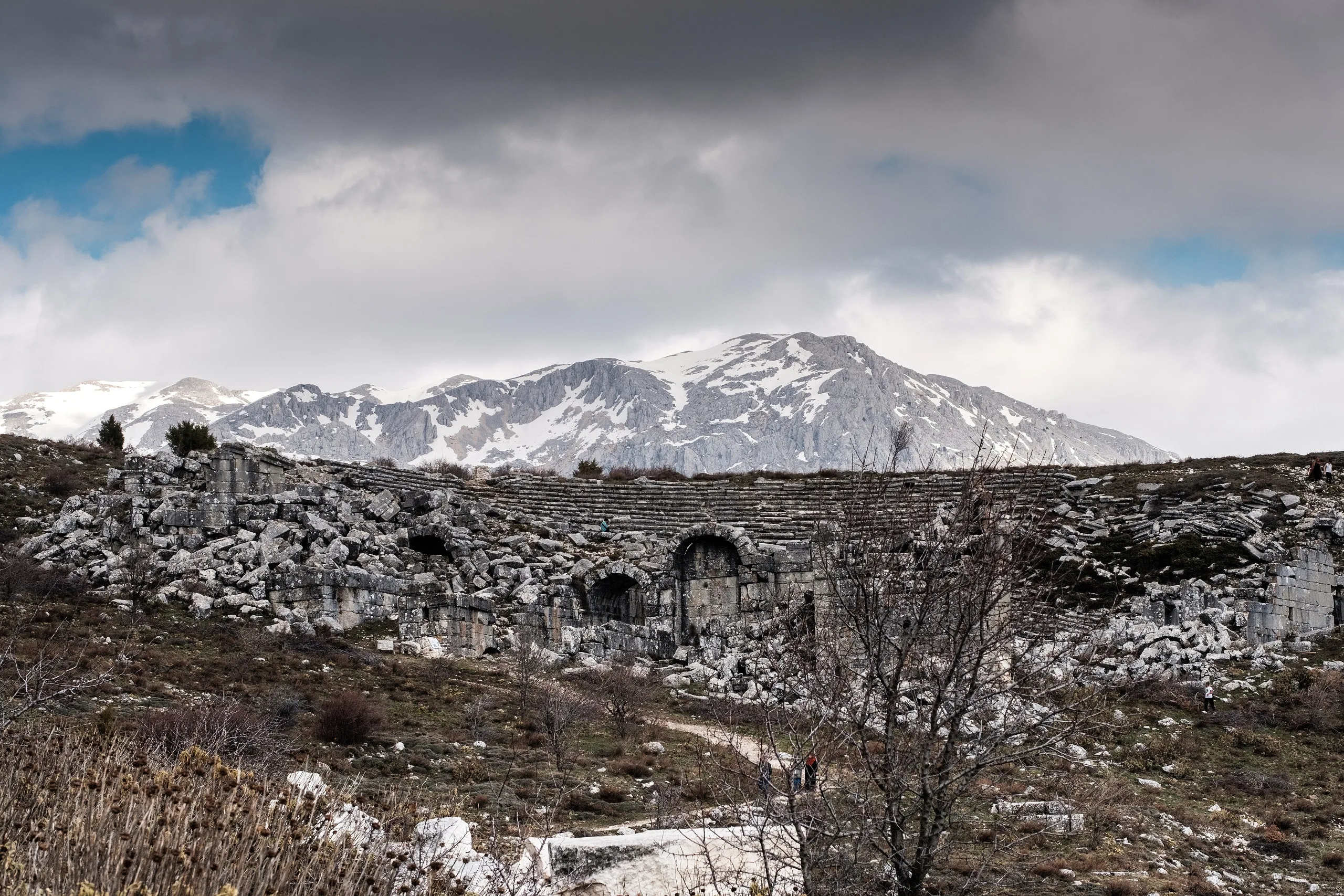
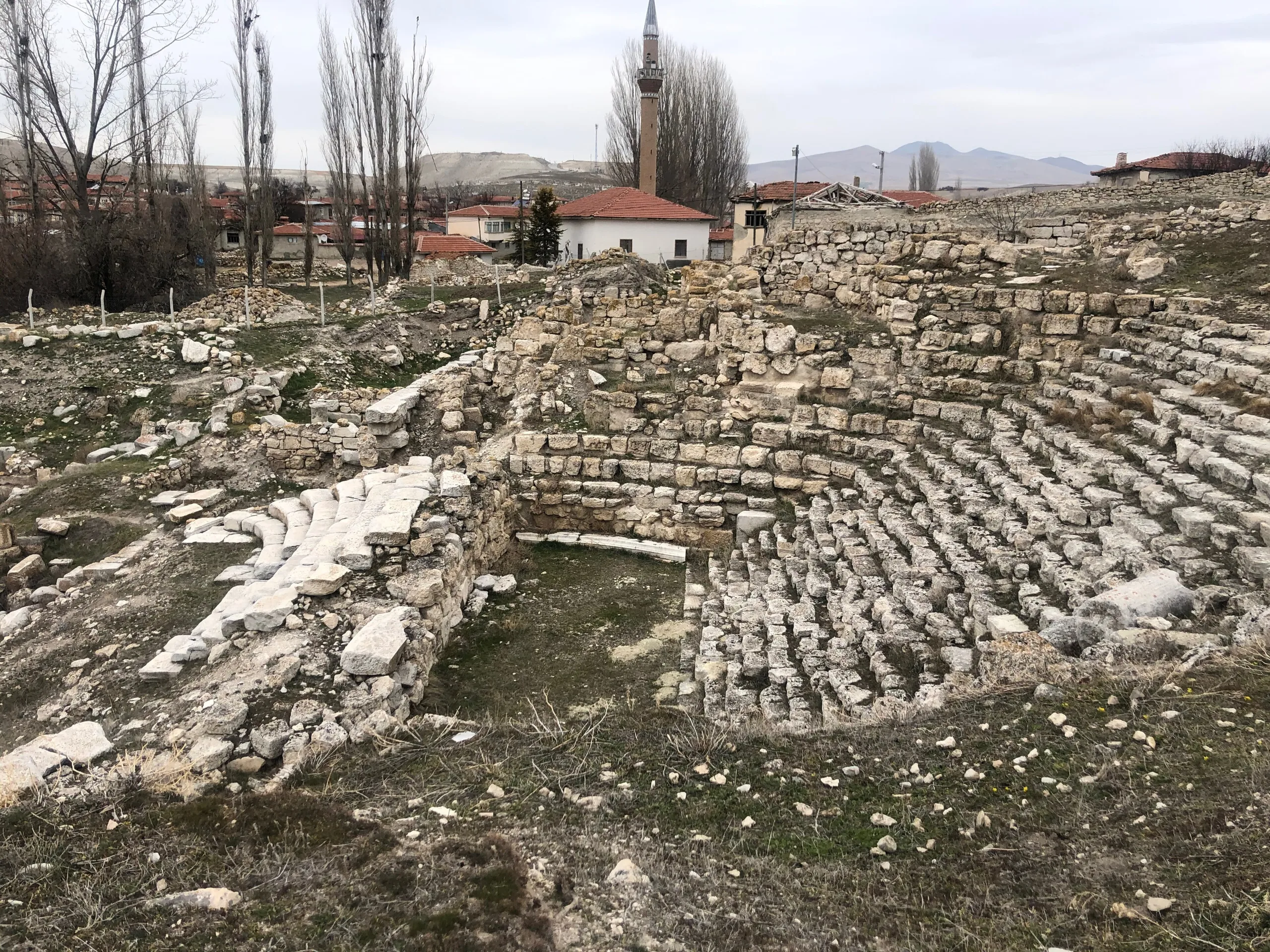
Past the west gate the Decumanus Maximus begins and, climbing gently, reaches the theatre after roughly fifty metres. The seating area, the horizontal corridor, radial stairs, side entrances, orchestra and stage building are largely destroyed. The Ministry's English page says the theatre resembles the 15,000-seat theatre at Aspendos and is larger than those of Sagalassos, Selge and Termessos, also important Pisidian cities. Its original architecture goes back to the founding of the city, perhaps even to the Hellenistic period.
Basilica of St Paul
The Ministry gives the basilica as 70 metres long and 27 metres wide, with a narthex of 27 by 13 metres next to the city walls. It has three naves and a semicircular apse. It was probably altered at the end of the 4th century, when the ground floor interior was filled in and mosaics were laid over the central nave, and a marble-paved courtyard was added on the north side. A panelled mosaic with geometric and floral motifs, uncovered in the first digs, now lies under a 30 cm layer of earth.
Aqueducts, bath and other remains
The Culture Portal reports remains of aqueducts, a nymphaeum, a bath and a palaestra in the north of the city, with the aqueducts partly standing toward the north-east. A Byzantine church lies near the Tiberius Square and a basilica to the west.
Excavations
The Culture Portal says that about 56 years after the American excavations of 1920-1924, rescue excavations began in the 1980s under the museum directorate, supported by the Ministry and local government. Elsewhere on the same page it mentions excavations of 1914-1924, so two date ranges appear side by side in the source. Smaller digs were carried out at the bath-basilica, theatre, nymphaeum, west gate, the street mouths along the Decumanus and Cardo, and at the Church of St Paul and the Central Church.
In 2013 the Yalvaç Museum Directorate ran a rescue excavation in the Gürgübayram neighbourhood, about a kilometre west of the city, where the municipality had opened land for housing. Özhanlı reports numerous Late Byzantine graves, a circular building made from the blocks of a round temple brought from the city, a headless nude male statuette and many oil-lamp moulds. The moulds are dated to the 4th-7th centuries CE and document local production in the city.
Visiting
For opening times and entry conditions see the Ministry's official page, which also states that the Müzekart is valid for Turkish citizens. The Yalvaç Museum is listed among the nearby museums.
Gallery
Frequently asked questions
Where is Pisidian Antioch?
Who founded the city?
Where is the main gate?
How large is the Basilica of St Paul?
When were excavations carried out?
How does the theatre compare with others in Pisidia?
Sources (13)
- Antiocheia Örenyeri / Antiocheia Archeological Site (TR ve EN sayfalar) — T.C. Kültür ve Turizm Bakanlığı, Müzeler ve Örenyerleri
- Pisidia Antiokheia Antik Kenti - Isparta (kaynak: Isparta İl Kültür ve Turizm Müdürlüğü) — T.C. Kültür ve Turizm Bakanlığı, Türkiye Kültür Portalı
- Pisidia Antiokheia, a Circular Building, Oil Lamp Moulds and Local Production (Cedrus IX, 2021, 427-435) — Mehmet Özhanlı, Cedrus (Akdeniz Üniversitesi MCRI), DergiPark
- Antiochia/Col. Caesarea (Pleiades 609307) — Pleiades
Photo credits
- Photo: Dosseman, CC BY-SA 4.0 — Wikimedia Commons (resized)
- Photo: Franck devedjian, CC BY-SA 4.0 — Wikimedia Commons (resized)
- Photo: Dosseman, CC BY-SA 4.0 — Wikimedia Commons (resized)
- Photo: Dosseman, CC BY-SA 4.0 — Wikimedia Commons (resized)
- Photo: Dosseman, CC BY-SA 4.0 — Wikimedia Commons (resized)
- Photo: Dosseman, CC BY-SA 4.0 — Wikimedia Commons (resized)
- Photo: Dosseman, CC BY-SA 4.0 — Wikimedia Commons (resized)
- Photo: Dosseman, CC BY-SA 4.0 — Wikimedia Commons (resized)
- Photo: Dosseman, CC BY-SA 4.0 — Wikimedia Commons (resized)