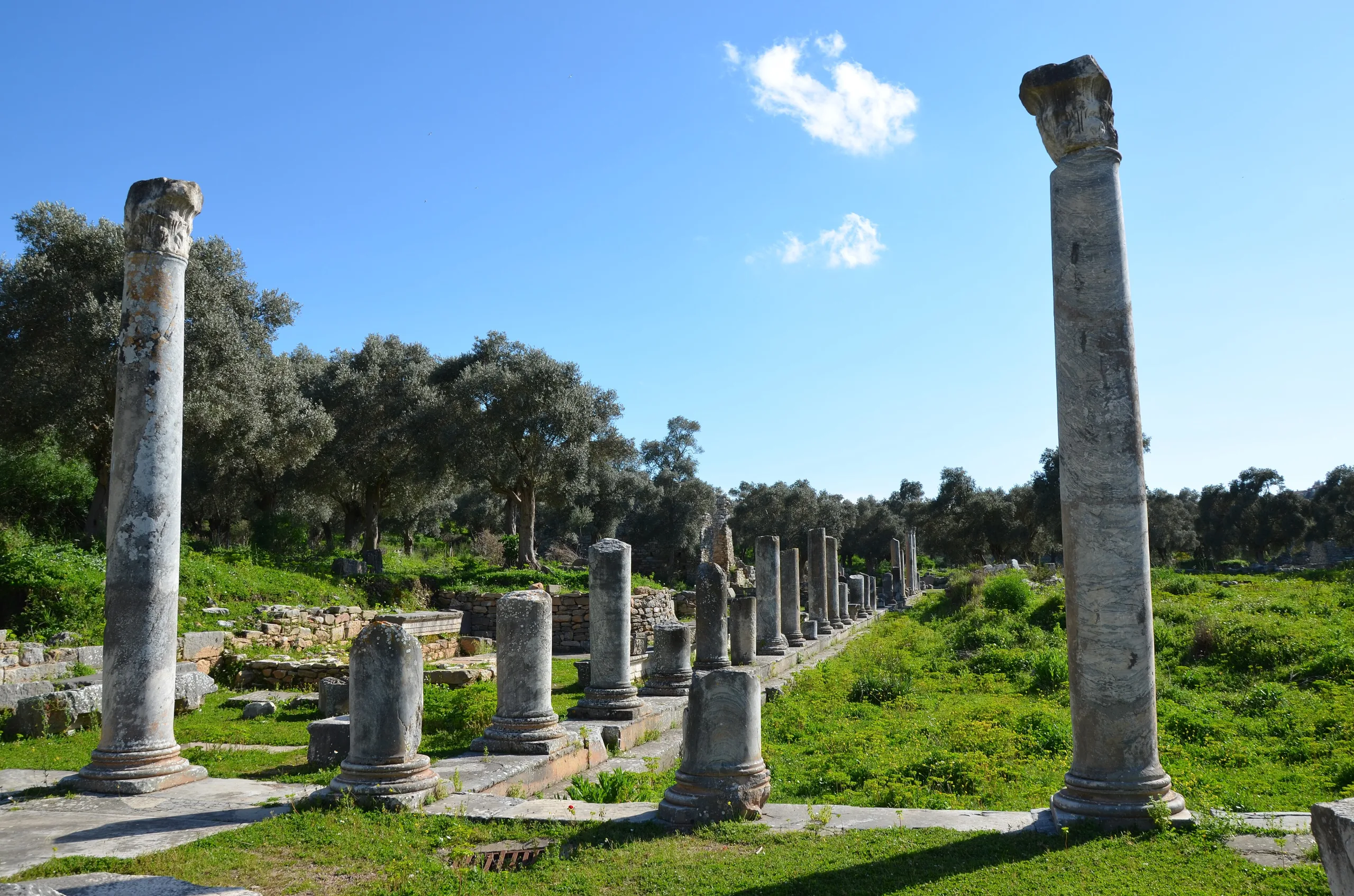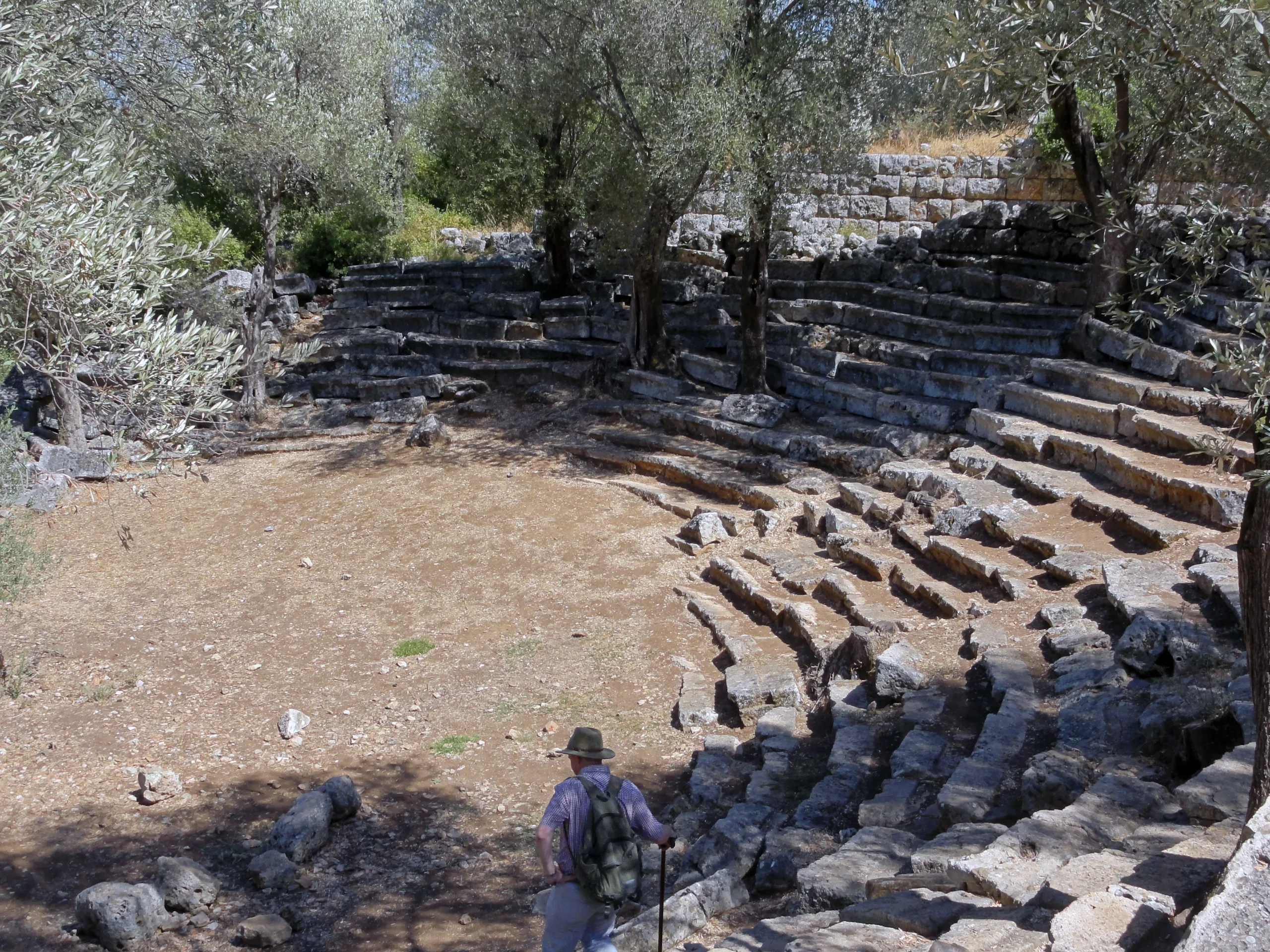
Sedir Island in the Gulf of Gökova holds the remains of the Carian town of Kedrai, with walls, a theatre and an agora; it is a first-degree archaeological and natural site reached by boat.
Sedir Island (Kedrai) is an ancient city located in Turkey, Mugla. Main periods: Byzantine Period, Ottoman Period.
Sedir Island sits on the eastern shore of the Gulf of Gökova (Keramos), inside Ula district, Muğla, and it was the main site of the ancient town of Kedrai. Of the three islets in the group, it is the biggest. The Ministry presents it as appealing to anyone interested in both history and nature.
Location and access
Kedrai lies close to the mainland yet is ringed by strong walls and can only be reached by sea. The island belongs administratively to Ula; the nearest settlement is Çamlı village in Marmaris district, whose harbour offers the quickest crossing. Day-trip boats also leave from Akyaka in Ula. For present conditions, consult the official page.
Name and nature
The Ministry notes that the name comes from the cedar tree, though none grows on the island today. The Culture Portal says the island and its surroundings are thought to have been covered in cedars long ago and are now clothed in maquis, olive and pine. It also gives the ancient name as Kedrae or Cedrae.
History
According to the Ministry, Kedrai's story can be followed from the 6th century BCE, and it was a significant Carian town. Some sources say Carian royal families spent their summers here. Between 454 and 428 BCE the town joined the Carian League and afterwards the Attic-Delian League. In later centuries the island ranked among the important towns of the Rhodian Peraia, and its sheltered harbours made it a trading base under Rhodes.
Most of the standing ruins date to the Eastern Roman period. Turkish raids on Caria intensified from the end of the 11th century CE, and in the first quarter of the 15th century the town passed firmly under Ottoman rule.
Layout
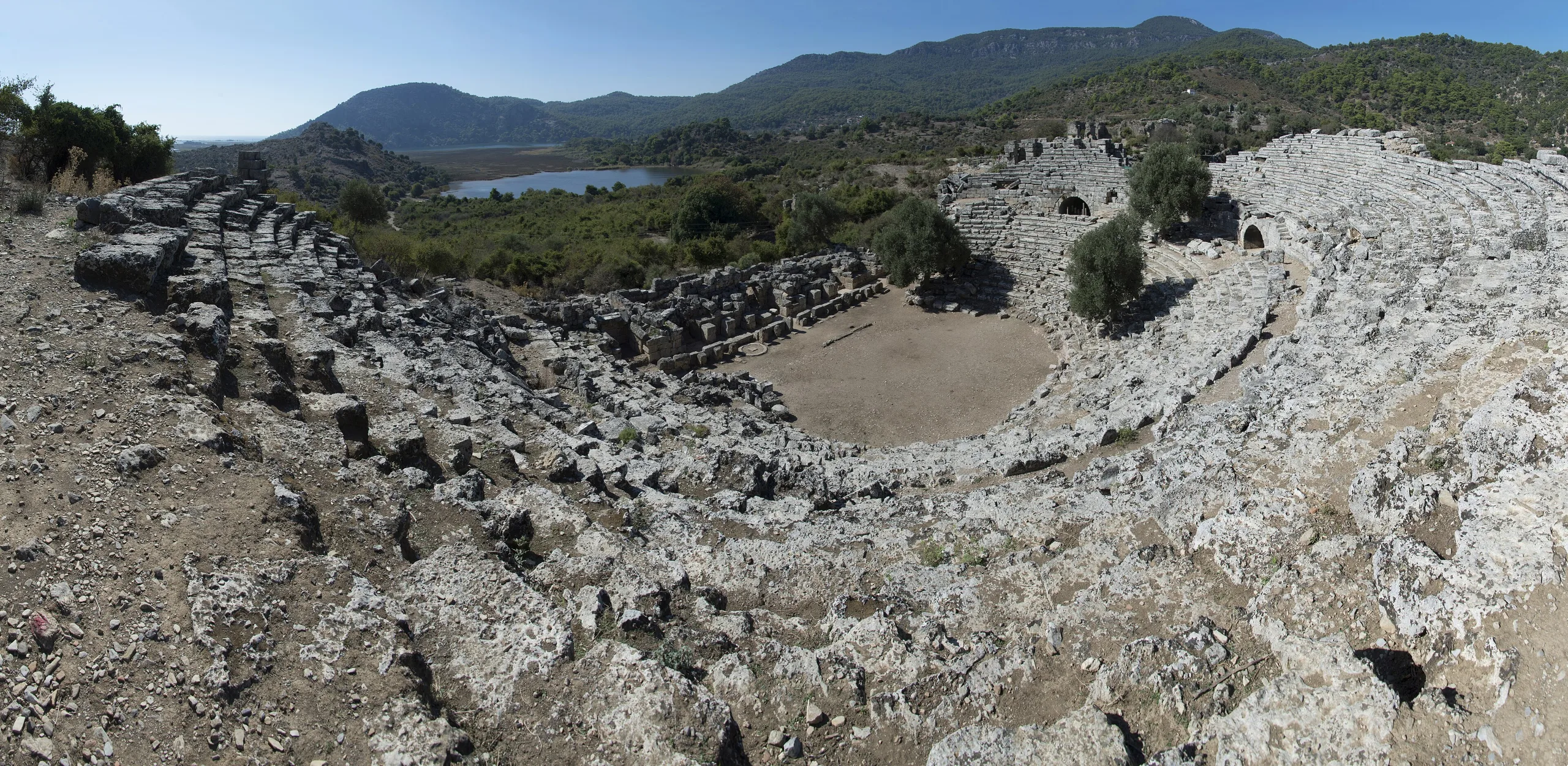
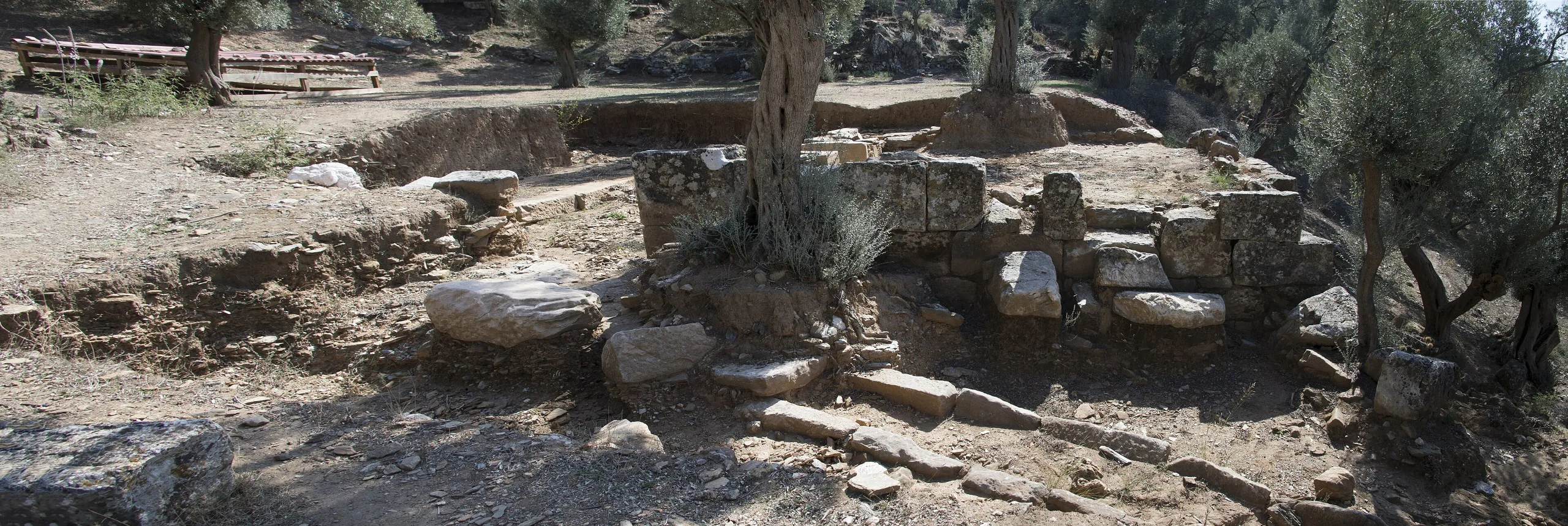
The town developed east of the narrow neck of land splitting the island in two. The theatre, sanctuaries, houses, harbour and many civil and religious buildings stand inside the walled area. The necropolis, harbour and some civil buildings are on the mainland east of the island. Nearby Orata Island and Small Island also belonged to the town, with few visible remains. Traces of buildings at the necropolis and on the shore hint that the town may partly have spread onto the mainland.
Main features
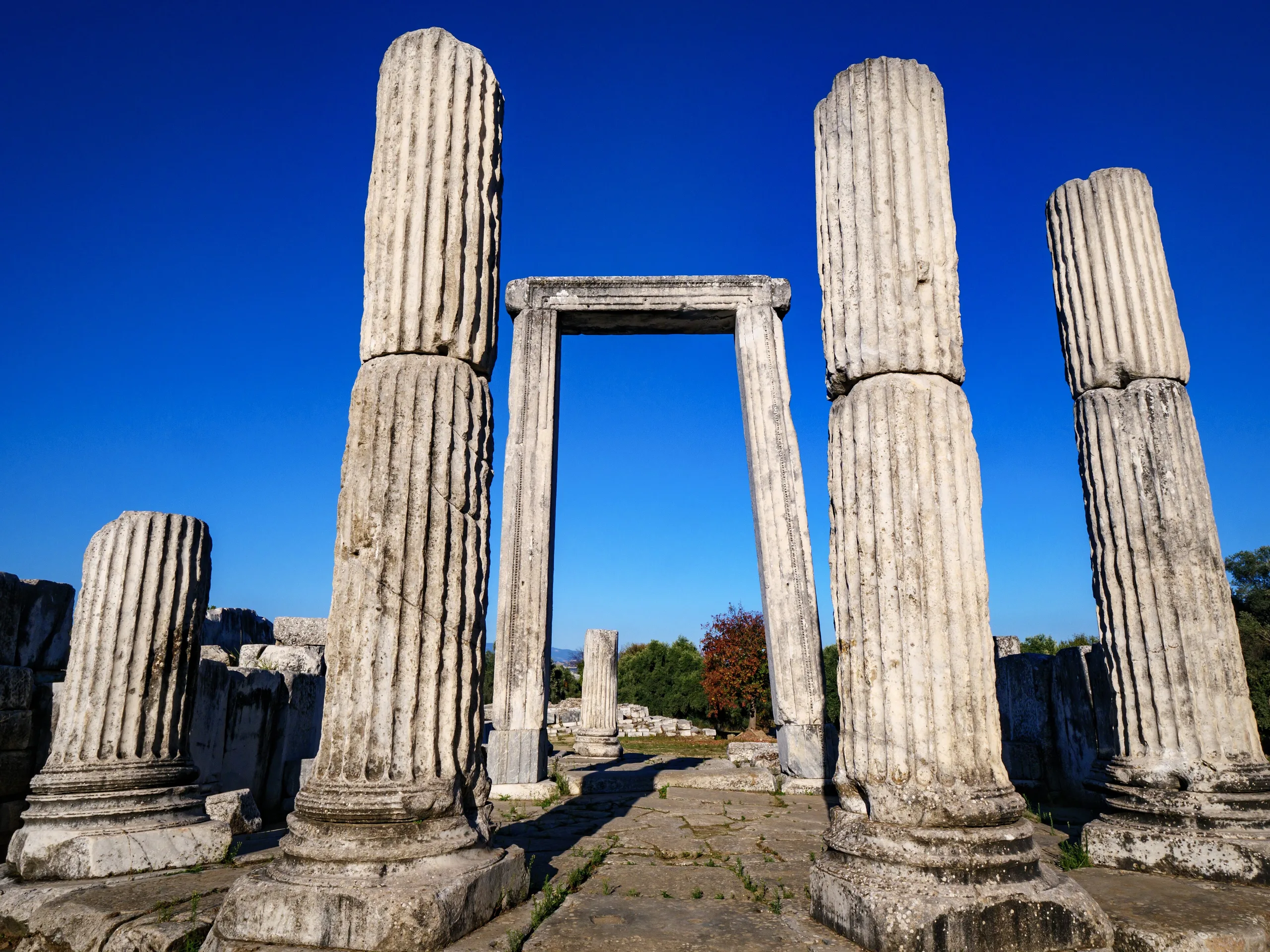
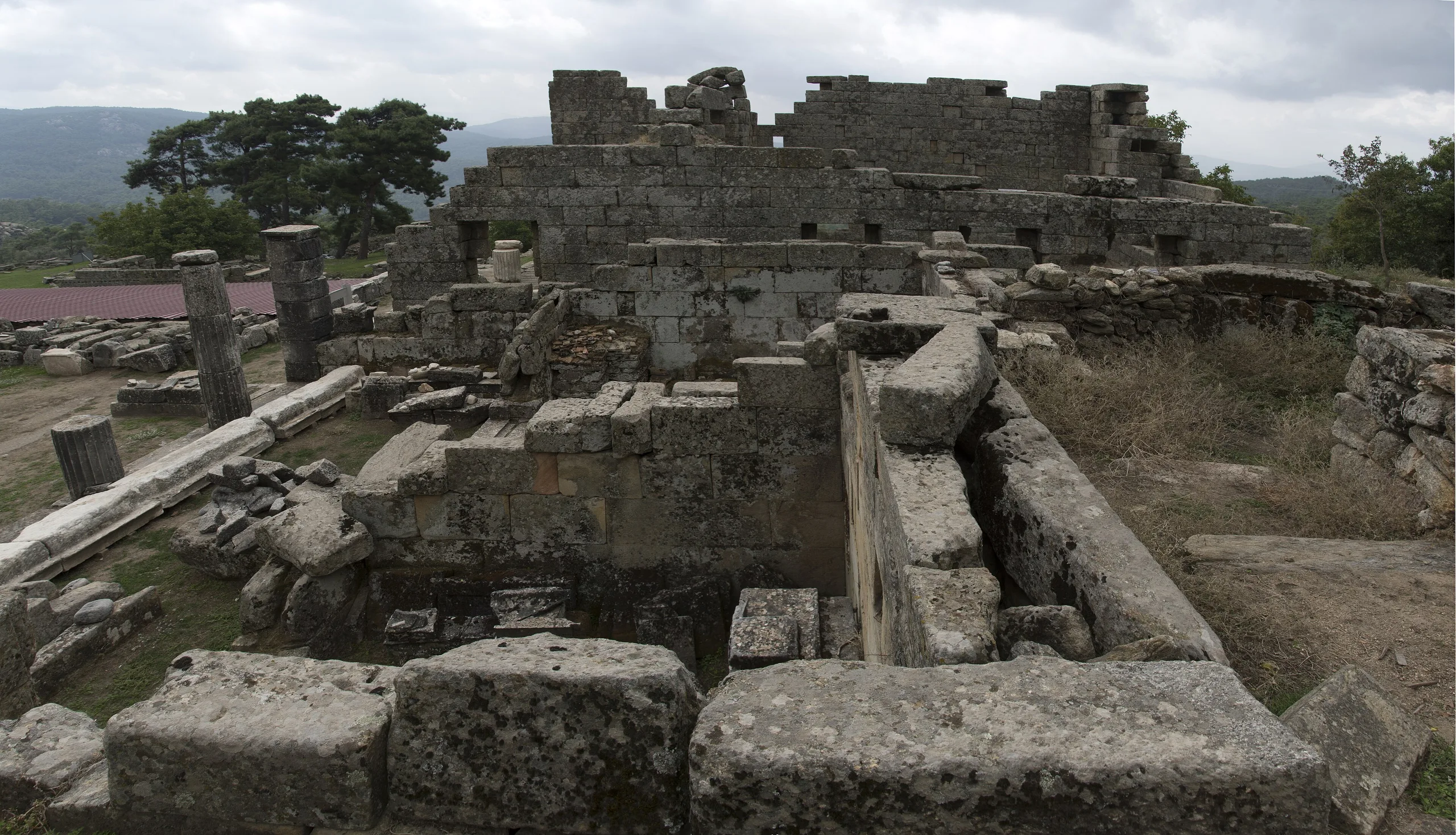
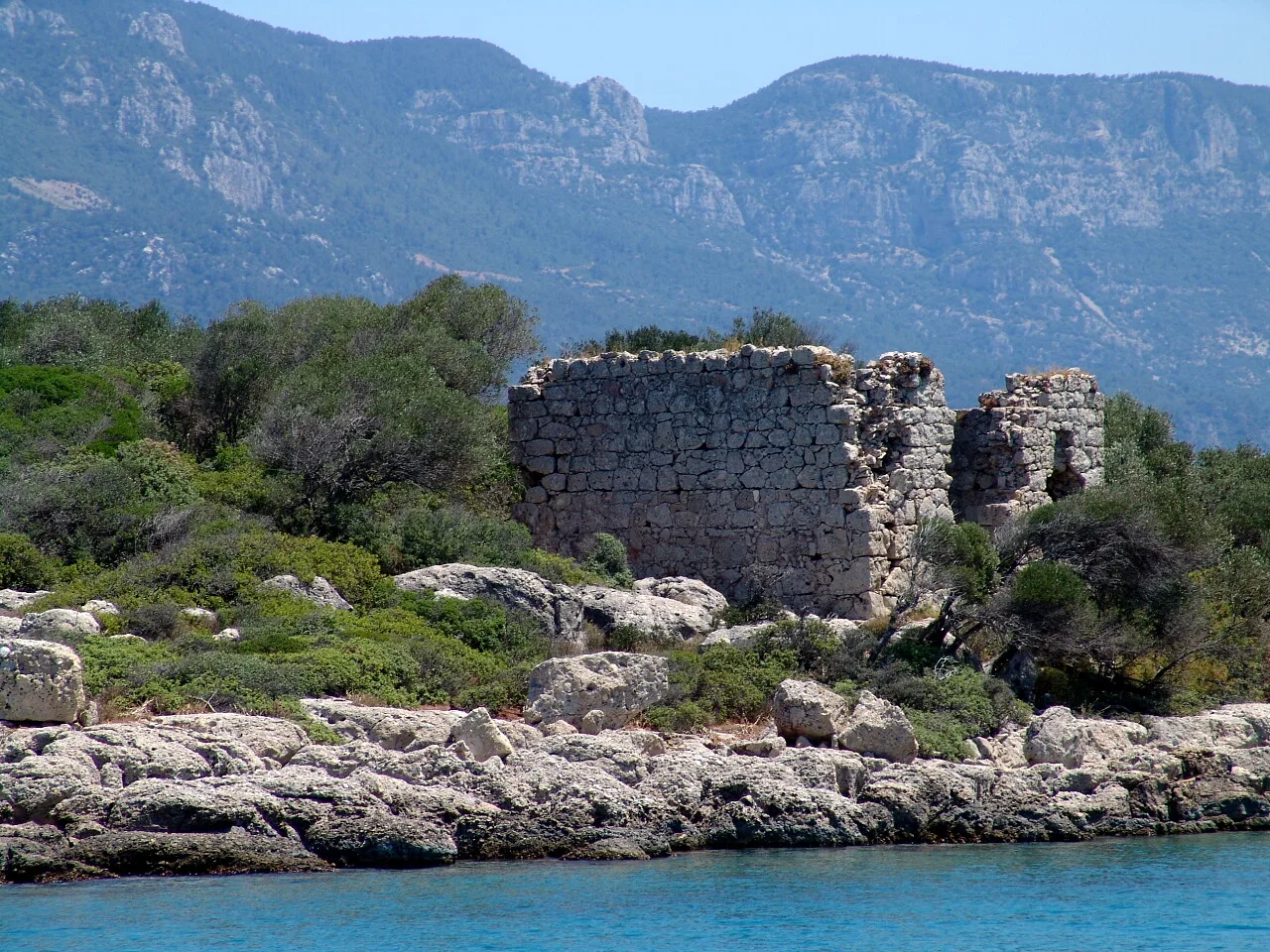
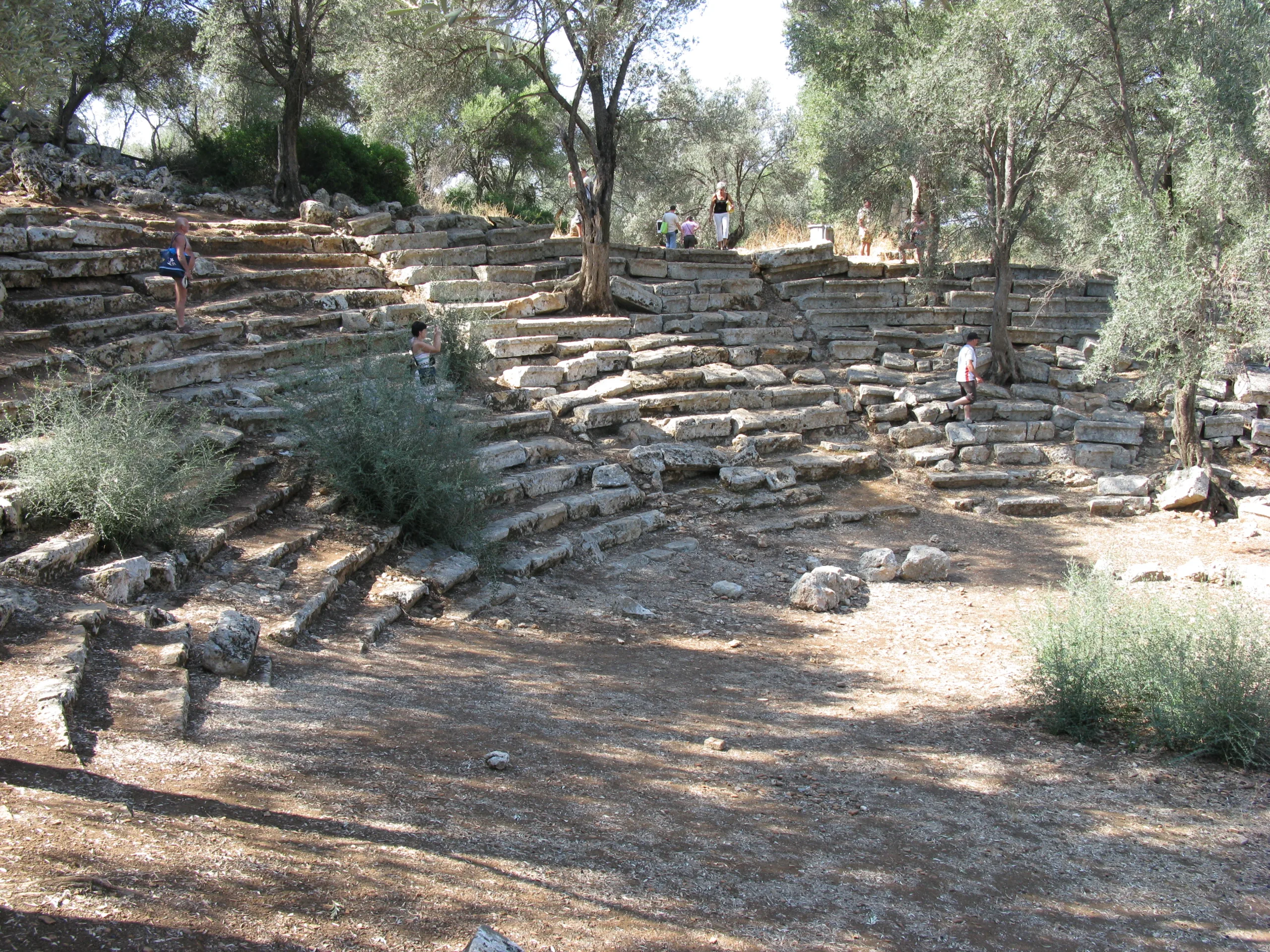
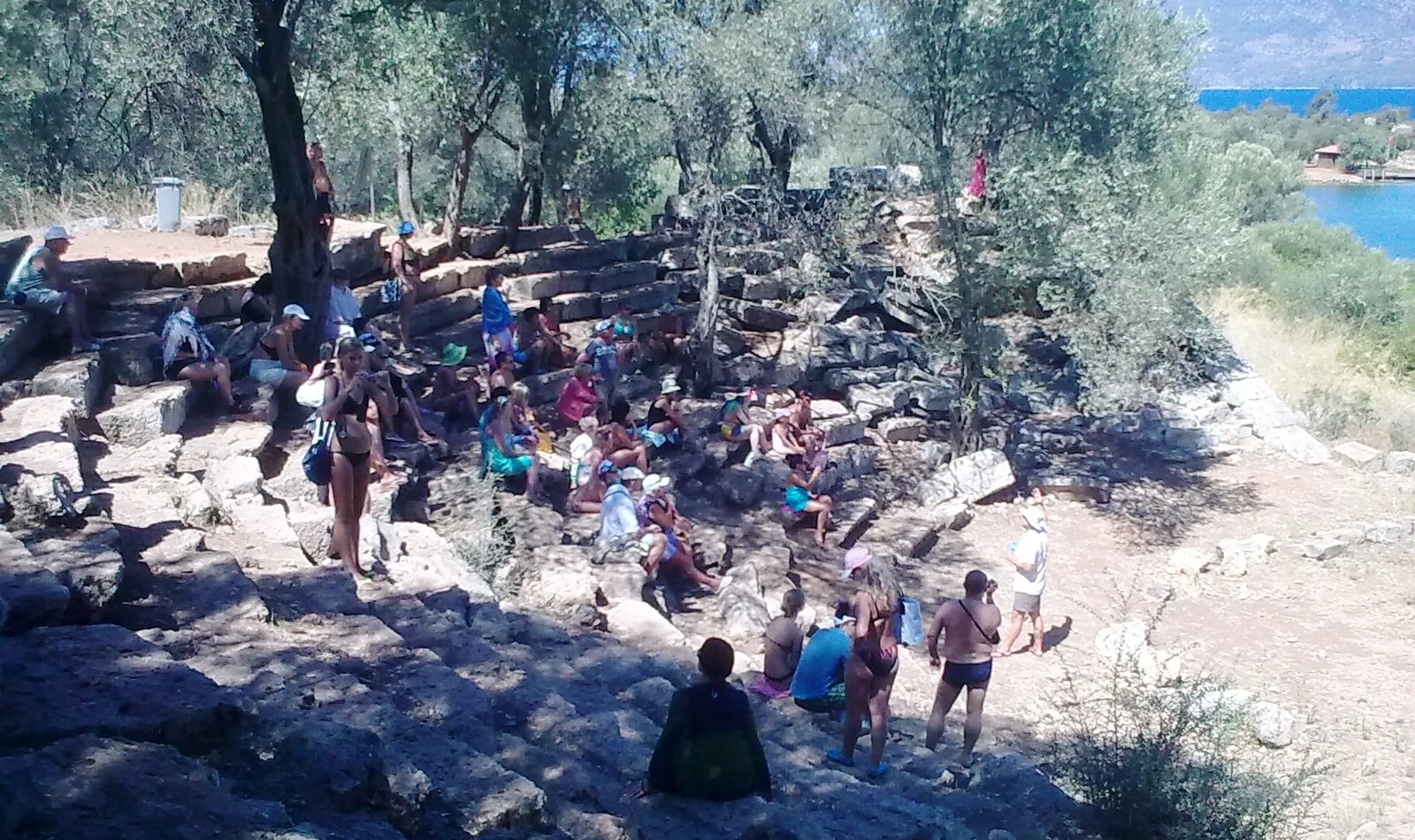
The Ministry lists many ashlar towers and wall sections, the Sanctuary of Apollo, church and chapel ruins, a well-preserved theatre seating 2,500, the agora as the commercial hub, numerous cisterns and the ancient harbour. The largest church, the Great Basilica, was built from reused ancient material and is dated to the 5th-6th centuries CE. The Culture Portal adds that a church was later built where the Temple of Apollo had stood.
Protection
With a beach about 800 metres long and a natural setting interwoven with ruins, the island is a first-degree archaeological site, a first-degree natural site and a special environmental protection area. The sand of the beach known as Cleopatra Beach consists of specially formed limestone droplets, and taking it away from the beach is forbidden.
Visiting
The Ministry's Turkish page says Turkish citizens can buy discounted tickets with the MüzeKart. Hours and fees may change, so see the official page.
Gallery
Frequently asked questions
How do I get to Sedir Island?
What was its ancient name?
How old is the town?
What can be seen?
What protection does it have?
Why is the sand protected?
Sources (7)
- Sedir Adası Örenyeri / Sedir Island Archaeological Site (TR ve EN sayfalar) — T.C. Kültür ve Turizm Bakanlığı, Müzeler ve Örenyerleri
- Sedir Adası Örenyeri - Muğla (kaynak: Muğla İl Kültür ve Turizm Müdürlüğü) — T.C. Kültür ve Turizm Bakanlığı, Türkiye Kültür Portalı
- Kedreai (Pleiades 599702) — Pleiades
Photo credits
- Photo: Fæ, CC BY-SA 3.0 — Wikimedia Commons (resized)
- Photo: Maur, Public domain — Wikimedia Commons (resized)
- Photo: Рустам Абдрахимов, CC BY 3.0 — Wikimedia Commons (resized)
- Photo: Tamer BÜKE, CC BY 3.0 — Wikimedia Commons (resized)