Tios (Tieion) is a Milesian colony at Filyos in Çaycuma, Zonguldak, just east of the mouth of the Filyos River, with harbour, theatre and acropolis remains.
Tios (Filyos) is an ancient city located in Turkey, Zonguldak. Main periods: Hellenistic Period, Roman Period, Byzantine Period.
Tios is a coastal city that stood just east of where the Billaios, today's Filyos River, enters the Black Sea, along the passage linking eastern Bithynia with western Paphlagonia. It lies in Filyos town in Zonguldak's Çaycuma district. The Ministry names its neighbours: the Black Sea on its north, Herakleia Pontike on its west side, Amastris (Amasra) on the east side, and Hadrianopolis, Krateia and Claudiopolis inland to the south. Pleiades also records the city as Tieion.
History
Citing Strabo and Eustathios, the Ministry says that before Greek colonisation the place was home and capital to the Kaukones, a Paphlagonian tribe of Thracian origin living on both banks of the Billaios. Settlers arriving by ship from Miletus made it a colony during the later part of the 7th century BCE. Two accounts of the founding exist. Stephanos Byzantinos, drawing on Herennius Philon, implies that a Milesian priest called Tios led the colonists; a second view, passed on from Demosthenes of Bithynia, has a leader named Pataros take the land at the head of migrants from Thrace and name it for Zeus. The Ministry adds that the word is thought to derive from Dios, with parallels in Neo-Phrygian inscriptions.
In the 4th century BCE the city was ruled by the tyranny of Herakleia Pontike. Under the Hellenistic powers that followed it belonged in turn to Lysimachus, to Queen Amastris's Amastris Synoikismos, and to the kingdoms of Bithynia and Pontus. During a brief spell of independence it struck bronze coins carrying the word Eleutheria and an image of the goddess. The Culture Portal reports that Roman rule began in 70 BCE, that the city became a bishopric in the Byzantine era, and that the Genoese held it from 1261 before the Ottomans took over in the early 15th century, when it shrank to a small fishing village. The same page says river and sea transport made it a trading centre for fish, wine and grain.
Excavations
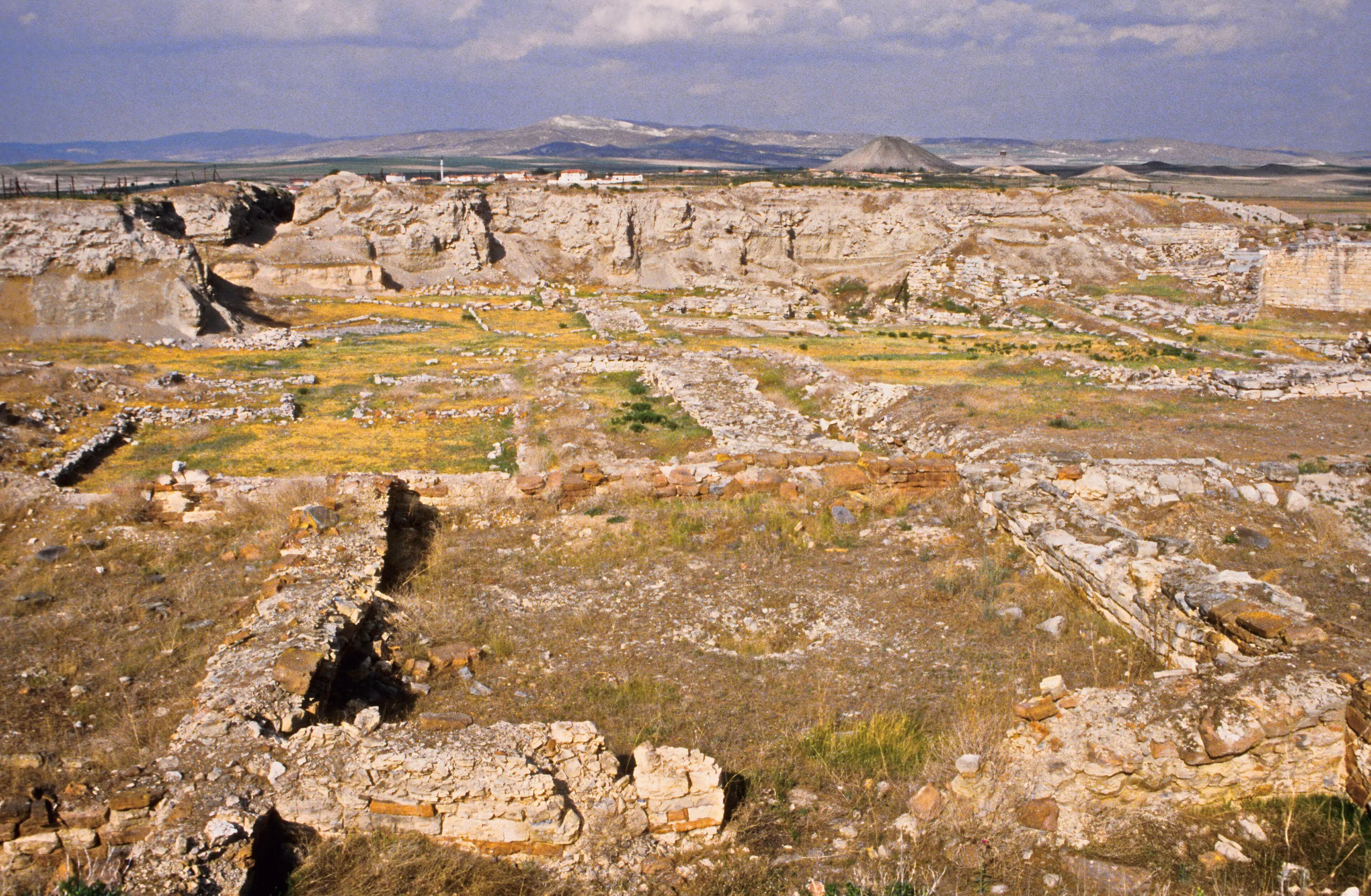
According to the Culture Portal, digging has gone on since 2006. On the acropolis it has revealed building remains dated to the 6th century BCE, a medieval church, a Corinthian-order temple of the Roman period and, west of the temple, a burial chapel dated between the 10th and 12th centuries CE. The summary of an article in the journal Belleten states that Ionian pottery of the 7th and 6th centuries BCE from the acropolis confirms Miletus as the founder; Milesian wares in the Middle Wild Goat II style are placed in that century's final quarter. Handmade local grey, black and brown wares of Phrygian type turned up in the same layers. Beneath the colonial levels a fragment of a terracotta horse figurine, probably of the Late Geometric period, was found, and the authors treat the discoveries as the first solid evidence for Greek and pre-colonial presence on the southern Black Sea shore.
What can be seen
The Culture Portal lists an ancient harbour with its breakwaters, a theatre dated to the Roman period, bath buildings, a structure thought to be an aqueduct, the remains of a fountain, and a necropolis. The Ministry stresses that Tios is the only Graeco-Roman city on this coast not buried under modern settlement or silt, sand and mud, which makes it an unusual place to study how such a city was laid out and grew. The Portal calls it the best preserved ancient city of the region and notes that the modern town lies outside the ancient one.
Visiting
The Culture Portal says Filyos can be reached by road and rail. For hours and entry terms, consult the official page.
Frequently asked questions
Where is Tios?
Who founded Tios?
Where does the name come from?
When did excavations begin?
What remains are visible?
What makes Tios unusual?
Sources (4)
- Filyos (Tios) Örenyeri / Tios Archaeological Site (TR ve EN sayfalar) — T.C. Kültür ve Turizm Bakanlığı, Müzeler ve Örenyerleri
- Filyos Tios Ören Yeri - Zonguldak (kaynak: KVMGM broşürü) — T.C. Kültür ve Turizm Bakanlığı, Türkiye Kültür Portalı
- Tieion Akropolisi / The Acropolis of Tieion (özet) — Belleten (Türk Tarih Kurumu), DergiPark
- Tios/Tieion (Pleiades 845084) — Pleiades