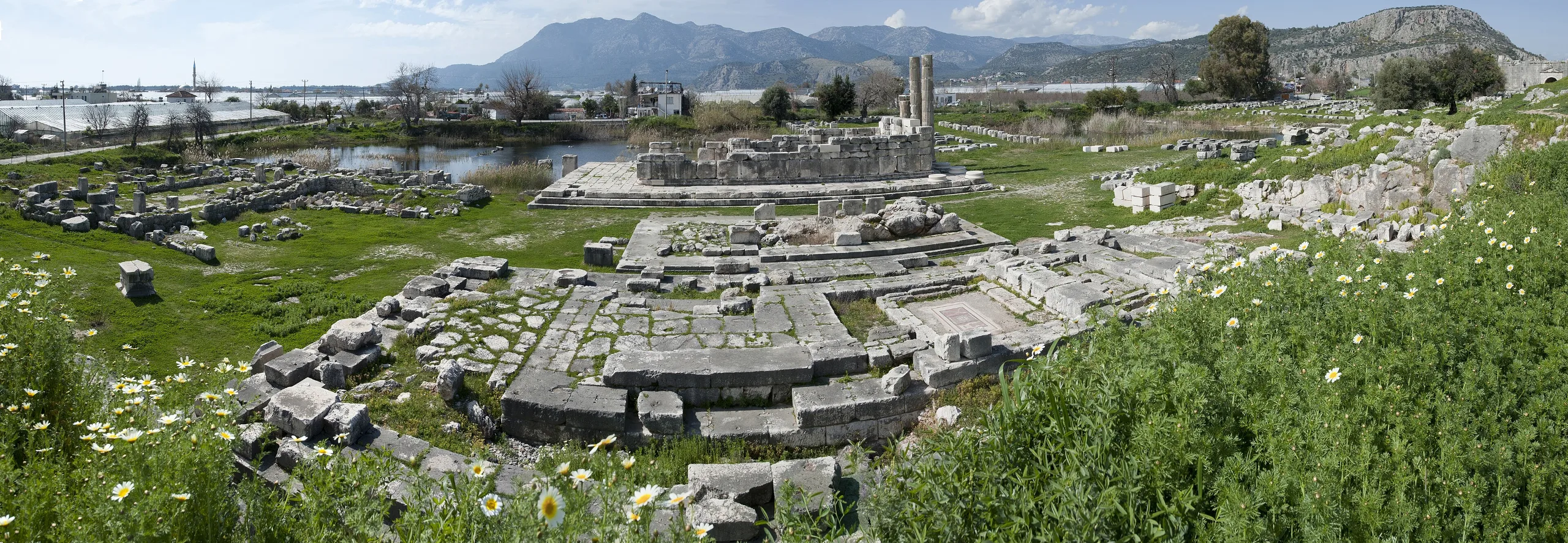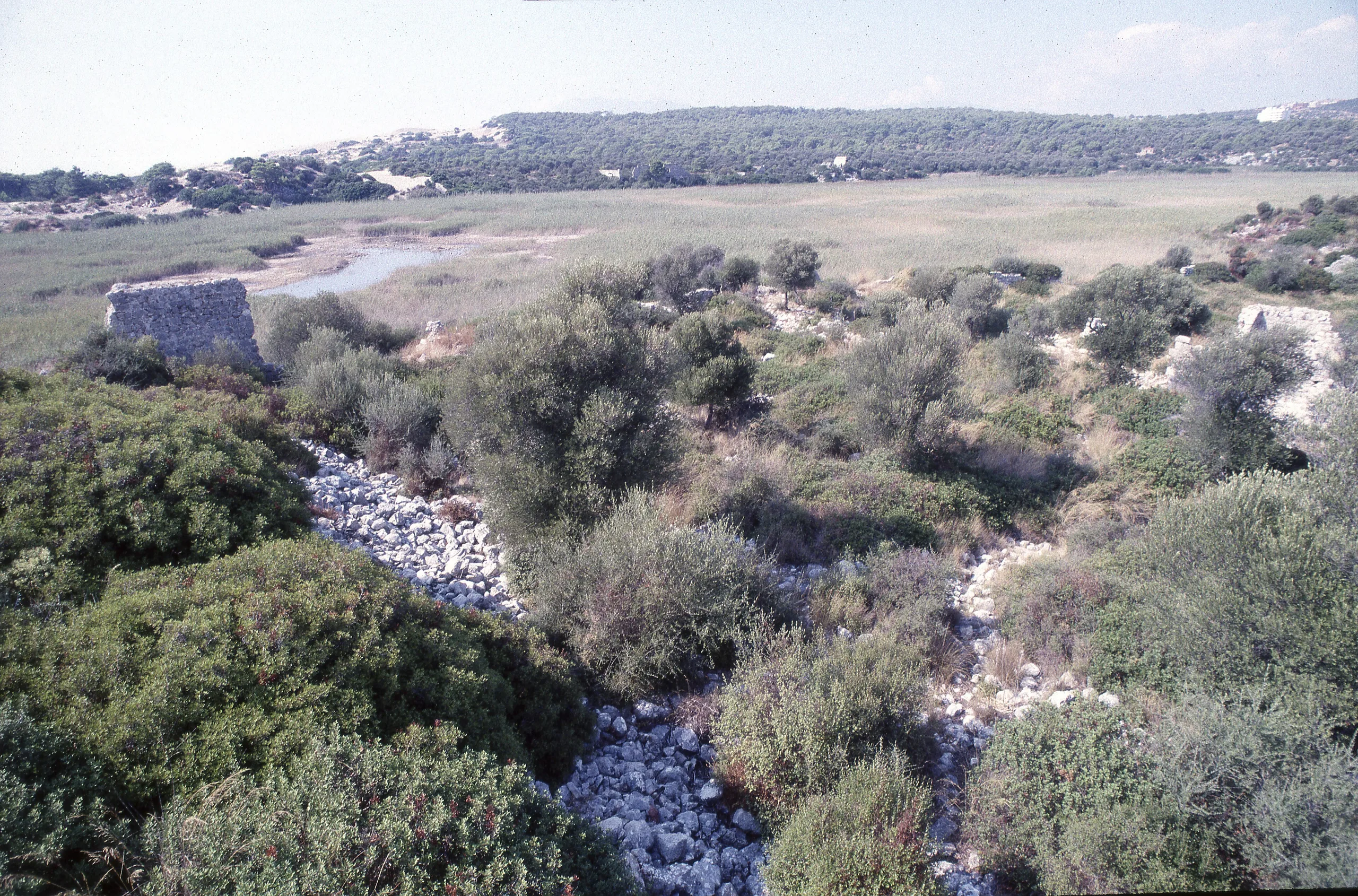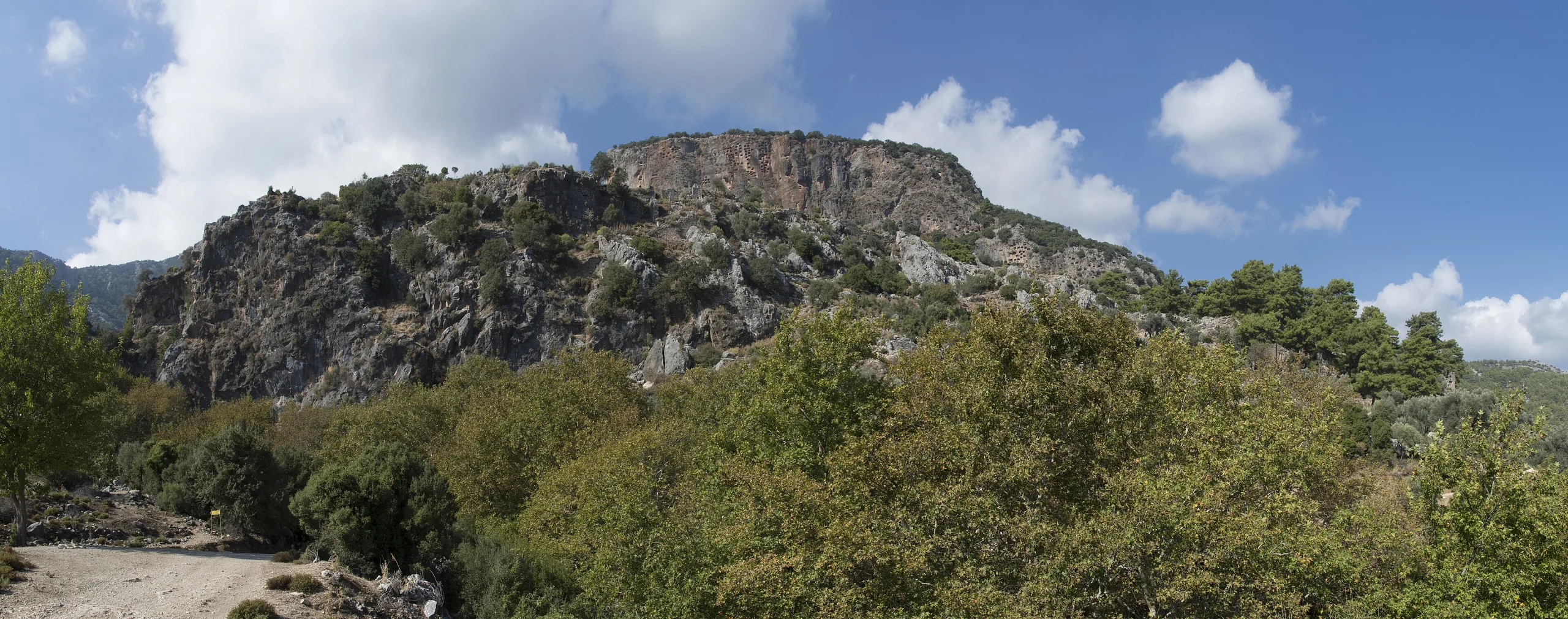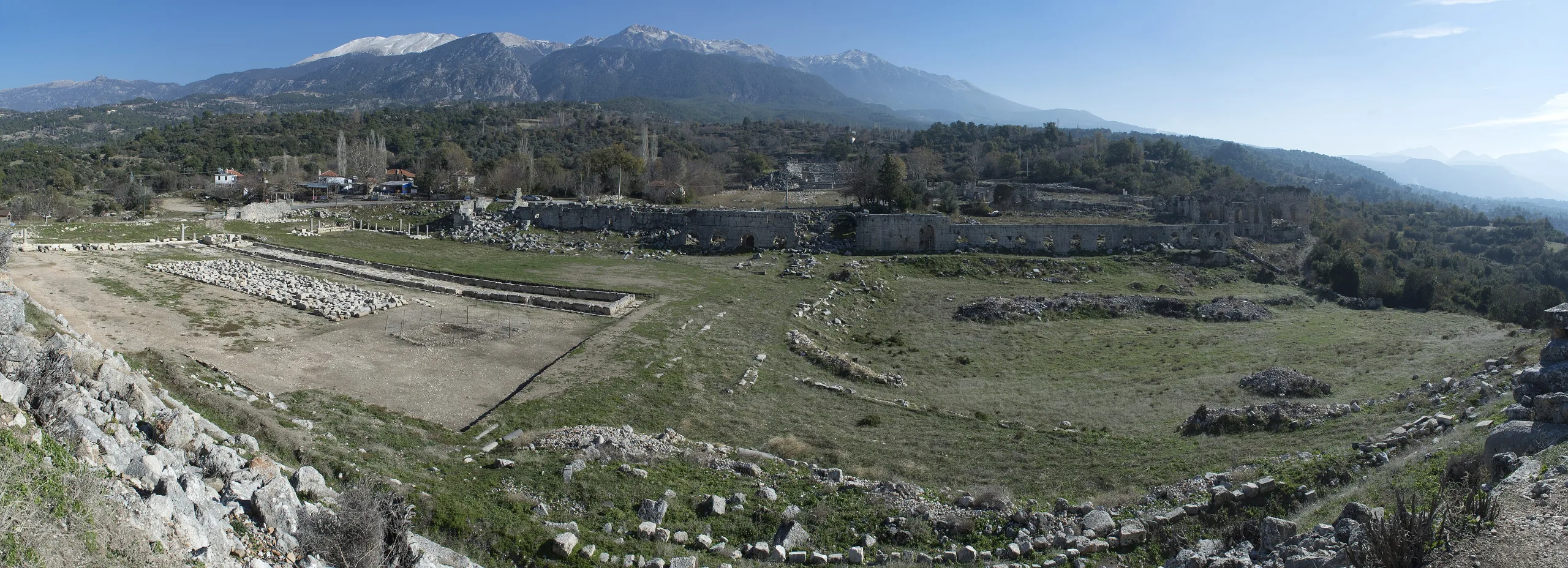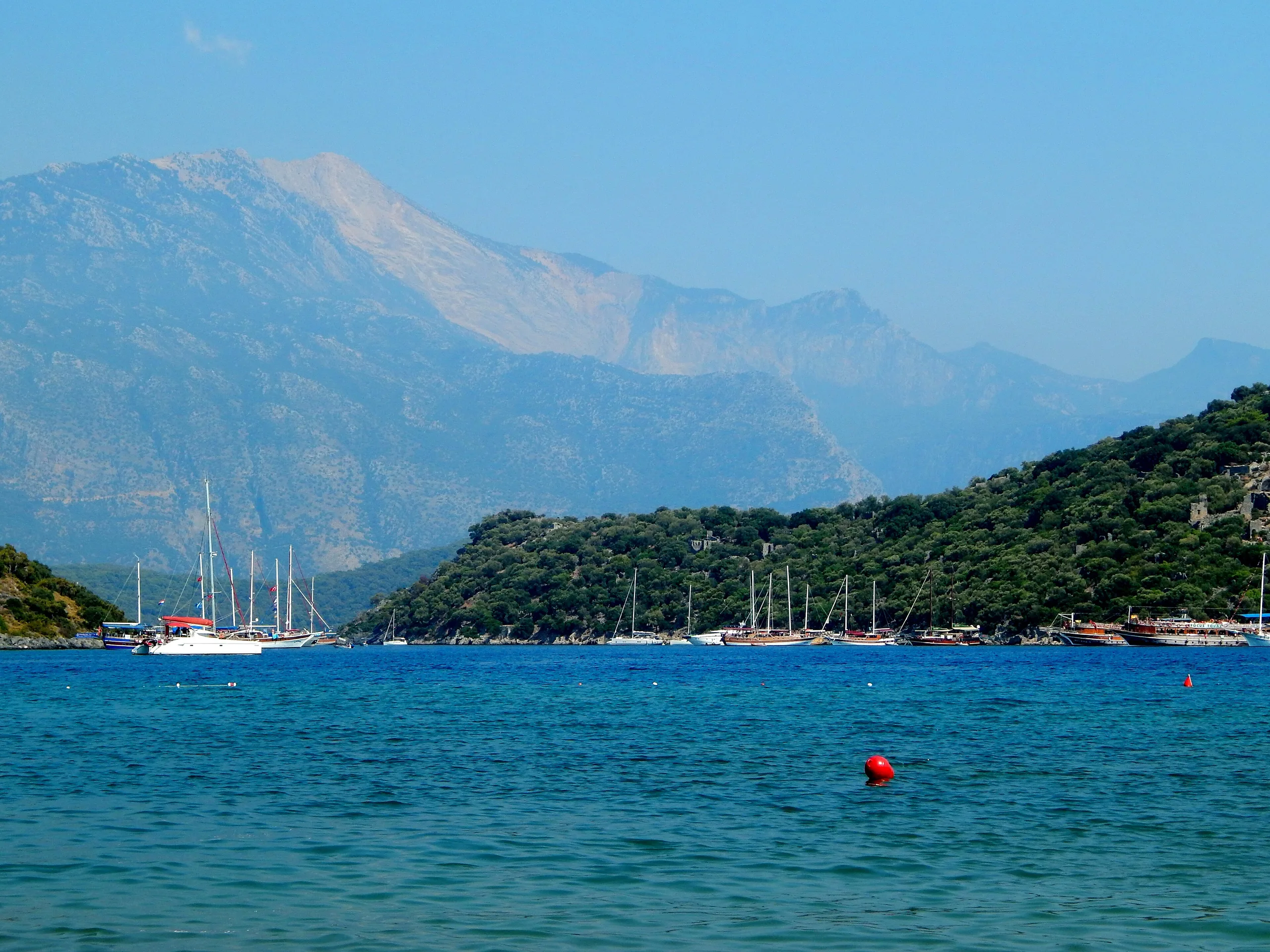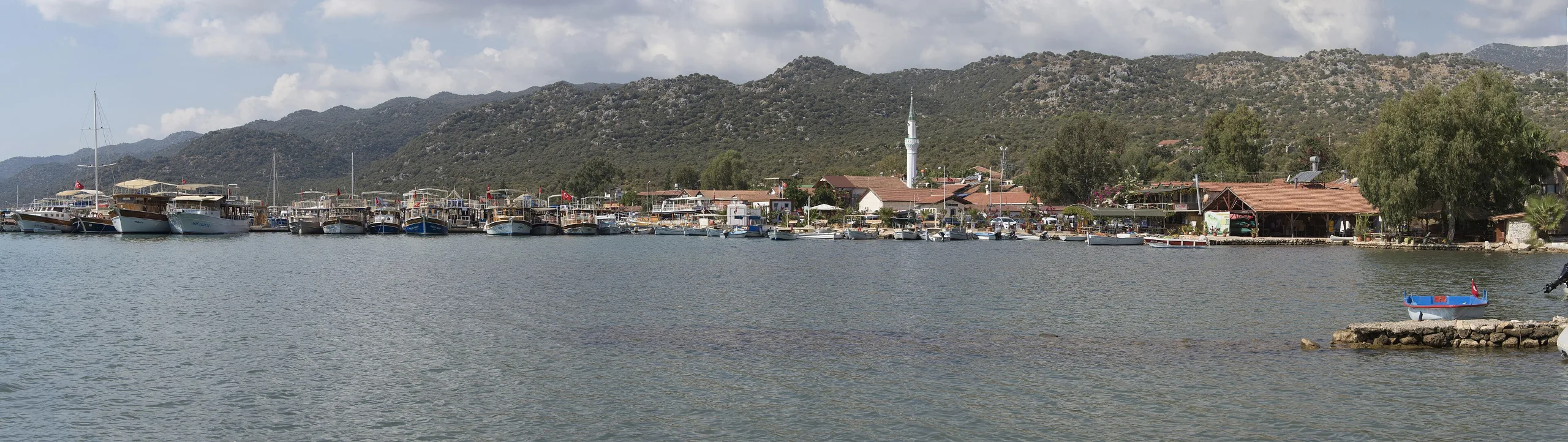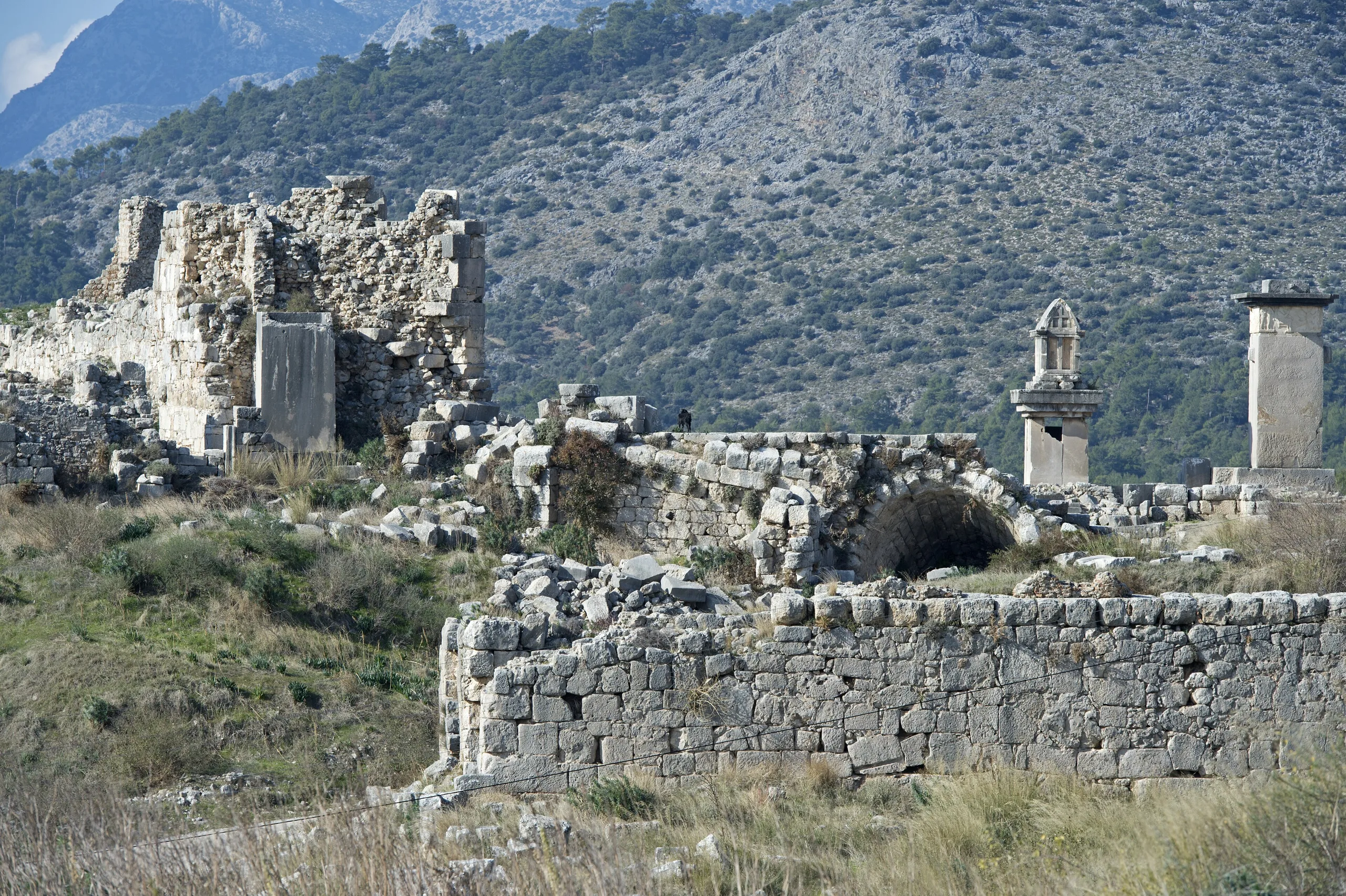
Xanthos was the capital of ancient Lycia, known for its monumental tombs and the longest Lycian inscription; it was added to the UNESCO World Heritage List with Letoon in 1988.
Xanthos is an ancient city located in Turkey, Antalya. Main periods: Hellenistic Period, Roman Period, Byzantine Period, Iron Age. It was inscribed on the UNESCO World Heritage List in 1988.
The most famous monuments of Xanthos are not at Xanthos. The Harpy Monument, the Nereid Monument, the Lion Tomb and the Payava sarcophagus were shipped to England in the 19th century and now stand in the British Museum, where they made the Xanthian marbles a fixture of every textbook on ancient art. What remains in the field, on two hills above the plain of the Eşen River, is still remarkable: a Lycian acropolis, a Roman theatre, a forest of tombs and the longest text ever found in the Lycian language. The city served as the capital of Lycia, and it was inscribed on the UNESCO World Heritage List in 1988 together with the sanctuary of Letoon.
Where it is
Xanthos lies near the village of Kınık in Kaş district, Antalya, 46 km from Fethiye, on the Muğla-Antalya provincial boundary formed by the Eşen River. Letoon is about 4 km away. The visitor address is Kınık Mahallesi, on the Fethiye highway. In Lycian inscriptions the city appears as Arnna, and the Greeks wrote its name as Xanthos.
History
Excavated material does not take the settlement back beyond the 8th century BCE. Homer already knew the city: he says the Lycian contingent that fought at Troy, led by Sarpedon, came from Xanthos. The city stayed independent until the Persians conquered it in 546-545 BCE. Their commander Harpagos laid siege to Xanthos, and the defenders, finally cornered, killed their wives and children and set the city on fire, leaving him an empty, burned town. Herodotus tells the same story, and a comparable end is said to have come when Rome conquered it. A great fire struck again between 475 and 450 BCE. Alexander the Great took Xanthos in 334 BCE; from 309 BCE the Ptolemies of Egypt held it, then Antiochus III of Syria.
The 2nd century BCE brought a political rise. In 167 BCE Xanthos and several other cities formed a confederation based at Letoon, and Xanthos became capital of the Lycian League. Brutus razed it in 42 BCE, and Mark Antony paid for its rebuilding. Because the city had stood with Rome against Mithridates, it held a privileged status for a long time. When the Roman agora was rebuilt in the 3rd century CE it was still dedicated to the twelve Lycian gods. In the 1st century CE an arch was put up in honour of Vespasian, and most of the Roman buildings that survive date from around then.
Under Byzantine rule Xanthos was the seat of a bishop and gained basilicas and other new buildings. After Arab raids in the 7th century it dwindled into a small village beside Kınık, and it stayed that way until Charles Fellows arrived in 1838 and carried some of the remains off to London.
What to see
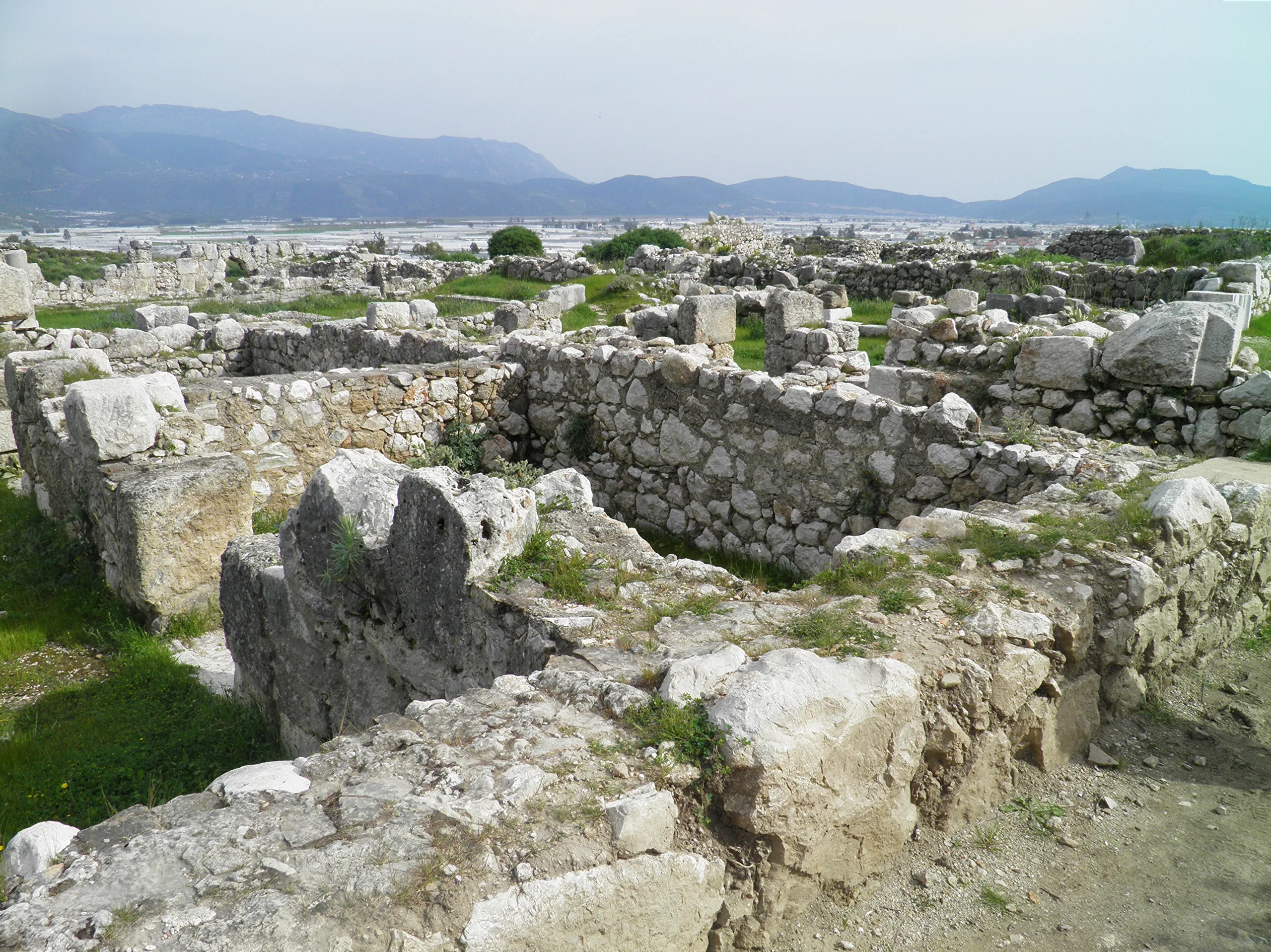
The two hills hold two acropoleis, the high fortified quarters of the city: the Lycian and the Roman. Both are ringed by walls built in several kinds of masonry, and the walls date from the 5th century BCE. On the acropolis are the remains of a palace, a building thought to be a Temple of Artemis and a Byzantine monastery. East of the river lies the first zone, with the Lycian acropolis, the theatre, the Roman agora and most of the monumental tombs. A second, more scattered zone stretches north from the Vespasian Arch and contains the partly excavated lower town, a Hellenistic agora and a pair of Byzantine churches.
The tombs
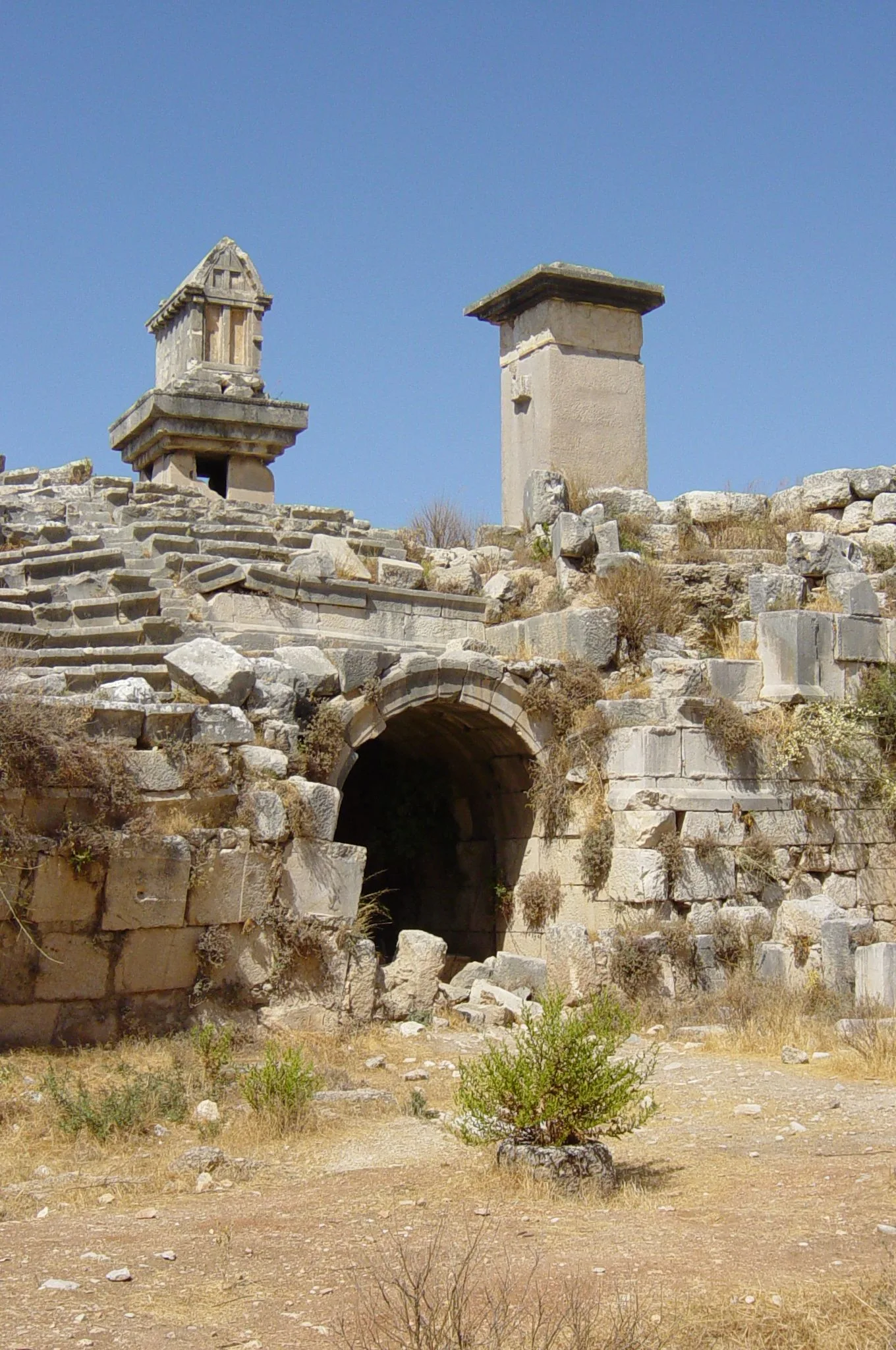
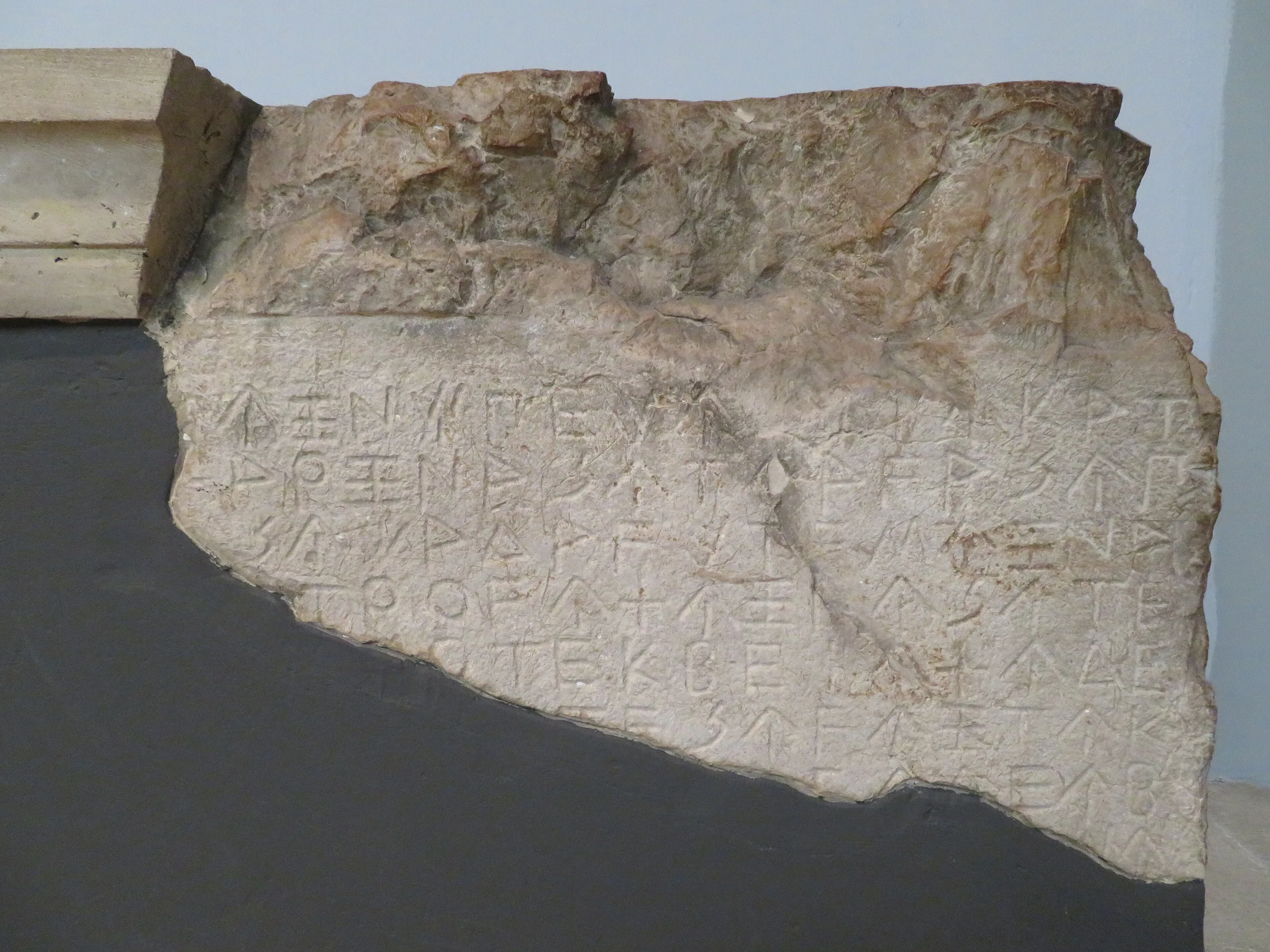
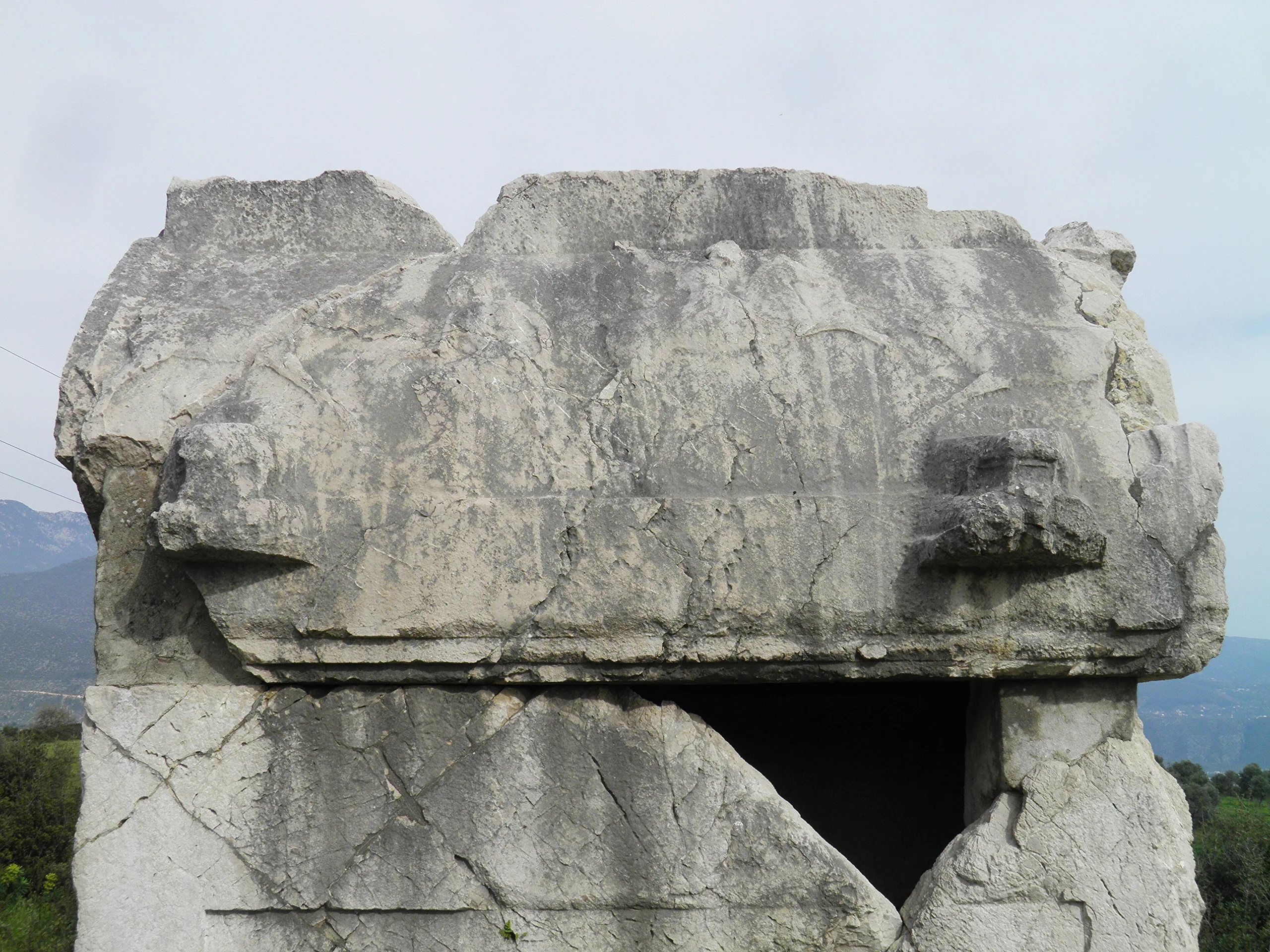
Fifteen monumental tombs have been recorded at Xanthos. In the north-east corner of the agora stands the Inscribed Pillar, about 4 m high and of the 5th century BCE. Its text, in Lycian and Greek, is the longest known in the Lycian language and recounts the adventures of a Xanthian prince called Kherei.
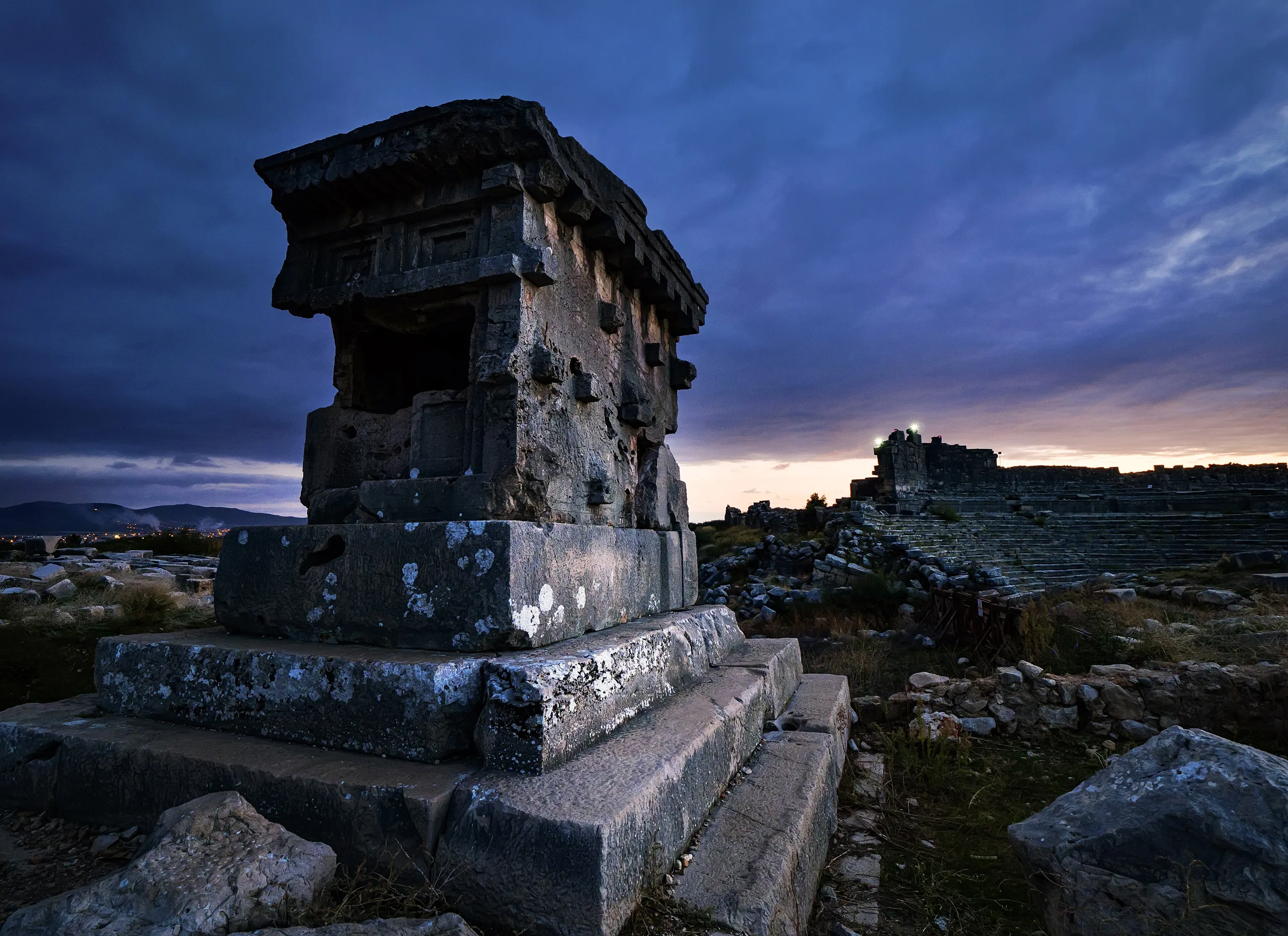
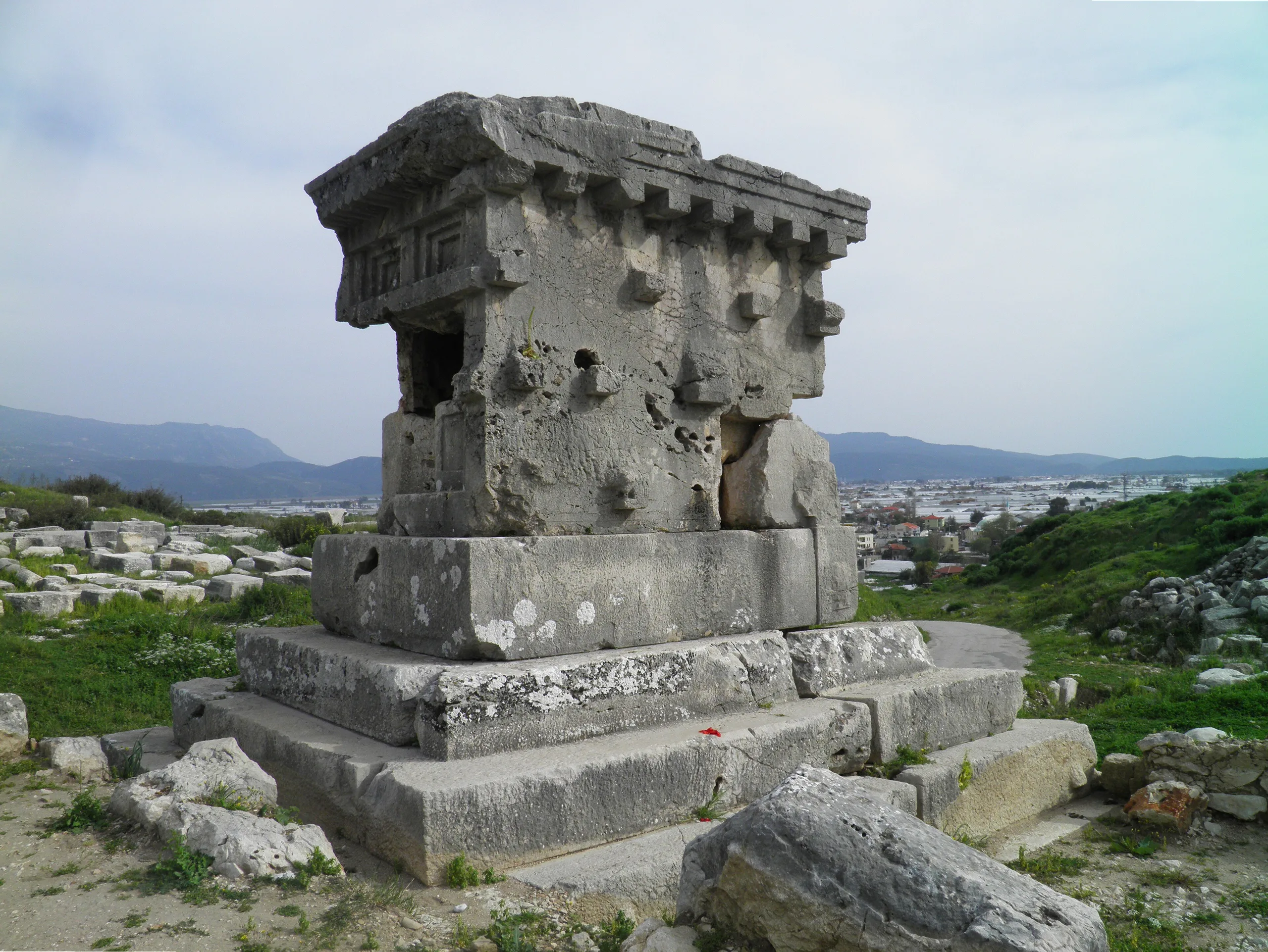
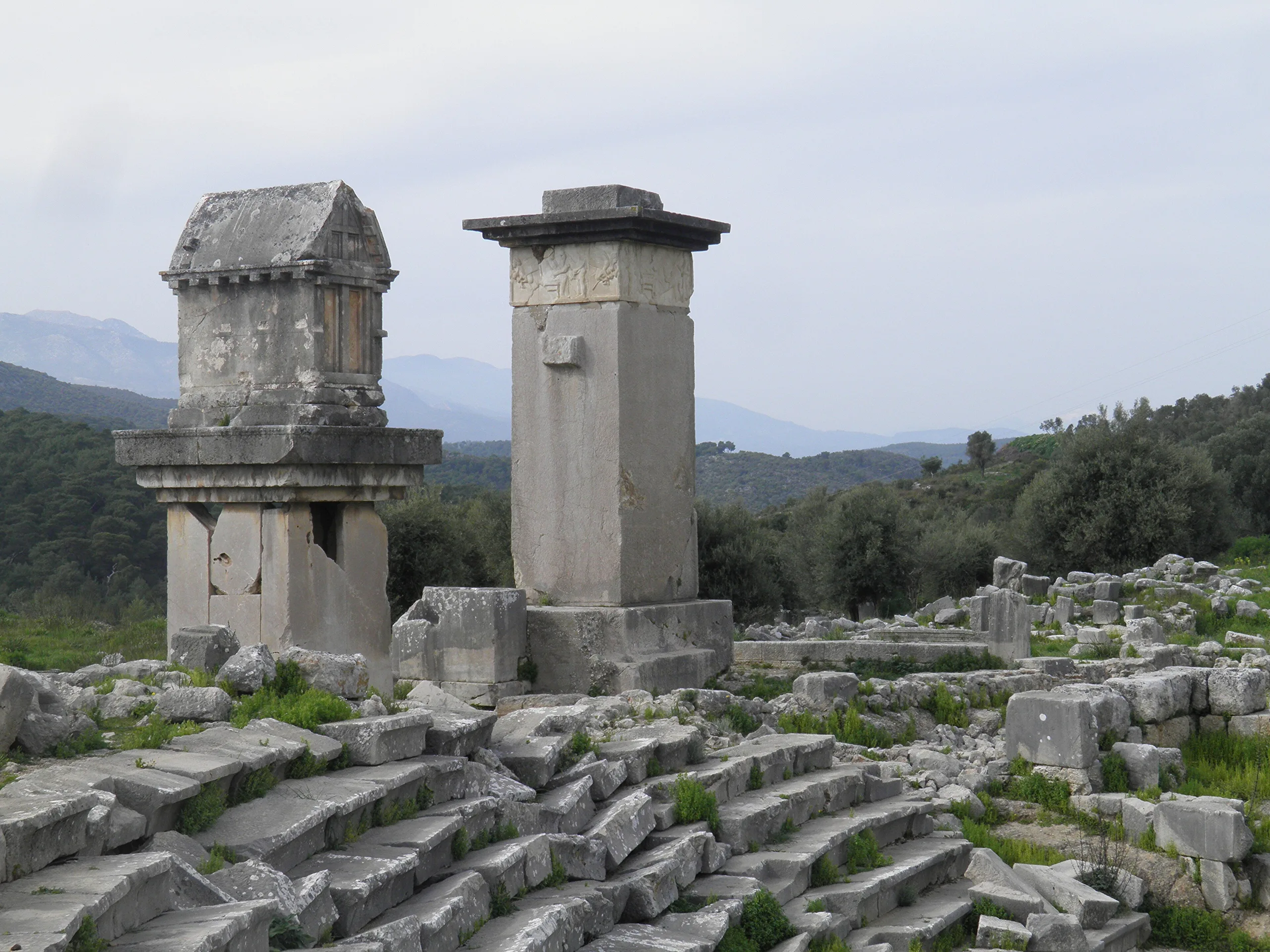
The Harpy Monument, also 5th century BCE, is a tall tomb on a single rectangular block; it carried figures of the dead family and reliefs of harpies, winged creatures with women's bodies that were believed to carry souls to the sky. The reliefs are in London, so only the base is left. Beside it is a 4th-century BCE Lycian sarcophagus raised on a pillar. Of the temple-shaped Nereid Monument, also of the 4th century BCE, only the foundations remain beside the ramp up to the site. The Lion Tomb and the sarcophagi of Payava and Merehi are in the same position: except for their bases, they are in London. The Mausoleum of Halicarnassus, a tomb that antiquity ranked among its seven great marvels, took direct inspiration from the Nereid Monument.
Theatre, agora and gate
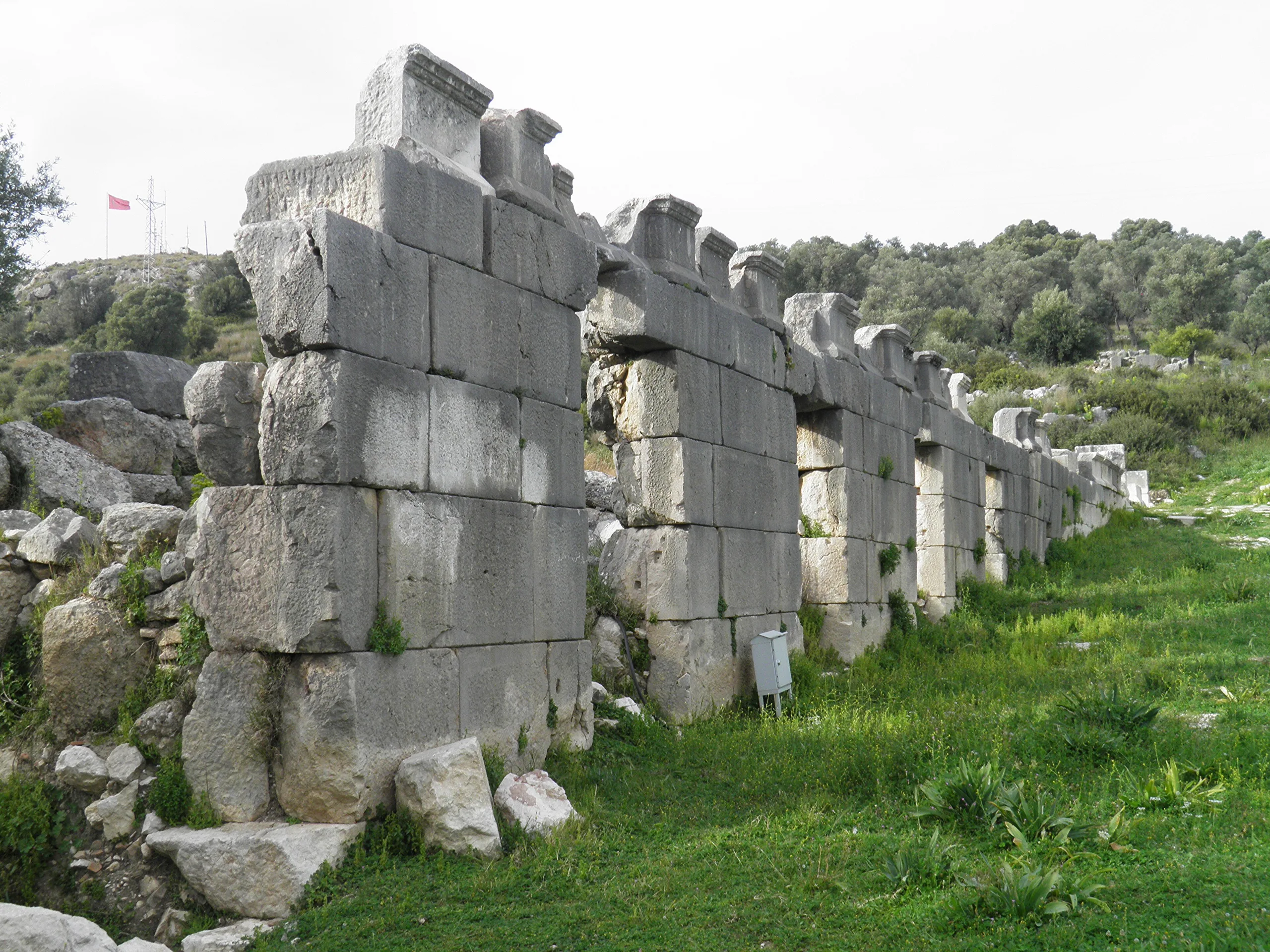
The theatre stands north of the Lycian acropolis. It holds 2,200 people, was built in the Hellenistic period and renewed under Rome, and its vaulted entrances, semicircular orchestra and stage building are Roman. North of it, the square Roman agora was framed by porticoes and shops. The Dipylon, the southern entrance of the city, was built in 68-70 CE of cut stones laid in a polygonal pattern, meaning many-sided blocks fitted tightly together.
Water channels
A complex water network runs through the city, and its channels are still used to irrigate fields. They are fed by the spring of İnpınarı, kilometres away, whose outlet sits inside a building resembling a small temple.
Research
Fellows worked at Xanthos from 1838 to 1844 and published his results in a book on Lycia. The tombs were removed to London as part of that work. In the 20th century a French team led by Pierre Demargne and Henri Metzger dug here. Demargne's report on the 1957 season states that the programme set for the Lycian acropolis in 1951 was completed, the area around the Temple of Artemis cleared and the Harpy Monument restored in September and October 1957, with the director of the Antalya museum on the team as Turkish government commissioner.
World Heritage
Xanthos-Letoon was inscribed in 1988 (reference 484) under criteria (ii) and (iii). The two neighbouring settlements form a single property across Antalya and Muğla provinces. Criterion (ii) rests on Xanthos's influence on the architecture of Lycian cities such as Patara, Pınara and Myra. Criterion (iii) cites exceptional testimony to Lycian civilisation, above all the longest and most important Lycian texts. The area is registered as a first-degree archaeological site, and the conservation plan for Xanthos was approved in 2001. A paved road that has long cut across the ancient city remains the one problem still awaiting a lasting solution.
Visiting
The Müzekart is valid for Turkish citizens. Hours and fees change, so check the official announcements before you go. Letoon, the other half of the World Heritage property, lies about 4 km away.
Gallery
Frequently asked questions
Where is Xanthos?
Why is Xanthos a World Heritage site?
Why are the Xanthos monuments in London?
Where is the longest Lycian inscription?
What did the people of Xanthos do when the Persians attacked?
How are Xanthos and Letoon related?
Sources (16)
- Xanthos Örenyeri / Xanthos Archaeological Site (TR ve EN sayfaları) — T.C. Kültür ve Turizm Bakanlığı, Müzeler ve Ören Yerleri
- Xanthos - Antalya (Gezilecek Yerler; kaynak: Dünden Bugüne Antalya, II. Cilt, 2012) — T.C. Kültür ve Turizm Bakanlığı, Kültür Portalı / Antalya İl Kültür ve Turizm Müdürlüğü
- Xanthos-Letoon (Dünya Mirasında Türkiye) — T.C. Kültür ve Turizm Bakanlığı, Kültür Portalı
- Xanthos-Letoon (UNESCO Dünya Mirası no. 484) — UNESCO World Heritage Centre
- Advisory Body Evaluation, Xanthos-Letoon (WHC 484) — ICOMOS, 1988
- Xanthos (Pleiades place 639166) — Pleiades
- Mission de Xanthos: Rapport sur les résultats de la huitième campagne (1957), Demargne, P., Türk Arkeoloji Dergisi — T.C. Kültür ve Turizm Bakanlığı, Türk Arkeoloji Dergisi arşivi (taed.ktb.gov.tr)
Photo credits
- Photo: Dosseman, CC BY-SA 4.0 — Wikimedia Commons (resized)
- Photo: Pot Noodle, CC BY 2.0 — Wikimedia Commons (resized)
- Photo: Buğra Kaan Ersoy, CC BY-SA 4.0 — Wikimedia Commons (resized)
- Photo: Carole Raddato from FRANKFURT, Germany, CC BY-SA 2.0 — Wikimedia Commons (resized)
- Photo: BabelStone, CC BY-SA 3.0 — Wikimedia Commons (resized)
- Photo: Carole Raddato from FRANKFURT, Germany, CC BY-SA 2.0 — Wikimedia Commons (resized)
- Photo: Carole Raddato from FRANKFURT, Germany, CC BY-SA 2.0 — Wikimedia Commons (resized)
- Photo: Carole Raddato from FRANKFURT, Germany, CC BY-SA 2.0 — Wikimedia Commons (resized)
- Photo: Carole Raddato from FRANKFURT, Germany, CC BY-SA 2.0 — Wikimedia Commons (resized)