A medieval fortress on a rock 250 m above the sea, with 6.5 km of walls, the Red Tower and the only Seljuk shipyard to survive intact; people still live inside the walls.
Alanya Castle is a place (Castle) in Turkey, Antalya. Main periods: Hellenistic Period, Roman Period, Byzantine Period, Seljuk Period, Ottoman Period.
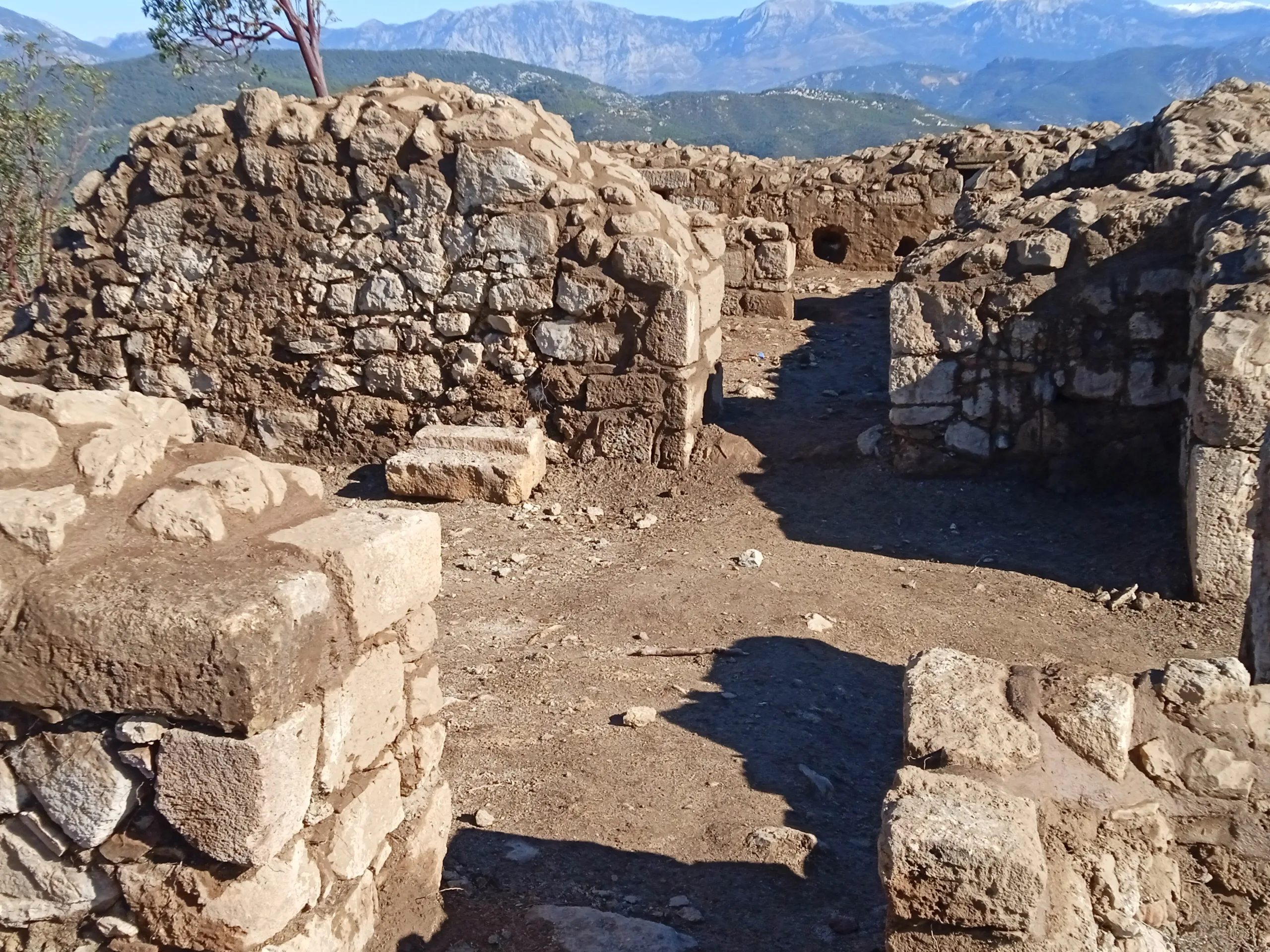
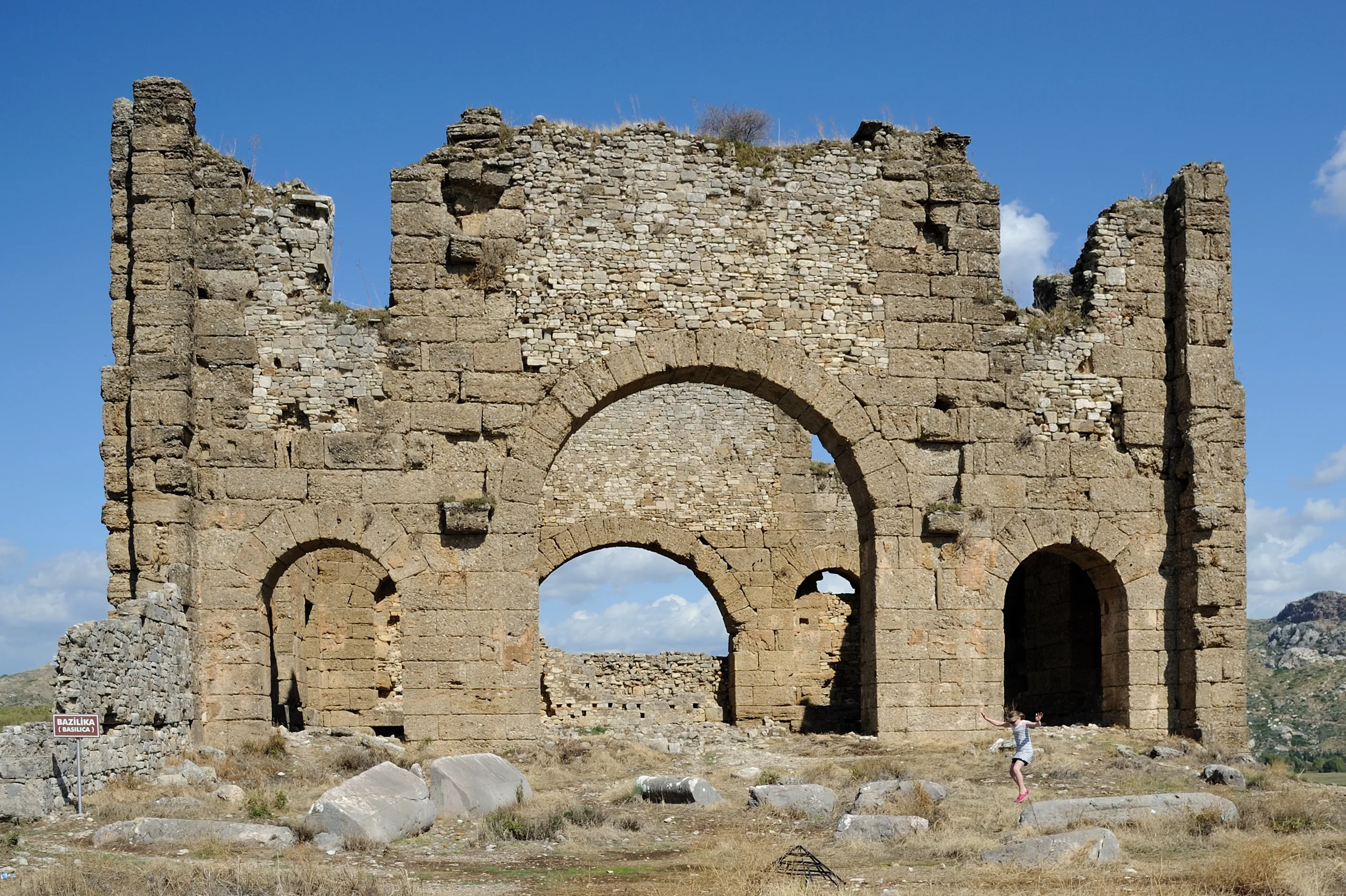
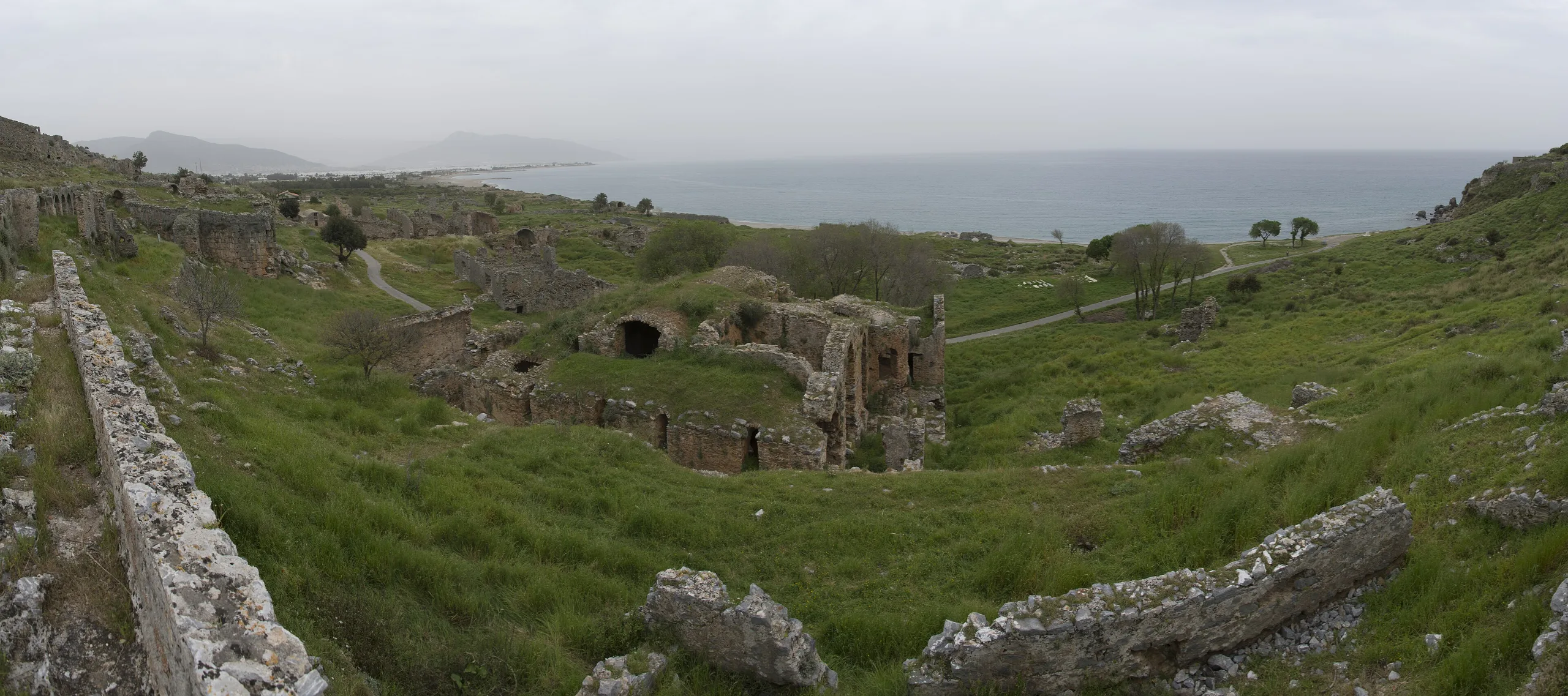
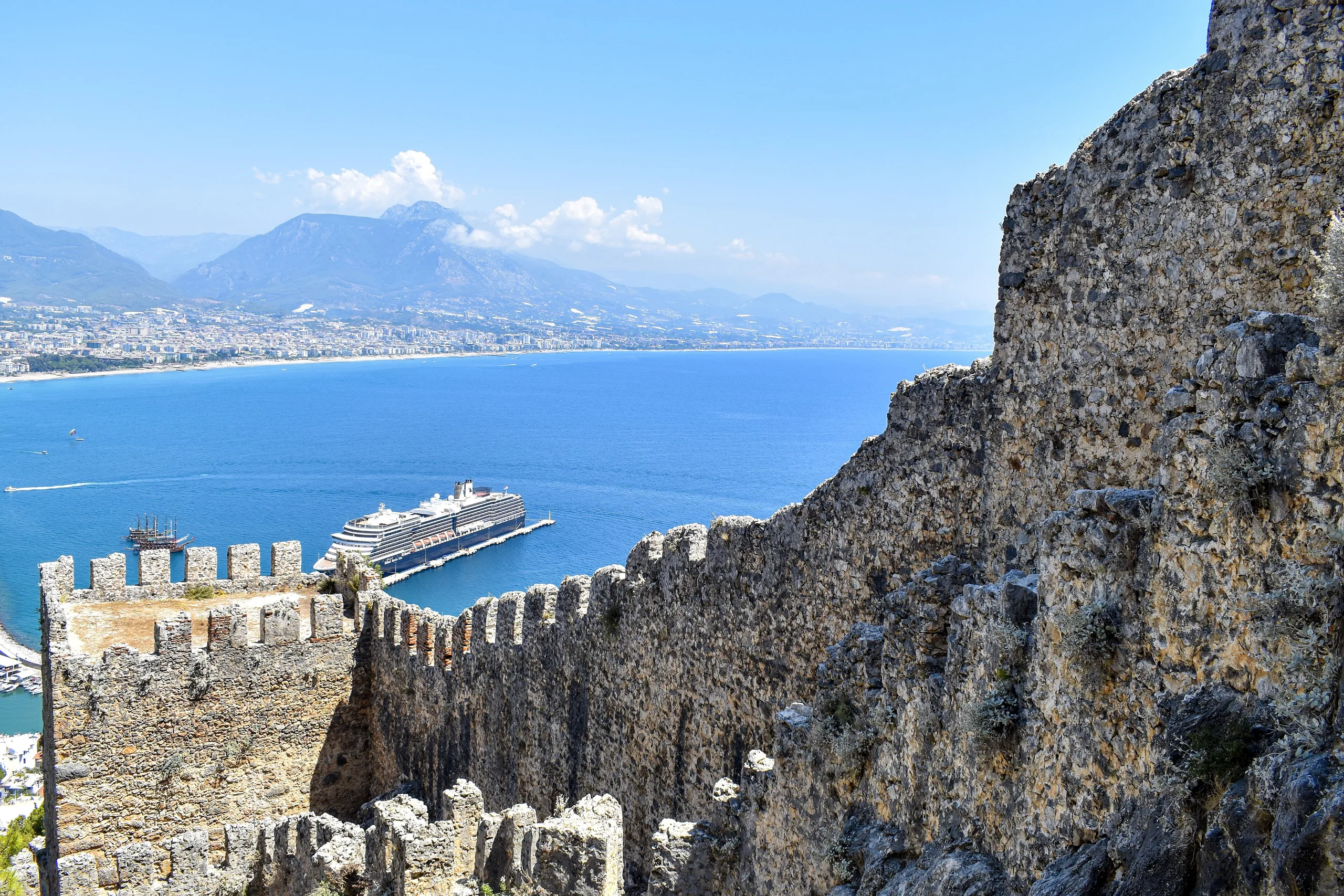
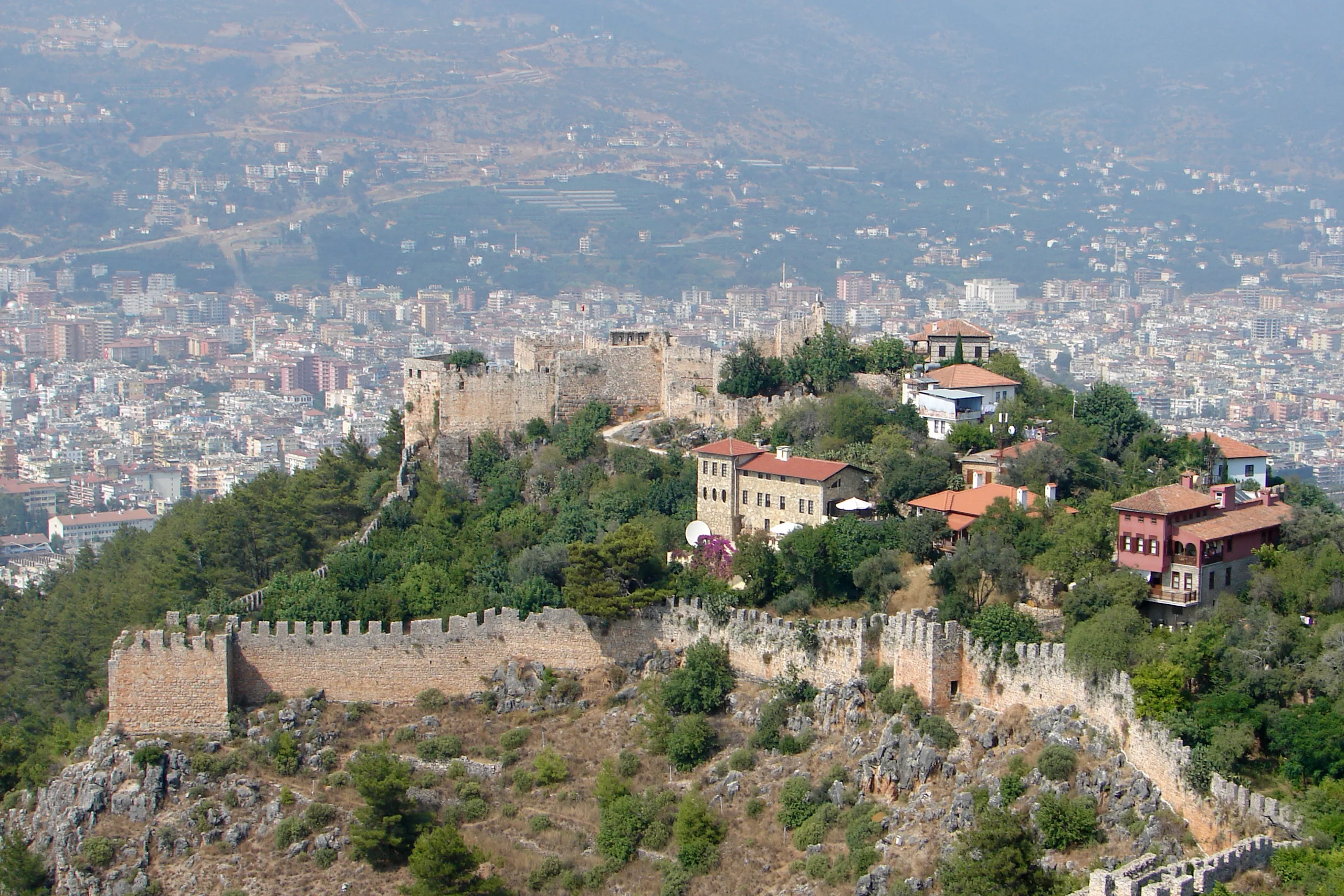
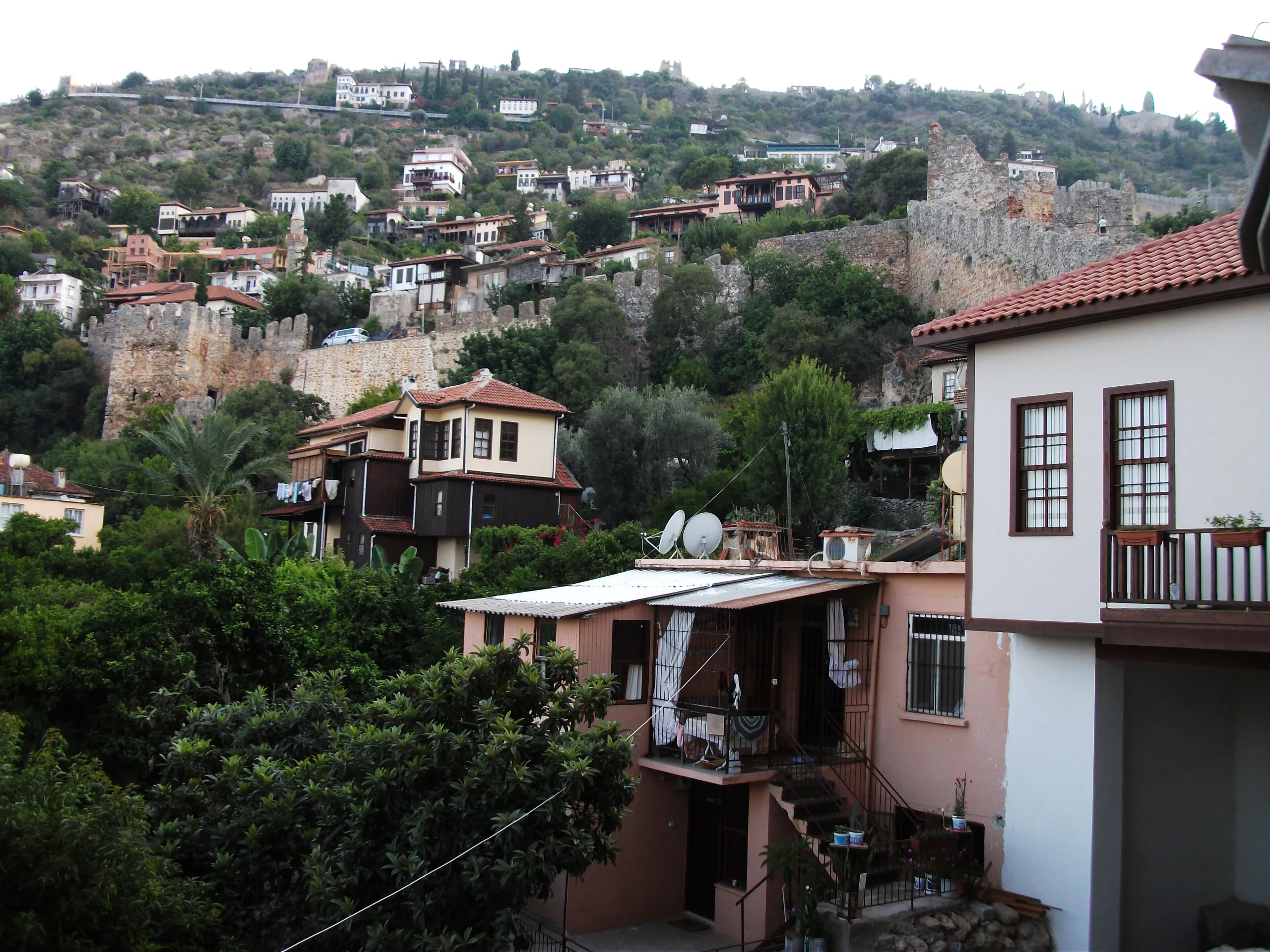
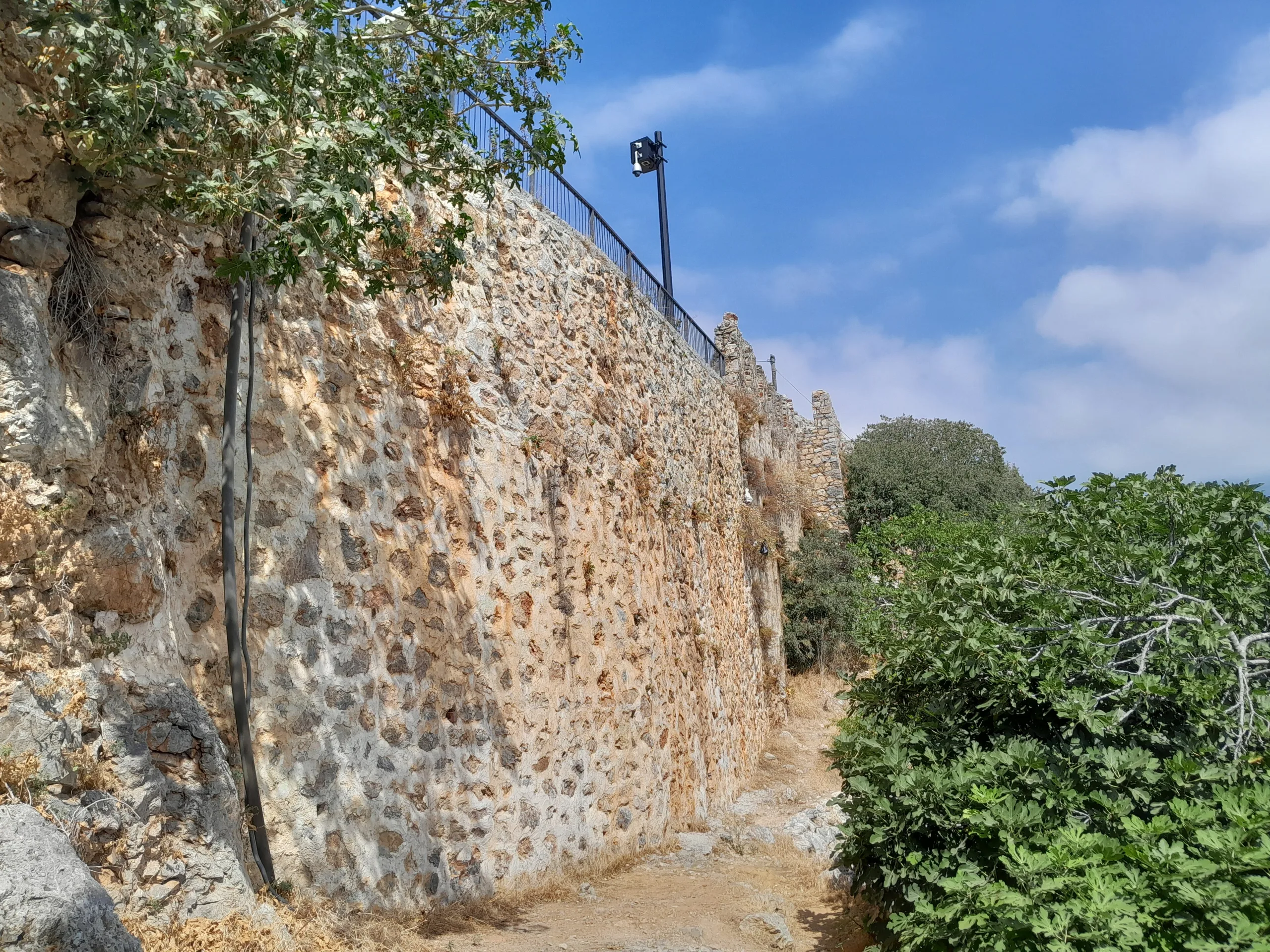
The walls of Alanya Castle run over a peninsula that drops to the sea: 6.5 km of them, with about 140 towers and nearly 400 cisterns inside. Hard to reach from both sea and land, the rock is naturally defensible and has been settled without a break throughout history, and people still live within the walls today. This medieval fortress in Alanya district, Antalya, is one of the best-preserved in Anatolia. It has stood since Hellenistic times, but it took its monumental form under the Seljuks.
Location and access
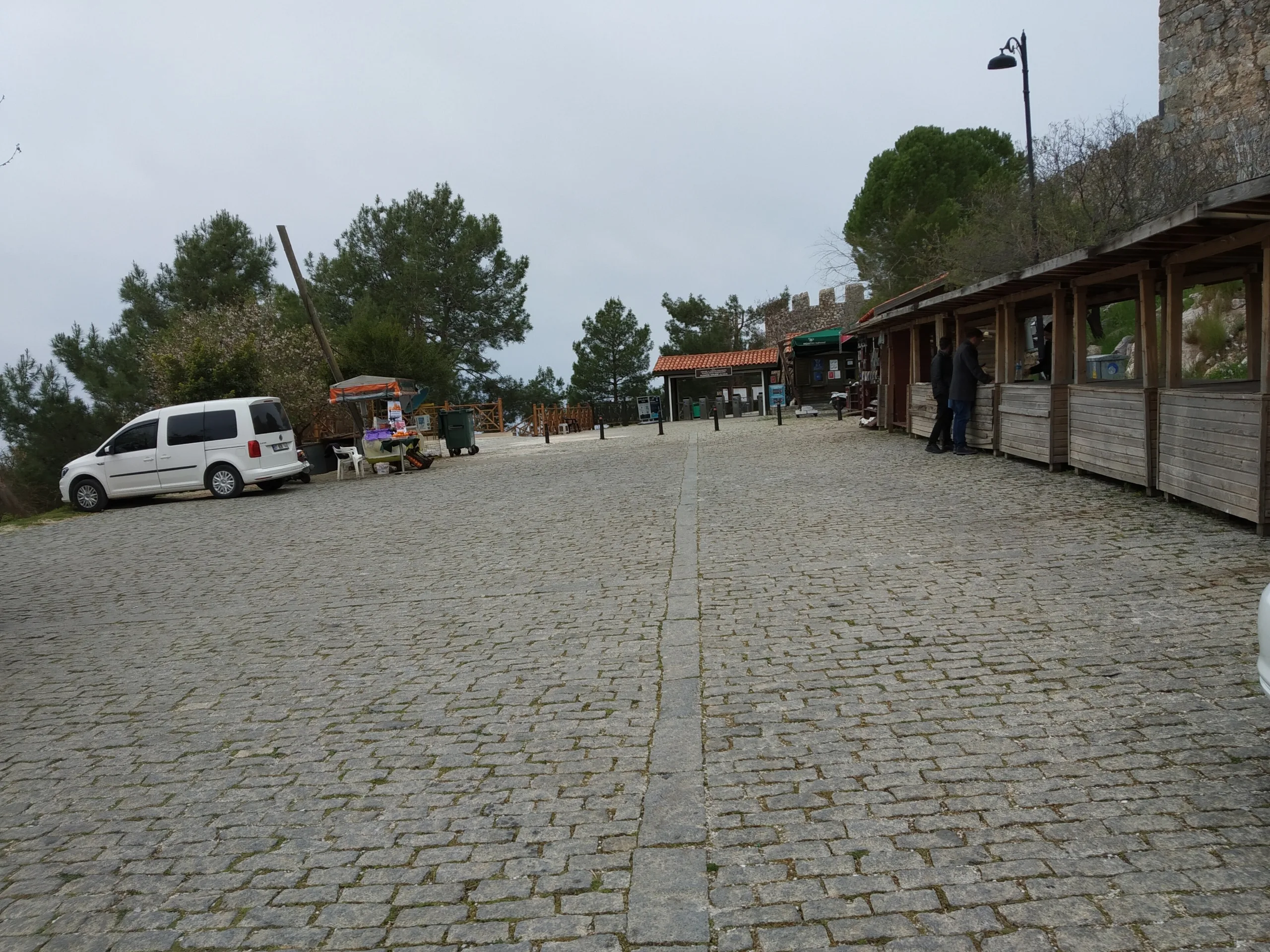
The castle stands in Hisariçi neighbourhood of Alanya, on Kale Caddesi. Alanya lies on the eastern side of the Gulf of Antalya, 137 km from Antalya by the main highway. The fortress runs from the highest point at the western end of the peninsula, the inner keep, down to the sea. Minibuses from Alanya reach it. For current visiting terms use the official page.
History
The walled peninsula was called Karakesion in the Hellenistic age, and the castle's roots go back to the 3rd century BCE. Strabo describes Alanya as the first city a traveller meets on entering Cilicia from the west. Because it sat on a very steep rock that was hard to capture and had a sheltered harbour, it became a pirate headquarters from the 2nd century BCE. After Pompey won the Battle of Korakesion the city passed to Rome, and the walls were extended and new buildings added.
In Byzantine times the place was Kalonoros, Beautiful Mountain, one of the busiest harbours of the Mediterranean. In 1221 the Seljuk Sultan Alaaddin Kayqubad I took it over; castle and town were renamed Alaiye, and the modern name descends from Kayqubad. Walls were strengthened and new wall sections and cisterns built. Under the Seljuks Alanya grew into a capital of the sultanate, and the fortress reached its present form. In Ottoman times the Süleymaniye Mosque, a covered market (bedesten), an arasta and traditional Alanya houses were added to the Upper Castle.
People and events
No one shaped the castle more than Alaaddin Kayqubad. By building the yards at Alanya on the Mediterranean and at Sinop on the Black Sea he earned the title Sultan of the Two Seas; a Seljuk trade route linked the two towns, lined with caravanserais. The inscription on the Red Tower records that Kayqubad had it built in 1226 and also names Ebu Ali of Aleppo. Pompey's victory was the turning point that brought the town into the Roman world. Akşebe Sultan is remembered as one of the castle's first commanders, with a mosque and tomb in his name.
Notable structures
Walls and the inner keep
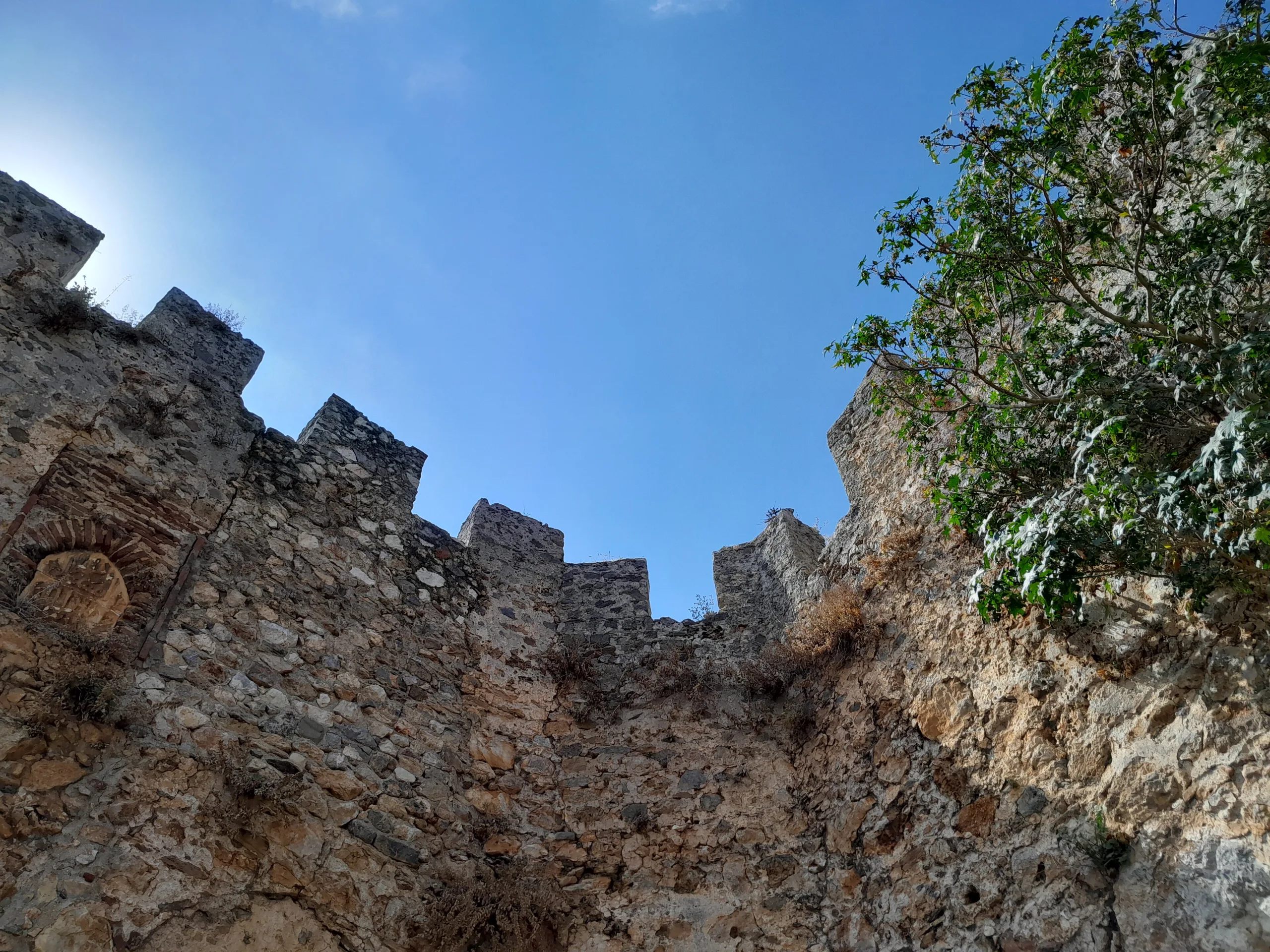
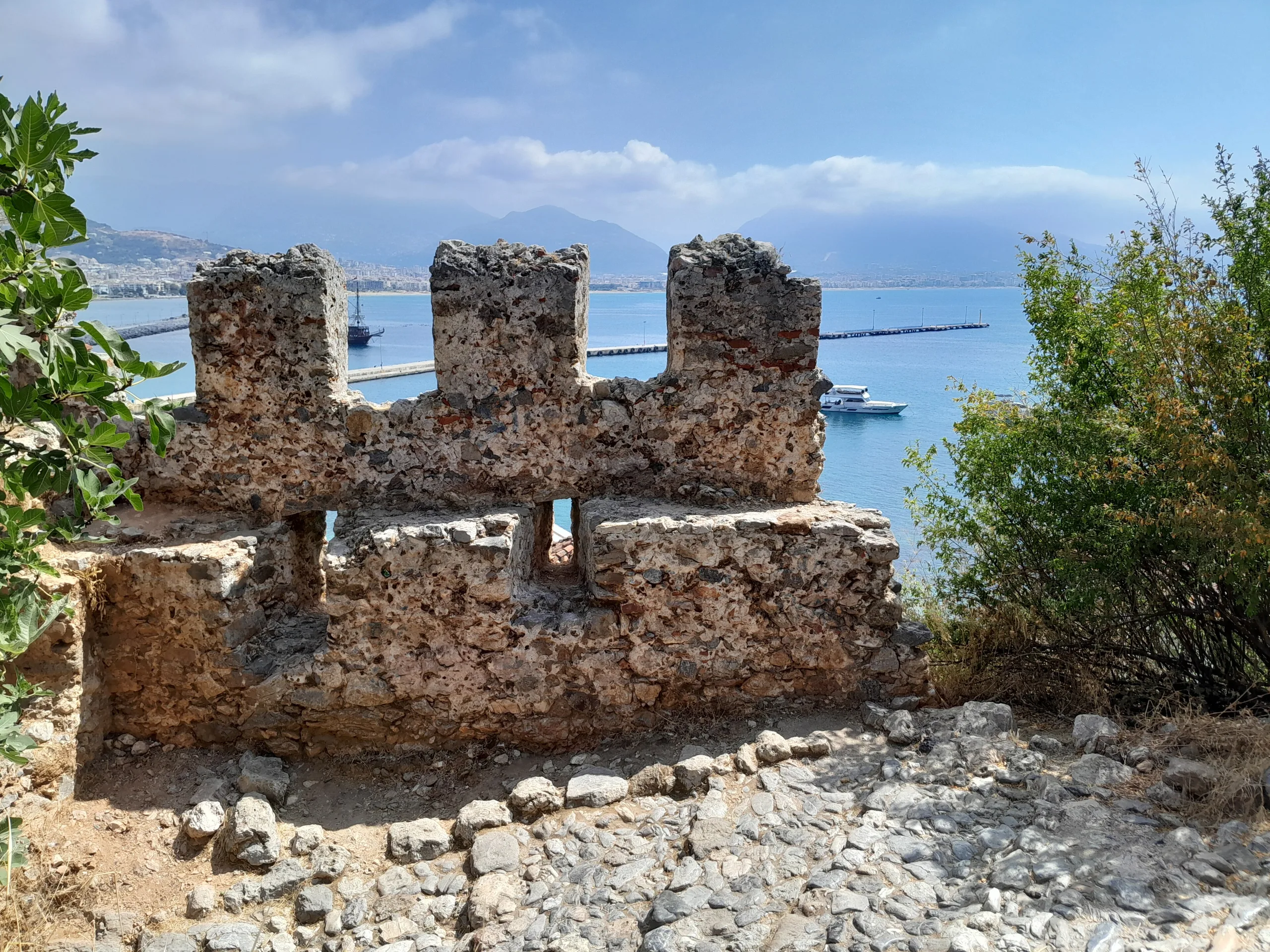
The wall circuit starts at the Red Tower, climbs through Ehmedek and the inner keep to Adam Atacağı, runs over the top of Cape Cilvarda and down to the Arap Evliyası and Esat towers, then passes the arsenal and shipyard to end where it began. The inner keep, on the highest ground of the peninsula's western corner, stands 250 m above the sea and has strong walls on all four sides, since it was the administrative and military centre. A trefoil-plan chapel stands near the middle, dated by its architecture to the 12th century. Among the defensive details are machicolations, openings used to pour pitch on attackers. The Seljuk palace in the keep was built from the remains of older structures, and its houses, baths and some 400 cisterns met the castle's water needs.
Red Tower and shipyard
The Red Tower at the water's edge is an octagon of red stone and brick, 33 m tall, and the symbol of Alanya. Built in 1226 to protect the castle and the planned shipyard from threats from the sea, it takes its name from the red brick of its fabric. It has five floors; the entrance and first floor house the Ethnography Museum, and exhibitions and concerts are sometimes held there. The arched shipyard beside it, built around 1227-1228, stands for the Seljuks' meeting with the Mediterranean. It turned out sails and other ship supplies as well as vessels. It was the Seljuks' second yard after Sinop and is the only Seljuk shipyard to survive intact; it was used until the 1960s. Close by is the two-storey arsenal, 12 x 14 m, thought to have been built to guard the yard.
Ottoman buildings and other works
The castle holds Byzantine churches and chapels, the bedesten, the mosque and tomb of Akşebe Sultan, and 13th-century dungeons that Suleiman the Magnificent had rebuilt. Further additions are the Süleymaniye Mosque and a lighthouse of 1720 that guided ships for years.
Museums
The entrance and first floor of the Red Tower serve as the Ethnography Museum, and the old shipyard now receives visitors as a ship and maritime museum.
UNESCO and protection
Alanya has been on the UNESCO World Heritage Tentative List since Türkiye's submission of 25 February 2000. Inside the castle are a Seljuk cistern, a Byzantine church, the palace of Sultan Kayqubad and the ruins of a Seljuk bath, and the historic remains blend with the traditional urban fabric. The walls reach down to the shore and enclose a medieval dockyard watched over by the 33 m octagonal tower of red stone and brick.
Gallery
Frequently asked questions
Where is Alanya Castle?
Who built the castle?
Why is it called the Red Tower?
What is special about the shipyard?
How long are the walls?
Is Alanya Castle a UNESCO World Heritage Site?
Sources (14)
- Alanya Kalesi / Alanya Castle (TR ve EN sayfalar) — T.C. Kültür ve Turizm Bakanlığı, Müzeler ve Ören Yerleri
- Alanya Kalesi (kaynak: Dünden Bugüne Antalya I, Antalya İl Kültür ve Turizm Müdürlüğü, 2012) — T.C. Kültür ve Turizm Bakanlığı, Türkiye Kültür Portalı
- Alanya Tersanesi ve Kızıl Kule (kaynak: Gravürlerden Fotoğraflara Türkiye, KTB Yayınları) — T.C. Kültür ve Turizm Bakanlığı, Türkiye Kültür Portalı
- Alanya (Tentative List ref. 1405) — UNESCO World Heritage Centre
- Alanya Castle (Wikidata Q81593, P625) — Wikidata
Photo credits
- Photo: Julian Lupyan, CC0 — Wikimedia Commons (resized)
- Photo: Luke_33, CC BY 2.5 pl — Wikimedia Commons (resized)
- Photo: Gürsoy Tokgöz, CC BY 3.0 — Wikimedia Commons (resized)
- Photo: Satirdan kahraman, CC0 — Wikimedia Commons (resized)
- Photo: August Dominus, CC0 — Wikimedia Commons (resized)
- Photo: August Dominus, CC0 — Wikimedia Commons (resized)
- Photo: August Dominus, CC0 — Wikimedia Commons (resized)
- Photo: Julian Lupyan, CC0 — Wikimedia Commons (resized)
- Photo: Julian Lupyan, CC0 — Wikimedia Commons (resized)