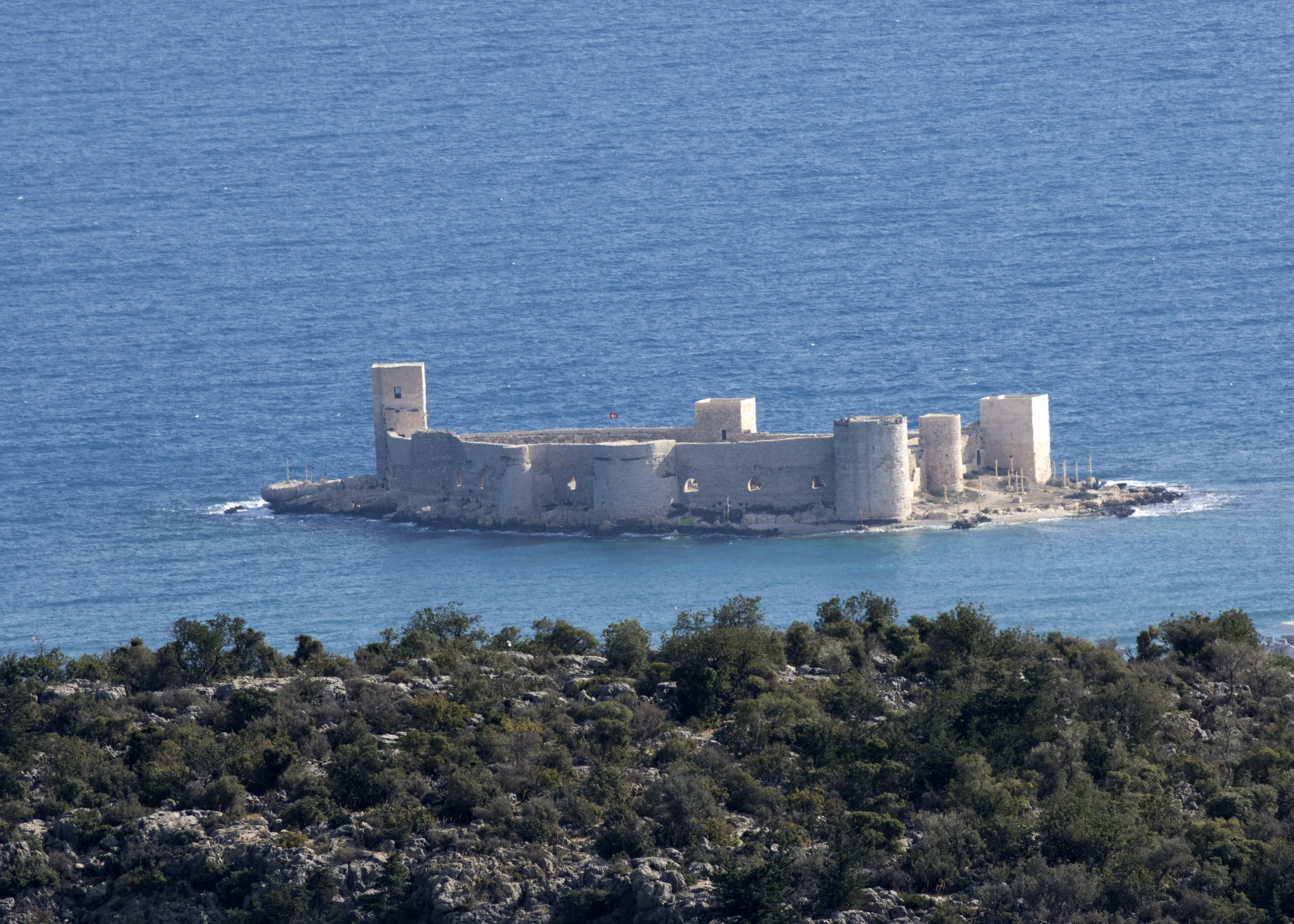
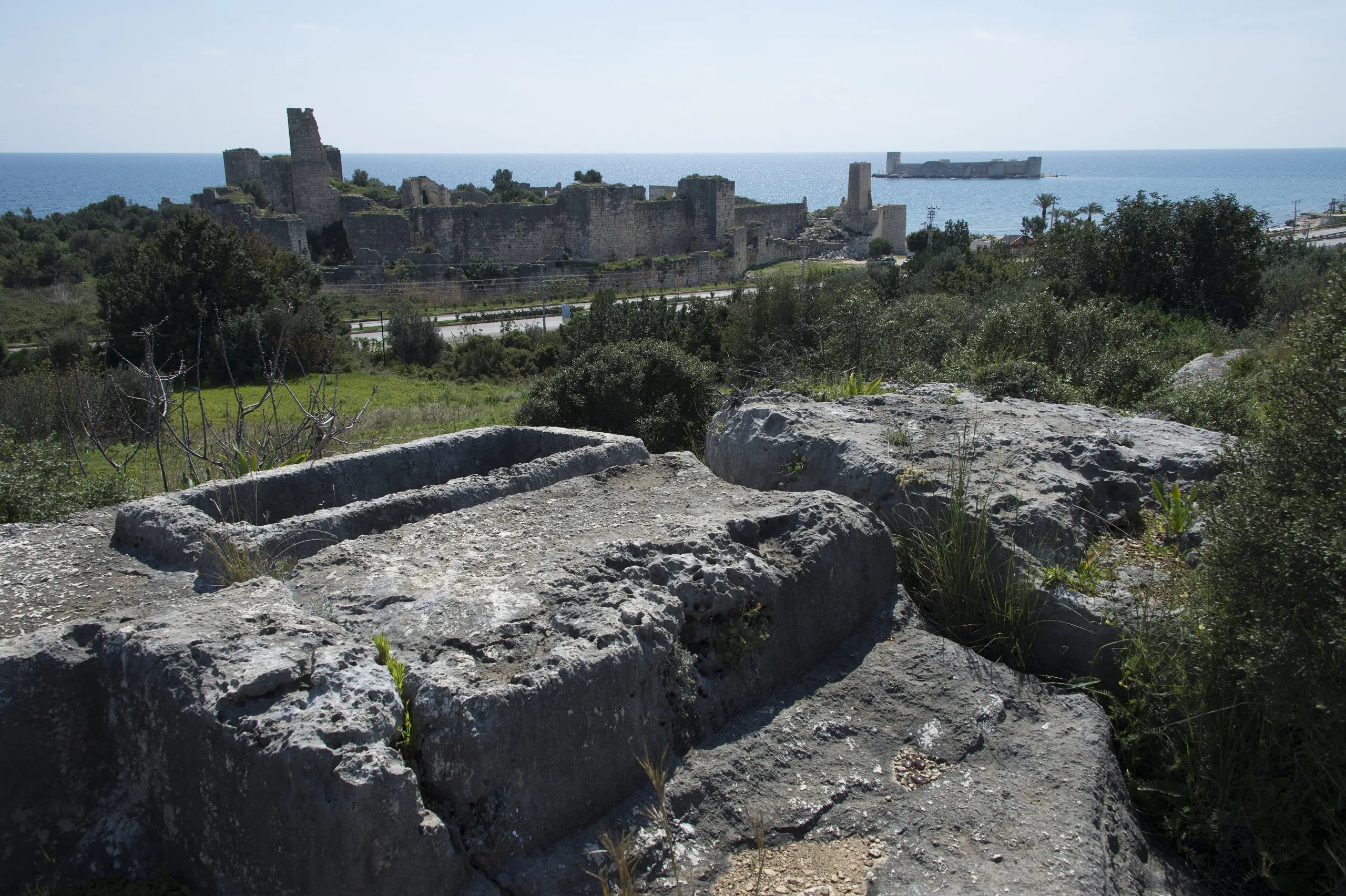
At Kızkalesi on the Cilician coast, a castle on an islet and another on the shore were planned as one system guarding the harbour of ancient Korykos.
Maiden's Castle (Korykos) is a place (Castle) in Turkey, Mersin. Main periods: Hellenistic Period, Roman Period, Byzantine Period.
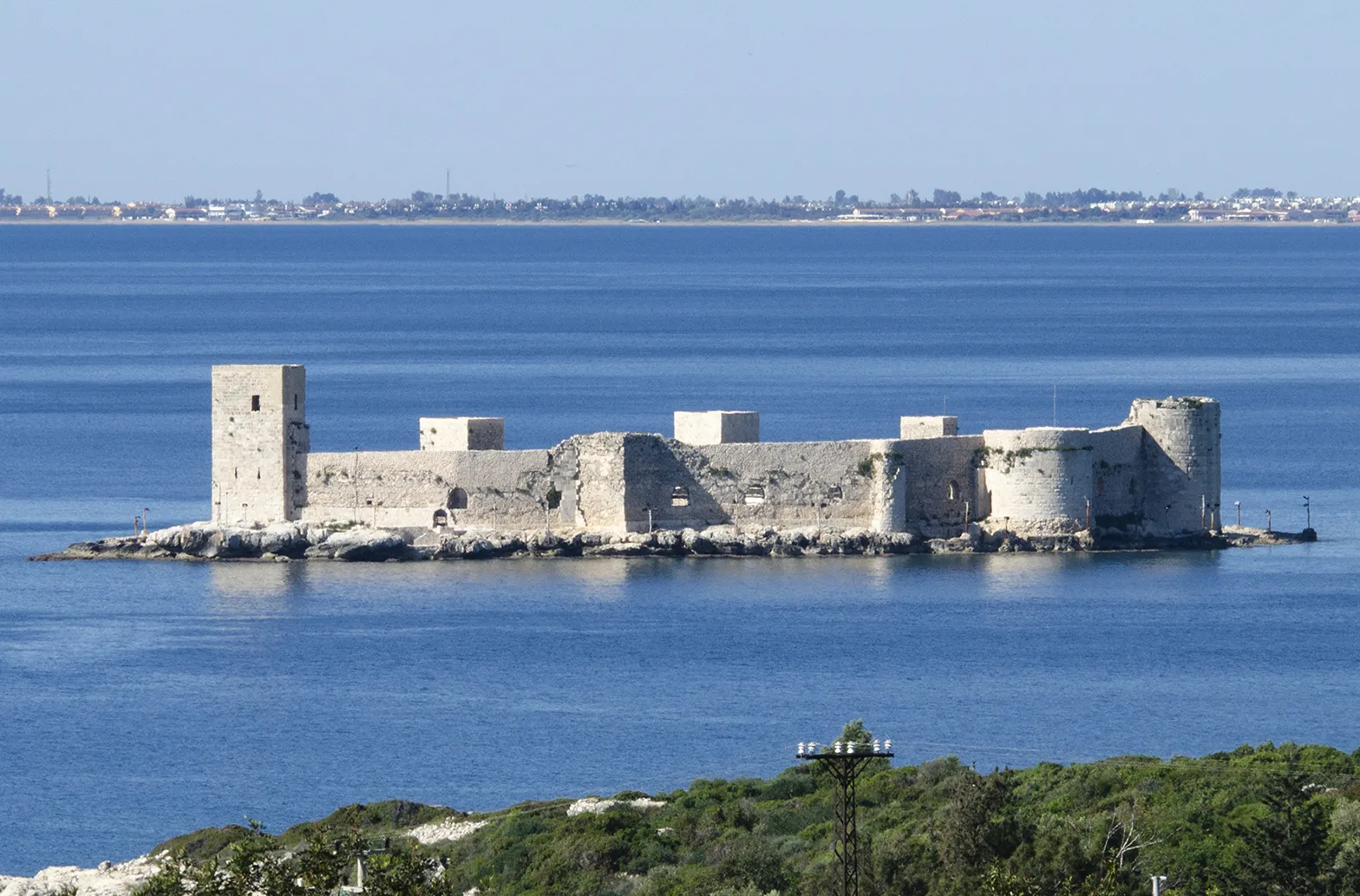
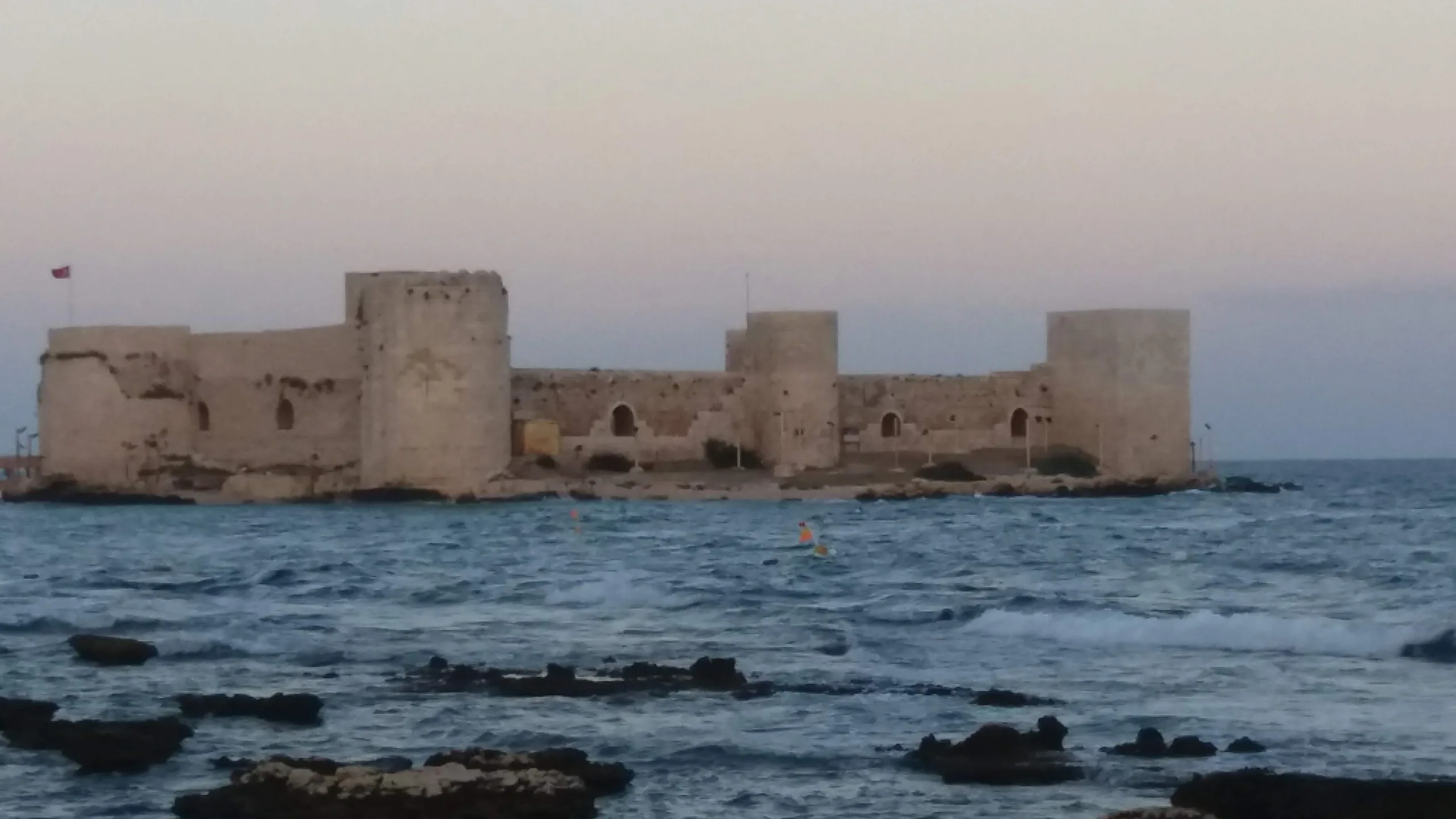
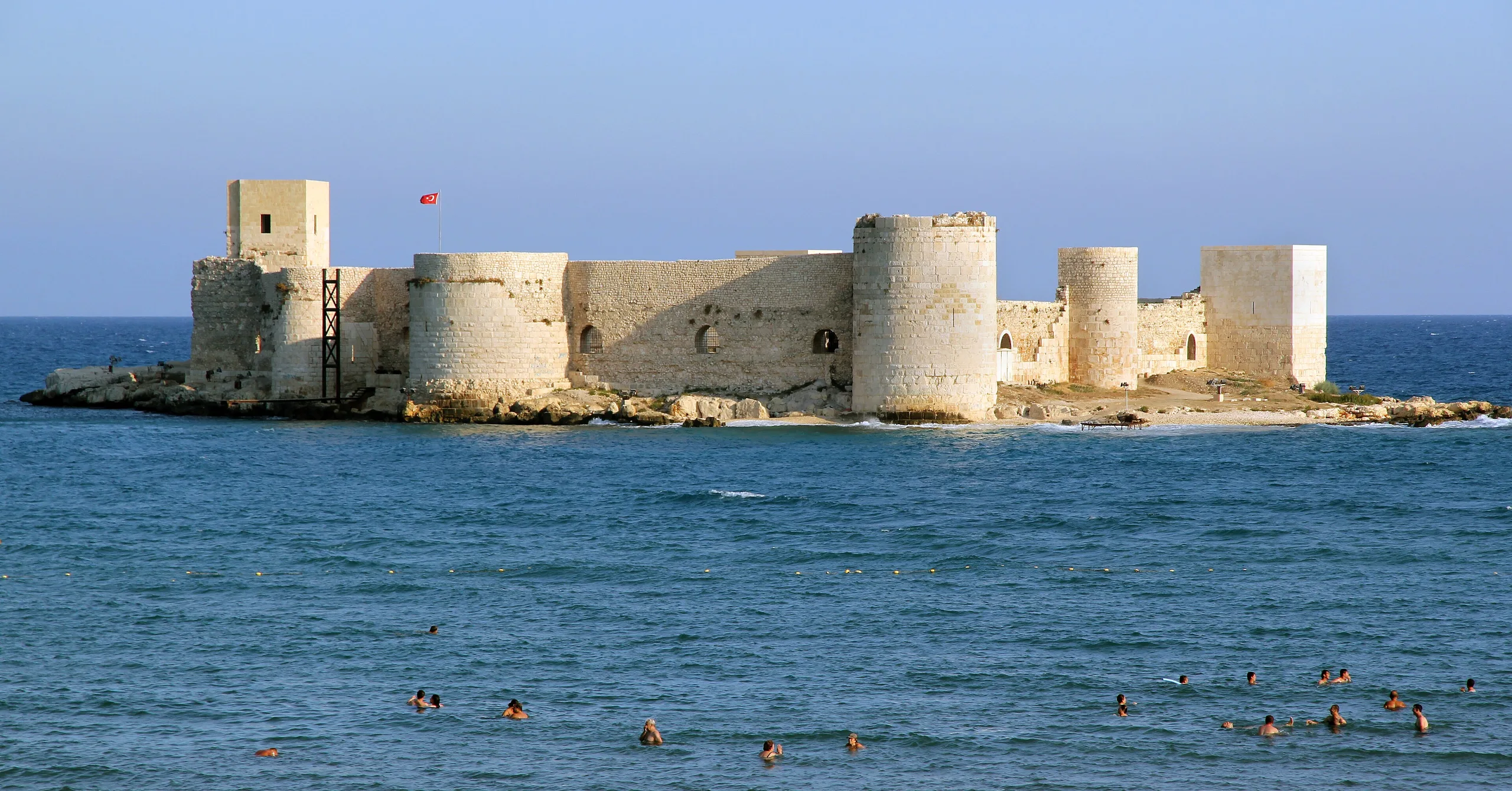
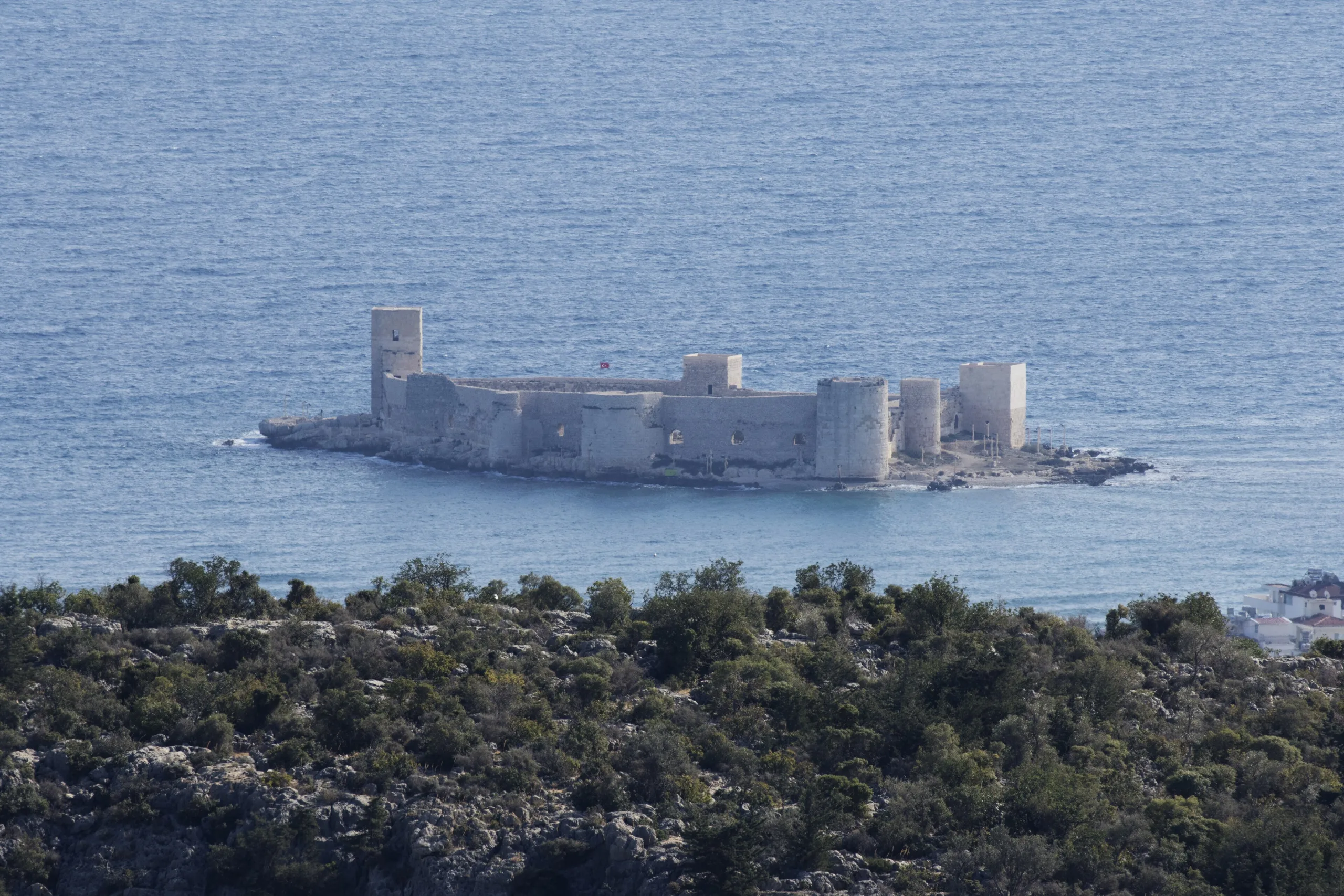
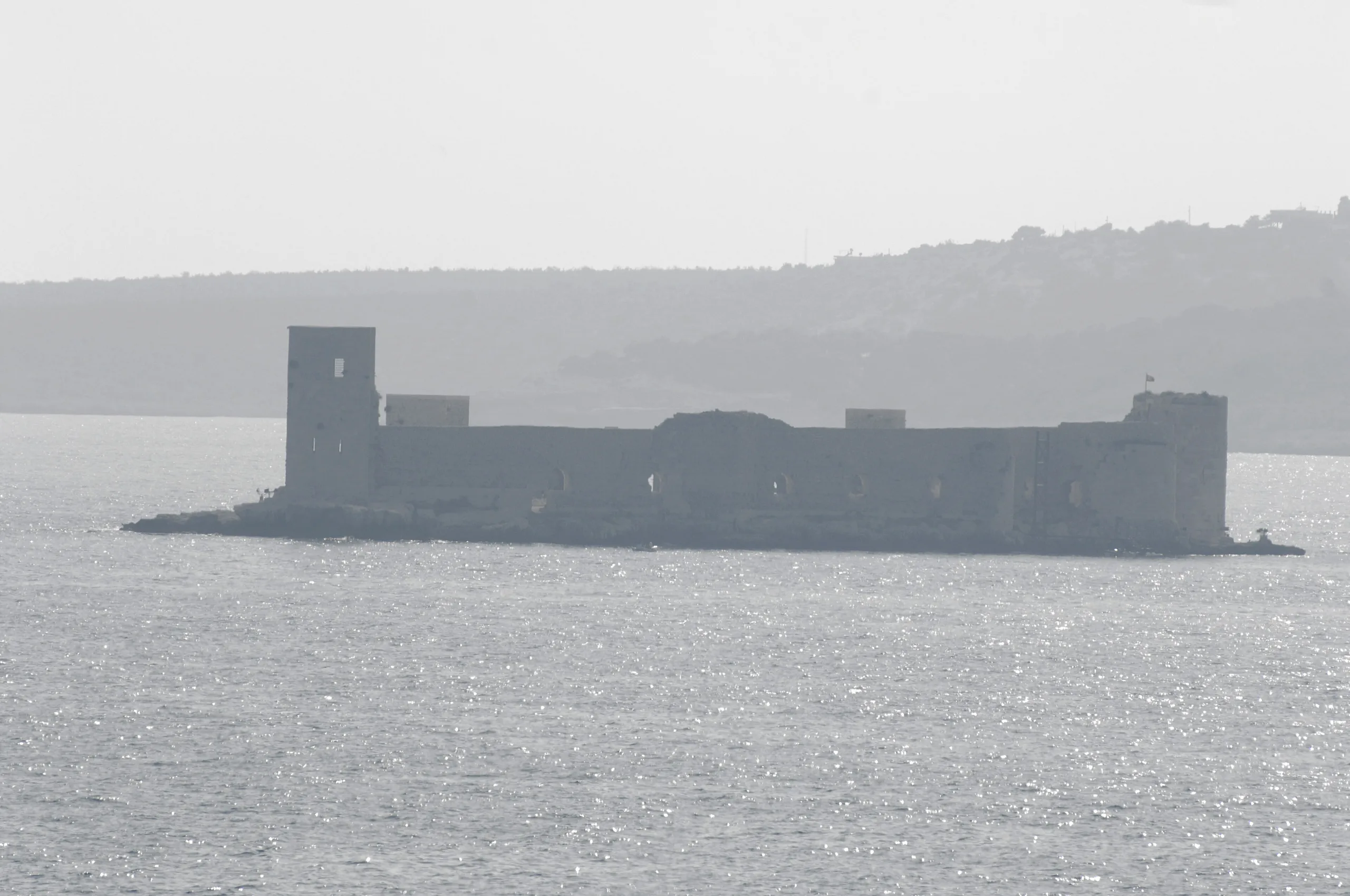
A castle rises from the water just off the beach at Kızkalesi, and a second one stands on the shore behind it. They were meant to work together over a single harbour. This pair of fortresses is the best-known face of Korykos, a port town of Rough Cilicia in Erdemli district, roughly 65 km southwest of Mersin, with Silifke 25 km along the road. The sea castle, Maiden's Castle, gives the modern resort its name.
History
Herodotus says Korykos was founded by a Cypriot prince of the same name. The name appears on coins from the early 1st century BC, when the city declared independence once the death of the Seleucid ruler Antiochus IV had set off political turmoil. The earliest traces are Hittite, but substantial remains begin in the Hellenistic period, and the first city walls belong to it.
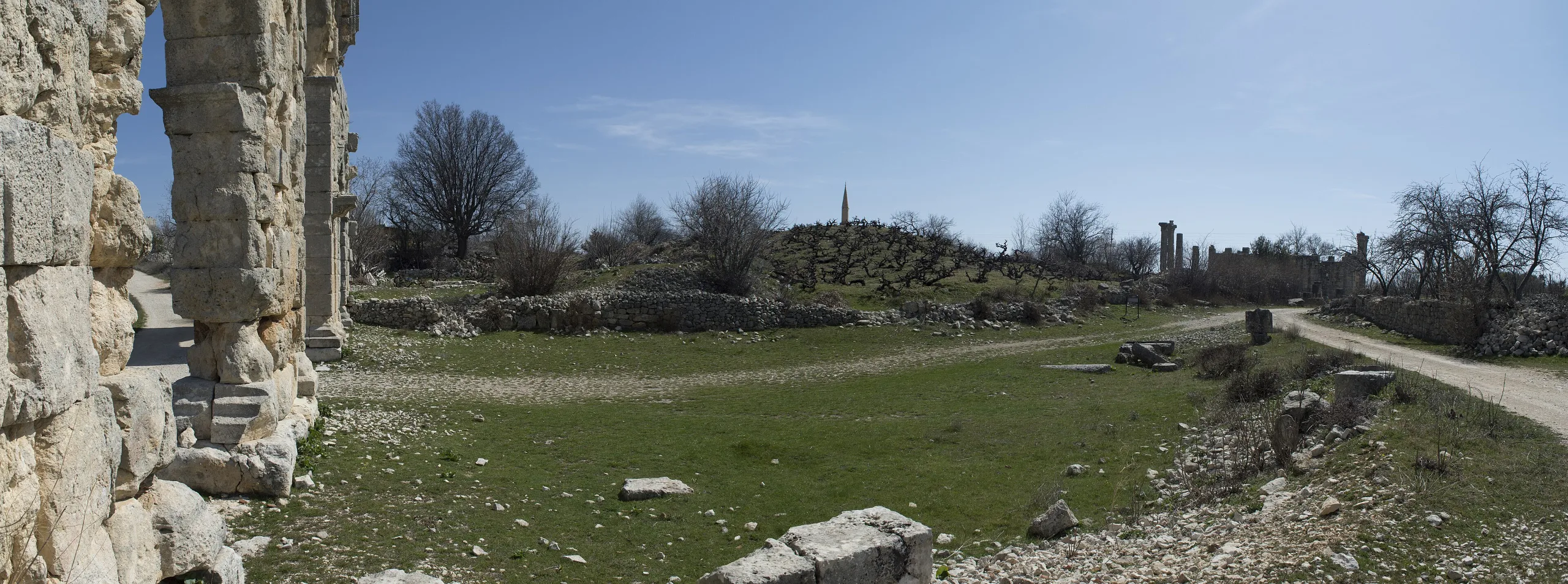
Under Rome the city spread eastward. Its harbour made it a leading centre of olive oil and wine export for around five hundred years, and when new walls went up in the 4th century AD it was at its peak. It remained an important port under the Byzantines and Armenians. Walls were built again against Arab raids, reusing Roman blocks in a double line. Seljuks and the Armenian Kingdom of Cilicia held the town in turn; pressed by the Karamanids, the Armenians ceded it to the Cypriot kingdom during the 1300s. Karamanoğlu Ibrahim II took it in 1448 and the Ottomans in the 1470s, after which it slowly faded.
The castles
The sea castle
Maiden's Castle sits on the rocks of a small islet offshore. An inscription records that Leon I had it built in 1199, and the Kingdom of Cyprus seized it in 1361. The battlemented wall runs 192 m and carries eight towers that are triangular, square and round in plan; the differences reflect repairs of different periods. The gate lies to the north and was assembled from reused stone. A well-preserved gallery follows the western wall and leads to a door onto the sea. The courtyard holds cisterns and workshops.
A cleaning excavation by the Mersin Archaeological Museum exposed a building group in the middle of the castle, with a chapel inside it that is older than the other chapel in the courtyard. Its floor combines mosaic with opus sectile, a pavement of cut coloured stone laid in patterns, and a five-line inscription sits in a round braided frame on the mosaic.
The land castle
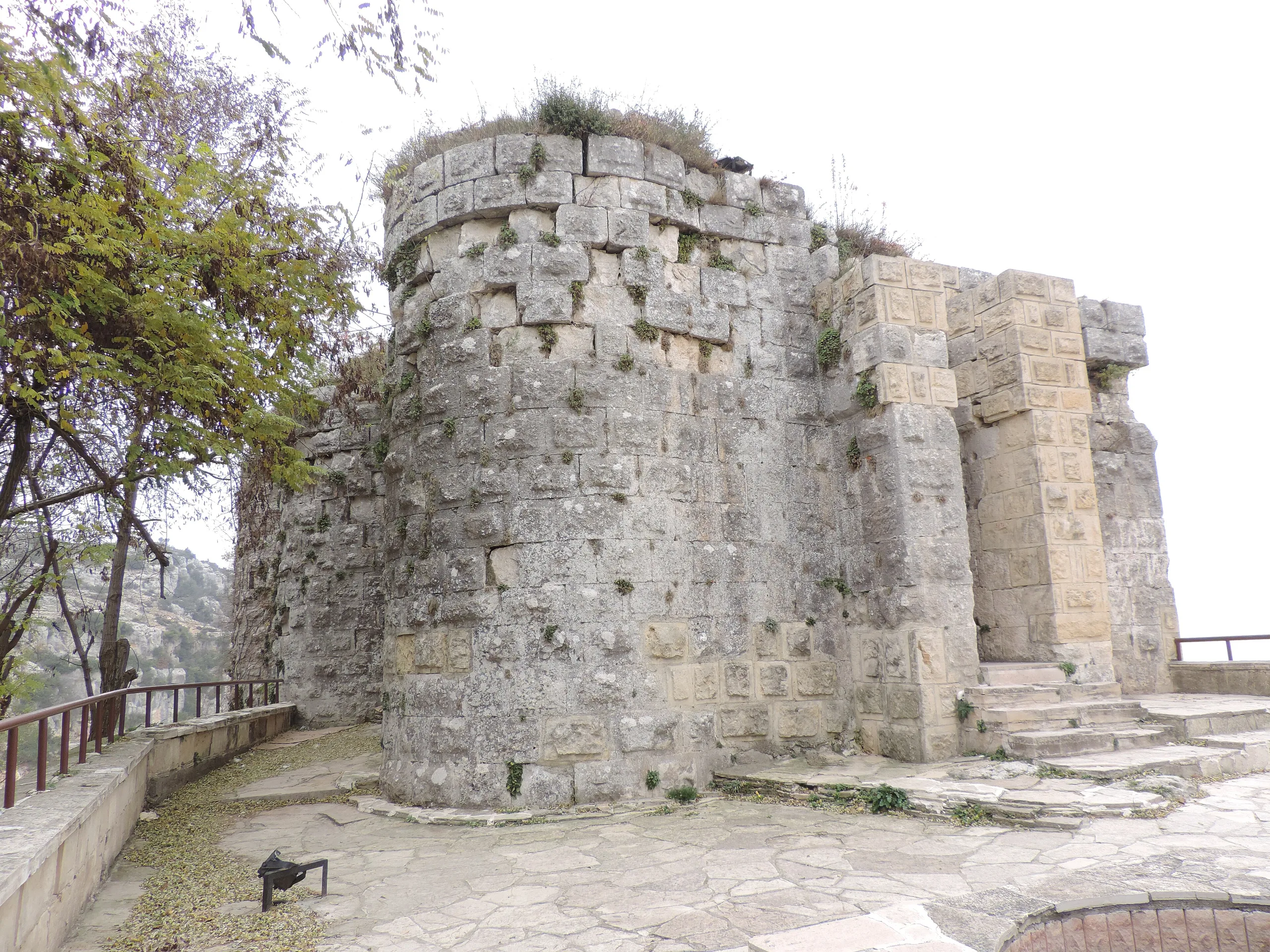
The shore fortress was built in 1099 under Alexios I by the architect Eustathios, who also built Silifke Castle. Both served as stopovers for pilgrims travelling by sea from Constantinople to the Holy Land. The Armenian kingdom rebuilt and extended the older defences in the 12th century, and the castle took its final shape in the 13th. Double walls enclose a nearly square area, ringed by a water-filled moat, and a drawbridge over it formed the entrance. Three chapels stand inside; only the southeastern one is Armenian, the other two are Byzantine. A chain stretched between the two castles in times of danger kept enemy ships out of the harbour.
Churches, tombs and reliefs
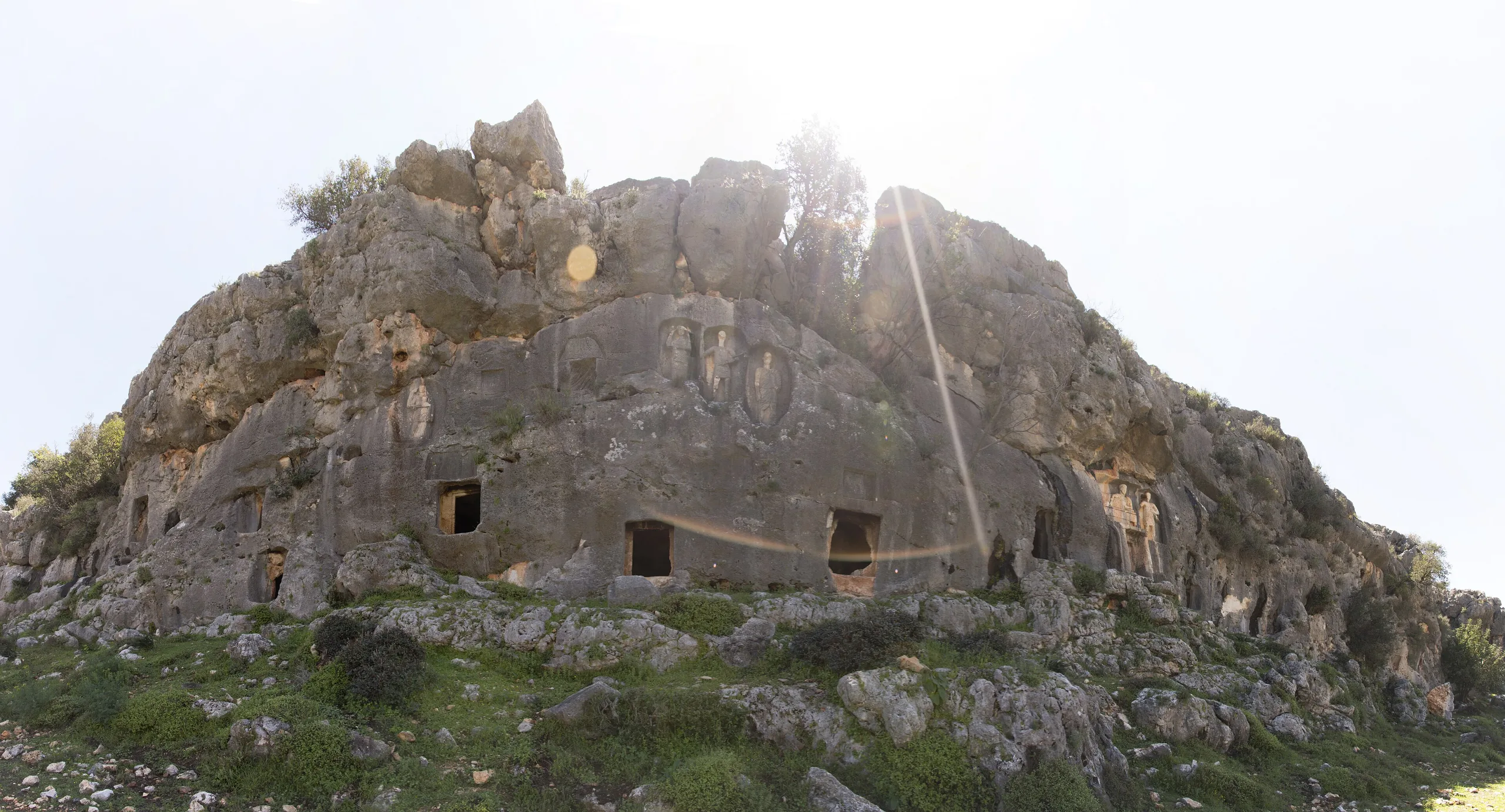
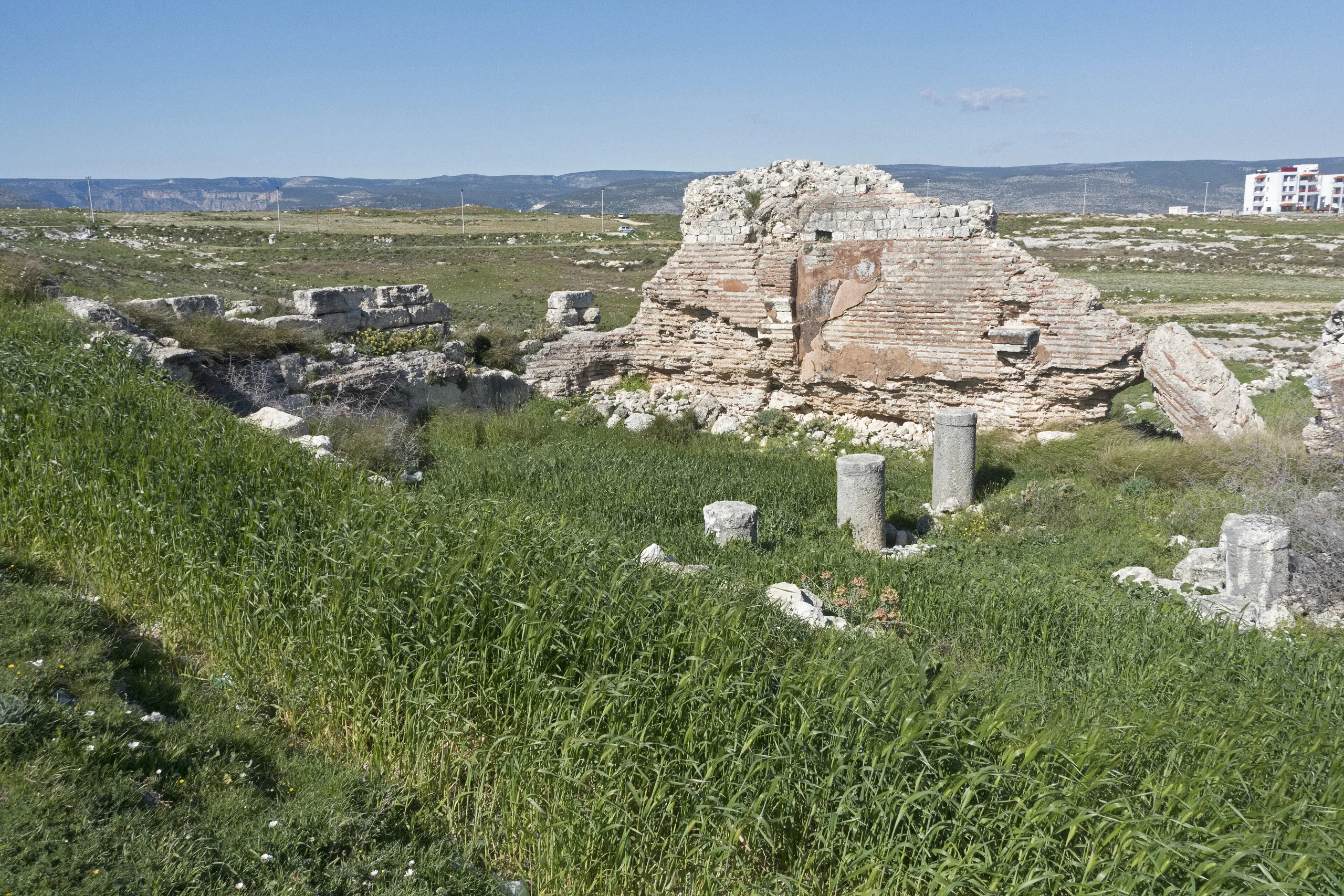
Fourteen churches of the 4th to 7th centuries stand in a small area north of the Mersin-Silifke road, beside the Roman necropolis, and no single plan governs them. The Roman graves there range from temple-shaped tombs to plain sarcophagi. About ten kilometres north of the walls, the Adamkayalar reliefs on the slopes of Şeytan Deresi show 11 men, 4 women, 2 children and a goat carved into the rock; they are the monumental tombs of the city's rulers.
The legend
A king asked a fortune-teller about his only daughter's future and learned a snake would kill her. He built the castle to keep her safe. When a basket of grapes was sent to her one day, a snake hidden inside bit and killed the princess. The same story is told of the Maiden's Tower in Istanbul.
World Heritage candidacy
The ancient city has been on UNESCO's Tentative List since 2014 under criteria (ii), (iii) and (iv). The area covers about 113.4 hectares. The case rests on an unbroken sequence of layers from the Hittite era to the Ottoman conquest, the variety of church plans and the single defensive system of sea and land castles. New construction is listed as a threat. It is not yet on the World Heritage List.
Visiting
Hours and fees can change; check the page for the site on muze.gov.tr. The MüzeKart is valid for Turkish citizens.
Gallery
Frequently asked questions
Where is Maiden's Castle?
Who built the sea castle and when?
Why is it called Maiden's Castle?
What else is there at Korykos?
Is Korykos a World Heritage Site?
Sources (14)
- Kız Kalesi (Korykos) / Korykos (TR ve EN sayfalar) — T.C. Kültür ve Turizm Bakanlığı, Müzeler ve Ören Yerleri
- Ancient City of Korykos - Tentative Lists, ref. 5909 — UNESCO World Heritage Centre
- Kız Kalesi - Mersin, Gezilecek Yerler — T.C. Kültür ve Turizm Bakanlığı, Kültür Portalı (kaynak: Mersin İl Kültür ve Turizm Müdürlüğü)
- Korykos Antik Kenti - Mersin, Gezilecek Yerler — T.C. Kültür ve Turizm Bakanlığı, Kültür Portalı (kaynak: Mersin İl Kültür ve Turizm Müdürlüğü)
- Kızkalesi (Wikidata Q1957163) — Wikidata
Photo credits
- Photo: Zeynel Cebeci, CC BY-SA 4.0 — Wikimedia Commons (resized)
- Photo: Zeynel Cebeci, CC BY-SA 4.0 — Wikimedia Commons (resized)
- Photo: ÖZGÜRKONAÇ, CC BY-SA 4.0 — Wikimedia Commons (resized)
- Photo: Klaus-Peter Simon, CC BY-SA 3.0 — Wikimedia Commons (resized)
- Photo: Dosseman, CC BY-SA 4.0 — Wikimedia Commons (resized)
- Photo: Vincent Vega, CC BY-SA 4.0 — Wikimedia Commons (resized)
- Photo: Vincent Vega, CC BY-SA 4.0 — Wikimedia Commons (resized)
- Photo: Zeynel Cebeci, CC BY-SA 4.0 — Wikimedia Commons (resized)
- Photo: Dosseman, CC BY-SA 4.0 — Wikimedia Commons (resized)