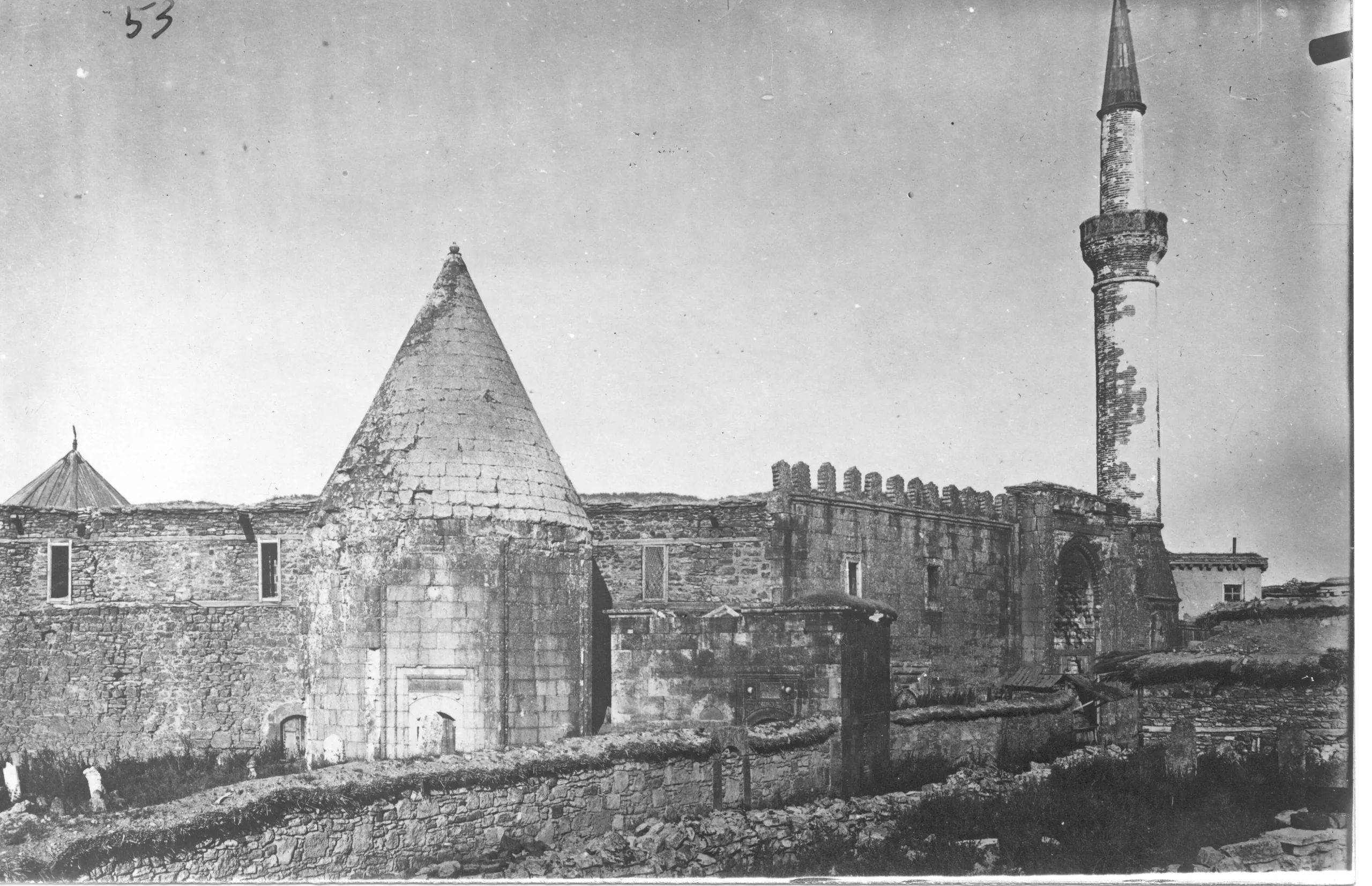
Standing by Lake Beyşehir, the Eşrefoğlu Mosque (1296-1299) has 41 timber columns and a tiled mihrab; it is part of a World Heritage series since 2023.
Eşrefoğlu Mosque (Beyşehir) is a place (Mosque) in Turkey, Konya. Main periods: Beyliks Period. It was inscribed on the UNESCO World Heritage List in 2023.
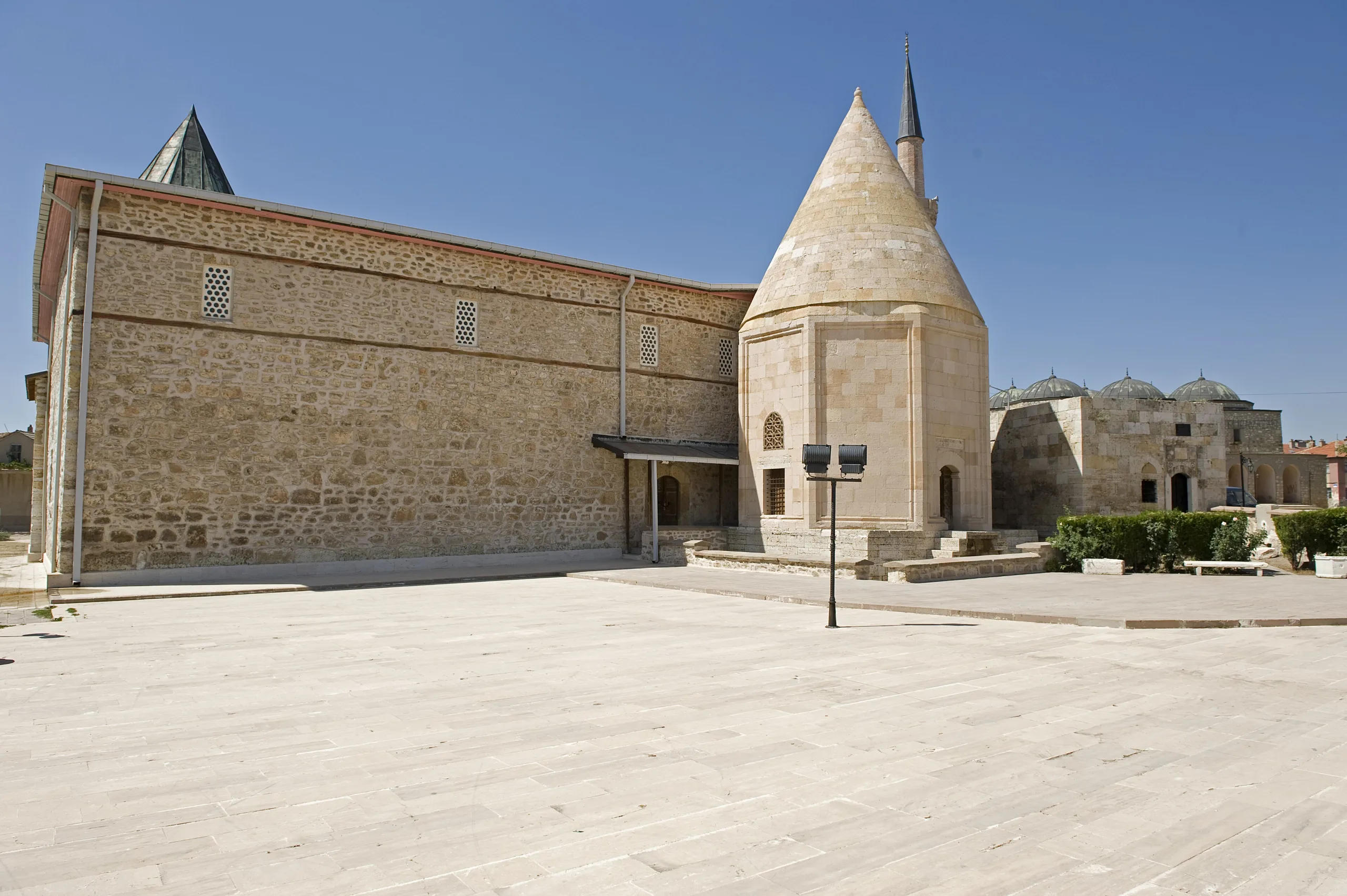
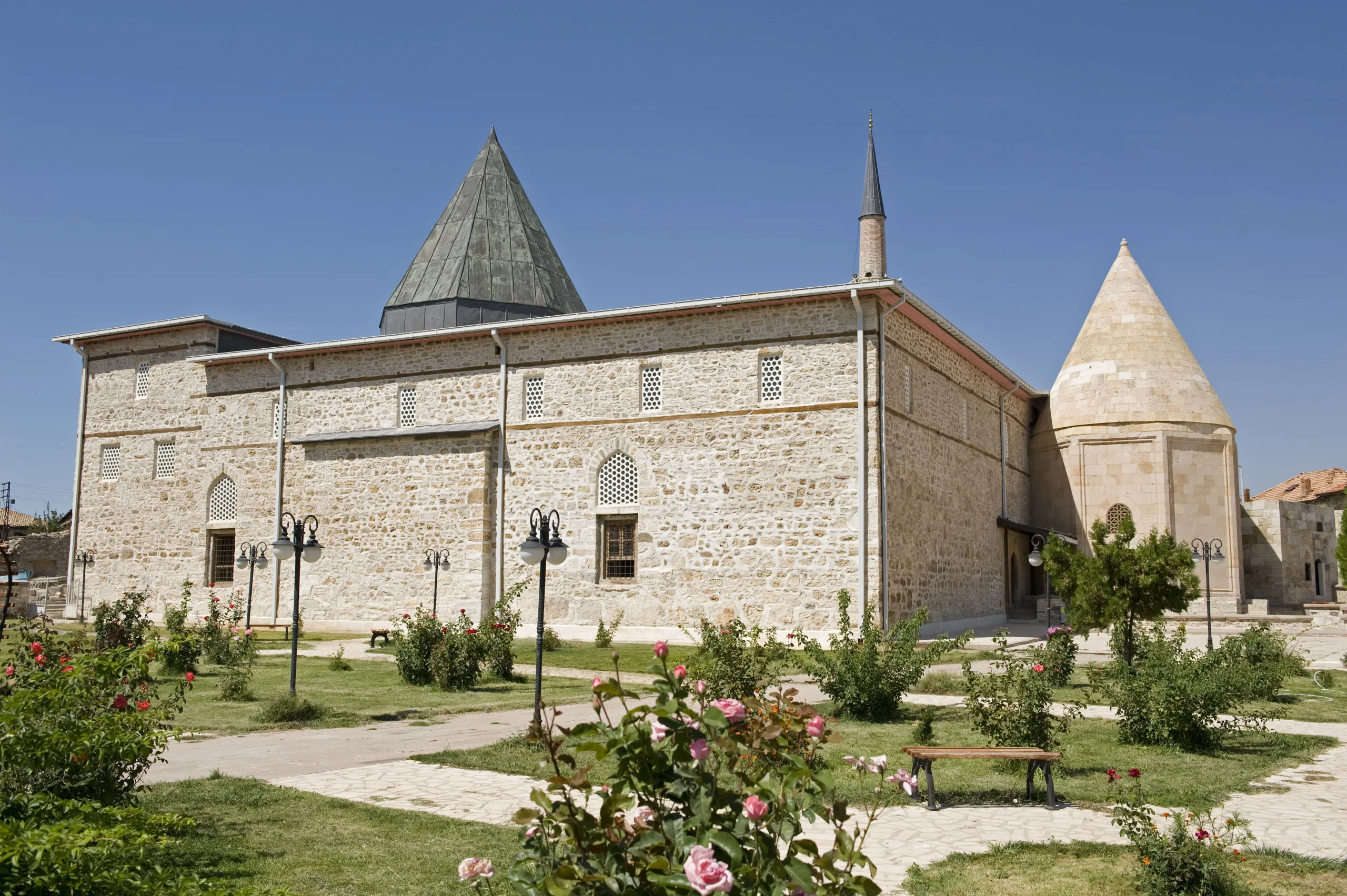
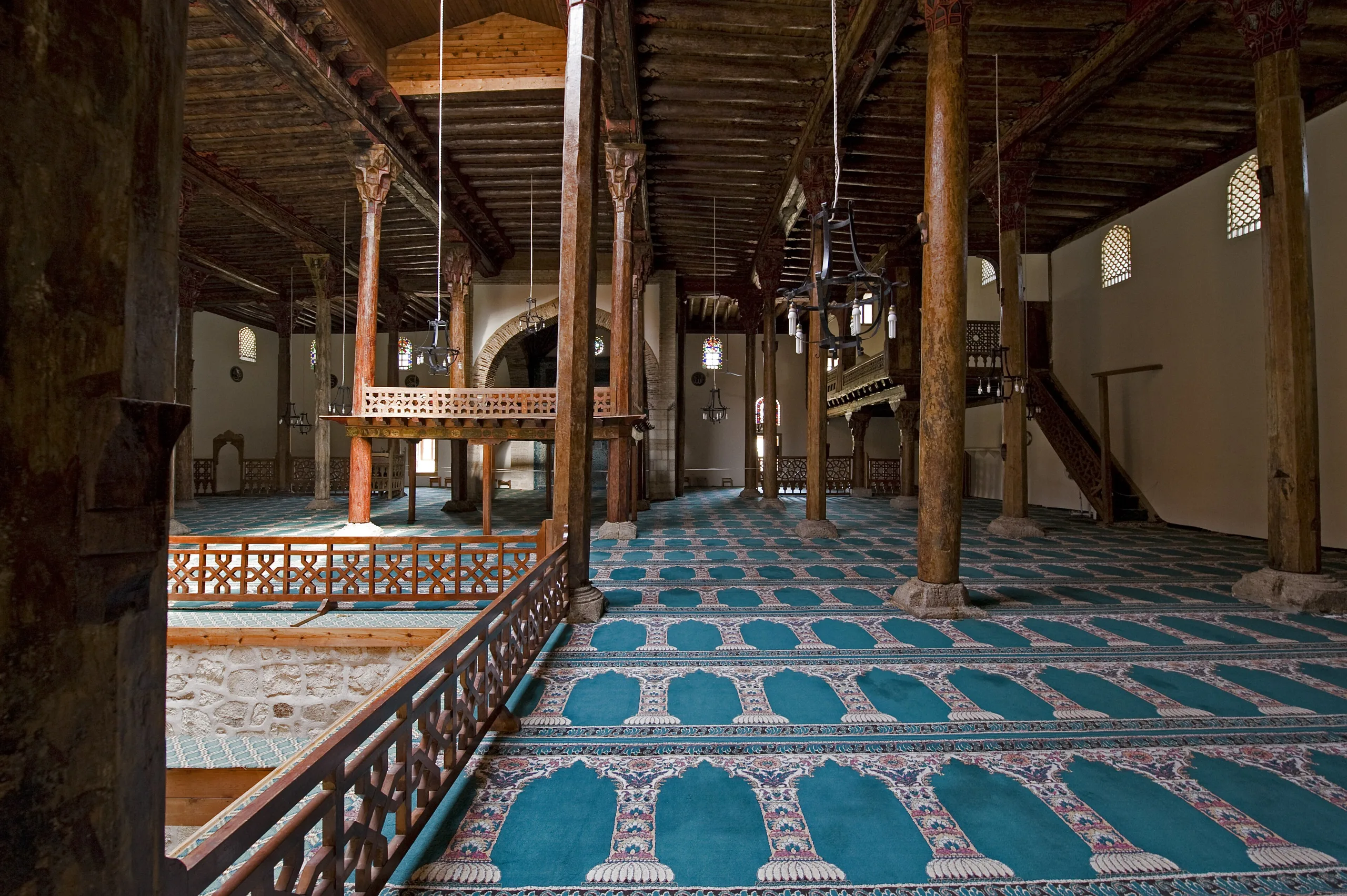
The Eşrefoğlu Mosque sits in the town of Beyşehir in Konya province, close to the shore of Lake Beyşehir. Its outer walls are rubble and cut stone, while forty-one timber columns inside carry a wooden ceiling. It is one of five mosques that make up the World Heritage series inscribed in 2023, and the component also takes in the founder's tomb and a smaller tomb beside it.
Setting
The mosque lies in the İçerişehir neighbourhood, some two hundred metres from the lake. The nomination file notes that Beyşehir is roughly eighty kilometres from Konya and that the mosque stands about 175 metres south of a ruined gate of the old town wall. The same document claims that the town grew up around the complex.
History
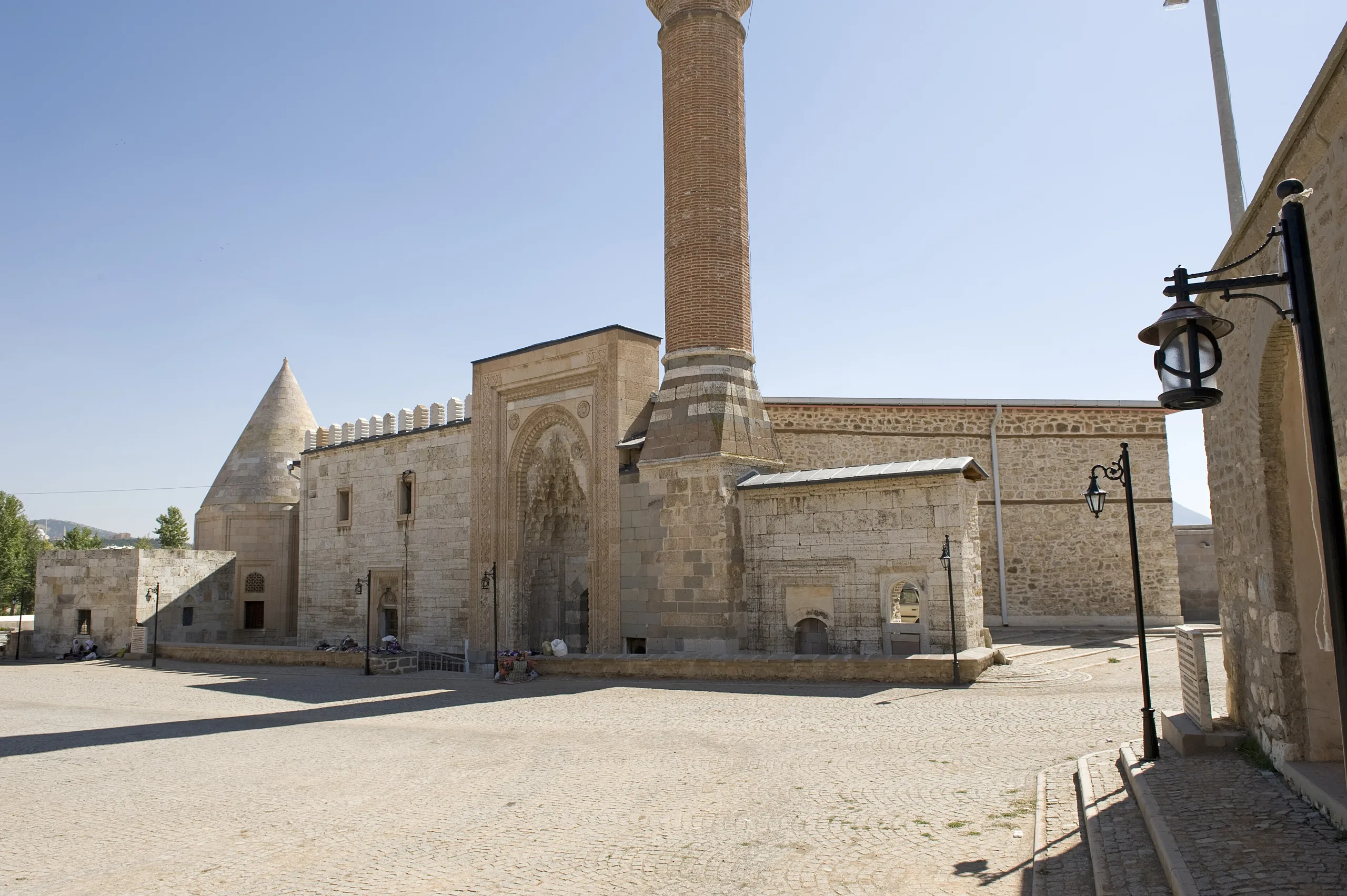
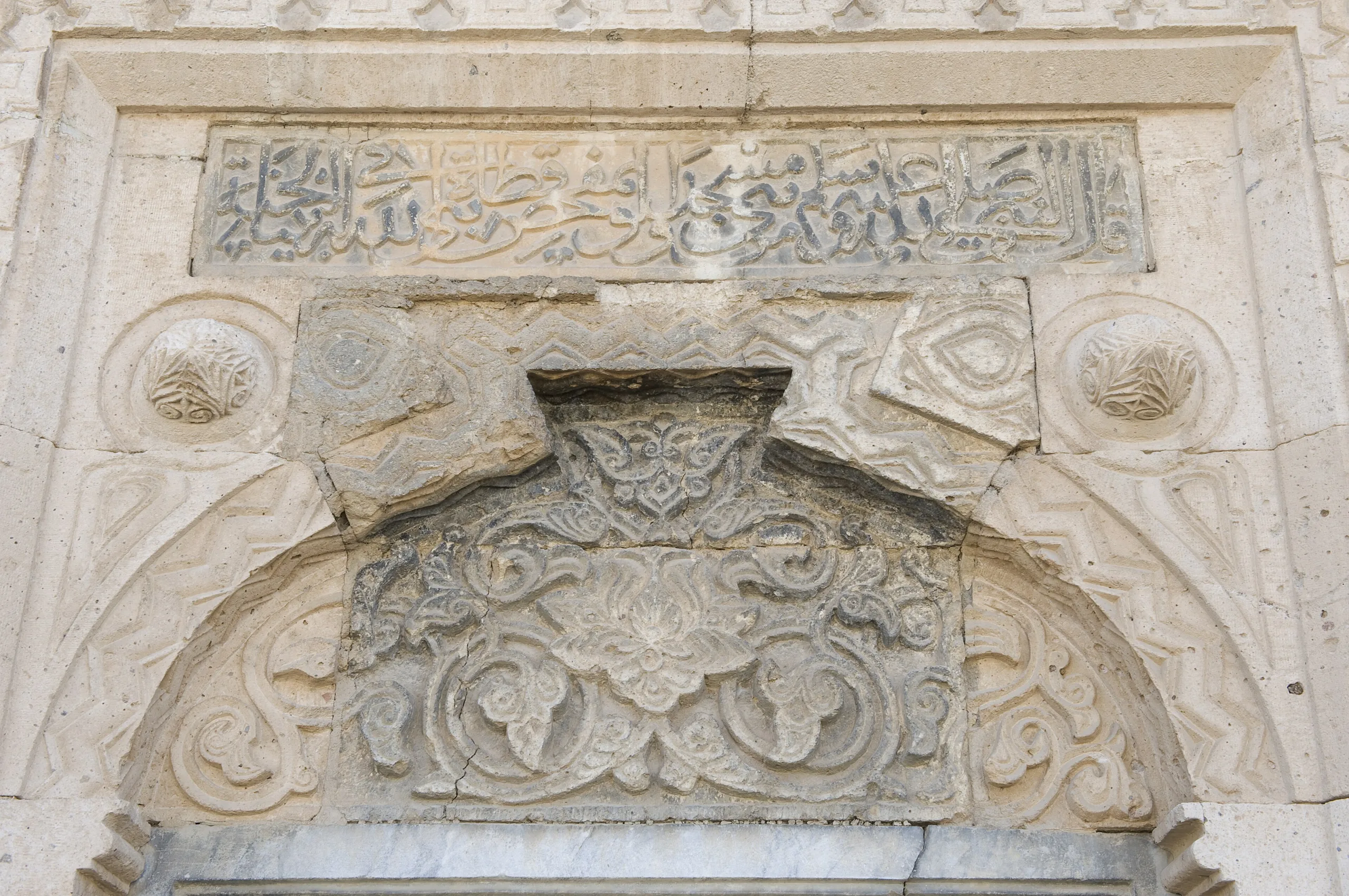
ICOMOS gives the construction period as 1296 to 1299. The nomination file backs this with two inscriptions: one above the crown portal reads Islamic year 696 (1296), and one over the tiled doorway into the prayer hall reads 699 (1299). The second names the patron as Seyfeddin Süleyman Bey, founder of the Eşrefoğlu principality. Two years later, in 1301 (701), he added a tomb next to the mosque, so the nomination file treats the whole complex as a project of 1296 to 1301.
The endowment text carved at the portal lists what supported the mosque: a cloth merchants' inn, shops around it, a large bathhouse, twenty houses and several mills, with a stated yearly income of twelve thousand dirhams. Apart from the bathhouse, the locations of these properties are unknown. A covered market (bedesten) of 1551 is thought to have replaced the inn. Nearby stand the so-called Half Tomb, dated 1561 (969), and the Stone Madrasa, built by İsmail Ağa near the end of the fourteenth century.
Architecture
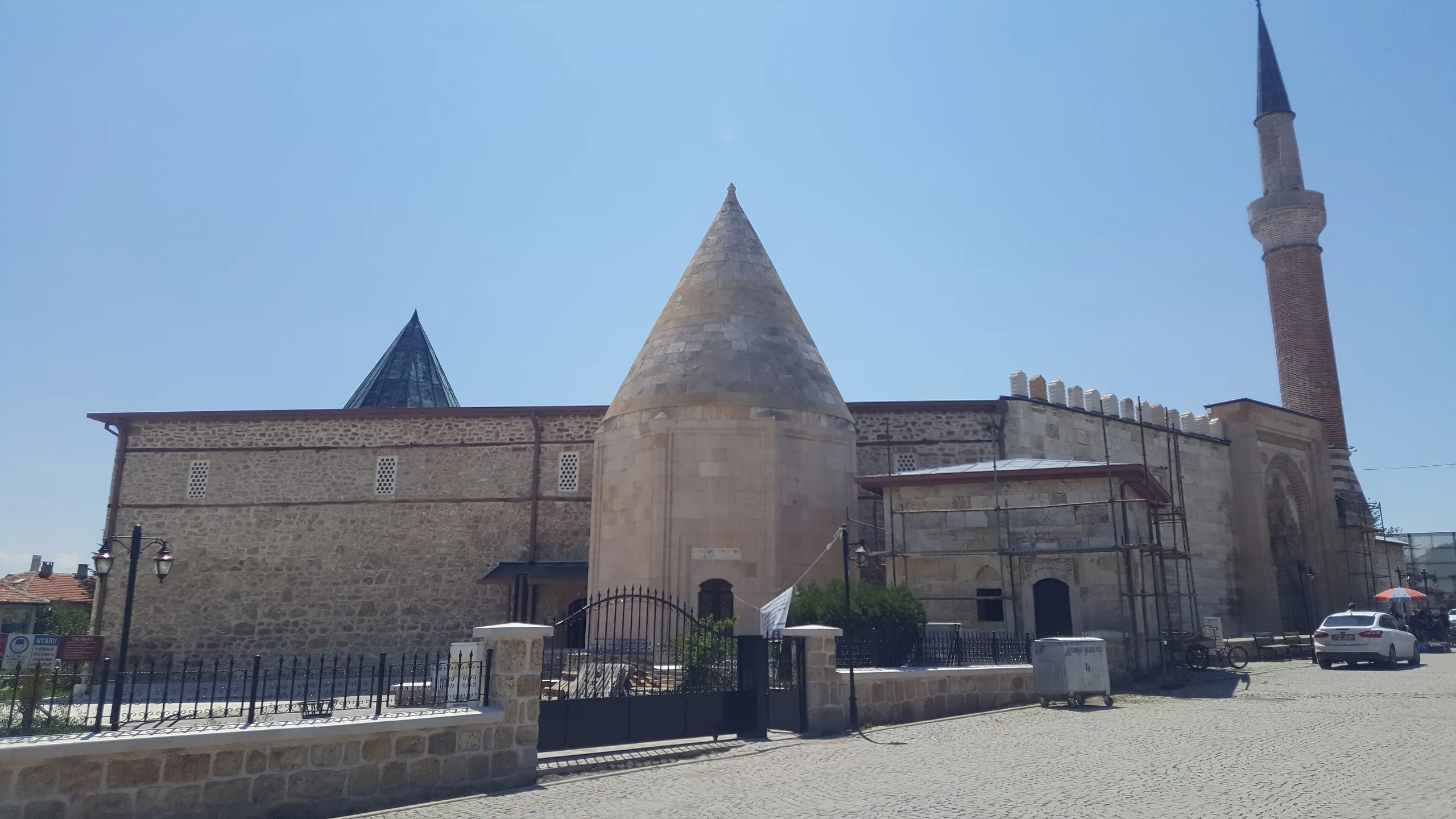
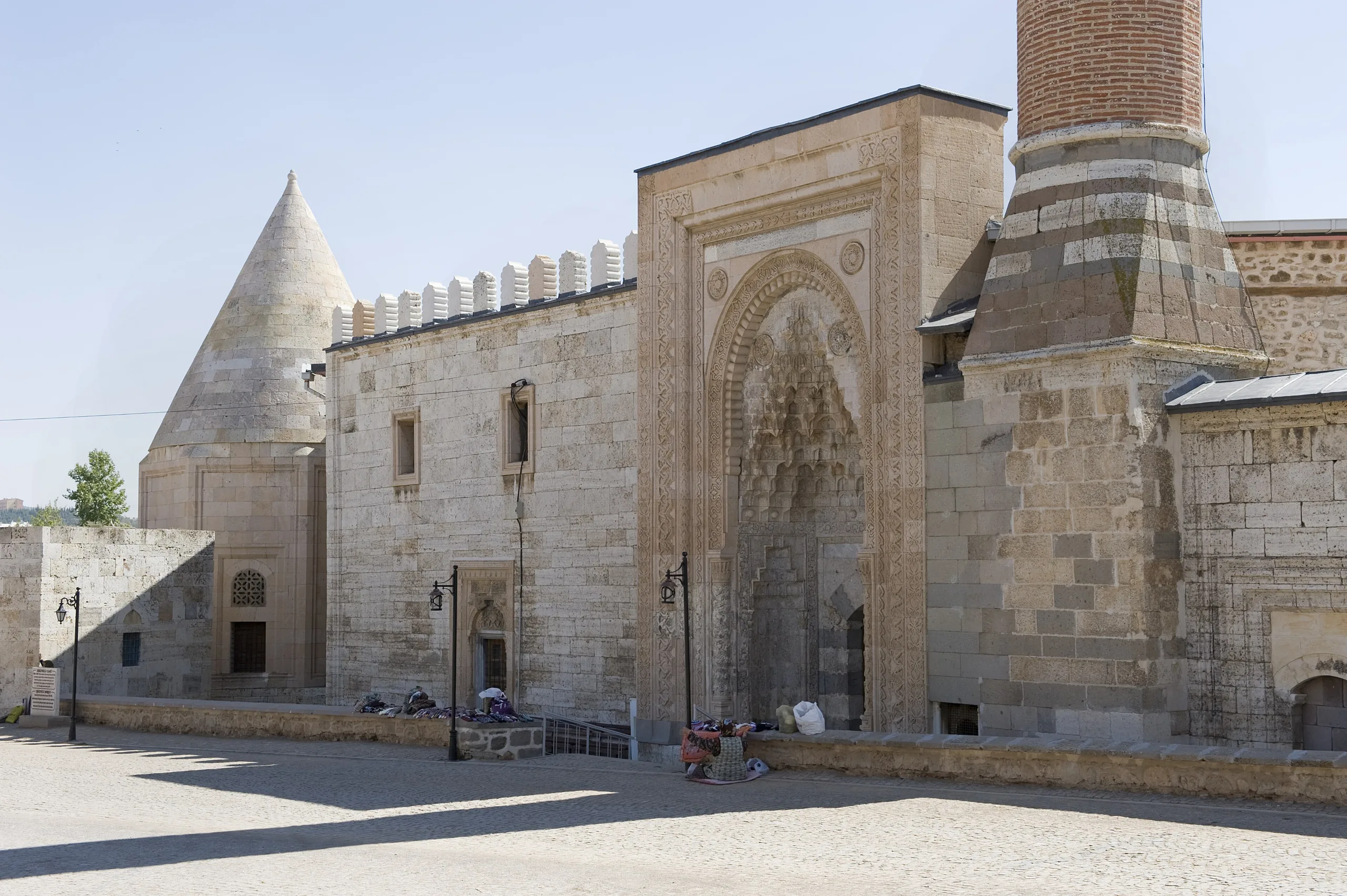
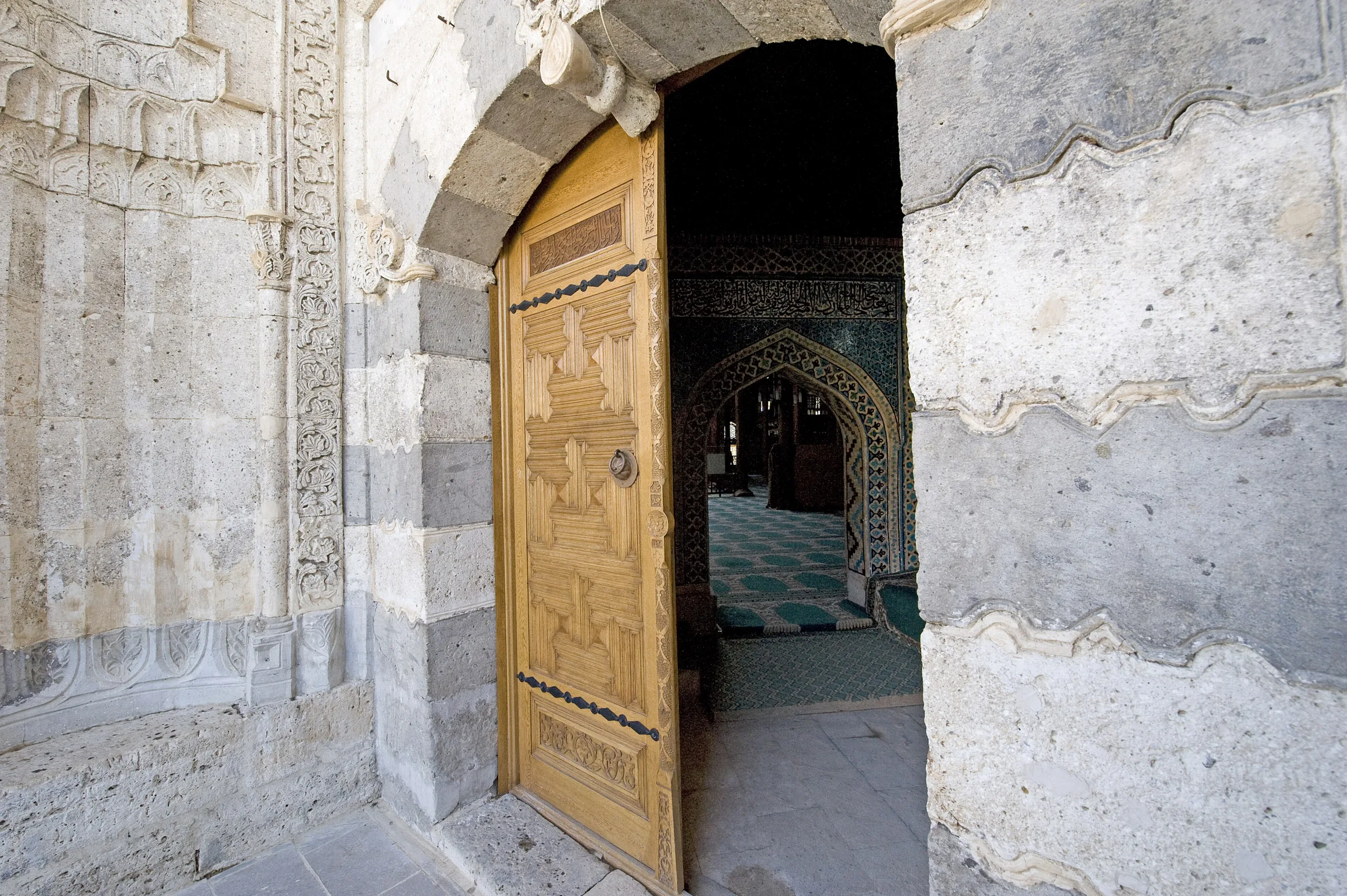
The plan is rectangular with a cut-off northeast corner, and the crown portal opens in that slanted wall. The portal is about seven metres wide and more than ten metres tall. It sits below street level, so visitors descend five steps. The nomination file counts it among the notable portals of the beylik period, continuing the Seljuk stone-portal tradition. A single-balcony brick minaret with a stone base and a fountain stands beside it. The wooden leaf of the portal carries the signature Amel-i Isa. Its inscriptions were stolen in 1996, turned up in Denmark and were returned to Türkiye in 2000.
The prayer hall has seven aisles, with the middle one wider and higher than the rest. Forty-one cylindrical and polygonal columns stand on stone bases and end in muqarnas capitals. The ceiling and upper structure are covered in hand-painted vegetal, geometric, rumi and star patterns. An opening at the centre of the roof lets in light, and a pit beneath it collects snow, which cools the building in summer. In the southwest corner the sultan's gallery rests on two columns, with a small devotional chamber (çilehane) underneath. The women's gallery is above the last prayer hall, reached by a stone stair, and the muezzin's gallery stands on four columns.
The rectangular mihrab is faced with mosaic tile in turquoise, dark blue and purple, and the inside of its square niche is compared to the starry dome of the Karatay Madrasa in Konya. A dome in front of the mihrab is decorated with glazed brick and tile and appears outside as a pyramidal cone. The walnut minbar uses the tongue-and-groove kündekâri technique and has nine steps. The wooden mihrab in the last prayer hall has six tiers of muqarnas. According to the nomination file, the pointed-arch tiled doorway has no parallel elsewhere in Turkish ceramic art.
Repairs
The recorded history of work begins in 1900. The minaret was rebuilt in 1920 and the structure thoroughly repaired between 1934 and 1940. The biggest change came in 1941, when a tiled roof took the place of the first flat roof of packed earth. A glass cover went over the roof opening in 1962-1965, and roof tiles were swapped for copper in 1978 and for lead in 2004. ICOMOS counts fifteen restoration campaigns between 1990 and 2020. The one of 1994-1996 tackled instability: muqarnas were renewed and missing parts of the minbar were made good. Between 2004 and 2020 the ceramic glazing was restored, cameras and a fire alarm went in, and a small single-storey annexe for a library and office (2017) was attached to the north wall.
World Heritage and protection
The mosque is one of five components in the series inscribed in 2023 under criteria (ii) and (iv). This component also includes Süleyman Bey's Tomb and the Half Tomb. ICOMOS says the mosque lies within a third-degree archaeological site and is therefore covered by the rules for such sites. It singles out insect attack on the timber as a severe threat here, and a pilot risk-management project at this mosque is meant to feed a plan for the whole series. Conservation plans were drawn up by the municipality, and ICOMOS adds that such plans need updating.
Visiting
The mosque is a living place of worship. Since no single official visitor page for it could be found, hours are not listed; check current local announcements.
Gallery
Frequently asked questions
When was the Eşrefoğlu Mosque built?
Who commissioned it?
How many wooden columns are there?
What is the opening in the ceiling for?
What is special about the mihrab?
Is the mosque a World Heritage site?
Is the building at risk?
Sources (14)
- Wooden Hypostyle Mosques of Medieval Anatolia (ref 1694) – UNESCO World Heritage listing page — UNESCO World Heritage Centre
- ICOMOS Advisory Body Evaluation No 1694, Medieval Mosques of Anatolia (10 March 2023) — ICOMOS / UNESCO World Heritage Centre
- Nomination text, Medieval Mosques of Anatolia with Wooden Posts and Upper Structure (2022) — T.C. Kültür ve Turizm Bakanlığı (State Party), UNESCO World Heritage Centre
- State of conservation report summary, Wooden Hypostyle Mosques of Medieval Anatolia (November 2024) — T.C. Kültür ve Turizm Bakanlığı (State Party), UNESCO World Heritage Centre
- Eşrefoğlu Camii (Wikidata Q2494934) — Wikidata
Photo credits
- Photo: Azmi Avcıoğlu, CC BY-SA 4.0 — Wikimedia Commons (resized)
- Photo: Basak, CC BY-SA 4.0 — Wikimedia Commons (resized)
- Photo: Dosseman, CC BY-SA 4.0 — Wikimedia Commons (resized)
- Photo: Dosseman, CC BY-SA 4.0 — Wikimedia Commons (resized)
- Photo: Dosseman, CC BY-SA 4.0 — Wikimedia Commons (resized)
- Photo: Dosseman, CC BY-SA 4.0 — Wikimedia Commons (resized)
- Photo: Dosseman, CC BY-SA 4.0 — Wikimedia Commons (resized)
- Photo: Dosseman, CC BY-SA 4.0 — Wikimedia Commons (resized)
- Photo: Dosseman, CC BY-SA 4.0 — Wikimedia Commons (resized)