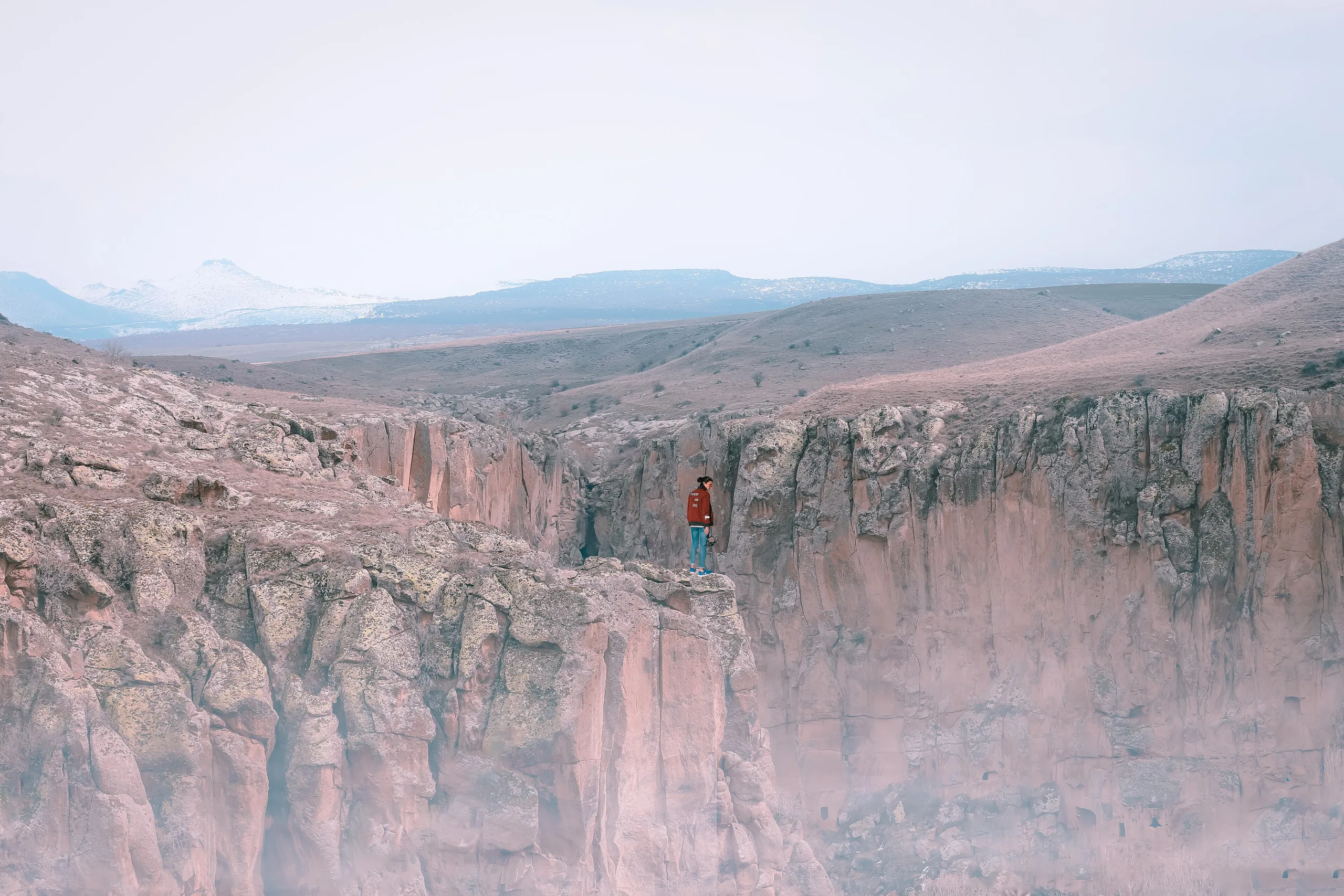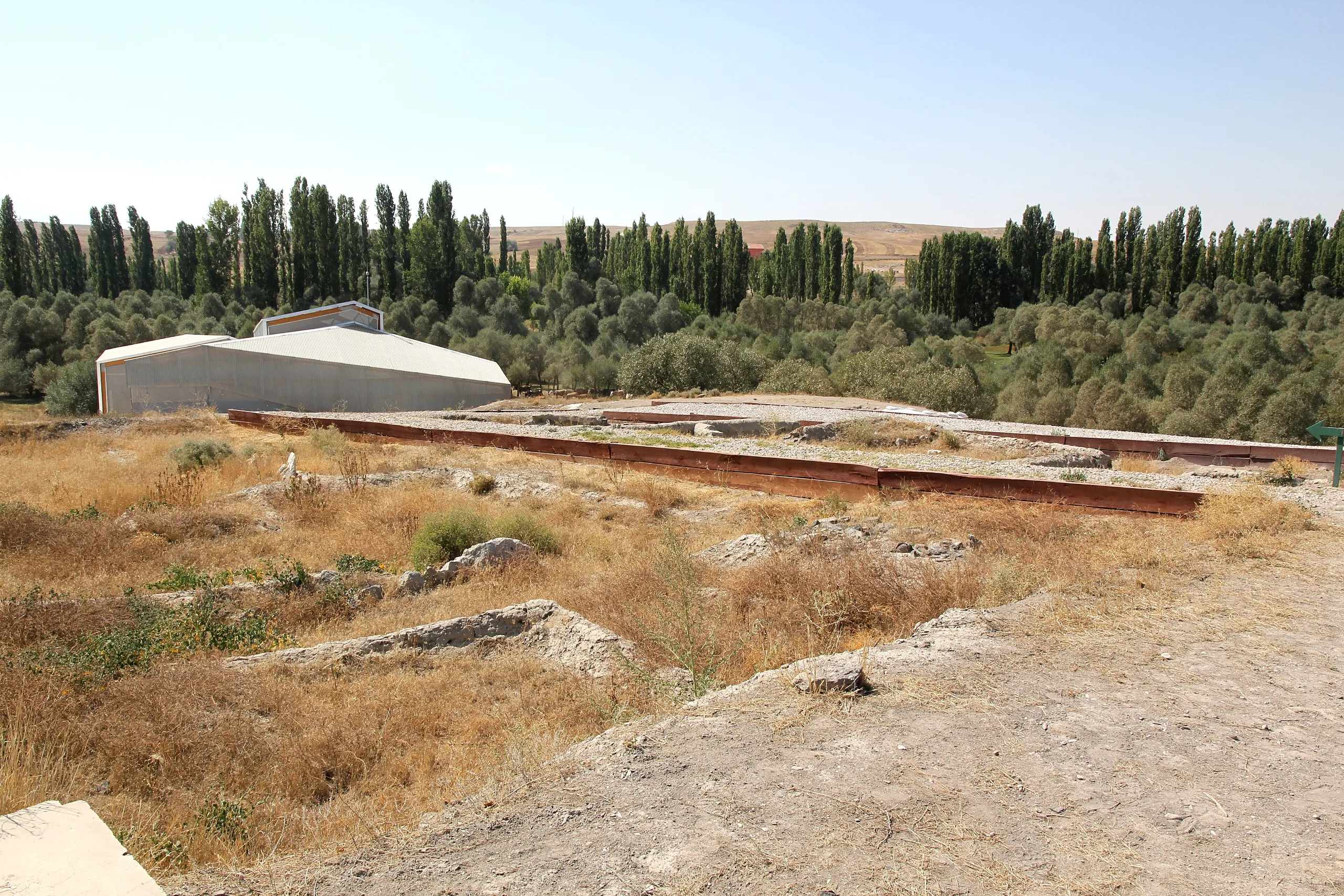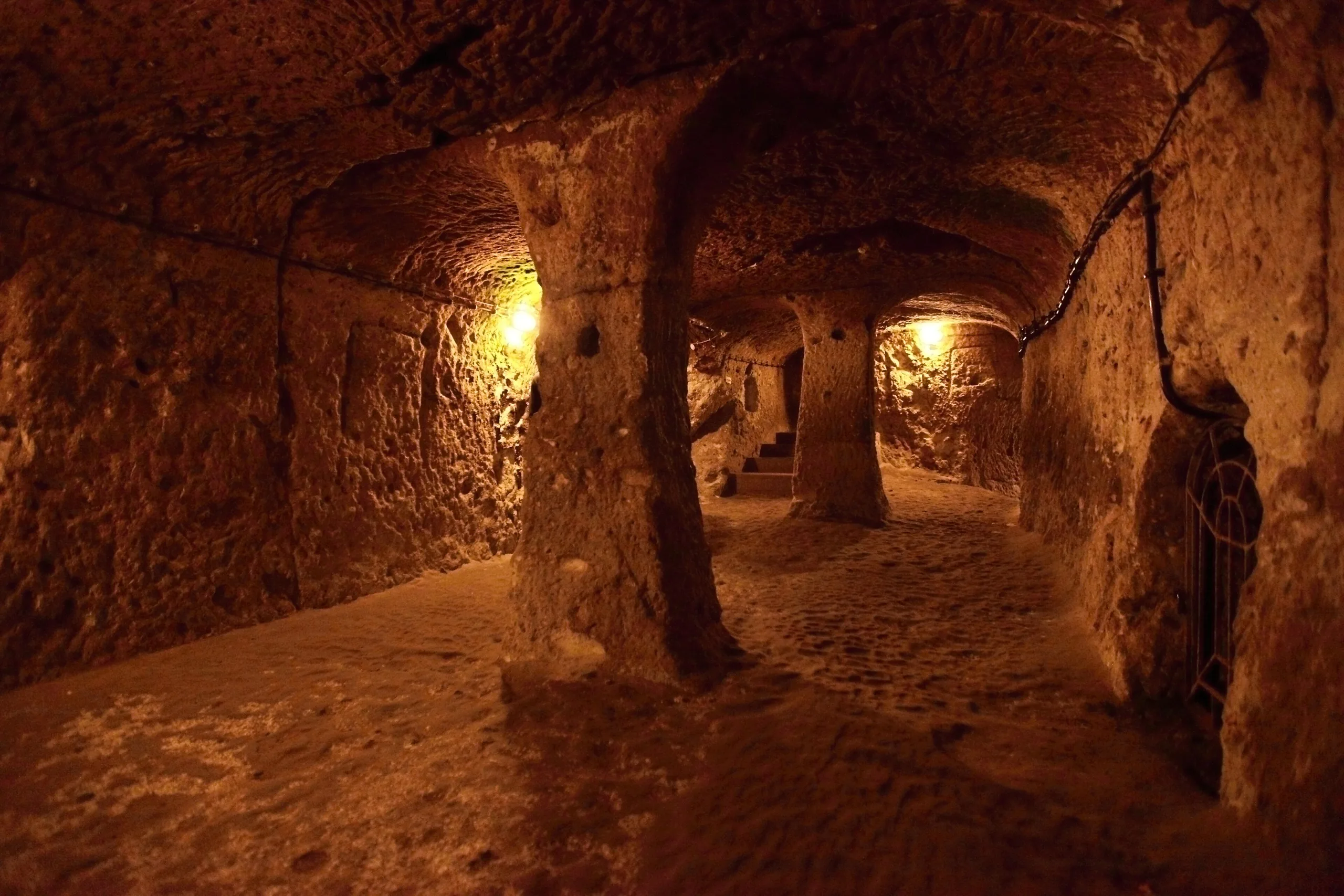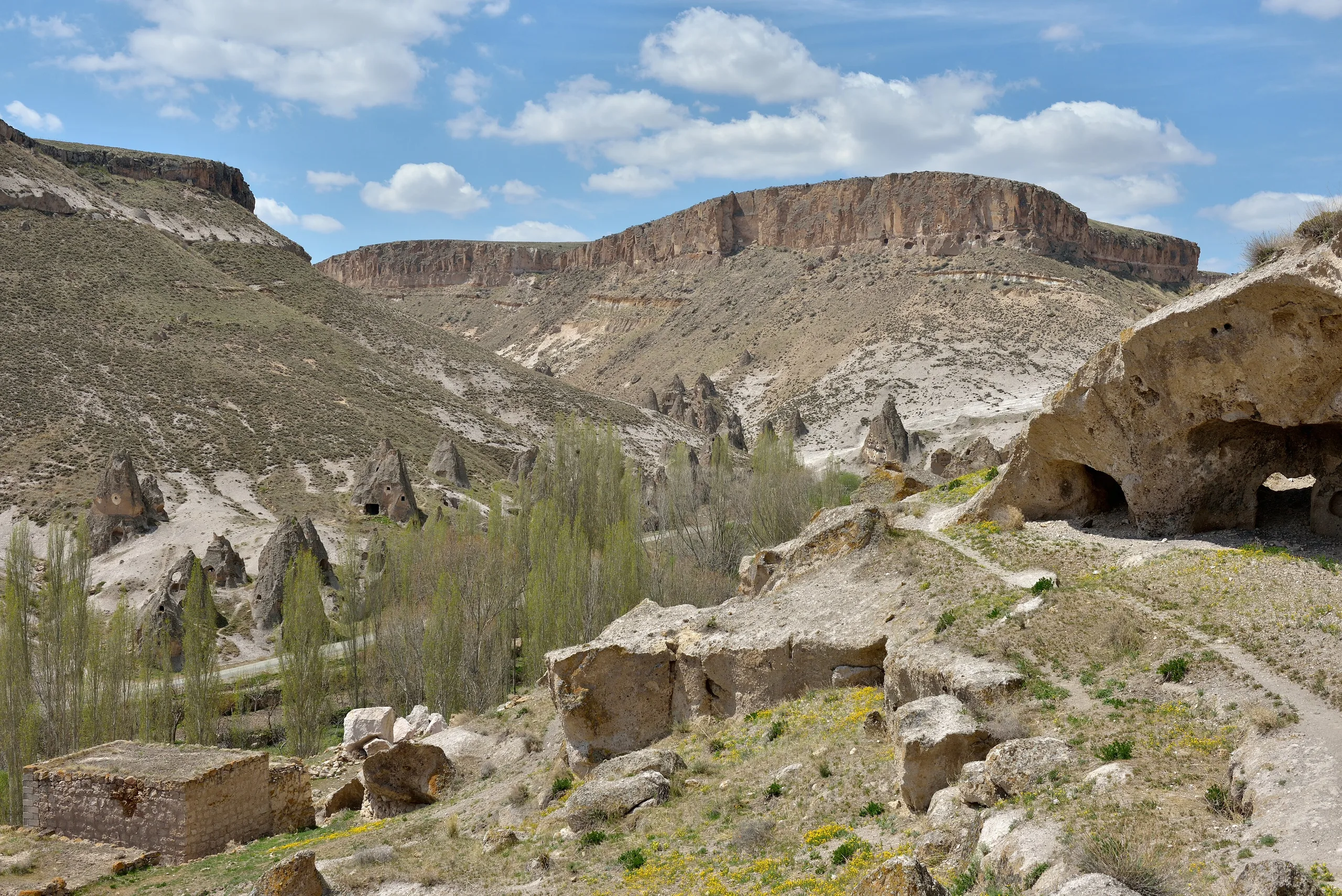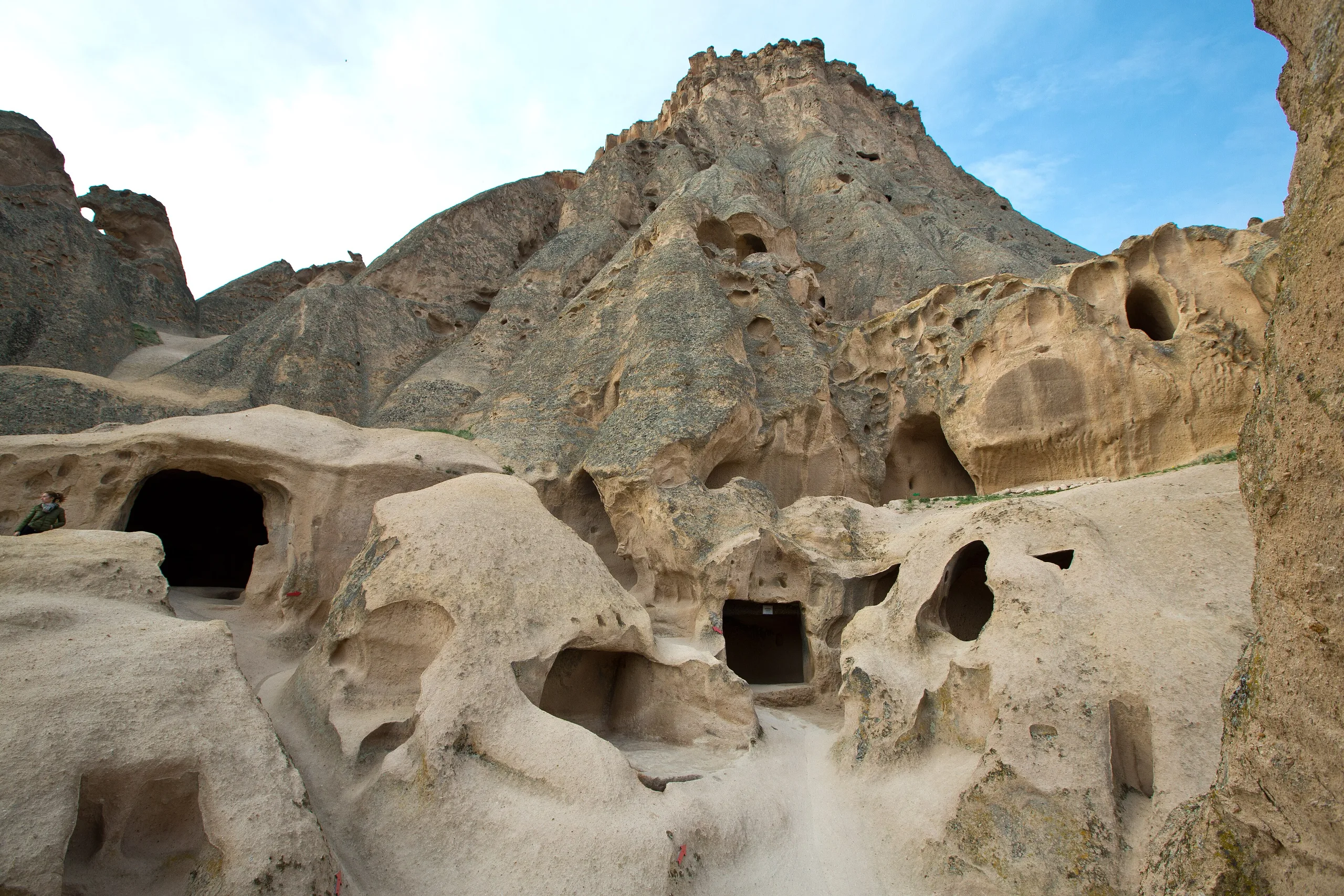
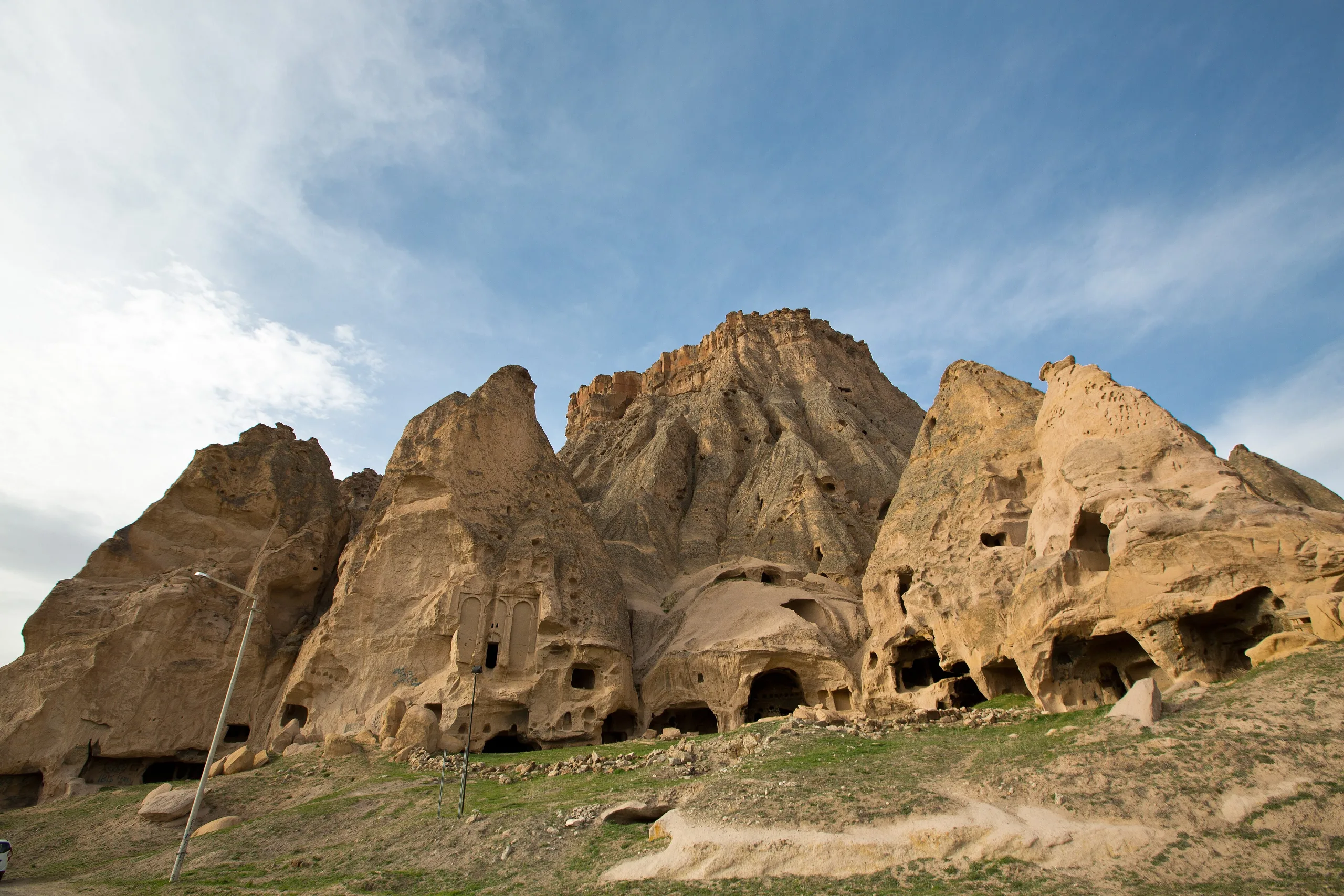
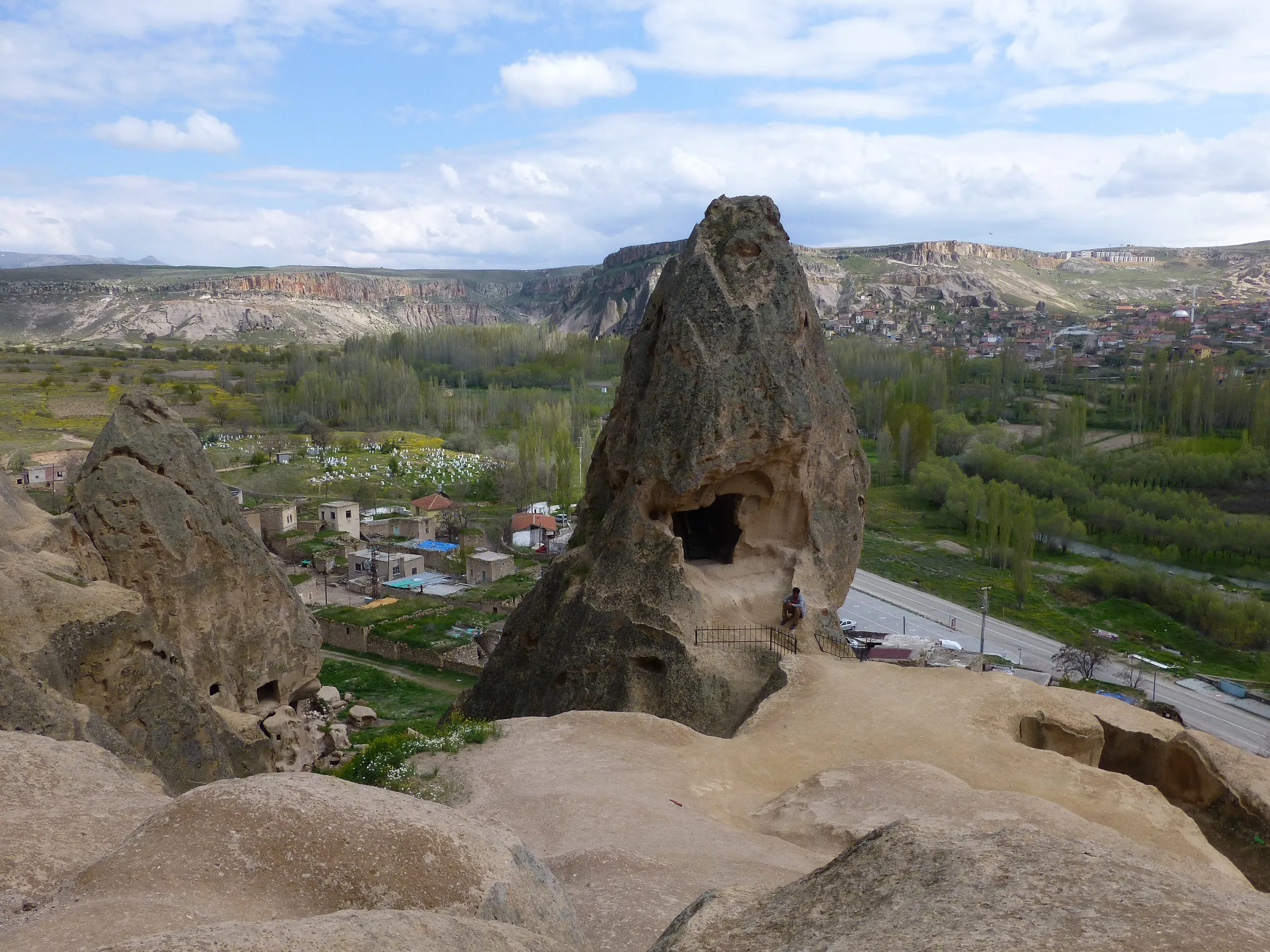
Monastery Valley in Güzelyurt, Aksaray, is lined with rock-cut churches and likened to a smaller Ihlara; nearby Selime Cathedral is the largest cathedral complex in Cappadocia.
Monastery Valley (Selime) is a place (Sanctuary) in Turkey, Aksaray. Main periods: Roman Period, Byzantine Period.
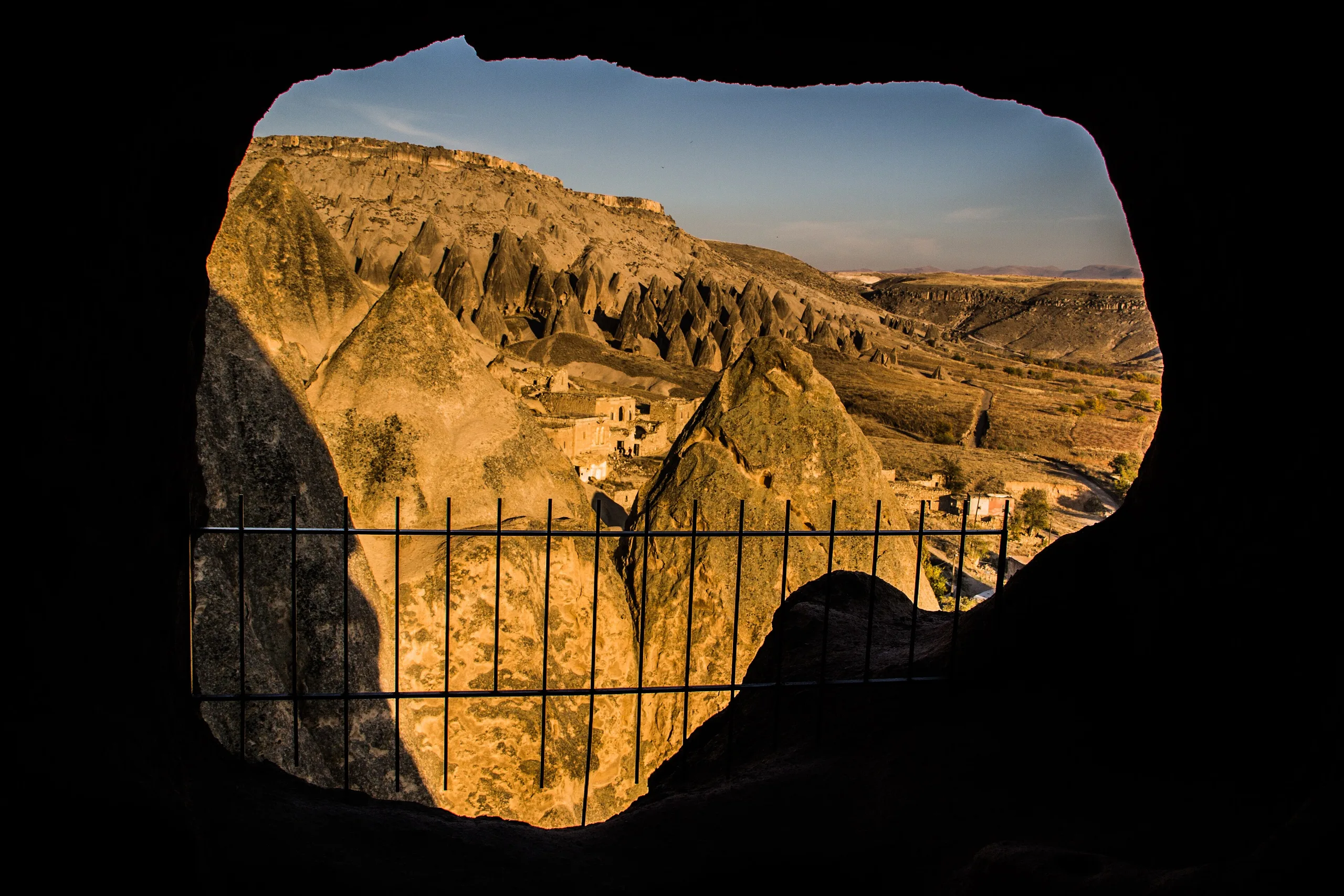
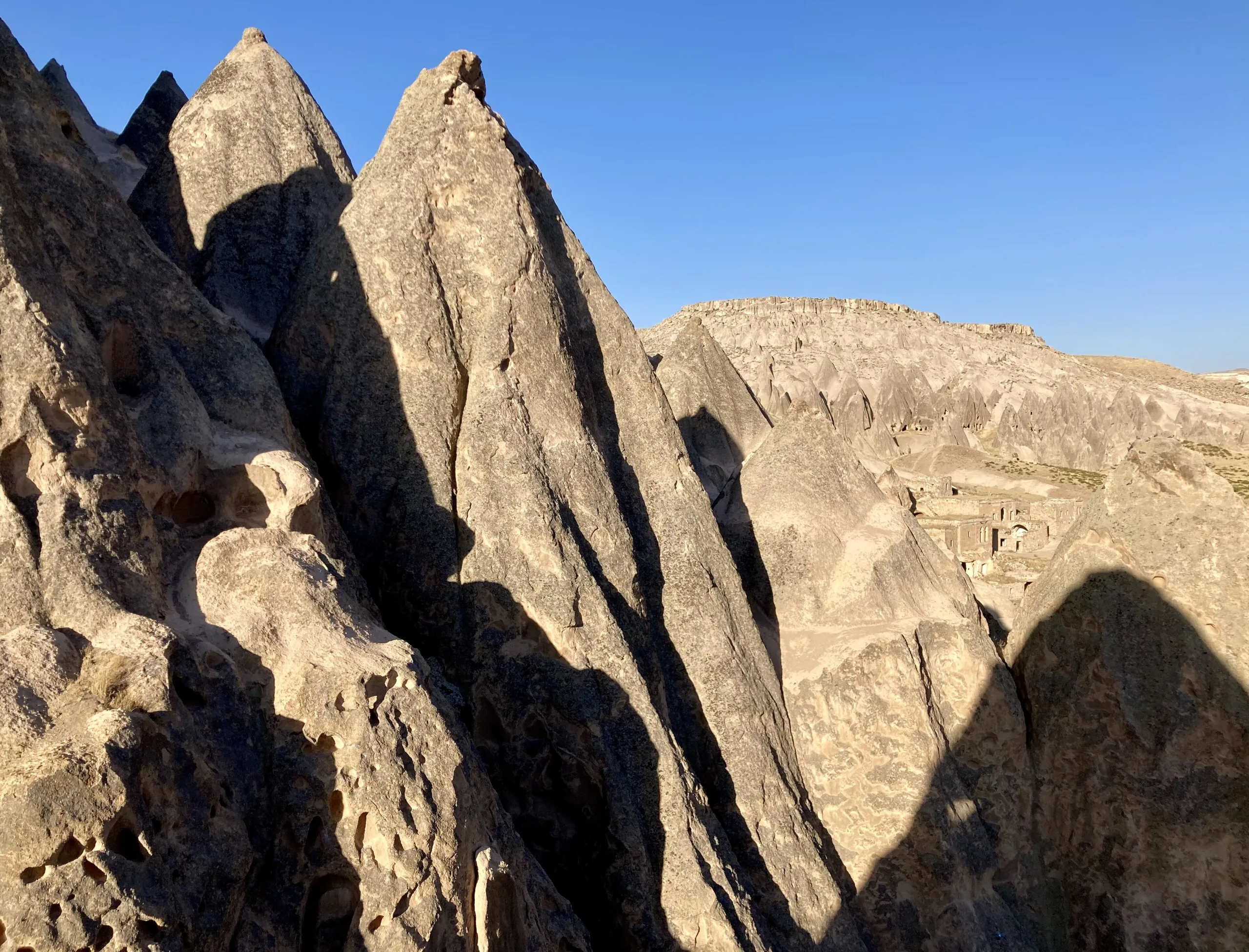
Monastery Valley is a gorge of cut-stone churches inside Güzelyurt district, some fifty kilometres east of Aksaray town. The Ministry gives its length as four to five kilometres and the Culture Portal as about five. The Ministry text compares it to a smaller Ihlara.
History
The Culture Portal presents the valley as a place that preserves early monastic life. The scholar Saint Gregory Theologos, born in the Nenezi area, set up his base at Güzelyurt in the 4th century CE and, per the page, spread the faith into inner Anatolia. The same page says Cappadocia was added to Roman territory in 17 CE, that believers were persecuted until Christianity was freed in 313, and that they therefore carved sheltered spaces in the rock for secret worship. After the 7th century the region served as a buffer zone during Arab raids; the iconoclast dispute of the early 9th century did not take hold in Cappadocia, so rock churches kept their figural paintings. From the late 11th century the area came under Turkish rule and Christians continued to worship freely. Turks and Greeks lived side by side around Güzelyurt until the population exchange of 1924.
Notable structures
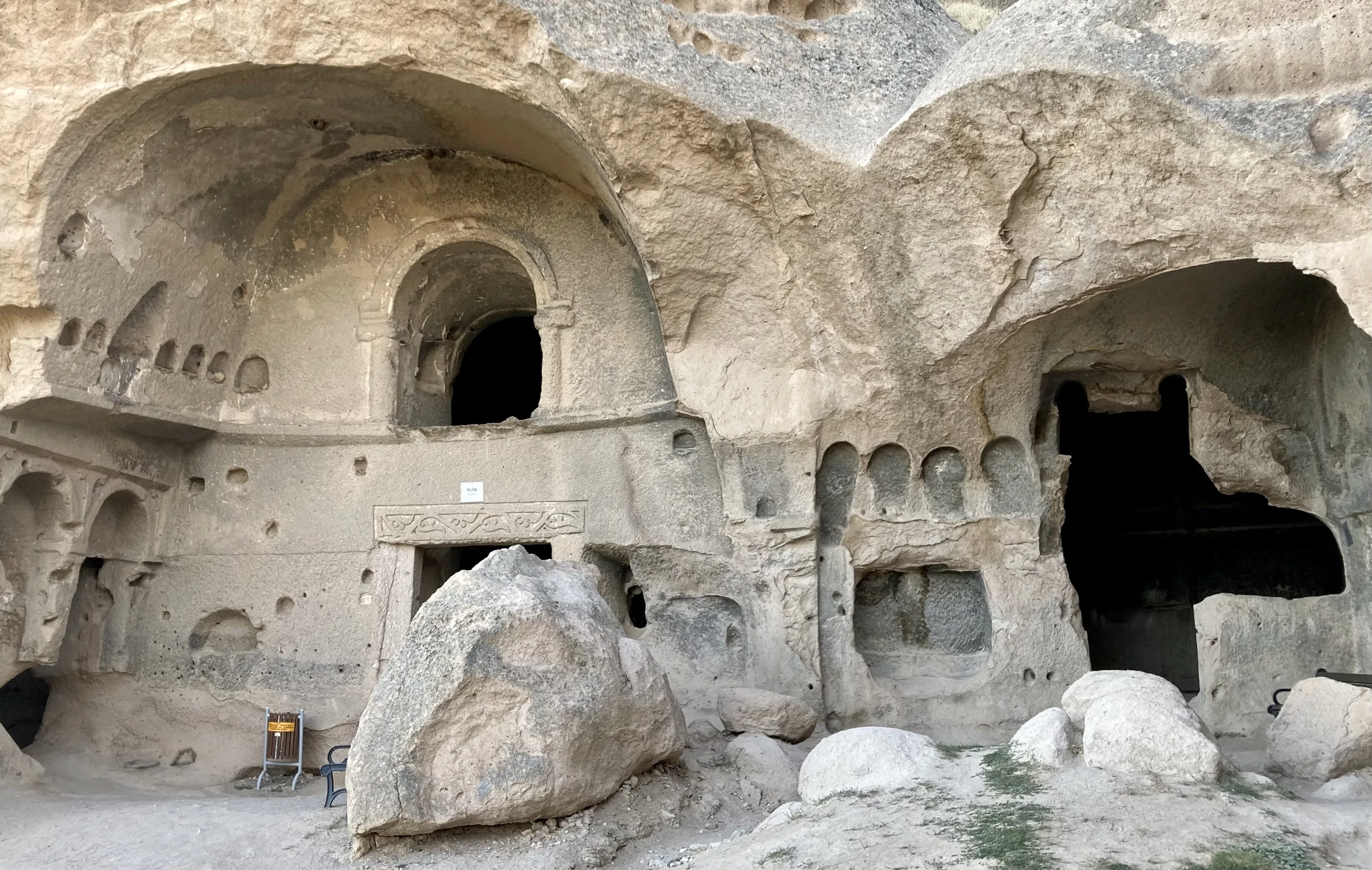
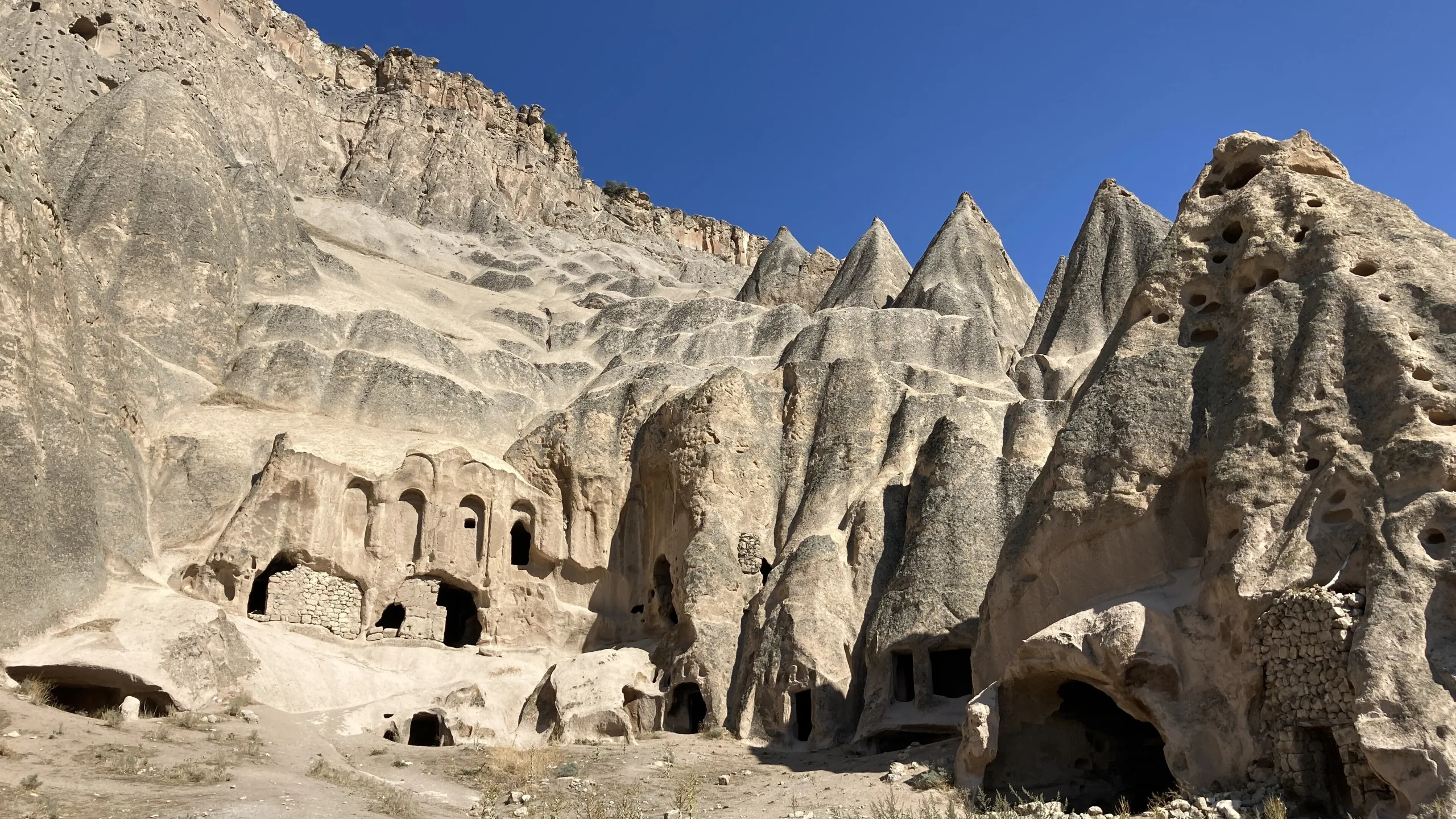
According to the Ministry page, the valley holds 28 rock-cut churches and underground cities. It names the Kömürlü and Kalburlu churches, Sivişli Church, the Priest's House and the Great Church-Mosque; the Culture Portal adds Koç Church and Çömlekçi Church and says the valley begins at the Church-Mosque. Several churches, chapels and rock-cut rooms are closed to visitors.
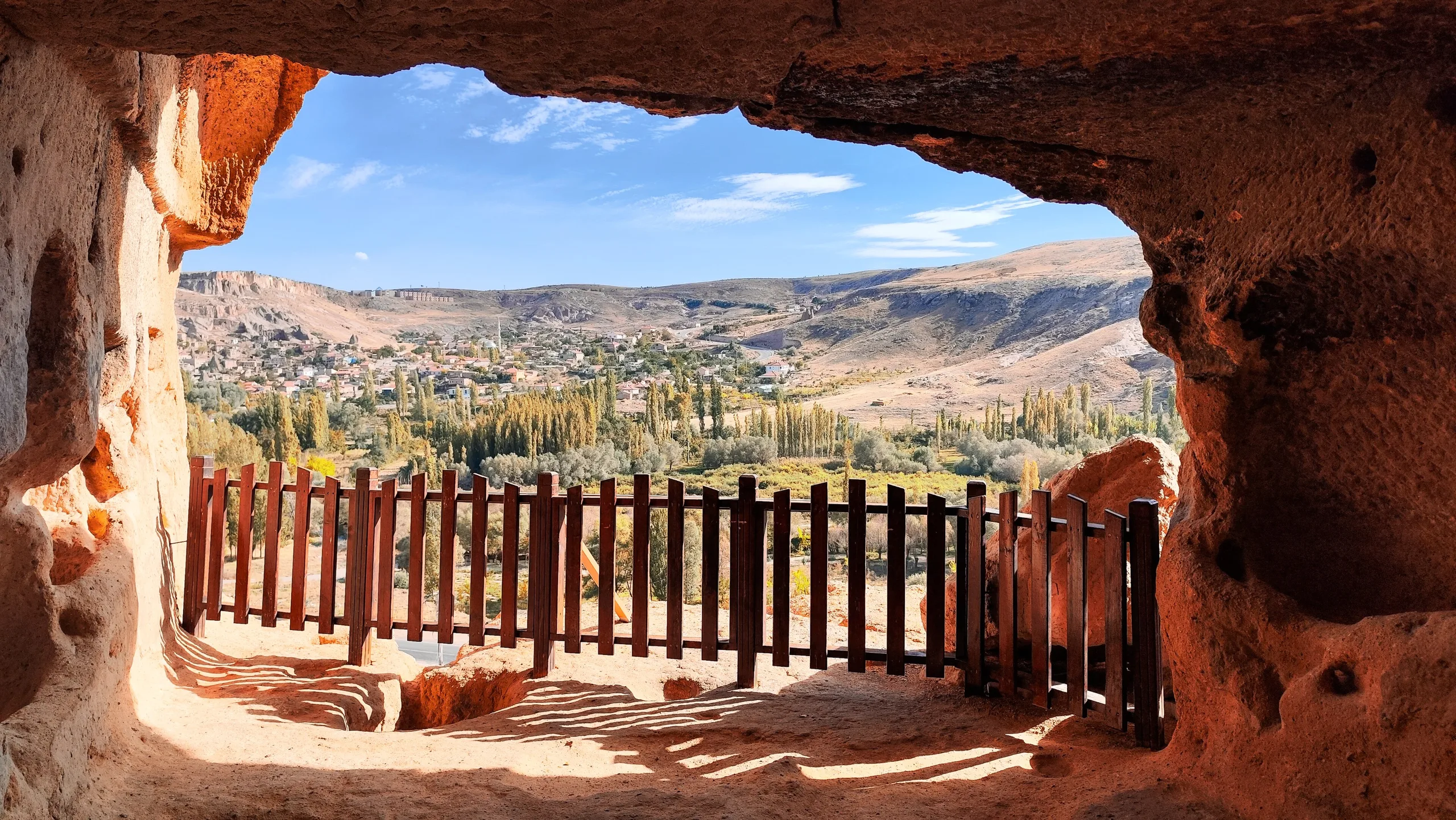
The Portal says the churches have one, two or three aisles, follow free-cross or closed Greek-cross plans, and show five of the seven main plan types recorded in Cappadocia. The valley is protected as an urban, natural and archaeological site and stands out for its vineyards, volcanic tuff and coloured rock. Walkers who continue about four kilometres beyond Kömürlü Church can reach Sivrihisar Castle and then the Red Church.
Selime Cathedral
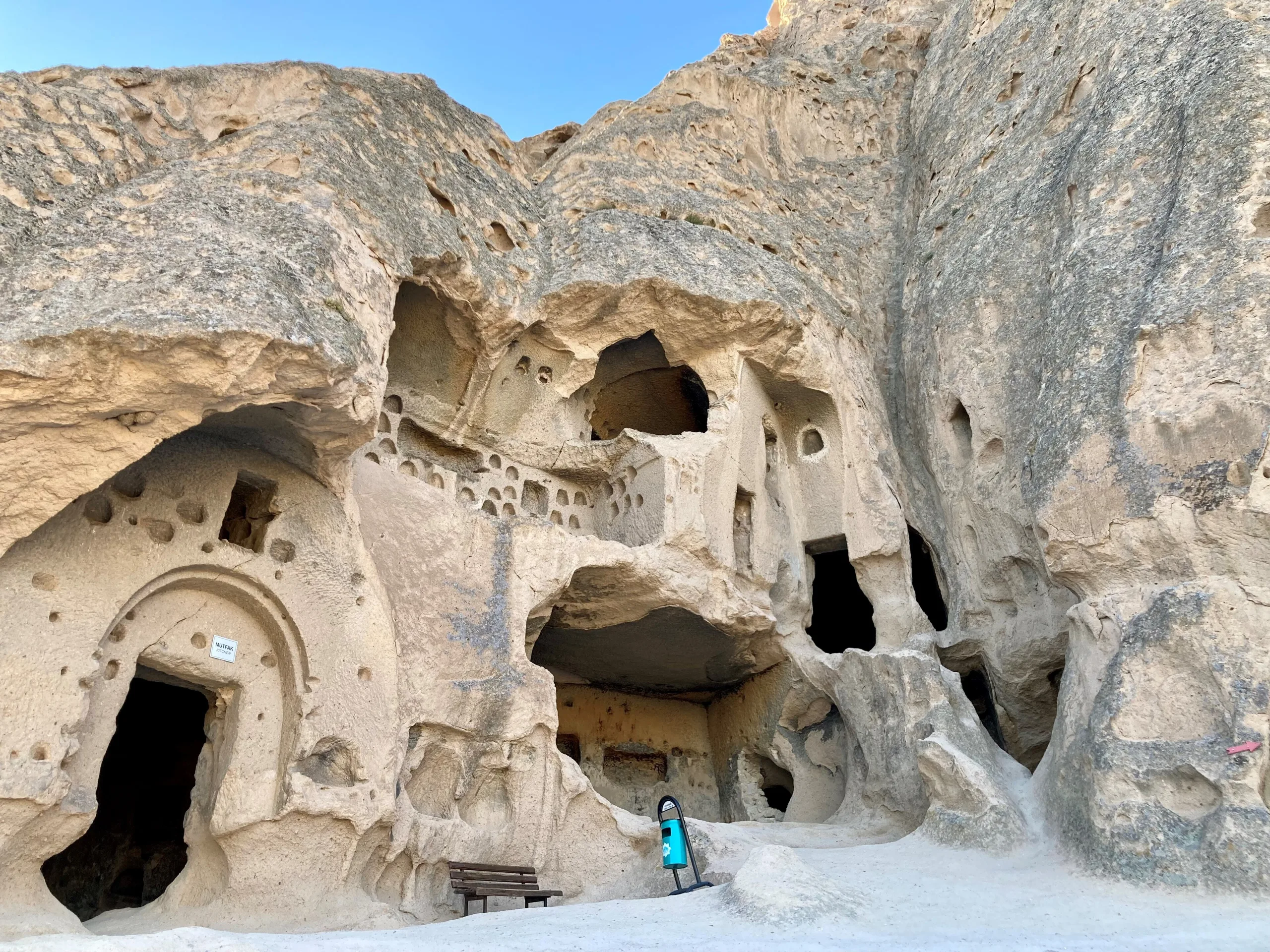
Selime Cathedral lies in the same district, at the point where Ihlara Valley ends, and the Culture Portal treats it as a separate entry. It calls the building the largest cathedral complex in Cappadocia and dates it to the 8th-11th centuries. The two-storey structure is carved from rock, and two rows of columns divide the interior into three sections. Its three-aisled basilica-plan church is the only one of that type in the region. The upper part was built as a fortress, with walls and positions still visible, and the complex mattered as a place where clergy were trained. Frescoes show the Annunciation, Nativity, Adoration of the Magi, Flight into Egypt, Baptism and Koimesis, along with bishop portraits. Its pyramid-shaped kitchen has niches for lamps, and the tomb of Selime Sultan stands opposite.
Visiting
Check the official page for hours and entry terms. The Ministry's Turkish page states that the Museum Card is valid for Turkish citizens.
Gallery
Frequently asked questions
Where is Monastery Valley?
How long is the valley?
How many churches does it have?
When was Selime Cathedral built?
What is special about Selime Cathedral?
Is the Museum Card valid?
Sources (13)
- Aksaray Manastır Vadisi Örenyeri / Monastery Valley (TR ve EN sayfalar) — T.C. Kültür ve Turizm Bakanlığı, Müzeler ve Örenyerleri
- Manastır Vadisi - Aksaray (kaynak: Aksaray İl Kültür ve Turizm Müdürlüğü) — T.C. Kültür ve Turizm Bakanlığı, Türkiye Kültür Portalı
- Selime Katedrali - Aksaray (kaynak: Aksaray İl Kültür ve Turizm Müdürlüğü, Kültür ve Turizm Rehberi 2012) — T.C. Kültür ve Turizm Bakanlığı, Türkiye Kültür Portalı
- Selime Cathedral (Wikidata Q5996572, P625) — Wikidata
Photo credits
- Photo: prilfish, CC BY 2.0 — Wikimedia Commons (resized)
- Photo: Dudva, CC BY-SA 4.0 — Wikimedia Commons (resized)
- Photo: Bora Baş, CC BY-SA 4.0 — Wikimedia Commons (resized)
- Photo: prilfish, CC BY 2.0 — Wikimedia Commons (resized)
- Photo: Ji-Elle, CC BY-SA 3.0 — Wikimedia Commons (resized)
- Photo: Dudva, CC BY-SA 4.0 — Wikimedia Commons (resized)
- Photo: Kharkil, CC BY-SA 4.0 — Wikimedia Commons (resized)
- Photo: Tevfik Teker, CC BY 3.0 — Wikimedia Commons (resized)
- Photo: Dudva, CC BY-SA 4.0 — Wikimedia Commons (resized)