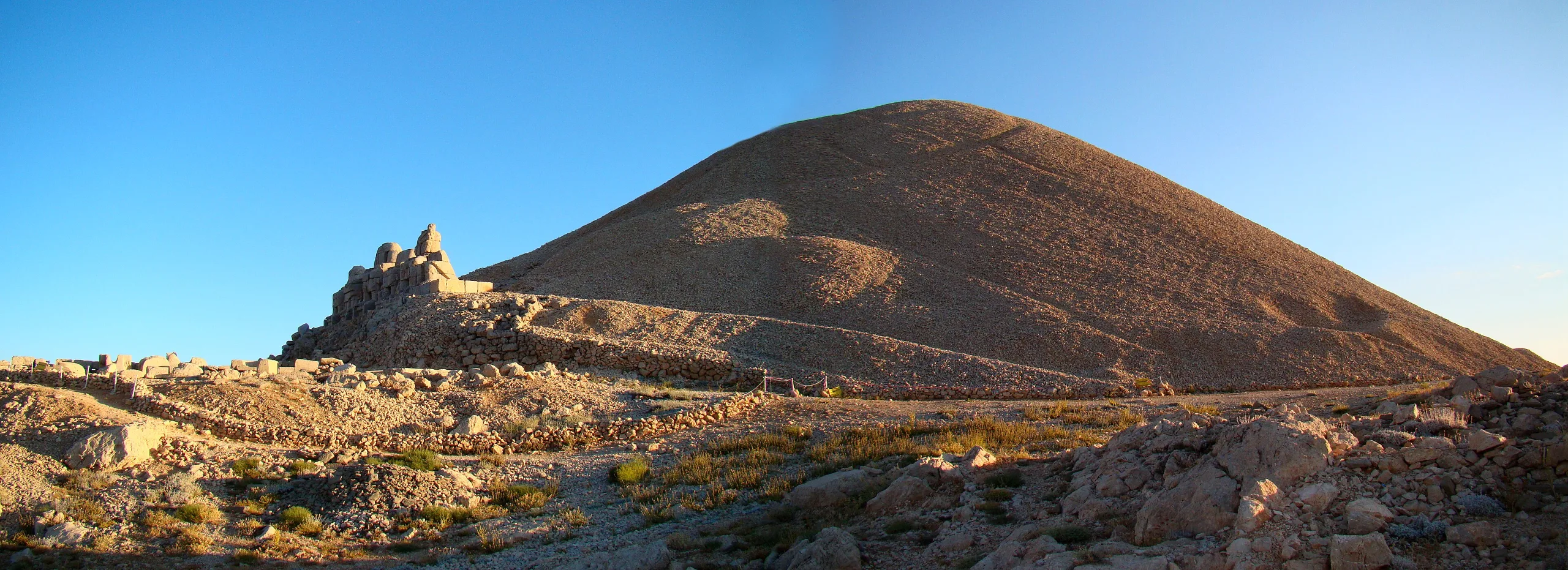
On a 2,150 m summit in Adıyaman, King Antiochos I of Commagene built a huge tumulus ringed by terraces of seated colossal gods whose heads now lie on the ground.
Mount Nemrut Archaeological Site is a place (Sanctuary) in Turkey, Adiyaman. Main periods: Hellenistic Period. It was inscribed on the UNESCO World Heritage List in 1987.
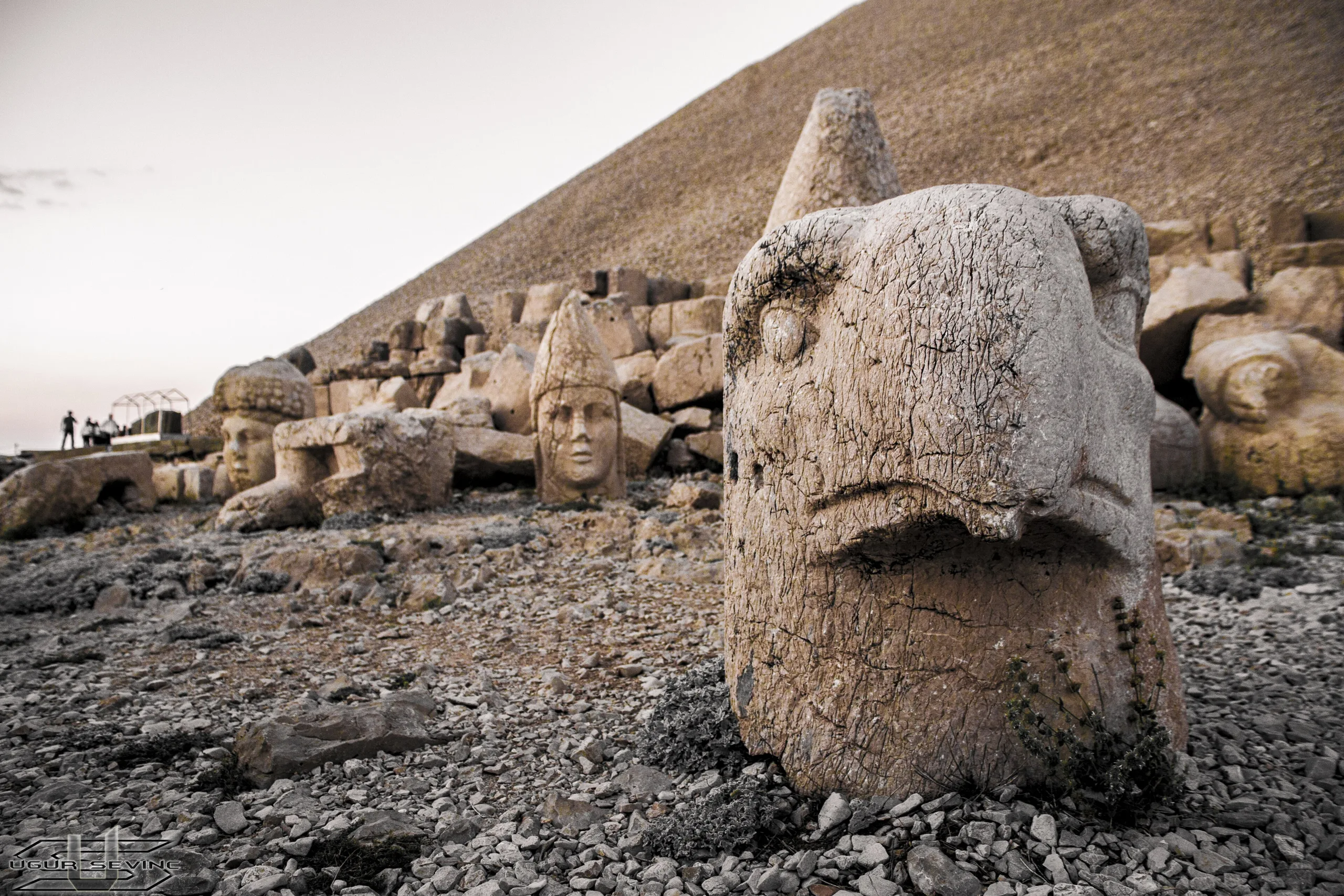
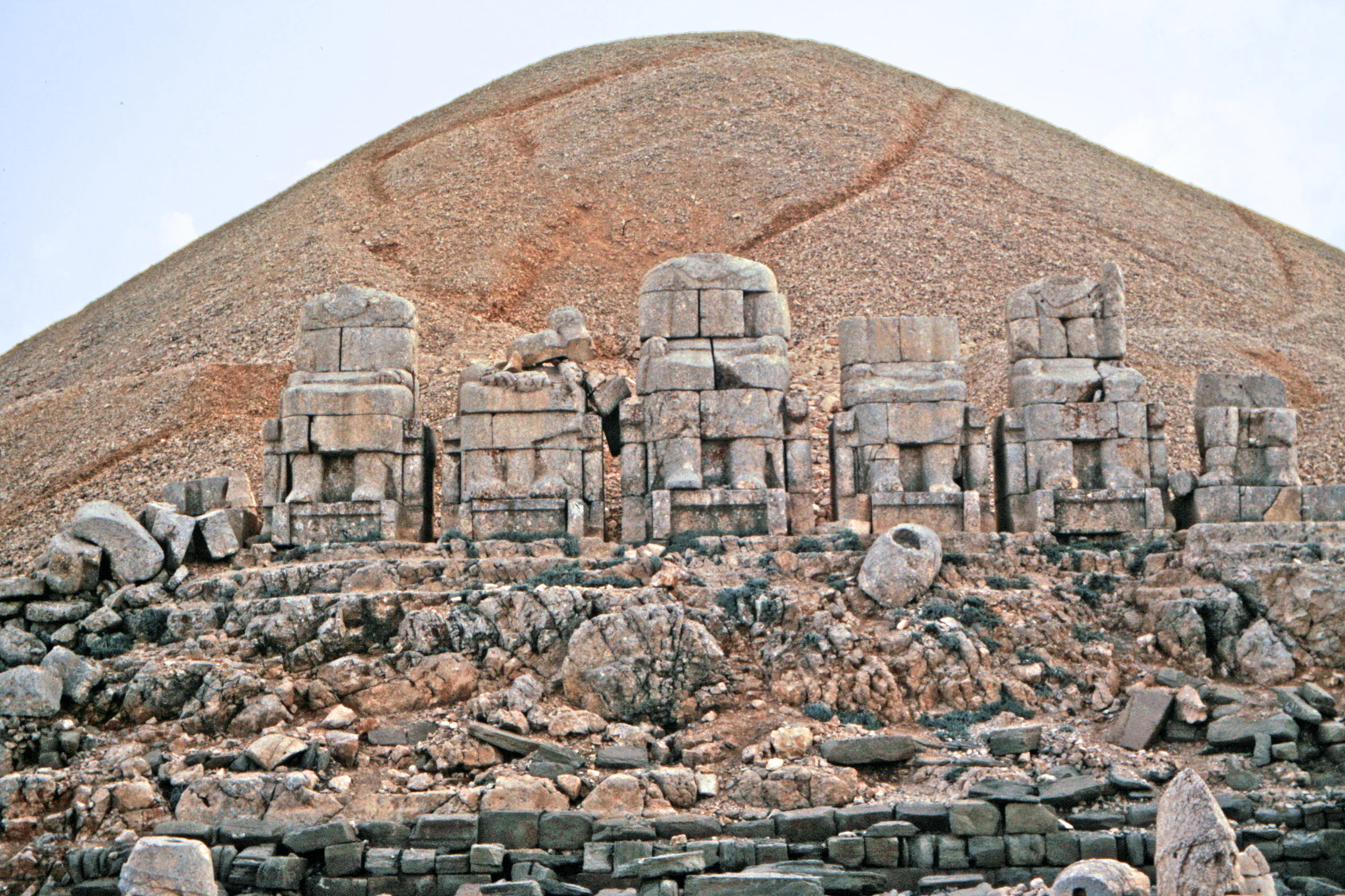
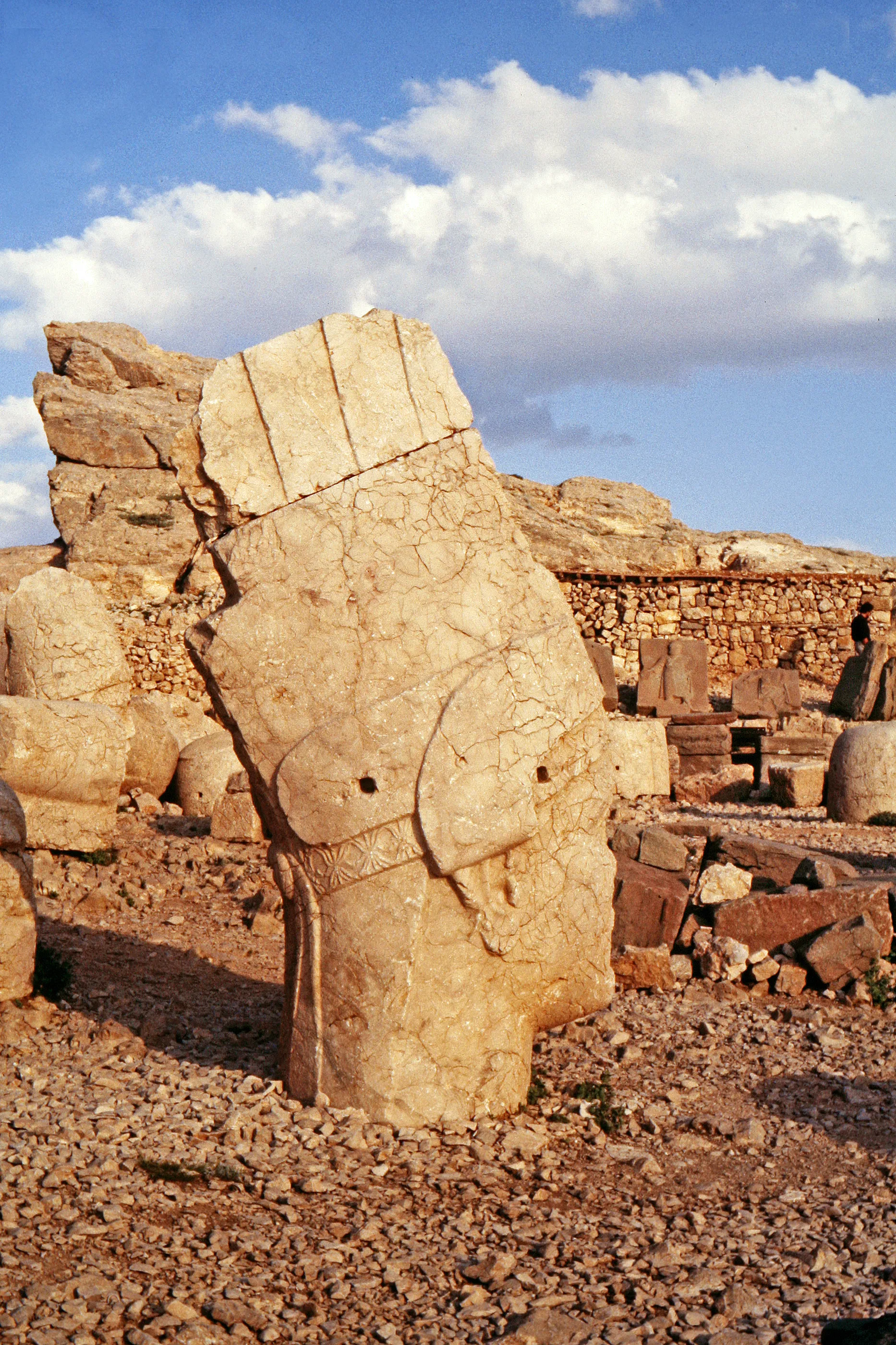
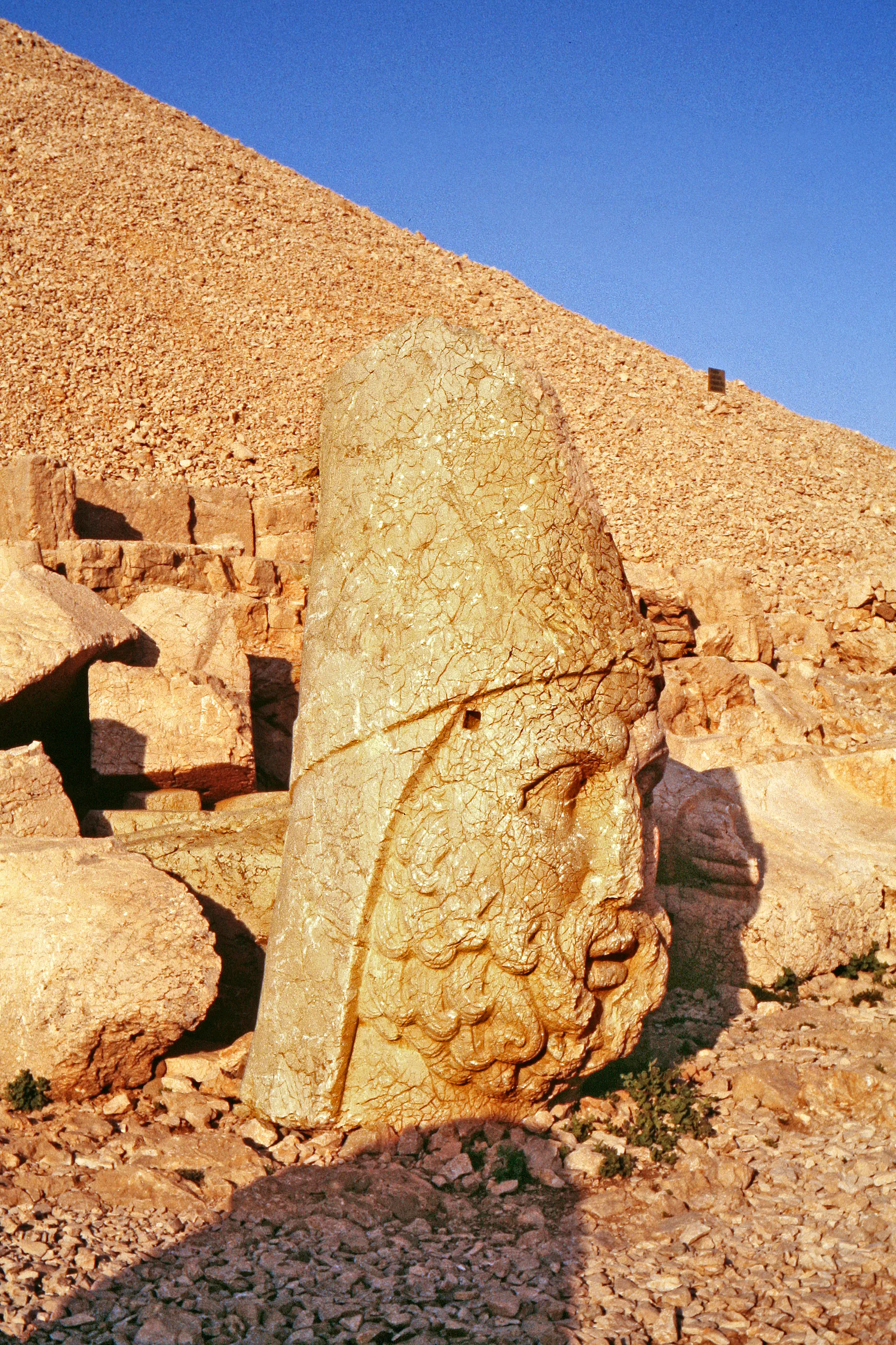
The colossal heads of the gods have broken off and rest side by side on the rocky ground, while the bodies still sit in line on their thrones. High in the Eastern Taurus, at about 2,150 m in the Kahta district of Adıyaman, King Antiochos I of Commagene had a mountain of crushed stone heaped up for his own tomb and levelled three terraces around it. UNESCO placed this tomb and sanctuary on the World Heritage List in 1987.
What sets the monument apart is that the king appears among the gods, and that his ancestry is spelled out in two family lines. Greek, Persian and Anatolian art merge in a single style, recording in stone the place of a small kingdom between two great worlds.
Setting
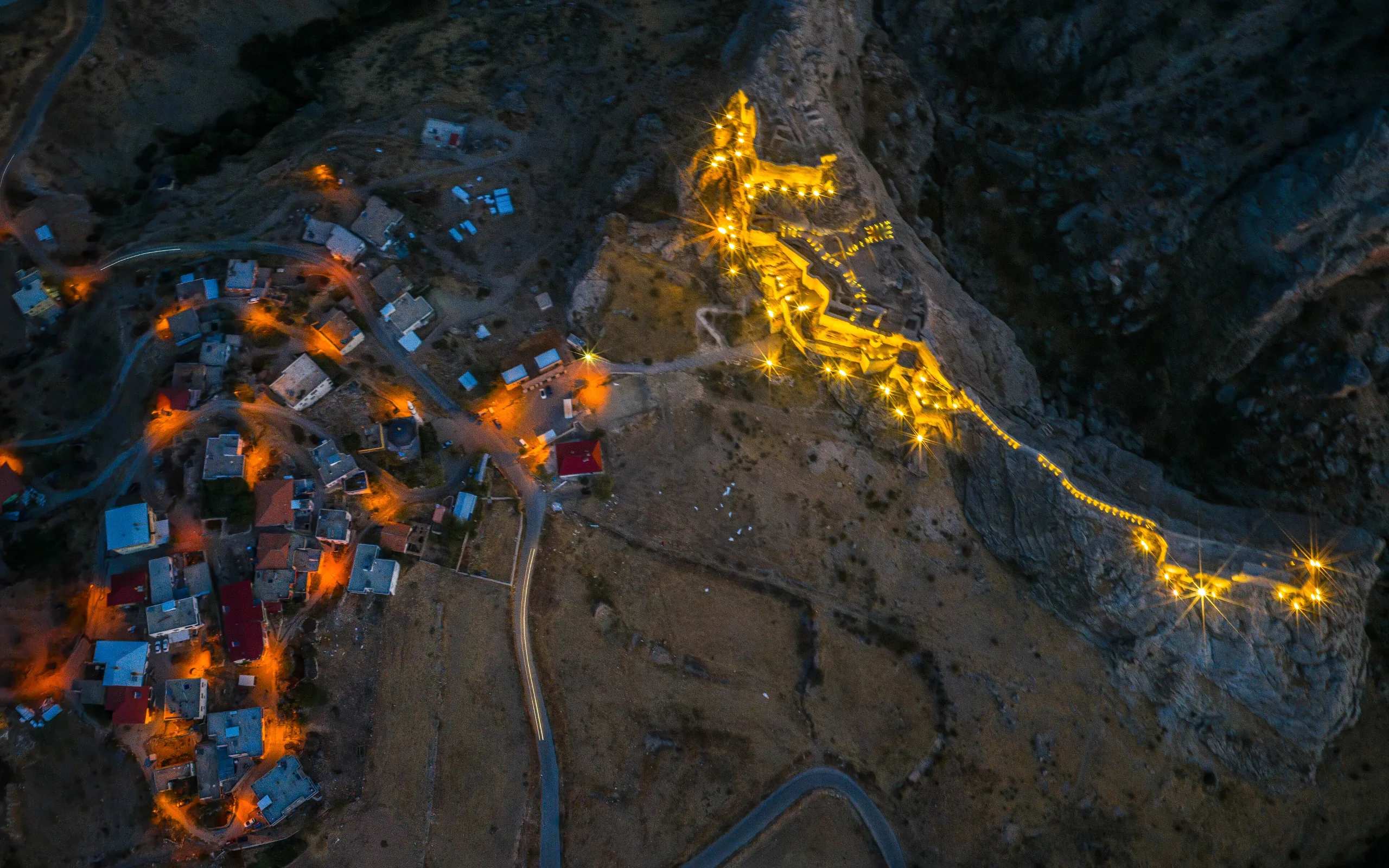
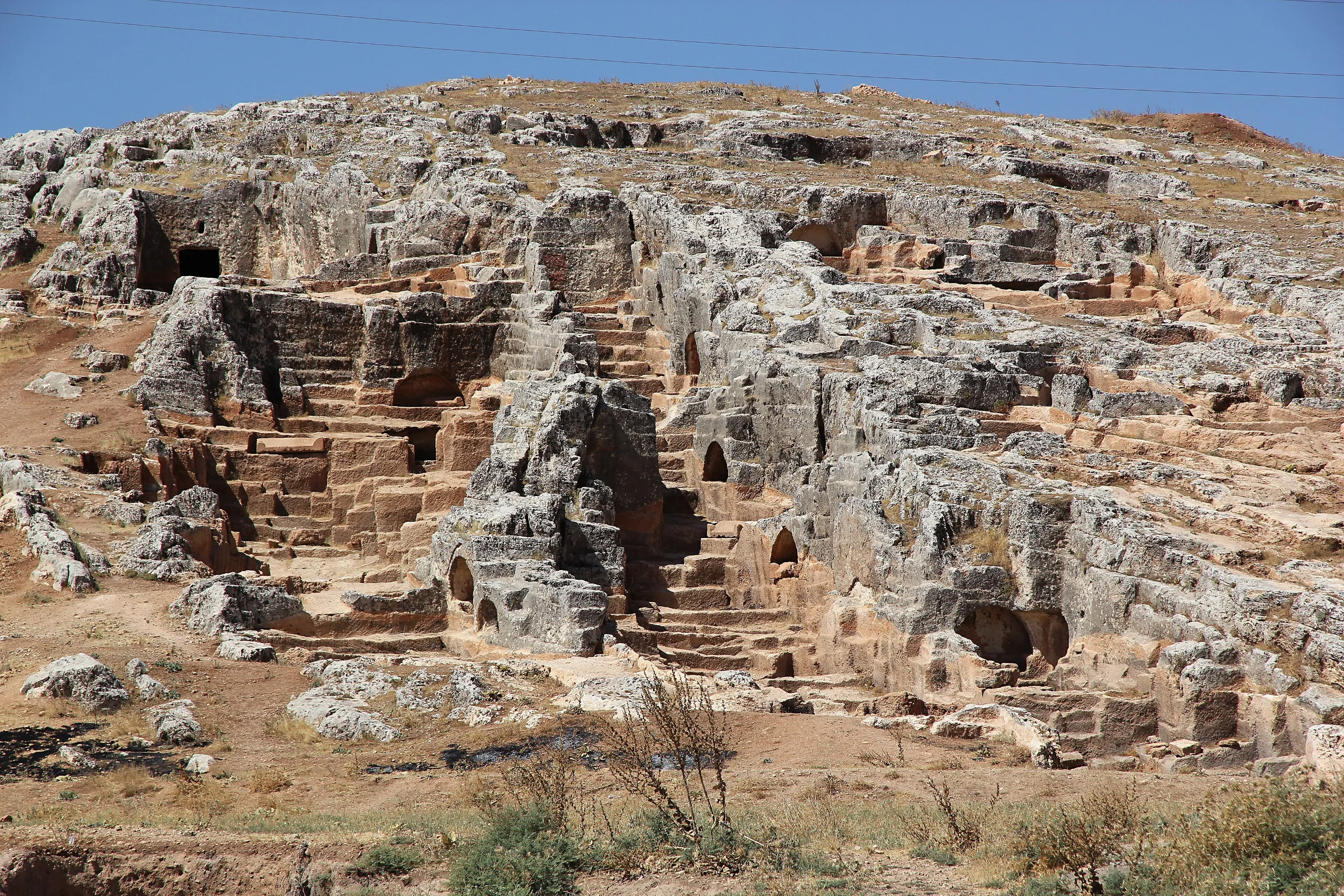
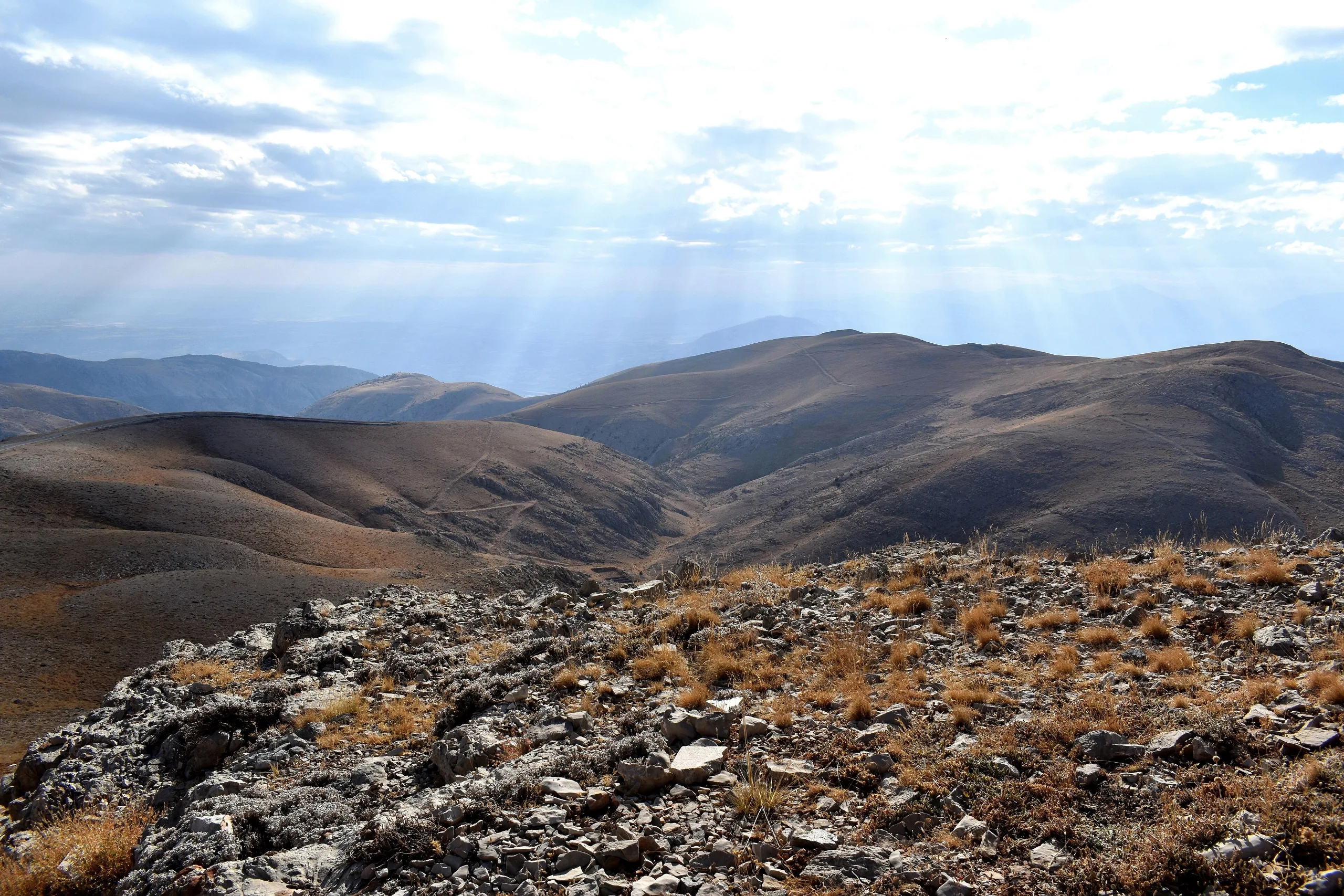
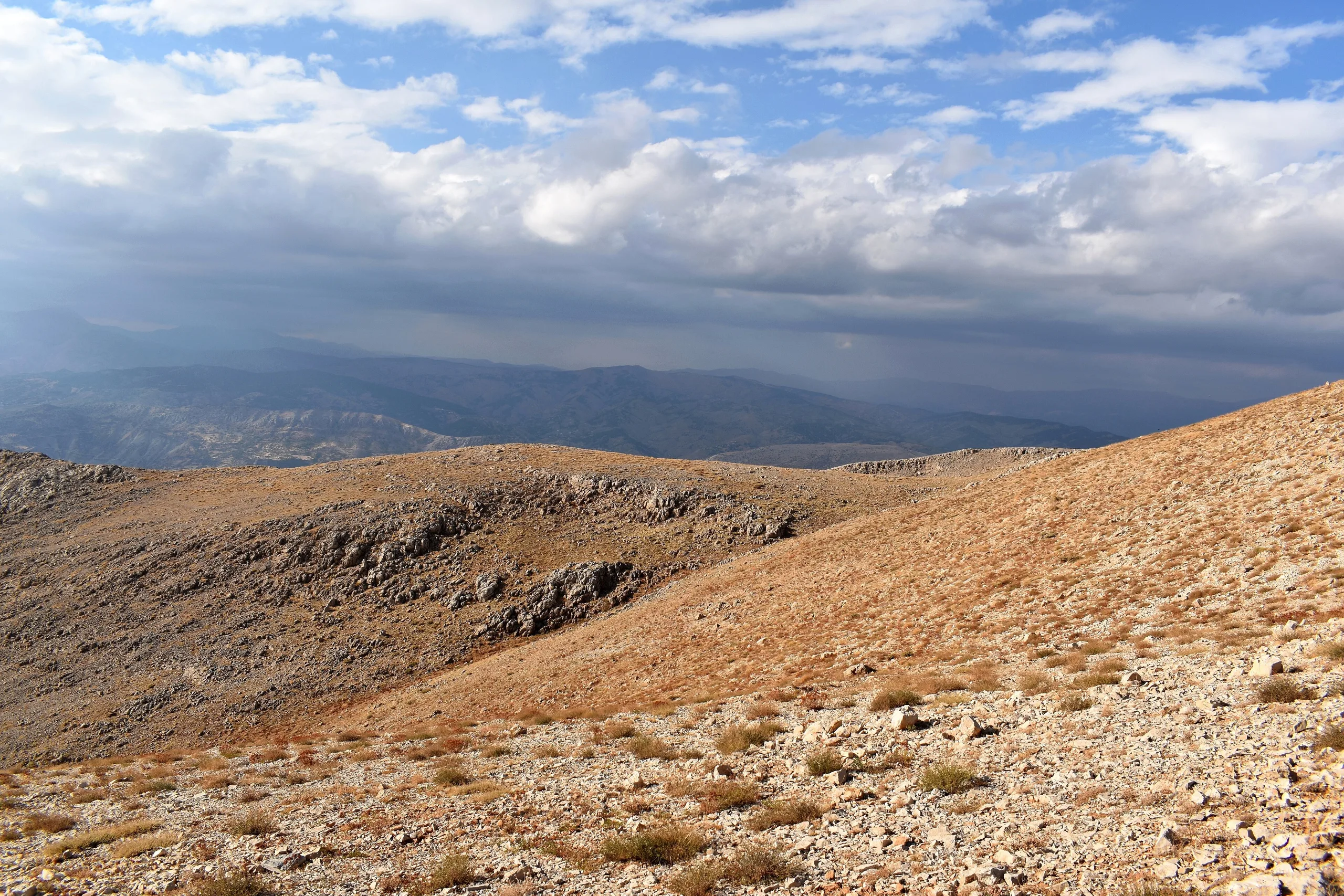
The summit looks down over the crossings of the Euphrates and the plains around it. Karadut village serves as the address. Nearby you can also reach other Commagene and Roman-era stops, among them Adıyaman Museum, Arsemia, Yenikale, Perre and the Sofraz tomb.
The kingdom of Commagene
When Alexander's empire broke up, small kingdoms sprang up in the Hellenized East, and Commagene was one of them. From 162 BC to AD 72 it survived as a semi-independent state whose rulers tried to hold on to their autonomy against first the Seleucids and then Rome. Members of the dynasty bore Greek names such as Antiochos or Mithridates.
Mithridates I is said to have founded the kingdom, and it grew strong under his son Antiochos I, who reigned from about 69 to 34 BC. Independence ended in AD 72 with a lost war against Rome. The king's mother was of Greek and his father of Persian stock, which is why the monument is read as a bridge between East and West. Antiochos traces himself back to Darius on his father's side and to Alexander on his mother's. That half-legendary pedigree voices the claim of a dynasty that refused to live in the shadow of either power.
The monument
The tumulus
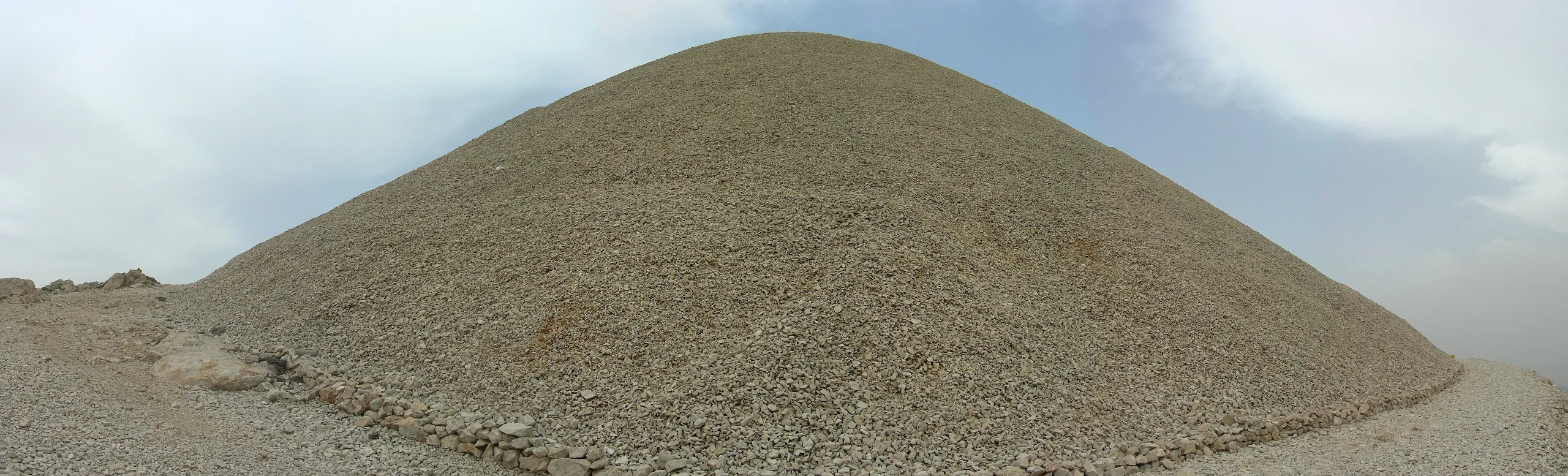
A cone of crushed stone crowns the summit. This artificial burial mound, the tumulus, is about 50 m high and 145-150 m across, and holds some 30,000 cubic metres of stone. Inscriptions say the king's bones or ashes lie in a chamber cut into the bedrock. Many attempts to find the dromos, the passage leading to that chamber, have failed, and the interior of the mound is still unknown. Its original height is estimated at around 60 m; weathering, uncontrolled early research and climbing visitors have all taken a toll.
East Terrace
The East Terrace is the sacred centre, where sunrise was watched, and it holds the finest sculpture and architecture. Cut into the rock on two levels, it carries five seated gods on a shared base in the upper part, with a lion and an eagle standing guard at each end. The inscriptions identify them from left to right as Apollo-Mithras-Helios-Hermes, the Tyche of Commagene, Zeus-Oromasdes, Antiochos himself, and Heracles-Artagnes-Ares. The heads have tumbled down to the lower level.
That lower level has two rows of stelae, upright carved slabs, with altars in front. One row shows the king's Persian forebears on his father's side, the other his Macedonian ancestors on his mother's, and the inscriptions behind explain the family links. A fire altar and a seated lion statue stand before the gods.
West Terrace
The West Terrace repeats the layout but has no pyramid-shaped altar. In its place come an extra row of stelae, scenes of the king shaking hands with a god (dexiosis) and the stele of the lion horoscope. The horoscope records when the cult area was founded: the moon and stars give a July of 62 BC, taken as the day the king took the throne or was recognised as king by Rome.
North Terrace
Long, narrow and rectangular, the North Terrace has stelae that stand on sandstone pedestals;, they bear no reliefs and no inscriptions. A wall about 80 m long with eagles at its ends runs along it; unless the work was left unfinished, this may have been a processional way.
Gods and testament
The Commagene pantheon blends Greek and Iranian deities. Zeus merges with Oromasdes, who is equated with Ahuramazda, and Heracles with Artagnes, equated with Verethragna. The mixture shows in the hybrid style of statues and reliefs too. Commagene, the only goddess among them, personifies the fertility of the land and wears a crown of fruit.
The inscription behind the thrones sets out the king's religious and social rules in what is called the Nomos, a text of roughly 230 lines.
Discovery and research
An engineer, Charles Sester, came across the site by chance in 1881, and systematic study followed in 1953. Osman Hamdi Bey worked on Nemrut with a team in 1883. After the Second World War the American archaeologist Theresa Goell and the German Karl Doerner conducted digs and studies.
World Heritage and conservation
Inscribed in 1987 under criteria (i), (iii) and (iv), the property covers 11 hectares. Some stone blocks weigh up to nine tonnes, a sign that the layout was among the boldest undertakings of the Hellenistic age.
The tumulus became a first-degree archaeological site in 1986. In 1988 an area containing it and other archaeological sites was declared a national park; in 2008 its surroundings became an interaction transition zone, enlarged in 2011. A protocol with Middle East Technical University in August 2006 launched the Commagene Nemrut Conservation and Development Programme, which produced geological, material and structural studies; the regional council approved measured drawings and restitution and restoration designs in 2011. A management plan still has to be finished and put into practice.
The main threats are temperature swings, freeze and thaw, wind, snow build-up and sun. The mountain sits in a first-degree earthquake zone very close to the East Anatolian Fault. The conservation view is distinctive: because the scattered heads are held to be part of the place's beauty, systematic anastylosis, the setting of fallen pieces back in place, has been advised against.
Visiting
Opening times follow sunrise and sunset, so check the official museum page for current hours and fees. The remains stand at high altitude in open terrain, and weather governs the visit.
Gallery
Frequently asked questions
Where is Mount Nemrut?
Who built the monument on Nemrut?
Why are the statue heads on the ground?
How big is the tumulus?
What can be seen on each terrace?
When did Nemrut become a World Heritage Site?
Sources (13)
- Nemrut Örenyeri / Mount Nemrut Archaeological Site (TR ve EN sayfalar) — T.C. Kültür ve Turizm Bakanlığı, Müzeler ve Ören Yerleri
- Nemrut Dağ - World Heritage List 448 (özet ve Üstün Evrensel Değer metni) — UNESCO World Heritage Centre
- Advisory Body Evaluation No 448: The Hierotheseion of Antiochos I of Commagene on Nemrut Dag (1987) — ICOMOS / UNESCO
- Nemrut Dağ (Pleiades place 658544) — Pleiades
Photo credits
- Photo: Herbert Frank from Wien (Vienna), AT, CC BY 2.0 — Wikimedia Commons (resized)
- Photo: Theugursevinc, CC BY-SA 4.0 — Wikimedia Commons (resized)
- Photo: Bjørn Christian Tørrissen, CC BY-SA 3.0 — Wikimedia Commons (resized)
- Photo: W. Bulach, CC BY-SA 4.0 — Wikimedia Commons (resized)
- Photo: W. Bulach, CC BY-SA 4.0 — Wikimedia Commons (resized)
- Photo: W. Bulach, CC BY-SA 4.0 — Wikimedia Commons (resized)
- Photo: Misa.stefanovic.07, CC BY-SA 4.0 — Wikimedia Commons (resized)
- Photo: Misa.stefanovic.07, CC BY-SA 4.0 — Wikimedia Commons (resized)
- Photo: Berke Can AVCI, CC BY-SA 4.0 — Wikimedia Commons (resized)