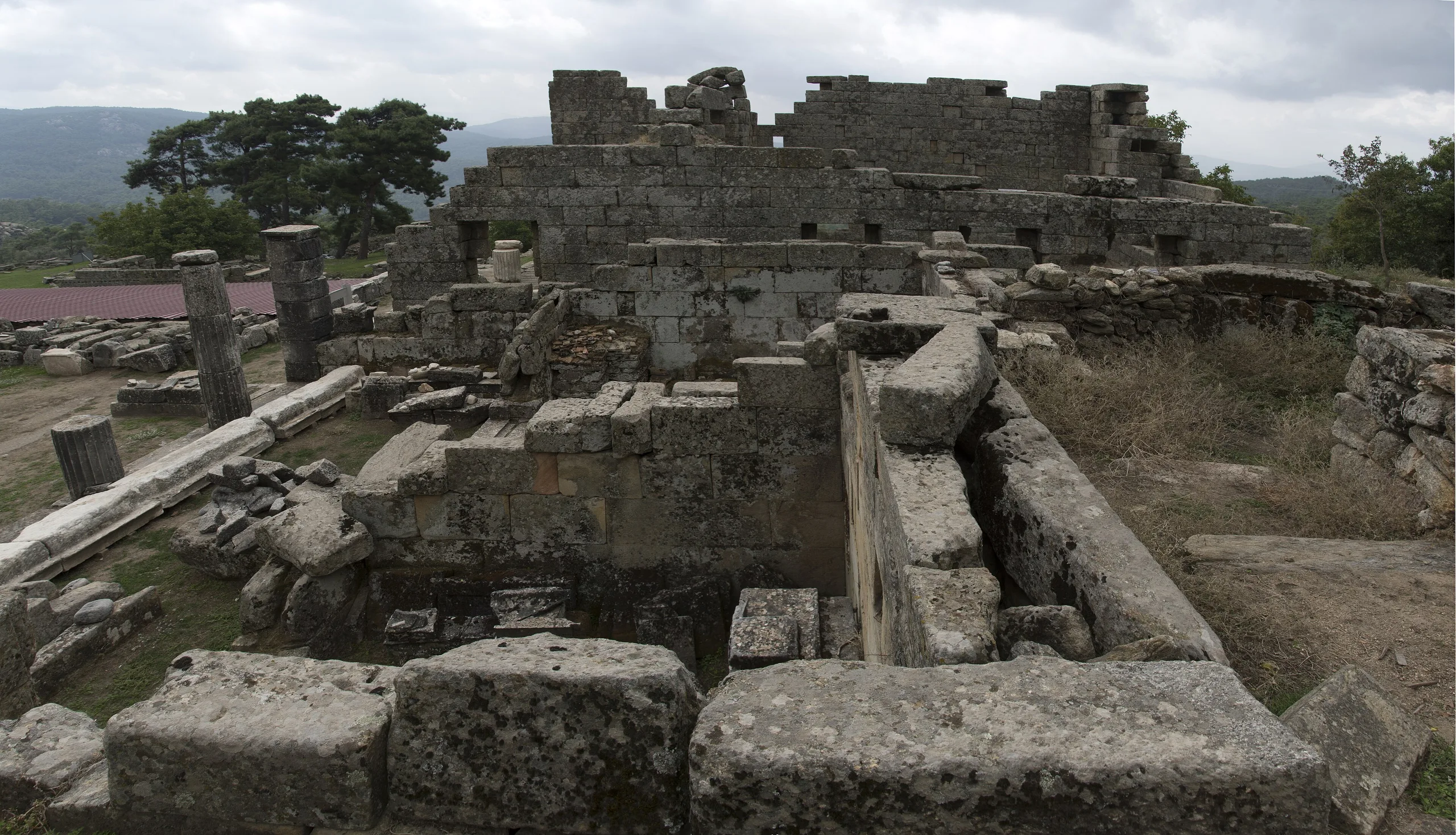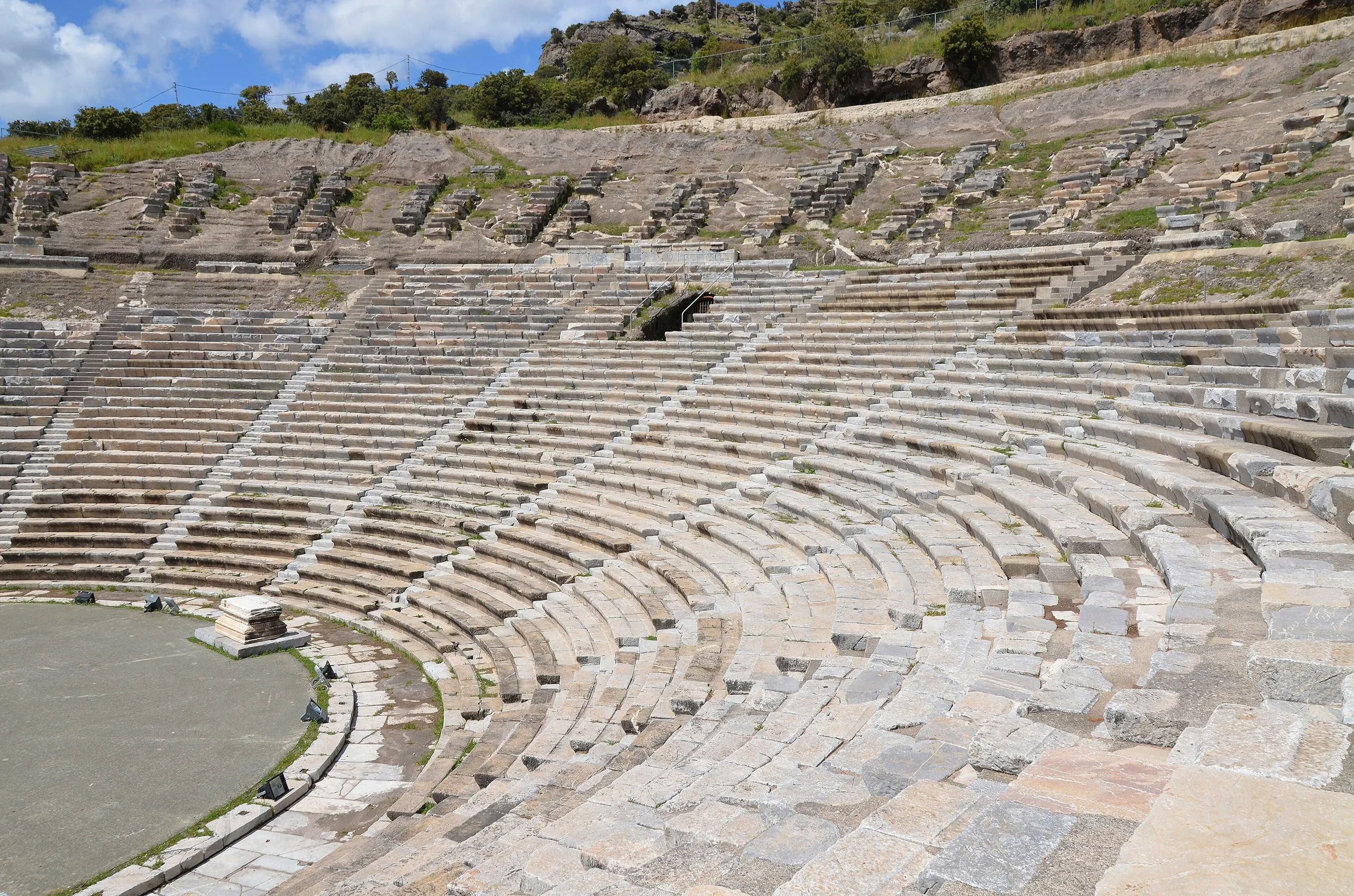
The theatre on the southern slope of Göktepe in Bodrum belonged to ancient Halicarnassus; the Ministry dates it to the 4th century BCE, and it still hosts events.
Ancient Theatre of Halicarnassus (Bodrum) is an ancient city located in Turkey, Mugla. Main periods: Classical Period, Roman Period.
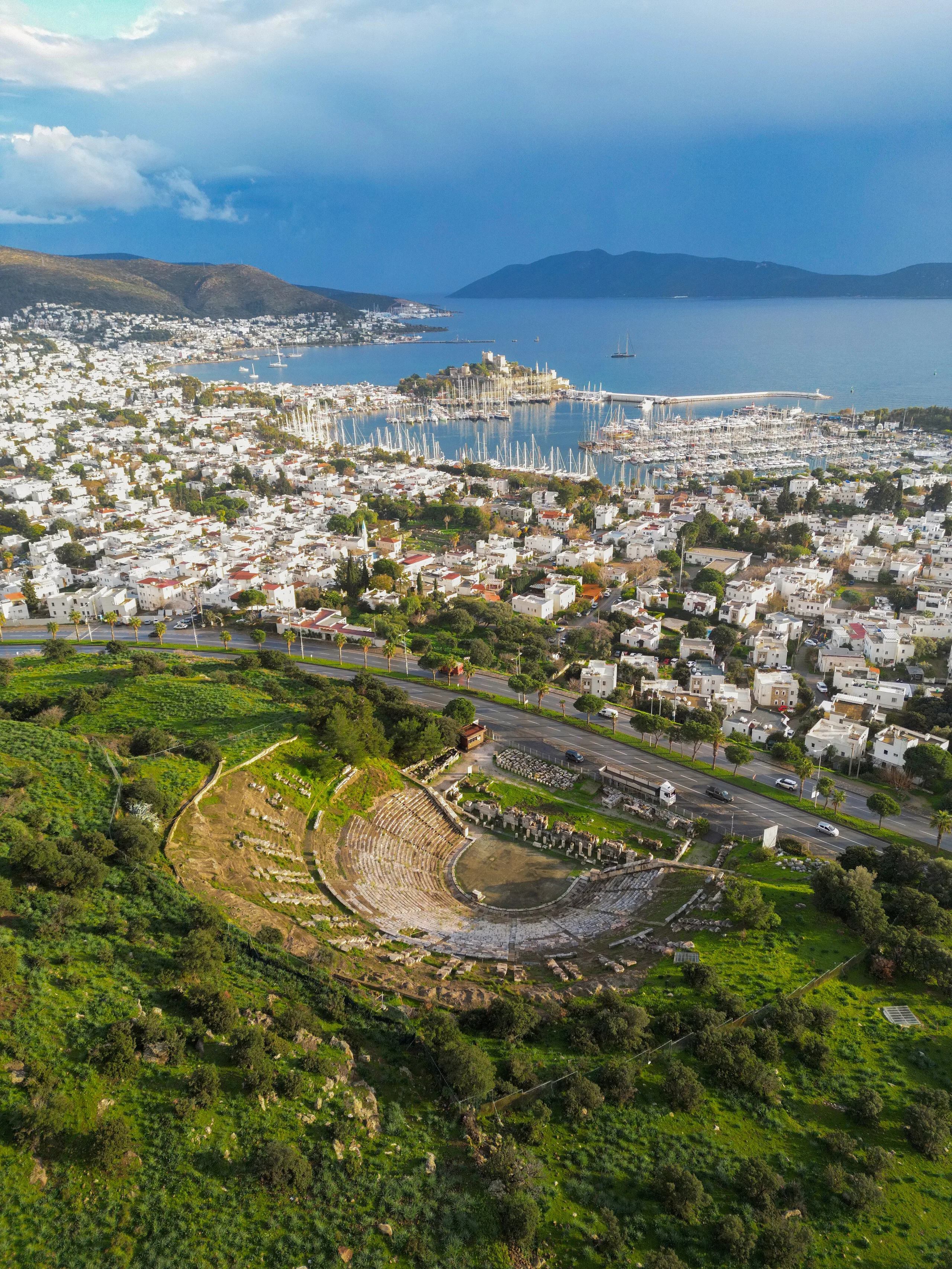
The ancient theatre of Bodrum stands against the southern foot of Göktepe in the town centre and is a relic of Halicarnassus. The Ministry's Turkish page calls it the only building from Classical-period Bodrum to reach the present, and counts it among the oldest theatres in Anatolia. It still serves as a venue for arts events.
Setting
According to the Ministry's English page, the theatre leans on the slope of Göktepe, a hill that served as a burial ground north of the ancient city. From the seats the view takes in the town and the sea, with Kos and the Datça peninsula beyond. The address lies on the ring road in Yeniköy neighbourhood; for hours and entry terms, use the official page.
History
The Culture Portal describes Dorian Greek migrants settling in the region; Herodotus and Strabo are cited as saying they founded the city, while the native population was made up of Carians and Leleges. Caria was under Lydian rule at the start of the 6th century BCE and passed to Persia after Cyrus took Sardis. The Persians appointed the Hekatomnid dynasty of Mylasa as satraps.
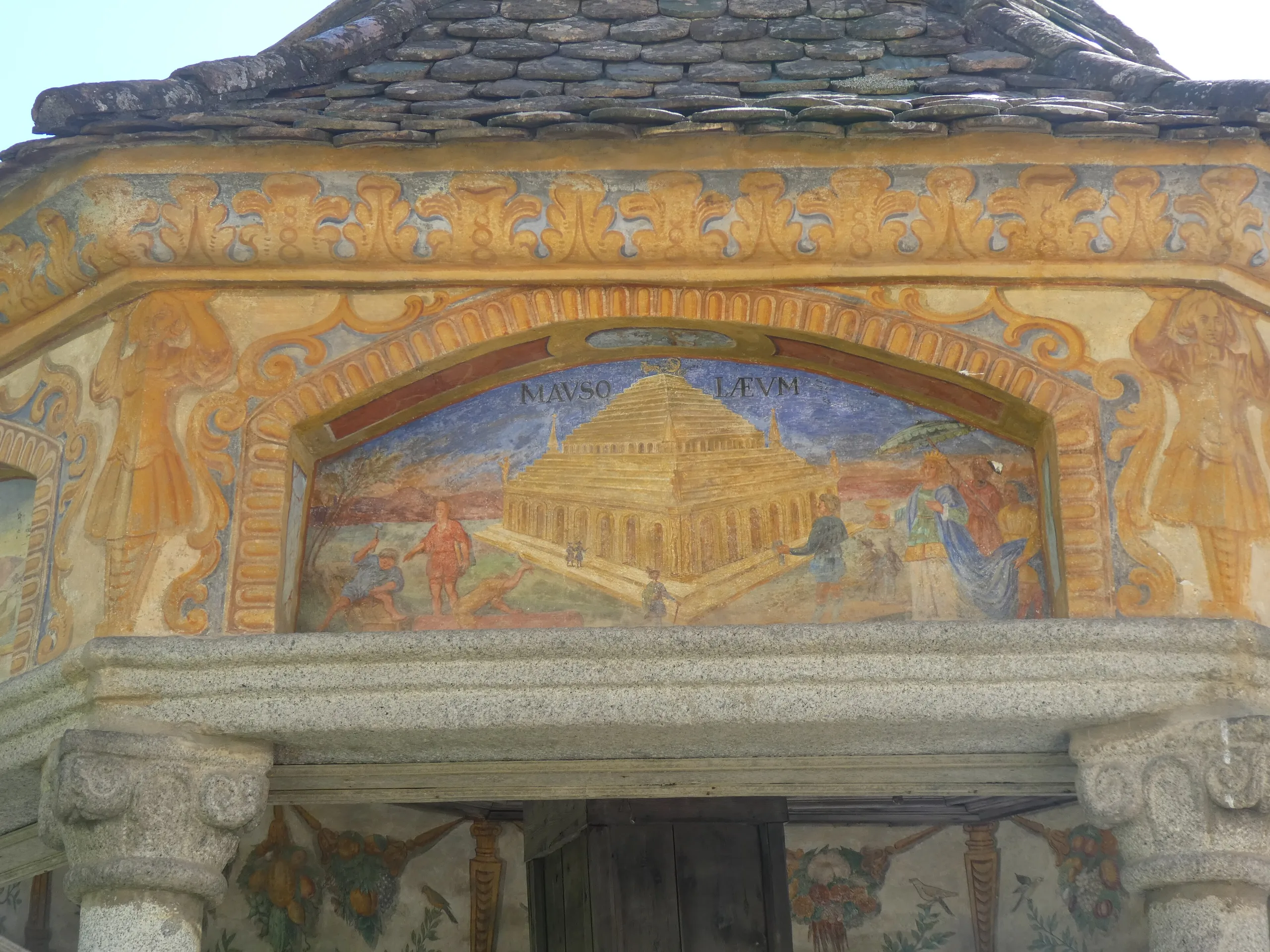
When Hekatomnos's son Maussollos took over, he moved the seat of government from Mylasa to Halicarnassus around 367 BCE. The Portal says the city grew quickly thanks to its position, that Maussollos made the people of six of eight nearby Lelegian towns move in, and that he brought noted sculptors and architects. The Mausoleum, regarded as one of the Seven Wonders, the theatre and the city walls were begun in his time. He ruled for 24 years and died in 353 BCE; his wife Artemisia II followed and ruled for two years. Alexander the Great took the city in spring 334 BCE.
Under Rome Halicarnassus appears as a small city in the province of Asia. The Portal says public works were carried out under Augustus, including the Temple of Mars east of the theatre. When Caria became its own province in the 4th century CE, the city turned into a bishopric subordinate to the Metropolitanate of Aphrodisias; it fell to the Turks in the last quarter of the 11th century CE.
The building
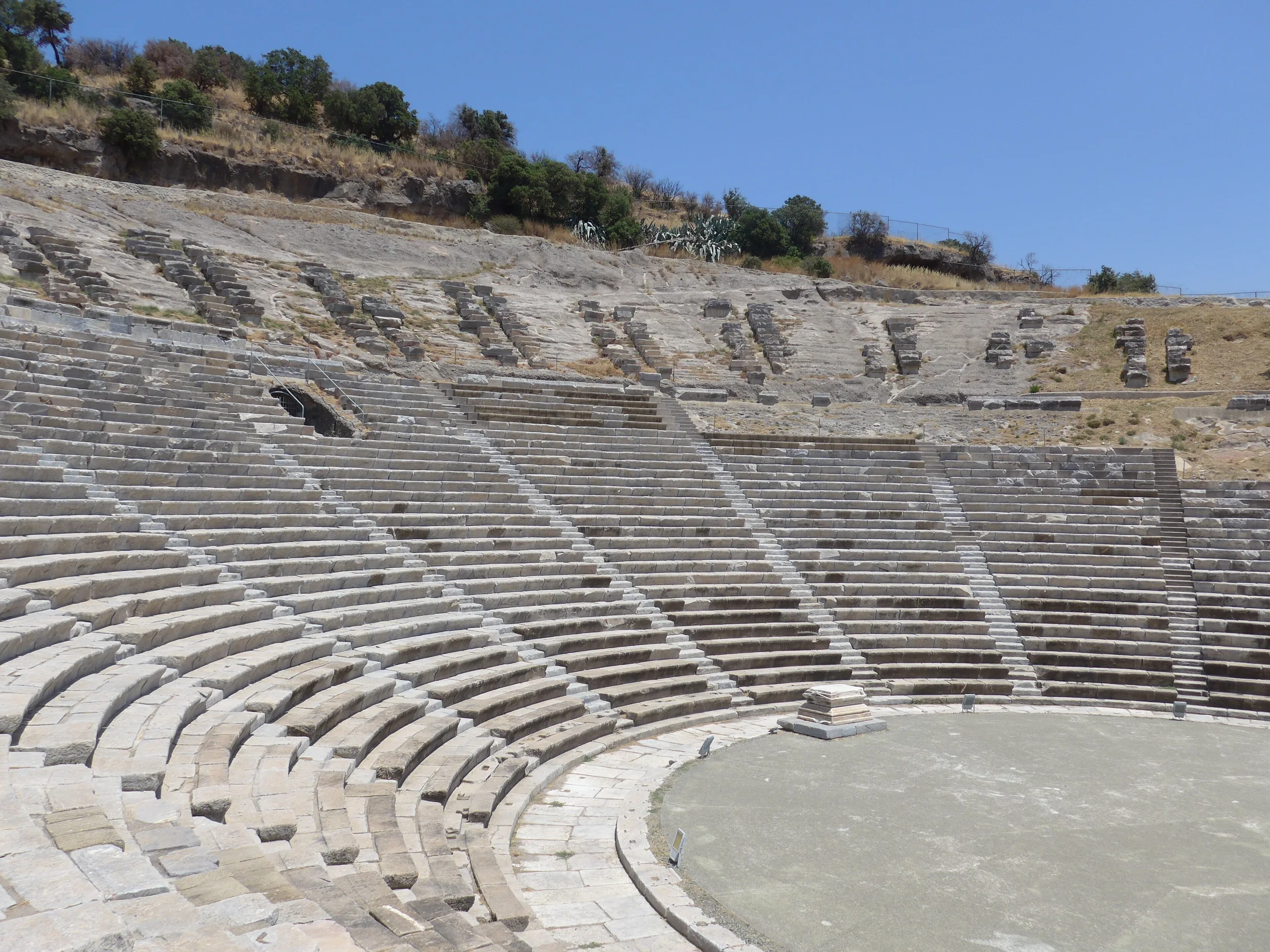
The Ministry's English page dates the theatre to the 4th century BCE and says it shows all the traits of theatres from before the Roman imperial era. It has three components: the tiers of seats (cavea), an orchestra wider than a half circle, and the stage building to the south. The lower portion survives.
The Turkish page mentions the altar where animals were sacrificed to Dionysus and holes between some seats, which may have held shades. Seats are spaced 40 cm apart.
Differing capacity figures
The Ministry's Turkish page gives a capacity of 13,000. The English page instead says about 10,000 spectators are presumed to have fitted, and adds that after the 2002 works the theatre reopened with room for about 3,100. Because the pages disagree, no single number is stated here.
Restoration and excavation
The Turkish page says a group of Turks repaired the theatre in the 1960s and that the latest restoration was a joint effort of Bodrum Municipality, Ericsson and Turkcell. The English page reports a comprehensive cleaning and restoration in 2002. During work by the Bodrum Museum of Underwater Archaeology in 2006, tunnels and rooms cut into soft rock were found behind the seating steps.
Visiting
Nearby places named by the Ministry include Knidos, the Bodrum Mausoleum Museum, the Zeki Müren Art Museum, Marmaris Museum, the Underwater Archaeology Museum and Sedir Island. The Culture Portal lists as surviving Halicarnassus remains the theatre, city walls and Myndos Gate, the Mausoleum, necropolis areas, a Roman villa, the Temple of Mars and Bodrum Castle. Check the official page for current conditions.
Gallery
Frequently asked questions
Where is the Bodrum ancient theatre?
When was it built?
How many people did it hold?
What parts does it have?
Has it been restored?
What are the visiting hours and fees?
Sources (6)
- Bodrum Antik Tiyatrosu / Bodrum Antique Theatre (TR ve EN sayfalar) — T.C. Kültür ve Turizm Bakanlığı, Müzeler ve Örenyerleri
- Halikarnassos - Muğla (kaynak: Bodrum Sualtı Arkeoloji Müzesi) — T.C. Kültür ve Turizm Bakanlığı, Türkiye Kültür Portalı
- Theater at Bodrum (Pleiades 102024695) — Pleiades
Photo credits
- Photo: Carole Raddato from FRANKFURT, Germany, CC BY-SA 2.0 — Wikimedia Commons (resized)
- Photo: Mickapr, CC BY-SA 4.0 — Wikimedia Commons (resized)
- Photo: Tolga Alan, CC BY-SA 4.0 — Wikimedia Commons (resized)