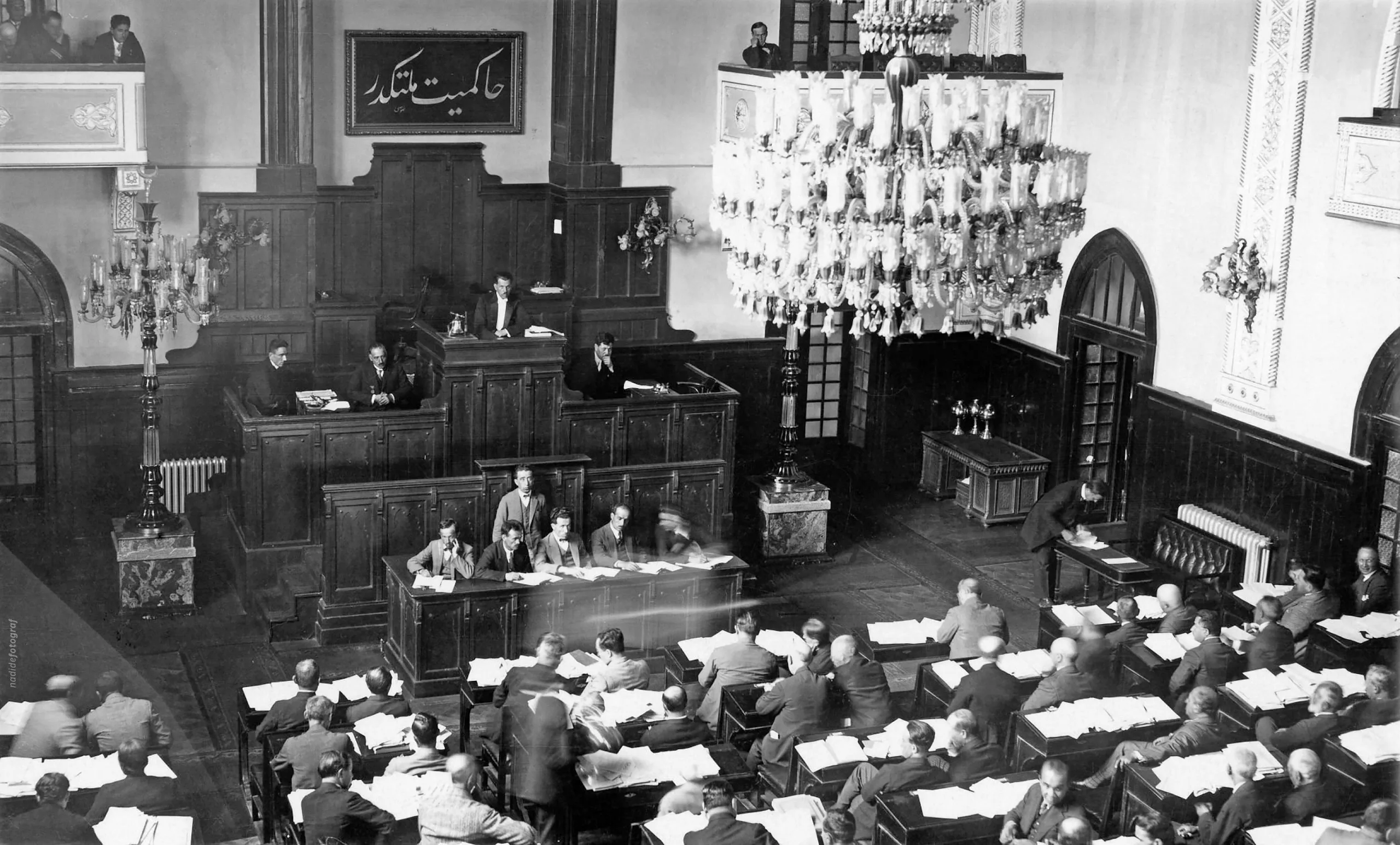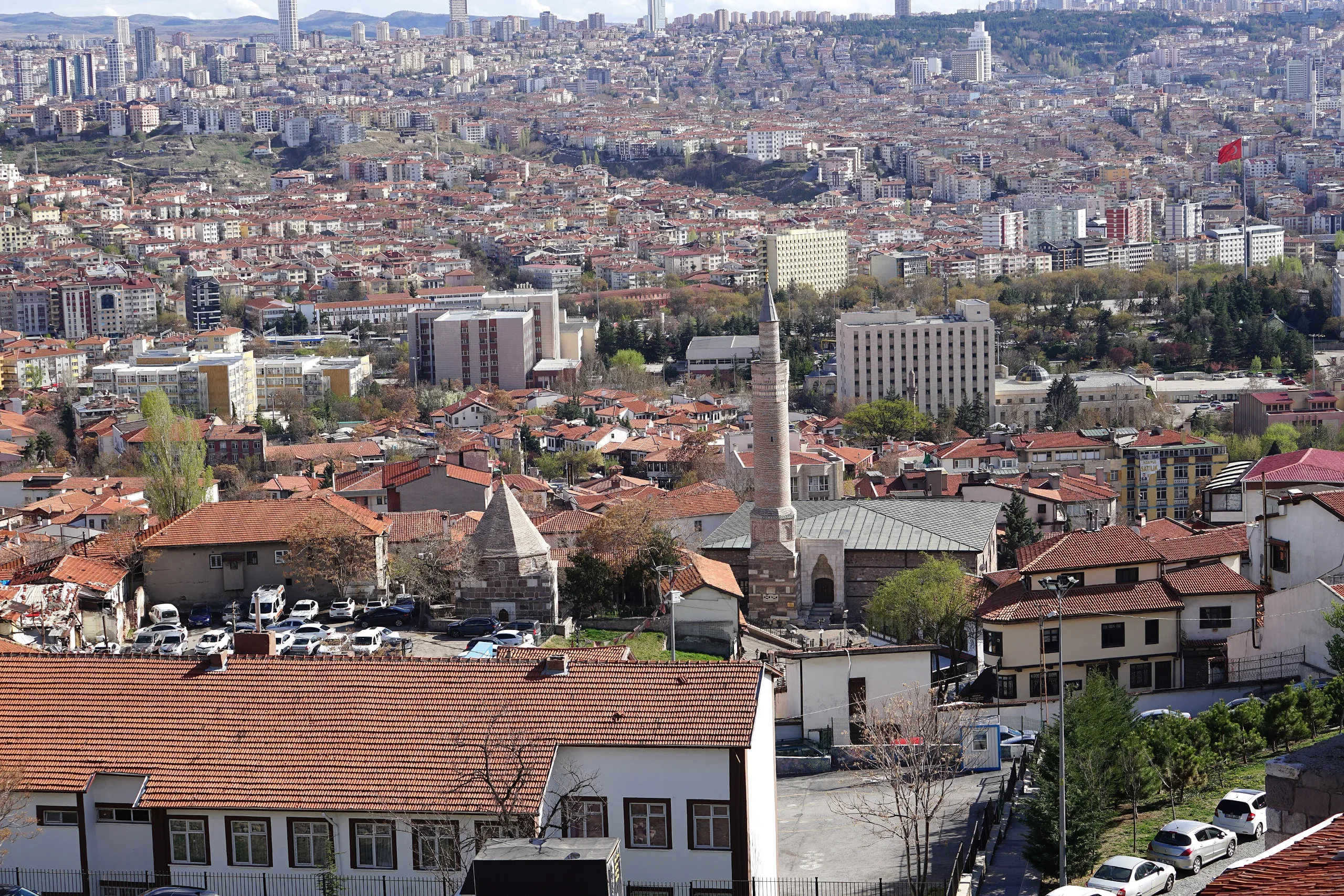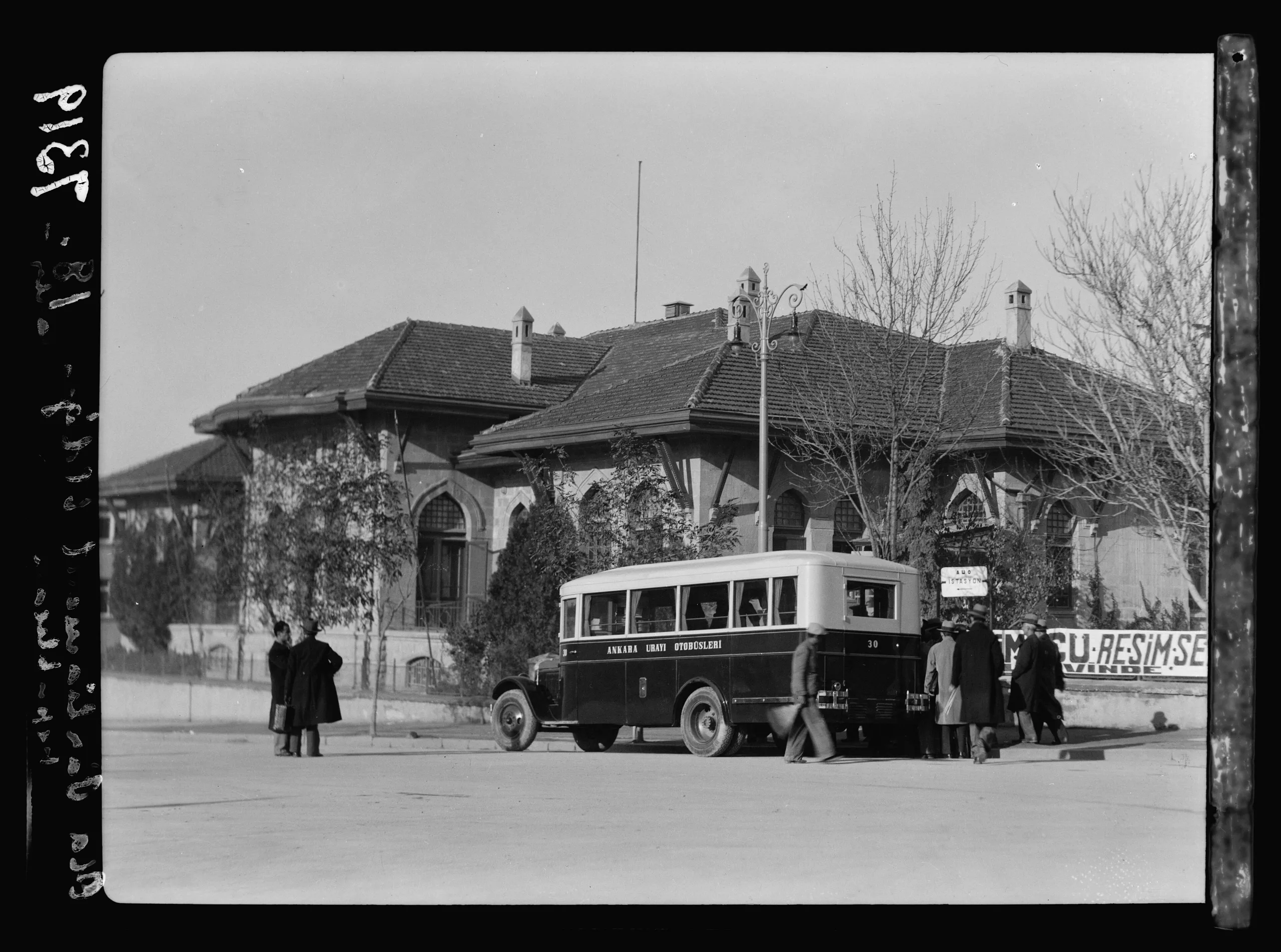
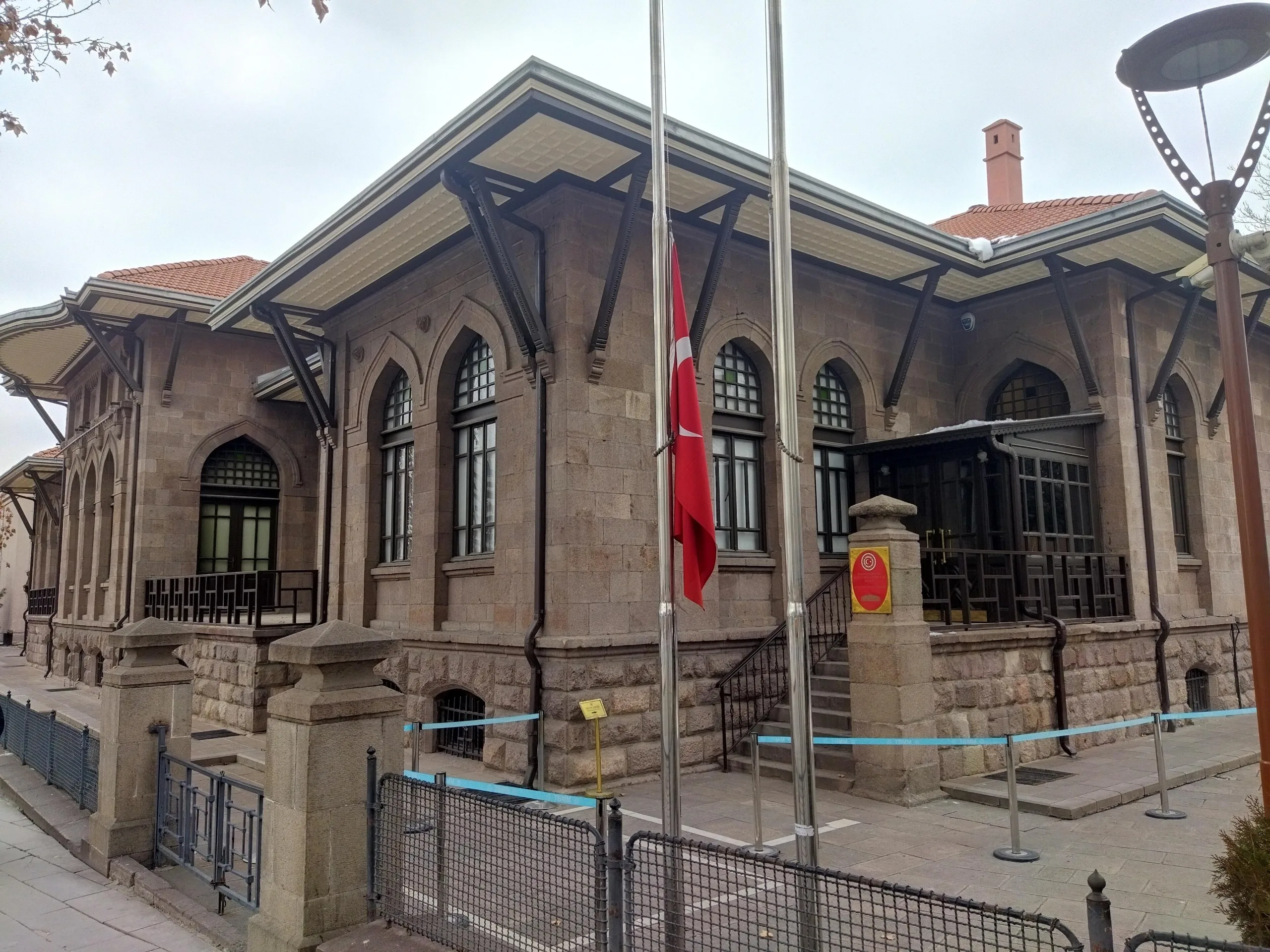
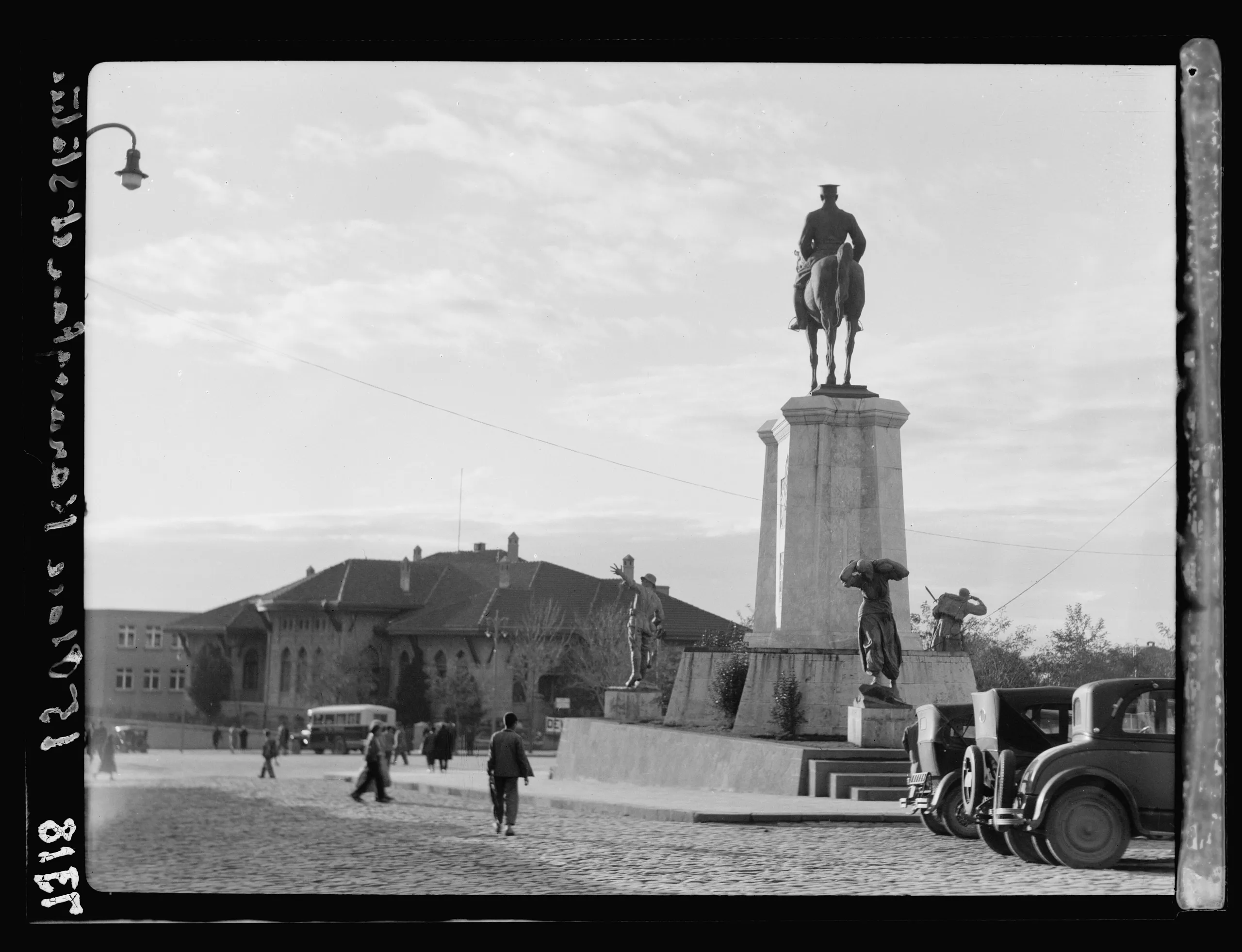
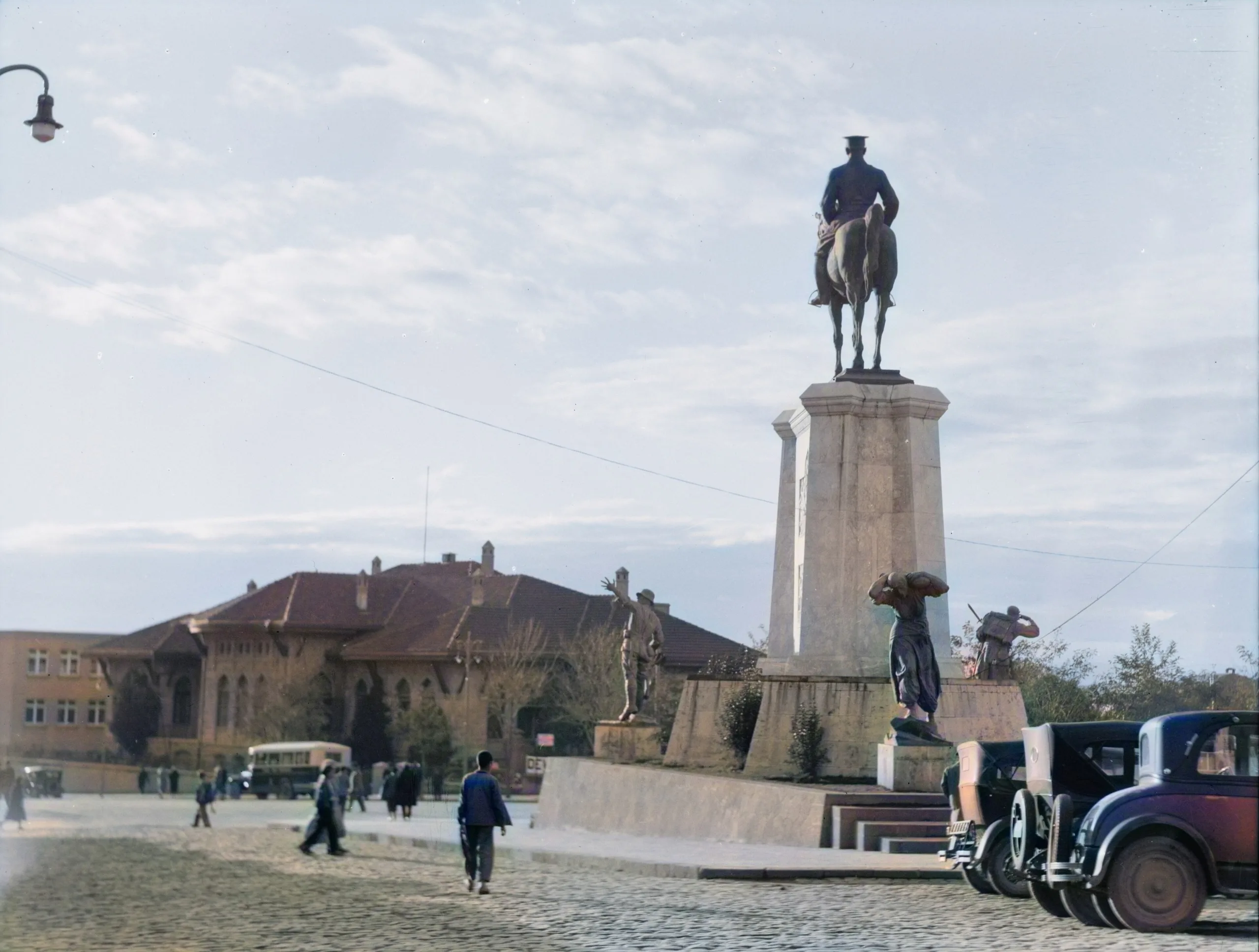
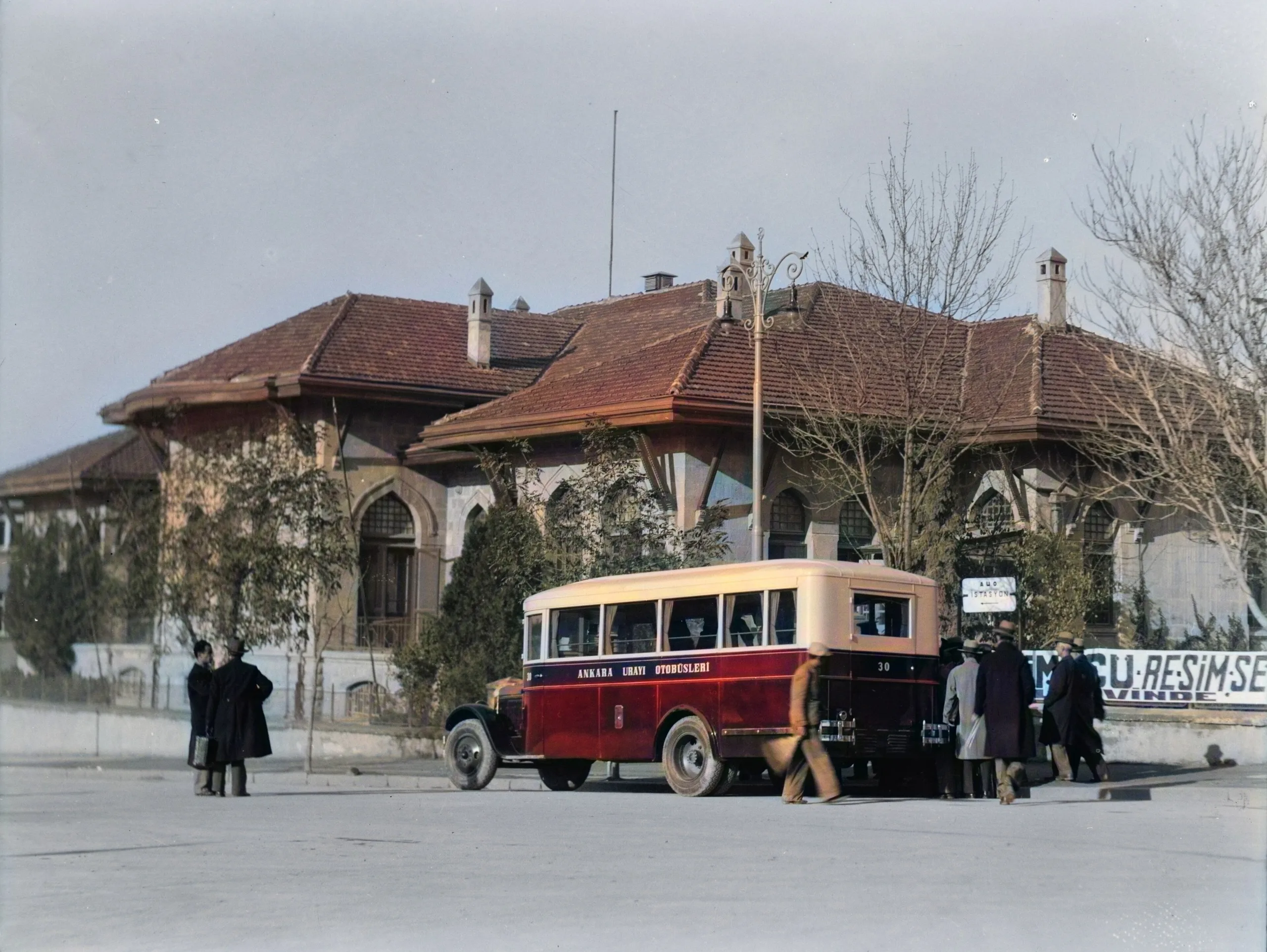
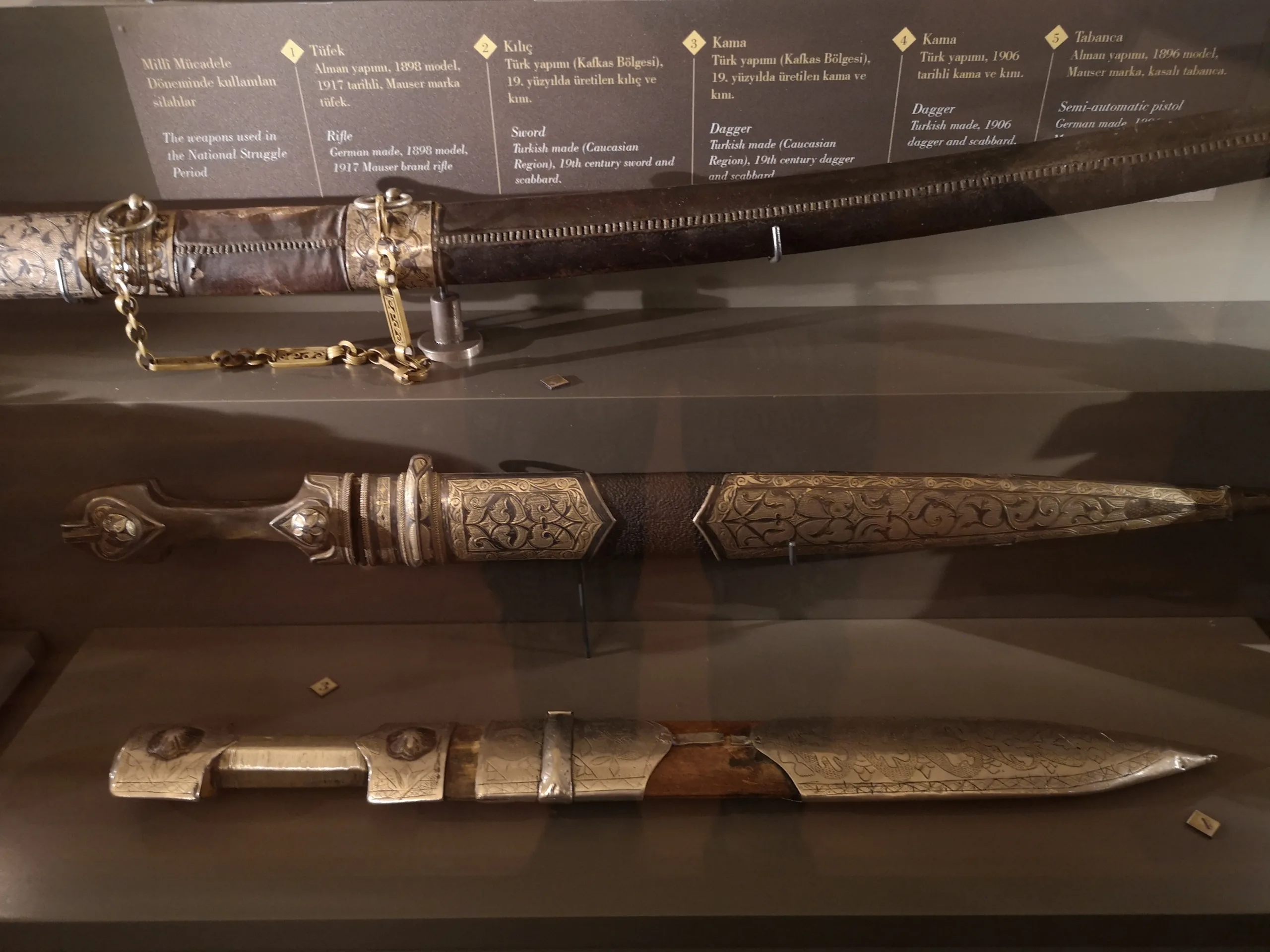
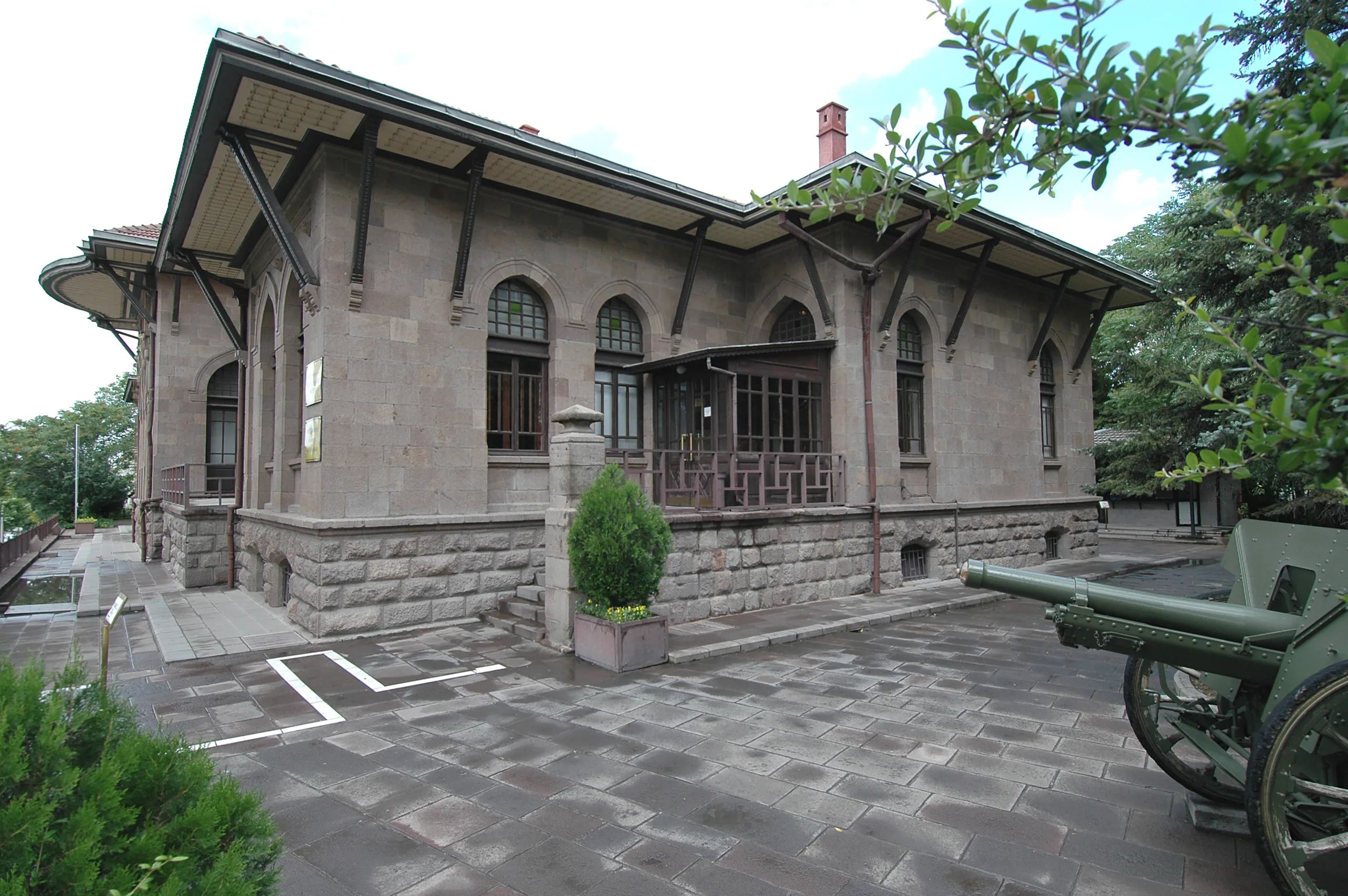
In Ankara's Ulus quarter, the first home of the Grand National Assembly, which opened on 23 April 1920. Begun as a party club in 1916, it has been the War of Independence Museum since 1981.
War of Independence Museum is a place (Atatürk and the Republic) in Turkey, Ankara. Main periods: Ottoman Period.
On Cumhuriyet Street in Ulus stands a building that was drawn up as a party club and ended up as a parliament. Its roof was still unfinished when the Grand National Assembly of Turkey (TBMM) was called to open here on 23 April 1920, and residents of Ankara covered it with tiles taken from their own houses. Today it is the War of Independence Museum, the first assembly building of the national struggle years.
History
The story begins in 1916, when the Committee of Union and Progress decided to put up a clubhouse in Ankara. The Foundation Architect Salim Bey drew the plans on the order of War Minister Enver Pasha, and the Military Architect İsmail Hasif Bey took charge of construction. The war, shortages of materials and the closing of the party left the roof and other parts undone. After the First World War, French troops came to Ankara under the terms of the armistice, and their commander took the first room of the half-roofed building as his office.
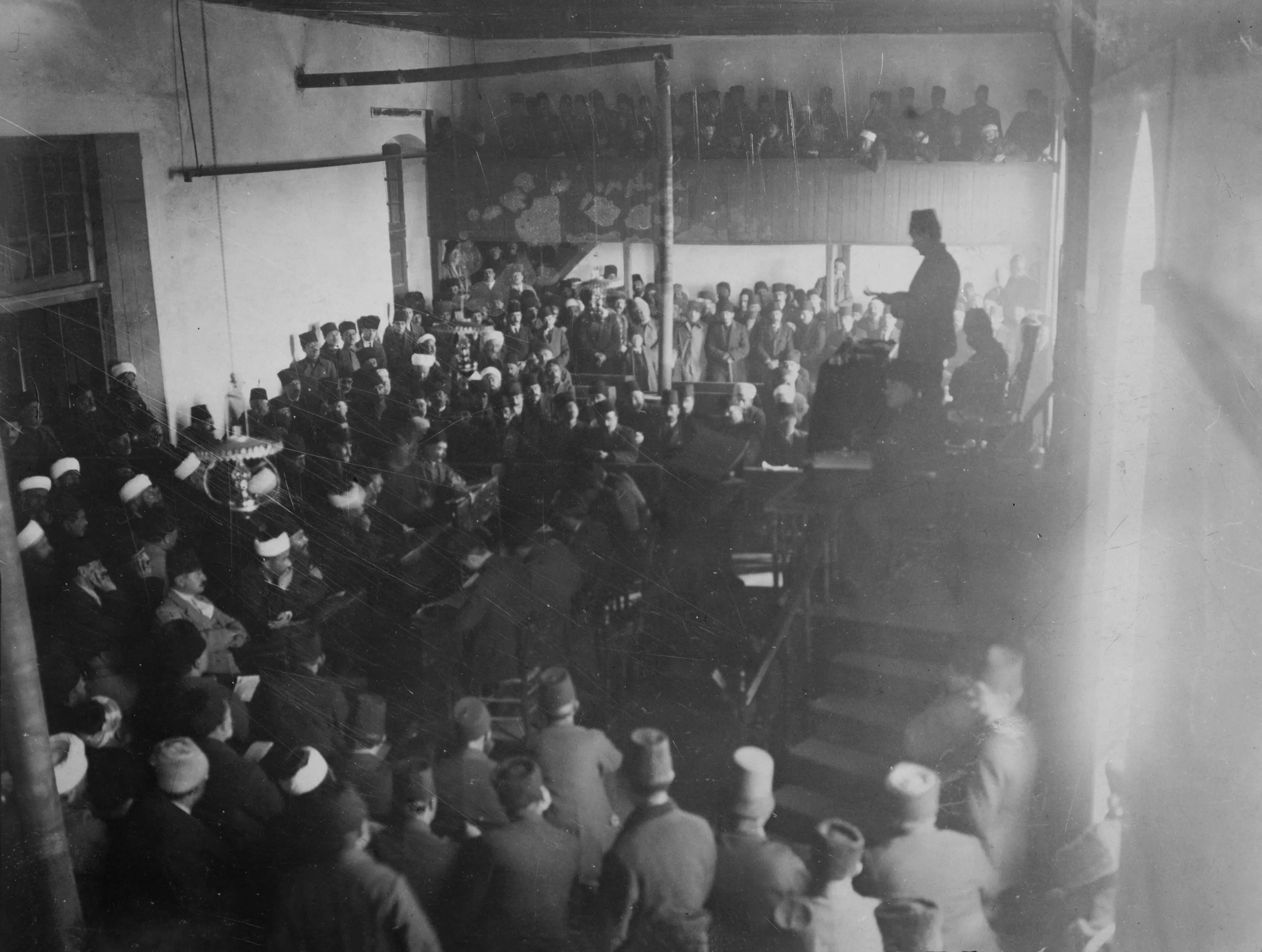
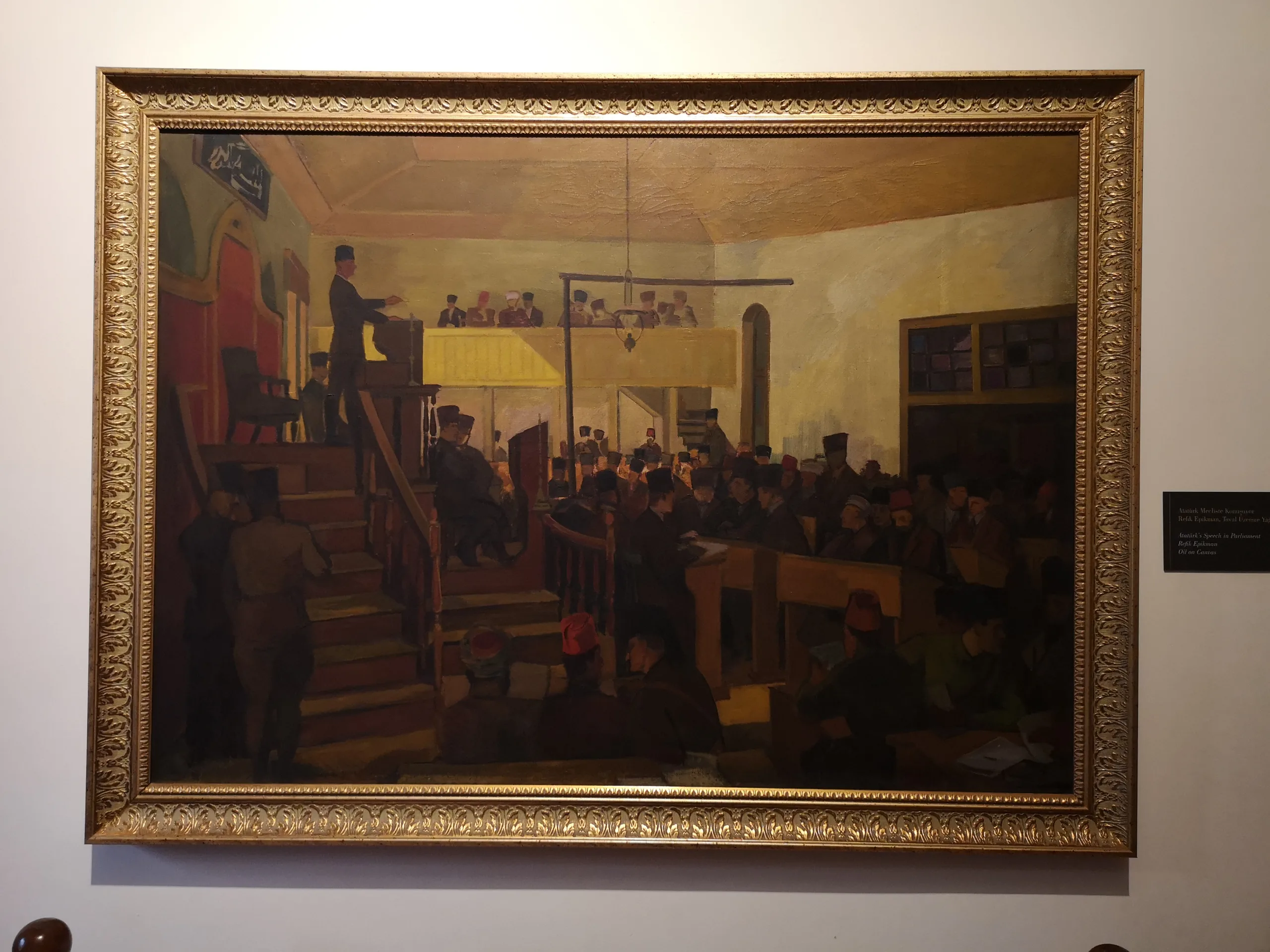
Mustafa Kemal Pasha landed at Samsun on 19 May 1919. The Havza and Amasya circulars followed, and congresses met at Erzurum and Sivas. On 27 December 1919 he reached Ankara together with the Representative Committee (Heyet-i Temsiliye), which directed the movement, and made the town the centre of the National Struggle. When the British formally occupied Istanbul on 16 March 1920, the Ottoman parliament, the Meclis-i Mebusan, suspended its sessions, and on 19 March a circular announced that a new assembly would open in Ankara. With the opening set for 23 April 1920, the town had no hall of the right size and fitting. The unfinished club was picked instead, and the people of Ankara, soldiers of the 20th Corps and the Ankara branch of the Defence of Rights Association, a local resistance body, helped finish it. Some of the tiles came from the Numune School in Ulucanlar.
From assembly to museum
The assembly sat in the building from 23 April 1920 to 15 October 1924. Afterwards the Republican People's Party made it its headquarters, and for a short time the Law School that formed the basis of Ankara University's Faculty of Law taught here. In 1957 a Ministry of National Education commission decided to turn the building into a museum, and it opened on 23 April 1961 as the Grand National Assembly of Turkey Museum. It has carried its present name since 23 April 1981 and is run by the TBMM's directorate for press, publications and public relations.
Visiting
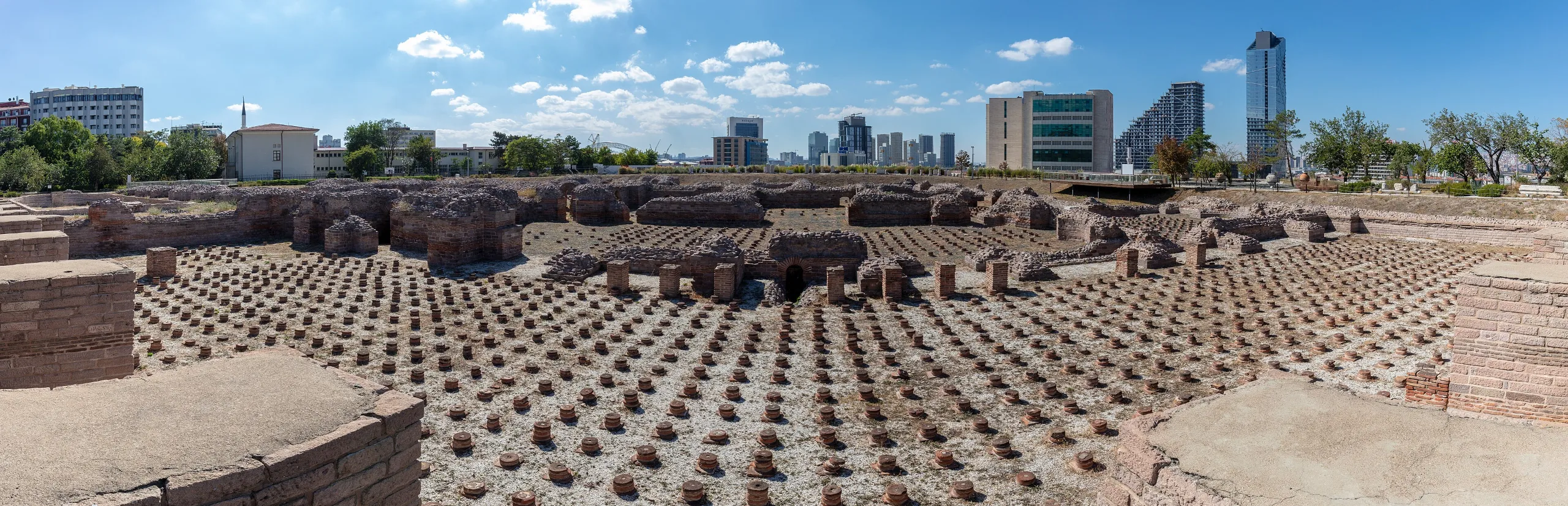
The museum is in the Hacıbayram quarter of Ulus. The Republic Museum, housed in the second assembly building, the Roman Baths site and several other Ankara museums are nearby. See the official page for current visiting details. The MüzeKart is valid for Turkish citizens.
Gallery
Frequently asked questions
When did the assembly first meet here?
What was the building meant to be at first?
Who designed it?
How was the roof finished?
When did it become a museum?
Which museums are close by?
Sources (11)
- Kurtuluş Savaşı Müzesi / War of Independence Museum (TR ve EN sayfalar) — T.C. Kültür ve Turizm Bakanlığı, Müzeler ve Ören Yerleri
- Kurtuluş Savaşı Müzesi (Wikidata Q7968654) — Wikidata
Photo credits
- Photo: Matson Collection, Public domain — Wikimedia Commons (resized)
- Photo: Modern primat, CC BY-SA 4.0 — Wikimedia Commons (resized)
- Photo: Esad Nedim, Public domain — Wikimedia Commons (resized)
- Photo: Matson Collection, Public domain — Wikimedia Commons (resized)
- Photo: Gargarapalvin, CC BY 4.0 — Wikimedia Commons (resized)
- Photo: Gargarapalvin, CC BY 4.0 — Wikimedia Commons (resized)
- Photo: Gargarapalvin, CC BY 4.0 — Wikimedia Commons (resized)
- Photo: Gargarapalvin, CC BY 4.0 — Wikimedia Commons (resized)
- Photo: Dosseman, CC BY-SA 4.0 — Wikimedia Commons (resized)