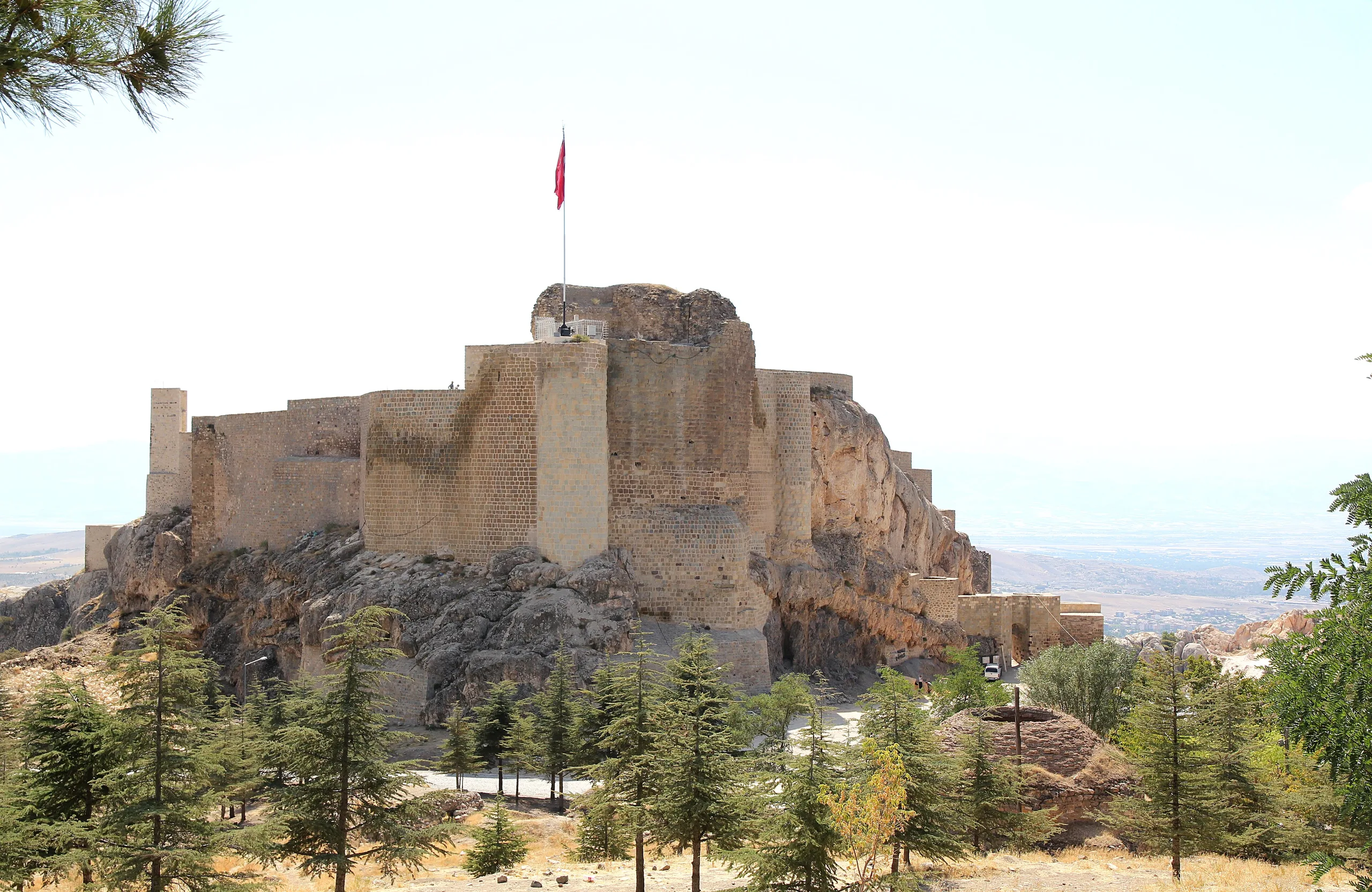
A Byzantine-era monastery carved in four levels from a single rock mass near Şebinkarahisar; the surviving fabric dates from the 19th century and was restored in 2013-2014.
Virgin Mary Monastery (Giresun) is a place (Monastery) in Turkey, Giresun. Main periods: Byzantine Period.
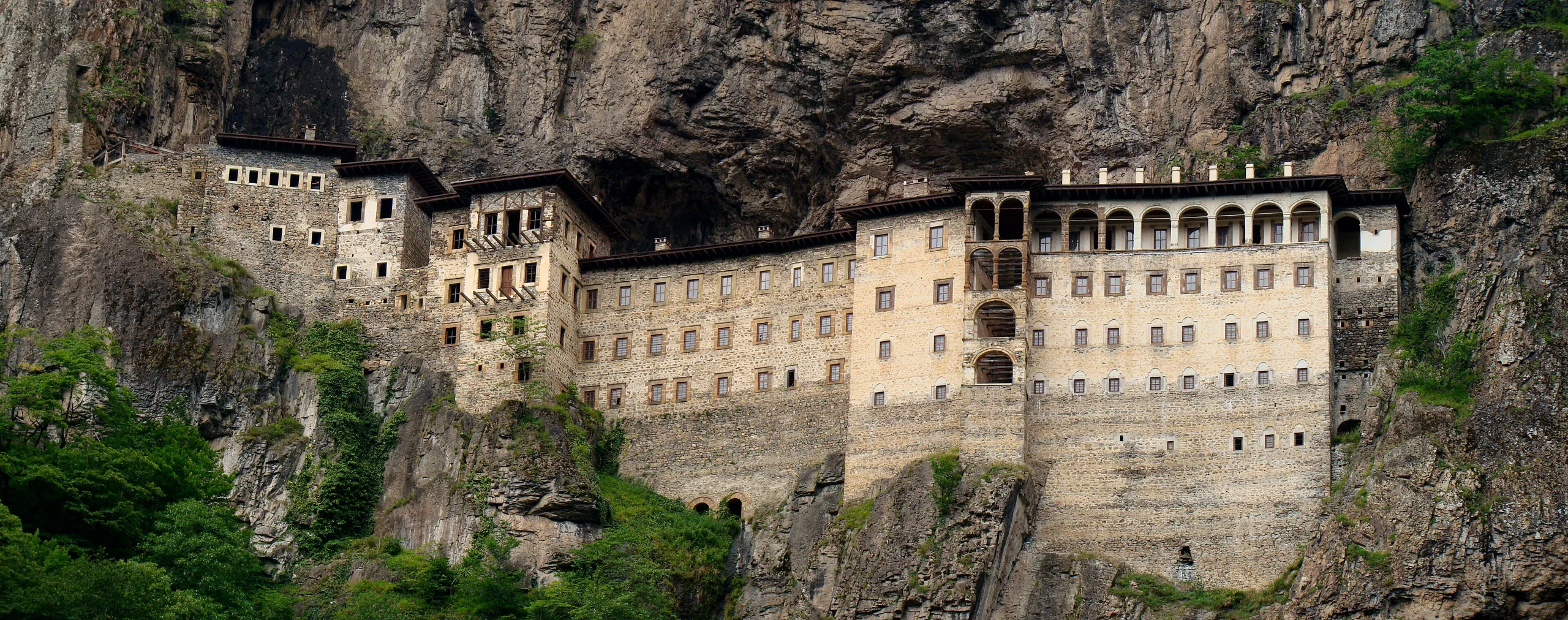
Eleven kilometres east of Şebinkarahisar, in the Kayadibi neighbourhood of Sarıyer village, a monastery rises through four storeys in the middle of a steep cliff. It sits between the Kelkit Valley and the Giresun Mountains at an average altitude of 1,370-1,515 metres, cut out of one mass of natural rock. Regarded as Byzantine, the complex is among the most striking sights in Giresun province, and its cliffside position and plan remind many visitors of Sümela near Trabzon.
History
Dates between 481 and 490 are given for the monastery's first foundation, yet no document or find has turned up to support them. The medieval building is said to have burnt badly and to have been rebuilt from scratch in the 19th century, and what stands today comes from that renewal. Its setting and layout lead to the guess that it was inspired by Sümela.
For many years the monastery stayed in use for worship. On 26-28 August each year, Greek Orthodox from Giresun, Ordu, Trabzon, Gümüşhane and other cities gathered here to pray for three days. After the 1940s the site was neglected, looted and badly worn down.
In 2013 and 2014 the Giresun Governorship and the Ministry of Culture and Tourism carried out a joint restoration. The area is protected as a first-degree natural and archaeological site, and in 2014 the Ministry declared it an archaeological site and opened it to visitors.
Architecture
The building has four levels and was made by hollowing out the rock. Rubble stone shows on the outer walls, while the interiors are finished in neatly dressed stone. Visitors enter through a single-leaf door with a low arch in the west face, reached by a stone stair of 26 steps. A water cistern stands on the left in front of it and a cut-stone fountain on the right. In all, 32 rooms are counted, and traces of painting survive on their walls.
Drainage channels in the first-level units show that these spaces served as bath, latrine and laundry. The second level is the heart of the monastery: a kitchen with hearth and oven, a dining hall linked to it by an opening in the north wall, a store beneath the hall and the room of the monastery's administrator, called the komenos. On the third level lie a broad terrace and, along its north side, cells where monks rested, slept and withdrew into seclusion.
The fourth level, at the top, holds the place of worship. The church is a rectangular building aligned east-west, a three-apse basilica, meaning a hall divided lengthwise into aisles and ending in semicircular recesses called apses. It is entered from the west through a rectangular opening, and its east face abuts the living rock. The apse is raised three steps above the main space, and decoration is restrained. A narrow passage known as a dehliz runs beside it. Other parts of the complex include a chapel, an ayazma (a sacred spring), a graveyard called a maşatlık, a garden and a reception room.
Visiting
The monastery lies about 126 kilometres by road from central Giresun and can be reached by car. Entry rules, hours and fees can change, so check the page on muze.gov.tr for current information.
Frequently asked questions
Where is the Virgin Mary Monastery?
When was the monastery built?
Is it similar to Sümela?
What does the complex contain?
When was it restored?
What protection does the site have?
Sources (6)
- Meryem Ana Manastırı / Virgin Mary Monastery (TR ve EN sayfalar) — T.C. Kültür ve Turizm Bakanlığı, Müzeler ve Ören Yerleri
- Meryem Ana Manastırı - Giresun, Gezilecek Yerler (kaynak: Giresun İl Kültür ve Turizm Müdürlüğü) — T.C. Kültür ve Turizm Bakanlığı, Türkiye Kültür Portalı
- Giresun Meryem Ana Manastırı — T.C. Kültür ve Turizm Bakanlığı, Turkish Museums
- Meryem Ana Manastırı - Doğu Karadeniz Kültür Envanteri Projesi — T.C. Doğu Karadeniz Projesi Bölge Kalkınma İdaresi Başkanlığı (DOKAP)
- Meryem Ana Manastırı (Yakar, G., 2020), Online Türkiye Turizm Ansiklopedisi — Türkiye Turizm Ansiklopedisi
- Meryem Ana Manastırı (Wikidata Q12810831) — Wikidata