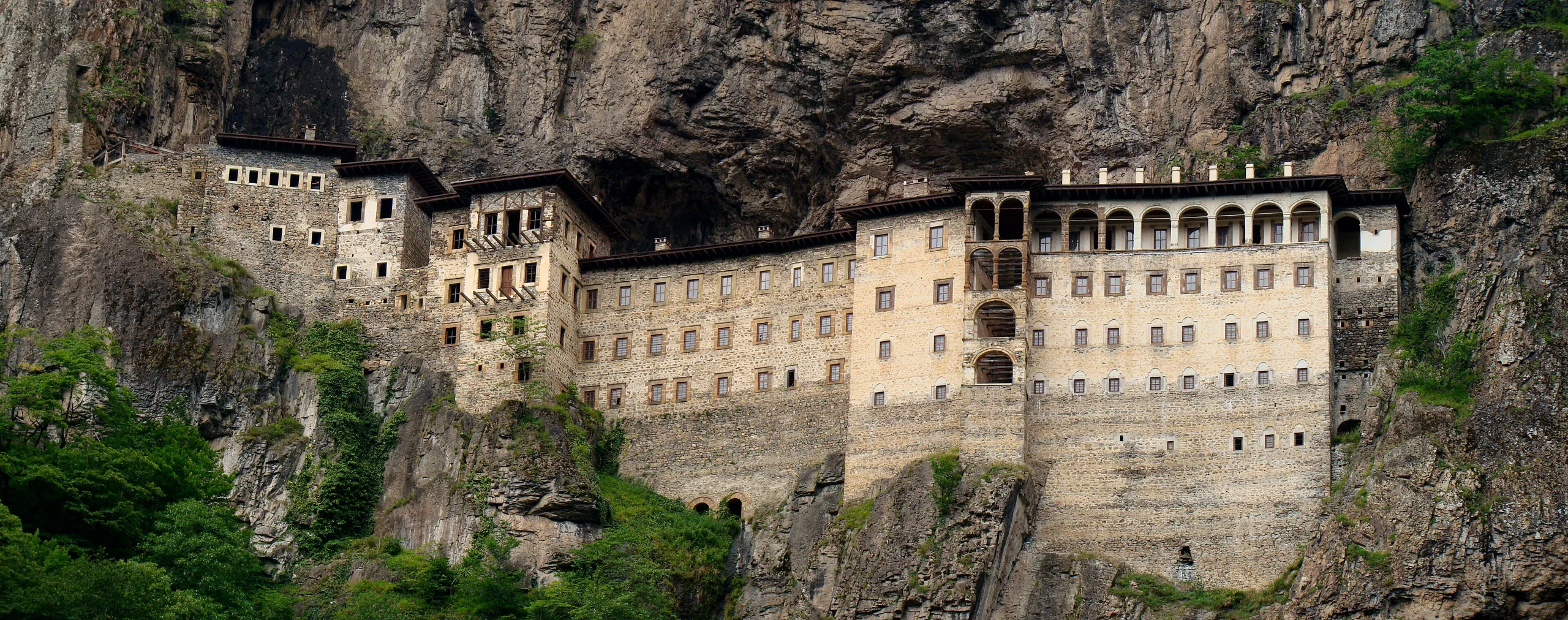
Sümela Monastery in Maçka, Trabzon, is a Greek Orthodox complex built into a cliff in the Altındere Valley, known for its icon and frescoes from Alexios III's time.
Sümela Monastery (The Monastery of Virgin Mary) is a place (Monastery) in Turkey, Trabzon. Main periods: Byzantine Period.
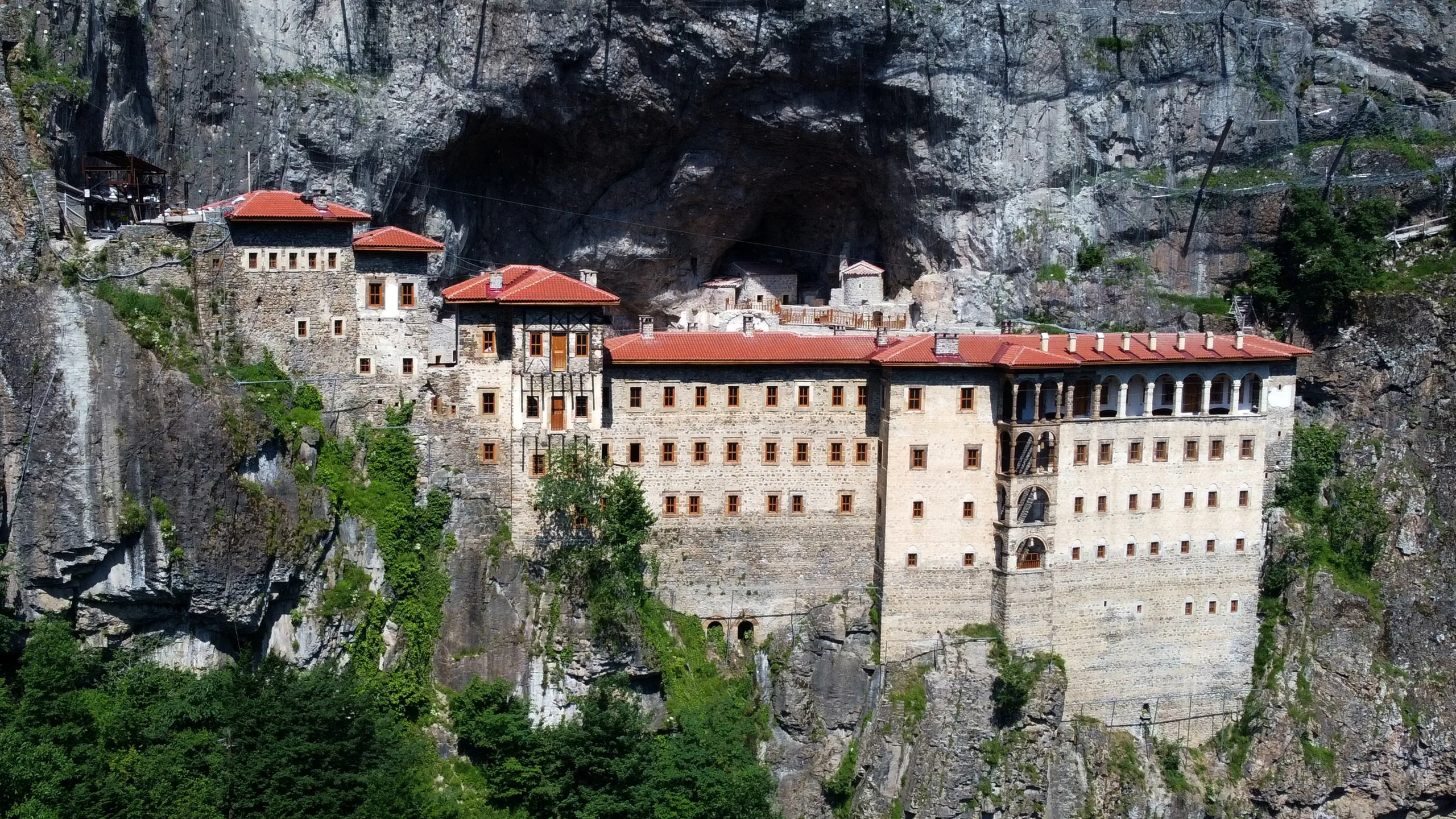
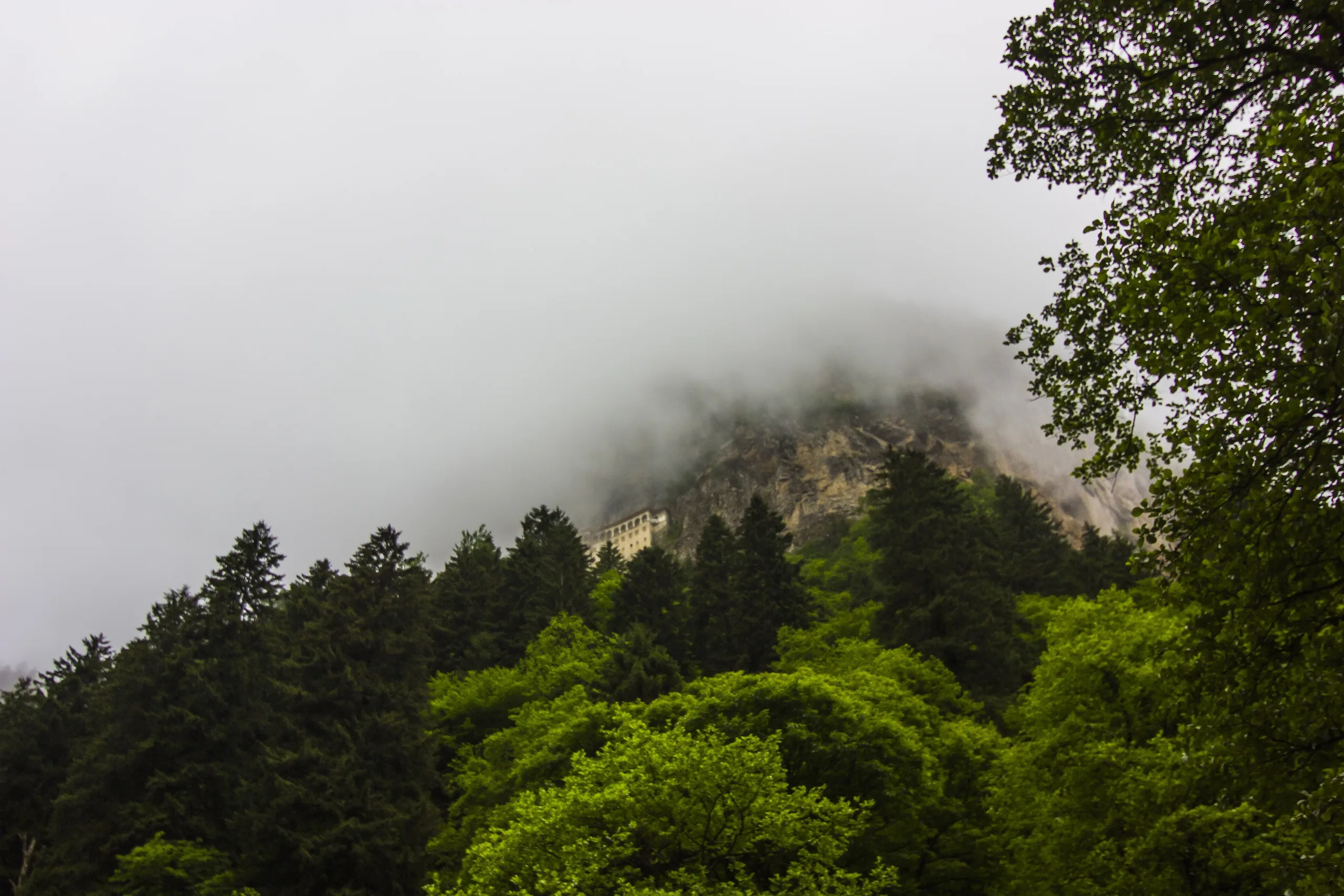
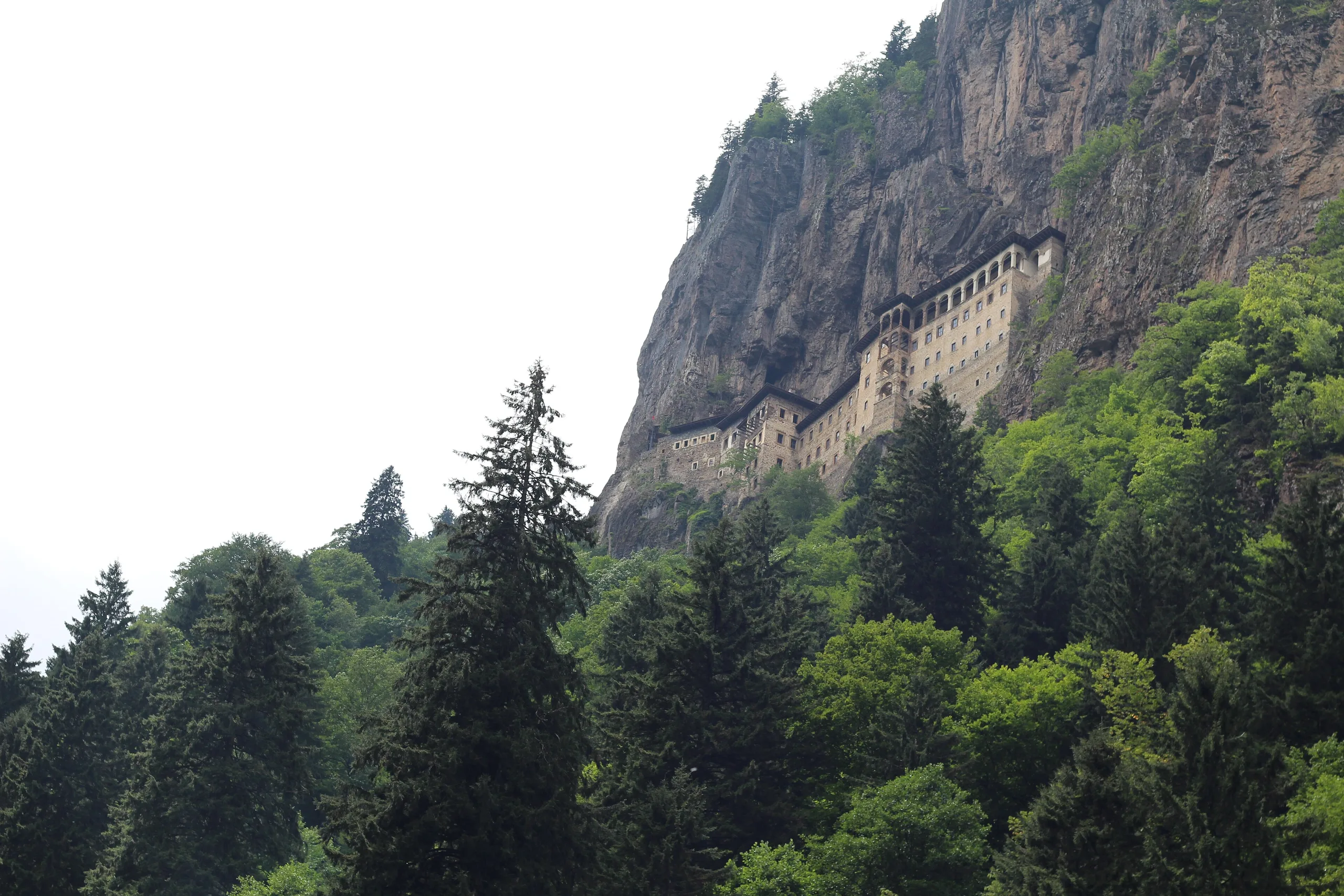
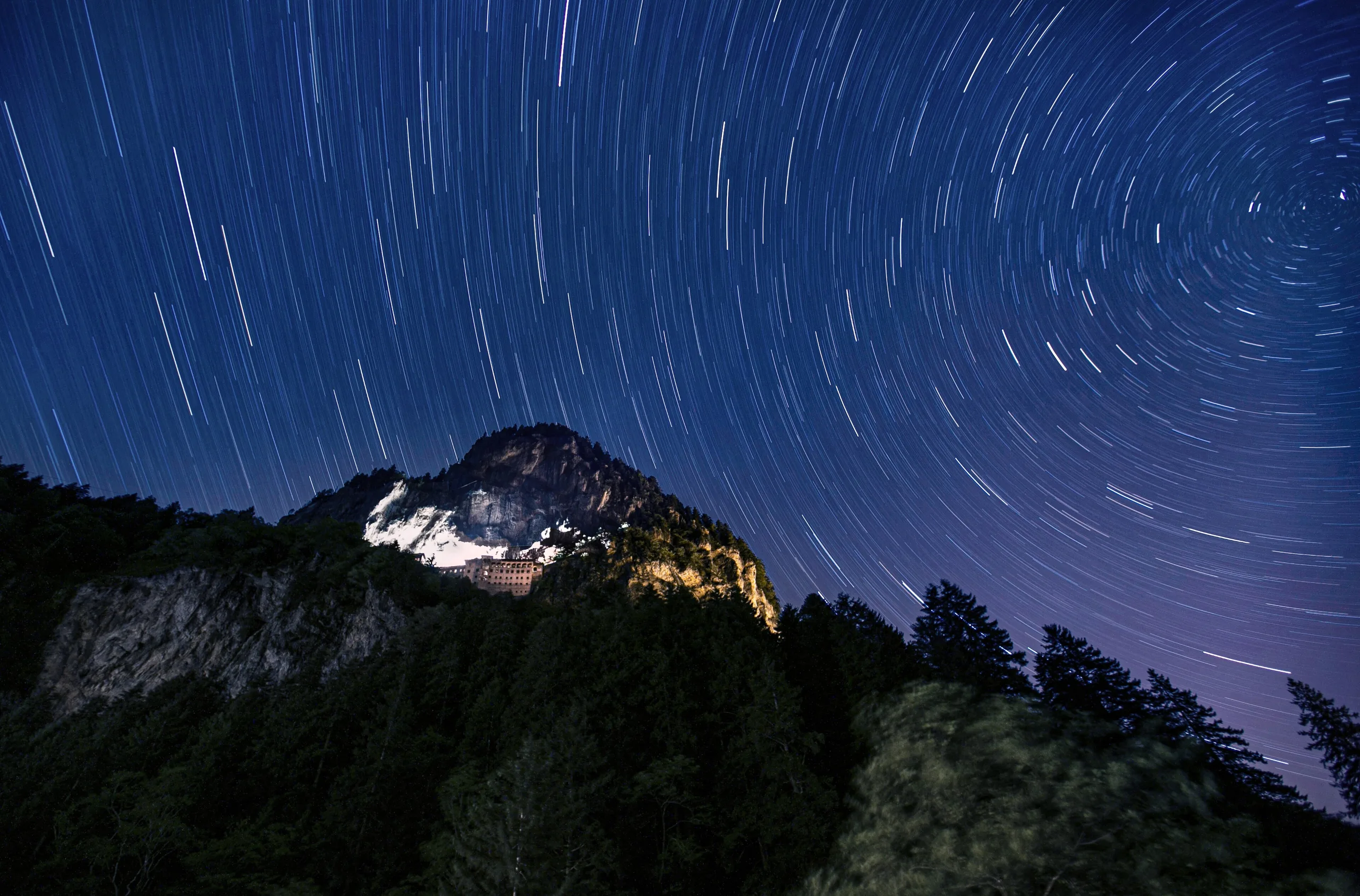
Sümela Monastery is a Greek Orthodox monastery and church complex clinging to a steep cliff on the slope of Karadağ in the Altındere Valley, Maçka district, Trabzon. It is also known as Panagia Soumela or Theotokos Soumela and, popularly, as the Virgin Mary Monastery. It is on UNESCO's World Heritage Tentative List.
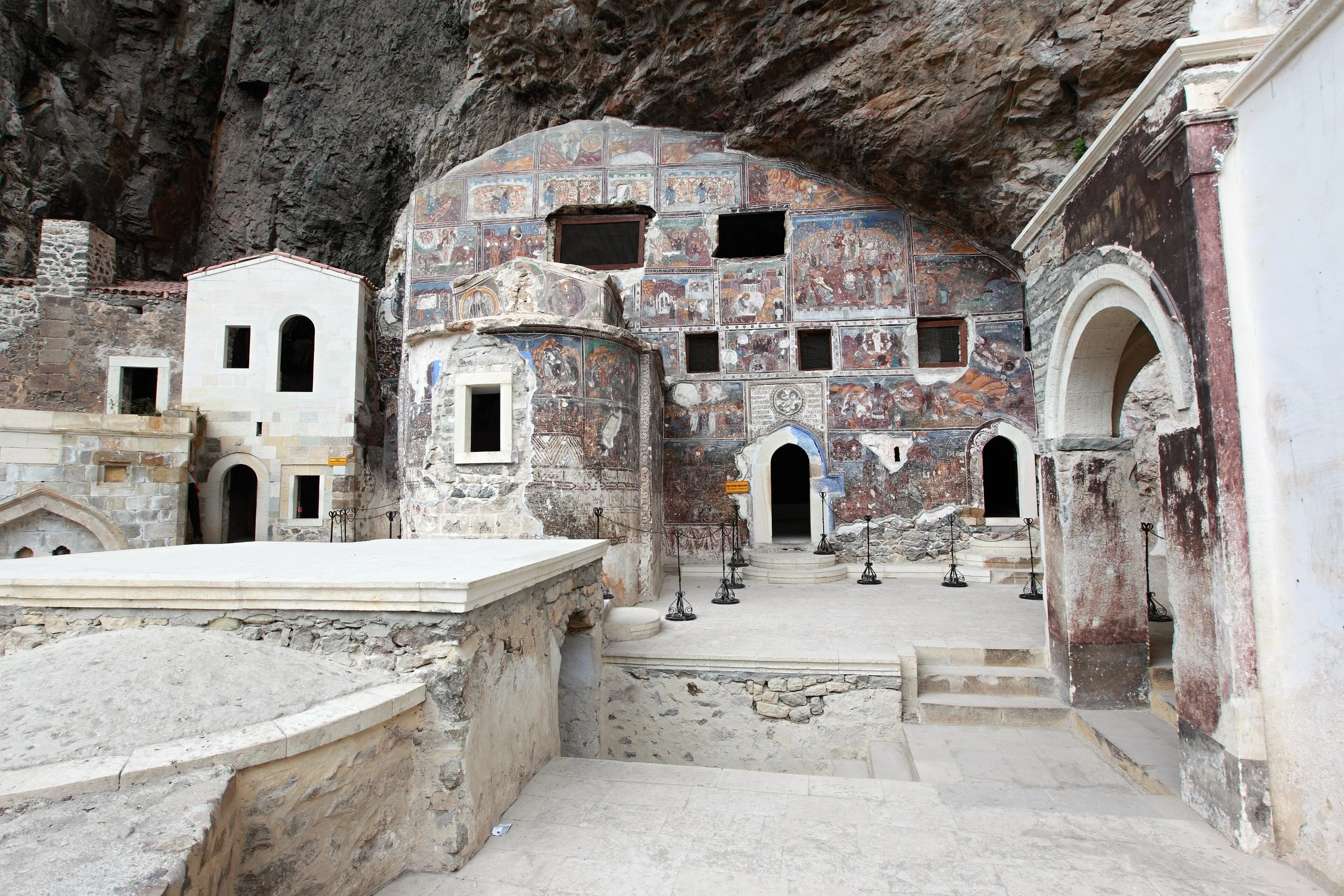
Because of an icon believed to have worked a miracle, it became one of the foremost pilgrimage places for the Black Sea Greeks, and it also served as a school for monks. The frescoes of its rock church and chapel date from the time of Alexios III and from the 18th century.
Location
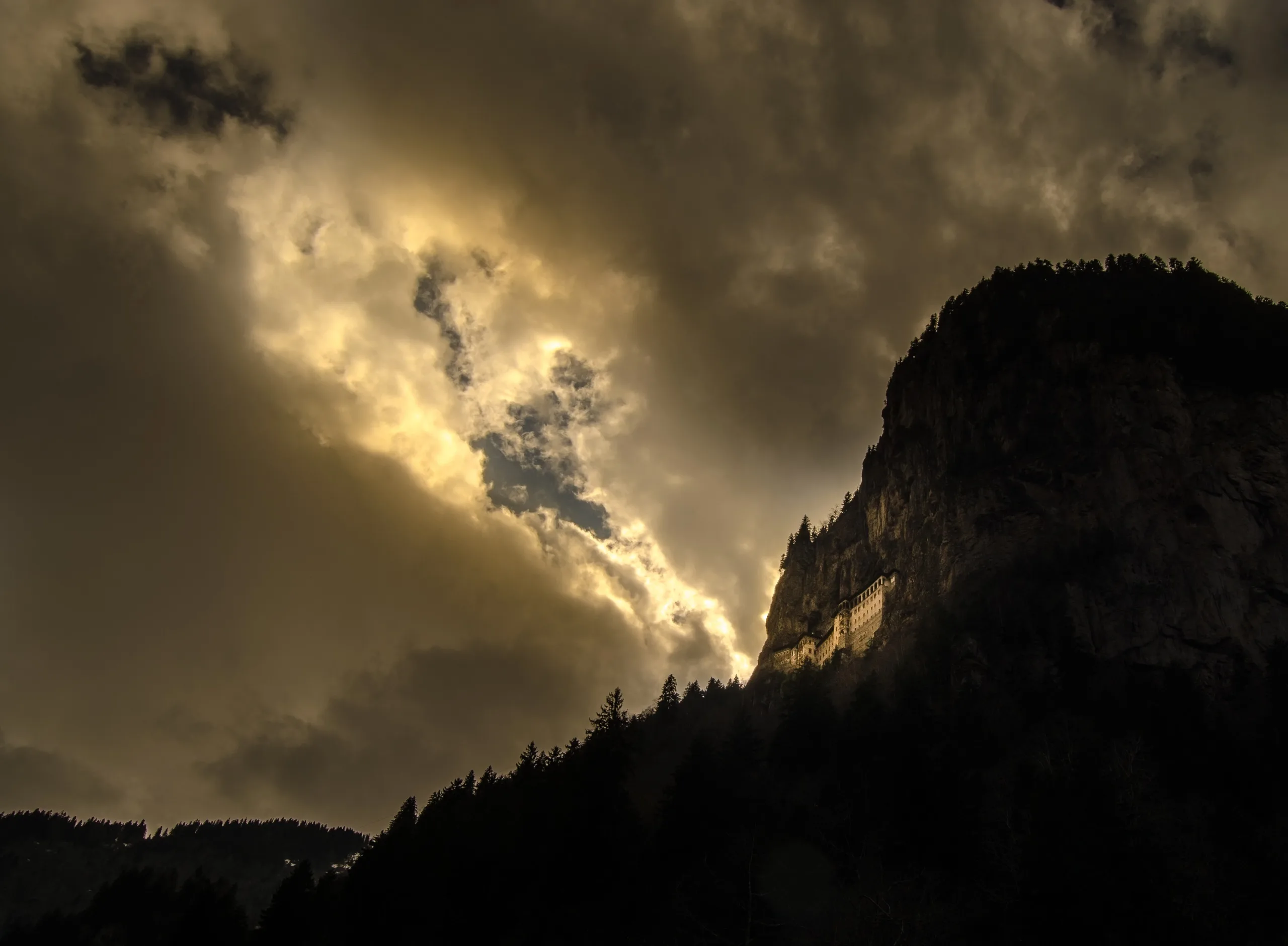
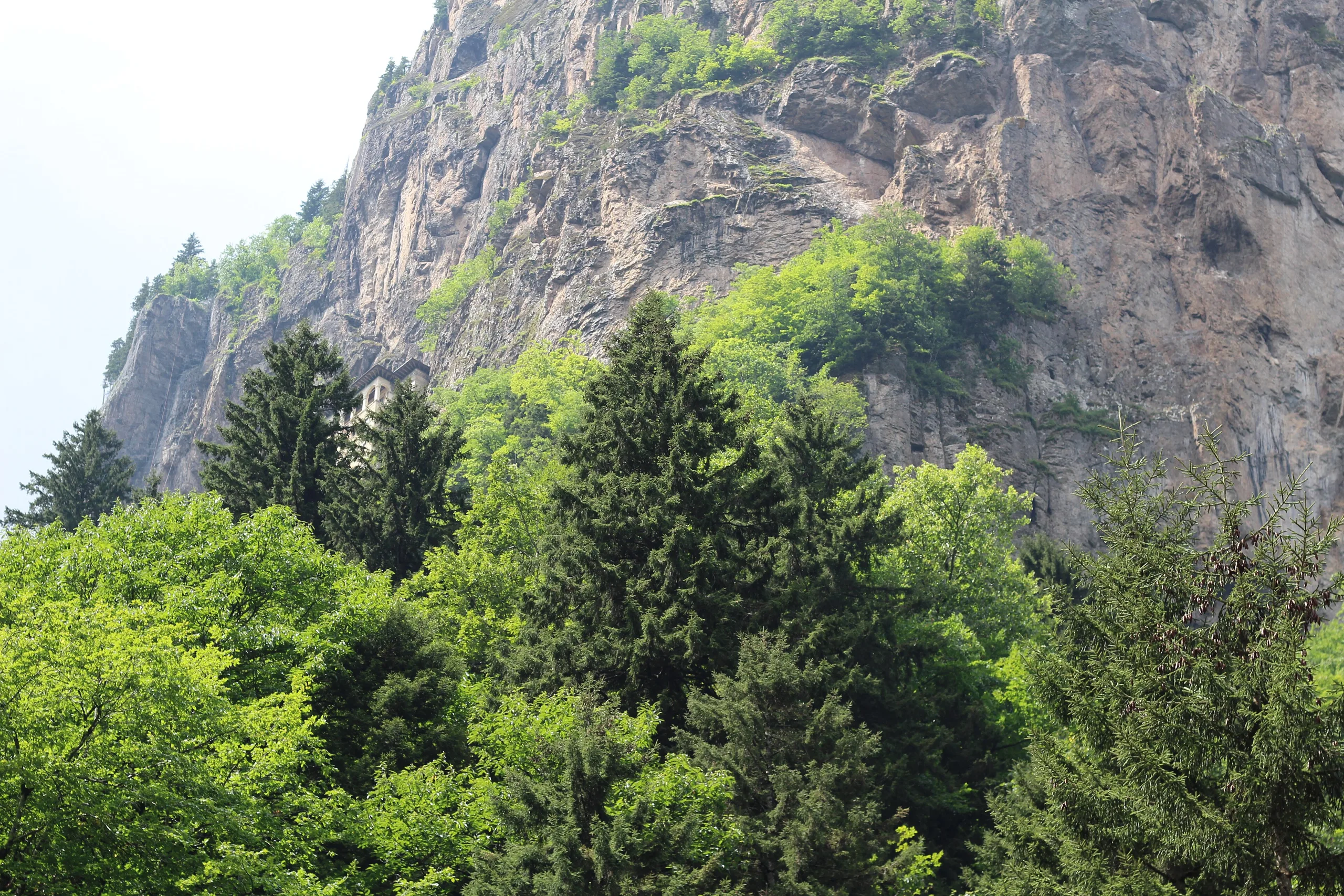
According to the ministry the monastery stands 1,150 m above sea level and 300 m above the valley. The Culture Portal puts the site, within the boundaries of Altındere village in Maçka, 47 km from Trabzon and 17 km from Maçka town, with a final 300 m walk through forest. The UNESCO Tentative List entry gives the place as 17 km south-east of Maçka. The coordinates on this page come from Wikidata.
History
The ministry and the Culture Portal say the monastery is thought to have been founded in the time of the Byzantine emperor Theodosius I, who ruled 375-395, by the priests Barnabas and Sophronios from Athens; the UNESCO Tentative List text says construction began in AD 385 and continued until the 19th century. In the ministry's account the foundation is surrounded by legends and rests on the icon of Panagia Sumela, believed to be the work of the apostle Luke: angels carried it to the cave, the Virgin appeared in the priests' dreams to reveal its place, and they built the church by raising a wall in front of the cave.
The Culture Portal writes that at Justinian's command General Belisarius repaired and enlarged the monastery in the 6th century and that it was plundered several times in the 7th; UNESCO states that Justinian (527-568) ordered enlargement and that the monastery was looted and burnt in AD 650. The portal says the monastery has existed in its present form since the 13th century, gained importance under Alexios III (1349-1390) of the Empire of Trebizond's Komnenos dynasty, when imperial grants provided income. The ministry reads from the emphasis on him in the frescoes that Alexios III was regarded as the main founder. UNESCO records that the 72-room complex with a rich library flourished most under this ruler.
When the eastern Black Sea coast came under Turkish rule the monastery's rights were preserved. The ministry says Selim I gave it two large candles and Mehmed the Conqueror issued a decree that it would not be touched. Many parts were renewed and frescoed in the 18th century, and large buildings added in the 19th brought its heyday. The portal reports that the monastery was seized during the Russian occupation of Trabzon in 1916-1918 and fully evacuated after 1923. The ministry adds that after the 1931 meeting of Greek prime minister Venizelos and Turkish prime minister İnönü, the icon and sacred objects went to the Benaki Museum in Athens, and in 1952, when a new monastery called Sumela was built at Veria, they were moved there.
Main features
The rock church and chapel
Inside and outside, the walls of the main rock church and the neighbouring chapel are covered in frescoes. The courtyard wall of the rock church bears frescoes from Alexios III's time, while those in the chapel belong to the early 1700s; the portal says the chapel has three layers from three separate periods, the lowest being of higher quality. Biblical scenes and episodes from the lives of Jesus and the Virgin are the main subjects.
Other parts of the complex
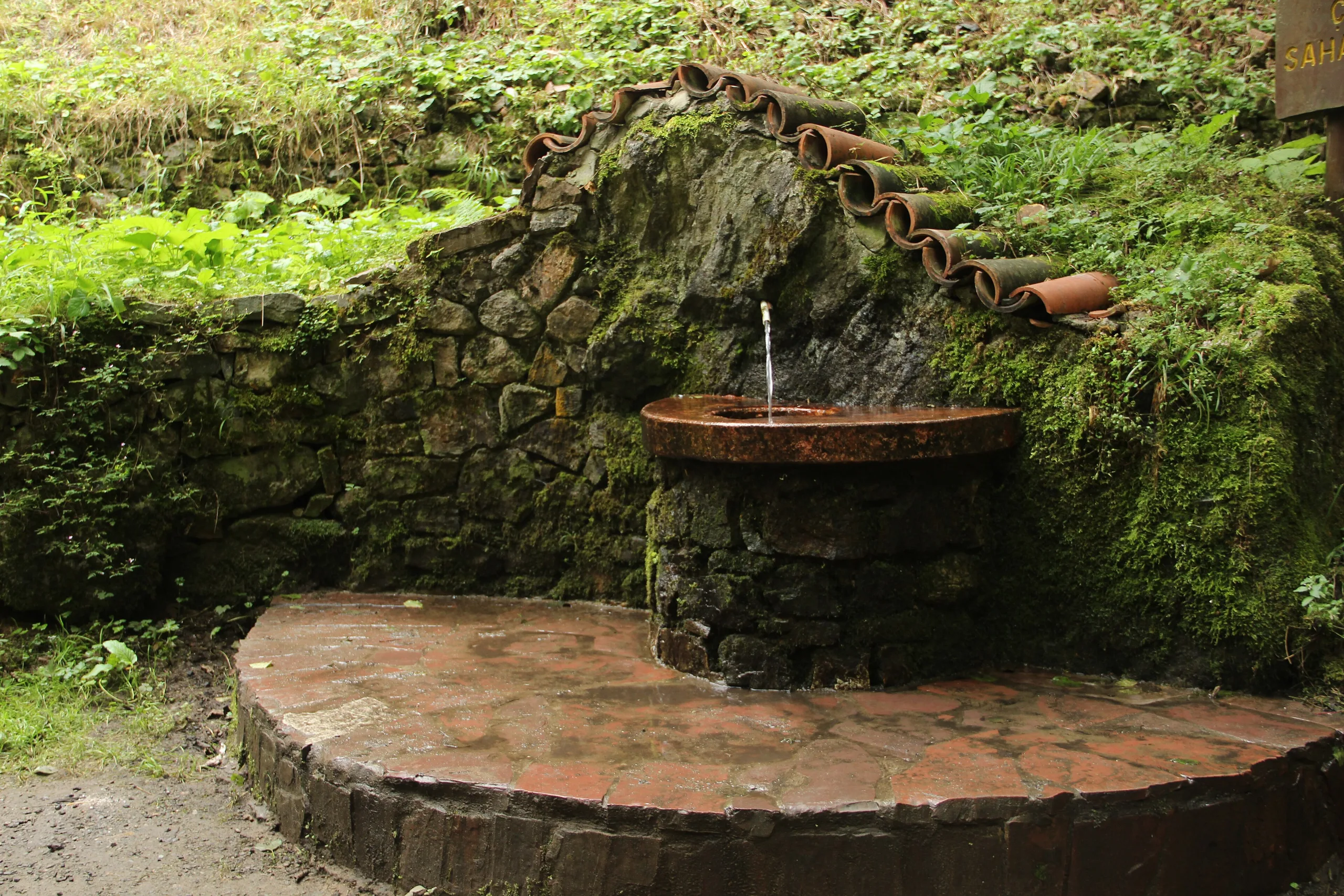
Besides the rock church and a few chapels, the site includes a kitchen, pupils' quarters, a guest house, a library and a holy spring. A long narrow staircase leads to the main entrance, beside which are guard rooms. The large balcony wing on the slope served as monk and guest rooms and is dated to 1860 by the portal. Traces of Turkish art appear in the rooms, cupboards, cells and hearths around the inner courtyard. Most of the multi-arched aqueduct at the entrance has collapsed. The ministry says the women's monastery of Hagia Barbara on the cliff top at the end of the road received visitors for the 15 August feast.
Restoration
The ministry describes a restoration and landscaping project that began in September 2015 and lasted about 3.5 years, restoring the aqueducts and stairs, clearing roughly 4,000 tonnes of rock and laying a 300 m walkway. The work also uncovered a chapel with frescoes of Heaven and Hell and of Death and Life, reached by a secret passage, along with an Ordeal Room and a watching chapel that served as an outpost.
World Heritage status
Türkiye submitted Sümela to the Tentative List on 25 February 2000 as a cultural property under criteria (i) and (iii). The Culture Portal calls the complex unique in design, materials, architecture and craftsmanship. It is not inscribed on the World Heritage List.
Visiting
Visiting conditions, hours and fees can change; see the ministry's official page. Its Turkish page says the MüzeKart is valid for Turkish citizens. The Altındere National Park and Vazelon Monastery in the same valley are suggested nearby stops.
Gallery
Frequently asked questions
Where is Sümela Monastery?
When was Sümela founded?
Where does the name Sümela come from?
When was its heyday?
When was the monastery abandoned?
Is Sümela a World Heritage Site?
When was it restored?
What are the opening hours and ticket prices?
Sources (13)
- Sümela Manastırı / Sumela Monastery (TR ve EN sayfalar) — T.C. Kültür ve Turizm Bakanlığı, Müzeler ve Ören Yerleri
- Sümela Monastery (The Monastery of Virgin Mary) - Tentative Lists, ref. 1397 — UNESCO World Heritage Centre
- Sümela Manastırı (Meryem Ana) - Trabzon, Gezilecek Yerler — T.C. Kültür ve Turizm Bakanlığı, Kültür Portalı (kaynak: Trabzon İl Kültür ve Turizm Müdürlüğü)
- Sümela Manastırı (Wikidata Q1419157) — Wikidata
Photo credits
- Photo: Bjørn Christian Tørrissen, CC BY-SA 3.0 — Wikimedia Commons (resized)
- Photo: umit sahin, CC BY-SA 4.0 — Wikimedia Commons (resized)
- Photo: Rotadefterim, CC BY-SA 4.0 — Wikimedia Commons (resized)
- Photo: Alfinkedisi, CC BY-SA 4.0 — Wikimedia Commons (resized)
- Photo: Valen1988, CC BY-SA 4.0 — Wikimedia Commons (resized)
- Photo: Valen1988, CC BY-SA 4.0 — Wikimedia Commons (resized)
- Photo: Turreis10700, CC BY-SA 4.0 — Wikimedia Commons (resized)
- Photo: Martin Cígler, CC BY-SA 3.0 — Wikimedia Commons (resized)
- Photo: Hamdigumus, CC0 — Wikimedia Commons (resized)