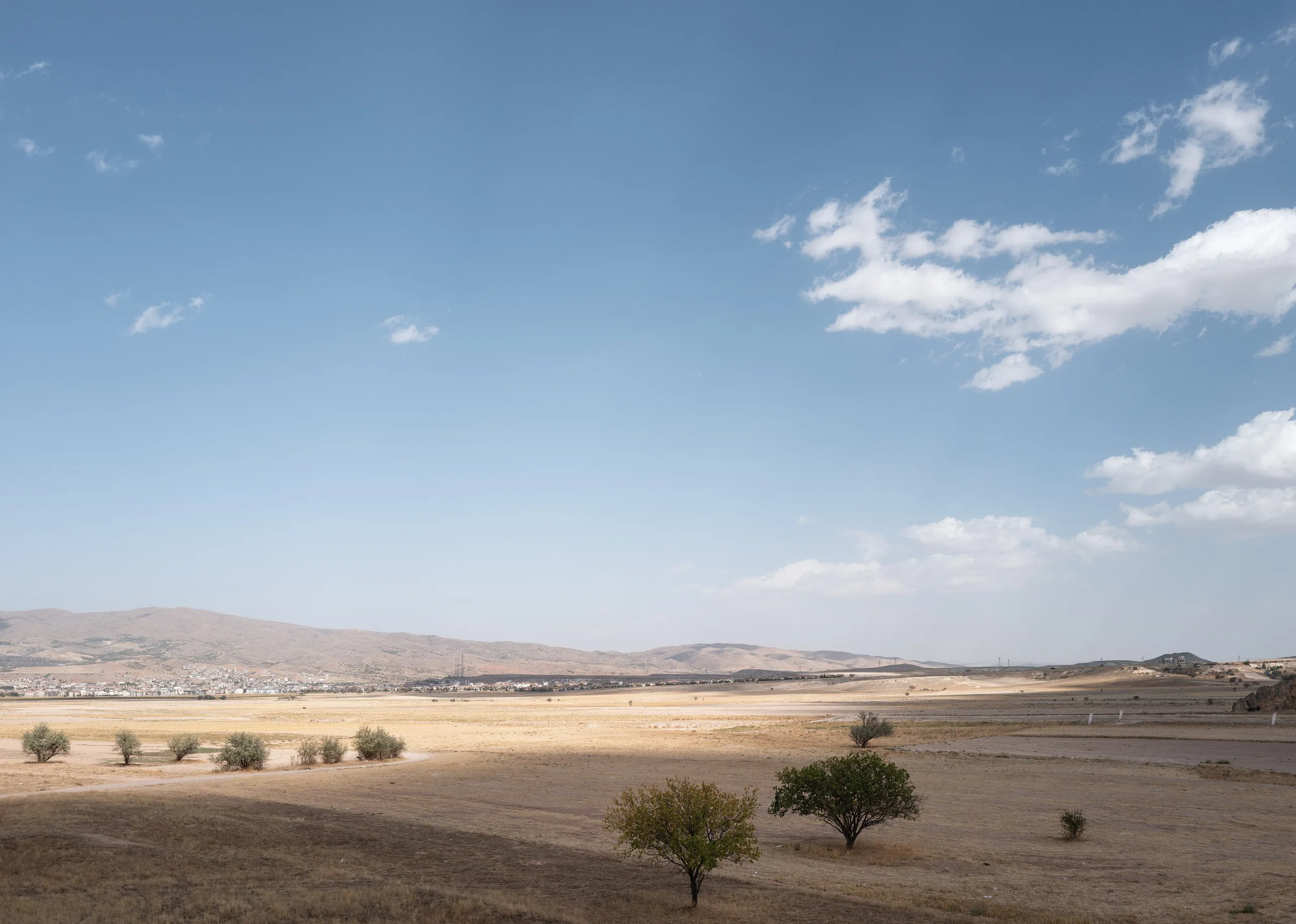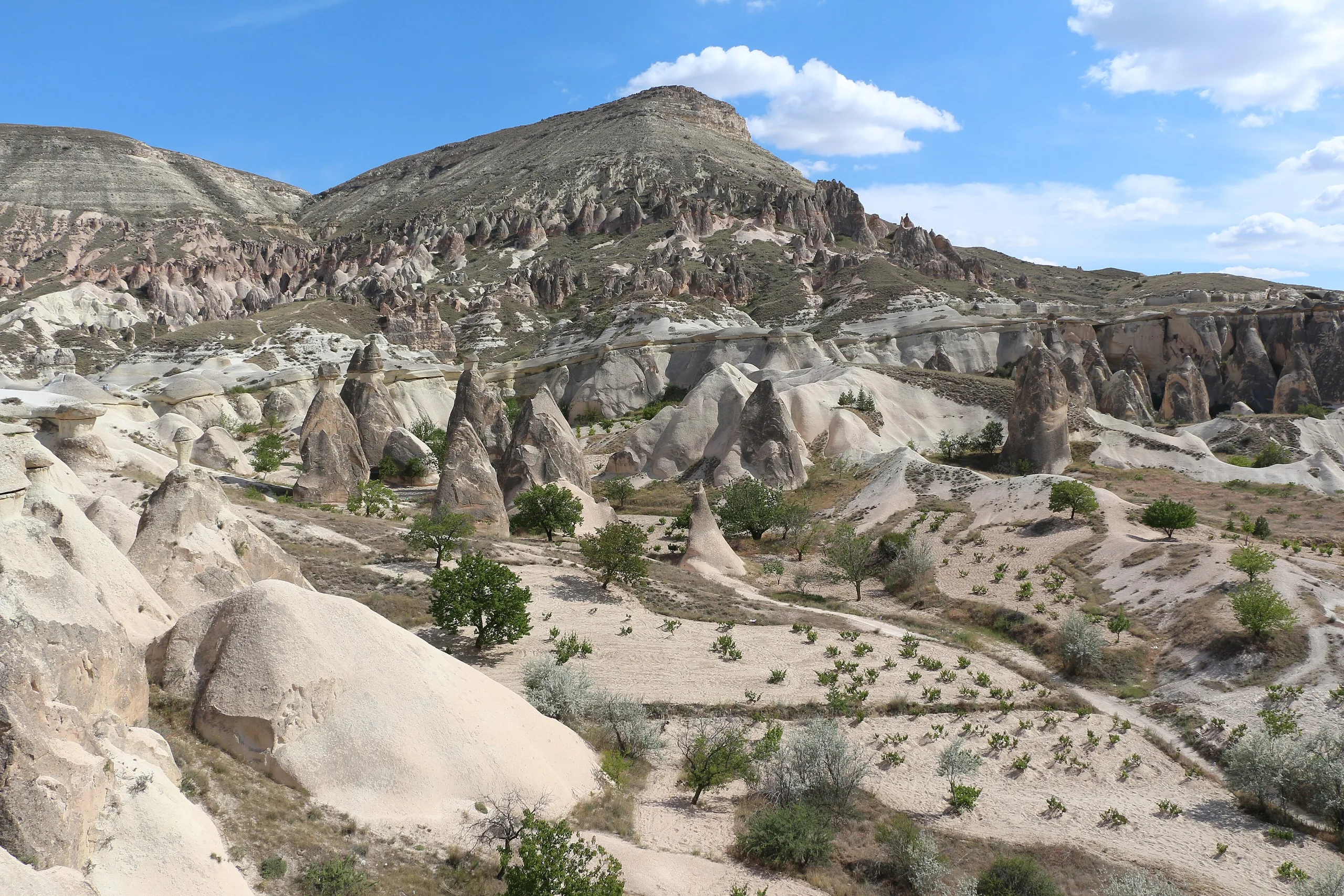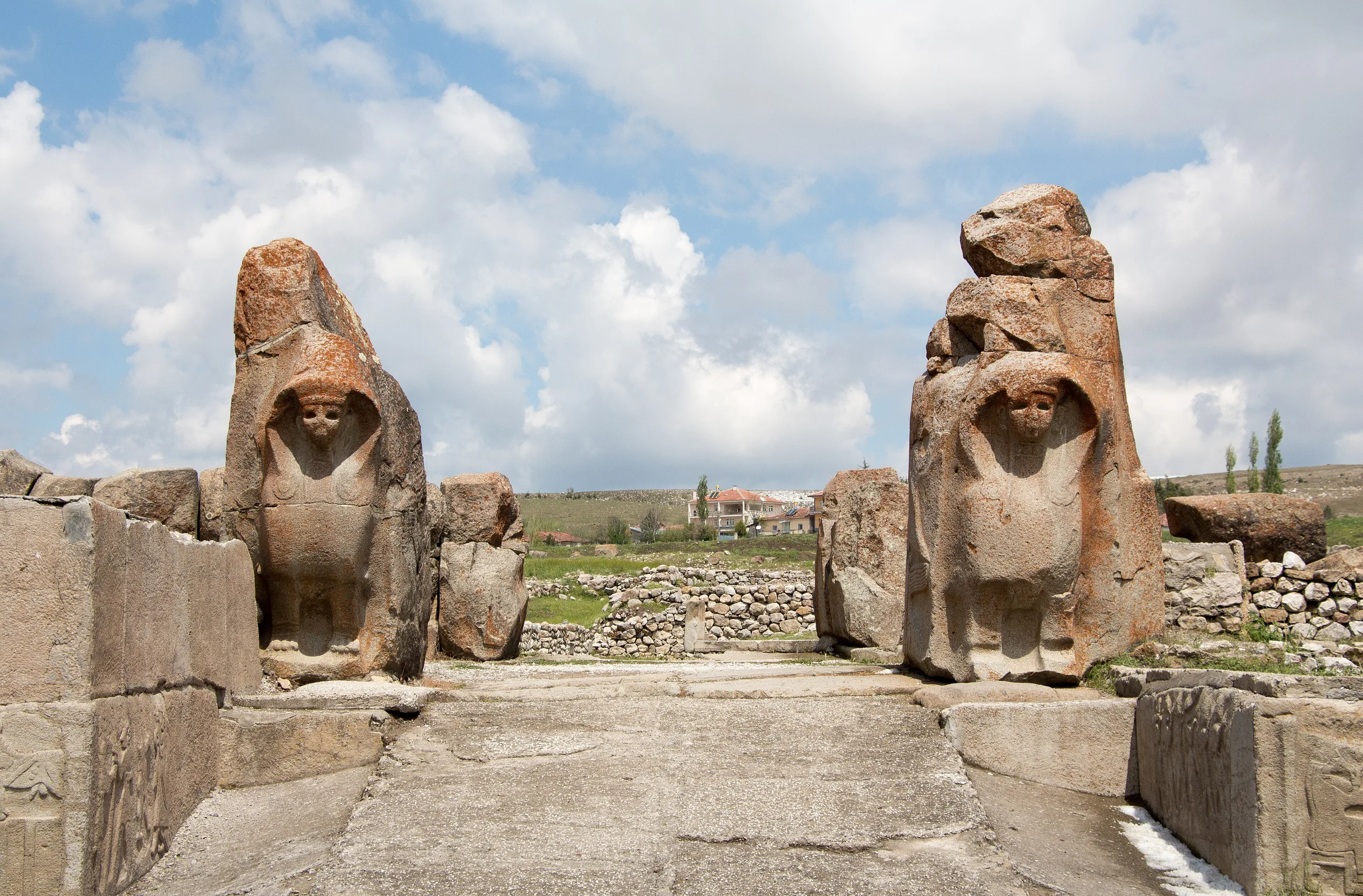
Alacahöyük is a settlement mound in Alaca district, Çorum, known for its Early Bronze Age royal tombs, the Hittite Sphinx Gate and the museum on the site.
Alacahöyük is a place (Mound settlement) in Turkey, Corum. Main periods: Hellenistic Period, Roman Period, Byzantine Period, Seljuk Period, Ottoman Period, Chalcolithic Period, Bronze Age.
Alacahöyük is a settlement mound at Alacahöyük township in Alaca district, Çorum. Ministry and Culture Portal pages quote distances to Çorum that range from 45 to 50 km, and the Culture Portal puts the Çorum-Ankara highway only about 8 km away. The Ministry's General Directorate of Cultural Heritage and Museums places the mound 17 km north-west of Alaca, 34 km from Boğazköy and 210 km from Ankara.
History of research
The ministry pages say W. C. Hamilton introduced the mound to scholarship in 1835, after which it drew scholars crossing central Anatolia. The directorate's page recounts that in 1861 G. Perrot drew the plan of the gate's square towers and was first to argue that the reliefs were Hittite; that in 1881 W. Ramsay and Wilson found a few more reliefs; and that in 1893 E. Chantre took plaster casts at the sphinx gate. Makridi Bey spent 15 days at the gate in 1907.
Systematic digging began in the Republican era. The directorate's page says Hamit Zübeyr Koşay, Remzi Oğuz Arık and Mahmut Akok started work for the Turkish Historical Society in 1935 and carried on until 1983, and that Aykut Çınaroğlu reopened the dig in 1997. The Culture Portal adds that it began on Atatürk's orders under R. O. Arık and was among Turkey's first national excavations.
Cultural layers
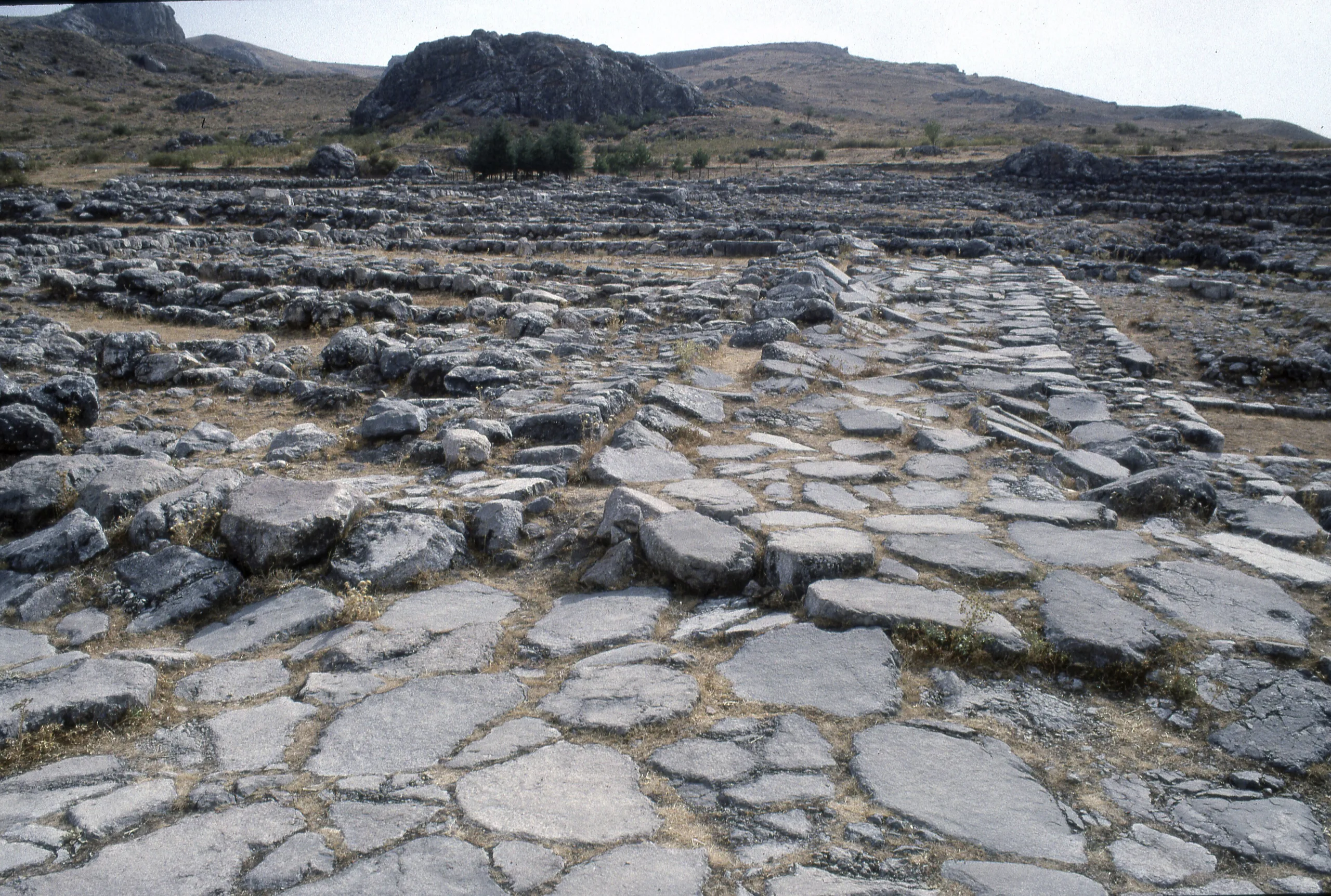
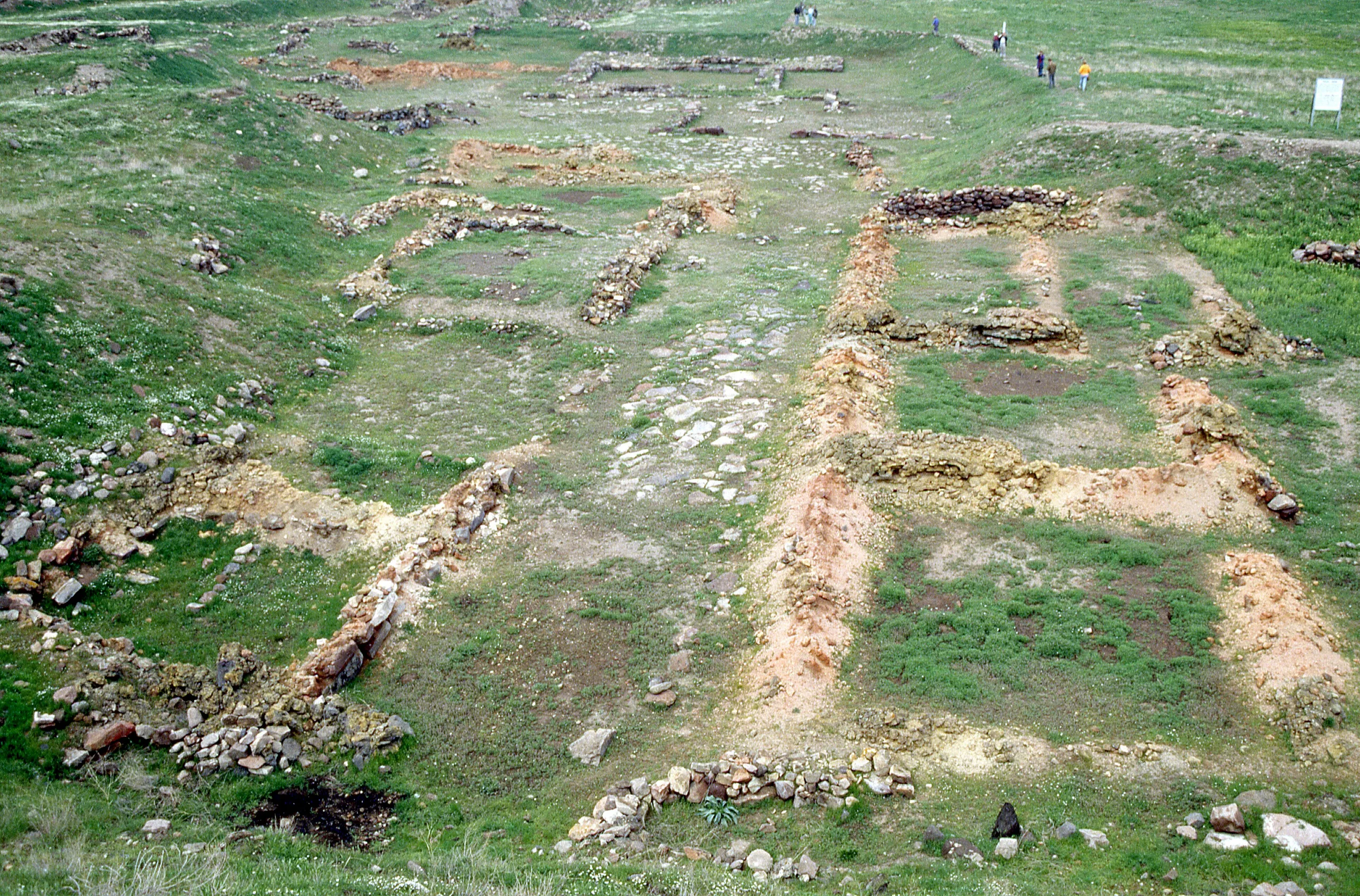
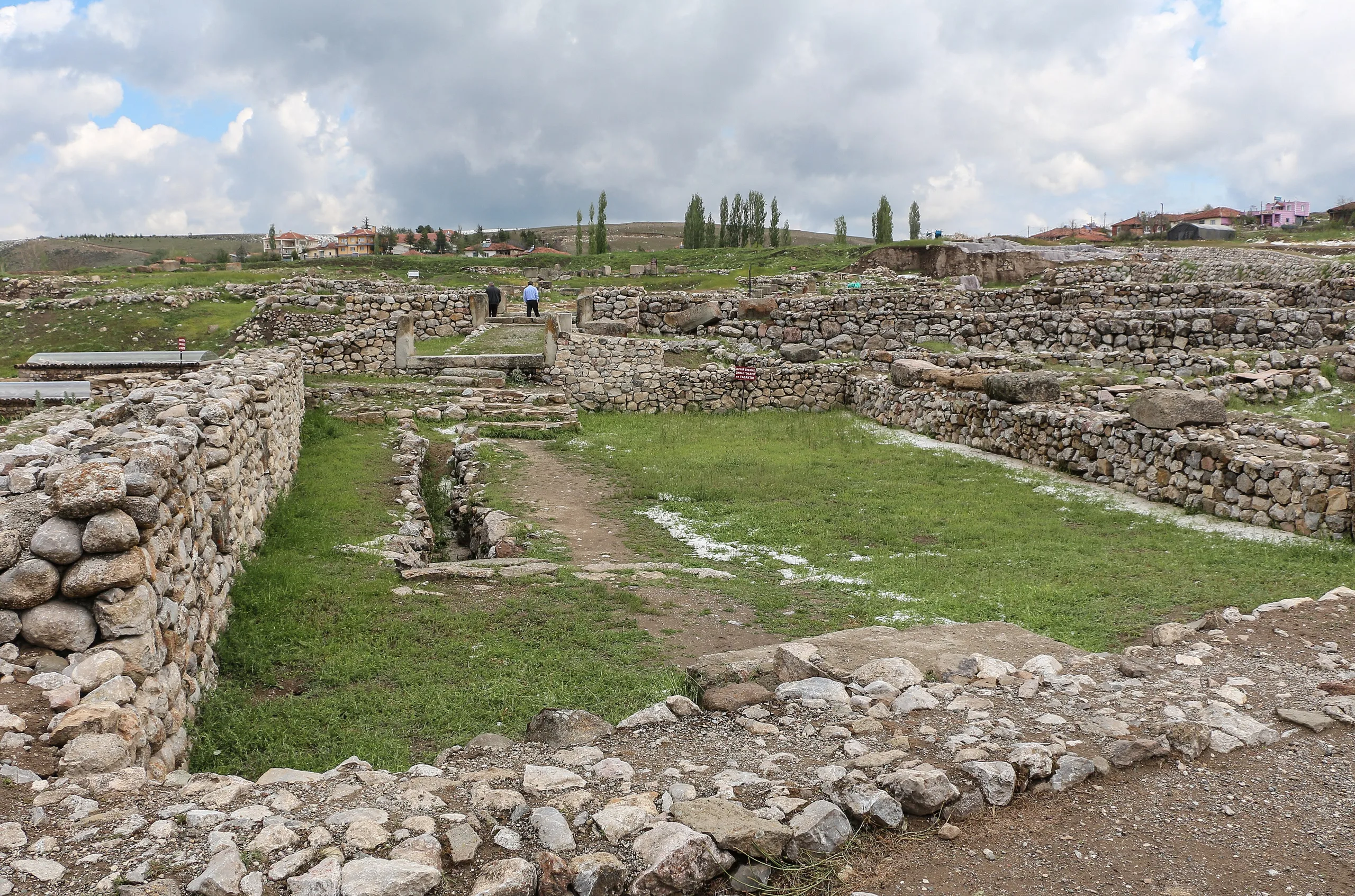
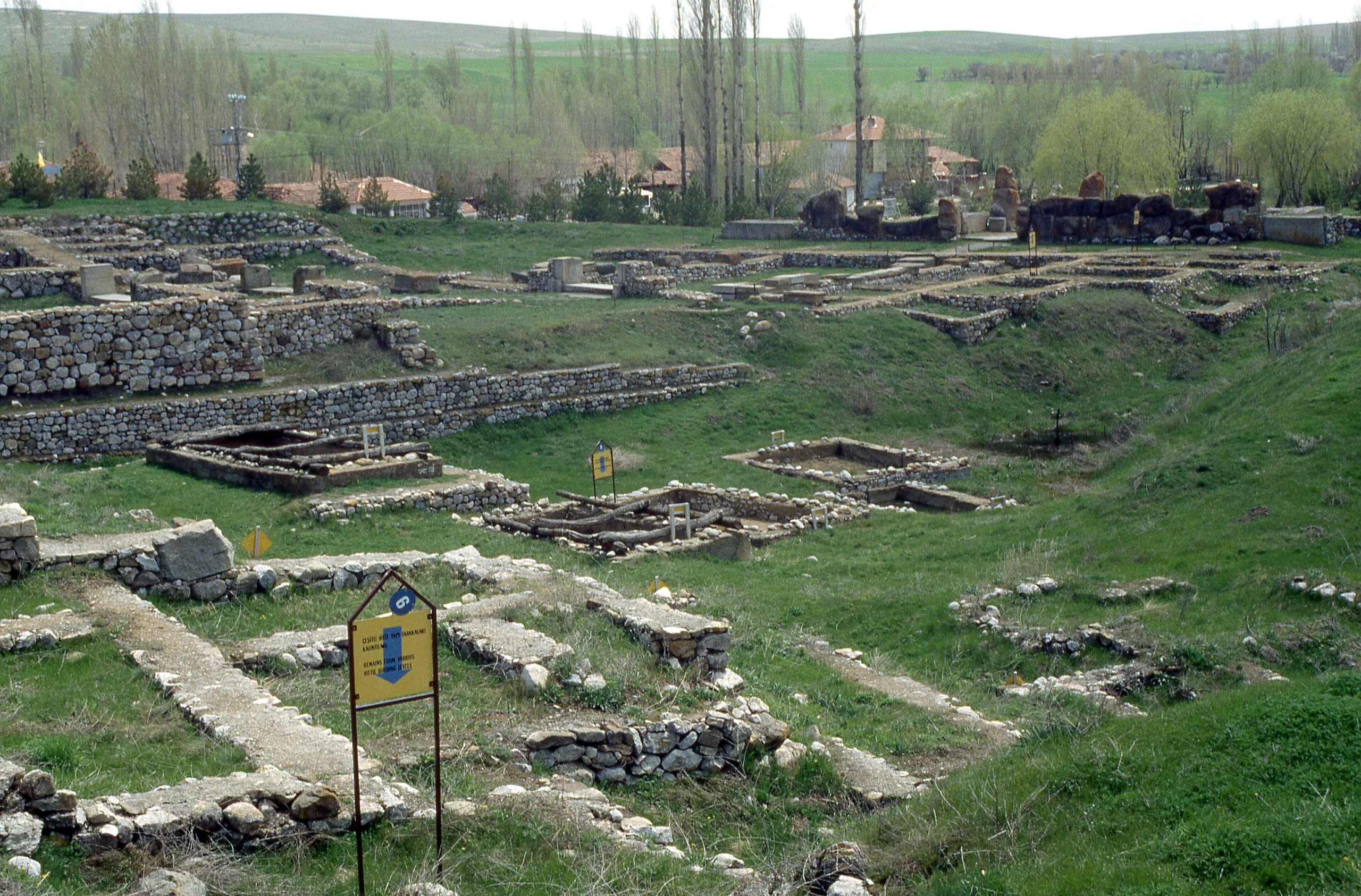
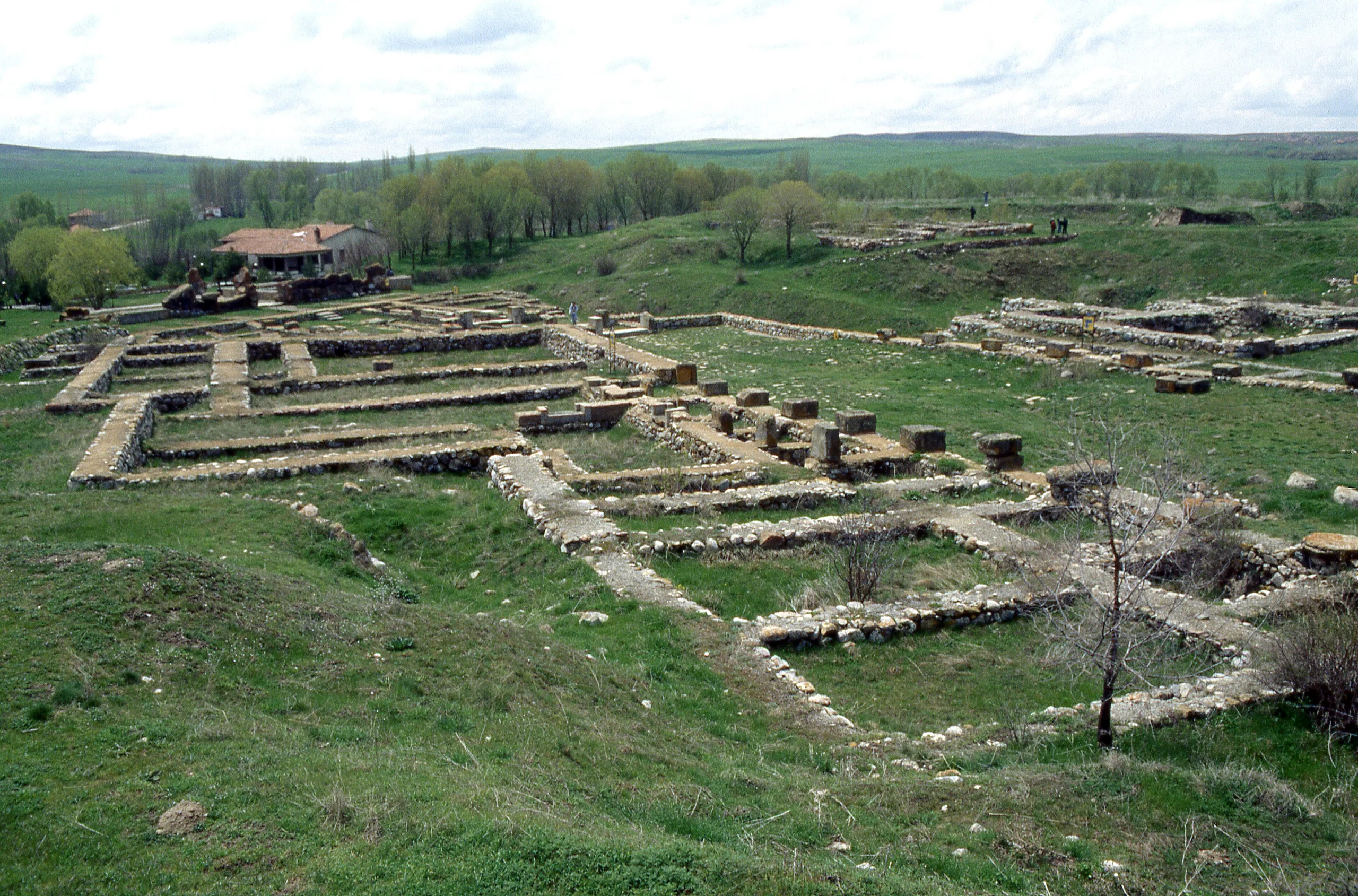
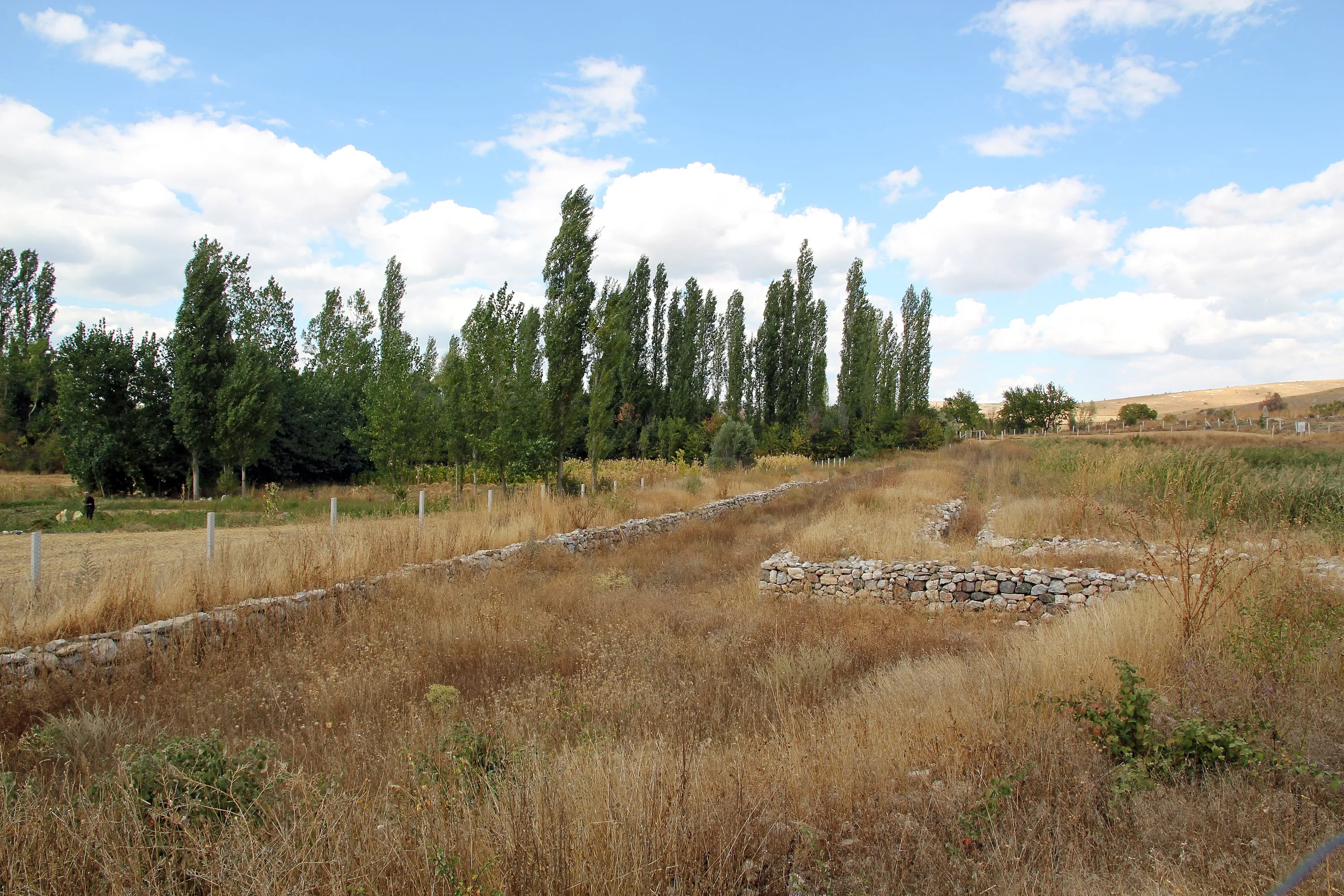
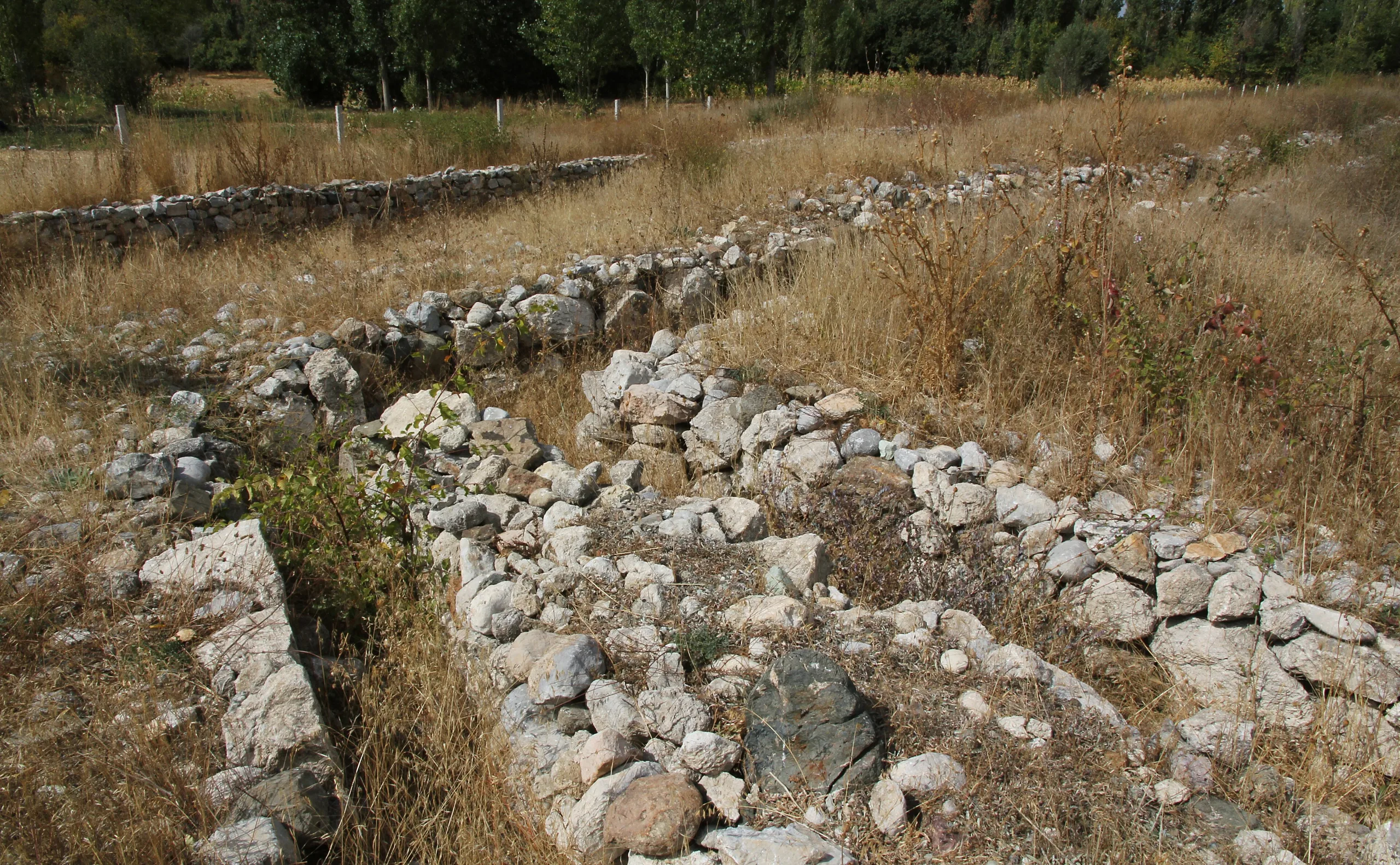
The sources order the layers in two ways. The Culture Portal speaks of four civilisation levels: the top one holds Hellenistic, Roman, Byzantine and Seljuk-Ottoman remains, with the whole mound settled in the Late Phrygian age. The second has a temple, large buildings, houses, streets, water channels, a city wall and the Sphinx Gate. The third is the Early Bronze Age (2500-2000 BCE) and the lowest, fourth, reflects the Late Chalcolithic. The ministry's English page names the four layers Chalcolithic, Early Bronze, Hittite and Phrygian.
Main finds
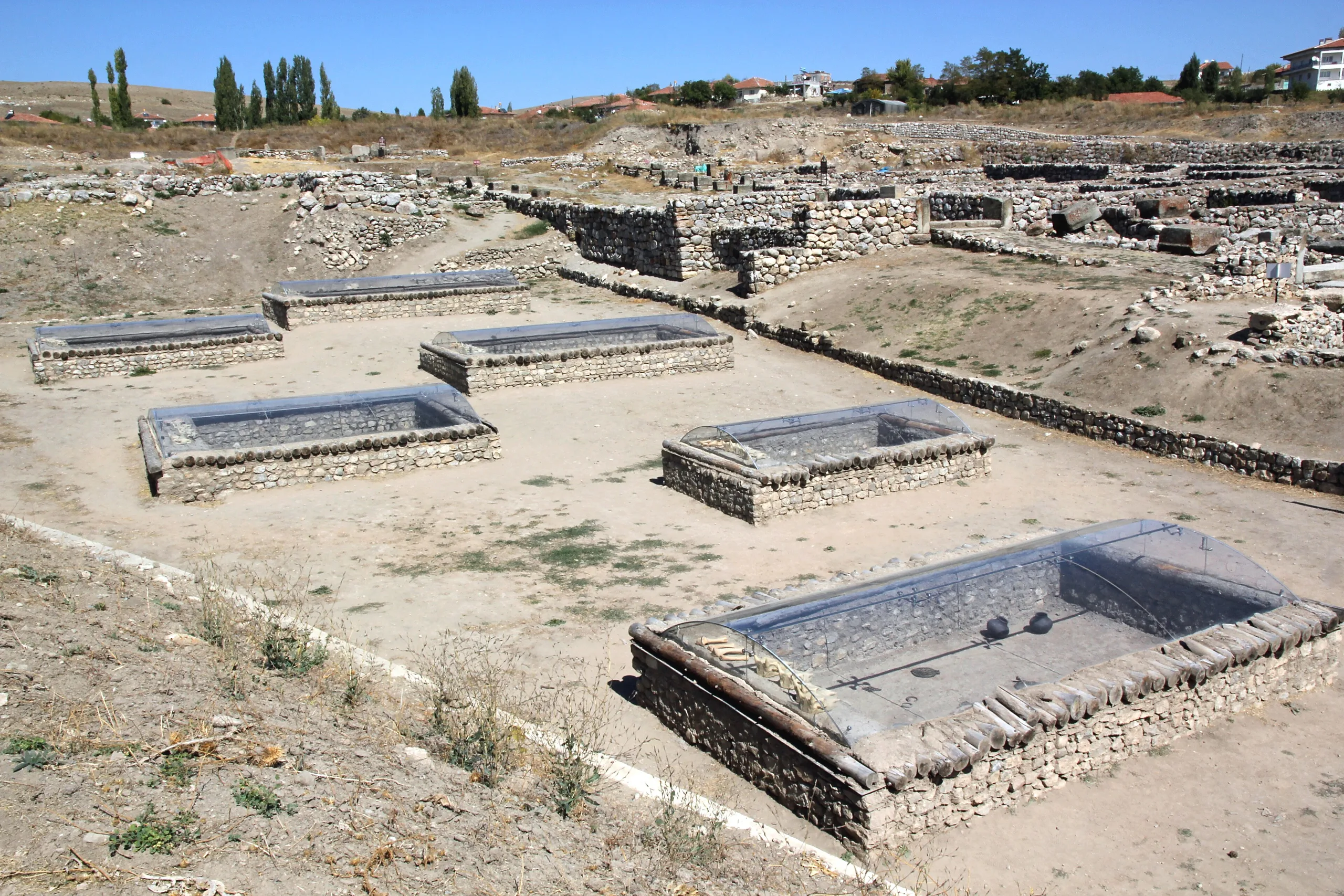
The most important finds are the 13 Early Bronze Age royal tombs. The Culture Portal says they did much to illuminate the native Hattian culture that fed into Hittite civilisation. The graves are rectangular pits lined with stone and roofed with timber beams, with heads and legs of sacrificed cattle laid on top. Sun discs, stag and bull figures, daggers, swords and axes, and objects of gold, silver, bronze and copper came from them. The ministry's English page says the dead were adult men and women, with no children or infants.
In the Hittite age the mound was ringed by a circular defence line 250 m across, with two main gates: the sphinx gate on the east and a gate on the west. The Sphinx Gate stands on a limestone base with andesite blocks and is 10 m wide, serving as the monumental approach to the great temple. The inner and outer faces of its towers carry relief orthostats, and the bull on the west tower stands for the Storm God of the Sky, according to the Culture Portal.
Museum
Per the ministry pages, Alacahöyük Museum first opened in 1940, moved into a building within the site in 1982 and was reorganised in 2011. Its halls carry the names of the excavation directors: the Koşay Hall explains the dig's place in Turkish archaeology, the Arık Hall shows Chalcolithic, Early Bronze and Hittite pieces, and the Akok Hall shows Hittite and Phrygian ones. Local carpets and kilims, wooden farm tools, a loom and Ottoman-era weapons are also displayed.
Visiting
The ministry page states that the Museum Card is valid for Turkish citizens. For hours and fees, see the official page.
Gallery
Frequently asked questions
Where is Alacahöyük?
Who introduced the mound to scholarship?
When did systematic excavation begin?
What are the key finds?
Is there a museum on site?
Is the Museum Card valid?
Sources (13)
- Alacahöyük Müzesi ve Örenyeri (muze.gov.tr TR ve EN sayfalar) — T.C. Kültür ve Turizm Bakanlığı, Müzeler ve Ören Yerleri
- Alacahöyük Müze ve Ören Yeri - Çorum — T.C. Kültür ve Turizm Bakanlığı, Türkiye Kültür Portalı (kaynak: Çorum İl Kültür ve Turizm Müdürlüğü)
- Alacahöyük (EN) — T.C. Kültür ve Turizm Bakanlığı, Kültür Varlıkları ve Müzeler Genel Müdürlüğü
- Alaca Höyük (Pleiades place 991964195) — Pleiades
Photo credits
- Photo: Bernard Gagnon, CC BY-SA 3.0 — Wikimedia Commons (resized)
- Photo: Bernard Gagnon, CC BY-SA 3.0 — Wikimedia Commons (resized)
- Photo: Mark Landon, CC BY 4.0 — Wikimedia Commons (resized)
- Photo: Mark Landon, CC BY 4.0 — Wikimedia Commons (resized)
- Photo: Klaus-Peter Simon, CC BY-SA 3.0 — Wikimedia Commons (resized)
- Photo: Klaus-Peter Simon, CC BY-SA 3.0 — Wikimedia Commons (resized)
- Photo: Klaus-Peter Simon, CC BY-SA 3.0 — Wikimedia Commons (resized)
- Photo: Klaus-Peter Simon, CC BY-SA 3.0 — Wikimedia Commons (resized)
- Photo: Ingeborg Simon, CC BY-SA 3.0 — Wikimedia Commons (resized)