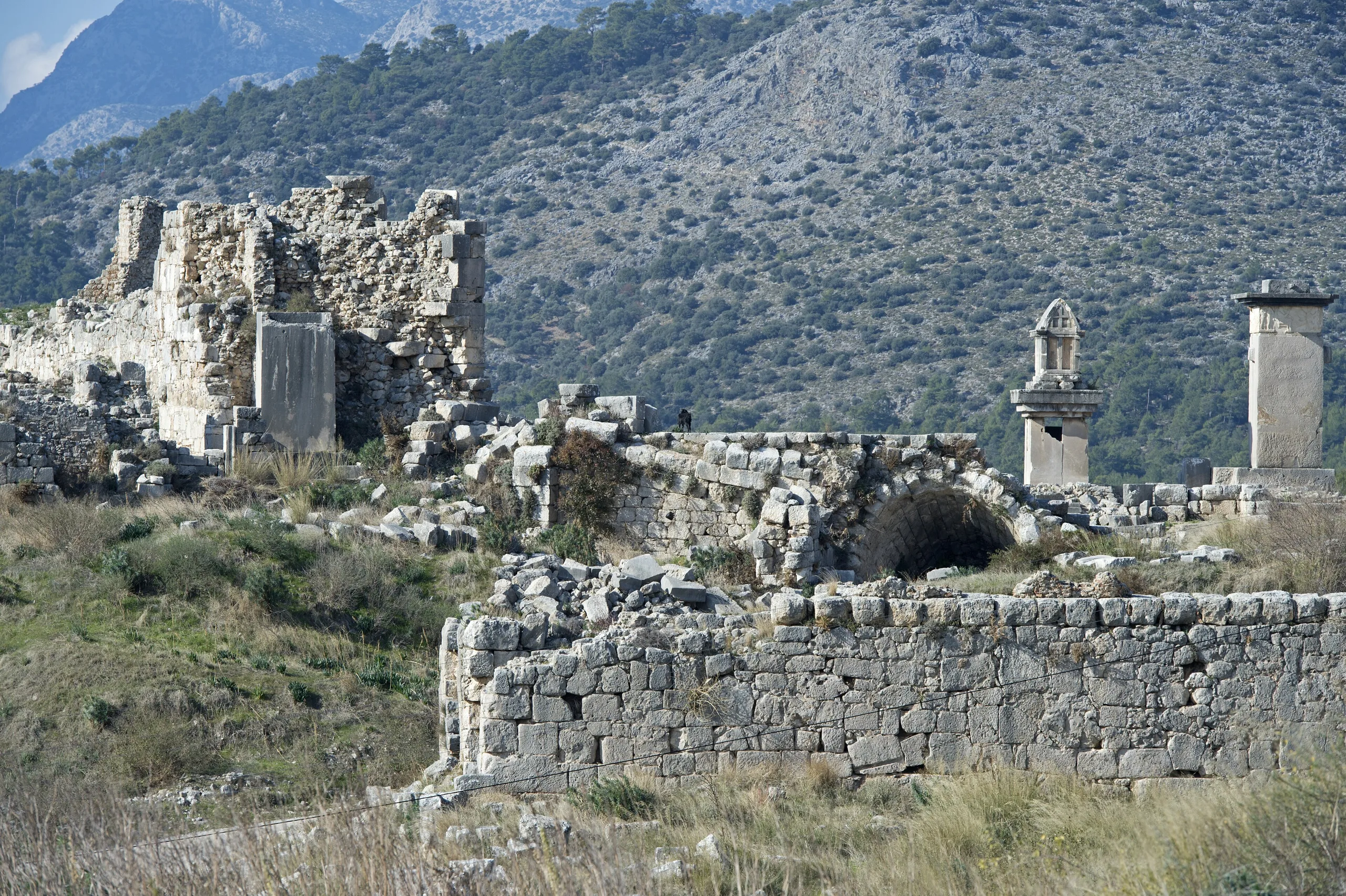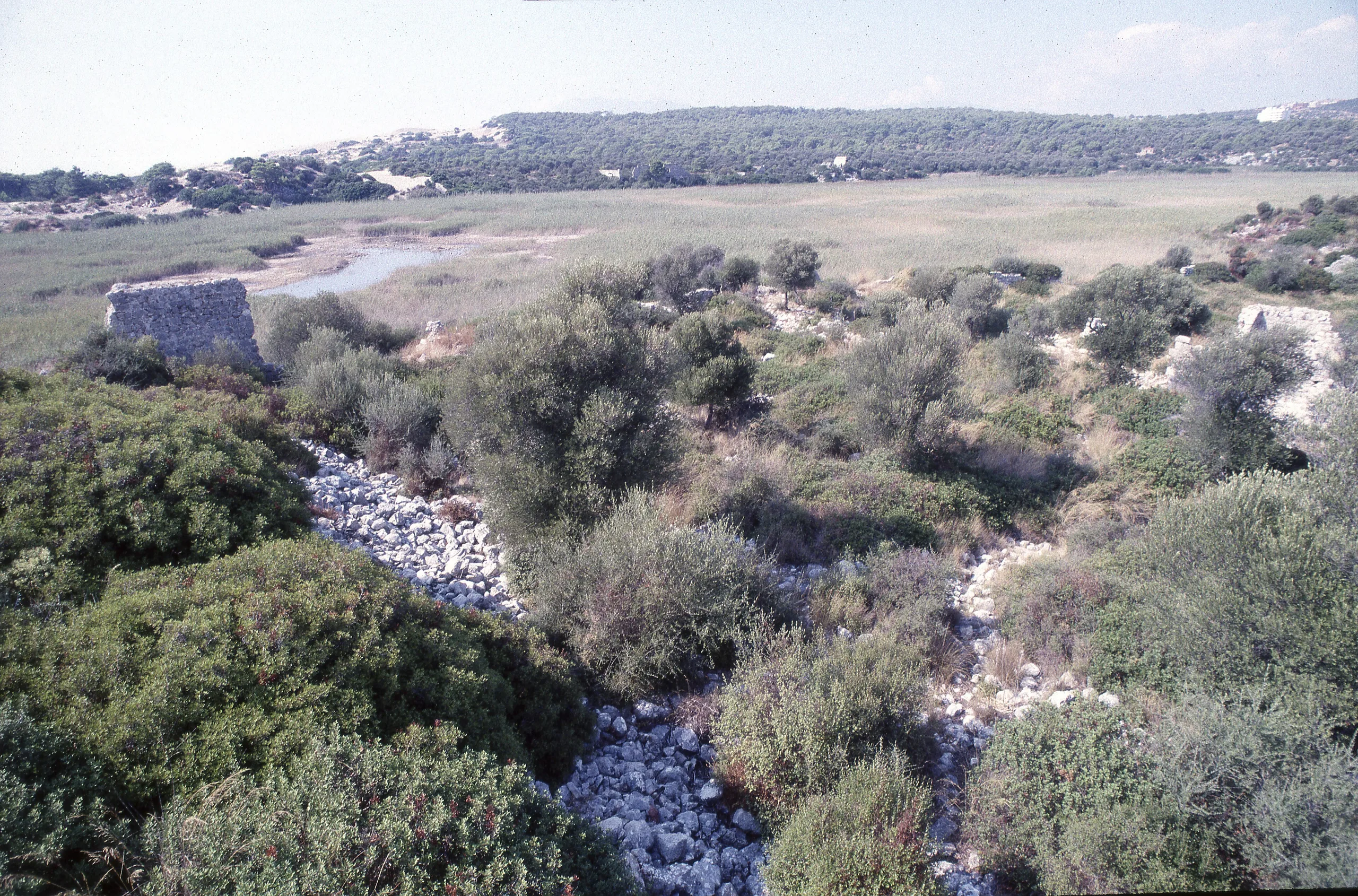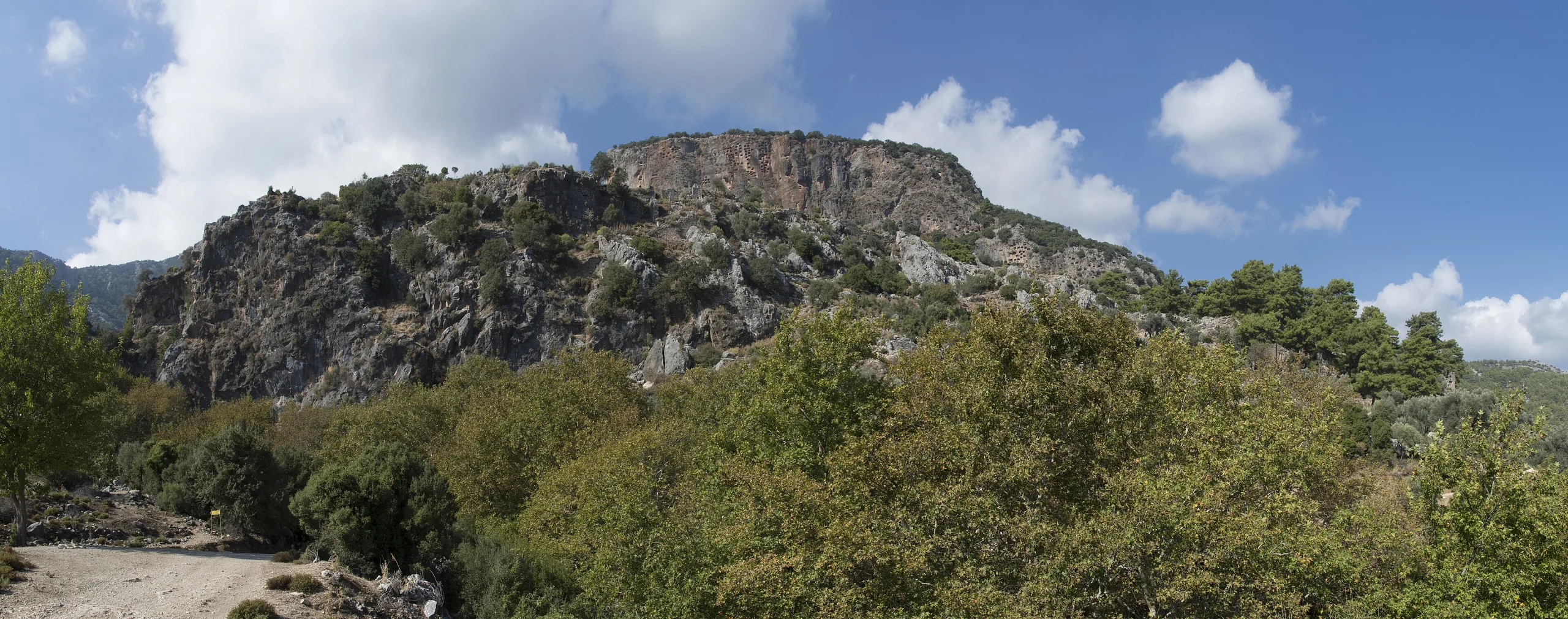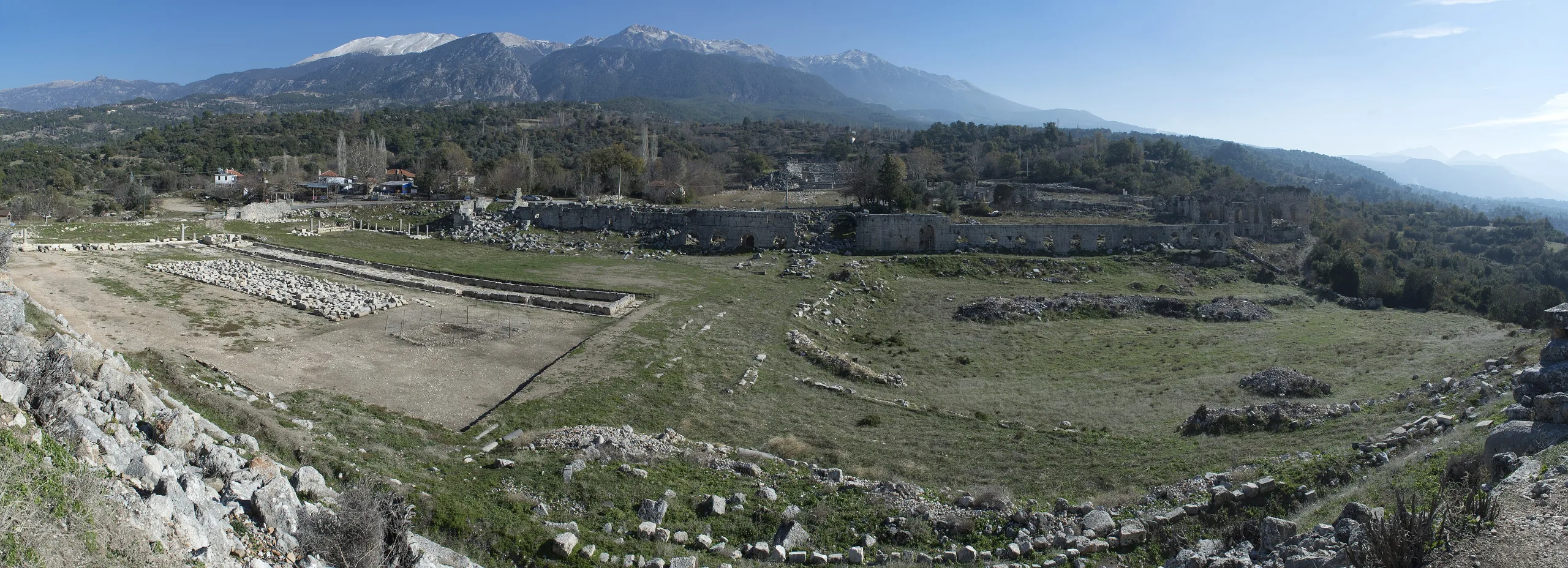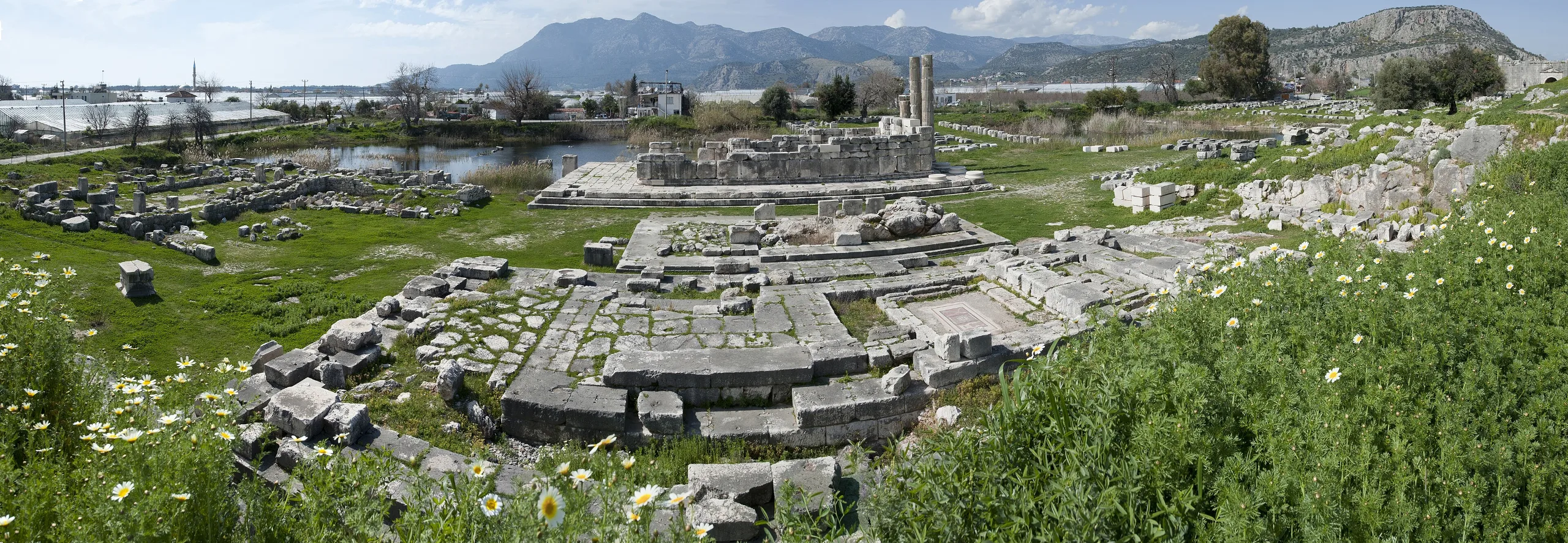
Letoon, four kilometres south-west of Xanthos, was the Lycian federal sanctuary of Leto, Artemis and Apollo, known for three temples, partly flooded foundations and a trilingual inscription.
Letoon is a place (Sanctuary) in Turkey, Mugla. Main periods: Hellenistic Period, Roman Period, Iron Age. It was inscribed on the UNESCO World Heritage List in 1988.
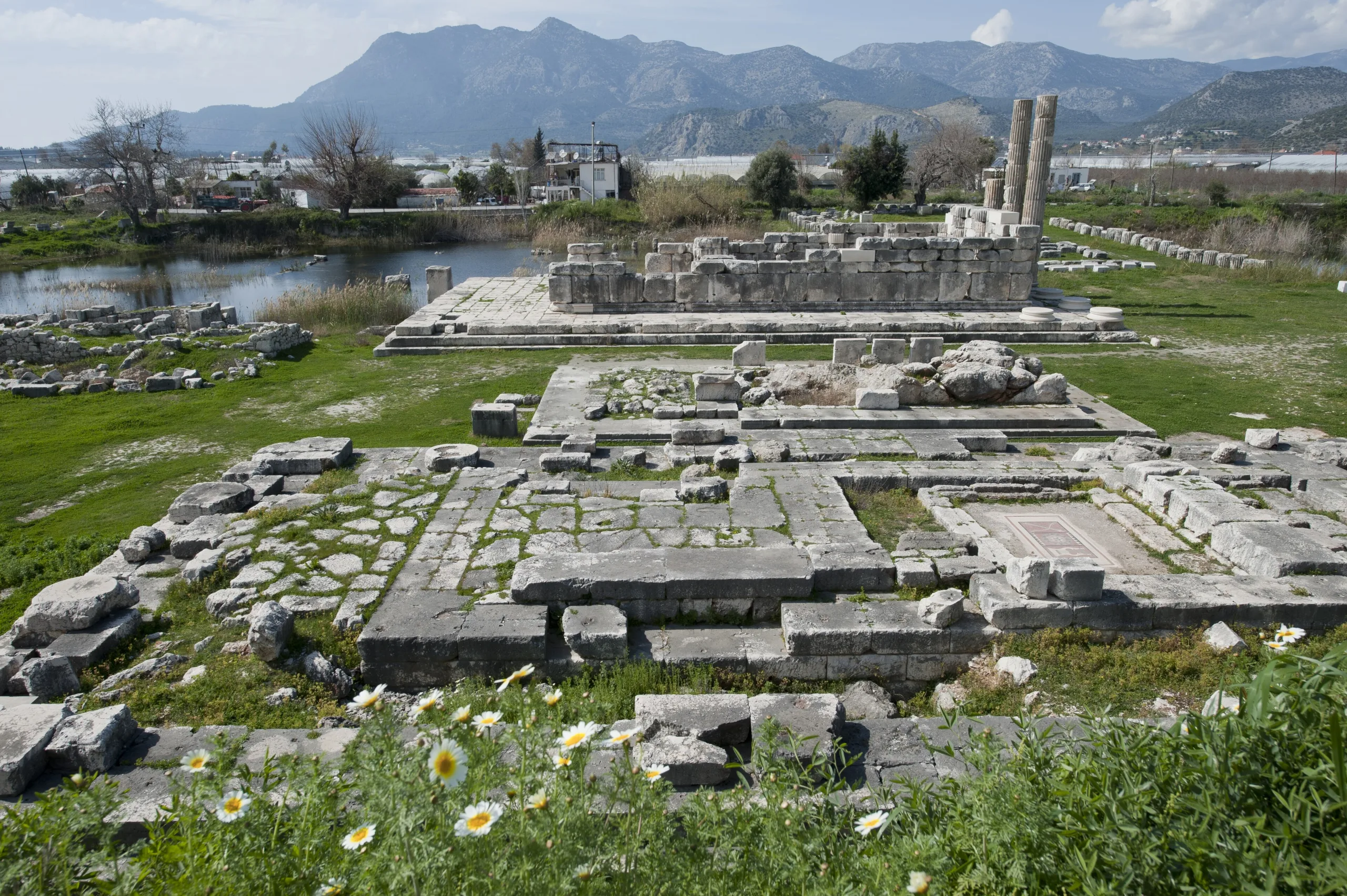
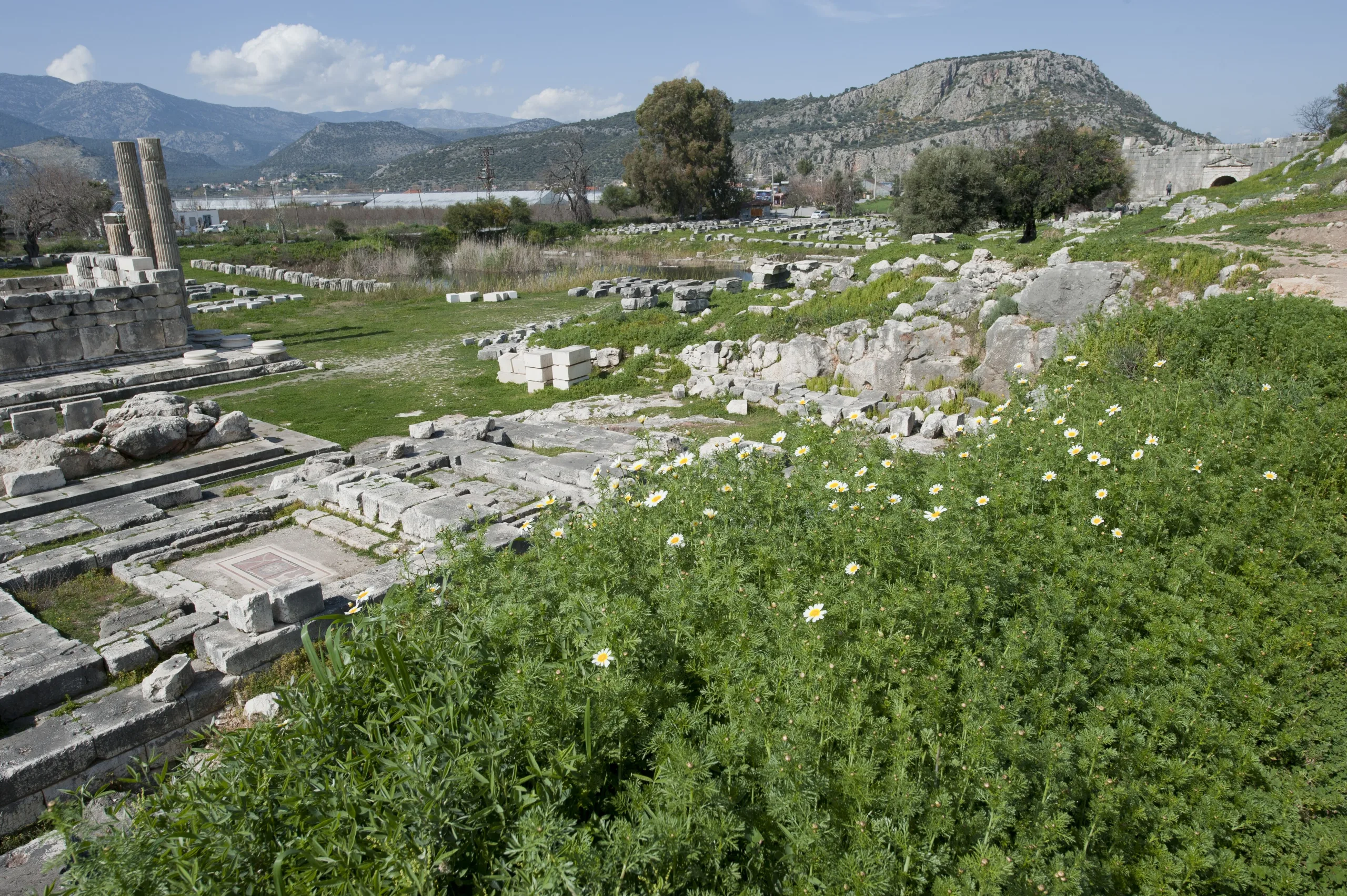
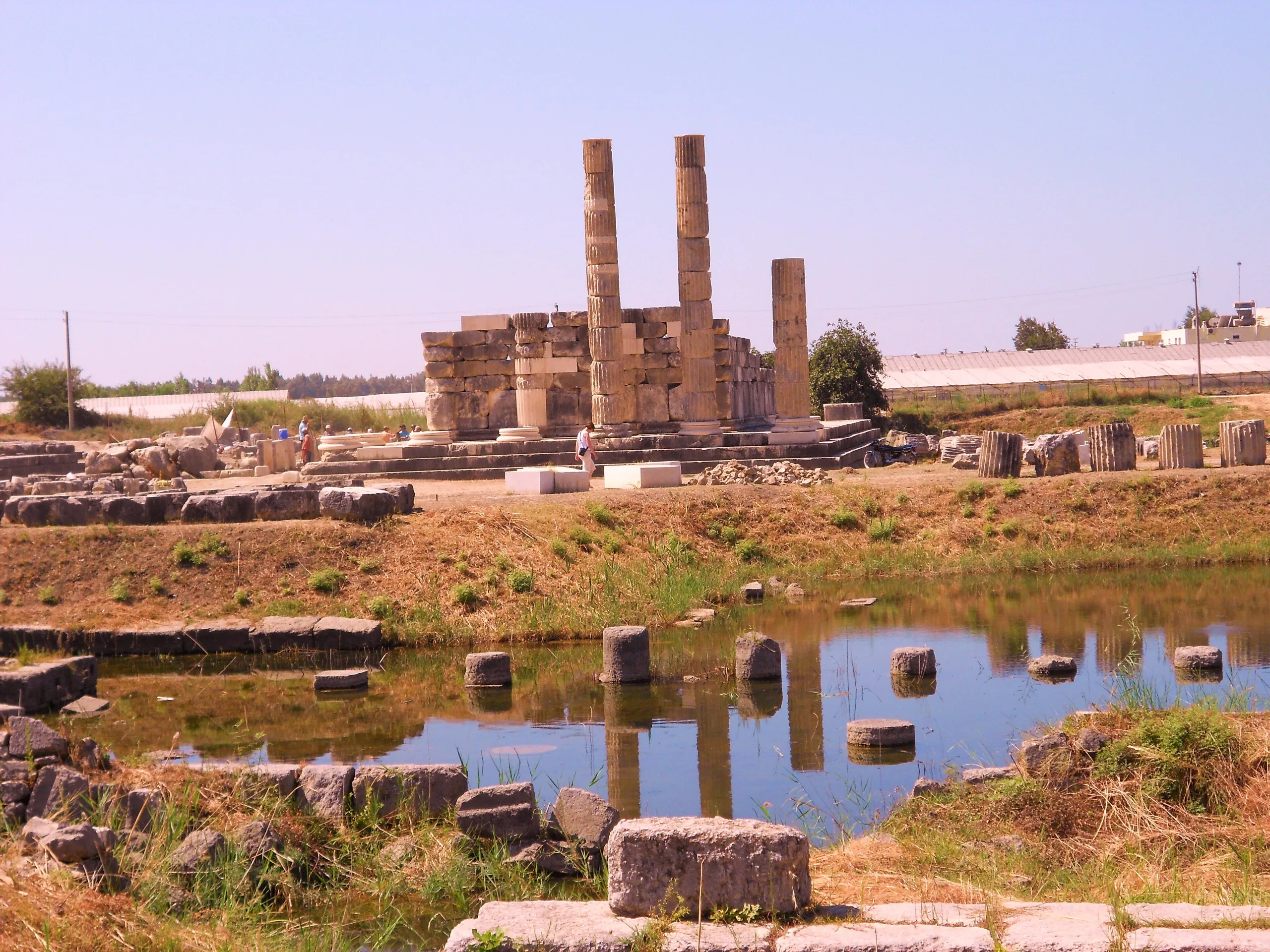
The lower courses of the temples at Letoon sit under water. The water level in the plain has risen since antiquity. This was nonetheless the federal sanctuary where Lycian cities worshipped their shared gods and announced their decisions to the public. Dedicated to Leto and her twin children Artemis and Apollo, it lies about four kilometres south-west of Xanthos, across the Eşen River. Together with Xanthos it joined the UNESCO World Heritage List in 1988.
Location
Letoon is near Kumluova village in Seydikemer district, Muğla. A road leaving the old Fethiye-Kaş highway at km 65 runs south for about 3 km to the site. The sanctuary forms one of two components of a single World Heritage property, the other being Xanthos.
History
Excavated finds trace the settlement back to the 7th or 8th century BCE. Inscriptions found at the sanctuary show that Letoon was a religious and political centre in the days of the Lycian League, and that rulers proclaimed their religious and political decisions to the public here. In 167 BCE Xanthos and several other towns formed a confederation based at Letoon. The place stayed in use until the 7th century CE and was then abandoned.
Myth and ancient writers
In the story told by the poet Ovid, Leto, pregnant by Zeus, bore her twins on Delos, then came to the point where the Xanthos River meets the sea and followed the river up to the spring beside today's Temple of Leto. She wanted to bathe the children there, but local people stopped her, and in her anger she turned them into frogs. The founding of Letoon is tied to this tale. Another version has Leto fleeing the pursuit of Zeus's jealous wife Hera and taking refuge in Lycia; the twins are usually said to have been born on Delos, though one tradition puts Apollo's birth at Patara. Artemis is regarded as a continuation of Kybele, the Anatolian mother goddess, and Leto is thought to have merged with her as well.
What can be seen
The three temples
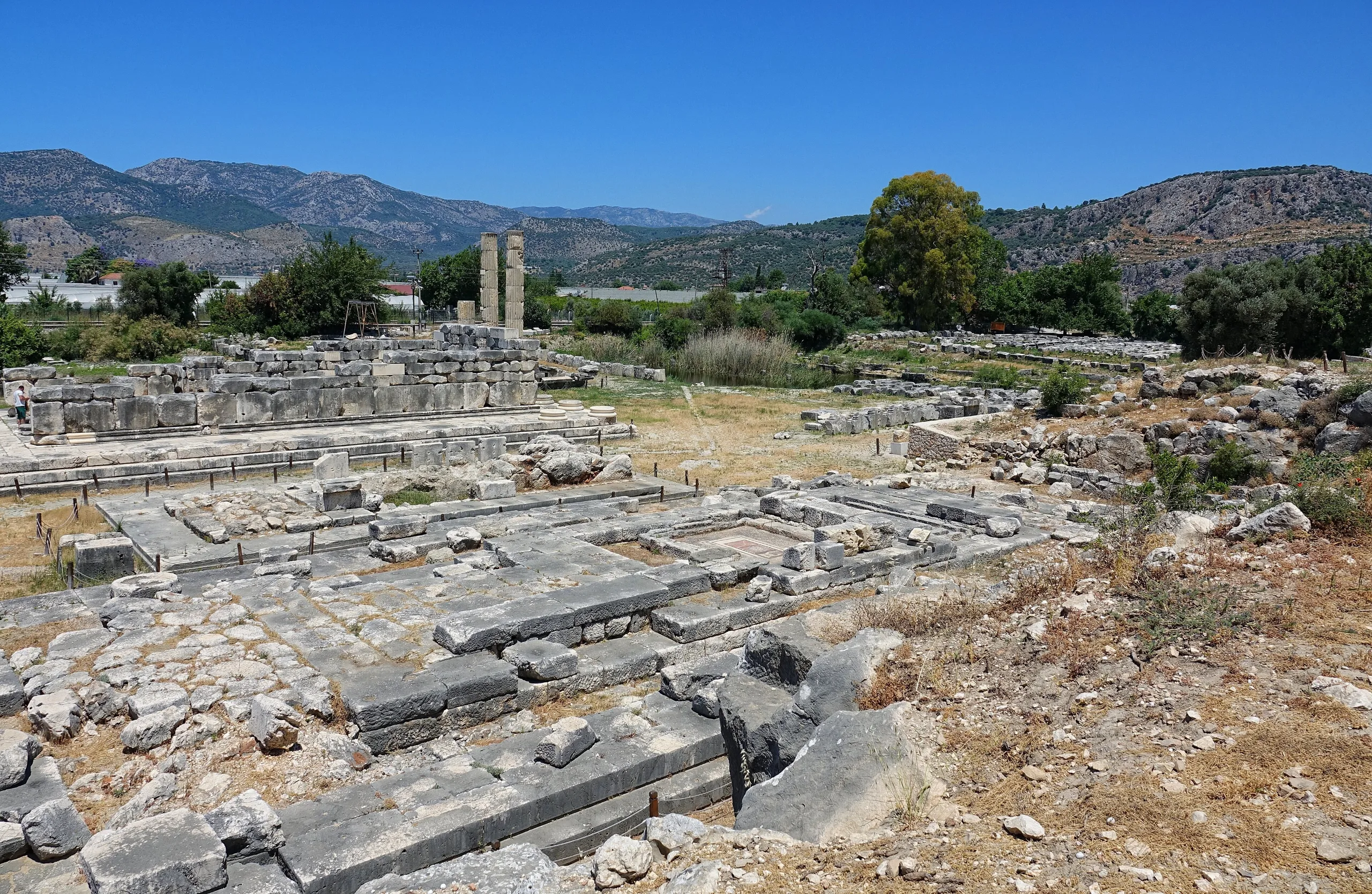
Three temples stand in a row at the heart of the sanctuary. The westernmost, the Ionic temple of Leto, is the largest: a peripteros, meaning a building ringed by columns, measuring 30.25 by 15.75 m. An earlier temple built under King Arbinas around the end of the 5th or 4th century BCE once stood here; the present ruin was raised over it around 150 BCE, with 6 by 11 columns. It was re-erected on its original site between 2000 and 2007 using its own fragments.
The smaller central temple belongs to Artemis, dates to the 4th century BCE and measures 18.20 by 8.70 m. The Doric temple of Apollo to the east measures 27.90 by 15.07 m, and the wooden foundations inside it draw attention because they recall the house forms carved on Lycian tombs. In the cella (the inner chamber) of this Hellenistic building a mosaic showed Artemis's bow and quiver beside Apollo's lyre. Known as the Apollo Mosaic, it was moved to the Fethiye Museum because it was exposed to the weather.
The trilingual inscription
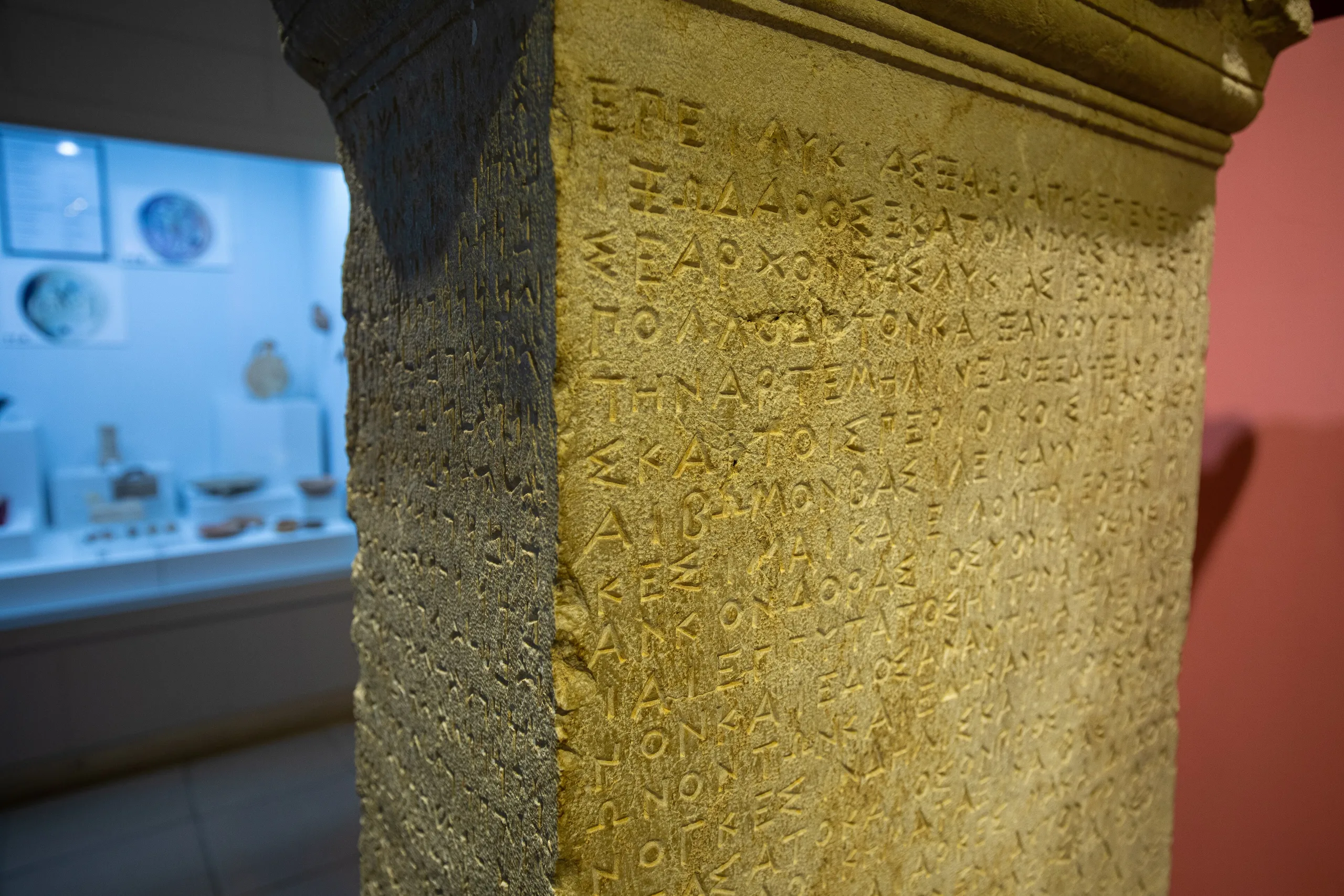
Found in the Hellenistic rubbish dump near the Temple of Apollo, this text is written in Lycian, Aramaic and Greek. It records a decree of Pixodaros, satrap of Lycia and Caria, dated 358 BCE, and it played a decisive part in deciphering the Lycian language. It is now in the Fethiye Museum. Xanthos and Letoon yielded the longest and most important texts ever found in Lycian.
Nymphaeum, theatre and other remains
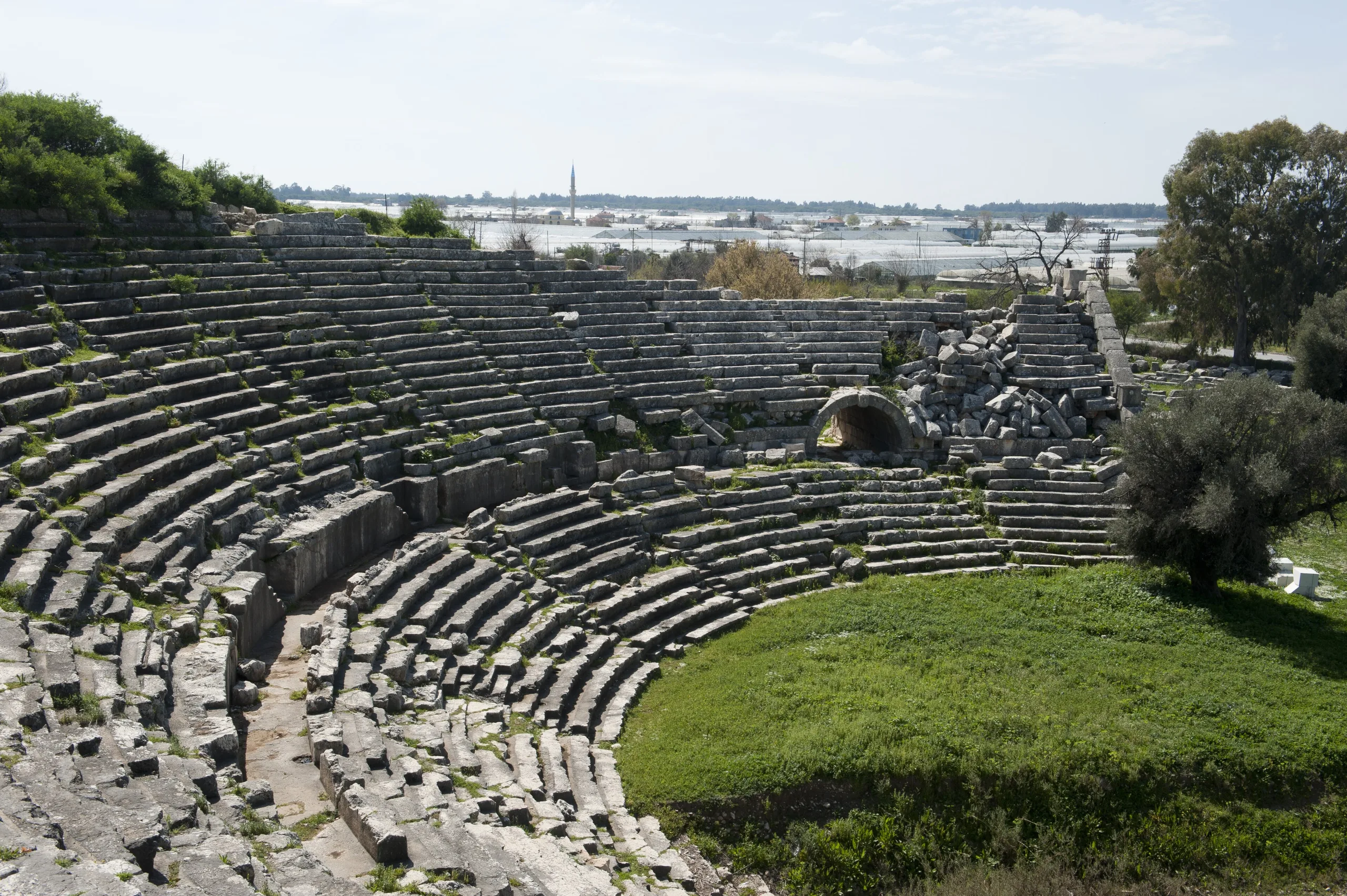
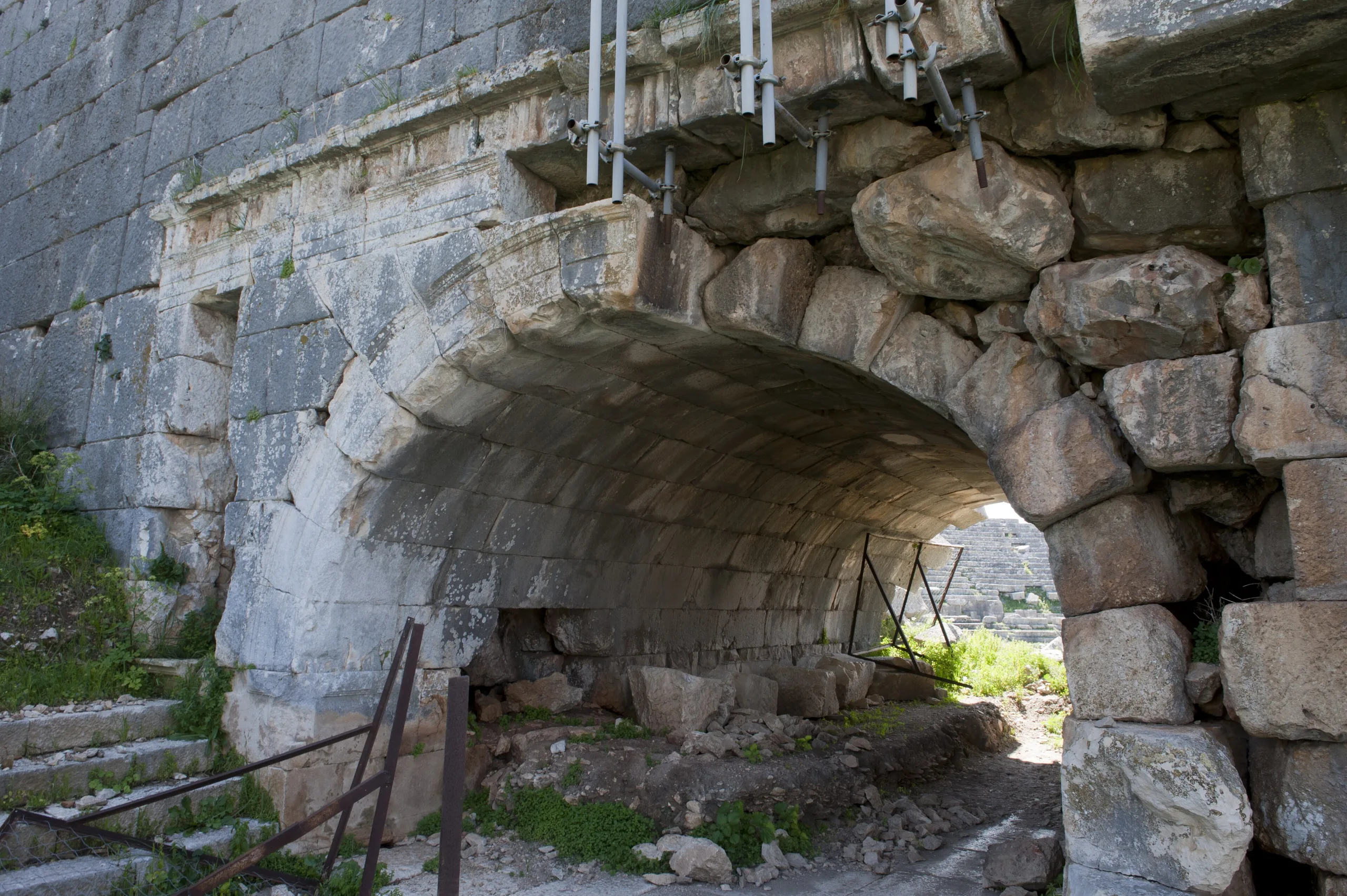
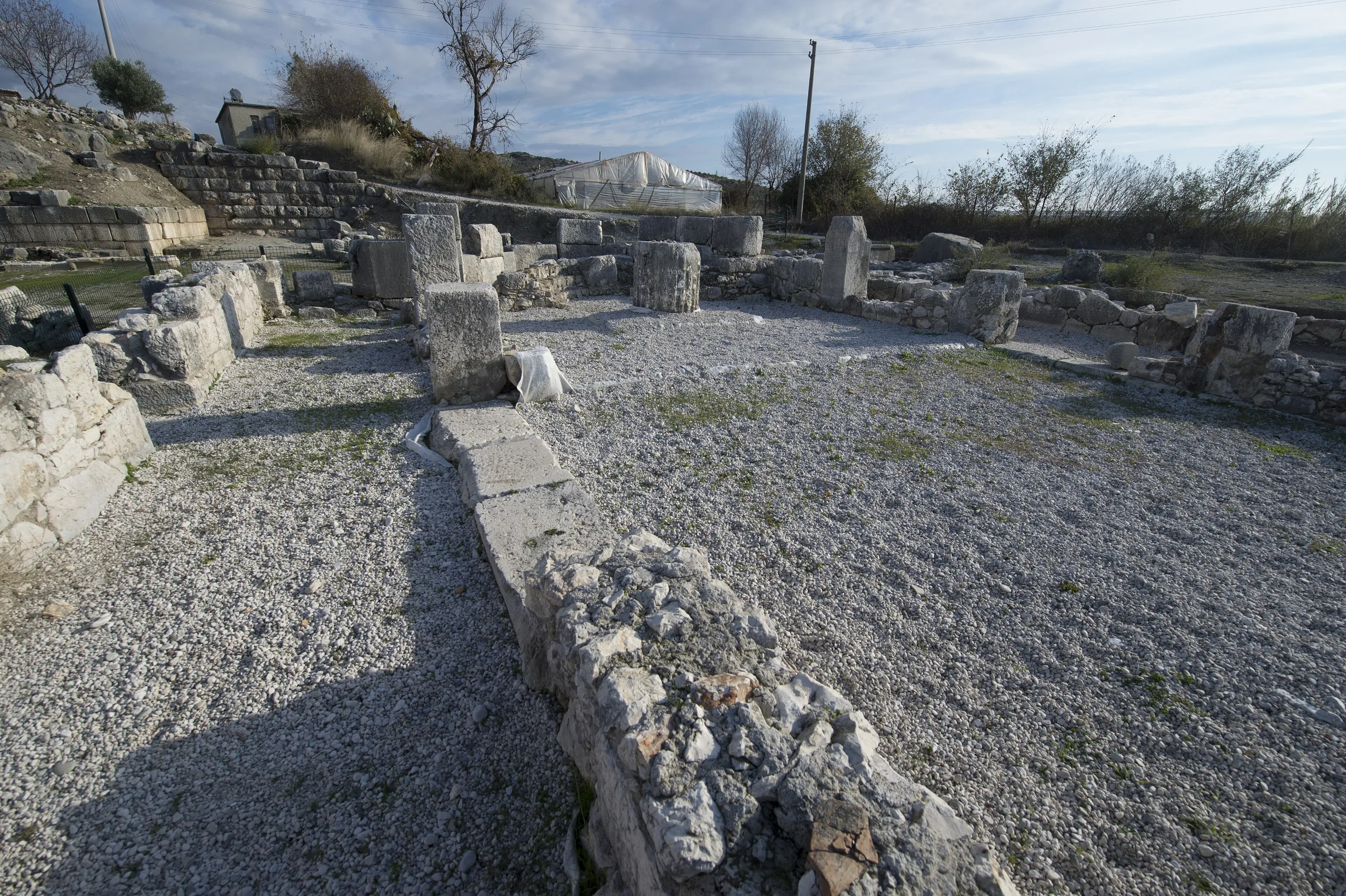
South-west of the temples rises a fountain house dedicated to the cult of the Nymph. Dated to the reign of Hadrian, this nymphaeum was built over a spring regarded as sacred, and an early Christian church stands at its eastern edge. A stoa (columned gallery) and a Hellenistic theatre with thirty-six rows of seats also survive. The site includes a basilica, an L-shaped stoa and a round portico attached to an imperial cult building.
Excavation and research
Fellows and Hoskyn identified the site in the winter of 1840-41. Spratt and Forbes, then Benndorf and Niemann, published short descriptions, and the inscriptions reached scholars through the work of the Austrian travellers. A French team visited in 1951 and 1959 and decided that digging the federal sanctuary would be a natural counterpart to the Xanthos project. Excavation began in 1962 under Prof. Dr. H. Metzger and was later led by Christian Le Roy, with work lasting about 30 years. The first campaign, from 10 September to 13 October 1962, focused on the ground east and south of the temple. To the east it exposed a long Roman building combining Doric and Ionic orders; to the south it revealed a late church with its atrium (forecourt) and baptistery. A trial trench produced fragments of archaic pottery from the 6th century BCE.
World Heritage and protection
Xanthos-Letoon was inscribed in 1988 (no. 484) under criteria (ii) and (iii): Lycian architecture influenced cities such as Patara, Pinara and Myra, and the inscriptions and funerary monuments are exceptional testimony to Lycian civilisation. At Letoon the protected area was judged too small at the start, since the zone around the theatre lay outside it. The main threat is the seasonal rise of the groundwater table; water channels were dug in 2006 to lower the level during excavation, and the conservation plan for Letoon was approved the same year. Greenhouses on the fertile alluvial plain add visual clutter.
Visiting
The Müzekart is valid for Turkish citizens. Hours and fees change, so check the official page. The mosaic and the trilingual inscription are displayed in the Fethiye Museum rather than on site, and Xanthos lies about four kilometres away.
Gallery
Frequently asked questions
Where is Letoon?
Which gods was Letoon dedicated to?
What is the trilingual inscription of Letoon?
How old is Letoon?
Why is Letoon a World Heritage site?
Why are the temples partly under water?
Sources (16)
- Letoon Örenyeri / Letoon Ancient City (TR ve EN sayfaları) — T.C. Kültür ve Turizm Bakanlığı, Müzeler ve Ören Yerleri
- Letoon Antik Kenti - Muğla (Gezilecek Yerler; kaynak: Muğla İl Kültür ve Turizm Müdürlüğü) — T.C. Kültür ve Turizm Bakanlığı, Kültür Portalı
- Xanthos-Letoon (Dünya Mirasında Türkiye) — T.C. Kültür ve Turizm Bakanlığı, Kültür Portalı
- Xanthos-Letoon (UNESCO Dünya Mirası no. 484) — UNESCO World Heritage Centre
- Advisory Body Evaluation, Xanthos-Letoon (WHC 484) — ICOMOS, 1988
- Letoon (Pleiades place 638958) — Pleiades
- Fouille du Letoon de Xanthos en 1962 (Metzger, H.), Türk Arkeoloji Dergisi — T.C. Kültür ve Turizm Bakanlığı, Türk Arkeoloji Dergisi arşivi (taed.ktb.gov.tr)
Photo credits
- Photo: Dosseman, CC BY-SA 4.0 — Wikimedia Commons (resized)
- Photo: Bjørn Christian Tørrissen, CC BY-SA 4.0 — Wikimedia Commons (resized)
- Photo: Jwslubbock, CC BY-SA 3.0 — Wikimedia Commons (resized)
- Photo: Dosseman, CC BY-SA 4.0 — Wikimedia Commons (resized)
- Photo: Dosseman, CC BY-SA 4.0 — Wikimedia Commons (resized)
- Photo: Dosseman, CC BY-SA 4.0 — Wikimedia Commons (resized)
- Photo: Dosseman, CC BY-SA 4.0 — Wikimedia Commons (resized)
- Photo: Angela Stefanoni, CC BY 3.0 — Wikimedia Commons (resized)
- Photo: Dosseman, CC BY-SA 4.0 — Wikimedia Commons (resized)