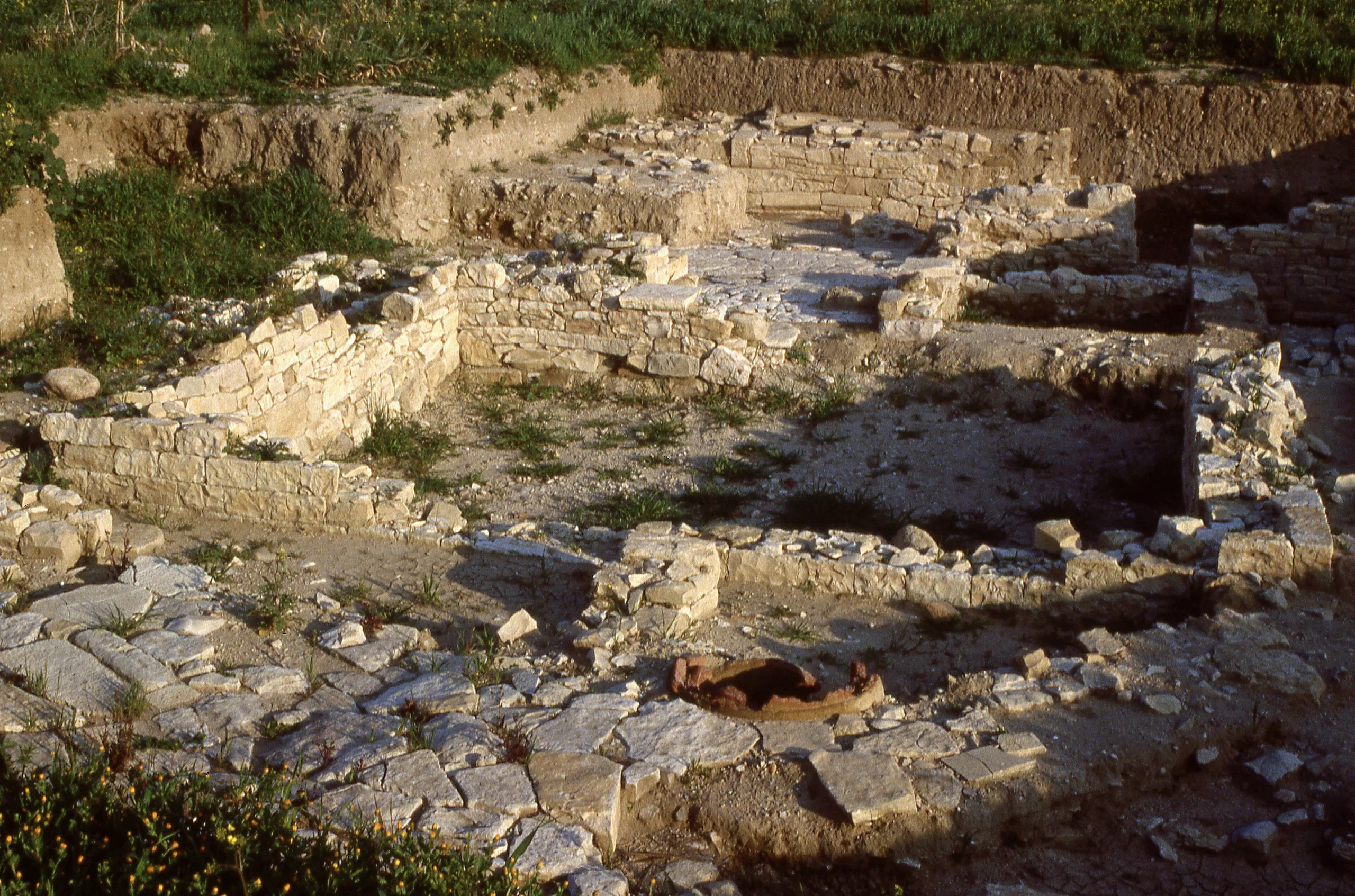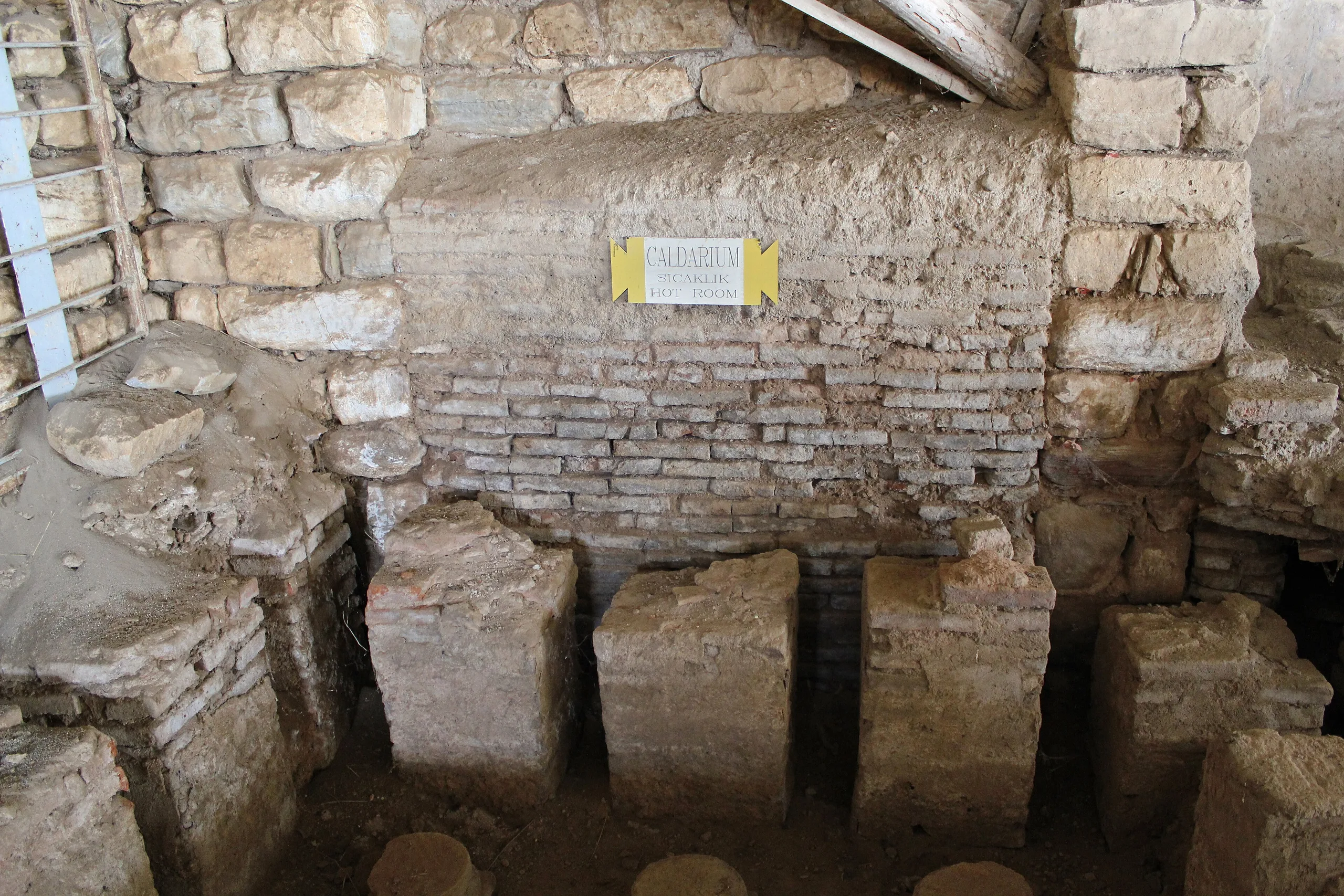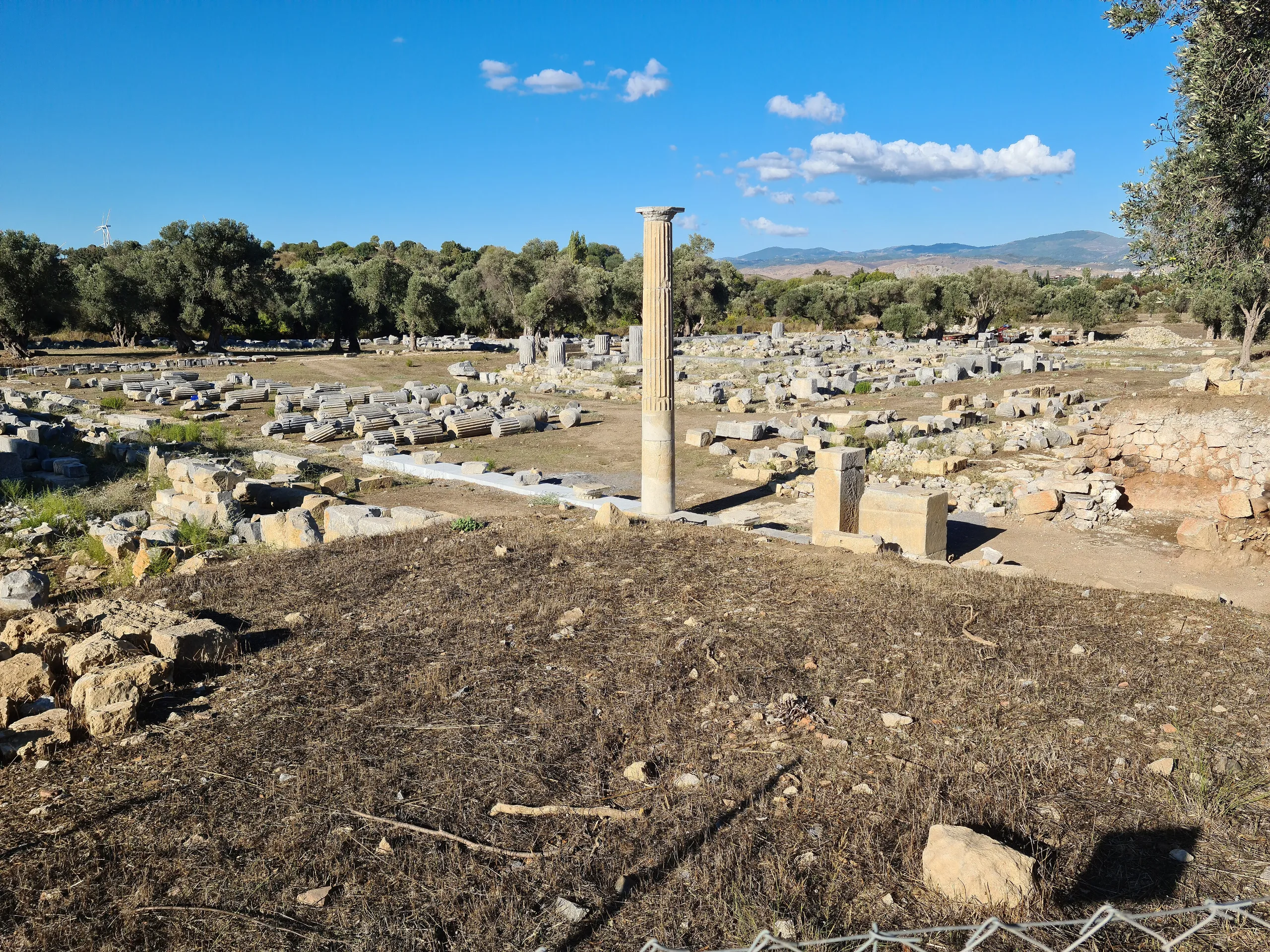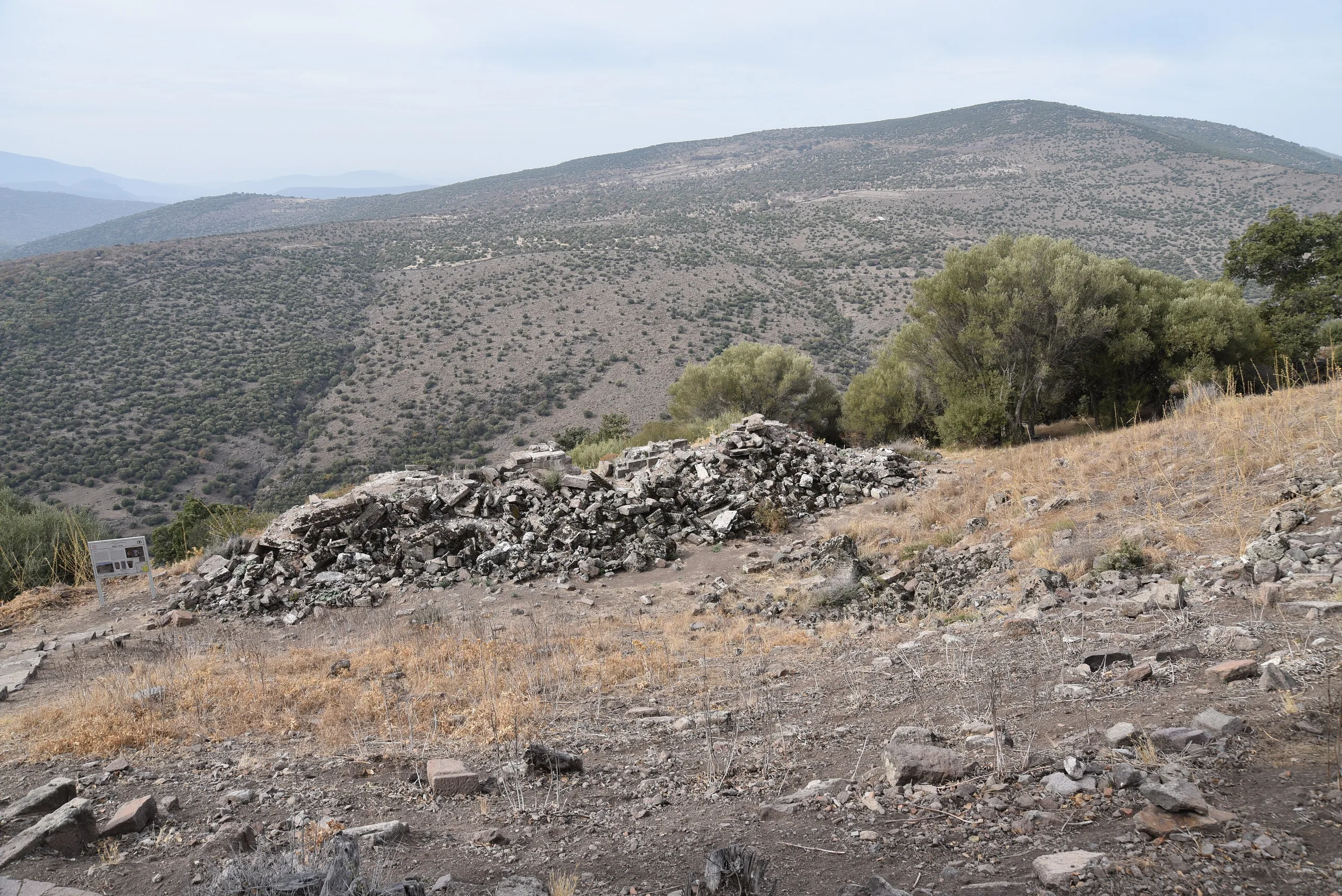
The Agora of Smyrna in Izmir’s Kemeraltı was the civic heart of the ancient city; it is known for its great Basilica, West Stoa, Faustina Gate and rich graffiti.
Agora of Smyrna is an ancient city located in Turkey, Izmir. Main periods: Hellenistic Period, Roman Period, Byzantine Period.
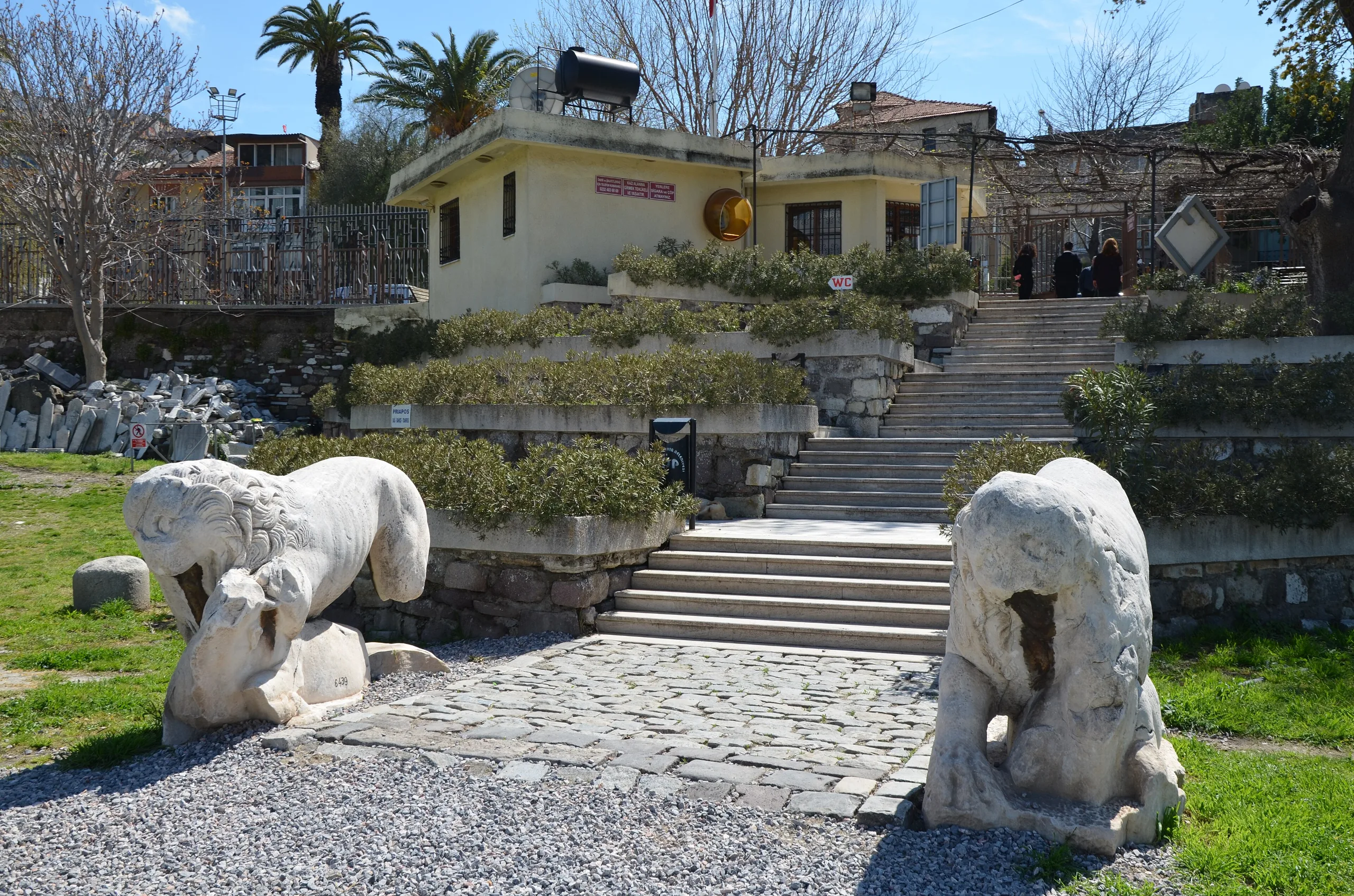
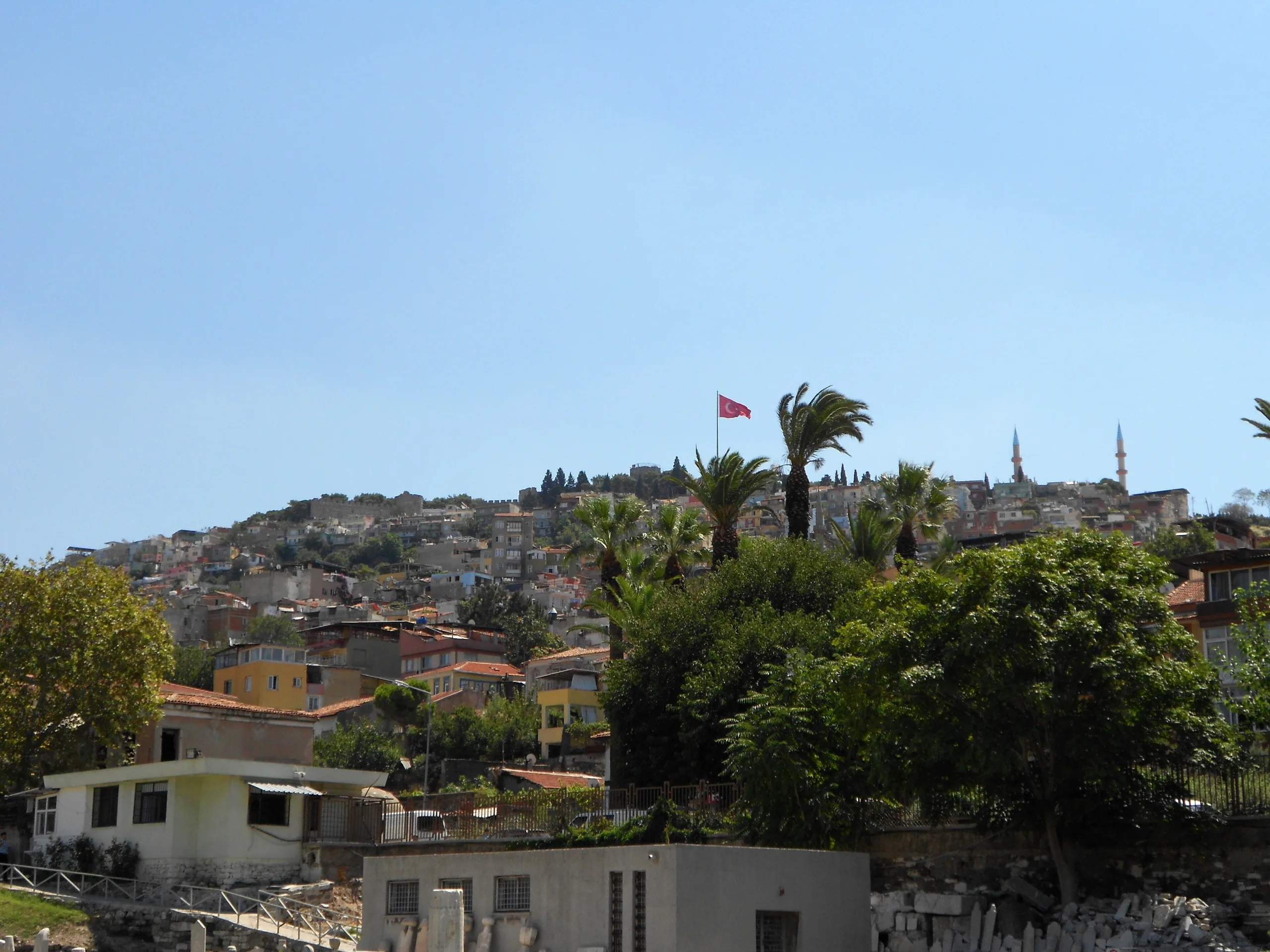
The Agora Archaeological Site lies in Konak district of Izmir, in the Kemeraltı area. The ministry presents it as the city centre of ancient Smyrna, founded between Kemeraltı and Kadifekale, serving administrative, social, cultural and religious purposes in the Hellenistic and Roman periods. Its English page calls it the city's state agora, and the university excavation page adds that the site of Smyrna's second, more commercial agora is unknown.
History
The ministry's English page places the agora's founding in the 4th century BCE on the northern slope of Pagos hill (Kadifekale). The excavation page of Izmir Katip Çelebi University is more precise: soundings show it was built right after Alexander, between the end of the 4th and the start of the 3rd century BCE, as one of the new city's first planning projects. According to that page, the form seen today took shape around the end of the 2nd and start of the 3rd century CE and kept its general character until the 7th century CE at the earliest; because the area served as a cemetery from the Late Byzantine period on, the ancient remains survive fairly well.
The most destructive of the city's earthquakes struck in 177/8 CE, which the ministry gives as 178. The university page explains that the orator Aelius Aristides, who lived in Smyrna, described the damage in letters to Emperor Marcus Aurelius, and that the remains seen in the agora result from the rapid repairs. The city's inscriptions likewise record those who helped after the quake.
Main remains
The Basilica
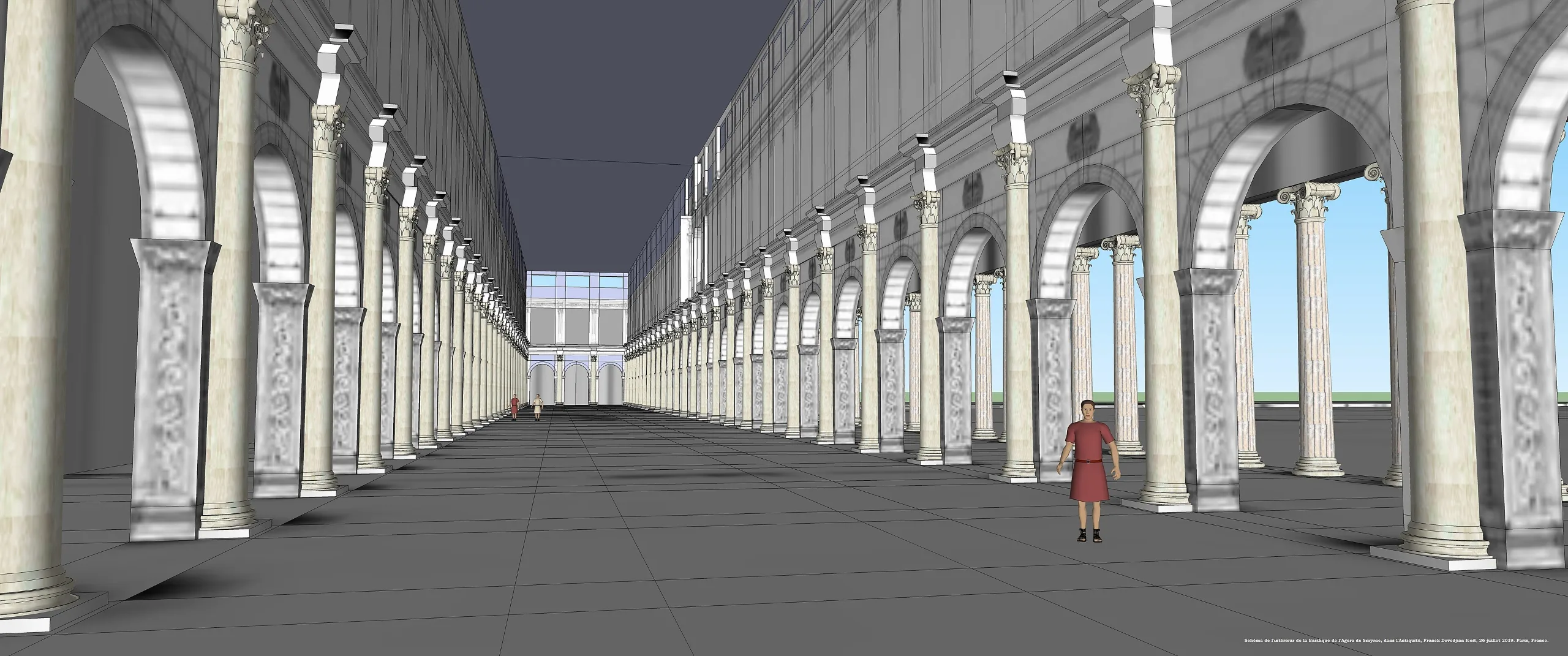
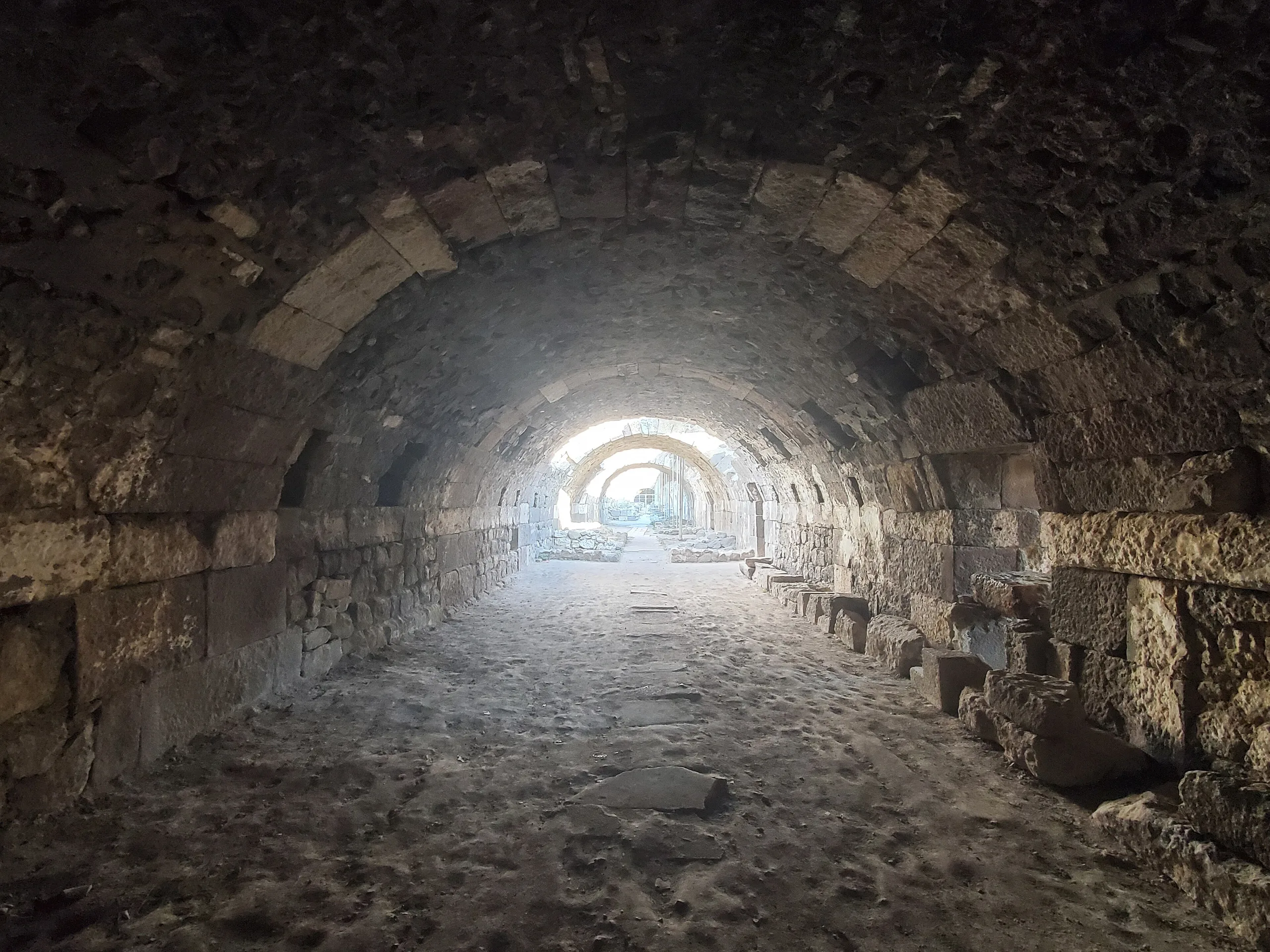
The Basilica covering the north side of the agora served legal and administrative needs and also commerce. The ministry's English page gives its size as 165 by 28 metres and calls it the largest known Roman basilica, while the university page speaks of about 30 metres by 161, so the figures differ slightly. Its basement is an arched structure of four galleries, and the cross vaults at the east and west ends are singled out by the ministry as some of the finest Roman examples. The third gallery holds 72 small rooms facing each other, thought to have belonged to wholesalers or retailers. Vaulted shops on the north front suggest the state agora acquired a commercial role in the last stages of the Roman period.
The graffiti
Painted and scratched writing and drawings cover the piers and plastered walls of the basement; the university page estimates nearly three thousand. Subjects run from ships and gladiators to animals, words of love and riddles. The ministry's English page calls the group the most extensive of its kind and notes that slogans show the rivalry among Pergamon, Ephesus and Smyrna.
West Stoa and the Mosaic Building
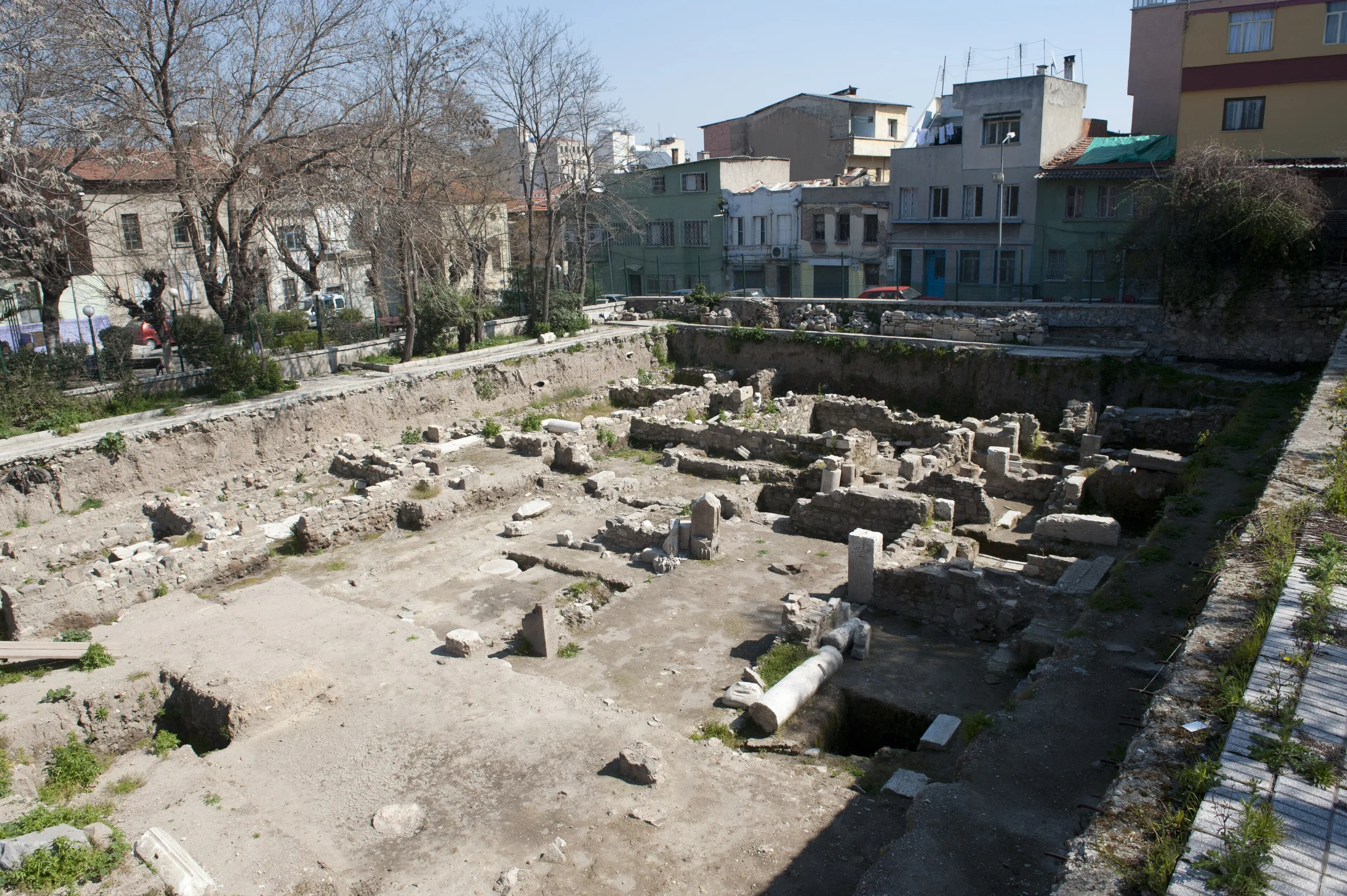
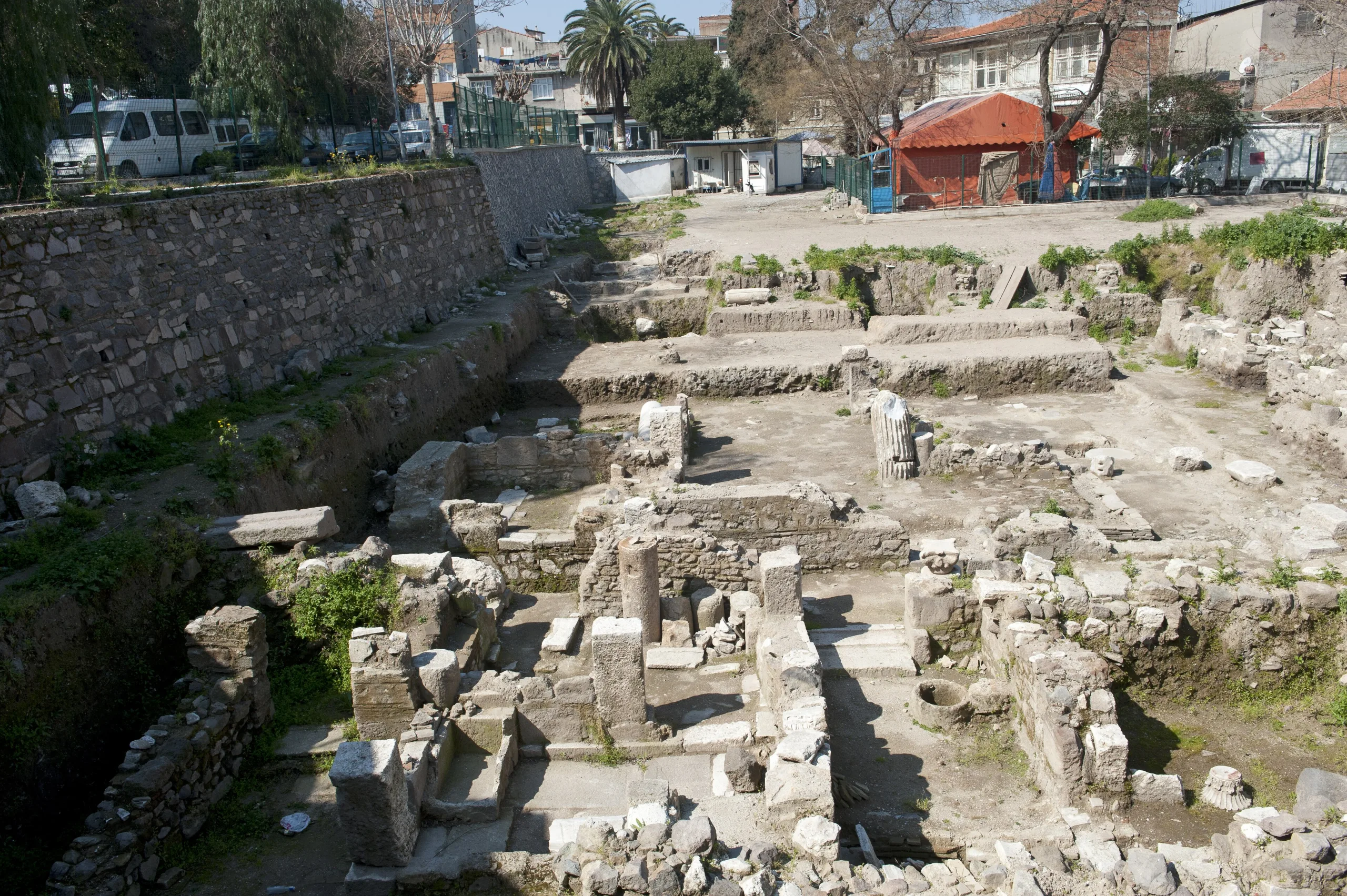
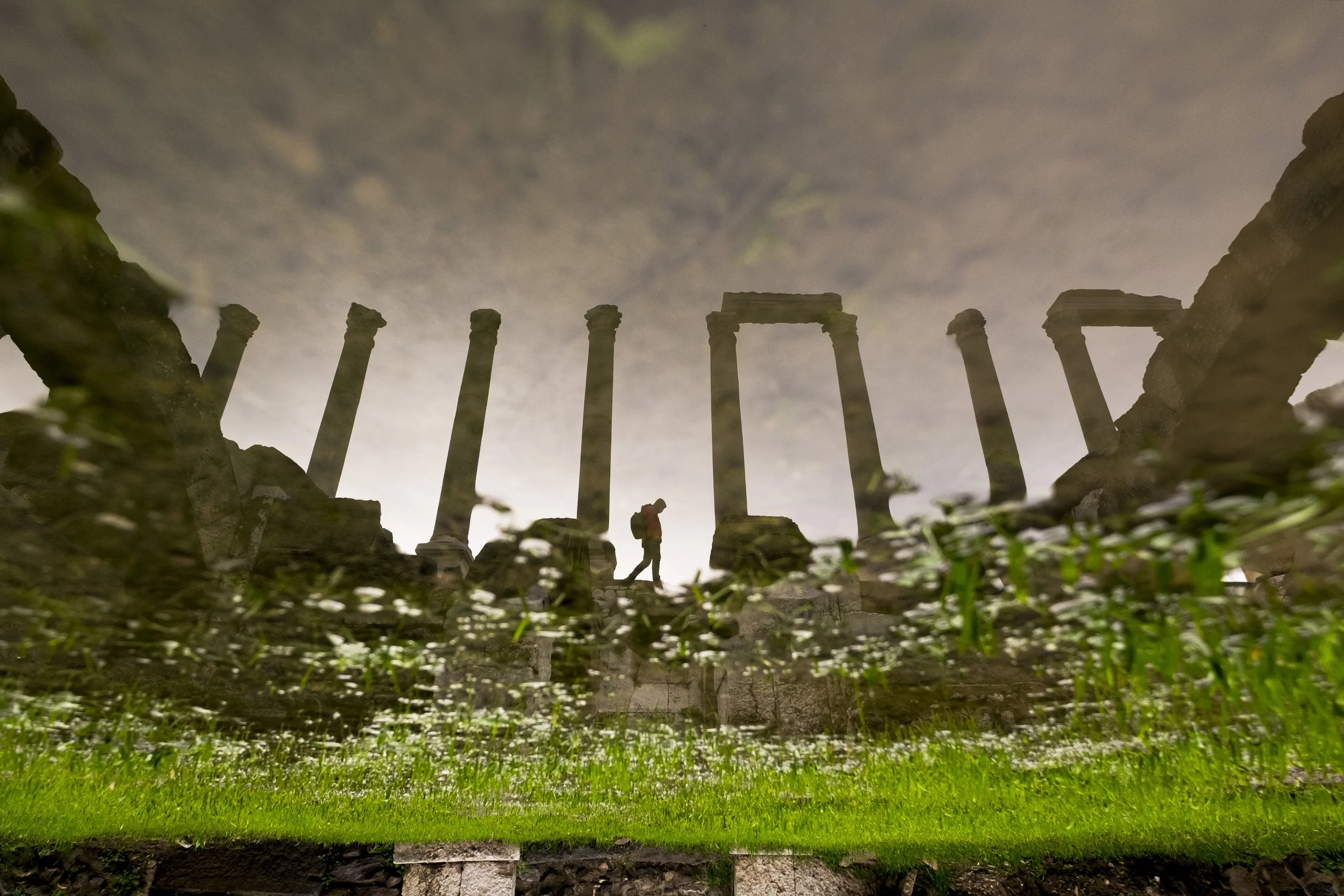
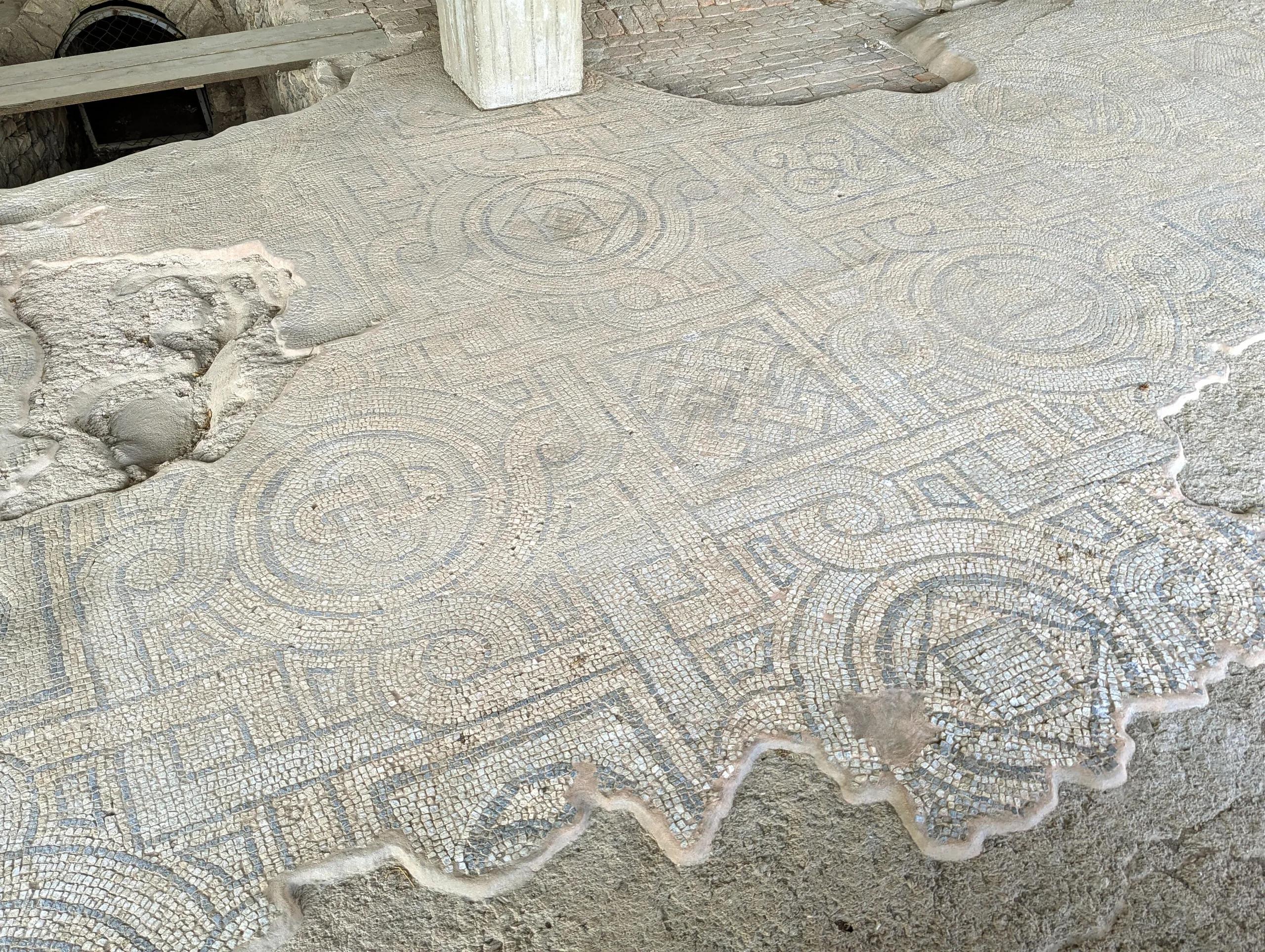
The West Stoa consists of galleries divided by three rows of columns and, like the basilica, rests on a basement; mostly the arched basement floors remain. The columns of the courtyard front were restored and re-erected in the 1940s. In the Early Byzantine period some basement galleries were turned into cisterns. Behind the stoa, a building of roughly 61 by 35 metres with a mosaic floor has been uncovered.
The Faustina Gate and the ancient street
One of the city's east-west avenues crosses the agora, and a monumental gate where it meets the street divides the square in two. A high-relief portrait on the north arch represents Faustina, wife of Marcus Aurelius; the south arch is thought to have carried one of the emperor. The gate was repaired with wrong measurements in the 1940s and restored to its original dimensions in 2004.
Excavations
Per the ministry's Turkish page, the first digs took place in the northwest part between 1932 and 1941 under R. Naumann and S. Kantar. Short campaigns followed in 1996-1998 for the Izmir Museum, and the museum resumed work in 2002. The university page states that since 2020 the excavation has been carried out in the name of Izmir Katip Çelebi University. The ministry page announced that much of the basilica and west stoa had been exposed, the Faustina Gate re-erected, and that the surroundings were meant to become an archaeology and history park.
Visiting
The ministry's Turkish page states that the Museum Card is valid for Turkish citizens. For hours and fees, check the official page.
Gallery
Frequently asked questions
Where is the Agora of Smyrna?
When was the agora founded?
Which period do the visible remains belong to?
How large is the Basilica?
What do the graffiti show?
Is the Museum Card valid here?
Sources (13)
- Agora Örenyeri / Symrna Agora Archaeological Site (TR ve EN sayfalar) — T.C. Kültür ve Turizm Bakanlığı, Müzeler ve Ören Yerleri
- Agora Ören Yeri - İzmir (kaynak: muze.gov.tr) — T.C. Kültür ve Turizm Bakanlığı, Türkiye Kültür Portalı
- İzmir İli Konak İlçesi Smyrna Antik Kenti Kazıları — İzmir Katip Çelebi Üniversitesi, Türk İslam Arkeolojisi Bölümü
- Agora of Smyrna (Wikidata Q2827071) — Wikidata
Photo credits
- Photo: Carole Raddato from FRANKFURT, Germany, CC BY-SA 2.0 — Wikimedia Commons (resized)
- Photo: Franck devedjian, CC BY-SA 4.0 — Wikimedia Commons (resized)
- Photo: Glorious 93, CC BY-SA 4.0 — Wikimedia Commons (resized)
- Photo: Dosseman, CC BY-SA 4.0 — Wikimedia Commons (resized)
- Photo: Dosseman, CC BY-SA 4.0 — Wikimedia Commons (resized)
- Photo: BSRF, CC BY-SA 4.0 — Wikimedia Commons (resized)
- Photo: Mehmety11maz, CC BY 4.0 — Wikimedia Commons (resized)
- Photo: Rəcəb Yaxşı, CC BY-SA 4.0 — Wikimedia Commons (resized)
- Photo: Helen Owl, CC0 — Wikimedia Commons (resized)