Aphrodisias, in Karacasu, Aydın: a Carian city of Aphrodite with a 270 m stadium, a marble sculpture school and the Sebasteion, a World Heritage Site since 2017.
Aphrodisias is an ancient city located in Turkey, Aydin. Main periods: Hellenistic Period, Roman Period, Byzantine Period, Ottoman Period, Chalcolithic Period, Bronze Age. It was inscribed on the UNESCO World Heritage List in 2017.
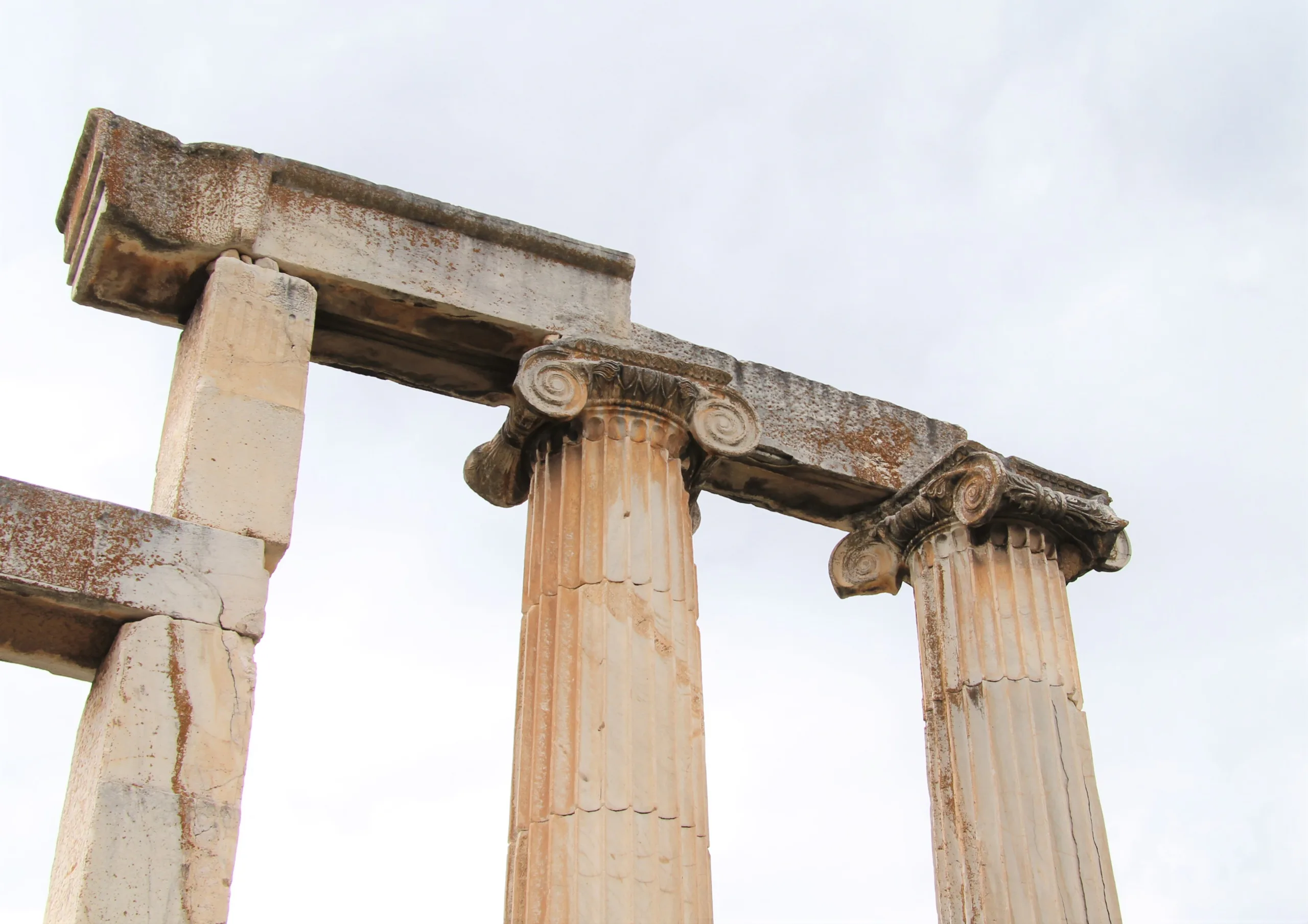
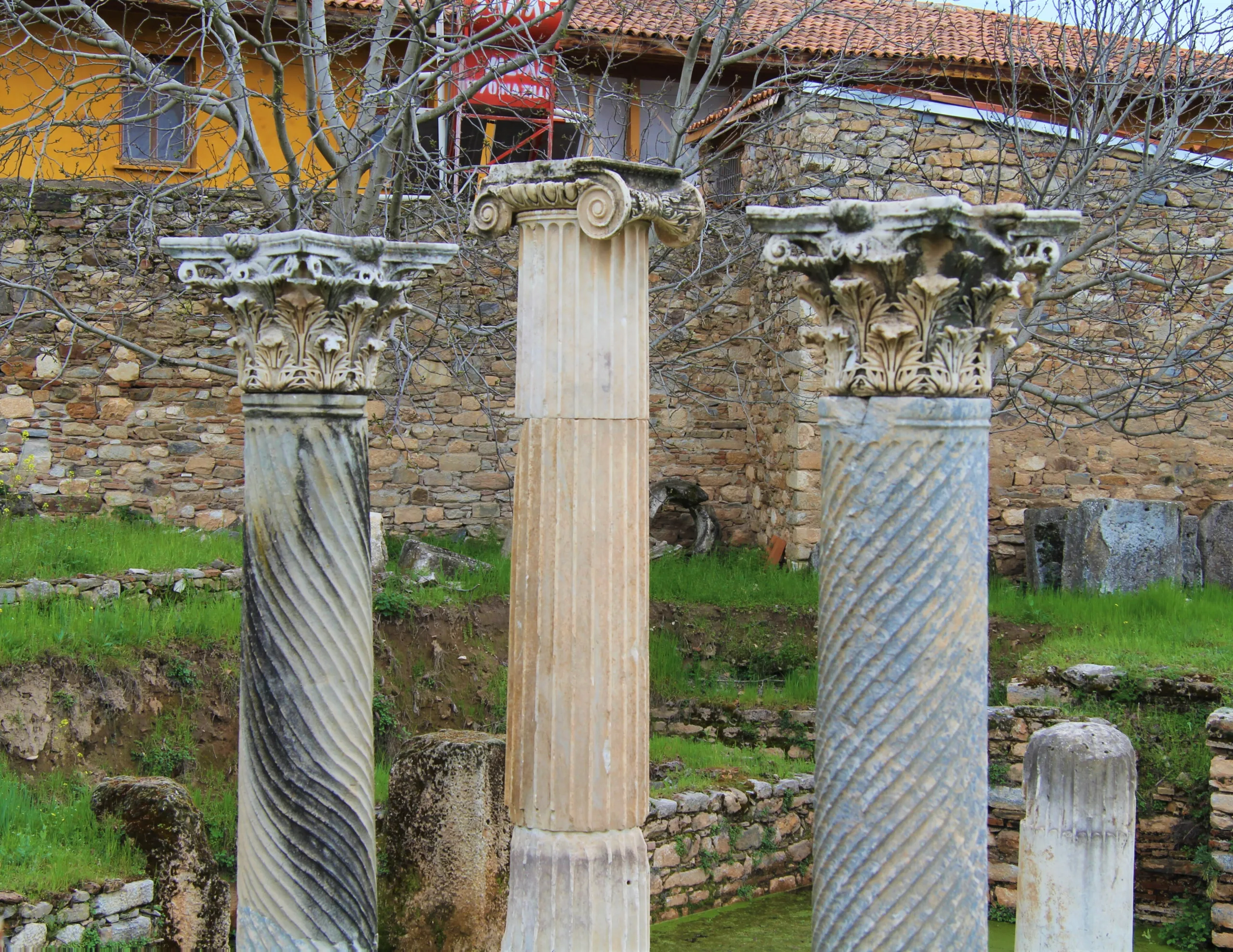
Aphrodisias keeps a stadium 270 m long with room for about 30,000 spectators, the best-preserved in the ancient world. The city stands in the Morsynus valley of ancient Caria, at Geyre village in Aydın Province's Karacasu district, and was devoted to Aphrodite, goddess of love and beauty. Its monuments survive so well that it ranks among Turkey's most important archaeological sites. UNESCO placed the city and its nearby marble quarries on the World Heritage List in 2017.
Location and access
From Karacasu it is a short drive of roughly 13 km; Denizli is 83 km away and Aydın 100 km. The address is Geyre, Kenan Erim Caddesi. The Aphrodisias Museum at the entrance displays the finds from the excavations. Check the official page for hours and fees. The Müzekart pass is valid for Turkish citizens.
History
Traces of habitation reach back to the middle of the 5th millennium BC, but Aphrodisias as a city is a Hellenistic creation: a small village was reorganised in the early 2nd century BC as a polis laid out on a street grid. Its devotion to Aphrodite, shared with Sulla, Julius Caesar and Augustus, bound the city closely to Rome, and the Roman senate granted it a tax-free status. It sided with Rome in the First Mithridatic War (90-85 BC) and at its height held around 12,000 people.
Building of the new Temple of Aphrodite began about 30 BC. Gaius Julius Zoilos, a local who acted as Octavian's unofficial representative, paid for it, and he also took on the theatre's stage building. Under Augustus's protection that century the city gained important monuments that still stand. In the high empire (2nd-3rd centuries AD) the temple was enlarged and a Tetrapylon, a monumental four-pillared gateway, marked the entrance to its sanctuary. Aphrodisias became capital of the province of Caria and, from AD 325, a bishop's seat.
After earthquakes in AD 350-360 the city wall was built, and around AD 500 the temple was turned into a cathedral. A quake shortly after AD 600 hit much of the city, and the population fell sharply. The place dwindled; Byzantine rule lasted until 1078, and the site was given up completely between the 12th and 14th centuries. A village called Geyre grew up over the eastern part of the ancient city in the 15th or 16th century, and after the 1957 earthquake it moved about 1 km north-west to its present spot.
Notable structures
Temple of Aphrodite and Tetrapylon
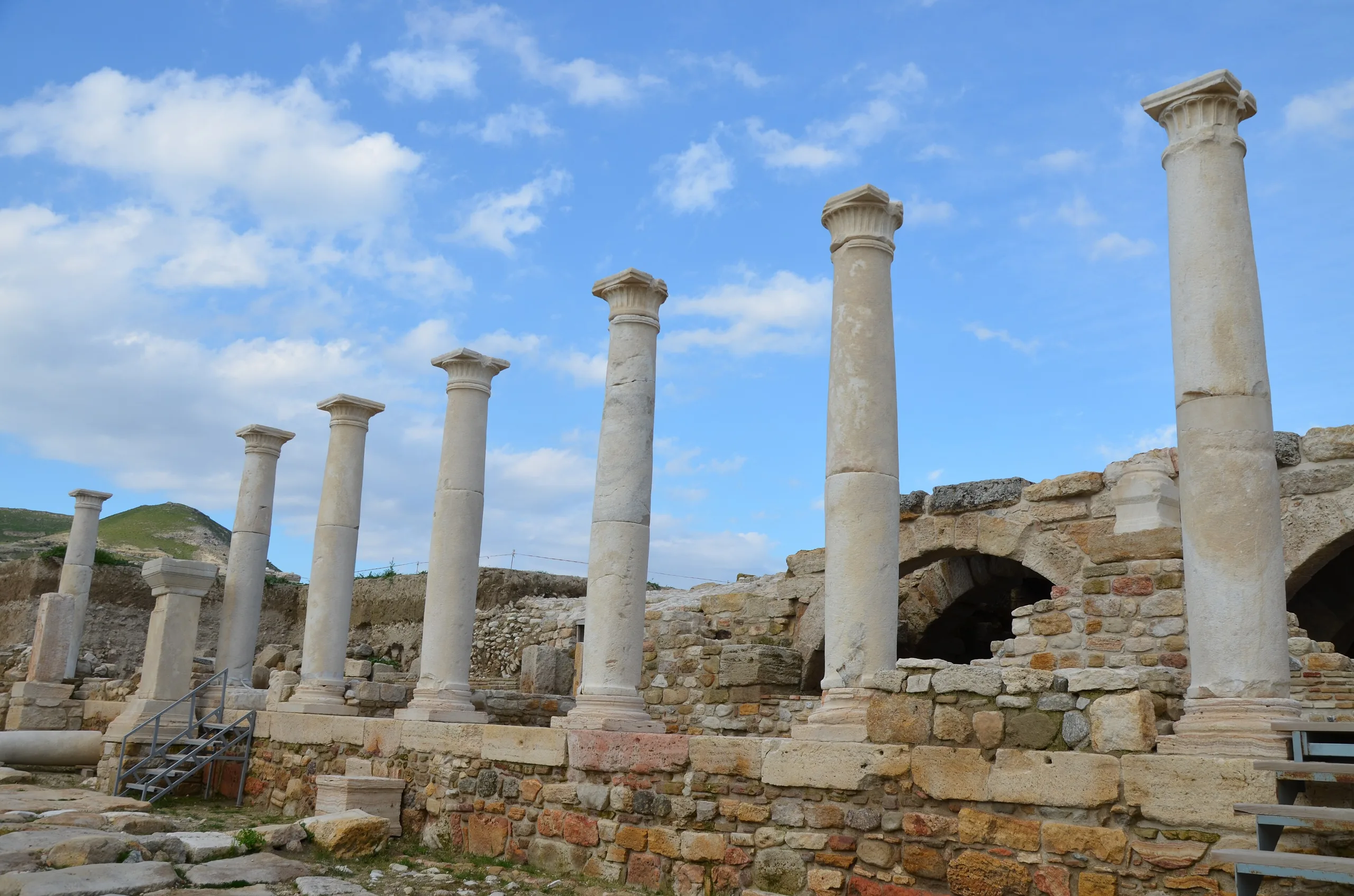
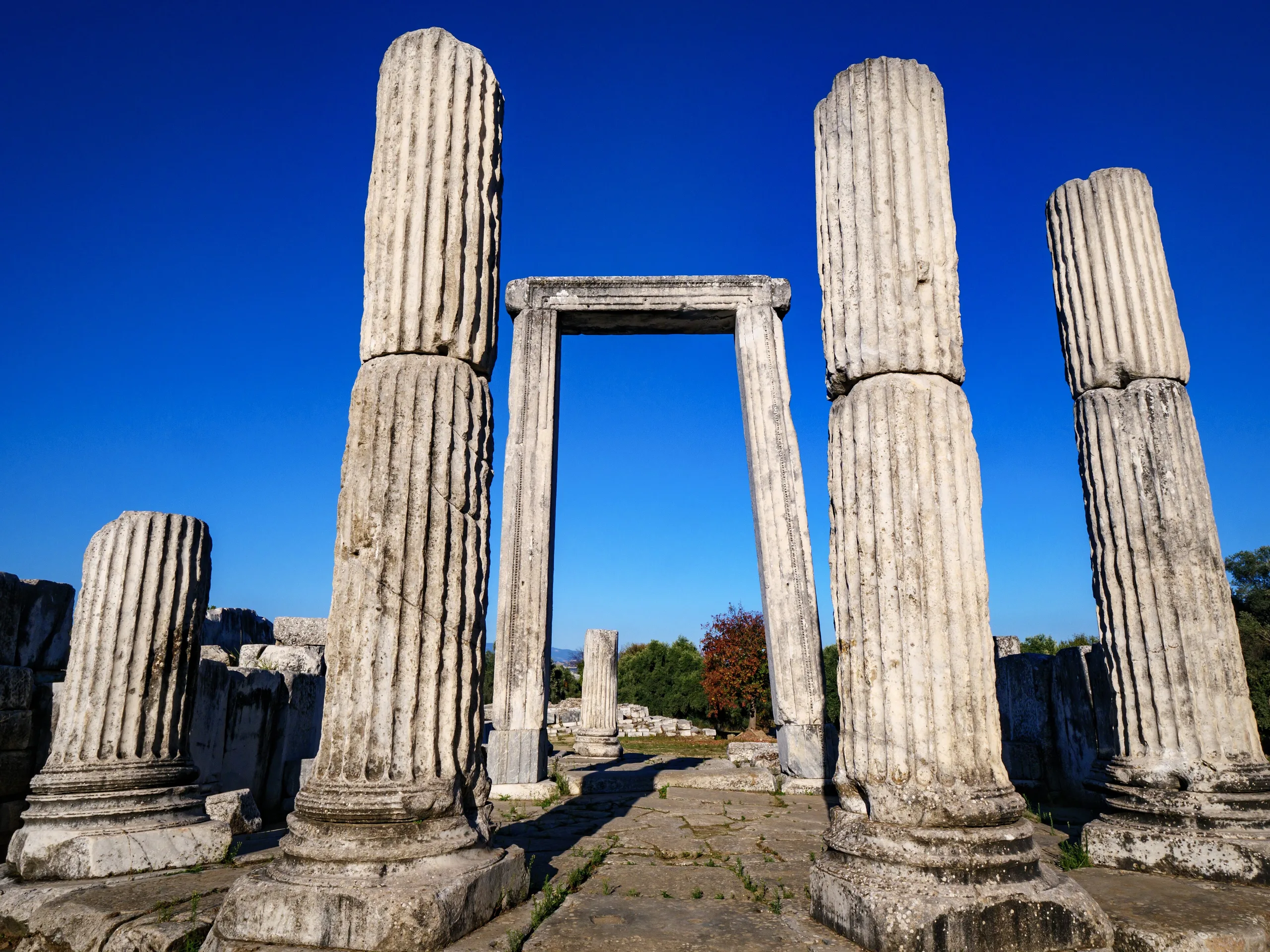
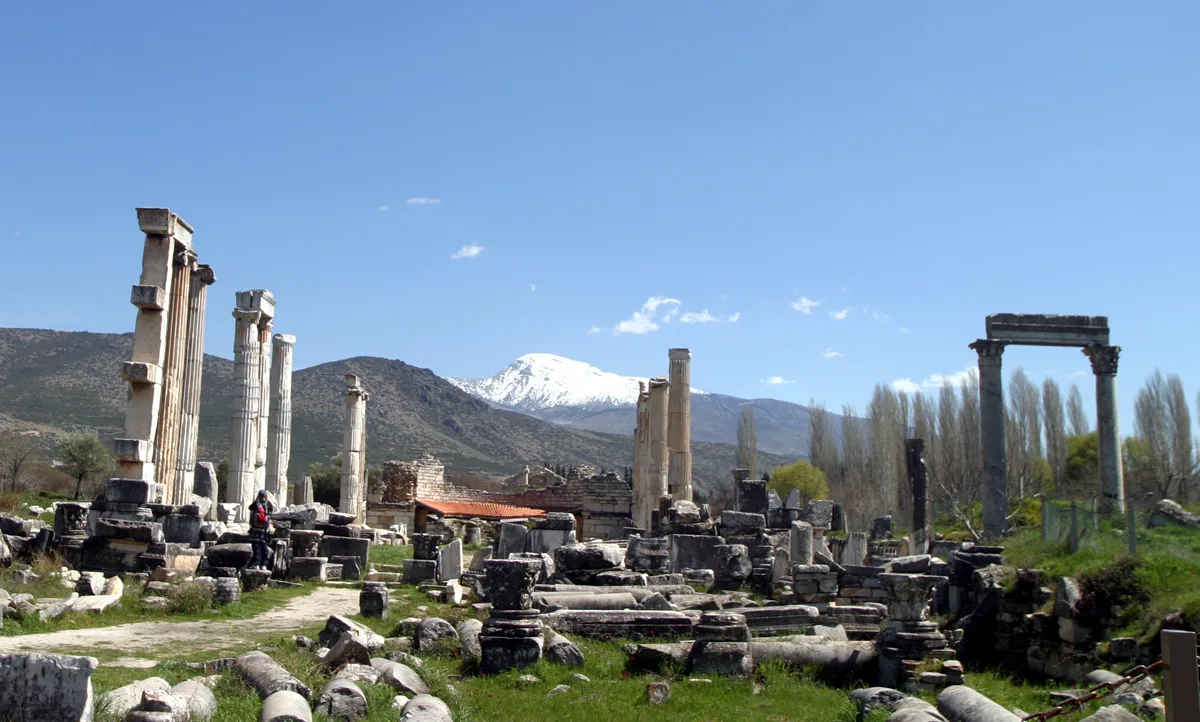
The temple stood at the heart of the city's most important cult, and its statue blended features of a local Anatolian fertility goddess with the Greek Aphrodite. It is one of the few buildings that ignore the city's street grid. Conversion into a church in AD 500 did not dim its grandeur, and UNESCO calls the transformation unmatched in engineering and effect. The Tetrapylon, gateway to the outer sanctuary, stands complete with its carved decoration.
Stadium
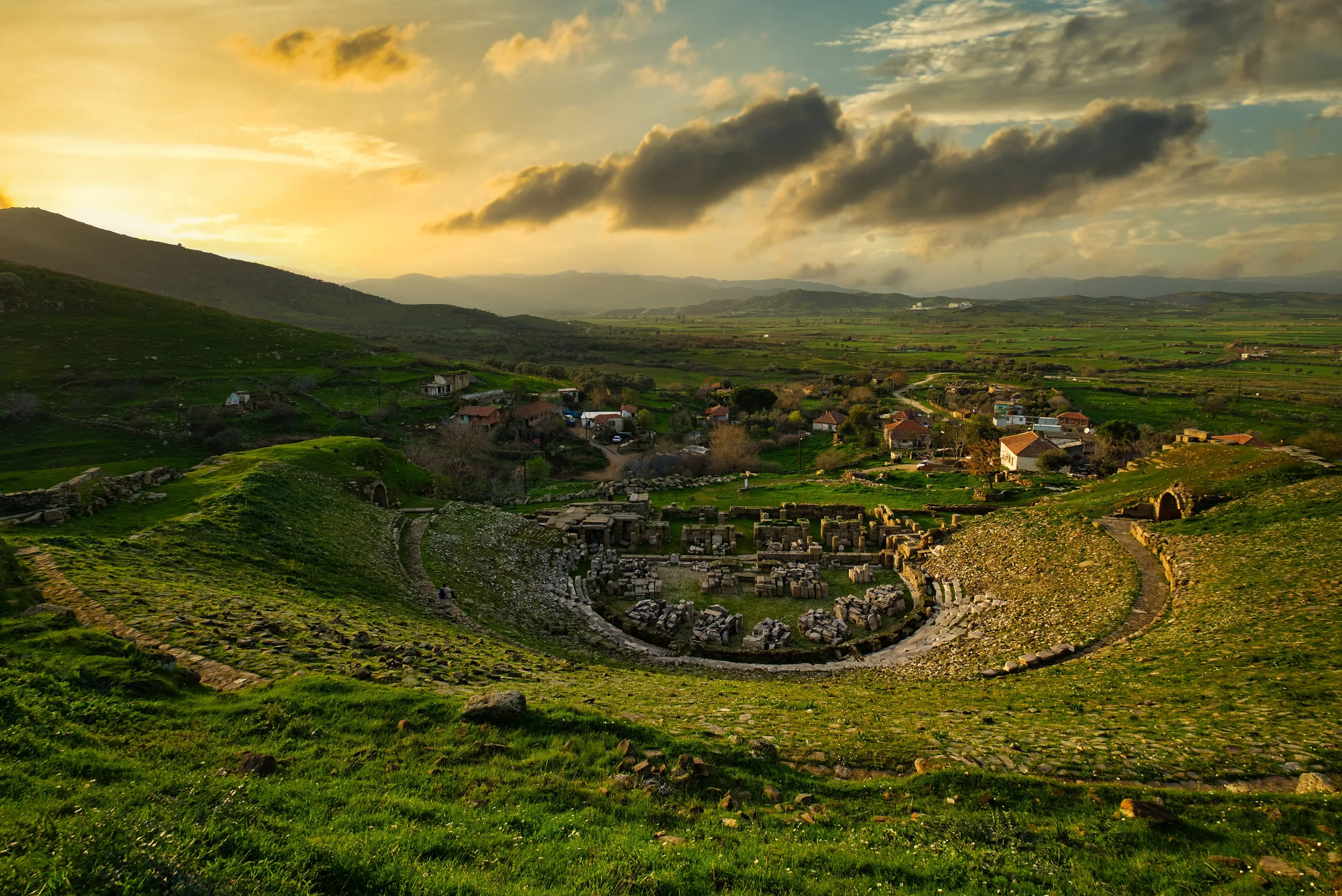
The seating forms a long ellipse with curved ends, an arrangement called amphitheatral; the curved end is known as the sphendone. In this form the stadium is the best-preserved of its kind. Cuttings for awnings, masons' marks and inscriptions reserving seats for named people and groups mark the tiers, and the inscriptions reveal how society was ranked.
Theatre and Archive Wall
The white marble theatre holds about 7,000 people. It dates to the last quarter of the 1st century BC, under Augustus, and its seating was enlarged in the early 1st century AD. The stage building has one of the earliest known aedicular facades, that is, a front lined with niches framed like small temple fronts. The Archive Wall in the entrance passage carries imperial documents on the city's privileges, which help to date the theatre.
Sebasteion and agoras
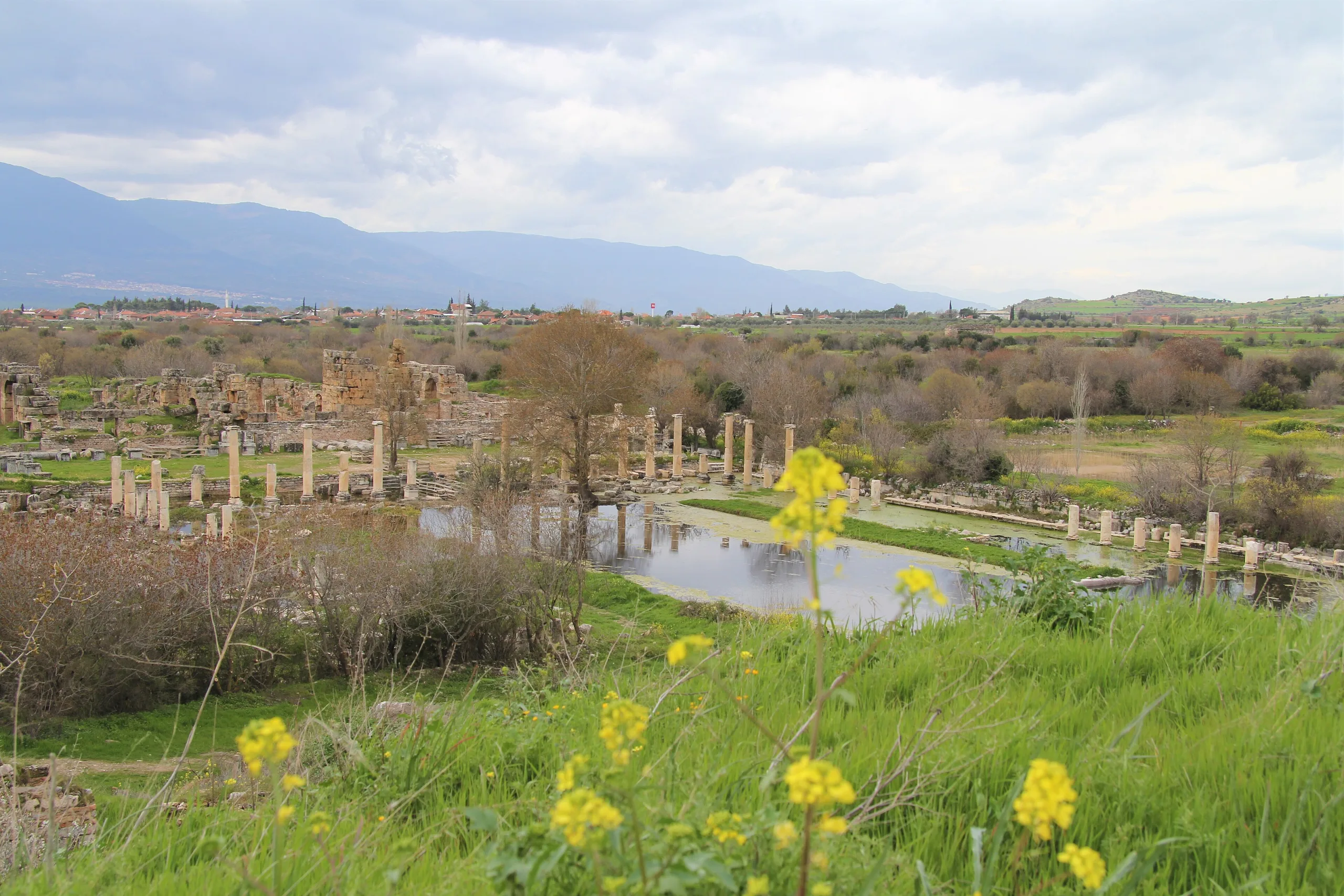
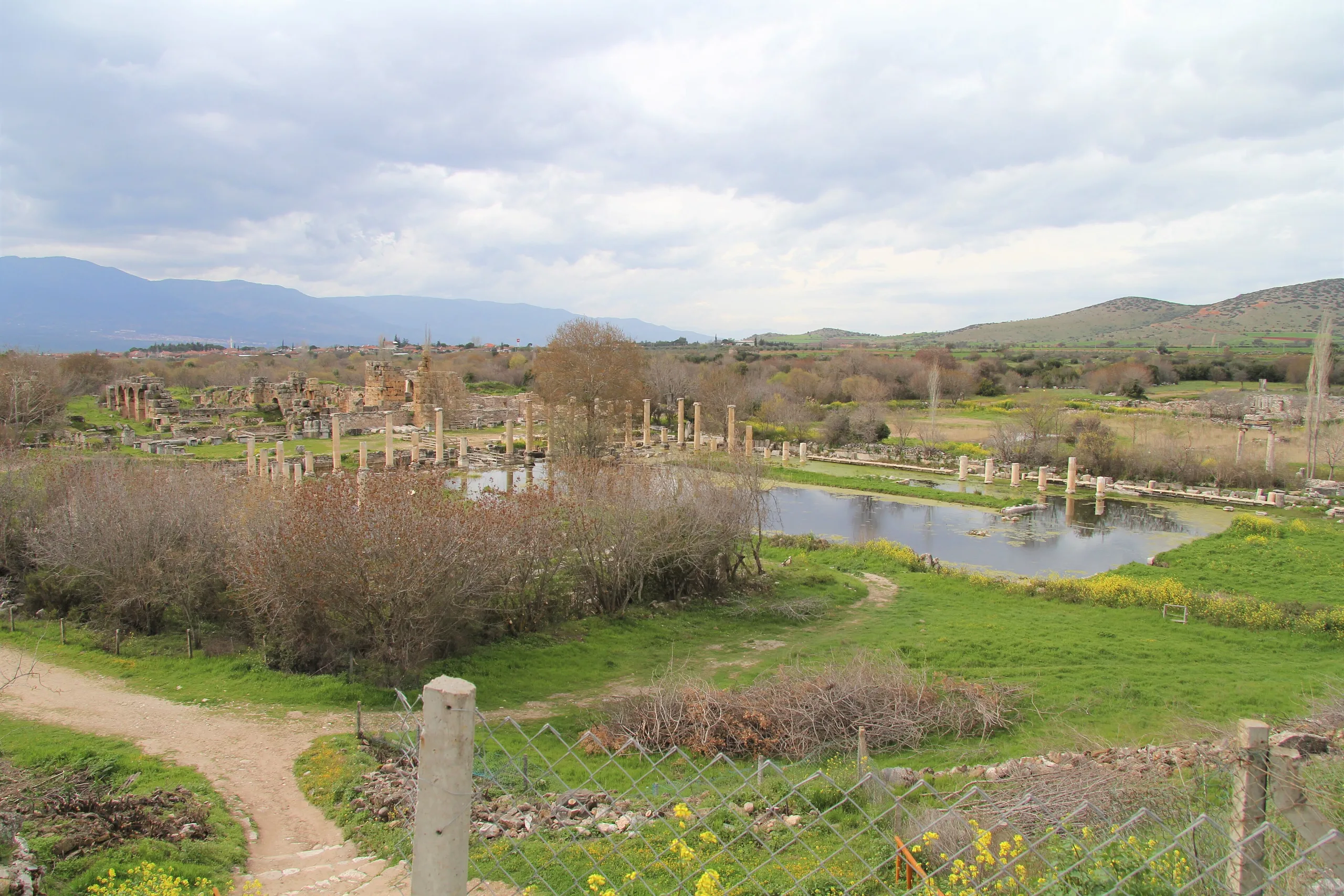
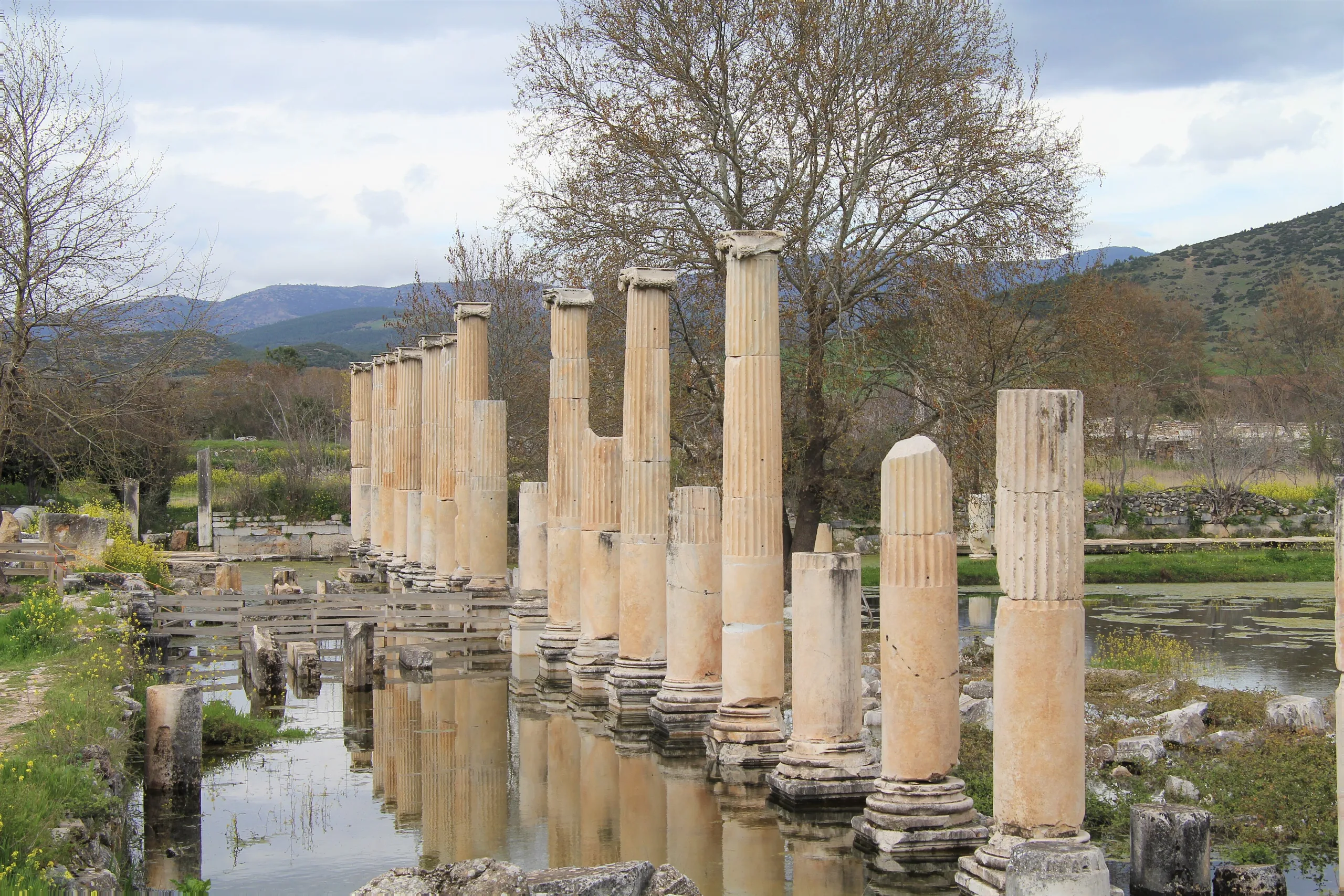
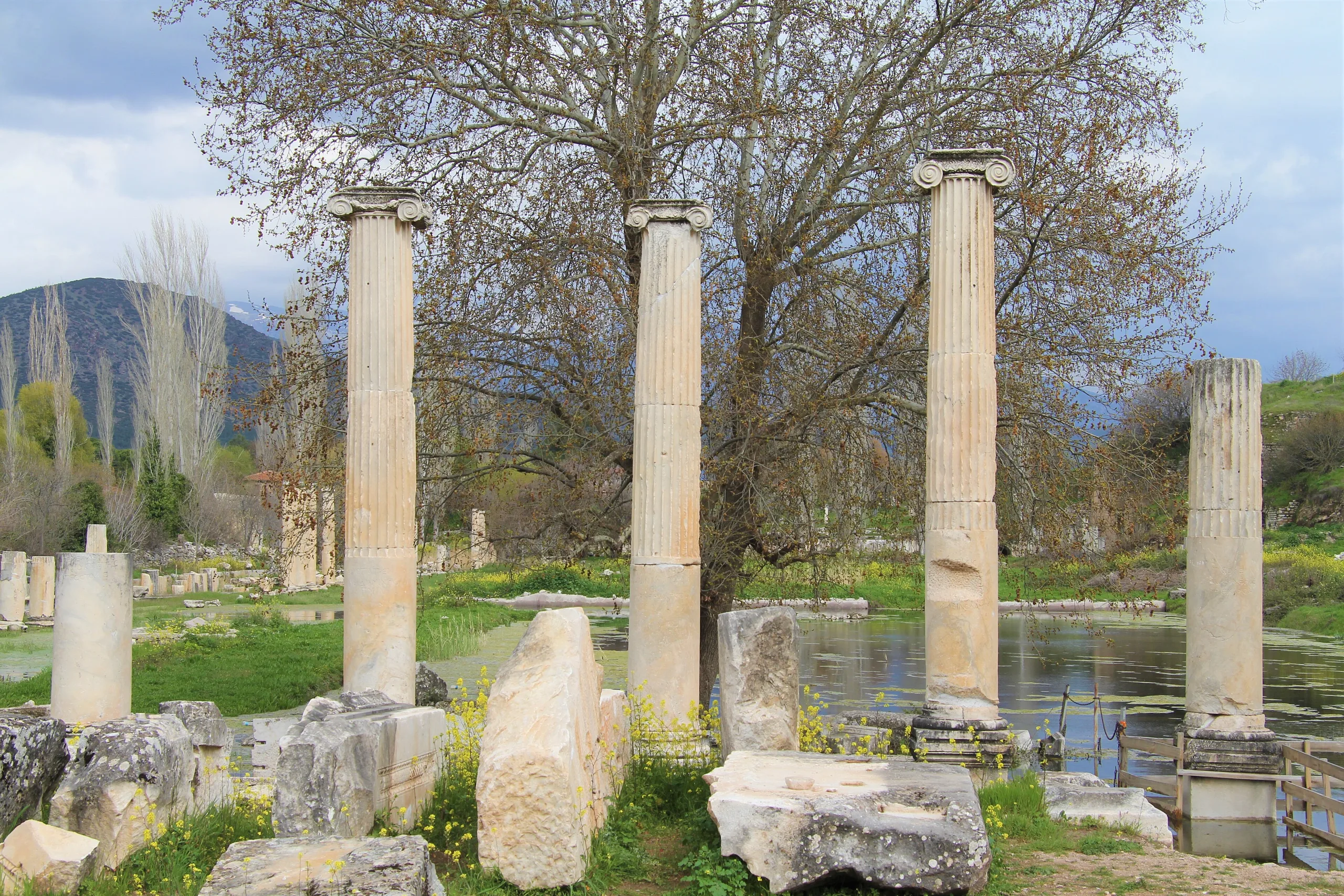
The Sebasteion, a cult complex for Augustus and the Julio-Claudian emperors, mixes Hellenistic, Roman and local artistic traditions and was built early in the 1st century AD. Civic and commercial life centred on the North Agora; the bouleuterion (council house) lies on its north side, and the so-called Bishop's Palace, a 4th-century residence, to its west. The South Agora is cited as exceptional in size and form among ancient cities.
Marble quarries and the sculpture school
Nearness to the quarries is the main reason Aphrodisias became a centre of fine marble sculpture. In late antiquity (4th-6th centuries AD) its sculptors were sought after for portrait busts and statues in places like Sardis, Constantinople and Rome. In 1967-1969 a sculptor's workshop turned up in the city centre between the bouleuterion and the Aphrodite sanctuary, yielding about 25 well-preserved statues and 325 fragments. The museum's richest collection comes from this school, active from the late Hellenistic to the early Byzantine period: statues, reliefs and sarcophagi.
Excavations
European travellers knew the site from the 18th century: William Sherard in 1705 and a Society of Dilettanti expedition in 1812 recorded inscriptions, and Texier published monuments in 1835. A French team under Paul Gaudin and Gustave Mendel dug in 1904 and 1905 in the temple and the Hadrianic Baths; the 1904 finds were sold in İzmir and Europe, and the 1905 finds went to the Istanbul Archaeological Museums. André Boulanger led a campaign in 1913 before the First World War stopped work, and an Italian team under G. Jacopi cleared the north stoa, a long colonnaded gallery, in 1937.
The first systematic, uninterrupted excavation began in 1961 under New York University, directed by Kenan Erim until his death in 1990; its trenches exposed the Temple of Aphrodite and the theatre, then the Urban Park, council house, basilica and Sebasteion. The Aphrodisias Museum was built in 1979. After 1990 the project, based at New York University's Institute of Fine Arts under R.R.R. Smith and in partnership with Oxford University since 1995, found the street grid of the late Hellenistic city. A new museum hall for the Sebasteion sculptures opened in 2008, and Ine Jacobs has been field director since 2016. The emphasis today lies on conservation, documentation and publication more than on wide-area digging.
Myth and ancient authors
The Aphrodite of Aphrodisias fused an archaic Anatolian fertility goddess with the Greek goddess of love and beauty, and her image travelled around the Mediterranean, from Anatolia to Rome and the Levant. The city is also recorded under the names Ninoe and Stauropolis.
UNESCO and protection
Aphrodisias was inscribed on 9 July 2017 under criteria (ii), (iii), (iv) and (vi) (reference 1519). The serial property has two components, the ancient city and the marble quarries north-east of it, and covers 152.25 ha with a 1,040.57 ha buffer zone. Its authenticity rests on the quarries, the monuments, about 2,000 inscriptions and extensive publication, and conservation follows the Venice Charter. Law No. 2863 has protected the city since 1978 and the quarries since 1981; in 2016 the Aydın regional conservation council reinforced protection of the quarries with decision No. 5580.
Visiting
Visitors can walk the stadium, the Tetrapylon, the Temple of Aphrodite, the theatre, the Sebasteion and the museum. Old village houses at Geyre, pottery workshops in Karacasu and the 348 m Sırtlanini Cave lie nearby. For current information see the official Aphrodisias page.
Gallery
Frequently asked questions
Where is Aphrodisias?
Why is Aphrodisias famous?
When did Aphrodisias become a World Heritage Site?
When was the Temple of Aphrodite turned into a church?
How large is the stadium?
Who excavates Aphrodisias?
Sources (16)
- Afrodisias Örenyeri / Aphrodisias Archaeological Site (TR ve EN sayfaları) — T.C. Kültür ve Turizm Bakanlığı, Müzeler ve Ören Yerleri
- Aphrodisias — UNESCO World Heritage List 1519 — UNESCO World Heritage Centre
- ICOMOS Advisory Body Evaluation — Aphrodisias (1519) — ICOMOS
- Nomination Text — Aphrodisias (1519) — T.C. Devlet Taraf (aday dosyası), UNESCO WHC
- About — Aphrodisias Excavations — Aphrodisias Excavations Project (New York Üniversitesi / Oxford Üniversitesi)
- Early exploration — Aphrodisias Excavations — Aphrodisias Excavations Project (New York Üniversitesi / Oxford Üniversitesi)
- Aphrodisias (Pleiades place 638753) — Pleiades
Photo credits
- Photo: Rabe!, CC BY-SA 4.0 — Wikimedia Commons (resized)
- Photo: Brocken Inaglory, CC BY-SA 4.0 — Wikimedia Commons (resized)
- Photo: Rabe!, CC BY-SA 4.0 — Wikimedia Commons (resized)
- Photo: Rabe!, CC BY-SA 4.0 — Wikimedia Commons (resized)
- Photo: Rabe!, CC BY-SA 4.0 — Wikimedia Commons (resized)
- Photo: Rabe!, CC BY-SA 4.0 — Wikimedia Commons (resized)
- Photo: Rabe!, CC BY-SA 4.0 — Wikimedia Commons (resized)
- Photo: Rabe!, CC BY-SA 4.0 — Wikimedia Commons (resized)
- Photo: Dosseman, CC BY-SA 4.0 — Wikimedia Commons (resized)