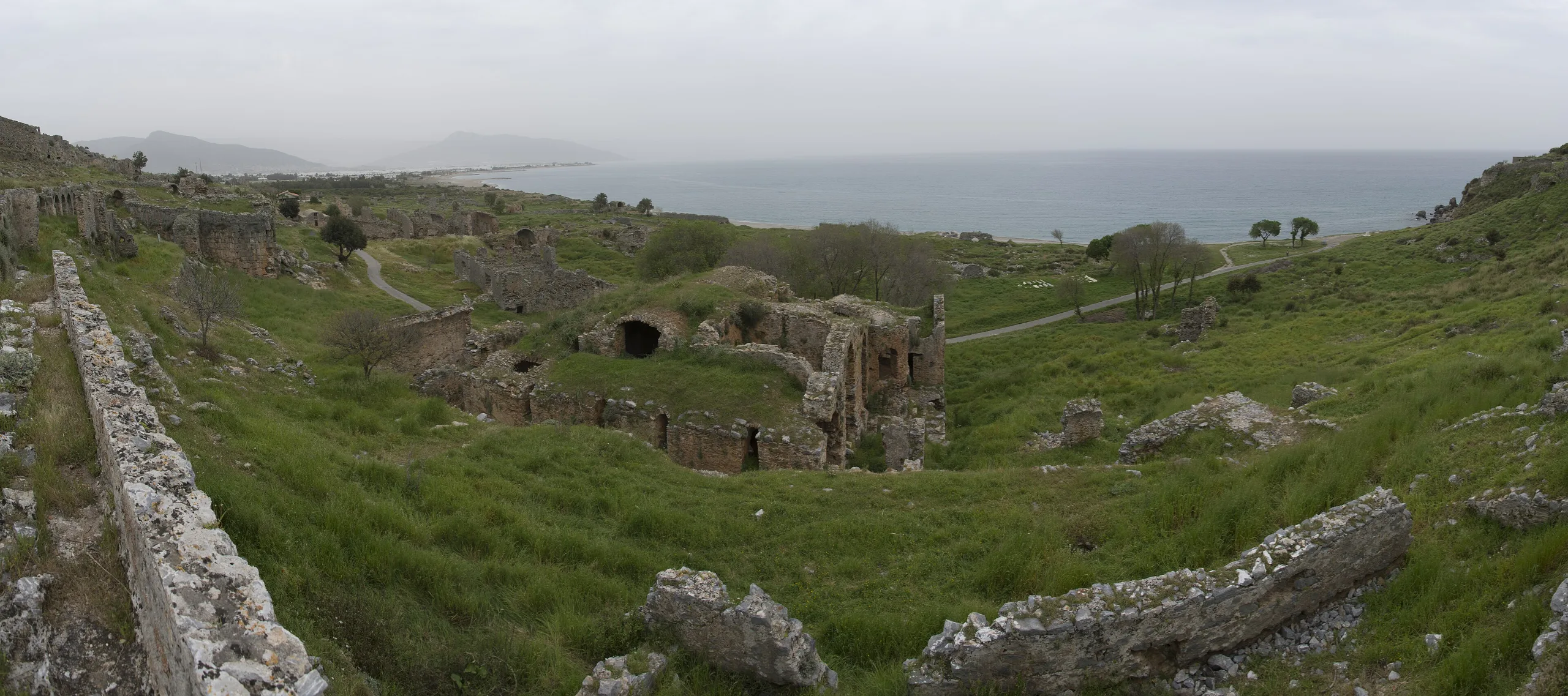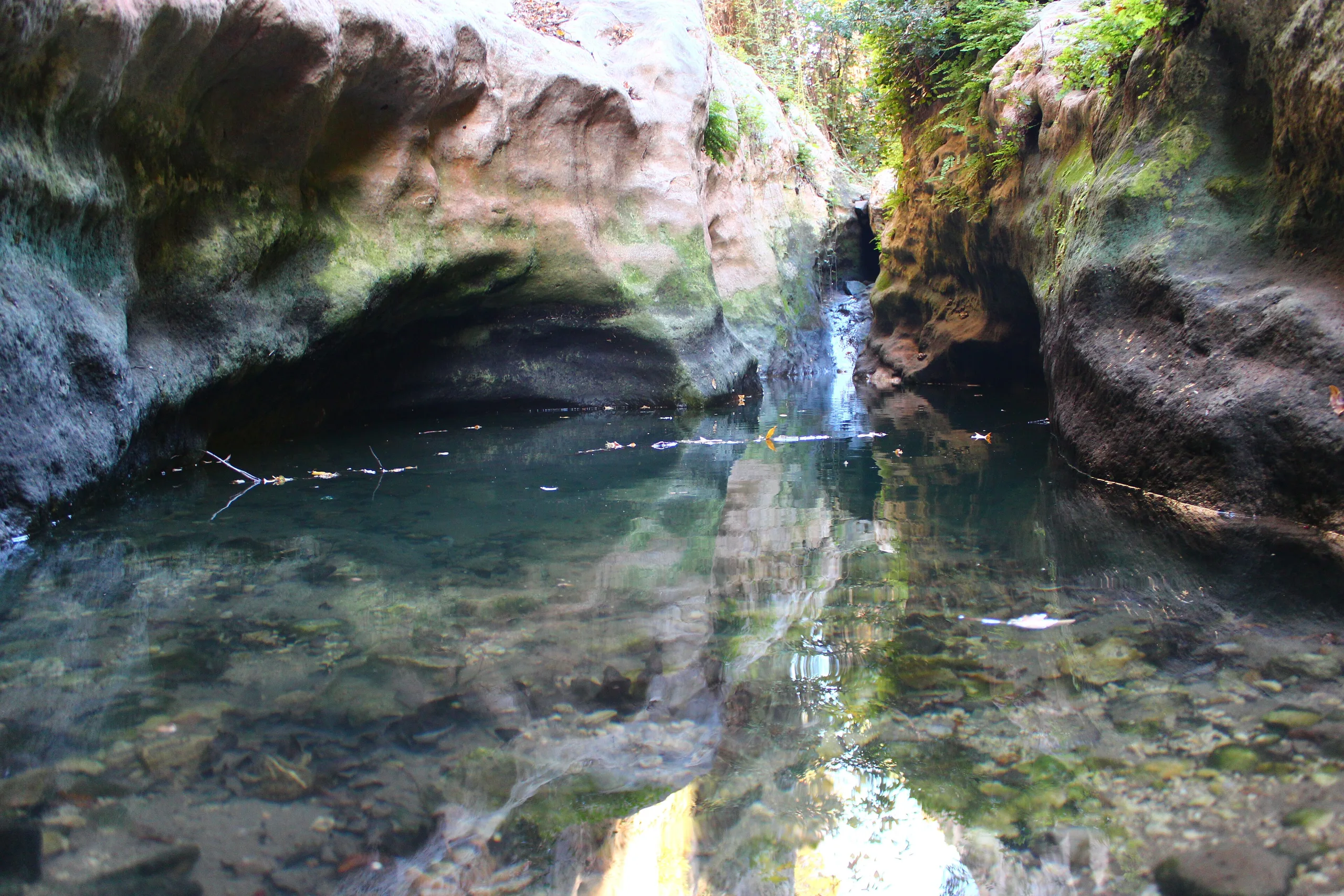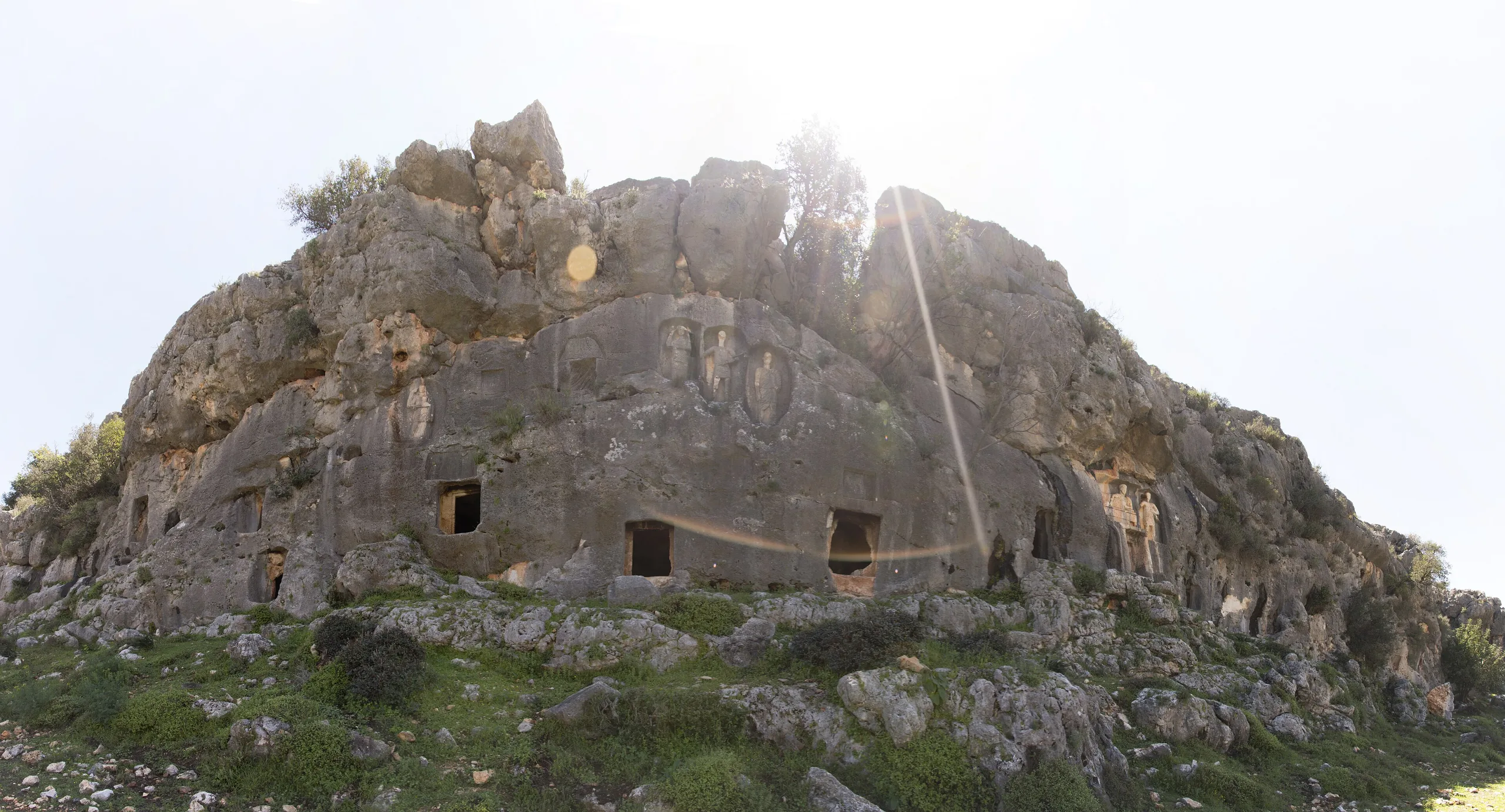
Kanlıdivane is a Rough Cilicia settlement near Erdemli built around a huge sinkhole, known for its Hellenistic tower, rock reliefs, monumental tombs and churches.
Kanlıdivane (Kanytella) is an ancient city located in Turkey, Mersin. Main periods: Hellenistic Period, Roman Period, Byzantine Period.
Kanlıdivane, called Kanytella in antiquity (Kanytellis in scholarly writing), lies within Rough Cilicia, some 50 km from Mersin and 13 km from Erdemli, in both cases to the west. According to the Ministry of Culture and Tourism, the settlement is reached from Ayaş in the Erdemli district by a 3 km road turning north at Yemişkumu, and it grew up around a large sinkhole at its centre, the Kanlıdivane Obruk.
The sinkhole and the start of settlement
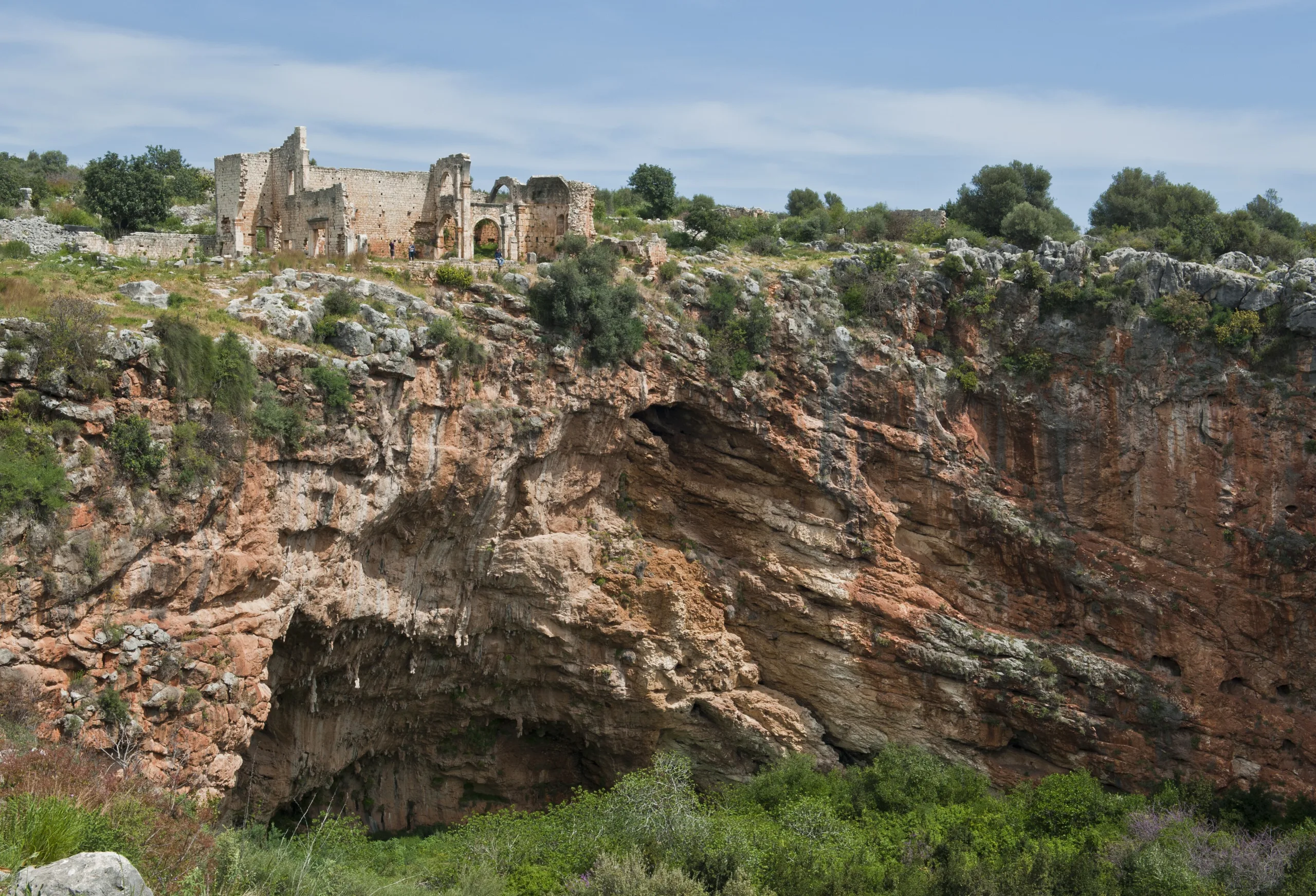
The Ministry and the Culture Portal describe the sinkhole as a natural pit with a long axis of 142 m, a short axis of 95 m, a depth of 50 m, a circumference of 413 m and an area of about 12,000 square metres; the Culture Portal says it formed when the roof collapsed. The Ministry's Turkish page counts it among the largest sinkholes of the region.
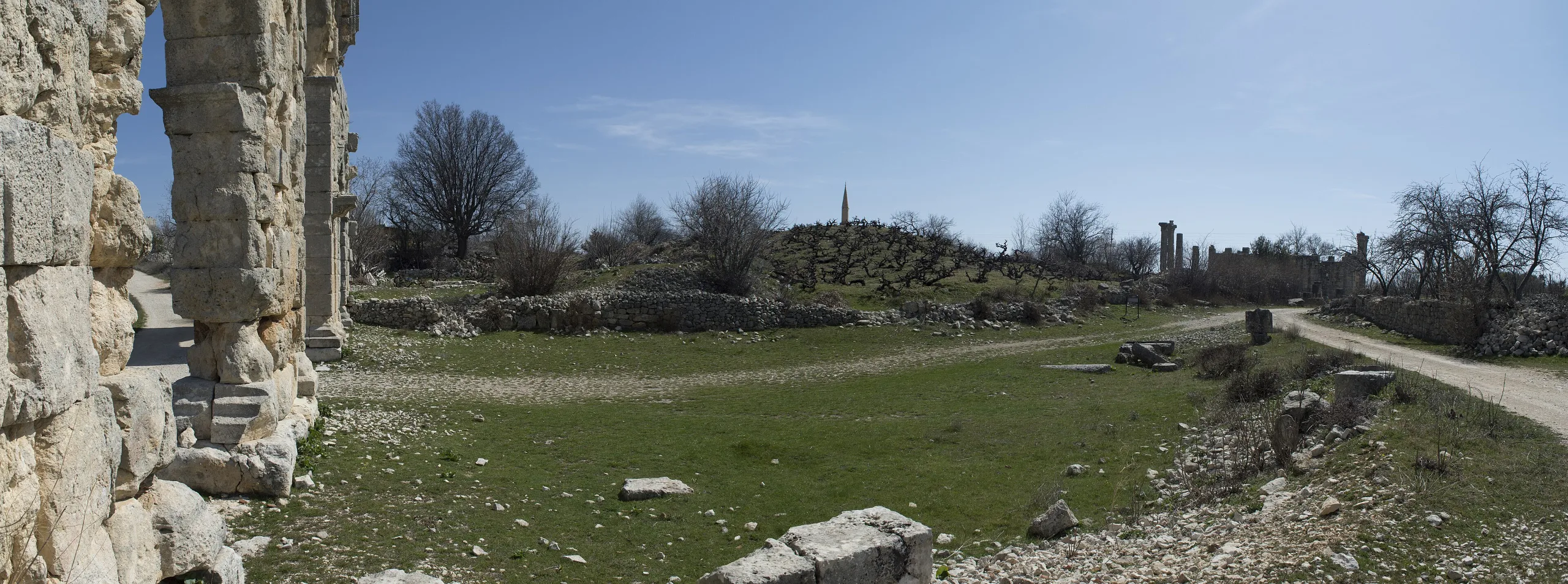
The two Ministry pages give different starting points for habitation. The English page and the Culture Portal place the first settlement in the Hellenistic period, in the 3rd century BCE, while the Turkish page, citing first findings, says the 2nd century BCE. All agree that occupation continued without a break until the 7th century CE, the end of Late Antiquity. A fortification wall of polygonal masonry shows that a fortress settlement stood here in the Hellenistic era. From the 15th century Turkmen groups began to settle the area.
Origin of the name
The Ministry and the Culture Portal say the name is thought to join kanlı, bloody or red, taken from the red colour of the rock on which the city stands, with divan, a council, because Turkmen tribes meeting in the area held their assemblies here. A popular story says instead that criminals were thrown into the pit and killed by lions, leaving the surroundings soaked in blood.
Main monuments
The Hellenistic tower
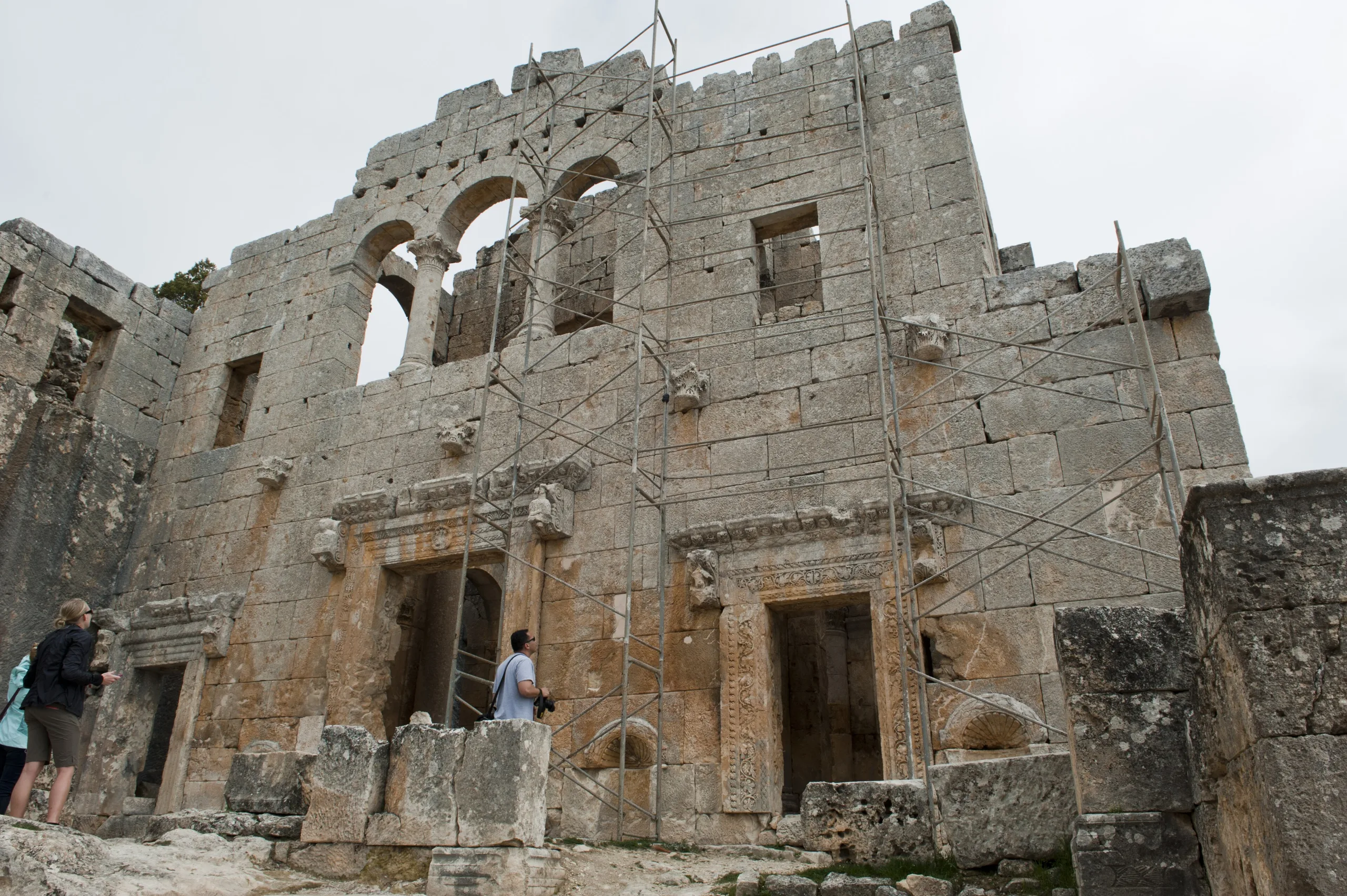
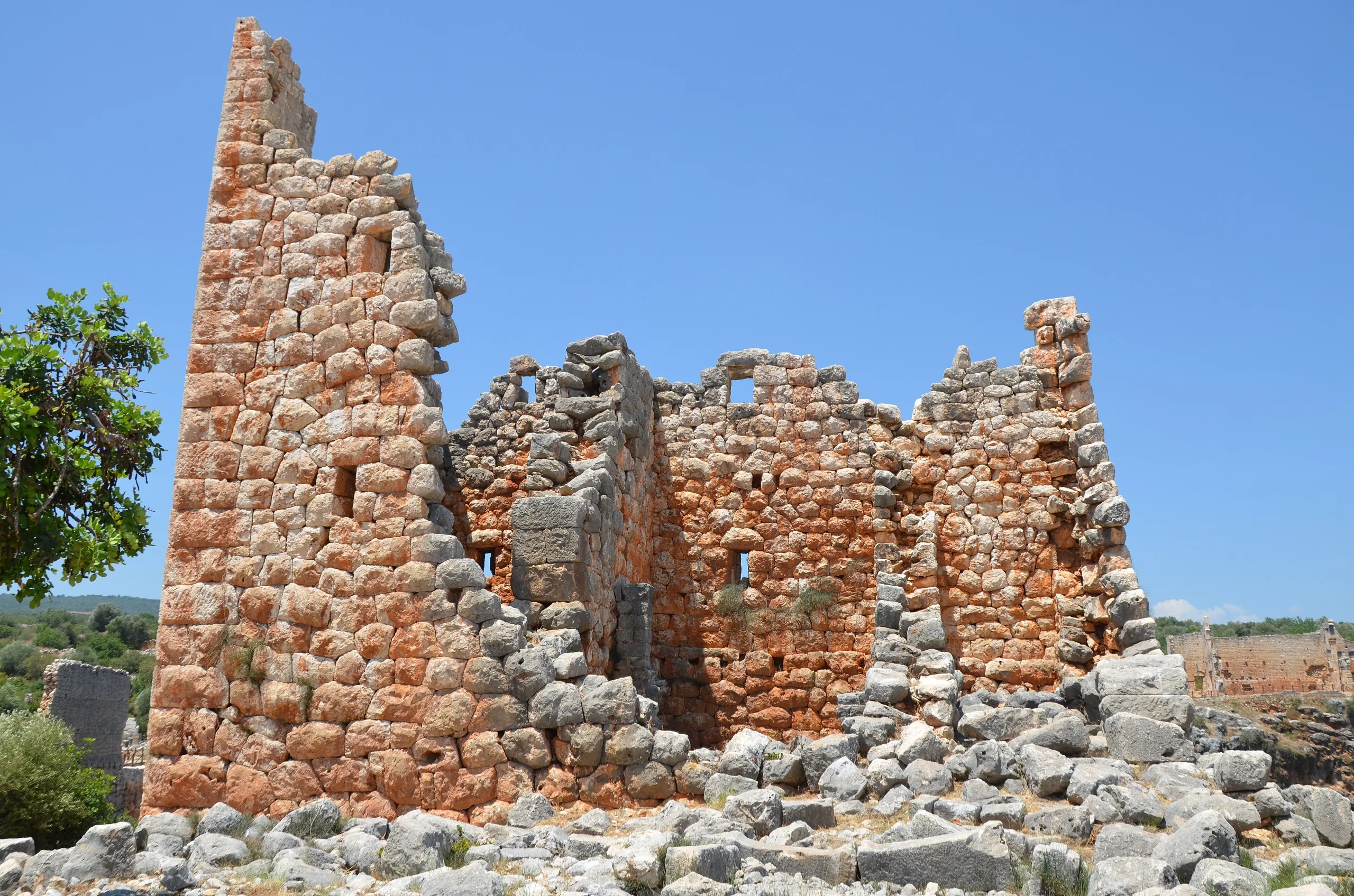
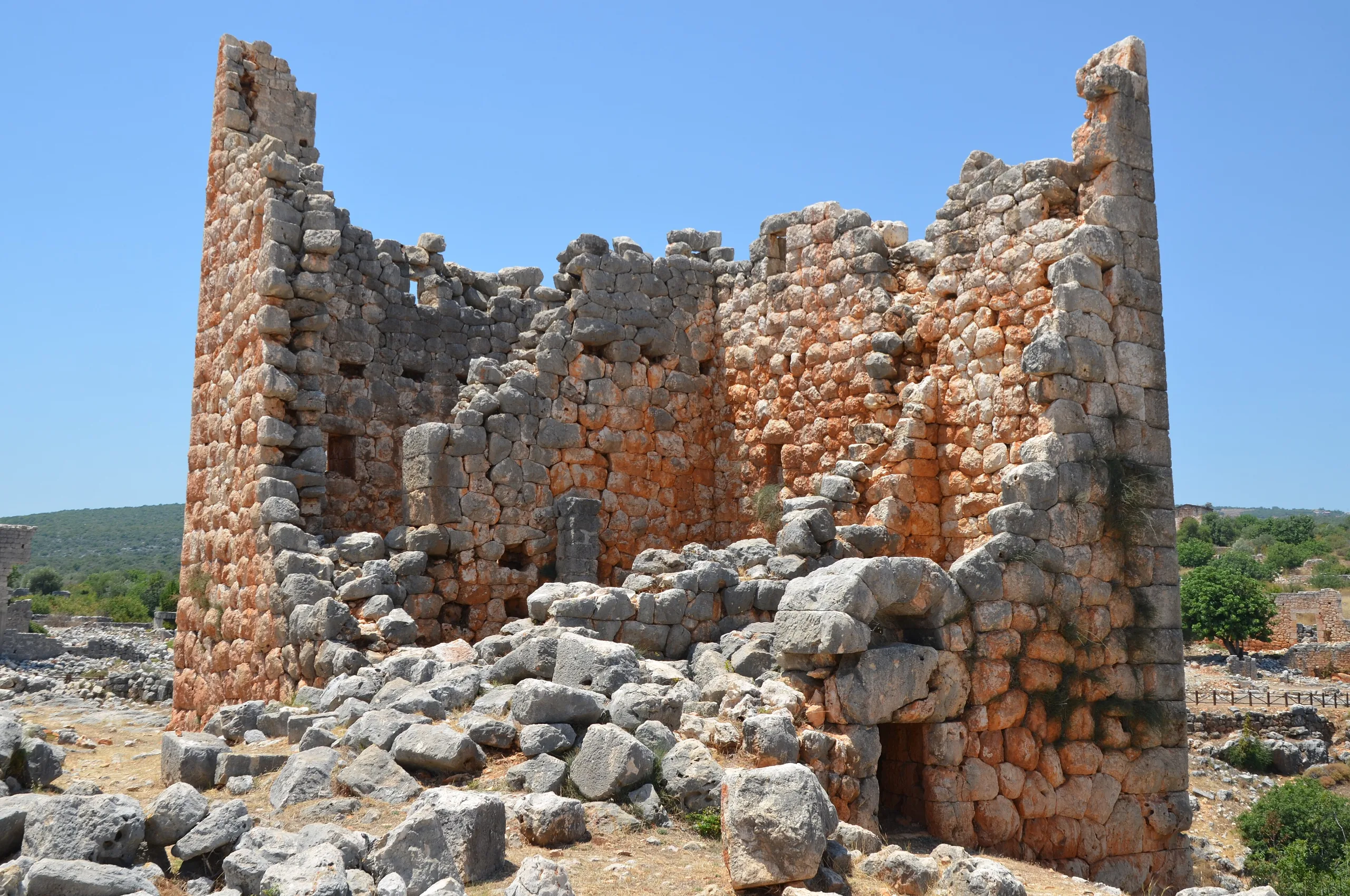
The only Hellenistic structure at Kanlıdivane is a rectangular tower with three rooms on the south-west rim of the sinkhole. Inscriptions at its south-west corner show that the priest-king Teukros, son of Tarkyaris, had it built between the late 3rd and early 2nd century BCE and dedicated it to Zeus Olbios.
Reliefs
On the south wall of the pit a family relief of the 1st century CE shows three standing figures and, on a higher base, a seated woman and man. The text below says Armaronzas, father of Hermias, set up statues of his wife and children, and it requires anyone damaging the carvings to pay 1,000 drachmas to Zeus. On the north face a soldier carries a spear in the right hand and a sword in the left; an inscription beside him gives his name as Trogomon and shows that his mother commissioned it. About 1 km south-west of the pit, the rock tombs at Çanakçı carry reliefs of the tomb owners, among them a mourning woman gripping her chiton over her head, dated between the 1st century BCE and the 1st century CE.
Monumental tombs
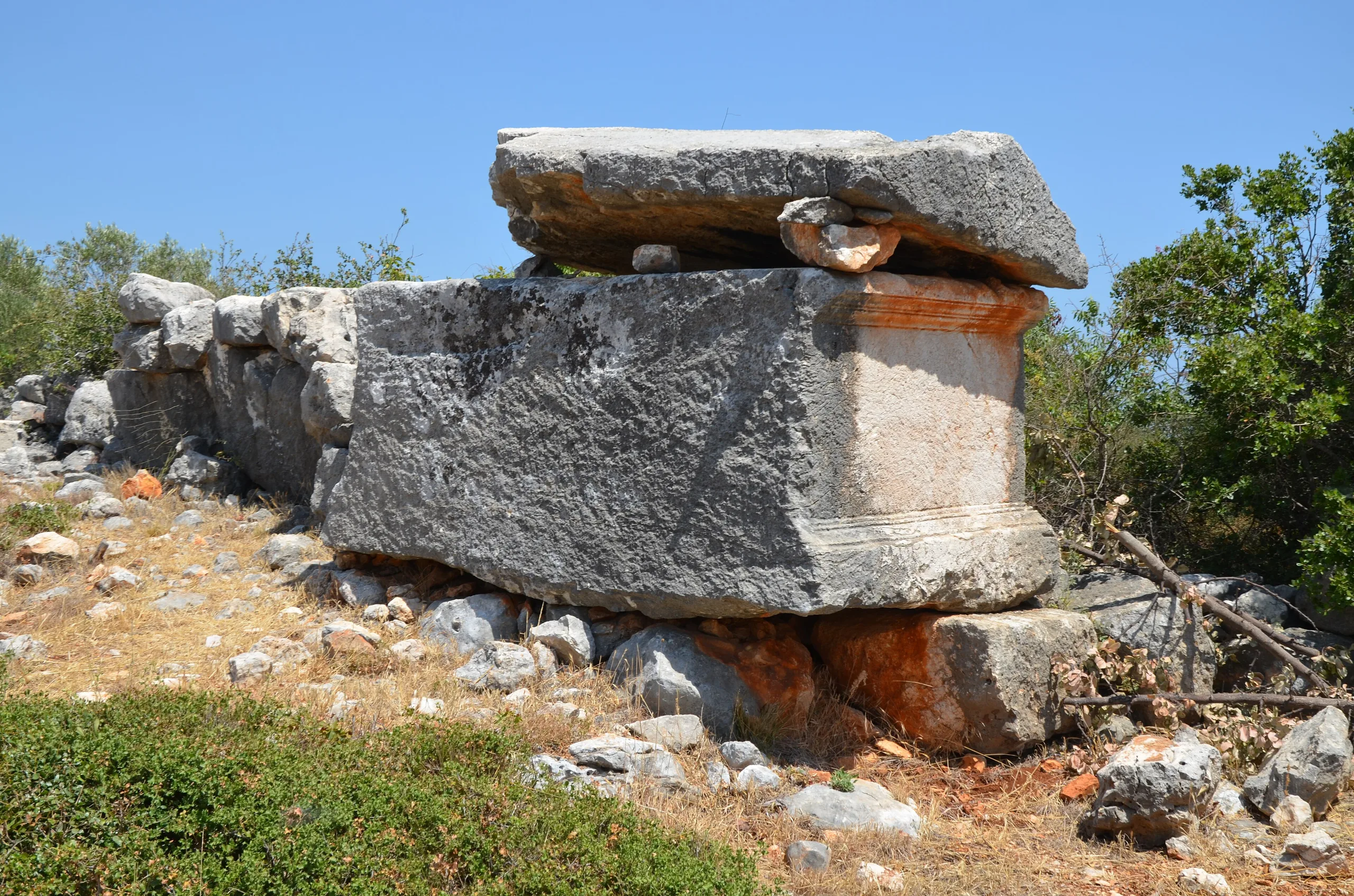
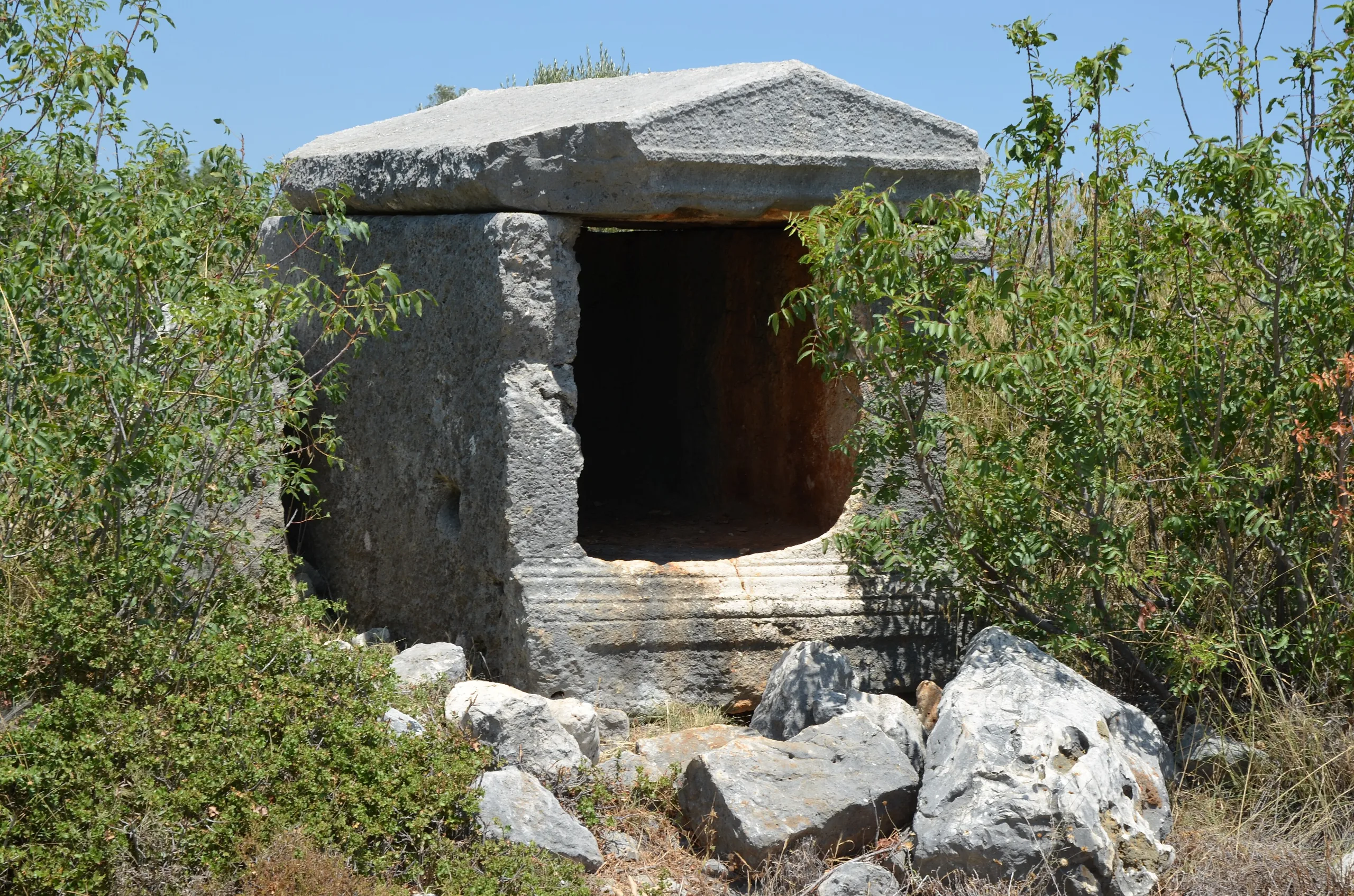
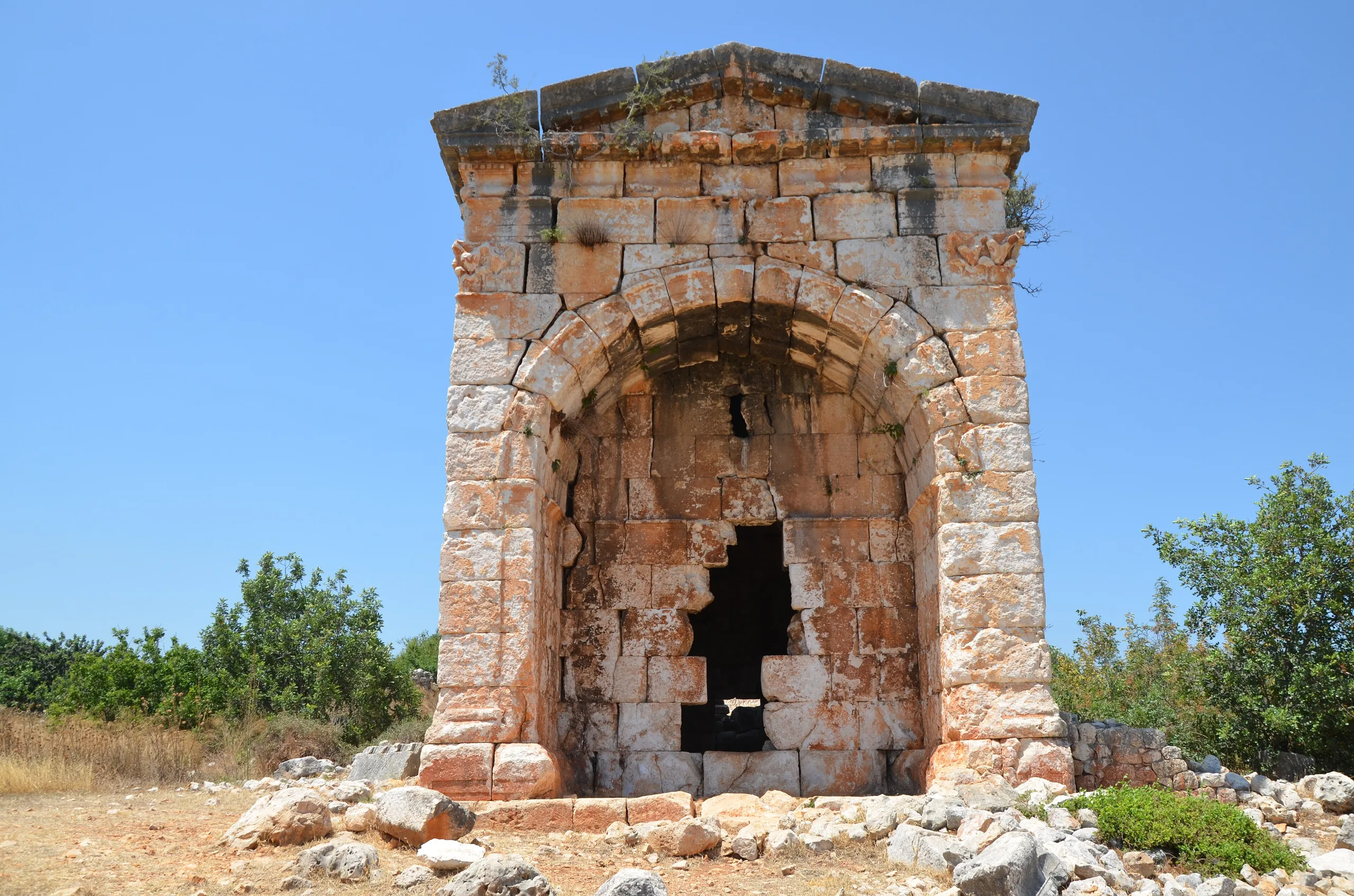
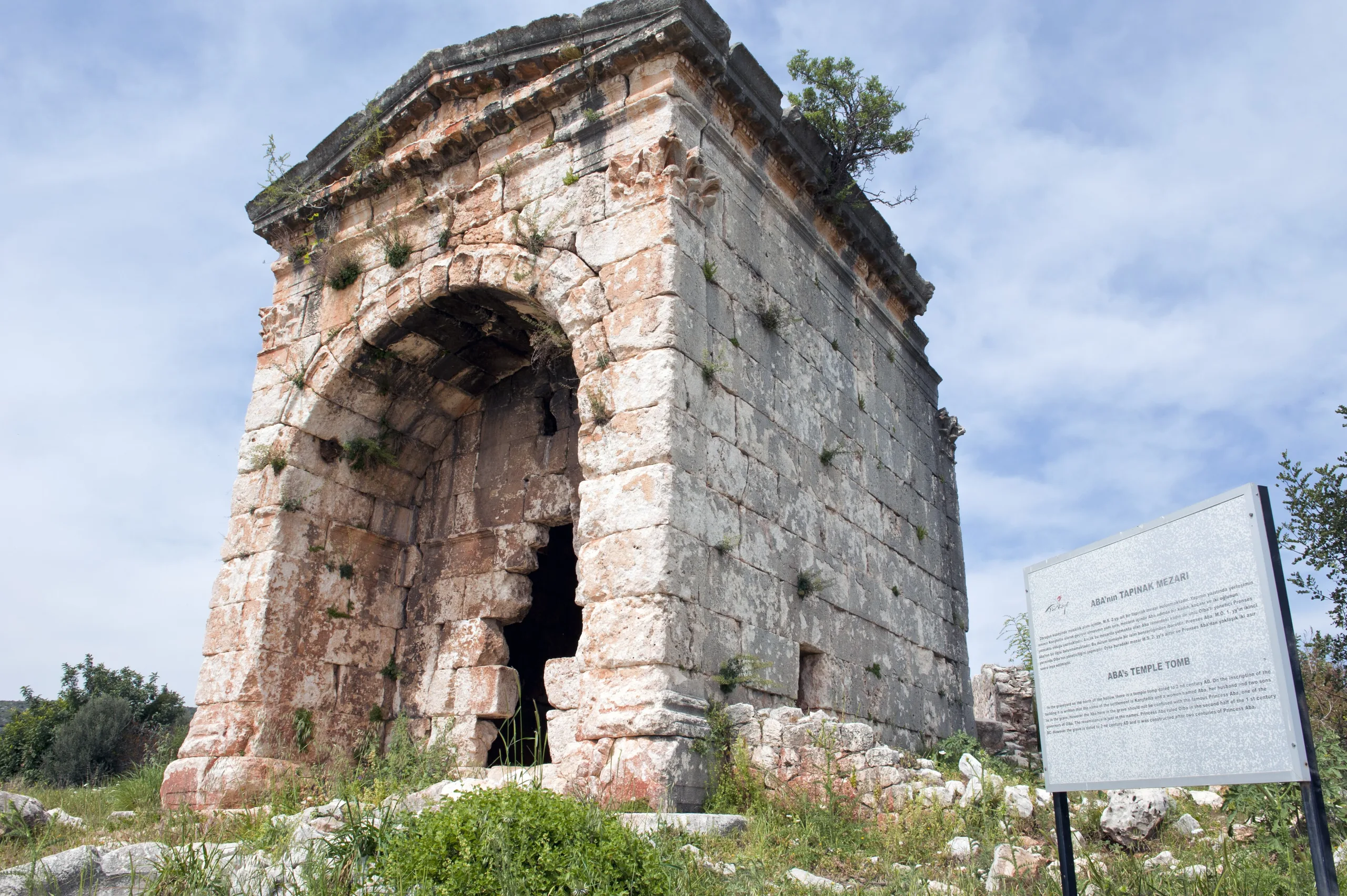
The Tomb of Aba is the grandest funerary monument of Kanytella. It follows the form of a Roman temple on a low podium and has a vaulted entrance on the front. The door inscription shows a woman called Aba had it built for herself and her husband Arios, and the Ministry's English page dates it to the 2nd century CE from the inscription and other graves. The monument the Culture Portal calls Ayak Mezar Anıtı measures about 4.12 by 4.22 metres and is 3.5 metres high. It stands on a podium of natural rock, has a vaulted cella and a three-column front under a triangular pediment, and the portal considers its design unique in architectural history and dates it to the second quarter of the 3rd century CE.
Churches
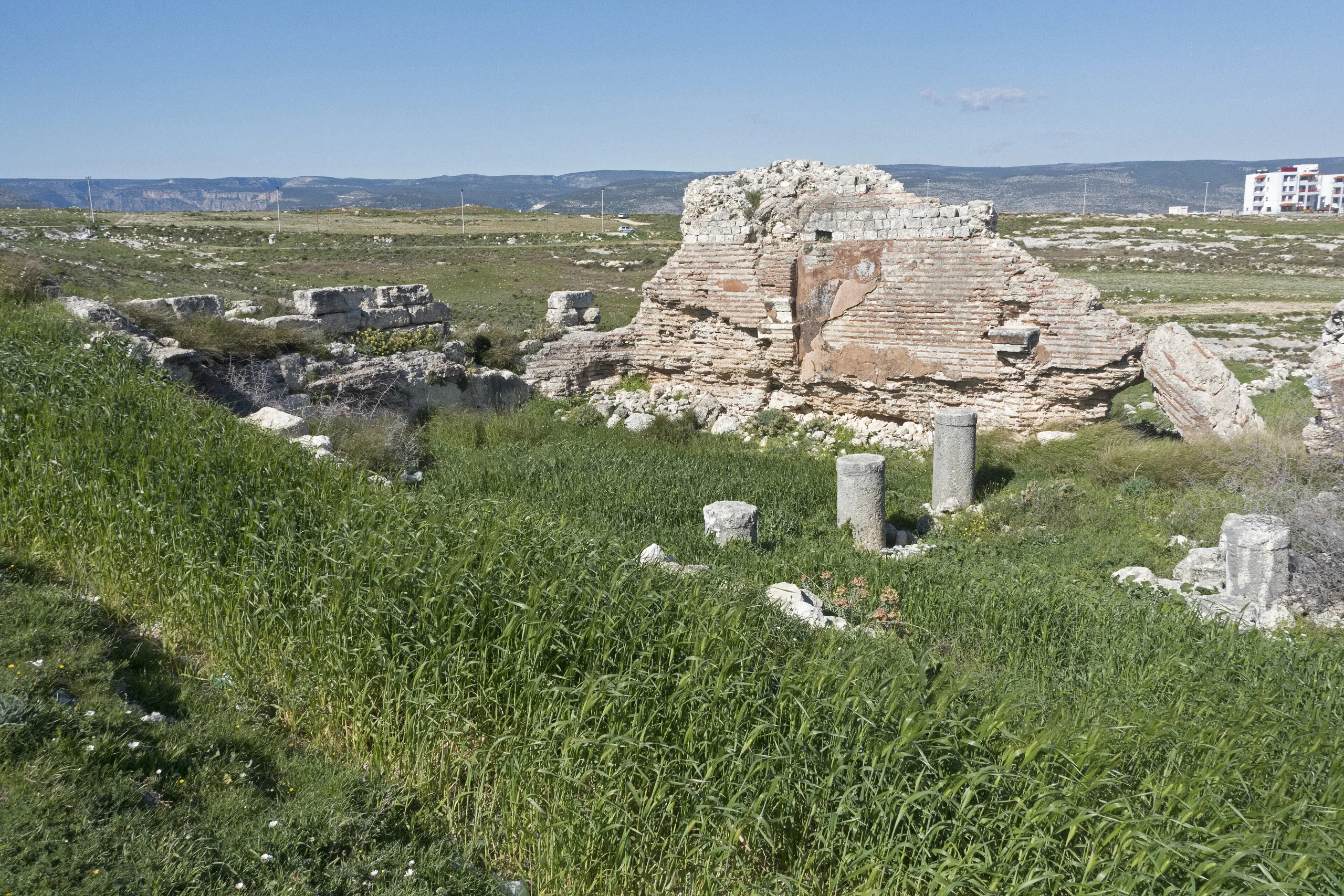
The Ministry and the Culture Portal write that four important churches stand around the sinkhole, and that a fifth church with only its apse visible and a chapel found in recent surveys are also known. Ceylan's article, based on the 2006 survey, counts five churches and describes them all as large three-aisled basilicas. The Culture Portal says the churches share traits with early Christian Byzantine churches of Syria, and that their galleries and decorated capitals place them among the important buildings of Cilicia and Isauria from the late 5th or early 6th century. They are taken as signs of economic prosperity rather than of need.
A Late Antique village
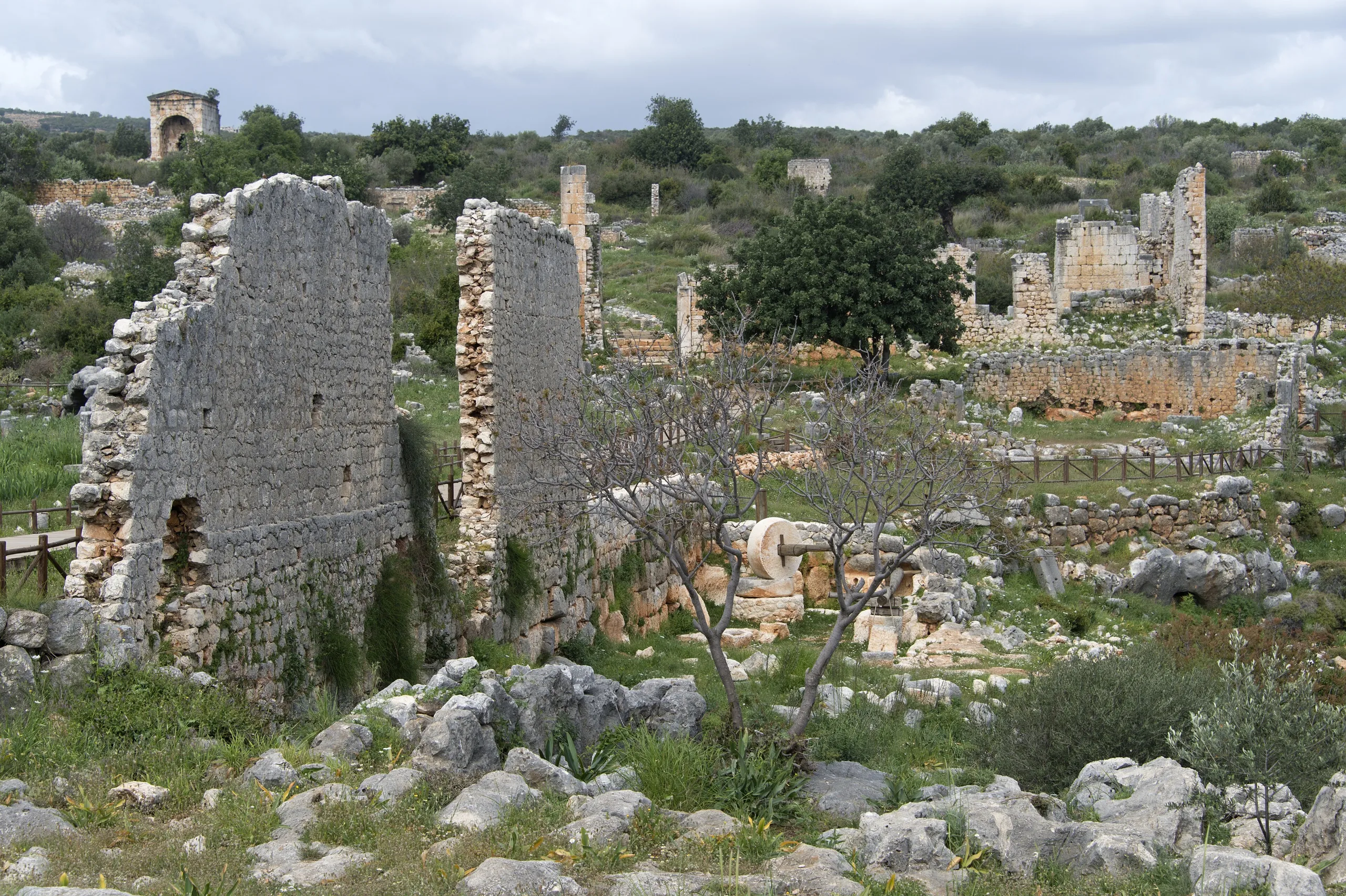
From the 2006 survey, Ceylan describes narrow streets that follow the terrain around a main thoroughfare, terraces on the slopes and small squares with public cisterns. Besides the five churches the village had a multi-storey market building with rows of shops, large and carefully built houses, and presses for olive oil or wine. The article reads the remains as those of a wealthy, well-organised community of mostly free farmers with a few tradesmen and craftsmen, which profited from wine and oil trading and flourished in the 5th and 6th centuries. Its administrative capital, Elaiussa Sebaste, was about 10 km away. The Ministry adds that most spaces uncovered after vegetation clearance were olive-processing workshops, that many cisterns were found, that the site links to the ancient harbour at Akkale, and that a Roman road paved with cut stone has become easier to follow west of Church III.
Visiting
See the Ministry's official page for current visiting information; it also states that the Müzekart is valid for Turkish citizens.
Gallery
Frequently asked questions
Where is Kanlıdivane?
How big is the sinkhole?
What does the name Kanlıdivane mean?
Who built the Hellenistic tower?
How many churches are there?
When was the site inhabited?
Sources (13)
- Kanlı Divane Örenyeri / Kanlıdivane Archaeological Site (TR ve EN sayfalar) — T.C. Kültür ve Turizm Bakanlığı, Müzeler ve Örenyerleri
- Kanlı Divane Ören Yeri - Mersin (kaynak: Mersin Müze Müdürlüğü) — T.C. Kültür ve Turizm Bakanlığı, Türkiye Kültür Portalı
- Kilikya'da Geç Antik Dönem Kırsal Yerleşimleri: Kanytellis Örneği (Burcu Ceylan, Olba dergisi) — Olba, Mersin Üniversitesi Kilikia Arkeolojisini Araştırma Merkezi, DergiPark
- Kanlıdivane (Wikidata Q202974, P625) — Wikidata
Photo credits
- Photo: Dosseman, CC BY-SA 4.0 — Wikimedia Commons (resized)
- Photo: U.S. Air Force photo by Senior Airman Daniel Phelps/Released, Public domain — Wikimedia Commons (resized)
- Photo: Carole Raddato, CC BY-SA 2.0 — Wikimedia Commons (resized)
- Photo: Carole Raddato, CC BY-SA 2.0 — Wikimedia Commons (resized)
- Photo: Dosseman, CC BY-SA 4.0 — Wikimedia Commons (resized)
- Photo: Carole Raddato from Frankfurt, Germany, CC BY-SA 2.0 — Wikimedia Commons (resized)
- Photo: Carole Raddato, CC BY-SA 2.0 — Wikimedia Commons (resized)
- Photo: Carole Raddato, CC BY-SA 2.0 — Wikimedia Commons (resized)
- Photo: U.S. Air Force photo by Senior Airman Daniel Phelps, Public domain — Wikimedia Commons (resized)