Kibyra is a Roman-era city on three hills in Gölhisar, Burdur, famed for its stadium, council hall with a Medusa mosaic, a very large mosaic floor and a long-running university excavation.
Kibyra is an ancient city located in Turkey, Burdur. Main periods: Roman Period.
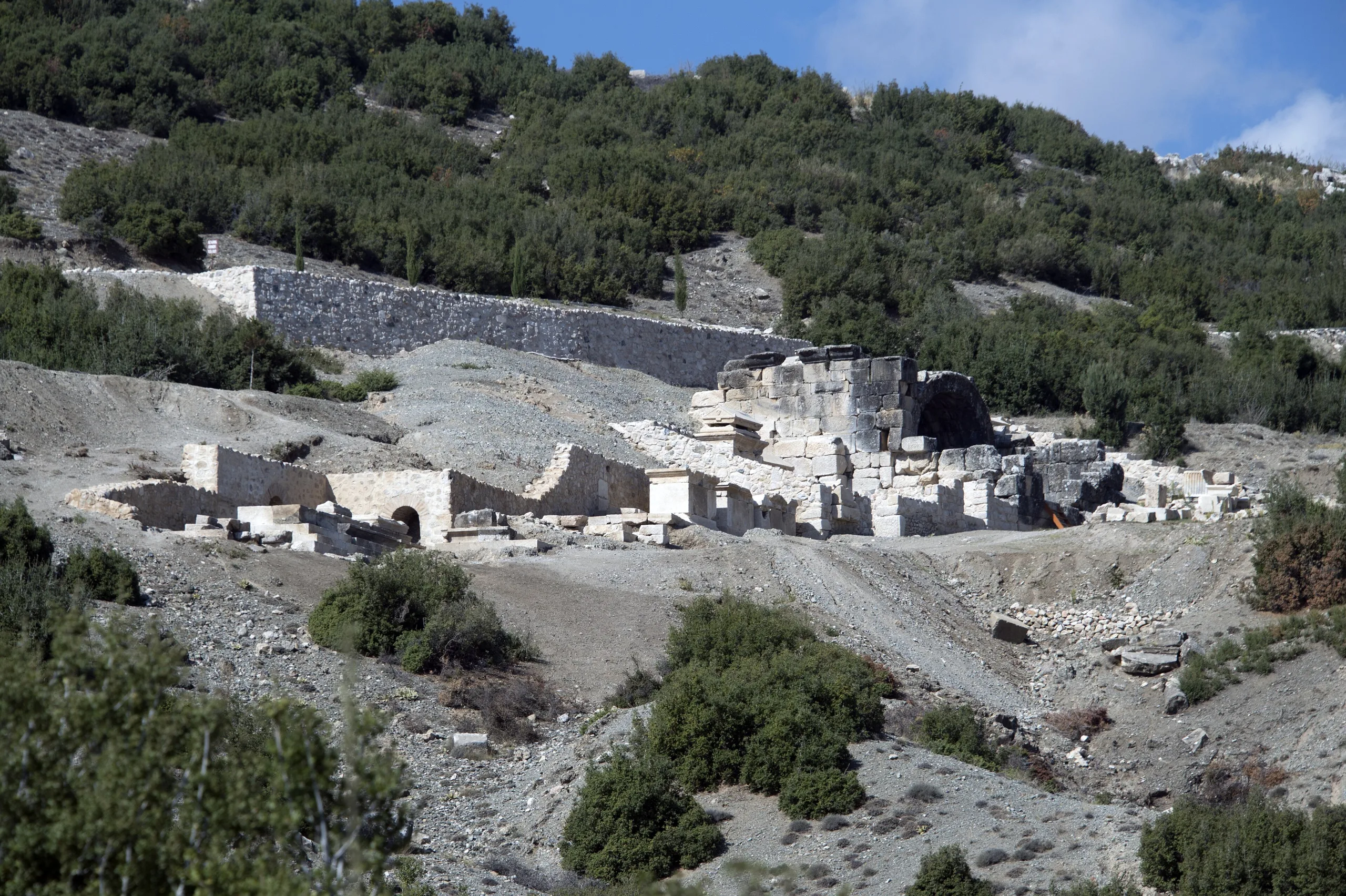
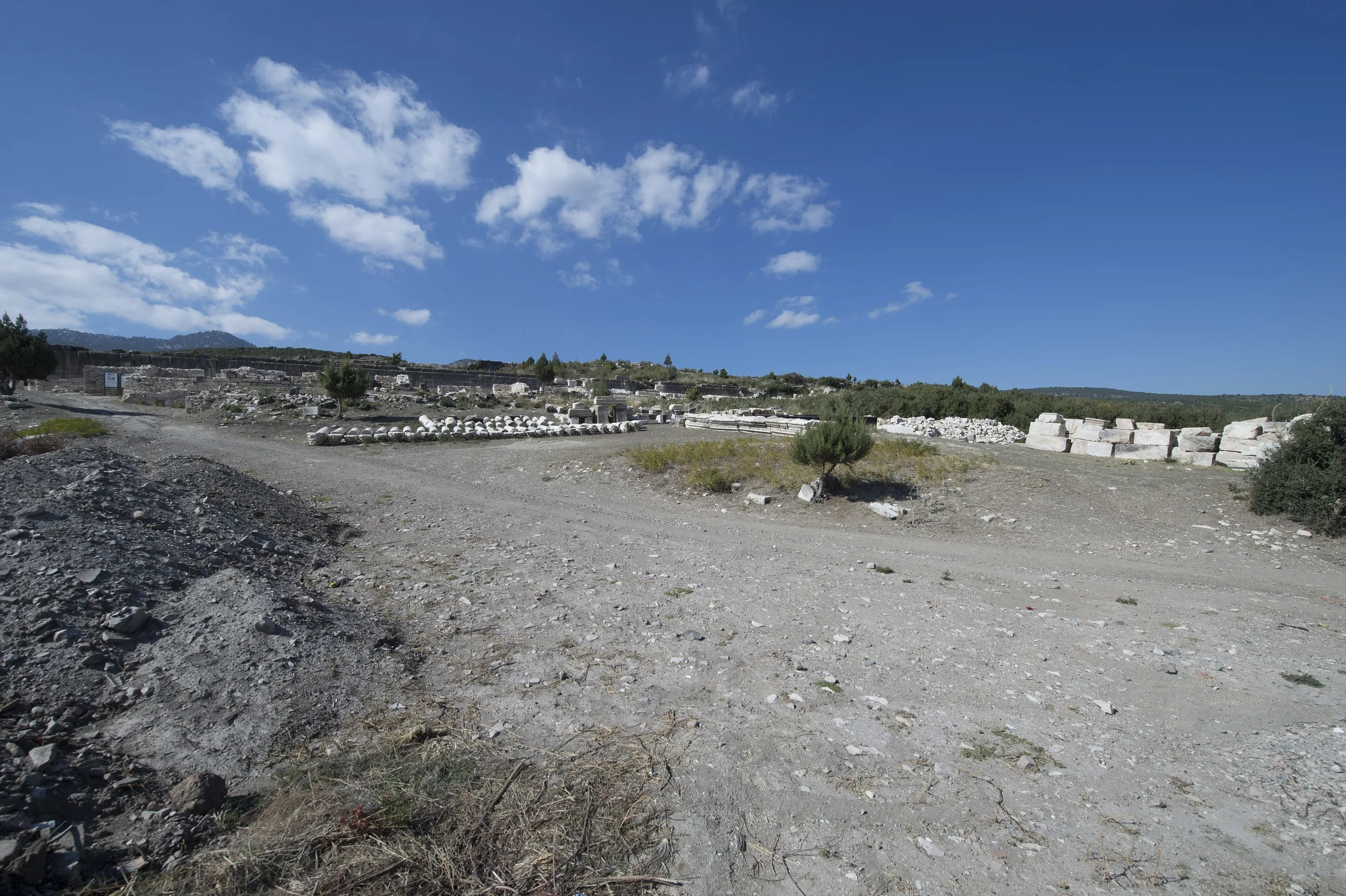
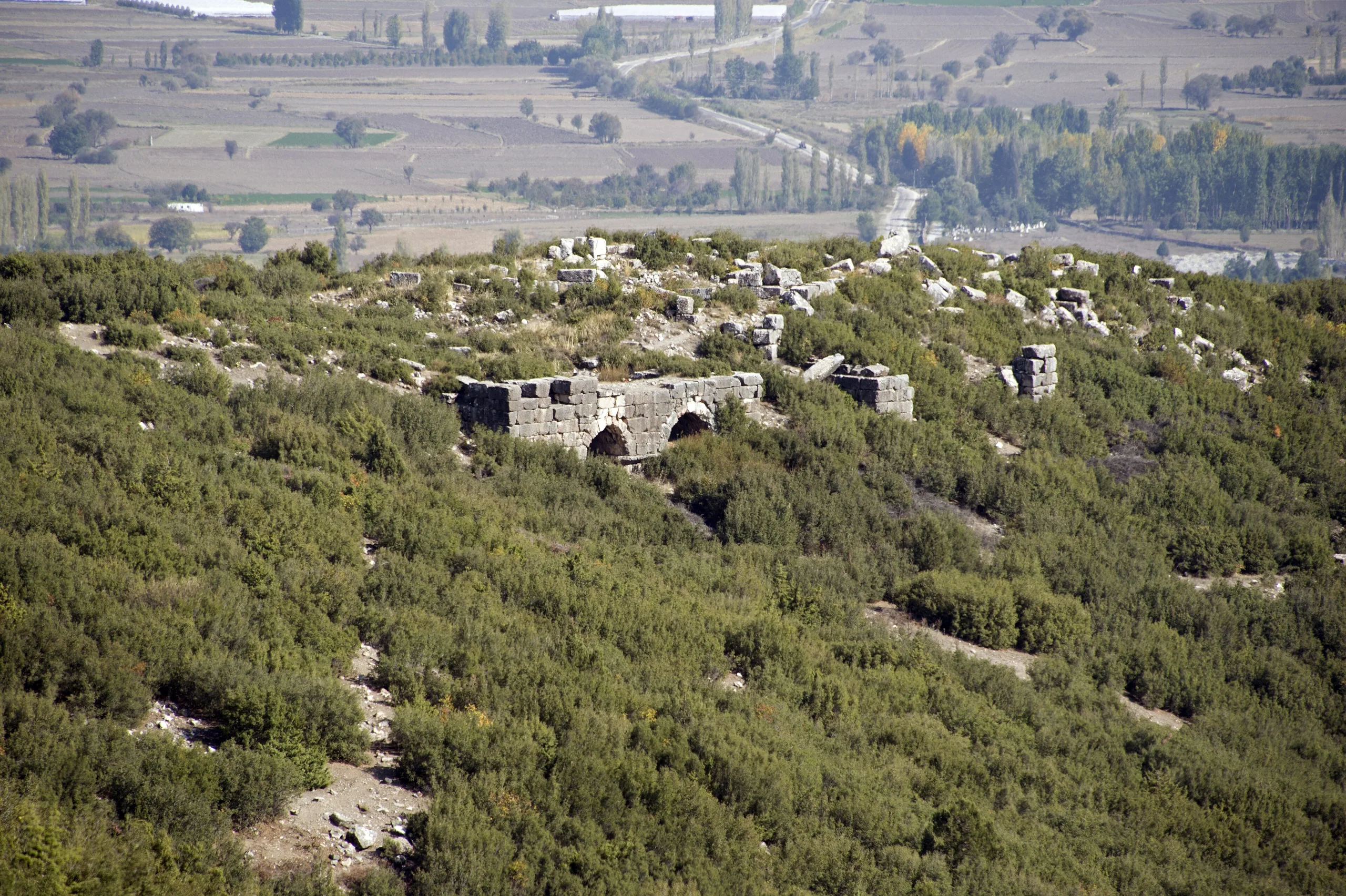
Kibyra stands about 106 km west of Burdur, inside the Horzum neighbourhood of Gölhisar district. The ministry describes a very large settlement area, and the Culture Portal places the city on three commanding hills divided by deep gullies. The buildings were set out symmetrically on terraced slopes so that none blocks another's view over the lake and plain.
History
Per the ministry, Kibyra belonged to the province of Lycia at first and then became head of a four-city league with Balbura, Boubon and Oinoanda. The same page describes a regional entity called Kibyratis, self-governing with its surroundings from 300 BCE until the Roman period and later attached to Phrygia and then to the Roman province of Asia. The Culture Portal gives a different sequence: it has Kibyra under the Pergamene kingdom in the time of Eumenes II (197-159 BCE) and sets the joint council of four cities soon after, in the 2nd-1st centuries BCE.
The ministry says the city and its territory held over 100,000 people and could field 30,000 foot soldiers and 2,000 horsemen. The Culture Portal records the league being broken up in 82 BCE by the Roman general Murena. A major earthquake flattened the city in 23 CE and Emperor Tiberius had it rebuilt. Kibyra was at its brightest between the 1st and 3rd centuries CE and was known for ironwork, leatherwork, pottery and horse breeding. According to the Culture Portal, all the architectural remains visible today belong to the Roman imperial period.
Main remains
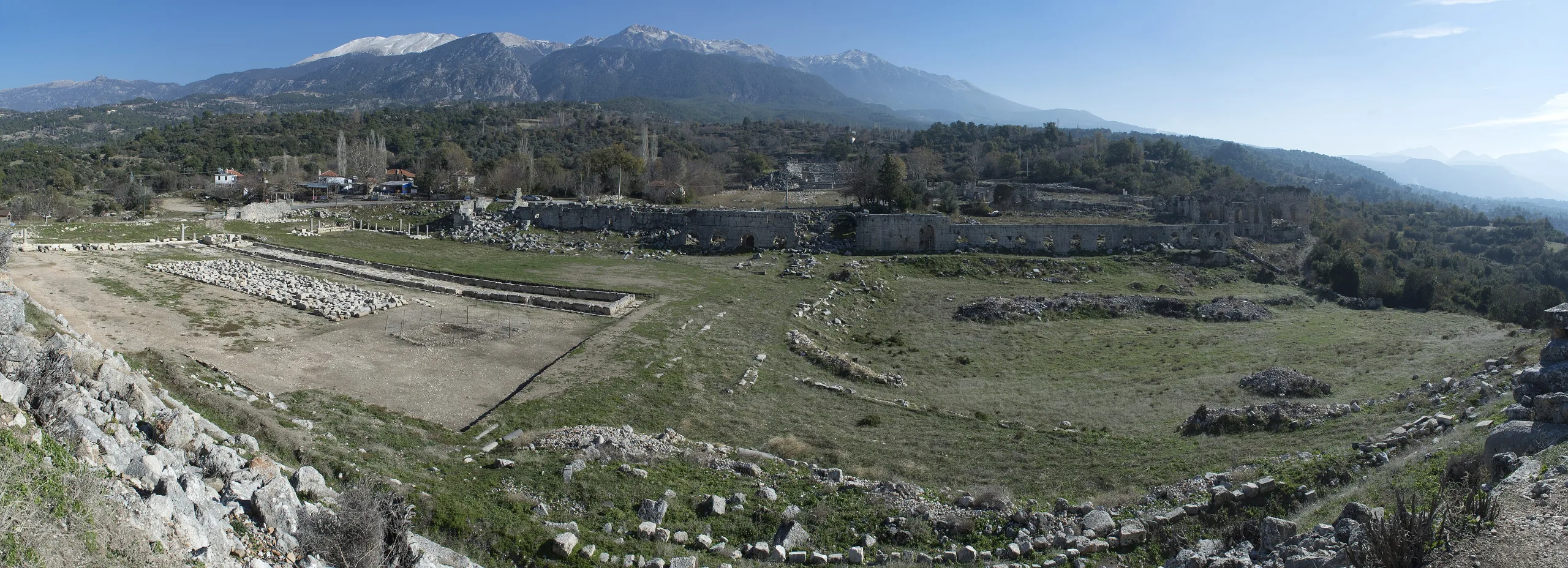
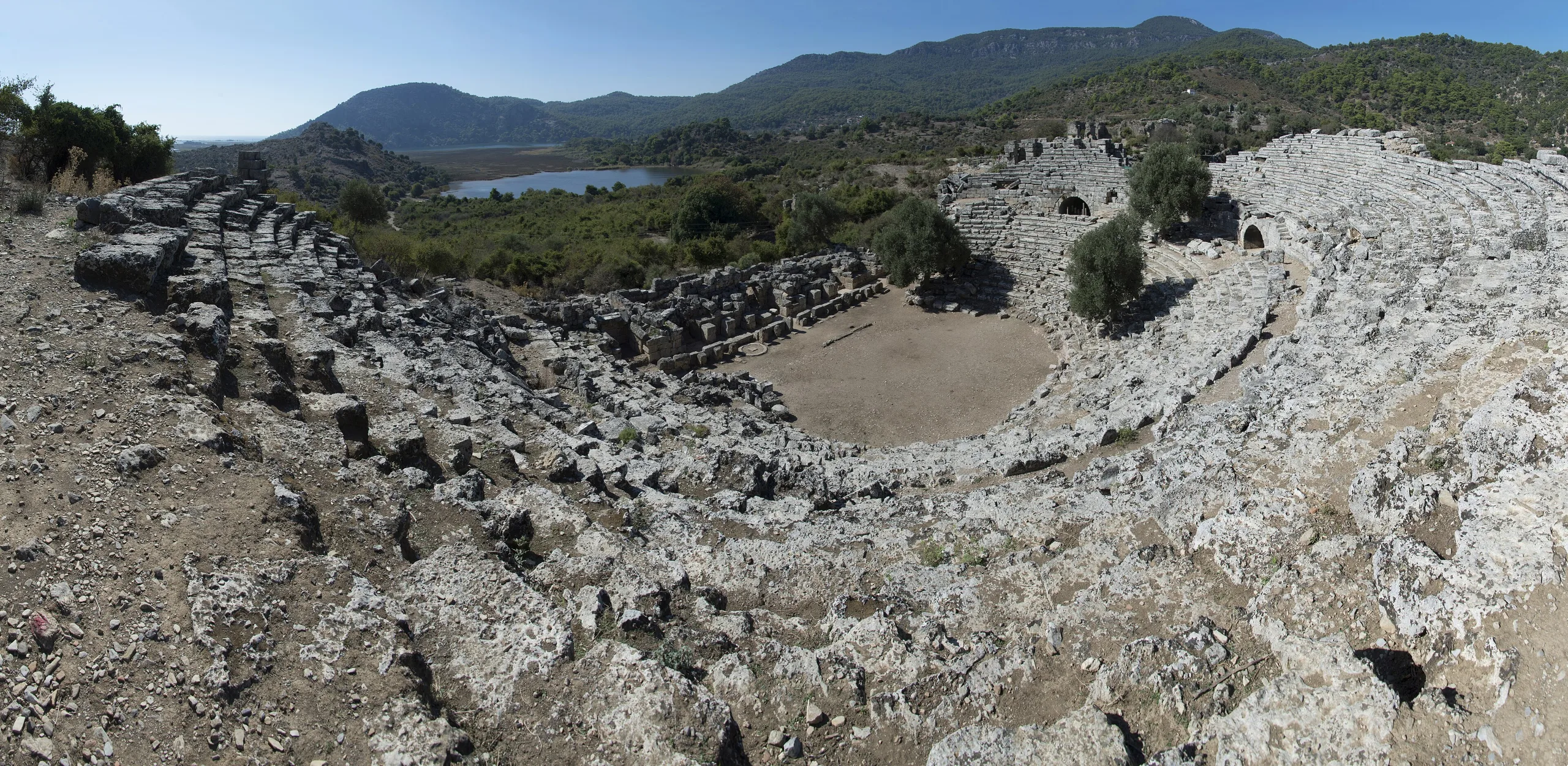
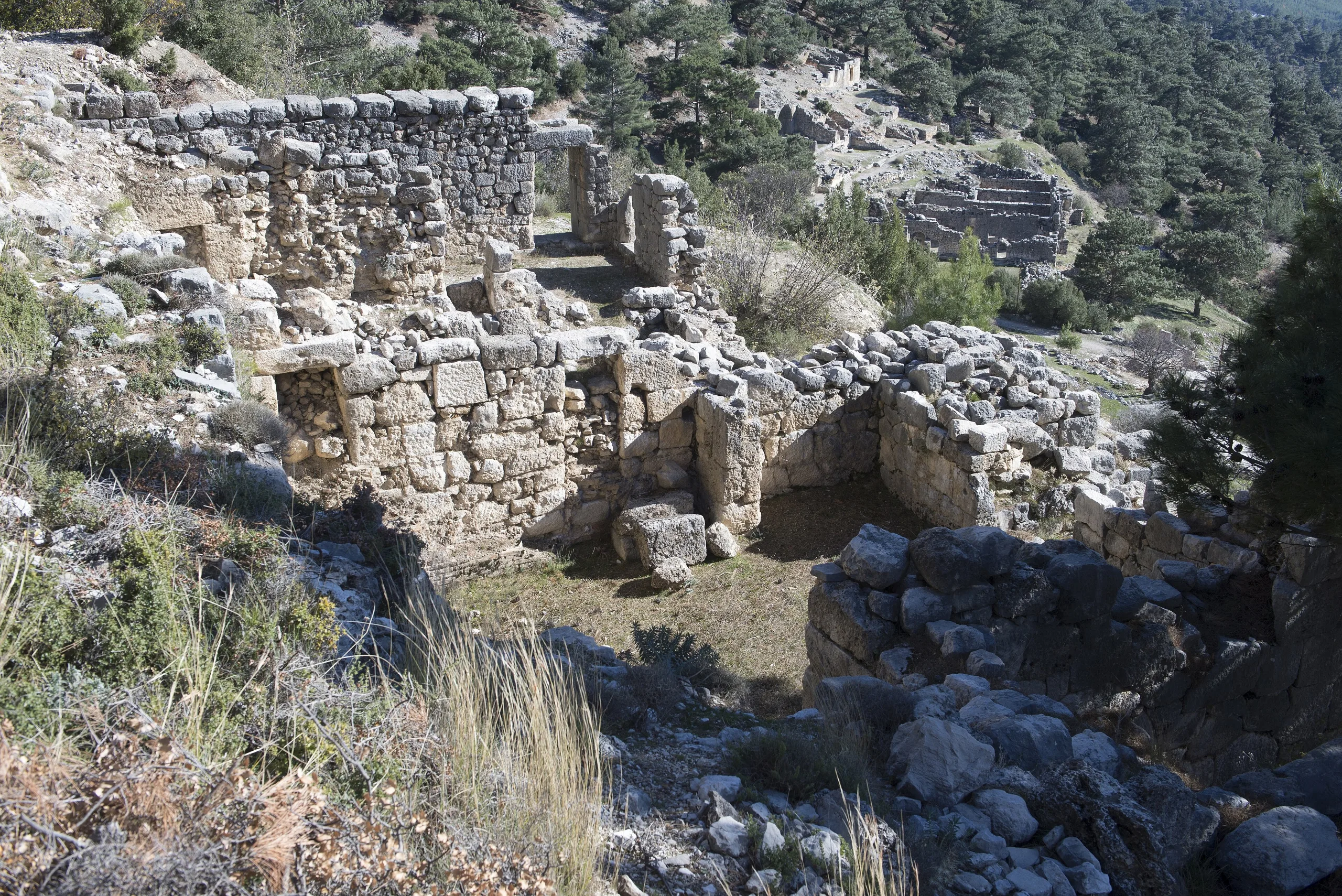
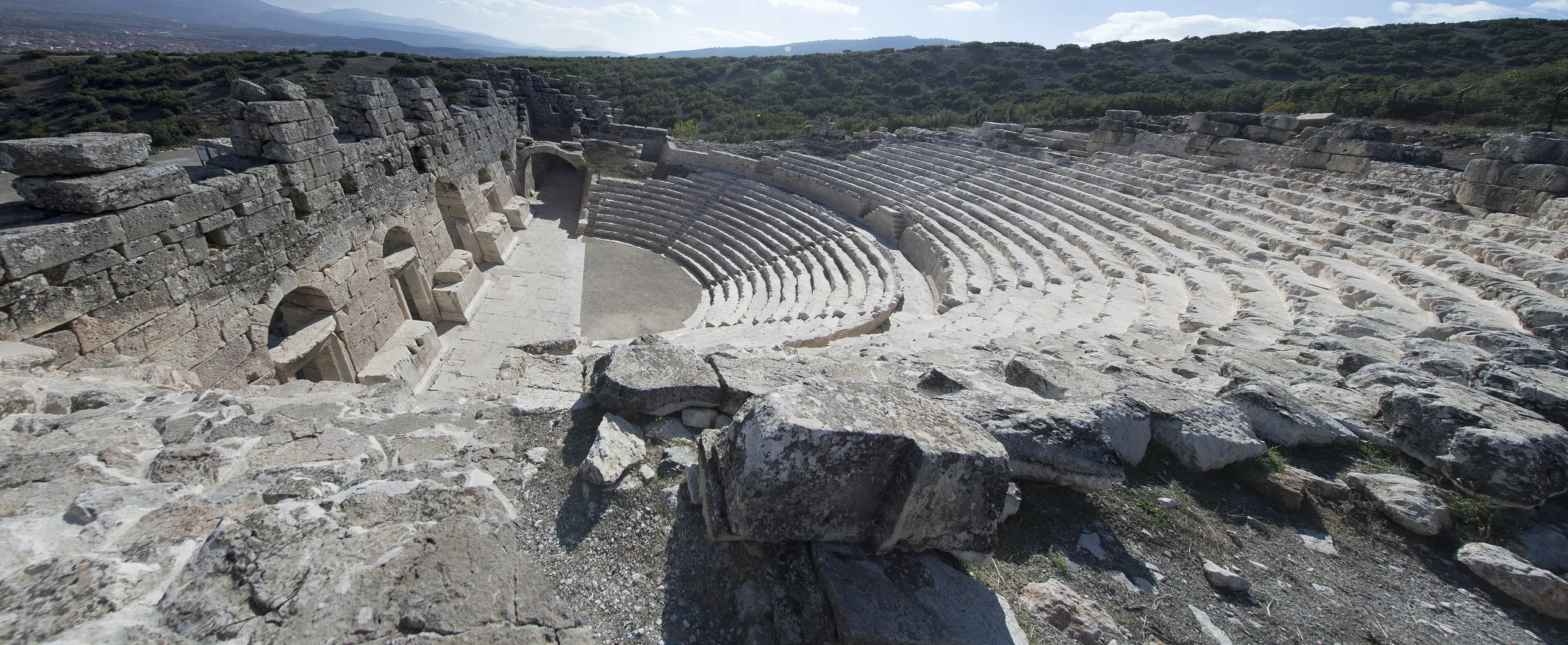
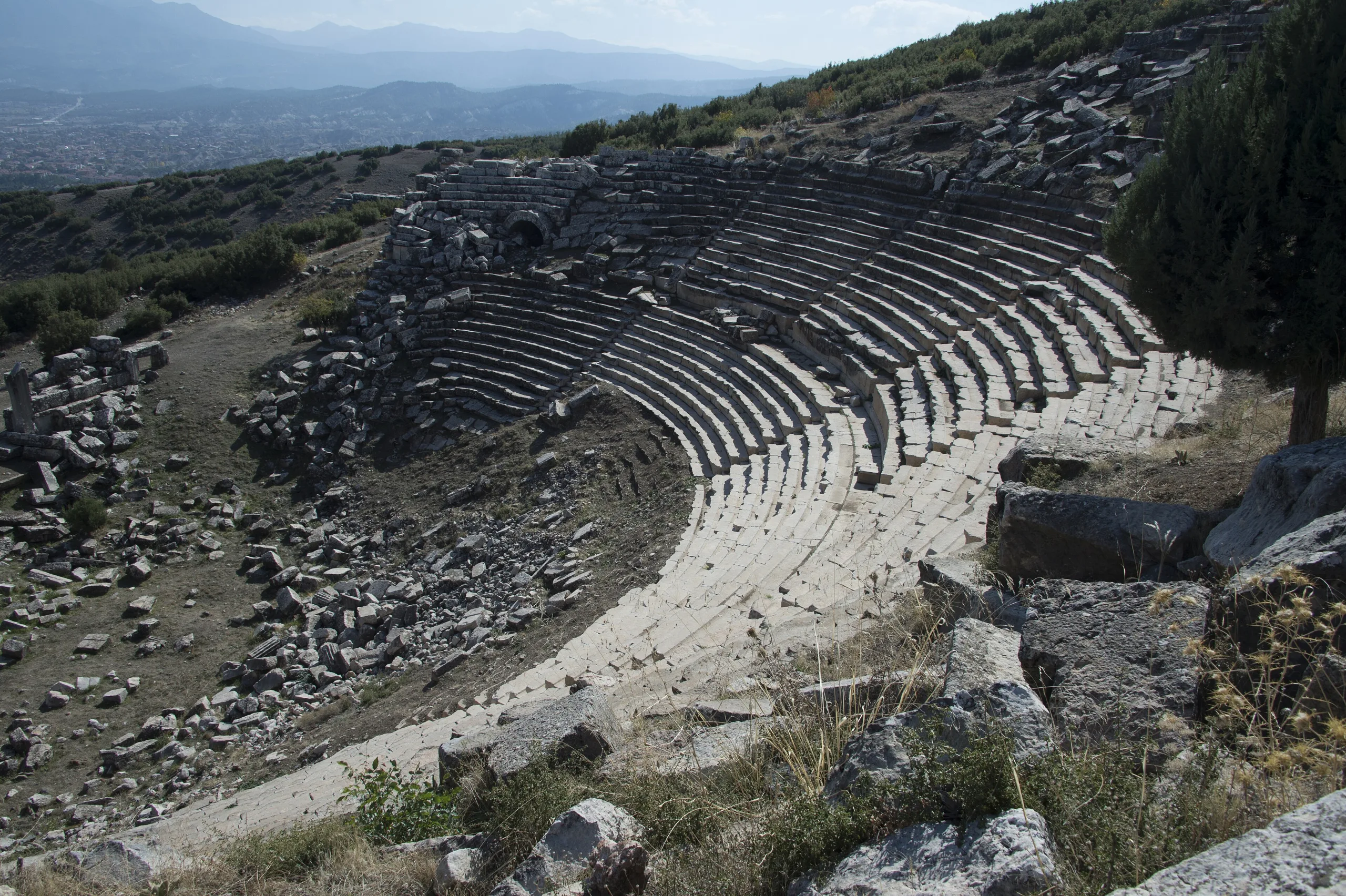
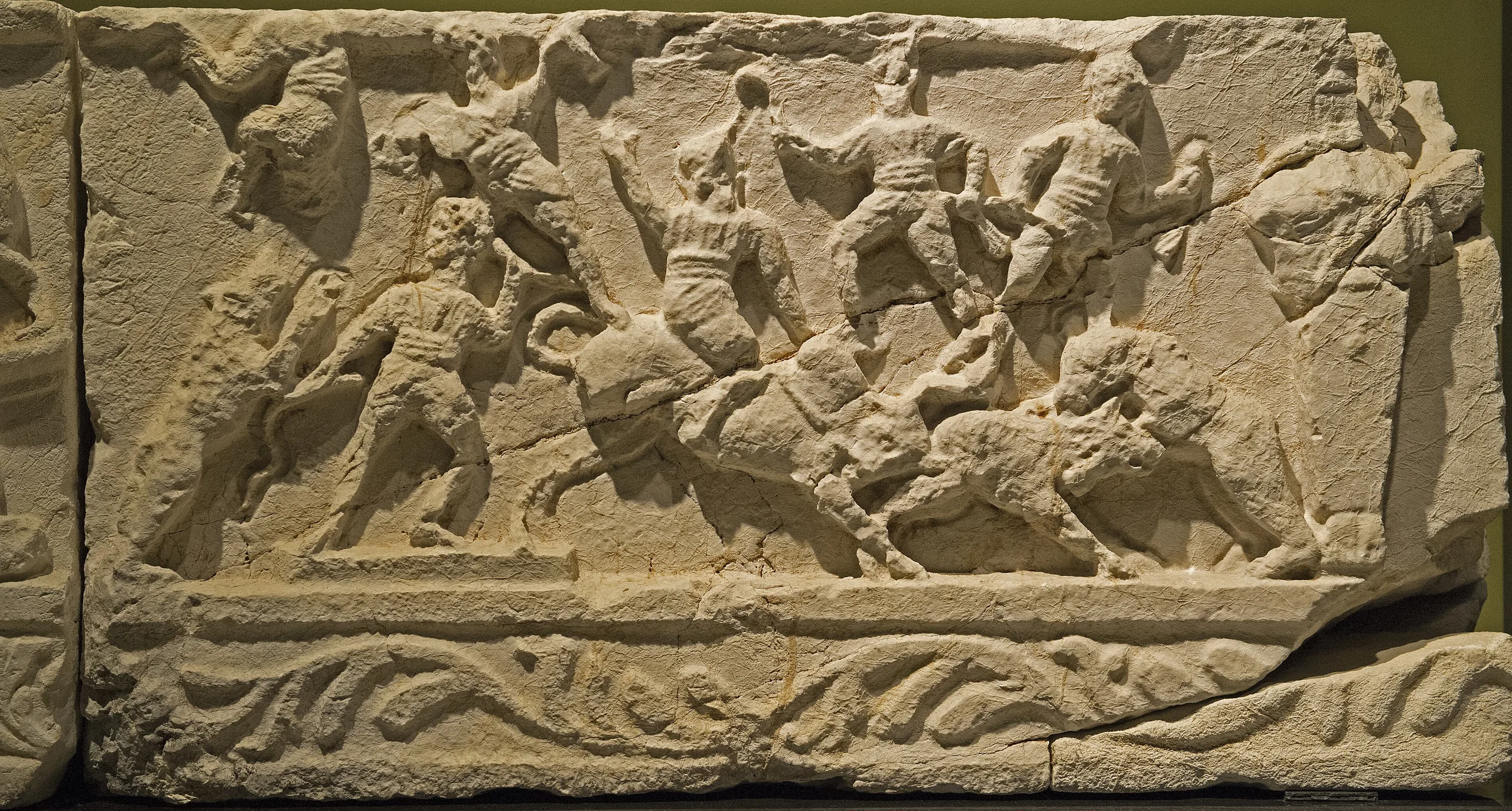
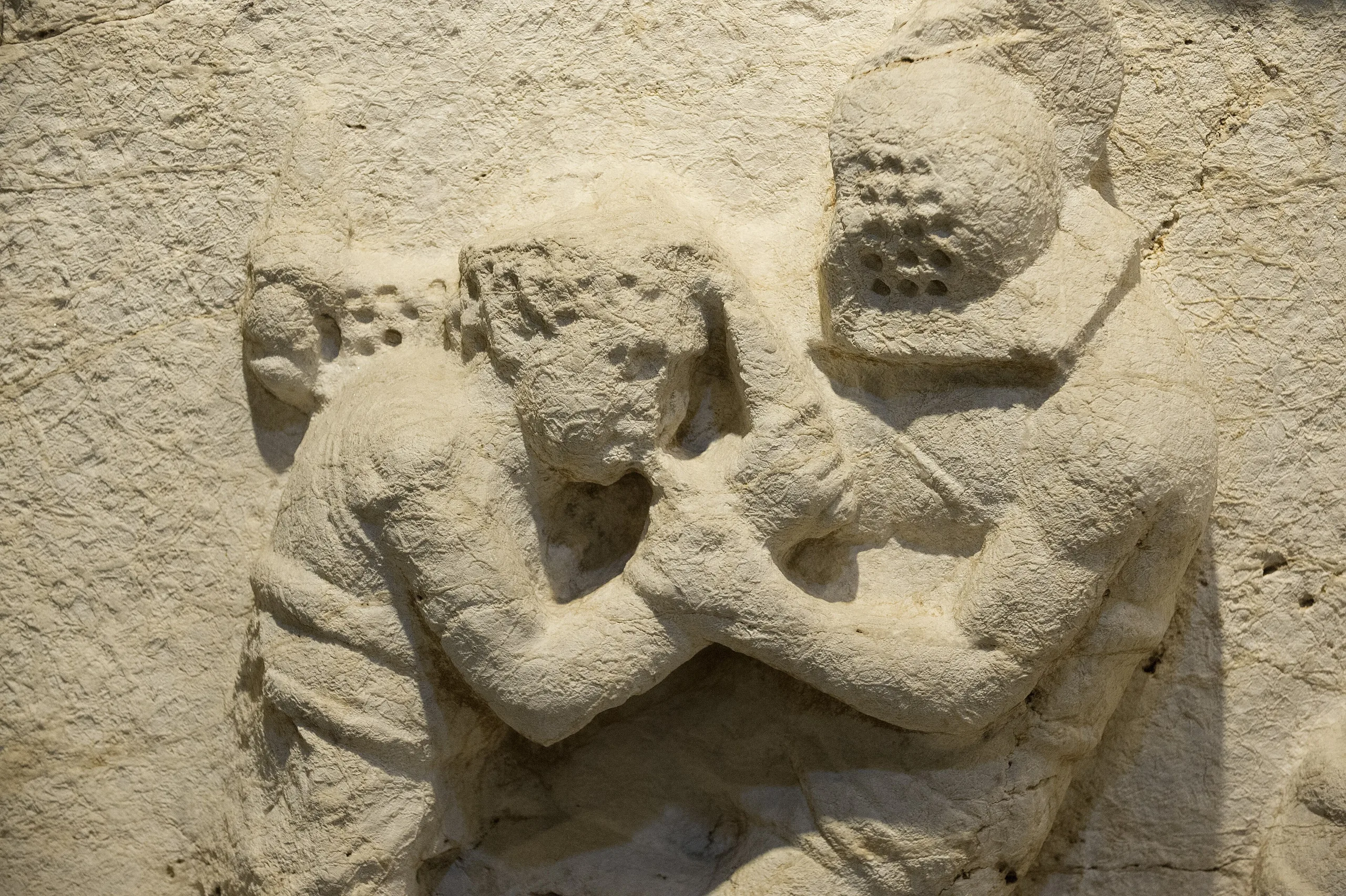
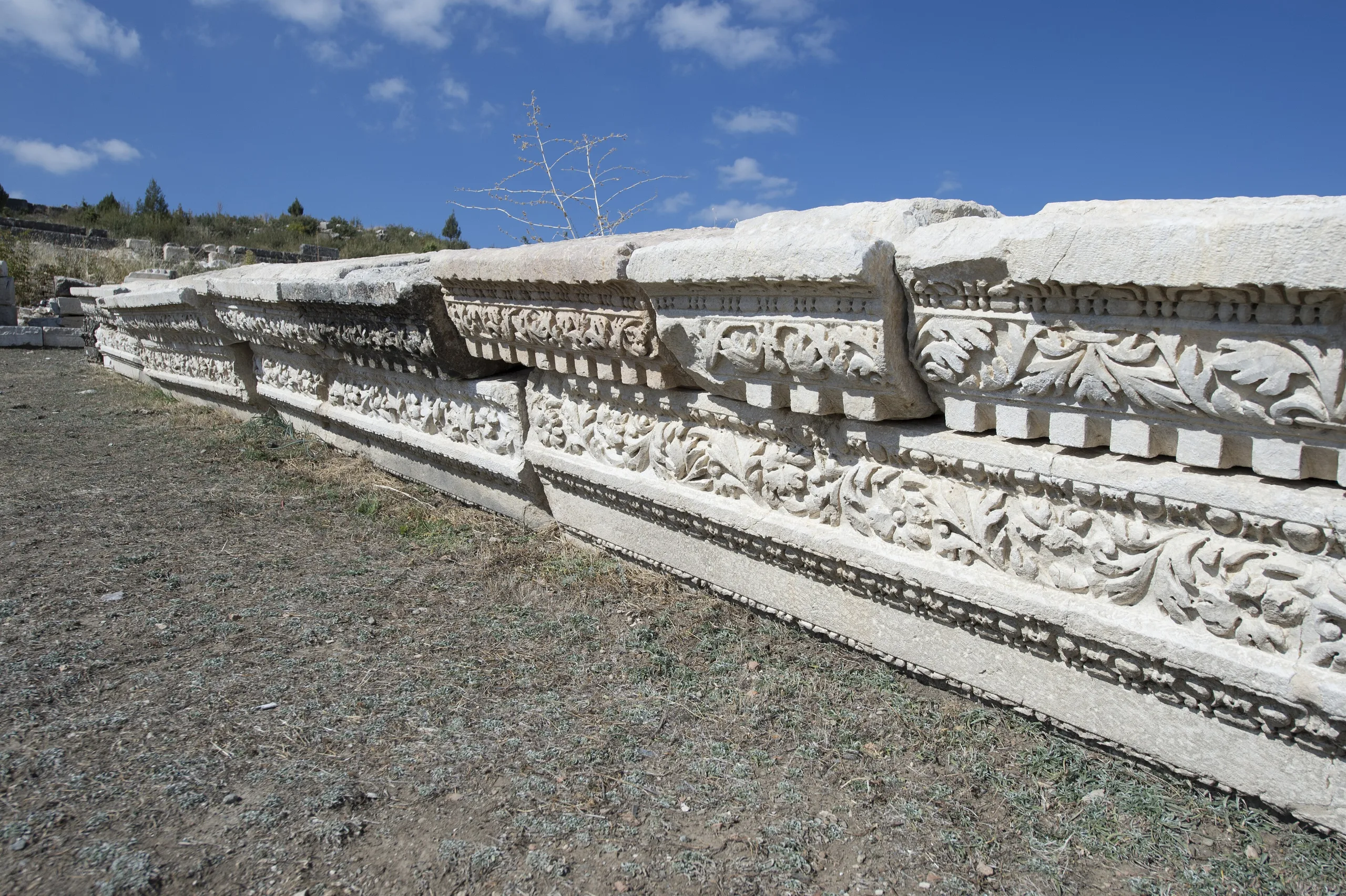
On the left as you enter stand a monumental gate and a stadium that held 12,000 to 13,000 spectators, which the Culture Portal rates the grandest in ancient Anatolia on capacity. Further in come a basilica, upper and lower agoras, a bath, a gymnasium, the theatre, the council hall, a monumental tomb and water channels. The ministry lists the theatre, odeon, stadium, temple, agora and monumental road among the standing structures.
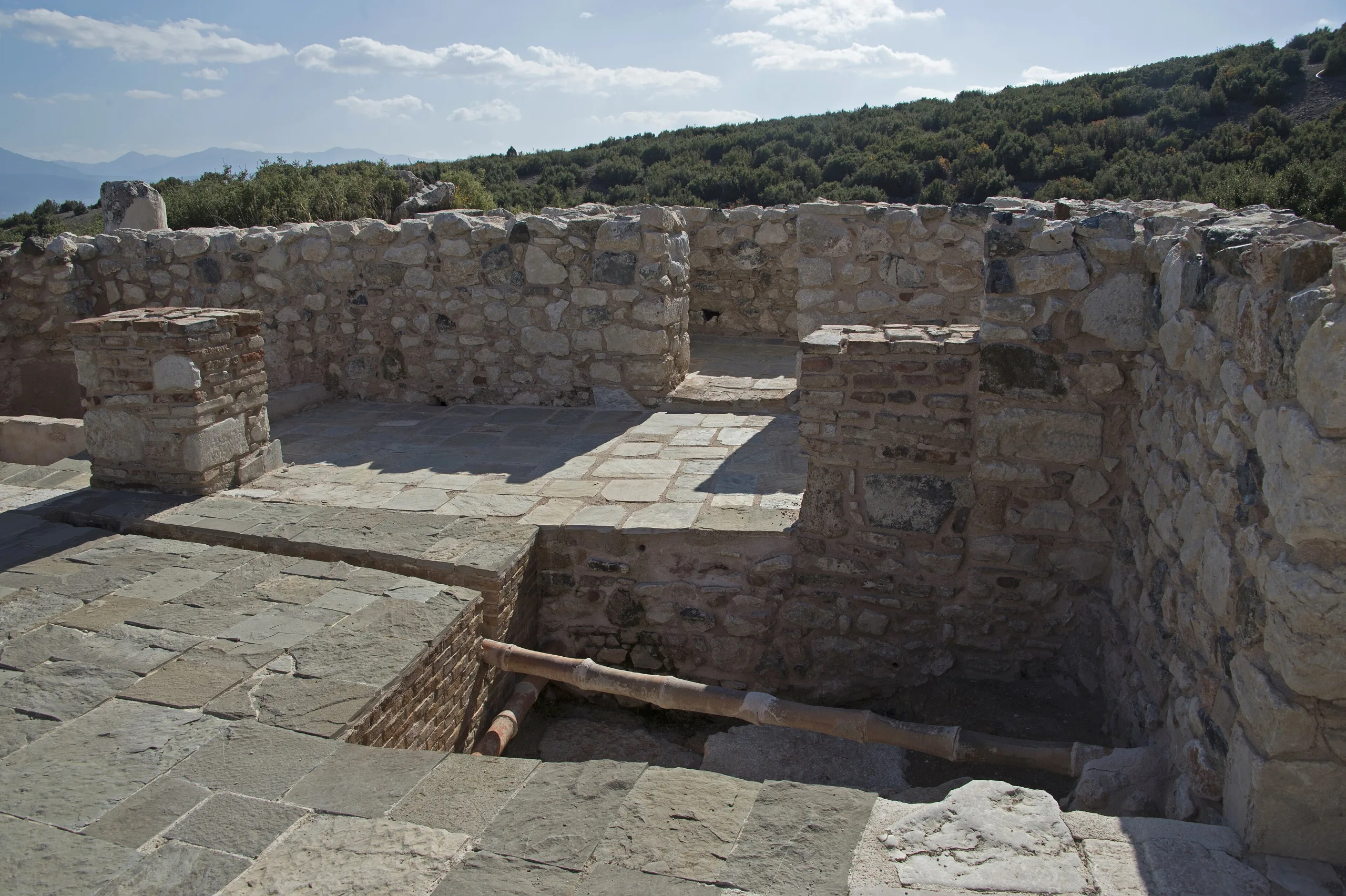
The council hall, also called the music house, seated 3,600. At the centre of its orchestra a Medusa mosaic in red, green and white marble is, in the Culture Portal's words, unique in Anatolia. In front of the building a mosaic floor of 540 square metres came to light in 2011; the same source calls it the best preserved and largest mosaic area in Anatolia. A bath and ceramic workshop of the Late Roman period (6th-7th century CE) were found in this zone as well.
In the 2016 season a round fountain was uncovered on the third terrace of the agora. Its architectural fragments and its position suggest it was built after the earthquake of 23 CE, and later additions kept it in use for a long time as a showy water monument.
Excavations
The Mehmet Akif Ersoy University page says digging began in 2006 and that a team under Prof. Dr. Şükrü Özüdoğru has run it for the university since 2010, concentrating on the odeion, stadium and agora. Özüdoğru credits ministry permission and funds, the Burdur governorship, the university and Gölhisar municipality, and names Istanbul Technical, Eskişehir Osmangazi and Akdeniz universities and Belgium's Catholic University of Leuven among collaborators. Finds from Kibyra are shown in Burdur Museum.
Visiting
The ministry page states that the Museum Card is valid for Turkish citizens. For hours and fees, see the official page.
Gallery
Frequently asked questions
Where is Kibyra?
Which league did Kibyra lead?
When was Kibyra at its peak?
Where is the Medusa mosaic?
When did excavation start?
Is the Museum Card valid at Kibyra?
Sources (13)
- Kibyra Örenyeri / Kibyra Archaeological Site (TR ve EN sayfalar) — T.C. Kültür ve Turizm Bakanlığı, Müzeler ve Ören Yerleri
- Kibyra Antik Kenti - Burdur — T.C. Kültür ve Turizm Bakanlığı, Türkiye Kültür Portalı
- Our Archaeology Department Continues to Bring Burdur's Historical Texture to Light (Kibyra kazısı) — Burdur Mehmet Akif Ersoy Üniversitesi, Fen-Edebiyat Fakültesi
- Cibyra (Pleiades place 638804) — Pleiades
Photo credits
- Photo: Dosseman, CC BY-SA 4.0 — Wikimedia Commons (resized)
- Photo: Dosseman, CC BY-SA 4.0 — Wikimedia Commons (resized)
- Photo: Dosseman, CC BY-SA 4.0 — Wikimedia Commons (resized)
- Photo: Dosseman, CC BY-SA 4.0 — Wikimedia Commons (resized)
- Photo: Dosseman, CC BY-SA 4.0 — Wikimedia Commons (resized)
- Photo: Dosseman, CC BY-SA 4.0 — Wikimedia Commons (resized)
- Photo: Dosseman, CC BY-SA 4.0 — Wikimedia Commons (resized)
- Photo: Dosseman, CC BY-SA 4.0 — Wikimedia Commons (resized)
- Photo: Dosseman, CC BY-SA 4.0 — Wikimedia Commons (resized)