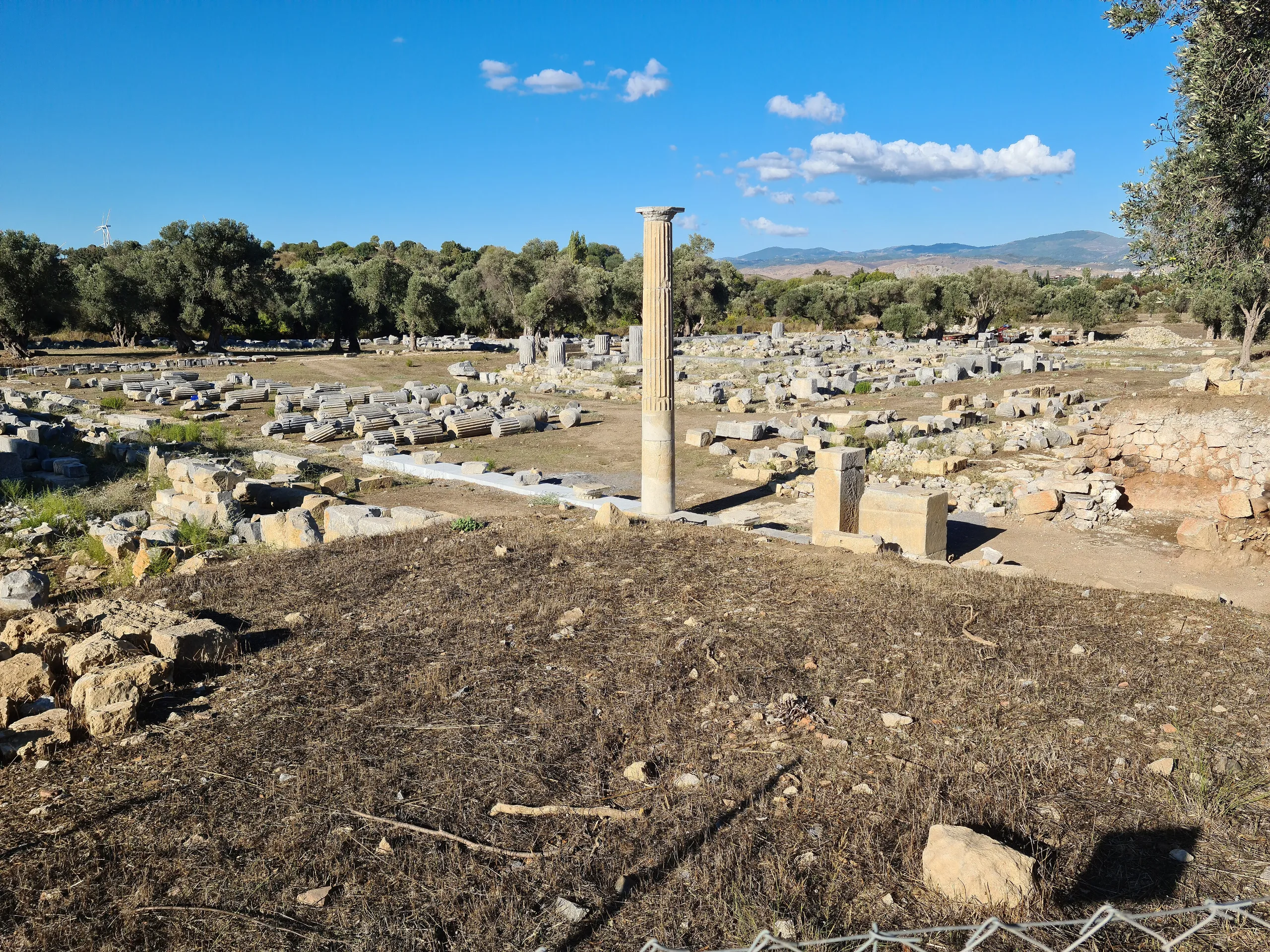
Metropolis is an Ionian city at Torbalı beneath Mount Gallesion, known for its theatre, bouleuterion, stoa, Peristyle House and Lower Bath-Palaestra.
Metropolis is an ancient city located in Turkey, Izmir. Main periods: Hellenistic Period, Roman Period, Byzantine Period, Neolithic Period, Beyliks Period.
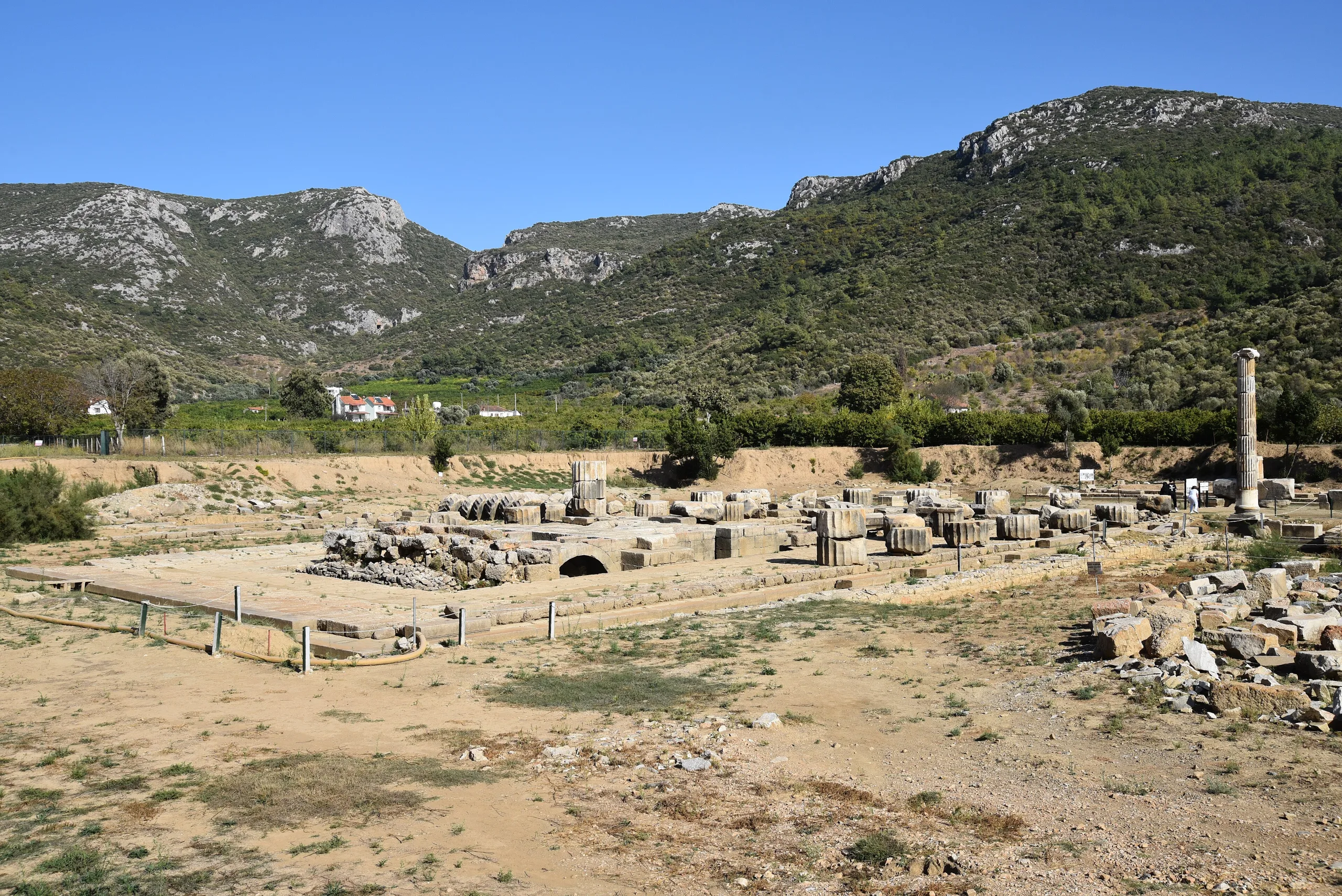
Metropolis stands in Torbalı district of Izmir, between the villages of Yeniköy and Özbey, with Mount Gallesion at its back. The Culture Portal places it about 45 km east of Izmir and calls it the first settlement area of Torbalı. According to the ministry the name comes from the mother goddess Meter Gallesia, after whom the mountain is named; the portal translates it as City of the Mother Goddess.
History
The ministry says early settlement traces nearby reach back to the Neolithic, at Tepeköy, Dedecik and Kuşçuburun, and that excavations and test pits on the acropolis show occupation from about 3000 BCE. An academic article on the site's glass also mentions early finds ranging from the Late Bronze Age to the Archaic period. The Culture Portal instead says the city was founded in the 3rd century BCE, in Seleucid times, by men of Lysimachus. The accounts differ: one pushes settlement far back, the other ties urban founding to the Hellenistic age.
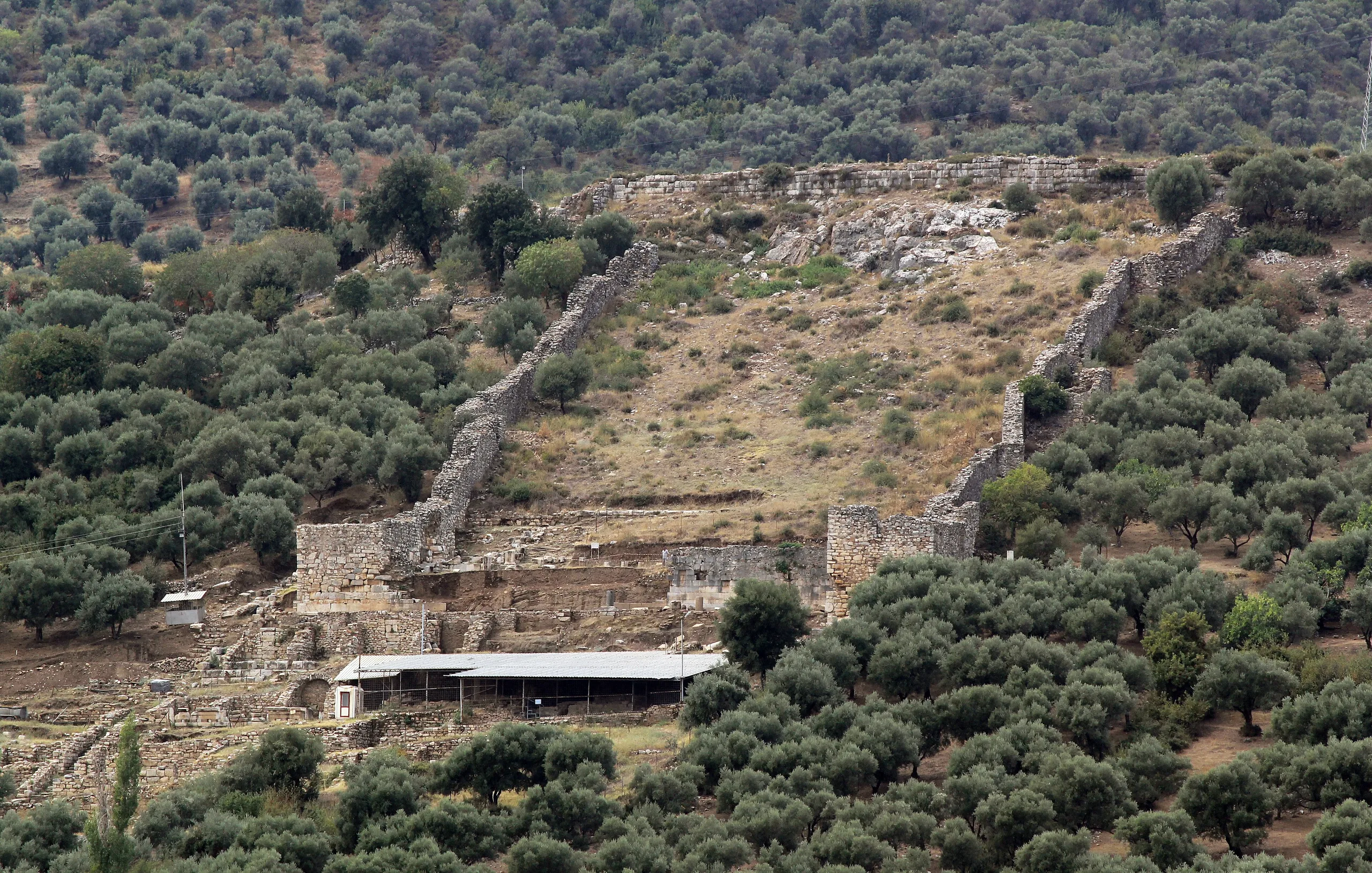
The portal adds that in the Hellenistic period (it writes 1st-2nd century BCE) the city was ringed by imposing walls and received monumental buildings such as a temple of Ares, a stoa and a theatre. Under the Roman Empire the town spread downhill; the Atrium, the Roman House and temples of Zeus and the Twelve Gods date from then. In late antiquity Metropolis became a bishopric, but wars shrank it, its walls were drawn in, and it was confined to a fortress and the acropolis. The ministry states that the Aydınoğulları principality took over the region in the 14th century, that the city could not hold its old position and that the settlement moved to Torbalı.
Main remains
The theatre
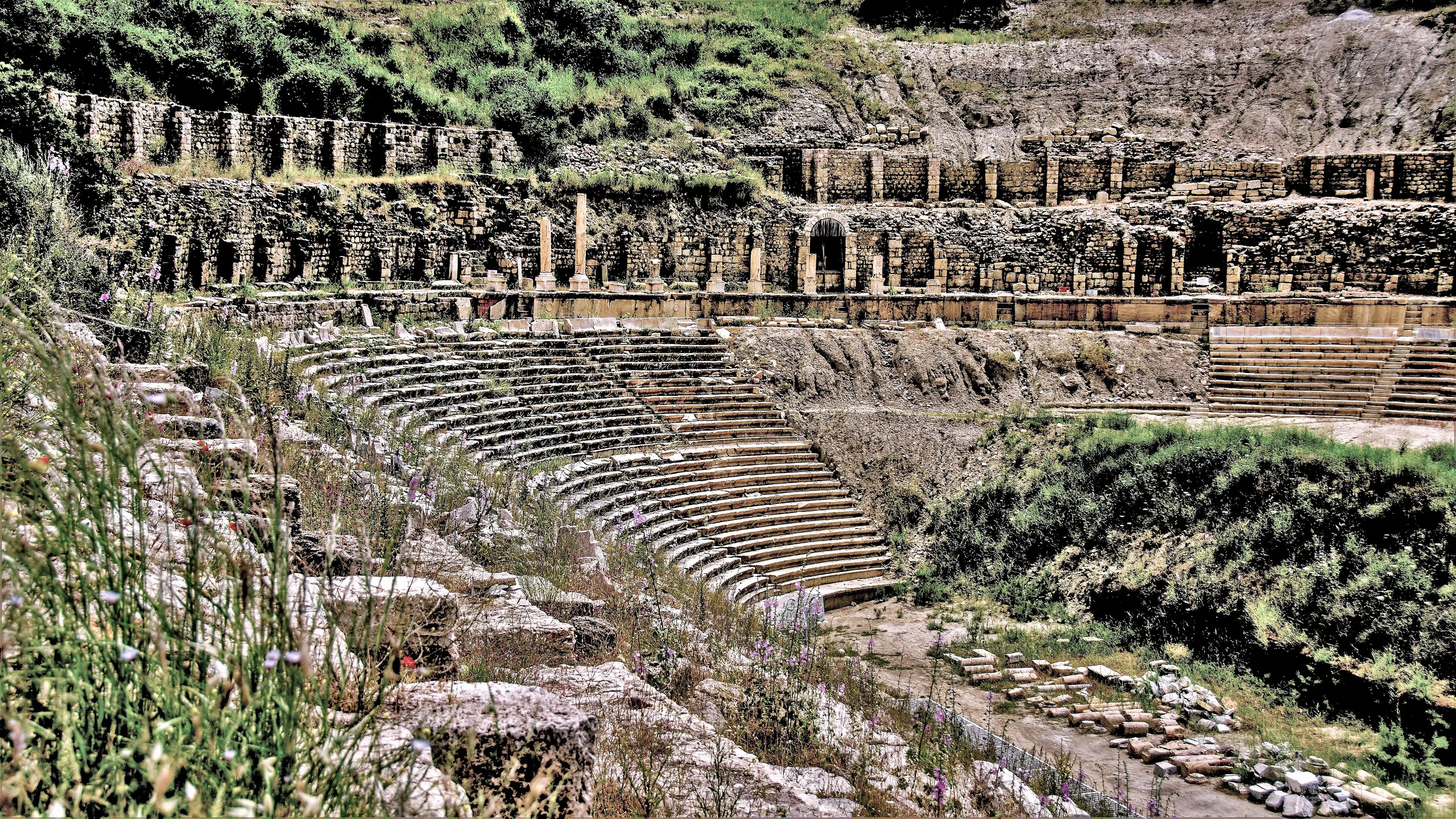
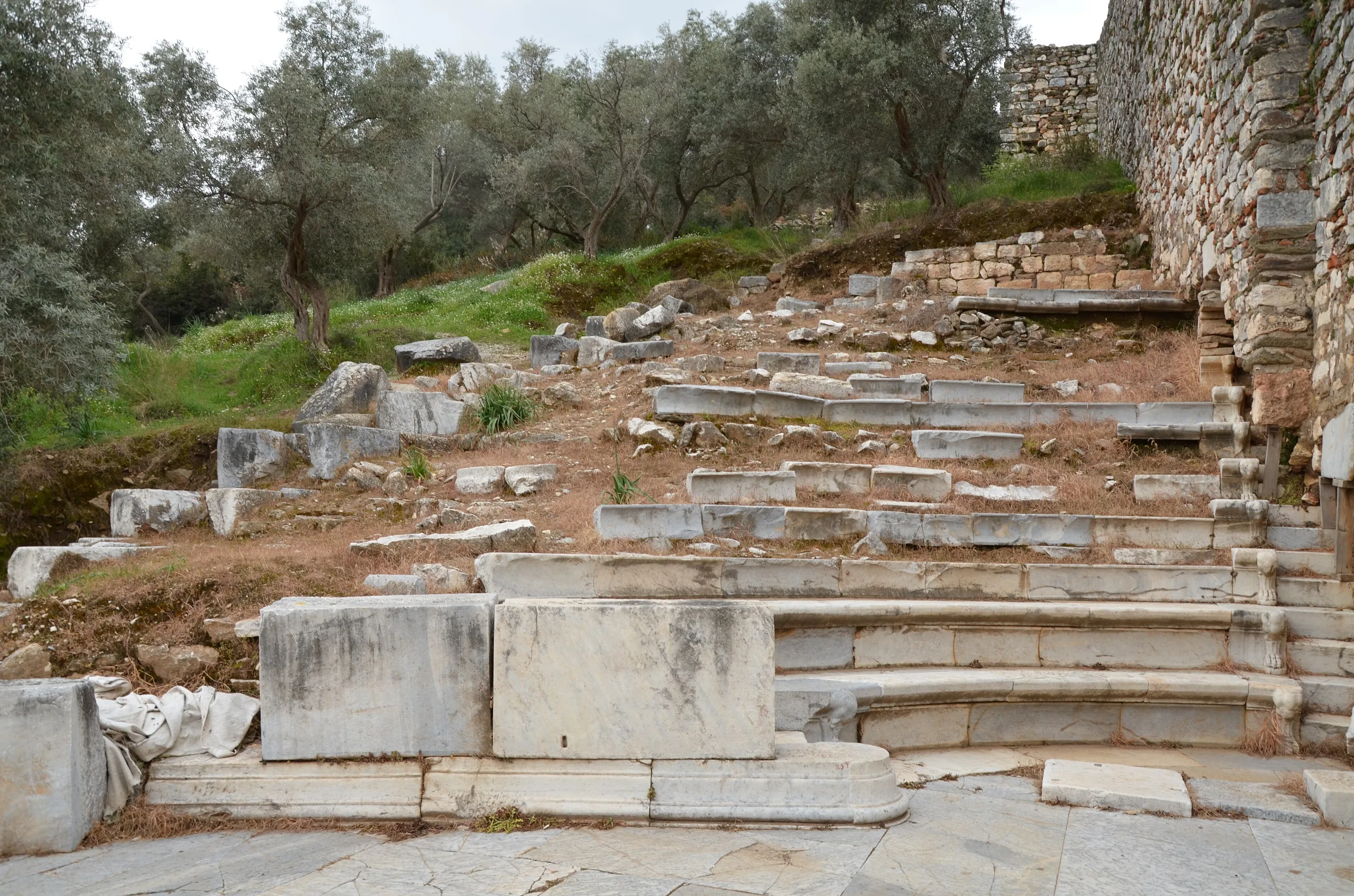
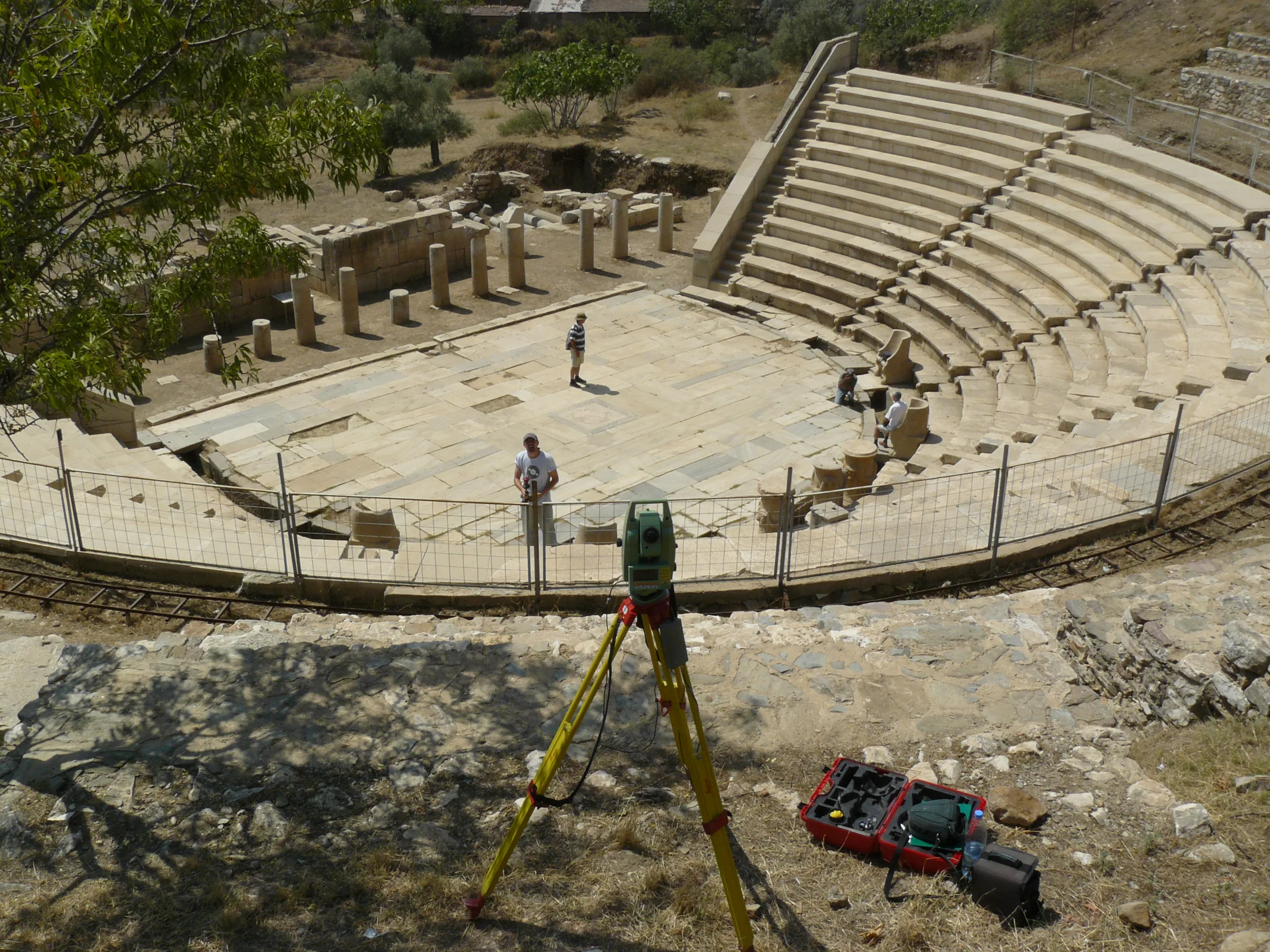
The theatre sits on a natural slope. The ministry says it was built in the Hellenistic period, received a marble floor and a larger stage building under Rome, and was restored in 2000-2001, with a capacity of around 4,000. The Culture Portal dates it to the late Hellenistic period, gives a capacity of 8,000-10,000 and says it went out of use in the 4th century CE. Behind its seats of honour, the portal notes, are reliefs of Zeus's thunderbolt bundle and of Ares with a shield.
Bouleuterion and stoa
The square bouleuterion was built in the middle of the 2nd century BCE and holds 350 people. The Doric stoa dates to the 2nd century BCE; the names of wealthy donors who paid for it are carved on its front columns, which the ministry counts among early examples of sponsorship.
Peristyle House and baths
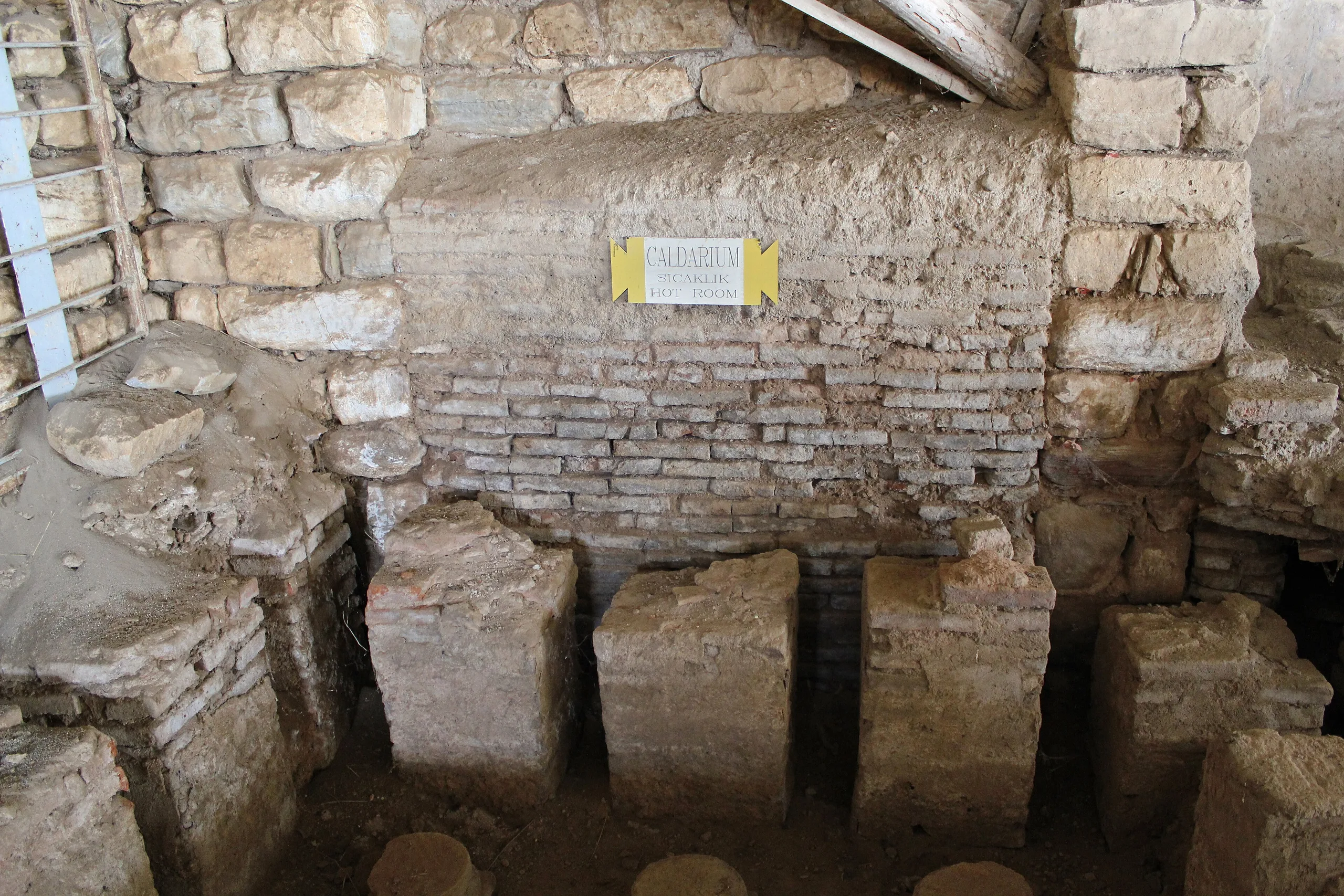
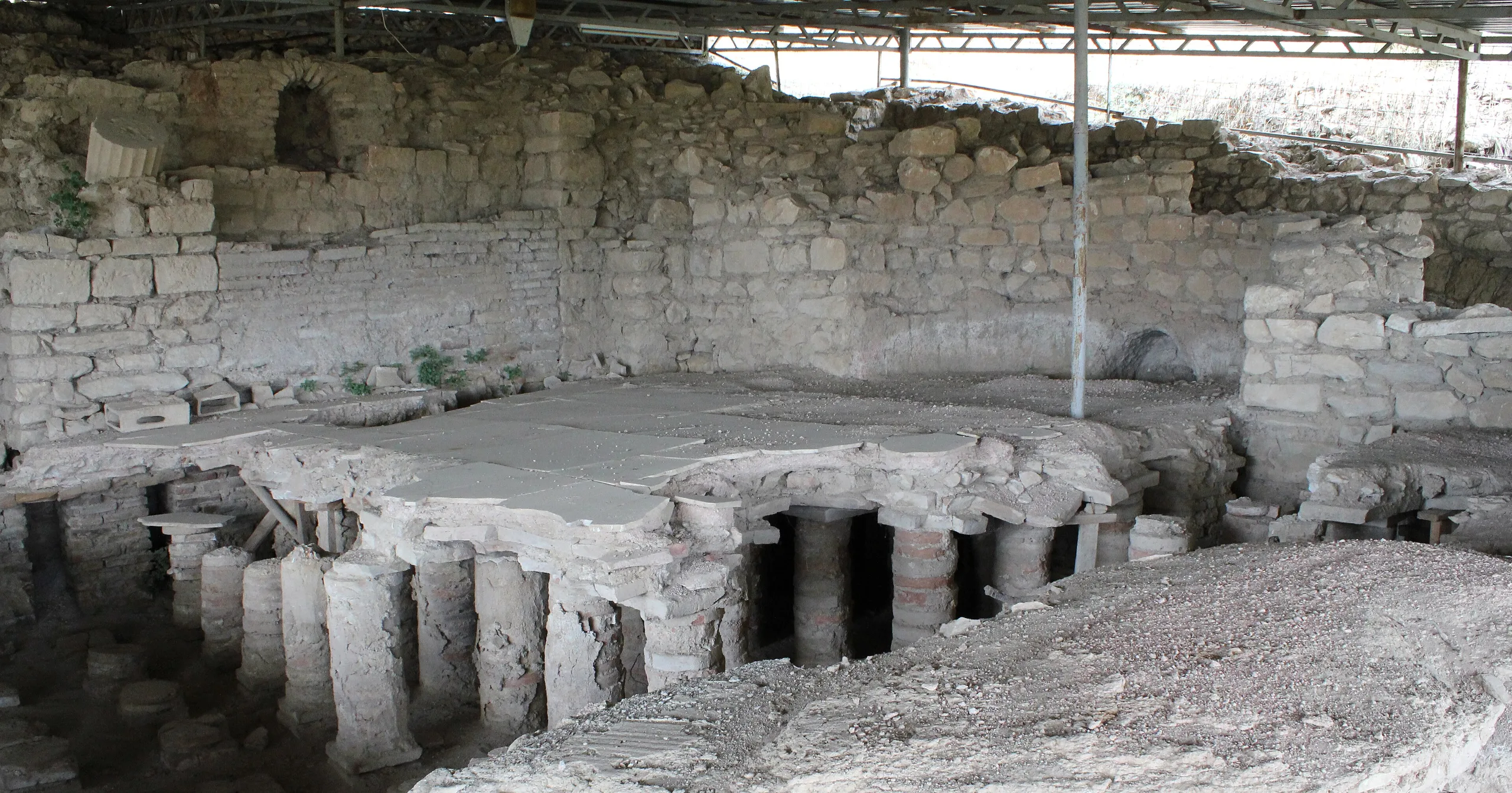
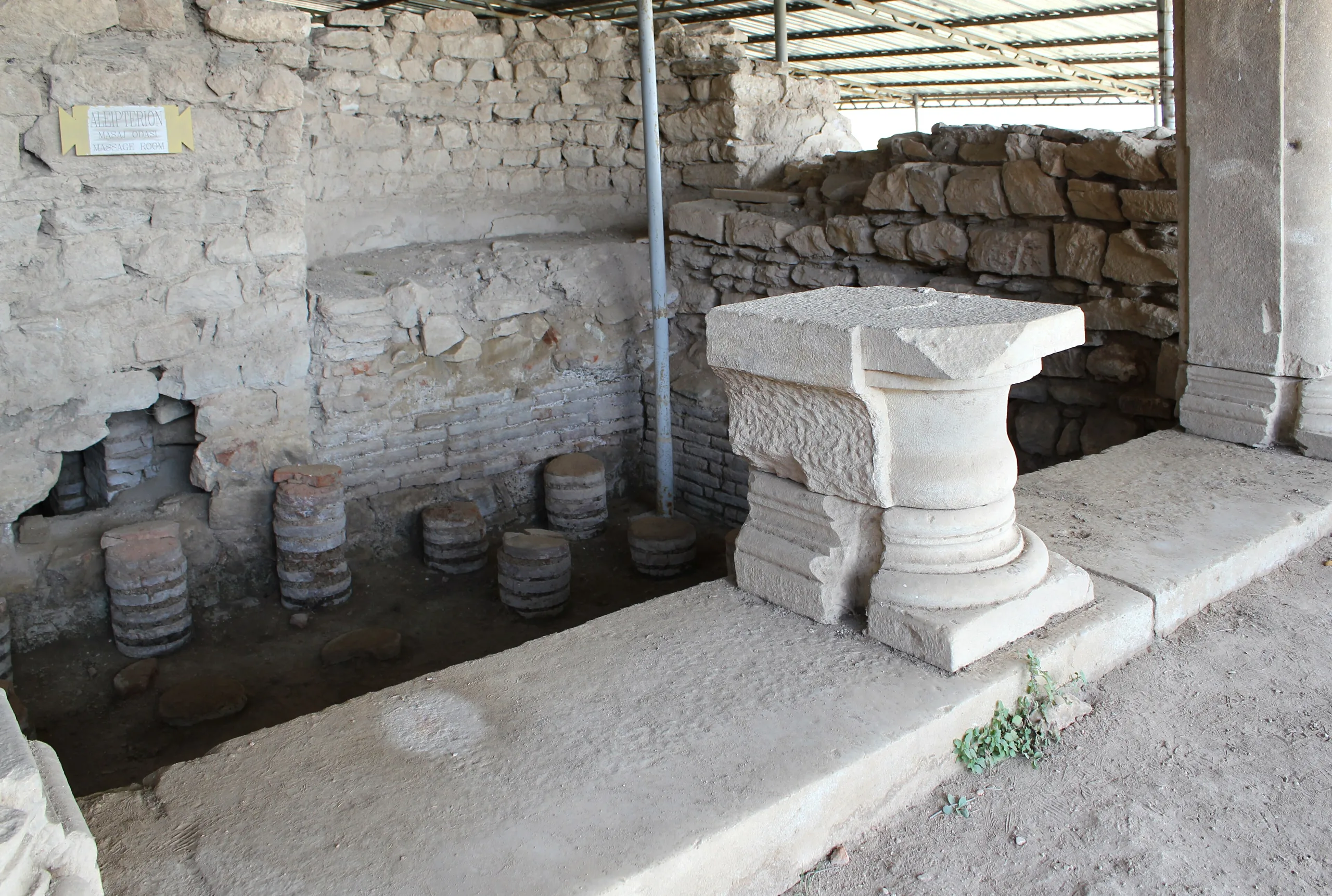
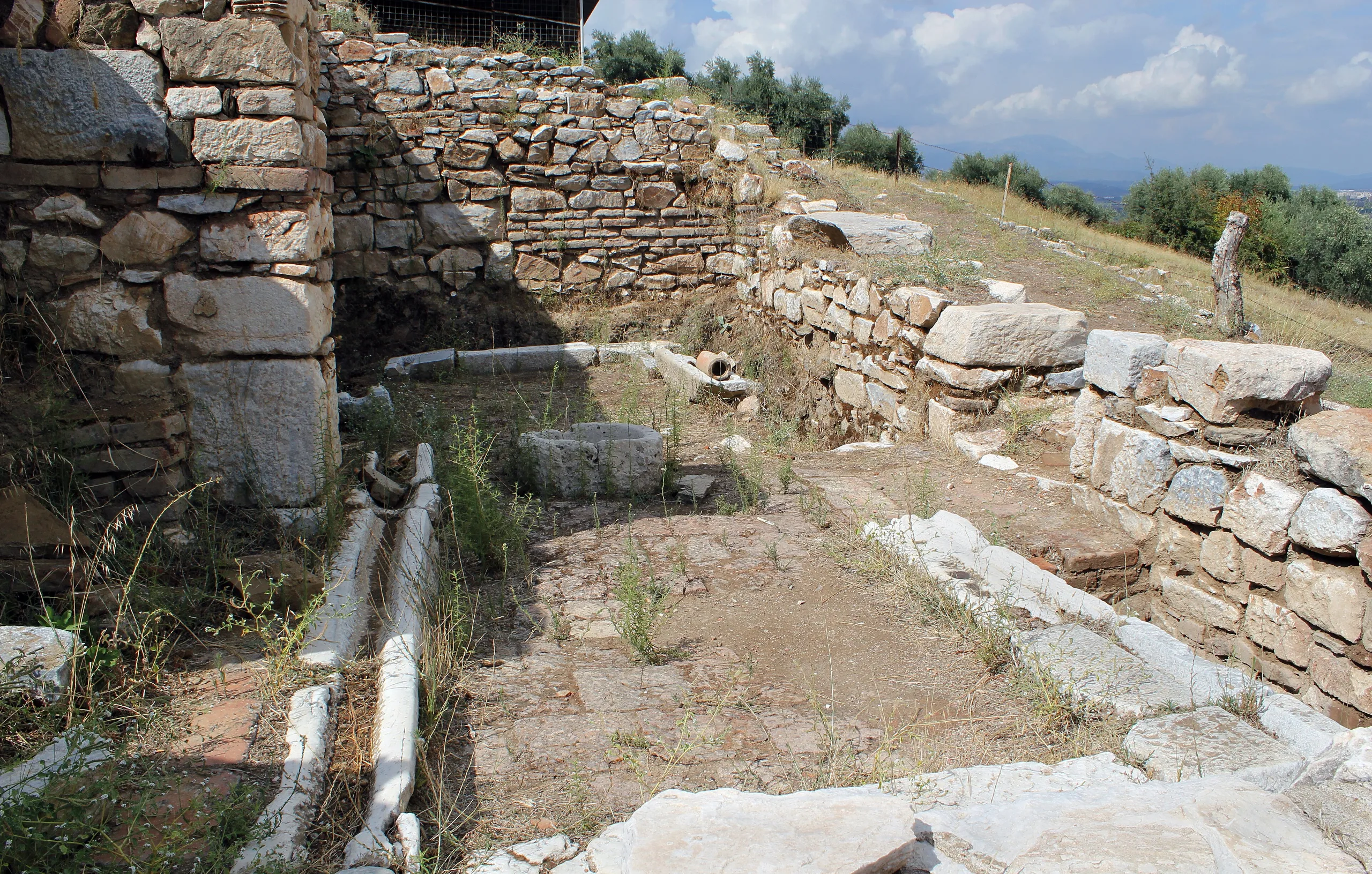
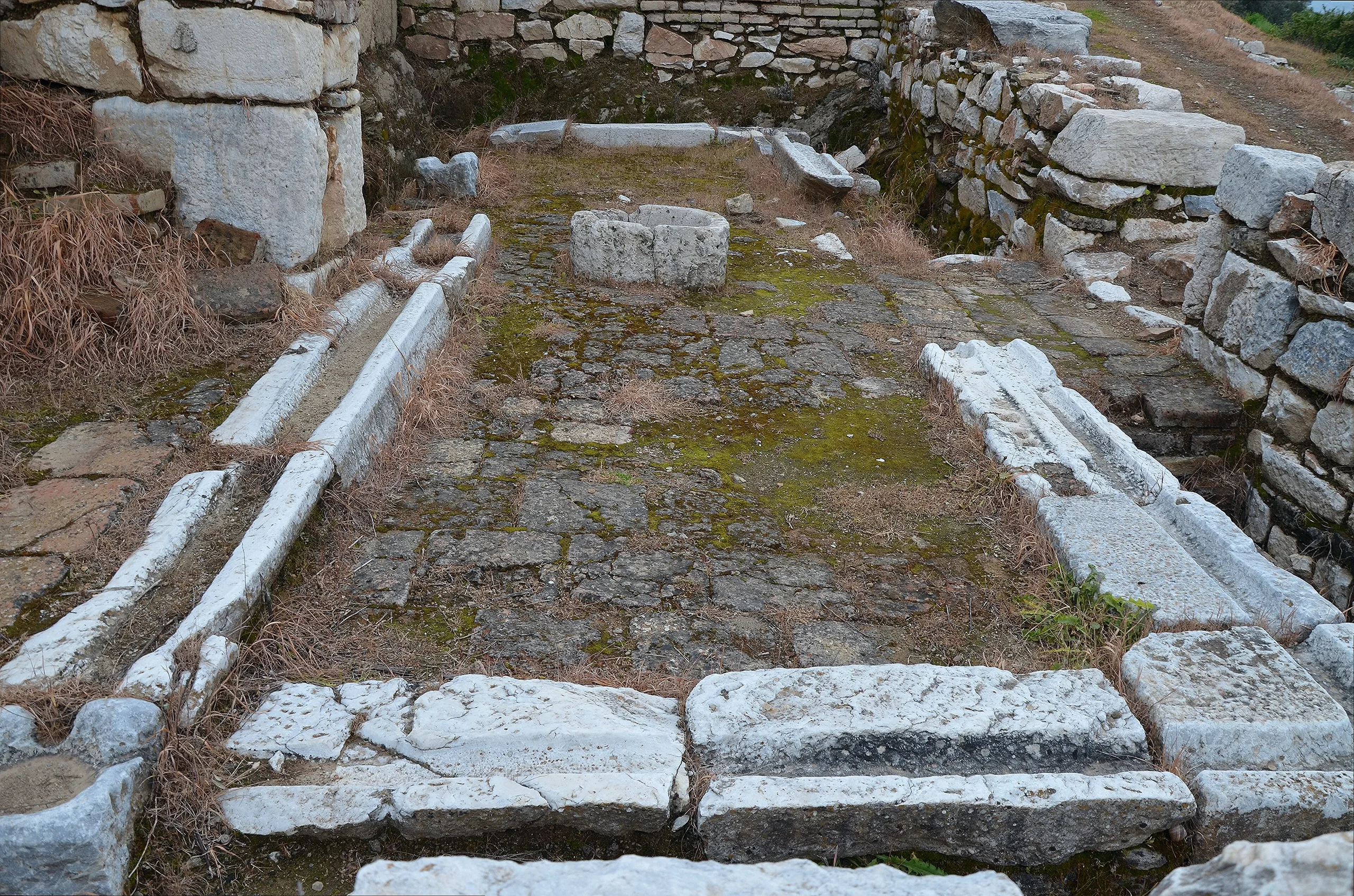
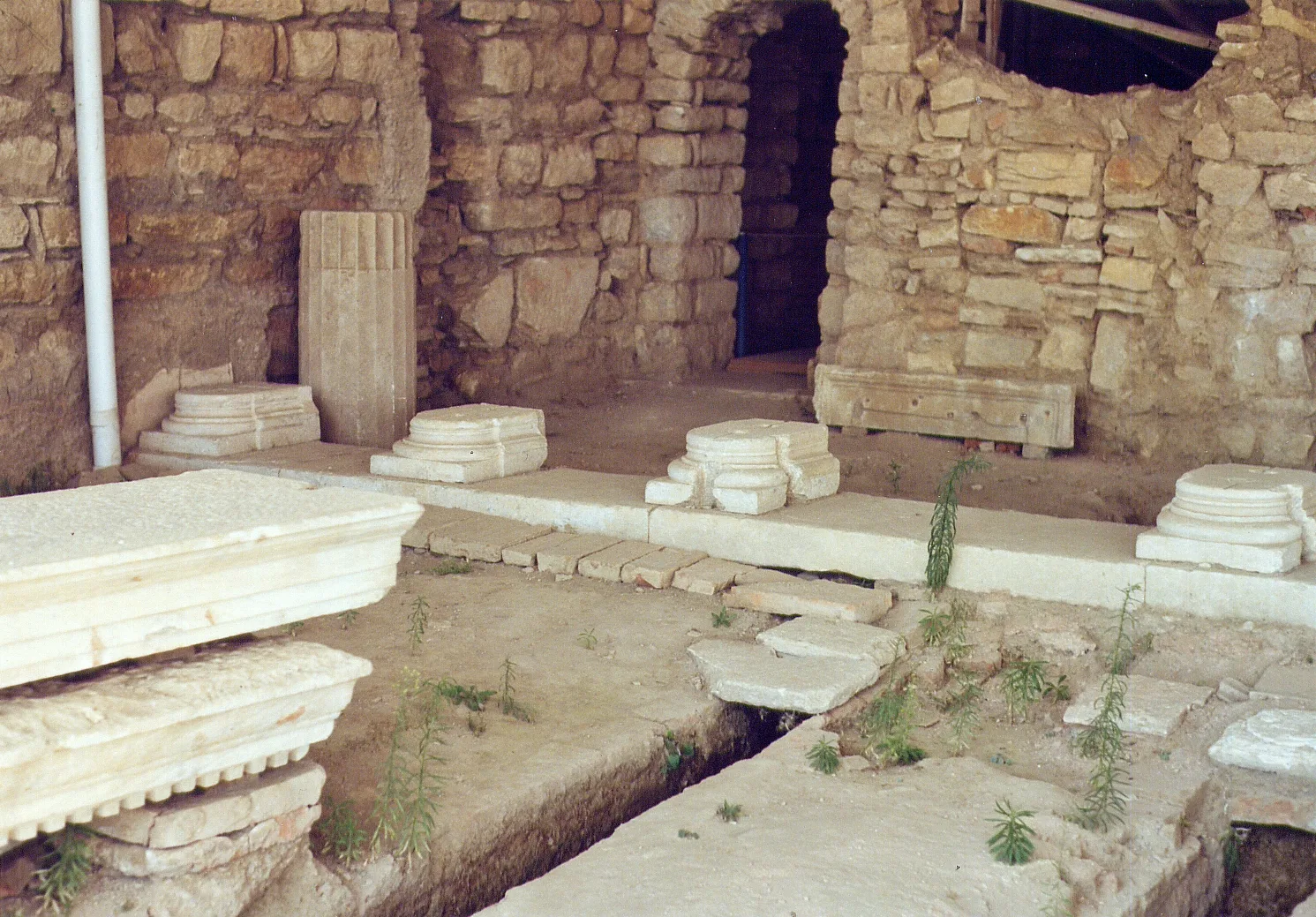
The Peristyle House on the theatre's southern slope came to light in a dig that was investigating how the theatre linked to the city centre. Its courtyard is paved in marble and ringed by columns on four sides, and the painted plaster and rich finds suggest a wealthy resident. The academic article dates the house to the 2nd century CE. The Lower Bath-Palaestra is a Roman Imperial building with marble-faced interior walls and stepped pools along the sides of its central hall. Inscriptions from the age of Augustus mention the Upper Bath and Gymnasium, and one names a woman, Alexandra Mirton, as its administrator.
Research history
The Culture Portal says the first Europeans to mention Metropolis were the travellers J. Spon and G. Wheler, who visited in 1675 and linked the ruins between Yeniköy and Özbey to the ancient city. In the 19th century A. Fontrier, after studying inscriptions and topography, identified the ancient names of the two streams around the city as Astraios and Phyrites. The article on glass finds, published in Anatolian Research, shows that excavation ran from 1989 to 2021 across sectors such as the acropolis, theatre, stoa, Peristyle House and Lower Bath-Palaestra.
Visiting
For current hours, fees and Museum Card information, see the ministry's official page.
Gallery
Frequently asked questions
Where is Metropolis?
What does the name Metropolis mean?
How many people did the theatre hold?
When was the bouleuterion built?
What is the Peristyle House?
Why did the city decline?
Sources (13)
- Metropolis Örenyeri / Metropolis (TR ve EN sayfalar) — T.C. Kültür ve Turizm Bakanlığı, Müzeler ve Ören Yerleri
- Metropolis Örenyeri - İzmir (kaynak: İzmir İl Kültür ve Turizm Müdürlüğü) — T.C. Kültür ve Turizm Bakanlığı, Türkiye Kültür Portalı
- Metropolis (Ionia) Kazılarından Hellenistik-Erken Roma İmparatorluk Dönemi Cam Buluntuları (1989-2021), Anadolu Araştırmaları 27, 2022 — İstanbul Üniversitesi / DergiPark
- Metropolis (Pleiades place 550741) — Pleiades
Photo credits
- Photo: Ingeborg Simon, CC BY-SA 3.0 — Wikimedia Commons (resized)
- Photo: Carole Raddato from FRANKFURT, Germany, CC BY-SA 2.0 — Wikimedia Commons (resized)
- Photo: Ingeborg Simon, CC BY-SA 3.0 — Wikimedia Commons (resized)
- Photo: Ingeborg Simon, CC BY-SA 3.0 — Wikimedia Commons (resized)
- Photo: Ingeborg Simon, CC BY-SA 3.0 — Wikimedia Commons (resized)
- Photo: Ingeborg Simon, CC BY-SA 3.0 — Wikimedia Commons (resized)
- Photo: Carole Raddato from FRANKFURT, Germany, CC BY-SA 2.0 — Wikimedia Commons (resized)
- Photo: DiaboloDave, Public domain — Wikimedia Commons (resized)
- Photo: Klaus-Peter Simon, CC BY 3.0 — Wikimedia Commons (resized)